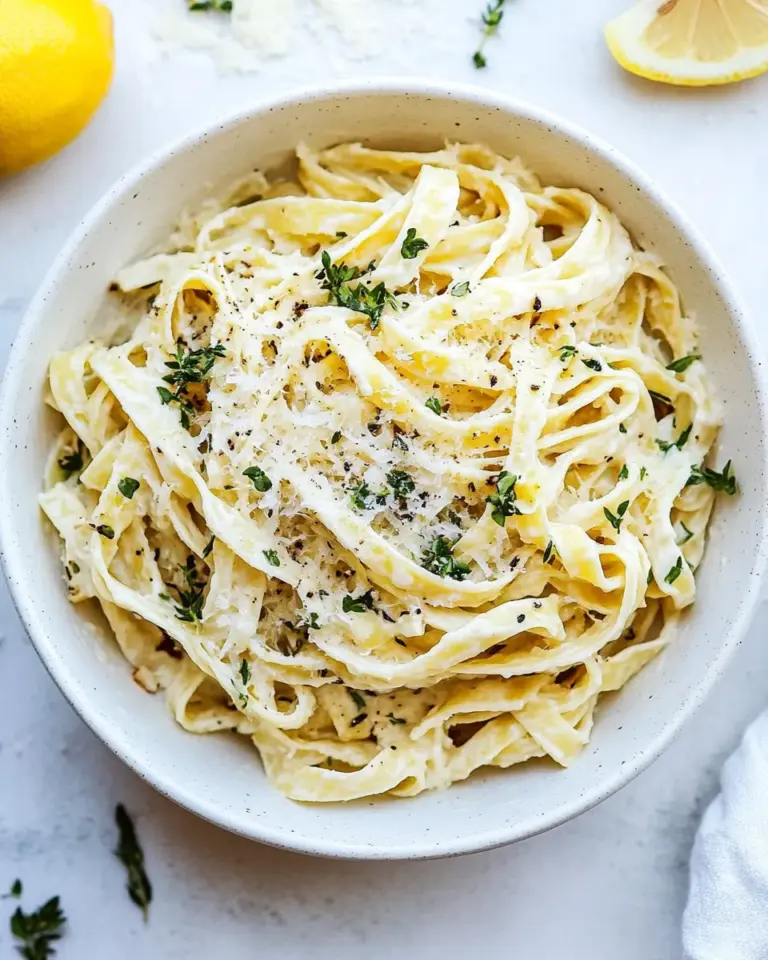
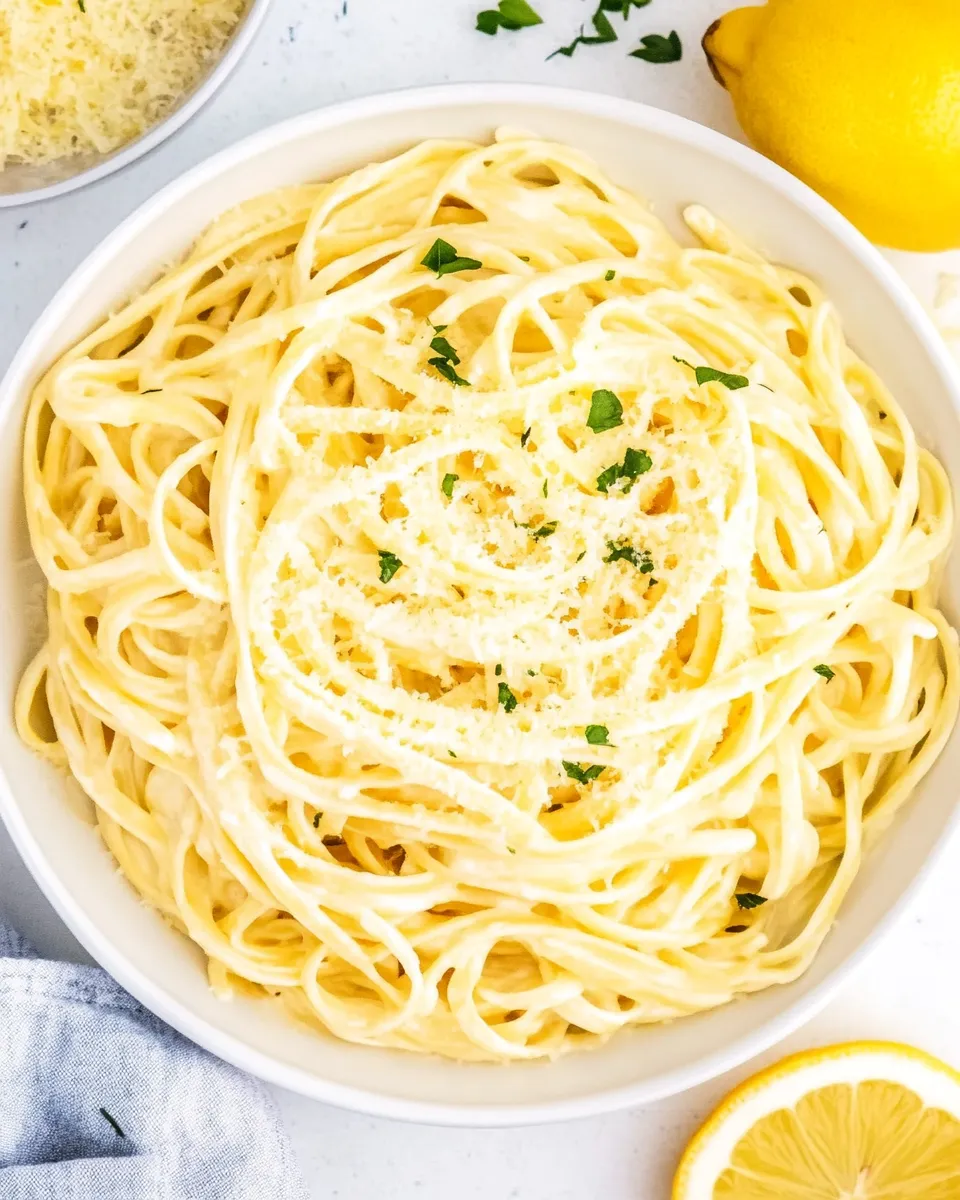
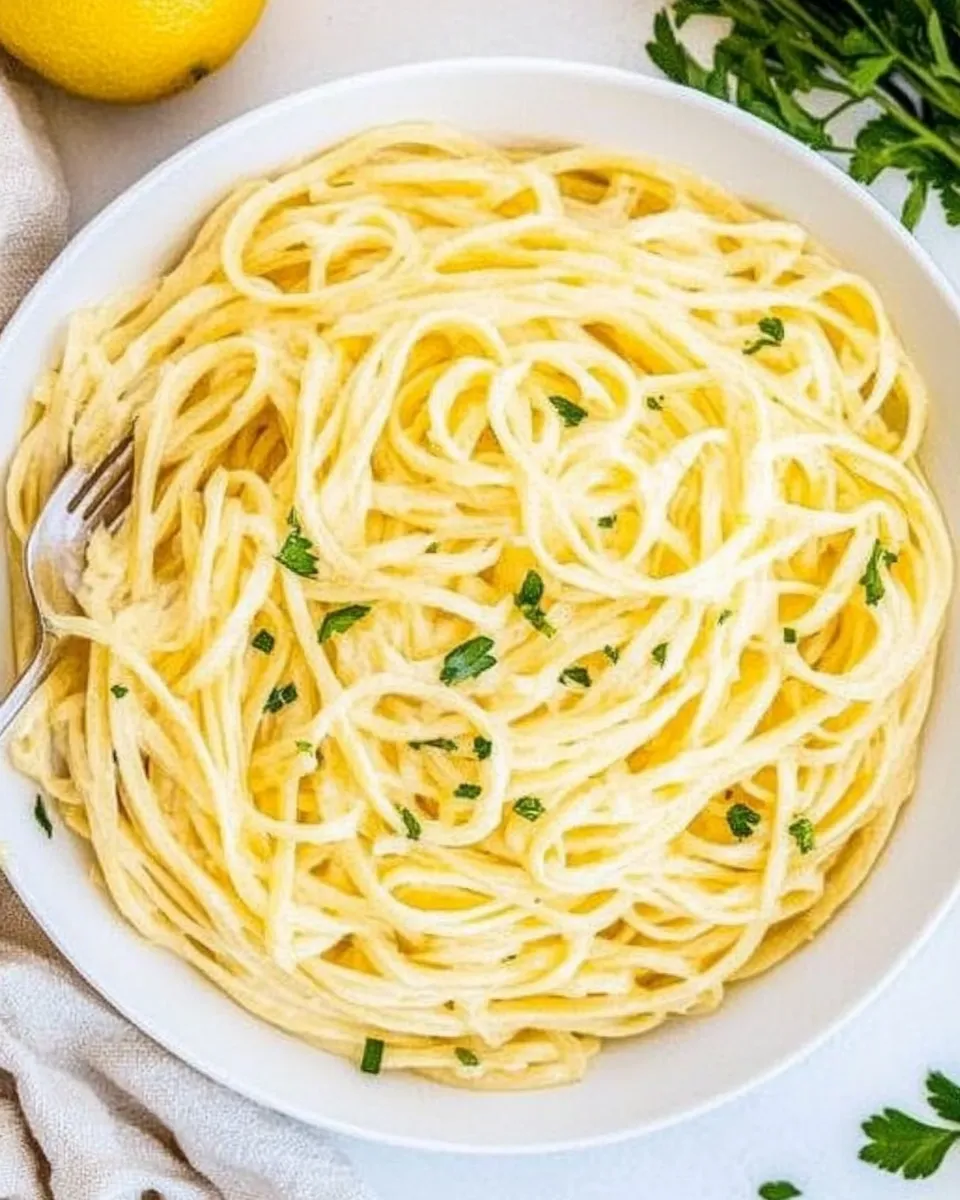
Creamy Lemon Pasta
This is the kind of pasta I make when I want something bright, comforting, and fast. It balances rich cream and Parmesan with fresh lemon so the dish never feels heavy. The garlic and butter give it homey depth while the lemon keeps each bite lively.
You can have this on the table in about the time it takes to cook spaghetti. It’s forgiving, which means it’s perfect for weeknights and for feeding guests without fuss. I’ll walk you through exactly how to get a silky sauce that clings to each strand.
Ingredient Breakdown
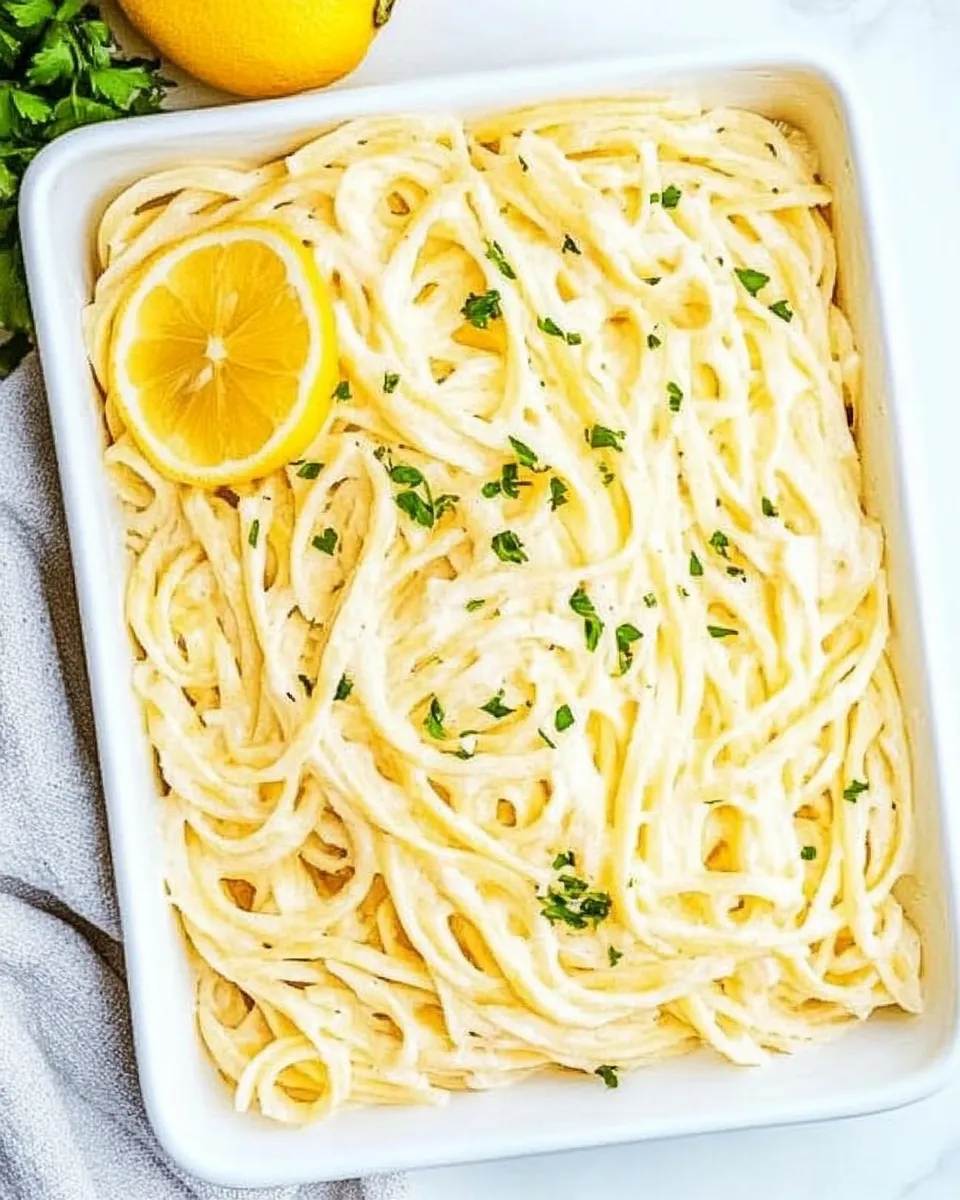
- 12 oz spaghetti — the pasta backbone; long noodles hold the sauce nicely.
- 1 tablespoon salt — for the pasta cooking water; seasons the pasta from within.
- 2 tablespoon butter — cooks the garlic and adds richness to the sauce.
- 4 garlic cloves, minced — provides savory aromatics; mince finely for even distribution.
- 1½ cup heavy cream — creates the creamy base; simmer gently to thicken slightly.
- 1 cup grated Parmesan — melts into the cream to thicken and add umami; use finely grated for smoothness.
- 1 tablespoon lemon juice — brightens the sauce; add to taste for freshness.
- 1 tablespoon lemon zest — concentrated lemon flavor; use a microplane for fine zest.
- 1 tablespoon chopped fresh parsley — herbaceous finish and color; add at the end to keep it fresh.
- salt and pepper to taste — final seasoning; adjust after tasting the sauce.
Method: Creamy Lemon Pasta
Prep and Cook Pasta
1. Bring a large pot of water to a vigorous boil. Add 1 tablespoon salt.
2. Add 12 oz spaghetti and cook until 1 minute shy of the package’s recommended time (this prevents the pasta from overcooking during the final sauce toss).
3. Before draining, reserve 2 cups of the pasta cooking liquid. Then drain the pasta and set it aside.
Make the Sauce
4. In a heavy-based skillet over low heat, melt 2 tablespoons butter.
5. Add 4 minced garlic cloves and cook for about 2 minutes, stirring often. Keep the heat low so the garlic softens without browning; you want fragrant, not bitter.
6. Pour in 1½ cups heavy cream and bring the mixture to a gentle simmer. Watch it carefully so it doesn’t boil vigorously.
7. Sprinkle 1 cup grated Parmesan into the simmering cream. Stir until the cheese has fully melted into the sauce.
8. Let the sauce simmer for about 1½ minutes more, stirring occasionally, until it thickens slightly. The sauce should coat the back of a spoon but remain pourable.
Finish and Combine
9. Add the drained spaghetti to the skillet with the sauce and pour in 1 cup of the reserved pasta cooking water.
10. Gently stir and toss the pasta for 1–2 minutes over low to medium heat so the sauce adheres to each strand and the pasta finishes cooking to your preferred doneness. If the sauce tightens too much, add more reserved pasta water a few tablespoons at a time until you reach a silky consistency.
11. Stir in 1 tablespoon lemon zest, 1 tablespoon lemon juice, and 1 tablespoon chopped fresh parsley. Mix until evenly combined.
12. Taste and adjust seasoning with salt, pepper, or additional lemon juice as desired.
13. Serve immediately, garnished with extra parsley and grated Parmesan if you like.
Why This Recipe Works
The method leans on three simple principles: seasoning the pasta water, using starchy pasta water to loosen the sauce, and finishing with acid. Salting the cooking water seasons the pasta internally. Reserving cooking water gives you a natural emulsifier—starchy liquid that binds fat from the cream and butter to the cheese, creating a smooth, glossy sauce without adding extra fat or thickeners.
Lemon juice and zest cut through the richness, so every bite feels balanced. Cooking the garlic over low heat gives gentle aromatics without bitterness, and melting Parmesan into hot cream provides both texture and savory depth.
Healthier Substitutions
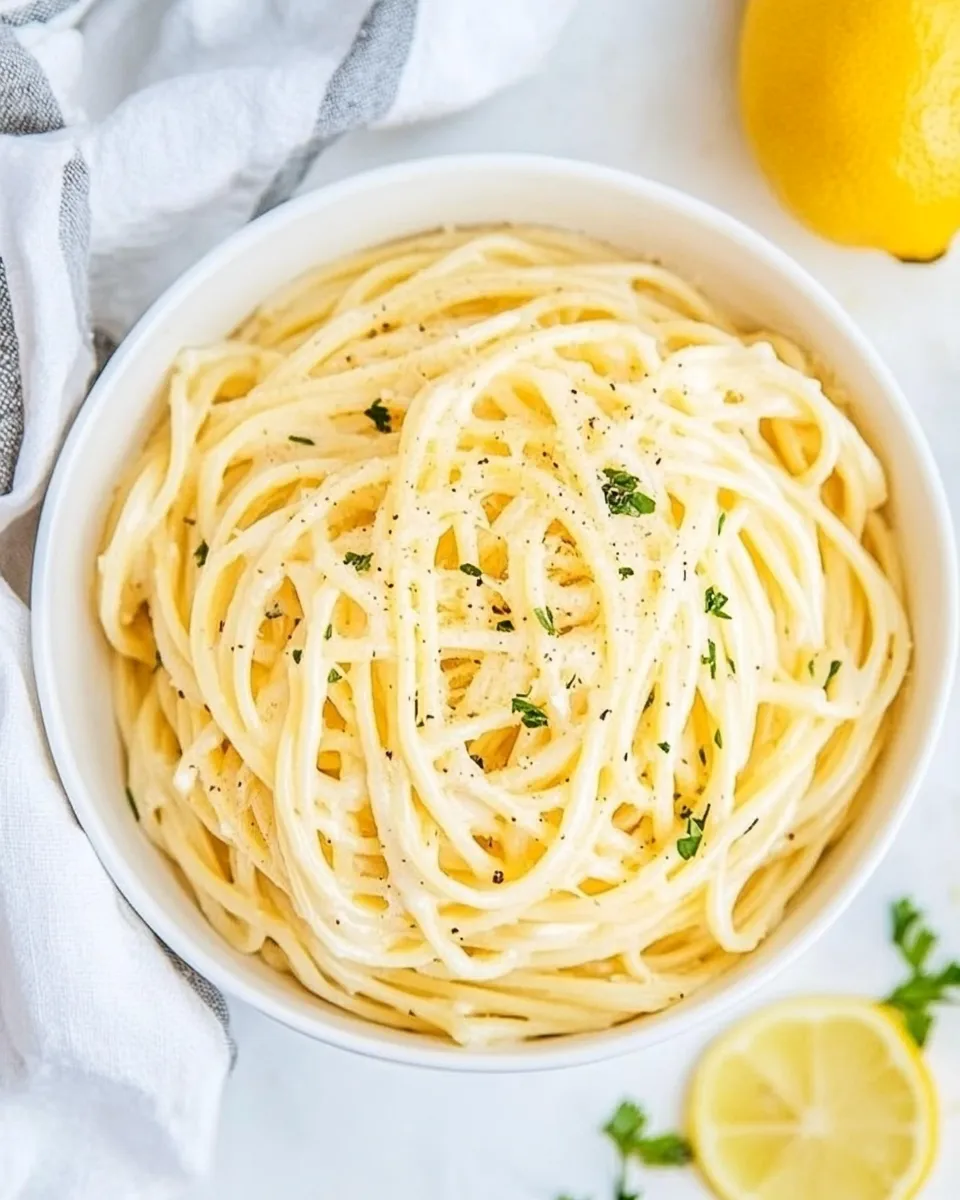
- Heavy cream — swap for half-and-half plus 2 teaspoons cornstarch (mixed into the liquid) if you want fewer calories; expect a slightly less luxurious mouthfeel.
- Parmesan — use a 50:50 mix of grated Pecorino Romano and Parmesan for stronger flavor, allowing you to use a bit less cheese overall.
- Butter — replace with 1 tablespoon olive oil + 1 tablespoon butter to reduce saturated fat while keeping flavor.
- Spaghetti — use whole-wheat spaghetti or a legume-based pasta for more fiber and protein; cooking times will vary.
Kitchen Gear Checklist
- Large pot for boiling pasta
- Heavy-based skillet (10–12 inch preferred) to prevent scorching and to allow even simmering of sauce
- Colander for draining pasta
- Measuring cups and spoons
- Microplane or fine grater for lemon zest
- Tongs or pasta fork for tossing spaghetti in the sauce
Troubleshooting Tips
- Sauce too thin: Simmer a little longer to reduce, or stir in more grated Parmesan a tablespoon at a time. Be careful—too much cheese can make it grainy.
- Sauce too thick: Add reserved pasta cooking water one tablespoon at a time until it loosens to a silky coating.
- Garlic burned: Discard and start the garlic step again—burned garlic tastes bitter. Lower the heat and cook slowly next time.
- Pasta gummy: Don’t overcook in the pot; finish it in the sauce. Also use plenty of water and salt when boiling.
In-Season Flavor Ideas
When lemons are at their peak, use extra zest for intense citrus perfume. In spring, add blanched asparagus tips or peas right at the end for color and sweetness. In summer, a handful of halved cherry tomatoes adds freshness. In fall and winter, fold in sautéed mushrooms or wilted spinach for earthier notes.
Cook’s Commentary
I love the straightforwardness of this recipe. It’s adaptable—you can make it more lemon-forward or richer depending on the occasion. The reserved pasta water is the unsung hero here; it transforms a potentially gluey cream into a silky sauce that hugs each strand.
For entertaining, make the sauce in the skillet and keep it on the lowest heat. When guests arrive, finish the pasta in the skillet and serve immediately; it feels polished without a lot of last-minute work.
How to Store & Reheat
Store leftovers in an airtight container in the refrigerator for up to 3 days. The sauce will thicken and the pasta may absorb liquid while chilling.
To reheat: warm gently in a skillet over low heat with a splash of water or reserved pasta water (start with 2–3 tablespoons) and toss until loosened and heated through. Avoid high heat which can separate the cream.
Common Qs About Creamy Lemon Pasta
- Can I use less cream? Yes—reduce to 1 cup and add a little extra pasta water; the sauce will be lighter but still creamy.
- Why reserve pasta water? The starchy water emulsifies the sauce, making it smoother and helping it cling to the pasta.
- Can I make this dairy-free? Use a full-fat plant-based cream alternative and a dairy-free Parmesan substitute; texture and flavor will differ but it’s workable.
- How do I prevent the sauce from becoming grainy? Use finely grated Parmesan and melt it into gently simmering cream rather than boiling; add cheese gradually and stir constantly.
Final Thoughts
Creamy Lemon Pasta is quick, elegant, and forgiving. With a little attention—salting the water, reserving pasta water, and finishing the pasta in the sauce—you’ll get a restaurant-worthy dish without fuss. Make it your own with seasonal add-ins or lighter swaps, but keep the lemon; it’s the element that lifts the whole dish.

Creamy Lemon Pasta
Ingredients
- 12 oz spaghetti
- 1 tablespoon salt (for pasta water)
- 2 tablespoons butter
- 4 cloves garlic minced
- 1.5 cups heavy cream (see note 1)
- 1 cup grated Parmesan (see note 2)
- 1 tablespoon lemon juice (see note 3)
- 1 tablespoon lemon zest (see note 3)
- 1 tablespoon fresh parsley chopped
- salt and pepper to taste
Instructions
- Bring a large pot of salted water to a rolling boil, adding 1 tablespoon salt; cook the spaghetti 1 minute less than package instructions.
- Before draining, reserve 2 cups of the pasta cooking water, then drain the spaghetti in a colander.
- Heat the butter in a large skillet over low heat until melted, then add the minced garlic and cook gently for about 2 minutes without browning.
- Add the heavy cream to the skillet and bring it to a gentle simmer.
- Sprinkle in the grated Parmesan and stir until it melts and the sauce thickens slightly, simmering about 1½ minutes.
- Toss the drained spaghetti into the sauce with about 1 cup of the reserved pasta water and stir gently to coat; cook 1–2 minutes, adding more reserved water if the sauce becomes too thick.
- Stir in the lemon zest, lemon juice, and chopped parsley; taste and adjust seasoning with salt and pepper as desired.
- Serve immediately, optionally garnished with extra parsley and Parmesan.
Equipment
- Large Pot
- Colander
- Large Skillet
- Measuring spoons
- measuring cups
- microplane or zester
Notes
- Use heavy, thickened, or double cream to prevent the sauce from splitting.
- Freshly grate Parmesan from a block for the best melting and flavor.
- If using pre-grated Parmesan, reduce the amount because it is more compacted.
- Zest the lemon before juicing it for easiest zesting.