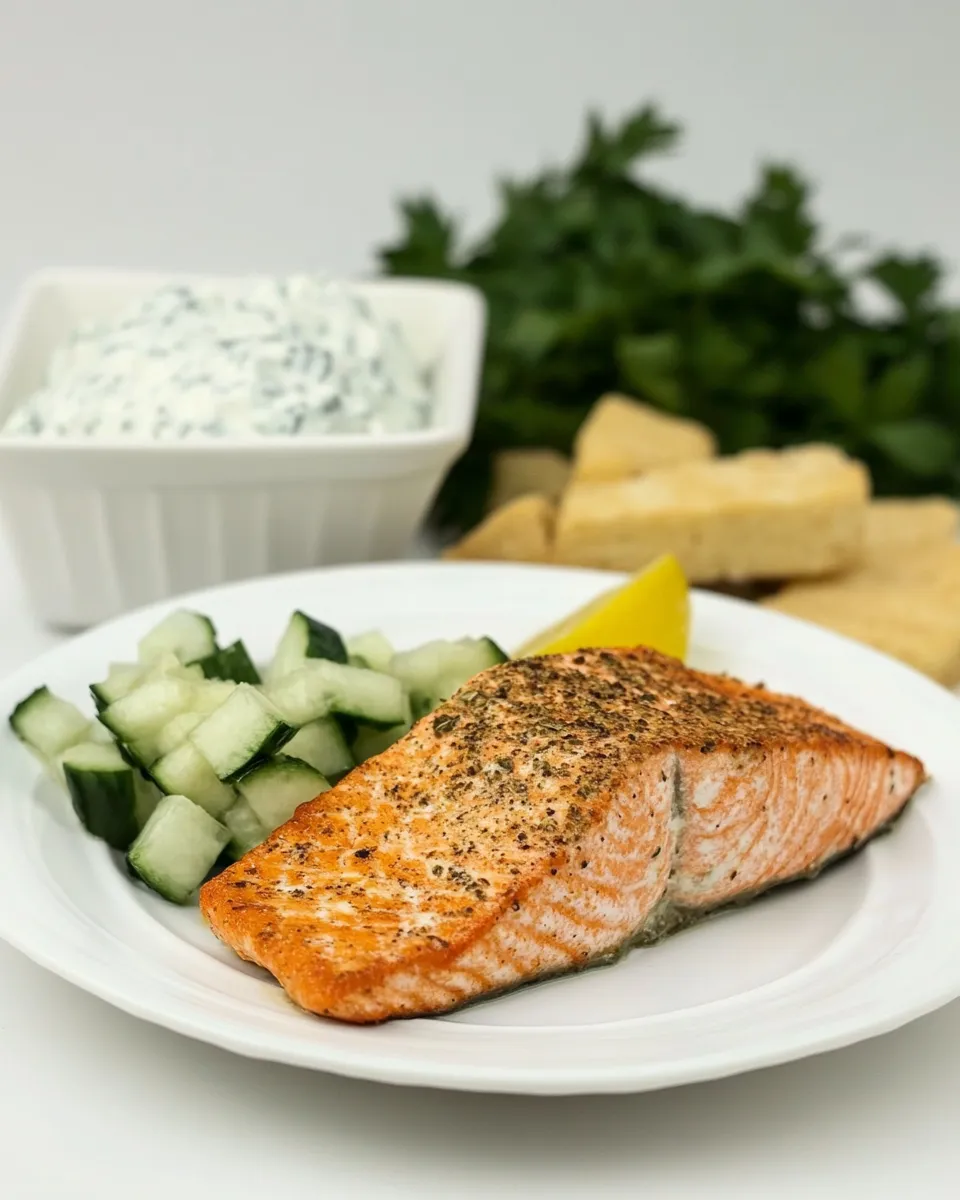
Greek Salmon with Tzatziki Sauce
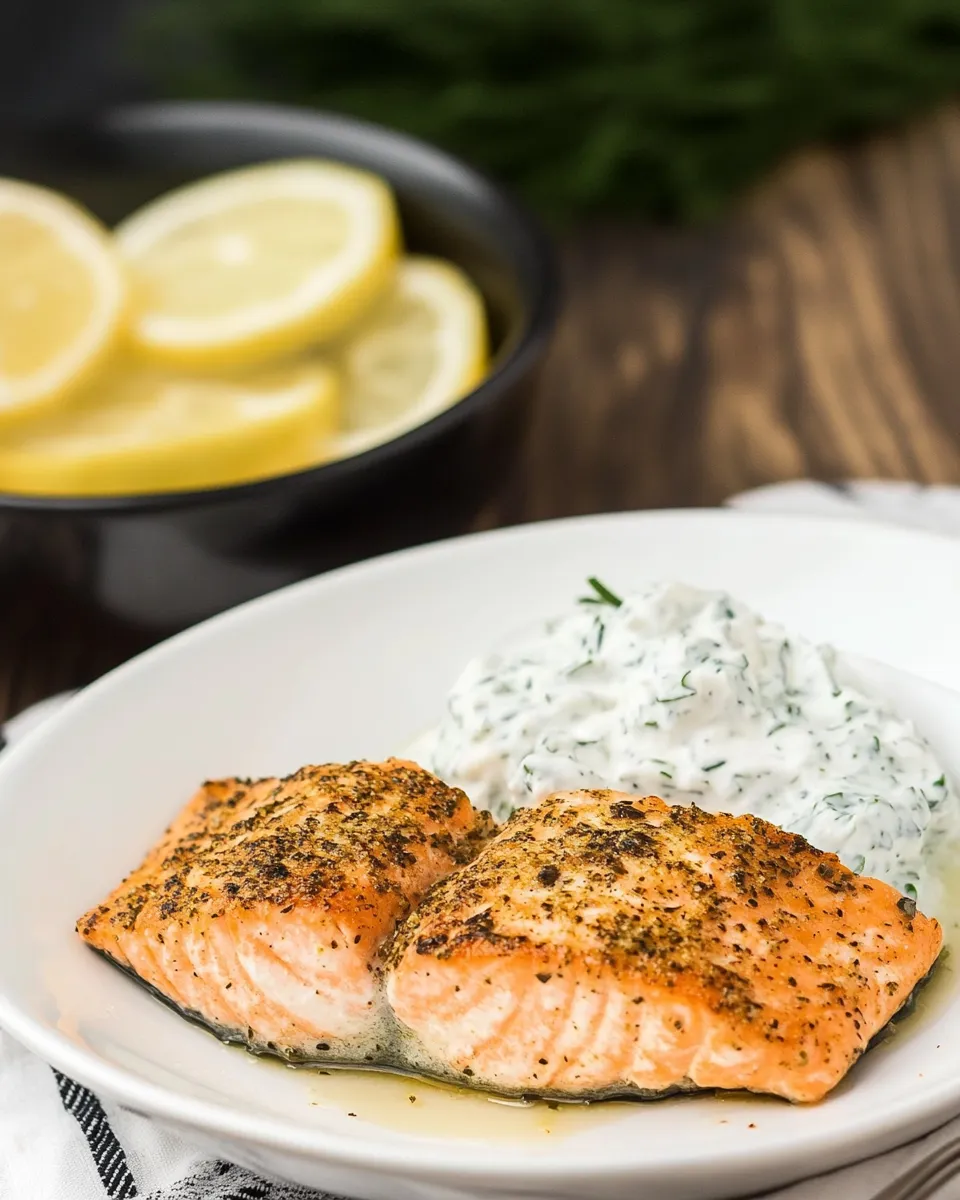
This is a straightforward, unfussy weeknight dinner that still feels special. Firm, flaky salmon gets a quick hit of olive oil and Greek seasoning, then goes into a very hot oven so the outside roasts while the inside stays tender. I serve it with a cooling tzatziki or spoon it over a salad for a fast, balanced plate.
The technique is simple: high heat, short time. That keeps the salmon moist and gives you a clean, bright seasoning profile—nothing heavy or masked. It’s a great base recipe: swap sides, scale up for company, or make extra to use cold in salads.
Below you’ll find a clear ingredient breakdown with notes, precise step-by-step instructions matching the recipe’s quantities, and practical tips for success, substitutions, meal prep, and nutrition-minded swaps.
Ingredient Breakdown
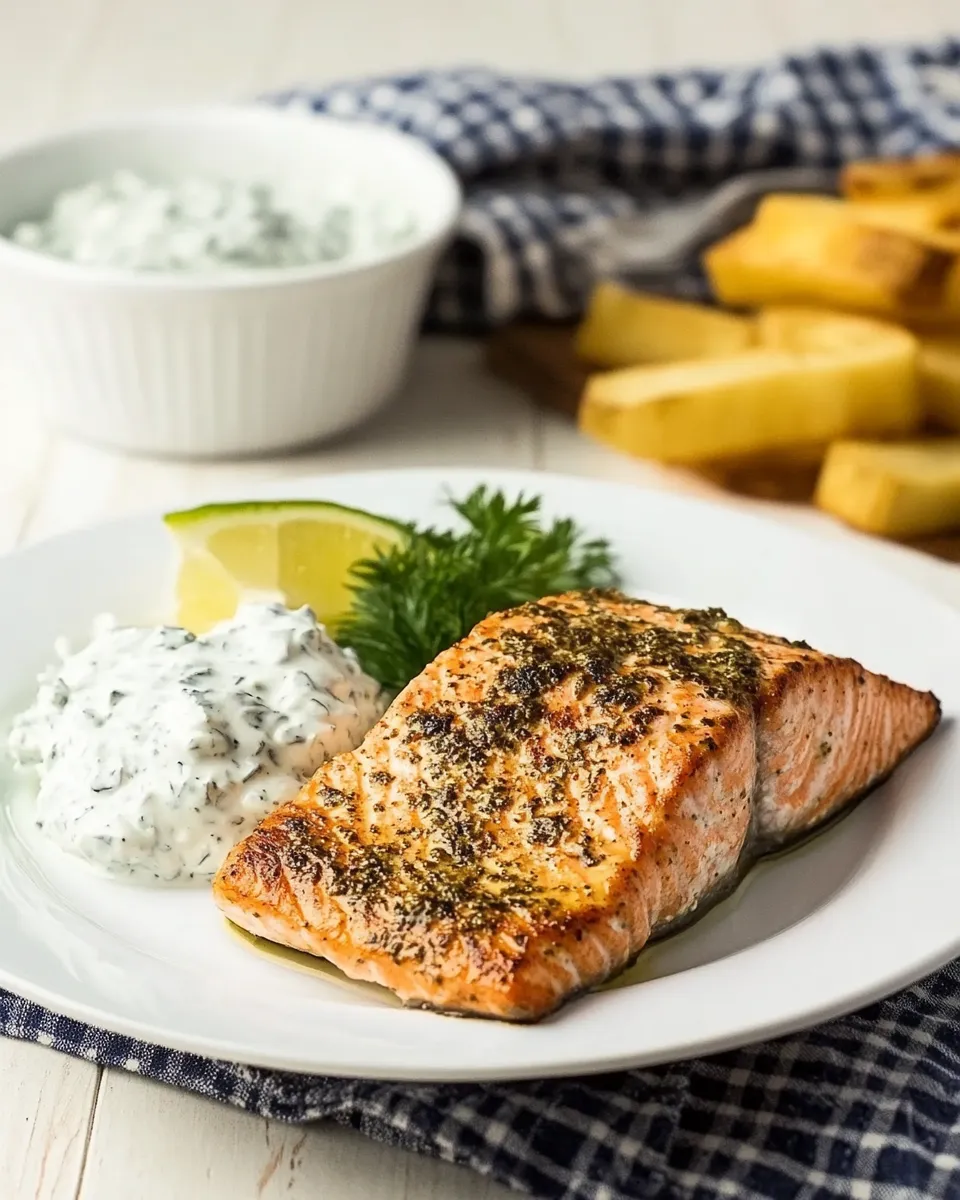
- 4 – 6-8 oz Salmon Fillets — Use center-cut fillets, skin-on or skinless. Skin-on helps hold the fish together while roasting and crisps if you broil briefly.
- 3-4 tbsp Olive Oil — Coats the fillets to promote even browning and keep the flesh moist; use the higher end for drier fillets.
- Greek Seasoning — A blend of oregano, garlic, lemon, and herbs; it’s the flavor anchor. Sprinkle to taste but don’t skimp—this is the main seasoning.
Step-by-Step: Greek Salmon with Tzatziki Sauce
Follow these steps exactly as written for reliably cooked salmon using the ingredient amounts above.
- Preheat the oven to 450°F (232°C). Position a rack in the middle of the oven so the fillets roast evenly.
- Line a baking sheet with aluminum foil for easy cleanup. Generously coat the foil with cooking spray to prevent sticking.
- Pat the salmon fillets dry with paper towels. Dry fish browns and roasts better than damp fish.
- Brush each fillet on all exposed surfaces with 3–4 tablespoons olive oil total. Use more oil if the fillets look lean or if you prefer a richer finish.
- Sprinkle Greek seasoning evenly over the top of each fillet. Aim for a light, even coating—enough so each bite has herb and citrus notes without overwhelming the fish.
- Place the seasoned fillets on the prepared baking sheet, skin-side down if they have skin, leaving a little space between pieces for even heat circulation.
- Bake on the middle rack for 13–15 minutes. Start checking at 13 minutes: the salmon is done when it is no longer opaque in the center and it flakes easily with a fork. Thick fillets may need the full 15 minutes; thinner pieces will finish sooner.
- Remove from the oven and let the fillets rest for 2 minutes before serving. Resting lets the juices settle so the salmon holds together when plated.
Why This Recipe Belongs in Your Rotation
It’s fast: from oven-on to table in about 20 minutes. It’s flexible: serve with grains, roasted vegetables, or a crisp salad. It’s reliable: high heat and short time produce tender, flaky salmon every time. And it’s family-friendly—mildly seasoned but full of flavor.
Dairy-Free/Gluten-Free Swaps
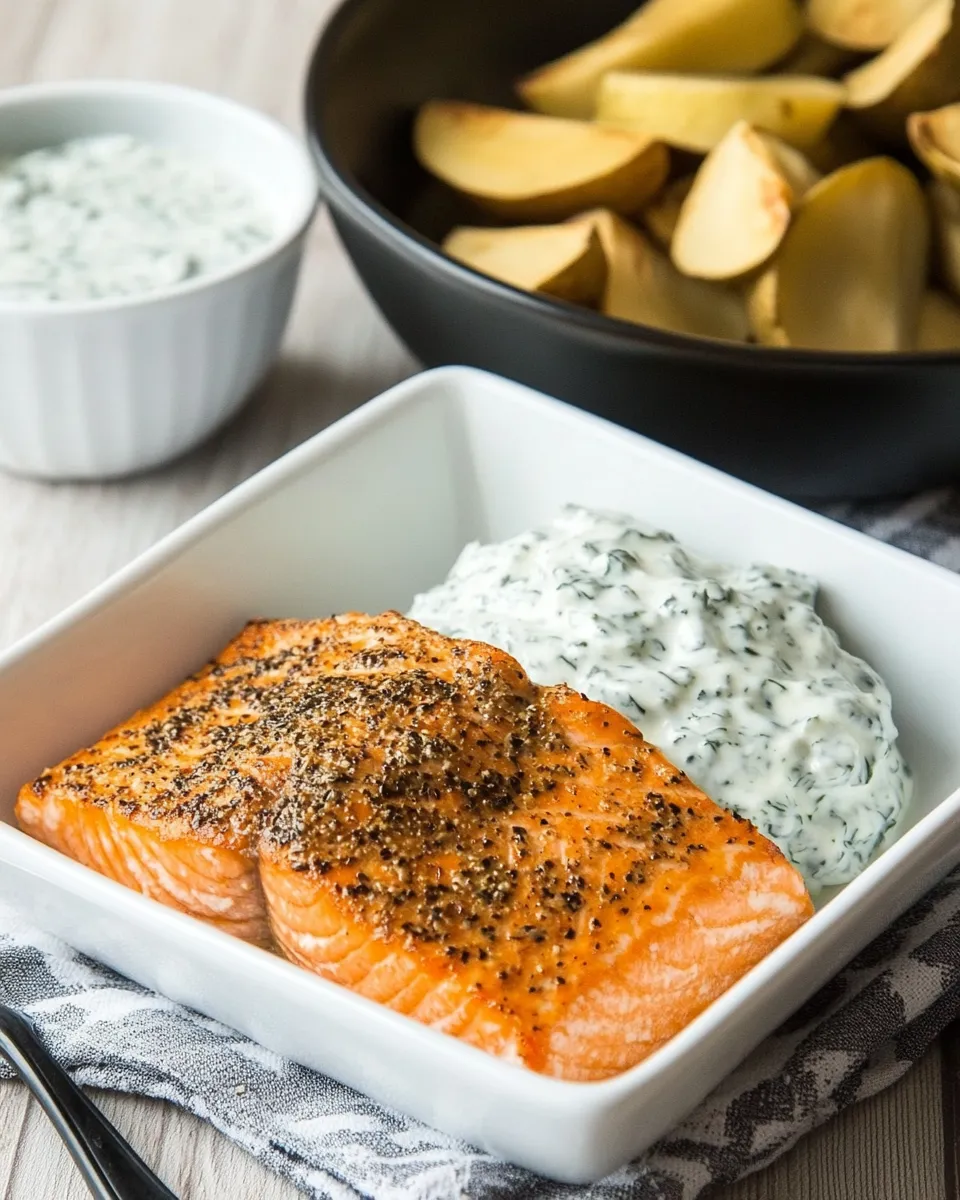
- Dairy-free: The recipe as written contains no dairy. If you pair it with tzatziki, swap for a dairy-free yogurt or a cucumber-herb vinaigrette.
- Gluten-free: This dish is naturally gluten-free. Verify that your Greek seasoning blend is certified gluten-free if you have a sensitivity.
Cook’s Kit
- Rimmed baking sheet — Holds any juices and prevents overflow.
- Aluminum foil — For easy cleanup and to reflect heat.
- Pastry brush or spoon — To apply the olive oil evenly.
- Instant-read thermometer (optional) — Salmon is perfectly done at 125–130°F for medium; 145°F is the USDA recommendation for well-done.
- Spatula or fish turner — For transferring fillets to plates without breaking them.
Pitfalls & How to Prevent Them
- Overbaking: The biggest risk. Start checking at 13 minutes. Salmon continues to cook slightly after you pull it from the oven.
- Sticking: Use the cooking spray and brush fillets with oil. If the skin sticks, slide a spatula under slowly and lift gently.
- Uneven cooking: Don’t crowd the pan. Space fillets so hot air can circulate around each piece.
- Flat flavor: Don’t skip the olive oil—it carries the seasoning and helps it bloom in the heat.
Nutrition-Minded Tweaks
- Lower fat: Use 3 tbsp olive oil and wipe off excess after baking with a paper towel if you want to shave calories.
- Boost protein and fiber: Serve over a bed of quinoa or farro mixed with chopped cucumber and cherry tomatoes.
- Lower sodium: Choose a low-sodium Greek seasoning or make your own with dried oregano, lemon zest, garlic powder, and a pinch of salt.
Pro Tips & Notes
Seasoning and oil
Brush the fish with oil first so the seasoning adheres; it also prevents the herbs from burning. If you prefer a brighter finish, add a squeeze of lemon just before serving.
Cooking level
If you like a slightly crisp top, switch to broil for the last 1–2 minutes—watch carefully so it doesn’t char. For a more consistent doneness, use an instant-read thermometer: 125–130°F for medium-rare, 145°F for fully cooked.
Leftovers & Meal Prep
Cool the cooked salmon to room temperature, then refrigerate in an airtight container for up to 3 days. Use cold flakes to top salads, mix into grain bowls, or make salmon sandwiches with tzatziki or hummus. Reheat gently in a 300°F oven covered with foil for 8–10 minutes to avoid drying out.
Your Questions, Answered
Q: Can I use frozen salmon? A: Yes—thaw completely and pat dry before seasoning and baking. Q: Can I grill instead? A: Absolutely—oil the grate, cook over medium-high heat 4–5 minutes per side depending on thickness. Q: What if I don’t have Greek seasoning? A: Mix dried oregano, garlic powder, lemon zest, salt, and a pinch of black pepper to approximate it.
In Closing
This Greek Salmon recipe is quick, dependable, and flavorful without fuss. The method—high heat and short time—works for any good-quality fillet and keeps dinner simple on busy nights. Use the ingredient and technique notes above to adapt it to your pantry and preferences, and don’t be afraid to scale up for company. Happy cooking.
Greek Salmon with Tzatziki Sauce
Ingredients
- 4 salmon fillets 6–8 oz each
- 3-4 tbsp olive oil
- Greek seasoning to taste
Instructions
- Preheat the oven to 450°F (230°C).
- Line a baking sheet with aluminum foil and lightly coat the foil with cooking spray.
- Pat the salmon fillets dry with paper towels, then brush both sides with 3 to 4 tablespoons olive oil.
- Sprinkle Greek seasoning evenly over the top of each fillet, pressing gently so it adheres.
- Place the fillets skin-side down (if applicable) on the prepared baking sheet, spacing them slightly apart.
- Bake on the middle rack for 13–15 minutes, or until the salmon is opaque and flakes easily with a fork.
- Remove from the oven and let rest for a couple of minutes before serving with tzatziki sauce.
Equipment
- Baking Sheet
- Aluminum Foil
- basting brush or spoon
- Oven
Notes
- Use skin-on fillets for easier handling and crispier edges.
- Adjust Greek seasoning to your preferred salt level.
- Let the salmon rest briefly to finish cooking through.