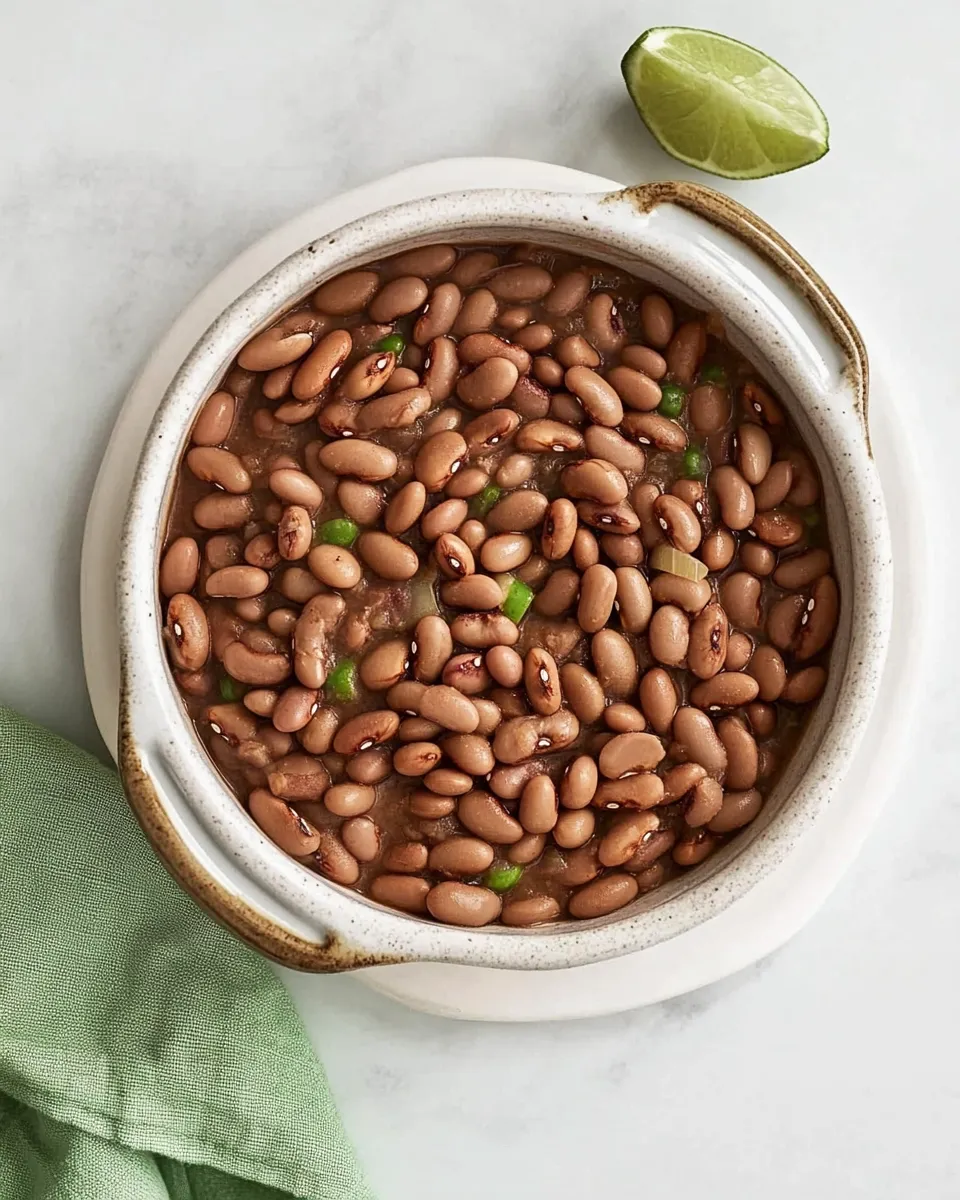
Pinto Beans
These pinto beans are my go-to for weeknight dinners, taco fillings, and a hearty side that feels like home. They’re humble, forgiving, and build deep flavor with just a few pantry staples. I keep a batch in the fridge so a robust, comforting meal is always within reach.
The recipe uses simple techniques—soaking, a gentle sauté, and a long simmer—to coax creamy texture and a naturally thickened sauce. A hit of lime at the end brightens everything, while jalapeño and cumin add warmth and just enough kick when you want it.
The Ingredient Lineup
- 2 cups dry pinto beans — the heart of the dish; yields about 6–8 cups cooked depending on soak and simmer time.
- 1 tablespoon avocado oil — neutral, high smoke point oil for sautéing the aromatics.
- ½ white onion, chopped — adds sweetness and savory depth when softened.
- 1½ teaspoons ground cumin — brings earthy warmth and classic bean flavor.
- 8 cups water, plus more as needed — cooking liquid; add more to keep beans submerged while simmering.
- ½ teaspoon dried oregano — subtle herbal note that supports the cumin.
- 2 teaspoons sea salt, plus more to taste — seasons the beans during simmer and allows you to finish to preference.
- Freshly ground black pepper — adds background heat and sharpness; grind to taste.
- 1 tablespoon fresh lime juice, plus more to taste — brightens and lifts the finished beans.
- 1 jalapeño pepper, stemmed and diced — optional but recommended for a mild, fresh heat; seed for less spice.
- Chili powder, to taste — optional finishing spice to deepen color and add smoky warmth.
- Fresh cilantro, for garnish — fresh herbal finish that pairs perfectly with lime.
How to Prepare Pinto Beans
- Sort and rinse the beans: Place the 2 cups dry pinto beans in a large colander. Spread them out and remove any stones, shriveled beans, or debris. Rinse thoroughly under cold running water.
- Soak the beans: Transfer the rinsed beans to a large bowl and cover with 2 to 3 inches of cold water. Remove and discard any beans that float. Leave the bowl at room temperature to soak for 8 hours or overnight. Drain and rinse the soaked beans before cooking.
- Sauté the aromatics: In a large pot or Dutch oven, heat 1 tablespoon avocado oil over medium heat. Add the ½ chopped white onion and sauté until soft and translucent, about 5 minutes. If you like a bit of heat, add the diced jalapeño now and cook with the onion.
- Add spices and beans to the pot: Stir in 1½ teaspoons ground cumin to bloom the spice for about 30 seconds. Then add the drained beans to the pot along with 8 cups water, ½ teaspoon dried oregano, 2 teaspoons sea salt, and several grinds of freshly ground black pepper.
- Bring to a boil, then simmer: Increase heat to bring the pot to a gentle boil. Reduce the heat to maintain a simmer and cook uncovered. Timing varies by bean age, so start checking for tenderness at 1 hour and then every 15 minutes. Keep an eye on the water level and add more as needed to keep the beans submerged.
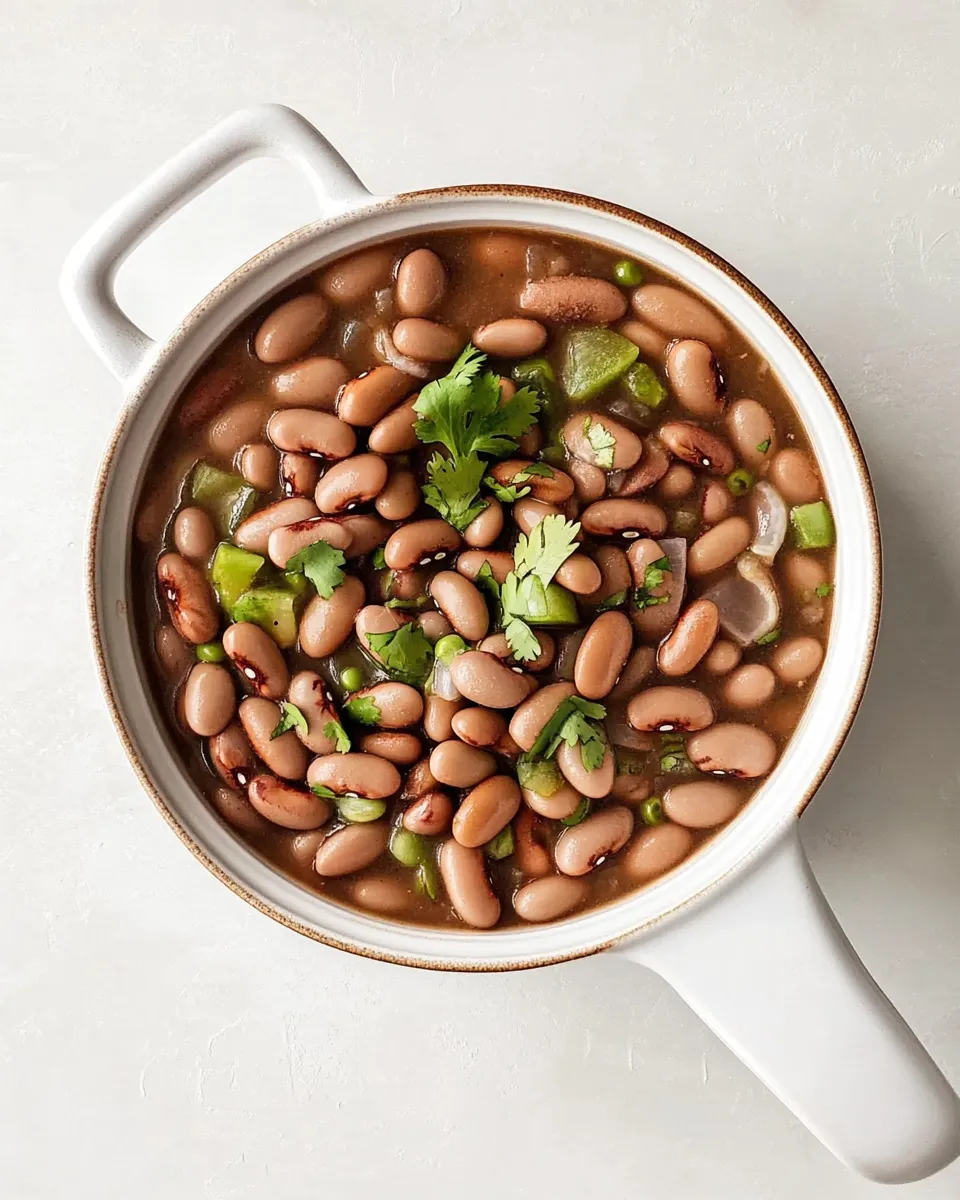
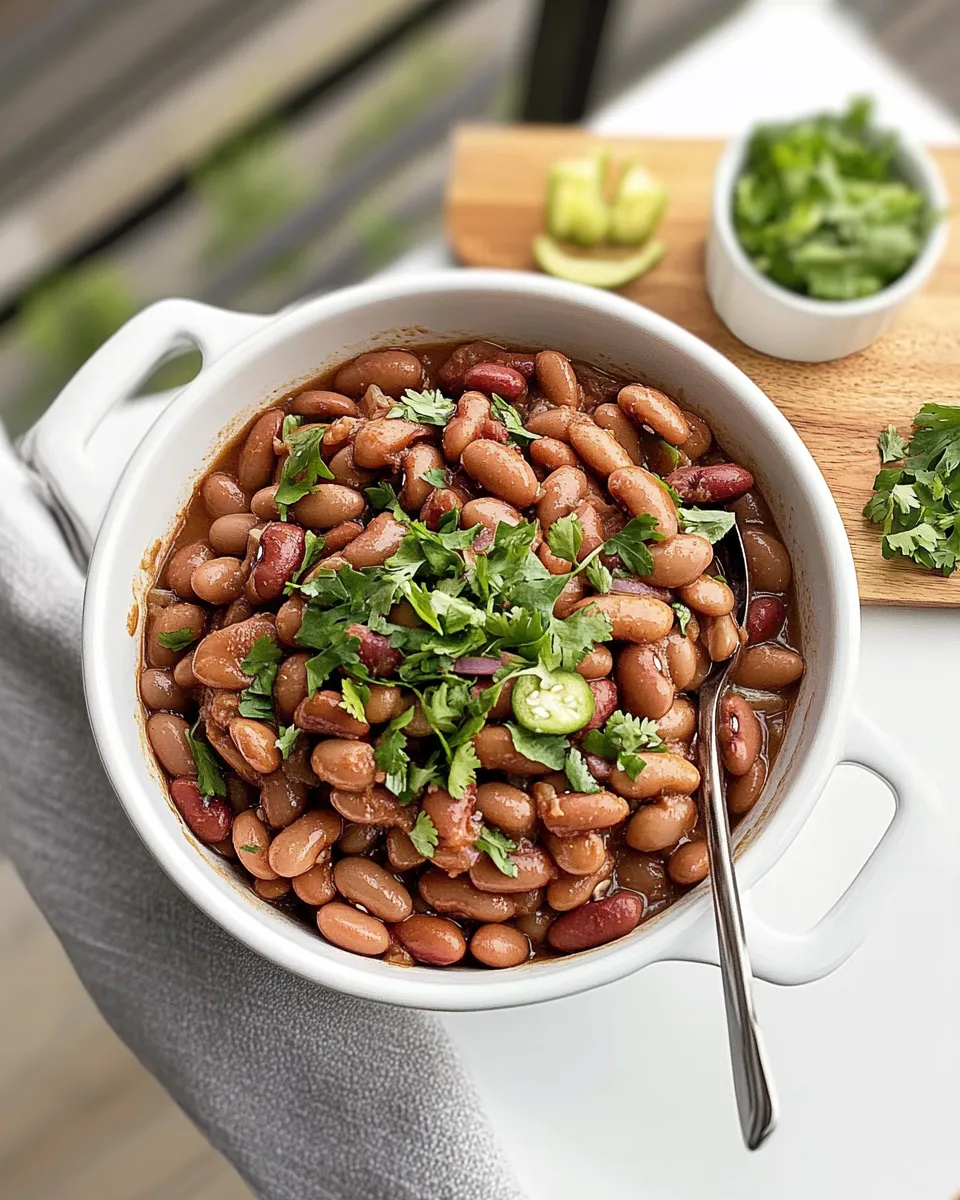
- Cook to desired texture: Continue simmering until the beans are tender and beginning to break down; I like mine when they’re starting to fall apart and the cooking liquid has thickened into a creamy sauce. This concentrated, starchy liquid gives the beans body.
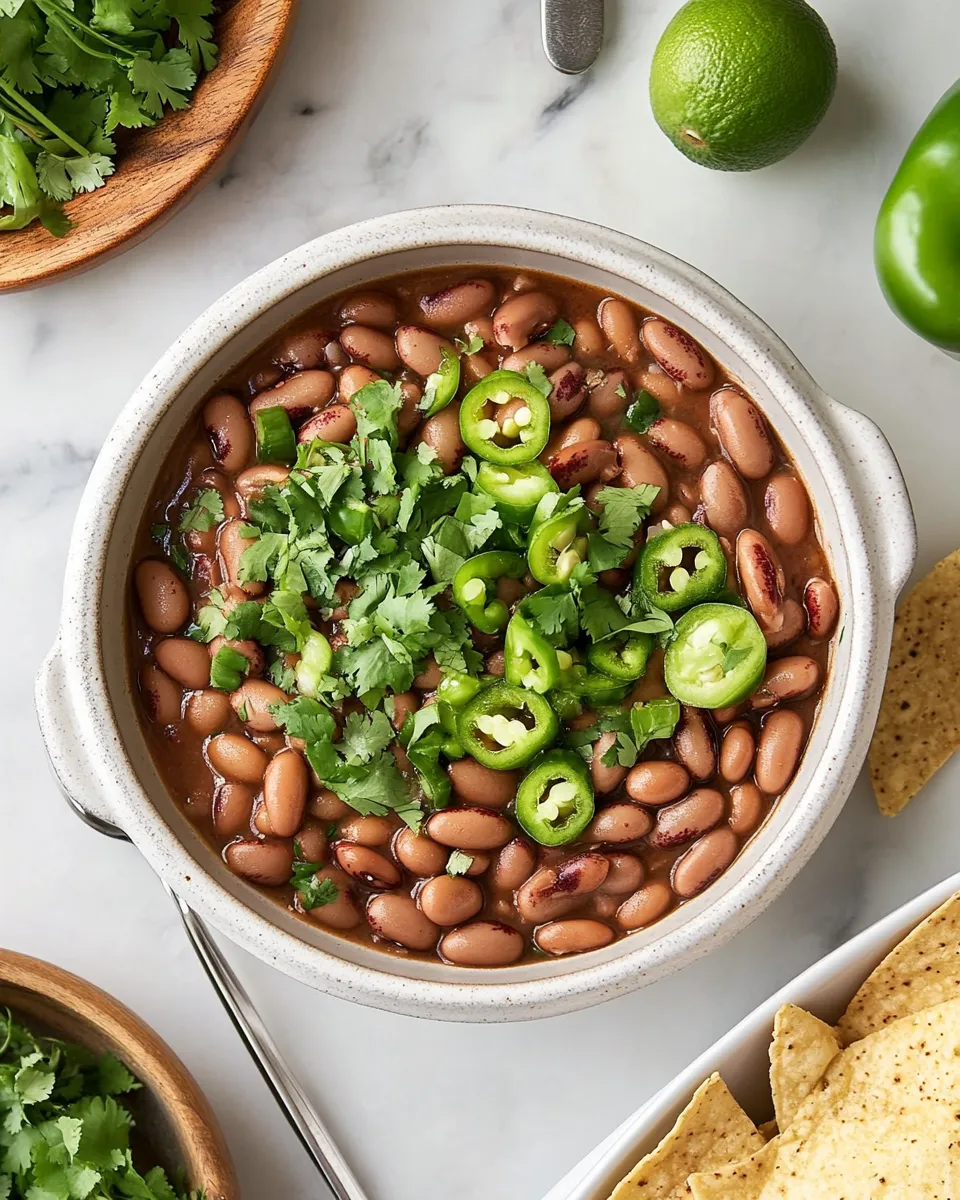
- Finish and season: Turn off the heat and stir in 1 tablespoon fresh lime juice. Taste and adjust seasoning—add more salt (I often add an additional ½ to 1 teaspoon), more pepper, and chili powder if you want extra warmth or color.
- Garnish and store: Garnish with chopped fresh cilantro if using. Store cooled beans in an airtight container in the refrigerator for up to 5 days, or freeze portions for up to 3 months.
Why This Pinto Beans Stands Out
This version balances simplicity with layered flavor. Soaking softens the beans evenly and shortens cooking time without masking the bean’s natural taste. Sautéing onion (and jalapeño, if you use it) builds a subtle savory base, while toasting the cumin releases oils that deepen the profile.
I let the pot simmer uncovered so the liquid reduces and thickens with the beans’ starches; that creates a silky, spoonable sauce that clings to tortillas, rice, or spooned beside roasted veggies. The lime at the end is a small step with a big payoff—brightness that prevents the dish from tasting heavy.
Vegan & Vegetarian Swaps
The recipe is already vegan and vegetarian as written—no swaps required. If you want to add umami without animal products, stir in a splash of soy sauce or a teaspoon of miso paste near the end, then adjust salt. For a smoky finish, add a pinch of smoked paprika or use a chipotle in adobo minced into the onions during sautéing.
Essential Tools for Success
- Large colander — for sorting and rinsing beans thoroughly.
- Large bowl — for soaking beans with room for expansion.
- Heavy-bottomed pot or Dutch oven — ensures even heat and prevents scorching during long simmers.
- Wooden spoon or heatproof spatula — for stirring without damaging the pot.
- Fine-grain measuring spoons and cups — accurate salt and spice measurements matter.
Avoid These Mistakes
- Skipping the sort — small stones or debris can ruin a bite; always spread and inspect beans first.
- Not soaking (when you choose to) — unsoaked beans take longer and can cook unevenly; if you skip soaking, increase simmer time and monitor liquid.
- Too high a simmer — a vigorous boil can split beans too quickly and make them mealy; keep a gentle simmer.
- Not tasting and adjusting at the end — salt, lime, and chili powder are critical finishing touches; season to your palate.
- Letting the pot go dry — maintain enough water to keep beans covered; add hot water if needed so you don’t stall the cooking.
Make It Diet-Friendly
These beans are naturally plant-based and high in fiber and protein, making them filling and nutrient-dense. To reduce sodium, start with 1 teaspoon salt during the simmer and finish to taste, or use low-sodium cooking liquid. To cut calories, serve smaller portions alongside large salads or steamed vegetables. For low-FODMAP needs, rinse and drain canned beans instead and use only a small portion; note that soaking and discarding the soak water can also reduce some oligosaccharides for sensitive cooks.
Chef’s Rationale
I build the recipe around technique rather than tricks. Soak to normalize moisture in each bean. Sauté aromatics to create a flavor foundation instead of dumping everything in dry. Blooming spices in oil releases flavors that water alone can’t extract. Simmering uncovered gives you texture—the transformation of thin cooking liquid into a velvety sauce is intentional and worth the patience.
The finishing lime juice is a deliberate contrast: acid brightens and balances the starch and salt. Small choices like these keep the beans versatile—you can turn them into refried beans, a topping for baked potatoes, or the base for chilis and stews.
Freezer-Friendly Notes
Cool the beans completely before freezing to protect texture. Portion into airtight containers or heavy-duty freezer bags, leaving a little headspace if using containers. Freeze for up to 3 months. Thaw in the refrigerator overnight, then reheat gently on the stove over low heat—add a splash of water if the sauce has thickened too much. Re-season with lime and salt after reheating, as flavors can mute in freezing.
FAQ
- Can I skip soaking? Yes, but expect longer simmer time. Soaking shortens cooking and helps remove some indigestible sugars.
- How long will these beans keep? Refrigerated in an airtight container, up to 5 days. Frozen up to 3 months.
- How do I make them creamier? Cook until the beans begin to break down and the liquid reduces; mash a few against the pot to thicken further.
- Can I use canned pinto beans? You can adapt the flavors but reduce cooking time—sauté onion and jalapeño, add spices, then add drained canned beans and a little water; simmer briefly to marry flavors.
- My beans are still hard after 2 hours—why? Beans can be old or the water might be too low. Continue simmering with fresh hot water added as needed. A pinch of baking soda can help soften very hard beans, but use sparingly.
In Closing
Pinto beans are a simple, reliable canvas for bold flavors. This method is straightforward, forgiving, and yields a bowlful that’s satisfying on its own or adaptable to many dishes. Spend a little time sorting and soaking, be patient as they simmer, and finish with lime and fresh herbs. You’ll have a versatile, delicious staple that keeps dinner easy and comforting all week long.

Pinto Beans
Ingredients
- 2 cups dry pinto beans
- 1 tablespoon avocado oil
- 1/2 white onion chopped
- 1 1/2 teaspoons ground cumin
- 8 cups water plus more as needed
- 1/2 teaspoon dried oregano
- 2 teaspoons sea salt plus more to taste
- freshly ground black pepper to taste
- 1 tablespoon fresh lime juice plus more to taste
- 1 jalapeño pepper stemmed and diced
- chili powder to taste
- fresh cilantro for garnish
Instructions
- Sort and rinse the beans: place the beans in a large colander and remove any stones or debris, then rinse under cold water.
- Soak the beans: transfer rinsed beans to a large bowl, cover with 2 to 3 inches of water, discard any beans that float, and soak at room temperature 8 hours or overnight; drain and rinse before cooking.
- Heat oil in a large pot or Dutch oven over medium heat, then add the chopped onion and sauté until soft, about 5 minutes; add the diced jalapeño with the onion if you want heat.
- Add the ground cumin and stir until fragrant, then add the soaked beans, 8 cups water, dried oregano, 2 teaspoons sea salt, and several grinds of freshly ground black pepper; bring to a boil.
- Reduce heat to a simmer and cook uncovered until the beans are tender and beginning to break down, about 1 to 1 1/2 hours; check for doneness starting at 1 hour and add more water as needed to keep beans submerged.
- Remove from heat and stir in 1 tablespoon fresh lime juice; season to taste with additional salt (about 1/2 to 1 teaspoon more if desired), more pepper, and chili powder if using.
- Garnish with fresh cilantro if desired and serve.
Equipment
- large colander
- Large Bowl
- Large Pot or Dutch Oven
- Measuring cups and spoons
- Knife
- Cutting Board
Notes
- Soaking reduces cooking time and improves digestibility.
- Check beans for doneness starting at 1 hour.
- Add more water as needed to keep beans submerged while simmering.
- Adjust salt, lime, and chili powder to taste after cooking.