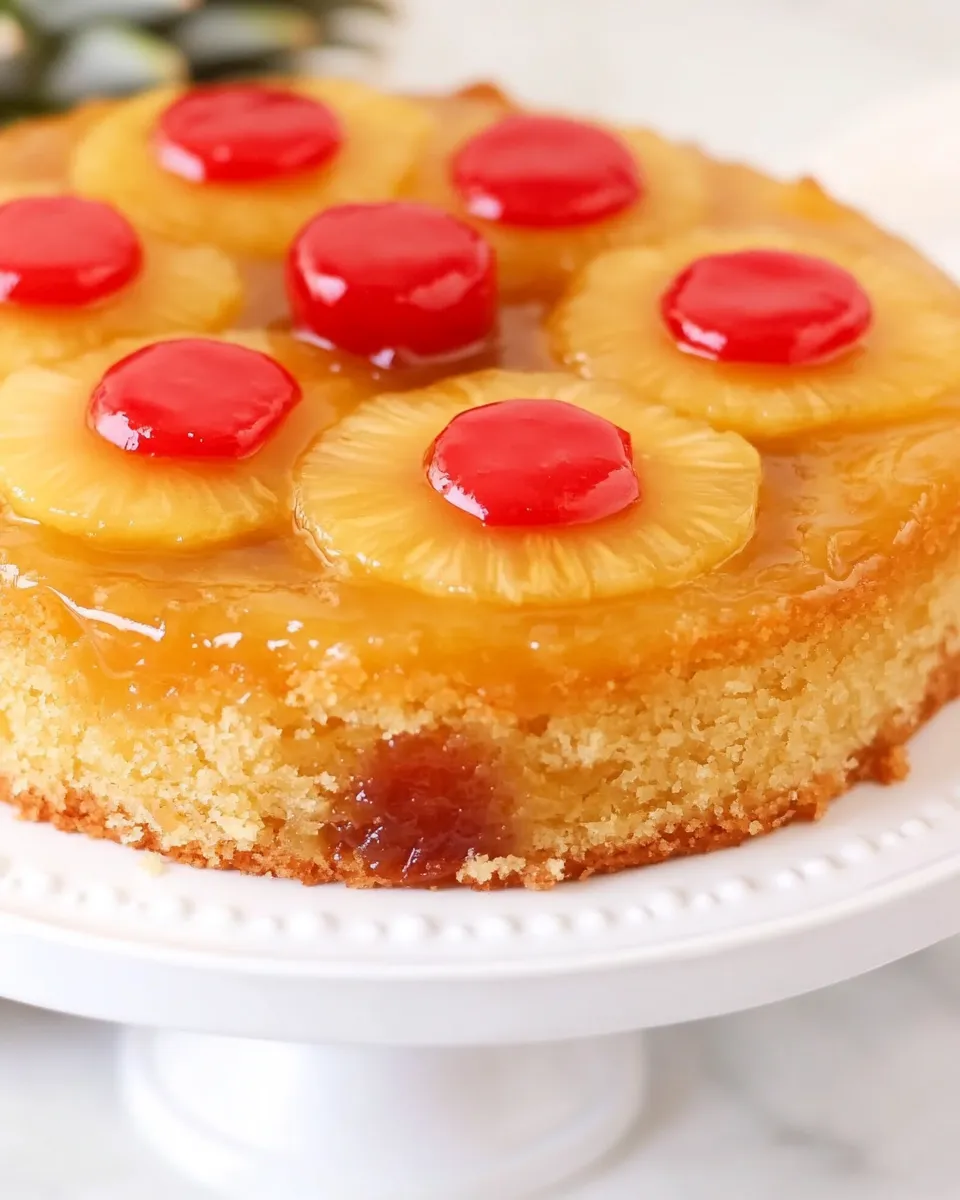
Vegan Pineapple Upside Down Cake
I love a recipe that looks fancier than it is, and this Vegan Pineapple Upside Down Cake does exactly that. It’s a classic, homey dessert with a glossy brown-sugar pineapple top and a tender, straightforward cake beneath. The trick is simple: make the caramel layer, pour the batter over it, bake, and flip. The result is an impressive centerpiece with minimal fuss.
This version keeps things plant-based without losing any of the tropical sweetness or buttery mouthfeel. Applesauce and canola oil keep the crumb moist, while two forms of pineapple—sliced and crushed—give you bright fruit pockets and syrupy flavor. It’s busy-day friendly and party-ready: bake in a 10-inch cast-iron skillet, invert, and serve warm with vegan vanilla ice cream or whipped cream.
Ingredients at a Glance
- 2 tablespoons Earth Balance vegan butter — provides the caramel-like fat for the topping and melts evenly; can sub regular butter if not vegan.
- 1/2 cup dark brown sugar — makes the glossy caramel base and pairs with pineapple for that classic flavor.
- 1 (20-ounce) can sliced pineapple, drained — for the decorative rings that sit on top once inverted; drain well to avoid soggy cake.
- 1 (20-ounce) can crushed pineapple, drained well — spooned into crevices for extra fruit pockets and moisture; drain thoroughly to control batter consistency.
- 1/2 cup applesauce — egg replacement and keeps the cake tender.
- 1/2 cup canola oil — adds moistness and helps create a soft crumb.
- 1/2 cup granulated sugar — balances the brown sugar and sweetens the cake batter.
- 1/3 cup reserved pineapple juice — brings extra pineapple flavor into the batter; measured from the drained canned pineapple.
- 1 tablespoon pure vanilla extract — flavor lift; use good-quality vanilla for the best result.
- 1 1/4 cups all-purpose flour — the cake’s structure; spoon and level for accurate measuring.
- 1/4 teaspoon fine-grain sea salt — enhances all flavors, especially the sweet-tart pineapple.
- 2 teaspoons baking powder — the leavener that gives the cake rise and a tender crumb.
- One 10-inch cast-iron skillet — recommended because it transfers straight from oven to table and holds heat well.
- 12-inch or larger cake platter — to invert the cake onto; have it ready before flipping.
Directions: Vegan Pineapple Upside Down Cake
- Preheat the oven to 350°F (175°C). Position a rack in the center of the oven.
- Place the 10-inch cast-iron skillet over medium heat on the stove. Add 2 tablespoons Earth Balance vegan butter and let it melt completely.
- Once the butter has melted, add 1/2 cup dark brown sugar. Stir constantly until the sugar dissolves and the mixture becomes smooth and glossy, about 1–2 minutes. Do not let it burn.
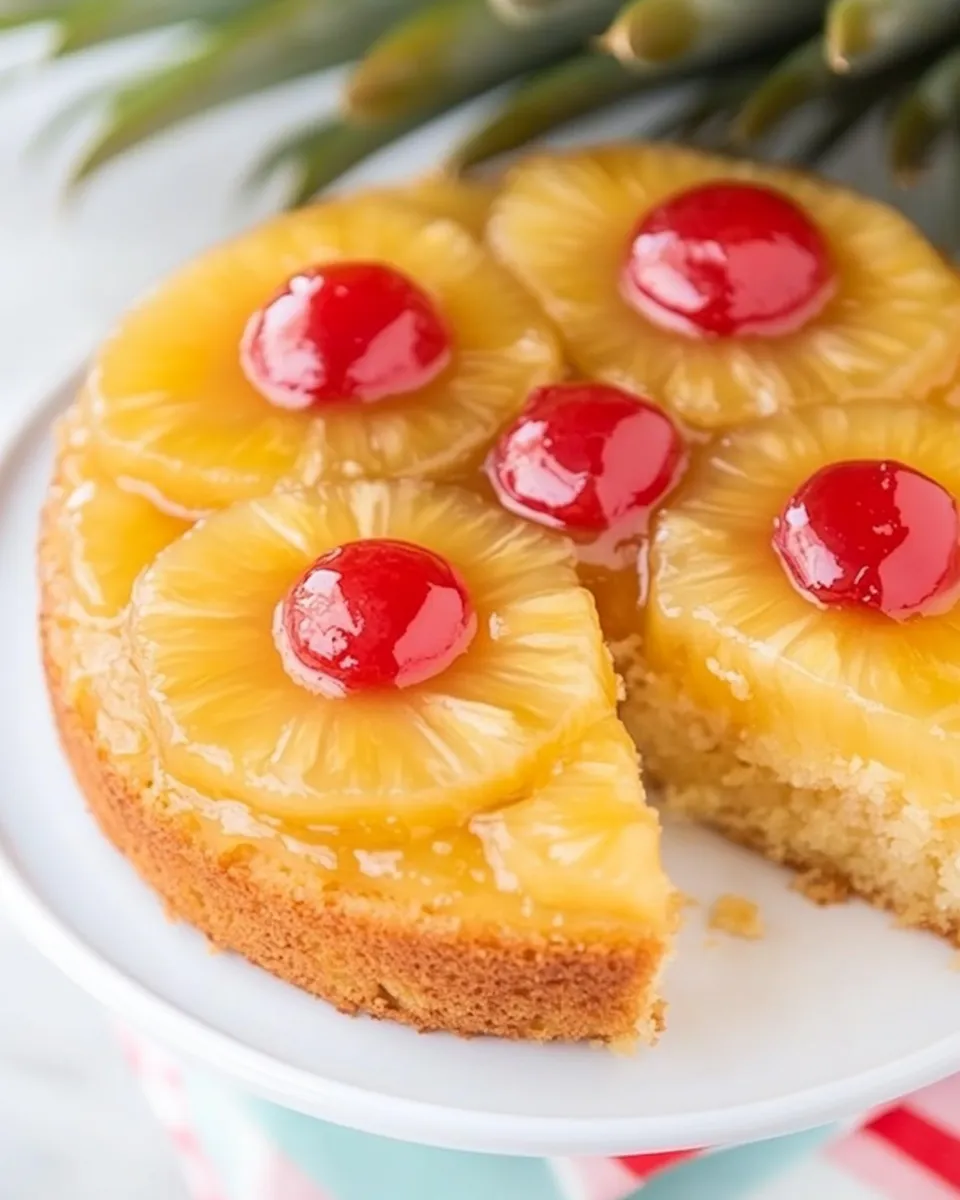
- Remove the skillet from the heat. Arrange the drained sliced pineapple rings in a single layer in the caramel, fitting them snugly. Place a maraschino cherry in the center hole of each pineapple ring if you like the classic look.
- Spoon the drained crushed pineapple into the gaps and over the spaces between the rings, using all of the drained crushed pineapple. Distribute it evenly so the top will be uniformly fruity after inversion.
- In a large mixing bowl, combine 1/2 cup applesauce, 1/2 cup canola oil, 1/2 cup granulated sugar, 1/3 cup reserved pineapple juice, and 1 tablespoon pure vanilla extract. Whisk or stir until the mixture is homogeneous and slightly glossy.
- Place a fine-mesh sieve over the bowl. Into the sieve add 1 1/4 cups all-purpose flour, 2 teaspoons baking powder, and 1/4 teaspoon fine-grain sea salt. Sift the dry ingredients directly over the wet mixture to remove lumps and ensure even distribution.
- Using a wooden spoon or spatula, fold the dry ingredients into the wet ingredients until just incorporated. Scrape the bowl sides and bottom; a few small streaks of flour are okay, but do not overmix.
- Immediately spread the batter evenly over the pineapple and caramel in the skillet. Smooth the top lightly with the back of a spoon or an offset spatula so the batter reaches the edges.
- Place the skillet in the preheated oven and bake for about 35 minutes. The cake is done when the top (which will be the bottom after flipping) turns golden brown and a toothpick inserted into the center comes out clean or with a few moist crumbs.
- Remove the skillet from the oven and let it cool on a wire rack for about 10 minutes. This short rest helps the caramel set slightly so the topping comes out clean when flipped.
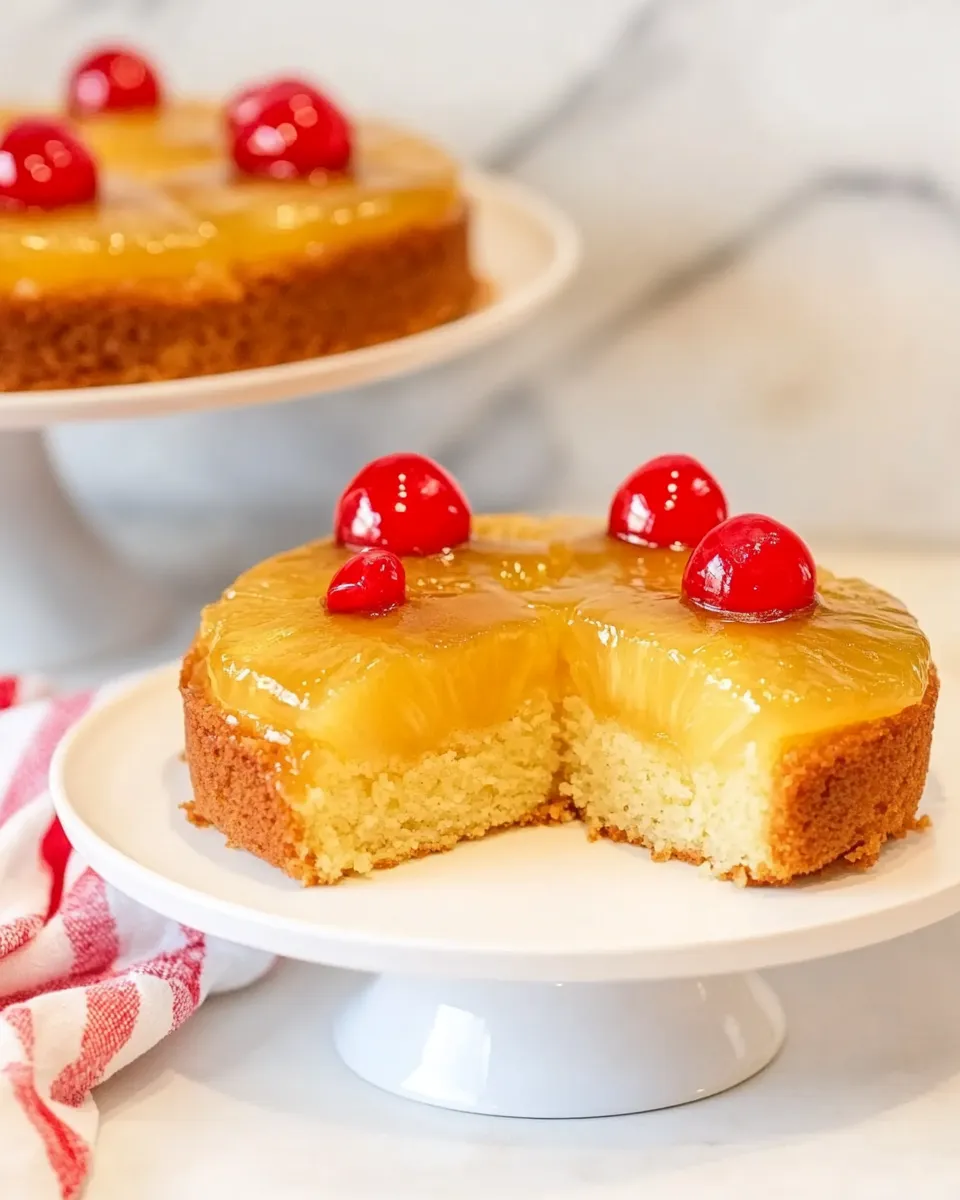
- To invert: have a 12-inch or larger cake platter ready. Run a butter knife around the inner edge of the skillet to loosen the cake. Place the platter face-down over the skillet, holding both firmly. Quickly and confidently flip the skillet and platter together so the cake lands on the platter. Lift the skillet straight up.
- Serve immediately if you want the caramel warm and slightly gooey—excellent with vegan vanilla ice cream or vegan whipped cream. Alternatively, let the cake cool completely, then refrigerate until ready to serve. The cake keeps well in the fridge for up to 2–3 days.
Why It’s My Go-To
This cake is reliably impressive with minimal technique. The caramelized pineapple top looks like you spent hours fussing, but the steps are mostly measuring and mixing. It’s forgiving: the applesauce-oil combo lowers the chance of overmixing problems, and using canned pineapple means consistent flavor year-round. For gatherings, it’s a show-stopper that travels well when cooled and wrapped.
Texture-Safe Substitutions

- Earth Balance vegan butter — can be substituted with regular butter if not vegan; keep the same amount for the topping so caramel texture stays right.
- Canola oil — swap with vegetable oil, grapeseed oil, or light olive oil for the same moist crumb.
- Applesauce — use mashed banana if you don’t mind a hint of banana flavor, but texture will be slightly denser.
- All-purpose flour — for gluten-free, try a 1:1 gluten-free flour blend, but expect subtle changes to structure; additional binding (like 1/4 teaspoon xanthan gum) can help.
- Granulated and brown sugar — coconut sugar can work for both, though color and caramel notes shift slightly.
Before You Start: Equipment
- 10-inch cast-iron skillet — preferred. If you don’t have cast iron, use an oven-safe 10-inch skillet or cake pan, but watch caramel behavior when flipping.
- 12-inch (or larger) cake platter — must be larger than the skillet to catch the inverted cake cleanly.
- Fine-mesh sieve — for sifting dry ingredients into the wet mixture for a smoother batter.
- Wooden spoon or spatula — for gentle folding to avoid overworking the batter.
- Wire cooling rack — cools the skillet safely and evenly after baking.
Problems & Prevention
- Sticky caramel won’t release — let the cake rest 10 minutes after baking before flipping; too-hot sugar can stick and tear the cake.
- Too-soggy cake — make sure crushed pineapple is well drained; excess juice thins the batter and prevents set.
- Cake sinks in the middle — underbaking or overmixing can cause collapse. Test with a toothpick and avoid overworking the batter after adding flour.
- Caramel burned — melt butter and sugar on medium heat and remove from heat as soon as sugar melts and smooths; carryover heat in the skillet is enough to finish the topping assembly.
Season-by-Season Upgrades
- Spring — add a sprinkle of lime zest to the batter for brightness.
- Summer — top with fresh pineapple chunks and toasted coconut after inverting for extra freshness and crunch.
- Fall — stir 1/2 teaspoon ground cinnamon into the batter and swap maraschino cherries for halved glazed cranberries or roasted pears.
- Winter — fold 1/4 cup chopped crystallized ginger into the batter for warm spice against the pineapple.
Notes from the Test Kitchen
- Reserve the pineapple juice when draining the cans and measure out 1/3 cup for the batter; this adds concentrated pineapple flavor without extra liquid from the crushed pineapple.
- We tested both cast-iron and metal cake pans. Cast iron gives a more even, prettier flip because of its weight and heat retention.
- Draining crushed pineapple thoroughly on paper towels for a few minutes prevented a gummy crumb in multiple trials.
- Flipping can feel awkward: practice the motion with an empty skillet and plate if you’re unsure. Quick, confident movement yields the cleanest results.
Storing Tips & Timelines
- Room temperature — serve within a few hours if you want the caramel warm; cover loosely.
- Refrigerator — cool completely, then wrap or place in an airtight container; keeps 2–3 days. Bring to room temperature or microwave briefy slices before serving for a warm finish.
- Freezing — slice and individually wrap portions with plastic, then foil; freeze up to 1 month. Thaw overnight in the fridge and warm slightly before serving.
Helpful Q&A
- Q: Can I make this in a regular 9- or 10-inch cake pan instead of cast iron? A: Yes—use an oven-safe pan, but weigh the pan when inverting because a lighter pan flips less easily. Non-stick pans sometimes retain more caramel; loosen edges thoroughly.
- Q: Do I have to use both sliced and crushed pineapple? A: The sliced rings are for presentation; crushed fills the gaps and adds moisture. You can use only crushed for a less decorative but still tasty cake.
- Q: Can I reduce sugar? A: You can trim the granulated sugar a bit, but the brown sugar in the topping is essential for caramelization and flavor. Reducing too much affects texture and caramel set.
- Q: What if my batter seems too thick or too thin? A: Batter should be pourable but not runny. If too thick, a tablespoon or two of reserved pineapple juice can loosen it. If too thin, check that crushed pineapple was well drained; a bit more flour by tablespoon can rescue it, but measure carefully.
Bring It Home
This Vegan Pineapple Upside Down Cake is one of those recipes that makes guests smile without sending you into the kitchen for hours. It’s reliably delicious, simple to make, and flexible for tweaks. Keep canned pineapple and a trusty cast-iron skillet on hand, and you’ve got an easy dessert that looks like a celebration. Serve warm with vegan ice cream, and enjoy the best part: everyone reaches for seconds.

Vegan Pineapple Upside Down Cake
Ingredients
- 2 tablespoons Earth Balance vegan butter can sub regular butter if not vegan
- 1/2 cup dark brown sugar
- 1 20-ounce can sliced pineapple drained (reserve the juice)
- 1 20-ounce can crushed pineapple drained well
- 1/2 cup applesauce
- 1/2 cup canola oil
- 1/2 cup granulated sugar
- 1/3 cup reserved pineapple juice
- 1 tablespoon pure vanilla extract
- 1 1/4 cups all-purpose flour
- 1/4 teaspoon fine-grain sea salt
- 2 teaspoons baking powder
Instructions
- Preheat the oven to 350°F (175°C).
- Place the 10-inch cast-iron skillet over medium heat and add the vegan butter; once melted, stir in the 1/2 cup dark brown sugar and cook, stirring constantly, until the sugar dissolves and the mixture is glossy, about 2 minutes.
- Remove the skillet from heat and arrange the drained sliced pineapple in the caramel, placing maraschino cherries into the center holes if desired; spread the drained crushed pineapple into the gaps and over the top.
- In a large mixing bowl, combine the applesauce, canola oil, 1/2 cup granulated sugar, 1/3 cup reserved pineapple juice, and vanilla; mix until combined.
- Place a fine-mesh sieve over the bowl and sift together the all-purpose flour, baking powder, and sea salt into the wet ingredients.
- Fold the dry ingredients into the wet with a wooden spoon or spatula until just incorporated, taking care not to overmix.
- Spread the batter evenly over the pineapple in the skillet.
- Bake in the preheated oven for about 35–40 minutes, until the cake is golden on top and a toothpick inserted into the center comes out clean.
- Remove the skillet from the oven and let cool for about 10 minutes.
- Loosen the cake edges with a butter knife, place a 12-inch (or larger) cake platter upside down over the skillet, and quickly invert the skillet to release the cake onto the platter.
- Serve immediately or let cool completely before refrigerating; cake keeps well in the fridge for 2–3 days.
Equipment
- 10-inch cast-iron skillet
- Mixing Bowl
- Fine Mesh Sieve
- spatula or wooden spoon
- Measuring cups and spoons
- 12-inch or larger cake platter
Notes
- Adapted from Food Network.