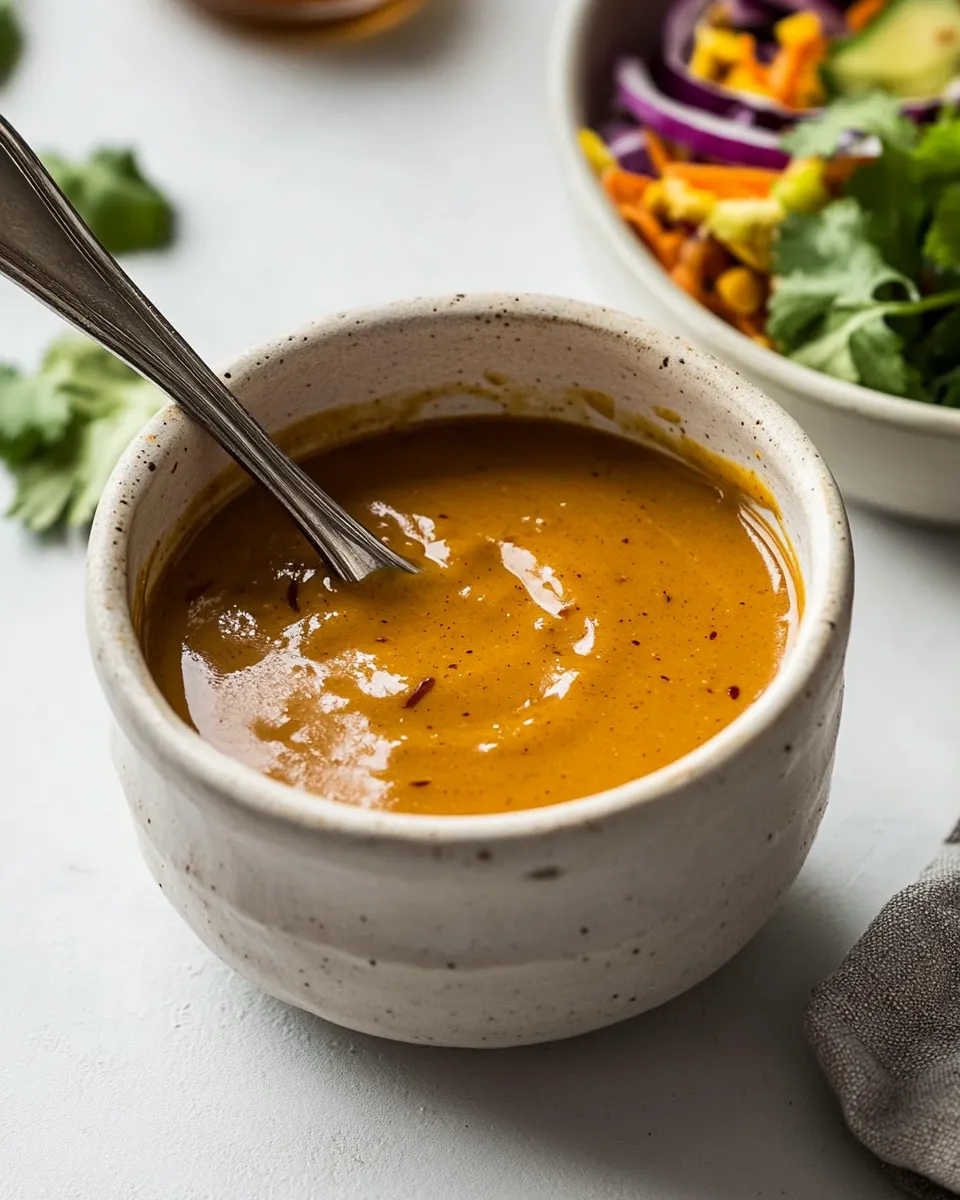
Thai Peanut Dressing
I love a dressing that pulls together a salad, a grain bowl, or a noodle plate with one decisive spoon. This Thai Peanut Dressing is exactly that: creamy, tangy, slightly sweet, and just spicy enough to make you reach for more. It uses full-flavored ingredients but stays approachable for weeknight workhorses.
I test dressings at home and on friends, and this version—built on Greek coconut yogurt and creamy peanut butter—strikes a great balance. It blends fast, keeps well in the fridge, and adapts to whatever greens or proteins you have on hand. No fuss, big payoff.
What to Buy
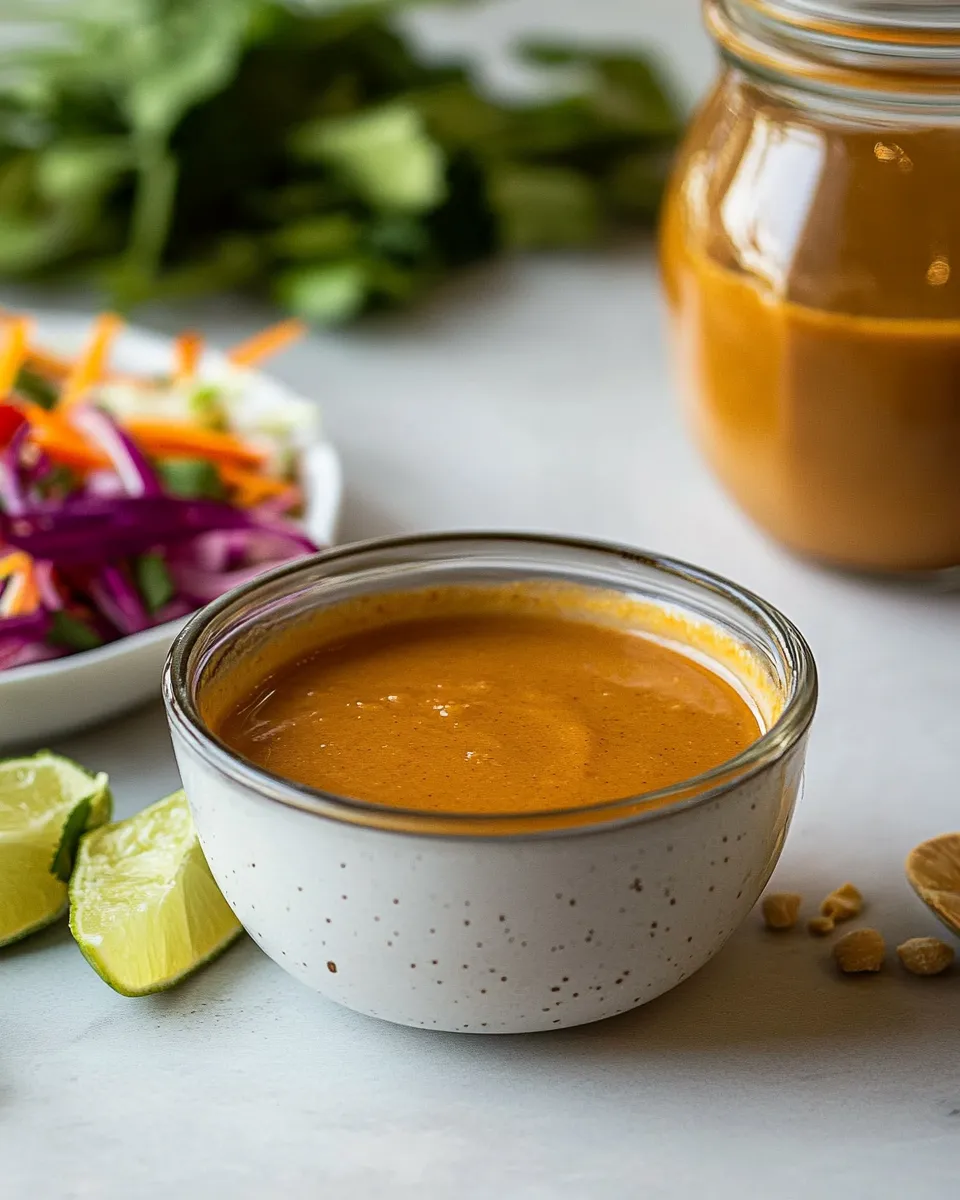
- 15.3 oz. container Greek coconut yogurt — base for creaminess and tang; Chobani-style texture works well.
- 1/3 cup creamy peanut butter — provides peanut flavor and body; use smooth for silky texture.
- 1–2 tablespoons Asian sweet chili sauce — adds sweet heat; use 2 tbsp for a bolder kick.
- 2 teaspoons red curry paste — brings depth and warmth; level teaspoons are fine.
- 1 tablespoon lime juice — brightens and balances richness.
- 1 tablespoon sugar — rounds flavors; add more later to taste if needed.
- 2 tablespoons low sodium soy sauce — salty umami without overwhelming saltiness.
- 3 tablespoons rice vinegar — acidity that layers with lime for a clean finish.
- 1/4 cup loosely packed cilantro — fresh herb lift; stems okay if finely pulsed.
- 1 garlic clove, peeled — aromatic backbone; adjust for milder taste.
- 3–4 tablespoons milk — thins to desired consistency; start with 3 tbsp.
- 1/2 teaspoon dried basil — subtle herb note; dried keeps longer than fresh.
- 1/8 teaspoon ground ginger — warm, slightly peppery undertone.
Stepwise Method: Thai Peanut Dressing
- Measure and prep: Open the 15.3 oz. container of Greek coconut yogurt. Measure the peanut butter, sauces, pastes, lime juice, sugar, soy sauce, rice vinegar, cilantro, garlic, milk, dried basil, and ground ginger so everything is ready.
- Add the wet base to the blender: Spoon the entire container of Greek coconut yogurt into your blender jar. Add 1/3 cup creamy peanut butter on top.
- Layer the flavorings: Add 1–2 tablespoons Asian sweet chili sauce (use 2 tablespoons for more heat), 2 teaspoons red curry paste, 1 tablespoon lime juice, and 1 tablespoon sugar.
- Add the savory and acidic elements: Pour in 2 tablespoons low sodium soy sauce and 3 tablespoons rice vinegar.
- Add the herbs and aromatics: Add the 1/4 cup loosely packed cilantro and the peeled garlic clove.
- Seasonings and thinning: Sprinkle in 1/2 teaspoon dried basil and 1/8 teaspoon ground ginger. Add 3 tablespoons milk to start; you’ll add the fourth tablespoon only if you want a thinner consistency.
- Blend to combine: Secure the blender lid and pulse briefly to break down solids. Then blend on medium-high until smooth and homogenous, stopping to scrape down the sides if needed. If the dressing is too thick, add the remaining tablespoon of milk and blend again until you reach the consistency you want.
- Adjust and chill: Taste and adjust sweetness or salt—add a little more sugar or a splash more soy sauce if needed. Transfer the dressing to a bowl or jar, cover, and chill in the refrigerator for at least 30 minutes to let flavors meld before serving.
- Store leftovers: Place any leftovers in an airtight container and refrigerate; it will keep for up to 7 days.
Why It’s Crowd-Pleasing
The combination of creamy peanut, tangy yogurt, lime, and rice vinegar hits multiple taste receptors at once—richness, acidity, salt, and sweetness. Red curry paste and sweet chili sauce give familiar Thai flavors without demanding specialized pantry items. It’s also versatile: kids like it tossed with noodles or as a dip; adults appreciate it drizzled over grilled prawns or roasted vegetables.
The texture is important too. Using creamy peanut butter and Greek coconut yogurt keeps it thick enough to cling to salads but thin enough to pour with a tablespoon of milk. That balance makes it useful across dishes and easy to serve at gatherings.
International Equivalents
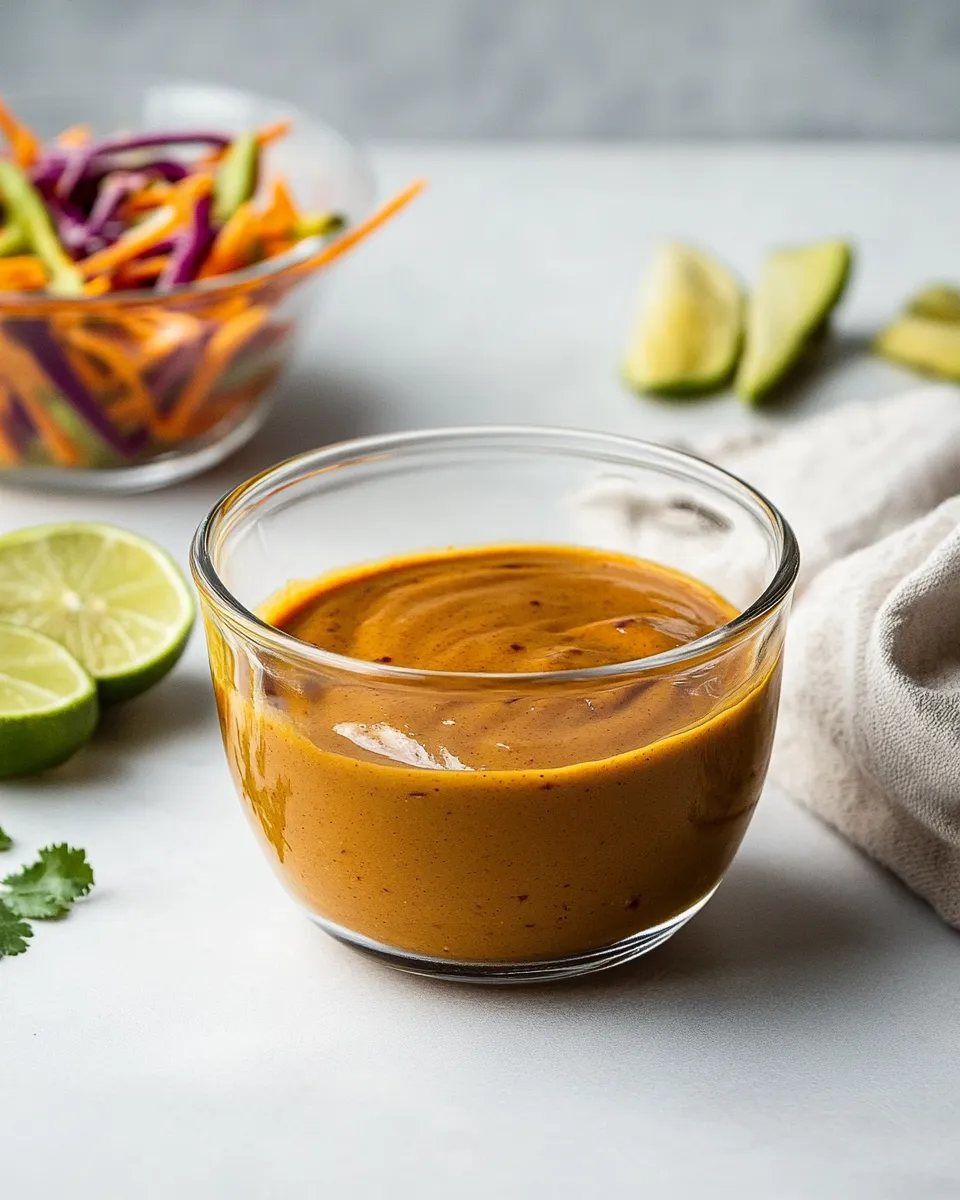
- Thai-style peanut sauces commonly use coconut milk instead of yogurt; swap if you prefer a richer, sweeter profile.
- In Indonesian cuisine, a similar sauce—satay sauce—leans on kecap manis (sweet soy) and palm sugar for sweetness; use those elements to reinterpret this dressing.
- Vietnamese peanut dips (tương đậu phộng) often add fish sauce for deeper umami; you can replace some soy sauce with fish sauce for a more Southeast Asian edge.
Equipment & Tools
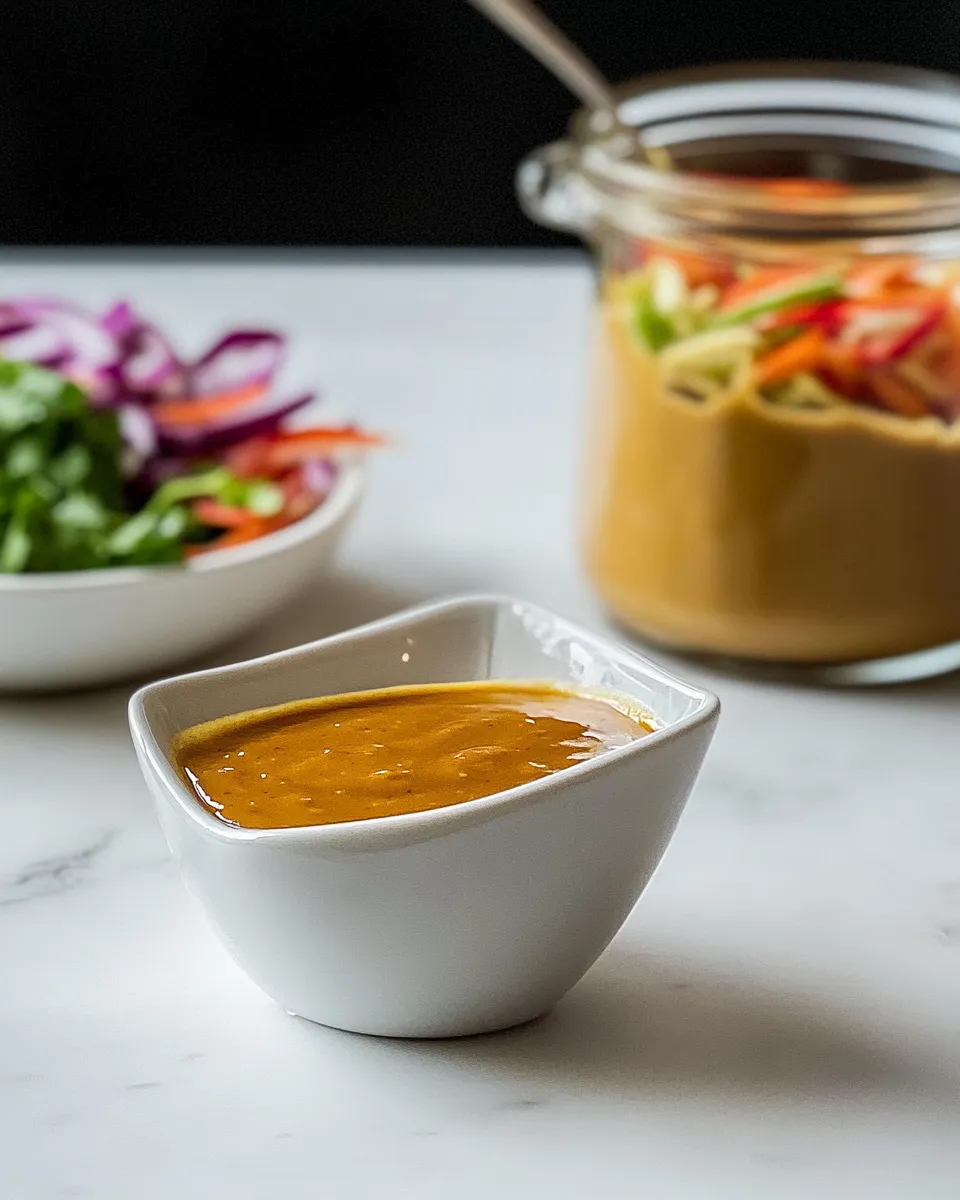
- Blender or food processor — required for a smooth, fully emulsified dressing.
- Measuring cups and spoons — keep the balance of flavors consistent.
- Rubber spatula — handy for scraping the jar so nothing is wasted.
- Airtight container or jar — for chilling and storing leftovers.
Mistakes That Ruin Thai Peanut Dressing
- Using chunky peanut butter — you’ll get a gritty texture; use smooth for the best mouthfeel.
- Skipping the chill step — the flavors are sharper right after blending; chilling melds and softens them.
- Adding too much milk at once — thin gradually. Too much liquid can make the dressing watery and lose its cling.
- Over-salting with regular soy sauce — use low sodium soy sauce as written or taste as you go.
- Neglecting to pulse before full blend — big pieces of cilantro or garlic can remain if you don’t break them down first.
Fresh Takes Through the Year
- Spring: Toss the dressing with baby greens, shredded carrots, radishes, and blanched sugar snap peas for a bright seasonal salad.
- Summer: Use it cold as a noodle sauce for chilled rice noodles, sliced cucumbers, and grilled shrimp; add fresh mint for extra lift.
- Autumn: Drizzle over roasted sweet potatoes, Brussels sprouts, and kale for a hearty side or vegetarian main.
- Winter: Blend in a spoonful more red curry paste and warm slightly before serving with roasted root vegetables or as a dip for warm grilled meats.
Cook’s Notes
- Consistency: I start with 3 tablespoons milk. If you want a pourable dressing for bowls or noodle salads, add the 4th tablespoon. For a dip, stick with 3 tbsp or omit milk entirely.
- Sugar balance: The recipe calls for 1 tablespoon sugar—taste after blending and increase slightly if you want a sweeter contrast to the curry paste.
- Herb swaps: If you don’t love cilantro, parsley will work, though the flavor profile shifts away from Thai toward more general herbiness.
- Make it vegan: The recipe already uses coconut Greek-style yogurt; ensure your yogurt is dairy-free and check the labels on sauces to keep it vegan.
Save for Later: Storage Tips
- Refrigerate in an airtight container for up to 7 days. Give it a good stir or shake before using—separation is natural.
- Freeze? I don’t recommend freezing yogurt-based dressings; texture can become grainy after thawing.
- Transport: For lunches or picnics, pack the dressing separately from salads or noodles and dress just before serving to keep greens crisp.
FAQ
- Can I use regular Greek yogurt instead of coconut Greek yogurt? — Yes. Regular Greek yogurt will be tangier and less coconut-forward; it’s a fine swap.
- What if I don’t have red curry paste? — You can use a pinch more ground ginger and a little chili paste, but the flavor won’t be identical. Red curry paste adds complexity.
- How spicy is it? — The recipe is mildly spicy with 1–2 tbsp sweet chili sauce and 2 tsp red curry paste. Use 1 tbsp chili sauce for milder heat, 2 tbsp for more kick.
- Can I make this nut-free? — Not without substituting the peanut butter. Consider tahini for a sesame-based alternative, but it will change the flavor profile significantly.
Bring It Home
This Thai Peanut Dressing is a reliable closet staple. It moves easily from weeknight salads to weekend gatherings and gives you an instant passport to Southeast Asian flavors without fuss. Keep the ingredients on hand, blend when you need it, and tweak small details—milk for looseness, sugar for sweetness, or a bit more curry for warmth—until it fits your table. Enjoy it on greens, noodles, roasted veggies, or as a dip; it’s one dressing I reach for again and again.

Thai Peanut Dressing
Ingredients
- 15.3 oz Greek coconut yogurt (Chobani recommended)
- 1/3 cup creamy peanut butter
- 1-2 tablespoons Asian sweet chili sauce use 2 for more kick
- 2 teaspoons red curry paste
- 1 tablespoon lime juice
- 1 tablespoon sugar or more to taste
- 2 tablespoons low sodium soy sauce
- 3 tablespoons rice vinegar
- 1/4 cup cilantro loosely packed
- 1 clove garlic peeled
- 3-4 tablespoons milk add more as needed for consistency
- 1/2 teaspoon dried basil
- 1/8 teaspoon ground ginger
Instructions
- Add the Greek coconut yogurt, peanut butter, Asian sweet chili sauce, red curry paste, lime juice, sugar, soy sauce, rice vinegar, cilantro, garlic, dried basil, and ground ginger to a blender or food processor.
- Blend until smooth, scraping down the sides as needed.
- With the motor running, add 3–4 tablespoons milk gradually until the dressing reaches your desired consistency; add more milk if needed.
- Taste and adjust seasoning with additional sugar or sweet chili sauce if desired.
- Chill the dressing before serving.
- Store leftovers in an airtight container in the refrigerator for up to 7 days.
Equipment
- blender or food processor
- Measuring cups and spoons
- Spatula
- Airtight Container
Notes
- Use 2 tablespoons sweet chili sauce for a spicier dressing.
- Adjust sugar to balance acidity and heat.
- Add milk gradually to achieve desired thickness.
- Chill before serving for best flavor.