This article contains paid links. As an Amazon Associate, I earn from qualifying purchases.
Pink can be the whole mood of a room: rose-colored walls, a blush upholstered bed, raspberry paint around a favorite sofa. The shade and the materials change the effect. Soft pink and ruffles feel different from hot pink stripes, even when both rooms are unmistakably pink.
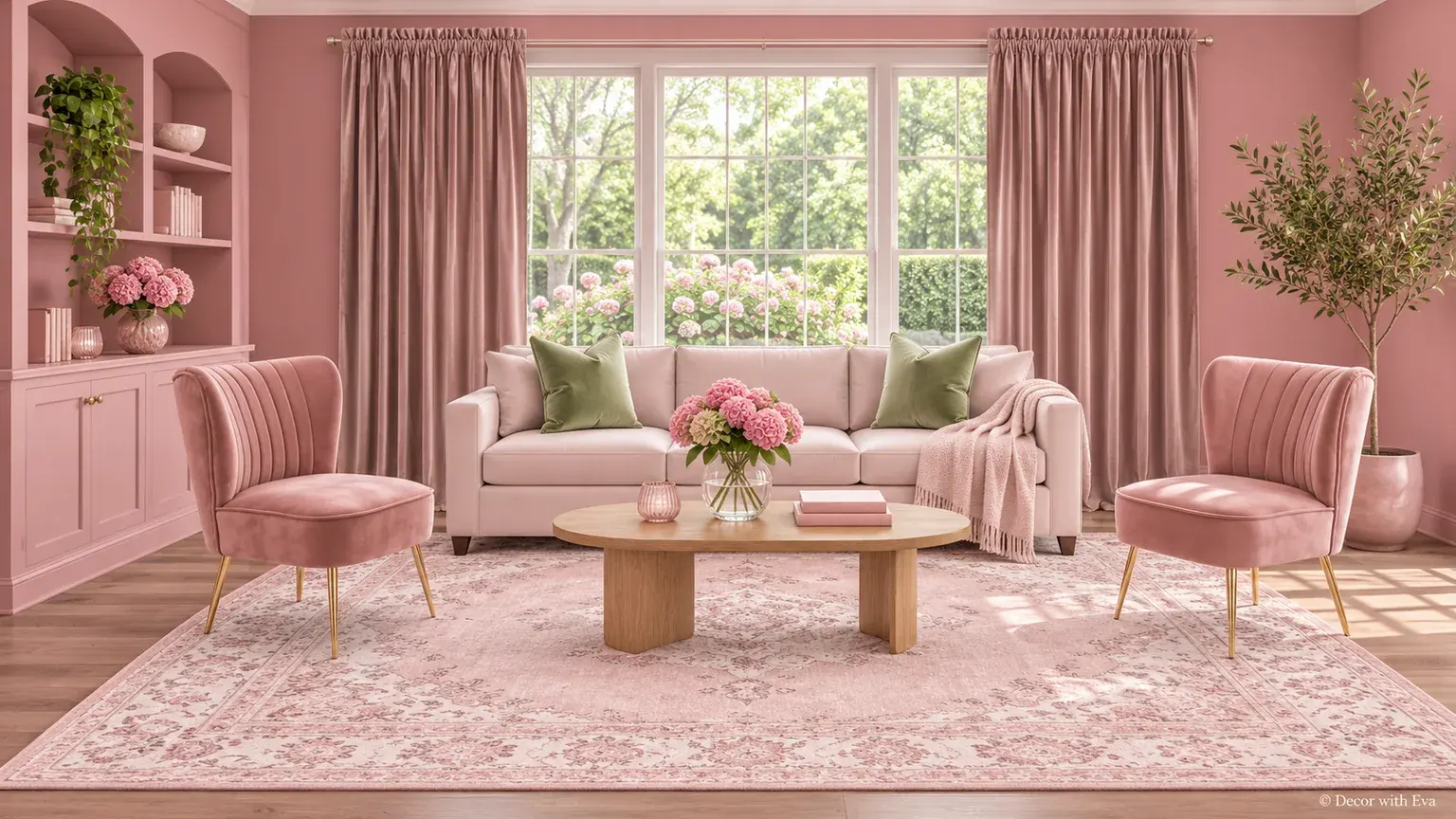
These 29 pink room ideas give the color a proper place across bedrooms, living rooms, study spots and a bathroom. Some call for paint or a larger piece; others build the look with curtains, bedding and furniture you already own. Choose a direction that fits your room before collecting the smaller details.
Choose Your Main Pink First
Start with the largest colored surface: walls, curtains, a bedspread or a sofa. Compare that pink with the floor and the furniture staying in the room. Benjamin Moore’s pink color guide shows the range from pale pink to fuchsia and offers examples of green and neutral pairings. Test actual samples in your own light; an image cannot identify an exact paint match.
Plan the layout as carefully as the palette. Leave doors, drawers and everyday routes usable, follow mounting and electrical instructions, and secure furniture appropriately. The CPSC’s Anchor It! guidance explains why furniture with drawers, doors and shelves should be anchored to the wall.
1. Build a Blush Bedroom around a Pink Bed
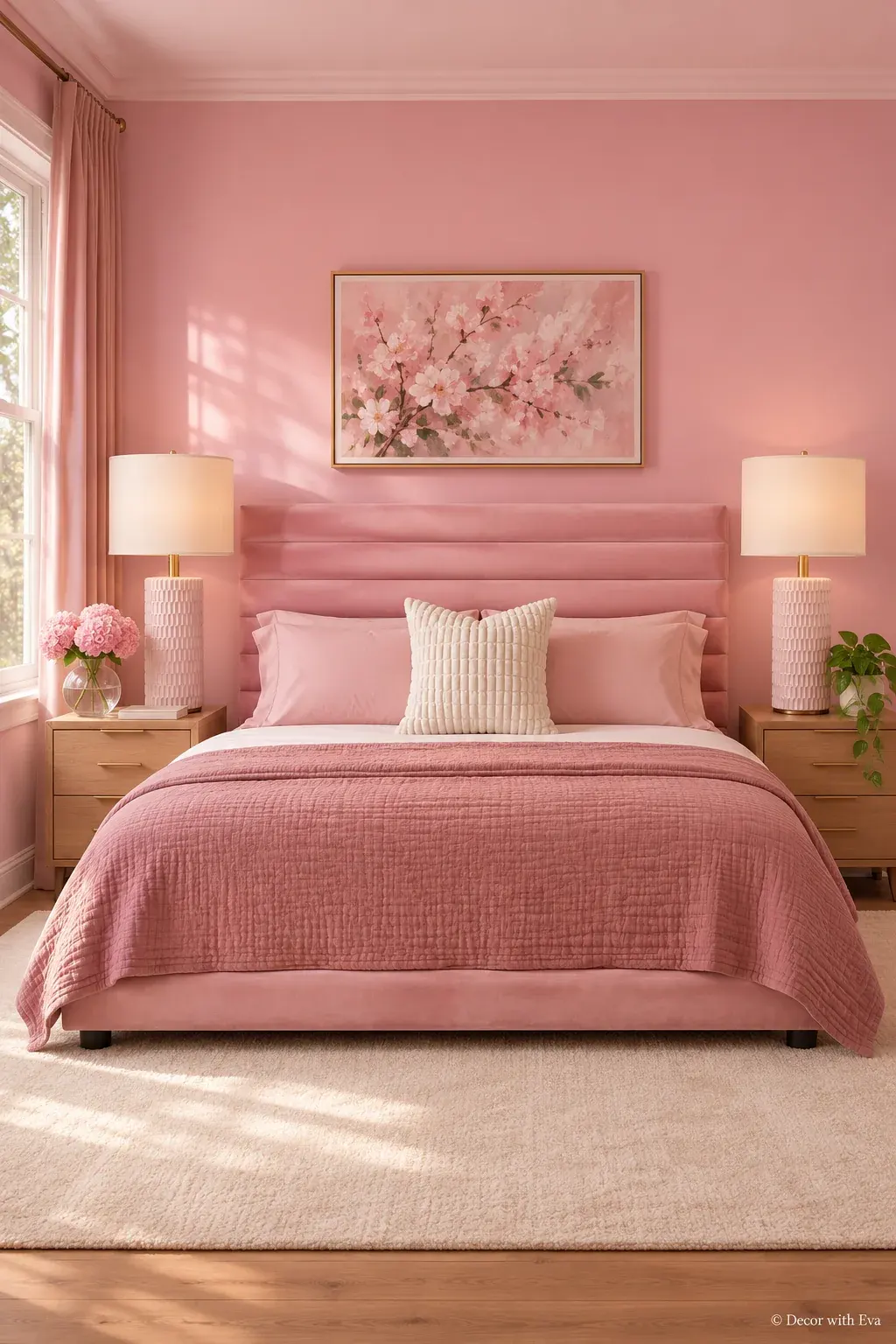
A pink room feels intentional when the color has more than one place to land. Here, blush walls and an upholstered pink bed establish the palette before the smaller pieces arrive. Pink bedding carries it across the center of the room, while a little cream keeps the layers easy to distinguish.
Choose the bed for the room and mattress first. Measure the complete frame, bedside access and the route past the foot, then compare the headboard height with your pillows. Matching pink lamps can bring balance without requiring a matching furniture suite.
Try this: Try your pink fabrics together in daylight before deciding which shade belongs on the walls.
2. Pair Dusty Rose with Walnut in a Reading Corner
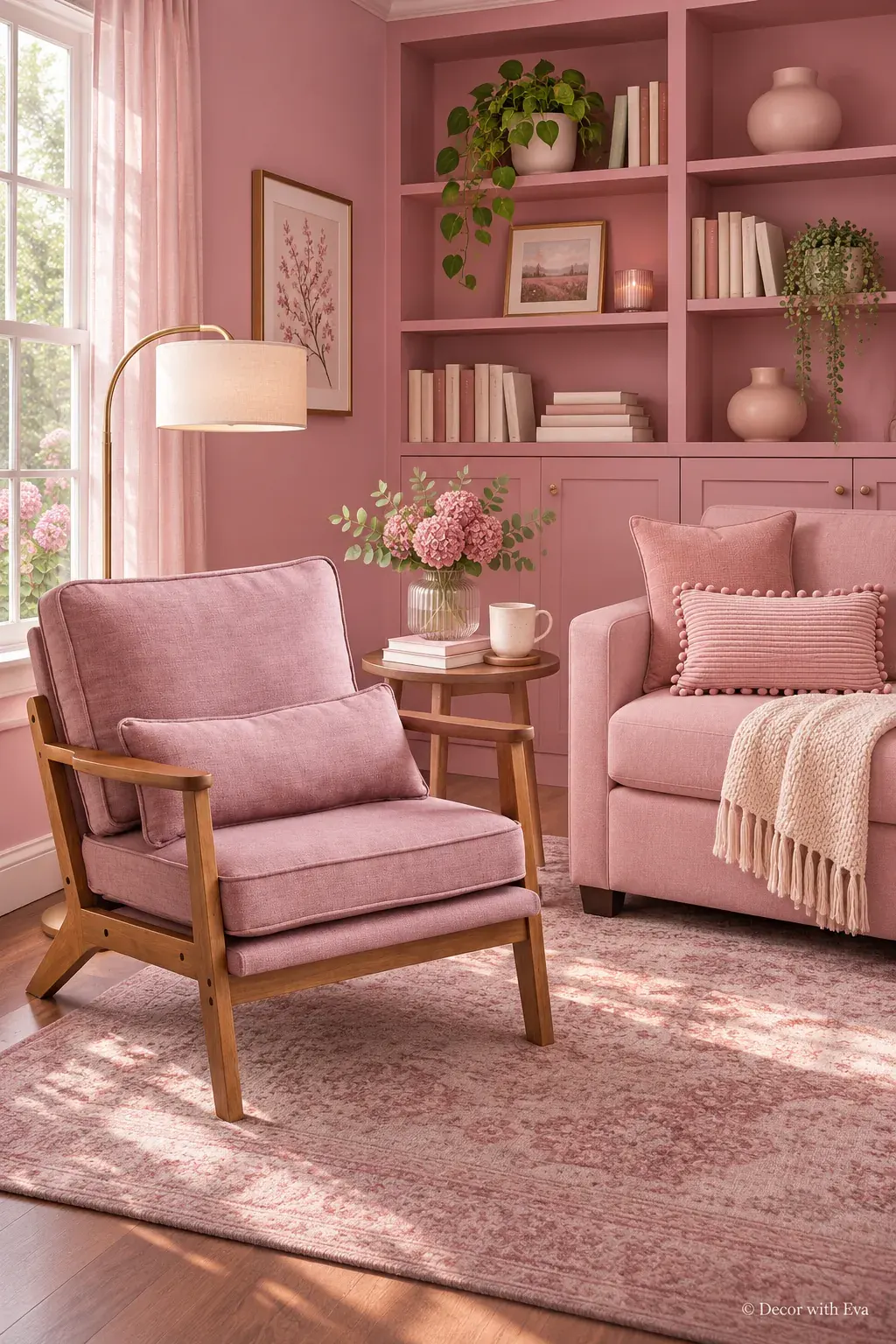
Dusty rose and walnut give a reading corner warmth with a little depth. Use pink on the wall behind the chair as well as on its cushions, then let the exposed wood arms outline the seating. A nearby pink sofa makes the corner feel connected to the rest of the room.
A low lounge chair needs its own space rather than the narrow strip left beside a cabinet. Mark its full footprint and check the seat height for the person using it. Add a small table within reach; the chair should work for an evening with a book as well as a photograph.
Try this: Bring an existing wood table into the corner before shopping for a complete set.
3. Bring Pink and Sage into the Living Room
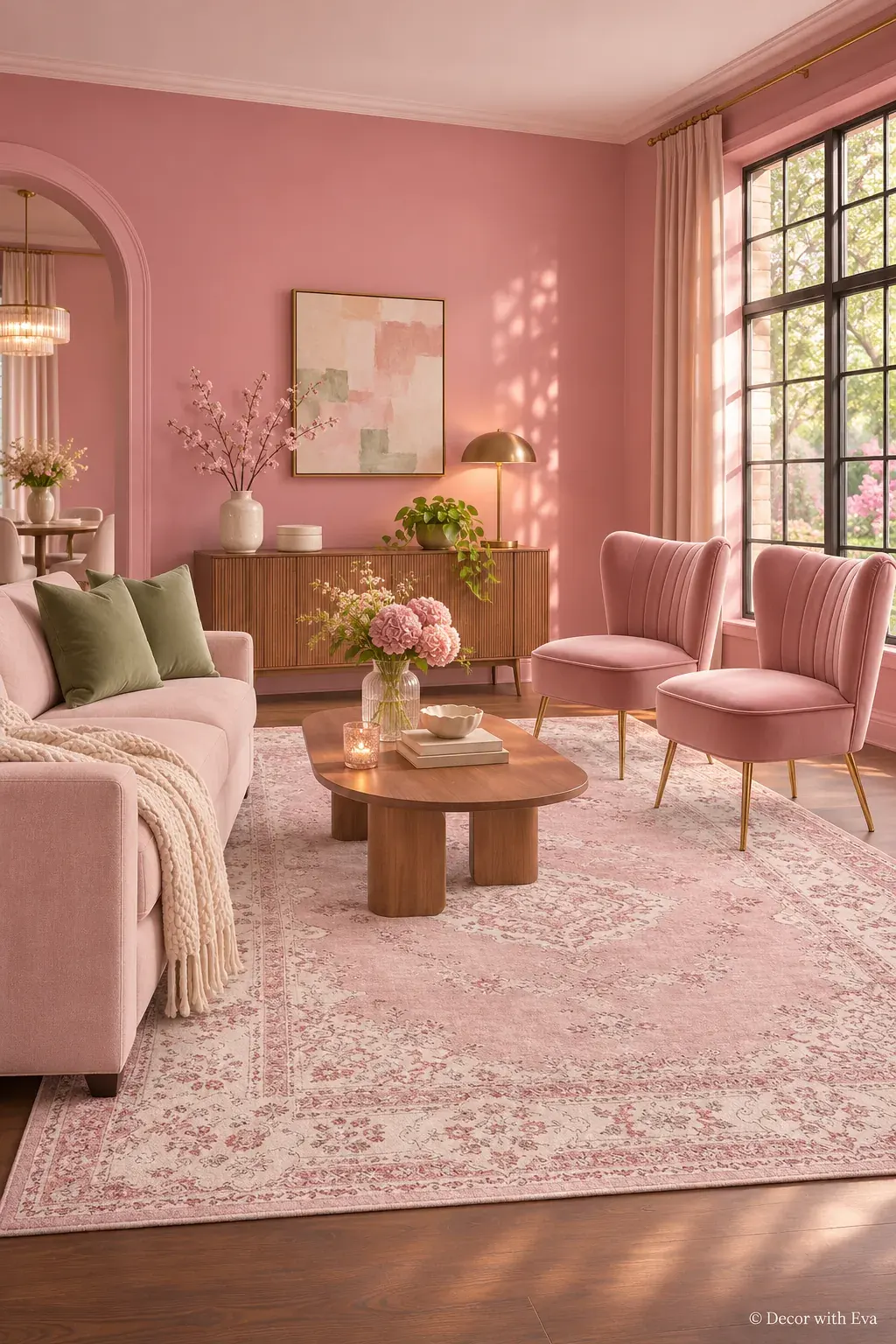
Make pink the background and use sage as the smaller partner. Rose walls, blush seating and a pale pink rug give the room a clear identity; a pair of green cushions is enough to create a change in color. The green does not need to spread to every surface.
Angle two narrow slipper chairs toward the sofa so conversation feels easy. Check the space between seats and the coffee table, including the route through the room. An 8-by-10-foot rug belongs in a room that can accommodate its actual footprint, not simply the size that looks generous online.
Try this: Test the pairing with a green fabric sample on your largest pink piece.
4. Go Bold with Raspberry Walls and Hot Pink Textiles
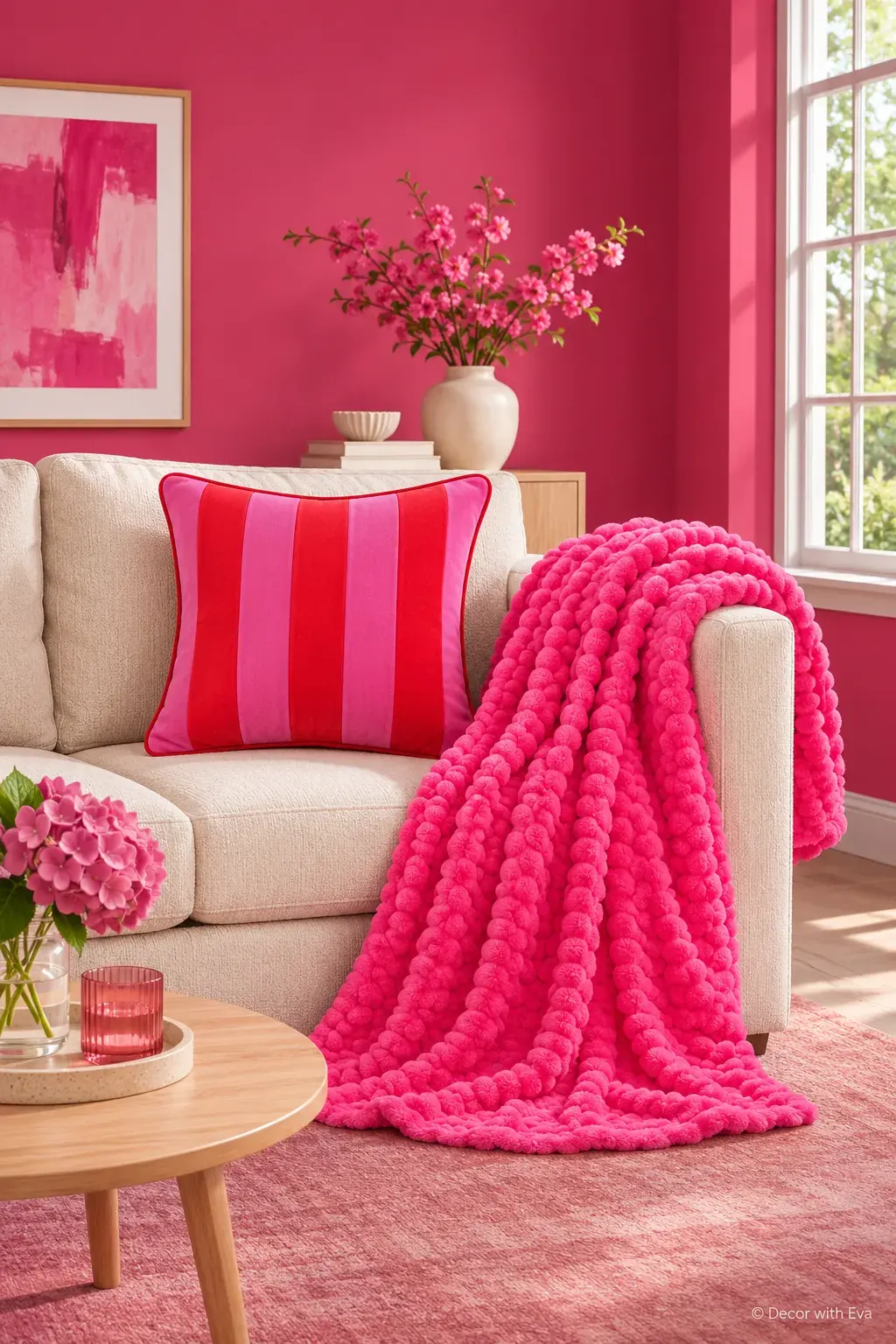
Raspberry walls make an immediate statement. A hot pink throw and red-striped cushions keep the sofa connected to that richer background, instead of leaving the room pink only around its edges. A plain sofa gives the stronger colors a clear shape to sit against.
Compare the wall sample with the red stripe before painting: some pinks lean peach, while others have a cooler berry cast. Repeat the strongest color in a couple of places, then leave the table and floor simpler. You can try the textile combination first if a full repaint is a later project.
Try this: Put the throw and cushions on your current sofa for a few days before choosing a wall color.
5. Frame a Window with Dusty Pink Velvet
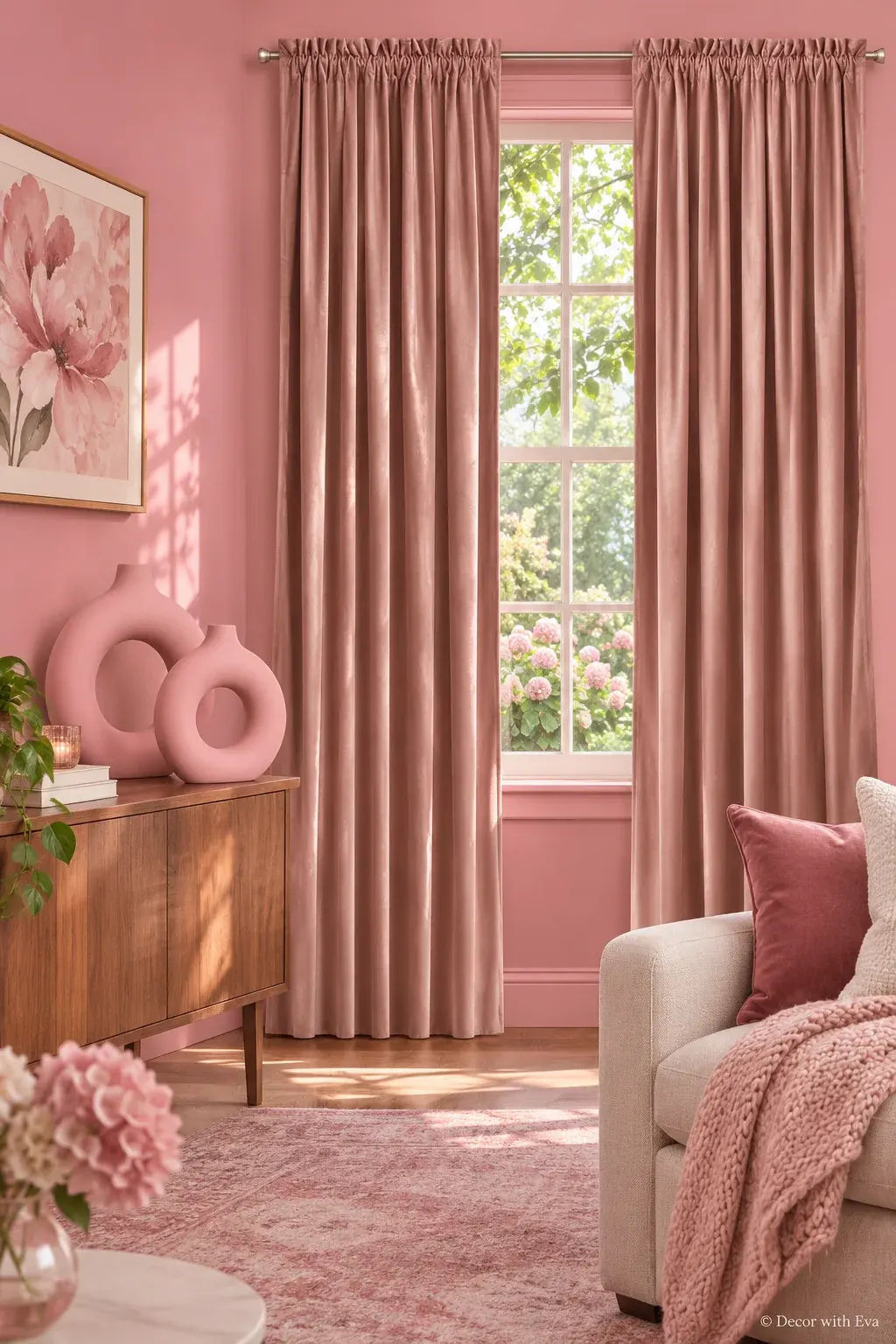
Pink velvet adds a different kind of color from flat paint. Its folds catch the light, so dusty rose curtains can look deeper at one edge and softer at the other. Rose walls make this a pink room throughout, while sculptural pink pottery repeats the color at tabletop height.
Measure from the actual hanging position and plan the curtain fullness, not just the window width. A floor-skimming finish keeps the fabric clear of the walking route. Check the selected header and care instructions; a lighter velvet curtain should not be assumed to provide total darkness.
Try this: Hold a curtain sample beside the wall in both daylight and evening lamplight.
6. Give Navy Blue a Soft Pink Partner
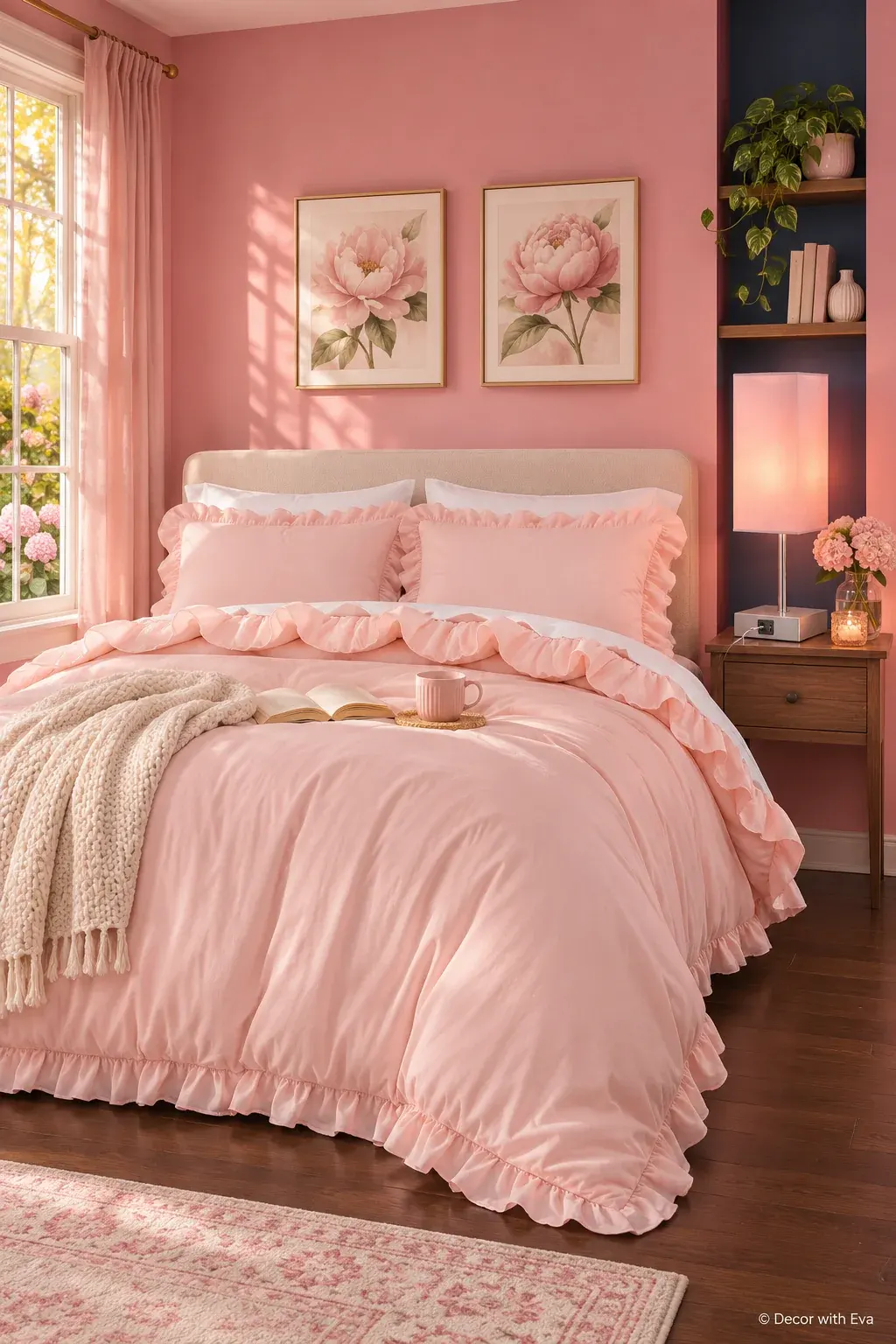
Pink can carry the room while navy provides a concentrated contrast. Give the main walls a dusty rose finish and reserve the darker blue for an alcove, a narrow section or furniture you already own. Pale pink ruffles soften the bed without making the whole room sugary.
Keep the other patterns restrained so the ruffle edge remains visible. Check the comforter dimensions against your mattress depth and desired drop. Warmth is personal, and one selected-color reviewer found this set hot, so choose bedding for your own sleeping preferences.
Try this: Use an existing navy cushion or picture frame to test how much blue the room needs.
7. Use Bow Texture for a Romantic Bedroom
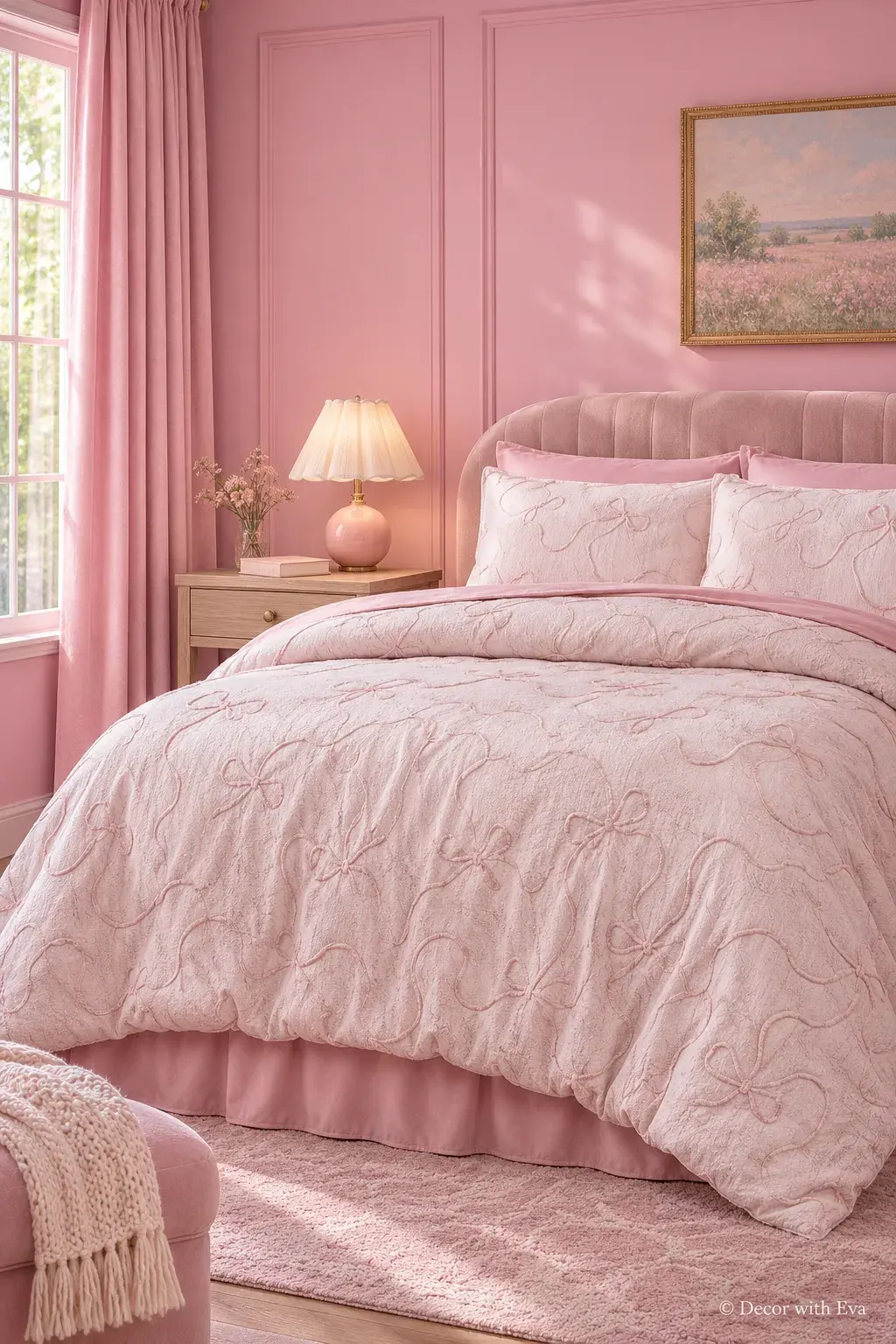
A bow motif can be part of the fabric rather than another object to tie onto the furniture. Blush walls and pink jacquard bedding create the main color; raised outlines give the bed detail at close range. A small scalloped lamp adds another soft shape without competing with the bows.
Let the patterned comforter do most of the decorative work. Plain sheets and a simple bedside surface give the texture space to show. The illustrated lamp is deliberately small, so check its 11.5-inch height against the bed and table instead of expecting a large reading lamp.
Try this: Remove one decorative layer from the bed and see whether the bow texture reads more clearly.
8. Make One Wall a Vintage Floral Feature
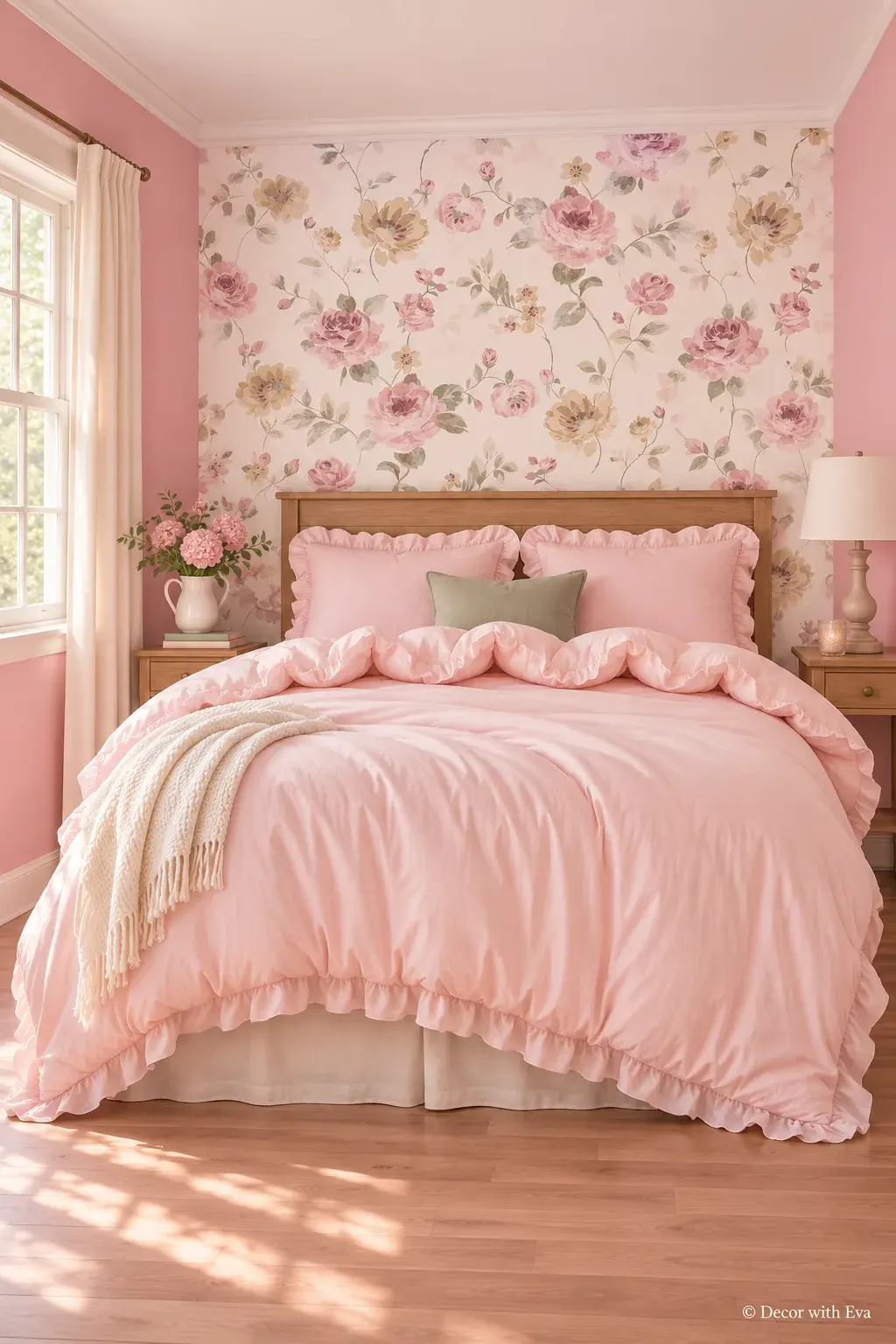
A vintage floral wall can give a pink bedroom a storybook quality. Choose a pattern with pink blooms, then carry a related pink onto the remaining walls so the room does not turn into one patterned panel surrounded by white. Ruffled bedding suits the softer outlines.
Order enough wallpaper for the wall, matching repeat and trimming waste. Test a small section on the actual finish and follow the surface-preparation instructions. Peel-and-stick does not guarantee damage-free removal, especially over unsuitable paint or texture; ask permission where needed.
Try this: Compare the wallpaper with the bedding before committing to the rest of the paint.
9. Create a Dressing Corner with a Wavy Mirror
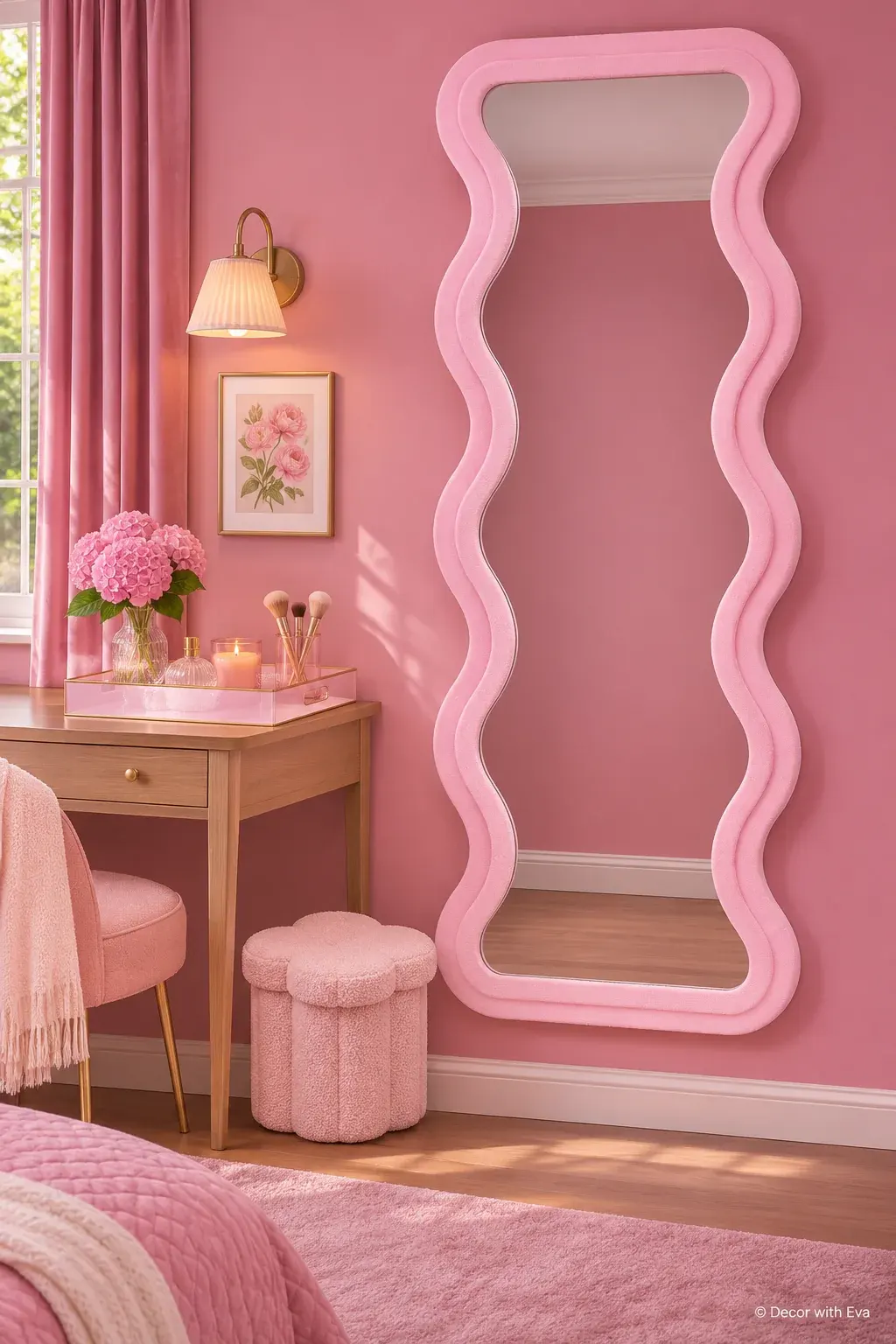
A wavy pink mirror can be the main shape in a dressing corner. Place it against rose-pink walls and keep the dressing table quieter, with one pink tray for the objects you reach for. The repeated color makes the corner feel like part of the room rather than a separate display.
Follow the exact mirror mounting instructions and match fixings to the wall. Leave a clear standing area in front of it. The little flower-shaped storage piece is an organizer or footrest here, not a seat or step; use it to tuck away a few small extras.
Try this: Group the daily essentials on an existing tray before deciding whether you need another organizer.
10. Build a Pink Study Spot That Still Works
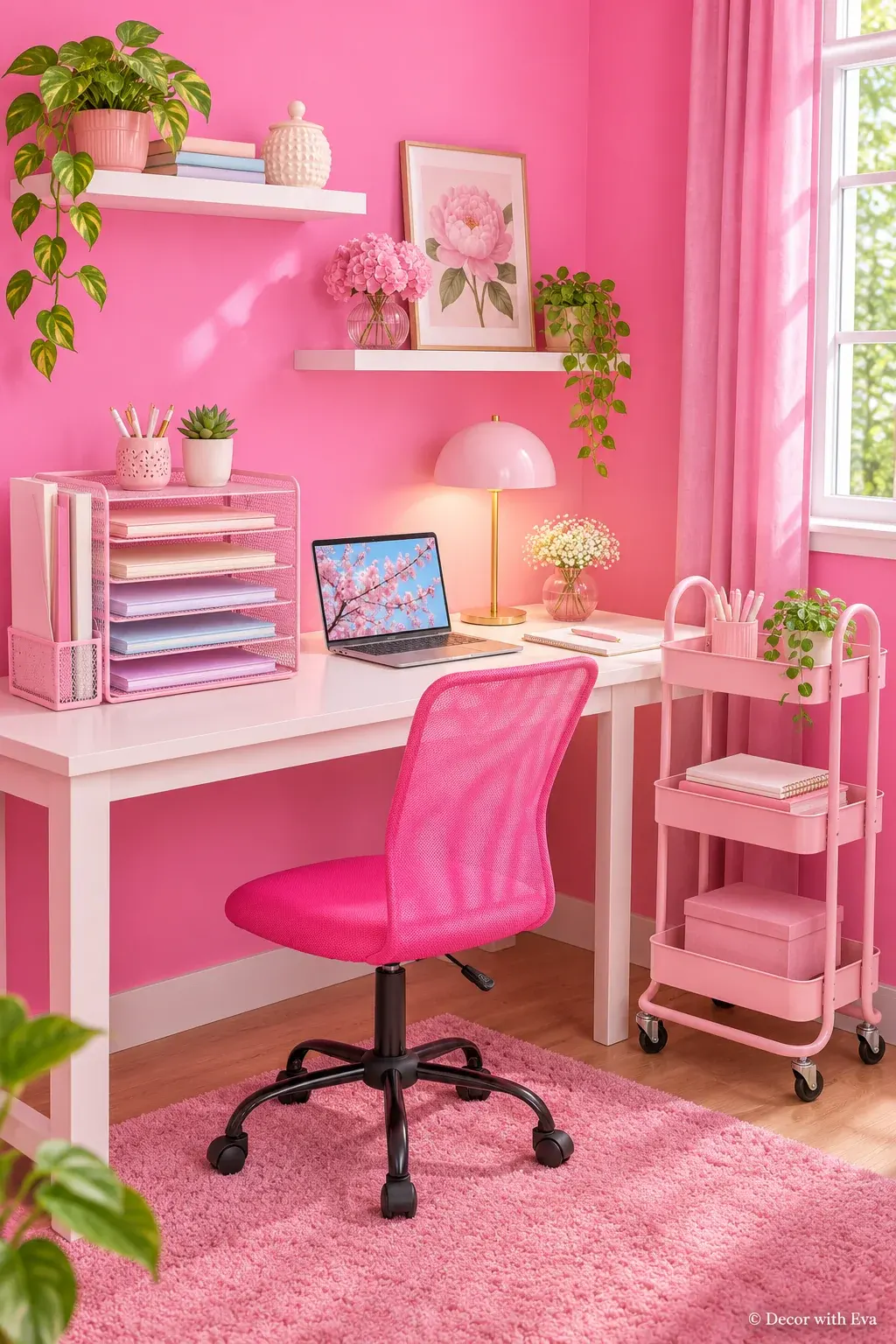
A pink study spot can still have a proper working surface. Bubblegum walls, a pink task chair and coordinated metal storage make the color unmistakable. The white desk provides a useful break in the palette and keeps the writing area easy to see.
Allow room to pull the chair out, adjust its seat and move your legs. Check personal fit rather than relying on an ergonomic label. Give the paper organizer one end of the desk and use the cart for overflow; filling every surface with accessories defeats the purpose of the arrangement.
Try this: Mark the organizer footprint with paper and work at the desk before ordering.
11. Try a Pink Nightstand beside White Bedding
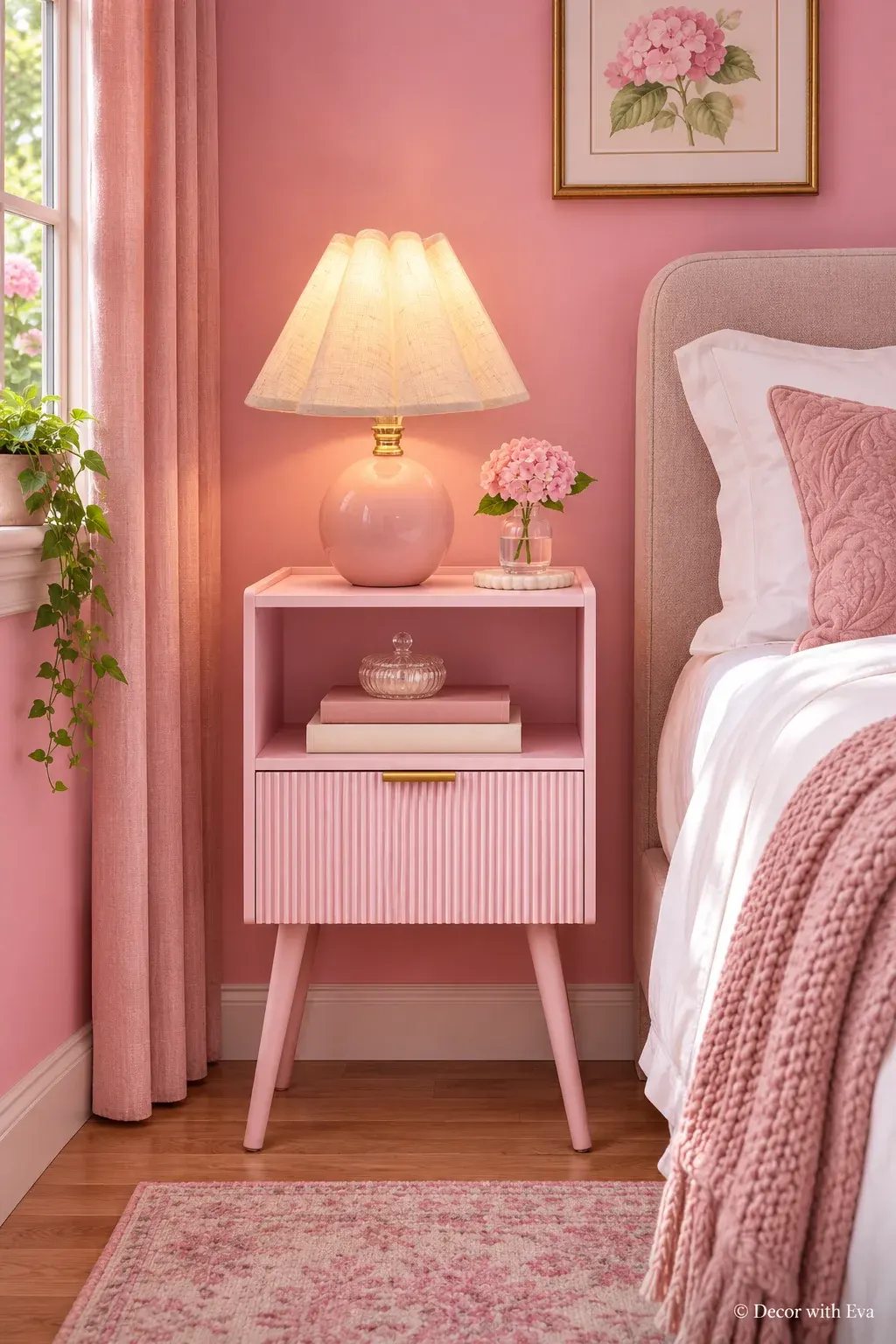
One pink nightstand can connect a white bed to rose-colored walls. An open cubby and a fluted drawer give the small cabinet enough detail without needing a busy tabletop. A little pink lamp completes the vertical line while leaving a spot for a phone or book.
Compare the table height with the top of your mattress and check that drawers can open. This selected cabinet is shallow and narrow, so choose a lamp whose whole shade fits the space. Assemble and secure furniture according to its instructions, especially in homes with children.
Try this: Try a similar-size cardboard outline beside the bed before choosing a table.
For more help with furniture footprints and bedside access, see our small bedroom ideas.
12. Give Books and Supplies a Pink Rolling Home
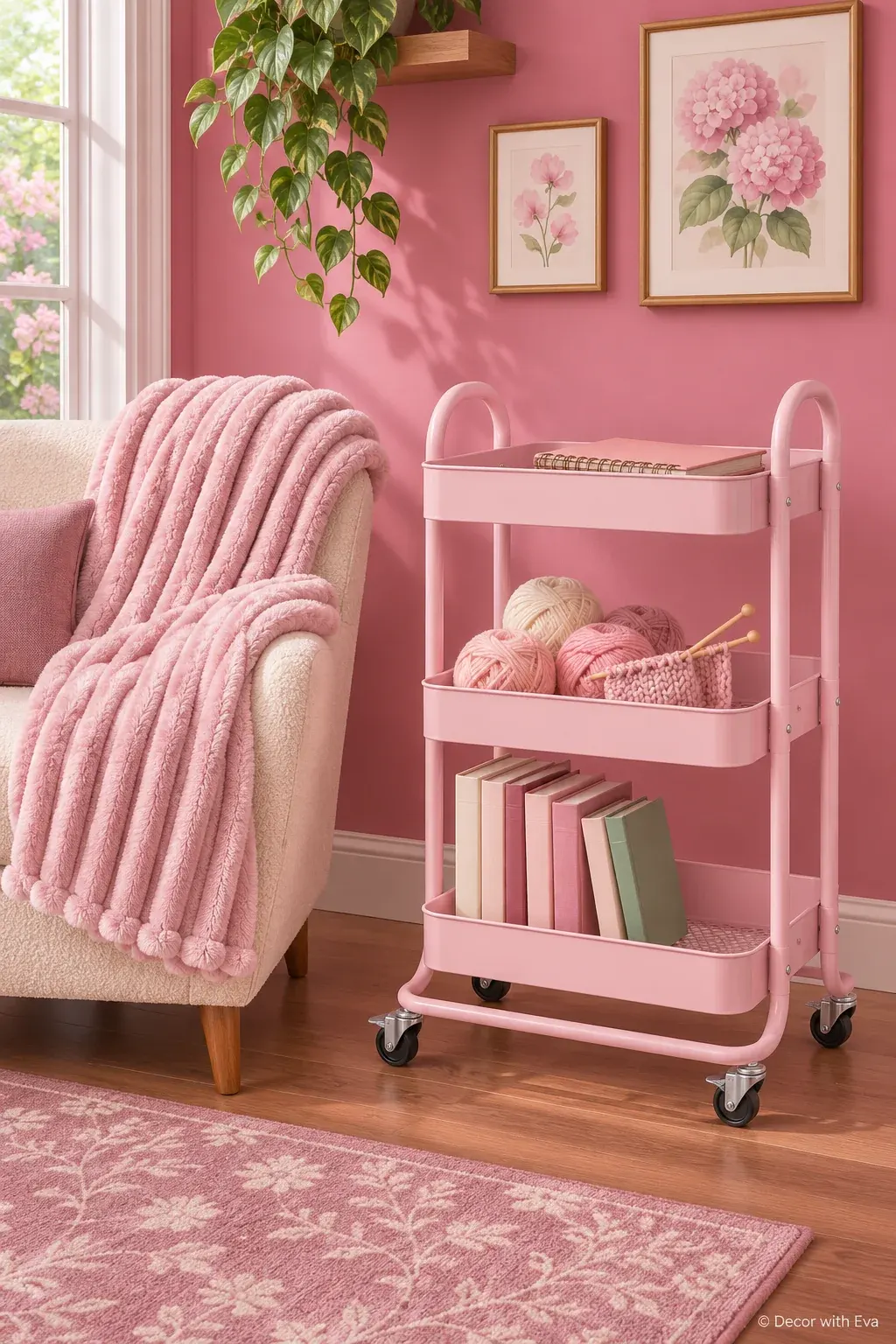
A dusty pink cart can make a hobby corner feel finished instead of temporary. Put it against a rose wall, with a pink throw on the nearby chair to connect the storage to the seating. Books, yarn or drawing supplies provide the detail rather than extra ornaments.
Assign each tray a task and place heavier items low. Leave the chair route clear, use the wheel locks as directed and check the cart dimensions including handles. It is useful when it makes supplies easier to reach; it need not become a permanent parking place for everything without a home.
Try this: Choose the three groups of supplies before deciding where the cart should stand.
13. Pull the Palette from One Abstract Picture
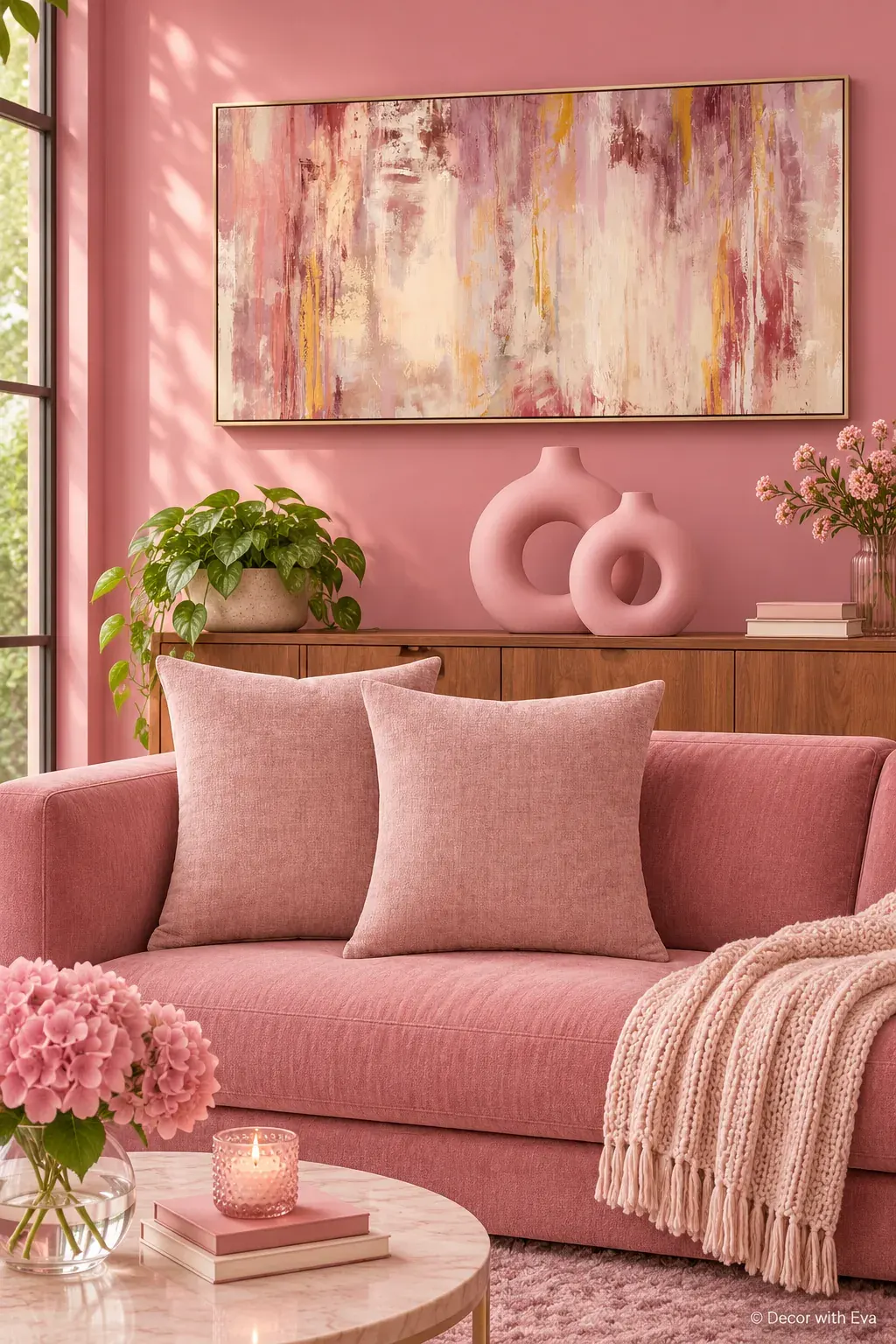
Use one pink-based picture to guide a living room palette. Rose walls and a pink sofa establish the room, while cream, mauve and a little gold in the artwork suggest the smaller details. Pink cushions and hollow ceramic vases repeat those tones without matching every finish.
Choose artwork you enjoy looking at and size it for the furniture below. The illustrated abstract is an original composition; the linked print is a similar color option, not that exact picture. You can achieve the same effect with a framed piece you already own.
Try this: Pull two or three colors from a favorite picture before shopping for accessories.
14. Paint a Pale Arch on a Rose-Pink Wall
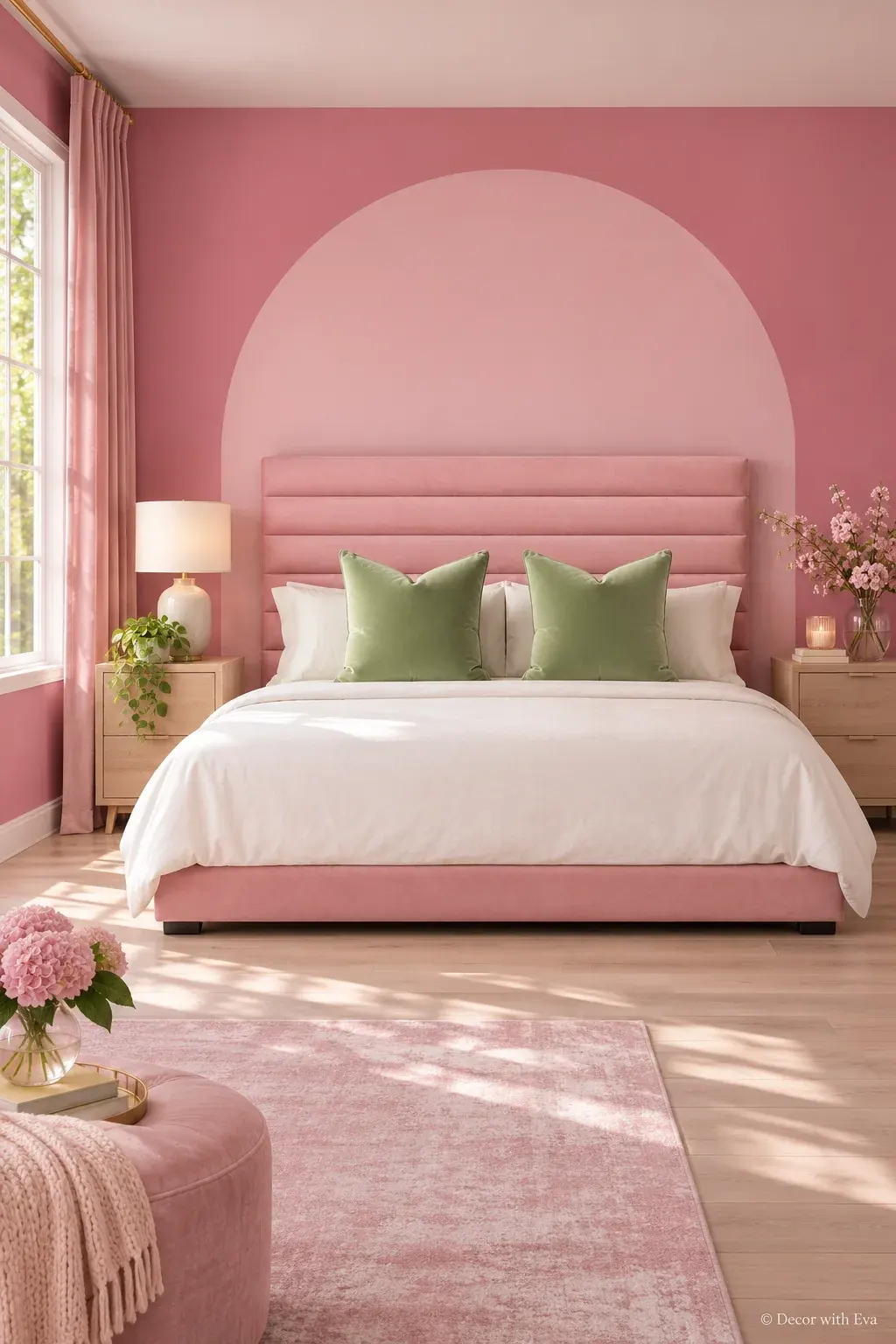
An arch can add another shade of pink without adding furniture. Paint a pale blush shape over a deeper rose wall, then center the pink headboard within it. The contrast is gentle, but it gives the bed a clear place and makes the wall feel considered.
Draw the outline in removable chalk or test it on paper before painting. Check the arch width from the doorway, where you see the whole bed rather than the wall alone. Keep the bedding simple and use sage cushions as a small accent, letting pink remain the main color.
Try this: Mock up the arch with paper strips and photograph it from the room entrance.
15. Try Pink Below the Chair Rail
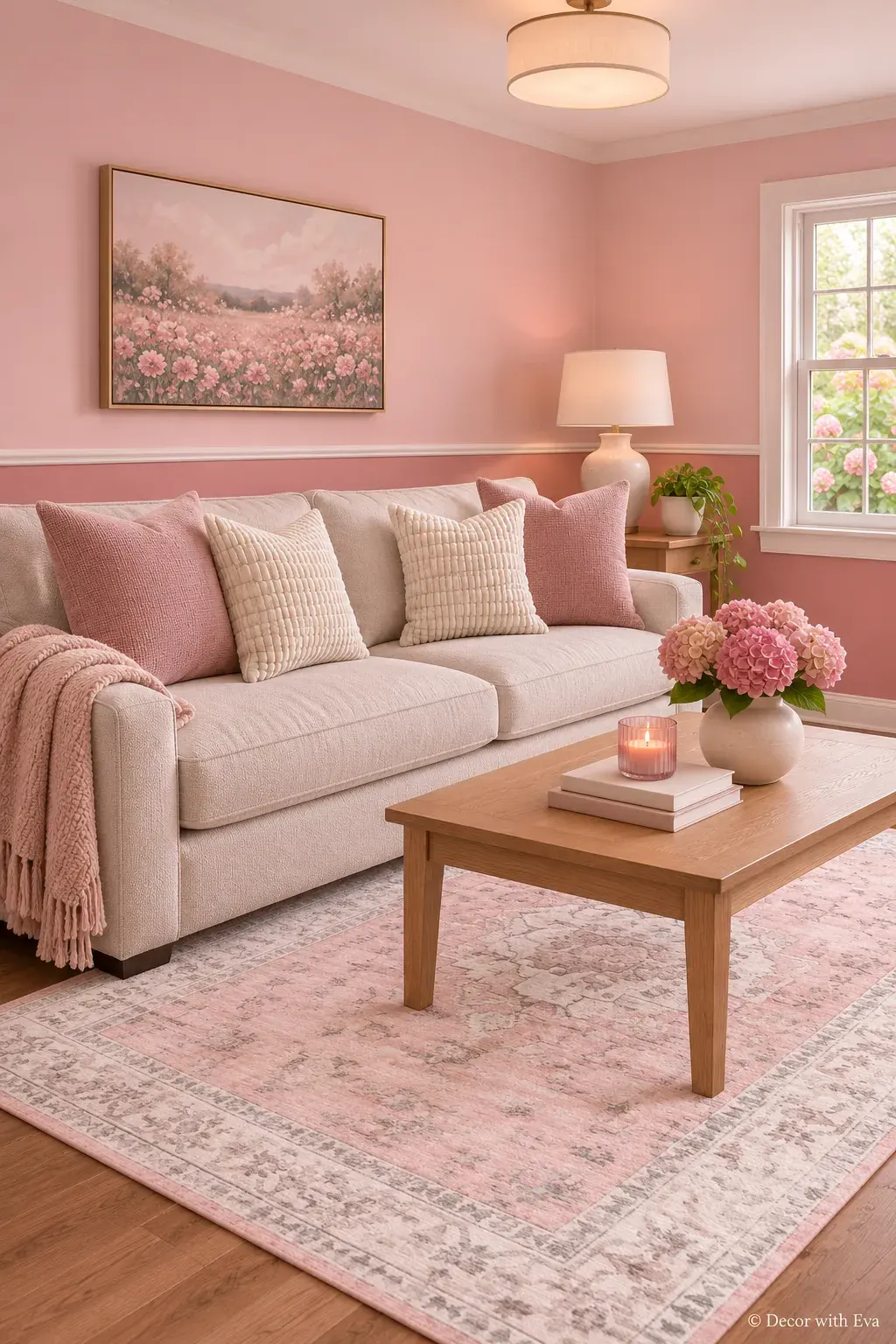
Two pink wall colors give a small living room structure. A lighter pink above the rail and a deeper rose below create a change in tone without introducing a second dominant color. Pink cushions and a faded rug carry the palette into the furniture.
Use the existing trim height if it suits the room, or mark a proposed line before installing anything. Compare both colors on large samples where they meet. Keep the rug edges flat and check its care and floor requirements rather than assuming the backing will grip every surface.
Try this: Paint two sample boards and move them together around the room.
16. Bring Pink to a Dining Nook
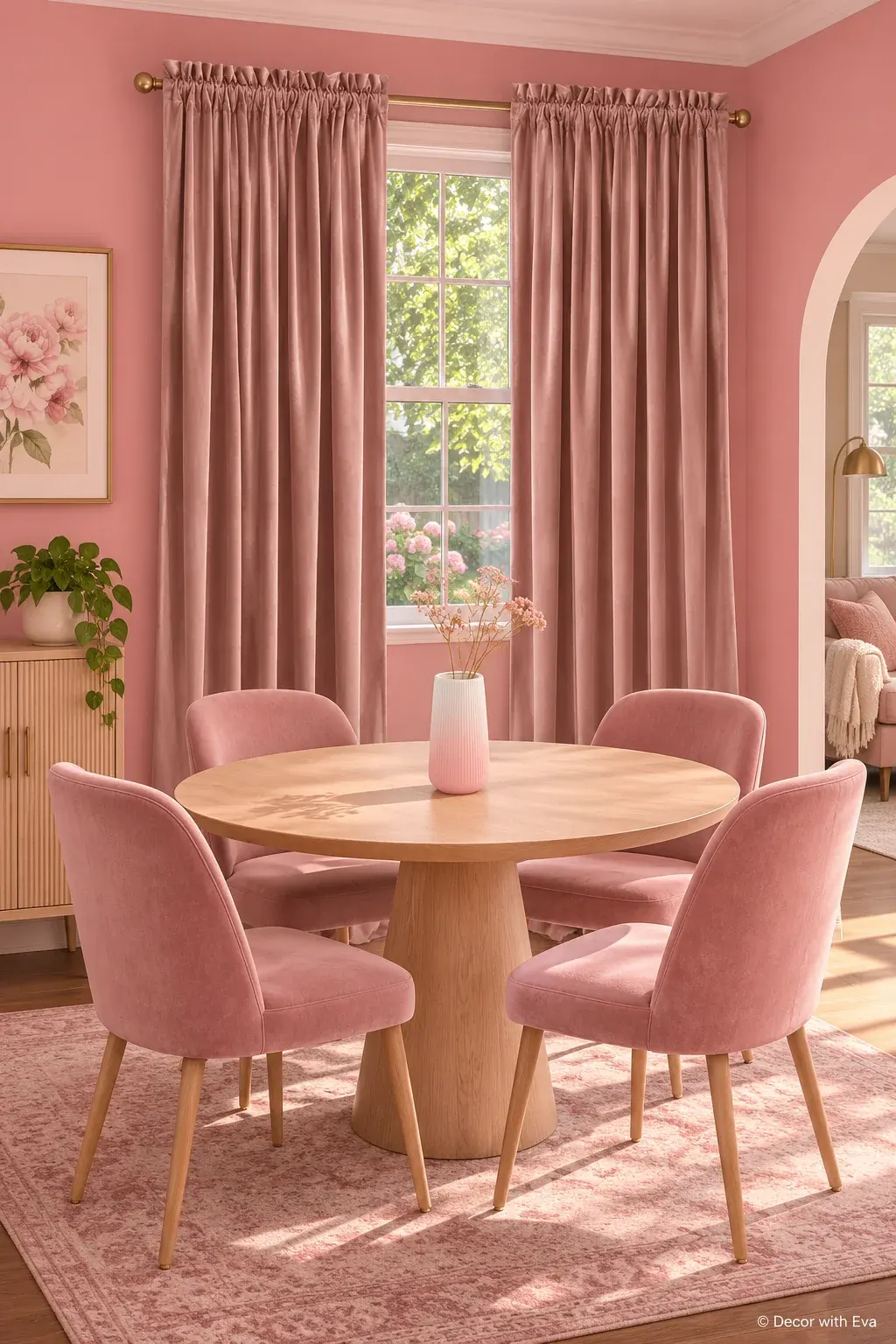
A pink dining nook can feel cheerful all day, especially when the color continues from the walls to the chairs and curtains. A small gradient pink vase gives the table a finishing detail without taking over the space needed for plates and serving dishes.
Let existing furniture set the layout. Measure space for people to pull their chairs back, and check curtains against nearby doors or heating equipment. The illustrated vase is small enough to leave the table useful; one empty vase or a few dry stems can be enough.
Try this: Try pink napkins or seat cushions with your current table before changing larger pieces.
17. Take Dusty Pink onto the Ceiling
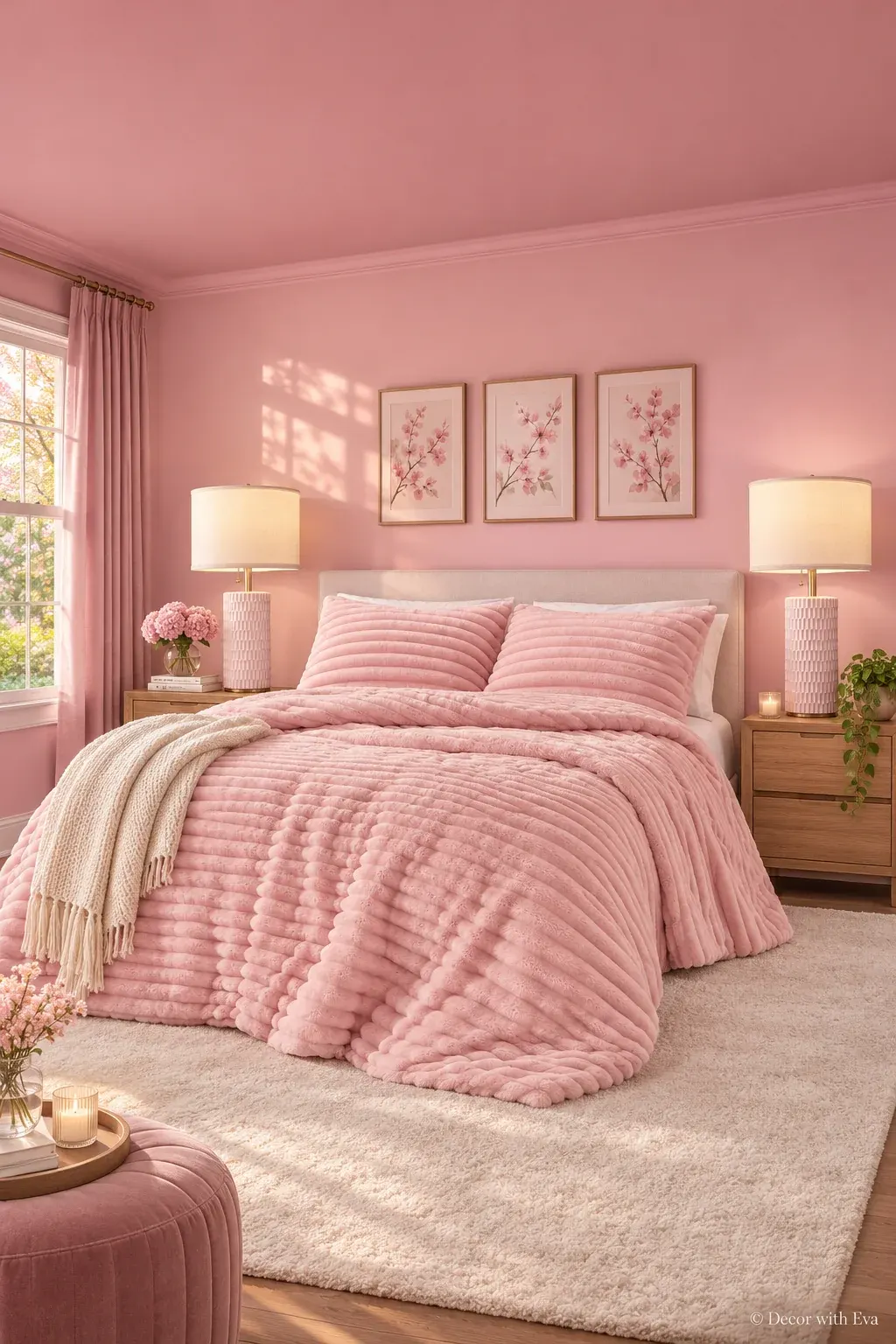
Pink does not have to stop at the ceiling line. A deeper dusty blush overhead and lighter pink walls wrap a bedroom in related tones. Ribbed pink bedding gives the bed enough texture to stand out without needing a strong pattern.
Test the ceiling color on a movable board and look at it at different times. A color above you can read differently from the same sample held vertically. For the illustrated king arrangement, compare the comforter width and length with your own mattress and preferred side coverage.
Try this: View the paint samples with your bedside lamps switched on before making the final choice.
18. Refresh an Existing Dresser in Coral Pink
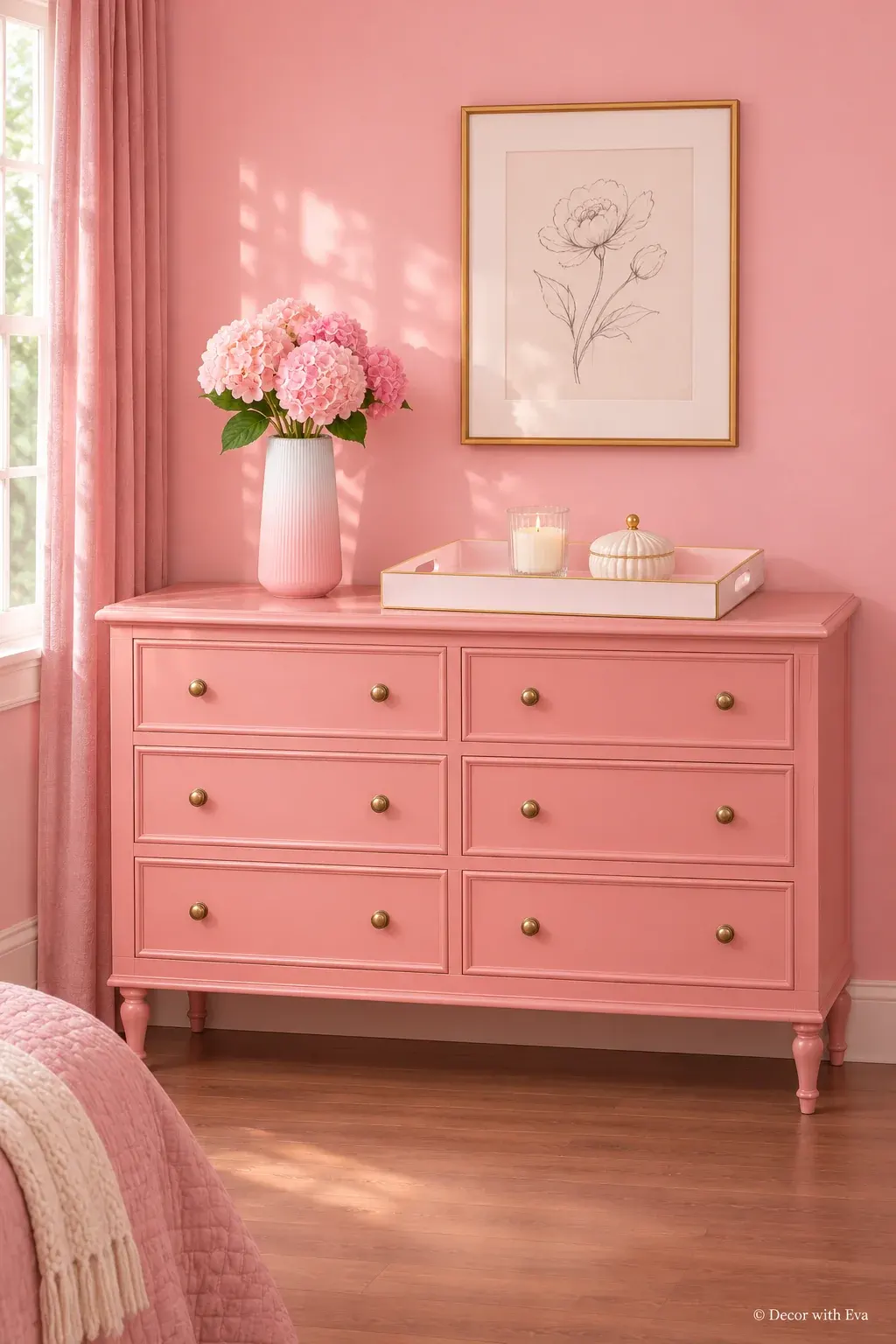
Coral pink gives a familiar dresser a new presence. A paler pink wall keeps it within the room’s palette, while a little pink tray and gradient vase create a small, useful group on top. The dresser itself can be a sound secondhand piece rather than a new purchase.
Check the furniture condition and finish before choosing a preparation method or paint. Use products suitable for that surface and follow their instructions. Once the dresser is ready, secure it appropriately and keep the top from becoming a row of objects you must move to dust.
Try this: Leave one part of the top completely clear for getting ready.
19. Layer Several Shades of Pink on Purpose
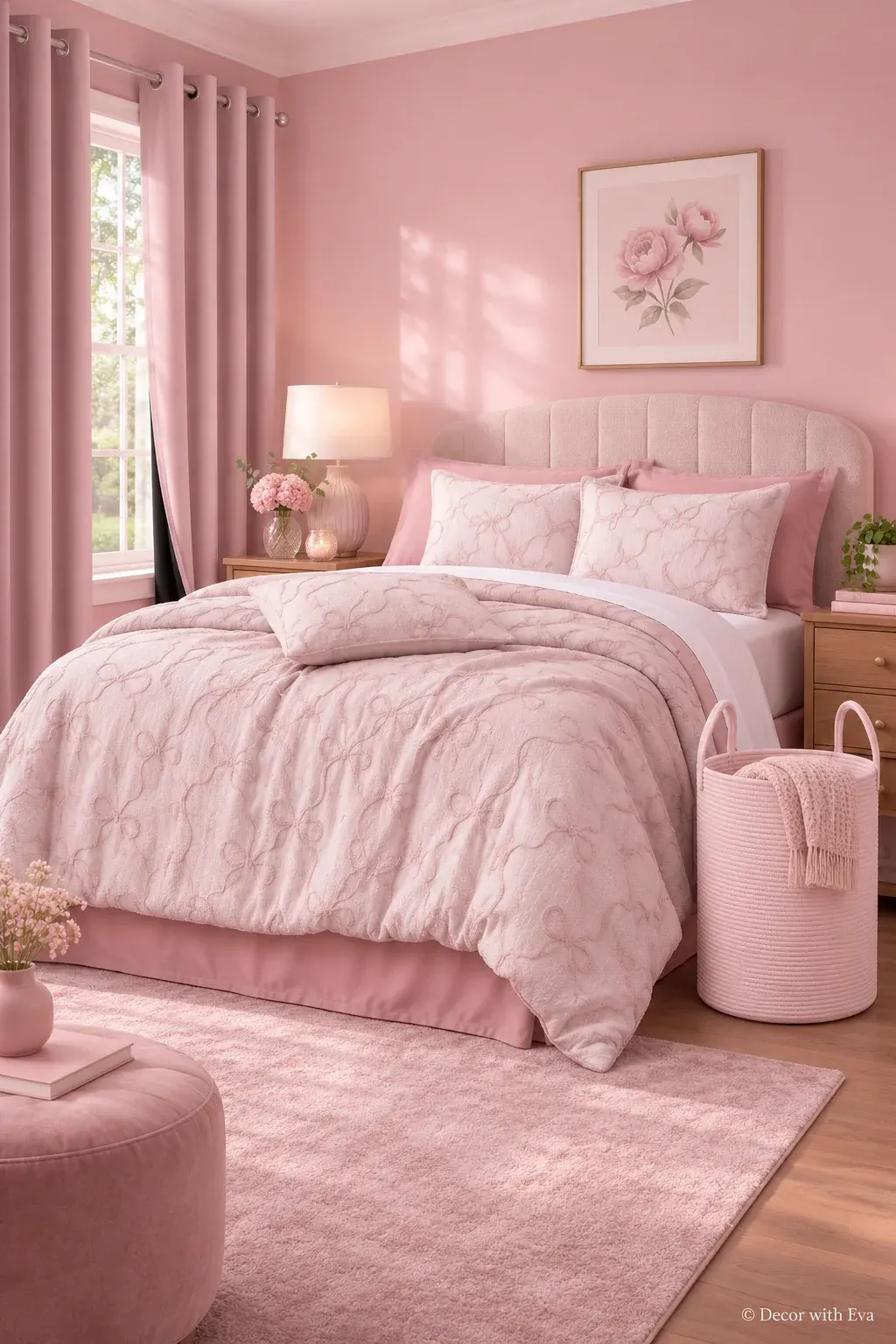
Several pinks can sit together when they have a clear order. Start with the wall, use a slightly different blush on the curtains, then bring pink bedding across the center. The small rope hamper repeats the color near the floor, so the room feels connected from top to bottom.
Compare fabric swatches in the actual room rather than trying to match a screen. A pale sheet edge can separate two close pinks. Check curtain care carefully: the selected lined panels currently specify hand washing or dry cleaning, even if other curtains you own go in the machine.
Try this: Lay the proposed fabrics next to one another before choosing the wall shade.
20. Add Black Details to a Blush Sitting Area
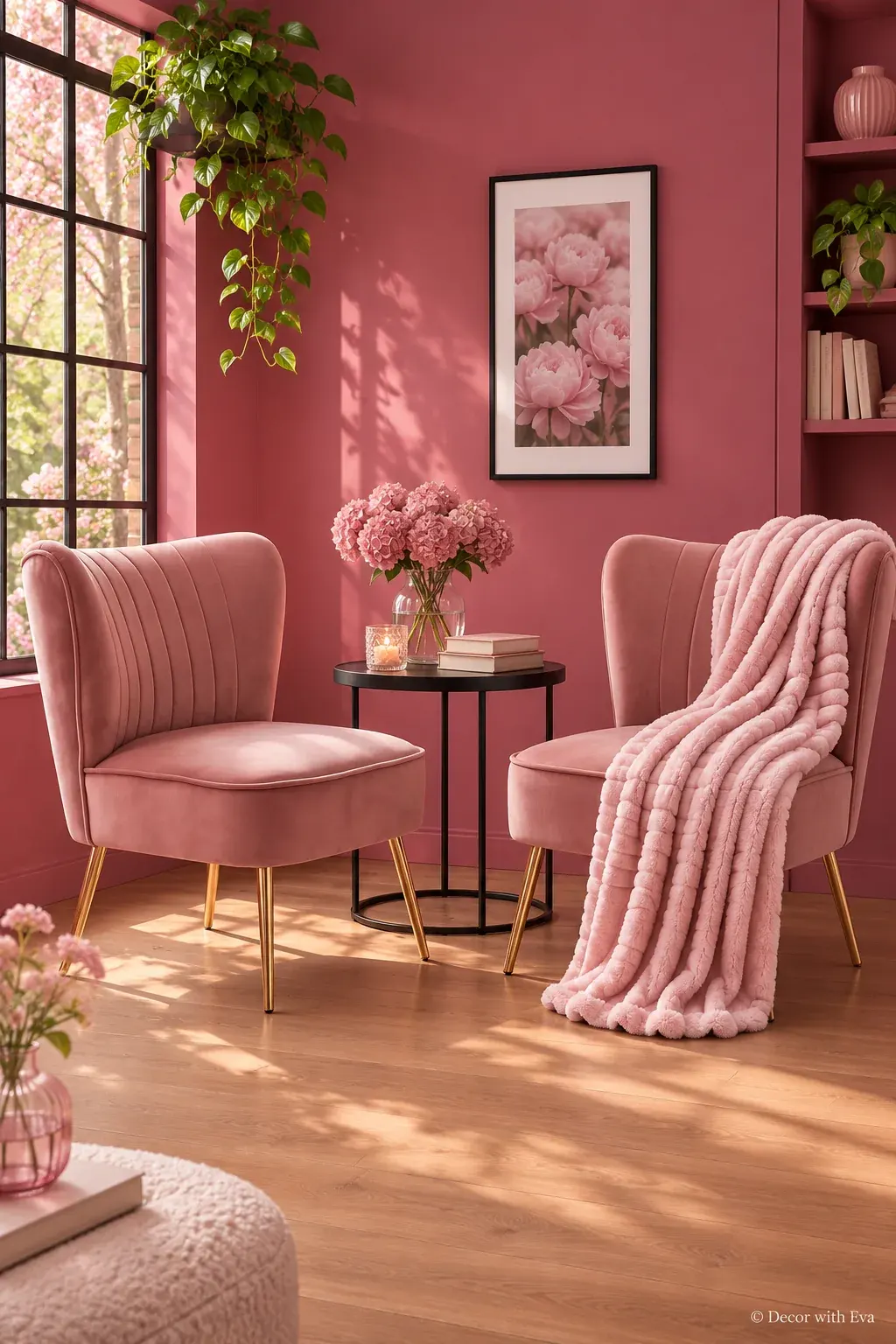
Black outlines can sharpen a pink sitting area. Deeper raspberry walls, blush velvet chairs and a pink throw give the room plenty of color; a black table and frame provide small, clear edges. The result keeps its pink identity without needing every object to be pink.
Check the slipper-chair seat height and size before deciding whether it suits long reading sessions or occasional use. Position the small table where both seats can reach it. Keep the route behind and between chairs usable rather than arranging them only to face the camera.
Try this: Try a black frame or tray you already own before adding more dark pieces.
21. Add Lilac and Red to a Pink Living Room
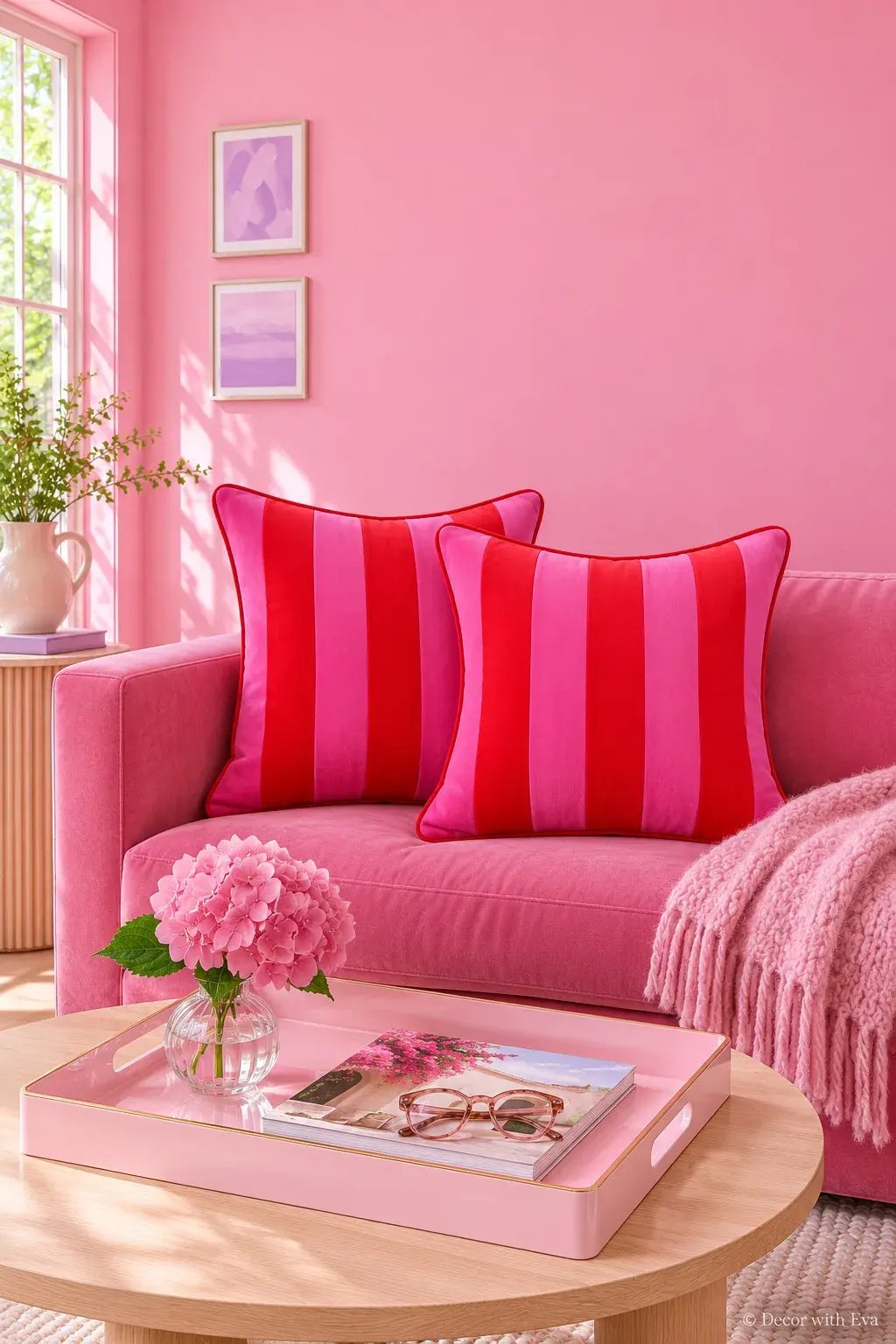
Lilac and red can make a pink living room playful without taking it over. Use pink on the walls and main sofa, then introduce lilac through a small picture or existing accessory. Broad pink-and-red stripes add a graphic pattern that is easy to repeat sparingly.
Select the biggest pink fabric first, then compare the stripe beside it. A plain coffee table keeps the center of the room calm; one pink tray can hold the small things that otherwise spread across it. Cushion covers need separate inserts of a suitable size.
Try this: Keep the first arrangement to one striped pair and live with it before adding another pattern.
22. Warm a Boho Room with Pink and Natural Texture
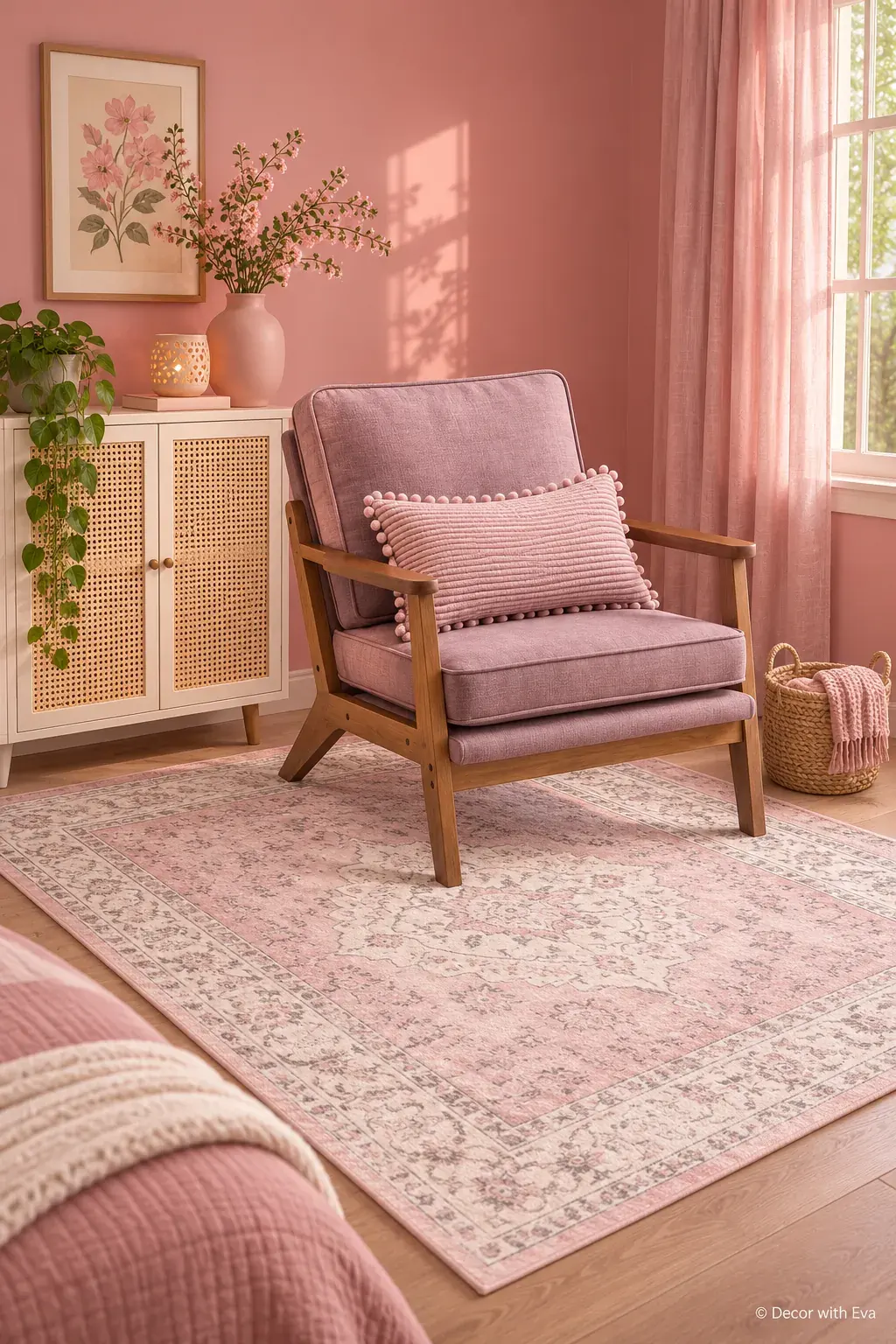
Earthy rose works beautifully with the grain of exposed wood and the weave of cane. Pink walls and a pink upholstered chair provide the color, while a faded pink rug makes the floor part of the arrangement. A pom-pom lumbar cushion adds a smaller, softer texture.
Give the chair enough room to sit naturally beside the cabinet, with a clear route around both. Avoid filling the floor with baskets simply to make the look feel bohemian. One useful basket and a favorite book often provide more character than a collection of decorative props.
Try this: Move an existing woven piece into the corner and see how it changes the pink.
23. Let Pink-and-Red Stripes Be the Pattern
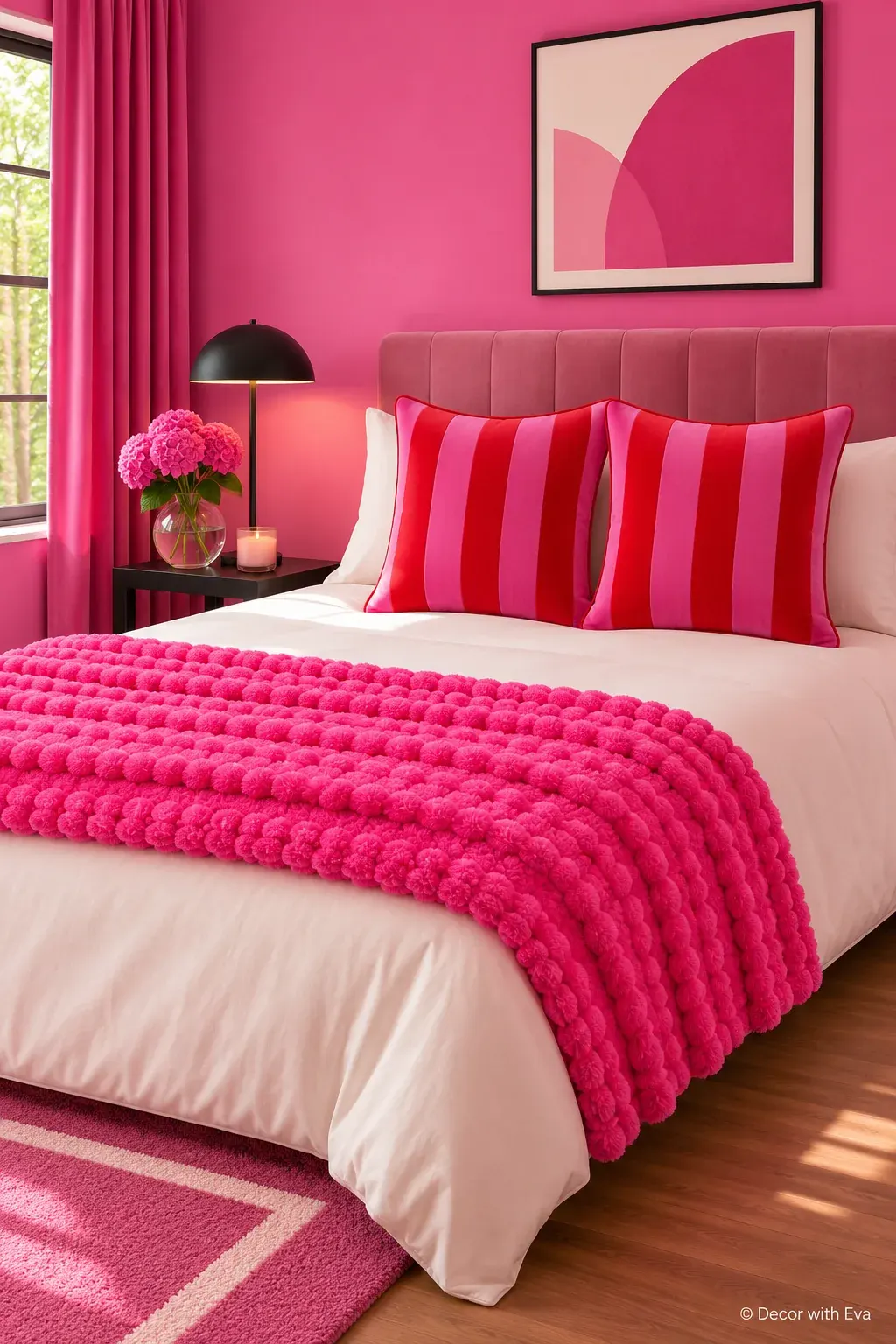
Bold stripes can keep a pink bedroom from feeling too delicate. Pink walls and an upholstered headboard establish the room; red-and-hot-pink cushions and a vivid throw add the stronger pattern. Plain bedding lets you see the difference between the stripes and the textured throw.
Repeat the red in a very small detail only if the room needs it. The selected throw is 50 by 60 inches, so treat it as a folded accent rather than a full bed cover. Two cushions can make the point without covering the pillows you sleep on.
Try this: Try the striped covers over suitable inserts you already have.
24. Repeat Scalloped Shapes in Small Doses
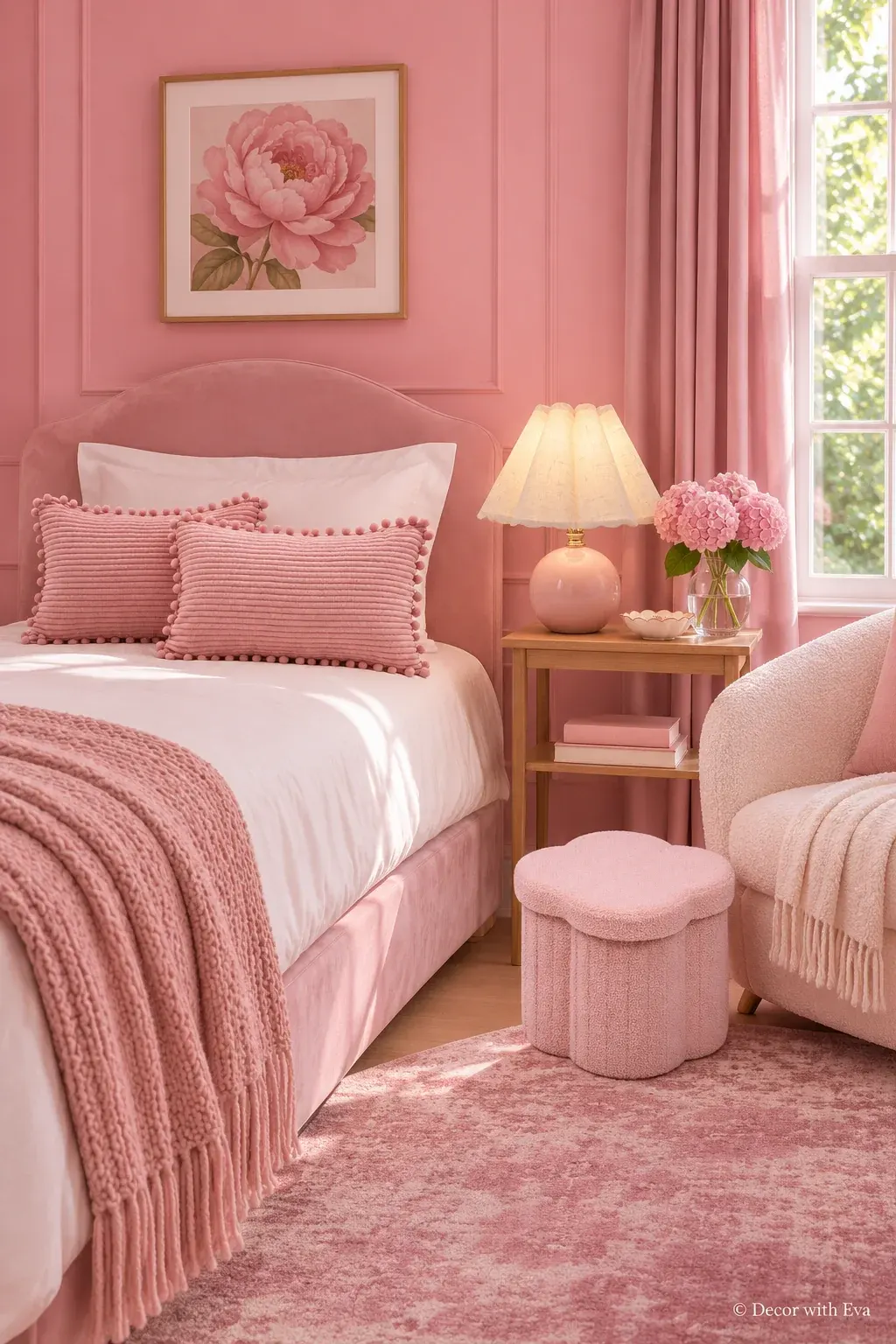
Scalloped edges suit a pink room when they appear in a couple of places. A small shade and a flower-shaped footrest provide the curves; pink walls, a pink bed and soft textiles carry the actual color. The shapes add interest without needing a themed furniture collection.
Keep the little lamp’s scale in mind and place it on a surface where it will not be knocked easily. The flower storage piece belongs beside a chair or out of the walking route. Its listing recommends it for organizing or resting feet, so do not use it for seating or climbing.
Try this: Start with one curved accessory and decide whether the room needs a second.
25. Give a Shared Bedroom Two Pink Personalities
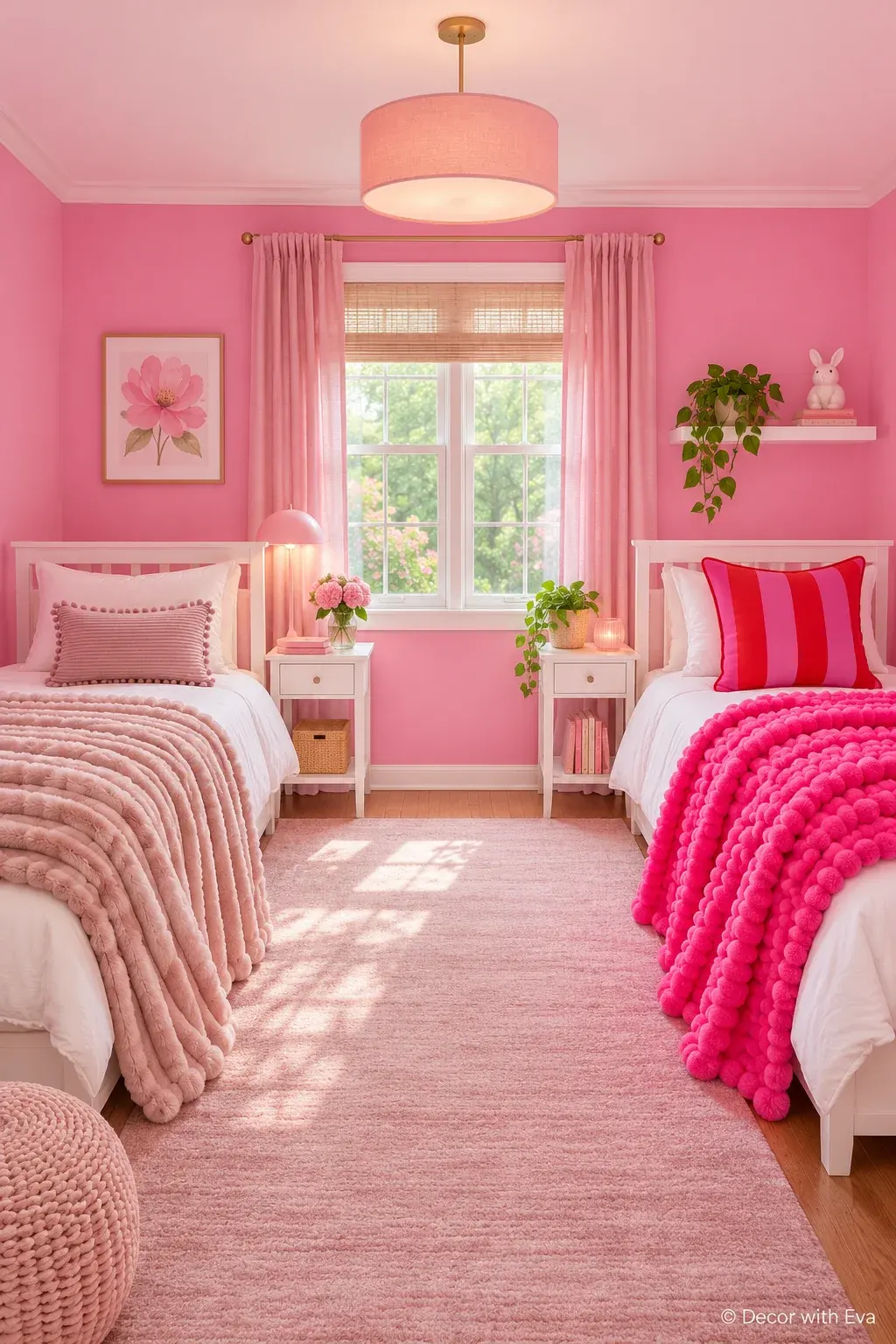
A shared pink bedroom can leave room for two tastes. Bubblegum walls connect the beds, while one uses softer rose textures and the other gets brighter pink and red. Repeating the same simple bed shape keeps the different textiles from making the room feel divided.
Plan each person’s bedside storage and the shared walking route before adding accessories. Use throws as accents over existing bedding rather than buying the wrong comforter size to match a photo. Each bed can have a different cushion while the room still shares a palette.
Try this: Let each person choose one favorite pink fabric, then find a wall sample that works with both.
26. Make a Rental Pink through Movable Pieces
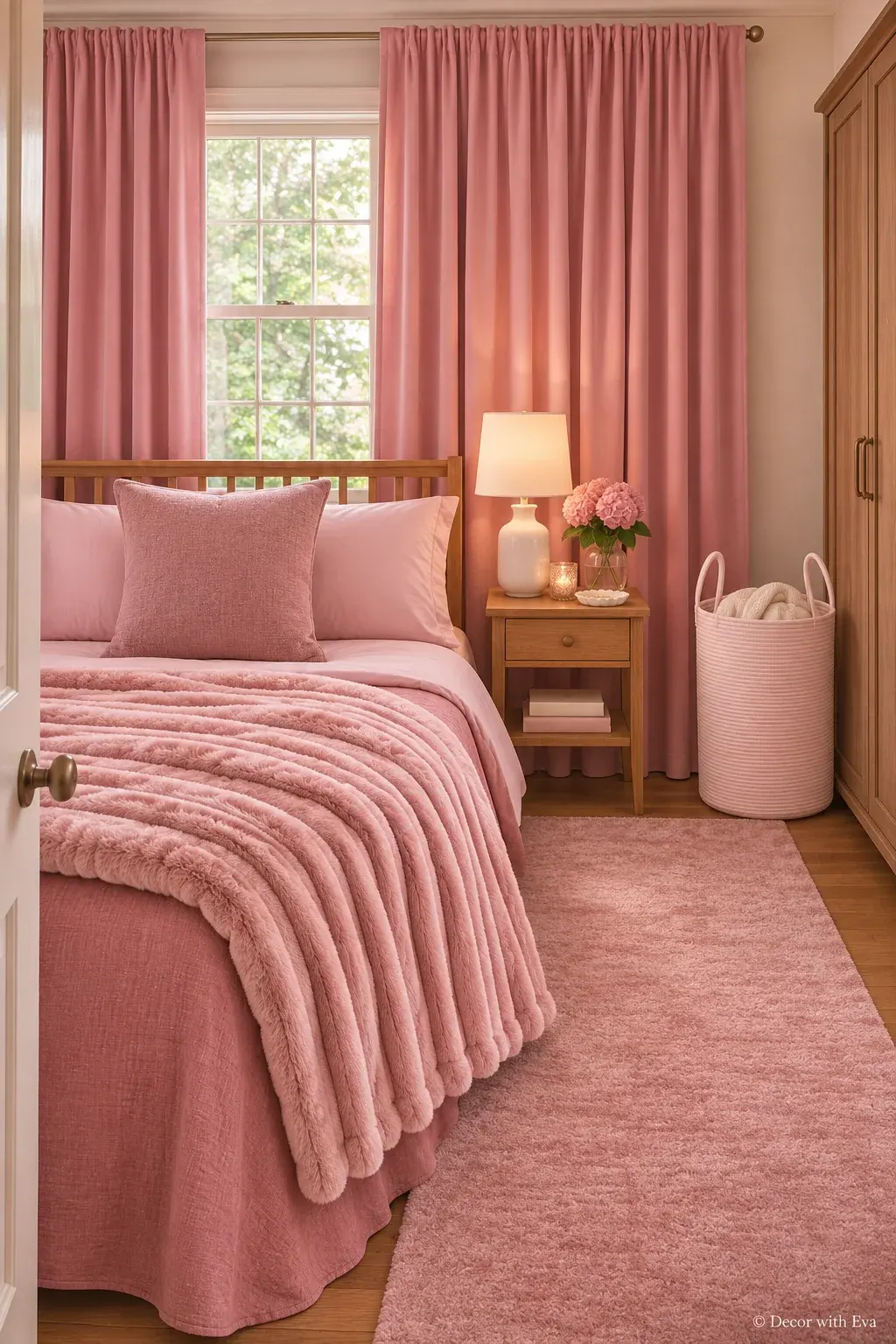
A rental can feel strongly pink through the largest movable textiles. Full-length pink curtains, a rose bedspread and pink sheets cover more visual area than a handful of ornaments. A pink cushion, ribbed throw and rope hamper finish the arrangement without requiring a painted wall.
Use existing curtain hardware where it fits and check any tenancy rules before changes. Compare bedding dimensions with your actual bed. When the palette is spread across curtains and bedding, there is less reason to fill a small room with extra furniture just to add color.
Try this: Borrow pink textiles from other rooms to test how much color each large surface contributes.
27. Style a Shelf with Pink Ceramics
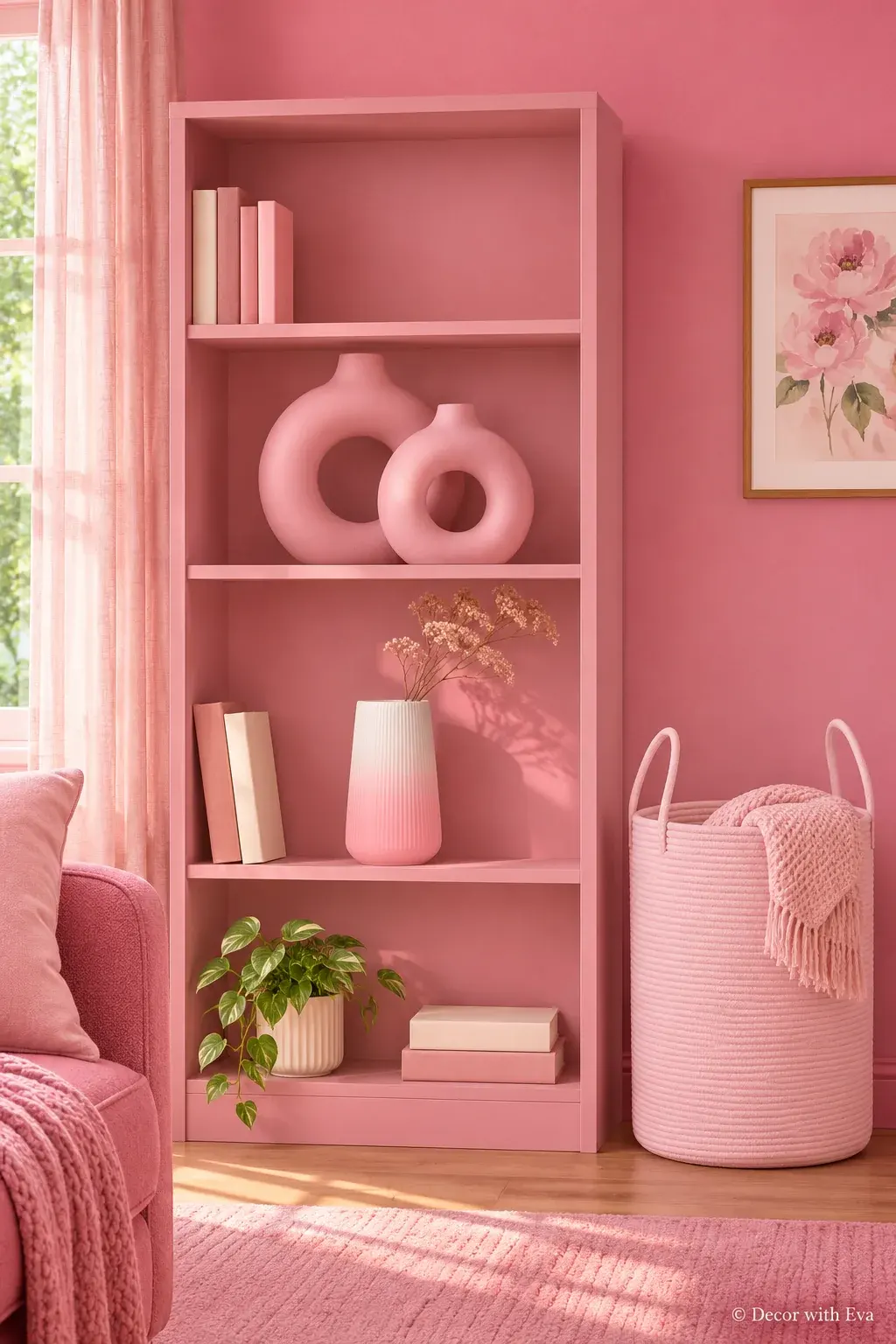
A pink bookcase against a pink wall makes storage part of the room’s color scheme. Use slightly different tones so the shelves remain visible, then add sculptural pink ceramics among the books. Open spaces give the vase shapes room to show.
Put fragile objects on stable shelves where they are easy to reach, and match shelf loads and wall fixings to the furniture instructions. A tall basket can gather loose textiles beside the bookcase. Displaying every vase together is optional; the selected pair can be split between rooms.
Try this: Rearrange one shelf with books and pottery you already own before buying another piece.
28. Choose a Pink Hamper That Belongs in the Room
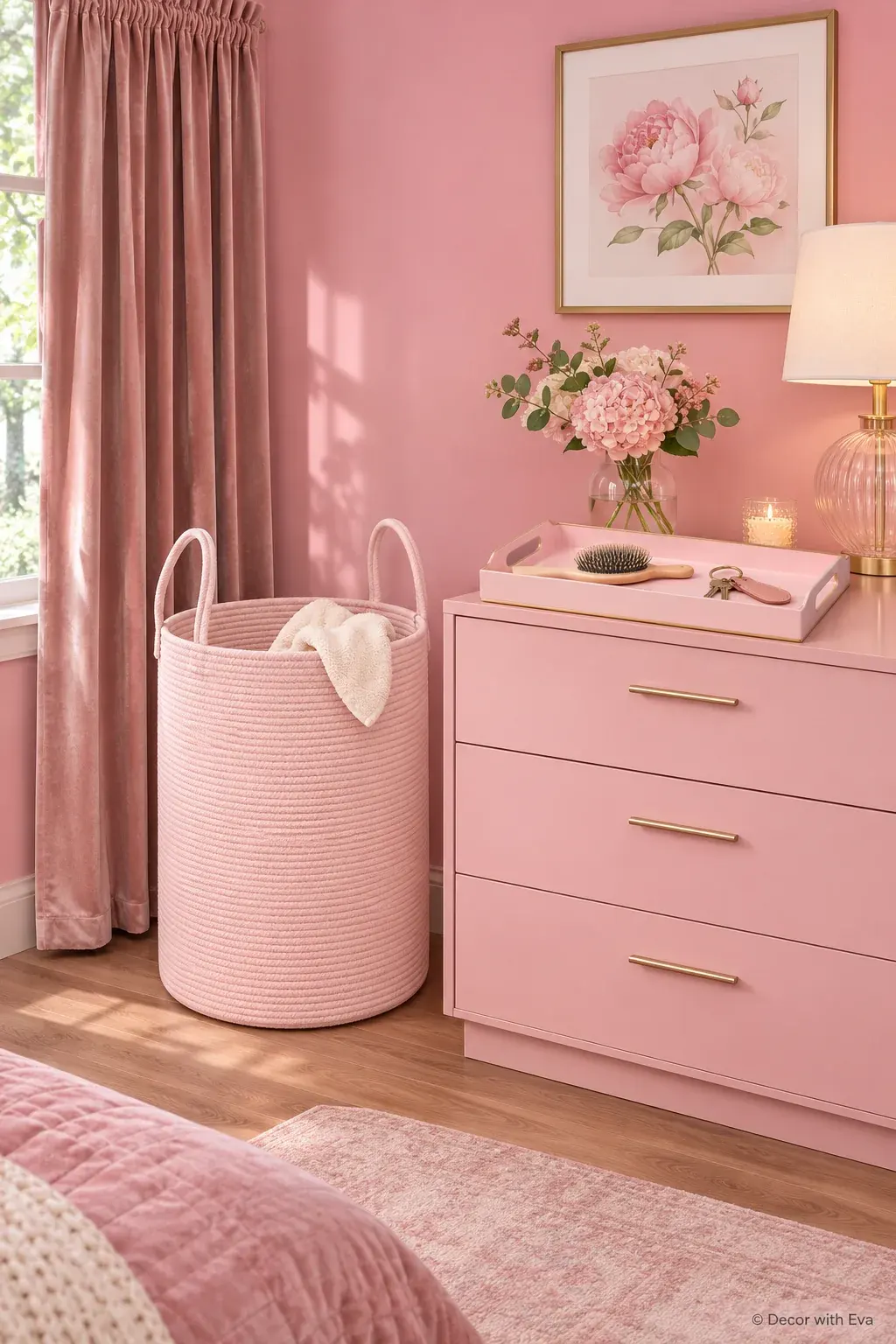
A pink hamper makes an everyday task part of the decorating. Give it a defined place beside a pink dresser or curtain, with enough space to lift it out and carry it. A shallow pink tray can gather hair accessories and the little objects that otherwise collect on top.
Check the hamper diameter against the actual floor space, not only the available height. A folded rope basket needs time and reshaping before it looks like the photo. Follow its care label, avoid packing it so heavily that it is awkward to lift, and keep the doorway clear.
Try this: Choose the hamper location while the room is in normal use, with drawers and doors open.
29. Carry the Color into the Bathroom
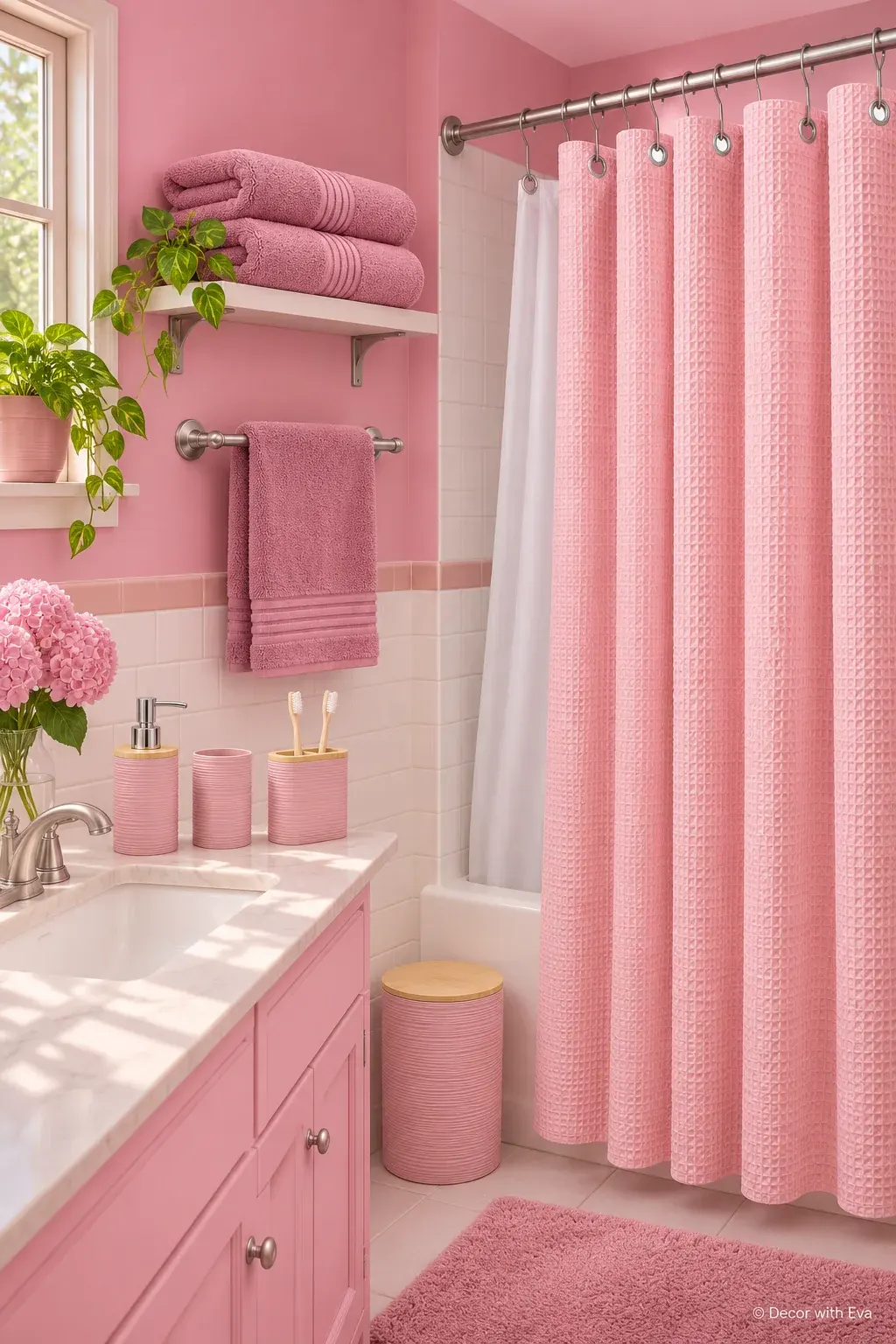
Pink can transform a plain bathroom through large, replaceable pieces. Pink upper walls and tile details set the background; a blush waffle curtain and rose towels carry it across the room. A few pink sink accessories repeat the color where you use it every day.
Measure the shower opening and hanging height before buying a curtain. The selected waffle curtain is an outer layer, so use a separate waterproof liner. Leave towels space to dry and keep the sink arrangement easy to wipe around. The linked accessory set has plastic bodies, not ceramic.
Try this: Try your current towels together and replace only the pieces needed to establish the palette.
How Do You Make a Room Look Pink without Painting?
Put pink on the largest movable surfaces. Curtains and bedding create a stronger effect than several little ornaments. In a living room, a pink slipcover that fits the existing sofa can do the same job. Compare the fabrics together and check dimensions before buying.
Which Colors Work with Pink?
Cream and wood give pink a softer setting; sage, navy, black, lilac and red create different kinds of contrast. Pick one smaller partner for the main pink rather than introducing them all. The balance matters more than making every piece match exactly.
Can You Mix Different Shades of Pink?
Yes. Choose one pink for the largest surface, then vary the depth and texture around it. Compare the actual samples together: a peach-leaning blush and a cool berry pink may look different in your light. Repeating one of them in a second place can help connect the room.
Save it for later
Found a few ideas you love? Save this collection to your Pinterest board so it’s easy to find when you’re ready.
Save to Pinterest
Let’s talk ideas
Which idea would you try? Share a question, a small-space solution, or a detail that made it work in your home.