This article contains paid links. As an Amazon Associate, I earn from qualifying purchases.
Burgundy and green can fill a bedroom with color in quite different ways. Sage walls and a wine-red quilt feel soft and welcoming; olive velvet and burgundy paint make a richer combination. The most useful starting point is deciding where each color will have enough space to be seen.
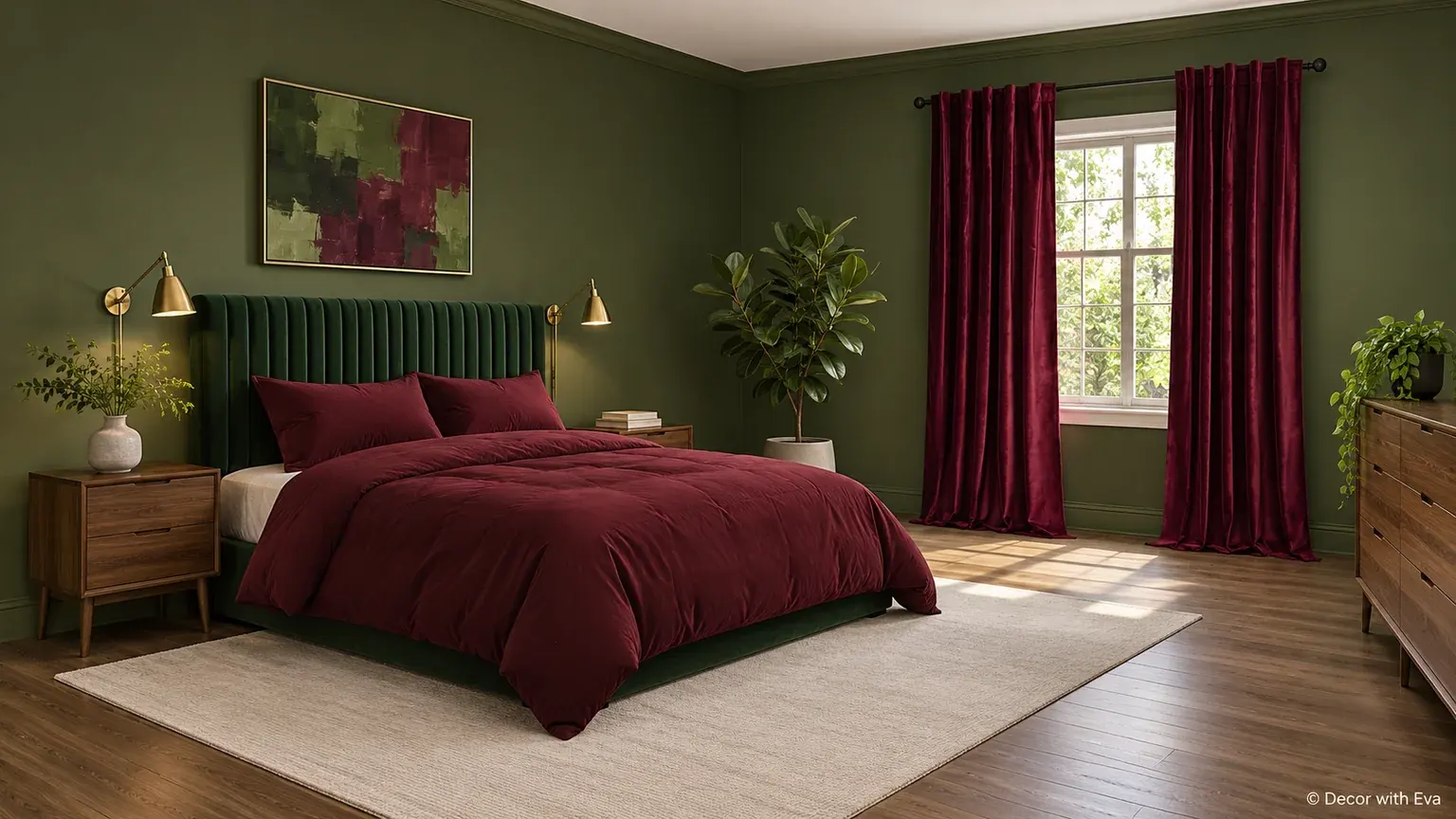
These 26 burgundy and green bedroom ideas cover the bed, windows, storage, lighting and a few creative projects. Use one arrangement as a starting point, then adapt it to your room, your existing furniture and the way you like to live.
Choose the Green before the Small Accessories
Compare burgundy with pale sage, earthy olive and deeper forest green beside the fabrics you plan to keep. Give both colors a substantial place, such as walls and bedding or a bed frame and curtains. A little cream, wood or brass can separate them without taking over.
Test paint samples in daylight and under your bedroom lamps. Benjamin Moore’s sampling guidance explains how movable samples help you compare a color around the room. Keep furniture and door routes usable, and follow the CPSC’s Anchor It! guidance where furniture needs securing.
1. Pair Sage Walls with a Burgundy Quilt
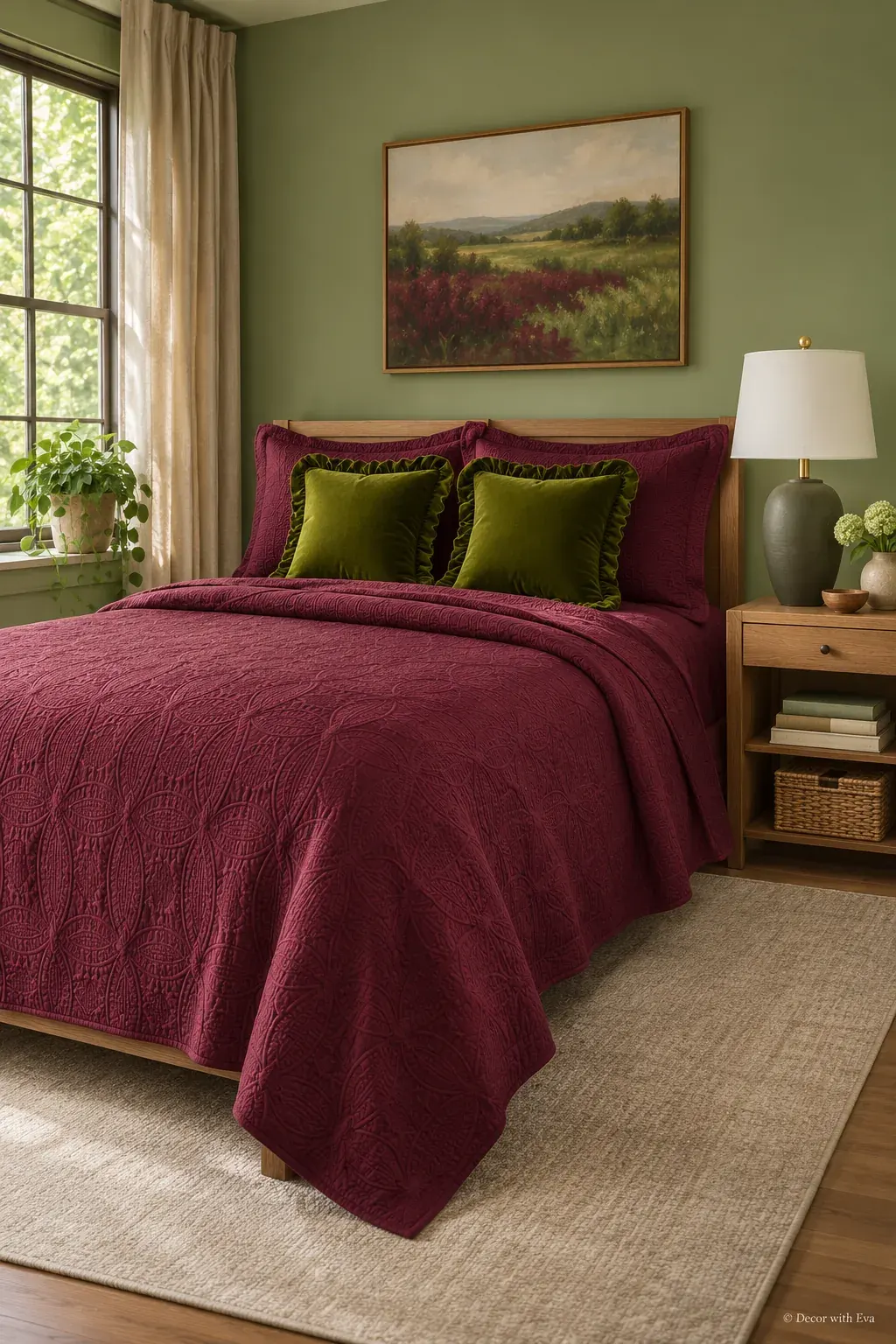
Sage walls give a deep burgundy quilt a soft, generous backdrop. Let the red cover most of the bed, then repeat green in a pair of velvet cushions and a ceramic lamp. The slightly different greens keep the room interesting without needing another strong color.
Start with the quilt’s actual width and length, especially on a deep mattress. Choose a drop that clears the floor and leaves the bed frame visible if you like its wood finish. A plain headboard and the nightstand you already own are enough to complete this arrangement.
Try this: Lay your existing bedding beside a sage sample before choosing paint.
2. Wrap Olive Bedding in Burgundy Walls
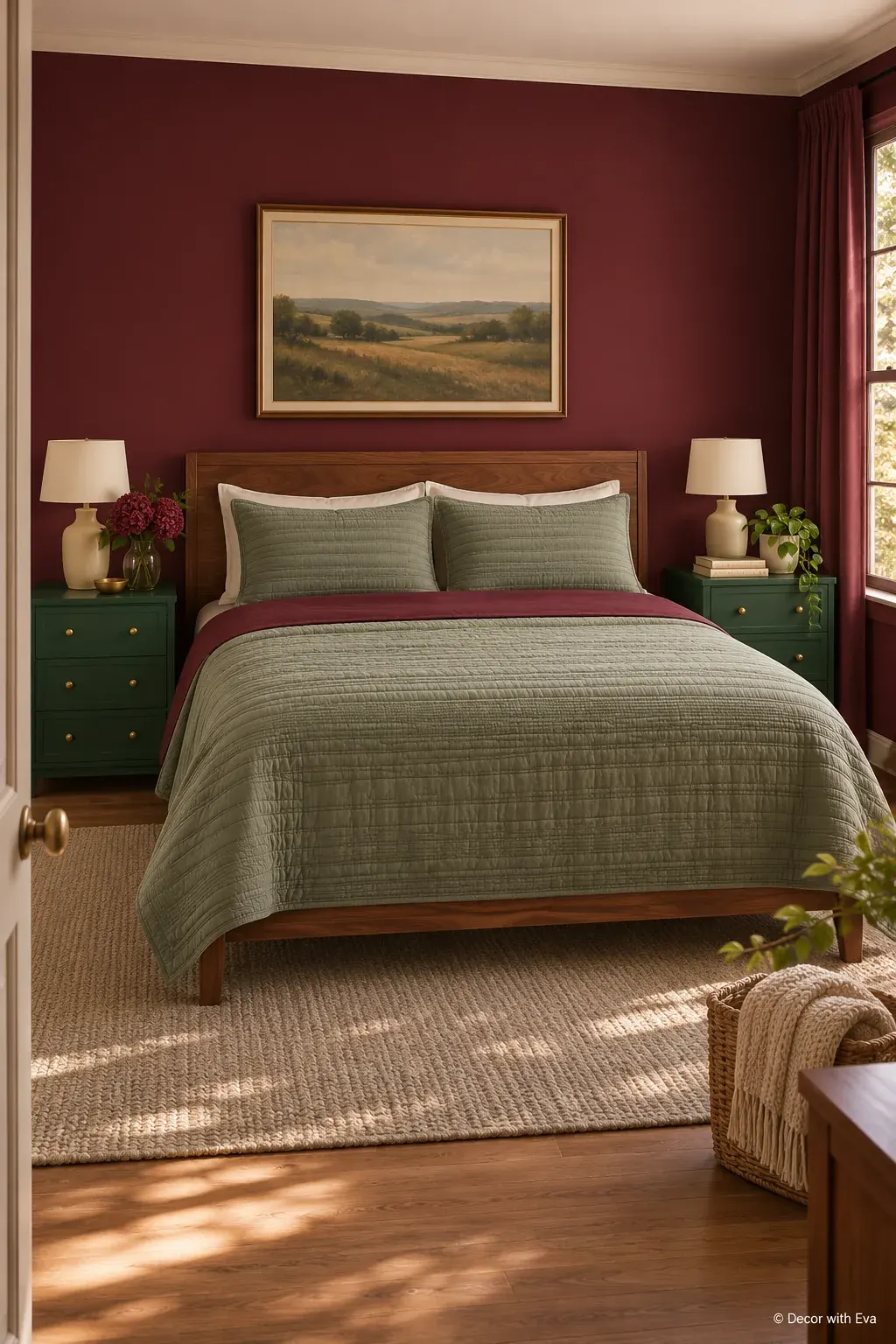
Burgundy walls make an olive bed feel particularly inviting. A simple cotton quilt brings a quieter texture than shiny velvet, while a burgundy sheet turn-down connects the wall to the bed. Dark green nightstands add useful storage without introducing a new color family.
Keep the quilt mostly visible rather than covering it with a second bedspread. Check the nightstands individually: a pair still needs room on both sides, and the drawers need space to open. Cream lamps and a little warm wood can break up the deep colors while the red and green remain the main event.
Try this: Try a burgundy sheet fold with your current green coverlet before replacing either.
3. Choose a Green Bed with Burgundy Bedding
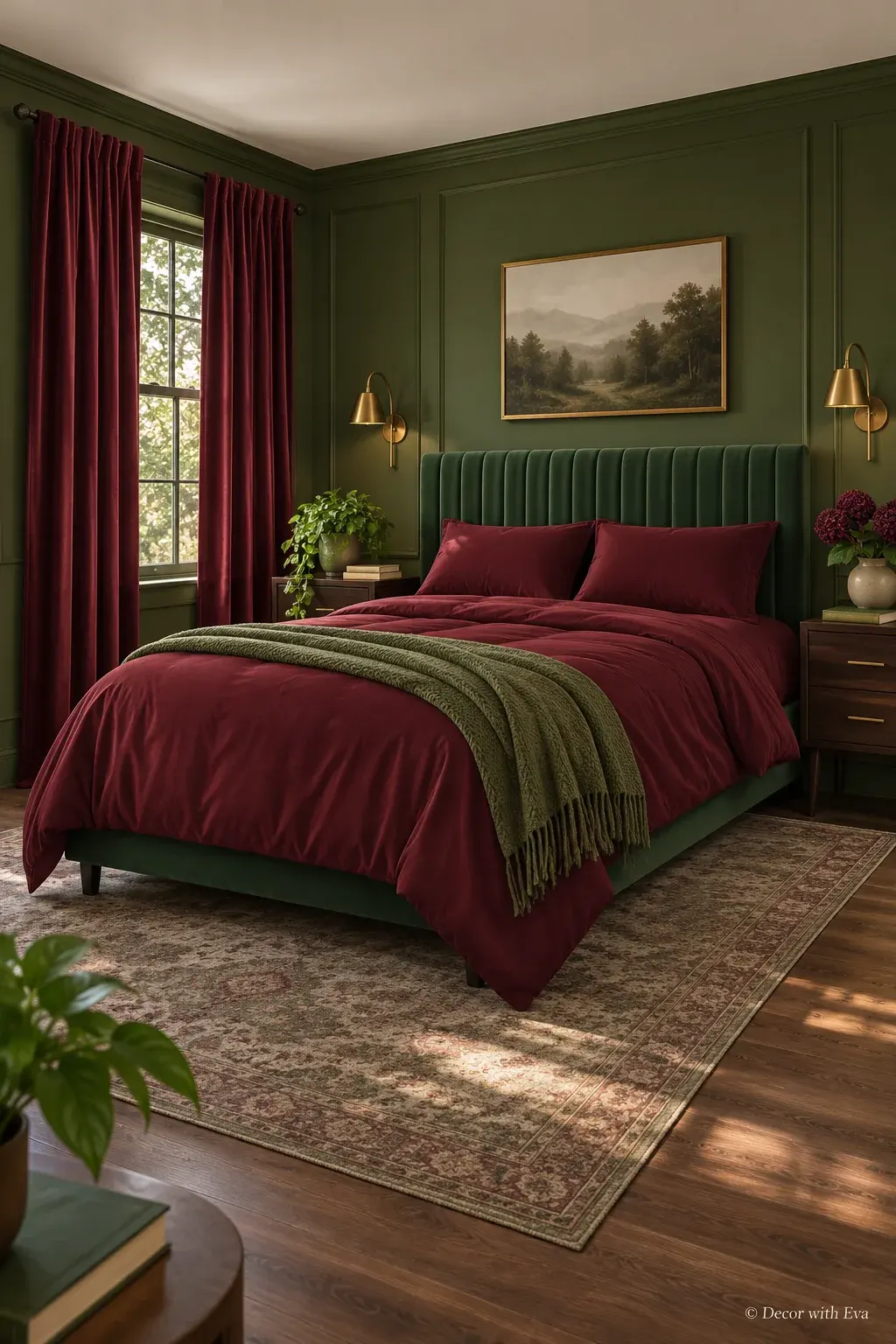
A green upholstered bed gives the room a clear focal point before you add a single cushion. Dress it in a smooth burgundy comforter and leave enough headboard showing to appreciate the vertical channels. Burgundy curtains carry the second color up from the bed to the window.
Measure the bed’s outside frame, not just the mattress. Check the headboard height against windows, switches and any artwork, and leave access to both bedside areas where the room allows. Plain existing wood tables work well here; the upholstery and bedding already provide plenty of color.
Try this: Remove extra pillows until the green headboard is easy to see.
4. Take Burgundy onto the Ceiling
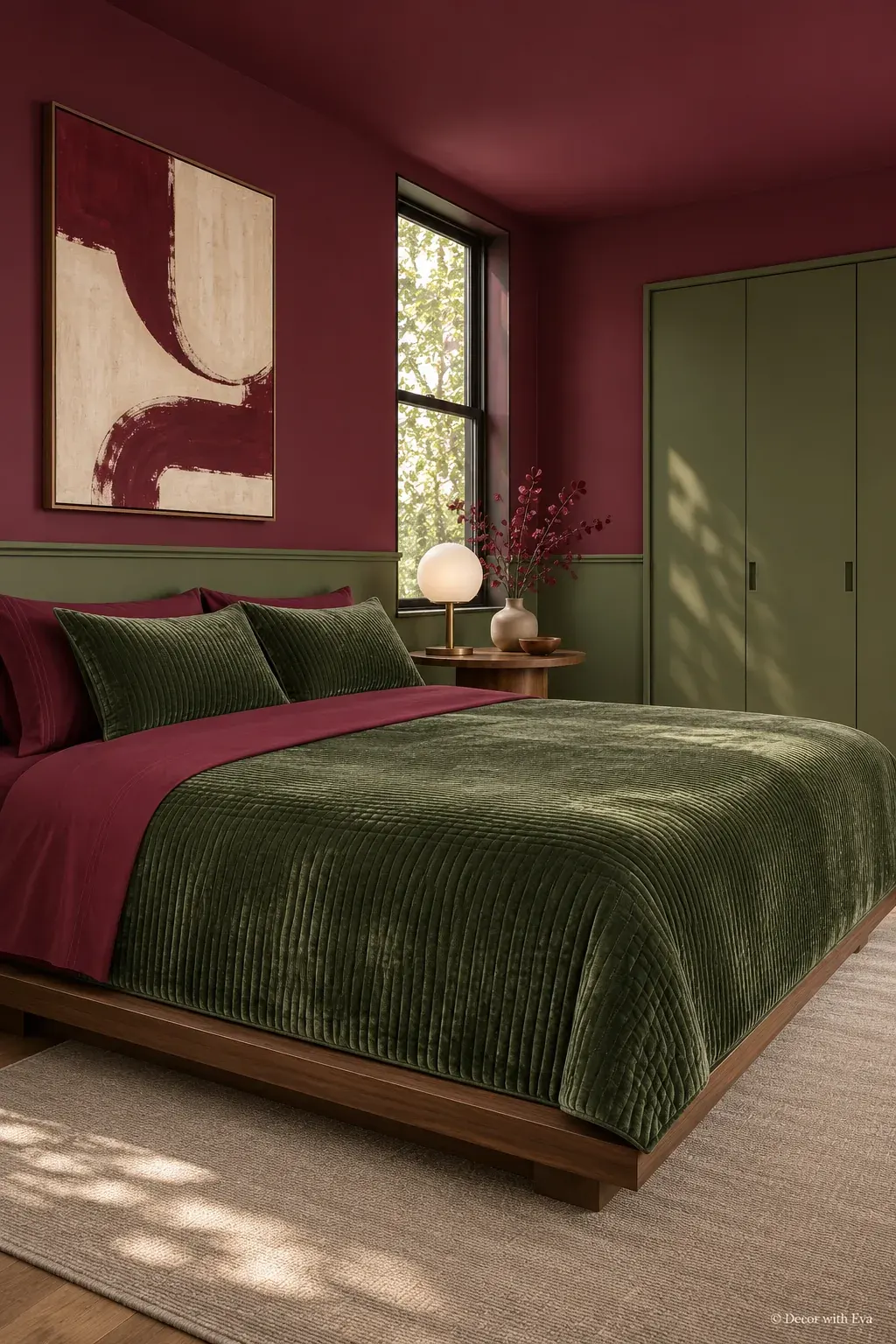
Taking burgundy onto the ceiling creates a more enveloping version of the palette. Olive lower walls and a green velvet quilt balance that deep red overhead. The quilt’s narrow channels add texture without bringing in a second printed design.
Test the ceiling and wall colors together in the actual room before committing. Include the light you use at bedtime, since that is when you will see this scheme most often. Keep the remaining finishes simple: a walnut bed, plain curtains and one piece of artwork can be quite enough.
Try this: Hold large samples above eye level as well as beside the bed.
5. Frame the Window with Burgundy Velvet
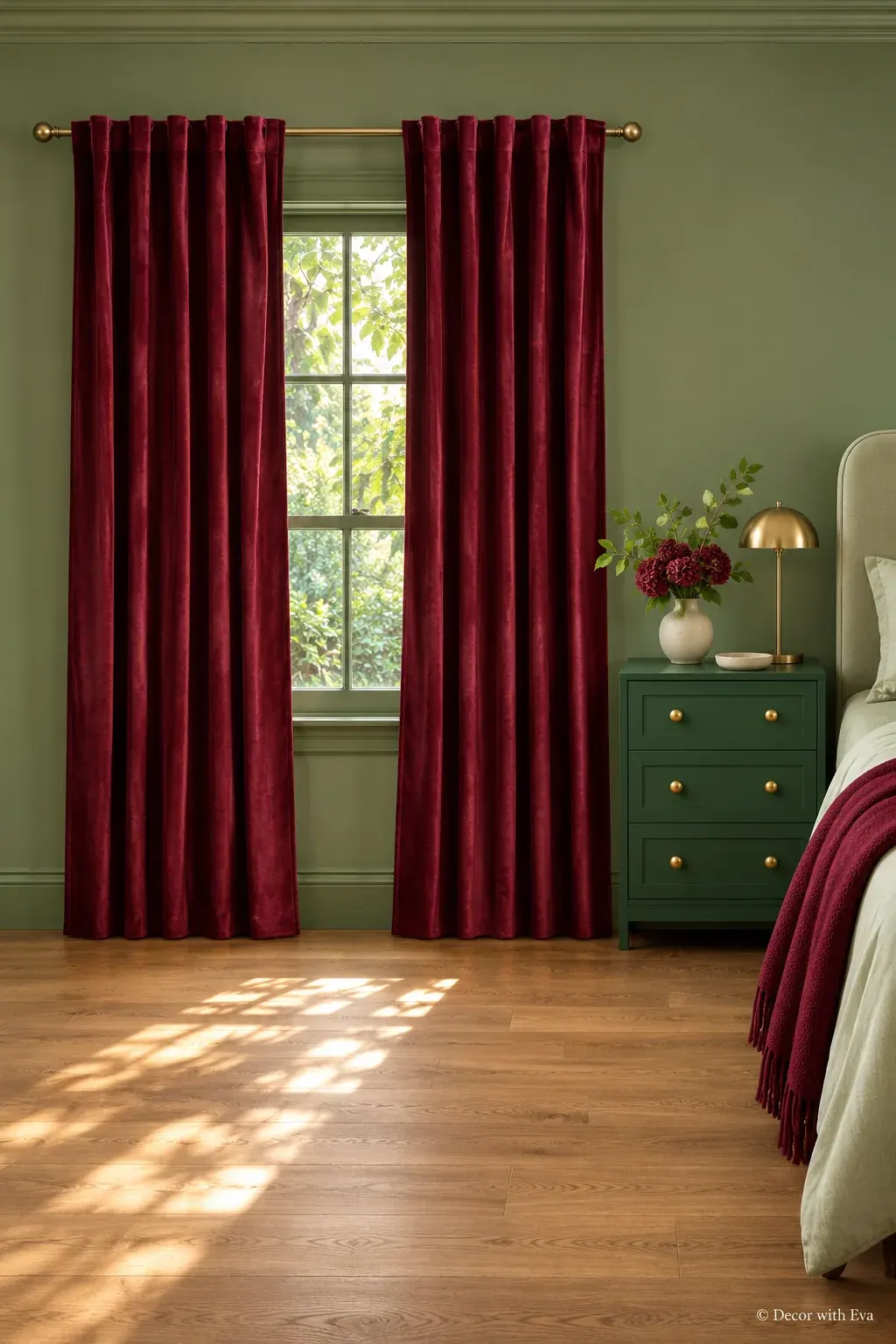
Full burgundy curtains give a sage bedroom a strong vertical feature. Their broad folds carry more color than a few small accessories, and the green wall remains visible around the window. A green bedside table makes the two areas feel connected.
Measure from the proposed rod position to the finished hem before choosing a length. Two panels measuring 52 inches wide each provide 104 inches of flat fabric, with less coverage when gathered. Leave space to pull them away from the glass, and choose separate light control if the room needs more than decorative room-darkening curtains.
Try this: Pin up a fabric sample near the window and look at it both open and folded.
6. Replace Closet Doors with Green Curtains
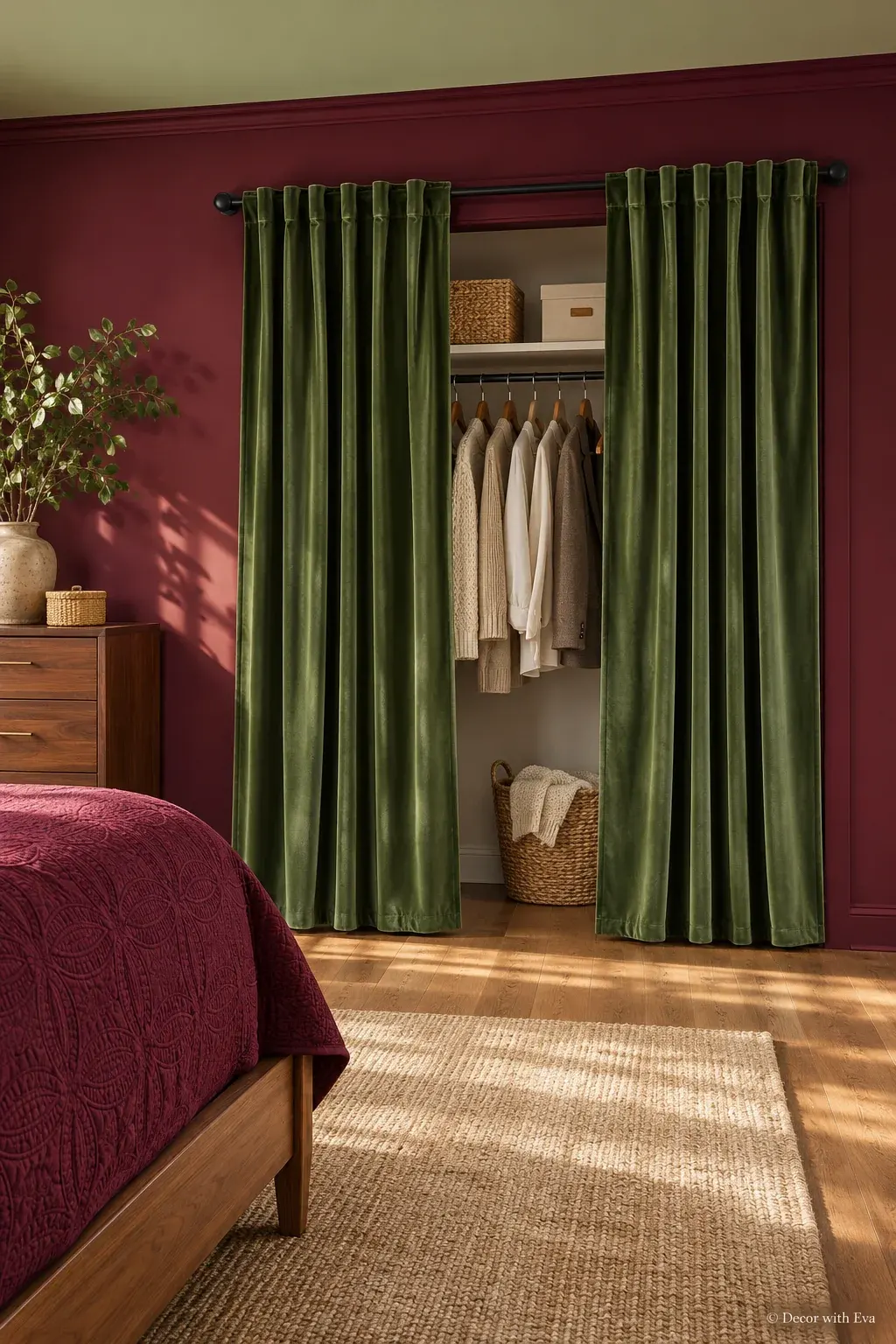
An olive curtain can replace a closet door while adding a substantial green surface to a burgundy bedroom. The fabric softens the opening, and you can pull it aside without needing a hinged door’s swing. Keep the surrounding trim the same burgundy as the wall for a tidy outline.
Measure the opening, rod projection and hanging drop carefully. Leave enough fabric for fullness and enough room to move the panels clear of the clothes. Use a mounting method suited to the wall and the curtain weight. If your current doors work well, this is an optional styling change rather than a storage necessity.
Try this: Test the idea with a spare curtain before removing any existing doors.
7. Soften the Pairing with Burgundy Ruffles
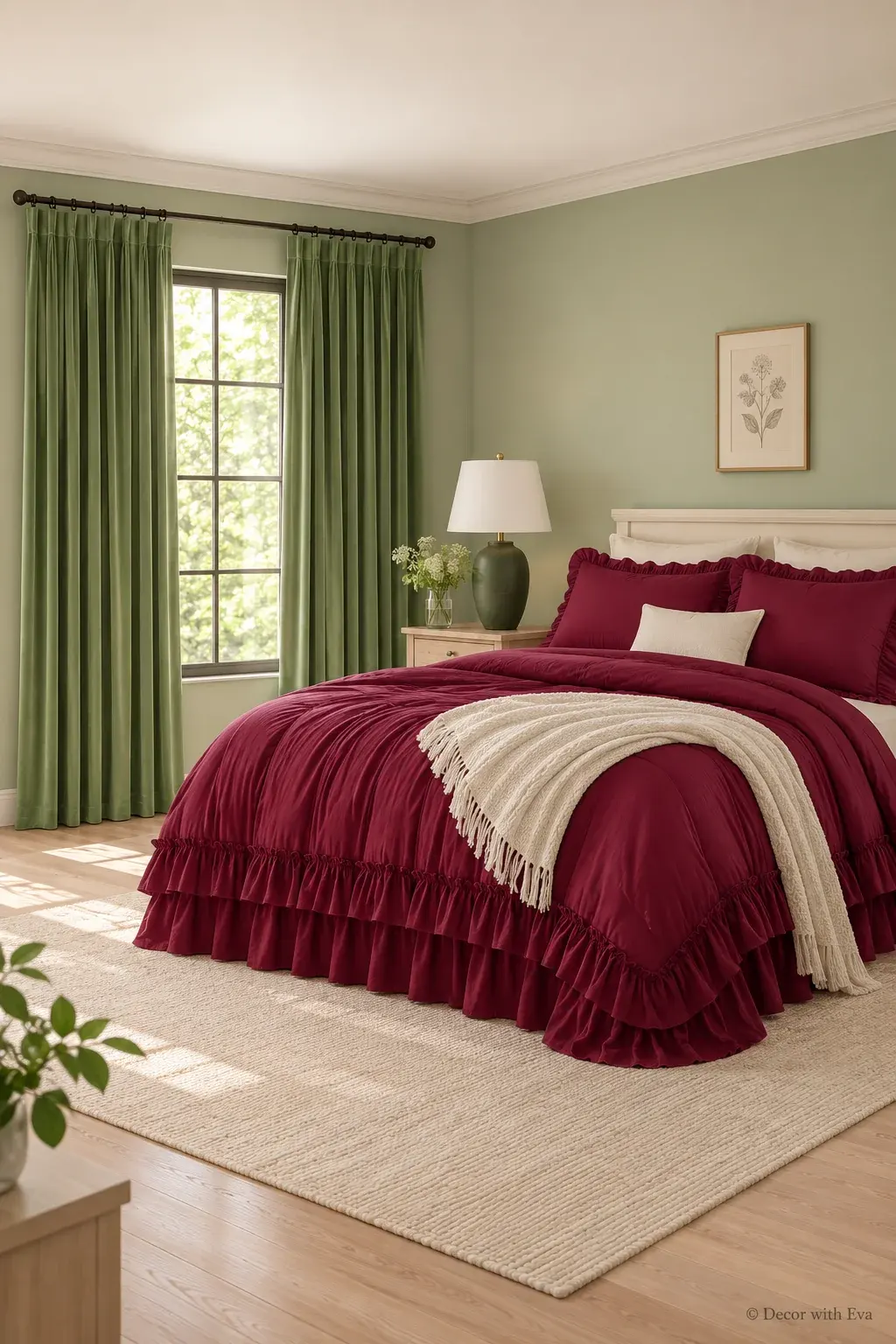
Burgundy ruffles bring a softer outline to this color pairing. A plain cream or wood bed keeps the double ruffle easy to appreciate, while sage walls and curtains supply a broad green backdrop. A rounded green lamp repeats the color in a smaller, useful piece.
Check how far the ruffled comforter will hang over your mattress. Let the edge fall freely instead of trapping it behind a bench or a thick footboard. Keep the other decorative pillows simple so the ruffles do not disappear beneath a pile of extra layers.
Try this: Pair one ruffled textile with the plain bedding you already have.
8. Give Extra Bedding a Green Storage Bench
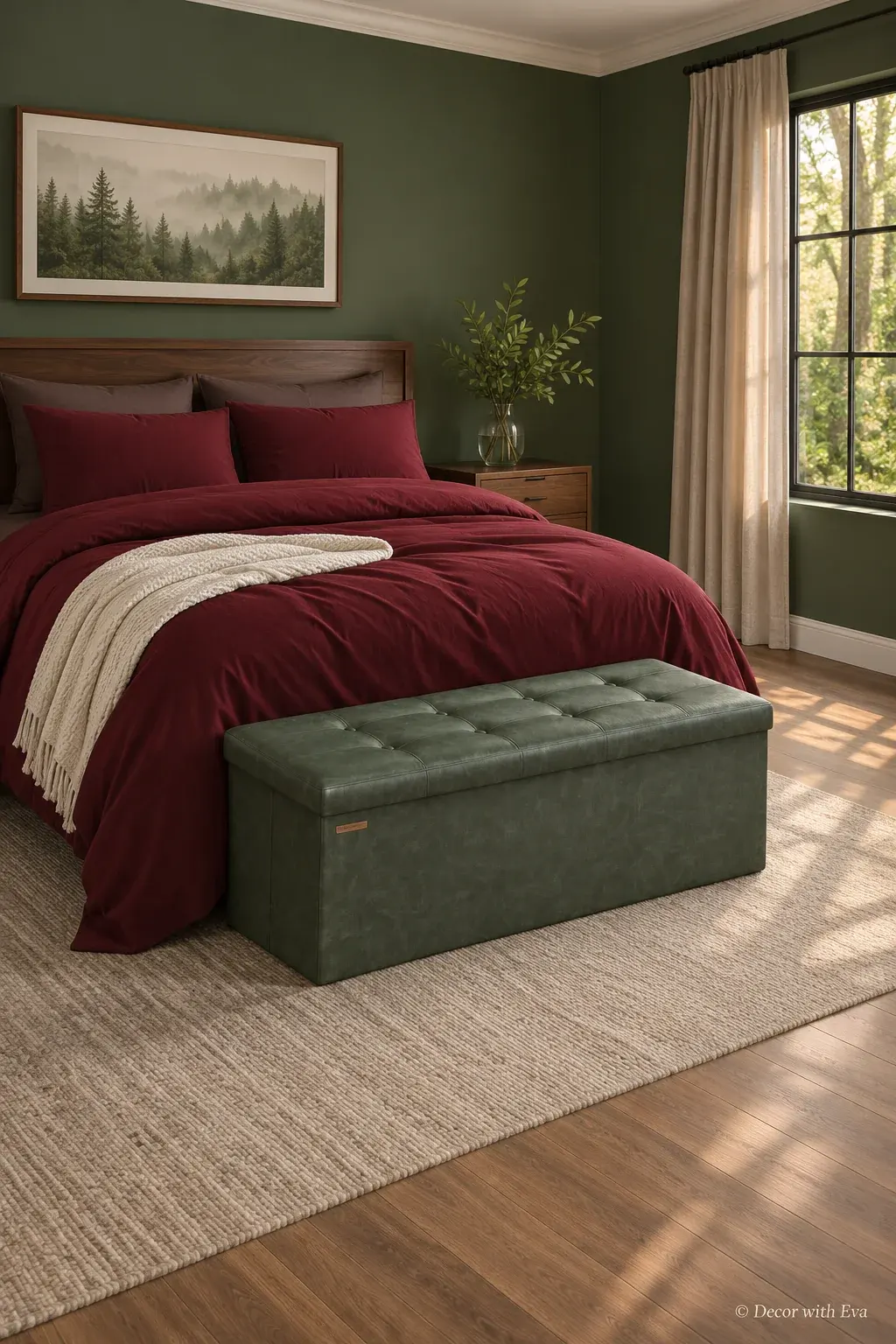
A green storage bench makes the foot of a burgundy bed useful. The long rectangular shape gives spare sheets or throws a home and repeats the wall color lower in the room. A closed lid keeps the finished arrangement pleasantly simple.
Mark the full bench footprint on the floor before buying. This folding version is about 15 inches high, so compare it with the top of your made bed rather than expecting equal heights. Leave room to remove the lid and walk past the bench; keep frequently used items accessible without moving a permanent display.
Try this: Move a storage box you own to the proposed position and check the route around it.
9. Make an Emerald Reading Corner
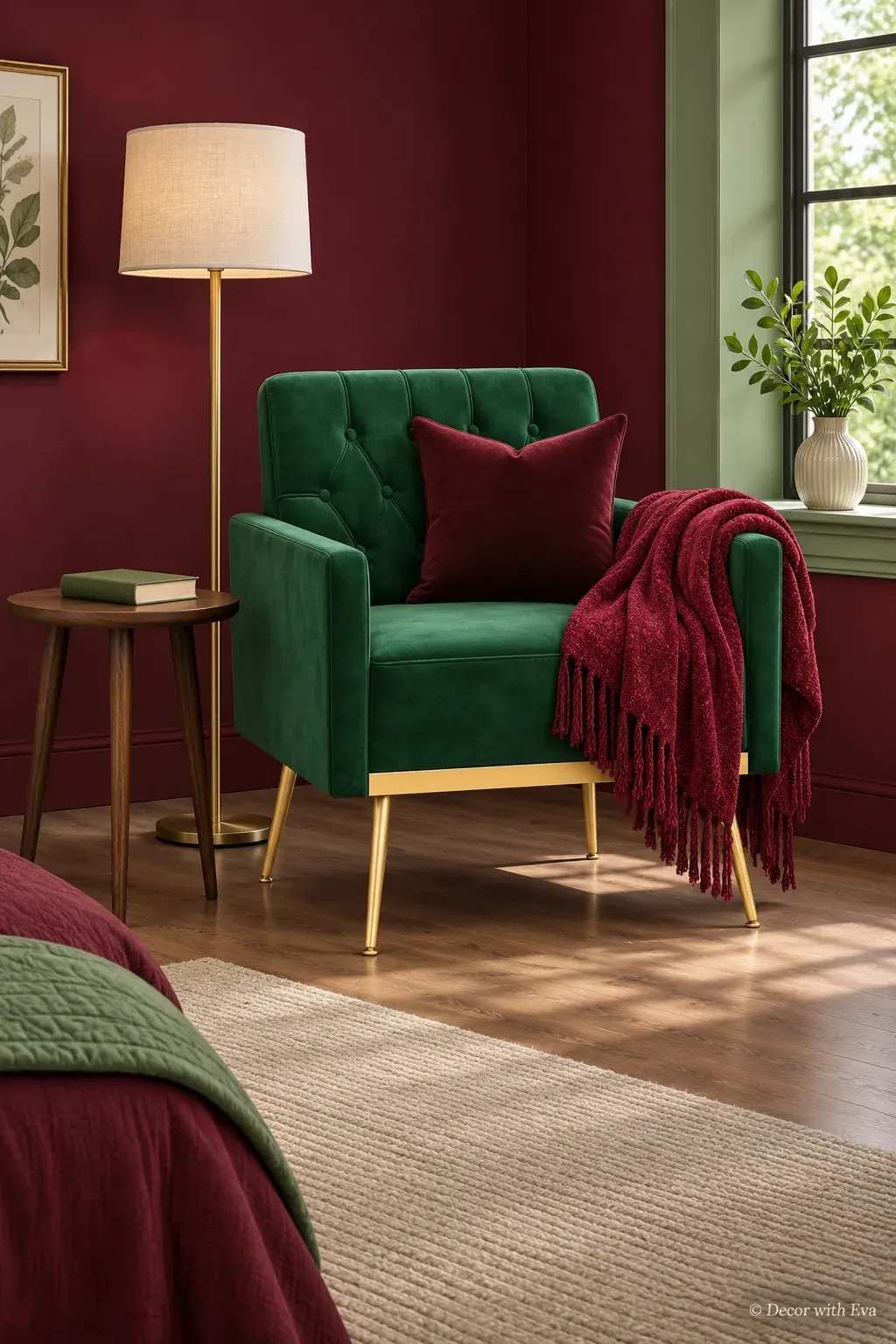
An emerald chair and a burgundy throw make a reading corner feel like part of the bedroom. The chair supplies a clear green shape, while a plain red cushion and a fringed throw repeat the bedding palette. A small table nearby is more useful than a large collection of ornaments.
Measure the chair at its widest and deepest points, including the arms and legs. Leave space to stand up, reach the table and move around the bed. The illustrated throw is an accent size, so drape it over one arm rather than expecting it to cover the whole chair or mattress.
Try this: Move an existing chair into the corner for a few days before committing to a new one.
10. Balance a Wide Mulberry Chair with Olive Textiles
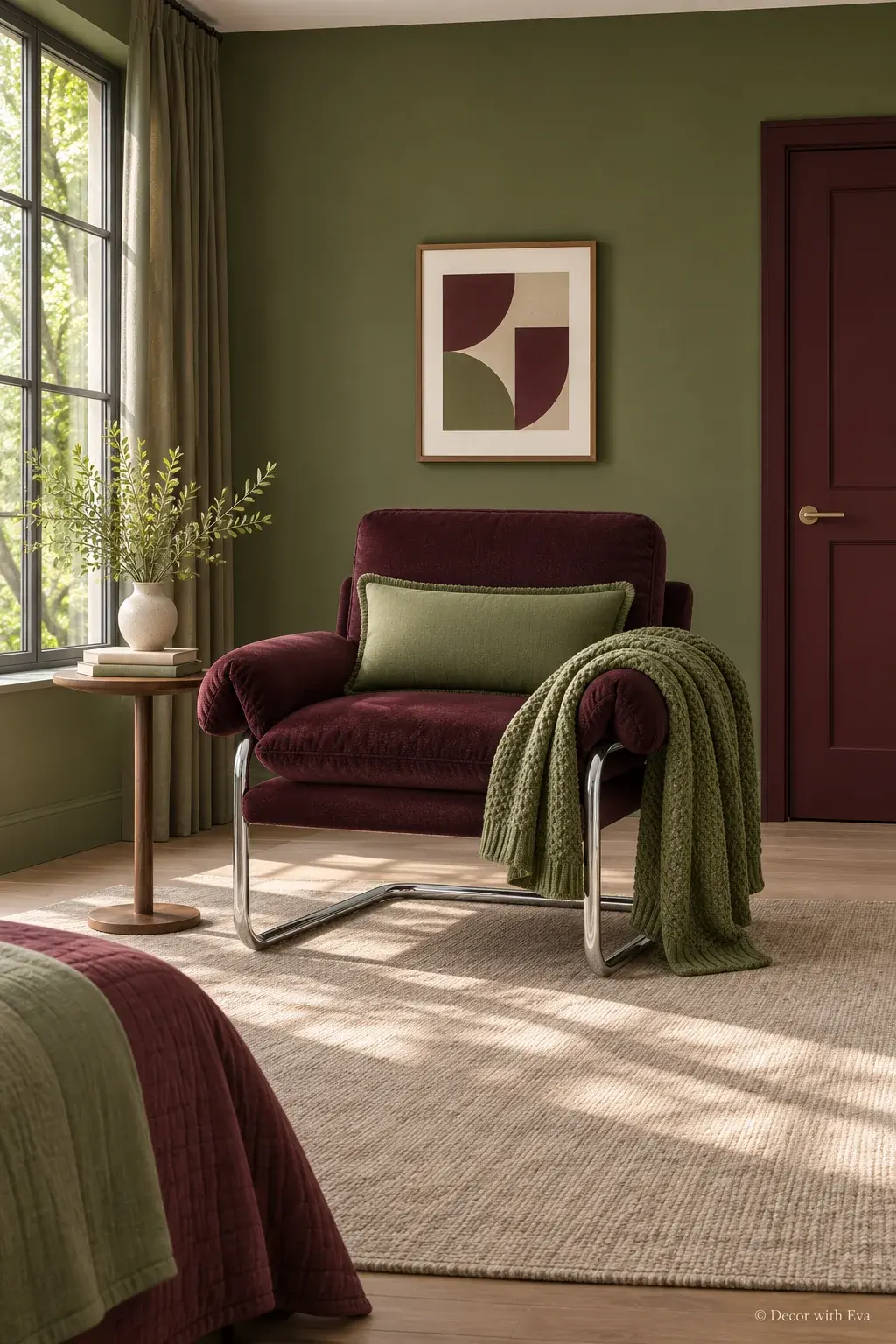
A wide mulberry lounge chair gives burgundy a substantial place away from the bed. An olive lumbar cushion and a chunky green throw soften the chrome-colored frame and connect it to the walls. The mix of smooth metal and textured fabric keeps the corner from looking overly matched.
This particular chair is more than 41 inches wide, so it belongs in a corner with genuine room to spare. Tape out its full footprint and check the path to the bed and closet. Use the repeated overall dimensions for planning; some smaller seat measurements on the listing are inconsistent.
Try this: Check the chair footprint with the bedroom door and closet doors open.
11. Repeat Burgundy at the Bedside
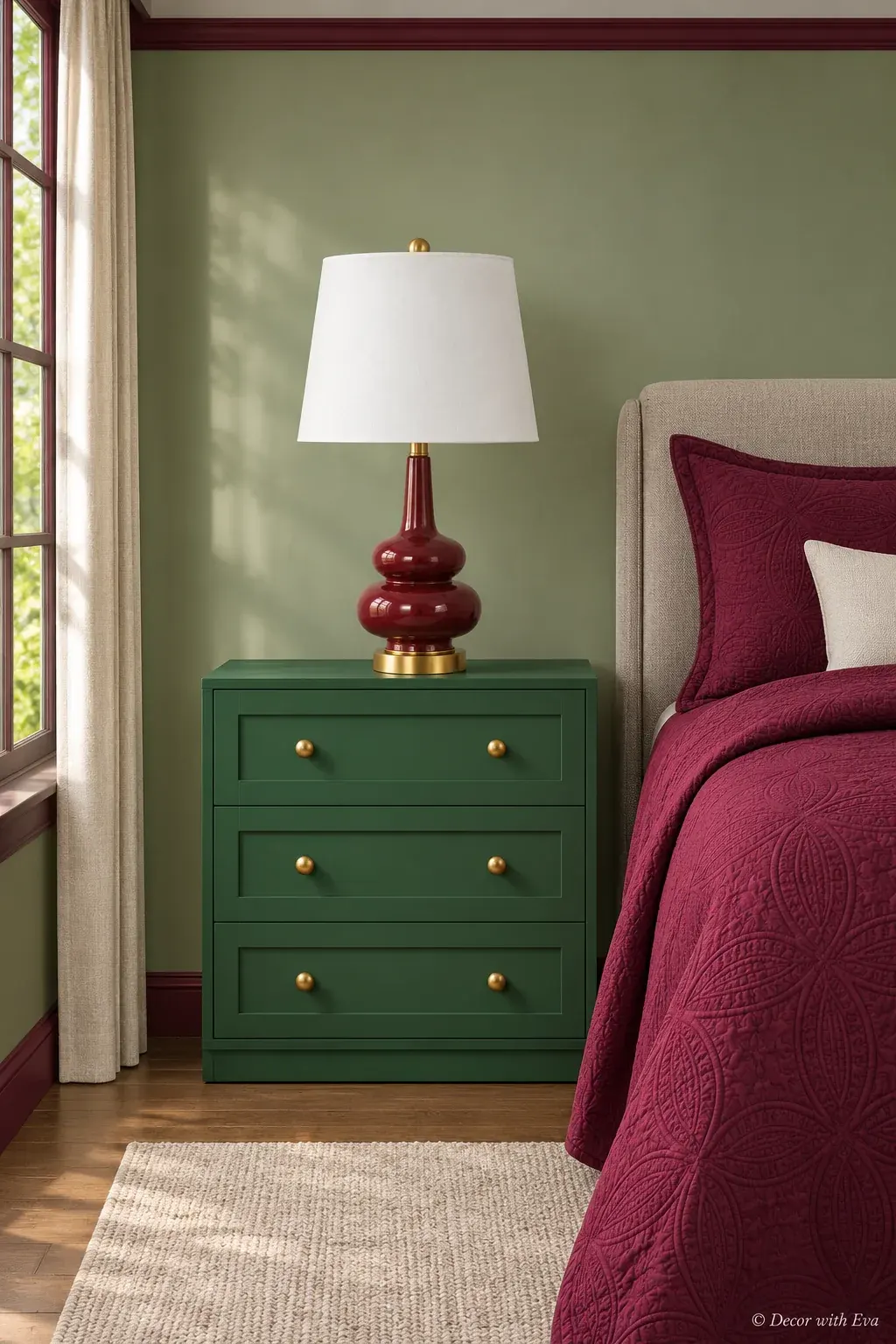
A cranberry lamp makes the burgundy feel deliberate at the bedside. Set its sculptural ceramic base against a green wall or green nightstand and keep the other objects low. The pale shade gives the strong colors a little breathing space without taking over the room.
Check the whole lamp, including the shade, against the tabletop. A 13-inch shade needs more space than the narrow base suggests. Keep the switch reachable from bed, route the cord to an accessible outlet and leave room for the things you actually use each night.
Try this: Clear the nightstand to a lamp, a book and your everyday essentials.
12. Float Walnut Storage against a Colored Wall
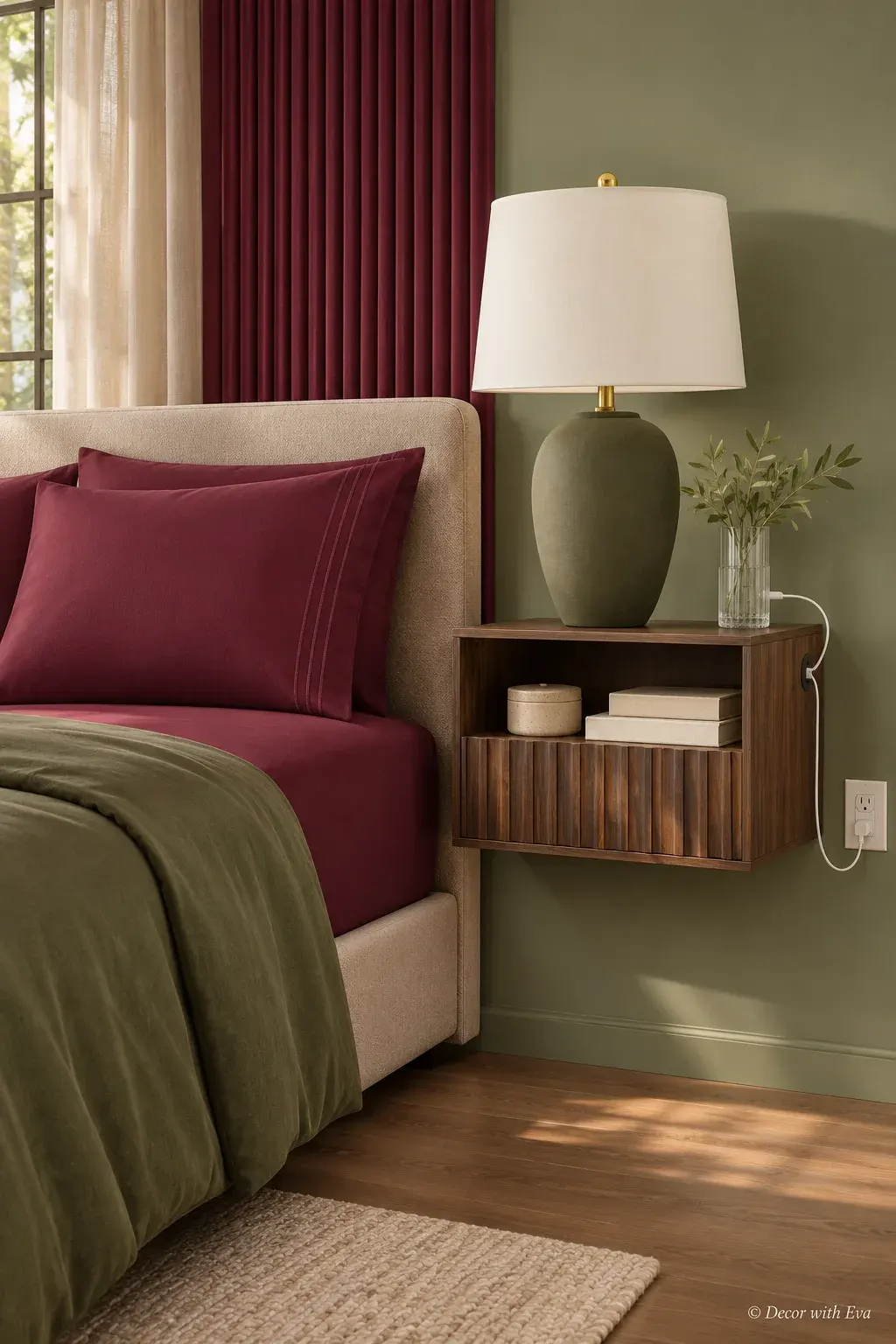
Walnut floating storage brings a warm wood finish into a burgundy and green bedroom without adding legs to the floor. A green pot lamp and burgundy bedding repeat the palette close to the bed. The open cubby keeps a book within reach while the drawer hides smaller items.
Choose a reachable mounting height and a fixing method appropriate for the wall and intended load. Compare the lamp base and shade with the shelf’s shallow depth, and keep its lead neatly routed. If drilling is unsuitable, a compact freestanding table can serve the same everyday purpose.
Try this: Outline the shelf on the wall with removable tape and reach for it from bed.
13. Let a Botanical Rug Connect the Colors
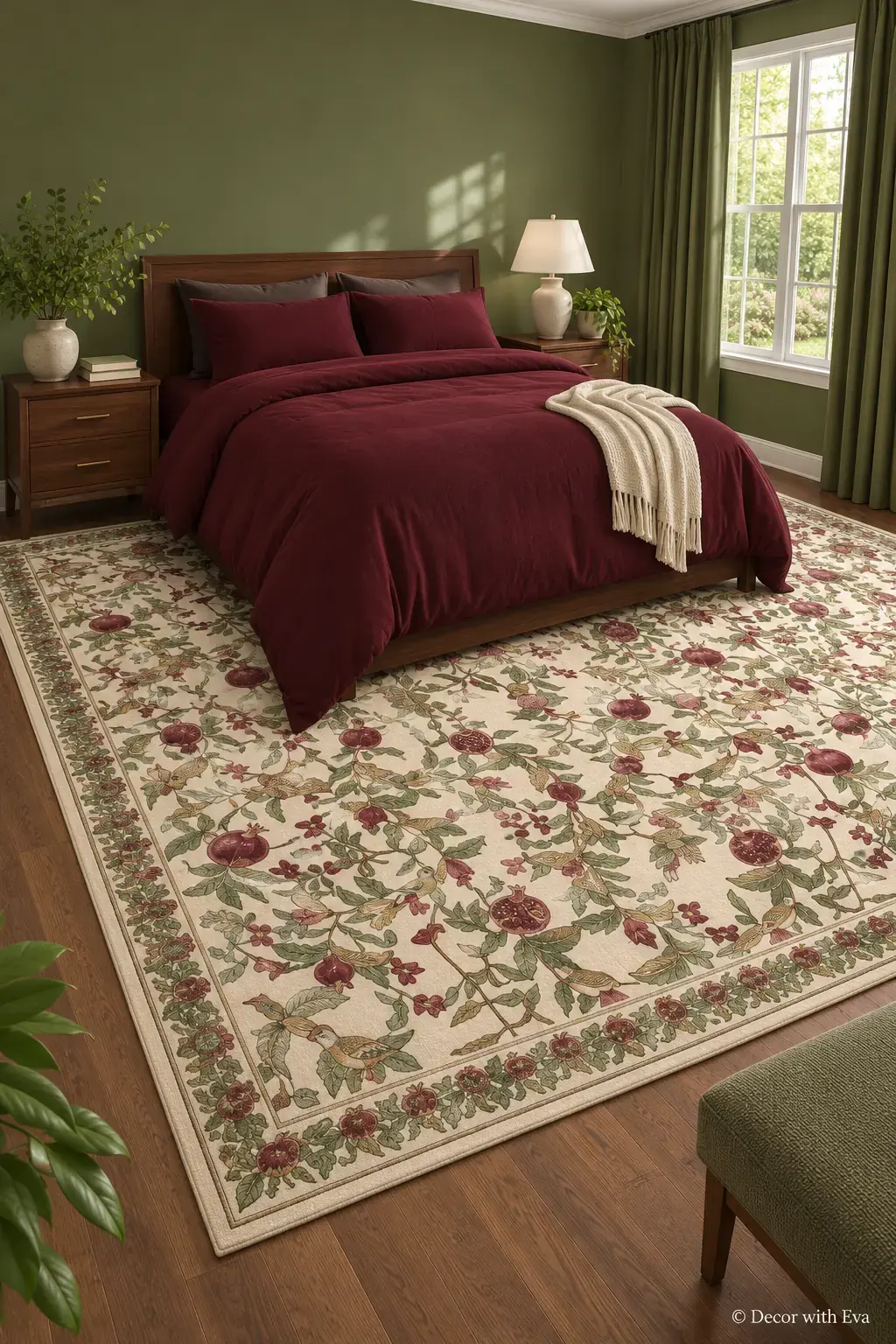
A botanical rug can connect burgundy and green through one repeated pattern. Here, red pomegranates and green leaves sit on a cream ground, with small birds adding detail. Solid bedding lets that floor pattern stay readable instead of competing with another large print.
Measure the rug around the bed so there is a useful visible border at the sides and foot. Check the rug backing and any separate pad against your flooring, trim the pad smaller as directed and keep the edges flat. For a large washable rug, confirm your machine’s capacity or arrange an appropriate cleaning method.
Try this: Use an existing patterned rug as the starting point for your wall and bedding samples.
14. Frame Green Foliage with Burgundy Paint
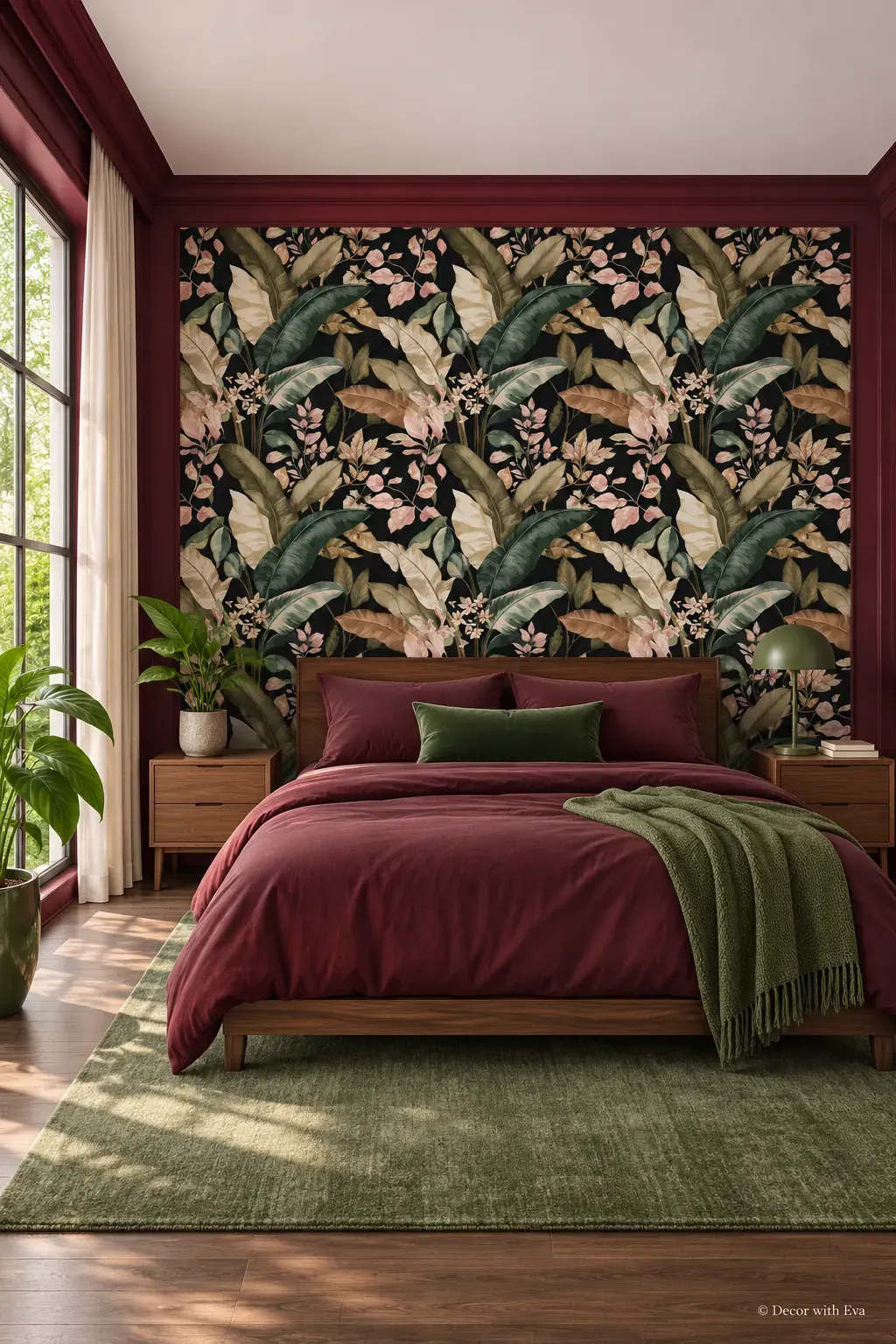
Green foliage wallpaper gives a burgundy bedroom a more patterned look. Burgundy paint around the papered area creates a clear frame, while the green leaves connect to the rest of the room. The selected paper also includes cream and soft pink details; those are part of its actual design.
Plan from the roll width and pattern repeat, allowing extra for matching and trimming. Test a small piece on a suitable smooth surface before covering the wall. Let new paint cure according to its manufacturer’s directions, and do not assume removable paper will leave every finish untouched.
Try this: Try wallpaper on a separate panel if you want to test the pattern before papering the wall.
15. Make a Simple Burgundy Velvet Headboard Panel
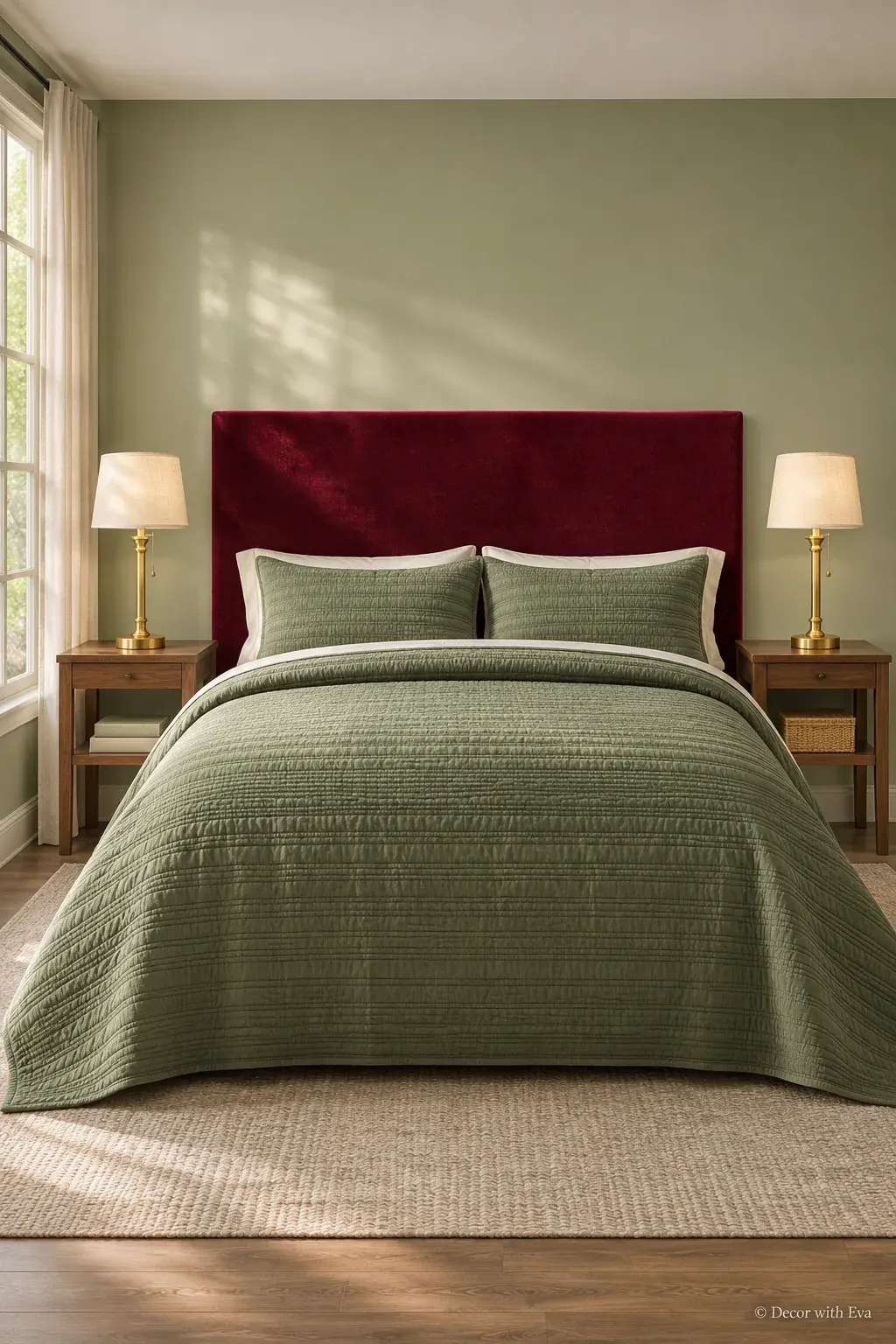
A simple velvet-covered headboard panel gives burgundy a large, tactile surface without requiring an ornate bed. Olive cotton bedding keeps the arrangement relaxed, and a pair of small brass-colored lamps adds a warm finish. Straight edges make the panel easier to plan than a complicated curved design.
Measure the finished panel, padding and wrap allowance before ordering fabric. A full queen-width project needs more than a single 54-inch-wide cut unless you plan a seam or rotate a sufficiently long piece. The linked material is fabric only; the backing, padding, fastening and secure mounting are separate parts of the project.
Try this: Start with a fabric sample and sketch the panel dimensions before cutting anything.
16. Use One Long Burgundy Pillow on Sage Bedding
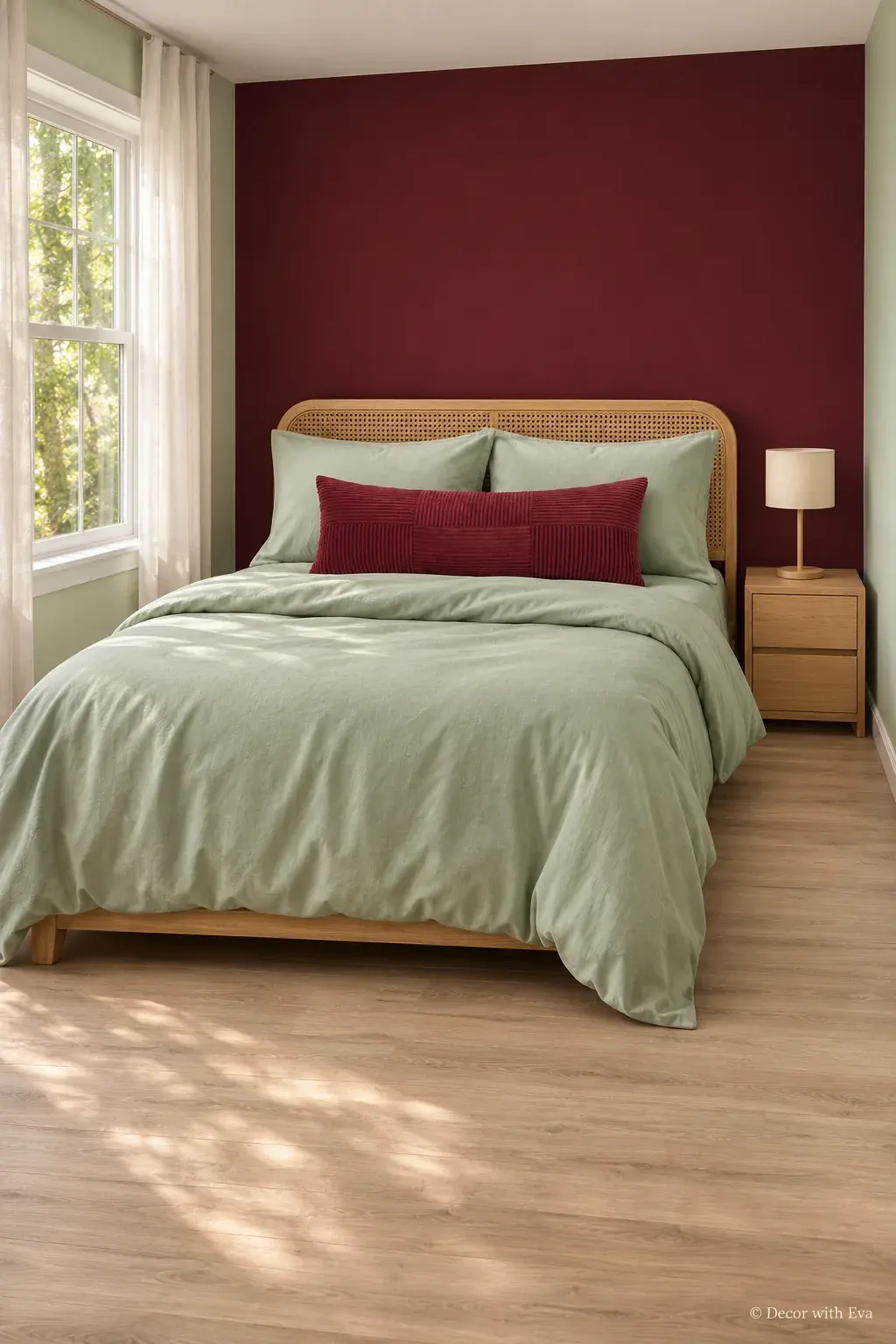
One long burgundy pillow can finish a sage bed without a whole stack of decorative cushions. The horizontal shape sits neatly across the sleeping pillows, and the patchwork corduroy adds texture. A burgundy wall behind the bed makes the small textile feel connected to a larger area of color.
The illustrated 14-by-36-inch cover needs a separate insert. Compare that length with your bed and sleeping pillows, then decide where you will put it at night. Keep the duvet cover’s own dimensions and insert size in mind too; a cover set does not include the filled duvet.
Try this: Try one long cushion you already own before buying several smaller ones.
For more help with bed footprints and access around furniture, explore our small bedroom ideas.
17. Bring Both Colors Together in Tartan
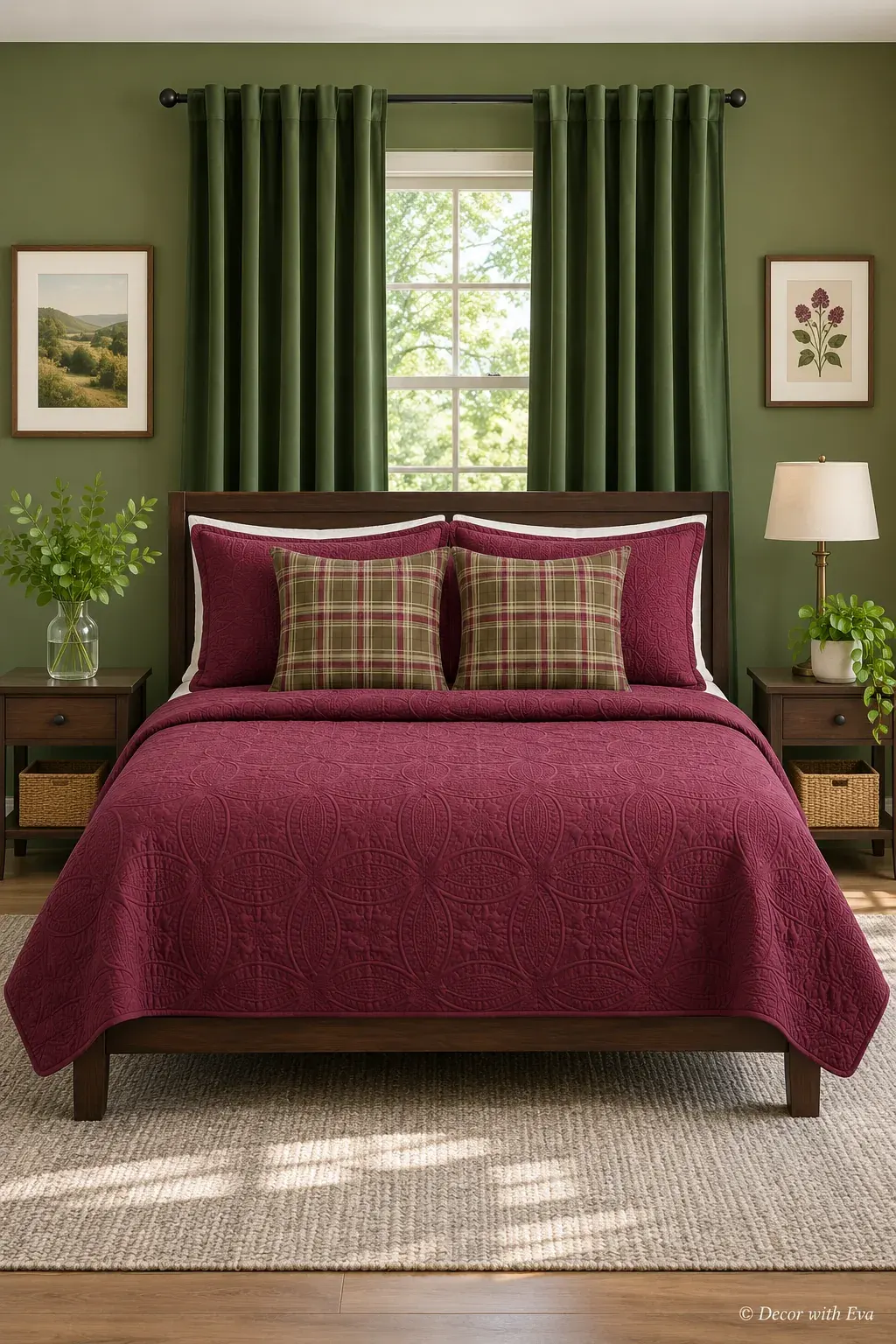
Tartan can bring burgundy and olive together in one clear pattern. Place a pair of checked cushions in front of plain burgundy shams and let olive curtains repeat the green. With no seasonal ornaments, the combination works as a year-round bedroom scheme.
Look at the actual print rather than relying on the color names alone. These selected covers are printed polyester, not woven wool, and the 22-inch squares are fairly generous. Keep other patterns limited so the checks remain distinct, and reuse plain bedding rather than buying a full matching room.
Try this: Choose one patterned textile and pull the two main colors from it.
18. Give the Dressing Corner a Burgundy Seat
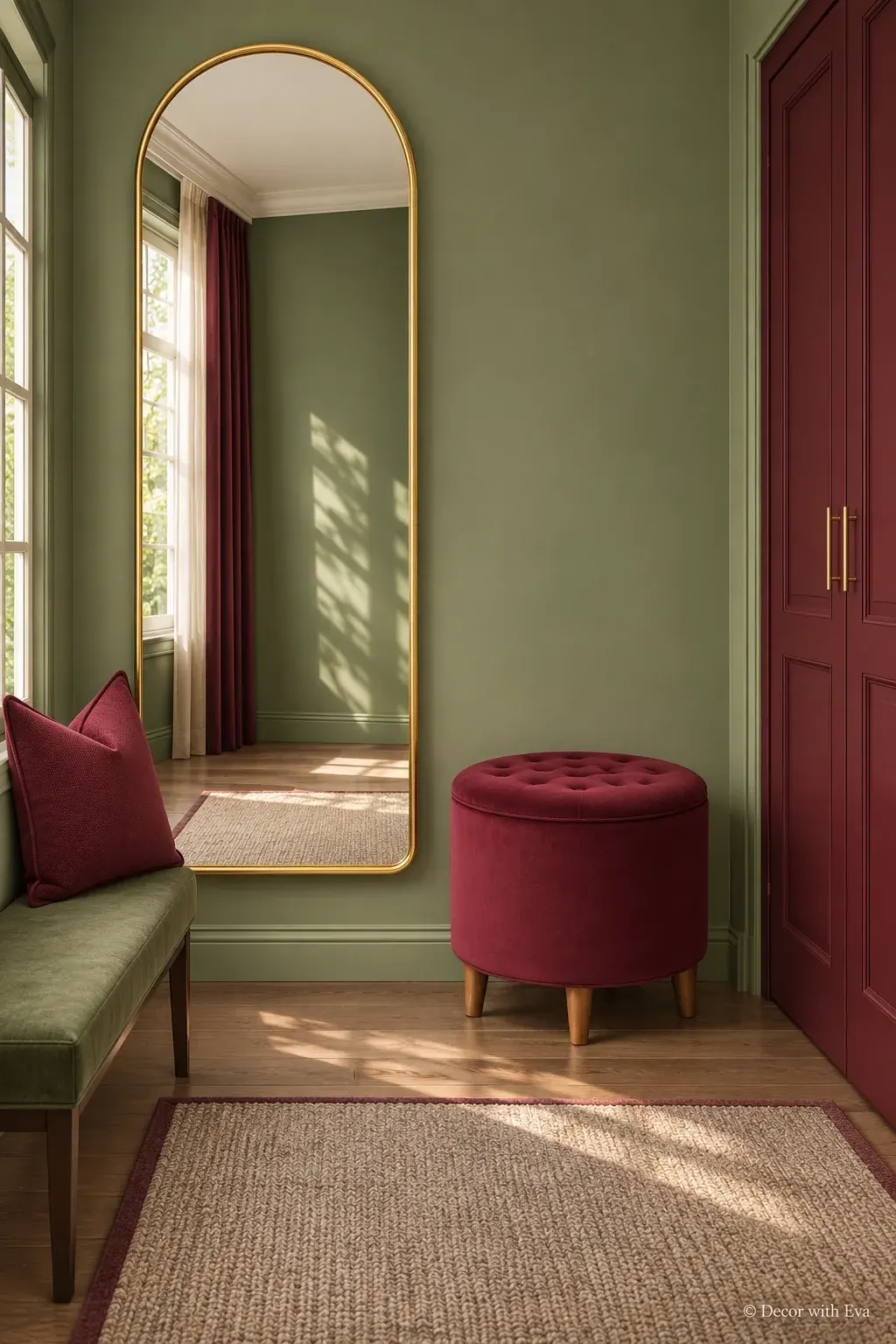
A burgundy round ottoman adds a useful soft shape to a green dressing corner. A slim gold-framed mirror gives the area a clear purpose, while a nearby cushion repeats the red. Keep the floor in front of the mirror open so the corner is comfortable to use.
Check the mirror’s full height, width and securing instructions before choosing its position. The ottoman is a small storage piece, not a step stool; leave space to lift its lid. You can use an existing mirror and seat to try the arrangement without purchasing both at once.
Try this: Stand where you will get dressed and check the mirror position before mounting it.
19. Split the Walls between Burgundy and Sage
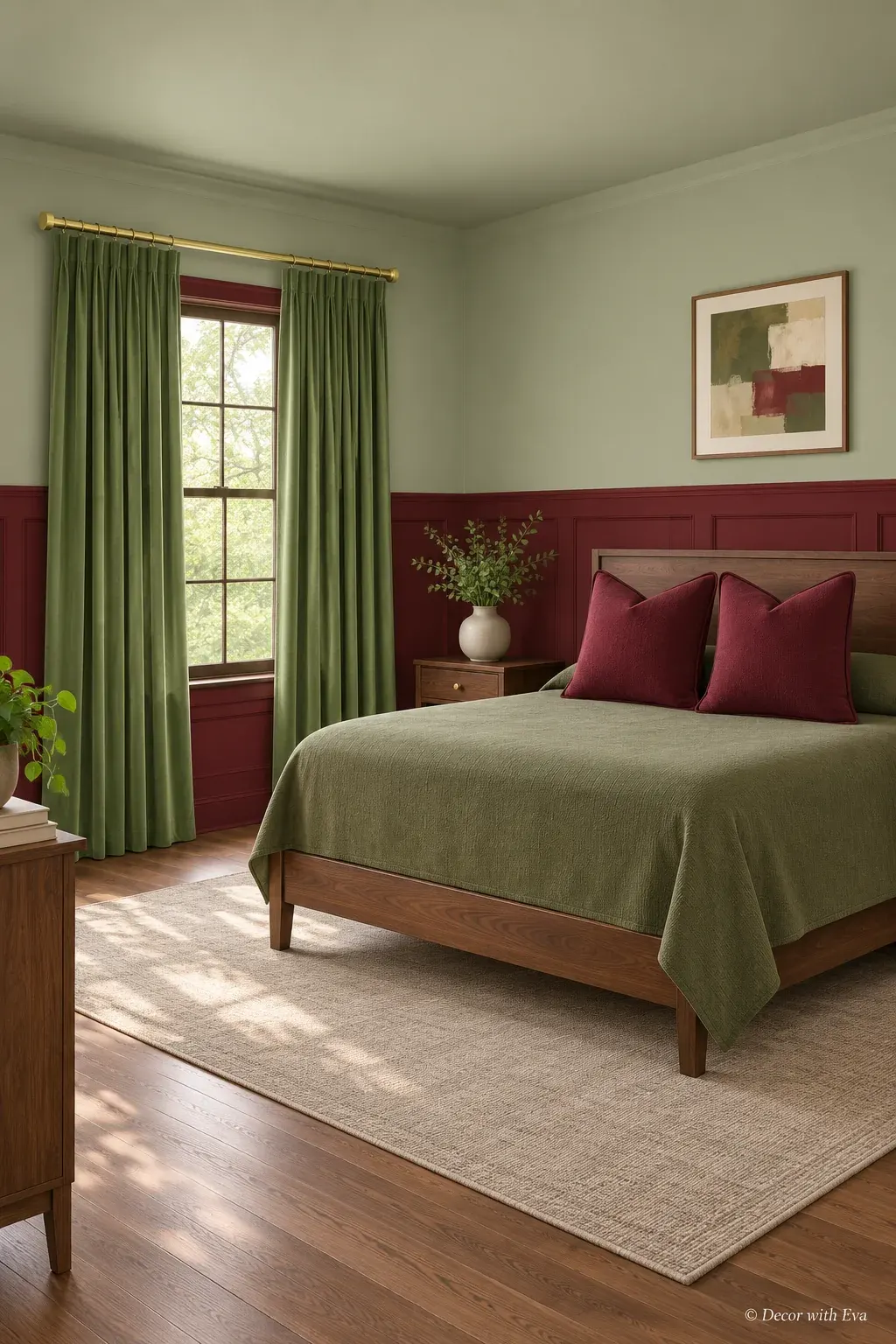
Split the wall colors when you want both to have a proper architectural role. Burgundy lower panels anchor the bed, while sage above keeps the upper part of the room lighter. Green curtains connect to the top half, and burgundy cushions bring the lower color onto the bedding.
Choose the paint boundary around existing features such as a chair rail, windowsill or simple molding. Check it from the doorway and from bed before marking a level line. If you add a gold rod, measure its length, brackets and curtain-header clearance separately; the panels and hardware are different purchases.
Try this: Use removable tape to compare two possible heights for the color boundary.
20. Upholster a Window-Seat Cushion in Burgundy
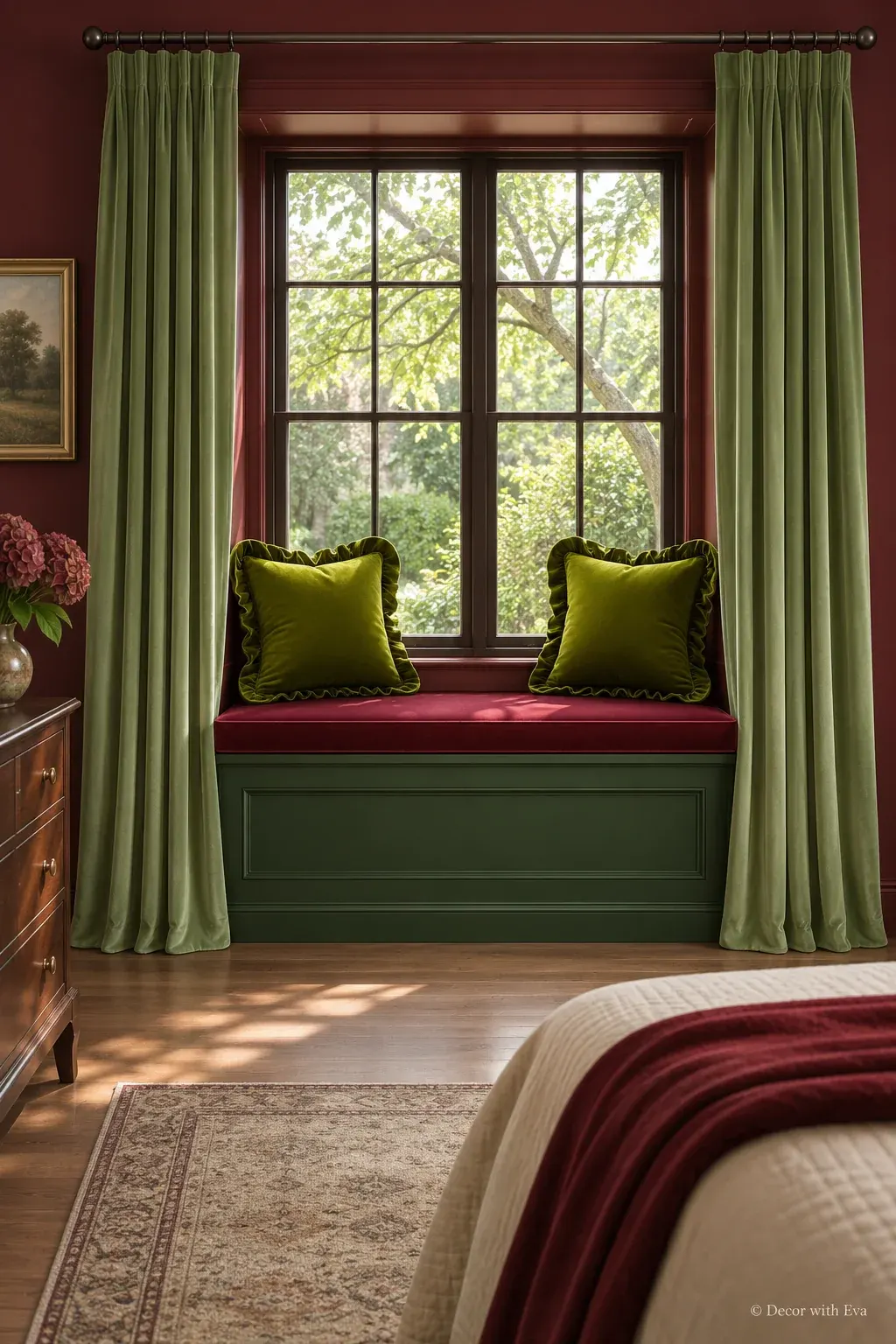
A burgundy window-seat cushion turns an existing nook into part of the bedroom palette. Green on the bench base and a pair of olive cushions give the red a generous partner. Sage curtains soften the window without covering the seat itself.
Measure the cushion and its seam allowance before choosing the fabric quantity. Keep the seat accessible, the curtain hems clear and any vents or heaters unobstructed. This is a cover-and-cushion project for an existing suitable bench; the fabric listing does not supply the foam, bench or finished seat.
Try this: Fold a burgundy throw over the current seat cushion to test the color first.
21. Carry the Pairing into a Bedroom Desk Corner
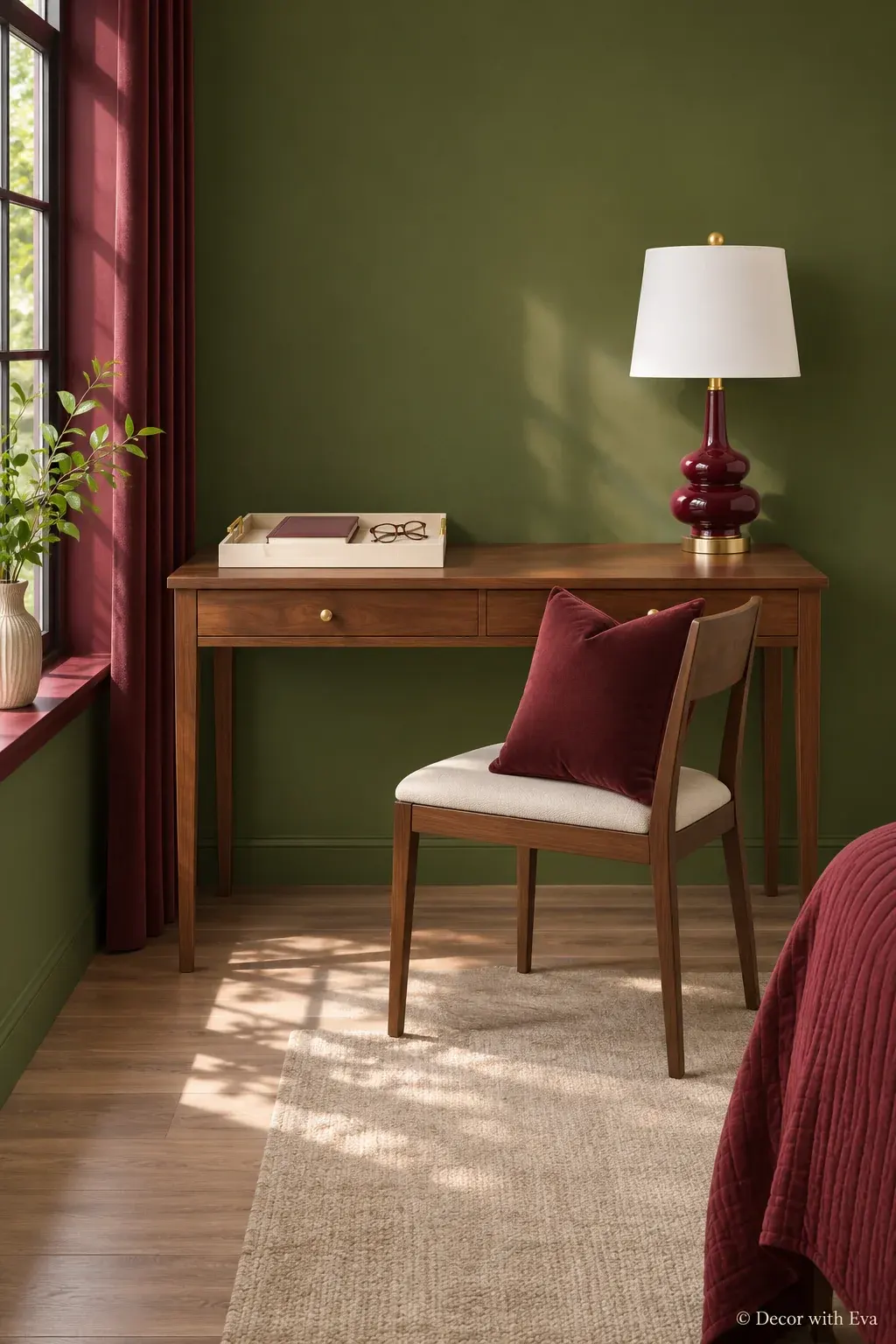
Carry the pairing into a bedroom desk corner with a green wall, cranberry lamp and burgundy chair cushion. A pale handled tray can group the loose little things without covering the whole desk. The result feels connected to the bed while leaving the work surface useful.
Mark the lamp and tray footprints before arranging them. A 17-by-12-inch tray is a substantial object on a small desk, so keep the middle clear and skip it if space is tight. Use a chair suited to how long you sit there; a decorative cushion does not make an occasional chair an ergonomic workstation.
Try this: Group your notebook and glasses in a tray you already own, then check the remaining writing space.
22. Paint a Small Gallery in Both Colors
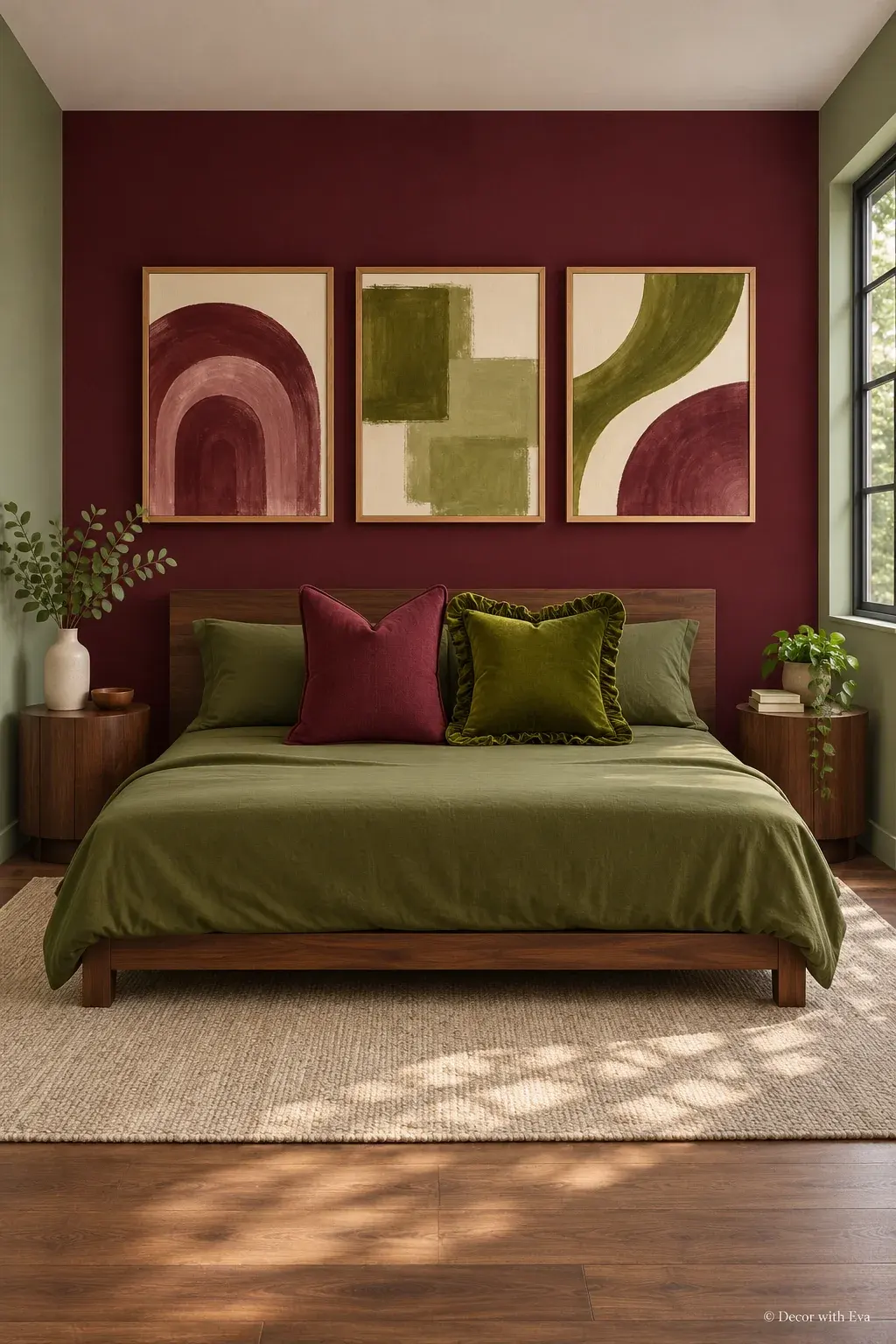
A small gallery gives the two colors a personal connection. Paint a few simple shapes in burgundy, sage and olive, then use matching frames for a consistent outline. Repeating those colors in two cushions lets the artwork belong to the room rather than appearing as an unrelated display.
Keep the shapes simple enough to make with the materials you have. Plan the frame spacing on the floor and choose secure hanging hardware for the wall and frame weight. The illustrated artwork is an original styling concept; you can make your own version without searching for an identical print.
Try this: Use leftover paint on heavy paper or card before investing in new art.
23. Keep the Outline Light with a Black Iron Bed
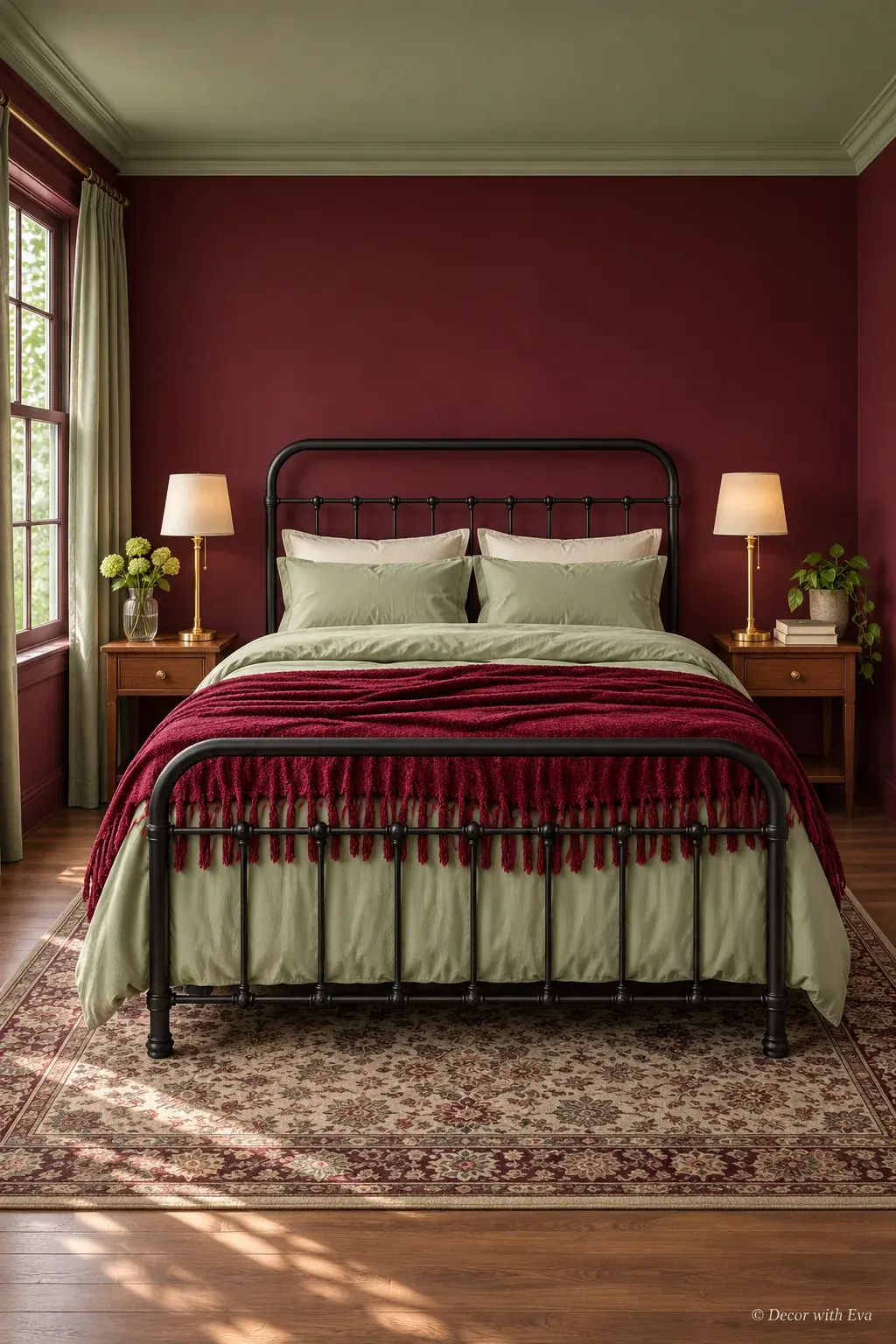
A black metal bed gives rich wall colors a clear, open outline. Sage bedding remains visible between the narrow rails, and a burgundy throw connects the lower bed to the wall. Small brass-colored lamps provide a warm finish without needing a heavy matching furniture set.
Check the frame’s outside dimensions and slat spacing against your mattress requirements. Leave space beyond the footboard and around its corners. The 50-by-60-inch throw is a decorative layer, so use it across part of the bed rather than expecting a floor-length bedspread.
Try this: Try a burgundy throw on your existing green bedding before changing the bed frame.
24. Try Burgundy Bedding with a Second Red Tone
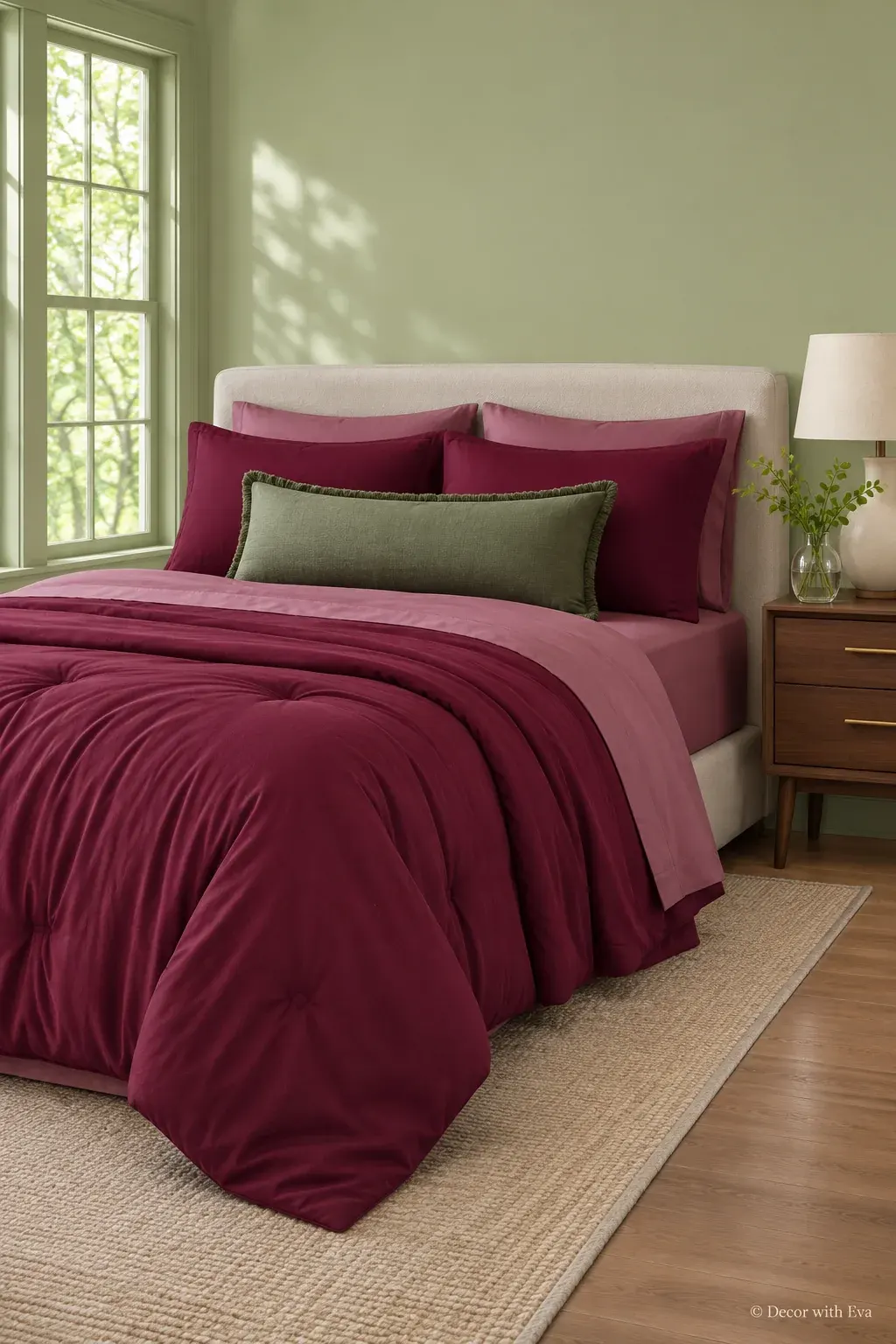
Two related reds can make burgundy bedding feel more layered. The deeper comforter contrasts with a softer roan-red sheet fold and pillowcases, while green walls and a long olive cushion supply the second main color. Keep that green cushion separate from the pieces included in the bedding set.
Compare the seven listed pieces with what you need before ordering. The selected set includes a comforter and sheets, unlike a duvet-cover-only set. Check the fitted-sheet pocket against your mattress and topper, and reuse any compatible bedding rather than replacing everything for the sake of a coordinated look.
Try this: Turn down your current sheets to see whether a second red tone adds enough contrast.
25. Let a Green Wingback Bed Stand Out
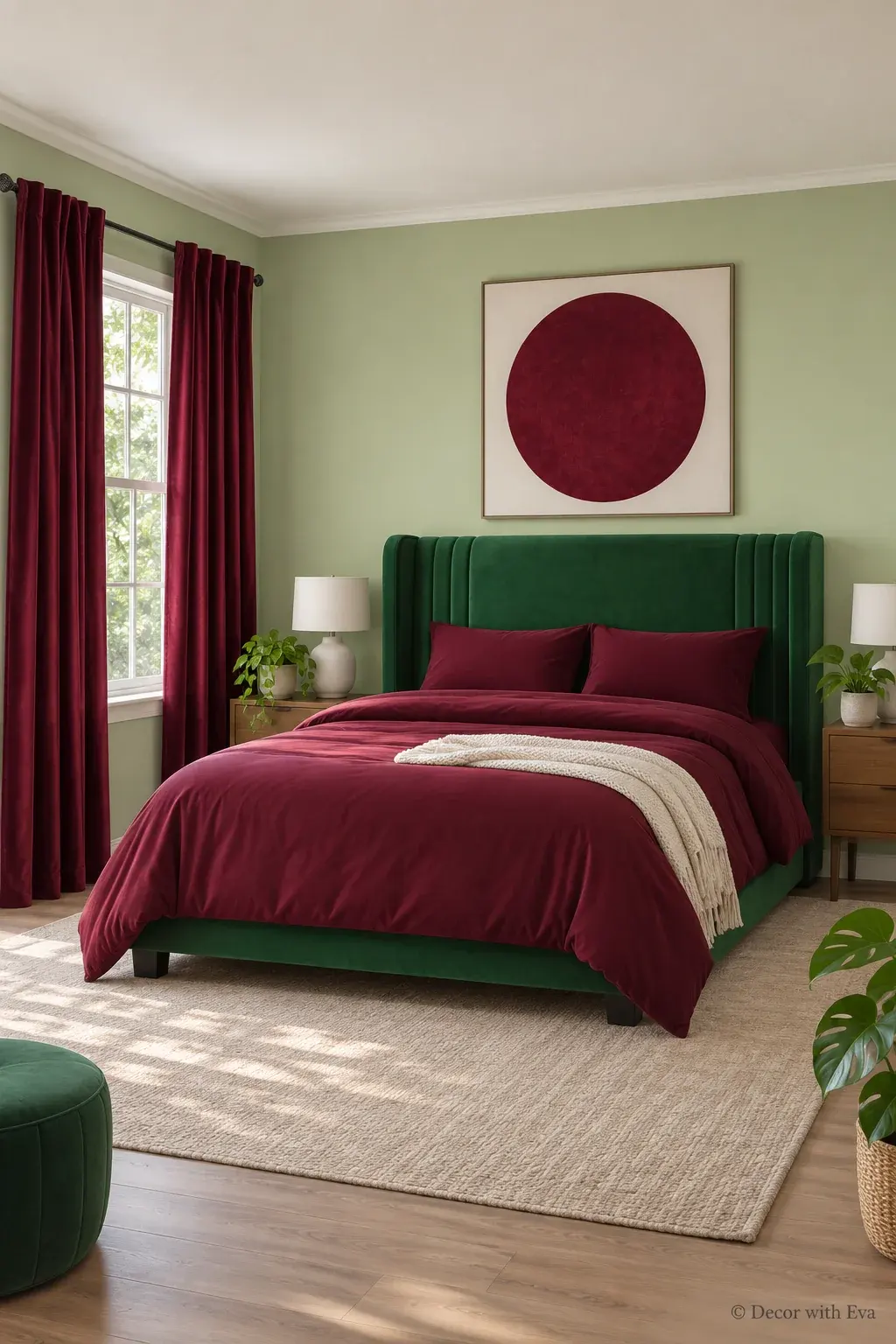
A green wingback bed gives the headboard a stronger outline than a flat upholstered panel. Plain burgundy bedding leaves its channels and side wings visible, while a lighter green wall prevents the frame from disappearing into the background. One simple graphic artwork is enough above it.
Check the bed’s full footprint and the headboard’s stated height, including the wings. This selected version is listed at 47 inches high, so plan from that measurement rather than imagining an extra-tall headboard. Keep the pillows low enough to show the upholstery and leave access to the bedside tables.
Try this: Tape the headboard outline on the wall before choosing artwork or bedside lighting.
26. Repaint the Wardrobe You Already Own
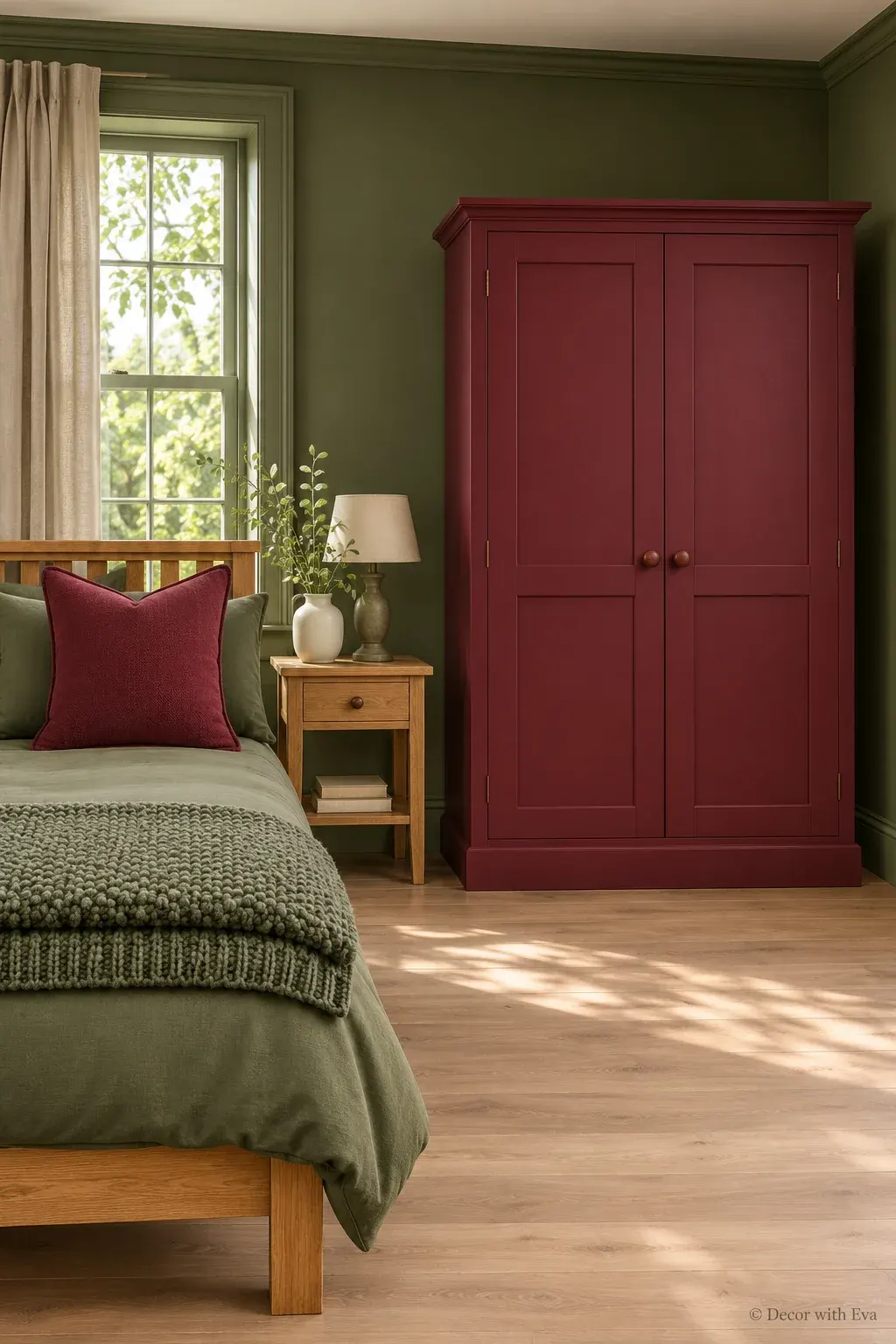
Repainting an existing wardrobe gives burgundy a substantial place in a green bedroom. Keeping its original knobs and straightforward shape lets the color do the work. A burgundy cushion on the bed repeats the red, while an olive throw adds another green texture.
Check the wardrobe’s surface and finish before choosing preparation and paint, following the coating manufacturer’s directions. Let doors and drawers cure before regular use, and preserve their movement and clearances. Secure suitable furniture according to its instructions; a color change should not compromise how it works.
Try this: Paint a sample board beside the wardrobe before changing the whole piece.
Which Green Works Best with Burgundy?
Choose the mood you want and compare real samples. Sage gives the pair a lighter setting, olive makes it earthy, and forest or emerald introduces a deeper contrast. You do not need several greens in one room; one main green plus burgundy can be enough.
How Do You Keep Burgundy and Green from Looking Seasonal?
Use the colors in everyday materials and useful pieces: cotton bedding, a painted wall, a chair or full-length curtains. Simple shapes, natural wood and a limited number of patterns keep the room focused on bedroom styling. You can enjoy tartan without adding holiday decorations.
Can This Pairing Work in a Small Bedroom?
Yes. Walls and bedding provide generous areas of color without adding furniture. Start there, then add only pieces that fit the available space. A chair or bench is optional; leave it out if it makes the bed or closet difficult to use.
What Can You Change without Replacing the Furniture?
Try a new arrangement of existing bedding, a painted sample panel, one cushion cover or a small original artwork. You can also repaint a suitable existing wardrobe. Choose the change that improves the room you already have, rather than trying to purchase every piece shown in an illustration.