This article contains paid links. As an Amazon Associate, I earn from qualifying purchases.
A good coffee bar gives your morning routine a comfortable place to happen. The cups are easy to reach, the supplies stay together, and there is a clear spot to make the drink you actually enjoy. It can be a whole cabinet, a little counter tray, or one useful shelf in a kitchen you already love.
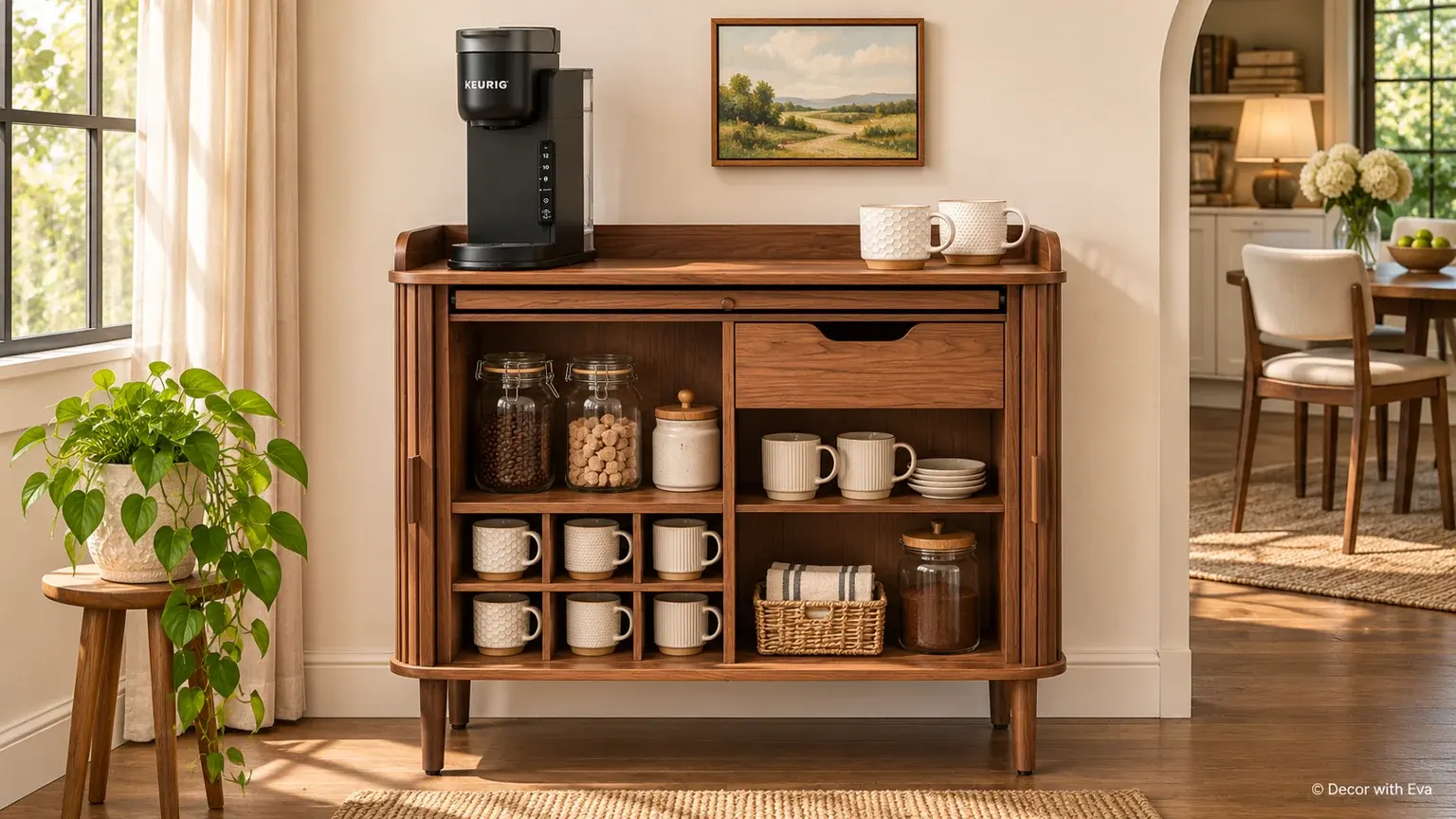
These 29 home coffee bar ideas mix complete setups with smaller decorating and storage upgrades. Choose the layout that fits your space first, then add the colors and details that make it feel like part of your home.
Before you set up your home coffee bar
Start with the way you make coffee. Put your brewer, usual mug, coffee supply, and any kettle on the proposed surface before measuring for a tray or cabinet. Include room to lift lids, remove a reservoir, reach the controls, and clean around the equipment. Follow the appliance instructions for clearances, support, and electrical use.
Choose a spot near the supplies and water access you need, with a surface suited to spills and heat. Keep everyday pieces within easy reach and store bulk refills nearby. For a tiny kitchen, a tray or one drawer may do more for the routine than an extra piece of furniture.
Pick two or three finishes already present in the room—perhaps white ceramic, warm wood, and black metal—then repeat them. For more ways to keep the worktop useful, explore these kitchen counter decor ideas.
1. A walnut cabinet that feels like real furniture
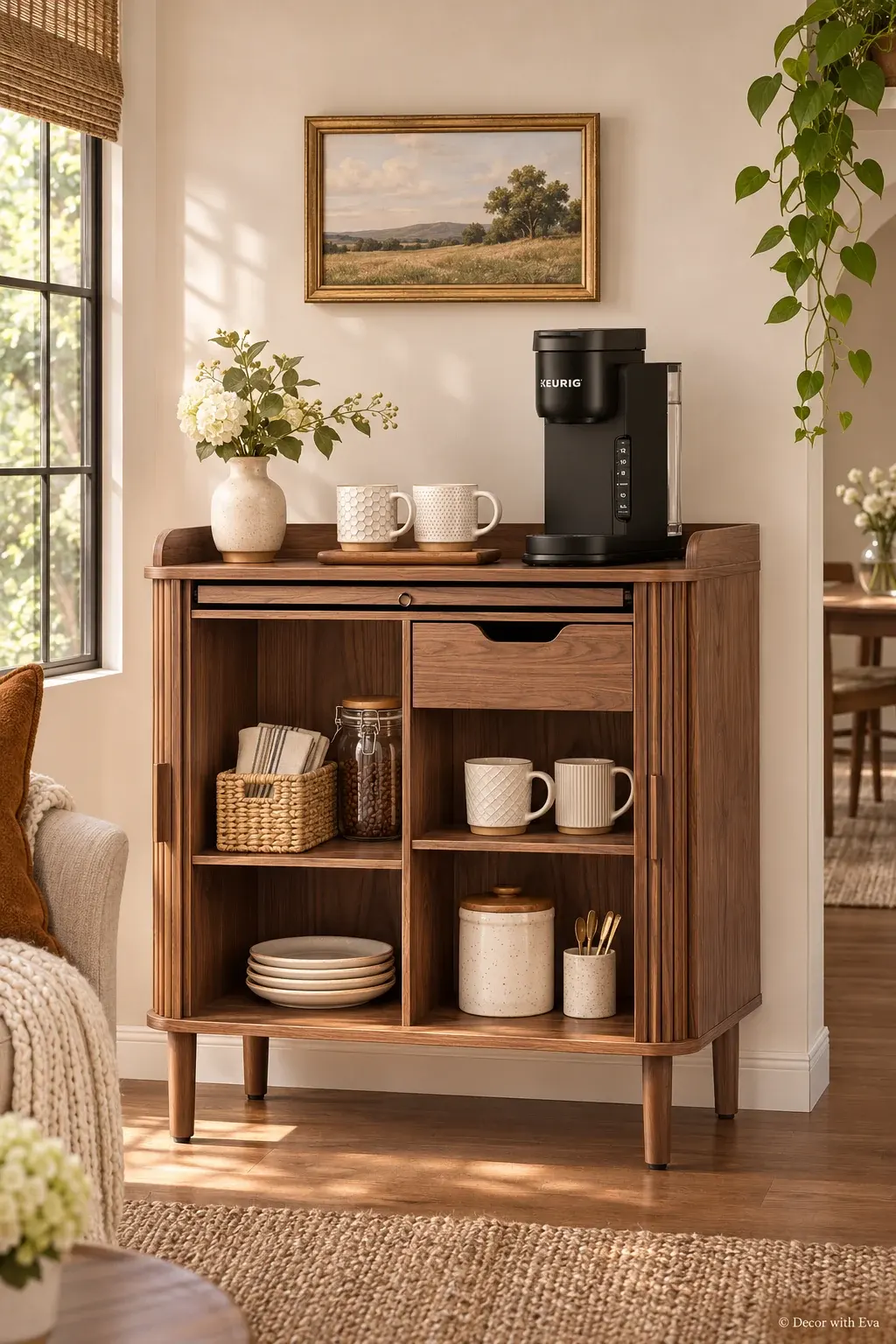
A walnut coffee cabinet brings the warmth of a living-room piece into an everyday kitchen routine. The fluted sides and raised legs give this nook a little presence without making it feel built in. Put the brewer at one end, a pair of favorite cups at the other, and leave a landing spot between them for the mug you are filling.
Use the open compartments for the pieces you reach for each morning, then tuck refills and loose packets into the drawer. This cabinet is about 31½ inches wide and just under 16 inches deep, so check the brewer’s footprint and reservoir access before committing. A small framed picture above it finishes the arrangement without taking up more worktop.
2. A white farmhouse buffet with room to spread out
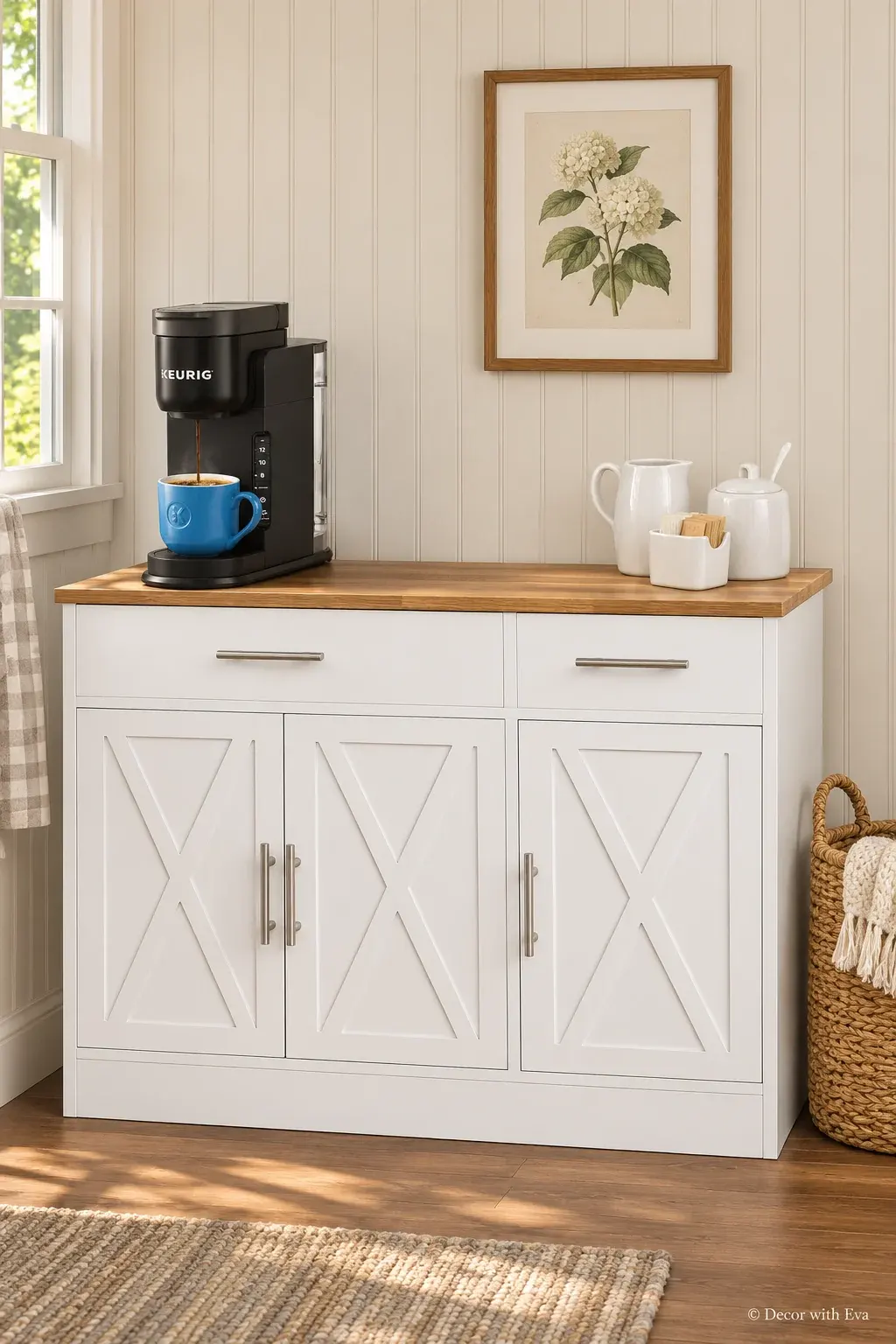
A white farmhouse buffet is a good starting point when you want a complete home coffee bar with closed storage. The warm top keeps the white cabinet from looking too crisp, while the X-panel doors add detail below eye level. On a 42-inch piece, you can separate the brewing area from the sugar, creamer, and cups instead of pushing everything into one cluster.
Give the drawers a clear job: one for coffee tools and one for napkins or spare filters. Keep serving pieces together at the opposite end from the machine, and bring fresh milk out only when serving. Before buying, check the full dimensions, weight limits, surface-care directions, and any anchoring instructions; the width alone will not tell you whether the buffet suits your appliance.
3. An olive-green cabinet with brass accents
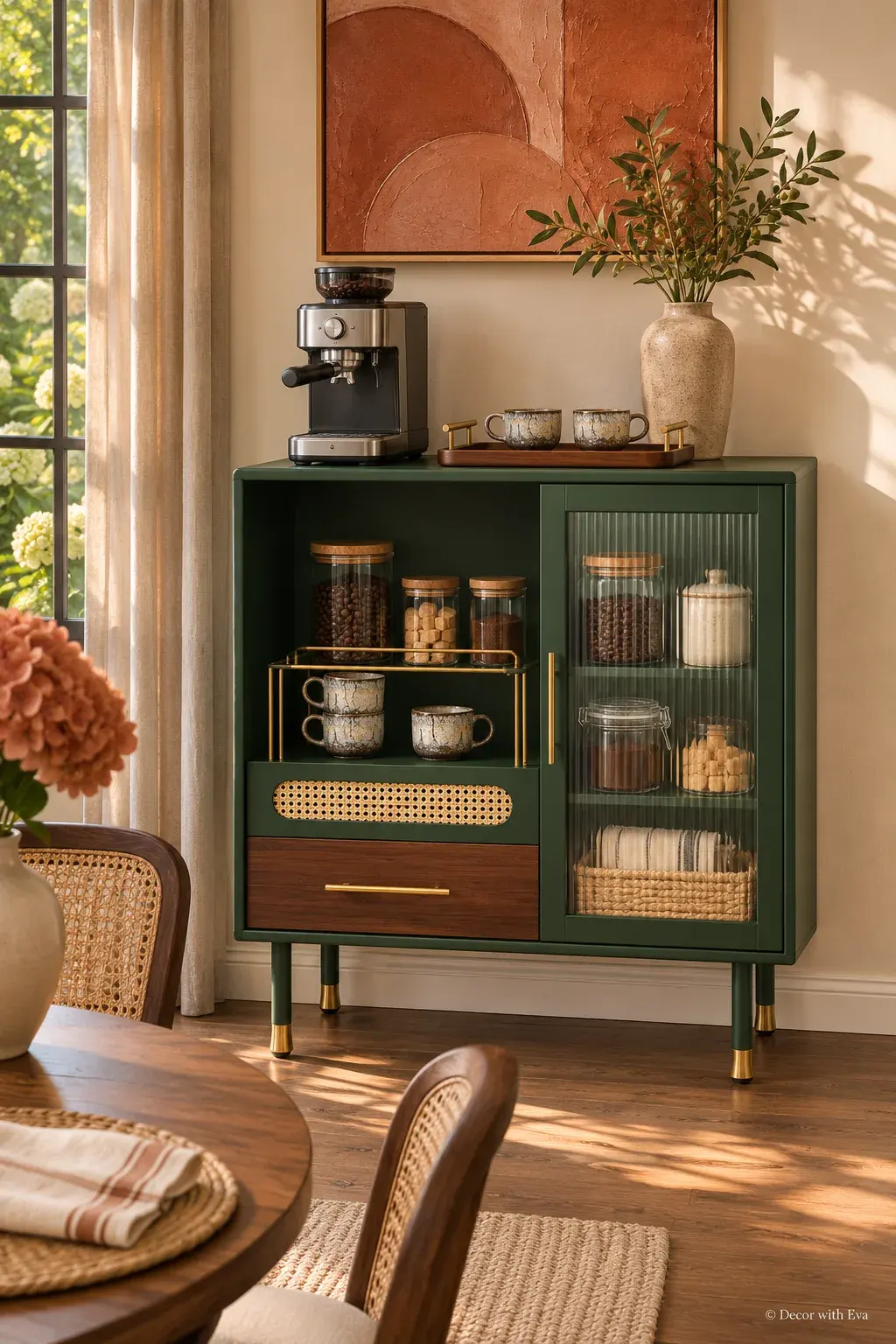
Olive green and brass make a coffee corner feel considered even when the rest of the room stays neutral. This cabinet combines a ribbed-glass front with an open section, so some of the collection can stay visible while busier supplies sit behind the door. Repeat its warm hardware in a small tray rather than adding several different metallic finishes.
The little reactive-glaze cups are the decorative moment here. Keep them beside an espresso machine you already use, or bring them out when serving after-dinner coffee. The cabinet is about 37 inches wide and 15 inches deep, so allow for the machine, cables, and door movement. A terracotta-toned picture ties the green to surrounding wood furniture without requiring a matching dining set.
4. A one-tray coffee bar for a small counter
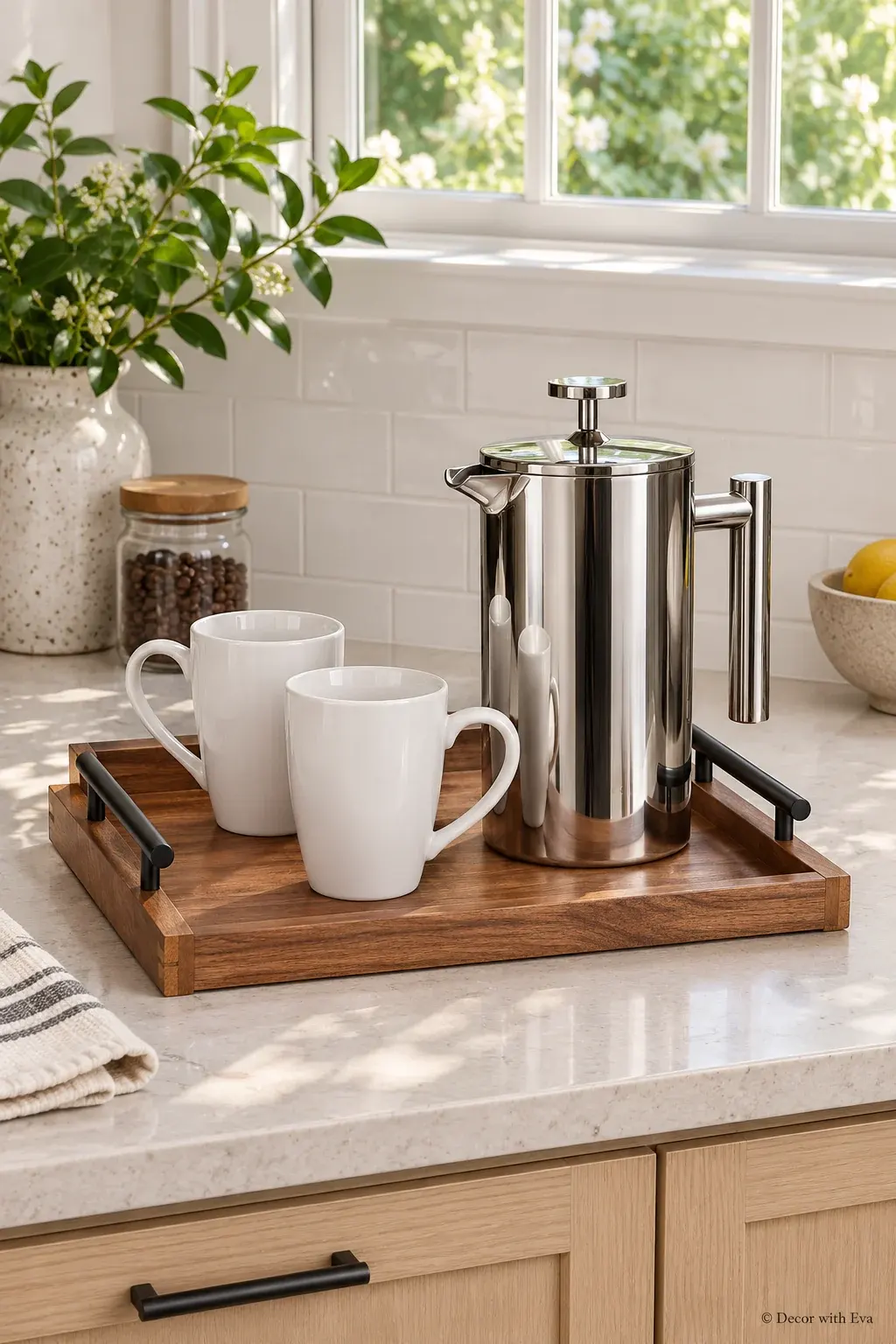
A tray can be the entire coffee bar when counter space is limited. A French press, two mugs, and a spoon are enough to create a small morning station that looks intentional. The acacia tray’s black handles define the area against pale stone, and its roughly 15-by-10-inch footprint is easier to accommodate than a separate cabinet.
Lay out your actual pieces before choosing the tray. The handles and raised edges reduce the usable interior, especially with a broad press or large mug handles. Leave the kettle on a suitable countertop surface, keep the wood dry, and clear used cups after breakfast. If the tray becomes crowded, move the extra mugs into a nearby cupboard instead of choosing a larger tray automatically.
5. A rolling cart for cups and coffee supplies
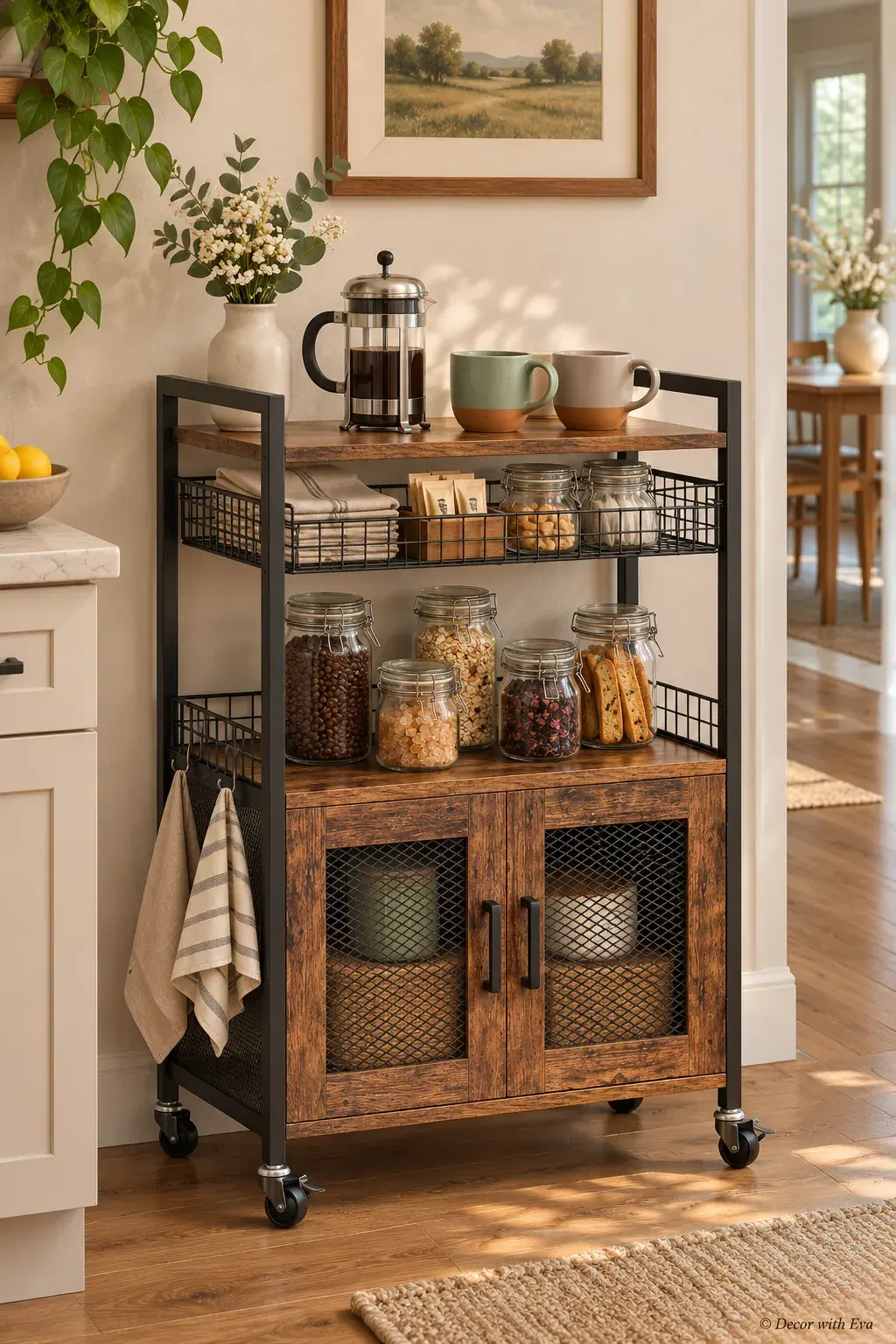
A rolling coffee cart works well as a place for cups, napkins, and supplies beside the kitchen. The mix of rustic wood and black mesh gives it a little workshop character, while the basket drawer holds the smaller things that otherwise scatter across a counter. Use the lower cabinet for closed jars or spare cups, keeping the top easy to reset.
Think of the wheels as a way to reposition storage, then park and lock the cart before using it. Carry hot drinks separately and use an appropriate fixed counter for powered brewing equipment. This cart has a top around 24 by 15 inches, so a compact arrangement feels better than a full row of appliances. Two colored mugs are enough to soften all that dark metal.
6. A compact island that adds hidden storage
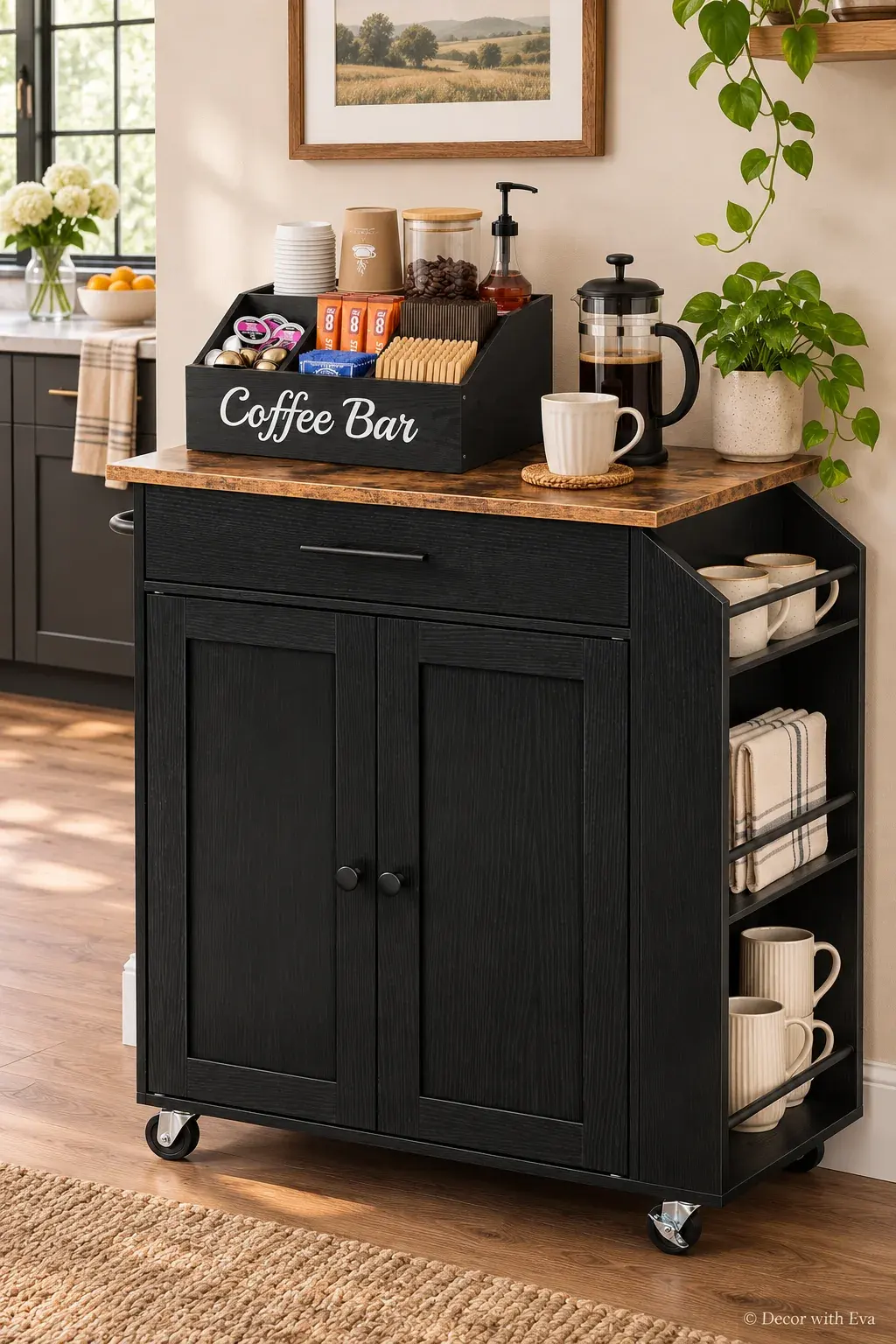
A compact black island adds another kind of storage to a coffee nook: a drawer, closed cabinet, and narrow side shelves in one piece. Its wood-look top makes a nice backdrop for a small organizer, and the black front can relate to a dark faucet, stove, or cabinet hardware elsewhere in the kitchen.
Use the side shelves for cups and folded cloths, then hide bulky refills behind the doors. Keep the top as a serving and organizing area, especially if the cart will move. A built-in outlet is not a reason to assume every appliance combination is suitable; check the furniture and appliance instructions first. Measure the parked footprint, including the side rack, so the island does not pinch a kitchen walkway.
7. Two wall shelves above an open worktop
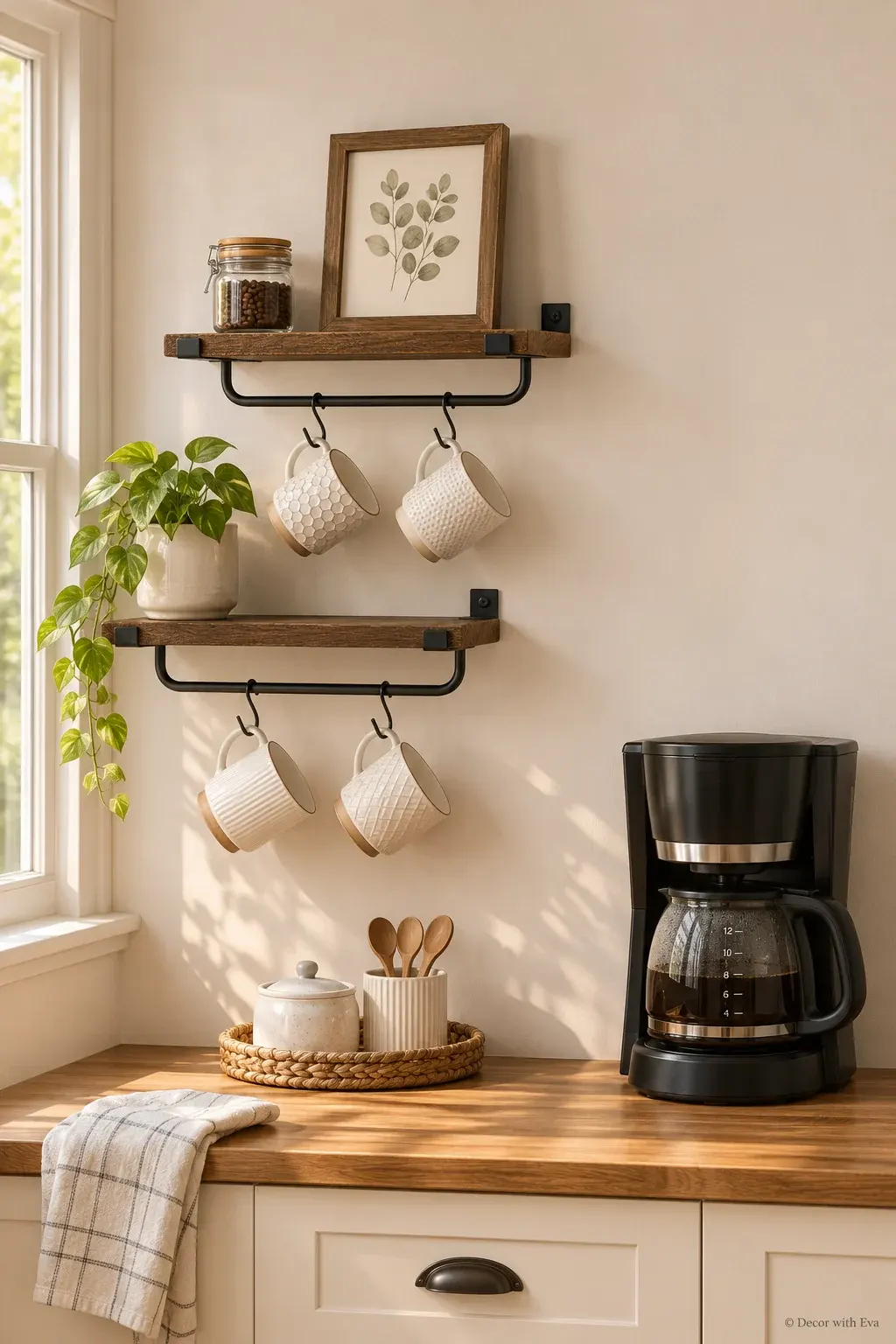
Two short shelves can give an ordinary counter the look of a dedicated coffee station. These wood shelves have black brackets and mug rails, which means the wall can hold a few daily cups while the countertop stays available. Staggering the shelves toward one side creates a more relaxed arrangement than filling the whole wall.
Keep the space directly above a brewer open enough for its lid, reservoir, steam, and the manufacturer’s required clearances. These shelves are only about 17 inches long and 6 inches deep, so a small framed print and one jar are more convincing than a heavy collection. Use fixings suited to the wall and the loaded shelf, and hang mugs with enough room that their handles do not knock together.
8. A mug rail that gives favorite cups a home
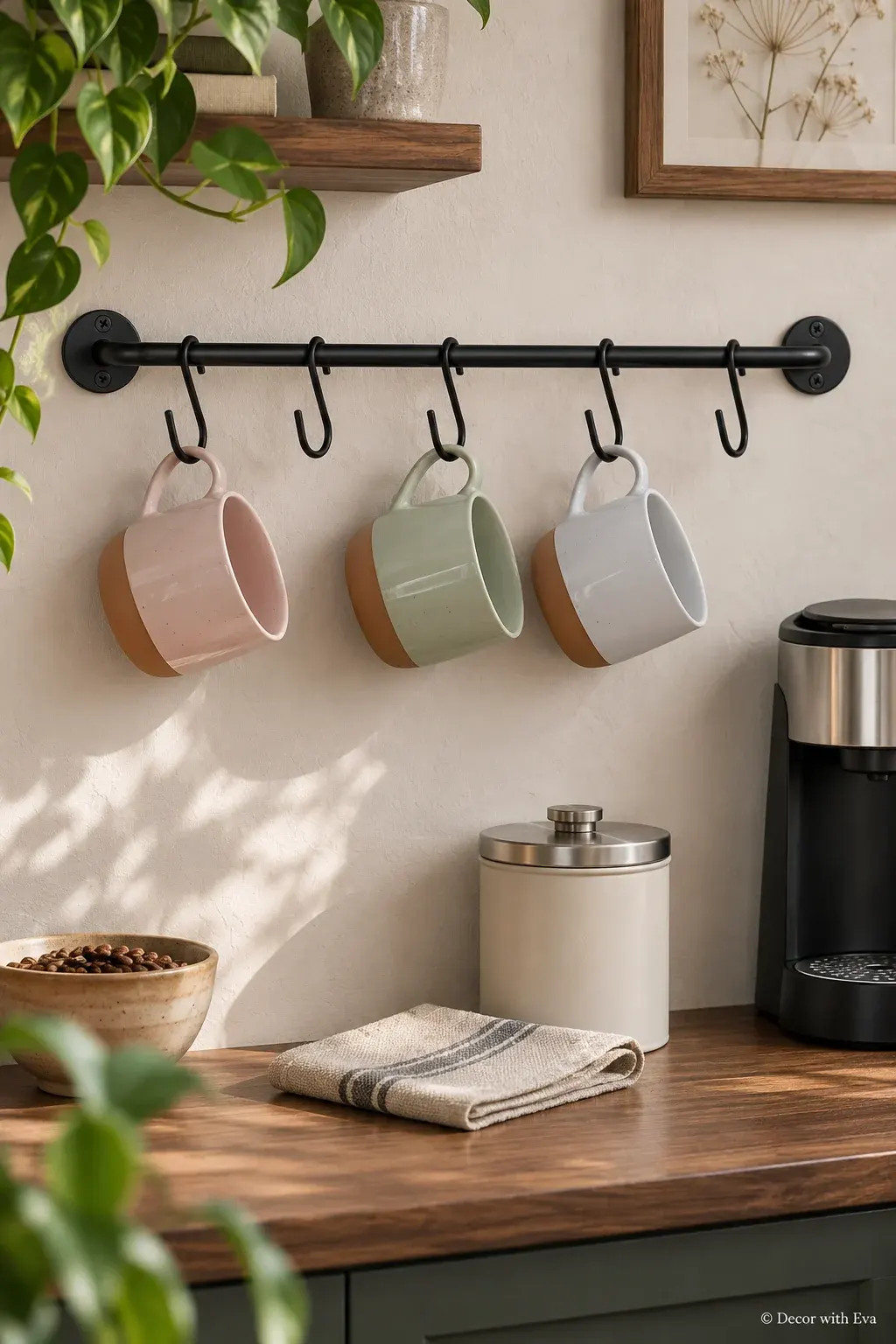
Favorite mugs can do the decorating when they have a simple place to hang. A black pipe-style rail makes pastel cups stand out against a pale wall, and the empty hooks are part of the appeal. You do not have to fill every position to make the arrangement feel complete.
Choose the cups you actually use, then check the spacing with their handles turned as they will hang. On a rail about 16¾ inches long, three large mugs can look calmer than five squeezed together. Mount the rail with appropriate fixings and keep it clear of the working path around the brewer. A closed coffee tin below repeats the black finish without introducing another display shelf.
9. A tiered organizer for a narrow corner
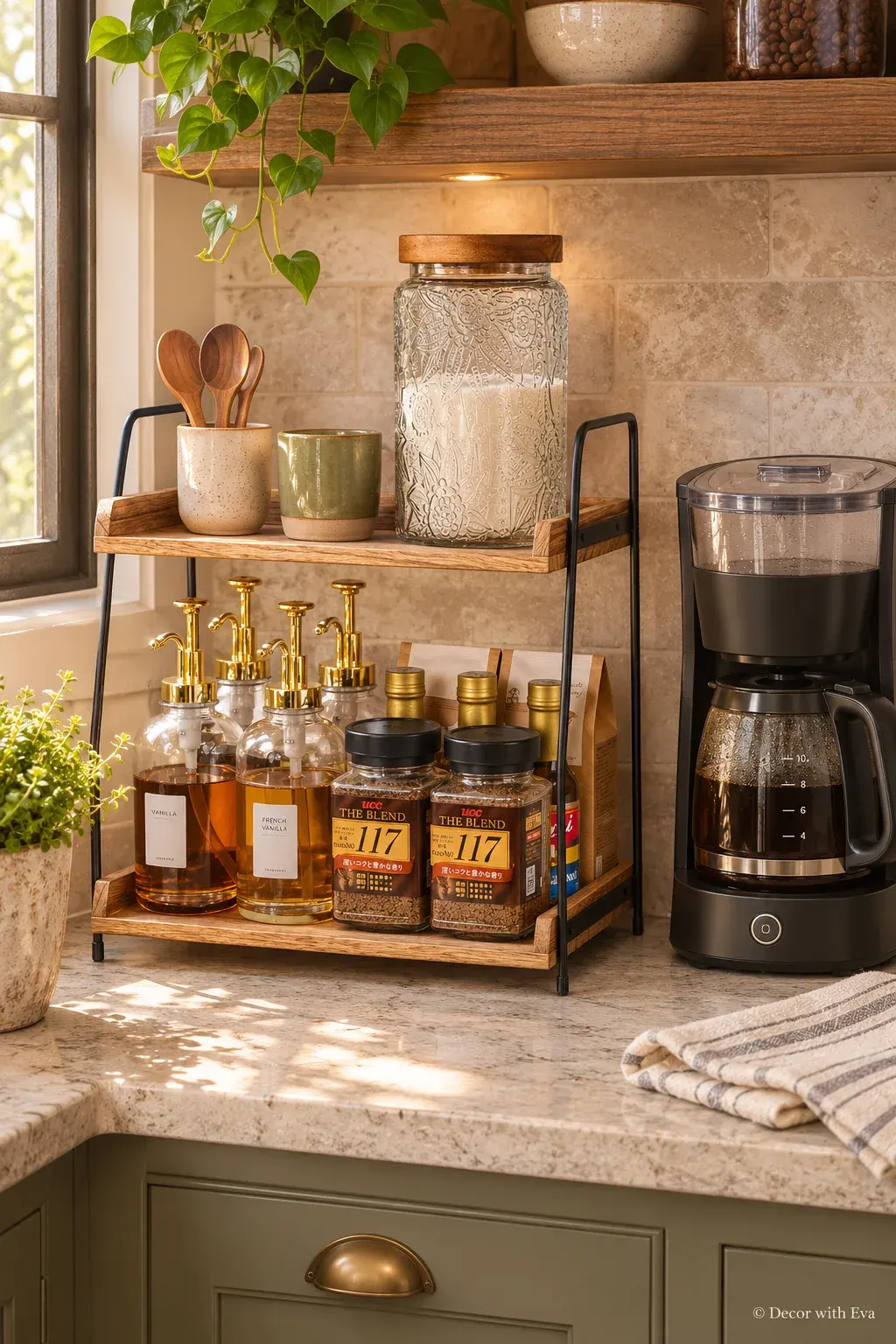
A tiered organizer adds vertical storage to a narrow coffee corner without changing the cabinets. The two wood shelves and slim black frame work especially well with oak accents, cream tile, and a simple brewer. Group packets, small jars, and cups by use so you can see what is available at a glance.
This organizer is about 13¾ inches wide and 15 inches tall, so check the height below any wall cabinet as well as the shelf spacing. Put taller pieces beside it if they do not fit comfortably. Keep the brewer on the main counter rather than on the rack, and resist filling every inch with syrup bottles. A little empty shelf space makes it easier to lift things out and wipe the surfaces.
10. A bamboo drawer that sorts pods and tea
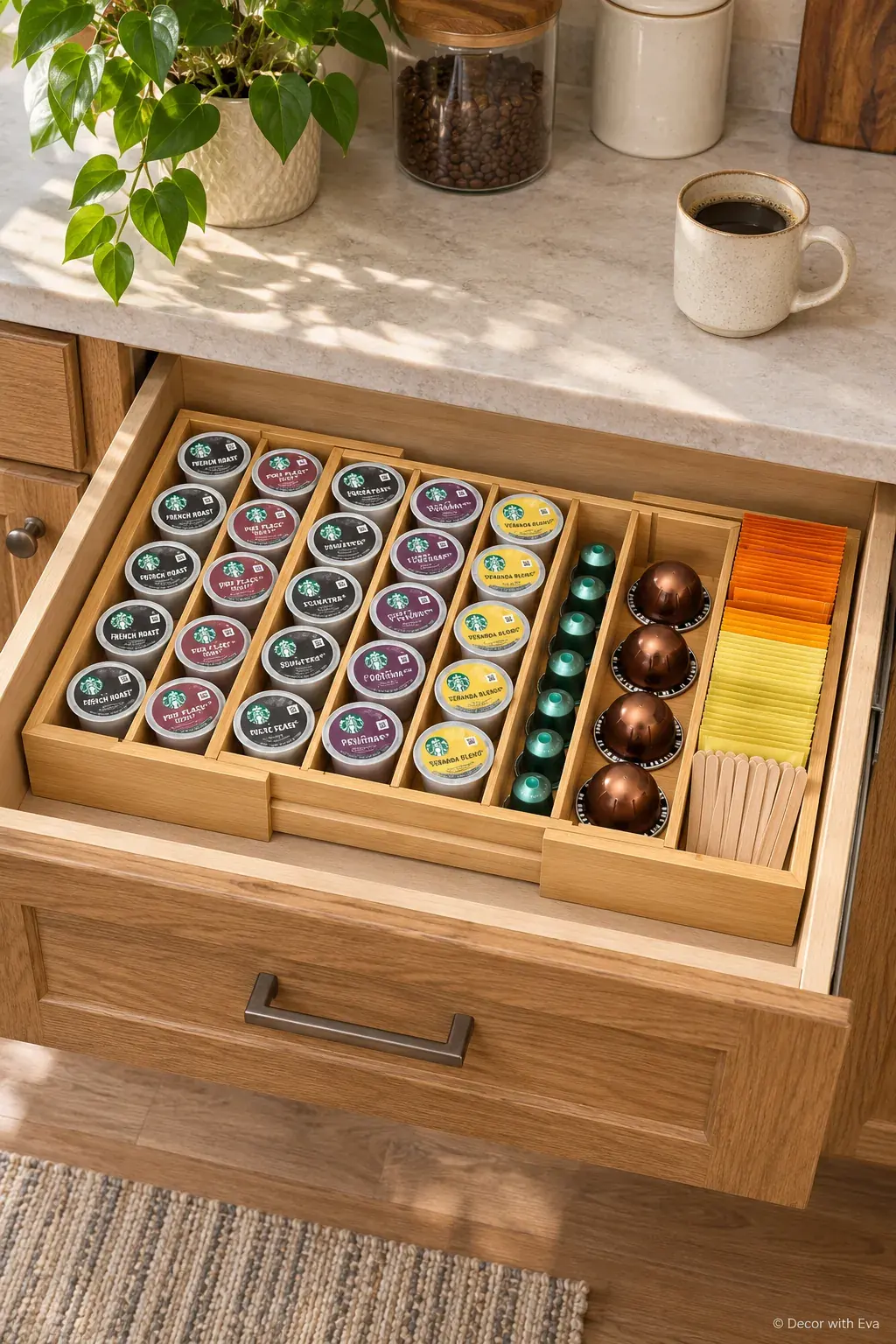
A coffee drawer is one of the most useful upgrades when the countertop already feels busy. An expandable bamboo organizer gives pods, tea bags, and stirrers separate lanes, so the contents stay visible when you open it. It also lets the coffee station share a drawer with tea supplies without mixing everything together.
Measure the inside width, usable depth, and clearance above the loaded items. This organizer expands from roughly 12 to 20 inches wide, but that does not guarantee a fit in every drawer or with every capsule shape. Set the dividers around what your household drinks, not a pictured capacity. Keep a small daily selection here and put unopened boxes elsewhere so the drawer remains easy to close.
11. A hidden pod drawer with a simple grid
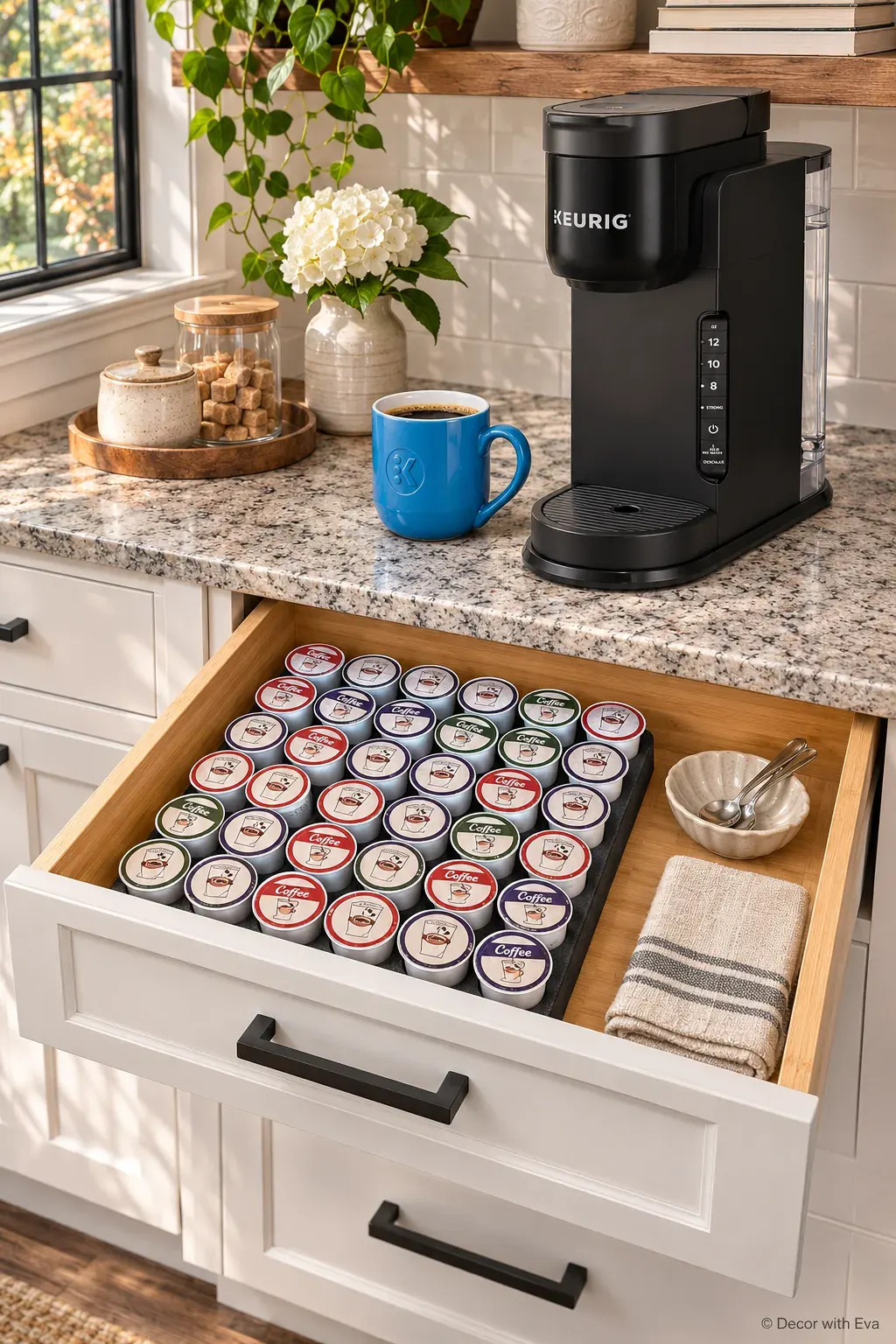
If almost everyone drinks the same style of pod coffee, a simple grid can be easier to maintain than several containers. A black foam insert gives each pod its own spot and keeps the counter above free for the brewer and a cup. Sorting regular and decaf into separate rows makes the drawer easier for guests to understand, too.
Check the loaded height before buying an insert. This 36-position option is about 12½ inches square and an inch thick, but the pods bring the required clearance above 2¼ inches. Your drawer needs room around the insert as well. Keep spoons in a separate narrow section if there is space, and remember that this is storage inside a drawer, not a platform for supporting the coffee maker.
12. A syrup station with just two flavors
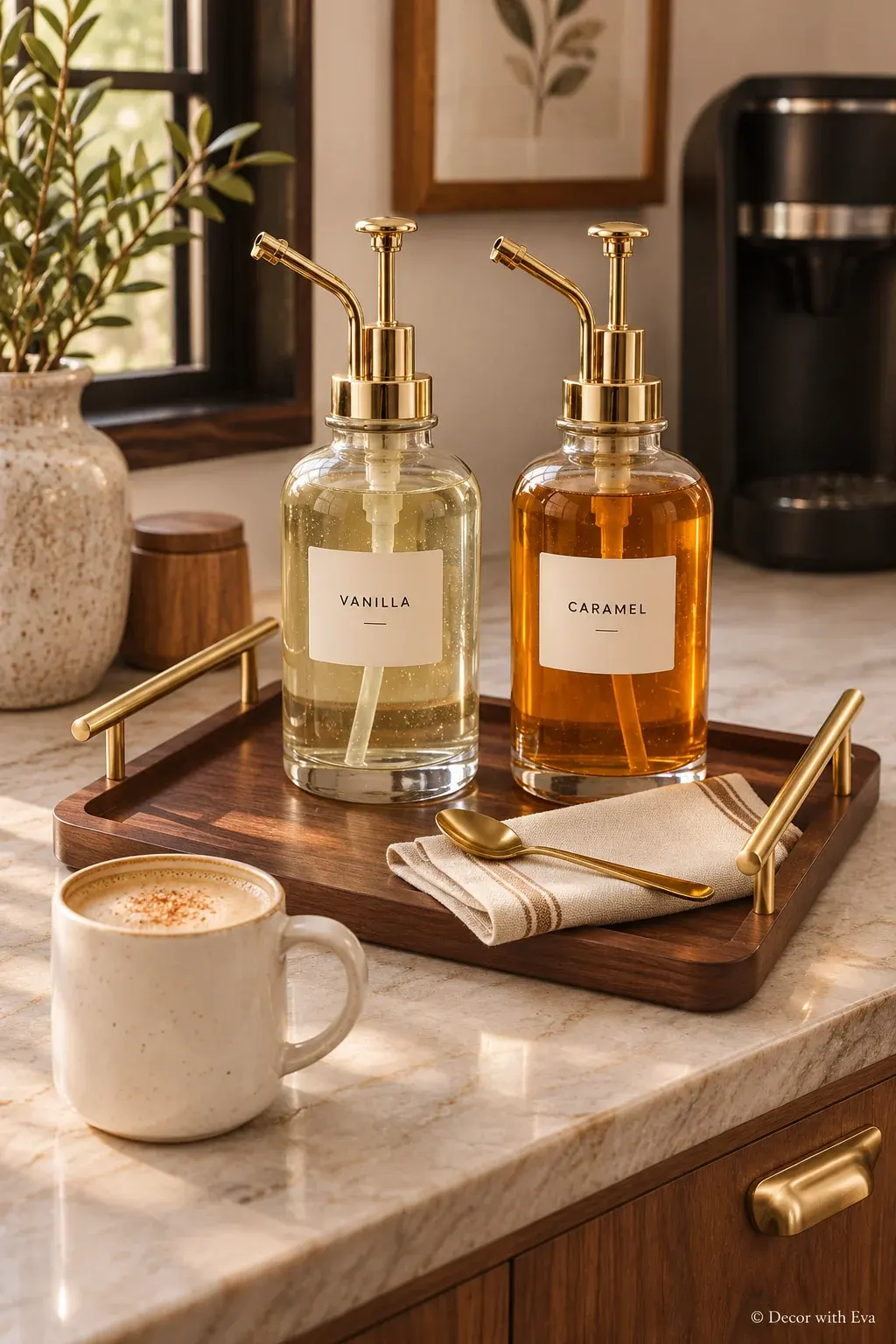
Two favorite syrups can make a coffee bar feel a little like a neighborhood café without turning the counter into a bottle display. Glass bottles with gold-tone pumps look warm beside a dark wood tray, especially with small, clear flavor labels. Vanilla and caramel are an easy visual pairing because their pale and amber colors add gentle contrast.
Choose flavors you use often enough to maintain comfortably, and follow the syrup maker’s storage, refrigeration, and use-by directions after transferring. Keep the pumps clean and label more than the flavor if you need to track a date. The tray collects the bottles and spoon into one small area; leave the cup-making space beside it clear so the decorative setup still works on a rushed weekday.
13. An opaque canister that keeps beans out of the light
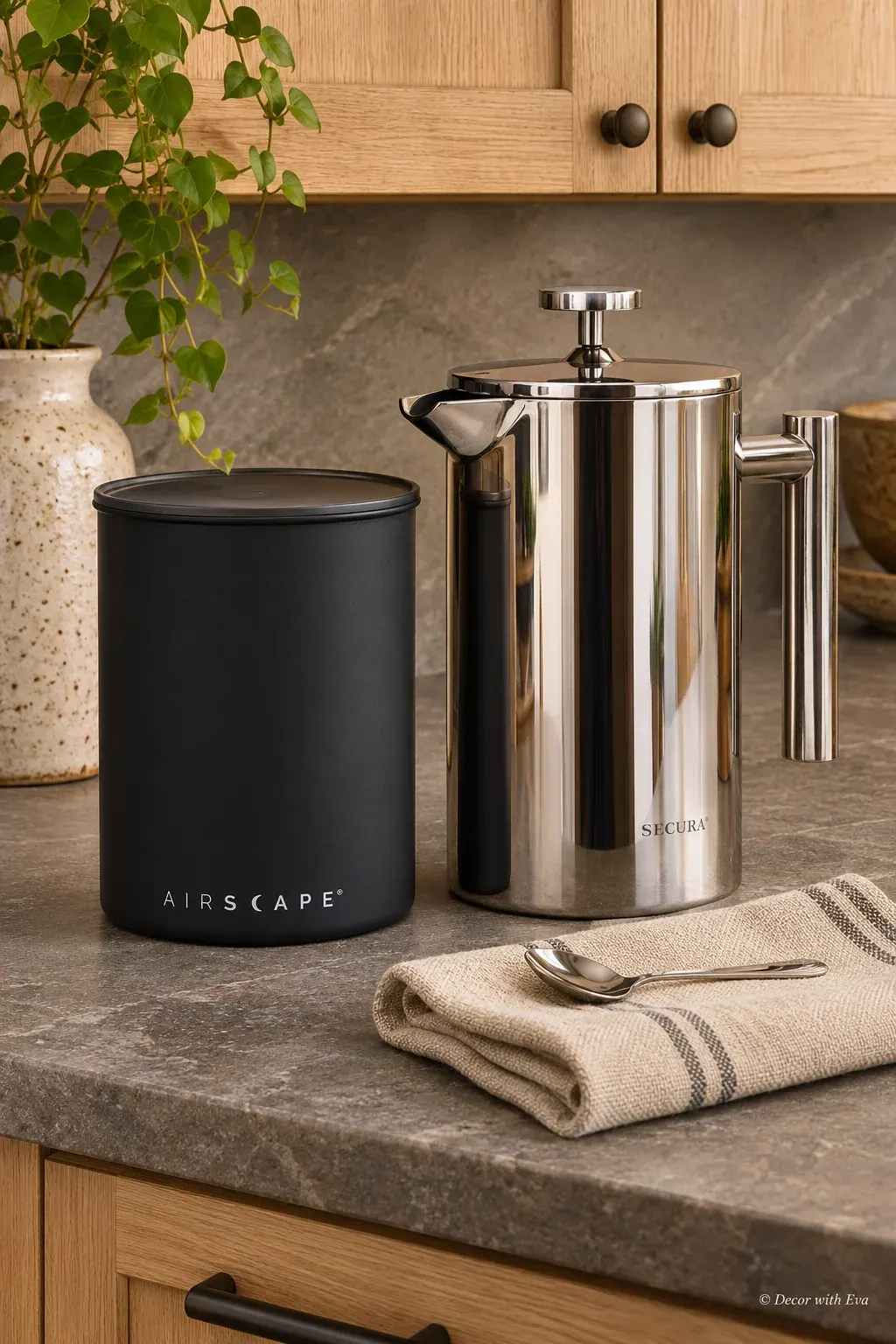
An opaque canister is a useful way to simplify the look of coffee storage. Matte black pairs easily with a stainless French press, pale wood, or white mugs, and a single container looks calmer than several open coffee bags. Keep it in a shaded part of the station, away from the stove and sunny window.
Capresso’s coffee-storage guidance recommends an airtight container in a cool, dark place away from light and heat. An Airscape-style inner lid is one option, but no container makes coffee stay fresh indefinitely. Choose a size that suits your usual purchase and follow its care instructions. Use clear decorative jars for things such as sugar or wrapped treats instead of making sunlit beans the main display.
14. A pantry shelf for the coffee backstock
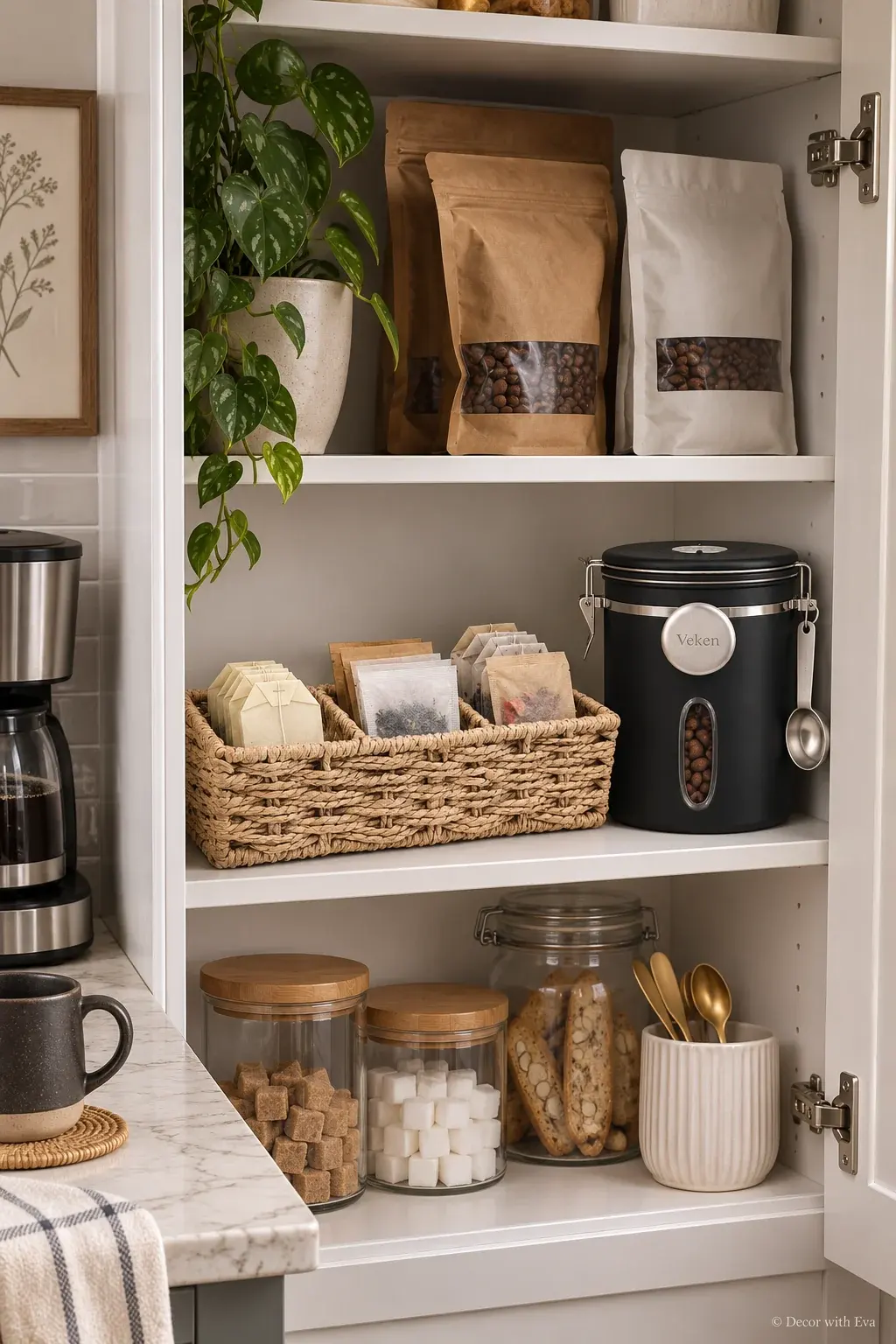
A pantry shelf can handle the refill side of the coffee bar, leaving the visible station smaller. Put your current coffee container at the front, unopened bags behind it, and tea bags in their own divided basket. This is especially helpful when several people buy different blends or when bulk packages do not fit neatly beside the machine.
A black window canister makes the active supply easy to distinguish, while a small woven organizer separates tea without using a large box. The organizer here is braided paper cord over a frame, so keep it in a dry storage area. Face packages forward and bring older stock to the front when restocking. The goal is a shelf you can scan quickly, not a perfectly matched set of replacement containers.
15. A pour-over corner with a slower morning feel
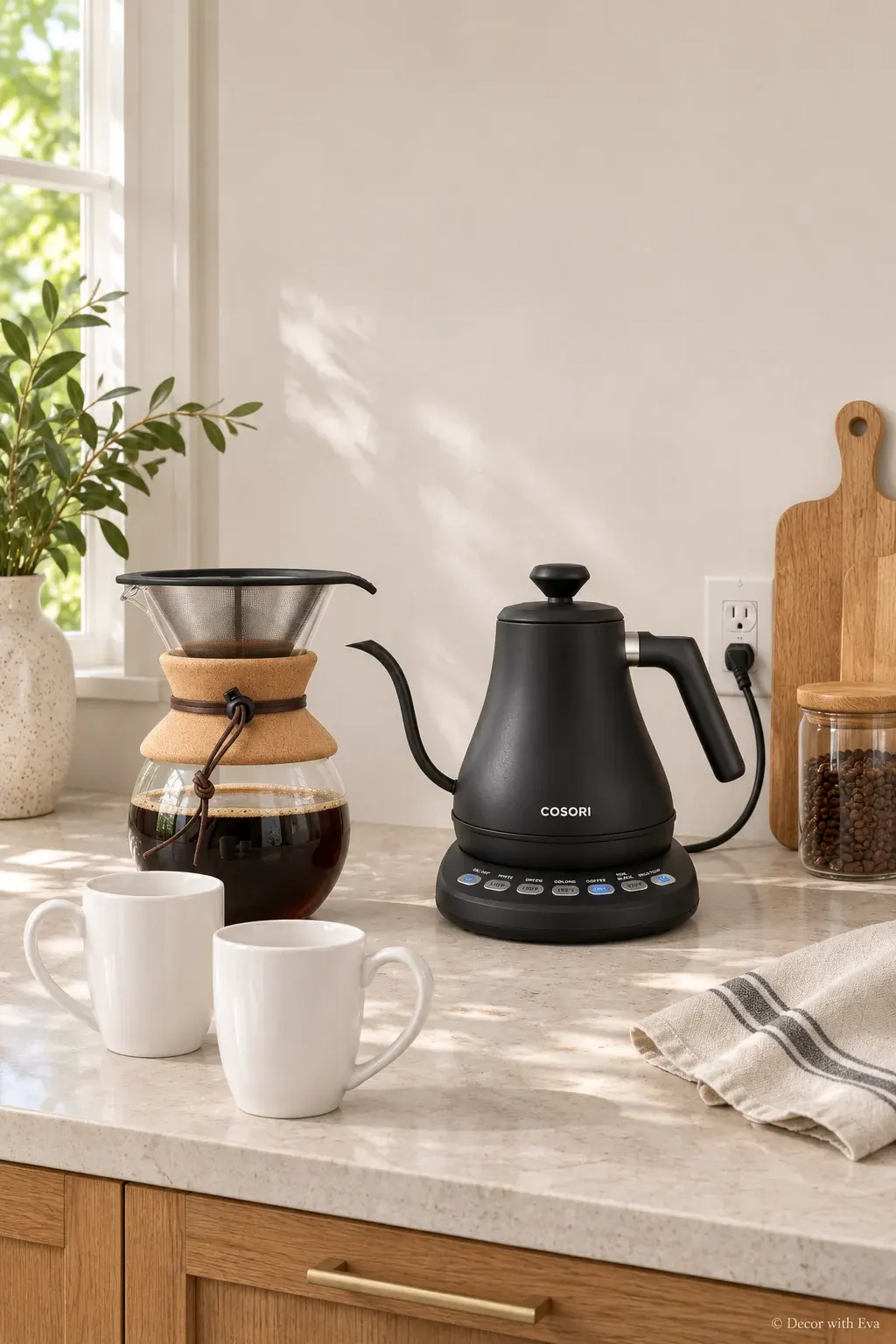
A pour-over coffee bar puts the daily ritual on display with only a few pieces. A glass carafe with a cork collar, a black gooseneck kettle, and two white mugs create a pleasing mix of glass, matte metal, and soft ceramic. On a pale counter, the shapes are enough; there is no need for a large sign or extra shelving.
Give the kettle its own suitable, stable surface and follow its instructions for placement and power. Keep filters and the coffee scoop in a nearby drawer so the working area stays open. The 34-ounce carafe offers a different scale from a single-mug dripper; compare its capacity with the mugs you use rather than assuming the advertised small-cup count means full-size servings. Leave space to set the filter down after brewing.
16. A French-press station with fewer moving parts
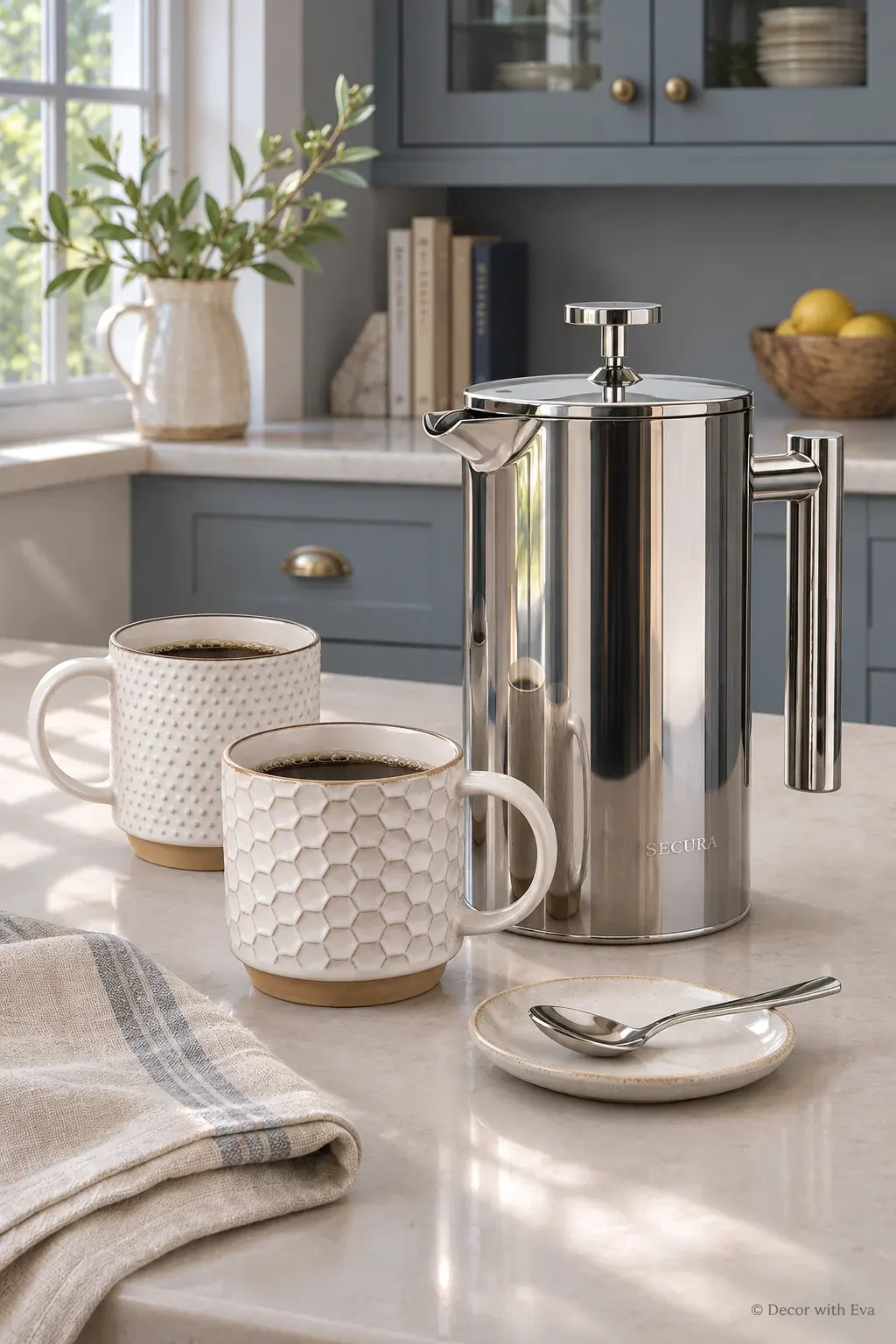
A French-press coffee station suits a kitchen where you want the brewer to tuck away easily. A stainless press looks especially good with embossed white mugs because the smooth reflective surface balances the ceramic texture. Add one spoon rest or small plate and a folded cloth, then stop there.
Keep the coffee, scoop, and kettle close enough that the routine does not spread across several counters. A 34-ounce press needs less display space than a row of separate machines, though you still need a comfortable spot for filling and pouring. Store the press clean and dry between uses, following its care instructions. This arrangement is easy to adapt with cups you already own, and the whole station can move back into a cupboard after breakfast.
17. A tiny espresso corner with rich ceramic details
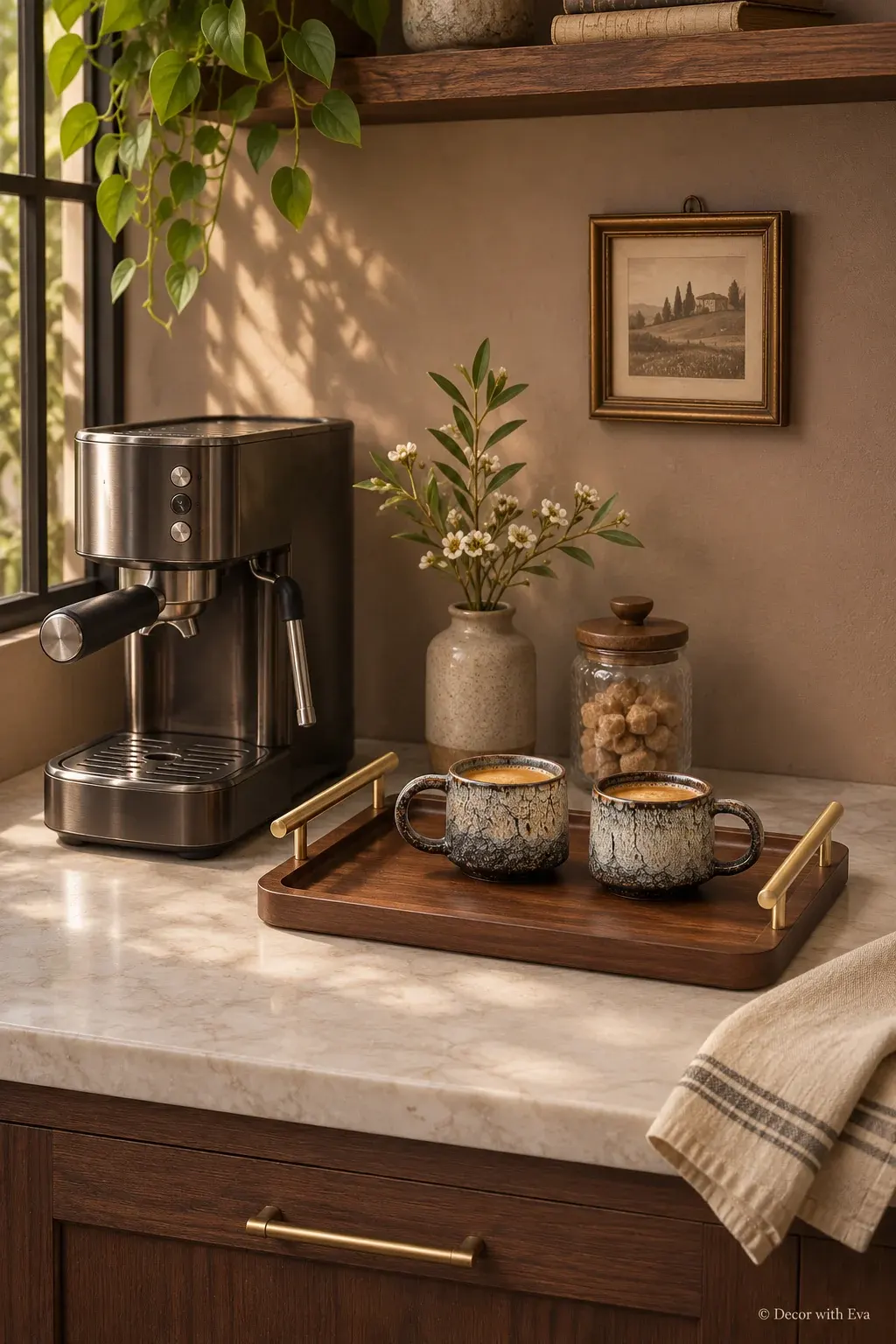
Small espresso cups can give a coffee corner a more intimate feel than a large row of everyday mugs. A mottled cream-and-charcoal glaze brings texture to a dark machine, while a wood tray with gold-tone handles adds warmth. Keep the cups together beside the equipment so the arrangement feels ready to use.
These are little 2-ounce cups, so they belong with an appropriate espresso serving rather than a full mug-sized brew. Leave the machine on the main counter and use the tray for cups and accessories. In a tight nook, one small picture can provide the background detail without crowding the worktop. Choose art and ceramics with related warm tones, then let the machine remain the largest object in the group.
18. Colorful mugs as the main decoration
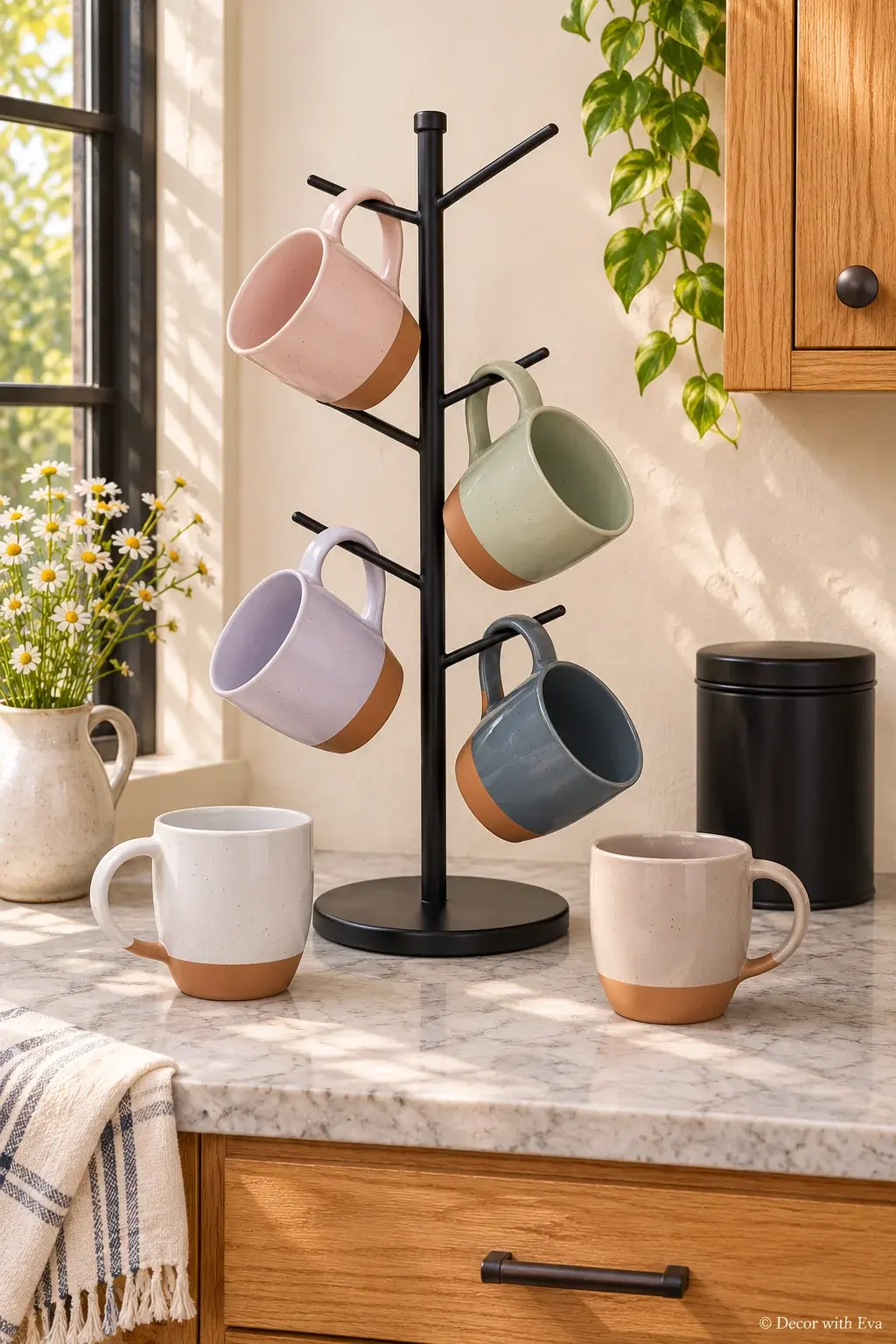
A colorful mug collection can provide all the personality a simple coffee bar needs. Muted pink, sage, blue, and lavender work well together because they have a similar softness, while the terracotta-colored bases give them a shared detail. A slim black mug tree makes the colors easy to see without adding another cabinet.
Try hanging four mugs with breathing room and keeping the others on a shelf or in the cupboard. Check the tree’s hook spacing and the weight of your actual cups; large 18-ounce mugs need more room than small espresso cups. Keep the stand on a level surface away from the counter edge. Repeating one of the mug colors in a towel is enough to connect the display to the kitchen.
19. A stackable white-mug collection for tight spaces
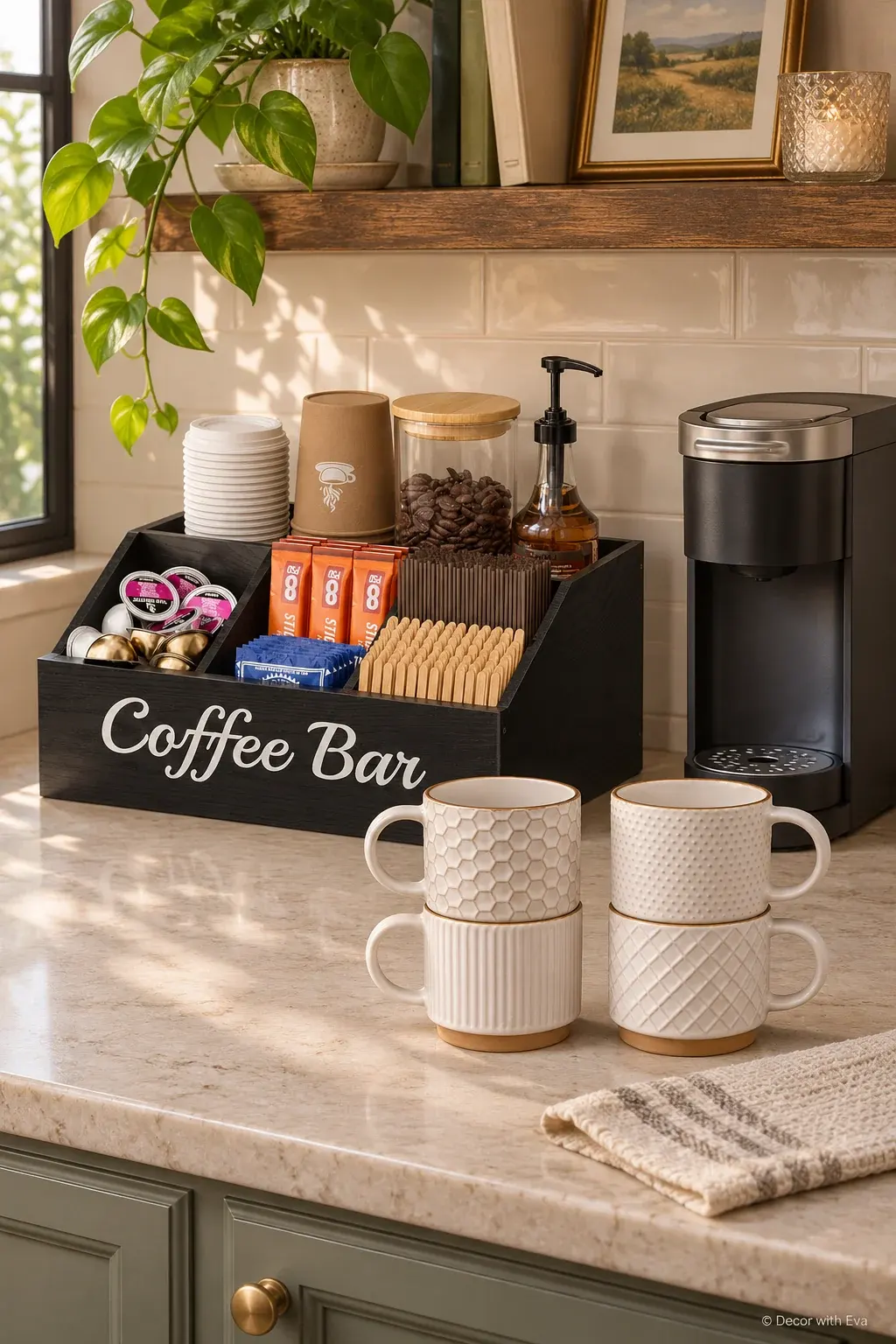
White mugs look anything but plain when their surfaces carry different patterns. Ribs, dots, and a honeycomb texture add interest while the color stays consistent, which is useful in a small kitchen coffee bar. Two short stacks can keep a daily set together without turning the counter into a mug tower.
Only stack cups that sit securely together, and keep the height modest enough for easy lifting. A small black caddy behind them provides contrast and holds the less decorative essentials: packets, pods, and stirrers. If the counter is very narrow, keep just two cups out and put the rest directly above or below. The combination works with white kitchens, warm wood cabinets, and darker painted cupboards.
20. Black ceramics for a crisp monochrome bar
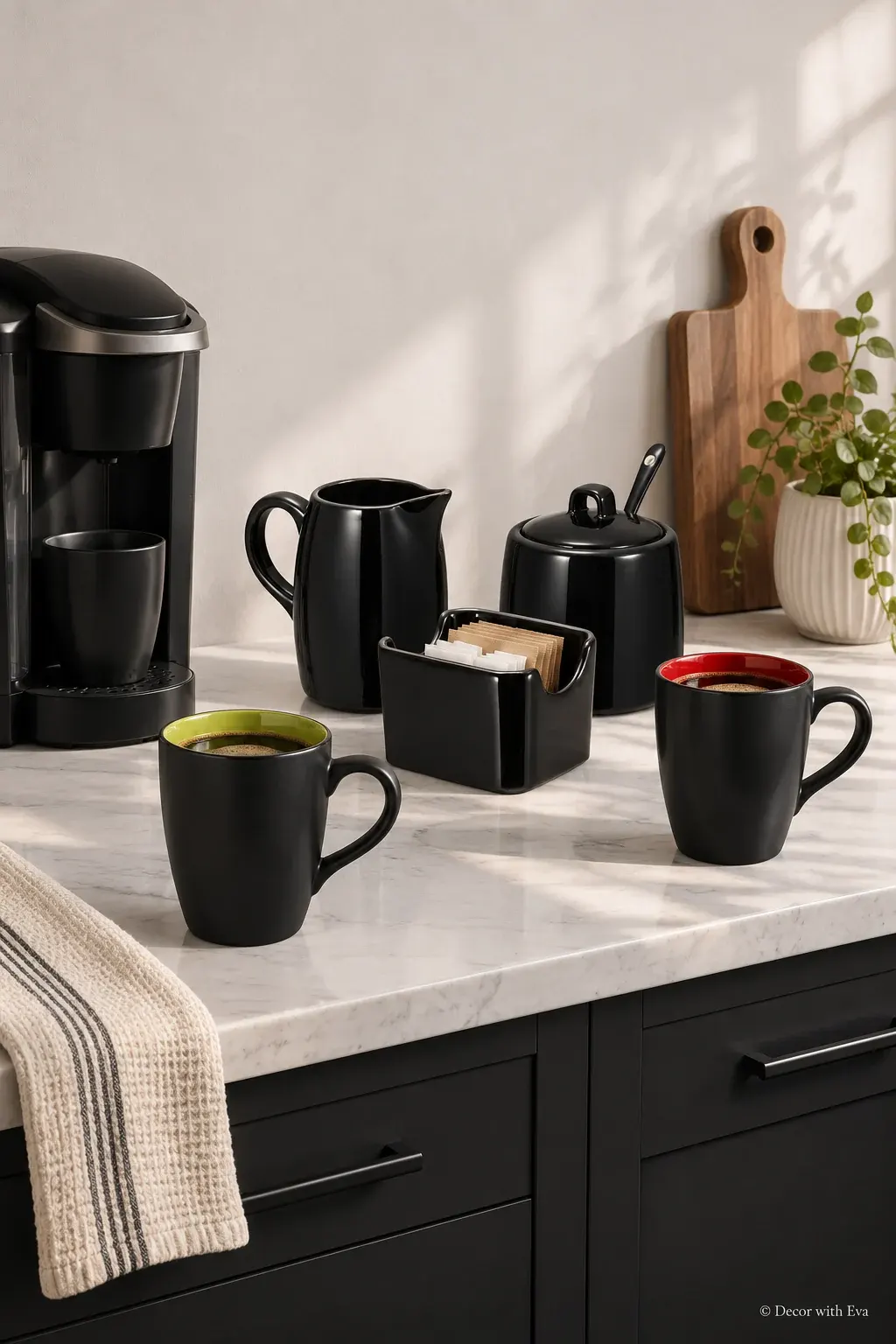
Black ceramics give a coffee station a clean outline against a pale counter. A matching creamer, sugar bowl, and packet holder form one quiet group, while dark mugs repeat the color at the front. Colored mug interiors add a small surprise that does not overwhelm the monochrome look.
Balance the dark pieces with something warm already in the kitchen, such as a wood cabinet front or a folded oatmeal-colored towel. Keep the serving set separate from the brewer’s drip area so it is easy to lift and clean. The creamer is for serving fresh milk, not for leaving it out all day. A restrained black-and-white palette is particularly useful when the appliance itself is bulky and you want the surrounding accessories to settle down visually.
21. A coffee-and-tea station that shares the space
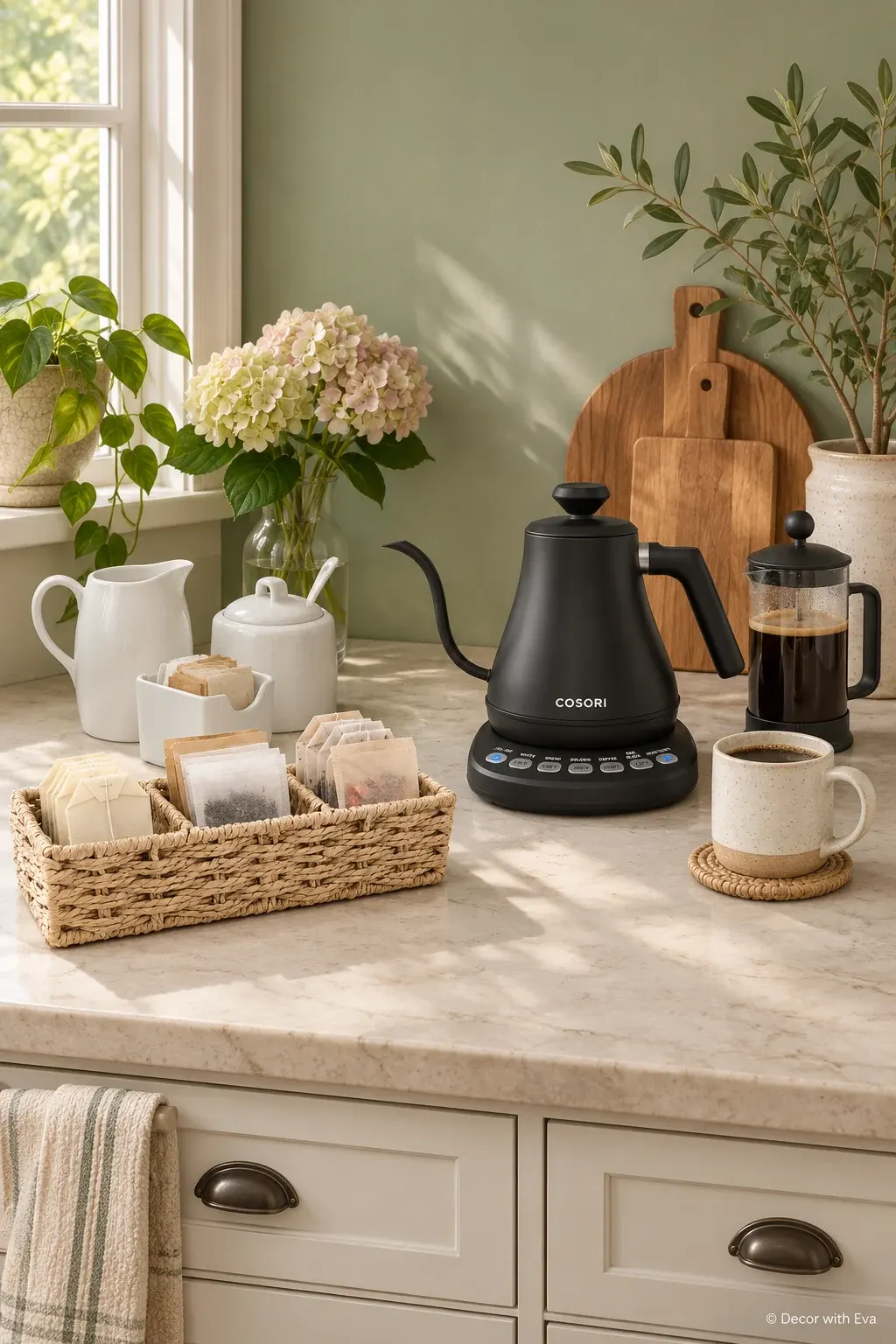
A shared coffee-and-tea station makes sense when the household has more than one morning routine. Give the tea bags a divided holder, keep the kettle accessible, and place the coffee tools beside them rather than in front. A white sugar-and-creamer set can serve both sides of the arrangement.
Separate the dry storage from the area where you fill and pour. Wrapped tea bags stay easier to sort when the labels face up, and loose spoons can live in a small pot or drawer. Put the kettle on the counter with the clearance its manual requires, away from the woven organizer. A soft sage wall or towel helps the mixed materials feel related without requiring every container to match.
22. A guest-friendly breakfast coffee bar
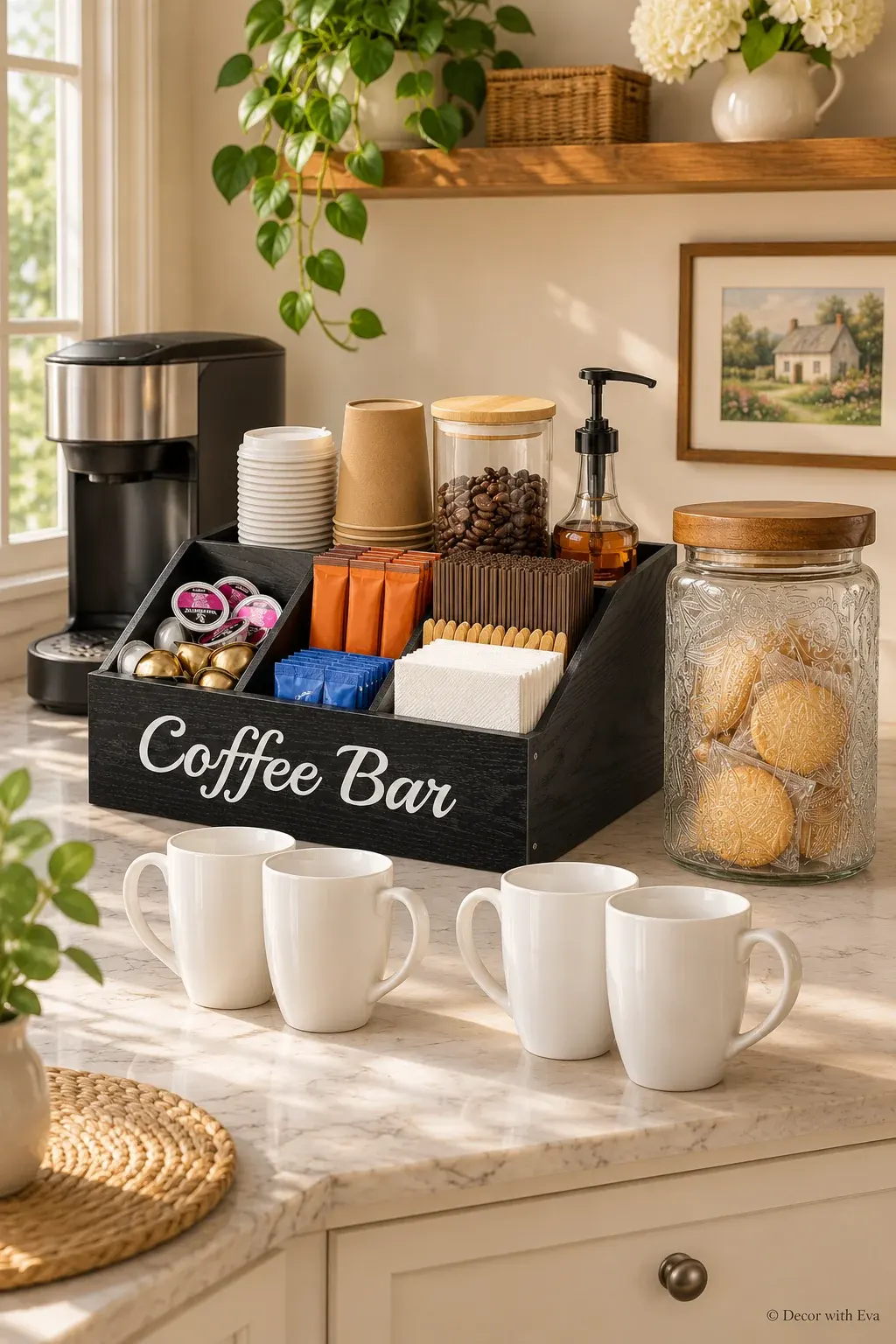
A guest-friendly coffee bar should make the first cup easy to figure out. Put mugs where they are visible, keep the pods and stirrers together, and set napkins within reach. A small compartmented caddy can organize the essentials without several separate jars across the whole counter.
Choose a few options instead of presenting every flavor you own. If guests stay overnight, a simple note with the machine’s basic controls can be more useful than another decorative sign. A lidded jar of wrapped biscuits adds a welcoming detail; keep the original packaging information for anyone who needs it. Leave enough open counter for a guest to prepare a drink without moving the display, and bring refrigerated additions out when serving.
23. An old dresser turned into a coffee landing spot
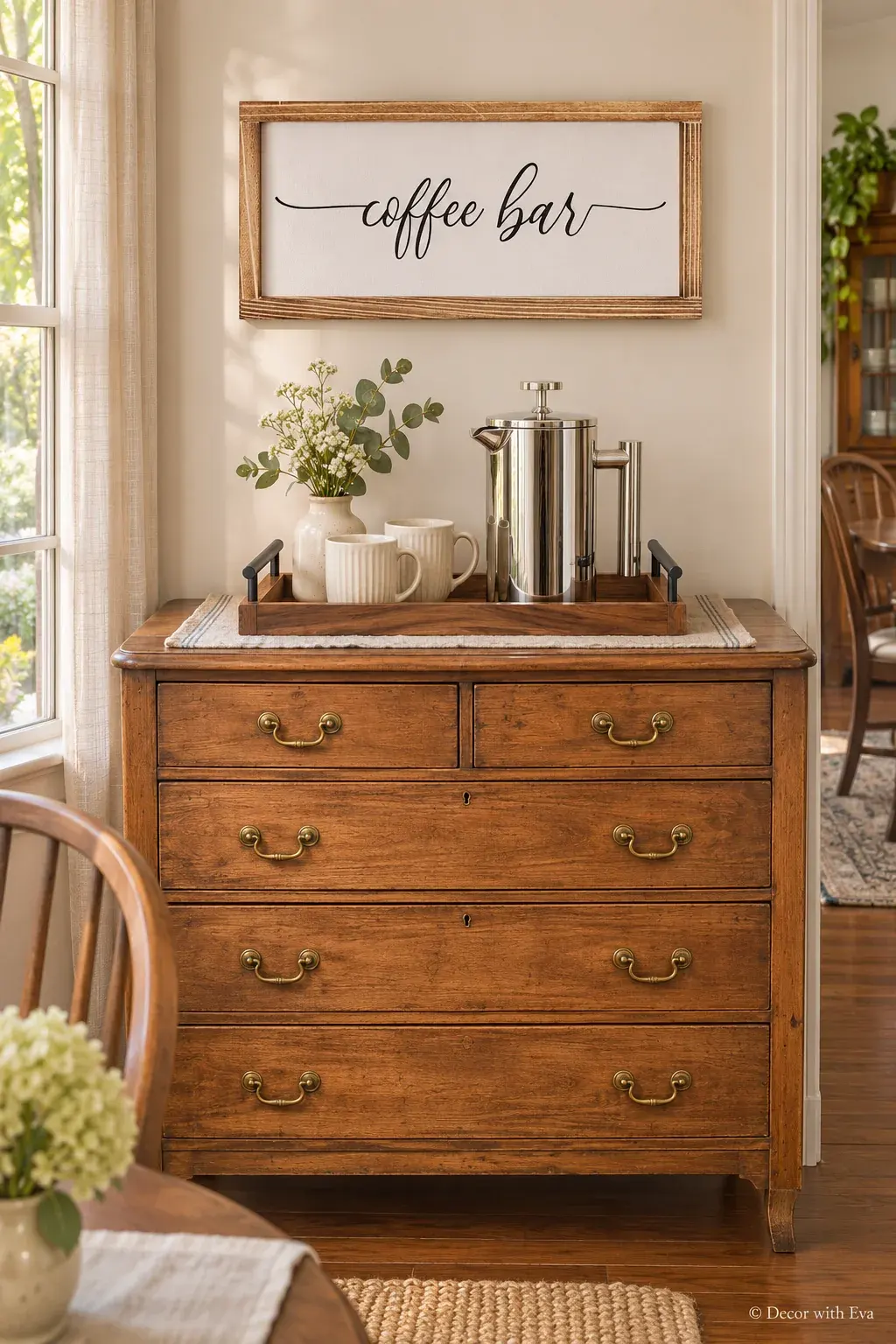
An old dresser can become a charming coffee landing spot without a full furniture makeover. Warm wood, worn brass pulls, and a simple framed coffee-bar sign give the area a collected feel. A tray keeps the serving pieces visually contained and helps the top read as a small station rather than an extra kitchen counter.
Check the furniture’s stability and finish before using it around drinks, and protect the surface in a way suited to that finish. A French press and cups brought over for serving can work better here than keeping a powered brewer on a delicate top. Anchor furniture where required and keep drawers from becoming overloaded. Use the drawers for dry linens or supplies so the repurposed piece still earns its place.
24. Soft task lighting for an evening coffee nook
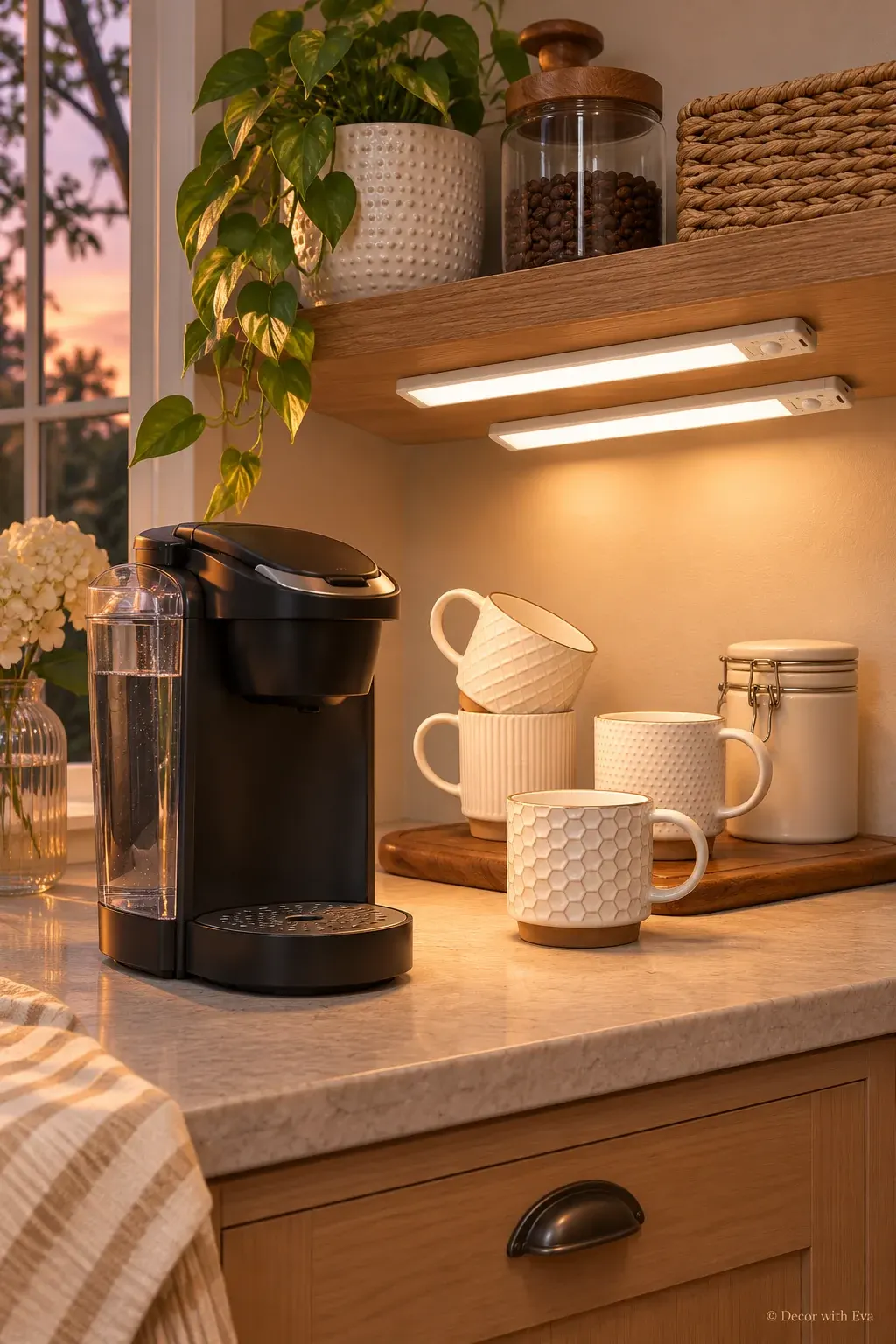
Gentle task lighting can make a coffee nook inviting on a dark morning or after dinner. Slim rechargeable light bars under a shelf add a pool of light around the cups and work surface without taking up tabletop space. Warm wood and textured white ceramics keep the result soft rather than clinical.
Position the lights where they can be removed for charging and where they stay away from splashes, heat, and steam. Do not lower a shelf over a brewer just to fit a lighting idea; appliance access comes first. Check the mounting method for your surface, especially with adhesive plates. Start with a lower brightness setting and adjust it in the evening so the worktop is useful without shining directly into your eyes.
25. A coffee cupboard that closes after cleanup
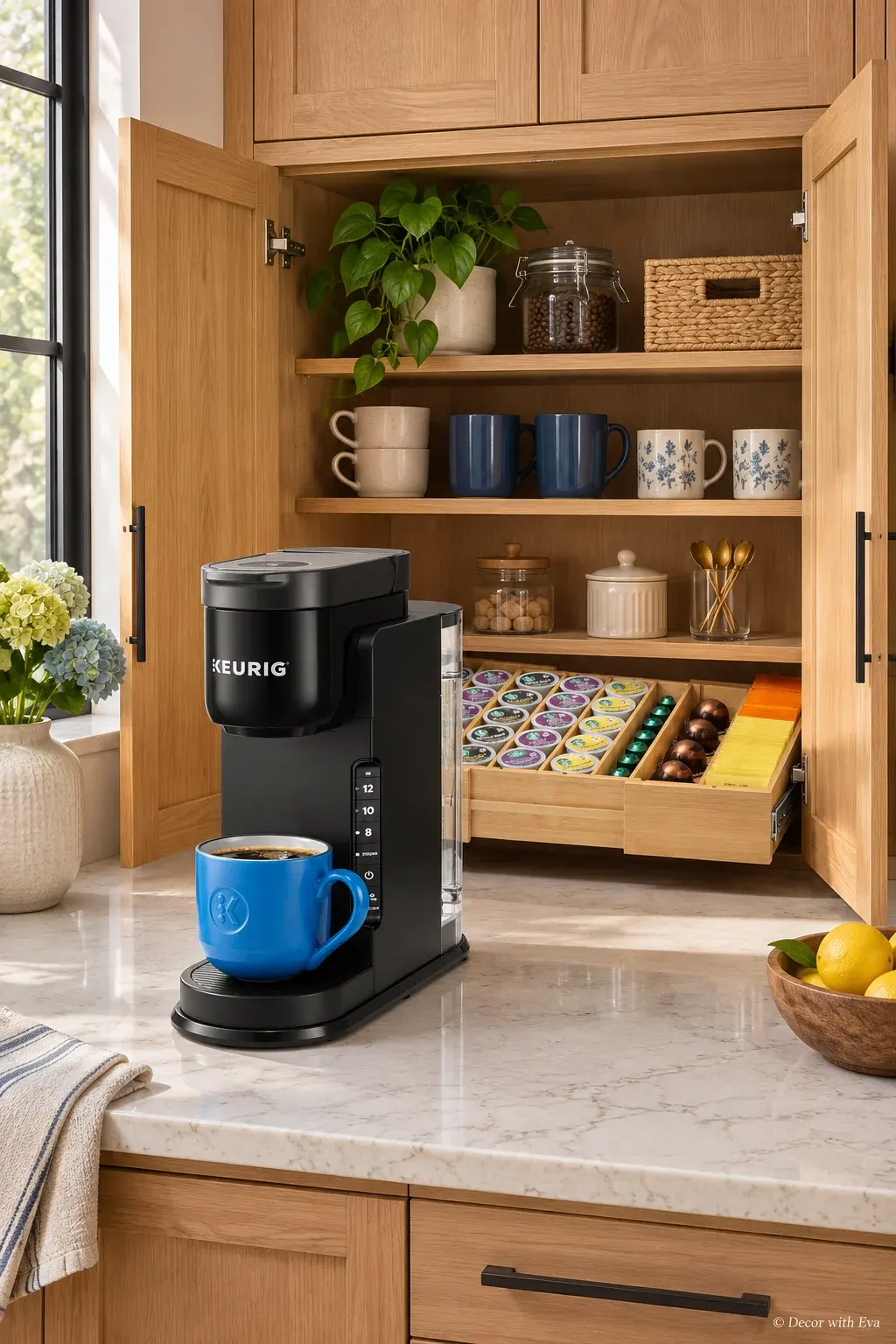
A coffee cupboard gives you a place to close away the visual clutter once breakfast is finished. Inside, group mugs and dry supplies on reachable shelves, with pods or tea sorted in a drawer below. Keeping the interior simple makes it easier to put everything back instead of letting the door hide a growing jumble.
Plan the appliance position around its own instructions. The brewer needs room to lift its handle, remove the reservoir, and be maintained; the K-Express care guide shows why access above and around it matters. Do not assume a closed appliance garage is a suitable operating space. Allow a proper counter position outside the enclosure where required, and close the cupboard only after use, cleanup, and cooling.
26. A breakfast-nook bar with a patterned runner
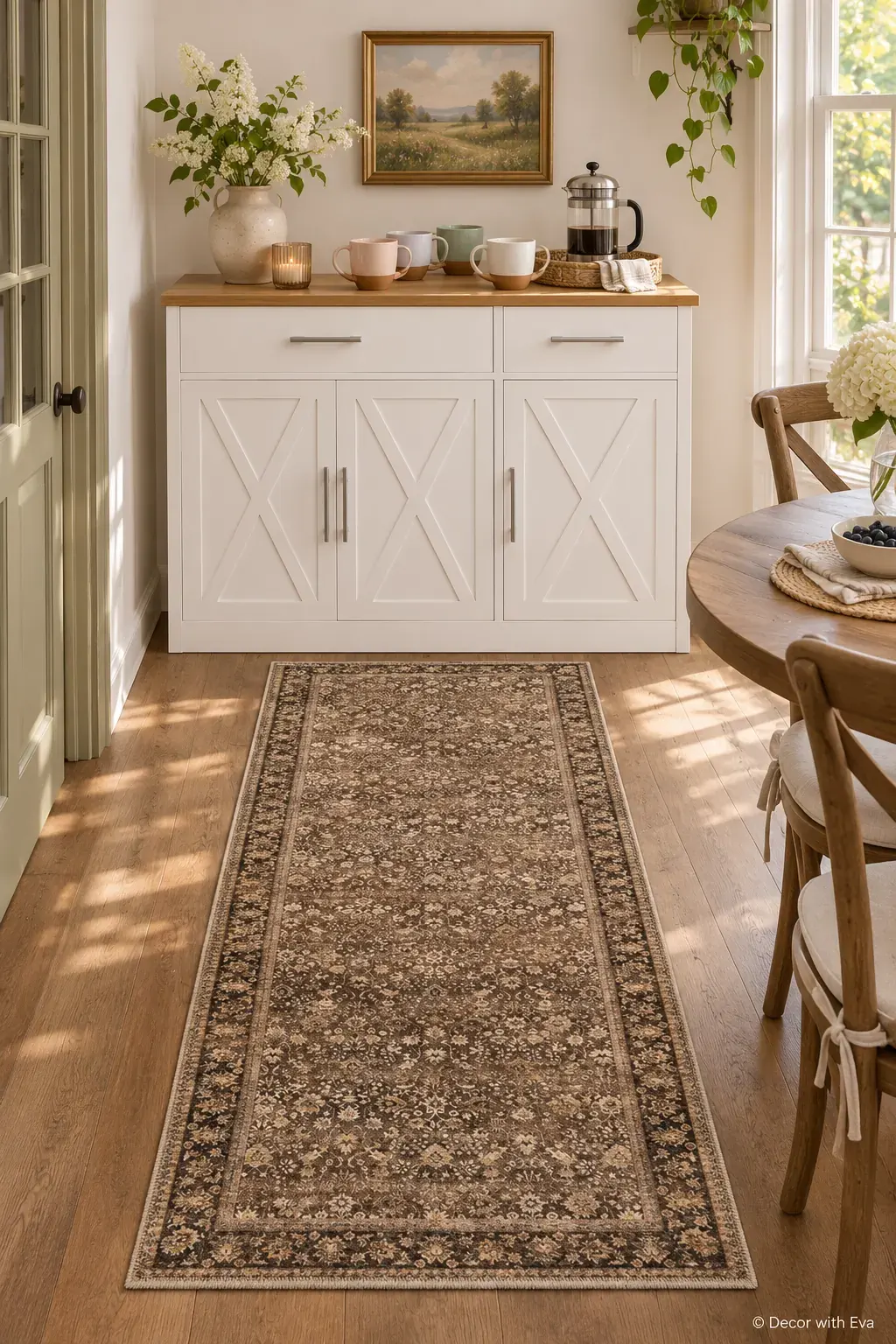
A patterned runner can connect a freestanding coffee buffet to a breakfast nook. Brown and beige florals feel at home with white cabinet fronts and a wood top, while the pattern gives the floor some depth. This is a useful finishing step when the coffee area looks a little detached from the table beside it.
Measure the open floor area before choosing a 2-by-6-foot runner. It should sit clear of door swings, chair legs, and the route people take carrying drinks. Check the floor and rug-care guidance, use a compatible pad when appropriate, and settle any curled edges before putting it into everyday use. Repeat one warm brown tone in a frame or tray so the runner feels connected to the pieces above it.
27. A small riser for the display pieces
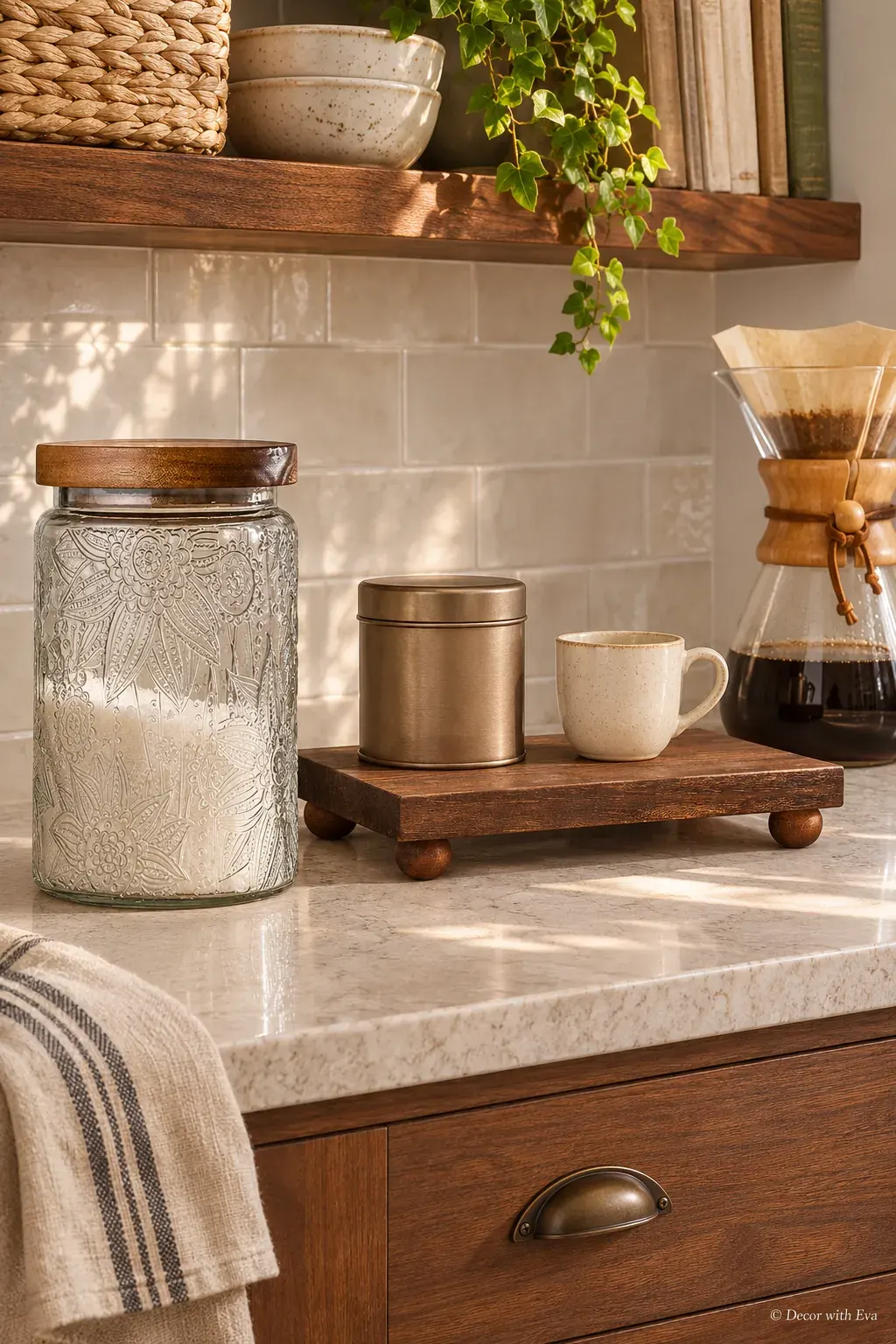
A low wood riser can separate a small display from the working part of a coffee counter. Use it for a closed tin and a favorite cup, with a taller sugar jar beside it. The slight change in height adds interest even when the colors stay within a quiet brown-and-cream palette.
Keep the scale small. A riser around 12 by 7 inches and only 1½ inches high is for light accessories, not for lifting a coffee maker or hot kettle. Check the feet sit evenly on the counter, keep the wood dry, and leave enough space to pick up the items comfortably. If you have to move the riser every time you make coffee, put it on the quieter end of the station.
28. An iced-coffee setup with an easy serving zone
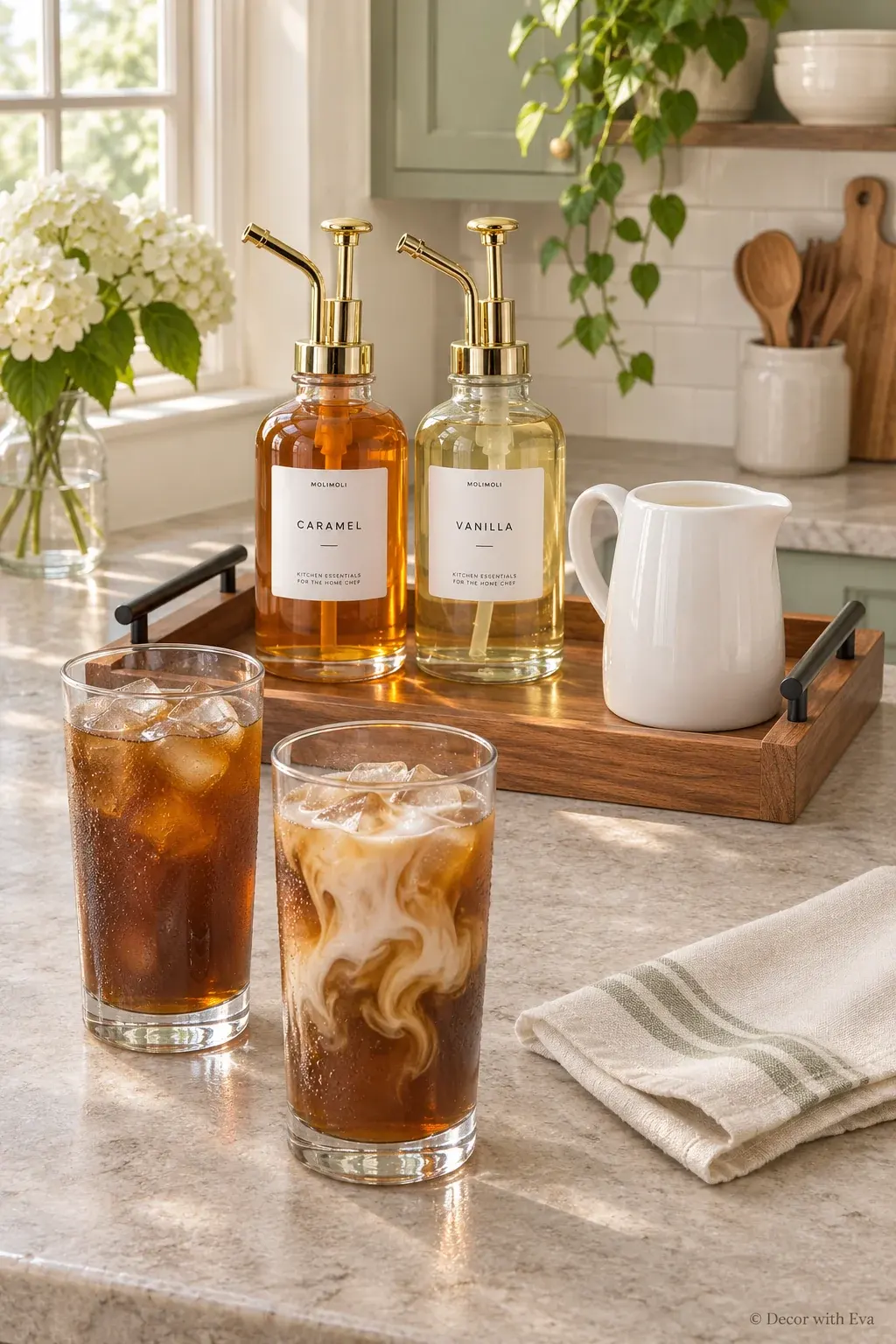
An iced-coffee station benefits from a clear serving zone more than a large collection of gadgets. Keep two tall glasses near the ice and coffee, with the syrup bottles and creamer grouped behind them. A tray can hold the accessories while the glasses sit directly on a suitable counter where spills are easy to wipe.
Set out milk or cream when you are ready to use it, then return it to the refrigerator. Keep a spoon or stirrer within reach and avoid arranging tall bottles where they block the glasses. The same corner can serve hot coffee in cooler weather: swap the glasses for mugs and keep the layout. A light towel and a simple green accent give the station a fresh feel without adding seasonal clutter.
29. A budget coffee corner using what you own
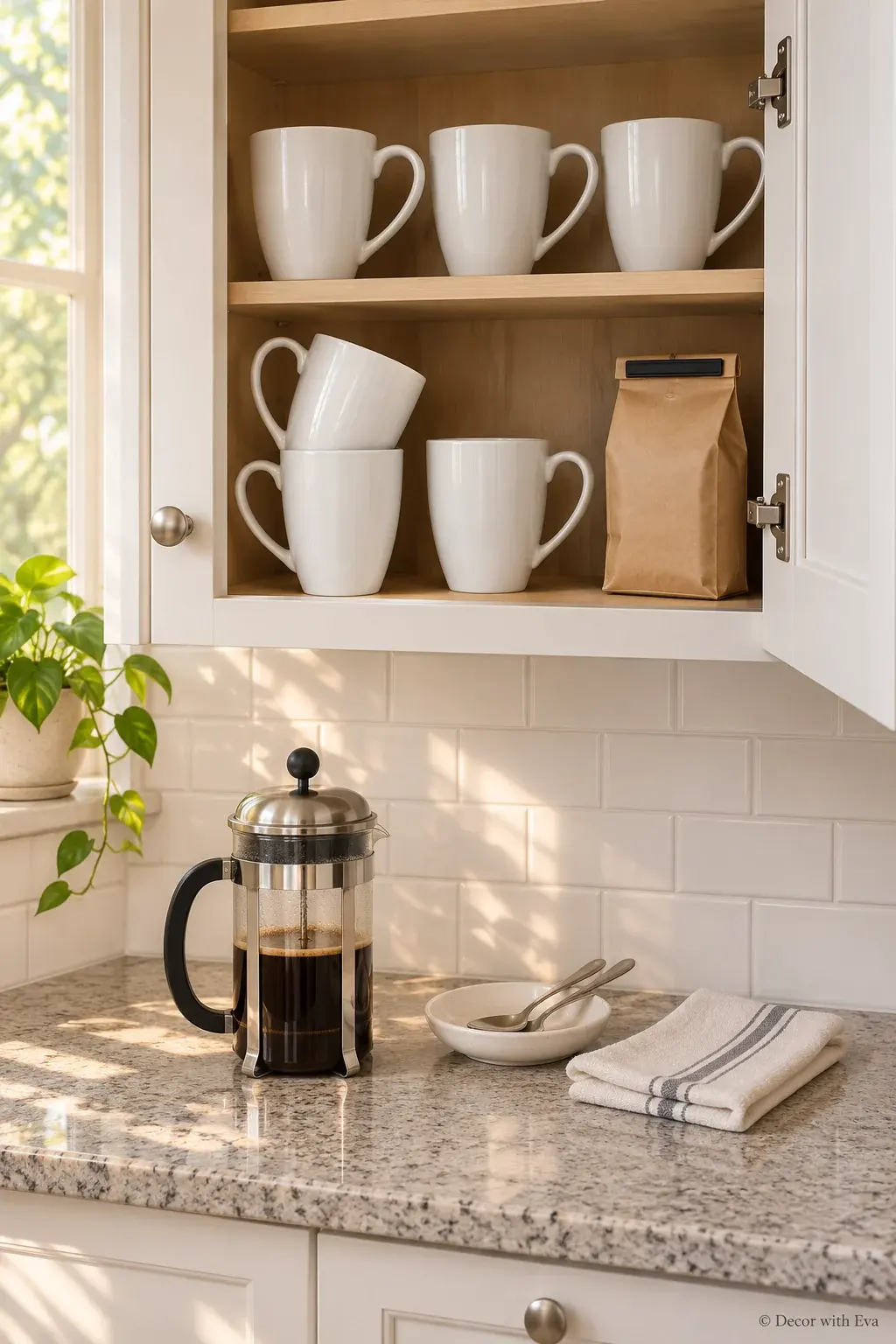
The most affordable coffee bar may be the cupboard and counter you already have. Clear one shelf for mugs and coffee, gather the small tools into a shallow dish, and keep only the brewer you use on the worktop. Giving the routine a defined home can be enough to make the kitchen feel more organized.
Try this arrangement for a week before buying furniture or a large organizer. Notice what you reach for, what keeps getting left out, and where the cups land after use. Spend on the missing function first, whether that is a better-fitting container or a small set of everyday mugs. Keep a little empty counter beside the setup; it is often the detail that makes mornings feel easier.
Home coffee bar questions
What do you need for a home coffee bar?
Start with your brewer, coffee, a few mugs, and the tools your method needs. Add a spot for spoons, filters or pods, a cloth for cleanup, and sugar if you use it. Storage and a clear preparation surface matter more than signs or decorative accessories.
Where should a coffee bar go in a small kitchen?
Try an existing counter corner, a tray beside a cupboard of mugs, or a drawer near the brewer. Check that the location leaves room for food preparation and does not block a doorway or appliance. A cart can hold supplies if there is no suitable spot for another cabinet.
How deep should a coffee bar cabinet be?
There is no single depth that works for every machine. Measure the complete appliance footprint, including handles, plugs, reservoir removal, and the space required by the manual. Compare that with the cabinet’s usable top and load limits. A slim console may suit cups and a French press while being unsuitable for a larger powered machine.
How can you decorate a coffee bar without clutter?
Keep one main grouping of daily supplies and one small decorative detail, such as a picture or a favorite cup. Repeat a limited palette and put refills behind a door or in a nearby drawer. If decoration occupies the place where you prepare a drink, move it to a quieter shelf.
Can you make a coffee bar without buying new furniture?
Yes. Clear a section of counter and a nearby cupboard, then use a tray, shallow dish, or small box you already own to collect the tools. Try the arrangement through several mornings before shopping. That makes it easier to identify a useful purchase instead of adding pieces that only fill the space.
Make room for a better morning
Choose the idea that solves a real morning frustration first: scattered pods, nowhere to set a cup, or mugs that are hard to reach. Once that works, a warm wood tray, a little color, or better lighting can make the corner feel welcoming. The best coffee bar is one you enjoy using and can reset easily for tomorrow.
For a softer palette around your new station, see these warm neutral kitchen ideas.
Save it for later
Found a few ideas you love? Save this collection to your Pinterest board so it’s easy to find when you’re ready.
Save to Pinterest
Let’s talk ideas
Which idea would you try? Share a question, a small-space solution, or a detail that made it work in your home.