This article contains paid links. As an Amazon Associate, I earn from qualifying purchases.
A cozy master bedroom feels welcoming before you even get into bed. The light is gentle, the fabrics are inviting, and the pieces around you make the room easy to use. You do not need a large suite or a complete furniture change to create that feeling.
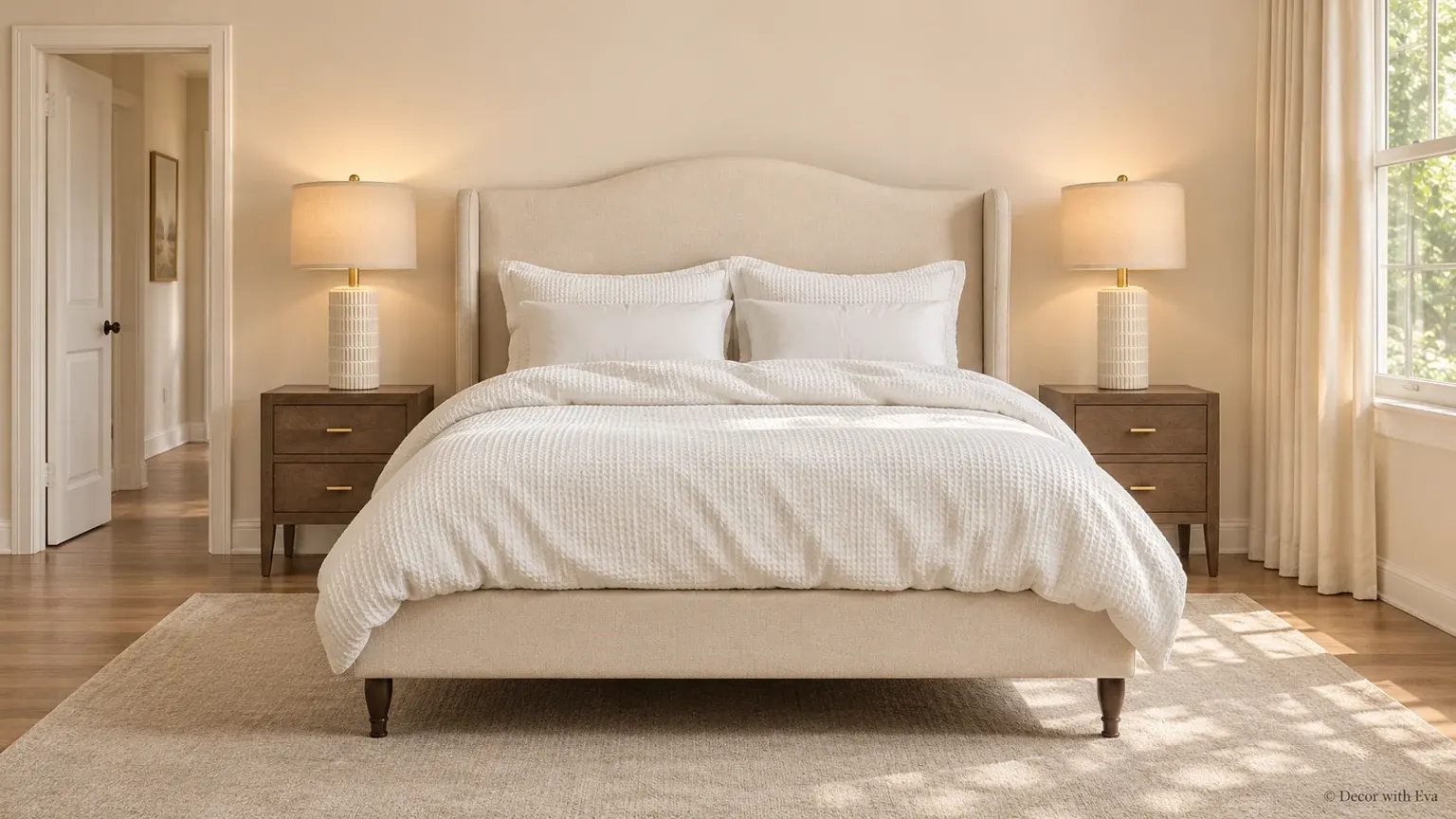
These 36 cozy master bedroom ideas mix complete looks with smaller updates for the bed, windows, lighting, walls, and sitting area. Borrow a whole palette or start with one useful change. The best arrangement is the one that feels good to come back to and is simple enough to enjoy every day.
Before you decorate your cozy master bedroom
Start with the way the room works. Measure the bed, bedside gaps, doors, and drawer openings before choosing another piece. Include the space you need to walk, sit, change the bedding, and carry a laundry basket. Keep the useful route clear even when a bench or reading chair looks tempting.
Choose a small palette from the pieces you already like. Warm wood, cream, sage, chocolate, muted blue, and rust can all feel inviting in different combinations. Compare fabrics and wall samples in daylight and under your evening lamps before changing several things at once.
Think about texture separately from warmth. A knitted throw, cotton duvet, velvet curtain, or upholstered headboard can soften the appearance of the room, but the right bedding weight is personal. Check actual sizes, set contents, and care labels so the new layers fit the bed and your routine.
1. Ivory layers with warm wood
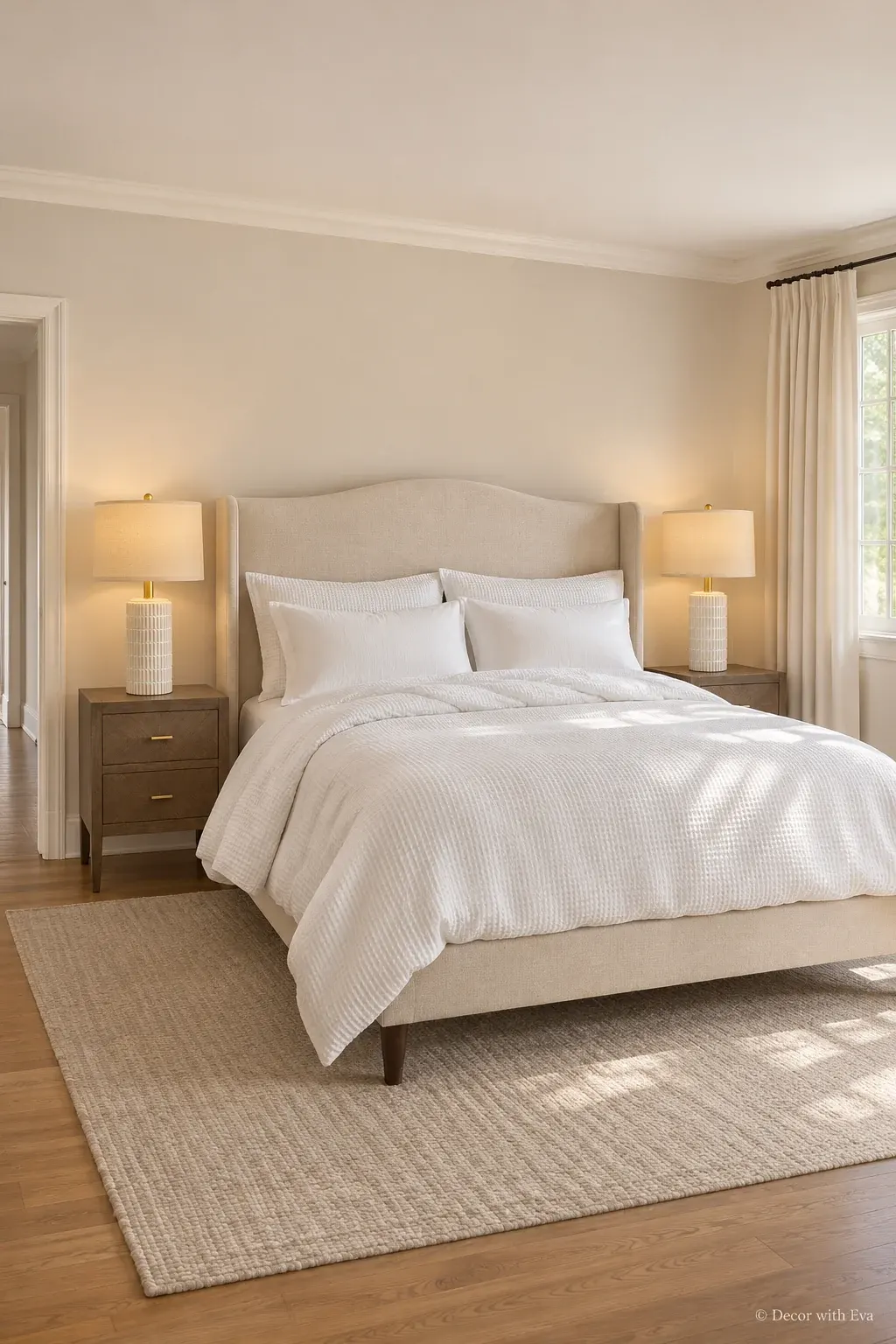
Ivory bedding and warm wood are a lovely place to start when you want the whole room to feel softer. A tall upholstered headboard gives the bed a gentle outline, while white waffle cotton brings texture to a quiet palette. Matching ceramic lamps and bedside drawers make the arrangement feel settled without needing lots of decorative pieces.
Build the look in a few related shades: creamy walls, a beige headboard, white bedding, and a deeper wood finish. The selected queen duvet cover measures 90 by 90 inches and needs a separate insert. Check the nightstand height against the top of your mattress; these two-drawer tables stand 23½ inches high. Leave the lamp bases room on the tops, and put the everyday extras in the drawers.
2. Sage cotton and soft cream
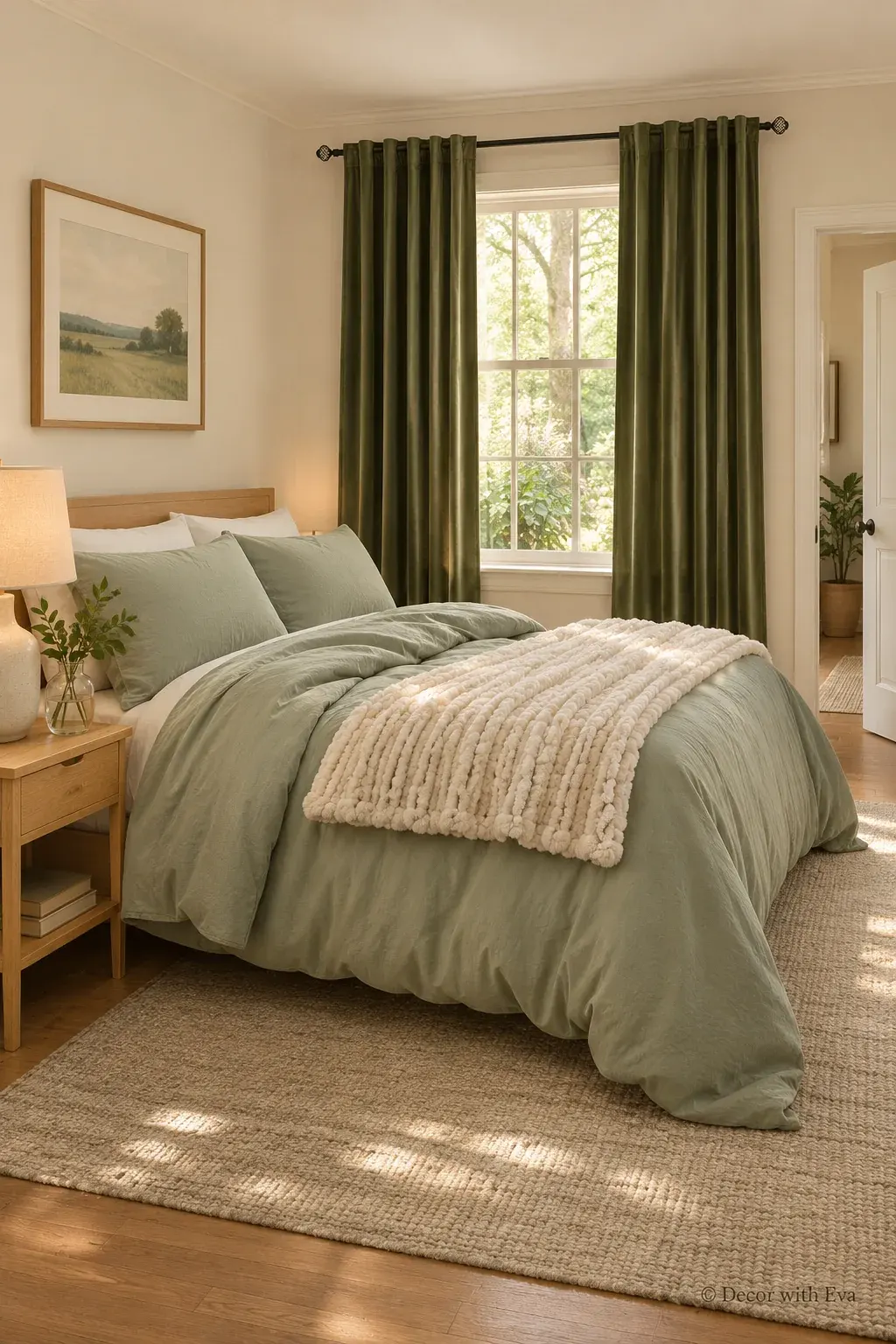
Sage cotton, cream knit, and olive velvet bring several gentle textures into one bedroom. The green shades do not need to match exactly. A lighter bed and deeper curtains give the room depth, while warm wood keeps the combination inviting rather than chilly.
Start with the sage bedding, then repeat green at the window instead of adding more patterned accessories. The washed-cotton duvet has a linen-like appearance, but it is cotton; an insert is separate. Fold the 50-by-60-inch ivory throw across part of the foot rather than expecting it to cover the entire bed. Keep the rest of the room simple so the color and fabric do the work.
3. Chocolate bedding with a hint of rust
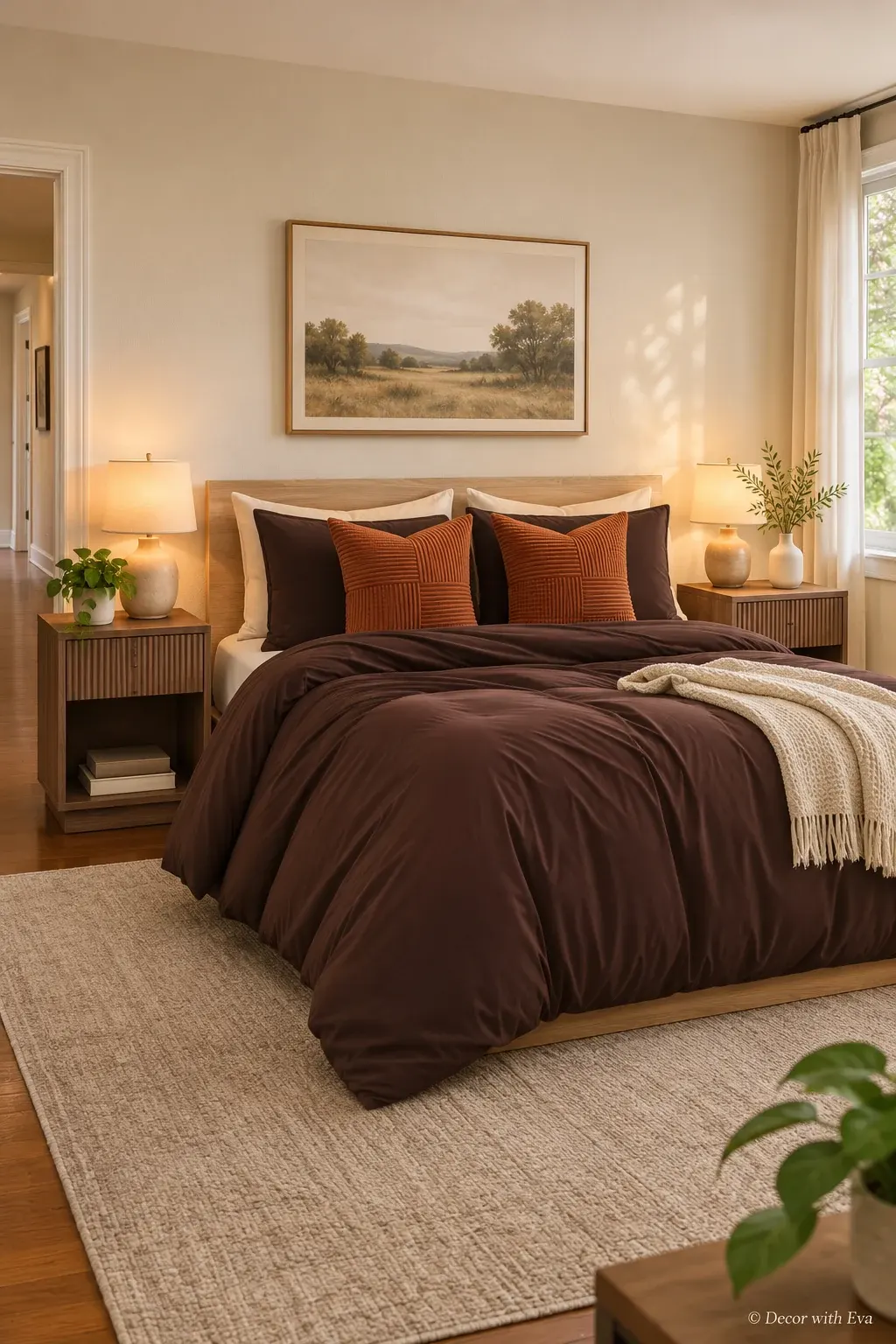
Chocolate bedding can make a light bedroom feel wonderfully tucked in. Rust cushions add a warmer note, and fluted walnut bedside tables bring a little pattern through the woodwork. The look works especially well when the walls and larger background pieces stay cream.
Use the brown comforter as the main color and keep rust to one small group of cushions. This queen comforter is a lightweight microfiber design, so choose its weight for the way you actually sleep rather than judging warmth from its dark color. The rust covers need separate inserts. Repeat the brown in a frame or furniture finish you already own, and let some pale bedding show around the pillows.
4. Cornflower blue with golden-brown curtains
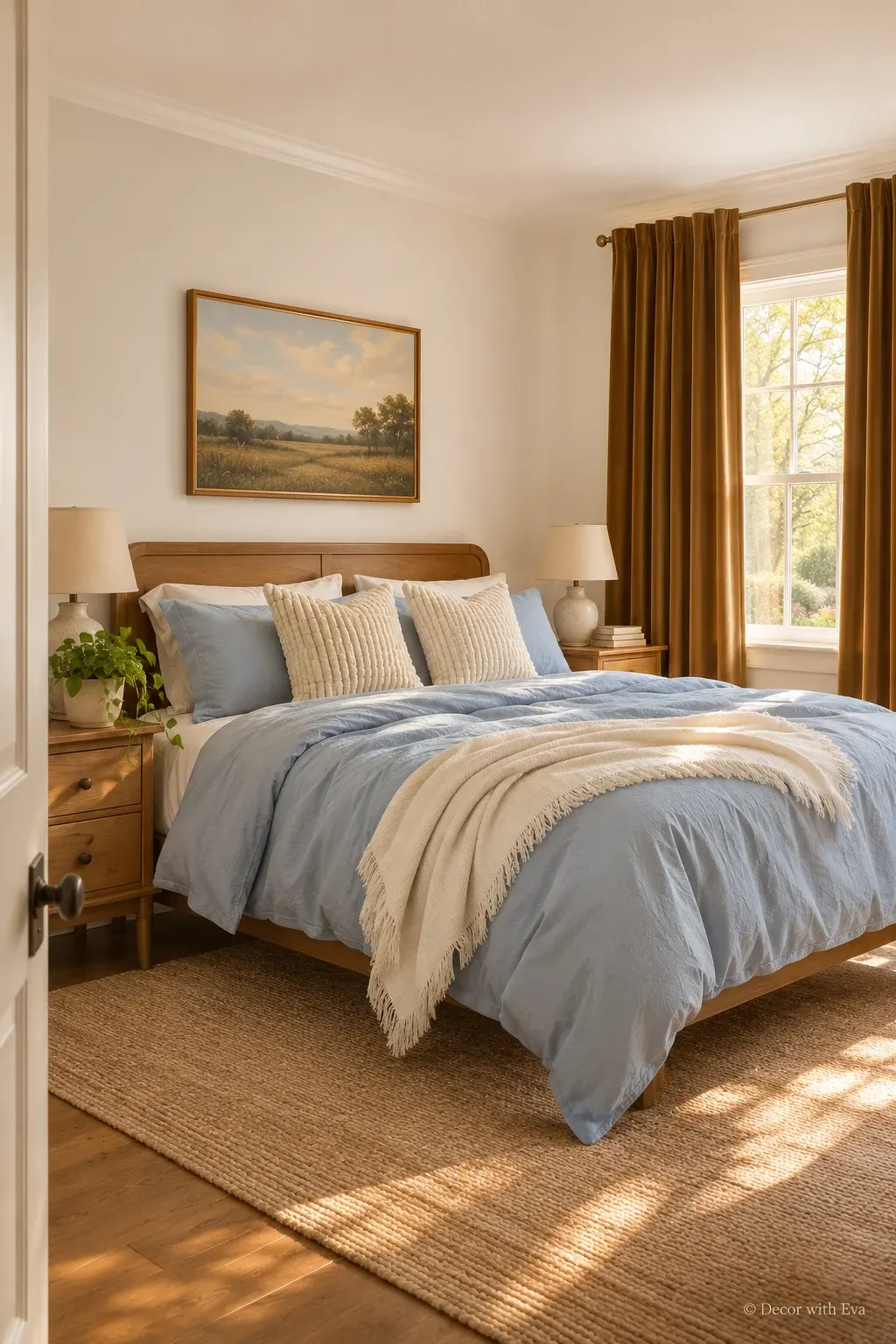
Blue can feel cozy when its neighbors are warm. Cornflower bedding beside golden-brown velvet curtains has a gentle, slightly old-fashioned charm. Cream cushions and honey-colored wood connect the cool and warm shades without making the bed look too carefully matched.
Try the curtain color against your blue bedding in daylight before changing the rest of the room. Each selected curtain panel measures 52 by 84 inches, so compare the pair with your rod width and desired fullness. The blue queen duvet cover needs a separate insert. Use your existing pale sheets beneath it; a little white at the turned-back edge keeps the deeper window color from feeling heavy.
5. A plush winter bed in cream
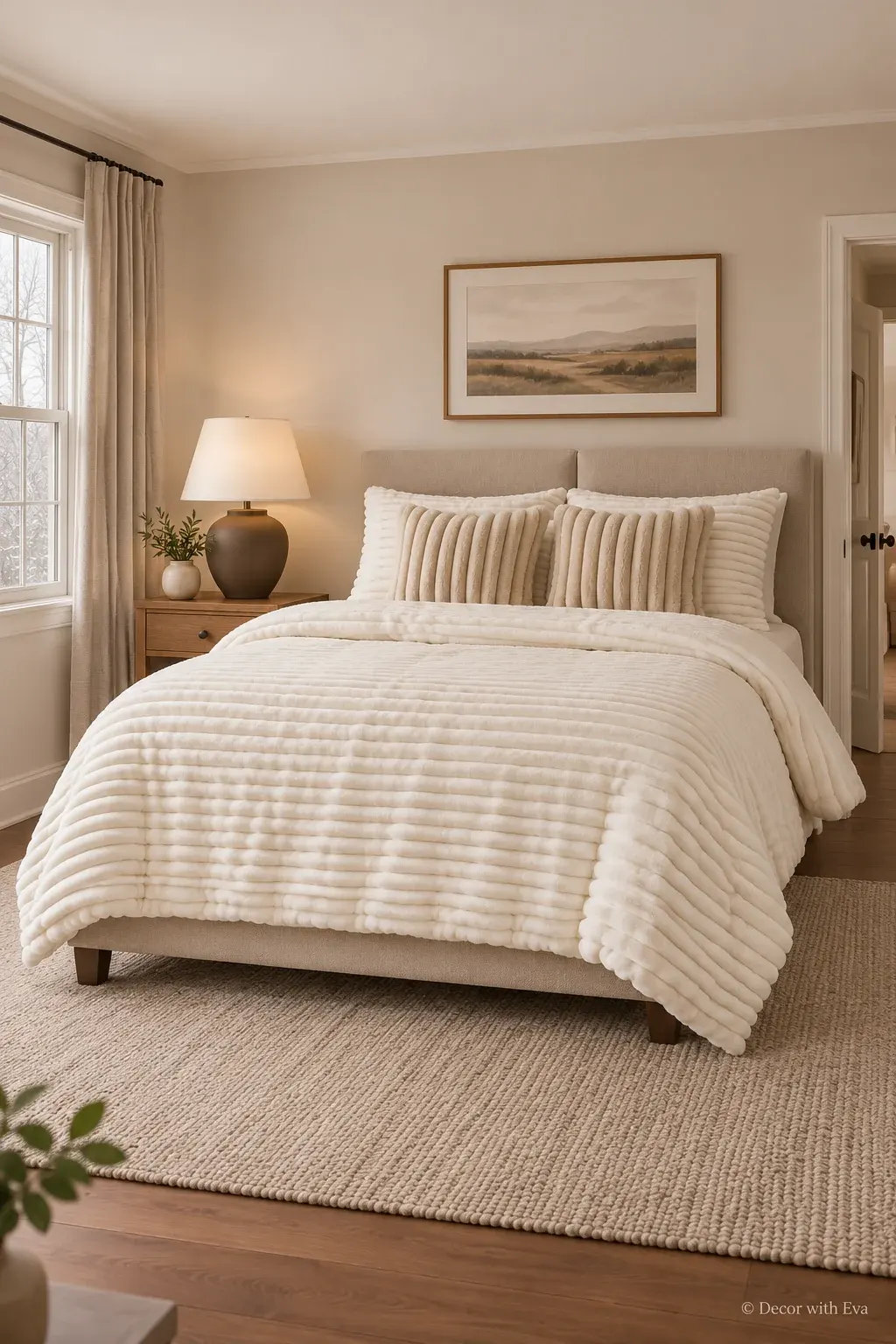
A plush cream comforter makes the bed the obvious place to curl up when the weather turns cooler. Raised horizontal ribs add interest without another print, and a brown ceramic lamp brings enough contrast to stop the room from becoming a blur of pale fabric.
This is a polyester fleece comforter set with filling, rather than a cotton duvet cover. The queen comforter is 88 by 88 inches, so check its drop against your mattress before buying. Keep the decorative cushions to a small pair and choose the amount of bedding that suits your room temperature. A cozy-looking bed can still be easy to make and comfortable to use every night.
6. Vintage red stripes on a quiet bed
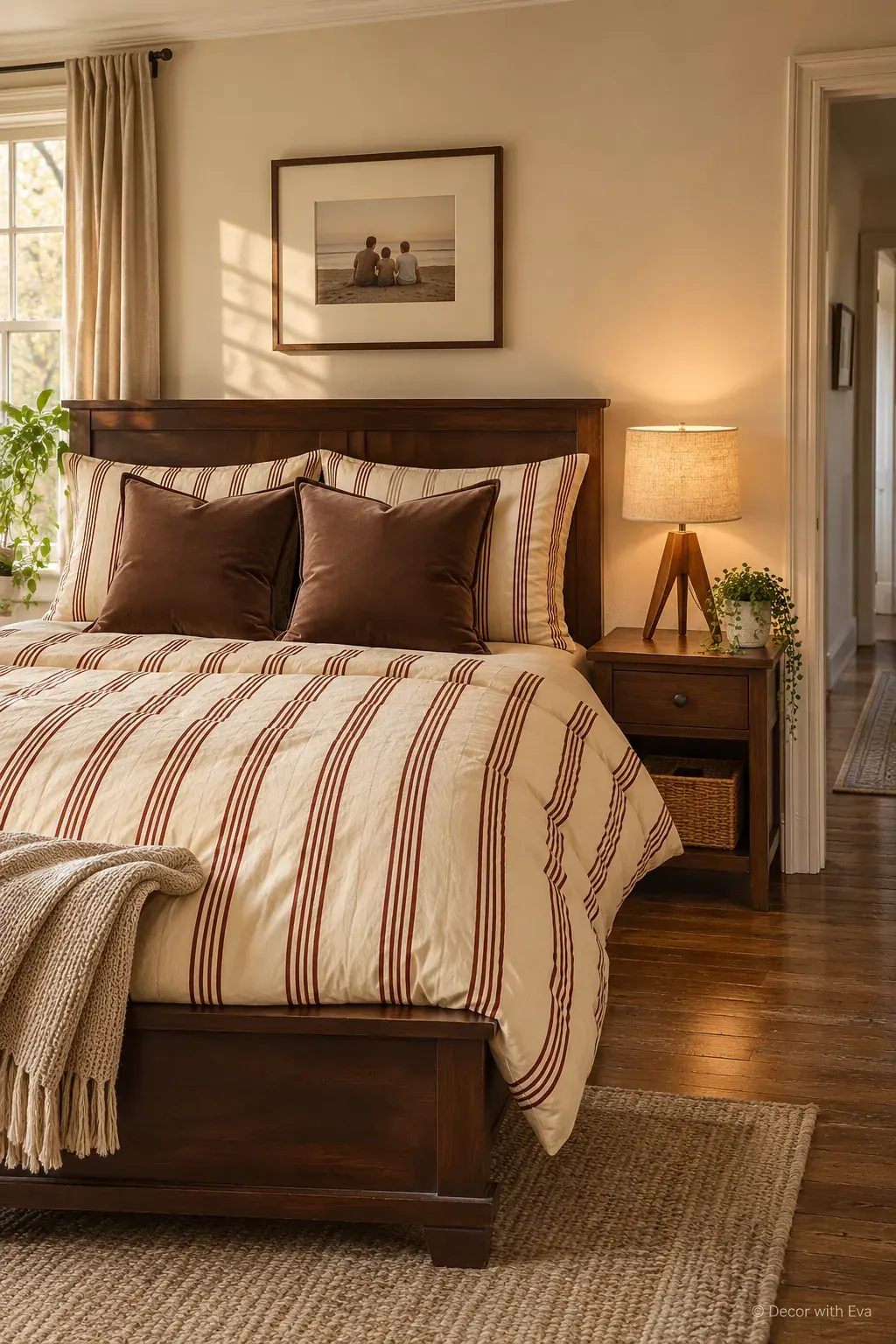
Cream and muted red stripes give a bedroom a collected, vintage feeling. They look lovely against an existing dark wood bed, particularly with chocolate velvet cushions and a small wood lamp. There is enough character in the striped bedding without adding several different florals around it.
Let the stripes be the main pattern, then choose plain curtains and a quiet floor covering. The cotton queen cover is 90 by 90 inches and comes with matching pillowcases; the duvet insert is separate. A brown cushion picks up the deeper lines in the print. If you already have striped bedding, try changing only the cushion covers and bedside light before replacing larger pieces.
7. A cotton bedspread with old-fashioned charm
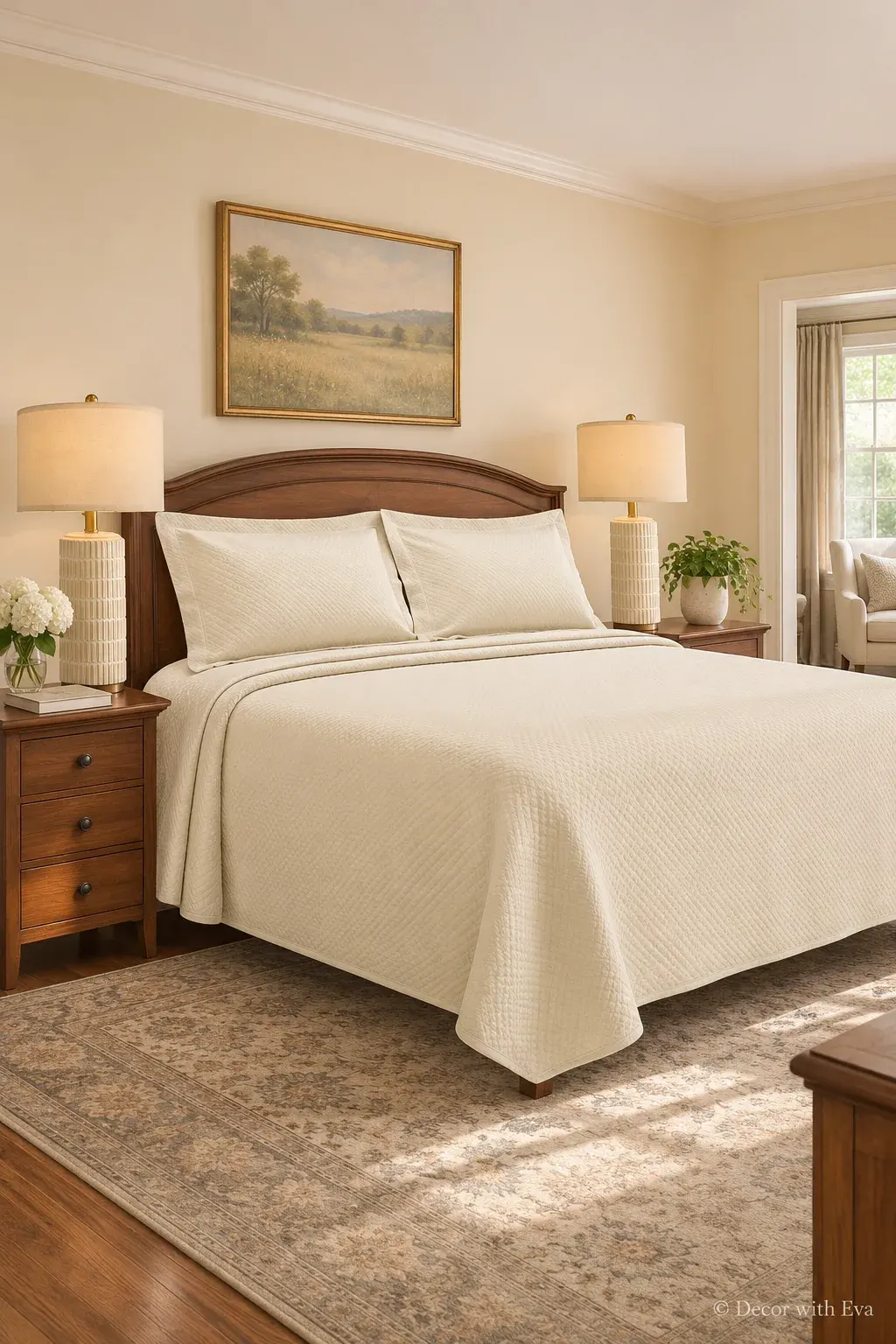
A pale matelassé bedspread has a quieter kind of coziness. Its raised diamond pattern gives an ordinary wood bed a little old-fashioned charm, while matching shams keep the whole surface calm. It is a good direction when you like texture but do not want a very puffy bed.
The ivory option shown is an oversized king cotton bedspread. Compare the actual spread measurements with your mattress width, thickness, and bed height rather than assuming it will reach the floor. Cotton care matters to the finished fit, so follow the wash and dry label. You can borrow the same idea with an existing quilt: smooth the main layer, fold back the top, and keep the pillows simple.
8. Warm greige walls around familiar furniture
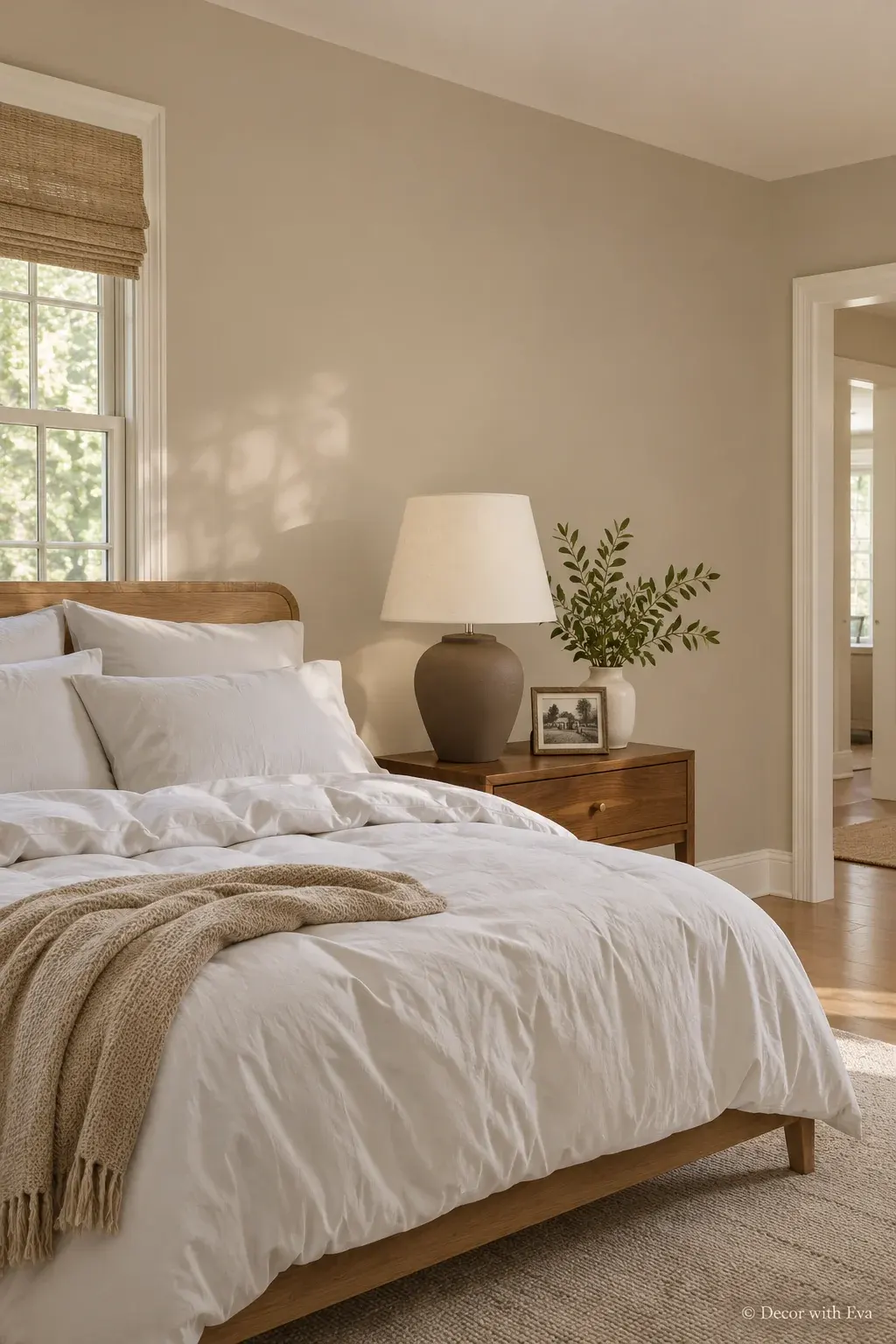
Warm greige walls can make familiar furniture feel more connected. The slight beige note sits comfortably beside brown wood, white bedding, and a pottery-colored lamp. It is a useful option when a room feels cool but you do not want to introduce a strong new color.
Look at a generous sample near the bed, window, and darkest corner before committing. Benjamin Moore’s paint-sampling guidance recommends viewing colors under different lighting conditions. Keep your bedding and a wood sample nearby while you compare. The aim is a wall color that works with your existing pieces through the day, rather than one that looks right only on a screen.
9. Light layers for a room that already feels warm
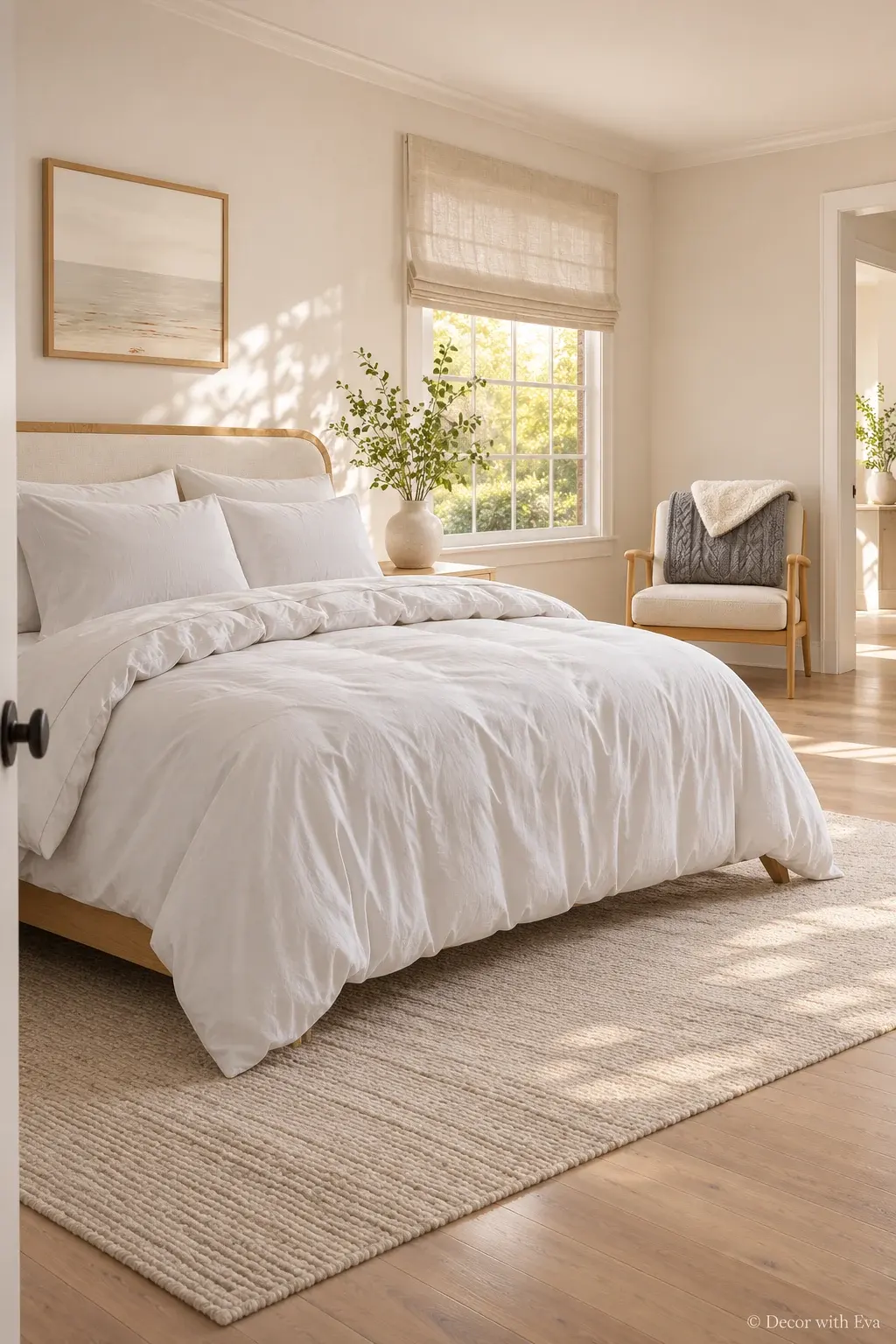
A room can look cozy without having every warm blanket on the bed. White washed cotton, a soft fold at the top, and an extra throw nearby give you texture and flexibility. This lighter arrangement is particularly appealing in a bedroom that already stays warm.
Make the bed with the layers you use most often, then keep an additional blanket on a chair or in storage. Match the duvet cover to the insert’s actual measurements, not just the queen label. Smooth the sleeping area and let the decorative fold stay relaxed. If you share the room, keeping a separate throw within reach can be more useful than adding another heavy layer across the entire bed.
10. One chunky-knit throw at the foot of the bed
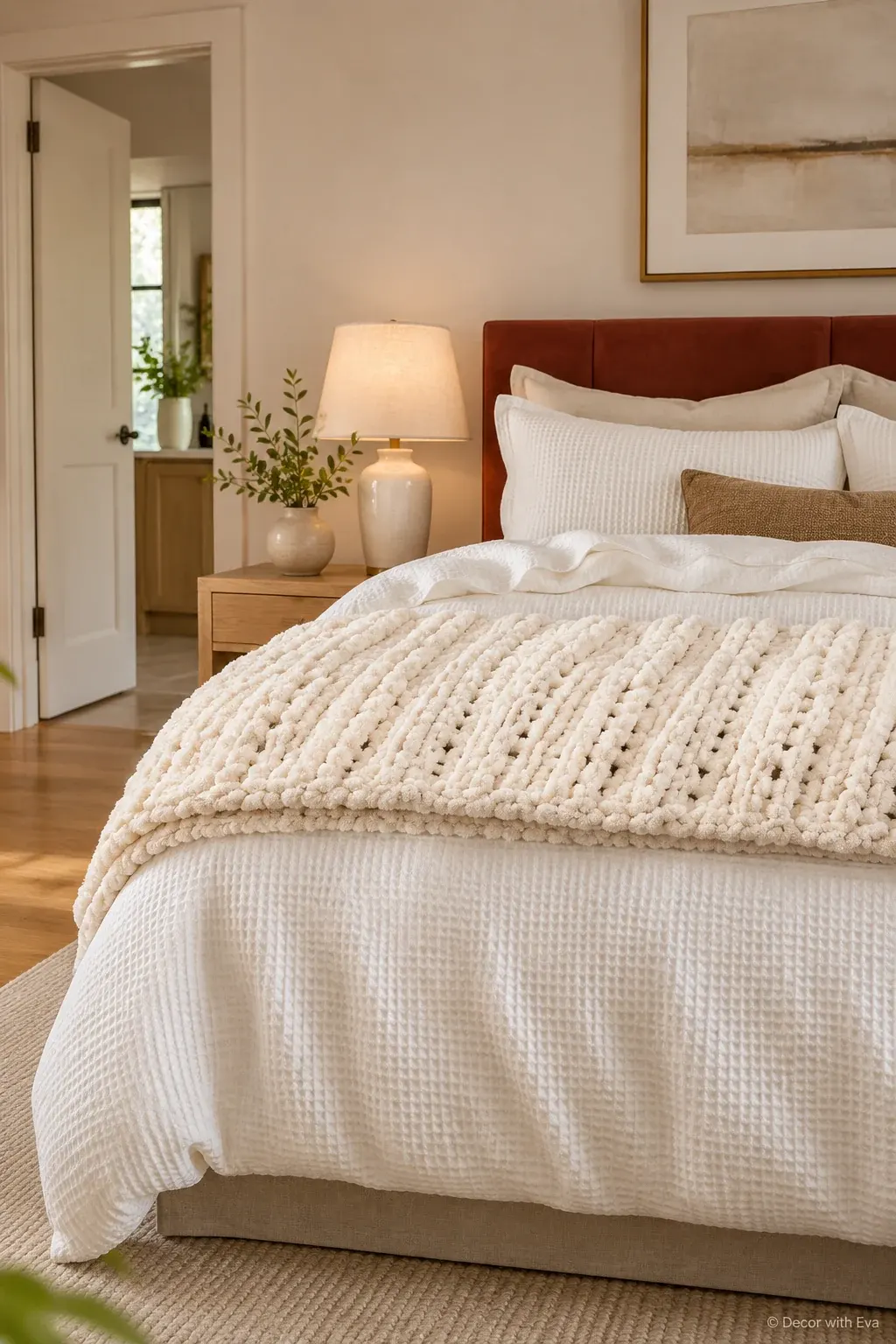
One chunky-knit throw can give a plain bed a soft focal point. Against small waffle texture, the larger loops are easy to see, even when both fabrics are ivory or white. Folding the throw neatly lets the texture show without hiding the bedding underneath.
A 50-by-60-inch throw works as an accent across part of a queen bed, rather than a full cover. Fold it lengthwise and place it near the foot, or let one end fall a little over the side. Keep the drop off the walking route and take care with anything that might catch the open loops. If you already own a knitted blanket, this is an easy styling change to try today.
11. Cable knit and sherpa for a winter corner
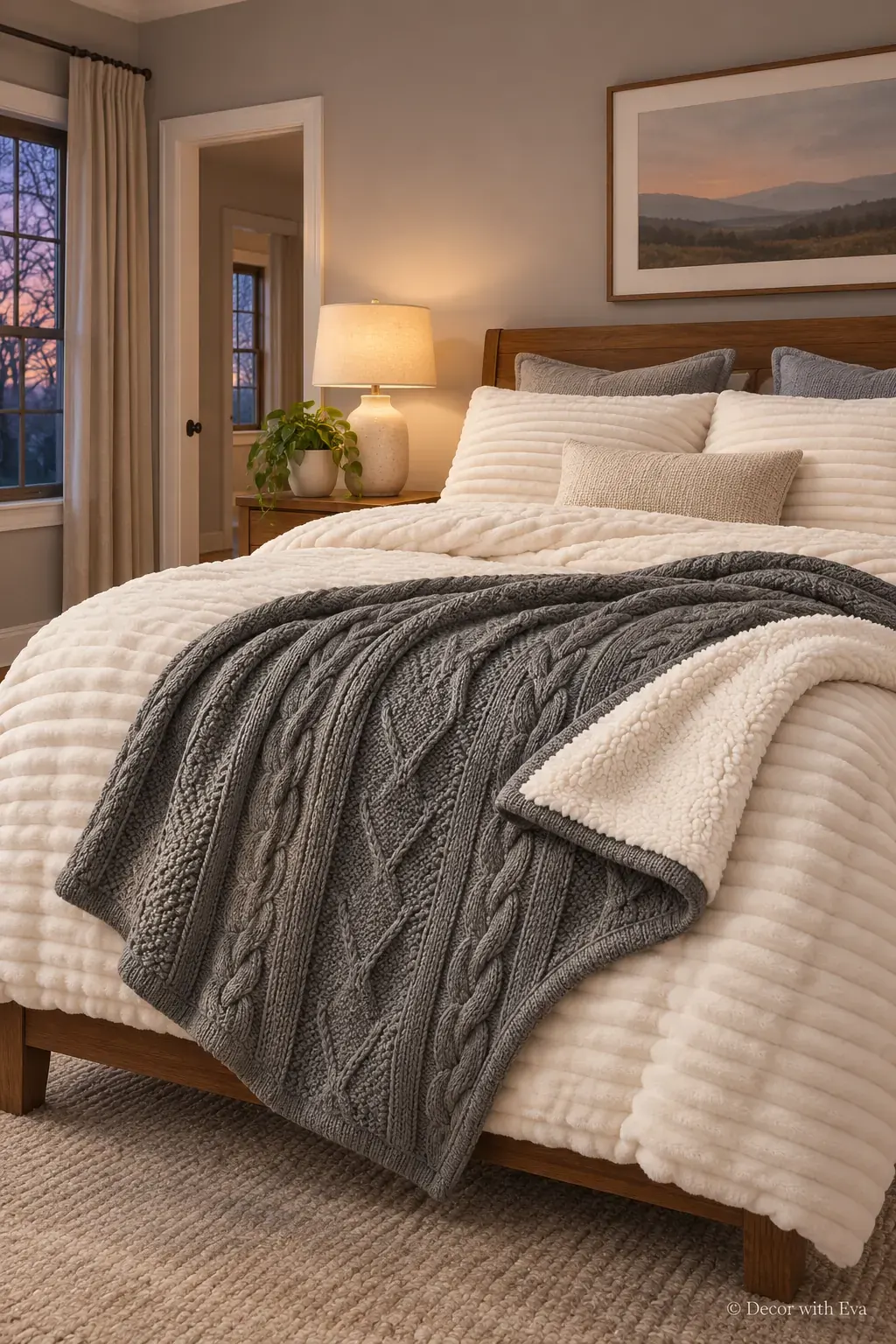
Cable knit and sherpa bring a sweater-like feeling to a winter bedroom. A gray knitted face adds a little definition against cream bedding, and turning back a corner reveals the pale fleece underneath. The contrast comes from the materials rather than a busy color scheme.
Use the smaller throw where you will actually reach for it: across the foot of the bed or folded beside your favorite sitting spot. This gray option has an acrylic knit face and sherpa reverse, rather than wool. Check the care label before washing and store it when you prefer a lighter bed. You can keep the same room palette through the year while changing only the weight and texture of the layers.
12. A simple two-size pillow arrangement
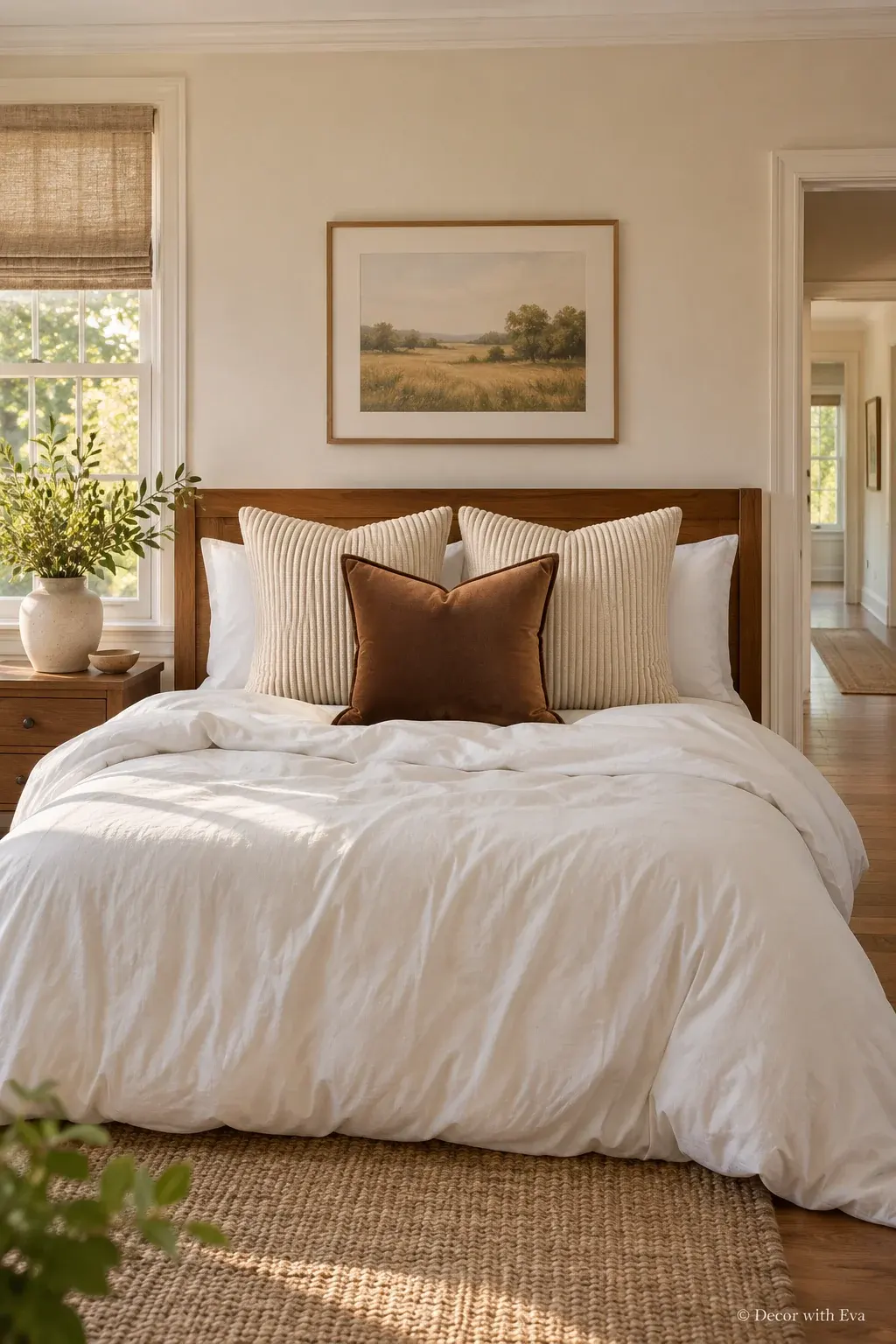
A few pillows in two sizes can look more inviting than a long row you have to remove every night. Larger beige corduroy cushions give the back of the arrangement some shape. One smaller brown velvet cushion adds depth in front without hiding the whole headboard.
Here, 22-inch covers sit behind an 18-inch accent. Keep the sleeping pillows behind them and stop when the arrangement looks complete. The decorative covers need separate inserts, so check both measurements before ordering. Reuse the inserts you already have where they fit. Give the cushions a simple overnight home on a bench or chair so the daily routine stays easy.
13. Rust cushions that warm up white bedding
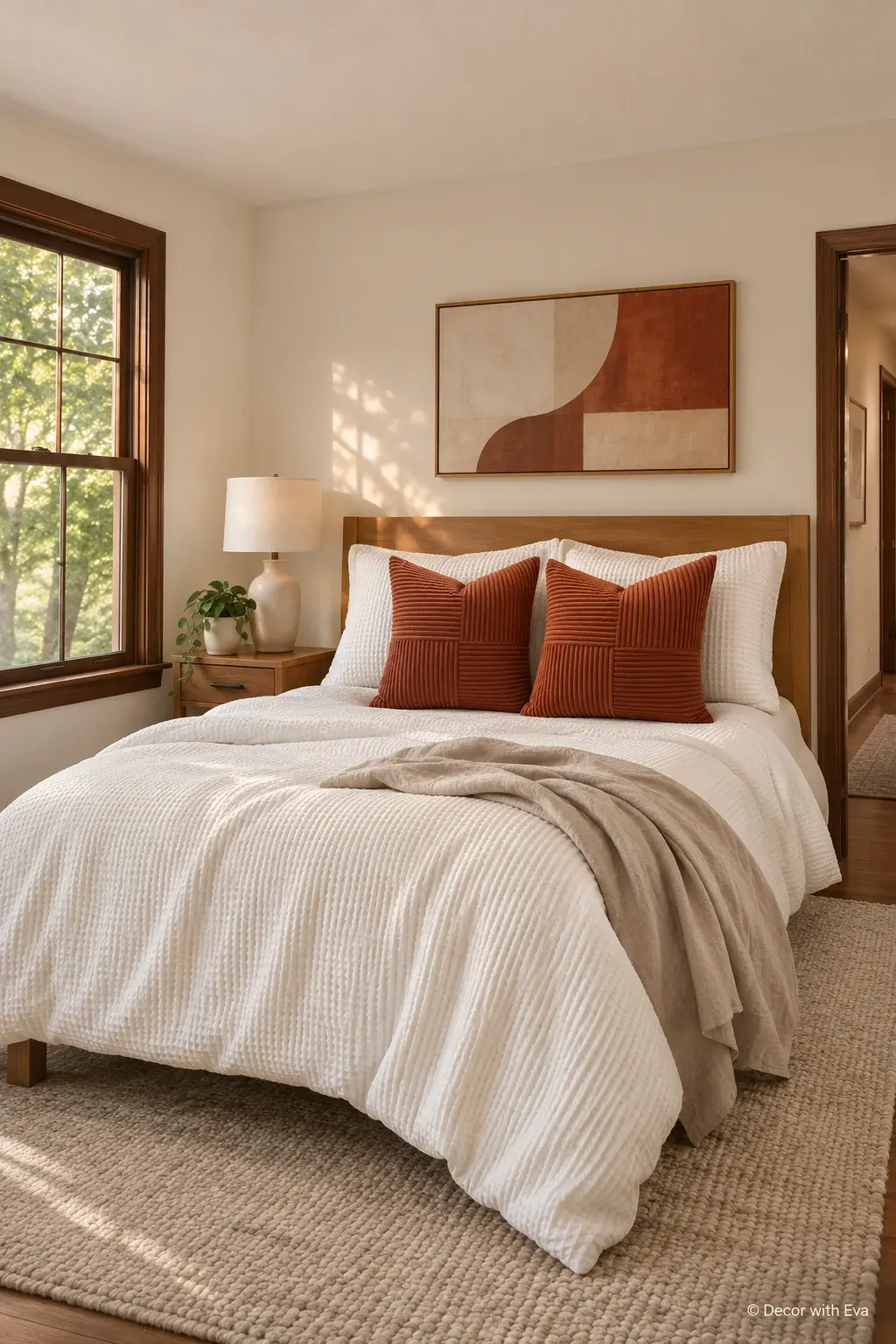
Rust cushions make white bedding feel warmer with very little effort. The color is rich enough to catch your eye, and the direction-changing corduroy adds another small layer of texture. Wood furniture is a natural partner for the terracotta tone.
Try just two covers at the front of the bed, with plain white shams behind them. The selected 18-inch covers have a patchwork rib pattern on the front and a plainer reverse; inserts are separate. Repeat rust only if the room needs it, perhaps in a book jacket or a small piece of art. An existing warm-toned blanket can create a similar effect without another purchase.
14. A tall upholstered headboard as the main feature
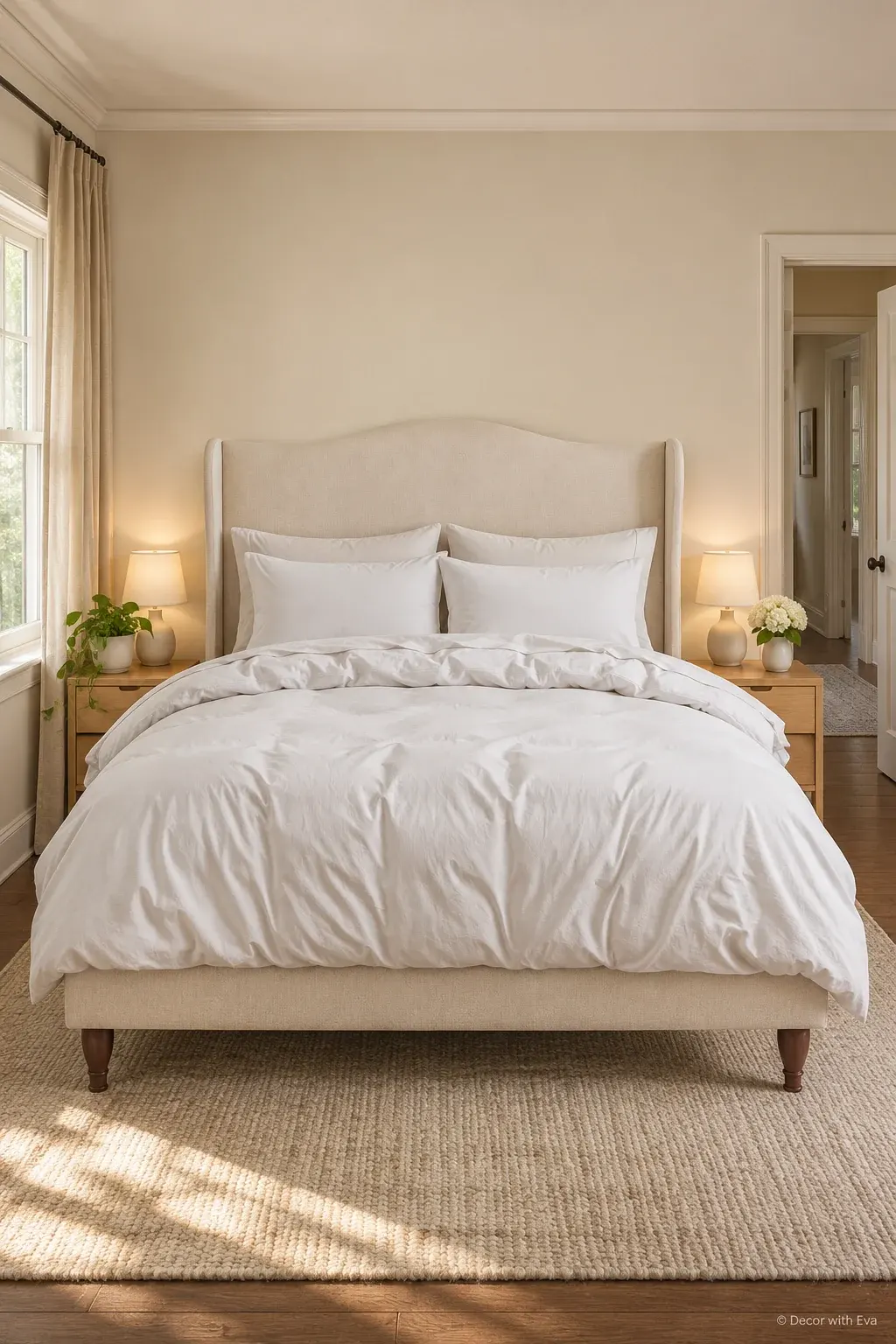
A tall upholstered headboard can be the main decorative feature in a calm bedroom. Its soft edges give the bed a welcoming outline, while a plain wall leaves room to appreciate the shape. There is no need to fill the space above it with more large objects.
The beige wingback bed shown has a 51-inch overall headboard height. Compare that with your mattress thickness so enough of the upholstery remains visible. Measure the complete outside frame, including the wings, before fitting bedside tables around it. Check the bed’s support details against your mattress requirements too. If you like your current bed, a simpler pillow arrangement may reveal more of the headboard you already own.
15. A lower chevron headboard in a compact room
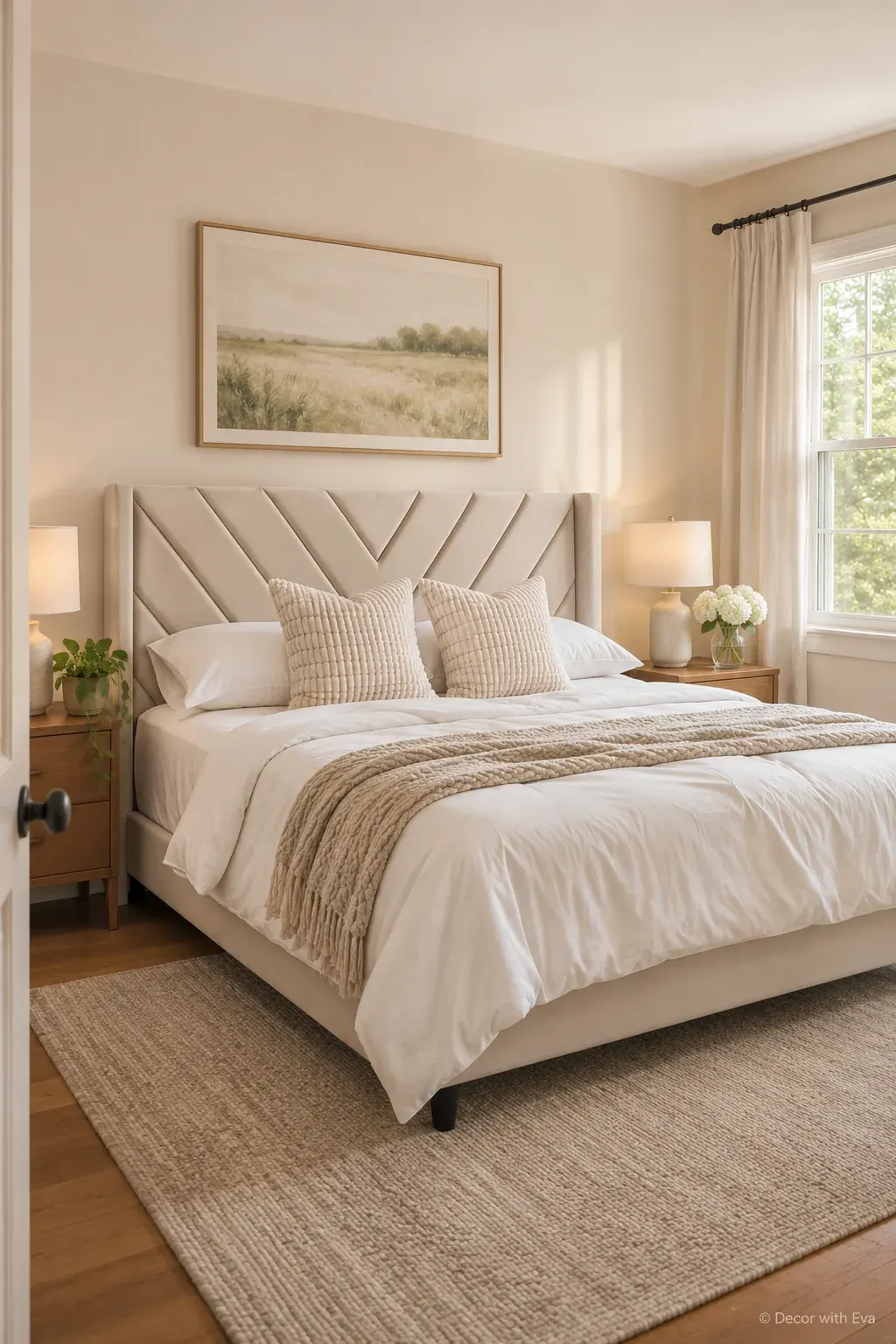
A lower upholstered bed can make a compact master bedroom feel comfortable and open. Chevron channels add interest without a large print, and the pale velvet sits gently against warm walls. Keeping the bedding fairly simple lets the low headboard remain visible.
This queen frame is about 41 inches high overall, so a deep mattress and tall pillow pile will cover much more of the design. Measure the whole frame and leave space to walk beside it and open nearby doors. Check the listed slat spacing with your mattress manufacturer before choosing the base. A smaller room often benefits more from a well-proportioned bed than from adding extra furniture around it.
16. Warm wood bedside drawers
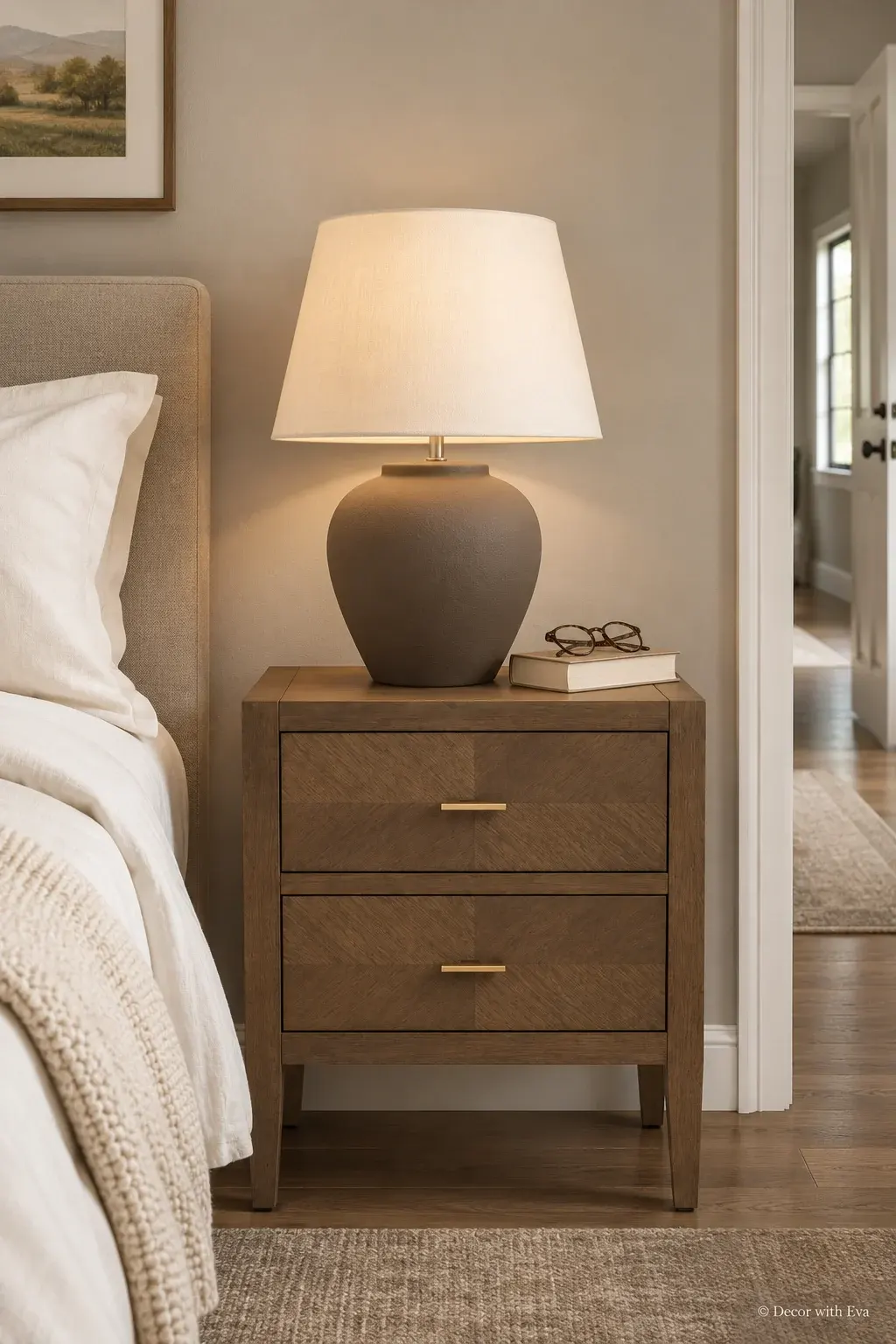
Warm wood drawers can make the bedside feel both cozy and useful. A deeper brown finish adds definition beside pale bedding, while simple gold pulls provide a small change in texture. With the everyday bits tucked away, the top needs little more than a lamp and a book.
These nightstands measure 19 inches wide, 18 inches deep, and 23½ inches high. Compare the height with your mattress and check that the drawers can open comfortably. Their construction includes a solid wood frame with veneered MDF panels, rather than being solid wood throughout. If your current table already has storage, clear its top first; that small reset may give you the same calmer effect.
17. A fluted nightstand with breathing room
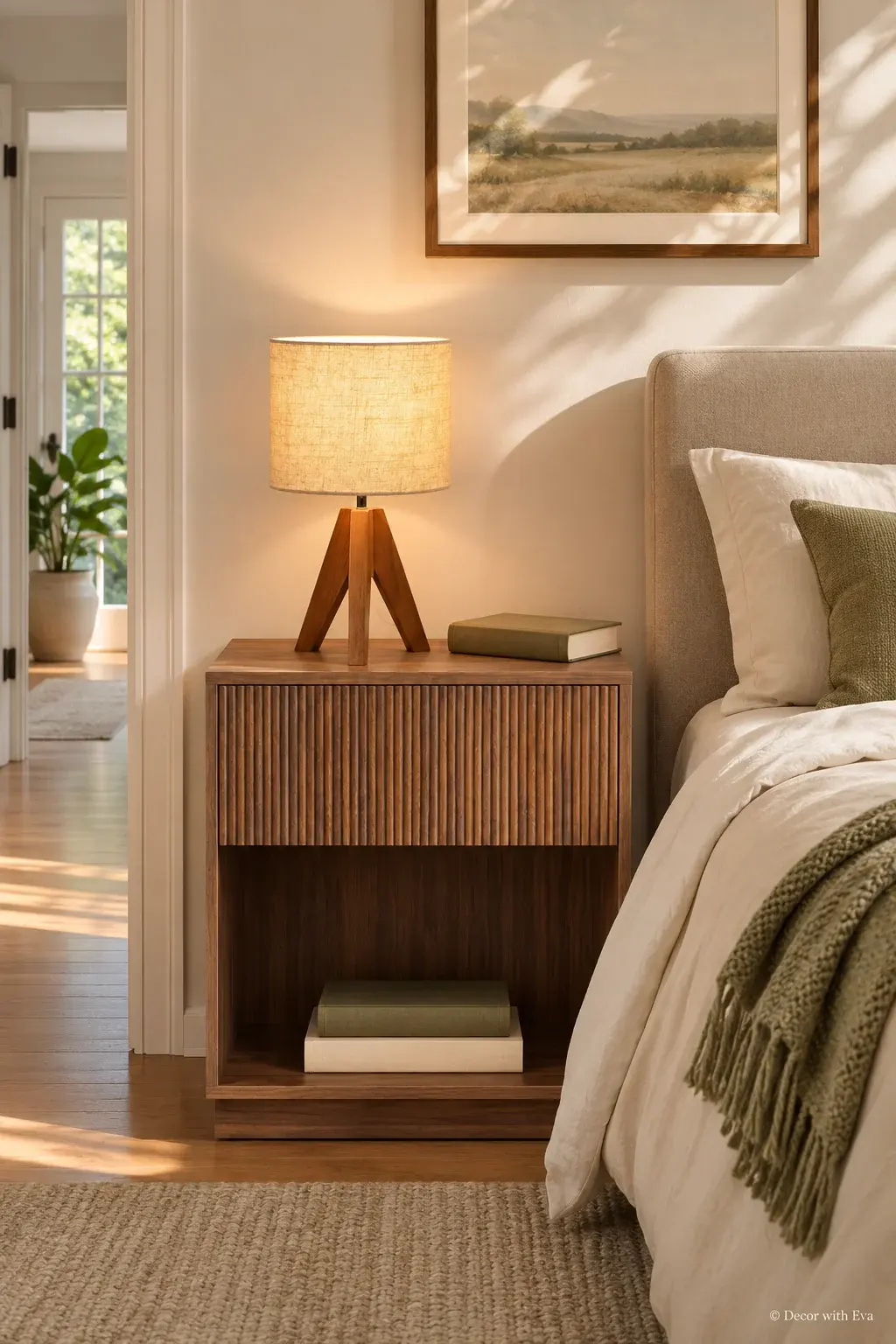
A fluted drawer front adds texture at the bedside without another fabric pattern. The open shelf underneath can hold a short stack of books while the drawer takes the less attractive essentials. A small tripod lamp keeps the upper surface from looking crowded.
Choose the walnut finish to carry this warmer look, and compare the full dimensions with the space beside your bed. These tables are MDF and need assembly. Leave the lower shelf partly empty rather than turning it into a display cabinet. Before replacing a table, try removing the items that belong elsewhere; a useful lamp and one current book may be all your bedside needs.
18. Matching ceramic lamps for a settled look
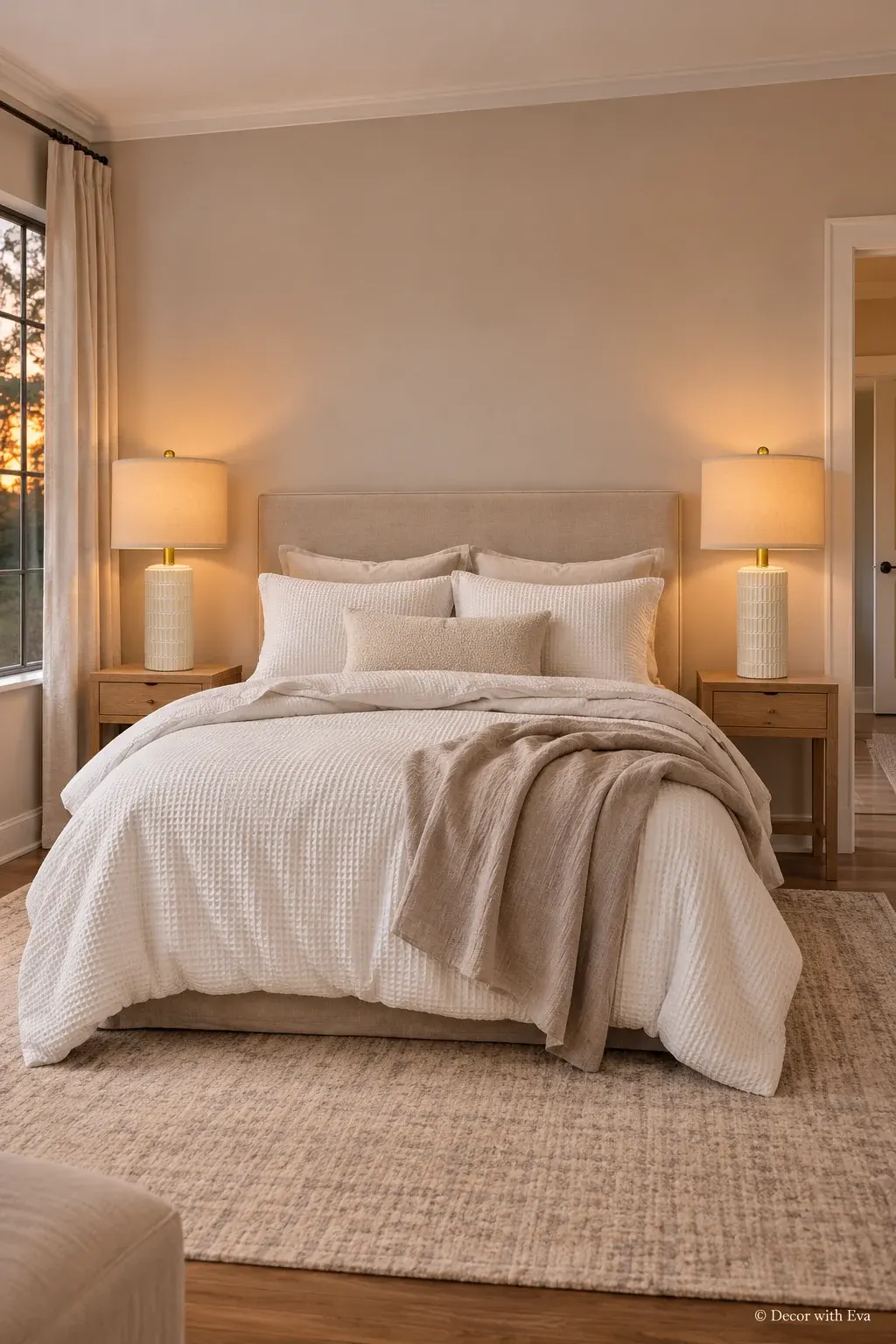
Matching ceramic lamps give a bedroom an easy sense of order. Repeating the shade shape on both sides of the bed makes the larger arrangement feel connected, even when the bedding is casually folded. Ribbed white bases add detail without competing with a headboard or rug.
The selected pair stands 20¾ inches tall and needs shade assembly. Check the shade width against each table and leave enough room to reach the switch. Choose compatible bulbs according to the fixture label, then compare their light before adding more lighting elsewhere. You can use the same idea with two lamps you already own by bringing their shade colors and heights into closer balance.
19. One brown ceramic lamp for evening warmth
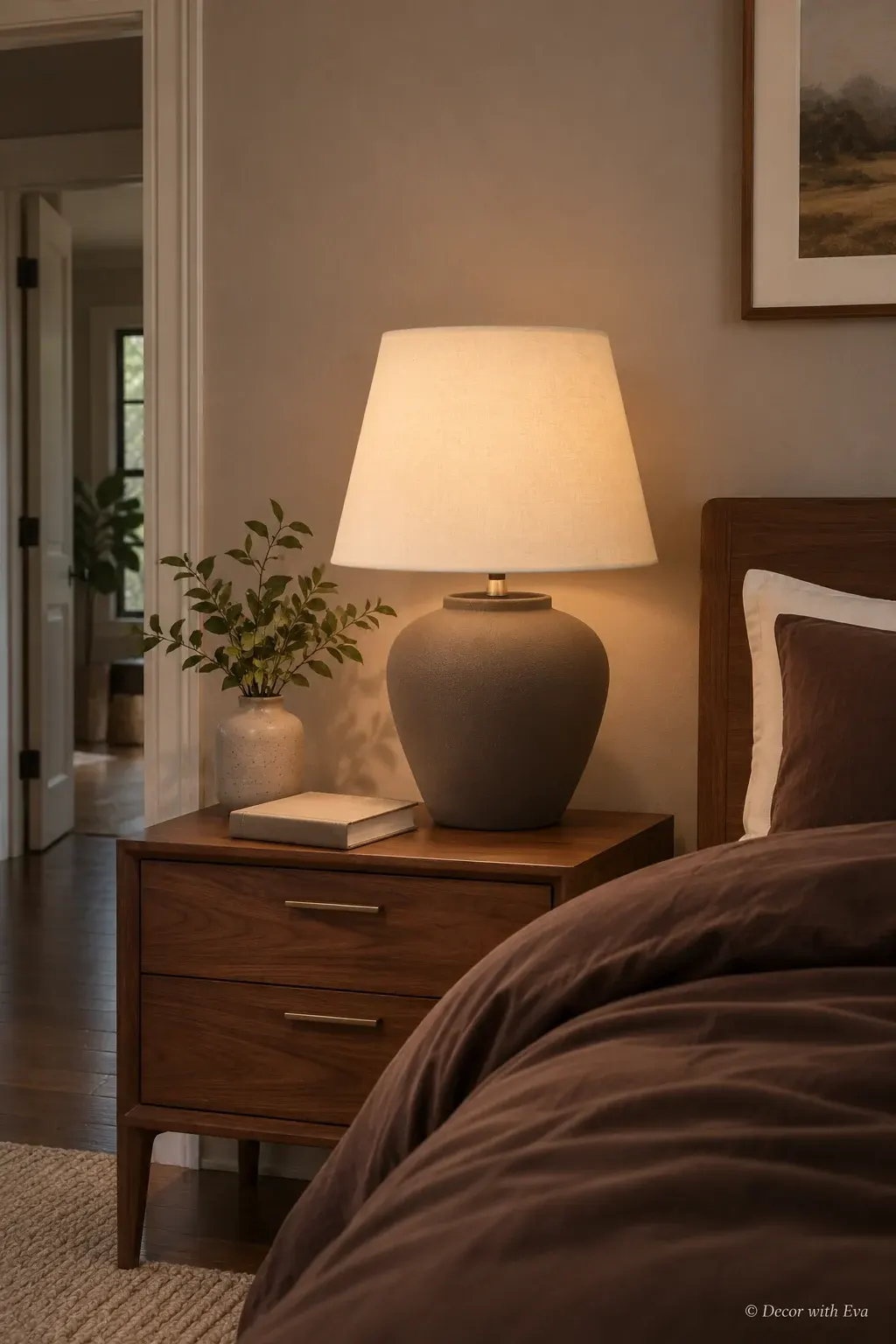
A brown ceramic lamp can make an ordinary bedside feel especially inviting after dark. The pottery-like base relates to wood furniture, and an off-white fabric shade keeps the light gentle in appearance. It is a lovely small detail beside chocolate or cream bedding.
This lamp is 20 inches tall with a 14-inch overall width, so it needs a table that can comfortably hold the shade as well as the base. A bulb is separate; use a compatible option within the fixture’s limits. Keep the rest of the tabletop quiet so the lamp has space. Try your existing bedside light in the evening before deciding whether you need a different size or simply a more suitable bulb.
20. A smaller lamp for a narrow bedside surface
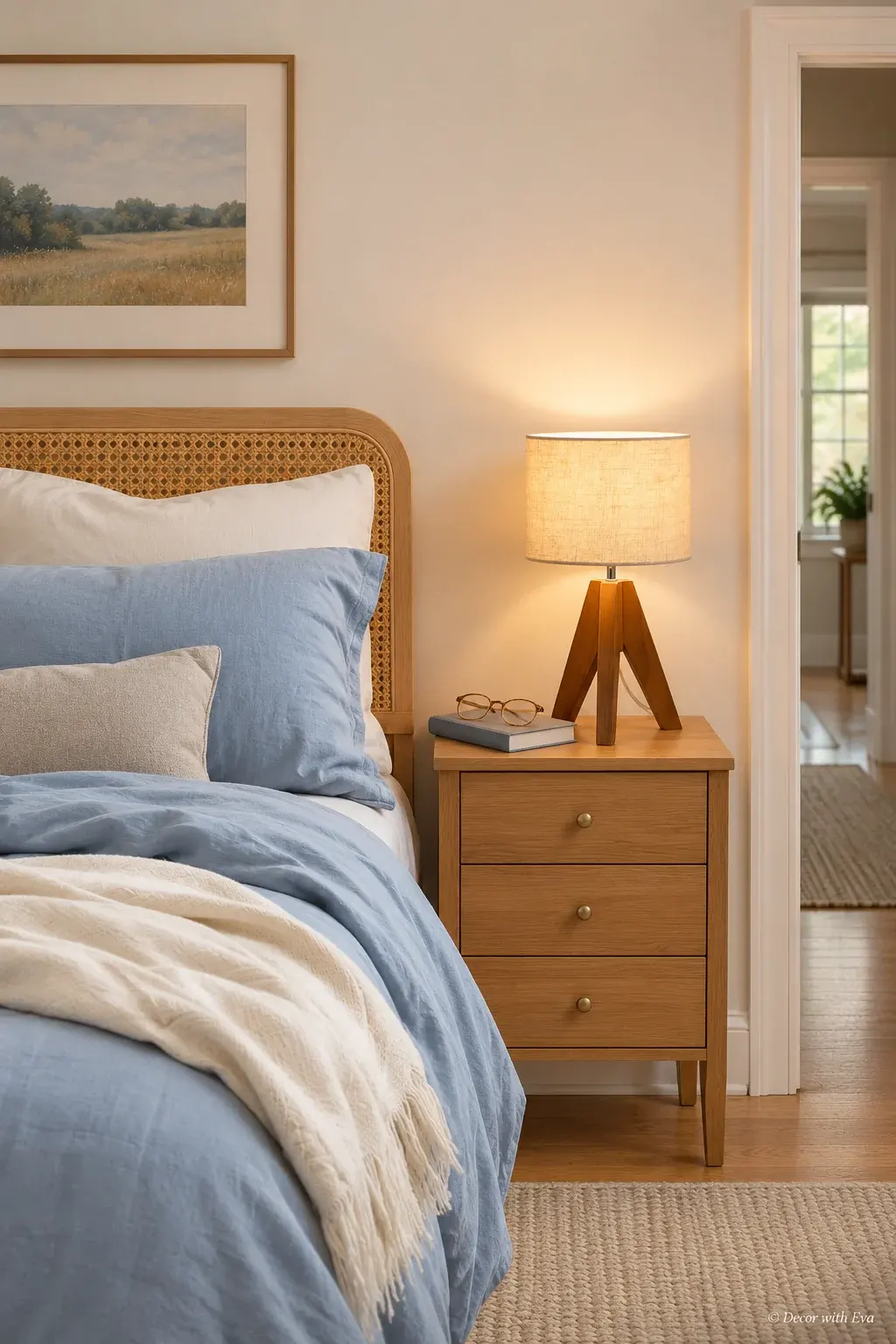
A little wooden tripod lamp can suit a narrow bedside where a large ceramic base feels crowded. The legs bring warmth and shape, while a simple fabric cylinder keeps the outline tidy. It leaves room for the small things you need before turning in.
At about 14 inches high, this is a compact accent lamp rather than a tall statement piece. Compare its 7⅞-inch width with your table and check the shade position from the bed. It takes a separate compatible E26 bulb and has a cord switch. Place the cord where you can reach the control without pulling the lamp toward the edge.
21. Brass reading sconces beside the bed
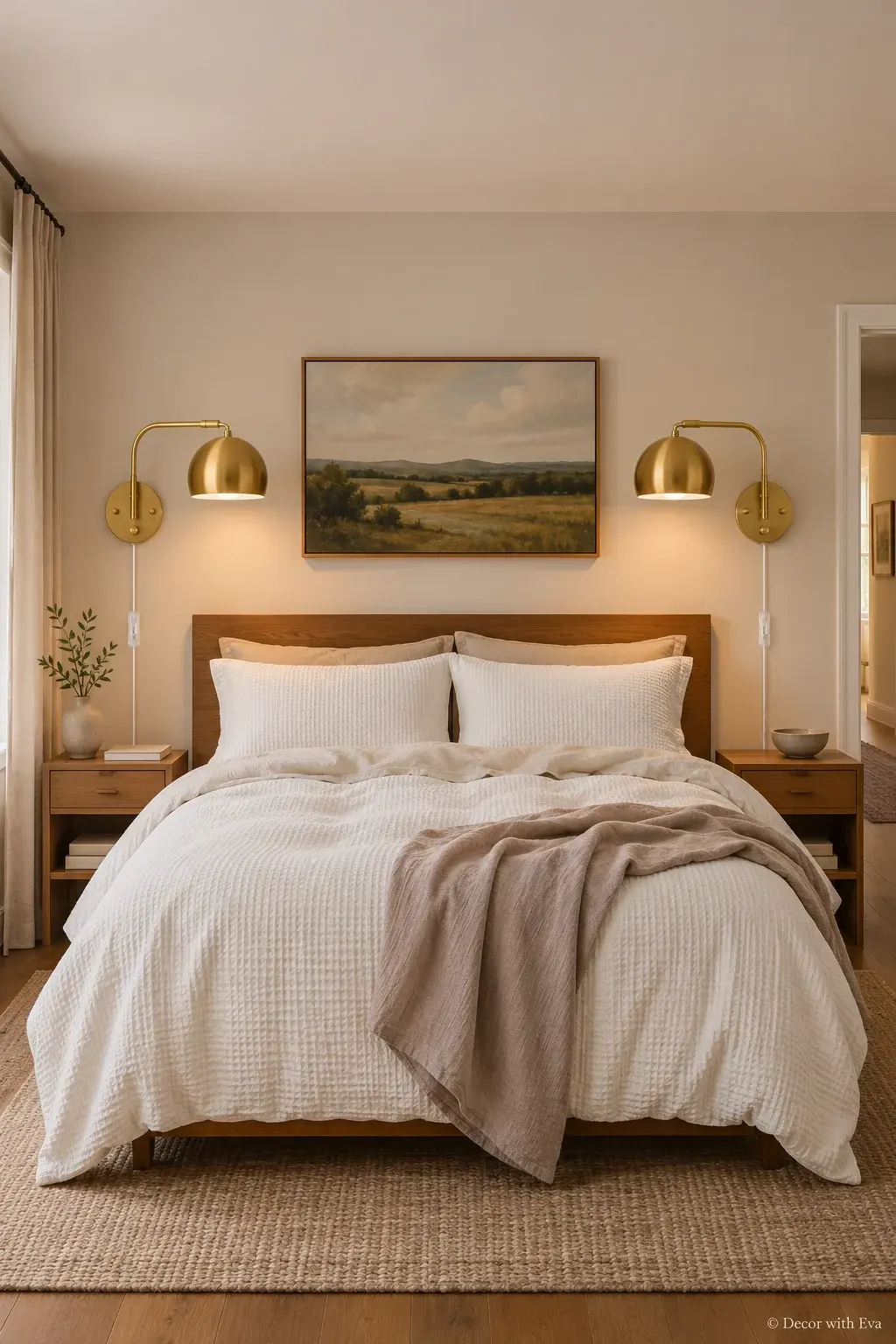
Brass reading sconces can give the bedside a warm glow while freeing the table below. A pair of rounded metal shades adds a clear outline against a pale wall. The look feels especially calm with plain white bedding and a simple wood headboard.
Plan their positions while sitting in bed, checking the light direction and where you can reach the controls. These plug-in swing-arm sconces include dimmable warm-white bulbs listed at 2700K. Philips Hue’s color-temperature explanation is useful when comparing warmer and cooler light. Follow the fixture’s mounting directions and route the cords neatly away from the bedding. Use qualified help if you choose a wired installation.
22. Fabric-shade sconces with a softer outline
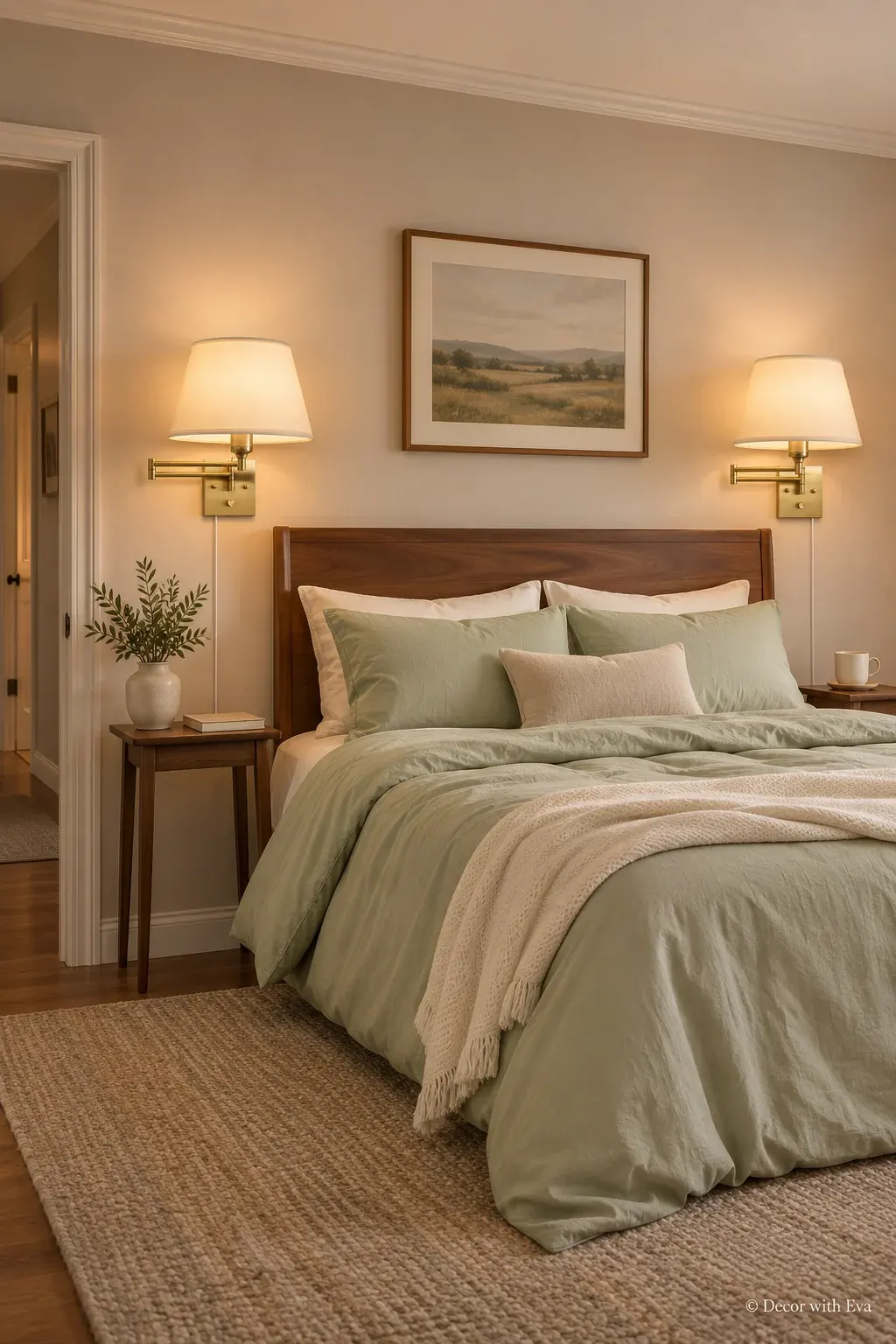
Fabric-shade sconces have a softer outline than an all-metal reading light. They can make a plain wall feel dressed without adding more furniture, and their warm brass arms sit beautifully beside sage bedding. The repeated pale shades give the bed a gentle frame.
These shades are about 11¾ inches across, so include their full width and arm movement when planning the position. Keep them clear of curtains and pillows, and follow the installation instructions for your wall. The plug-in cords need a sensible route to an outlet. If you rent, check the permitted fixings before choosing wall lights; table lamps may give you the same warm balance with fewer changes.
23. A quiet pool of light in an empty corner
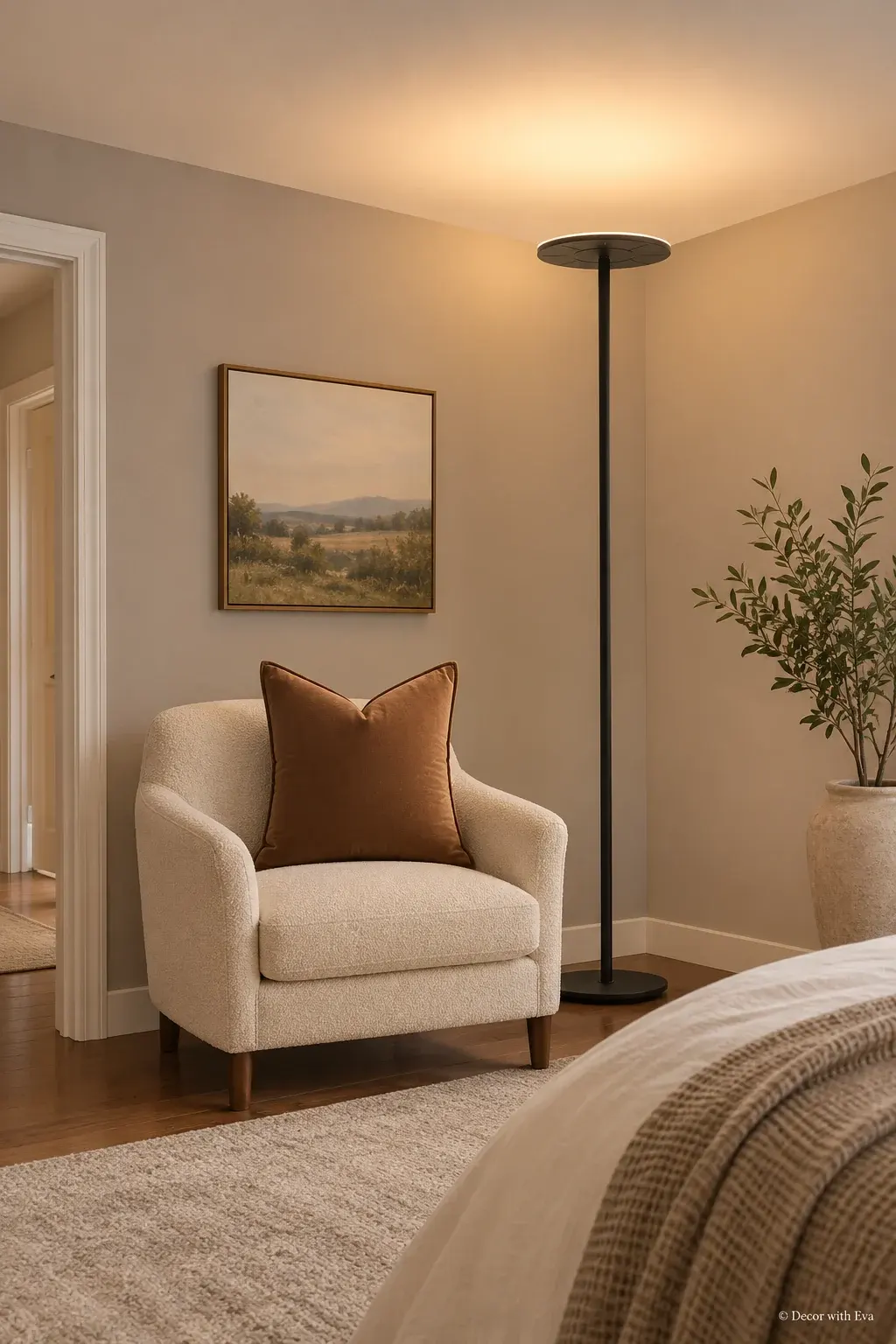
One quiet pool of light can make an unused bedroom corner feel part of the room. An uplight sends its glow toward the ceiling, giving the walls a softer background after sunset. A chair or a small piece of art nearby can then feel more intentional.
The black floor lamp shown uses an integrated 3000K LED and has three brightness levels. Treat it as ambient light, with a separate suitable light if you read in that corner. Position the base on a stable patch of floor and keep the cord out of the route around the bed. Try the lowest useful setting in the evening before adding more decorative lights.
24. Linen-blend panels that soften daylight
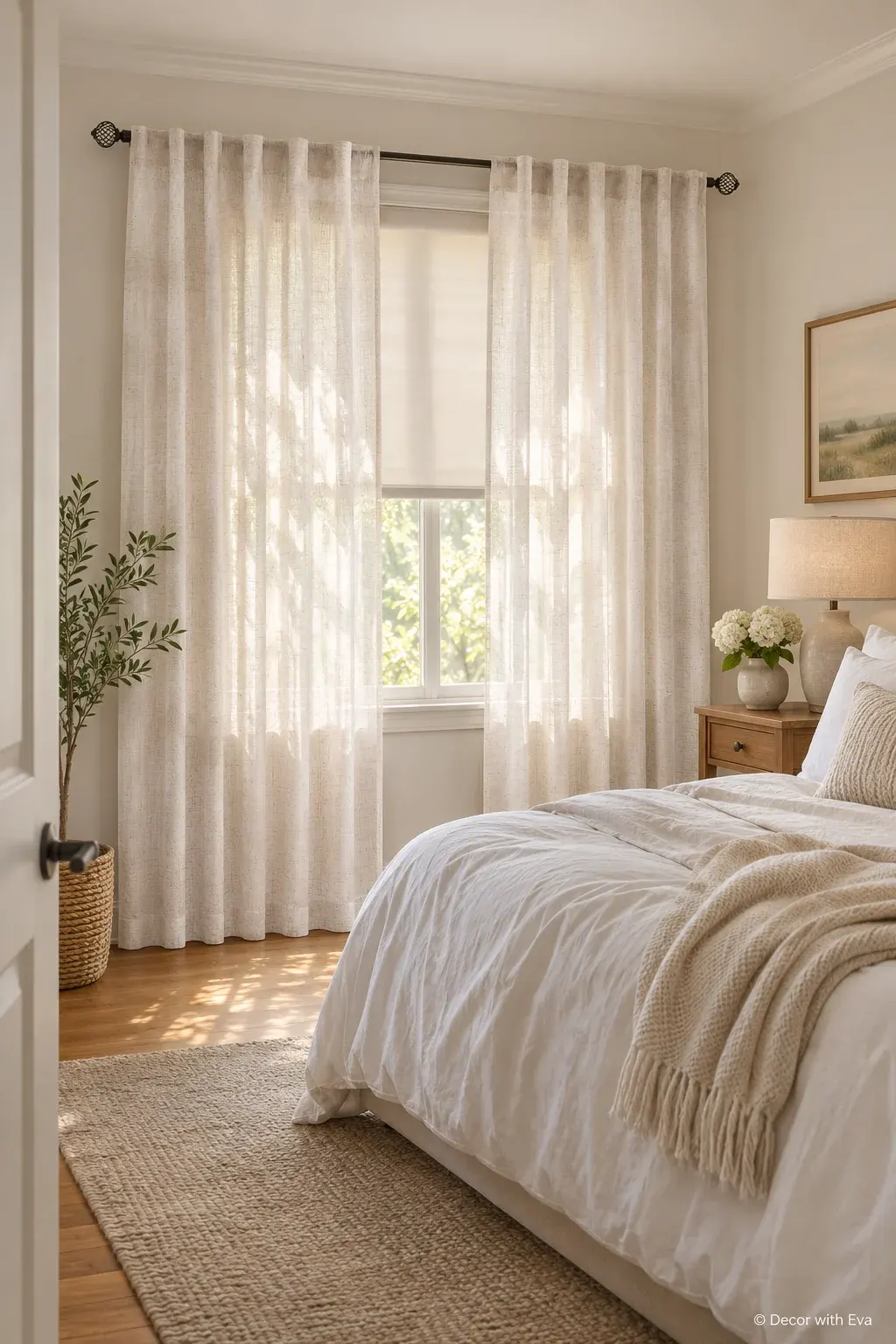
Linen-blend panels make daytime light feel softer around the bed. Their loose-looking weave adds texture even in a very simple room, and a natural white is easy to live with alongside warm wood. The window stays part of the decoration without becoming the main feature.
These panels blend linen and polyester and measure 52 by 84 inches each. Compare the length with the actual rod position rather than choosing by ceiling height alone. Semi-sheer curtains filter light, but they may not give the privacy you want after dark. Keep an existing blind or add a separate suitable privacy layer where needed. Plain panels can work with bedding you already like, so there is no need to change both together.
25. A linen-look blackout layer at night
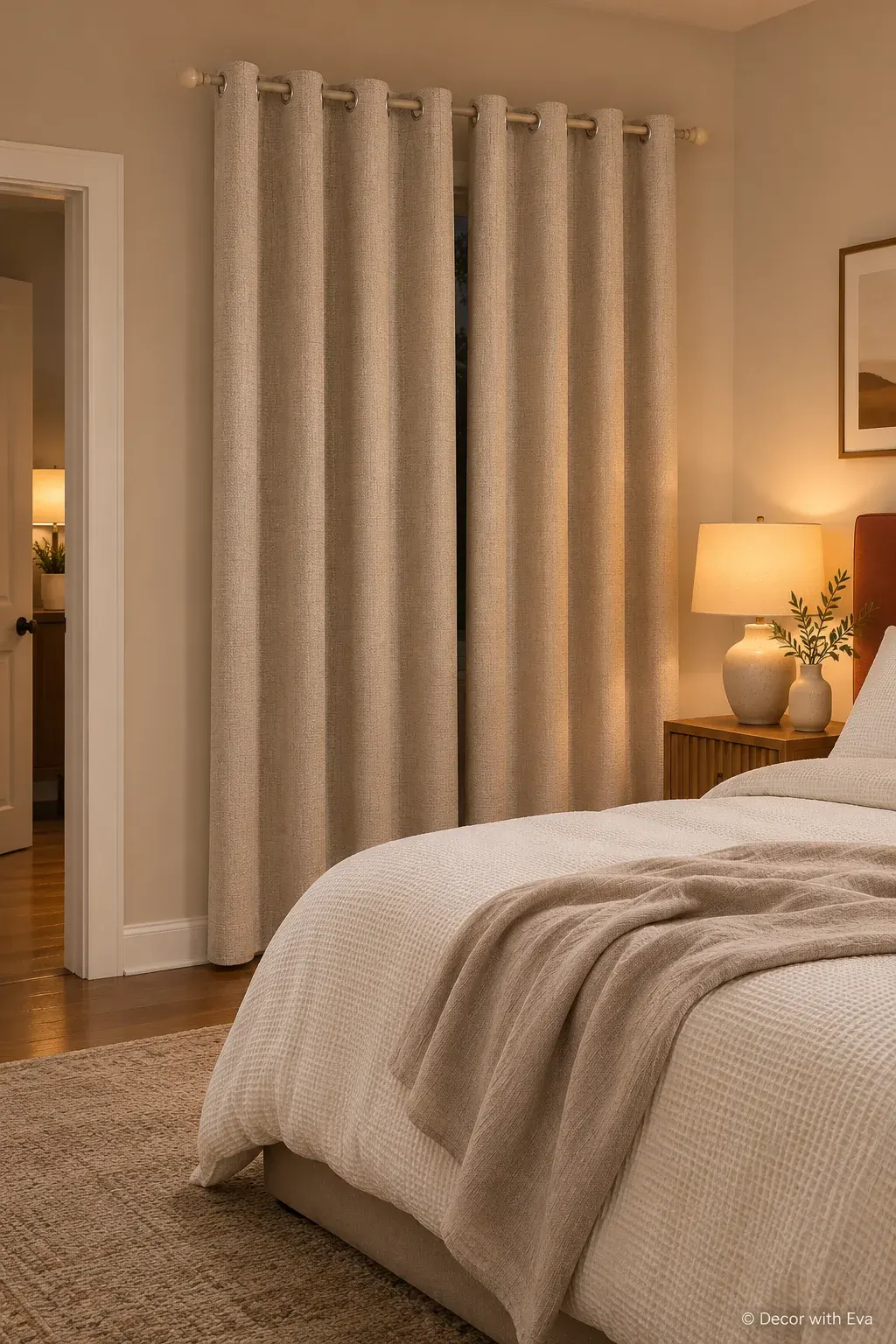
A linen-look curtain can give the window a softer finish when you want more light control. Natural beige sits comfortably with white bedding and warm walls, and the folds add a little body to an otherwise quiet corner. It is a practical change that also affects the room’s appearance.
The selected panels are faux linen with grommet tops, rather than pure linen. Check the 52-by-84-inch panel size, the rod fit, and the coverage around your window. Light can still enter around curtain edges, so judge the complete installation rather than relying on a blackout label alone. Let hems clear the floor and keep the fabric away from heaters and lamps.
26. Velvet outside and sheers inside
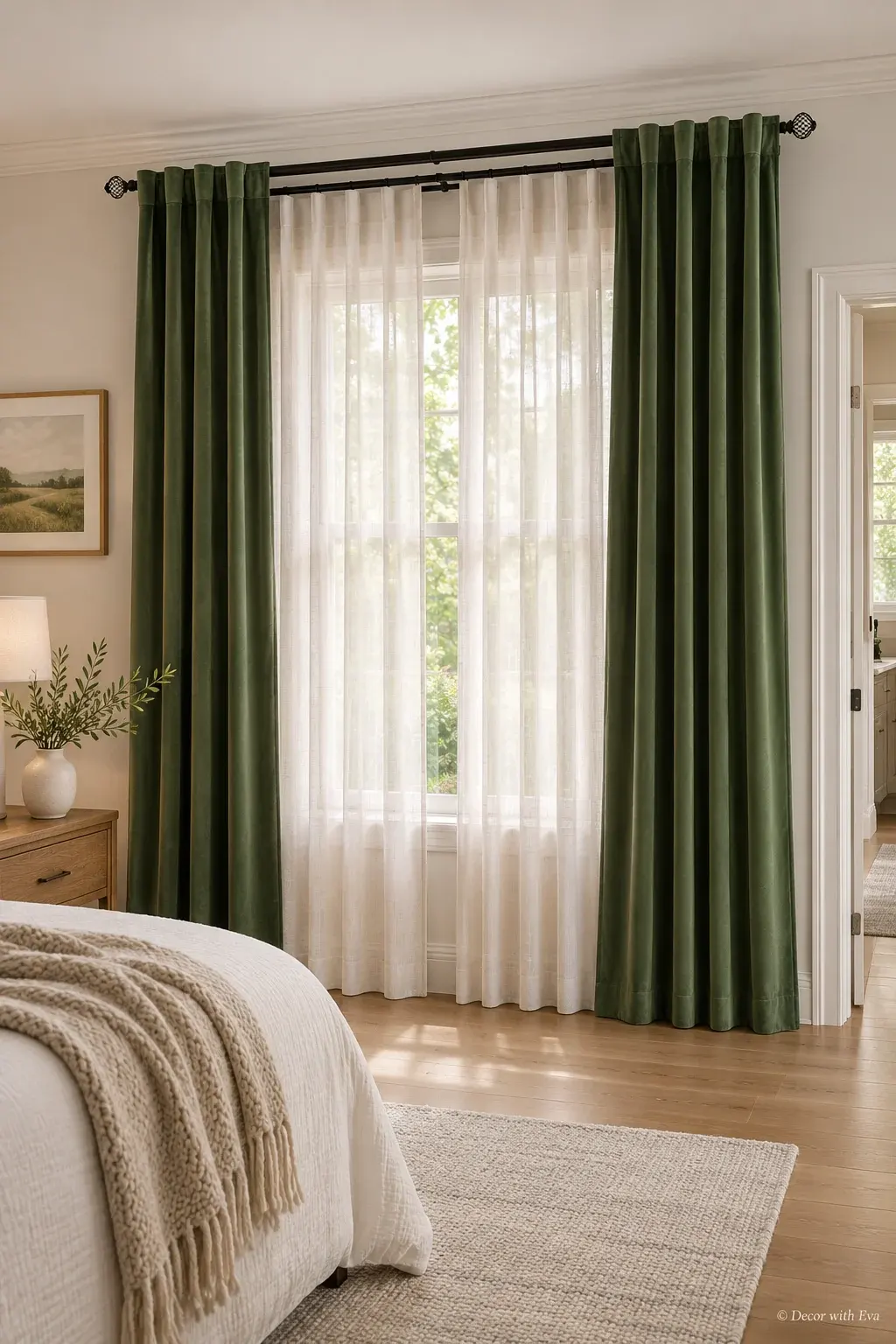
Velvet outside and a lighter layer inside give a bedroom window depth. Olive panels look rich when open, while natural-white sheers soften the glass behind them. You can change the room’s appearance through the day without needing to swap the curtains themselves.
Use a suitable double rod or separate tracks so each layer can move independently. Include the weight of both sets when choosing the support, and measure how much space the open panels take beside the window. The olive velvet option is room-darkening rather than a promise of complete blackout. Choose the inner layer for the light and privacy you need, and keep the floor beneath easy to clean.
27. A textured neutral rug under the bed
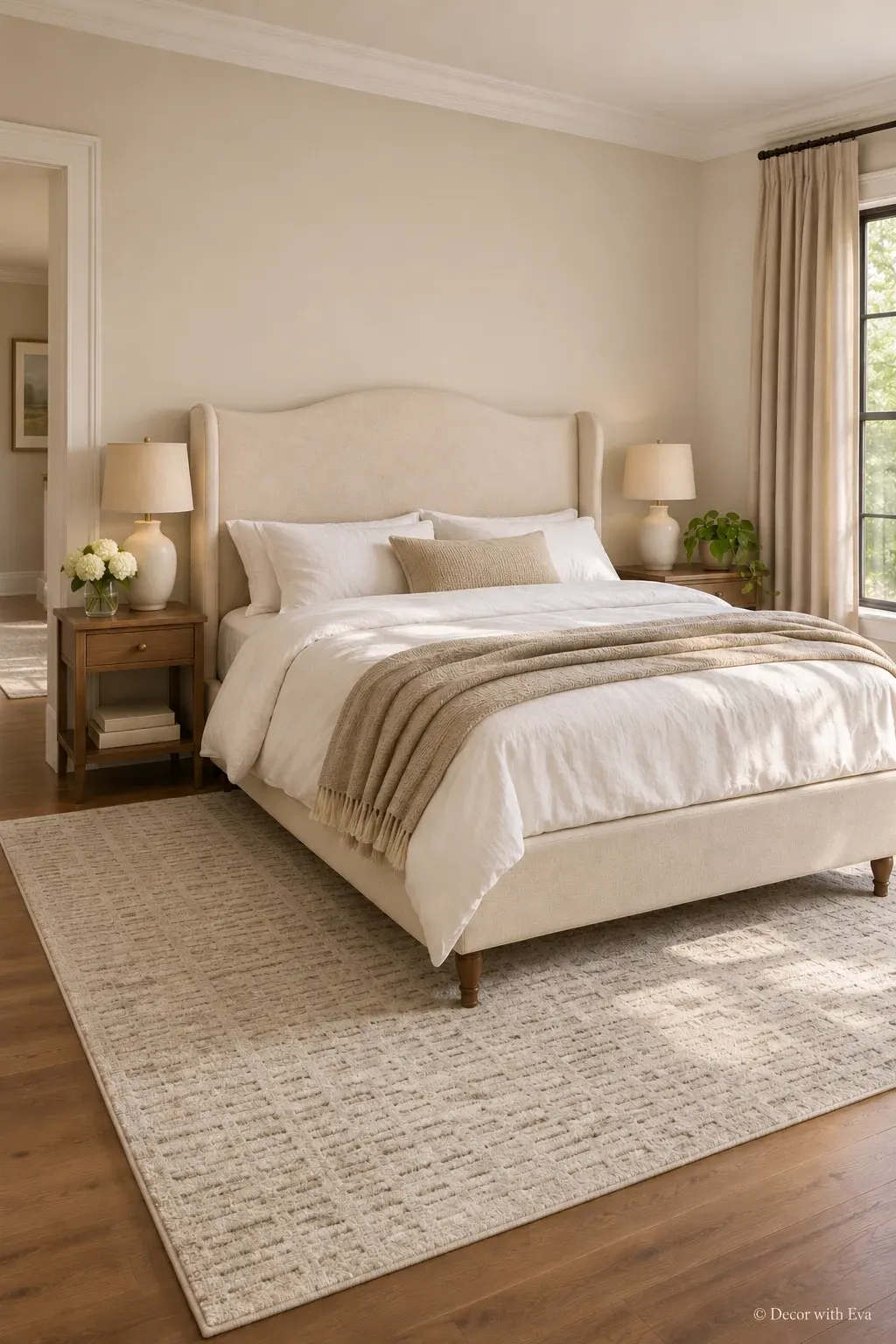
A textured neutral rug can make the first step out of bed feel more considered. Ivory and beige give the floor interest without introducing a strong new color. A gentle grid works especially well when the bedding and headboard are fairly plain.
The rug shown is 6 feet 7 inches by 9 feet 3 inches and is polyester, rather than wool. Lay out the rectangle before buying and decide how much you want to show beside and beyond the bed. A floor-compatible rug pad can add cushioning and help with placement. Keep rug edges flat and clear of doors; a larger rug is useful only when the whole arrangement fits the room.
28. A faded pattern for a collected bedroom
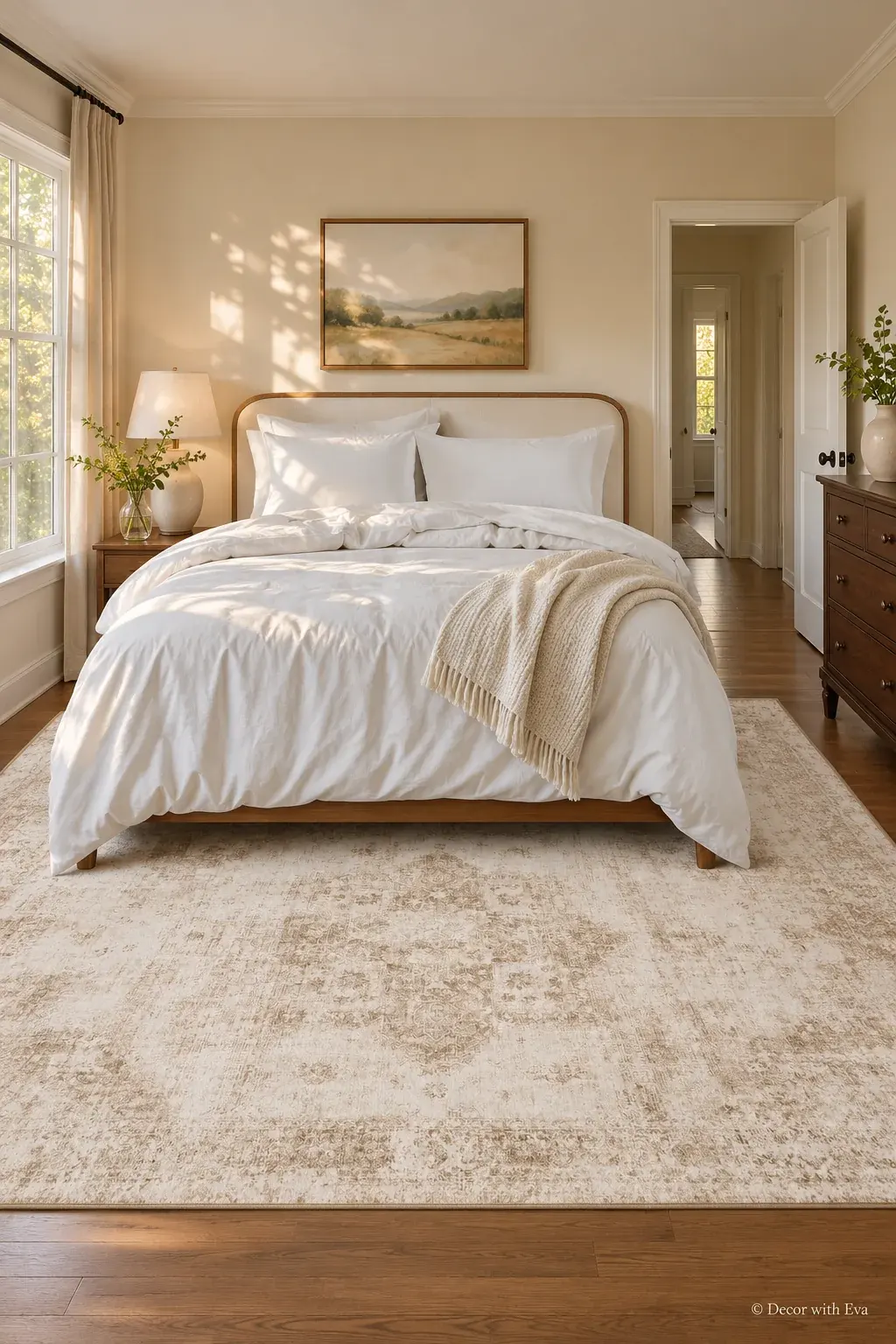
A faded medallion rug gives a bedroom a collected feeling, particularly beside older wood furniture. Its quiet beige pattern can connect pieces that do not match exactly. White cotton bedding leaves enough visual space for the floor to have its own character.
This option is an 8-by-10-foot low-pile microfiber rug. Mark the size on the floor and check where the bed, drawers, and doors will sit around it. The printed faded appearance is different from a thick hand-knotted rug, so choose it for the look and care routine that suit you. If you already own a patterned rug, try simpler bedding before deciding it needs replacing.
29. A checker rug in the sitting corner
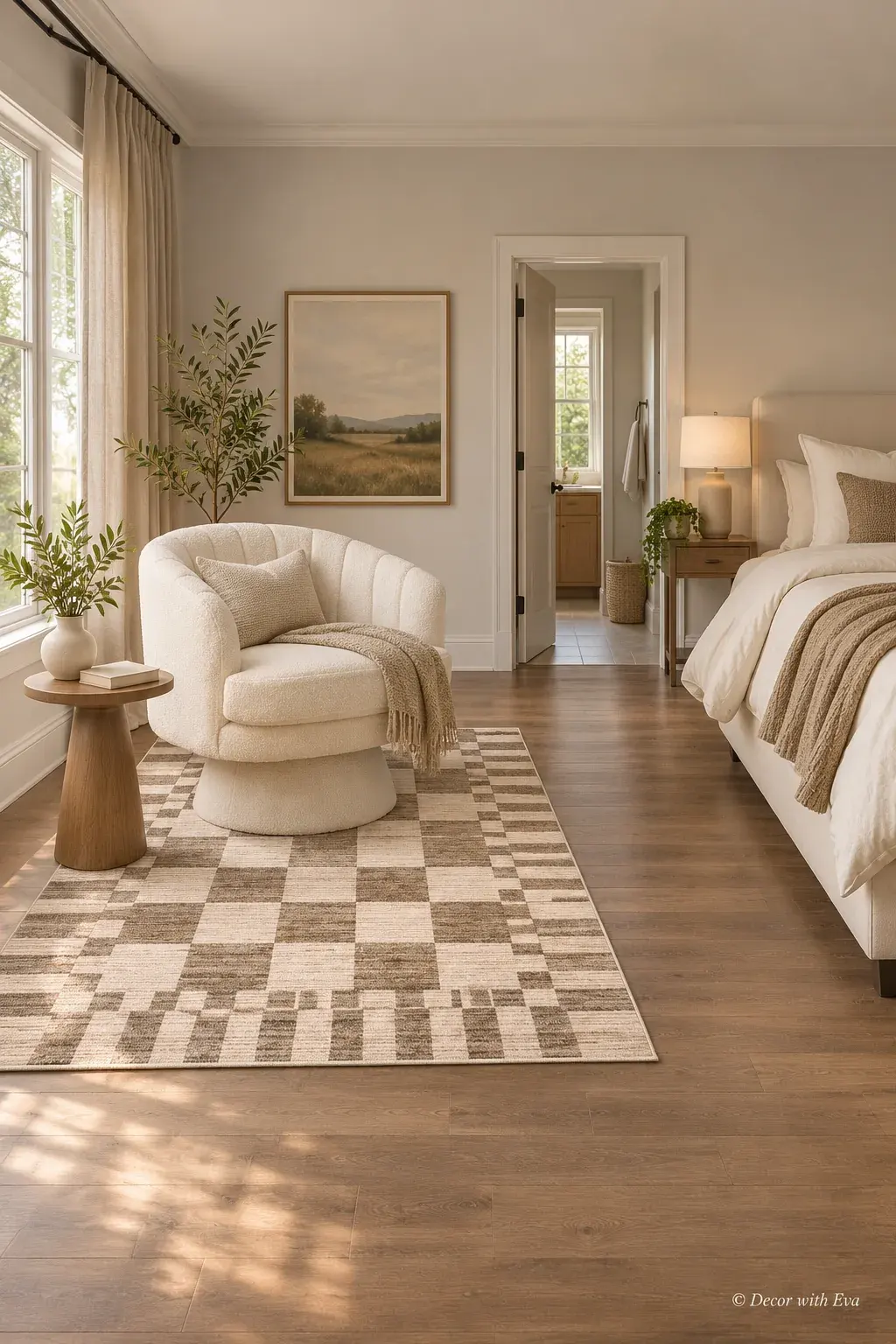
A checker rug can give a bedroom sitting corner its own gentle identity. Brown and cream squares feel warm without needing bright accents, and a pale curved chair keeps the area inviting. The pattern is most effective when the nearby wall and bedding stay quiet.
Use the selected 5-by-7-foot rug for the sitting area or a suitable side space, rather than expecting it to surround a queen bed fully. Test the rectangle with tape and leave the route between the bed and chair open. This is a low-pile faux-wool design, not natural wool. Keep the rug clear of the swivel base and check that it lies flat before settling the furniture on it.
30. A small reading chair that belongs in the room
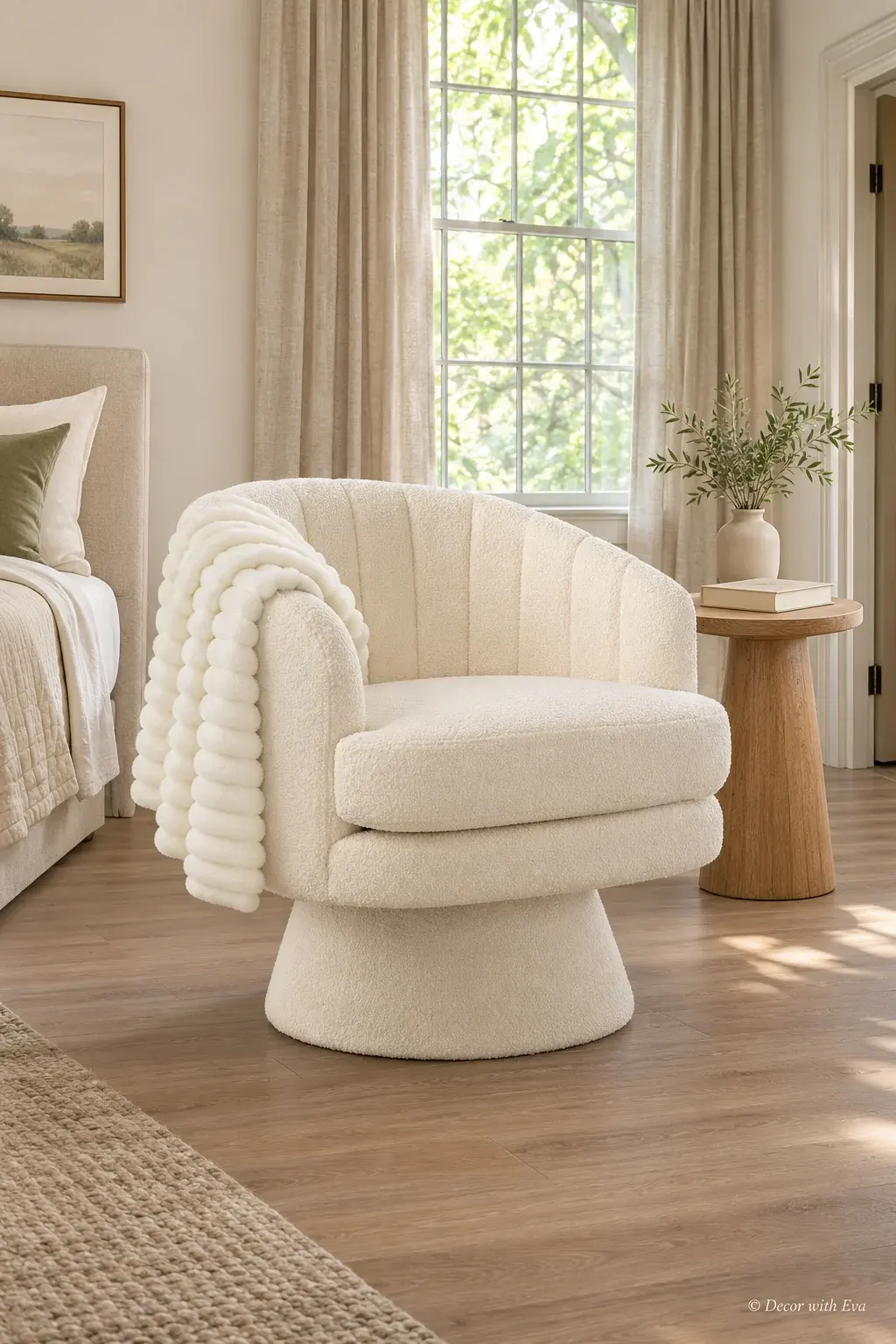
A small reading chair gives the bedroom somewhere to pause beyond the bed itself. A rounded back and pale textured fabric make the corner look soft, and one folded throw is enough to finish it. A nearby book and a useful light make the space feel ready to use.
The selected swivel chair is about 29 inches wide and 28 inches deep, with a relatively low seat. Include its turning space and room for your feet before placing it near the bed. Keep the throw off the base and walking route. If your room cannot comfortably fit a chair, borrow the idea with a pleasant bedside light and a favorite blanket instead of forcing in another piece of furniture.
31. A compact bench with useful storage
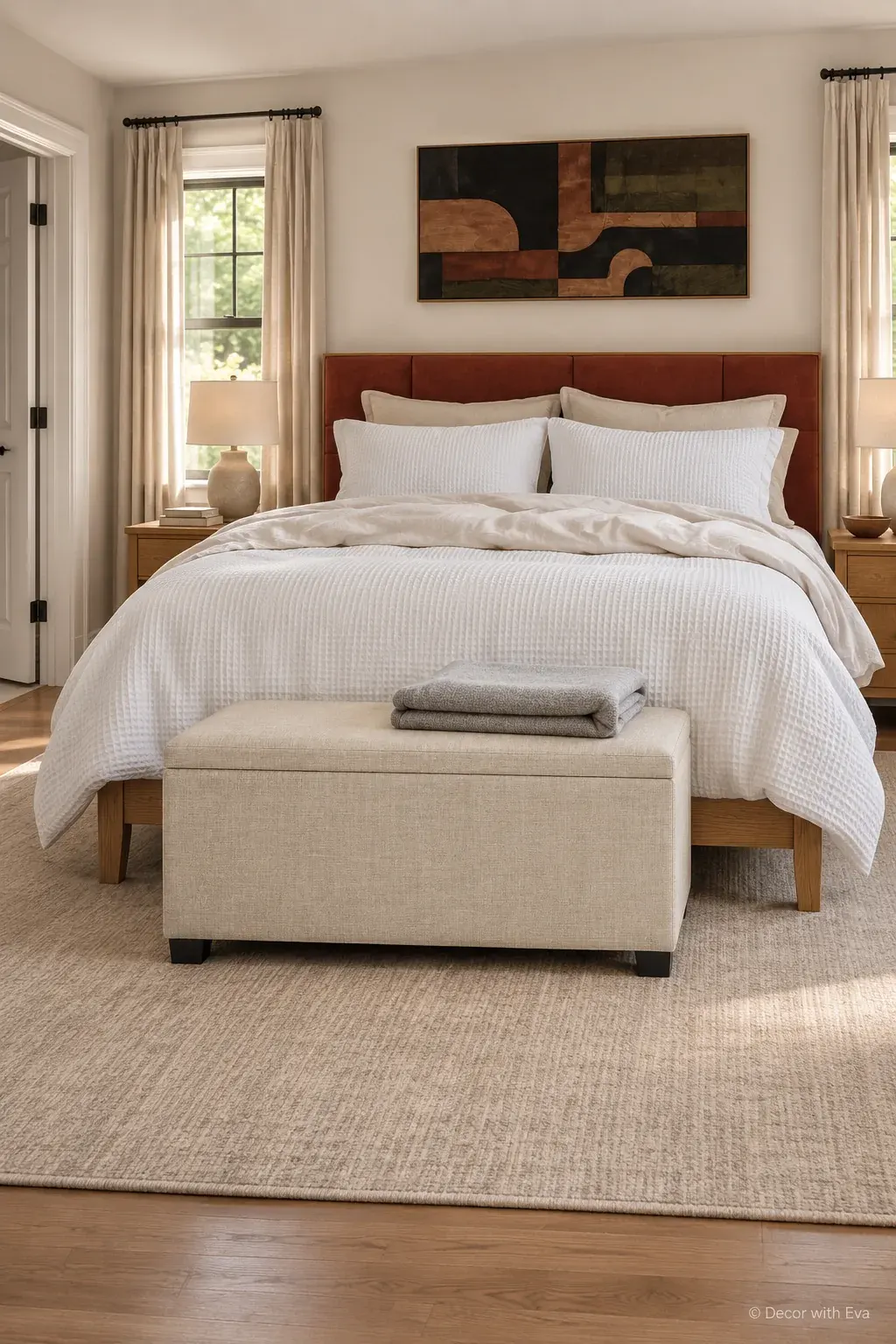
A compact storage bench can give spare bedding a useful home and make the foot of the bed feel finished. Beige upholstery adds softness without introducing another pattern. Its smaller width lets the bed remain the main piece in the room.
This bench measures 35½ inches wide, 16½ inches deep, and 17 inches high. Allow room to open its lid and walk around it, as well as space to sit comfortably. Store dry blankets and the cushions you remove at night rather than items you rarely use. If the bench would narrow your everyday route, move the storage function to an existing closet or basket instead.
32. A curved ottoman in a room with more space
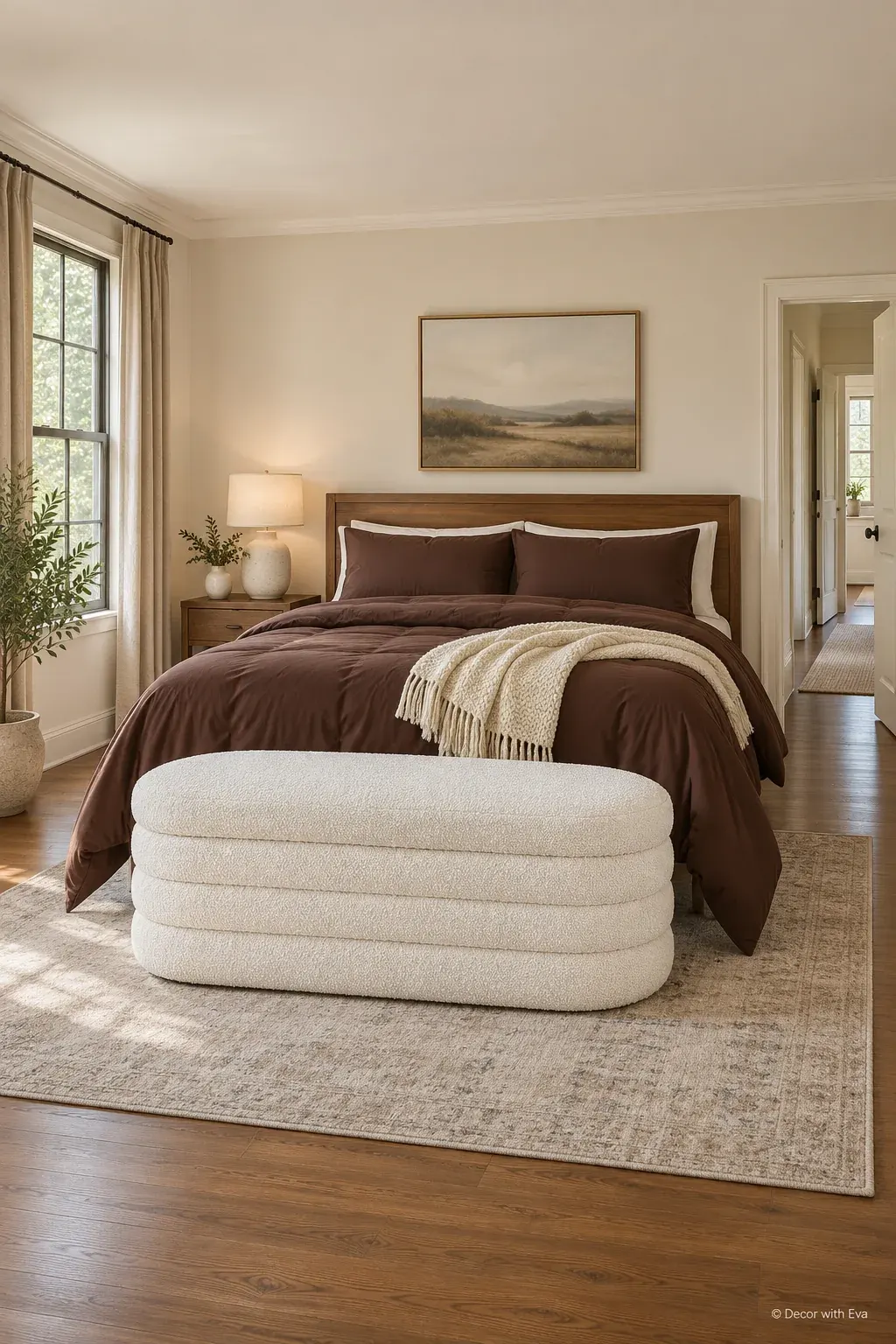
A curved ottoman brings a softer shape to a bedroom with enough open floor. The rounded horizontal bands are decorative on their own, so the top can stay mostly clear. Ivory upholstery beside chocolate bedding creates a lovely contrast between light and dark.
The selected bench is 49.2 inches long, which needs more room than a small footstool. Confirm the complete outside depth and allow for the lid to open before ordering. Try its footprint with tape, then walk around the bed carrying a laundry basket. Keep the piece only if the room still feels comfortable to use. A clear surface makes the shape easier to appreciate and the storage easier to reach.
33. A woven home for spare blankets
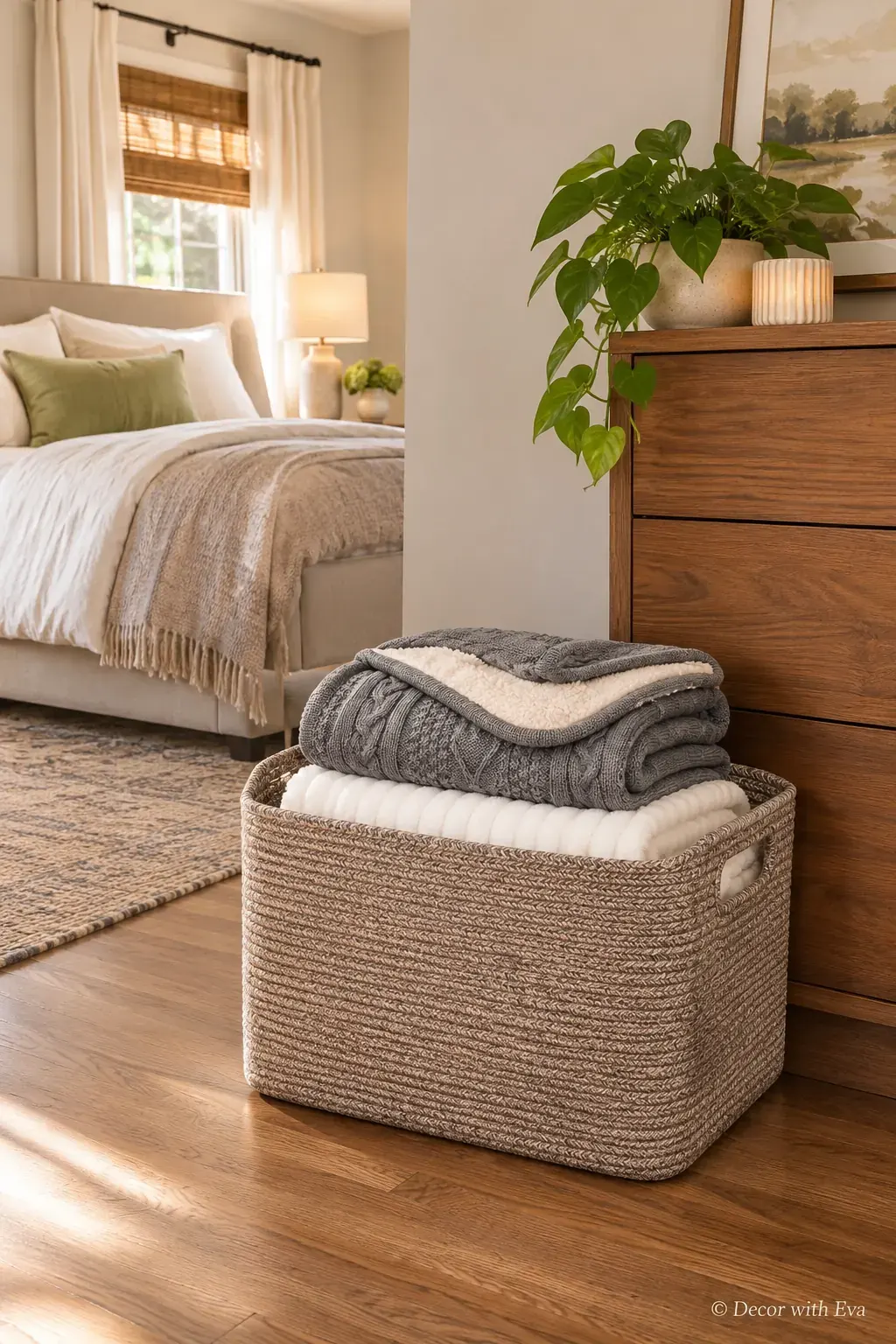
A woven basket gives spare blankets a home that still feels part of the room. Brown cotton rope brings a softer texture than a hard storage box, and the low rectangular shape can sit beside a dresser or chair. A few folded blankets look more inviting than an overflowing pile.
This basket measures about 22 by 17 by 12 inches and has flexible sides. Check its footprint in the intended corner and reshape any shipping folds according to the instructions. Keep the textiles dry and put the blanket you use most often at the top. You can try the arrangement with a basket you already own; the useful change is giving the spare layers one consistent place to go.
34. A small forest gallery on a quiet wall
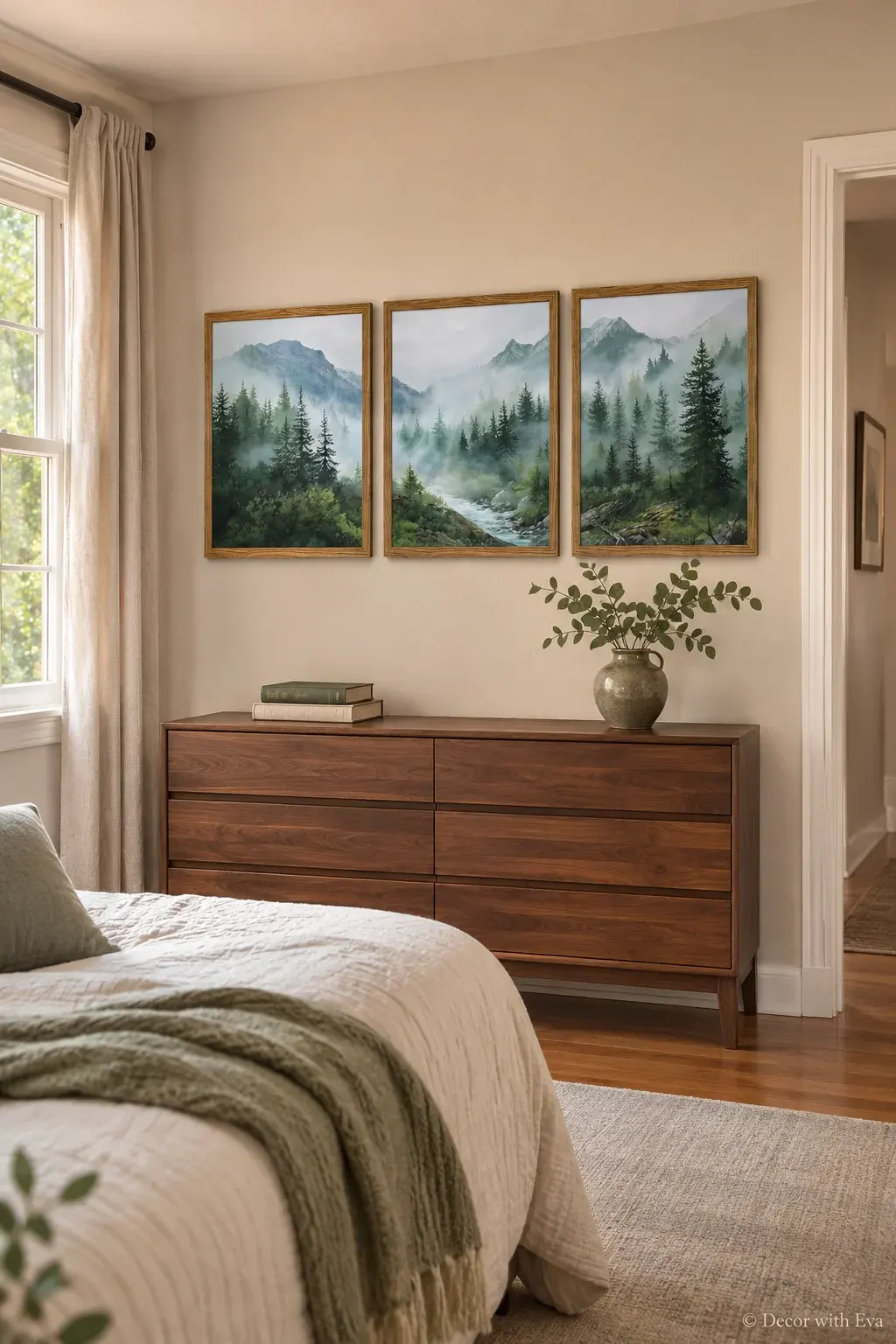
A small group of forest pictures can bring a quiet sense of place into the bedroom. Muted green, blue, and gray work with warm walls and wood furniture, and a repeated frame finish keeps the grouping connected. A dresser wall is a good place to enjoy the pictures without adding more objects beside the bed.
Lay out the frames on the floor first, then test the spacing with paper templates. Three 12-by-16-inch pieces make a different impression from one large canvas, so compare the grouping with the furniture below. The linked set offers a similar misty-forest palette to the illustration. Use suitable fixings for the wall and frame, or gather favorite landscape photographs in frames you already own.
35. Grassweave texture behind the headboard
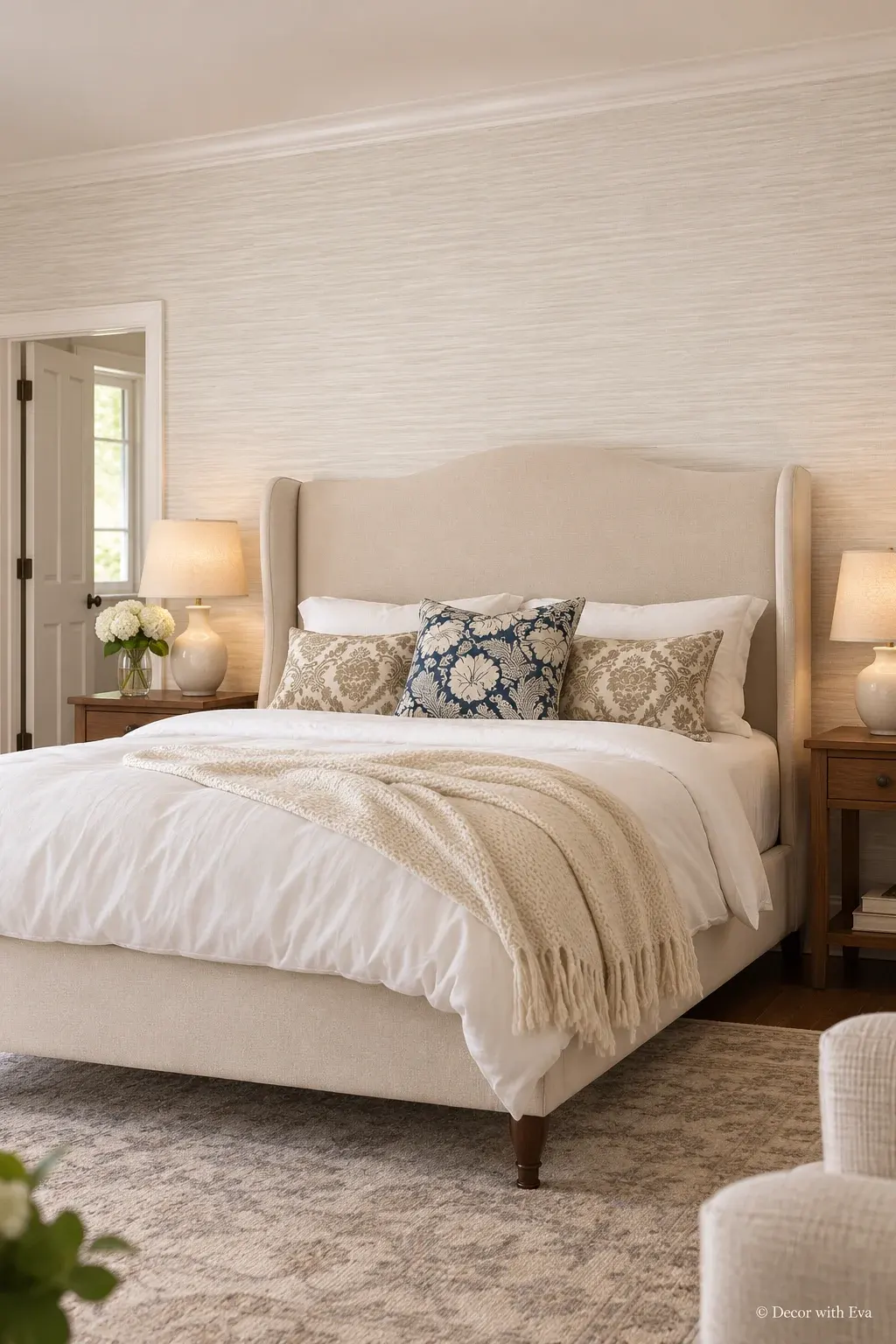
Grassweave texture can make a pale headboard wall feel warmer without a bold print. The small horizontal pattern gives the light something to catch, while the rest of the room stays calm. It is an appealing direction when plain paint feels a little flat beside simple bedding.
The cream option linked here is vinyl with a grassweave appearance, rather than natural grasscloth. Check that your wall is smooth, clean, and compatible, and test a sample before covering the whole surface. Measure for joins and waste as well as the advertised roll coverage. Removal results depend on the wall and paint, so get permission where needed and avoid assuming every peel-and-stick paper will come away without damage.
36. A calmer bedroom using what you already own
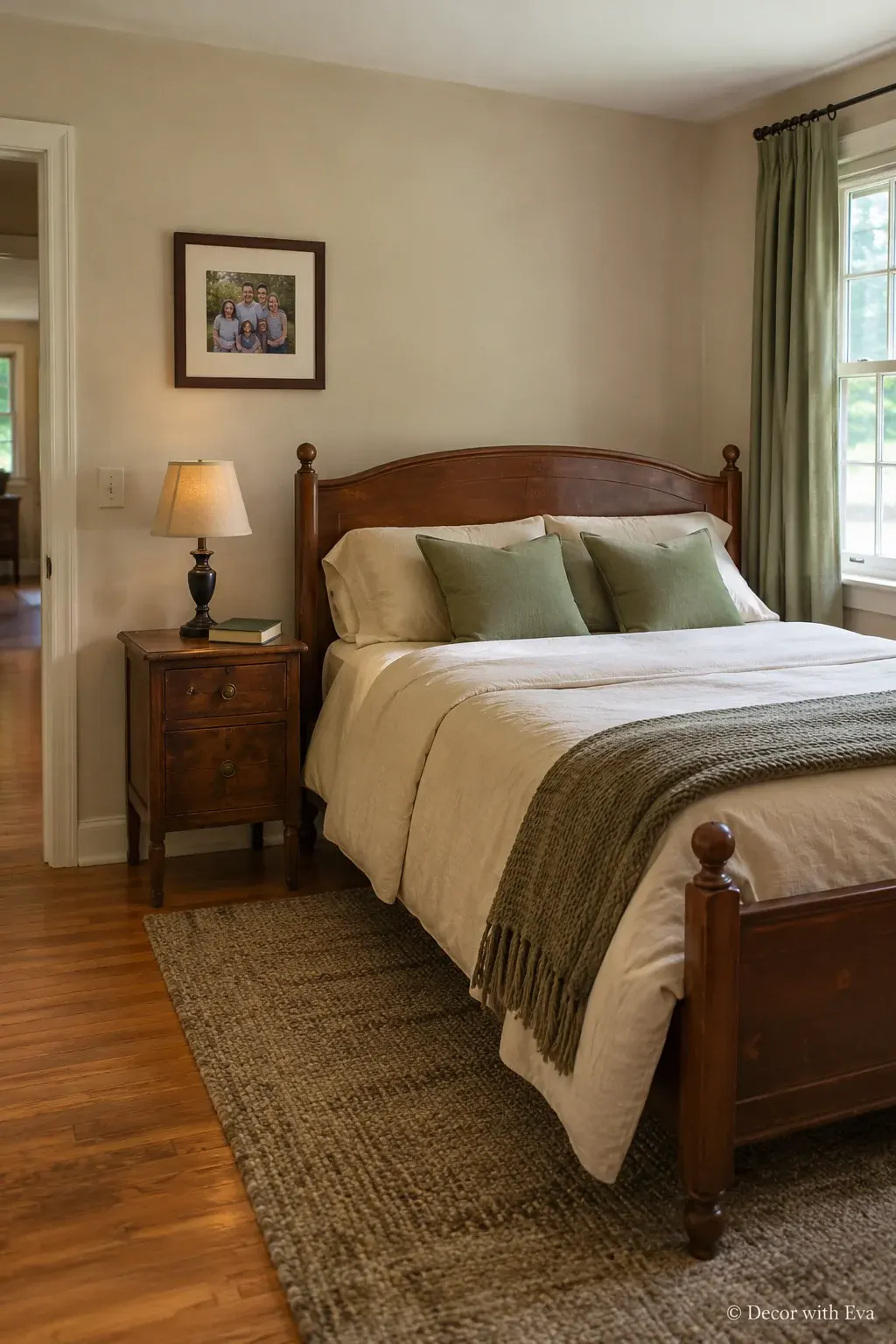
Sometimes the coziest version of a bedroom is the one with a little less in it. Make the bed with the layers you enjoy, clear the floor, and move the things that belong elsewhere. Familiar wood furniture and a favorite blanket can look lovely when they have room around them.
Begin at the bedside: keep the useful light, current book, and everyday essentials, then put the rest away. Give the cushions an overnight home and check the path to the door. Look at the room in daylight and again with the lamps on. Decide what still feels missing only after this reset; you may find that a different arrangement makes more difference than another purchase.
Cozy master bedroom decorating questions
How can I make my master bedroom feel cozy?
Start with comfortable bedding, useful lighting, and a clear arrangement around the bed. Add one or two textures you enjoy, repeat a small group of colors, and keep the everyday essentials easy to reach. Change the part of the room that feels least inviting first rather than replacing everything together.
What colors work well in a cozy master bedroom?
Cream, warm greige, sage, chocolate brown, rust, and muted blue are useful starting points. Their effect depends on the light and the pieces around them. Compare samples with your bedding and furniture through the day, then choose the combination you enjoy in your own room.
Can a white bedroom still feel cozy?
Yes. Combine different textures, such as washed cotton, waffle weave, knit, and a fabric lampshade. Warm wood or a little brown adds definition, while suitable evening lighting softens the room’s appearance. Keep the layers useful rather than adding lots of pale accessories just to fill the space.
How do I make a small master bedroom cozy without crowding it?
Let the bed fit the room comfortably, keep the floor route clear, and use a few well-chosen textiles. A useful bedside drawer or appropriately installed wall light may help more than a large bench. Add a chair only if there is room to sit, stand, and pass it easily.
How many decorative pillows should I use?
Use the number that makes the bed look inviting and stays manageable at night. Two larger cushions and one smaller accent can be enough, but a simple pair works too. Keep the sleeping pillows you need and give decorative cushions a convenient overnight home.
What lighting makes a bedroom look warmer?
Several useful light sources usually give you more flexibility than one overhead light. Fabric-shade table lamps, reading sconces, or an ambient floor light can each play a part. Compare the bulb color and brightness in the actual room, and use compatible dimmable equipment where you want adjustable light.
How can I make my bedroom cozier on a budget?
Clear the surfaces, remake the bed, and rearrange the pieces you already have. Move a suitable lamp, use a favorite throw, change a cushion cover, or gather existing art into one quieter group. Wait until the room is reset before deciding what purchase would genuinely help.
Do cozy bedrooms need heavy bedding?
No. Texture and a welcoming arrangement can make a room look cozy with lighter layers. Choose bedding for your comfort and room conditions, and keep an extra blanket nearby if useful. A lighter bed that you enjoy using is a better starting point than a heavy stack chosen only for appearance.
Make the bedroom feel like your retreat
Choose one detail you would enjoy every day: a softer light, a favorite color on the bed, or a place for the blankets you actually use. Keep the layout comfortable, repeat a few materials, and let the room settle around your routine. A warm retreat can grow from the pieces that already feel like home.
For more layout and furniture directions, explore these master bedroom ideas. If floor space is the main challenge, these small bedroom ideas offer more ways to make the arrangement work.
Save it for later
Found a few ideas you love? Save this collection to your Pinterest board so it’s easy to find when you’re ready.
Save to Pinterest
Let’s talk ideas
Which idea would you try? Share a question, a small-space solution, or a detail that made it work in your home.