This article contains paid links. As an Amazon Associate, I earn from qualifying purchases.
A welcoming front porch starts with the way you arrive home. There is a clear place to step, a door you can reach easily, and a few details that make the entrance feel cared for. The right front porch decorating ideas can be as simple as a better-sized mat and a healthy plant, or as inviting as a pair of chairs you look forward to using.
These 32 ideas mix complete porch looks with smaller changes for the door, floor, railings, lighting, and seating area. You will find options for a small front stoop, a covered cottage porch, and a larger entrance with room to sit. Choose the details that suit your house and daily routine; a warm welcome does not require filling every corner.
Before you decorate your front porch
Begin with the space you need to use. Measure the landing, door swing, and route from the steps to the handle. Include a chair’s movement, a storage lid opening, and the room someone needs when seated. Keep stair treads, the handrail, and the entrance clear before deciding how much decoration will fit.
Notice the exposure. A deep covered porch behaves differently from an open stoop that gets direct rain and afternoon sun. Choose furniture, fabrics, containers, and lights for the actual conditions, then check their care and storage instructions. Start with two or three colors already connected to the door, siding, brick, or garden.
For planting, match the plants to the light and arrange drainage before filling the pots. Colorado State University Extension’s container-garden guidance explains why drainage and the plants’ individual light needs matter. Choose containers you can maintain in place, with room to reach them and an appropriate route for water to drain.
1. A classic doorway with matching black planters
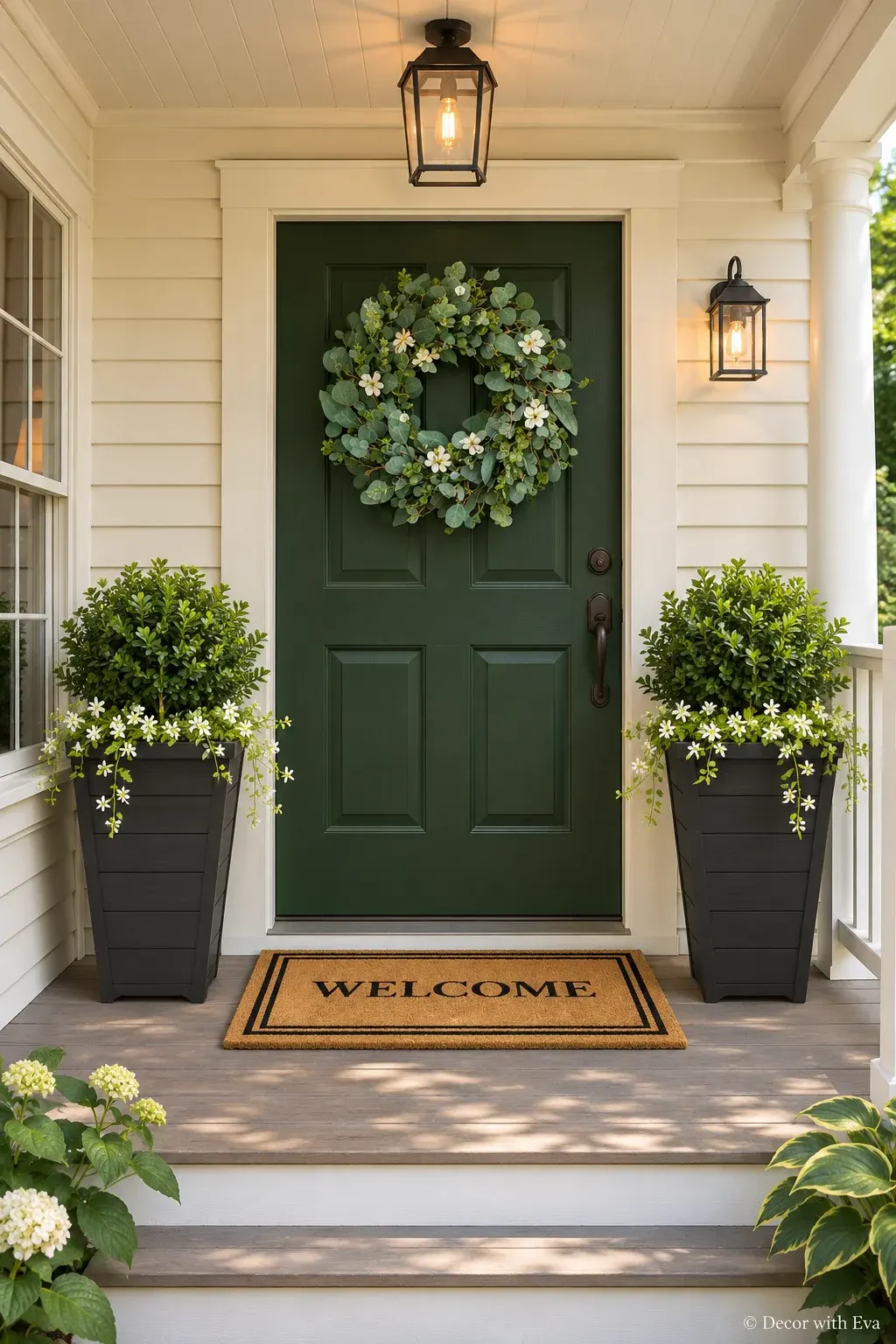
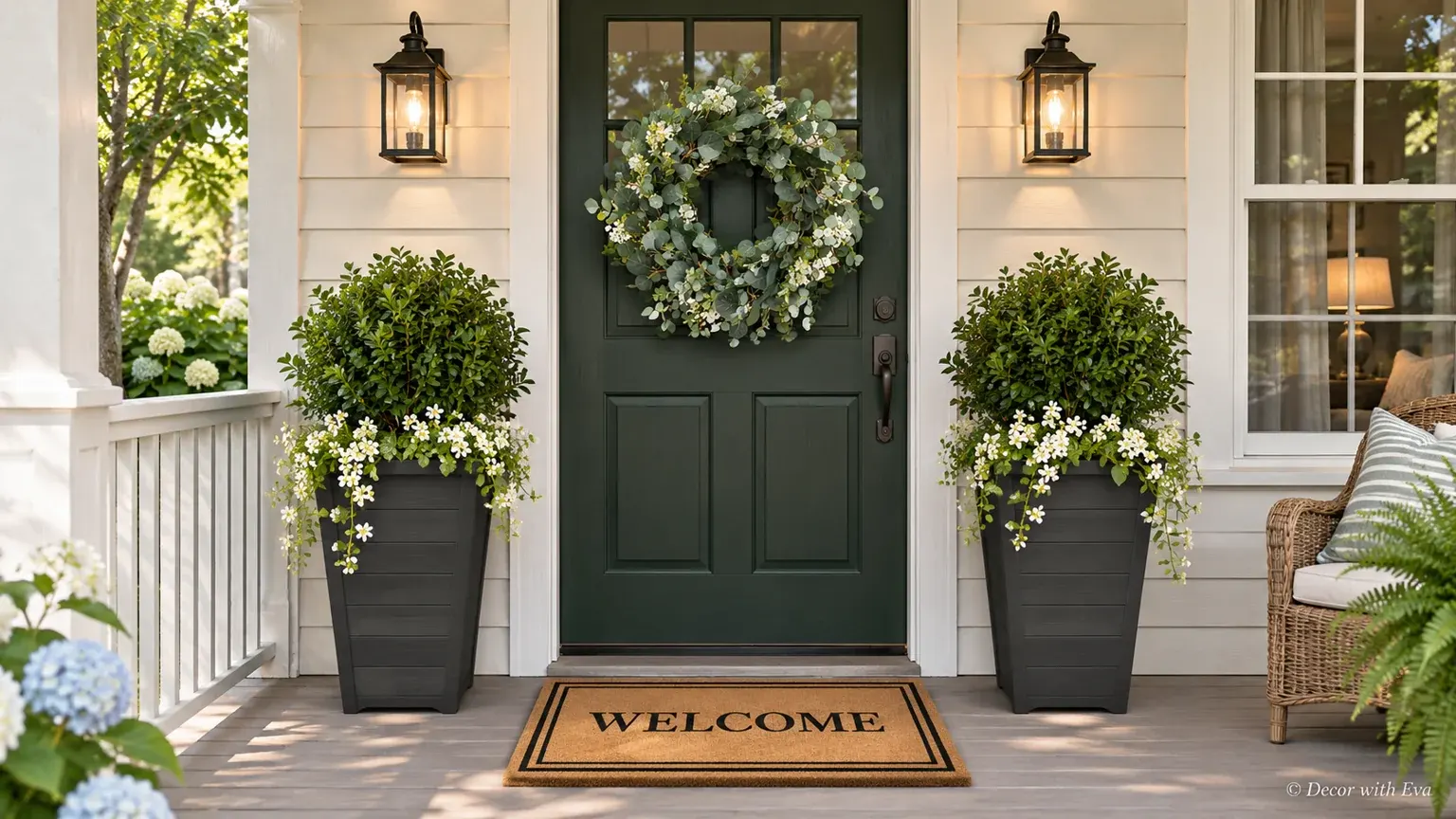
Two matching planters give a front door a clear frame, especially when the rest of the porch stays simple. Graphite wood-look pots sit comfortably against warm white siding and a deep green door. Repeat the white flowers in the wreath, then let the foliage provide most of the texture. A bordered coir mat finishes the entrance without another decorative sign.
The planters shown are about 14½ inches square and 22½ inches tall. Mark both footprints on the landing and open the door before deciding where they belong. Check the optional drainage setup before planting, and choose plants for the light your porch receives. The coir mat belongs at a covered entrance. On a smaller landing, keep just one planter and let the wreath balance the other side.
2. White rockers and a little cottage color
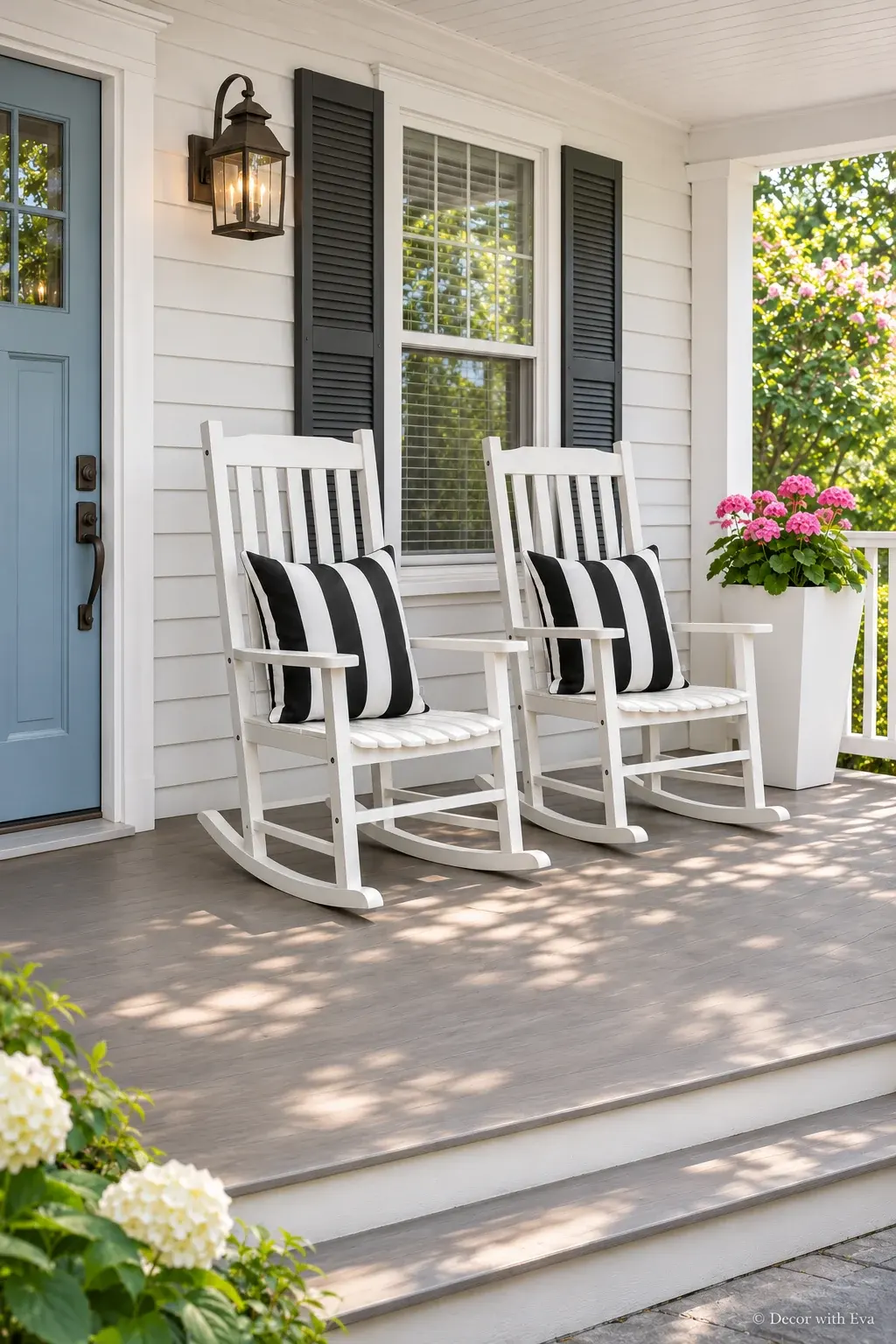
White rocking chairs bring an easy cottage feeling to a porch, and they look particularly fresh beside a soft blue door. Broad black-and-white stripes give the cushions a little structure, while pink flowers keep the arrangement from feeling too formal. Use the same chair twice so the corner feels settled even when the other details are quite simple.
These painted acacia rockers are roughly 34 inches deep, so plan for their movement as well as their resting footprint. Leave comfortable space in front and behind, away from steps and the door. The striped covers take separate inserts; use ones appropriate to the setting. Keep the wood sheltered and follow its care guidance, which recommends protection from harsh sun and rain. A single rocker can give a narrower porch the same character.
3. A wicker conversation corner beside the entrance
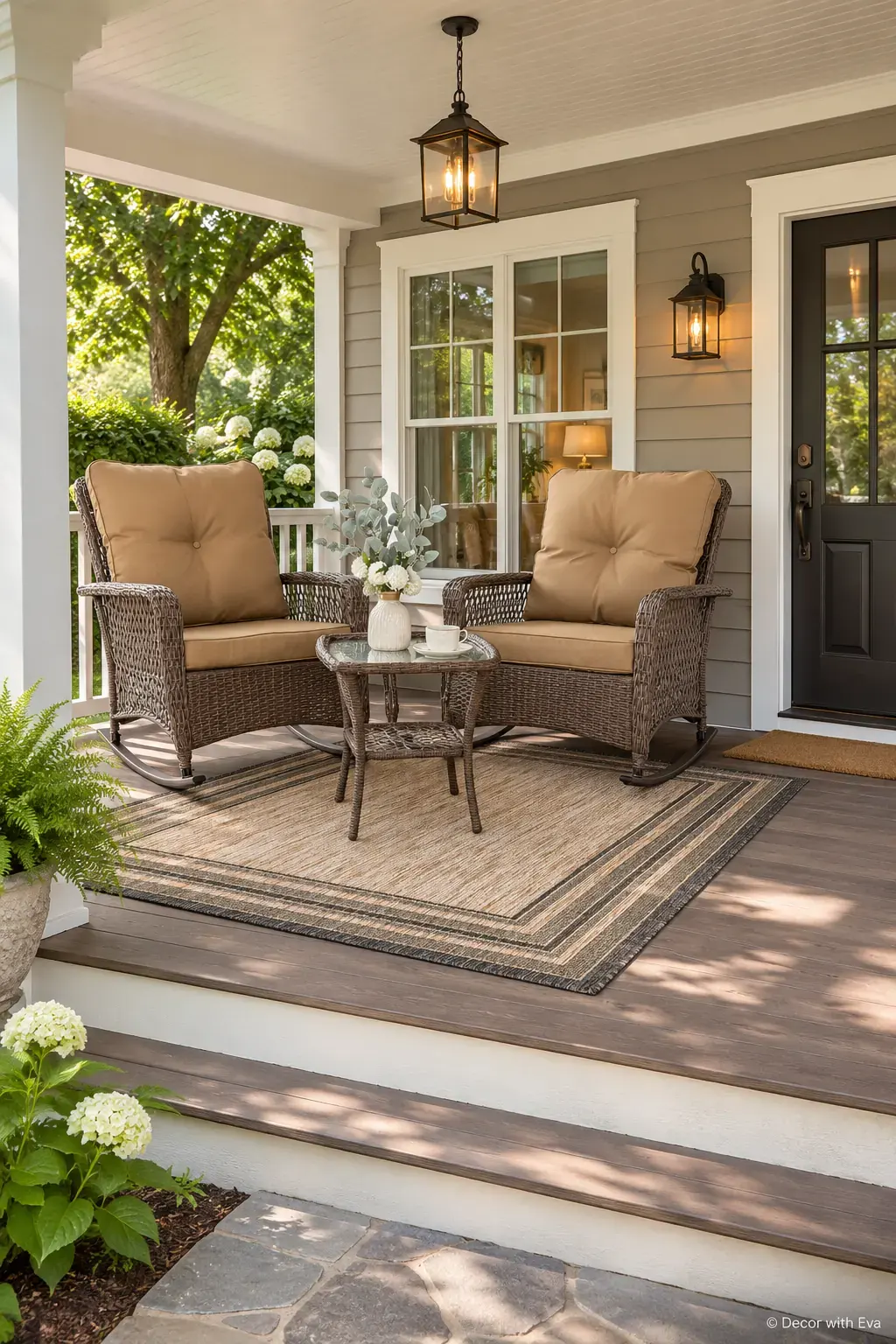
A wicker conversation set can make a larger front porch feel like a place to spend time, rather than a hallway to the door. Khaki cushions soften the brown weave, and a natural rug with a black border defines the sitting area. The small matching table gives a cup or a book somewhere to land.
Place the seats at one end of the porch so arriving guests can walk straight to the entrance. These are broad rocking chairs, approximately 29½ inches wide and 36¾ inches deep, with space needed for their movement. Check the cushion depth against the way you like to sit. The rug shown is 4 feet by 5 feet 7 inches; compare that with the full furniture arrangement and leave its edges clear of steps.
4. Navy Adirondack chairs for a relaxed welcome
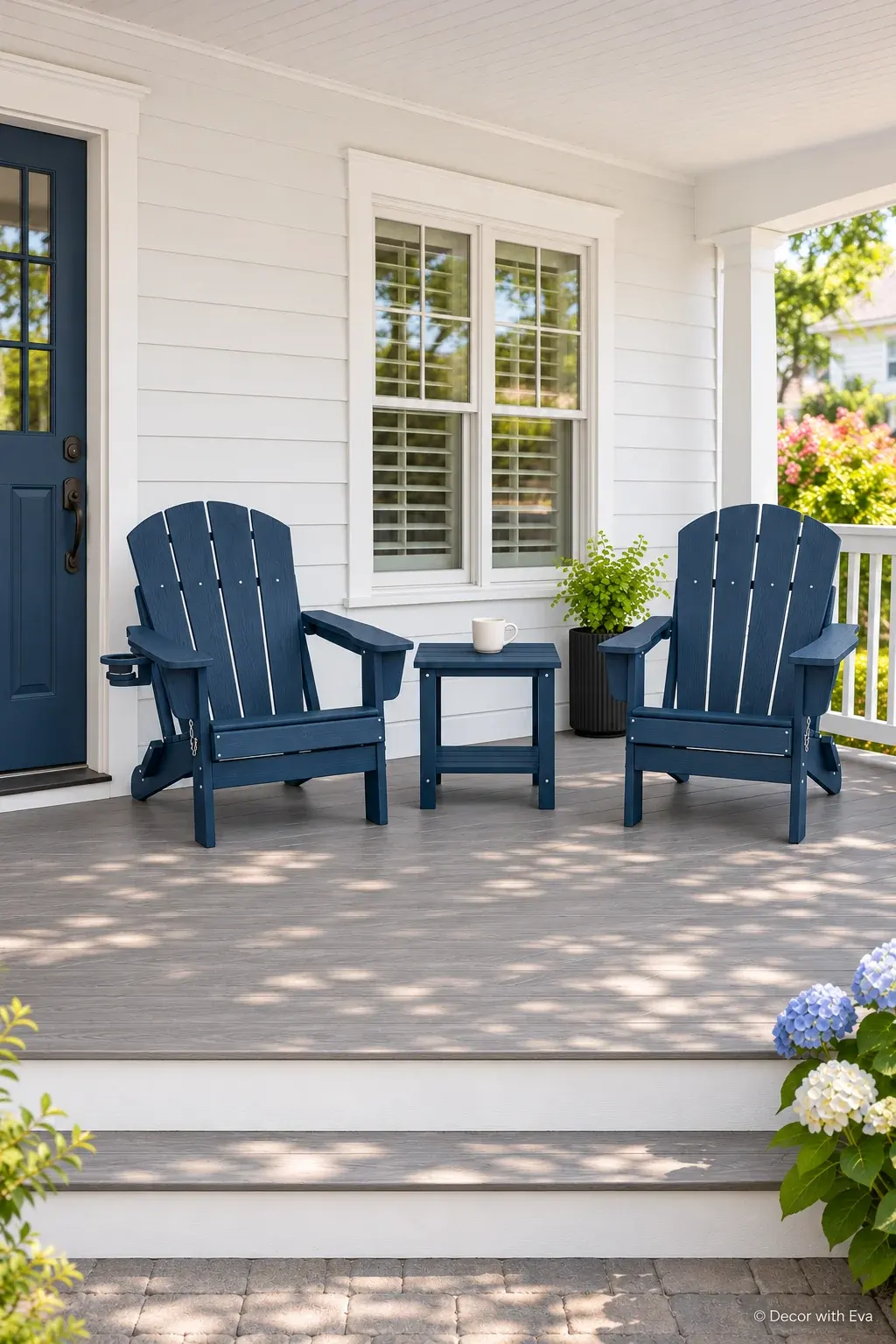
Navy Adirondack chairs give a white porch a relaxed, slightly coastal character without needing themed accessories. Their broad arms and fan-shaped backs are decorative enough on their own. Use the matching little table between them, then add one fluted planter rather than filling every empty patch of floor.
An Adirondack chair takes more depth than an upright dining chair. Each chair in this set is about 30 inches deep and 29 inches wide, so allow room to stand up and pass in front comfortably. Keep the pair to the side of the entrance on a porch that can accommodate them. If your landing is shallow, borrow the navy color in a planter or cushion instead of forcing in lounge seating.
5. One tall planter for a small front stoop
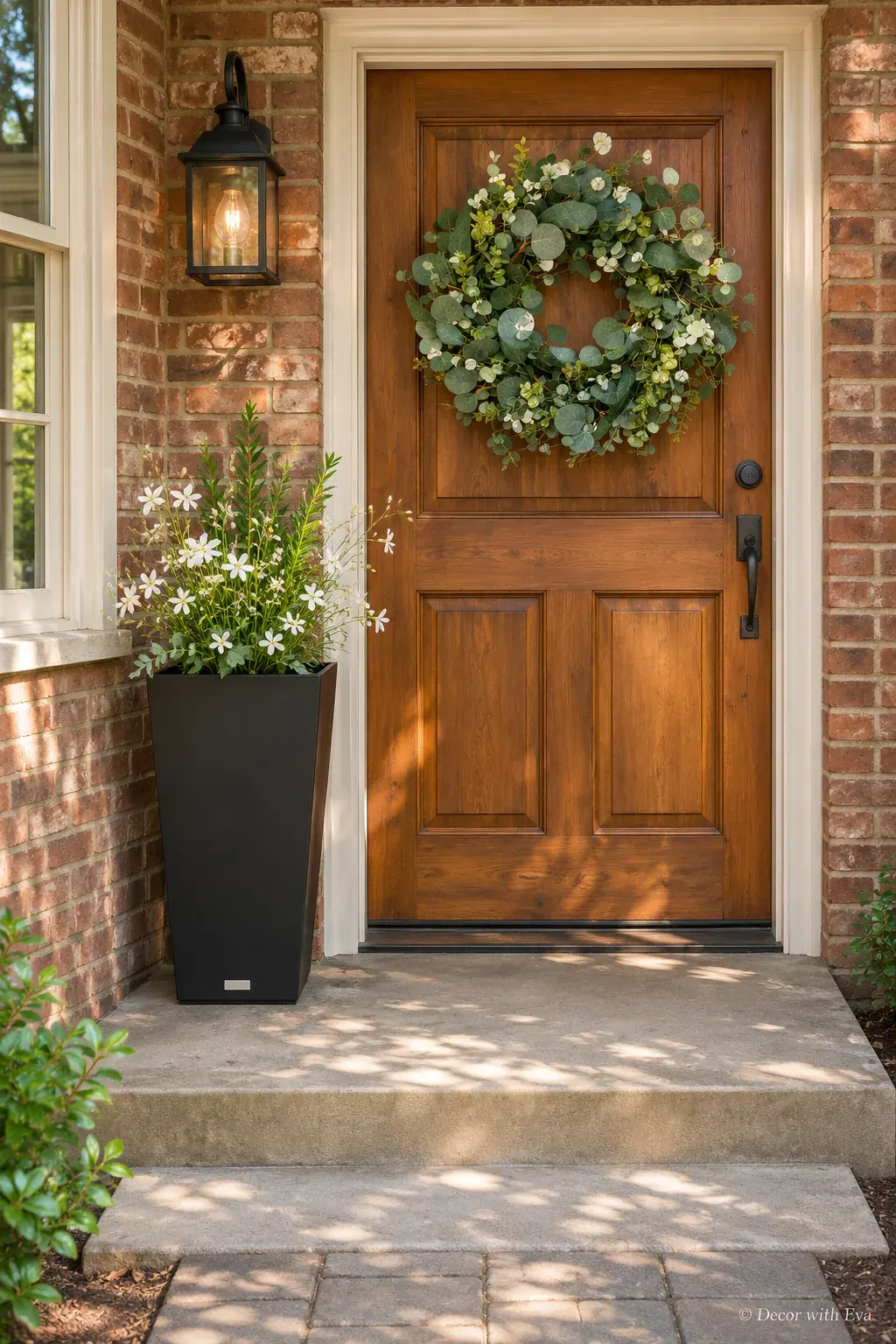
A small front stoop can feel finished with one strong planter and a wreath. The height of a tapered black pot draws attention to the doorway while leaving much of the floor open. White flowers and loose green foliage soften the straight sides and work with brick, wood, or painted siding.
The planter shown is 30 inches tall and about 15¼ inches square. Its height does not make its footprint disappear, so measure the usable landing and door swing carefully. Keep the container beside the door rather than in the route to it, and leave every stair tread clear. A removable insert shelf offers flexibility in how you plant, but check the drainage arrangement and the finished weight before filling it.
6. A green front door with a soft white wreath
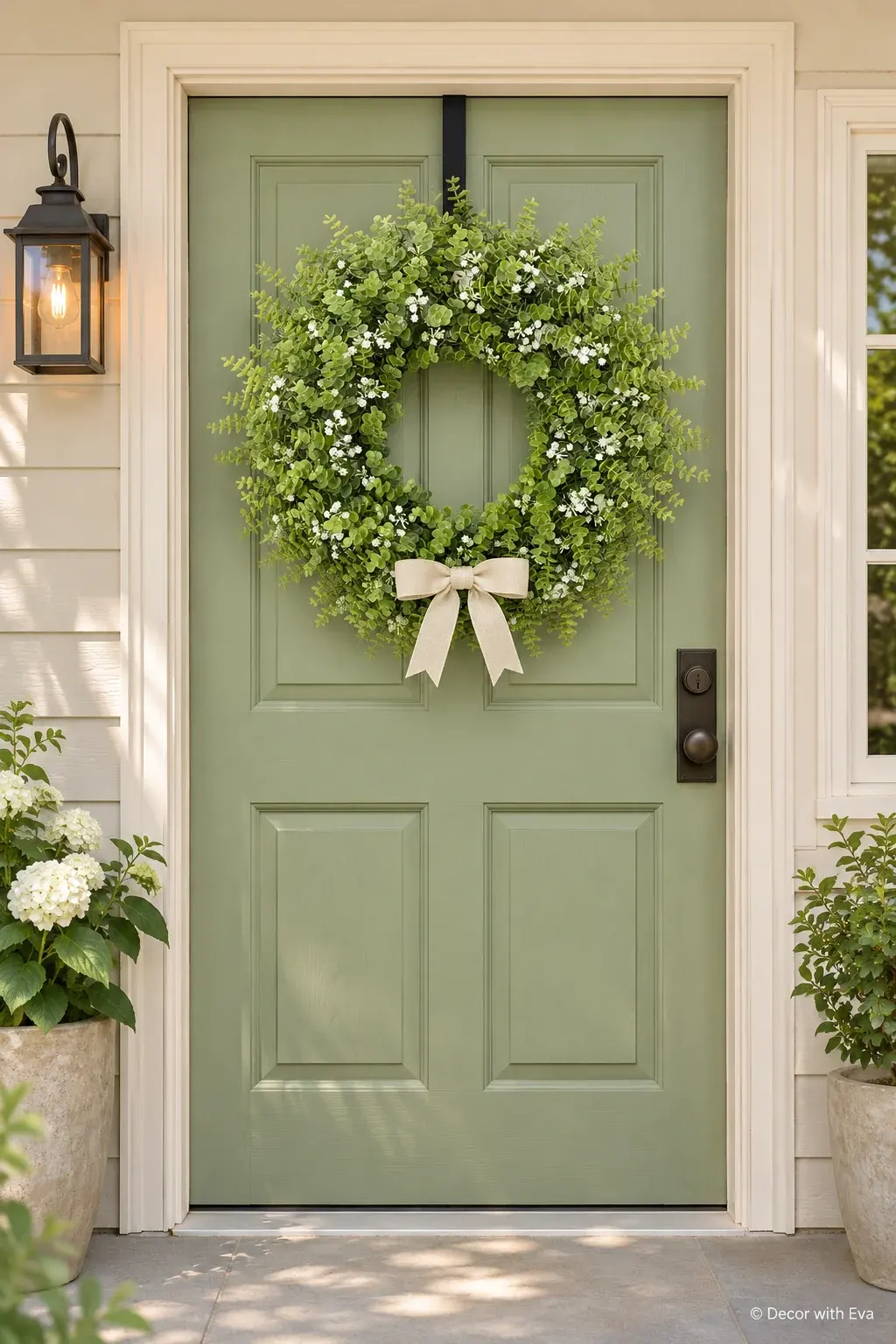
A soft green door and a full white-flowered wreath make a welcoming combination through much of the year. The color comes from the door, while the wreath adds shape and a little movement. A loose cream ribbon can make an existing wreath feel different without buying another complete decoration.
Hold the wreath against the door before choosing its position. This baby’s-breath and greenery option expands to about 28 inches, so make sure it leaves the handle, knocker, and any glazing usable. The simple over-door hanger is 15 inches long and lists a fit for doors up to 2 inches thick; check the top gap and normal door closure too. Secure ribbon tails so they do not catch in the door.
7. White planters against a navy door
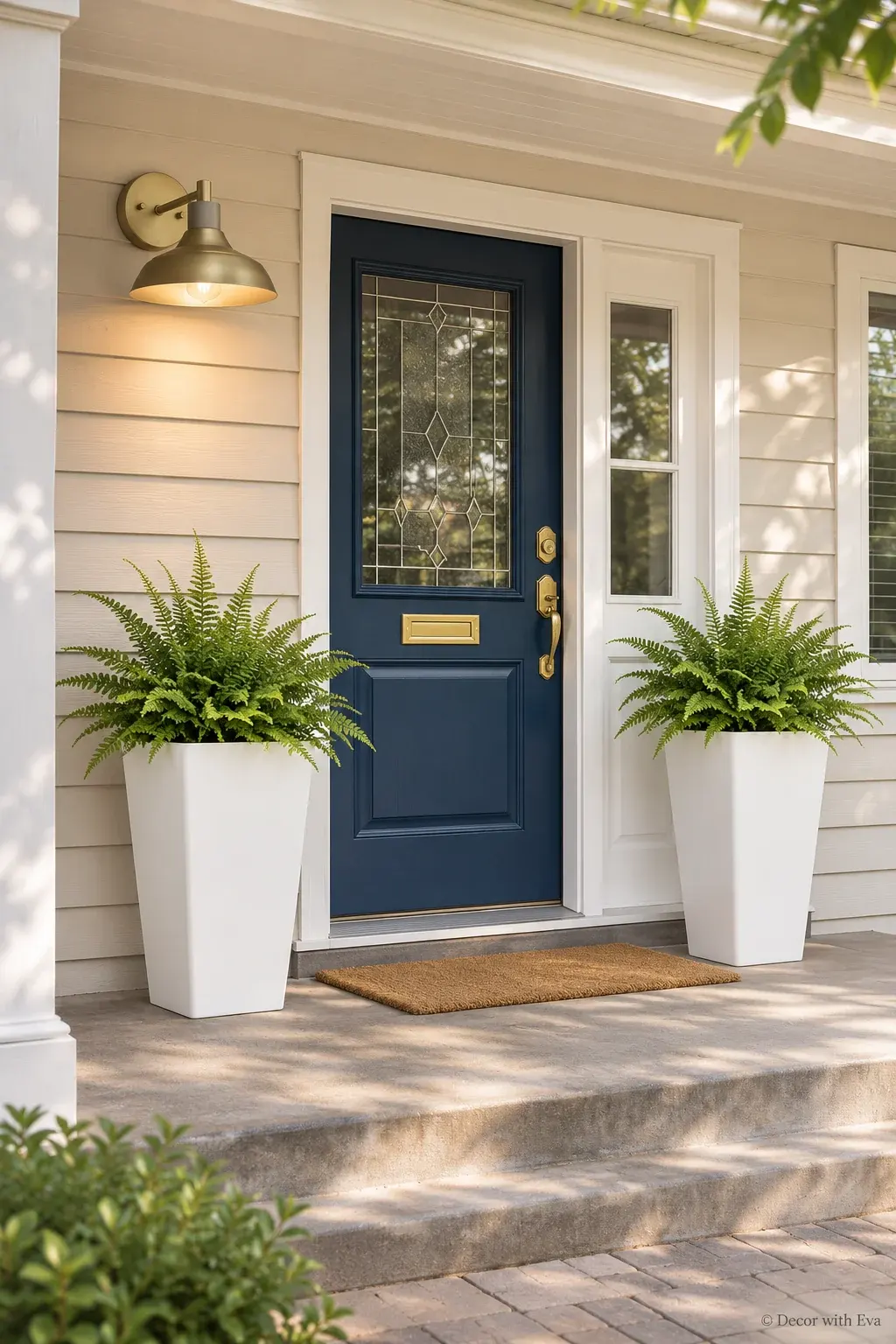
White planters can brighten a navy doorway while keeping the look crisp and simple. Fern-like foliage gives the arrangement a soft outline, and a warm brass light adds a small change in finish above. There is enough contrast here without adding a second strong pattern at floor level.
Use the door and siding you already have as the starting point. These white tapered planters are 20 inches tall, so they suit a different scale from a pair of waist-high containers. Check their width and drainage before planting, and choose foliage for the actual light and climate. Keep branches clear of the fixture. If you are updating a wired light, use an appropriate fixture and qualified help for the installation.
8. A wider welcome mat for double doors
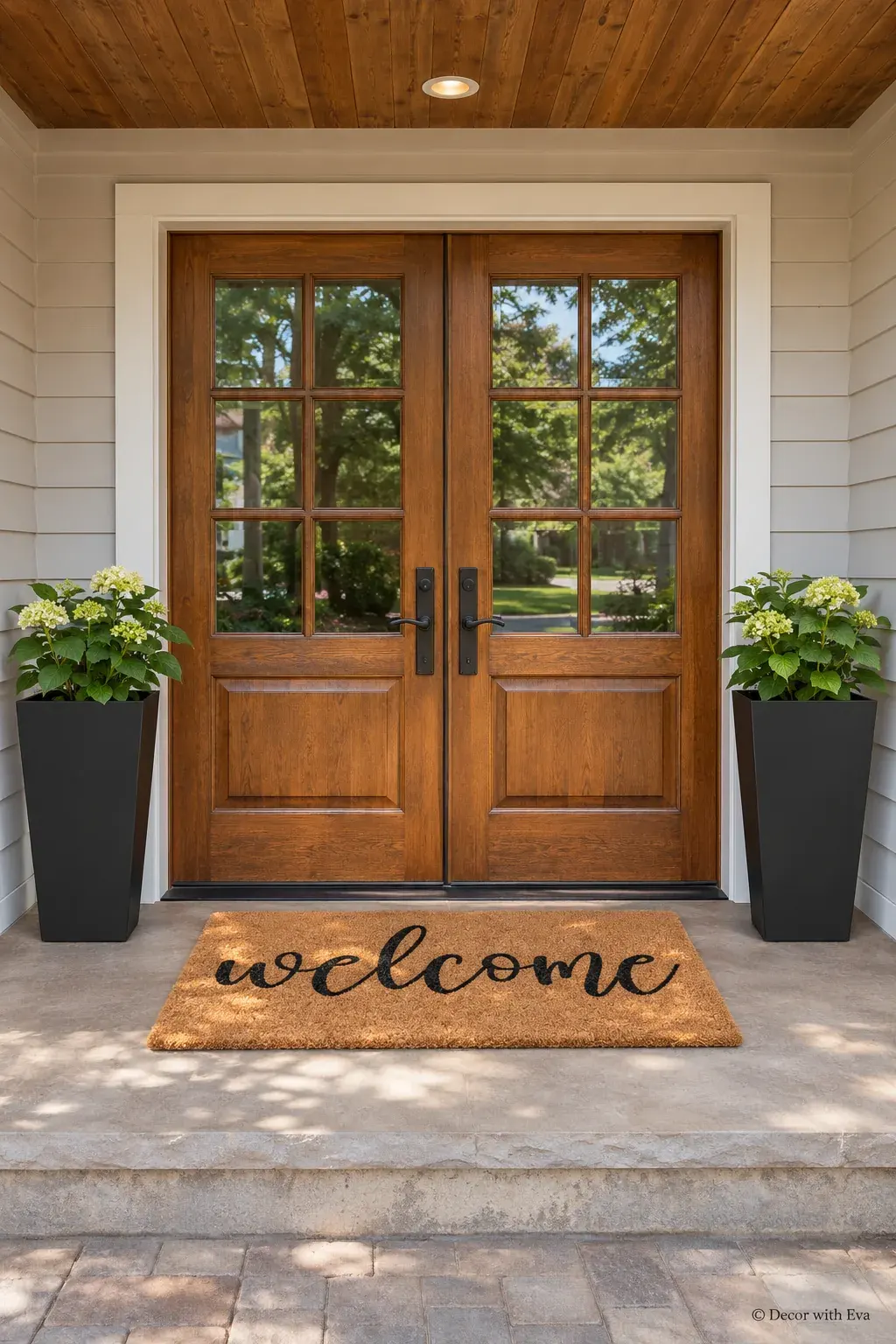
Double doors often look better with a mat that relates to their combined width. A broad script welcome mat gives the entrance one clear center, while tall black planters hold the outer edges. The arrangement feels intentional because the main pieces follow the doorway’s proportions.
The mat shown is 24 by 48 inches, making it a useful size to compare with a wider opening. Lay out the dimensions with tape before ordering, including the space the doors need to move. Keep the whole mat on a level landing and away from the edge of a step. Use coir in a suitable sheltered position and let it dry if it gets wet. A single appropriately sized mat can be enough without another rug beneath it.
9. A striped layer beneath a simple coir mat
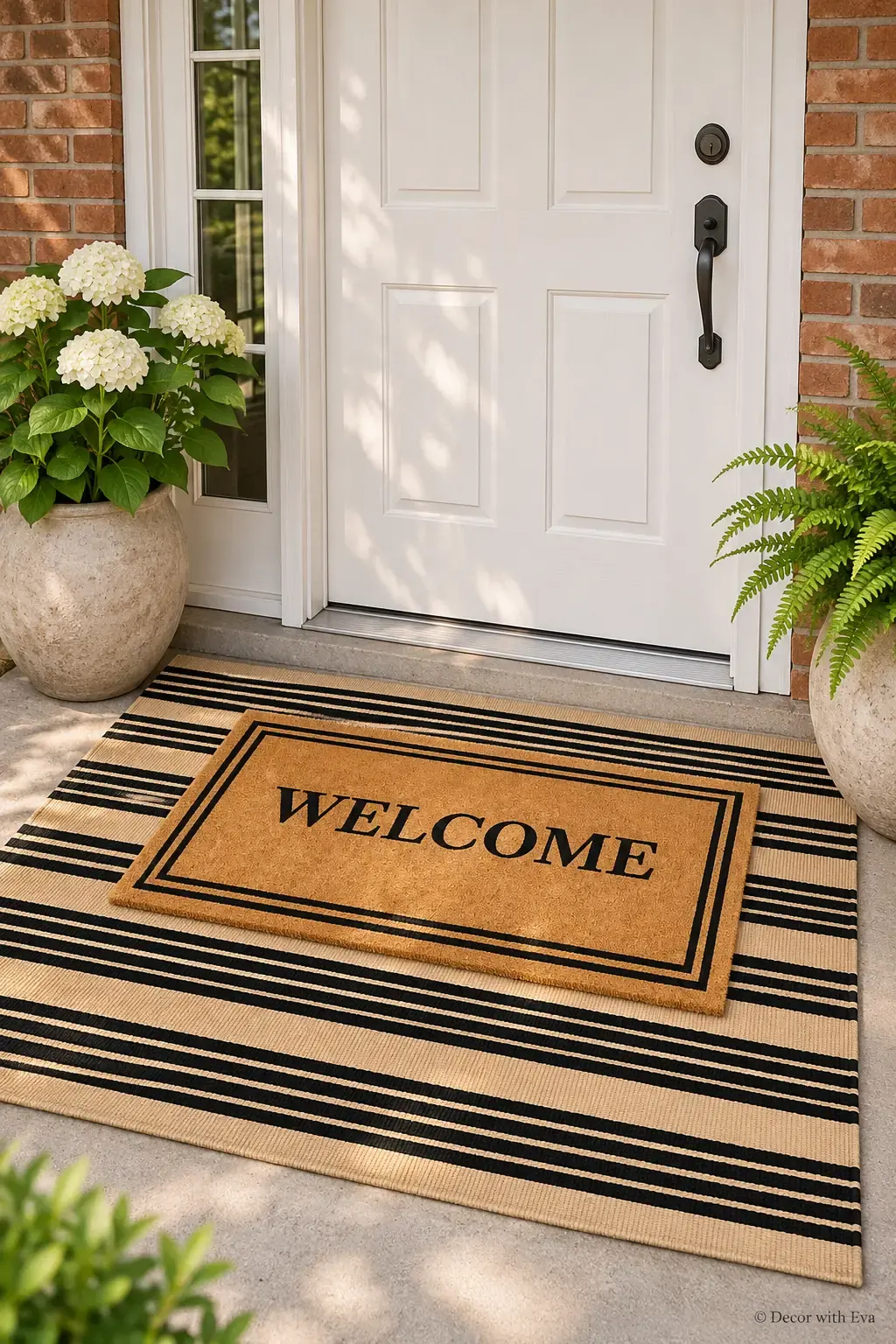
A striped layer beneath a coir mat adds pattern without taking up wall space. Black and tan stripes relate easily to a dark door, warm brick, or natural wood. The smaller bordered mat gives the arrangement a clear center, so the stripes read as a frame rather than a competing message.
Compare the two sizes before you buy. Here, a 17-by-30-inch mat sits over a 24-by-51-inch rug, leaving a visible border around it. The striped rug is a cotton, polyester, and viscose blend and is best kept at a dry, covered entry. Check both layers lie flat and the door clears their combined thickness. If the layers shift, curl, or stay wet in your location, simplify to one suitable mat.
10. A checkerboard entry with a quiet color palette
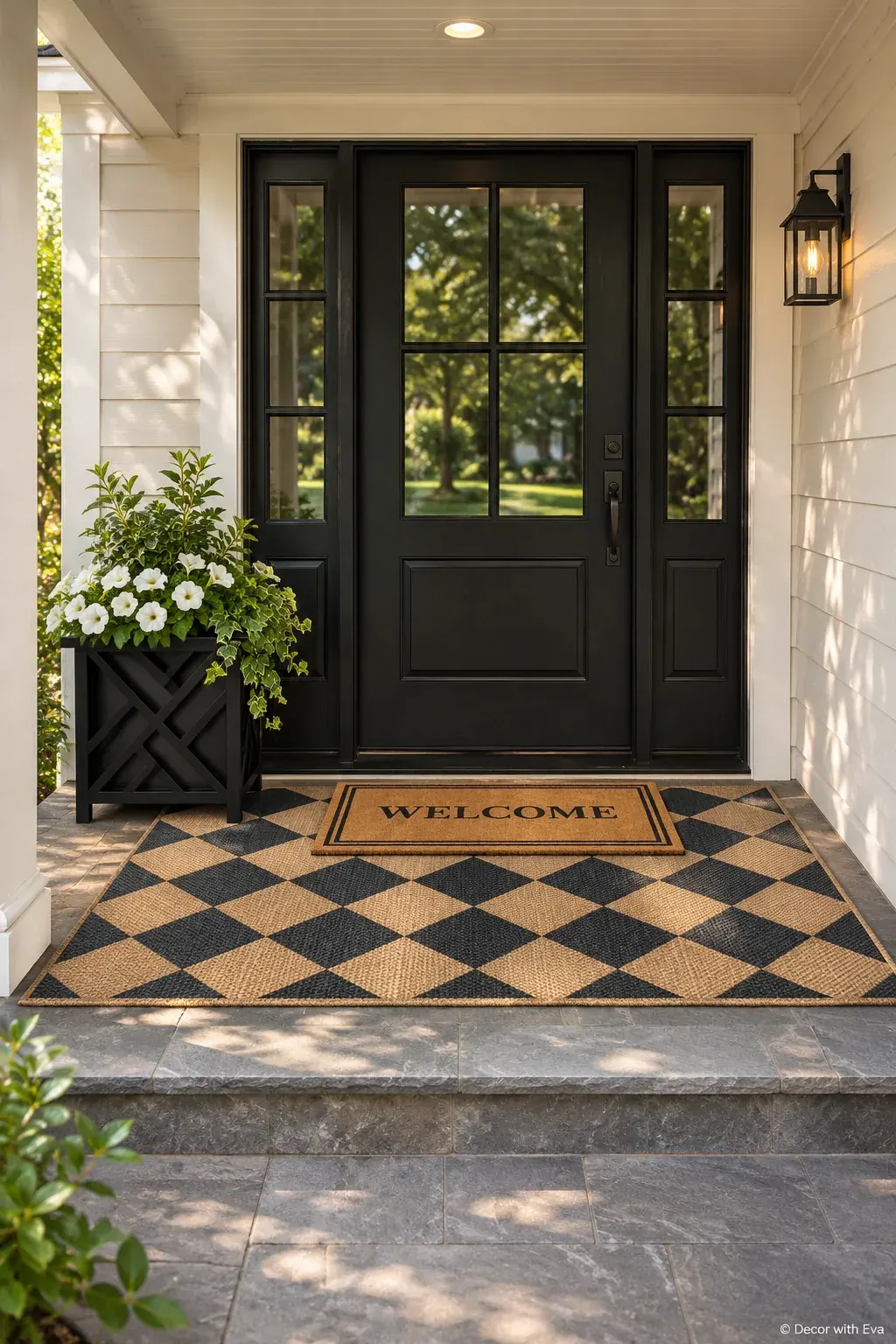
A charcoal-and-natural checkerboard rug gives a quiet entrance a little more personality. Keep the door, planter, and top mat simple so the pattern has room to show. A black lattice planter picks up the dark squares without making the entire porch feel heavy.
The rug shown is a 3-by-5-foot jute-look polyester design intended for covered outdoor spaces. Check that the full rectangle fits on the landing with room around the step edge; a photographed arrangement can look smaller than it is. The planter cover is about 14¾ inches square and 13 inches high. Decide whether you will use a nursery pot inside or the optional insert, and arrange drainage according to the instructions.
11. A sage plaid rug under an existing seating area
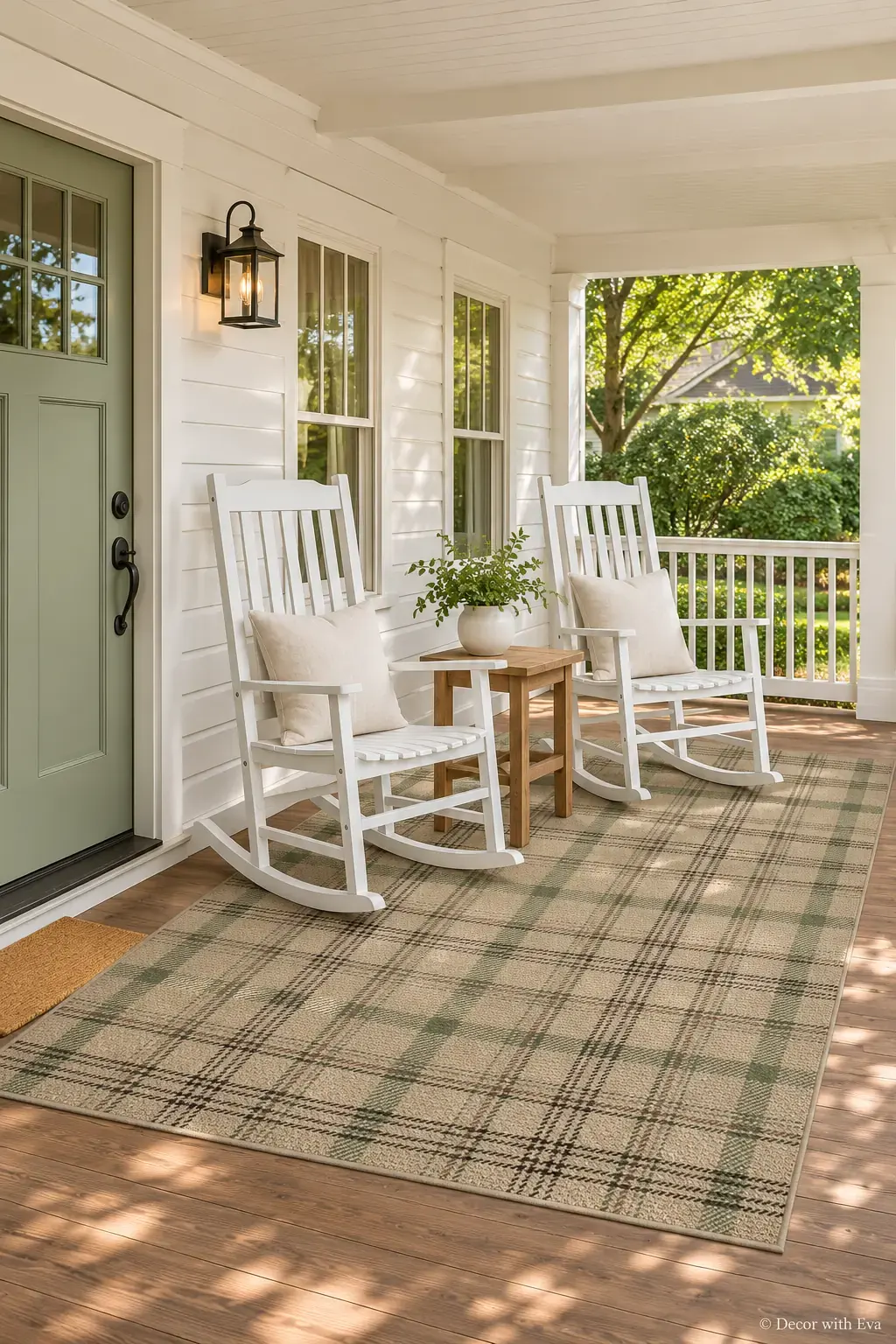
A sage plaid rug makes a covered seating area feel collected and gently colorful. It works well with white chairs, cream cushions, and ordinary wood flooring because those pieces give the checks a quiet background. Let the rug be the main pattern instead of adding several different prints around it.
This is a 5-by-7-foot polyester rug with a jute-inspired texture, so it needs a seating area with enough room for the whole size. Keep it under cover as the listing recommends, and check its suitability for your floor. Leave the rocking-chair travel and doorway clear. If your porch already has a busy painted floor, use plain cushions and skip the extra rug rather than trying to fit in every layer.
12. A slim wooden bench along the wall
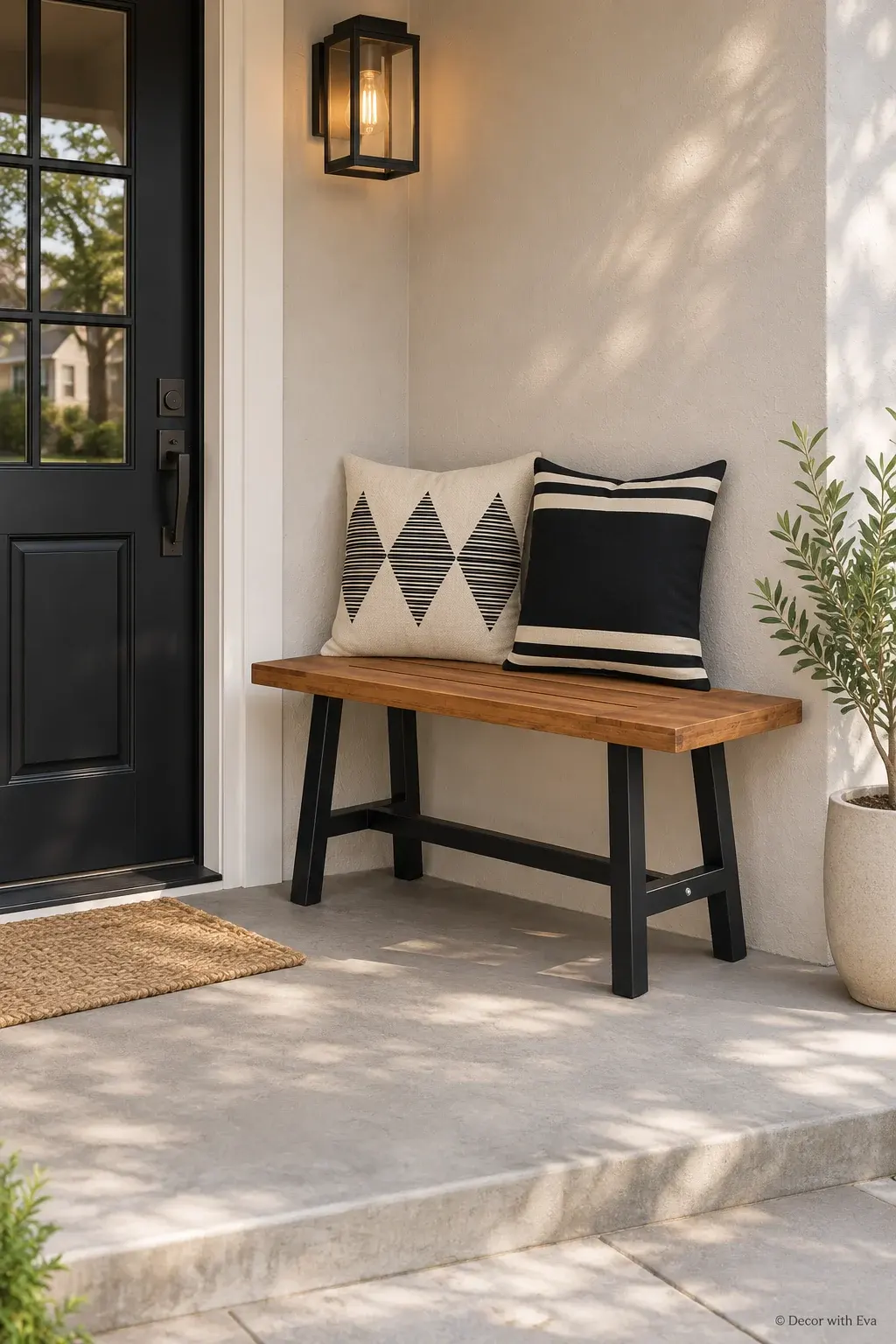
A slim backless bench gives a porch somewhere to pause without creating a full sitting room. Warm acacia wood and black metal legs look good against white siding, brick, or a painted wall. Two patterned cushions can soften the seat when the bench has a wall behind it.
The selected bench is about 40 inches long and 14¼ inches deep, which is easier to place than a full sofa. Measure the route to the door and leave room for someone’s feet when seated. The cushion set is black and beige, not bright white, and the inserts are separate. Use only the patterns you need, bring cushions in as appropriate, and keep the bench’s finish maintained according to its care guidance.
13. A black garden bench with blue ceramic detail
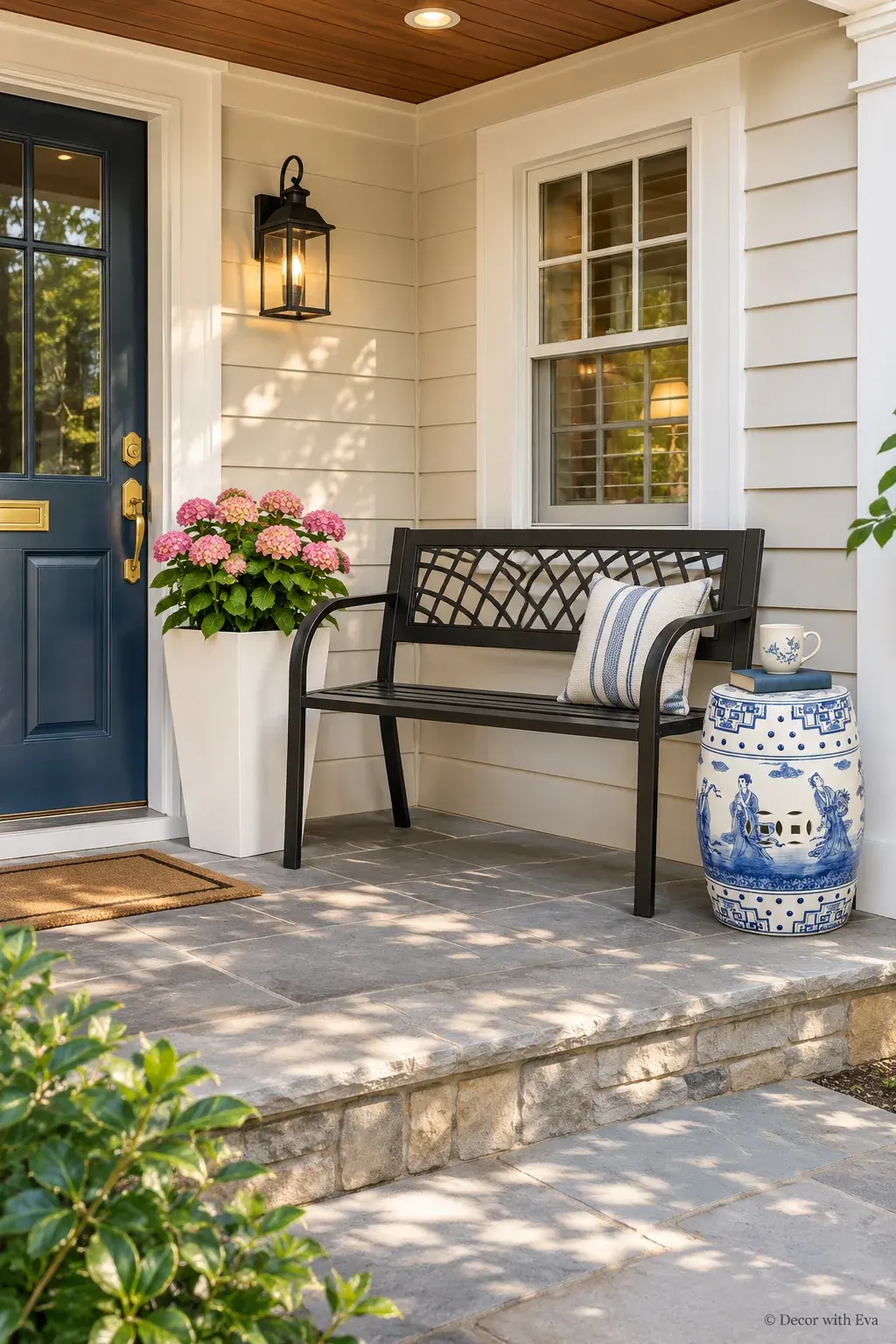
A black garden bench and blue-and-white ceramic table make a pretty pair on a traditional porch. The lattice back adds detail above the seat, while the painted ceramic pattern supplies the color. Pink flowers in a white planter make the combination feel fresh without asking the furniture to match exactly.
The bench is roughly 46 inches wide; its listing gives differing depth measurements, so confirm the full assembled footprint before buying. It has a steel frame with a decorative plastic back section, rather than an entirely cast-iron construction. The ceramic side table is about 13 inches across and 18 inches high. Keep it stable beside the seat and follow its winter-storage guidance. Leave an open route past the arrangement to the door.
14. A cedar swing with room to move
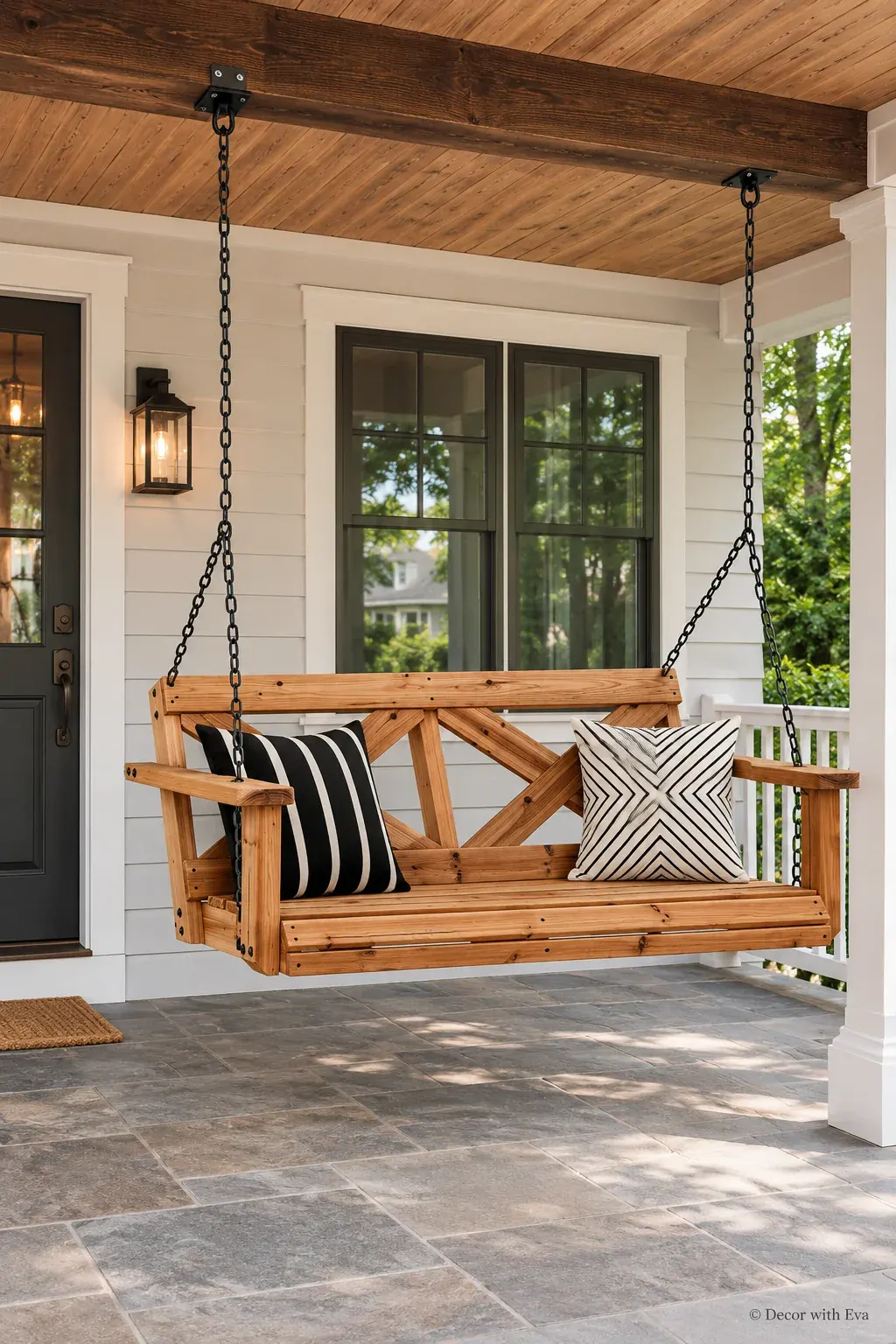
A cedar porch swing can become the feature that everything else revolves around. Its X-shaped back gives the seating a farmhouse character, and two black-and-beige cushions add pattern without hiding the wood. Let the space around the swing stay quiet so the movement and warm material are the main attraction.
Choose this idea only where the porch and supporting structure suit the specific swing. This one is about 55 inches wide and 28 inches deep; the footprint at rest is only part of the space it needs. Follow the manufacturer’s assembly and care guidance, and have the support and mounting confirmed for the installation. Keep furniture, pots, and the walking route outside its full travel area.
15. A sunny yellow table beside a favorite chair
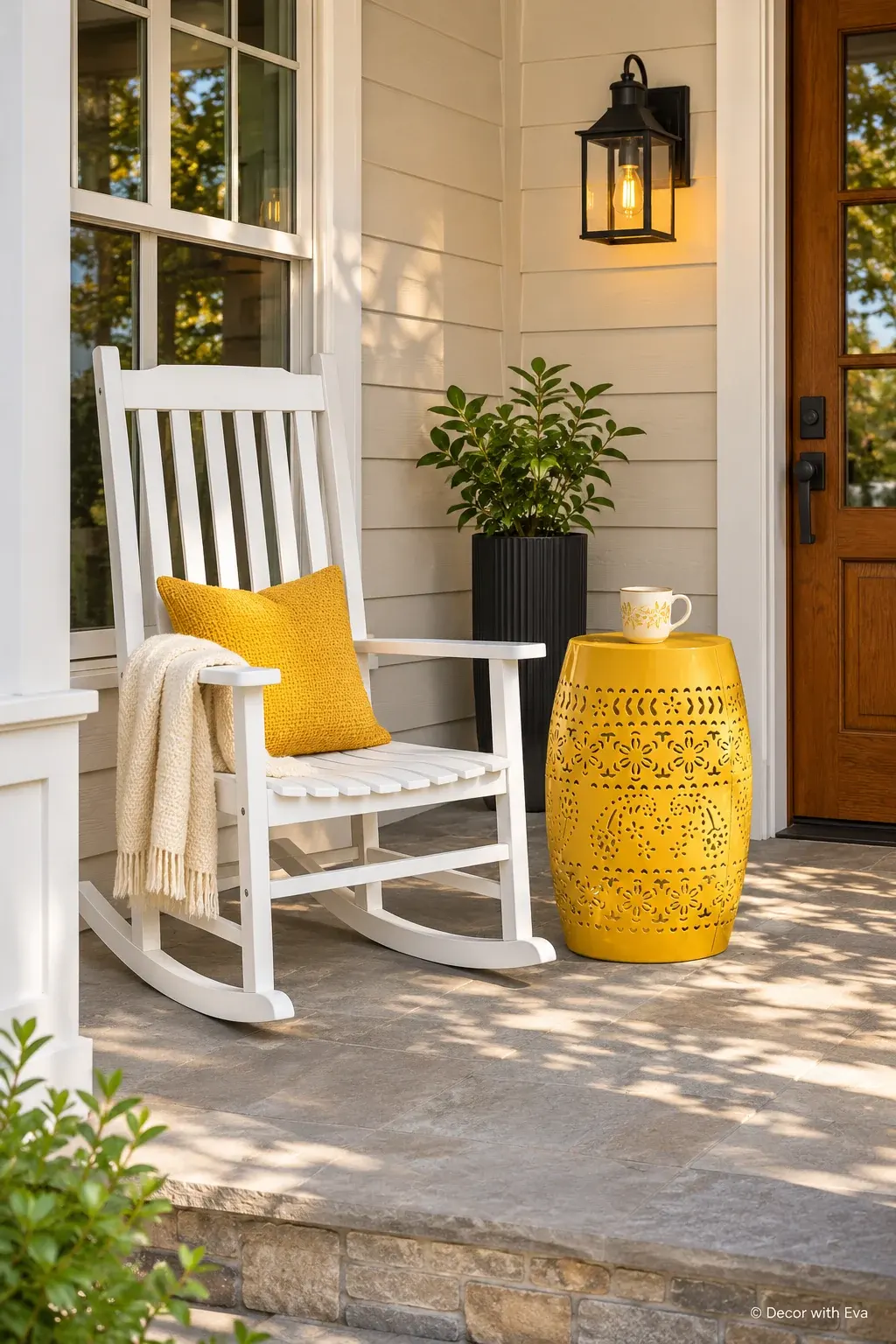
One sunny yellow table can wake up a porch that otherwise stays white and green. The lace-cut sides add texture and let the piece feel lighter than a solid block. Beside a white rocker, it is a small focal point that does not require changing the door or repainting the house.
This iron accent table is about 12¼ inches across and 18 inches tall. Check the height against your chair arm and leave space for the rocker to move without striking it. Put it on an even surface where a cup can sit comfortably, and follow the finish-care instructions. Treat it as a side table rather than assuming a decorative stool description makes it suitable for every kind of seating use.
16. Clear house numbers near the door
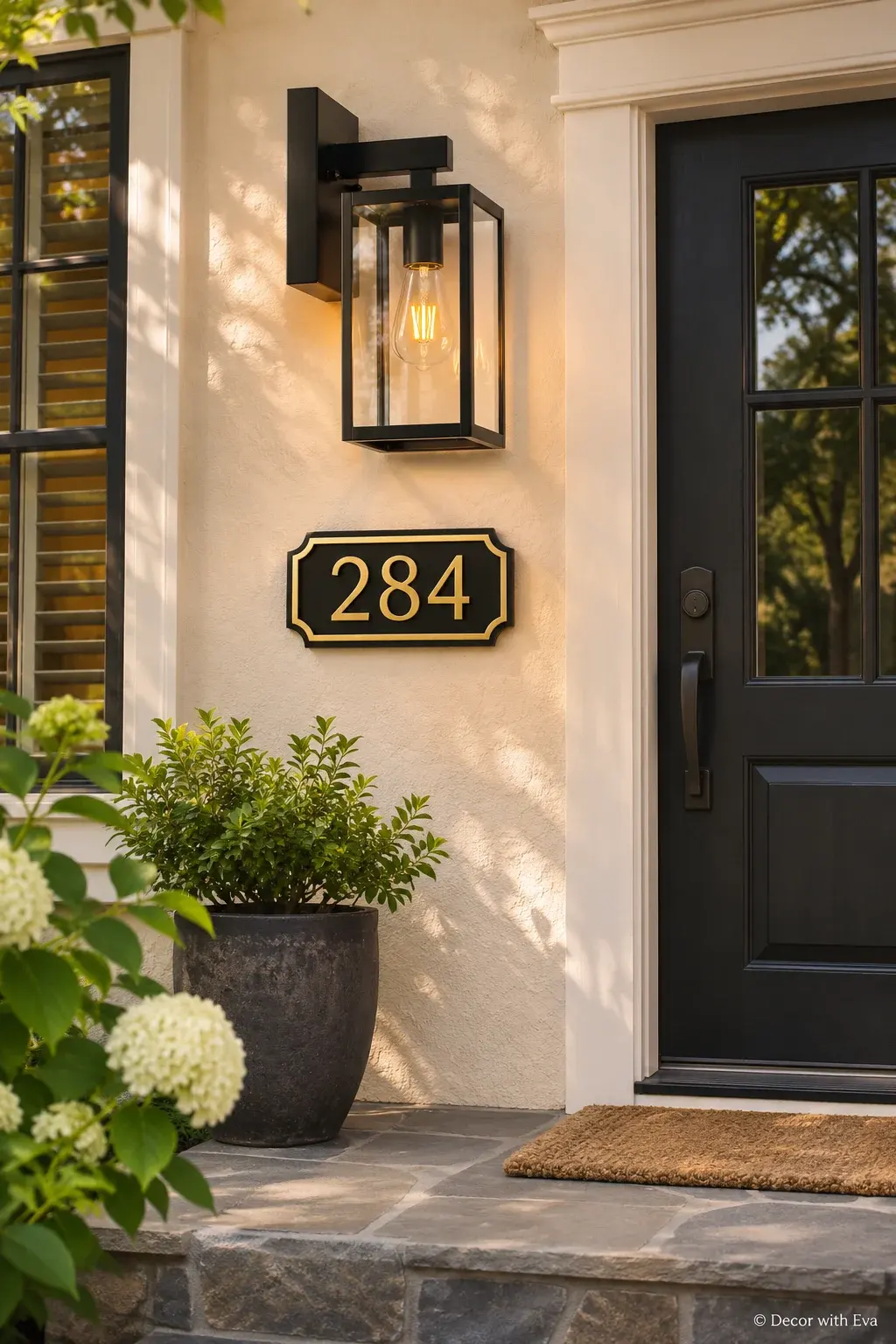
Clear house numbers are a practical finishing detail that can also bring the entrance together. A black plaque with gold digits relates nicely to warm wood and a simple black lantern. Give the plaque its own patch of wall instead of surrounding it with a wreath, climbing stems, or several small signs.
Check the size from the approach to your home, including the angle at which visitors normally arrive. This acrylic plaque is roughly 10 by 4 inches, so a larger or different address display may suit a longer viewing distance. Lay the digits out before attaching them; the adhesive design is difficult to rearrange once fixed. Use a compatible surface and mounting method, and keep planting from growing across the numbers.
17. Three planters with different heights and textures
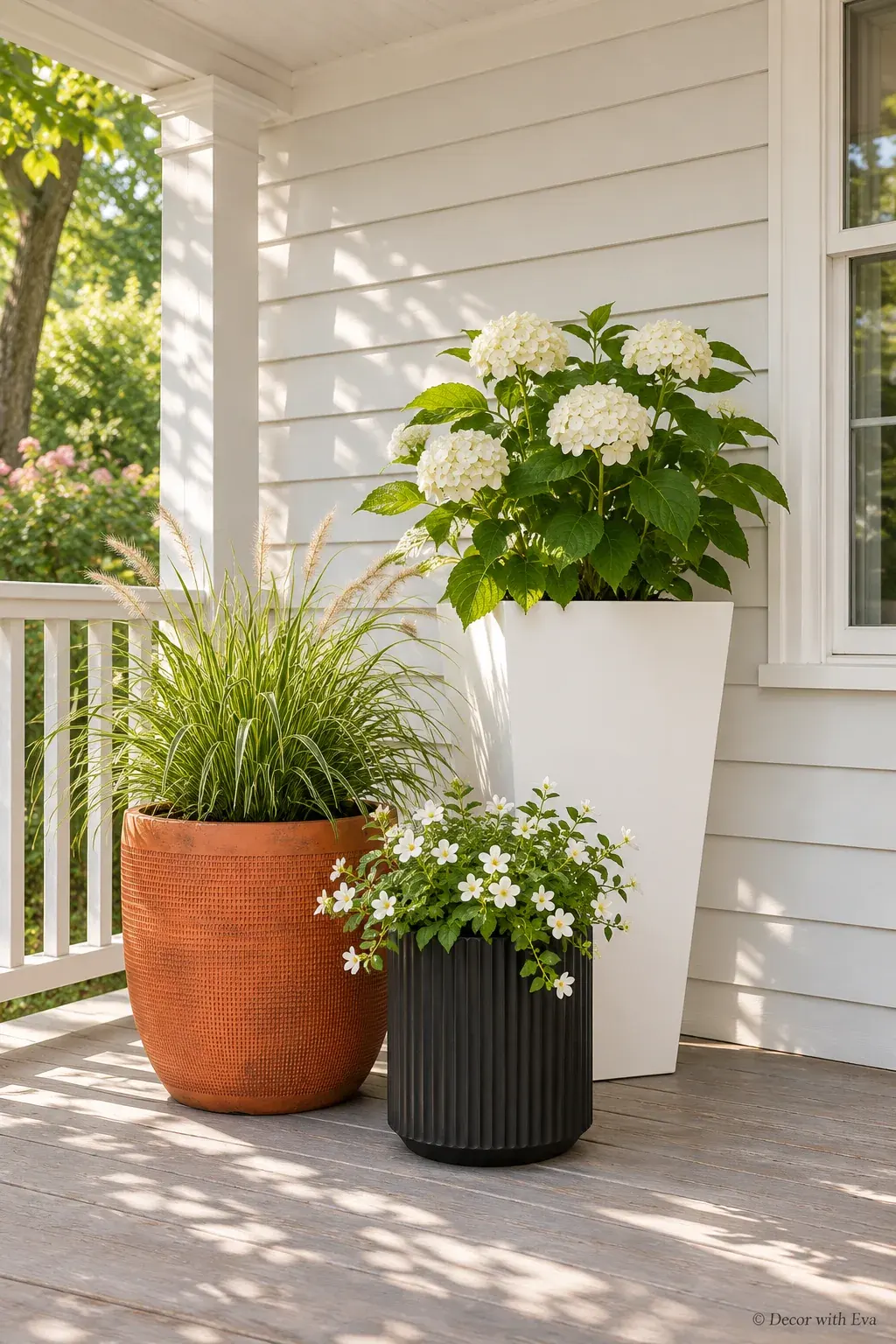
A group of three planters looks collected when the pieces share a small range of colors but differ in height. A terracotta-toned pot, a black fluted round pot, and a taller white container give the corner variety without needing several different flowers. Repeat green foliage to make the group feel connected.
Arrange the empty pots first, on one level and away from the entry route. The orange pot here is 12 inches wide and high and is made from fiberstone, while the black fluted pots are about 11 inches across and 12 inches high. Match the plants’ light and watering needs to their position. Keep drainage working and choose a group you can still reach to water, lift, and clean around.
18. Copper-look urns for a traditional entrance
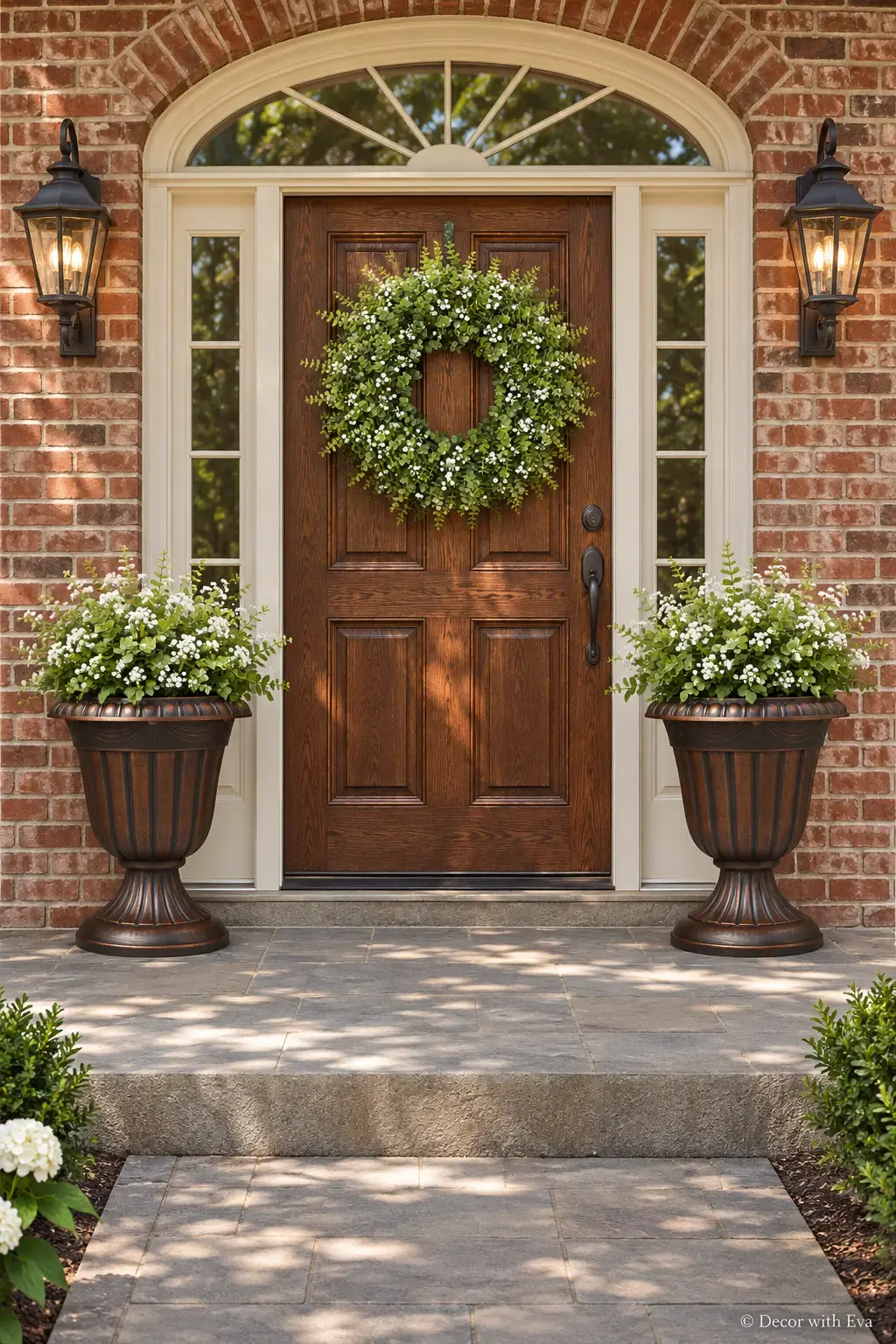
Copper-look urns give an entrance a traditional shape and a warm finish. They are particularly attractive against brick or a wooden door, where the fluted sides and pedestal base relate to the house’s detail. White flowers keep the planting light, while a full green-and-white wreath ties the arrangement together.
These urns are plastic with a brushed-copper finish, not heavy metal. Each is about 13 inches across and 15 inches tall, with a smaller planting section inside. They arrive without drainage holes, so arrange drainage as directed before planting. Keep lightweight containers stable for your exposure and avoid setting them on stair treads. One urn can work just as well where a matching pair would make the entrance awkward.
19. Give existing pots a little breathing room
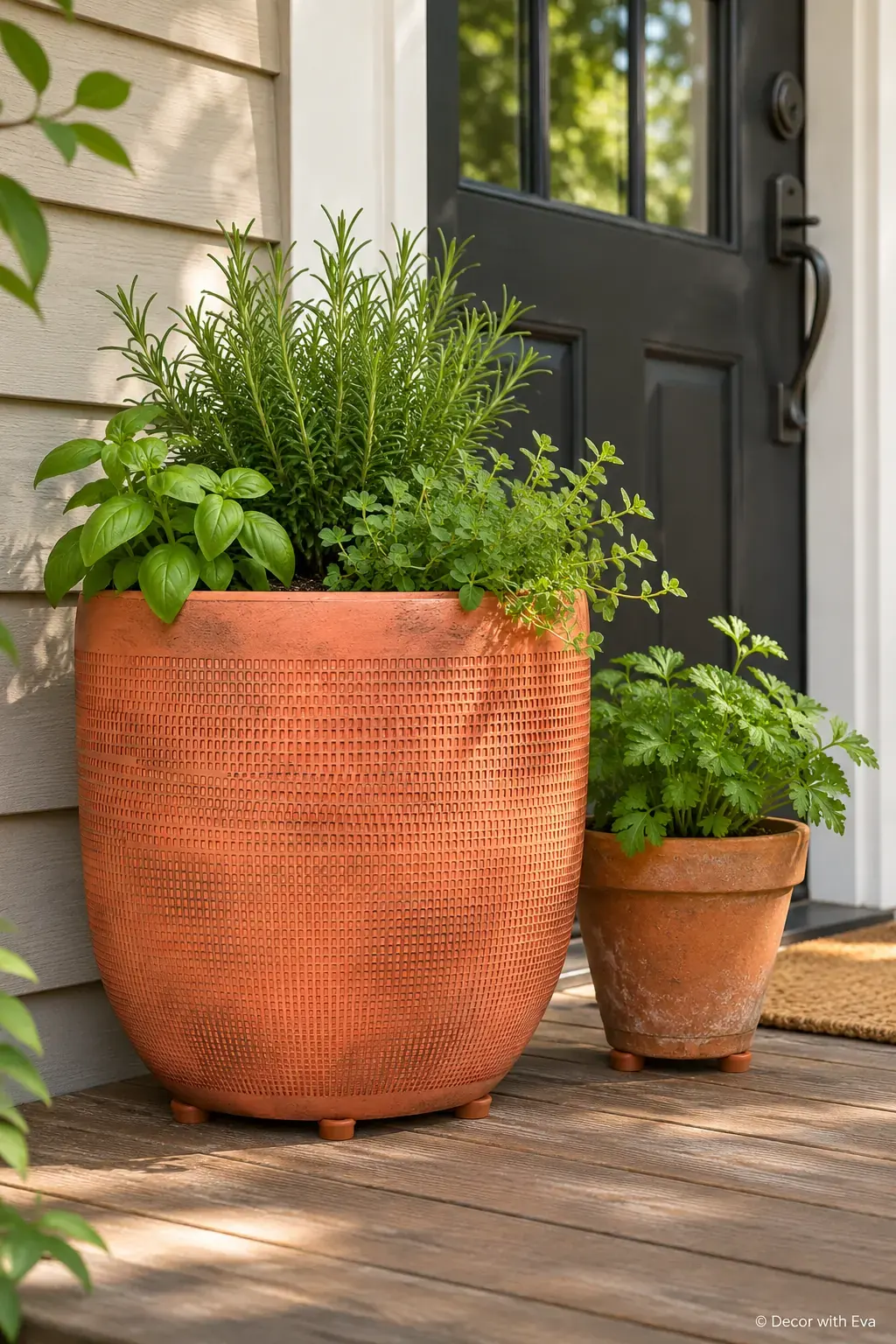
A little air space beneath a planter is a useful detail on a porch that gets watered often. Small pot risers can lift the base just enough to keep drainage openings from sitting directly against the deck. Choose a color close to the pot or floor so the supports stay visually quiet.
Check the risers suit the base of the particular container and follow their positioning instructions. The small plastic supports shown are terracotta colored; they are not clay blocks. Keep the pot stable and the drainage openings clear, and inspect the floor underneath regularly. Risers do not remove the need to manage runoff or maintain the porch surface. Use existing suitable containers rather than replacing every pot to achieve a matching group.
20. Hanging baskets that leave the landing open
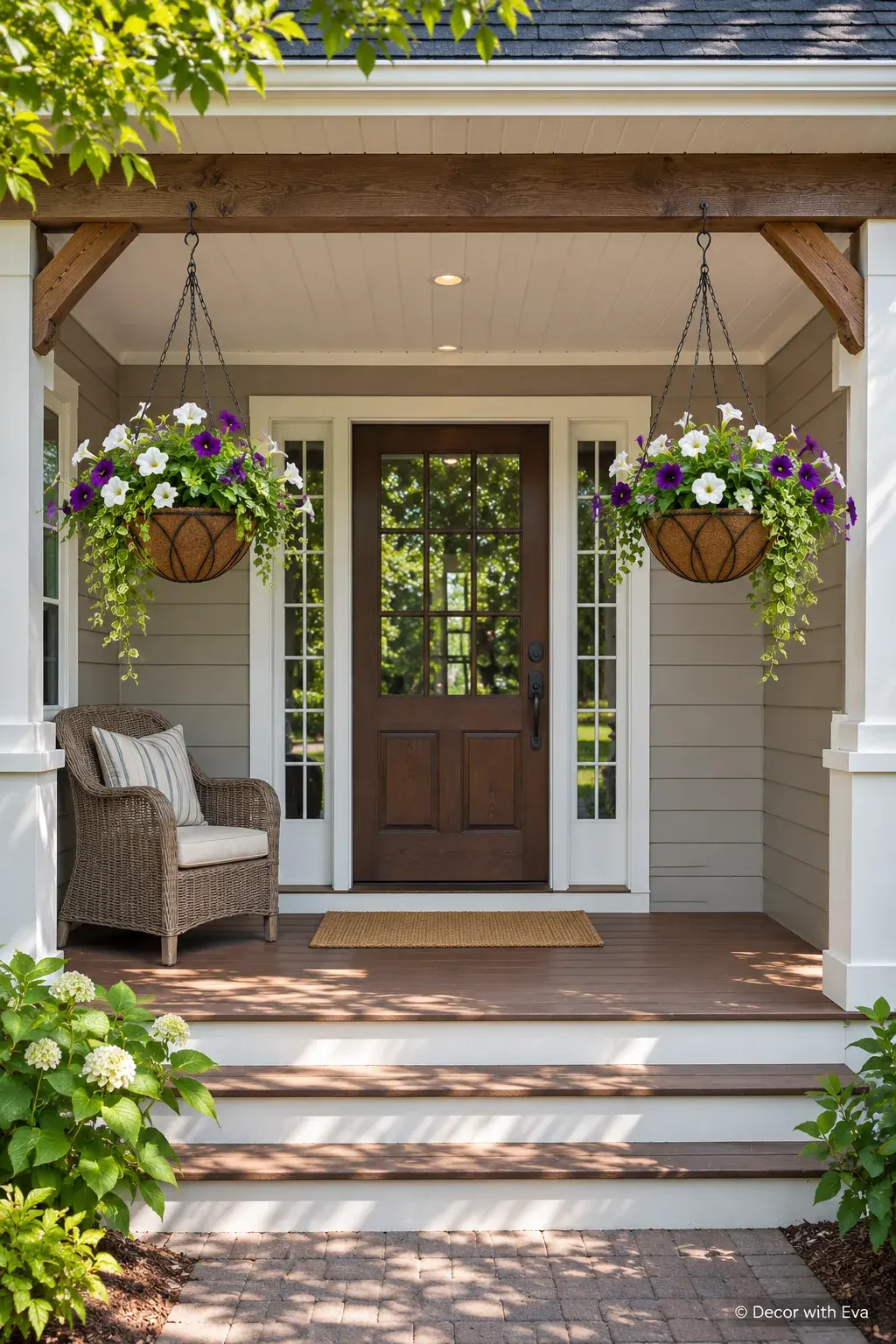
Hanging baskets bring flowers up toward eye level while leaving the landing open. A pair of simple black wire baskets with coconut liners feels at home on a cottage porch, especially with white and purple flowers spilling gently over the edges. Keep the containers themselves quiet so the planting can lead.
The baskets shown are 12 inches across and include chains and hooks, but the hanging point still needs to suit the filled, wet weight. Choose a proper support and leave headroom, door movement, and the handrail unobstructed. Plan how you will water and bring the baskets down for care. Match the plants to the light at that height; a spot beneath a porch roof can be quite different from the garden just beyond it.
21. A flower-filled box on the porch rail
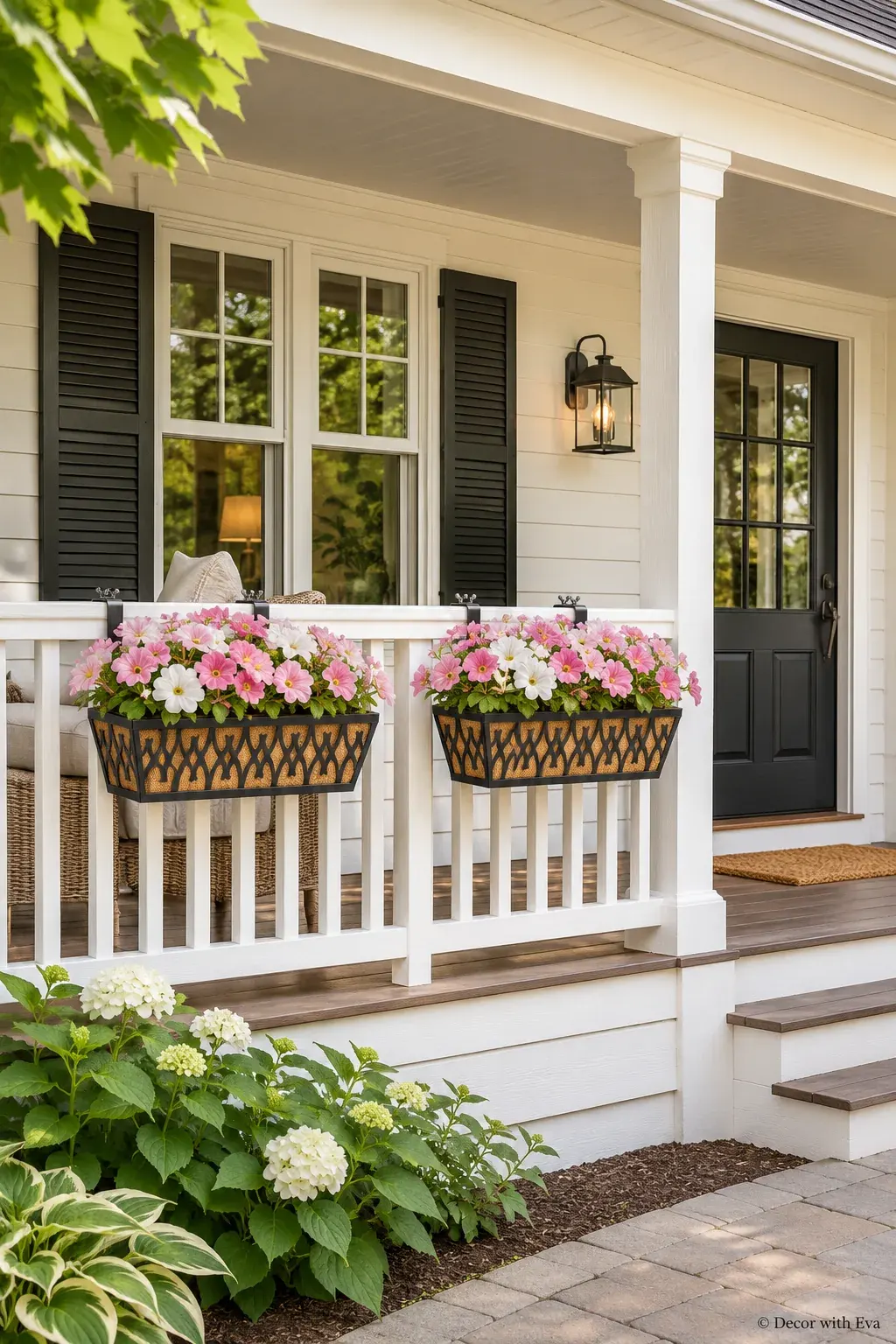
A flower box can make a porch rail part of the decorating without lining the floor with pots. The black lattice and natural coir liner add texture below a simple white railing, while pink and white blooms give a softer outline. Repeat the same box and planting rather than using several unrelated containers.
These boxes are 24 inches long, 7 inches wide, and 5½ inches high. Check the adjustable brackets against your actual rail and follow the mounting instructions for the filled weight. Keep the handrail usable and the containers securely within a suitable position. Their shallow planting space needs a planting plan to match. Allow for drainage and keep runoff away from the area where people enter the house.
22. Small rail pots for a green finishing touch
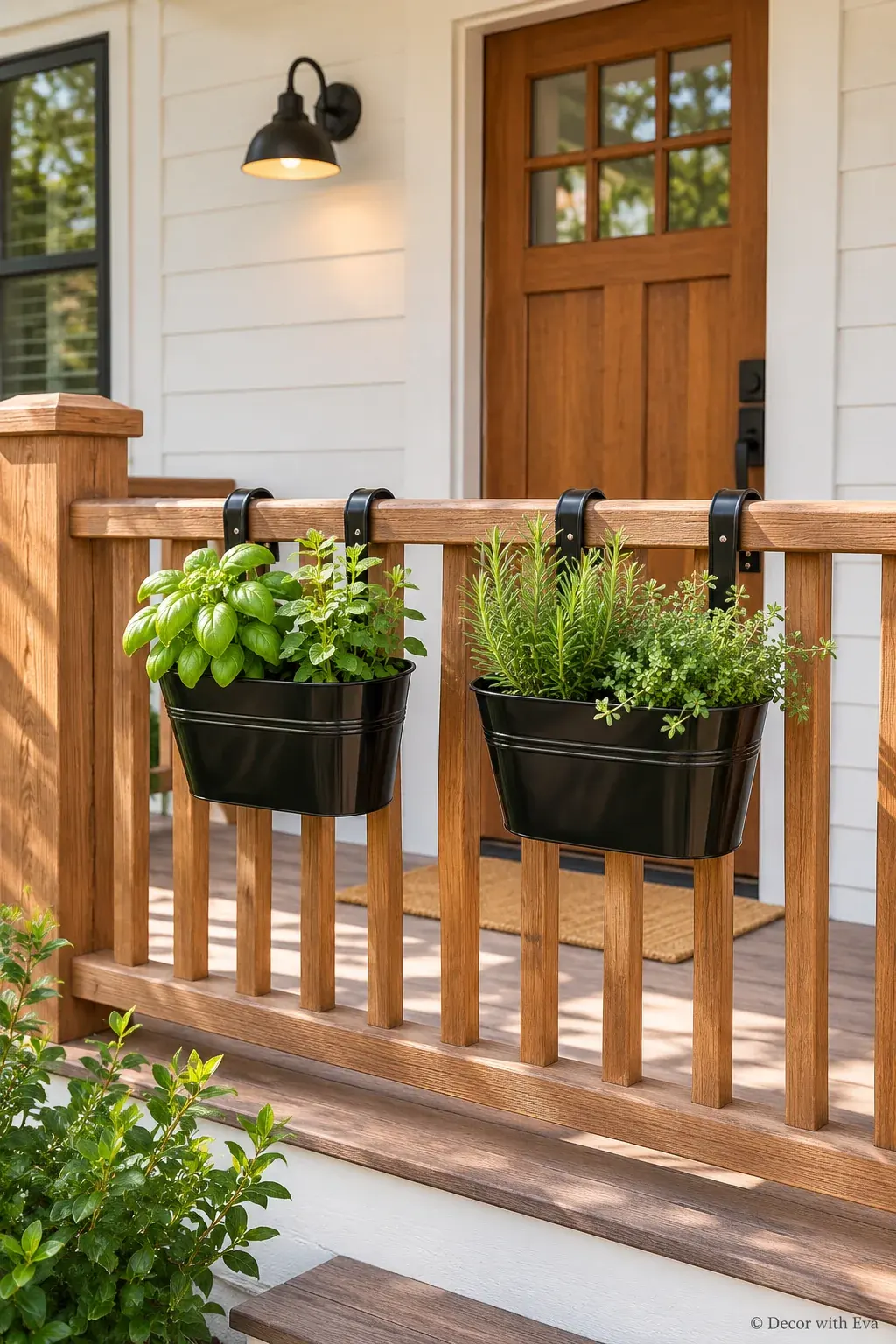
Small black rail pots are useful when you want a little greenery rather than a long flower display. A pair of compact buckets can hold herbs or foliage and pick up black door hardware elsewhere on the porch. The repeated shape gives the rail a finished edge without covering every section.
These rounded rectangular pots are about 9.8 inches long, so compare their usable size with the plants you intend to grow. Check the hooks fit the rail and secure the pots according to the instructions, with the handrail and walking route clear. They have drainage holes, which means water will need somewhere appropriate to go. Keep the group small enough that you can reach and care for every plant from a comfortable position.
23. A stepped plant display in an unused corner
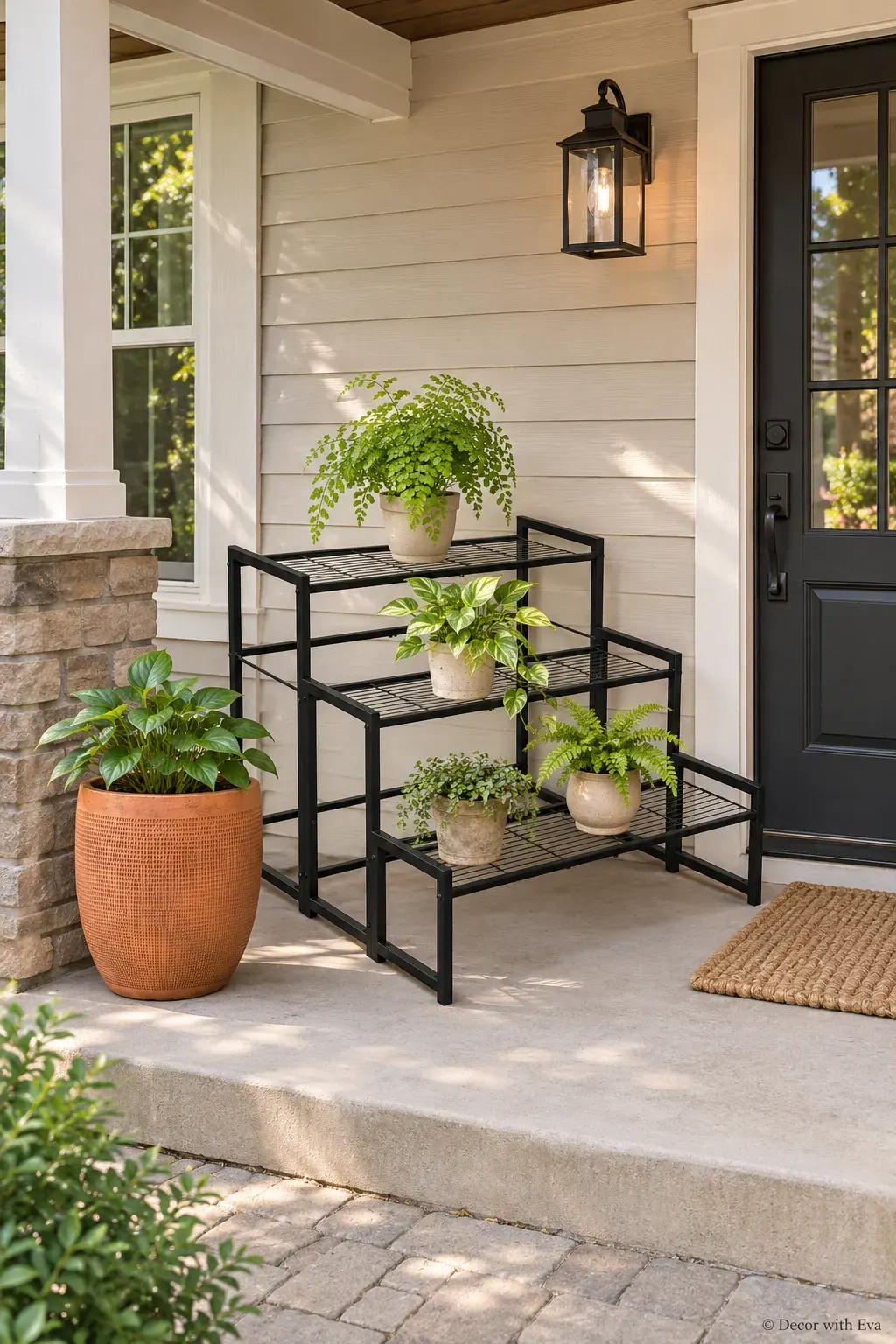
A stepped plant stand lets a few small pots make a more interesting display in an unused corner. Black metal gives the group a simple structure, while terracotta tones and different leaf shapes keep it from looking like a row of matching stock pots. Leave part of each shelf visible so the plants have space to develop.
The stand shown has three stepped levels, each about 27¼ inches wide and 10 inches deep, with the tallest level roughly 23¼ inches high. Include the whole stepped arrangement when measuring the corner. Keep larger pots on the floor beside it rather than balancing them over a narrow shelf. Assemble the stand as directed, check its loaded stability, and leave enough space to water without moving it into the entrance.
24. A black lantern pair for a gentle evening glow
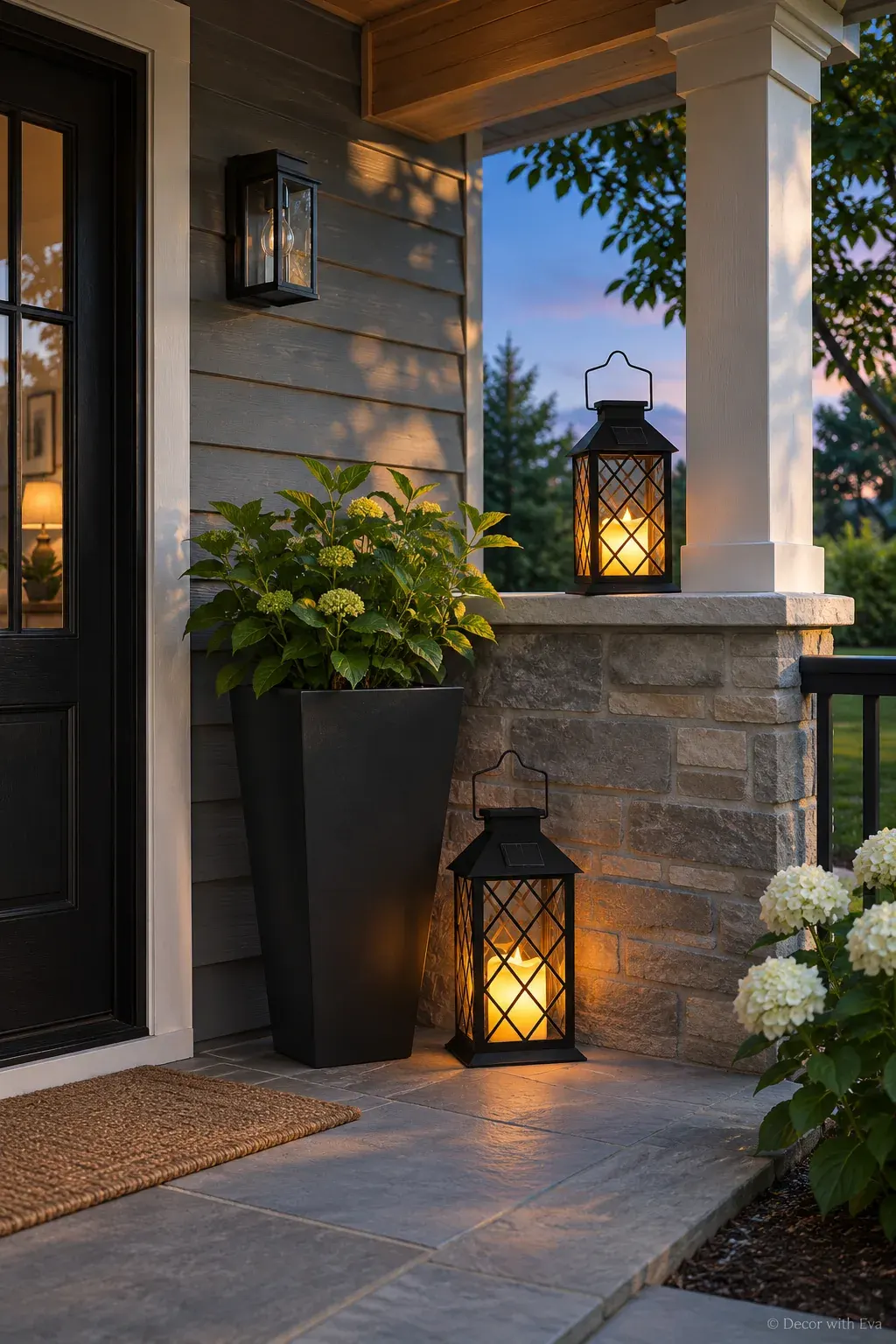
A pair of black lanterns gives the porch a gentle evening focal point. Put one on a stable low ledge and the other beside a planter so the arrangement has different levels without requiring different lantern sizes. Their amber glow looks warm against dark green leaves and pale siding.
The selected lanterns have an 11-inch body and measure about 14 inches including the handle. They use an ABS frame with glass panels rather than a heavy metal structure. Solar models need a position with suitable daylight for charging; a deeply shaded porch may suit another lighting approach. Treat their glow as decoration and keep normal entrance lighting in place. Leave lanterns clear of steps and follow the specified battery and care instructions.
25. Bronze lanterns on a rustic side table
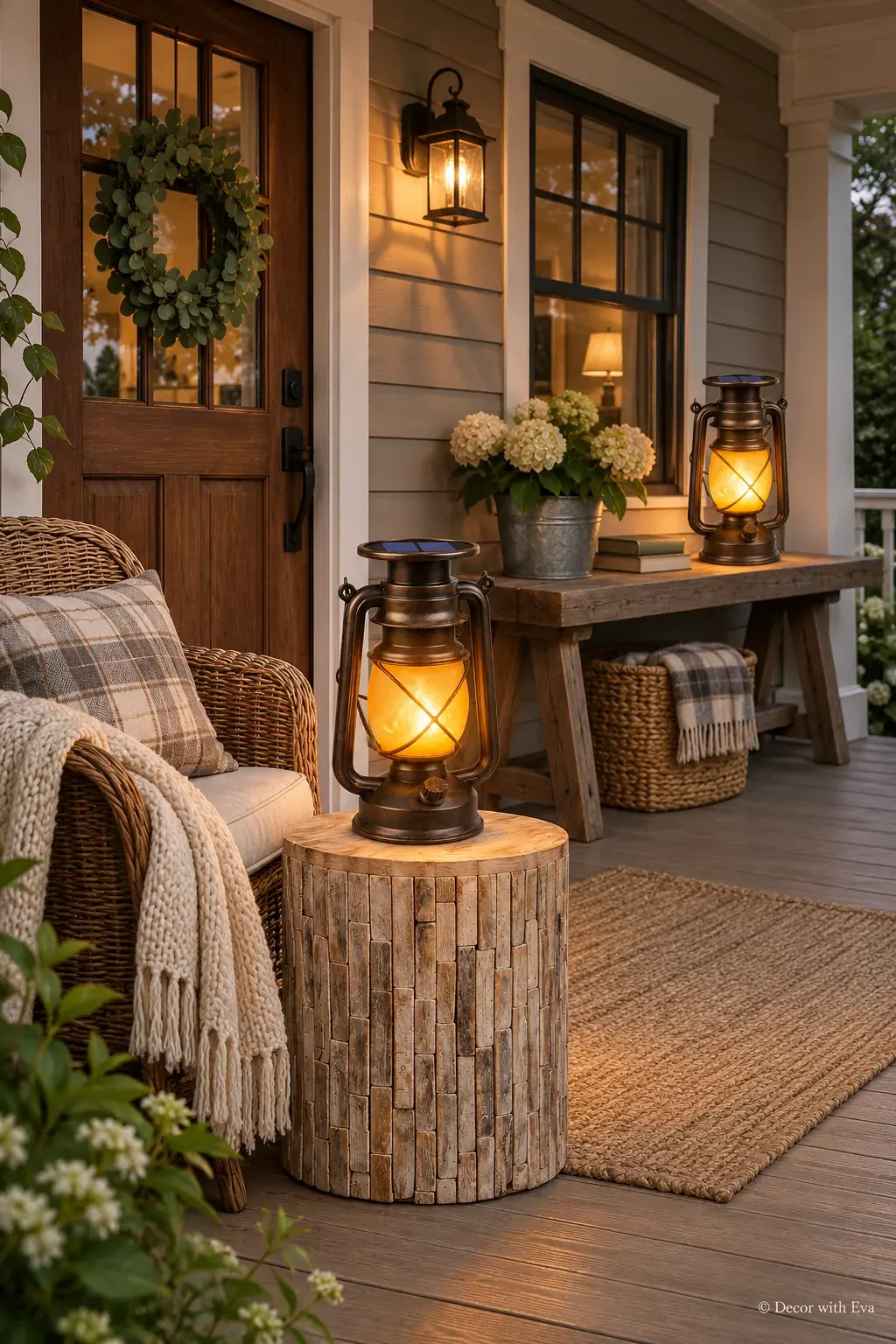
Bronze lanterns and a rustic wood table give a porch a quieter, collected look. The rounded lantern shape feels a little like an old oil lamp, while the light is LED. One on the table and another on an existing wide bench create a small evening arrangement without putting anything on the stairs.
The lanterns have a bronze-colored ABS body, so describe the finish rather than assuming they are metal antiques. Give the solar tops suitable charging light and follow the product instructions. The patchwork wood stool is sold with a variable natural or seasoned-patina finish; yours may not match the exact tone of a photograph. Check its assembled diameter and height before choosing the spot, and keep the tabletop level for everyday use.
26. Fresh green cushions on a bench you already own
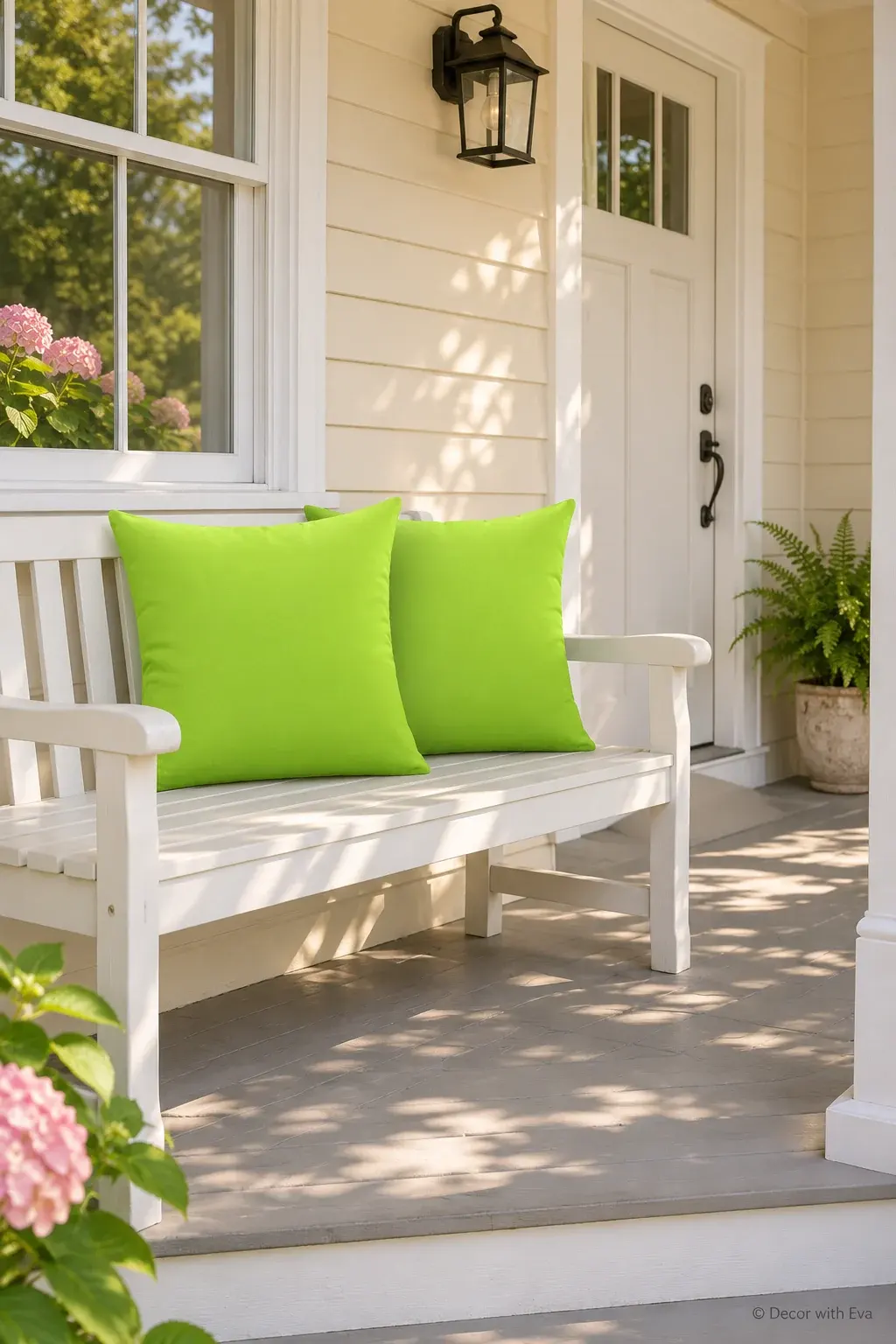
Fresh green cushions can make a bench you already own feel ready for another season. Here, the bright lime shade is the point: it brings a clean pop of color to white-painted wood and a quiet wall. A little nearby foliage helps the color belong without adding another bold accessory.
Use one solid cushion color when the porch already has decorative trim or patterned flooring. These are 18-inch covers sold as a pair, with inserts purchased separately. Check the fabric care and bring the cushions into suitable storage when needed; an outdoor listing does not make every insert or seam suitable for constant wet exposure. Start with the seating you have and change only the part that would make you enjoy it more.
27. A warm brass light by a wooden door
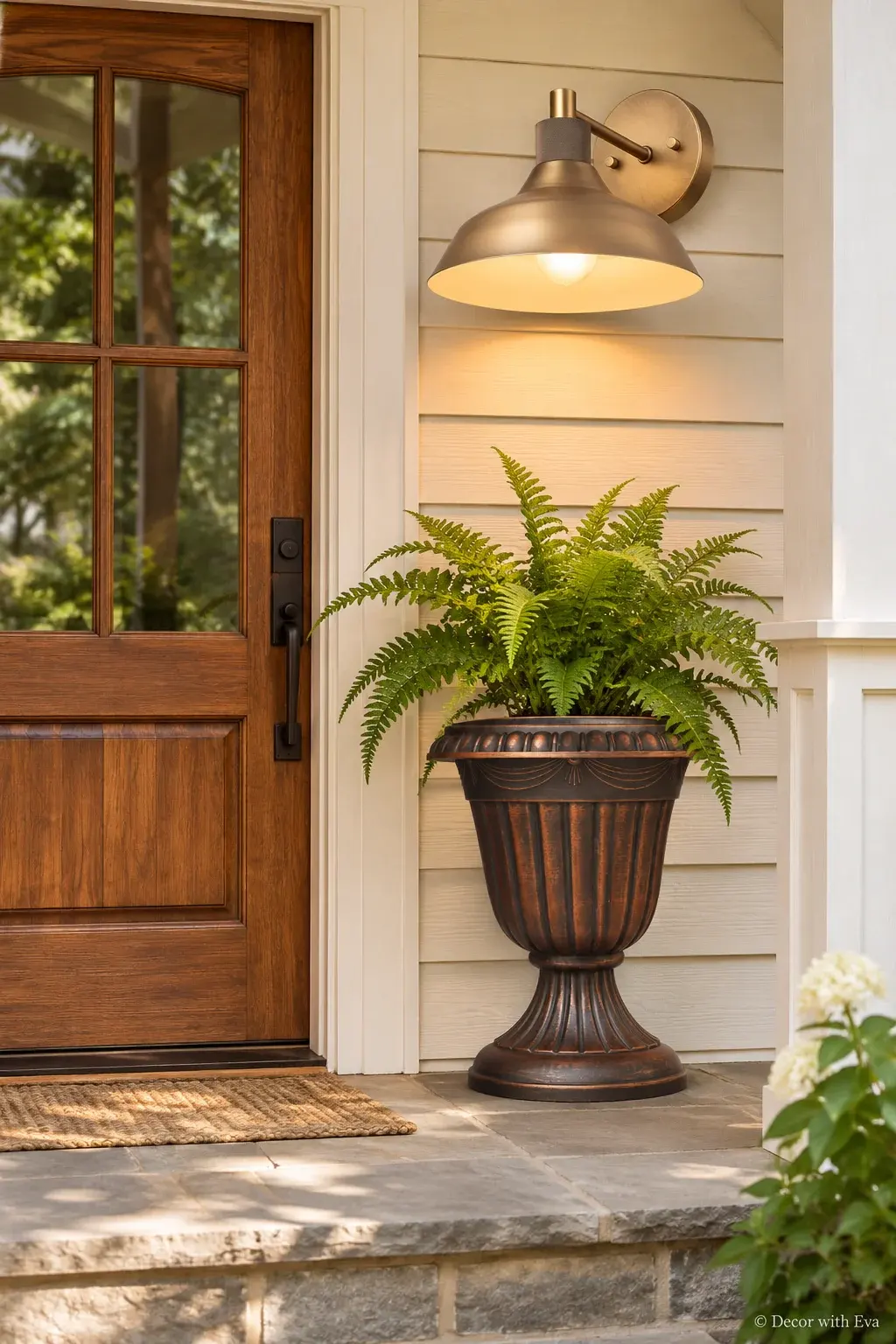
A warm brass porch light adds a different kind of texture to a wooden doorway. The broad barn-style shade has enough shape to be decorative in daylight, and a copper-look urn below repeats its warmth. Keep the rest of the entrance simple so the finishes can stand out.
The selected fixture is a 9-inch style with an E26 socket and a separately purchased bulb. Check the manufacturer’s placement and exposure requirements before choosing it for your porch. Use a suitable bulb within the fixture’s specifications and qualified help where needed for wired installation. A warm finish can relate to existing hardware without matching every metal exactly. Keep foliage trimmed clear of the lamp and the light from shining directly into a seated person’s eyes.
28. A simple line of warm lights under the roof
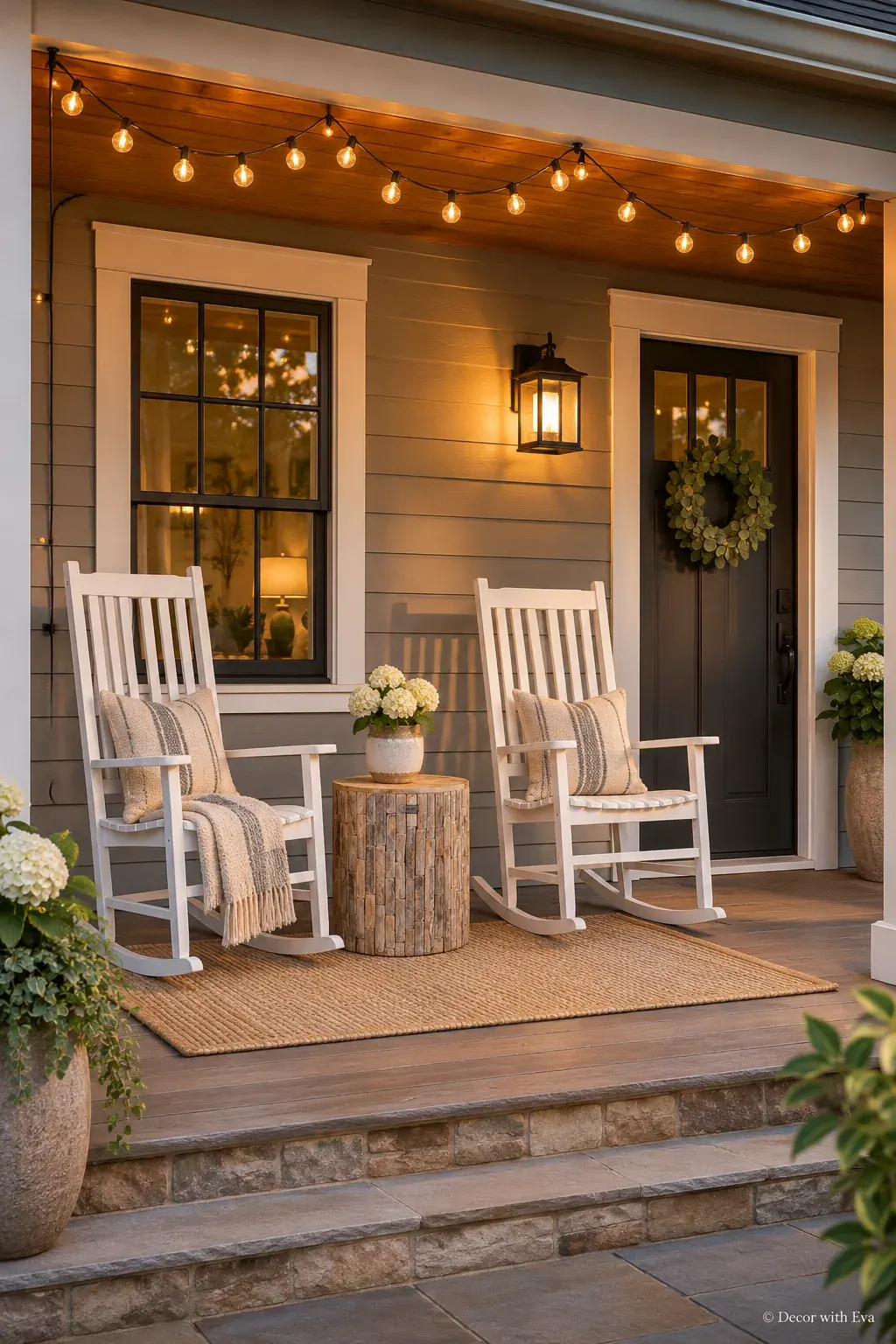
One simple line of string lights can make the sitting end of a porch feel inviting after sunset. Gentle swags under an existing roof beam look calmer than lights wrapped around every post. White rockers and a small wood table keep the arrangement useful during the day as well.
The selected string is about 29 feet overall with 12 globe bulbs, so measure the planned route and the distance to a suitable outdoor supply. Keep the cord and bulbs clear of doors, heads, and foot traffic, and use appropriate supports without damaging the cable. Follow the product’s connection and installation limits rather than guessing from a photograph. Let the normal porch light handle the entrance while the string lights provide atmosphere.
29. Soft curtains at the side of a covered porch
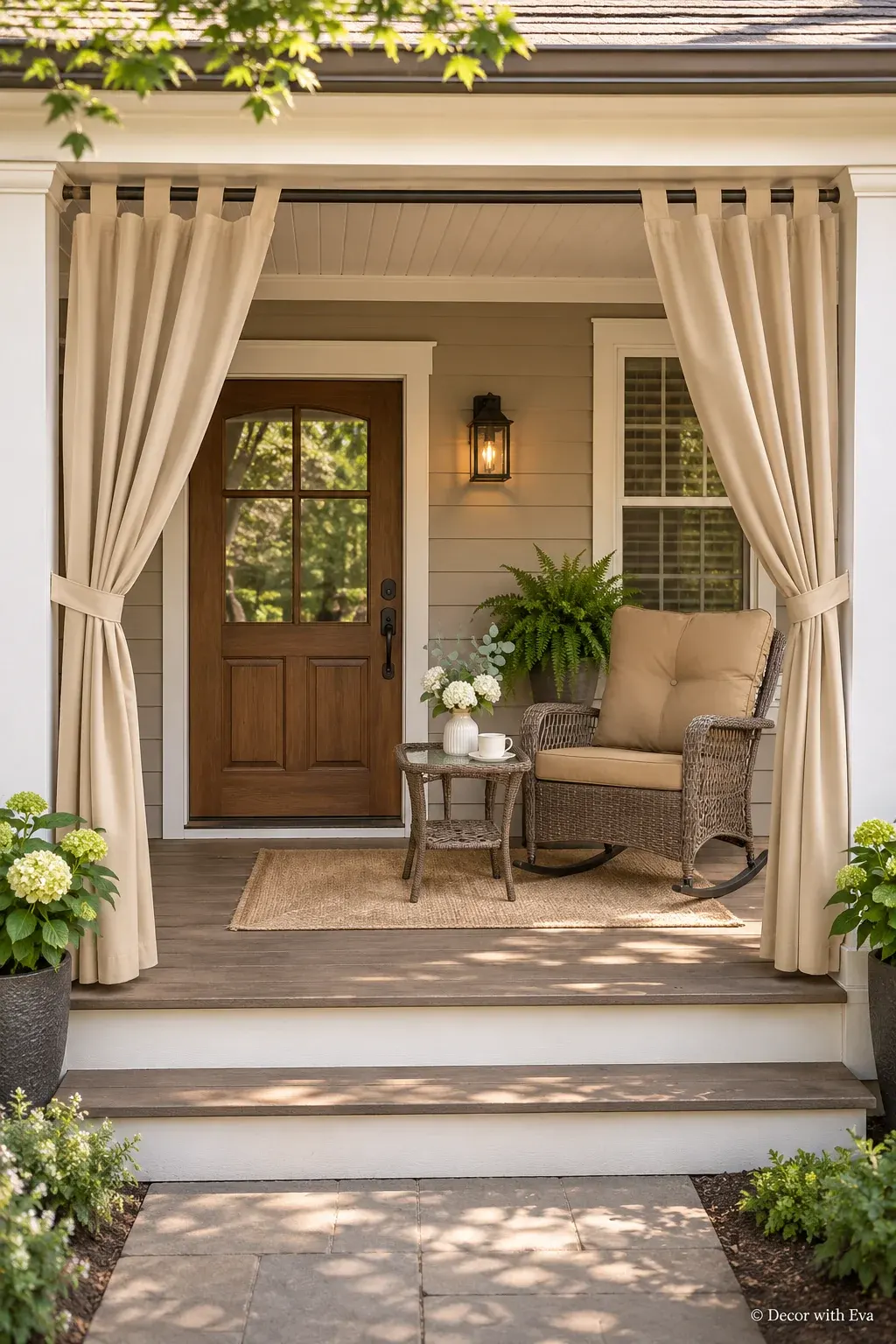
Soft curtains can make the side of a covered porch feel more like an outdoor room. Beige panels sit easily with wicker and warm wood, and they can frame an opening without adding a solid screen. Keep the front of the porch open enough that the entrance still feels welcoming.
These polyester panels are 52 inches wide and 84 inches long, with detachable loop tops. Measure from the actual rod position and leave the hems clear of the floor. Use suitable mounting and tie the panels back where they cannot swing into furniture or the doorway. Outdoor fabric can still change with exposure, so follow the care instructions and put panels away when conditions call for it. Keep curtains away from lights and other heat sources.
30. A small storage box that doubles as a side table
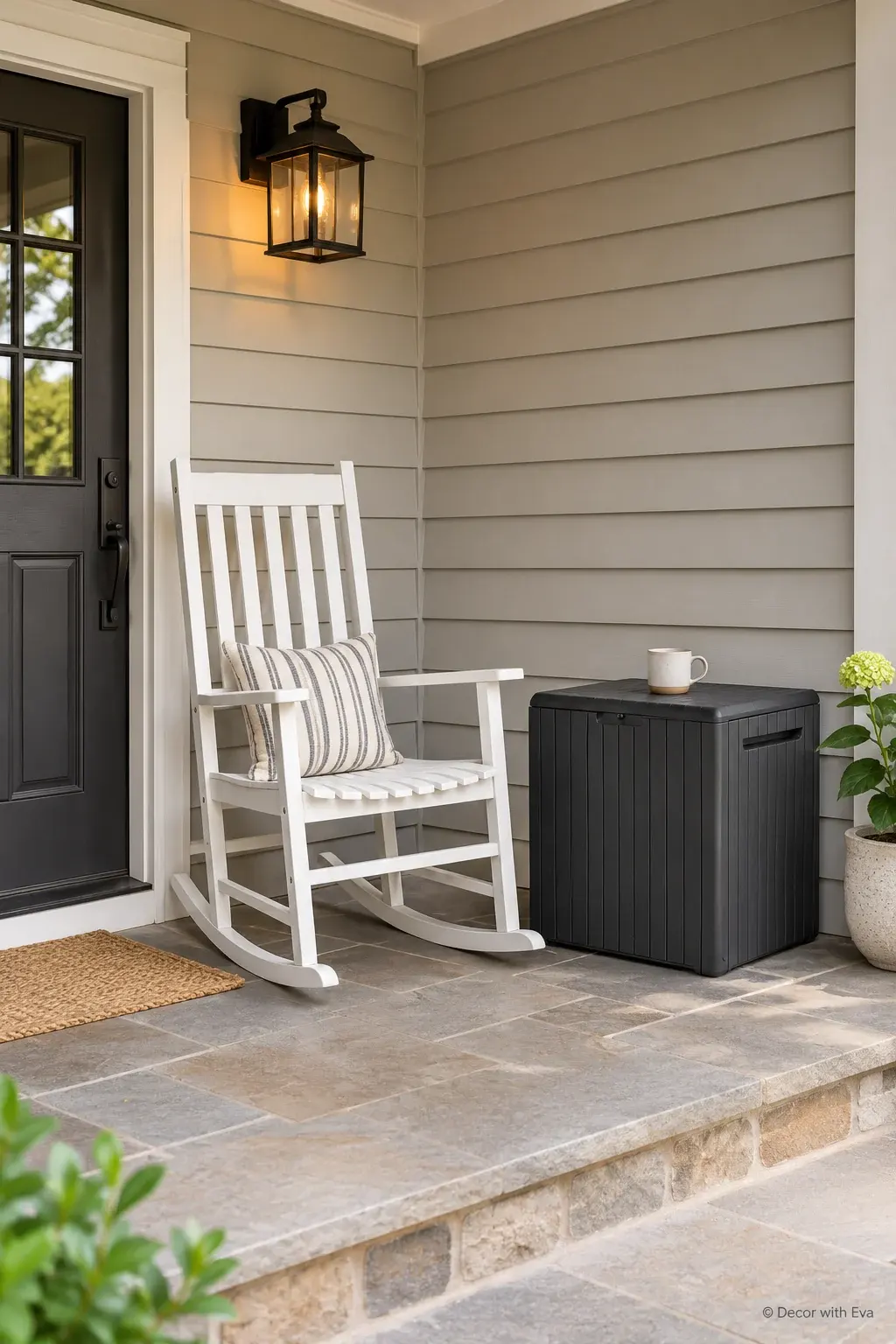
A small storage box can tidy the porch and give a chair a useful side surface. A black wood-look finish relates to dark hardware, while the closed lid keeps the contents from becoming part of the display. It is a helpful change when spare cushions and gardening bits usually gather beside the door.
The box shown has an exterior footprint of about 22¾ by 17¼ inches and stands roughly 21¾ inches high. Include room to open the lid and move the nearby chair. Use it for the items its storage guidance suits, and let textiles dry before putting them away. Treat this arrangement as a storage box and side table, rather than assuming it is seating. Keep the box clear of the route people use with bags or deliveries.
31. Faux cedar trees for a low-maintenance outline
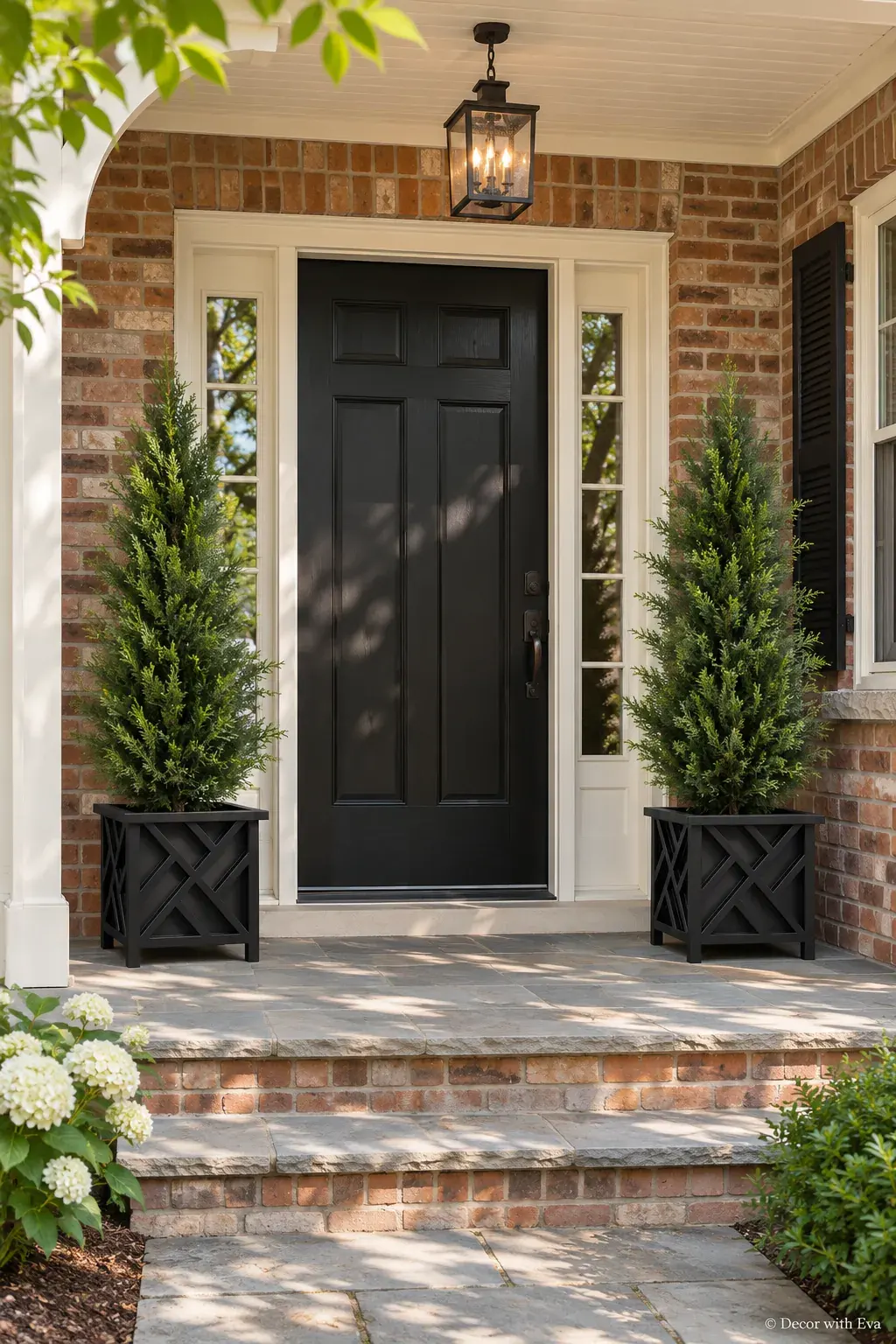
Faux cedar trees give an entrance a consistent green outline when regular plant care is not practical. A matched pair in black lattice planter covers feels particularly settled against brick or a dark door. The open, natural-looking foliage is enough without seasonal ornaments hanging from every branch.
Each tree is about 4 feet tall including its supplied nursery pot, with a shaped spread of roughly 20 inches. Compare that finished scale with the door and outer containers rather than adding the two advertised heights together. Fit the nursery pots into stable covers and follow the outdoor placement guidance. Shape the branches, wipe away dust when needed, and secure the arrangement for your location. Faux greenery still needs occasional attention and suitable storage in severe conditions.
32. An edited porch using the pieces you already have
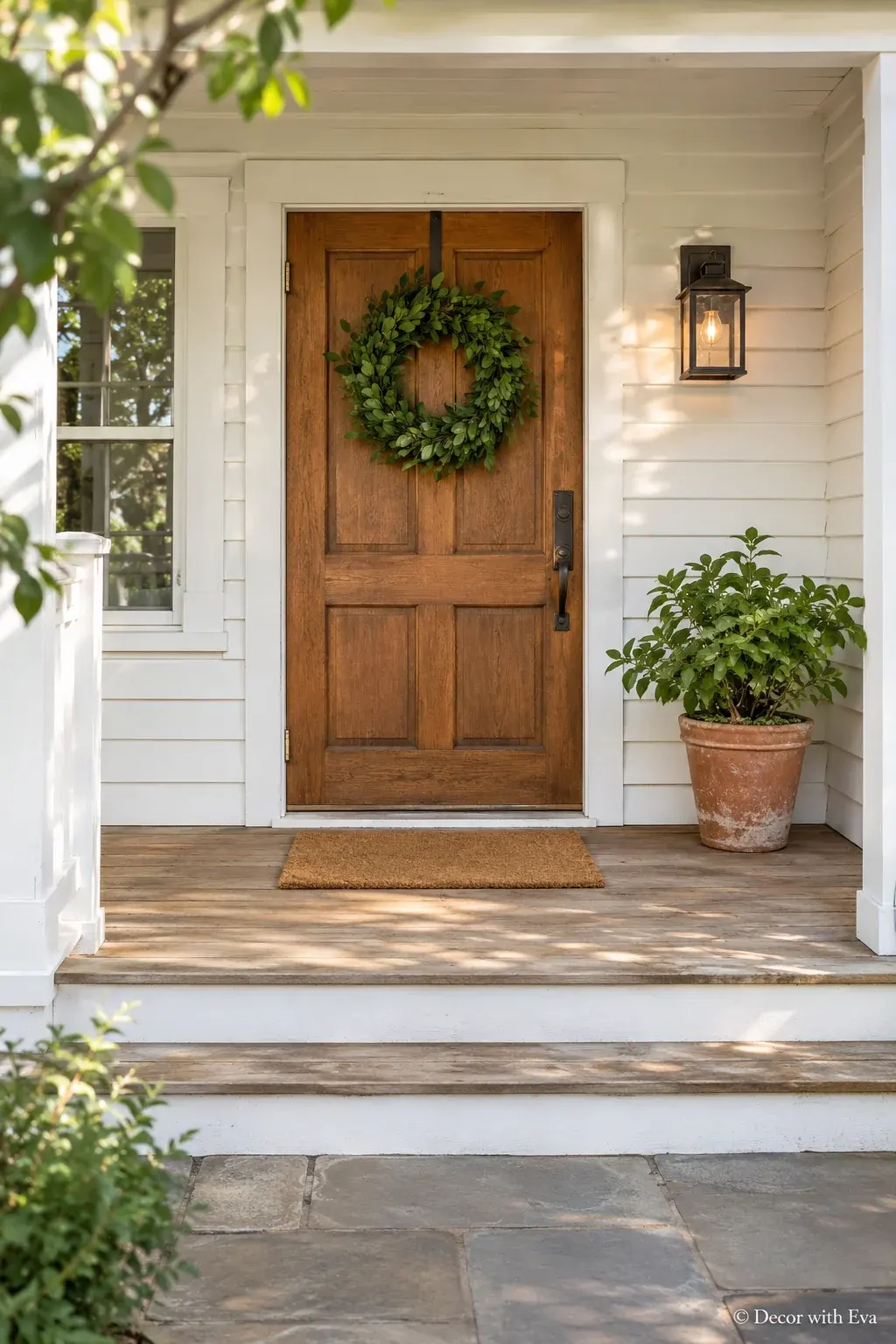
An edited porch can be the most welcoming version of the space. Clear away empty pots and things waiting to go elsewhere, sweep the landing, and put the pieces you still enjoy back in a simple arrangement. A wreath, a plain mat, and one healthy plant can be plenty on a small entrance.
Look at the porch from the approach, then open the door and walk through carrying a bag. Move anything that makes the route awkward or blocks the view of the entrance. Clean and maintain the pieces you keep, and decide whether the room needs another purchase at all. If a seasonal update sounds appealing later, change a ribbon or the planting in an existing pot while keeping the useful layout you have already made.
Front porch decorating questions
How do I decorate a small front porch?
Start with the clear route to the door, then choose one or two details that fit the space left over. A well-sized mat, a wreath, or one planter can make a shallow stoop feel complete. Add seating only when there is room to sit, stand, and pass comfortably. Keep every decoration fully on a suitable landing and off the stair treads.
What can I put on my front porch throughout the year?
Useful basics such as suitable outdoor seating, a mat, planters, and an appropriate porch light can form the foundation. Choose pieces for your exposure and climate, and follow their maintenance and storage directions. Change a cushion cover, ribbon, or seasonal planting when you want a fresh look rather than replacing the whole arrangement.
How can I make my front porch look welcoming on a budget?
Clean and maintain what you already have, remove things that do not belong, and rearrange the remaining pieces around a clear entrance. Reuse a pot, refresh a wreath with saved ribbon, or move an existing suitable chair into a better position. Choose one useful purchase only after you can see what the porch still needs.
Should I use matching planters by the front door?
A matching pair can give a doorway a clear frame, especially when there is room on both sides. An unmatched group can work too when its colors or planting relate. On a small porch, one well-placed planter often makes more sense than a pair that blocks the door. Compare footprints as well as heights before choosing.
Can I layer a rug under my front doormat?
Yes, when both pieces suit the location, lie flat, and leave the door and landing usable. Choose an under-rug that shows around the smaller mat and check the combined thickness. Fabric layering rugs may need a dry, covered position. If layers shift, curl, stay damp, or crowd the step edge, use one suitable mat instead.
How do I make a covered porch feel comfortable?
Give seating a useful position with room for feet and movement, then add a small table and a few textiles that suit the exposure. A rug can define the sitting end of a larger porch, and suitable decorative lighting can add atmosphere. Keep the arrangement easy to clean and reset, with a clear route to the front door.
Do solar lanterns work on a shaded porch?
Solar lanterns need suitable daylight to charge, and their performance varies with placement, weather, and the product. A deeply shaded spot beneath a roof may not be the best location. Check the instructions and consider a different suitable lighting option for that position. Decorative lanterns should complement the normal light used to enter the house.
Make the entrance feel like home
Choose one place to begin: the doorway, a bare corner, or the chair you would like to use more often. Keep the useful space clear, repeat a few colors, and let plants and texture add the personality. A porch feels welcoming when it looks cared for and works comfortably every time you come home.
For another compact outdoor space, explore these balcony garden ideas. When the holidays arrive, these outdoor Christmas decor ideas offer seasonal details you can add to a simple entrance.
Save it for later
Found a few ideas you love? Save this collection to your Pinterest board so it’s easy to find when you’re ready.
Save to Pinterest
Let’s talk ideas
Which idea would you try? Share a question, a small-space solution, or a detail that made it work in your home.