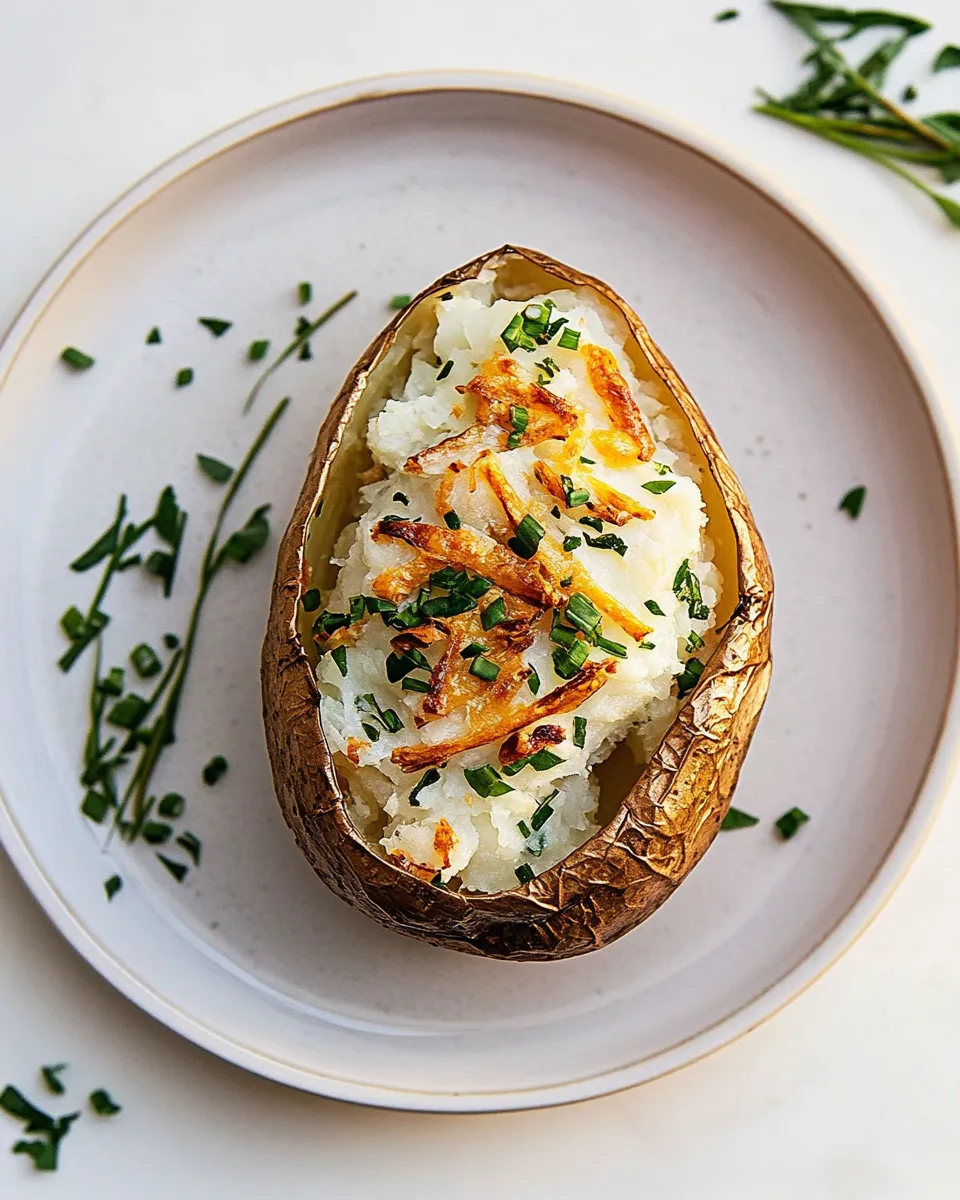
Perfect Baked Potato
I grew up on simple, honest food, and a really good baked potato is comfort on a plate. It’s one of those dishes that feels humble but rewards attention to technique: crisp skin, fluffy interior, and just enough seasoning to let the potato shine. No fancy gadgets required—just a few pantry staples and an oven.
This recipe is for the classic russet baked potato. It’s straightforward, reliable, and forgiving. Follow the steps below and you’ll get consistent results every time: crackly skin and pillowy flesh ready for butter, sour cream, chives, cheese, or any topping you love.
Read through the shopping list and the clear step-by-step guide before you start. Small details—like poking the potato and the oven temperature—make a big difference. Let’s get started.
Shopping List
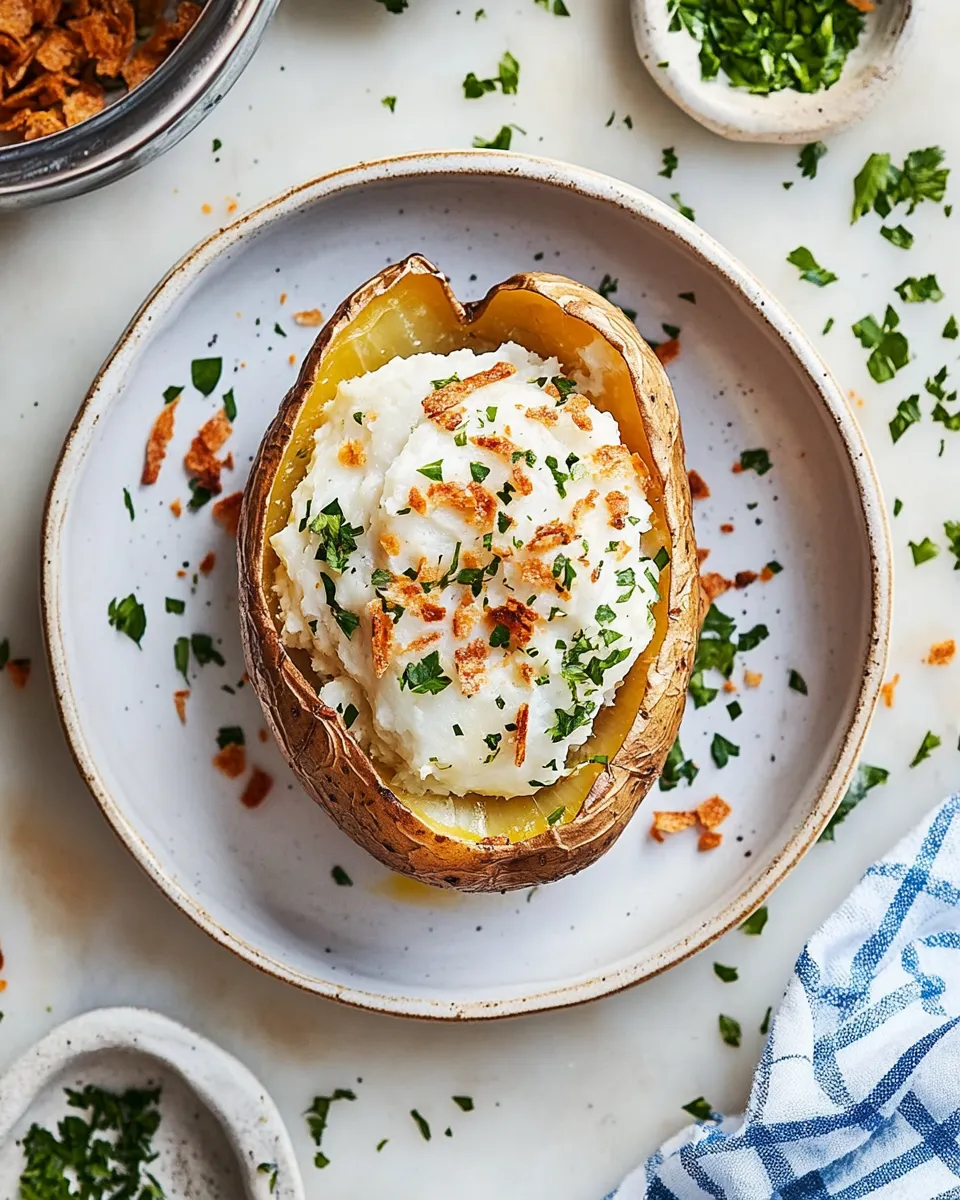
- 4 russet potatoes — classic high-starch spuds for fluffy interiors and a sturdy skin.
- 2–3 tablespoons olive oil — helps the skin crisp and provides a subtle flavor.
- Kosher salt, to taste — seasons the skin and highlights the potato’s flavor.
Perfect Baked Potato: Step-by-Step Guide
Ingredients
- 4 russet potatoes — ideal for a light, fluffy interior; choose similar-sized tubers for even cooking.
- 2-3 tablespoons olive oil — coats the skin so it crisps in the oven; use the amount needed to lightly cover all potatoes.
- Kosher salt — to taste; seasons the skin and finishes the outside so each bite is flavorful.
Instructions
- Preheat the oven to 350°F (175°C). Place a rack in the center of the oven so the potatoes bake evenly.
- Wash each potato under cold running water, scrubbing with a stiff brush to remove dirt. Dry them thoroughly with a kitchen towel or paper towels.
- Use a fork to poke 8–12 deep holes all over the surface of each potato. These vents allow steam to escape and prevent the potatoes from bursting while baking.
- Put the potatoes in a large bowl. Drizzle 2–3 tablespoons of olive oil over them and rub the oil until each potato is lightly coated. Sprinkle kosher salt over the skins to season them—use as much as you like, keeping in mind the salt will be mainly on the outside.
- Place the potatoes directly on the oven’s middle rack. If you prefer, set them on an aluminum foil-lined baking sheet to catch any drips, but placing them on the rack helps air circulate for crisper skin.
- Bake for 1 hour. After 1 hour the skin should be crisp and the flesh should feel soft when pressed gently with an oven mitt or a clean towel.
- Remove the potatoes from the oven and let them cool just until you can handle them comfortably—about 5 minutes. With a fork, create a dotted line from one end to the other down the center of each potato, piercing the skin and creating a weak seam.
- Hold each potato at the ends and squeeze them toward each other to crack the seam open. Fluff the interior lightly with a fork, add your favorite toppings, and serve immediately.
Why This Perfect Baked Potato Stands Out
This method focuses on texture: a high-starch russet plus oil and salt produces a skin that crisps nicely while the inside stays fluffy. Poking holes removes the risk of a steam explosion and ensures consistent cooking. Baking directly on the rack gives the best circulation, so every potato gets even heat on all sides.
Many recipes call for higher temperatures; those work too, but 350°F gives you control and helps the starches set without overcooking the exterior. The result is reliable every time—no leathery skin or undercooked centers.
International Equivalents
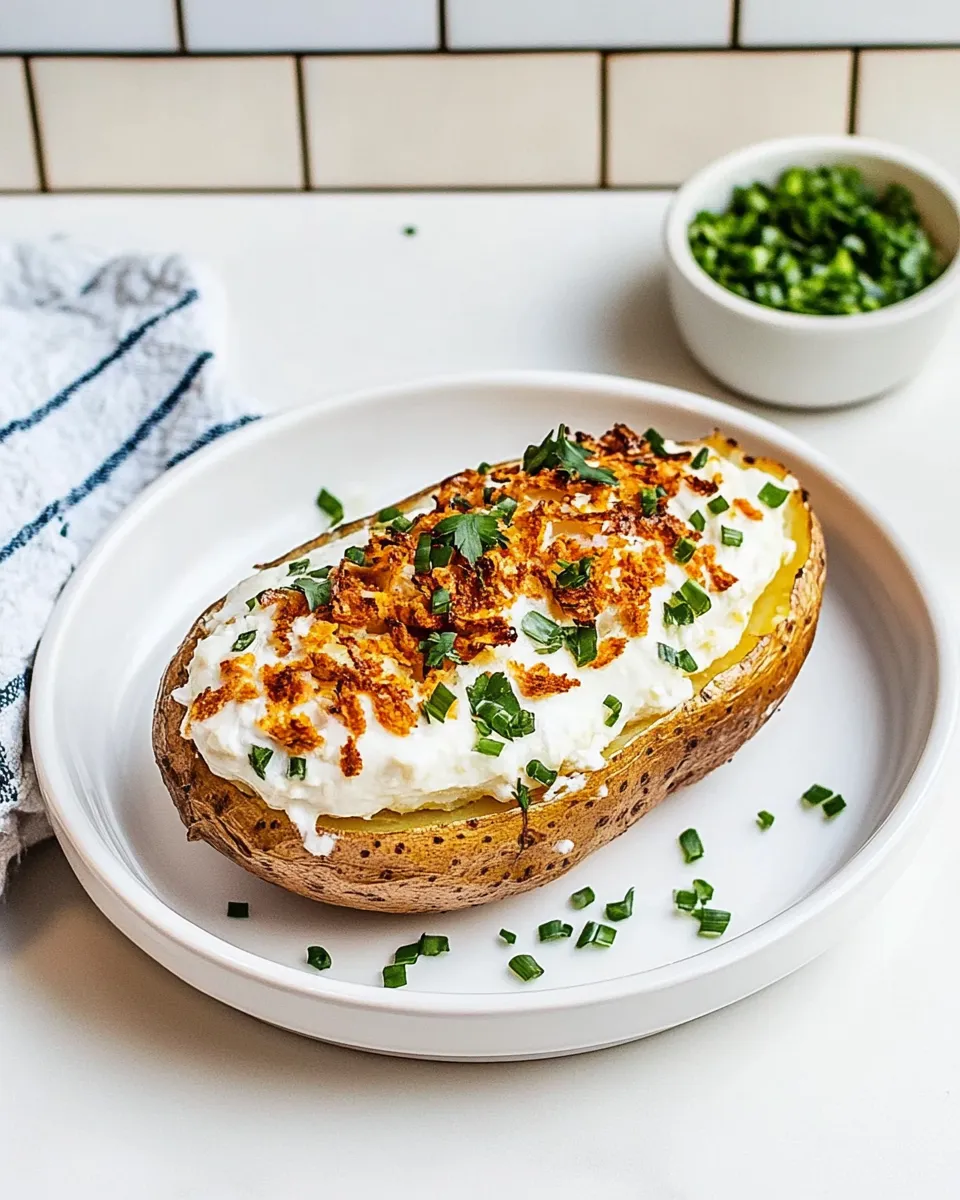
Potatoes are global, and so are approaches to baking them. In the U.K., medium-to-large Maris Piper or King Edward are the closest equivalents to U.S. russets for baking. In continental Europe, look for high-starch varieties labeled for baking or roasting. If you only find waxy potatoes, expect a denser interior—still tasty, but not the classic fluffy texture.
Equipment at a Glance
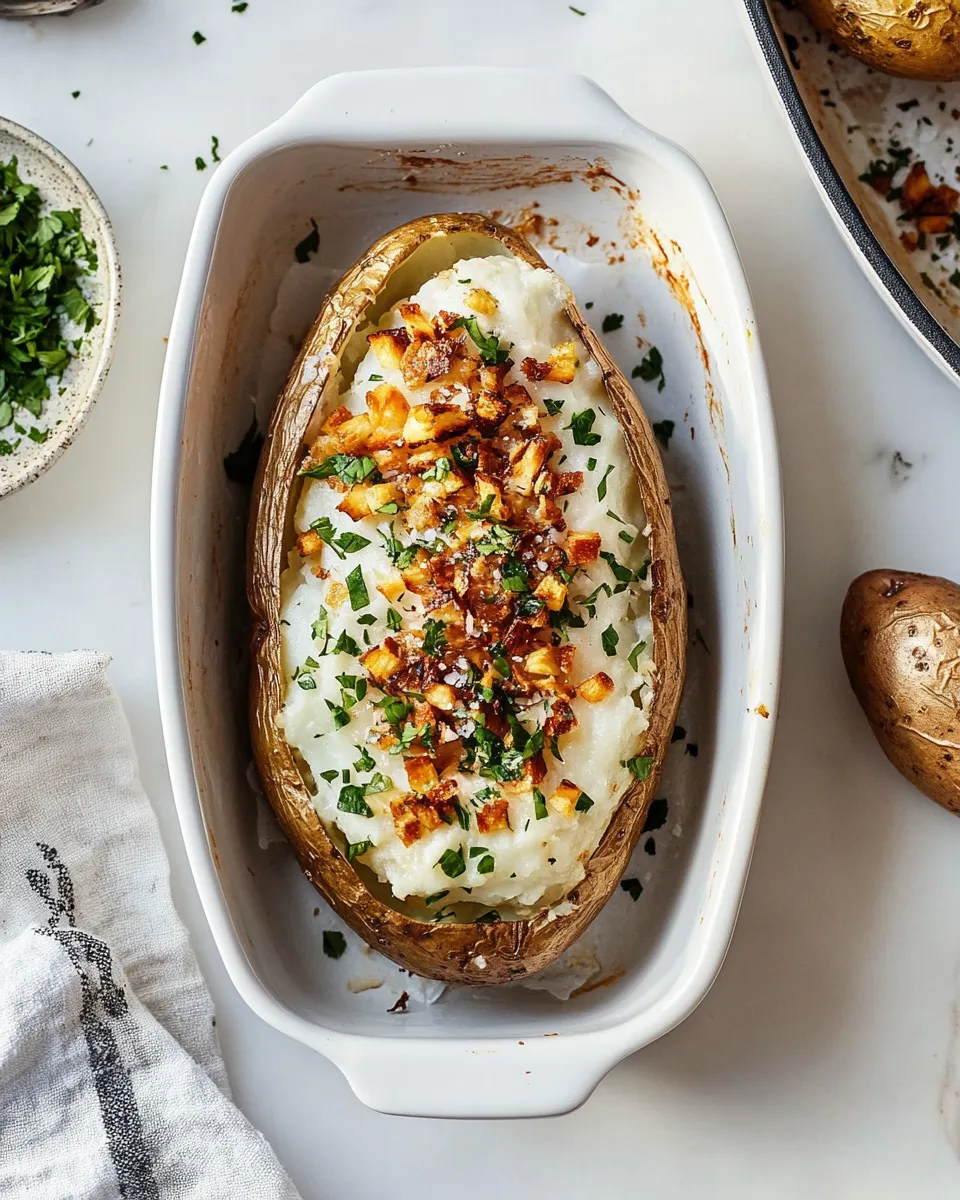
- Stiff vegetable brush — for cleaning dirt off the skins.
- Oven with adjustable rack — set the rack to the middle for even baking.
- Large bowl — to toss potatoes with oil and salt.
- Aluminum foil-lined baking sheet (optional) — useful to catch drips if you prefer not to place potatoes directly on the rack.
- Oven mitts or heavy towel — for safely removing and handling hot potatoes.
Mistakes That Ruin Perfect Baked Potato
- Skipping the fork holes — potatoes can burst and you’ll lose moisture control.
- Not drying the skin — oil won’t stick properly to damp potatoes, and the skin won’t crisp.
- Using the wrong potato — waxy varieties won’t give you that fluffy interior typical of a classic baked potato.
- Baking at too high a temperature without adjusting time — the exterior can overbrown before the inside is tender.
- Over-salting toppings and skin — season, taste, then adjust; the skin’s salt should complement, not overpower.
Holiday & Seasonal Touches
For winter holidays, top with shredded cheddar, crumbled bacon, and scallions, or go elegant with creme fraiche, chives, and smoked salmon. In summer, serve with a bright salsa, fresh corn, and a dollop of Greek yogurt. For Thanksgiving, a savory sage butter folded into the hot flesh is a lovely seasonal twist.
Notes on Ingredients
- Russet potatoes — choose firm, evenly sized tubers without soft spots; similar sizes ensure even bake time.
- Olive oil — any neutral cooking oil works in a pinch, but olive oil adds flavor and helps the skin crisp.
- Kosher salt — flakes of kosher salt stick well to the oiled skin; adjust based on your salt type and preference.
Prep Ahead & Store
You can bake potatoes up to 2 days ahead. Cool them completely, then store in the refrigerator wrapped in foil or in an airtight container. To reheat, unwrap and place on a baking sheet in a 350°F oven for 20–25 minutes, or until heated through. Microwaving will warm them faster but will soften the skin.
Mashed-inside make-ahead tip: scoop the flesh from cooled potatoes and mix with butter and seasonings, then reheat in the oven or skillet for loaded mashed potatoes.
Questions People Ask
- Why poke holes in the potato? — The holes let steam escape so the potato won’t burst and so it cooks evenly throughout.
- Can I bake at a higher temperature for a shorter time? — Yes; higher temps (400–425°F) will shorten bake time and brown the skin faster, but watch closely to avoid drying the interior. This recipe uses 350°F for controlled, consistent results.
- Do I need to oil the potato? — Oiling is recommended to achieve a crisp, seasoned skin. Skip it only if you want a softer skin.
- How do I tell when it’s done? — The skin will be crisp and the flesh should feel soft when pressed lightly. A fork should enter easily into the center.
Before You Go
Perfect baked potatoes are simple but wonderfully satisfying. Use russets, give them a light oil-and-salt rub, poke vents, and bake on the rack at 350°F for an hour. That small ritual—clean, pierce, oil, salt, bake—turns ordinary potatoes into a dish worth savoring.
Try them plain with butter first to appreciate the texture, then experiment with toppings. Once you get the technique down, a baked potato becomes one of the most reliable and versatile dishes in your weeknight repertoire.

Perfect Baked Potato
Ingredients
- 4 russet potatoes
- 2-3 tablespoons olive oil
- kosher salt to taste
Instructions
- Preheat the oven to 350°F (175°C).
- Scrub the potatoes under cold running water with a stiff brush, then pat them dry.
- Poke each potato 8–12 times all over with a fork to allow steam to escape while baking.
- In a large bowl, toss the potatoes with 2–3 tablespoons olive oil until lightly coated, then sprinkle evenly with kosher salt to taste.
- Place the potatoes directly on the oven's middle rack or on an aluminum foil–lined baking sheet and bake for about 1 hour, until the skins are crisp and a fork inserts easily.
- Let the potatoes cool briefly until they can be handled, make a dotted line lengthwise with a fork, then squeeze the ends to open them; serve with desired toppings.
Equipment
- Oven
- Baking Sheet
- Large Bowl
- stiff brush
- fork
- tongs or oven mitts
Notes
- Wrap potatoes in foil immediately after baking to retain heat.
- To keep potatoes warm, place wrapped potatoes in a slow cooker on low.
- For transport, wrap in foil and place in insulated containers covered with towels to hold heat.