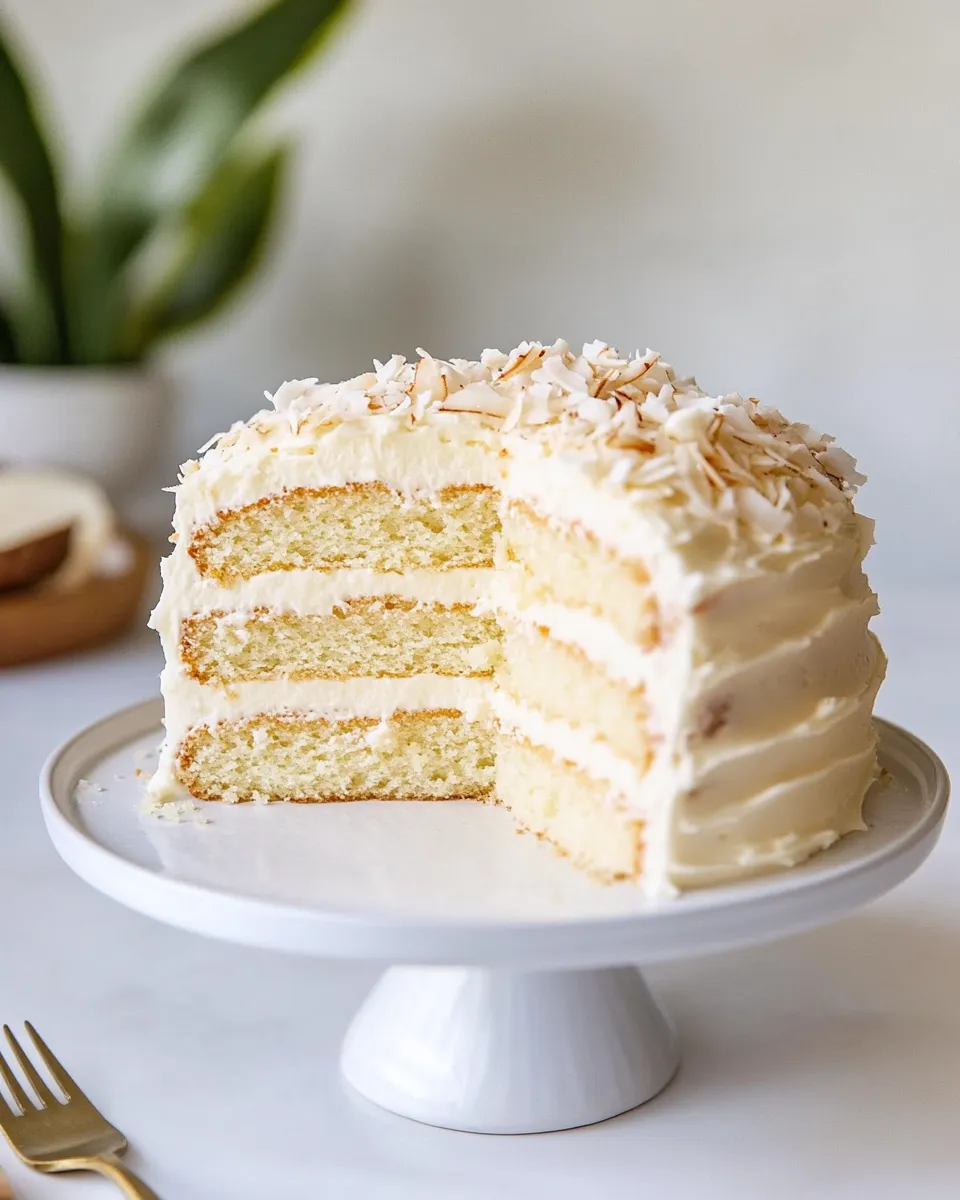
Coconut Cream Cake with Coconut Cream Cheese Frosting
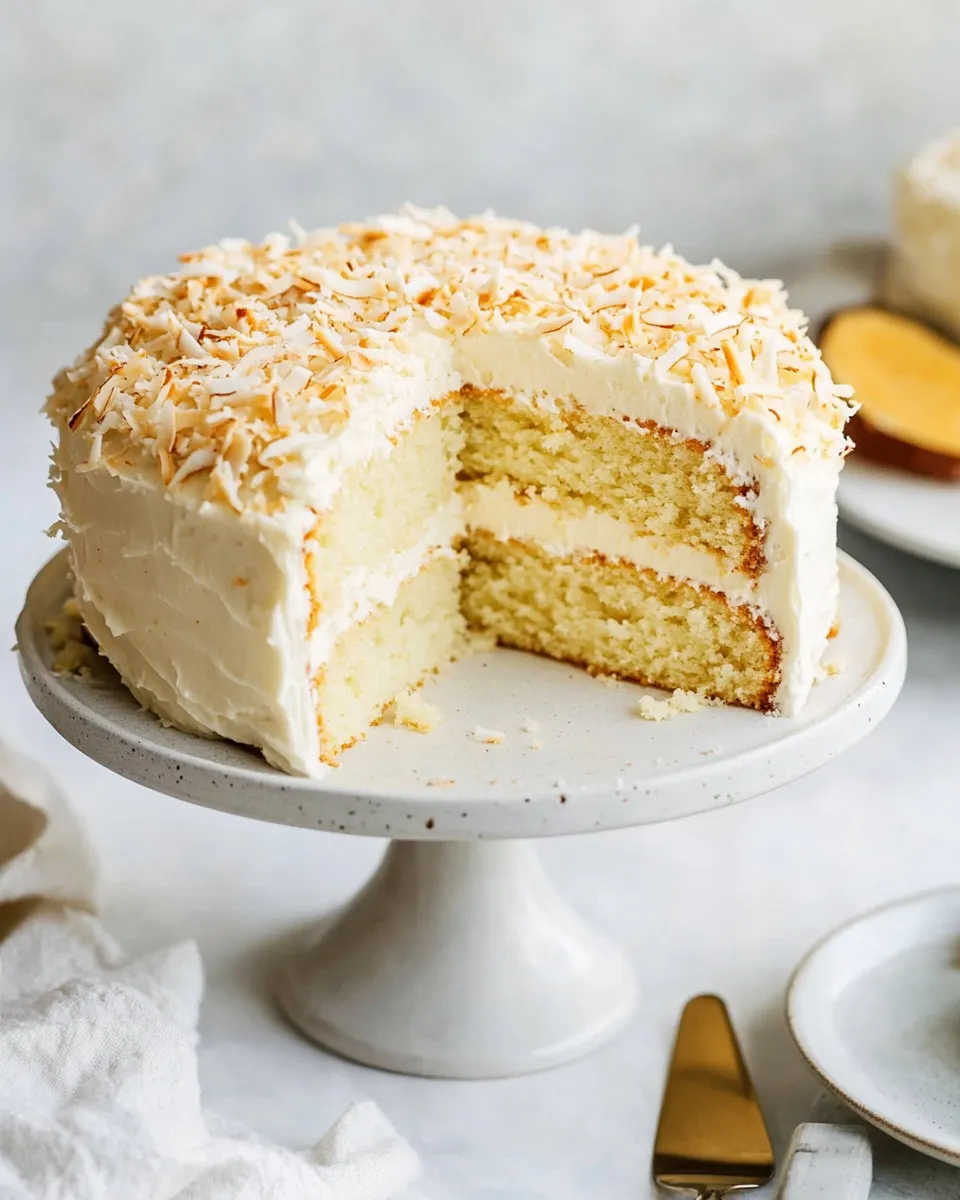
This coconut cream cake is one of those reliably comforting desserts that balances rich, tender cake with a tangy, silky frosting. It’s not fussy, but it does reward a little patience—especially when you let the layers rest in the fridge before frosting. The cake has a soft crumb lifted by whipped egg whites, and cream of coconut folded into the batter keeps it flavorful and moist.
The frosting is a cream cheese–butter blend scented with coconut extract and sweetened with powdered sugar until thick and spreadable. Toasted sweetened coconut pressed into the iced cake gives the finishing textural contrast and a nutty note that makes each bite interesting. I use Coco López for the cream of coconut; it’s easy to find and gives a consistent result.
Below you’ll find the ingredient list with tips, followed by a clarified, step-by-step method that follows the recipe exactly. I’ve included troubleshooting tips, make-ahead advice, and sensible swaps so you can make this at home without surprises.
What You’ll Need
Ingredients
- 1 cup butter, softened — for the cake batter; brings richness and tenderness.
- 1 3/4 cup white sugar — sweetens and helps with browning.
- 1 cup cream of coconut — adds coconut flavor and moistness; Coco López recommended.
- 4 large eggs — adds structure; yolks and whites are used separately in the method.
- 2 1/2 cups flour — all-purpose; provides structure for the cake.
- 1 teaspoon baking powder — leavening to help the cake rise.
- 1/2 teaspoon baking soda — additional leavening and browning support.
- 1/2 teaspoon salt — balances sweetness and enhances flavor.
- 1 cup buttermilk — adds tang and keeps crumb tender; will be combined with coconut extract.
- 1 teaspoon coconut extract — boosts coconut aroma in the batter.
- 1/2 cup butter, softened — for the frosting; use the second half of butter for the cream cheese frosting.
- 8 ounces block cream cheese, softened — provides tang and creaminess in the frosting.
- 1 teaspoon coconut extract — for the frosting; small amount is enough to carry flavor.
- 2 pounds powdered sugar (one bag) — sweetens and thickens the frosting; add in two stages as instructed.
- milk as needed — to adjust frosting consistency, add 1 tablespoon at a time if necessary.
- Toasted Coconut — for garnish; see the directions for toasting and application.
Coconut Cream Cake with Coconut Cream Cheese Frosting: How It’s Done
- Preheat the oven to 315°F. Prepare two 8-inch cake pans by spraying with cooking spray and dusting with flour; you can also place a parchment round in each pan for easier release.
- In the bowl of a mixer on medium speed, beat together 1 cup softened butter, 1 3/4 cups white sugar, 1 cup cream of coconut, and the egg yolks (from the 4 large eggs) until the mixture is light and fluffy. Scrape down the bowl as needed so everything incorporates evenly.
- In a separate bowl, sift together 2 1/2 cups flour, 1 teaspoon baking powder, 1/2 teaspoon baking soda, and 1/2 teaspoon salt. Set this dry mix aside.
- Measure 1 cup buttermilk into a liquid measuring cup and stir in 1 teaspoon coconut extract.
- Add the dry ingredients and the buttermilk to the butter-sugar mixture in alternating additions: start and end with the dry ingredients. Mix just until combined after each addition. Scrape down the sides and bottom of the bowl and give the batter one brief mix to ensure uniformity, but do not overmix.
- In a clean, grease-free bowl, beat the egg whites (from the 4 large eggs) until stiff peaks form. The whites should hold sharp peaks when you lift the whisk.
- Gently fold the beaten egg whites into the cake batter in two or three additions. Use a rubber spatula and a light hand: fold until no white streaks remain but avoid deflating the mixture.
- Divide the batter evenly between the two prepared 8-inch pans, smoothing the tops gently with an offset spatula.
- Bake for 50 minutes at 315°F. Test the centers for doneness by inserting a toothpick (it should come out clean) or by lightly pressing the top—if it springs back, it’s done. If not, continue baking in 10-minute increments, checking again until fully baked.
- Remove the pans from the oven and transfer them to a cooling rack. If you want extra moistness, while the cakes are still hot, brush the tops with the remaining cream of coconut (about 1/2 cup) using a pastry brush.
- Allow the cakes to cool completely in their pans, then unwrap and, once cooled, wrap them in plastic wrap and chill in the refrigerator overnight or at least 4 hours. Chilling makes them easier to frost and improves crumb stability.
- To make the frosting, beat together 1/2 cup softened butter and 8 ounces softened block cream cheese with 1 teaspoon coconut extract until smooth and fluffy.
- Add half of the 2 pounds powdered sugar and mix on low speed for 1 minute to incorporate. Add the remaining powdered sugar and mix on low until combined. Increase the mixer speed to medium and beat for 3 minutes until the frosting is smooth. If the frosting is too stiff, add milk one tablespoon at a time until you reach a spreadable, but still fairly firm, consistency. Avoid making it soupy.
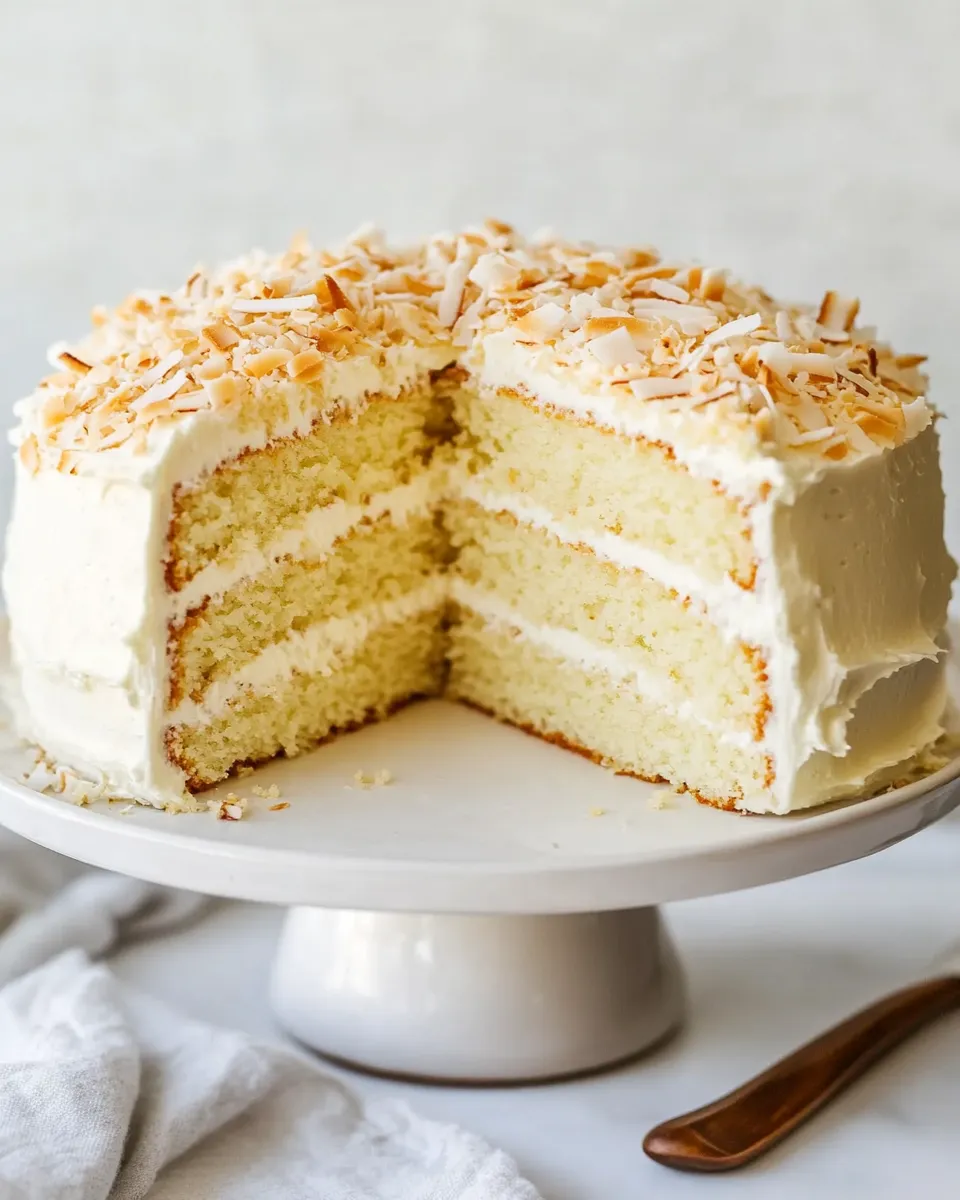
- Frost the chilled cakes: spread a layer of frosting between the two cake layers, then coat the top and sides. If you baked two layers and used both, the directions call for frosting between one or two layers depending on how many you make—here we halve the batter into two layers, so frost between them and around the exterior.
- For the toasted coconut, preheat the oven to 350°F. Spread about 1 to 1 1/2 cups of sweetened coconut flakes on a parchment-lined baking sheet in an even layer.
- Bake the flakes for 8–10 minutes, stirring every couple of minutes so they toast evenly and don’t burn. Remove once they reach a golden color and let them cool completely.
- Press the cooled toasted coconut flakes into the sides and onto the top of the freshly iced cake. Press gently so they adhere without tearing the frosting.
- Slice, serve, and enjoy. Store leftovers covered in the refrigerator for up to 4–5 days.
Why It Deserves a Spot
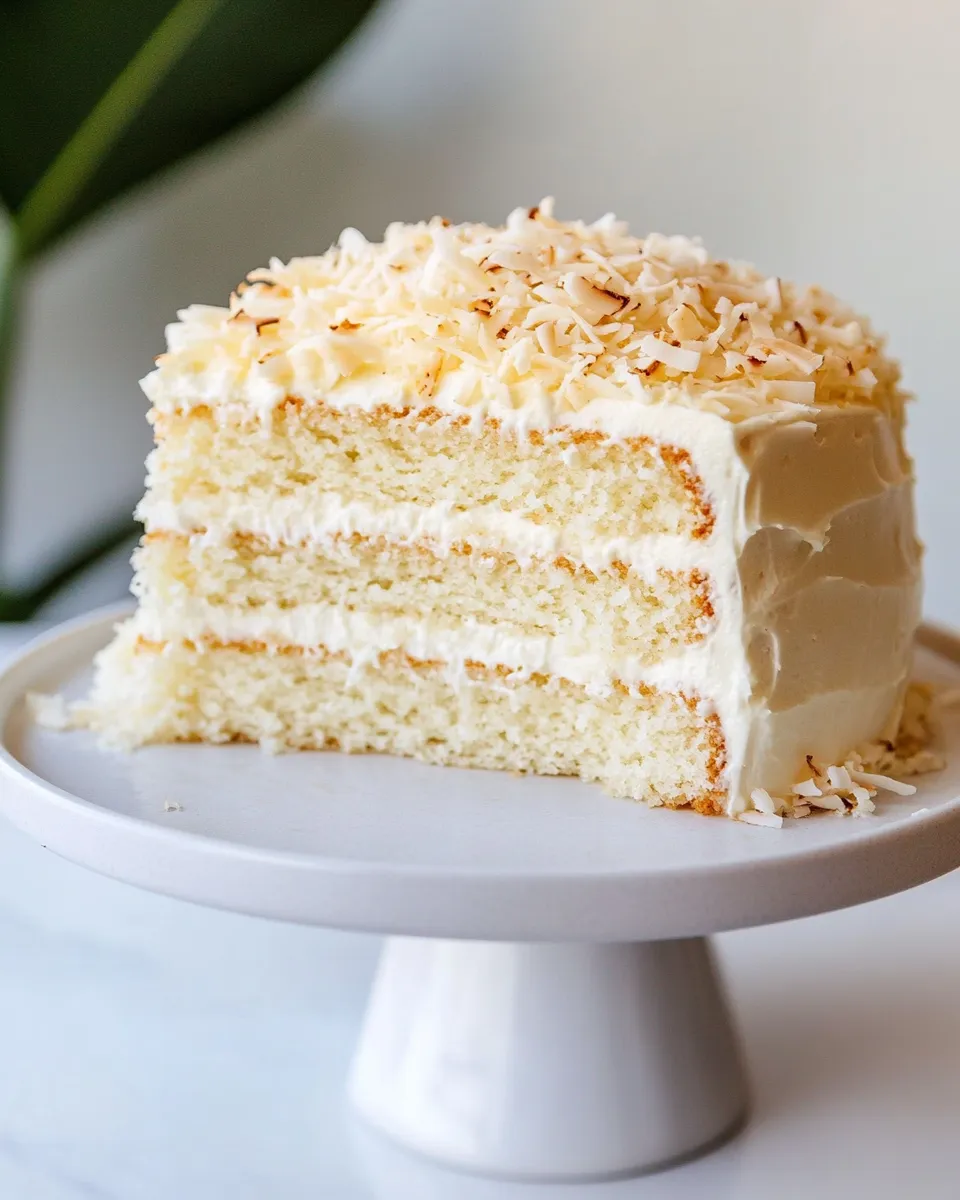
This cake earns a place on any dessert table because it’s approachable yet layered in flavor. The cream of coconut keeps the cake tender and aromatic in a way plain coconut flavoring can’t replicate. The cream cheese frosting adds a bright contrast to the sugary coconut topping, preventing the dessert from feeling one-note or cloying.
It’s also versatile: the make-ahead step makes it great for entertaining, and the toasted coconut gives you that visual and textural finish that reads “special” without extra fuss. If you like coconut-forward desserts that aren’t overly heavy, this one checks all the boxes.
Quick Replacement Ideas
- Butter — use plant-based butter at the same measurement for a dairy-free-style crumb (flavor will differ).
- Cream of coconut — if unavailable, increase cream or milk and add extra coconut extract, though the flavor won’t be identical.
- Buttermilk — substitute 1 cup milk mixed with 1 tablespoon lemon juice or white vinegar, let sit 5 minutes.
- Sweetened coconut flakes — use unsweetened toasted coconut for less sweetness; consider adding a tablespoon of sugar to the flakes before toasting if you miss sweetness.
Tools of the Trade
- Two 8-inch cake pans — for even-layer baking.
- Stand mixer or hand mixer — to cream butter and beat whites; a whisk can work for small batches but requires effort.
- Mixing bowls — at least two, one clean for egg whites.
- Rubber spatula — for gentle folding and scraping.
- Pastry brush — optional, for brushing on cream of coconut while hot.
- Baking sheet and parchment — for toasting coconut evenly.
- Cooling rack — for safe cooling and stopping residual heat from overbaking.
Learn from These Mistakes
Do not skip chilling the cakes if you plan to achieve clean frosting layers—warm cake and frosting are a recipe for sliding layers and messy sides. Also, when beating egg whites, make sure the bowl and whisk are completely grease-free; any fat will prevent stiff peaks. Finally, watch the toasted coconut closely; it goes from golden to burnt in a minute.
Substitutions by Diet
Dairy-free
- Replace butter and cream cheese with firm plant-based alternatives. Use a dairy-free cream cheese and a vegan butter that creams well.
Lower-sugar
- You can reduce powdered sugar in the frosting slightly, but note texture will change—frosting may be looser and less stable.
Egg-free
- Egg replacement is not recommended for this recipe since whipped egg whites are integral to the cake’s texture.
Behind-the-Scenes Notes
The recipe calls for separating the eggs because beaten whites add volume without extra fat, resulting in a lighter crumb. Folding technique matters: use a wide spatula and a lift-and-fold motion to keep the batter airy. The oven temperature here is lower than some cake recipes—315°F gives a gentler rise and more even baking for this denser, coconut-enriched batter.
Make Ahead Like a Pro
Bake the layers a day ahead, brush with the extra cream of coconut if desired, wrap tightly in plastic, and refrigerate. The chilling firms the crumb and makes frosting easier. Make the frosting the day you plan to assemble for best texture—frosting can be refrigerated up to 48 hours; bring it back to room temperature and rewhip briefly before using.
Your Questions, Answered
- Q: Can I use sweetened condensed milk instead of cream of coconut? — A: No. Cream of coconut has a thicker, sweetened texture and specific flavor profile; sweetened condensed milk is different in consistency and will alter both texture and coconut intensity.
- Q: Why does the recipe call for two temperatures (315°F and 350°F)? — A: 315°F is used for baking the cake layers to promote even baking without over-browning; 350°F is used only for quickly toasting the coconut flakes.
- Q: Cake cracked on top—what happened? — A: Overmixed batter or oven too hot can cause cracks. Ensure gentle folding of whites and accurate oven temperature.
Time to Try It
This recipe is practical and forgiving if you follow the sequence and respect the chilling step. Gather your pans, measure carefully, and plan the toasting step last so your toasted coconut is fresh and crunchy when you decorate. Enjoy the layers of coconut flavor—each element plays a specific role, and together they make a reliable, show-stopping cake.
Coconut Cream Cake with Coconut Cream Cheese Frosting
Ingredients
- 1 cup butter softened
- 1 3/4 cup white sugar
- 1 cup cream of coconut (Coco López) used in batter; additional ~1/2 cup reserved for brushing if desired
- 4 large eggs separate yolks and whites
- 2 1/2 cup all-purpose flour
- 1 teaspoon baking powder
- 1/2 teaspoon baking soda
- 1/2 teaspoon salt
- 1 cup buttermilk plus coconut extract added
- 1 teaspoon coconut extract for cake batter
- 1/2 cup butter softened, for frosting
- 8 ounces cream cheese block, softened
- 1 teaspoon coconut extract for frosting
- 2 pounds powdered sugar about one bag; add gradually
- milk as needed to adjust frosting consistency
- toasted sweetened coconut flakes about 1 to 1 1/2 cups for toasting and decorating
Instructions
- Preheat the oven to 315°F. Prepare two 8-inch cake pans by spraying with cooking spray, dusting with flour, and optionally lining the bottom with parchment rounds.
- In a mixer on medium speed, beat 1 cup softened butter, 1 3/4 cups sugar, and 1 cup cream of coconut until combined, then add the four egg yolks and beat until fluffy.
- In a separate bowl, sift together 2 1/2 cups flour, 1 teaspoon baking powder, 1/2 teaspoon baking soda, and 1/2 teaspoon salt.
- In a liquid measuring cup, combine 1 cup buttermilk with 1 teaspoon coconut extract.
- With the mixer on low, add the dry ingredients and the buttermilk to the butter mixture in alternating additions, beginning and ending with the dry ingredients. Scrape the bowl and mix briefly to combine.
- In a clean bowl, beat the four egg whites until stiff peaks form, then gently fold the beaten egg whites into the batter until just incorporated.
- Divide the batter evenly between the prepared pans and smooth the tops.
- Bake for about 50 minutes, then test the centers with a toothpick or by pressing lightly—cakes are done when they spring back or a toothpick comes out clean. If needed, bake in additional 10-minute increments until done.
- Remove cakes from the oven and cool on a rack. While still hot, optionally brush the tops with the remaining cream of coconut (about 1/2 cup) to add extra moisture.
- Once cooled, wrap the cakes in plastic and refrigerate for at least 4 hours or overnight for best texture.
- To make the frosting, beat 1/2 cup softened butter with 8 ounces softened cream cheese and 1 teaspoon coconut extract until smooth and fluffy.
- Add the powdered sugar in two additions: mix half on low speed for about 1 minute, then add the rest and mix on low until incorporated. Increase speed to medium and beat 3 minutes until smooth. If too stiff, add milk 1 tablespoon at a time to reach a spreadable but not soupy consistency.
- Frost the cake layers as desired, using frosting between the layers and over the top and sides.
- Preheat the oven to 350°F. Spread 1 to 1 1/2 cups sweetened coconut flakes on a parchment-lined baking sheet and bake 8–10 minutes, stirring every few minutes, until golden and toasted. Cool.
- Press the cooled toasted coconut flakes onto the sides and top of the freshly iced cake. Slice and serve.
Equipment
- two 8-inch cake pans
- stand mixer or hand mixer
- Mixing bowls
- Measuring cups and spoons
- rubber spatula
- Whisk
- Baking Sheet
- cooling rack
Notes
- Use Coco López for the cream of coconut for best flavor.
- Refrigerating the layers overnight improves slicing and texture.
- Add the reserved cream of coconut while cakes are hot for extra moistness (optional).
- Add milk to frosting 1 tablespoon at a time to adjust consistency.
- Toast coconut on parchment to prevent sticking and for even browning.