Simple and Easy Pavlova
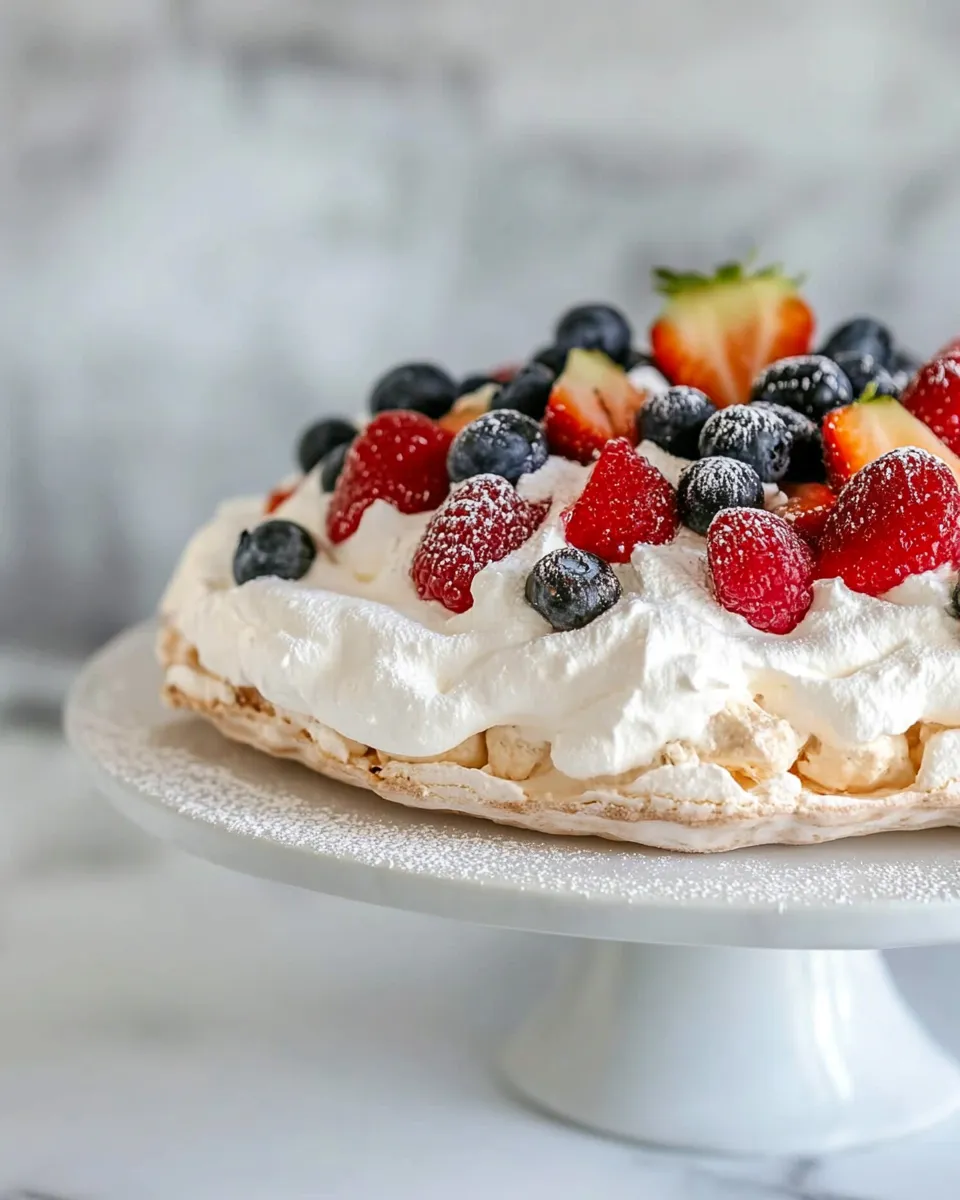
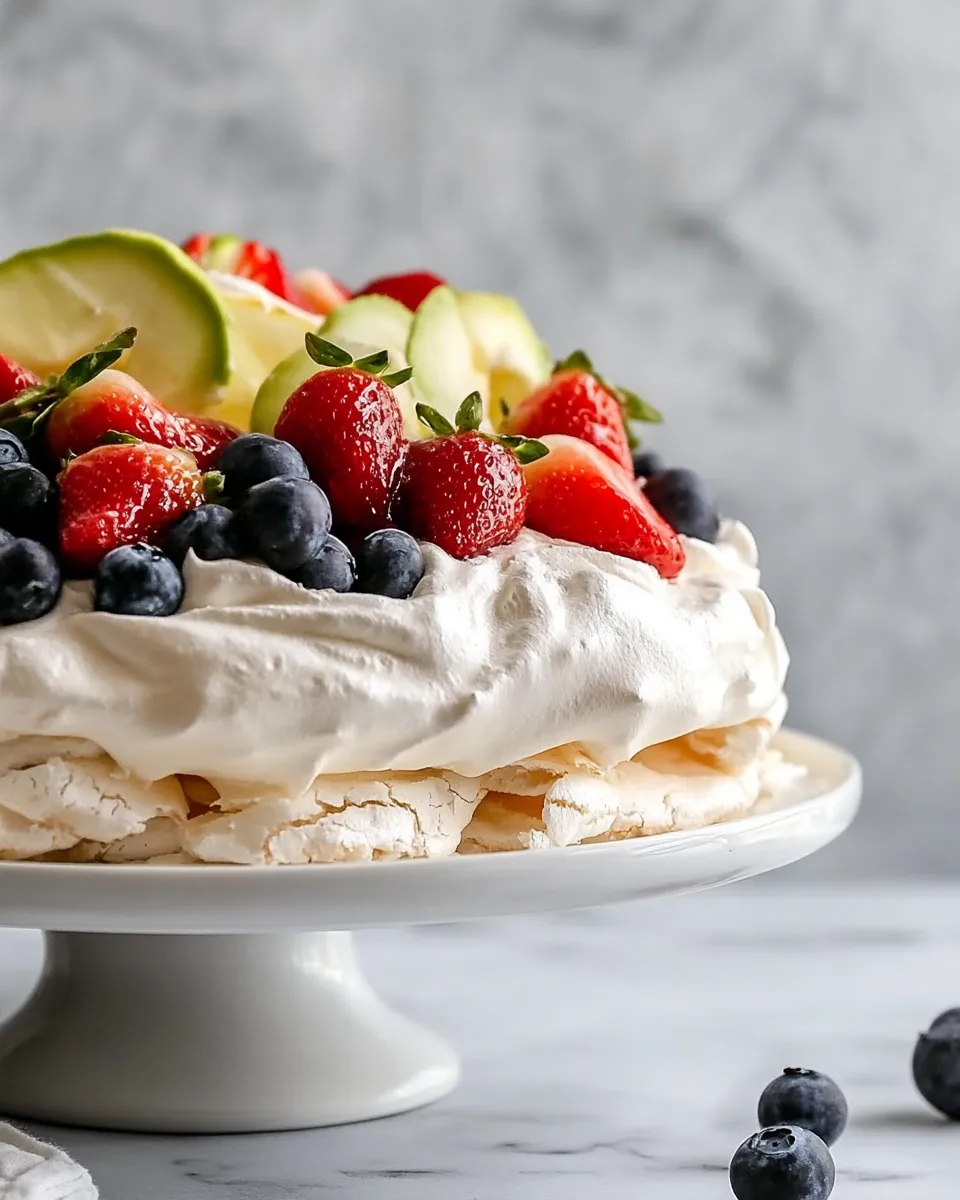
I love desserts that look elegant but don’t demand hours of hands-on fuss. This pavlova is one of those recipes: a crisp, cloud-like meringue shell filled with whipped cream and piled high with fresh berries. It’s a showstopper for guests and surprisingly forgiving for weeknight baking.
The technique is straightforward—whisk egg whites and sugar over a gentle simmer, whip to glossy peaks, fold in cornstarch and flavorings, then bake low and slow until dry on the outside and marshmallow-soft inside. Finish with freshly whipped cream and fruit and you have a dessert that tastes like summer in every bite.
I’ll walk you through the shopping, the exact steps, useful swaps, and the common mistakes to avoid so your pavlova comes out beautiful and stable every time.
Your Shopping Guide
- Egg whites (4) — use room-temperature egg whites; they whip up lighter and reach higher volume.
- Granulated sugar (1 ¼ cup) — dissolves into the whites to create a glossy, stable meringue; measure precisely.
- Cornstarch (2 teaspoons) — stabilizes the interior and helps create the marshmallow center.
- Lemon juice (1 teaspoon) — adds acidity to stabilize the meringue and brightens flavor.
- Vanilla extract (½ teaspoon) — for subtle background flavor; pure extract gives the best taste.
- Heavy whipping cream (2 cups) — chilled; whips into soft, stable peaks to top the pavlova.
- Powdered sugar (¼ cup) — sweetens and stabilizes the whipped cream without grittiness.
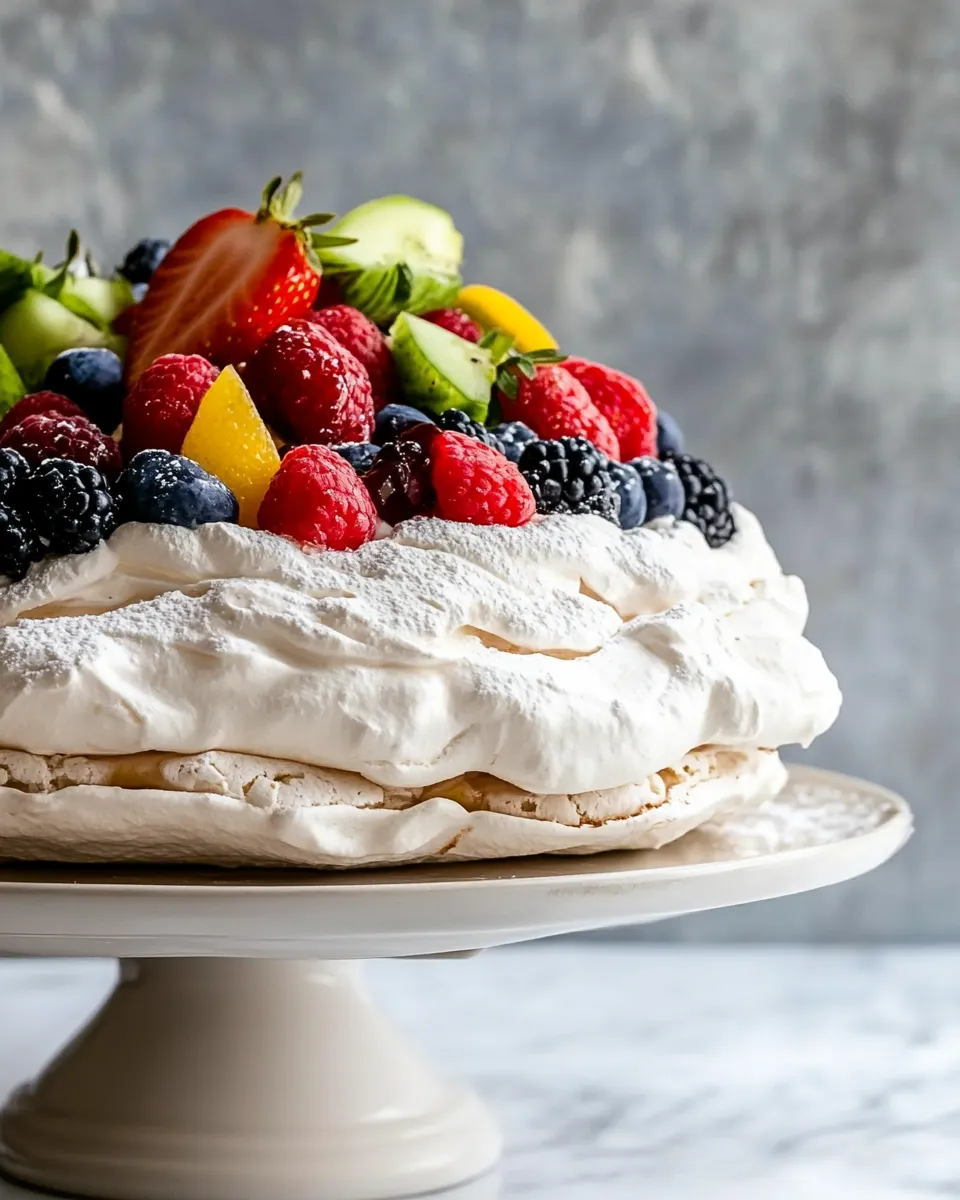
- Berries and fruit of choice — fresh fruit for topping; use a mix of strawberries, raspberries, blueberries, or sliced stone fruit.
Mastering and Easy Pavlova: How-To
Step-by-step directions
- Preheat your oven to 350°F. Prepare a baking sheet by lining it with parchment paper; if you want a guide for shaping, trace an 8- or 9-inch cake pan on the underside of the parchment.
- Set a medium pot with about 1 inch of water over low heat and bring it to a very gentle simmer—do not let it boil vigorously.
- In a heatproof bowl (or the bowl of a stand mixer), combine 4 room-temperature egg whites and 1 ¼ cups granulated sugar. Place the bowl over the pot of simmering water so the bottom of the bowl does not touch the water.
- Whisk the egg white and sugar mixture constantly over the simmering water until the sugar dissolves completely and the mixture feels warm to the touch (about 2–4 minutes). This step ensures a smooth, glossy meringue.
- Remove the bowl from the pot and immediately transfer it to your stand mixer fitted with the whisk attachment (or use a handheld electric mixer). Whip on medium-high speed until the mixture forms medium-stiff peaks—about 5–8 minutes depending on mixer power.
- Add 2 teaspoons cornstarch and mix briefly until just combined, then add 1 teaspoon lemon juice and ½ teaspoon vanilla extract. Continue whisking until the meringue holds stiff, glossy peaks.
- Spoon the meringue into the center of the traced circle on the parchment. Spread it outward to fill the circle and use the back of the spoon to form a shallow well in the center for the cream. Shape the outside edges as you like—higher for dramatic sides or smoother for a flatter disk.
- Carefully transfer the baking sheet to the oven, then immediately reduce the oven temperature to 300°F. Bake for 1 hour. The pavlova should look dry and slightly cracked on the outside but still pale in color.
- Turn off the oven and leave the pavlova inside to cool gradually as the oven cools. This slow cooling helps prevent cracking and keeps the center from getting soggy. I recommend leaving it in the oven for several hours or overnight for best results.
- Just before serving, whip 2 cups chilled heavy whipping cream with ¼ cup powdered sugar in a large chilled bowl until soft peaks form.
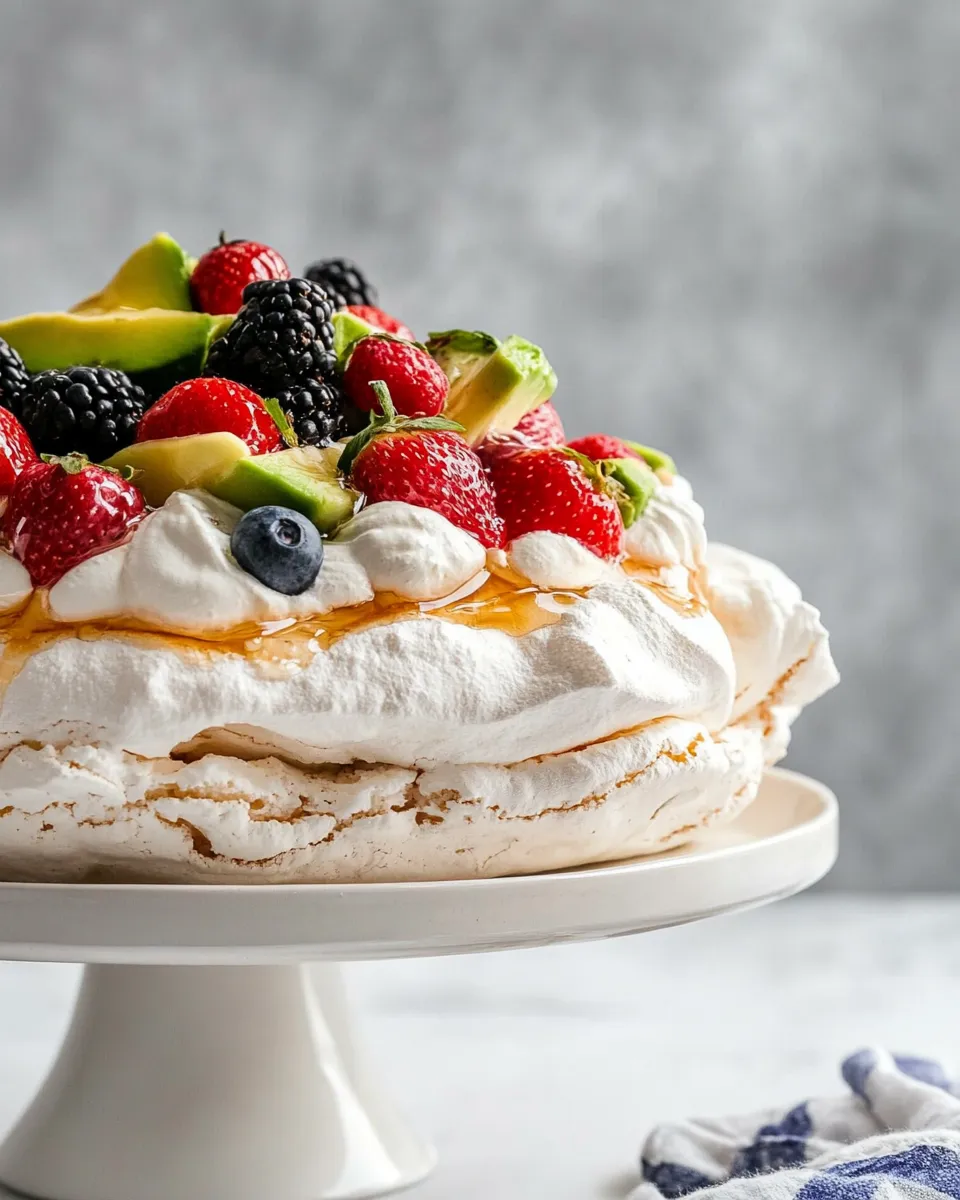
- Place the cooled pavlova on a serving plate, spoon or pipe the whipped cream into the center well, and top with berries and fruit of your choice. Serve immediately.
What Sets This Recipe Apart
- Comfortable technique: The stovetop-warm sugar step tames the sugar granules so the meringue becomes glossy and stable without special equipment.
- Low-and-slow bake: Baking at 300°F after preheating at 350°F balances a crisp exterior with a marshmallow center.
- Simple ingredients: No stabilizers beyond cornstarch and lemon—this is a classic pavlova done with straightforward pantry items.
Easy Ingredient Swaps
- Sugar: White granulated sugar is required for structure; avoid swap here unless you specialize with caster sugar, which is acceptable if you have it.
- Vanilla: You can use ½ teaspoon clear vanilla or a pinch of vanilla bean seeds for extra aroma.
- Fruit toppings: Any fresh fruit works—kiwi, passionfruit, mango, or citrus segments all pair nicely with the sweet cream.
Before You Start: Equipment
- Stand mixer with whisk or handheld electric mixer — essential for building stable meringue volume.
- Heatproof mixing bowl — for the warm-whisking step over simmering water.
- Medium pot — to create a gentle simmer for dissolving sugar.
- Parchment paper and baking sheet — for shaping and baking the pavlova without sticking.
- 8–9 inch cake pan (optional) — to trace a neat circle on parchment as a guide.
Slip-Ups to Skip
- Don’t let the water boil: A vigorous boil can overheat the egg whites and scramble them; keep the simmer very gentle.
- Don’t under-dissolve sugar: Grainy sugar will leave a gritty texture and can prevent a glossy meringue—whisk until warm and smooth.
- Avoid residual grease: Any fat in the bowl or on utensils will stop egg whites from whipping properly—use clean, dry equipment.
- Don’t open the oven while it’s baking: Frequent temperature drops can cause the pavlova to collapse.
- Do cool slowly: Removing the pavlova from the oven while hot increases the risk of cracking and sogginess; let it cool inside as directed.
Better Choices & Swaps
- Room-temperature eggs: Let eggs sit out 20–30 minutes before separating; they reach higher volume when whipped.
- Chill mixing bowl for cream: A cold bowl and whisk help heavy cream whip faster and hold shape.
- Powdered sugar for cream: It dissolves quickly and prevents a grainy whipped cream; using very fine caster sugar for meringue is an acceptable alternative if you prefer.
Flavor Logic
- Lemon juice: A small amount adds acidity that stabilizes the meringue and brightens the otherwise very sweet profile.
- Cornstarch: Keeps the interior soft and marshmallowy while helping the surface stay crisp—classic pavlova chemistry.
- Vanilla: Rounds the sweetness and ties the egg white and cream flavors together without overwhelming the fruit.
Leftovers & Meal Prep
- Assembled pavlova: Best eaten the day it’s topped; the whipped cream softens the meringue over time and it will lose crispness.
- Meringue shell only: You can bake the shell up to 2 days ahead and store it in an airtight container at room temperature to preserve crispness.
- Whipped cream: Make fresh within a few hours of service; you can prepare it a few hours ahead and keep chilled, but it may need a quick re-whip before serving.
FAQ
- Can I use whole eggs instead? No—pavlova relies on whipped egg whites only. Whole eggs won’t whip into meringue.
- Why did my pavlova crack? Minor surface cracks are normal. Large splits usually come from rapid temperature changes—cool gradually in the oven.
- Can I make mini pavlovas? Yes—spoon smaller mounds onto parchment and reduce bake time; watch them carefully and adjust for size.
- What’s the difference between pavlova and meringue? Pavlova typically has a crisp shell and soft inside; meringues (cookie style) are dried out all the way through and are firm.
Time to Try It
Ready to make this Simple and Easy Pavlova? Gather your ingredients and set aside some time for slow cooling—it’s the single trick that changes good into great. Follow the step-by-step method above, top with bright fresh fruit, and serve the moment you assemble for the best texture contrast.
If you try it, tell me what fruit combination you used and whether you made any tweaks. Small changes—an extra splash of lemon, a dusting of grated chocolate, or a few toasted nuts—can make this recipe your signature pavlova.
Simple and Easy Pavlova
Ingredients
- 4 large egg whites room temperature
- 1 1/4 cup granulated sugar
- 2 teaspoons cornstarch
- 1 teaspoon lemon juice
- 1/2 teaspoon vanilla extract
- 2 cups heavy whipping cream chilled
- 1/4 cup powdered sugar
- berries and fruit of choice
Instructions
- Preheat the oven to 350°F (175°C). Line a baking sheet with parchment paper and, if desired, trace an 8–9 inch circle on the underside of the parchment as a guide.
- Fill a medium pot with about 1 inch of water and bring to a very gentle simmer over low heat.
- In a heatproof bowl, combine the room-temperature egg whites and granulated sugar. Place the bowl over the simmering water (ensure the bowl bottom does not touch the water) and whisk constantly until the sugar dissolves and the mixture is warm to the touch.
- Remove the bowl from the heat and transfer to a stand mixer fitted with the whisk (or use a hand mixer). Beat until medium-stiff peaks form.
- Gently fold in the cornstarch, then add the lemon juice and vanilla extract and whisk just until stiff peaks form and the meringue is glossy.
- Spoon the meringue onto the prepared parchment inside the traced circle. Spread it into an even round and use the back of a spoon to create a shallow well in the center and shape the edges as desired.
- Place the baking sheet in the oven and immediately reduce the heat to 300°F (150°C). Bake for 1 hour, then turn off the oven and leave the pavlova inside to cool completely as the oven cools (several hours or overnight is fine).
- Just before serving, whip the chilled heavy cream with the powdered sugar until soft peaks form.
- Top the cooled pavlova with the whipped cream and arrange berries and other fruit on top. Serve immediately.
Equipment
- Stand mixer or electric hand mixer
- medium pot
- heatproof mixing bowl
- Whisk
- Baking Sheet
- Parchment Paper
- spatula or spoon
- Measuring cups and spoons
Notes
- Use room-temperature egg whites for better volume.
- Ensure the sugar is fully dissolved while warming the egg whites.
- Cool the pavlova completely in the oven to prevent it from collapsing.
- Whip cream just before serving for best texture.