Buttery Black Pepper Fish
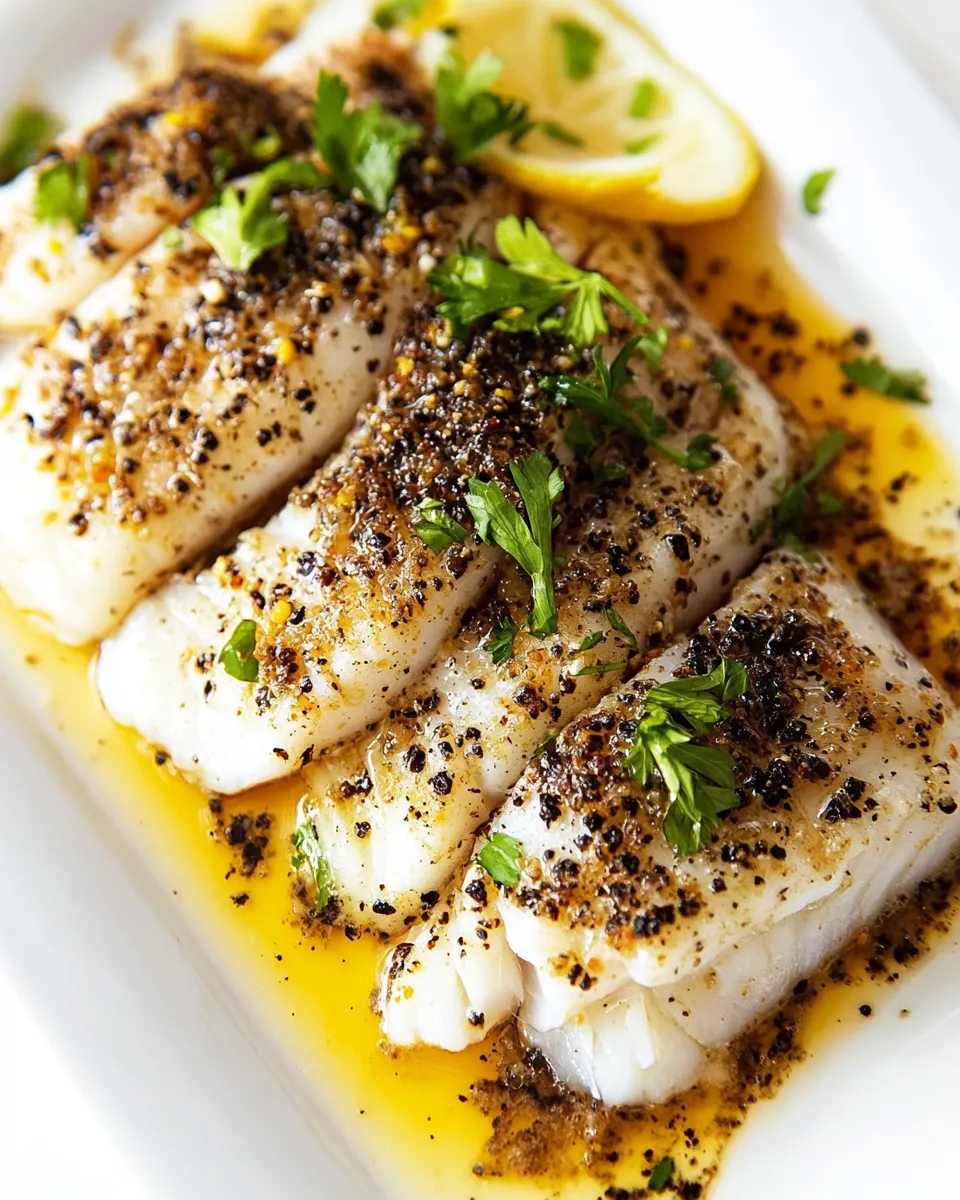
This recipe is straightforward, bright, and built around two powerful things: butter and black pepper. It’s the kind of dish that looks elegant on a weeknight table yet comes together quickly enough when you don’t want to spend an hour in the kitchen. Flounder fillets are thin and delicate, so they cook fast and take on the buttery pepper sauce beautifully.
I wrote this because sometimes the simplest bowls are the most satisfying—flaky fish, a sprinkle of parsley, a lemony pop, and a peppery hit. You’ll find clear timing and practical steps below so you don’t overcook the fish or scorch the pepper. The method keeps the fish seared, then finishes it with a quick pan sauce that tastes rich without being heavy.
Prep is minimal and the ingredient list is short. Read through once, gather everything, and you’ll be cooking in under 15 minutes. There are options for small adjustments and preservation notes later on, so you can adapt this to what’s in your pantry or to dietary needs.
What Goes Into Buttery Black Pepper Fish
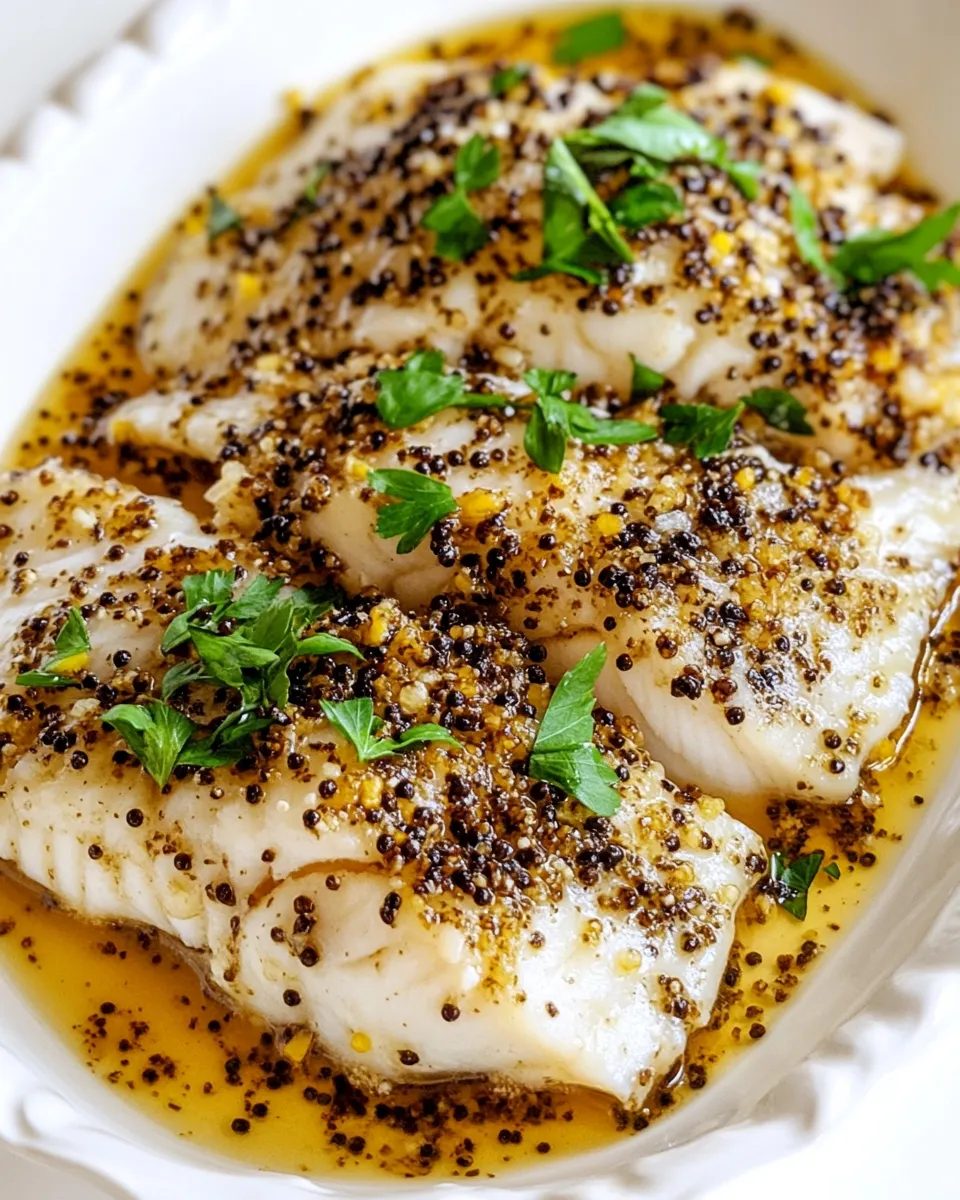
Ingredients
- 2 teaspoons black peppercorns — freshly crushed for a bright, textured heat; not interchangeable with pre-ground pepper here.
- 8 ounces 2 skinless flounder fillets — delicate white fish that cooks quickly; pat dry to get a good sear.
- 1/4 teaspoon ground black pepper — seasons the fillets themselves for an even pepper flavor.
- 2 teaspoons kosher salt, divided — half goes on the fish before searing, the rest finishes the sauce.
- 3 tablespoons all-purpose flour — light dredge to help the fillets get a thin, golden crust.
- 1 tablespoon vegetable oil — for the initial sear; use a neutral oil with a high smoke point.
- 6 tablespoons unsalted butter — makes the sauce rich and silky; unsalted lets you control final seasoning.
- 1 tablespoon lemon zest — bright, aromatic lift added to the warm butter at the end.
- 2 tablespoons lemon juice — brings acidity to balance the butter and pepper.
- 2 tablespoons fresh parsley, chopped, for garnish — fresh herb for color and a mild herbaceous note.
Buttery Black Pepper Fish Made Stepwise
- Crush the peppercorns — Place the 2 teaspoons black peppercorns into a mortar and pestle and grind until coarsely crushed. If you don’t have one, spread the peppercorns on a cutting board, cover them with a thick towel, and press/crush with the flat side of a chef’s knife or the bottom of a heavy skillet. Set aside.
- Season and flour the fillets — Pat the 8 ounces 2 skinless flounder fillets dry with paper towels. Sprinkle each side lightly with the 1/4 teaspoon ground black pepper and 1 teaspoon of the kosher salt (reserve the remaining teaspoon for the sauce). Pour the 3 tablespoons all-purpose flour onto a shallow plate and press each fillet into the flour to coat both sides, shaking off excess so the coating is thin and even. Set the floured fillets aside on a clean plate.
- Heat the pan and sear the fish — Place a skillet over medium-high heat and add the 1 tablespoon vegetable oil. When the oil is hot and shimmering but not smoking, add the floured fillets. Cook the fillets for 2 minutes without moving them, so a light golden crust forms. Gently flip each fillet and cook the opposite side for about 1 minute, until the fish is opaque and flakes easily with a fork. Transfer the cooked fillets to a warm plate and cover loosely with foil to rest while you make the sauce.
- Clean the skillet — Pour out any remaining oil and wipe the skillet clean with a paper towel so the sauce starts from a fresh base and the butter won’t pick up burned bits.
- Make the buttery pepper sauce — Return the clean skillet to medium-high heat and add the 6 tablespoons unsalted butter. Let the butter melt and begin to foam, then add the coarsely crushed black peppercorns. Stir or swirl the pan occasionally—keep the pepper moving so it toasts briefly without burning. Cook the pepper in the butter for 2 to 3 minutes until aromatic and the butter has a light nutty scent; watch carefully.
- Finish the sauce — Remove the skillet from the heat and immediately stir in the 1 tablespoon lemon zest, 2 tablespoons lemon juice, and the remaining 1 teaspoon kosher salt. Stir to combine so the acid brightens the butter and the salt rounds the flavors. Taste and adjust only if needed.
- Plate and serve — Arrange the rested fillets on serving plates and spoon the hot buttery black pepper sauce over each piece. Sprinkle the 2 tablespoons fresh chopped parsley over the top for color and freshness. Serve immediately so the sauce stays glossy and the fish remains flaky.
Why This Recipe Works
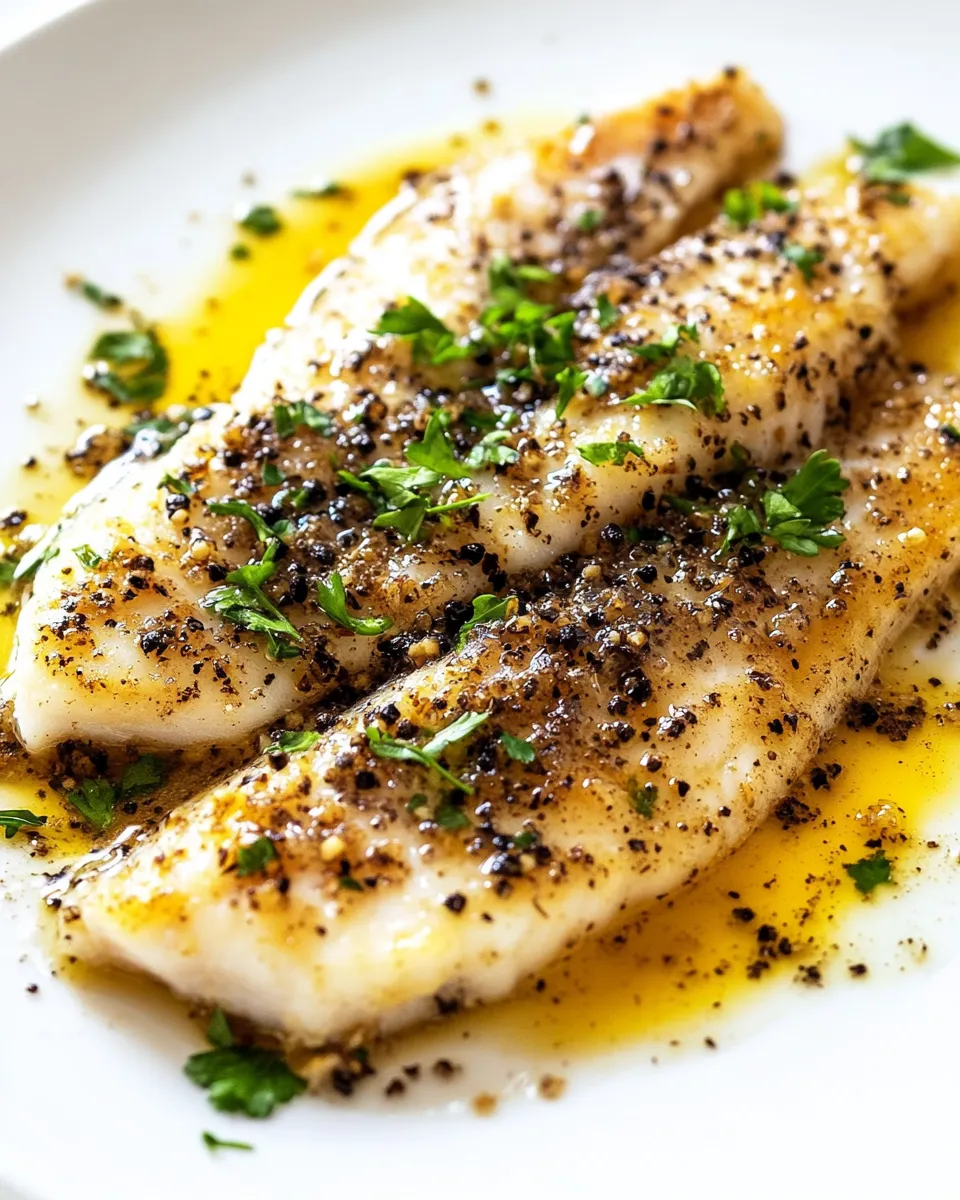
Two stages—searing the fish and making the sauce—let each flavor component be at its best. The thin flour coating gives the delicate flounder a bit of texture and keeps the fish from sticking during the quick sear. Toasting crushed peppercorns in butter brings out volatile aromatics that pre-ground pepper can’t match; it mellows the heat and adds a toasty backbone to the lemon and butter.
Lemon juice and zest cut the richness, making the butter taste brighter rather than heavier. Because flounder is thin, the short cook time preserves moisture and prevents a dry result. The parsley at the end refreshes the palate and adds visual contrast.
No-Store Runs Needed
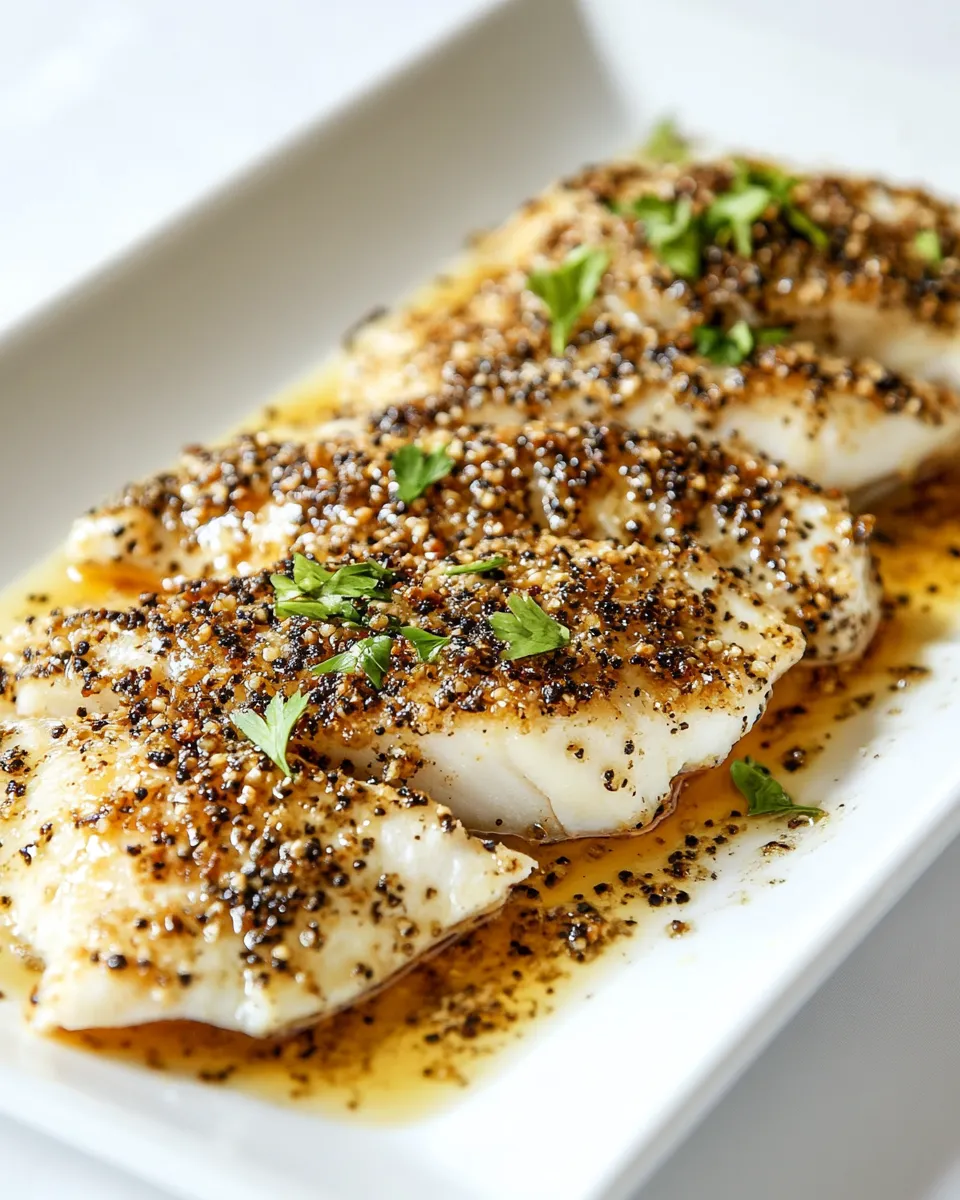
If you’re cooking from a stocked pantry and refrigerator, this is designed to work with basics: flour, oil, butter, lemons, salt, and peppercorns. If you don’t have fresh parsley, chives or any mild fresh herb will do. No fresh lemon? A teaspoon of white wine vinegar can stand in for a portion of the lemon juice, but fresh lemon is preferable for its aroma.
Kitchen Gear Checklist
- Skillet (10–12-inch preferred) — for searing and making the sauce.
- Mortar and pestle or heavy knife/ skillet — to crush the peppercorns.
- Shallow plate — for the flour dredge.
- Paper towels — to dry fillets and wipe the skillet.
- Spatula or fish turner — to flip fillets gently.
Troubles You Can Avoid
Burning the pepper
Black pepper burns quickly in hot fat. Toast it briefly and keep it moving. If it smells acrid, start the sauce over with fresh butter—burned pepper ruins the sauce.
Overcooking the fish
Flounder cooks in minutes. Remove it from the pan as soon as it flakes. If your fillets are thicker than typical flounder, check doneness earlier and reduce sear time accordingly.
Soggy crust
Shake off excess flour before searing and make sure the pan and oil are hot. A thin, even dusting is all you need; too much flour creates a gummy coating.
Dietary Customizations
Low-sodium: Reduce total salt to taste; use 1 teaspoon kosher salt across both fish and sauce, then finish at the table if needed.
Dairy-free: Substitute the butter with an equal amount of a neutral oil-based vegan butter or a mix of olive oil and a touch of coconut oil for mouthfeel; the final flavor will be less dairy-forward but still rich.
Gluten-free: Replace the 3 tablespoons of all-purpose flour with a 1:1 gluten-free flour blend or rice flour for a light dredge.
Cook’s Notes
Use the freshest whole peppercorns you can find—pre-ground spice loses essential oils. If your lemon is small, taste as you add juice; you want brightness without masking the pepper. If you’re cooking for two and prefer more sauce, increase butter by 1–2 tablespoons and adjust salt and lemon by small increments.
Timing tip: Start crushing the pepper while the fillets are resting after dredging. It’s a small efficiency that keeps the sauce hot and ready the second the fillets come out of the pan.
Store, Freeze & Reheat
Stored: Keep cooked fish and sauce in an airtight container in the refrigerator for up to 2 days. The sauce will solidify because of the butter but will retain flavor.
Freeze: I don’t recommend freezing the finished fish; the texture will deteriorate. If you must, wrap tightly and freeze up to 1 month, but expect a softer texture on reheating.
Reheat: Gently rewarm in a low oven (about 275°F / 135°C) for 8–10 minutes with a splash of water or lemon juice to restore moisture. Alternatively, warm the sauce gently in a skillet over low heat until melted and glossy, then spoon over the warmed fillets.
Your Top Questions
Q: Can I use another fish? A: Yes—sole, tilapia, or thin cod fillets will work. Thicker fillets require slightly longer sears; adjust carefully.
Q: What if I only have pre-ground pepper? A: Pre-ground lacks the texture and bright aromatic pop that crushed peppercorns give. If using pre-ground, add a little at the end of sauce making for fresher aroma and reduce the ground black pepper used to avoid overwhelming the dish.
Q: Can I make the sauce ahead? A: You can make the butter-pepper mixture ahead and gently rewarm it when ready to serve. Keep it covered and warm, then stir in lemon and salt just before serving for the freshest flavor.
Bring It Home
This is a small meal that feels complete: silky butter, lemon lift, a little pepper bite, and flaky fish. It’s quick enough for a weeknight and pleasing for guests. Serve with simple sides—steamed greens, sautéed spinach, or a lemony rice—to keep the plate bright and balanced. The technique here is repeatable: crisp the exterior, remove, and finish with a hot pan sauce that brings the whole dish together.
Make it once with attention to the pepper and timing, and this will become one of those reliable recipes you turn to when you want something quick, elegant, and satisfying.
Buttery Black Pepper Fish
Ingredients
- 2 teaspoons black peppercorns
- 8 ounces skinless flounder fillets about 2 fillets
- 1/4 teaspoon ground black pepper
- 2 teaspoons kosher salt divided
- 3 tablespoons all-purpose flour
- 1 tablespoon vegetable oil
- 6 tablespoons unsalted butter
- 1 tablespoon lemon zest
- 2 tablespoons lemon juice
- 2 tablespoons fresh parsley chopped, for garnish
Instructions
- Crush the black peppercorns with a mortar and pestle until coarsely crushed; alternatively place them on a work surface and crush with the flat side of a knife or a heavy skillet. Set aside.
- Place the all-purpose flour on a shallow plate. Pat the flounder fillets dry with paper towels, then season both sides with the ground black pepper and 1 teaspoon of the kosher salt. Dredge the fillets in the flour, shaking off any excess.
- Heat the vegetable oil in a skillet over medium-high heat until shimmering. Add the floured fillets and cook for about 2 minutes on the first side, then gently flip and cook about 1 minute more, until the fish is opaque and flakes easily. Transfer the cooked fillets to a plate and set aside.
- Wipe the skillet clean and return it to medium-high heat. Melt the butter, then add the crushed black peppercorns. Cook, stirring occasionally, for 2 to 3 minutes until the butter is fragrant and the pepper is toasted, taking care not to burn it.
- Remove the skillet from heat and stir in the lemon zest, lemon juice, and the remaining 1 teaspoon kosher salt. Mix to combine.
- To serve, spoon the buttery black pepper sauce over the flounder fillets and garnish with the chopped parsley.
Equipment
- Skillet
- shallow plate
- Mortar and pestle (or heavy skillet/knife for crushing)
- Spatula
- Paper Towels
Notes
- Use fresh, skinless flounder fillets for best flavor.
- If using frozen fillets, thaw completely before cooking.
- Pat the fish dry with paper towels before seasoning to ensure a crisp exterior.
- Gently flip the fillets to avoid breaking them.
- Cook flounder only until opaque and flaky to avoid overcooking.