Japanese Cheesecake
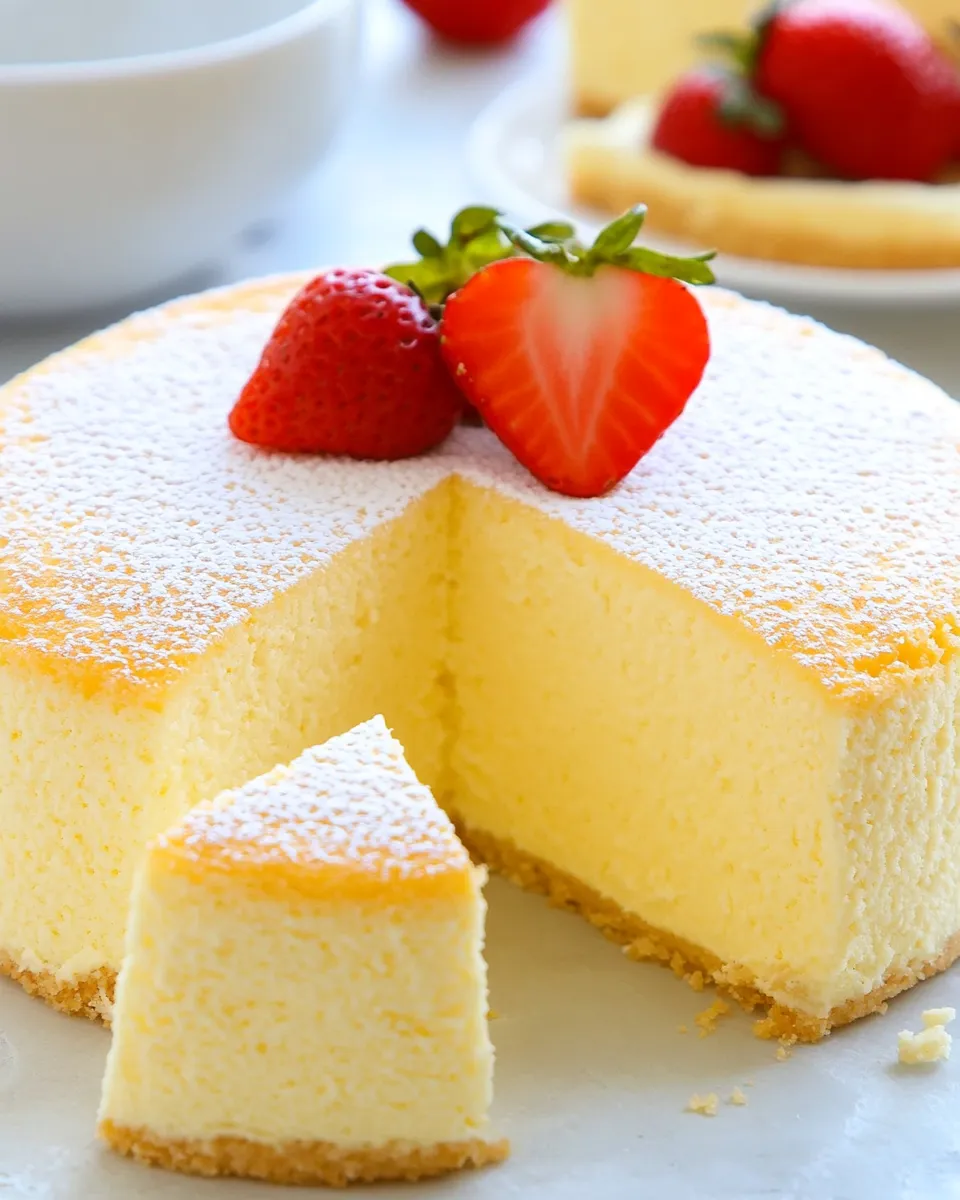
I fell for Japanese Cheesecake the first time I tasted its buoyant, cloud-like texture. It’s not as dense as American-style cheesecakes and not quite a sponge cake — it lives in that beautiful middle ground where cream cheese flavor meets feather-light meringue. If you like a dessert that feels delicate but still rich, this is the one to learn.
This recipe keeps things practical: straightforward ingredients, clear steps, and a reliable water bath bake that gives the cake its signature lift and silkiness. I’ll walk you through each stage so you get consistent results at home, whether you’re making it for a special breakfast, afternoon tea, or a simple dessert.
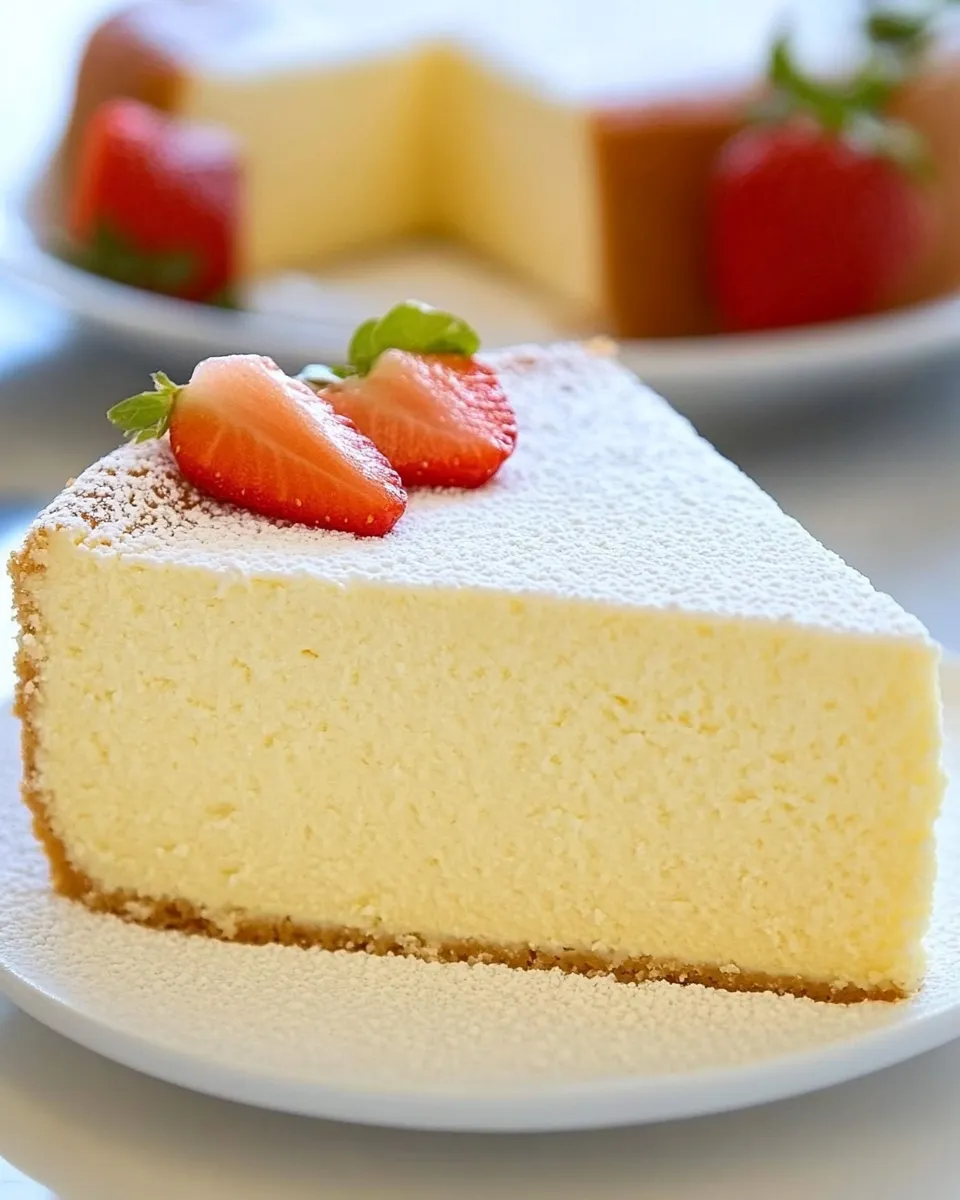
Expect a golden top, a slight wobble in the center when it’s done, and a texture that’s best enjoyed slightly warm or chilled. Read through the ingredients and equipment, follow the step-by-step method, and use the troubleshooting tips if anything looks off — you’ll be rewarded with one of the most satisfying, elegant cakes you can bake at home.
What Goes Into Japanese Cheesecake
Ingredients
- 8 ounces cream cheese, softened — provides the creamy, tangy base; soften fully for a lump-free batter.
- 4 tablespoons unsalted butter — adds richness and helps the cake set smoothly.
- 6 1/2 tablespoons whole milk — thins the cream cheese mixture to the right consistency.
- 3/4 cup cake flour — gives a tender crumb; sift to avoid lumps.
- 2 tablespoons cornstarch — stabilizes the cake and keeps it light.
- 1/4 teaspoon salt — balances the sweetness and enhances flavor.
- 6 large eggs, separated — yolks enrich the batter; whites are whipped into a meringue for lift.
- 4 teaspoons lemon juice — brightens the flavor and cuts richness.
- 1 3/4 teaspoons vanilla extract — background flavor note; use pure extract if possible.
- 3/4 cup granulated sugar, divided — sugar for both the yolk mixture and the meringue; split as directed to stabilize and sweeten.
Make Japanese Cheesecake: A Simple Method
Prep and setup
- Grease and line an 8-inch round springform pan with parchment paper. If the pan is loose-bottomed, wrap the outside with foil to prevent water getting in.
- Place the prepared pan in a larger baking tray. Pour about 1/2 inch of hot water into the tray to create a water bath (bain-marie) — you’ll add the batter-filled pan to this for even, gentle baking.
Make the cream cheese base
- In a small saucepan over low heat, combine 8 ounces softened cream cheese, 4 tablespoons unsalted butter, and 6 1/2 tablespoons whole milk. Stir constantly until everything melts together into a smooth mixture. Remove from heat and set aside to cool slightly.
Dry ingredients
- Sift together 3/4 cup cake flour, 2 tablespoons cornstarch, and 1/4 teaspoon salt into a bowl. Set aside.
Combine yolks and flavor
- In a large mixing bowl, whisk the warm cream cheese mixture with 6 reserved egg yolks, 4 teaspoons lemon juice, 1 3/4 teaspoons vanilla extract, and about half of the sugar (use 3/8 cup — half of the 3/4 cup total) until smooth and homogenous.
- Gradually fold the sifted dry ingredients into the cream cheese-yolk mixture until well combined and lump-free.
Make the meringue
- In a clean bowl, start beating the 6 reserved egg whites on low speed until foamy. Gradually add the remaining granulated sugar (the other half of the 3/4 cup) while continuing to beat.
- Increase the mixer speed and beat until soft peaks form — the meringue should be glossy and hold a soft peak that bends over slightly.
Incorporate meringue and bake
- Fold one-third of the whipped egg whites into the batter gently to lighten it. Use a rubber spatula and folding motion to preserve air.
- Carefully fold in the remaining egg whites in two additions, keeping as much air as possible in the batter.
- Pour the finished batter into the prepared pan and smooth the top lightly.
- Place the pan into the larger tray with the water bath and transfer to a preheated oven set to 300°F (150°C).
- Bake as follows: 30 minutes with the oven door closed; then open the oven door slightly (a gap of about 1–2 inches) and bake another 20 minutes; finish with 20 minutes more at 300°F with the door closed.
Cool and finish
- When the cake has a golden top, a slight jiggle in the center, and feels soft and springy to the touch, remove it from the oven.
- Let the cheesecake cool in the pan for 15 minutes, then gently release it from the springform and transfer to a cooling rack to cool completely.
- For the best texture, serve slightly warm or chilled, depending on your preference.
The Upside of Japanese Cheesecake
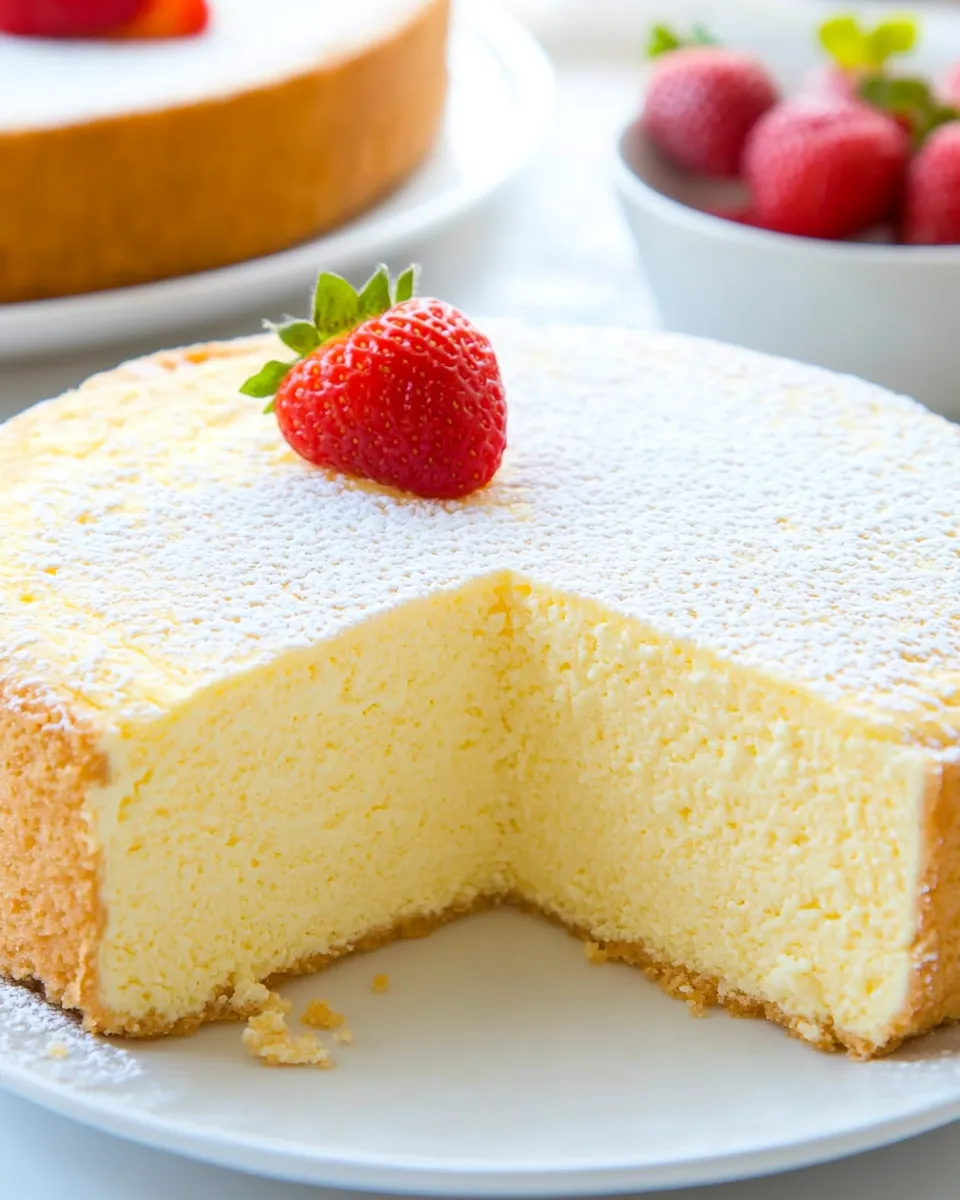
This cake is light but still satisfies a cheesecake craving. It’s forgiving for a beginner who follows the water bath and meringue steps, and it resists drying out thanks to the cream cheese-butter-milk base. The gentle sweetness and lemon lift make it versatile—serve it plain, dusted with powdered sugar, or with a simple berry compote.
International Equivalents
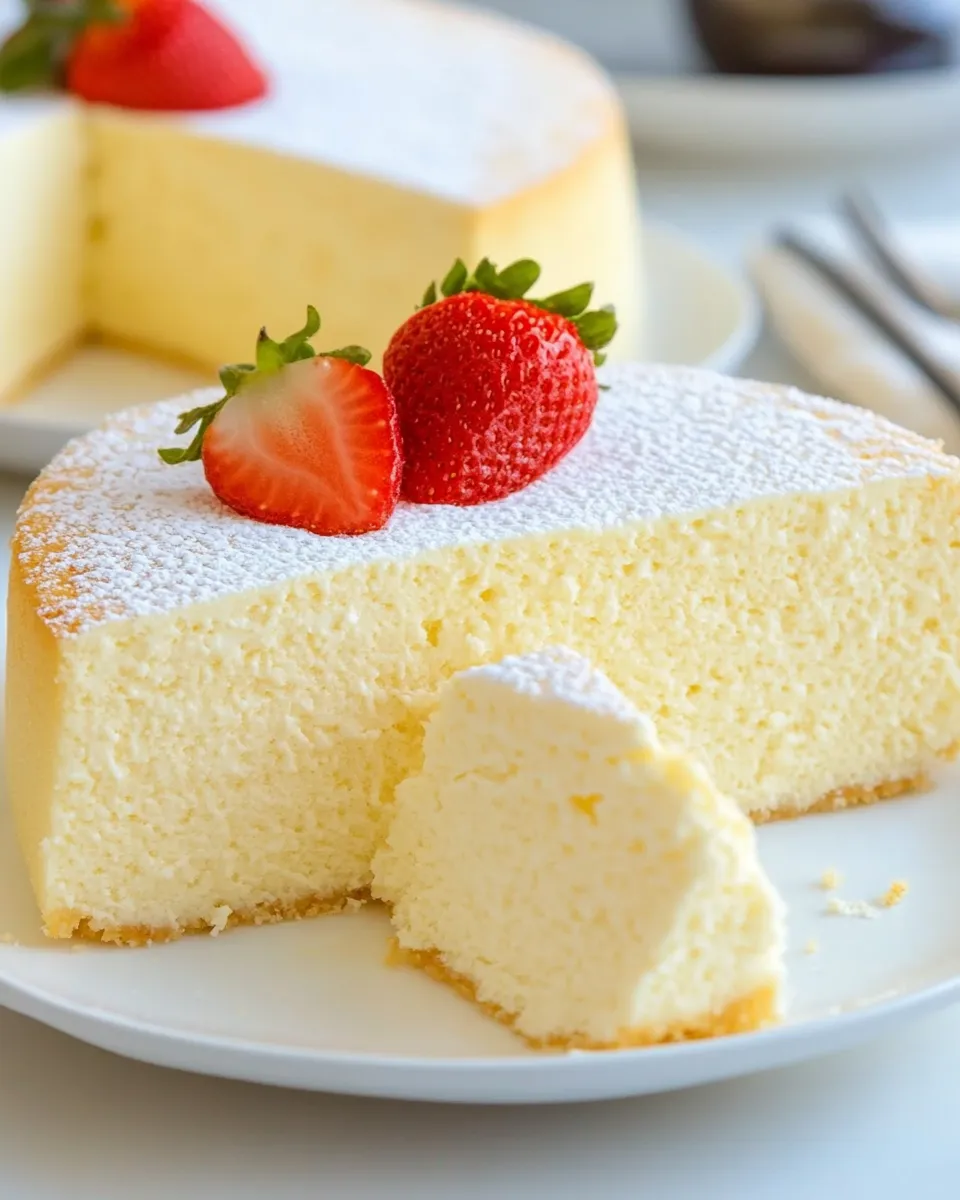
Japanese Cheesecake sits between Western cream cheesecakes and sponge-based desserts. Think of it as a cross between a classic American cheesecake (for the cream cheese flavor) and a chiffon or sponge cake (for the airy structure). In some East Asian bakeries it’s called cotton cheesecake or soufflé cheesecake — same idea, different names.
Tools & Equipment Needed
- 8-inch round springform pan — the recipe is sized for this pan.
- Parchment paper and aluminum foil — for lining and water bath protection.
- Large baking tray to hold the water bath.
- Mixing bowls — one for the cream cheese base, one for the dry ingredients, and one for the meringue.
- Electric mixer or whisk — an electric mixer makes the meringue easier and more reliable.
- Rubber spatula — for folding the meringue without losing air.
- Sieve or fine-mesh sieve — for sifting flour and cornstarch.
Problems & Prevention
Common issues and fixes
- Cracked or sunken top — usually from overbaking or rapid cooling. Prevent by using the water bath and following the staged baking times. Cool the cake gradually: leave it in the oven with the door ajar for a few minutes if you need extra insurance.
- Dense texture — lost air from the meringue or overmixing. Whip the egg whites to soft peaks and fold gently in thirds.
- Watery cake or soggy bottom — water seeping into the pan. Wrap the pan well with foil if it’s loose-bottomed and be sure the foil is sealed.
- Undercooked center — oven temperature variance or too much water in the bath. Use an oven thermometer if unsure, and don’t overfill the outer tray with water; 1/2 inch is sufficient.
Fresh Seasonal Changes
Japanese Cheesecake likes subtle additions. In spring, fold in a tablespoon of finely grated lemon zest or serve with a macerated strawberry mixture. Summer is great for a runny berry compote spooned over slices. In autumn, a light dusting of cinnamon-sugar or a pear compote complements the cake’s gentle tang. In winter, a drizzle of warm salted caramel can be lovely — keep add-ins minimal to preserve the cake’s airy texture.
What I Learned Testing
Three practical lessons from several bakes: first, temperature control matters — slightly warm cream cheese mix is easier to incorporate with yolks. Second, patience folding the meringue pays off; rush it and you’ll get a flat cake. Third, the water bath isn’t optional — it’s the difference between a dense bake and that signature silkiness. I also found that letting the cake rest in the pan for 15 minutes before unmolding reduces the chance of cracking.
Make-Ahead & Storage
Make it a day ahead for easier slicing and a slightly firmer texture. Store covered in the refrigerator for up to 3–4 days. If you prefer it slightly warm, reheat individual slices gently in a microwave for 8–10 seconds. Do not freeze whole cheesecakes with a high meringue content; freezing can collapse the structure. If you need longer storage, freeze single slices wrapped tightly for up to one month and thaw slowly in the fridge.
Your Questions, Answered
Q: Can I use low-fat cream cheese or milk? A: Not ideal. The cake relies on full-fat cream cheese and whole milk for richness and structure.
Q: What if I don’t have cake flour? A: Cake flour gives a tender crumb. If you must substitute, use all-purpose flour but reduce slightly and expect a firmer texture.
Q: Why do I fold the meringue in thirds? A: Folding in stages lightens the batter gradually and preserves air, which is what gives the cake its rise and softness.
Before You Go
Japanese Cheesecake rewards care and a gentle hand. Follow the ingredient list and baking sequence here, and focus on the meringue and water bath — those are the keys. Serve slightly warm or chilled, and enjoy the way this cake feels almost like a dessert and a cloud at the same time. If you try the recipe, I’d love to hear how it turned out and what topping you preferred.
Japanese Cheesecake
Ingredients
- 8 ounces cream cheese softened
- 4 tablespoons unsalted butter
- 6.5 tablespoons whole milk
- 3/4 cup cake flour
- 2 tablespoons cornstarch
- 1/4 teaspoon salt
- 6 large eggs separated (reserve yolks and whites separately)
- 4 teaspoons lemon juice
- 1 3/4 teaspoons vanilla extract
- 3/4 cup granulated sugar divided
Instructions
- Preheat the oven to 300°F (150°C). Grease and line an 8-inch springform pan with parchment paper and wrap the outside with foil if it is a loose-bottom pan.
- Place the prepared pan in a larger baking tray and pour about 1/2 inch of hot water into the tray to create a water bath; set aside.
- In a small saucepan over low heat, melt the cream cheese, unsalted butter, and whole milk, stirring until smooth; remove from heat and let cool slightly.
- Sift together the cake flour, cornstarch, and salt into a bowl.
- In a large bowl, whisk the warm cream cheese mixture with the egg yolks, 2 teaspoons lemon juice, vanilla extract, and half of the granulated sugar (about 6 tablespoons) until smooth. Gradually stir in the sifted dry ingredients until fully combined.
- In a clean bowl, beat the egg whites on low speed until foamy. Gradually add the remaining sugar, then increase speed and beat until soft peaks form.
- Fold one-third of the whipped egg whites into the batter to lighten it, then gently fold in the remaining egg whites in two additions, preserving as much air as possible and mixing until just combined.
- Pour the batter into the prepared pan, smooth the top, then place the pan into the water bath and transfer to the oven. Bake at 300°F (150°C) for 30 minutes with the oven door closed.
- After 30 minutes, bake for 20 minutes with the oven door slightly open, then bake another 20 minutes with the door closed (total about 70 minutes). The cake should have a golden top and a slight jiggle.
- Remove from the oven and let cool in the pan for 15 minutes, then gently release from the springform and cool completely on a rack. Serve slightly warm or chilled.
Equipment
- 8-inch springform pan
- Parchment Paper
- large roasting pan or baking tray (for water bath)
- Saucepan
- Mixing bowls
- electric mixer or whisk
- Sifter
Notes
- Use room-temperature cream cheese for a smooth batter.
- Beat egg whites in a clean, grease-free bowl for best volume.
- Fold gently to preserve air for a fluffy texture.
- Wrap the pan with foil to prevent water from seeping in during the water bath.