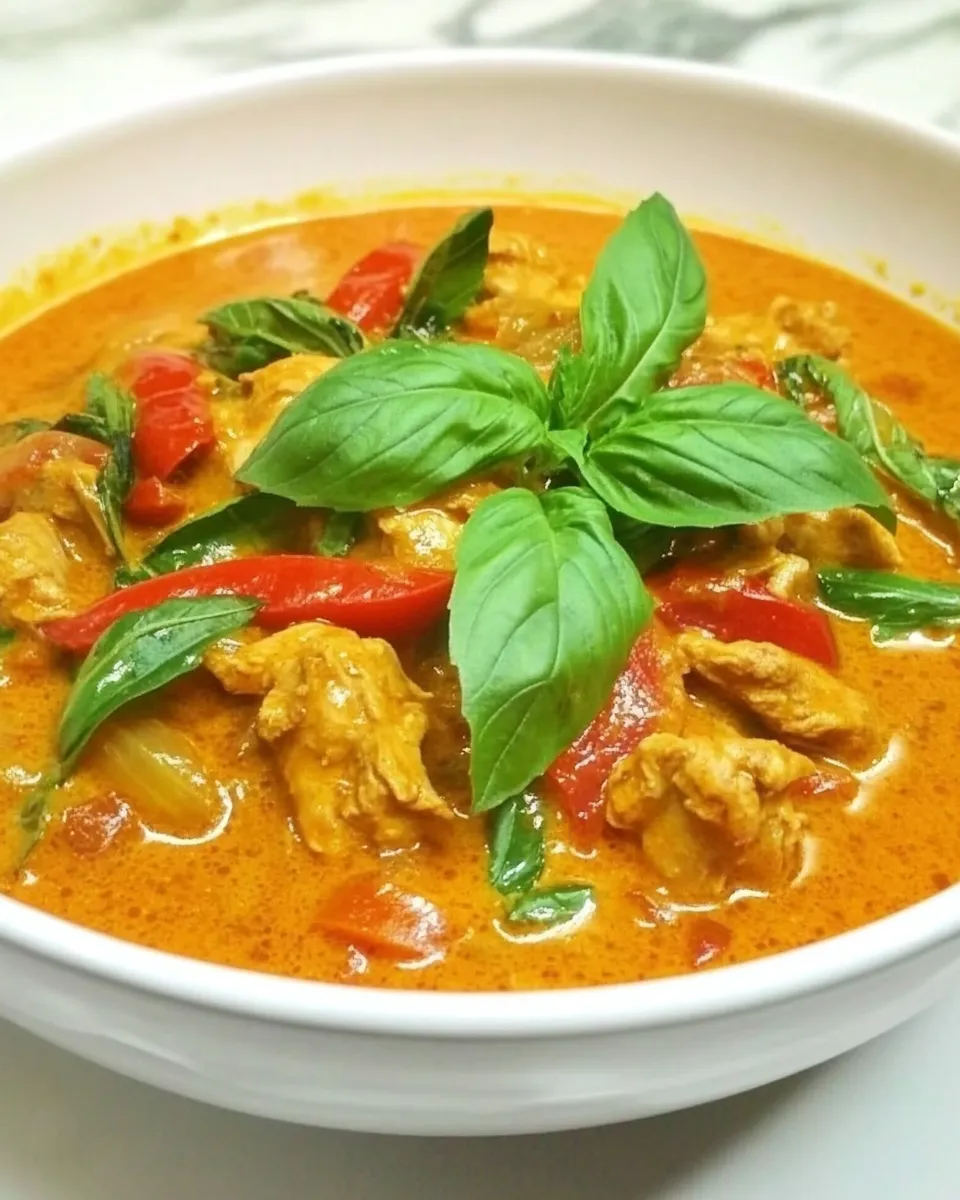
Best Thai Panang Chicken Curry
I fell in love with Panang curry the first time I tasted its gentle balance of creamy coconut, warm spices, and a whisper of lime. This version focuses on clean, practical steps so you can reproduce that balance at home without fuss. It’s comforting, fragrant, and quick enough for a weeknight yet special enough for guests.
The recipe uses boneless skinless chicken thighs for richness, Panang red curry paste for character, and kaffir lime leaves for that essential citrus aroma. I keep the technique straightforward: build flavor in the pan, simmer until the sauce thickens, finish with fresh basil. You’ll get a glossy, well-seasoned curry that clings to rice or noodles.
Below you’ll find the ingredient notes, a precise step-by-step procedure, swaps, common mistakes, storage tips, and answers to questions readers ask most often. Read through once, then follow the steps while you cook—this method keeps things stress-free and reliably delicious.
What’s in the Bowl
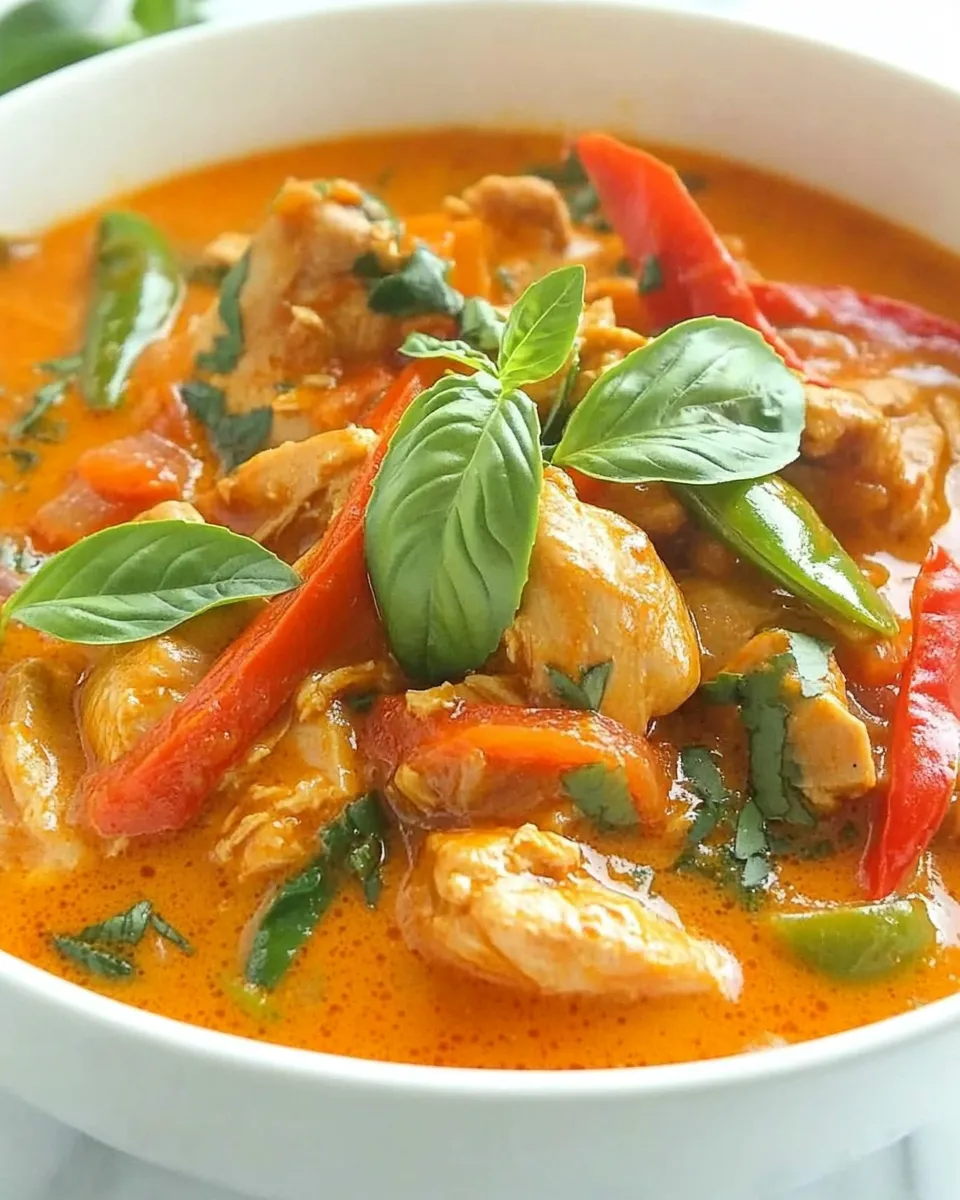
- 1 1/2 pounds boneless skinless chicken thighs, chopped — Thighs stay juicy and tender during simmering; chop into bite-size pieces for even cooking.
- 1 small onion, peeled and chopped — Provides a sweet foundation; chop roughly so it softens without disappearing.
- 1 red bell pepper, seeded and chopped — Adds color and a mild sweetness; cut into ~1-inch pieces for texture.
- 1 orange bell pepper, seeded and chopped — Same role as the red pepper; two colors make the dish visually appealing.
- 2 cloves garlic, minced — Sharp aromatic that deepens the curry flavor when sautéed briefly.
- 1 tablespoon coconut oil — Used for sautéing; coconut oil amplifies the curry’s tropical notes.
- 4 ounces Panang red curry paste (1 can) — The flavor base: spicy, nutty, and slightly sweet. Use a quality paste for best results.
- 1 tablespoon peanut butter — Adds body, creaminess, and a subtle nutty depth that Panang curries often have.
- 12 kaffir lime leaves, crushed — Crush them to release essential oils; they give a distinct citrus fragrance central to Panang.
- 13.5 ounces thick coconut milk, unsweetened (1 can) — The sauce’s backbone; thick milk yields a rich, silky texture.
- 3 tablespoons fish sauce — Salty, savory seasoning that balances the sweetness and creaminess.
- 1/4 cup Thai basil leaves or sweet basil — Stirred in at the end for a fresh, peppery finish.
Thai Panang Chicken Curry: From Prep to Plate
- Prepare the ingredients: Chop 1 1/2 pounds boneless skinless chicken thighs into bite-size pieces. Peel and chop 1 small onion. Seed and chop 1 red bell pepper and 1 orange bell pepper into roughly 1-inch pieces. Mince 2 cloves garlic. Crush 12 kaffir lime leaves to release oils.
- Heat the pan: Place a 14-inch skillet or a wok over medium-high heat. Add 1 tablespoon coconut oil and let it melt and warm until shimmering but not smoking.
- Sauté aromatics and vegetables: Add the chopped onion to the hot oil and sauté for about 1 minute to begin softening. Add the chopped red and orange bell peppers and the minced garlic. Continue sautéing for another 2–3 minutes until the peppers start to soften and the garlic is fragrant.
- Toast the curry paste: Push the vegetables to the sides of the skillet to make a well in the center. Add 4 ounces Panang red curry paste and 1 tablespoon peanut butter into the center. Cook the paste mixture for 2–3 minutes, stirring and moving it around so it toasts lightly and the oils are released—this step deepens the flavor.
- Add liquids and aromatics: Stir the toasted paste into the vegetables. Add the crushed kaffir lime leaves, then pour in 13.5 ounces thick unsweetened coconut milk and 3 tablespoons fish sauce. Stir thoroughly to combine the paste, coconut milk, and fish sauce into a smooth sauce.
- Cook the chicken: Add the chopped chicken pieces to the skillet and stir so each piece is coated in the sauce. Increase heat briefly to bring the mixture to a gentle boil.
- Simmer until done: Reduce the heat to low and let the curry simmer for 10–15 minutes, uncovered, stirring occasionally. Simmer until the chicken is cooked through and the sauce thickens and becomes glossy.
- Finish with basil: Remove the skillet from heat and immediately stir in 1/4 cup Thai basil leaves (or sweet basil). The residual heat wilts the basil and preserves its bright flavor.
- Serve: Spoon the curry over rice, quinoa, or noodles. Taste and adjust if needed—if it needs a touch more salt, add a little more fish sauce; if it’s too rich, a squeeze of lime (optional) brightens it.
Why Thai Panang Chicken Curry is Worth Your Time
Panang hits a sweet spot between bold and approachable. The curry paste gives it character without overpowering, while coconut milk and peanut butter create a lush, velvety sauce. It’s forgiving: the simmer is low-maintenance and the chicken stays tender. You get restaurant-level complexity with a straightforward technique.
It’s also versatile—serve with rice for comfort, or over noodles for a quicker dinner. For gatherings, it scales well and reheats without losing texture, making it a practical dish to cook ahead.
Quick Replacement Ideas
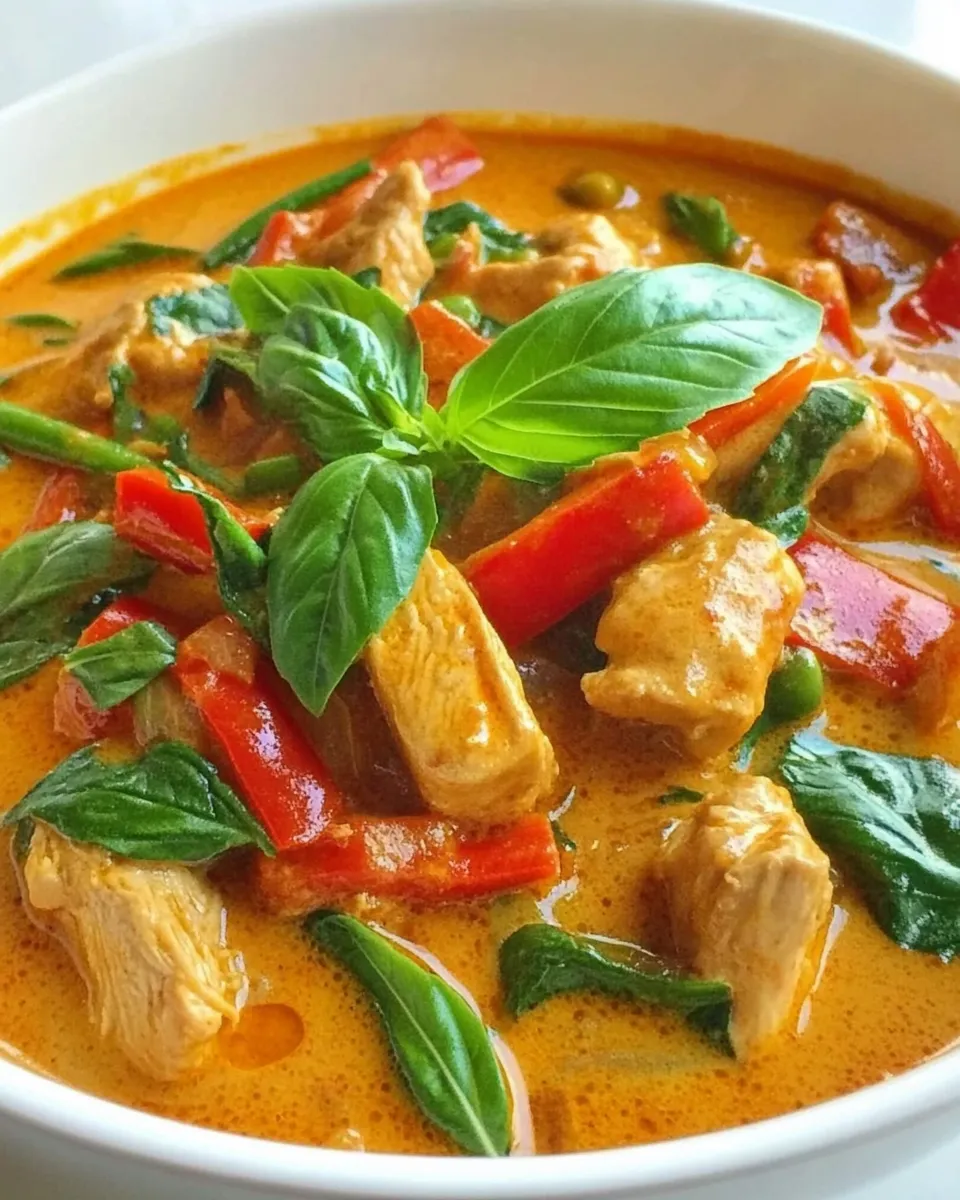
- Chicken thighs — use the same weight of boneless skinless chicken breasts if you prefer leaner meat, but expect slightly firmer texture.
- Panang red curry paste — substitute with red curry paste if Panang isn’t available; flavor will be a touch different but still excellent.
- Peanut butter — use almond butter or cashew butter if peanut allergy is a concern (same amount).
- Thai basil — ordinary sweet basil works; add it just before serving to preserve aroma.
- Kaffir lime leaves — if you don’t have them, a strip of lime zest can add brightness, though the flavor won’t be identical.
Prep & Cook Tools
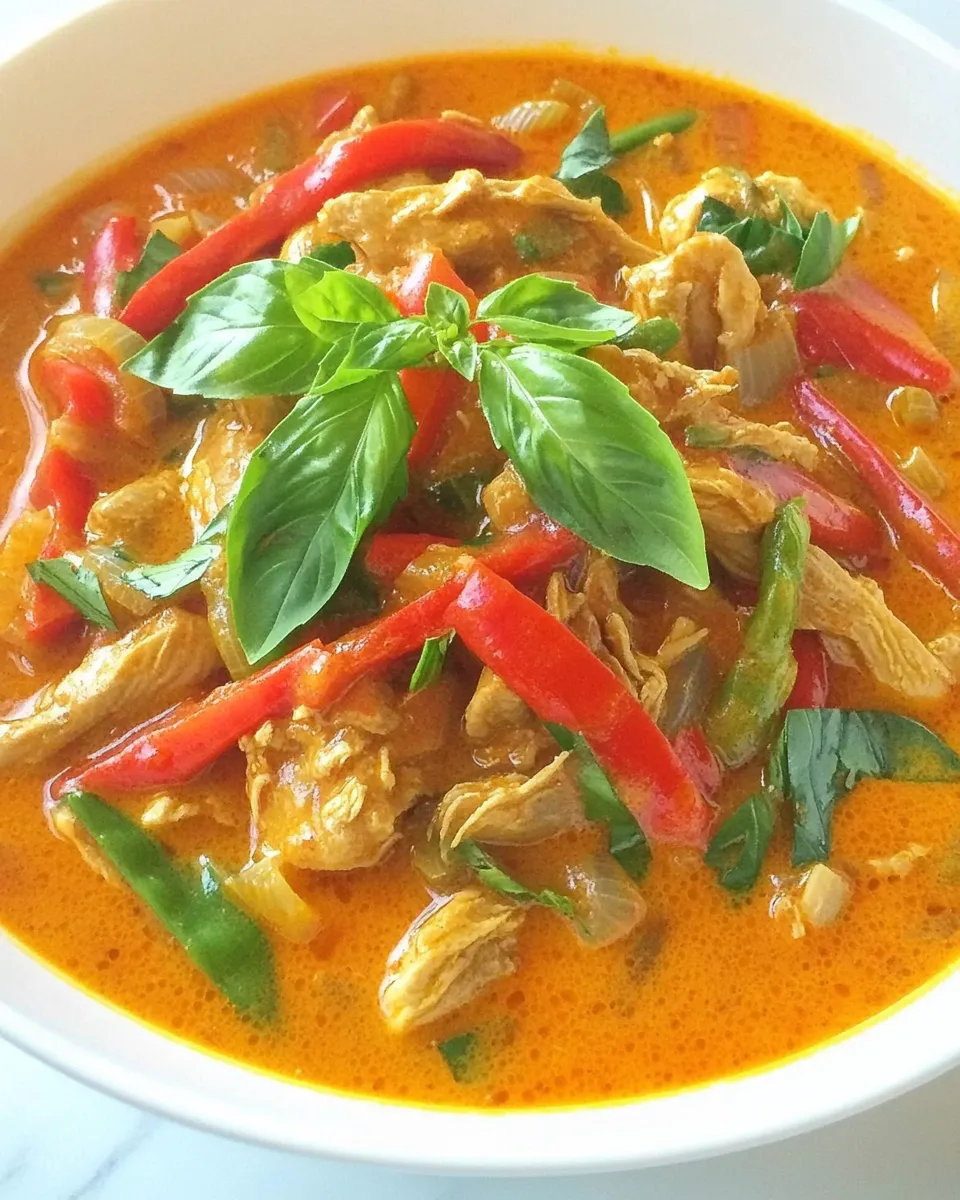
- 14-inch skillet or wok — roomy pan helps you move vegetables to the sides and toast the paste in the center.
- Sharp chef’s knife — for cleanly cutting chicken and vegetables into even pieces.
- Cutting board — keep separate zones for meat and vegetables for safety.
- Spoon or spatula — for stirring and scraping up browned bits.
- Can opener — for the coconut milk and curry paste can.
Learn from These Mistakes
Common slip-ups and how to avoid them:
- Not toasting the paste: Skipping the 2–3 minute toast step keeps the curry from developing depth. Always cook the paste briefly so the oils bloom.
- Overcrowding the pan: If your pan is too small, ingredients steam instead of sauté, which weakens flavor. Use the 14-inch skillet or work in batches.
- Simmering too fast: A rolling boil will toughen the chicken and break down coconut milk. Keep a gentle simmer for 10–15 minutes.
- Adding basil too early: Basil loses its fragrance when cooked too long. Stir it in after you remove the pan from heat.
Tailor It to Your Diet
Making Panang curry fit dietary needs is easy. For dairy-free and gluten-free diets this recipe already fits—use gluten-free fish sauce if needed. For vegetarian or vegan versions, swap chicken for tofu or hearty vegetables (eggplant, mushrooms), and use a vegan fish sauce alternative or soy sauce. Reduce sodium by using less fish sauce and finishing with a little salt to taste.
What I Learned Testing
During testing I learned that the balance between paste, coconut milk, and fish sauce is delicate. Toasting the paste with the peanut butter yields a more rounded, deeper flavor than stirring it straight into the coconut milk. Also, using chicken thighs consistently produced a juicier result than breasts because the simmer is long enough to dry out white meat. Finally, crushing kaffir lime leaves just before adding them preserves the bright citrus oils that make Panang distinct.
Keep It Fresh: Storage Guide
Cool the curry in the pan for a few minutes, then transfer to an airtight container. Refrigerate for up to 3–4 days. Reheat gently on the stove over low heat to prevent separation; add a splash of water or coconut milk if the sauce tightens. To freeze, place cooled curry in a freezer-safe container for up to 2 months. Thaw overnight in the fridge before reheating.
Quick Q&A
- Can I make this spicier? Increase the amount of Panang paste or add a chopped fresh Thai chile while sautéing.
- Why use kaffir lime leaves? They provide a citrus aroma that you can’t fully replicate with zest; they’re key to authentic Panang flavor.
- Can I use light coconut milk? Light coconut milk will thin the sauce and reduce richness; stick with thick coconut milk for the intended texture.
- Is peanut butter necessary? It contributes to the classic Panang nuttiness and creaminess; you can omit it but the curry will be less rounded.
Serve & Enjoy
Serve this Panang Chicken Curry over steamed jasmine rice, fluffy quinoa, or wide rice noodles. Garnish with extra basil leaves and, if you like, a few thin slices of fresh red chili for color and heat. It pairs nicely with simple sides like cucumber salad or lightly sautéed greens to cut through the richness.
This recipe is about layering simple steps to build a bold, balanced curry. Follow the sequence—sauté, toast, simmer, finish with basil—and you’ll get a reliable, delicious Panang every time. Happy cooking!
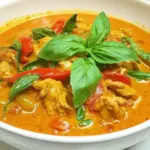
Best Thai Panang Chicken Curry
Ingredients
- 1 1/2 pounds boneless skinless chicken thighs chopped into bite-size pieces
- 1 small onion peeled and chopped
- 1 red bell pepper seeded and chopped
- 1 orange bell pepper seeded and chopped
- 2 cloves garlic minced
- 1 tablespoon coconut oil
- 4 ounces Panang red curry paste (about 1 can)
- 1 tablespoon peanut butter
- 12 kaffir lime leaves crushed to release oils
- 13.5 ounces thick coconut milk, unsweetened (about 1 can)
- 3 tablespoons fish sauce
- 1/4 cup Thai basil leaves or sweet basil
Instructions
- Cut the chicken into bite-size pieces. Chop the onion and bell peppers into roughly 1-inch pieces, mince the garlic, and crush the kaffir lime leaves to release their oils.
- Heat the coconut oil in a 14-inch skillet or wok over medium-high heat until melted and shimmering.
- Add the chopped onion and sauté for 1 minute, then add the chopped peppers and minced garlic and sauté 2–3 minutes until slightly softened.
- Push the vegetables to the sides of the skillet. Add the Panang red curry paste and peanut butter to the center and sauté 2–3 minutes, stirring, until fragrant and the paste darkens slightly.
- Add the crushed kaffir lime leaves, coconut milk, and fish sauce to the pan and stir to combine into a smooth sauce.
- Stir in the chopped chicken, bring the mixture to a boil, then reduce heat to a simmer. Cook 10–15 minutes, stirring occasionally, until the chicken is cooked through and the sauce thickens.
- Remove from heat and stir in the Thai basil leaves. Serve immediately with rice, quinoa, or noodles.
Equipment
- 14-inch skillet or wok
- Cutting Board
- chef's knife
- Measuring spoons
- measuring cup
- spatula or wooden spoon
Notes
- Panang paste, kaffir lime leaves, and Thai basil are often found at Asian markets.
- Kaffir lime leaves can be frozen and will darken but keep their flavor.
- Kaffir lime leaves remain a bit tough after cooking; you can remove them before serving if desired.