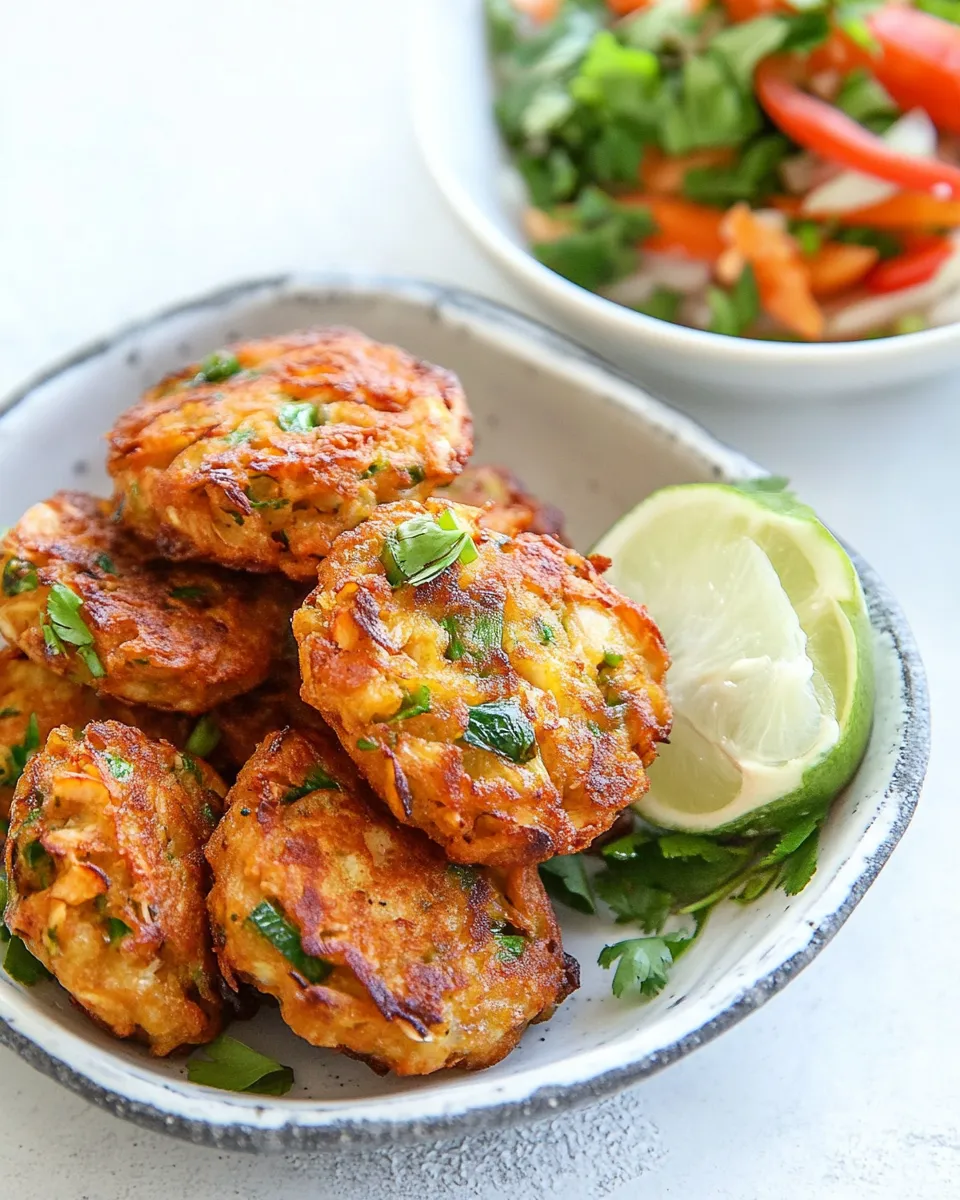
Thai Fish Cake
These Thai fish cakes are the kind of snack that disappears faster than you can say “nam jim” at a weekend market. They’re fragrant with red curry, chewy and springy from the fish paste, and studded with crisp long beans and bright ribbons of kaffir lime leaf. Serve them hot with a tangy cucumber sauce and you’ve got an unbeatable appetizer or light dinner.
The recipe is straightforward and forgiving: mix, shape, and fry. You don’t need special skills—just a food-safe bowl, a steady hand shaping the patties, and a deep pan with oil for frying. I’ll walk you through small tweaks that keep the texture right and the flavors balanced.
Below I use the exact ingredient list and directions provided, clarified and expanded into clear, step-by-step instructions. If you want to scale, swap, or store these, there are practical options later in the post.
Ingredient Notes
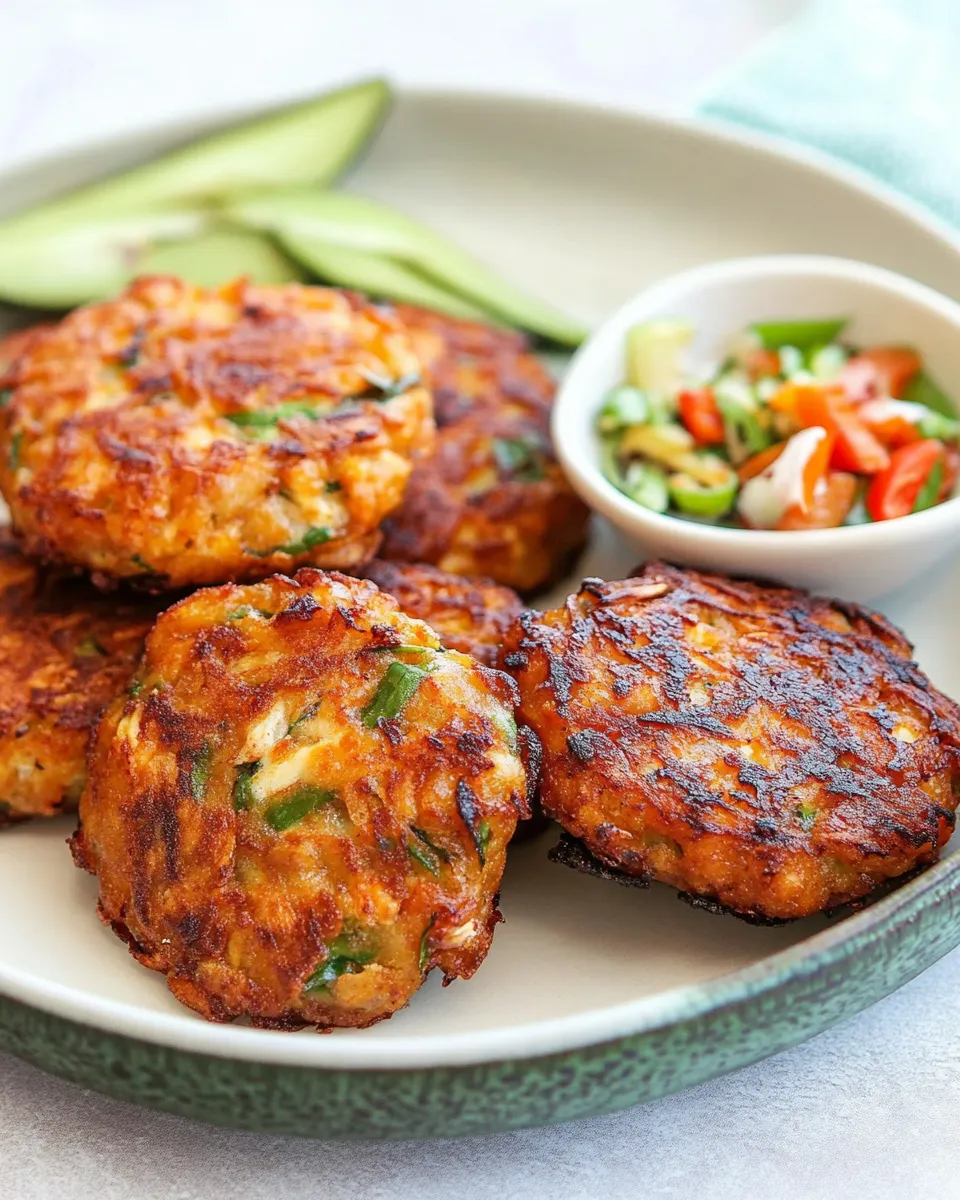
- 8oz (230g) fish paste — The base: pre-made frozen fish paste keeps texture consistent. Thaw fully and pat dry if needed.
- 1/2 egg, beaten — Binds the paste and adds a touch of silkiness; use half of a beaten whole egg (beat an entire egg and measure half).
- 2 tablespoons Thai red curry paste — Primary seasoning; Mae Ploy or Maesri are recommended brands for authentic flavor and balance.
- 5 snake beans (or long beans), thinly sliced — Adds crunch and a fresh green note. Slice thin so they cook through when fried.
- 5 kaffir lime leaves, cut into fine thin strips — Aromatic brightness; remove the central vein and slice into very thin ribbons so they’re pleasant when bitten.
The Method for Thai Fish Cake
- Prepare ingredients: Thaw the 8oz (230g) fish paste completely and pat off any excess moisture with paper towels. Beat one egg and reserve half of it (you can freeze the other half for another use). Thinly slice the 5 snake beans and stack the kaffir lime leaves, remove central veins, and slice into fine thin strips.
- Combine the paste and seasonings: In a small bowl, add the fish paste, 1/2 beaten egg, and 2 tablespoons Thai red curry paste. Mix with a spoon or clean hands until the curry paste is fully incorporated and the mixture is smooth and cohesive. Work quickly but thoroughly so the paste becomes slightly sticky—this improves shaping and frying.
- Add the vegetables: Fold in the thinly sliced snake beans and the finely shredded kaffir lime leaves. Distribute them evenly without overworking the paste; you want the bits to stay distinct for texture.
- Heat the oil: Pour oil into a deep pot or deep skillet to a depth of about 1 1/2 to 2 inches (enough for shallow-deep frying). Heat the oil over medium-high until it reaches roughly 350–360°F (175–180°C). If you don’t have a thermometer, test with a small scrap of paste—if it sizzles and rises steadily without burning immediately, it’s ready.
- Shape the cakes: Wet your hands with cold water to prevent sticking. Scoop about a ping-pong-ball-sized portion of paste (roughly 1 tablespoon to 1 1/2 tablespoons, depending on desired size). Use your palms and fingers to flatten it into a round patty about 1/2 inch thick and 2 inches across. Keep the edges slightly tapered so they cook evenly.
- Fry the first batch: Carefully slide the shaped patty into the hot oil. Don’t crowd the pan—work in batches so the oil temperature recovers. Fry until the bottom is golden brown and the cake releases easily from the pan, then flip and brown the other side. Total frying time per cake will be about 3–4 minutes, depending on thickness. Use a slotted spoon to transfer cooked cakes to a wire rack or paper towel-lined plate to drain.
- Continue shaping and frying: Repeat shaping and frying with the remaining fish paste. You can either shape each cake right before frying or shape the whole batch and fry them all at once; shaping ahead is fine if you keep them chilled briefly so they hold their form.
- Serve: Arrange the fish cakes hot and serve immediately with Thai cucumber salad or a dipping sauce of your choice. They are best eaten warm while the exterior is crisp and the interior is springy.
Why This Recipe is a Keeper
The balance of red curry and kaffir lime is classic Thai: rich, aromatic, and refreshing all at once. Using store-bought fish paste shortcuts the texture work, so you get professional chew with home-kitchen ease. The long beans add a contrasting crunch that lifts the cakes from being uniformly soft. Fried properly, they’re crisp on the outside and tender inside—hard to resist.
They work for parties, lunches, or as a tapas-style starter. The recipe is forgiving if you keep the shaping consistent and the oil temperature steady. Small adjustments—thinner patties or slightly more curry—let you tailor heat and texture without breaking the base technique.
Swap Guide
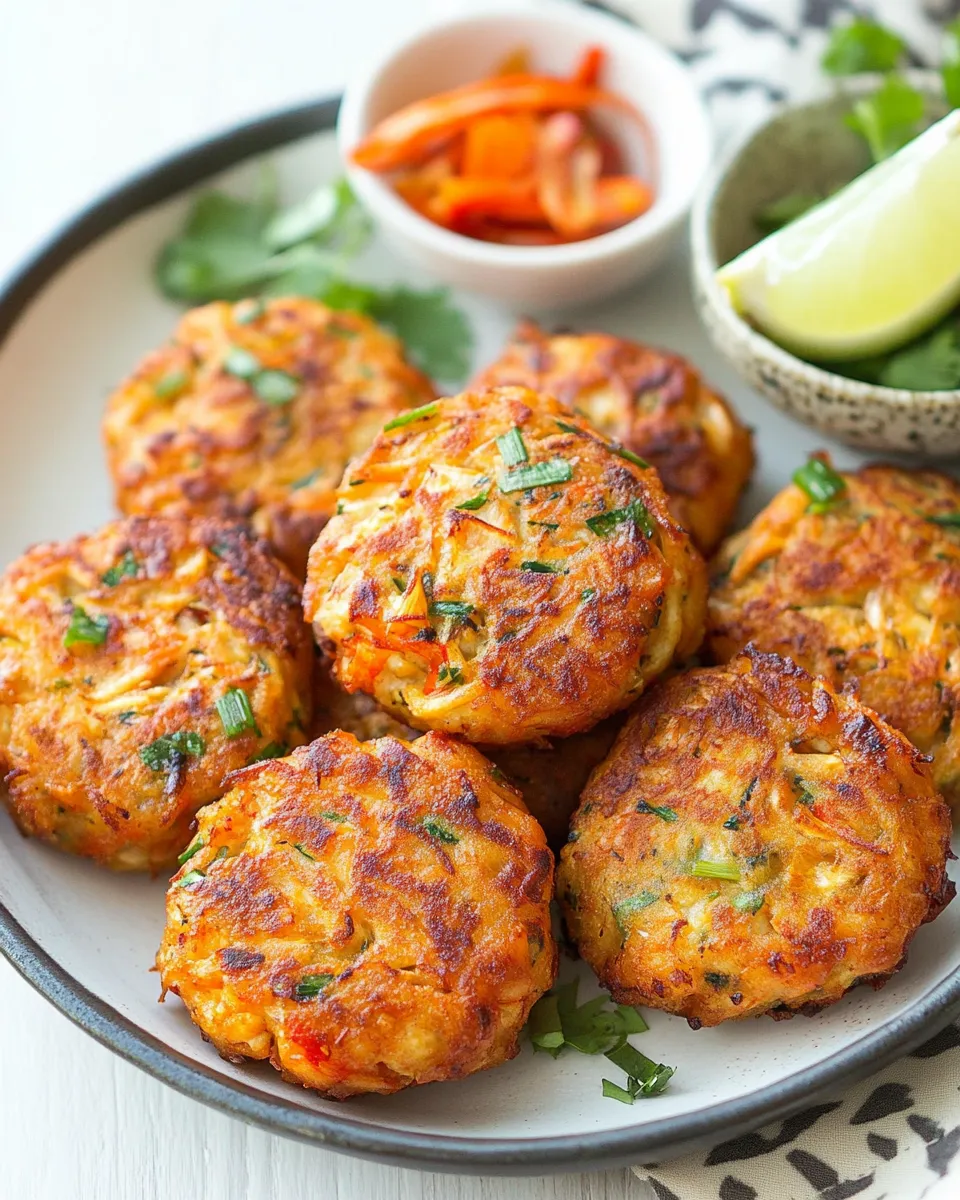
- Fish paste brand — Try different Thai brands if you want a slightly different texture; some are firmer, some softer.
- Egg binder — If you can’t use egg, try a tablespoon of tapioca starch mixed with a tablespoon of water as a binder (keeps texture similar).
- Red curry paste — Increase or decrease by a tablespoon to adjust heat; a milder paste will be less piquant.
Equipment at a Glance
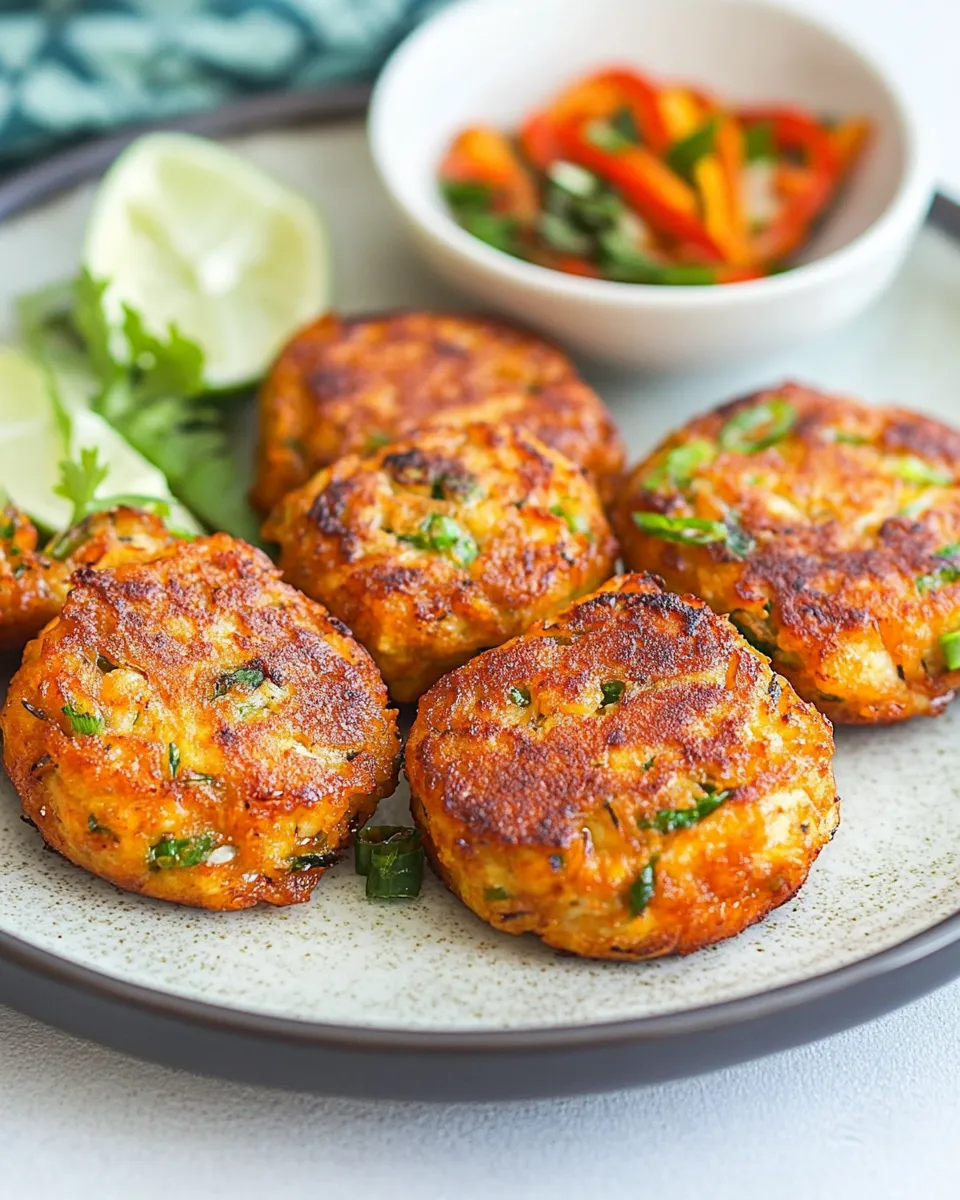
- Mixing bowl — For combining the paste and seasonings.
- Deep skillet or small pot — For frying; choose one with decent depth to keep oil splatter manageable.
- Thermometer (optional)
- Slotted spoon or tongs — For turning and removing cakes from hot oil.
- Wire rack or paper towels — To drain excess oil.
Watch Outs & How to Fix
- Oil too cool — Cakes absorb oil and become greasy. Raise the heat and wait until oil is steady. Test with a scrap; it should sizzle and form a golden crust quickly.
- Oil too hot — Outer crust will burn before the inside cooks. Lower heat slightly and fry in smaller batches so oil temperature doesn’t spike again.
- Paste too wet — Patties will fall apart. Pat the thawed fish paste dry and use only the specified 1/2 beaten egg to avoid excess moisture.
- Cakes fall apart in oil — Make sure hands are wet when shaping and compress the patties firmly. Chill shaped patties briefly if needed to help them hold together.
Smart Substitutions
- Snake beans — Use green beans or edamame cut into small pieces for a similar snap if snake beans aren’t available.
- Kaffir lime leaves — Substitute finely grated lime zest plus a few drops of lime juice for aroma if you can’t find fresh leaves.
- Red curry paste — A tablespoon of Thai chili paste plus a teaspoon of fish sauce can work in a pinch, but flavor will differ.
Author’s Commentary
I keep a stash of frozen fish paste in my freezer for nights when I want something impressive with minimal fuss. The store-bought paste is a time-saver and gives consistent results—no guessing on texture. The small nods of kaffir lime and the crunch of snake beans are what make these fish cakes feel genuinely Thai rather than generic fried fish patties.
When I make these for friends, I shape them slightly smaller so people can eat three or four as part of a bigger spread. For a family dinner, larger patties work fine—just extend the frying time a little. Always plate them hot; the contrast of hot cake and cool cucumber salad is part of the charm.
Cooling, Storing & Rewarming
- Cooling — Let fish cakes cool on a wire rack to keep the exterior from steaming and getting soggy.
- Storing — Store in an airtight container in the fridge for up to 2 days. Place paper towel between layers to absorb excess oil.
- Rewarming — Reheat in a 350°F (175°C) oven or a toaster oven for 6–8 minutes until warmed through to preserve crispness. Avoid microwaving if you care about texture; it makes them rubbery.
Questions People Ask
- Can I make these ahead? — Yes. Shape them and refrigerate for up to a day, then fry when ready. Chill helps them hold shape.
- How do I know when they’re done? — Look for a golden exterior and a firm, springy interior. If unsure, slice one to check it’s cooked through.
- Can I bake them instead of frying? — Baking will work but you’ll lose some crispness. Brush lightly with oil and bake at 400°F (200°C) for about 12–15 minutes, flipping halfway.
See You at the Table
Give these Thai fish cakes a try the next time you want impressive flavors with minimal prep. They’re quick to assemble and fast to fry, and they reward a little patience at the oil with big flavors. If you make them, tell me what dipping sauce you paired with them—I love hearing small twists that become family favorites.

Thai Fish Cake
Ingredients
- 8 oz fish paste 230 g, store-bought frozen fish paste
- 1/2 egg beaten
- 2 tablespoons Thai red curry paste Mae Ploy or Maesri brand
- 5 snake beans (long beans) thinly sliced
- 5 kaffir lime leaves cut into fine thin strips
Instructions
- Thaw the fish paste if frozen and place it in a mixing bowl.
- Add the beaten half egg and the Thai red curry paste to the fish paste.
- Stir and knead the mixture until smooth and the curry paste is evenly incorporated.
- Fold in the thinly sliced snake beans and the finely shredded kaffir lime leaves until distributed evenly.
- Heat oil in a deep pot or frying pan to about 350°F (175°C) for deep-frying.
- Wet your hands, scoop about a ping-pong-ball-sized portion of the fish mixture, and flatten it into a patty with your palms.
- Carefully slide the patties into the hot oil and fry in batches until golden brown and cooked through, about 2–3 minutes per side depending on thickness.
- Use a slotted spoon to transfer cooked fish cakes to a paper towel-lined plate to drain excess oil.
- Serve the fish cakes hot, paired with Thai cucumber salad or your preferred dipping sauce.
Equipment
- Mixing Bowl
- deep pot or deep frying pan
- spatula or slotted spoon
- Measuring spoons
- Knife
- Cutting Board
Notes
- If the mixture is too soft, chill it 15–20 minutes to firm up before shaping.
- Wet your hands before shaping to prevent sticking.
- Heat oil to about 350°F (175°C) so cakes cook without becoming greasy.
- Test oil temperature by dropping a small piece; it should sizzle and float.
- Fry in batches to avoid overcrowding and maintain oil temperature.