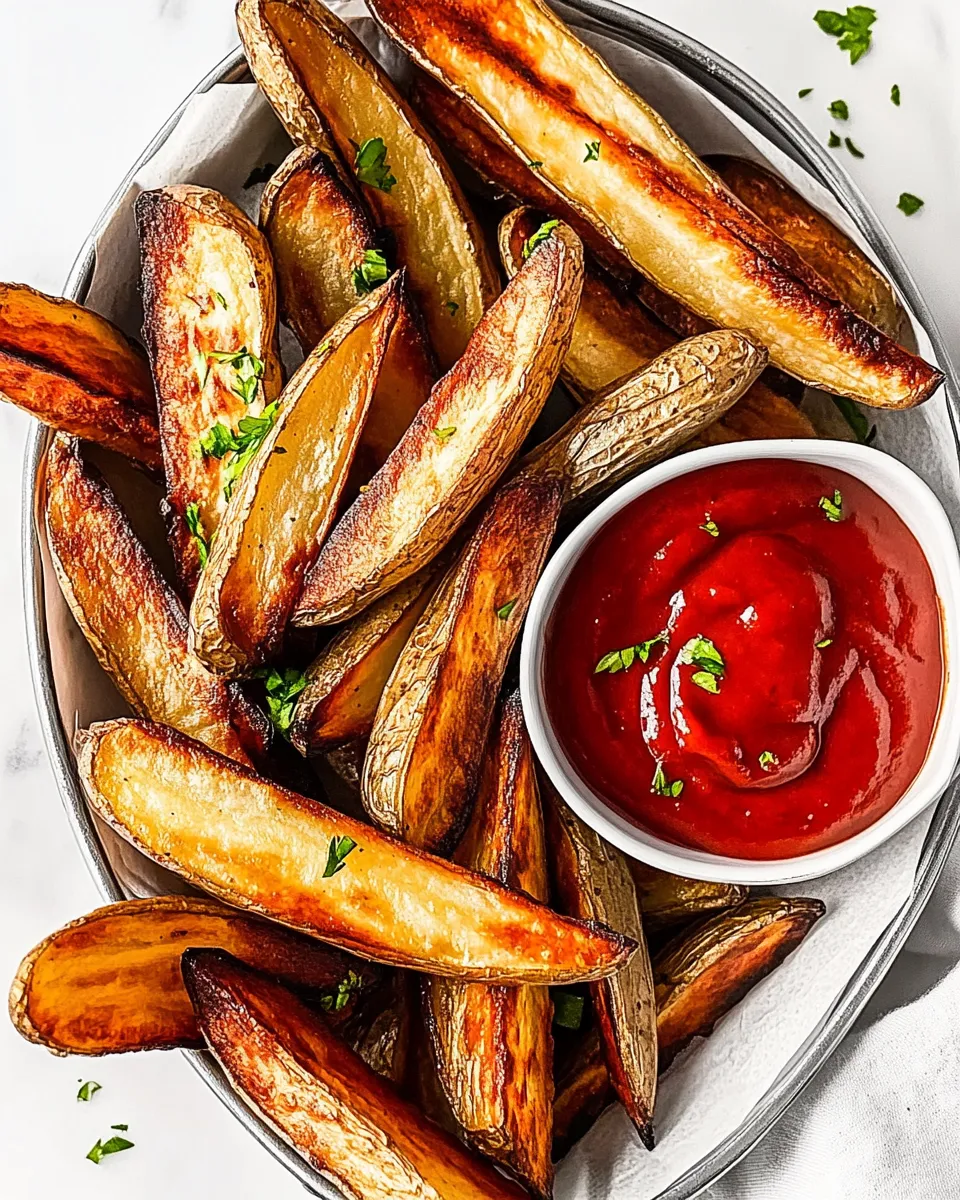
Potato Wedges
Potato wedges are one of those reliable sides that feel both casual and a little indulgent. They’re rustic, crisp at the edges, fluffy inside, and they stretch to feed a family or a small crowd without fuss. I reach for this method when I want wedges that have a crunchy exterior from the oven and a tender center that actually tastes like potato.
This version uses a quick parboil with baking soda to rough the surface, a light coat of oil, and a straightforward roast to golden perfection. There’s no breading, no frying, and no complicated spice blends—just a few intelligent steps that make a big difference.
Below you’ll find the ingredient list, step-by-step instructions, small equipment notes, and sensible swaps or adaptations if you need them. The goal is dependable wedges every time, with tips to avoid the usual pitfalls.
What You’ll Gather
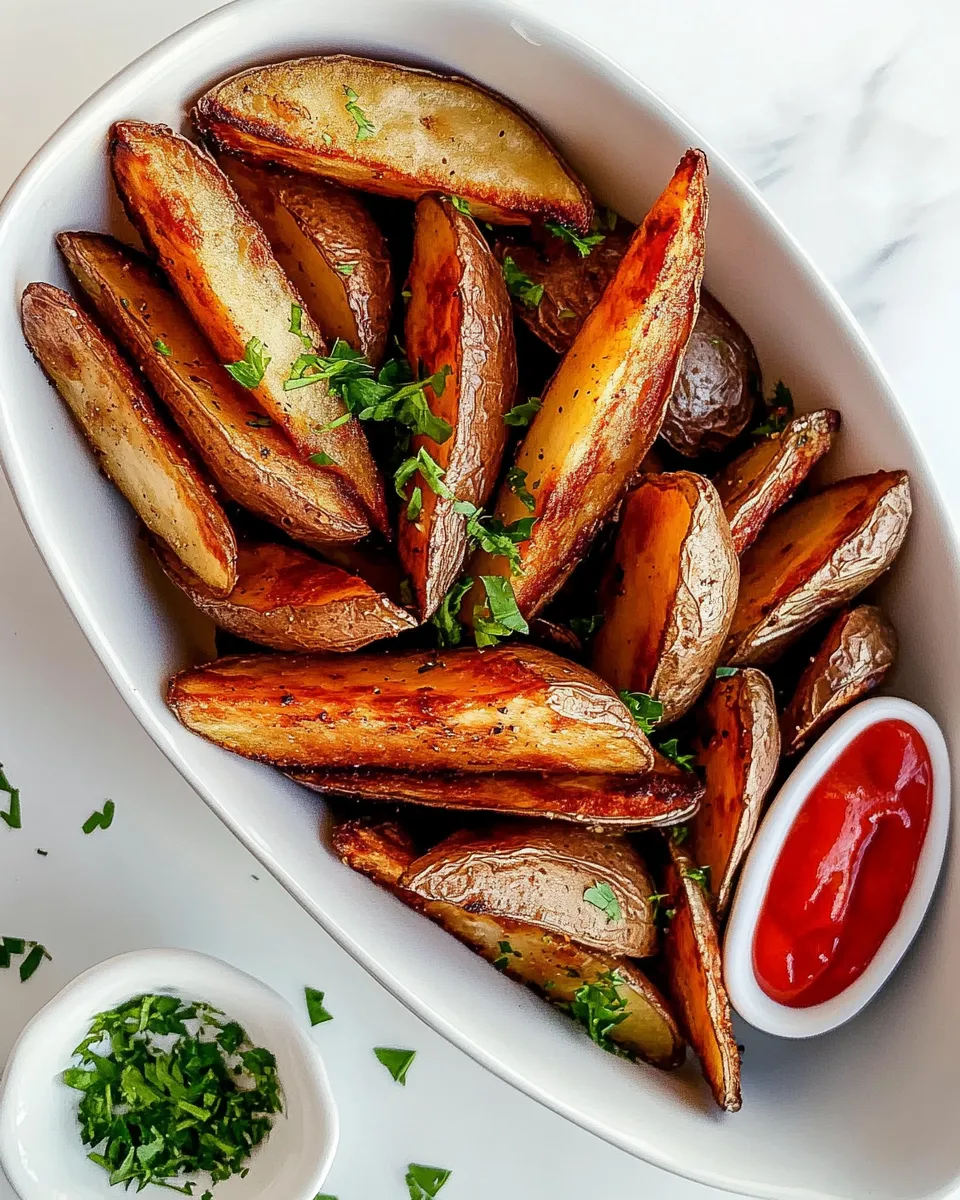
Ingredients
- 4 large russet potatoes — cut into 4–8 wedges depending on size (about 3 lbs). Russets give a fluffy interior; Yukon golds are an acceptable swap if you prefer slightly creamier flesh.
- 1 tablespoon baking soda — added to the boiling water to help break down the potato surface and encourage a rough, crispy exterior.
- 3 tablespoons avocado oil — a neutral oil with a high smoke point for even browning. Olive oil can be used, but it may darken faster.
- Sea salt — to taste; I like finishing with flaky sea salt for texture and flavor contrast.
Potato Wedges: From Prep to Plate
Step-by-step Instructions
- Preheat the oven to 400°F (200°C). Position a rack in the middle of the oven.
- Fill a large pot with water and bring it to a rolling boil over high heat.
- When the water is boiling, add 1 tablespoon baking soda and stir briefly so it dissolves.
- Add the 4 large russet potatoes (cut into wedges) to the boiling water. Cook for 7–10 minutes. You’re aiming for potatoes that are tender on the outside but still firm when pierced with a fork—parboiled, not fully soft.
- Using a slotted spoon, remove the wedges from the water and transfer them to a baking sheet. Spread them out in a single layer and let them cool completely. Once cool enough to handle, gently shake the pan or toss the wedges on the sheet to rough up the outer surface; this creates more texture for crisping. Take care not to break the wedges.
- Drizzle 3 tablespoons avocado oil over the wedges and turn them so each piece gets lightly coated on all exposed sides. Arrange them spaced slightly apart for even air flow.
- Transfer the baking sheet to the preheated oven and bake for 40 minutes, flipping the wedges once halfway through the bake time so both sides become golden and crisp.
- Remove the wedges from the oven, season immediately with sea salt to taste, and serve right away while they’re still hot and crisp.
Why It’s My Go-To
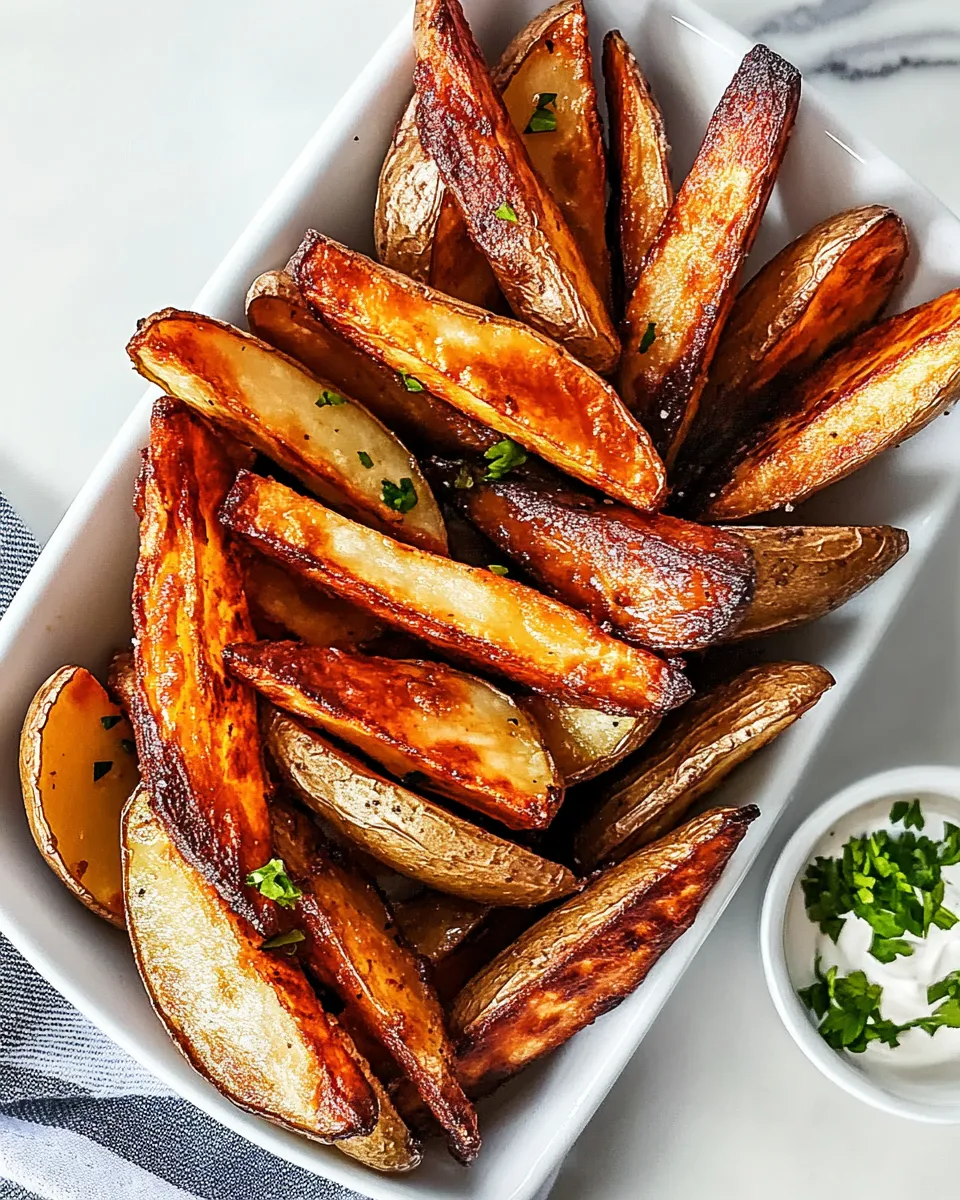
This technique hits the sweet spot between effort and payoff. The baking soda parboil roughs up the exterior so the oven can create more crunch without deep-frying. Roasting at a steady 400°F gives even color and a dependable texture every time. It’s forgiving, quickish, and versatile for weeknight dinners or party platters.
Quick Replacement Ideas
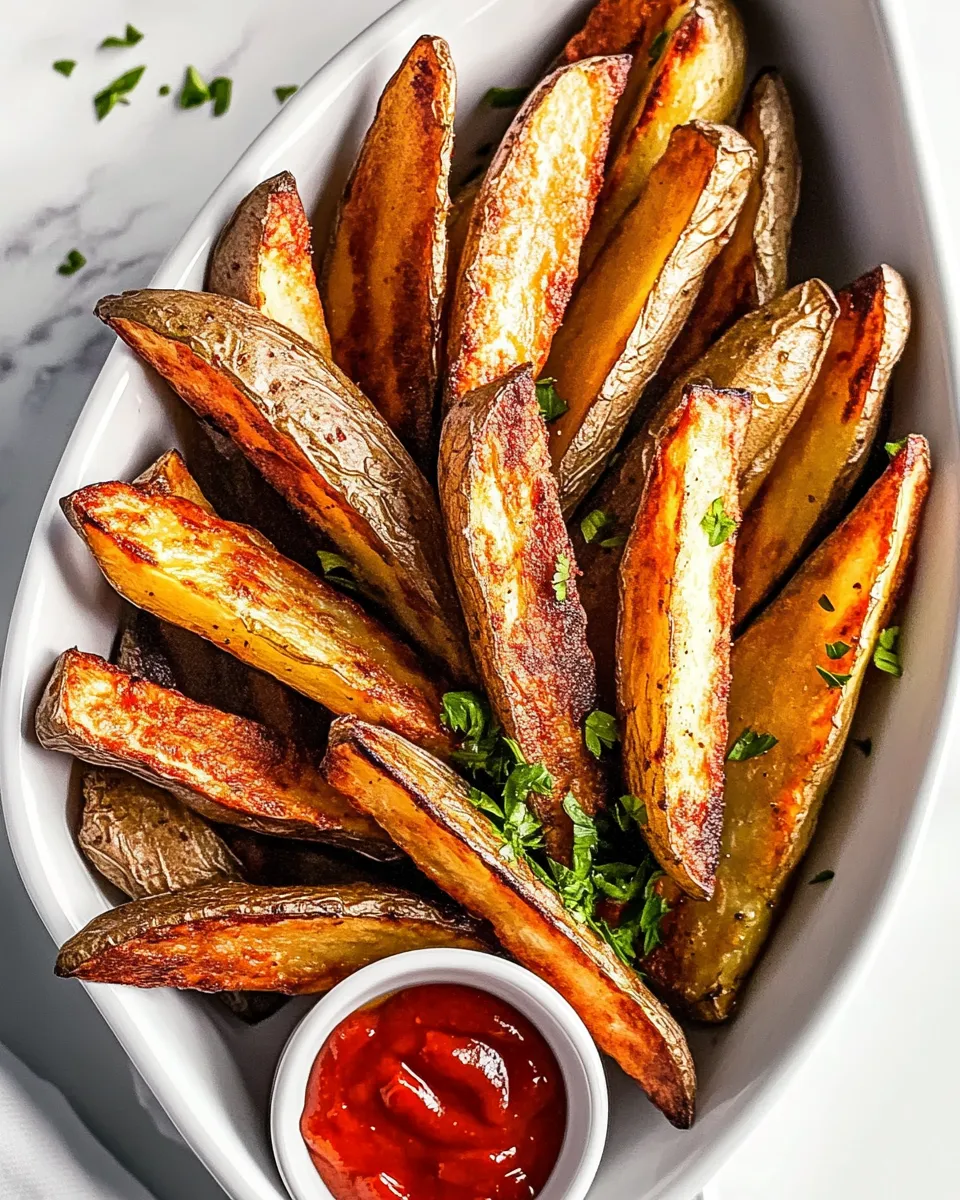
- Potatoes: Yukon gold if you want creamier interiors; red potatoes will be waxier and less fluffy.
- Oil: Light olive oil or any neutral oil can stand in for avocado oil. Keep the same amount to maintain crisping.
- Seasoning: If you want extra flavor, add smoked paprika, garlic powder, or dried herbs before roasting—use sparingly so the potato flavor still shines.
Before You Start: Equipment
- Baking sheet — large enough to hold wedges in a single layer without crowding.
- Large pot — for the parboil.
- Slotted spoon — to drain and transfer wedges without excess water.
- Oven thermometer (optional) — helps if your oven runs hot or cool.
Steer Clear of These
- Overcrowding the pan — wedges steam instead of crisp if packed tight.
- Skipping the parboil — raw wedges take longer and may not develop the same tender interior.
- Using too much oil — excess oil prevents crisping and makes the wedges greasy.
Adaptations for Special Diets
- Vegan: This recipe is naturally vegan—just use plant-based dips or sauces.
- Gluten-free: Naturally gluten-free as written. Be cautious with dips or seasoning blends that may contain gluten.
- Low-sodium: Reduce or omit finishing salt and serve salt on the side so people can season to taste.
If You’re Curious
Why baking soda? It raises the pH of the boiling water slightly, breaking down some of the potato surface starch and creating a rougher exterior that browns more easily in the oven. The parboil time matters—cook just until the outside yields but the inside still resists; that balance keeps wedges intact while allowing them to crisp.
Make-Ahead & Storage
- Make-ahead: You can parboil and rough them up, then chill the wedges on a sheet pan, covered, for up to 24 hours. Bring to room temperature and roast as directed when ready to serve.
- Storage: Store cooled leftovers in an airtight container in the fridge for up to 3 days.
- Reheating: Re-crisp in a 400°F oven for 8–10 minutes or in an air fryer at 375°F until heated through and crisped. Avoid the microwave—it makes them soggy.
Handy Q&A
- Can I fry these instead? Yes, but you’ll have to adjust times and monitor oil temperature. This method avoids extra oil and cleanup.
- Do I need to peel the potatoes? No—leaving the skins on adds texture and nutrients. If you prefer peeled potatoes, they will still work but handle them gently when roughing up.
- Can I add spices before roasting? Yes. Toss with spices and oil after roughing up and before roasting, but avoid adding delicate herbs until after baking to keep them from burning.
Bring It Home
These potato wedges are simple, dependable, and easy to scale. Use them as a side for grilled meats, a base for loaded toppings, or a snack with your favorite dip. A little technique—a quick baking soda parboil and a confident roast—turns ordinary potatoes into something reliably pleasing.
When you try them, look for golden edges, a slightly rough, crackly skin, and a fluffy interior. That’s the sweet spot. Serve hot, share quickly, and salt just before plating for the best results.

Potato Wedges
Ingredients
- 4 large russet potatoes cut into 4–8 wedges depending on size (about 3 lb); Yukon Gold can be used
- 1 tablespoon baking soda
- 3 tablespoons avocado oil for drizzling
- sea salt to taste
Instructions
- Preheat the oven to 400°F (200°C).
- Bring a large pot of salted water to a boil. Add 1 tablespoon baking soda to the boiling water.
- Add the potato wedges to the boiling water and parboil for 7–10 minutes, until the exterior is tender but the centers are still firm when pierced with a fork.
- Use a slotted spoon to transfer the wedges to a baking sheet and let them cool briefly. Shake the pan gently to rough up the cut surfaces without breaking the wedges.
- Drizzle the wedges with 3 tablespoons avocado oil, turning to coat both sides. Spread them in a single layer on the baking sheet.
- Bake for 40 minutes, flipping once halfway through, until the wedges are golden brown and crispy.
- Season with sea salt to taste and serve immediately.
Equipment
- Large Pot
- Slotted Spoon
- Baking Sheet
- Oven
Notes
- Don’t skip parboiling; it helps create a fluffy interior.
- Bake in a single layer so wedges crisp evenly.
- Use Yukon Gold if you prefer a creamier texture.
- Shake the pan gently after cooling to rough the edges for extra crispiness.
- Adjust salt to taste before serving.