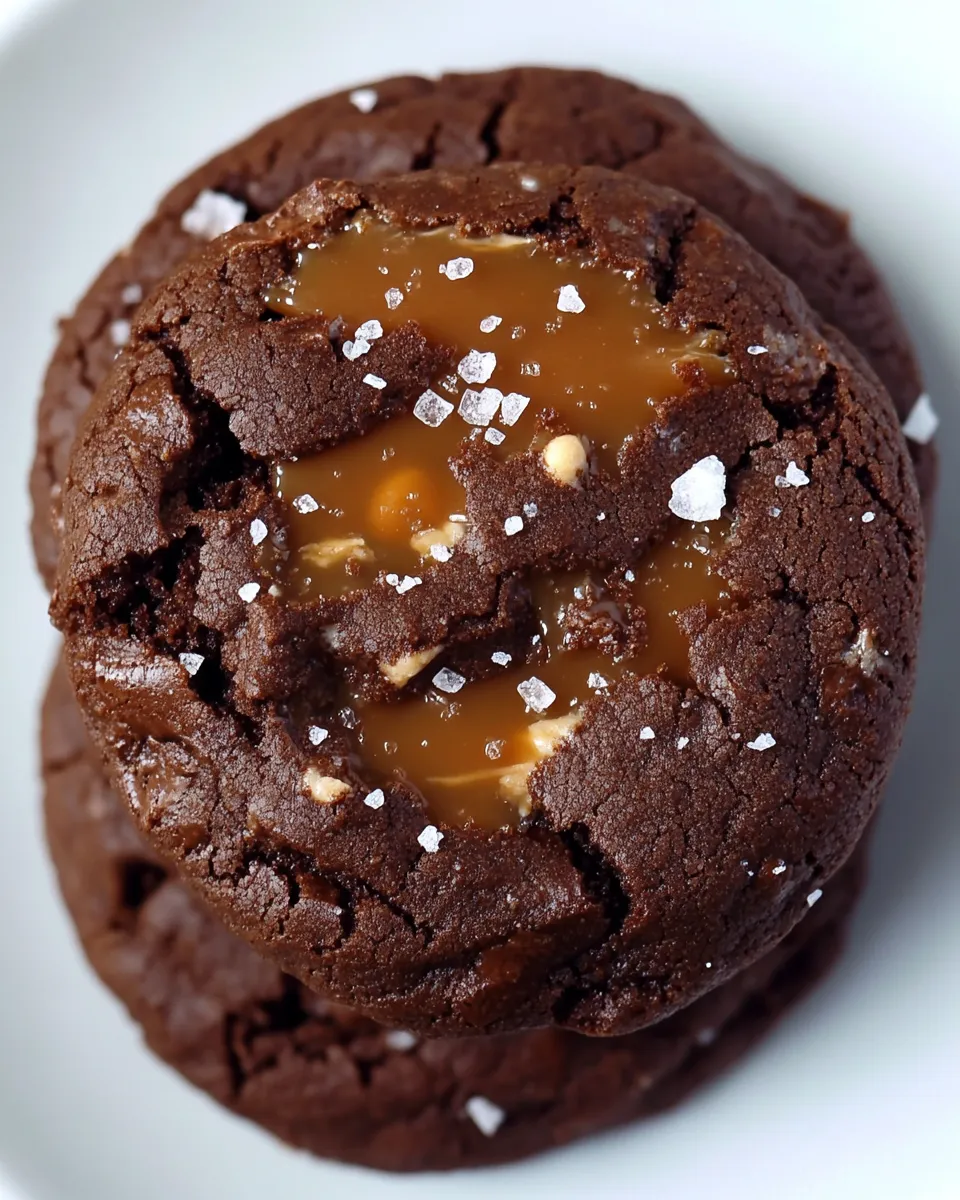
Chocolate Caramel Cookies with Sea Salt
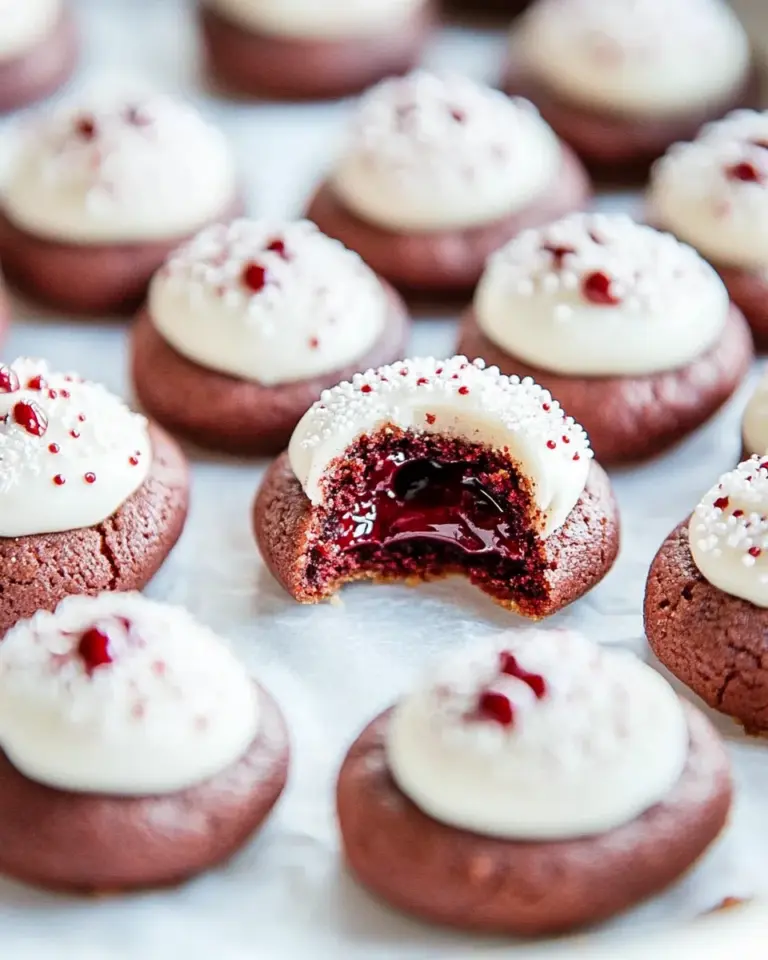
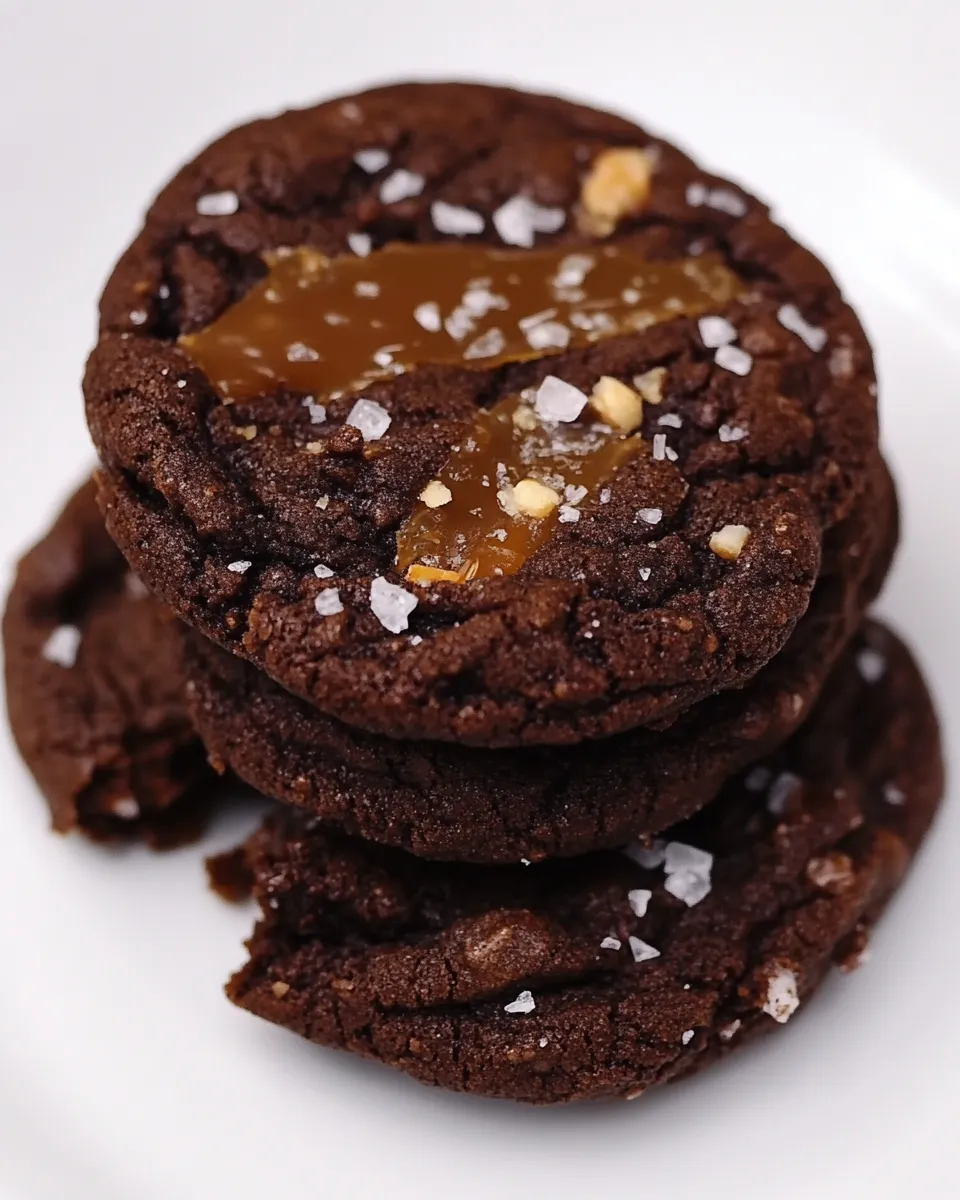
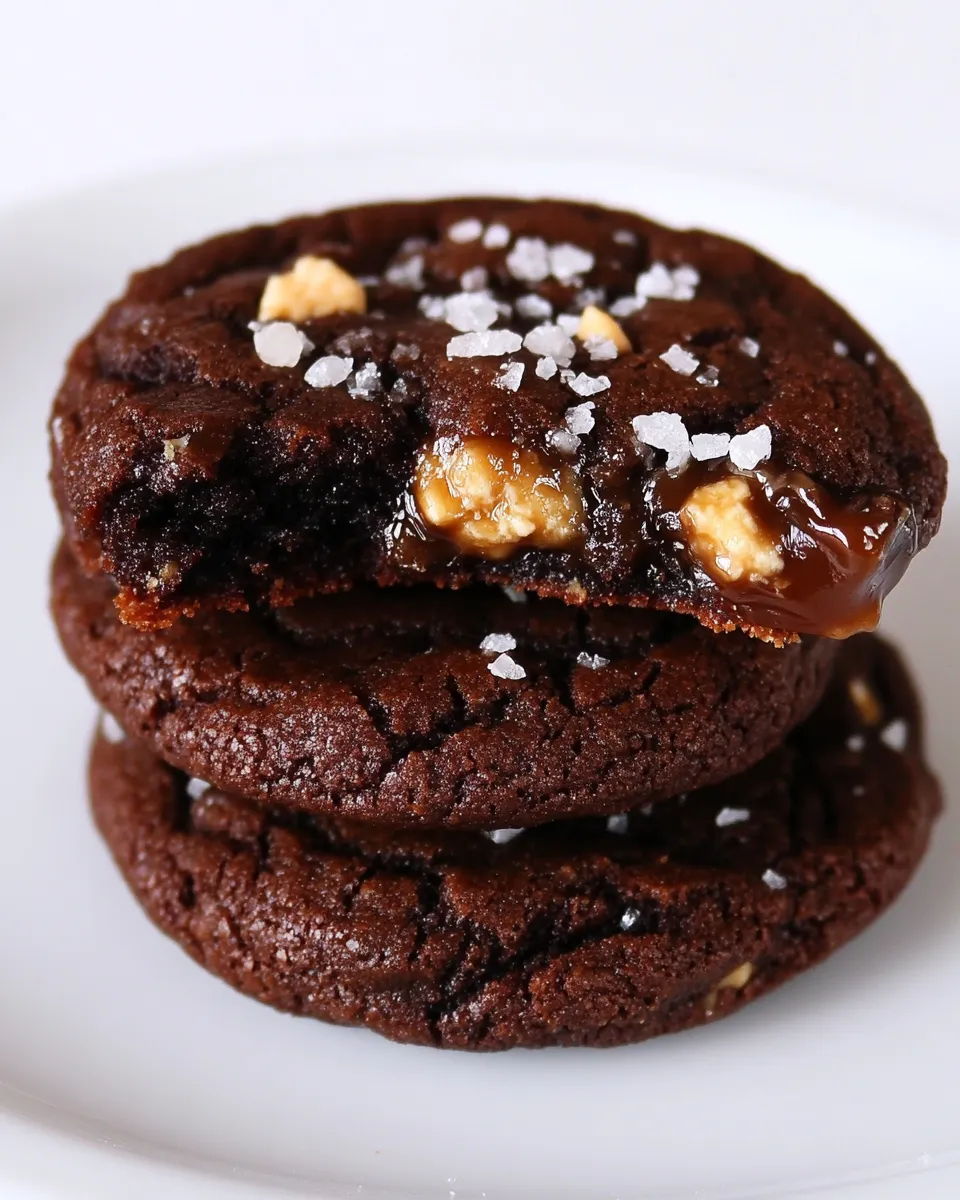
These Chocolate Caramel Cookies with Sea Salt are the kind of cookie I reach for when I want something that feels fancy but is honest to make. The exterior is tender and chocolatey, the center hides a little pocket of soft caramel, and a sprinkle of flaky sea salt brightens everything. They look like a treat you’d buy at a bakery, but they’re simple enough for a weeknight baking session.
The method is straightforward: a chocolate dough that comes together on the stovetop, wrapped around small caramel balls, baked briefly, and finished with sea salt. I’ll walk you through small technique points—how to measure flour, how to form the caramels so they don’t melt out, and how to tell when the cookies are ready—so you get the same results every time.
If you want a crowd-pleasing cookie that balances sweet, bitter, and salty, this is it. Below you’ll find an ingredients breakdown with tips, a clear step-by-step method using the exact amounts from the recipe, troubleshooting suggestions, substitutions for allergies, and storage advice. Let’s bake.
What to Buy
- All-purpose flour (1 1/4 cup) — the base of the dough; spoon into the measuring cup and level off for accuracy.
- Baking soda (1/4 teaspoon) — provides just a touch of lift and spread control.
- Salt (1/4 teaspoon) — balances the chocolate; included with the dry mix.
- Butter (5 tablespoons) — melted to create a dense, fudgy cookie texture.
- Unsweetened cocoa (7 tablespoons) — I used dark cocoa for deeper chocolate flavor; sift if lumpy.
- Granulated sugar (2/3 cup) — sweetens and helps create the cookie structure.
- Packed brown sugar (1/3 cup) — adds moisture and a hint of caramel flavor.
- Plain yogurt (1/3 cup) — adds tang and tenderizes the crumb; full-fat or Greek both work.
- Vanilla extract (1 teaspoon) — flavor enhancer; use pure vanilla if possible.
- Soft caramel, rolled into little balls — I used Peter’s caramel; roll small, uniform balls so the dough wraps evenly.
- Sea salt — flaky finishing salt to sprinkle on top for contrast and crunch.
Make Chocolate Caramel Cookies with Sea Salt: A Simple Method
Preparation
- Preheat your oven to 350ºF (175ºC). Line two baking sheets with baking paper (parchment) and lightly coat with cooking spray or use silicone liners like Silpats.
- Measure flour by lightly spooning it into a dry measuring cup, then level it with a knife—this prevents packing and keeps the dough from getting too dense.
- Sift together the measured flour, 1/4 teaspoon baking soda, and 1/4 teaspoon salt into a bowl; set this dry mix aside.
Make the chocolate dough
- In a large saucepan, melt 5 tablespoons butter over medium heat. Remove the saucepan from the heat as soon as the butter is melted.
- Stir in 7 tablespoons unsweetened cocoa and both sugars (2/3 cup granulated sugar and 1/3 cup packed brown sugar). The mixture will have a coarse, sandy texture—this is expected.
- Stir in 1/3 cup plain yogurt and 1 teaspoon vanilla extract until the mixture is smooth and combined.
- Add the reserved flour mixture to the saucepan and stir just until the dough is moist and uniform—don’t overmix.
Assemble and bake
- Roll soft caramel into small, uniform balls before you start shaping cookies. Aim for pieces that will be comfortably encased by the cookie dough—about the size of a small marble or slightly smaller.
- Wrap a portion of the chocolate dough around each caramel ball, sealing the seams so the caramel is completely enclosed. Place each enclosed ball on the prepared baking sheets, spacing them a couple inches apart.
- Lightly sprinkle each cookie with a pinch of sea salt.
- Bake the cookies for 10–12 minutes, or until they are almost set but still slightly soft in the centers. They should look firm around the edges but not fully firm in the middle.
- Allow the cookies to cool on the pans for 2–3 minutes, until they are firm enough to move without collapsing. Transfer them to wire racks to finish cooling.
Why This Recipe Is Reliable
The recipe combines melted butter and cocoa, which yields a dense, fudgy cookie rather than a cakey one—consistent texture each time. Measuring flour by spooning and leveling controls dryness, and a short bake time prevents overcooking so the caramel stays soft. Baking on lined sheets and cooling briefly on the pan ensures the cookies set without flattening or breaking. Finally, sprinkling sea salt at the end ensures the salt stays flaky and pronounced rather than dissolving into the dough.
Allergy-Friendly Substitutes
- Dairy-free butter — use the same amount of a solid plant-based butter for a dairy-free option; flavor and texture may vary slightly.
- Dairy-free plain yogurt — swap coconut or almond yogurt in equal measure; choose a thicker option for best texture.
- Caramel — for dairy-free caramels, look for vegan caramel brands or make an alternative filling like date paste, but note flavor changes.
- Gluten-free flour — use a 1:1 gluten-free baking flour blend in place of all-purpose flour; results are close but monitor dough hydration.
Gear Checklist
- Large saucepan — for melting butter and combining the dough.
- Dry measuring cups and a knife — for properly measuring and leveling the flour.
- Sifter or fine mesh sieve — for sifting the dry ingredients together.
- Baking sheets and parchment or Silpats — prevents sticking and promotes even bottoms.
- Wire cooling racks — cool cookies fully without sogginess.
- Spoon or small scoop — for portioning dough; your hands will be useful for wrapping the caramel.
Troubles You Can Avoid
- Cookies spreading too much: Measure flour correctly (spoon and level). Chill the dough briefly if your kitchen is warm before wrapping caramels.
- Caramel leaking: Make sure you roll caramels small and seal the dough completely around each ball. Work quickly if your hands are warm.
- Dry, crumbly cookies: Don’t overbake; remove when almost set. Also avoid packing the flour into the measuring cup.
- Sea salt losing texture: Add flaky sea salt after the cookies come out of the oven rather than before baking for a pronounced finish.
Seasonal Serving Ideas
- Winter: Serve warm with a mug of hot chocolate or espresso for cozy pairing.
- Spring: Present with a light citrus salad (orange segments, mint) to cut the richness.
- Summer: Pair with vanilla ice cream—press a warm cookie gently into a scoop for a gooey sandwich effect.
- Fall: Add a sprinkle of crushed toasted pecans on top with the salt for extra crunch and autumn flavor.
Recipe Notes & Chef’s Commentary
Use dark cocoa if you want an intense chocolate flavor; regular unsweetened cocoa works too. The yogurt keeps these cookies tender despite the short bake. If your caramel pieces are sticky to handle, pop them briefly in the freezer for 5–10 minutes so they’re easier to roll and wrap. The key to a satisfying contrast is salt—use a flaky sea salt and sprinkle sparingly to let the chocolate and caramel shine.
Make-Ahead & Storage
Unbaked cookie dough balls wrapped around caramels can be frozen on a tray until firm, then transferred to a sealed container for up to 1 month—bake directly from frozen; add an extra 1–2 minutes to the bake time. Baked cookies keep in an airtight container at room temperature for 2–3 days. For longer storage, freeze baked cookies up to 1 month; thaw at room temperature. If you want the caramel soft again, warm briefly in a low oven (250ºF) for a few minutes before serving.
Chocolate Caramel Cookies with Sea Salt Q&A
- Q: Can I use store-bought caramels? — Yes. Roll them into small balls so they’re fully encased and bake evenly.
- Q: My cookies looked underdone at 10 minutes—what now? — If centers are too soft, give them an extra 1–2 minutes. Look for edges that are set but centers still slightly soft.
- Q: Can I substitute yogurt with sour cream? — Yes, sour cream can be swapped 1:1 for similar tenderness and tang.
- Q: Do I need to refrigerate the dough? — Not required, but chilling for 15–30 minutes helps if your kitchen is very warm or if the dough is too soft to handle.
Ready, Set, Cook
Preheat to 350ºF and line two baking sheets. Sift together 1 1/4 cup all-purpose flour, 1/4 teaspoon baking soda, and 1/4 teaspoon salt; set aside. In a large saucepan, melt 5 tablespoons butter over medium heat, then remove from heat. Stir in 7 tablespoons unsweetened cocoa, 2/3 cup granulated sugar, and 1/3 cup packed brown sugar until the mixture resembles coarse sand. Add 1/3 cup plain yogurt and 1 teaspoon vanilla extract; stir to combine. Fold the sifted dry ingredients into the chocolate mixture until the dough is evenly moist. Roll soft caramel into small balls. Wrap the chocolate dough around each caramel ball, sealing it completely, and place the cookies on the prepared sheets. Lightly sprinkle each with sea salt. Bake for 10–12 minutes, until cookies are almost set. Cool on the pans for 2–3 minutes, then transfer to wire racks to finish cooling. Enjoy warm or at room temperature.
Chocolate Caramel Cookies with Sea Salt
Ingredients
- 1 1/4 cup all-purpose flour
- 1/4 teaspoon baking soda
- 1/4 teaspoon salt
- 5 tablespoons butter
- 7 tablespoons unsweetened cocoa powder I used dark cocoa
- 2/3 cup granulated sugar
- 1/3 cup packed brown sugar
- 1/3 cup plain yogurt
- 1 teaspoon vanilla extract
- soft caramel pieces rolled into small balls I used Peter's caramel
- sea salt for sprinkling
Instructions
- Preheat the oven to 350°F (175°C). Line two baking sheets with parchment paper or silicone mats and lightly spray if desired.
- Measure the flour by lightly spooning it into the measuring cup and leveling with a knife. Sift the flour with the baking soda and 1/4 teaspoon salt into a bowl and set aside.
- Melt the butter in a large saucepan over medium heat. Remove from the heat, then stir in the cocoa powder, granulated sugar, and brown sugar until the mixture resembles coarse sand.
- Stir the yogurt and vanilla into the chocolate mixture until combined, then add the sifted flour mixture and mix until a moist dough forms.
- Wrap portions of the chocolate dough around each caramel ball, sealing the caramel completely; roll into smooth balls and place on the prepared baking sheets about 2 inches apart.
- Lightly sprinkle each cookie with a pinch of sea salt.
- Bake for 10–12 minutes, until the cookies are almost set. Let cool on the baking sheets for 2–3 minutes, then transfer to a wire rack to cool completely.
Equipment
- Large Saucepan
- Mixing Bowl
- Measuring cups and spoons
- Sifter
- Baking Sheets
- parchment paper or silicone mat
- Wire Rack
Notes
- Use soft caramels that are easy to roll into balls.
- Dark cocoa intensifies the chocolate flavor.
- Seal the dough well so caramel does not leak while baking.
- Space cookies so they do not spread into each other.