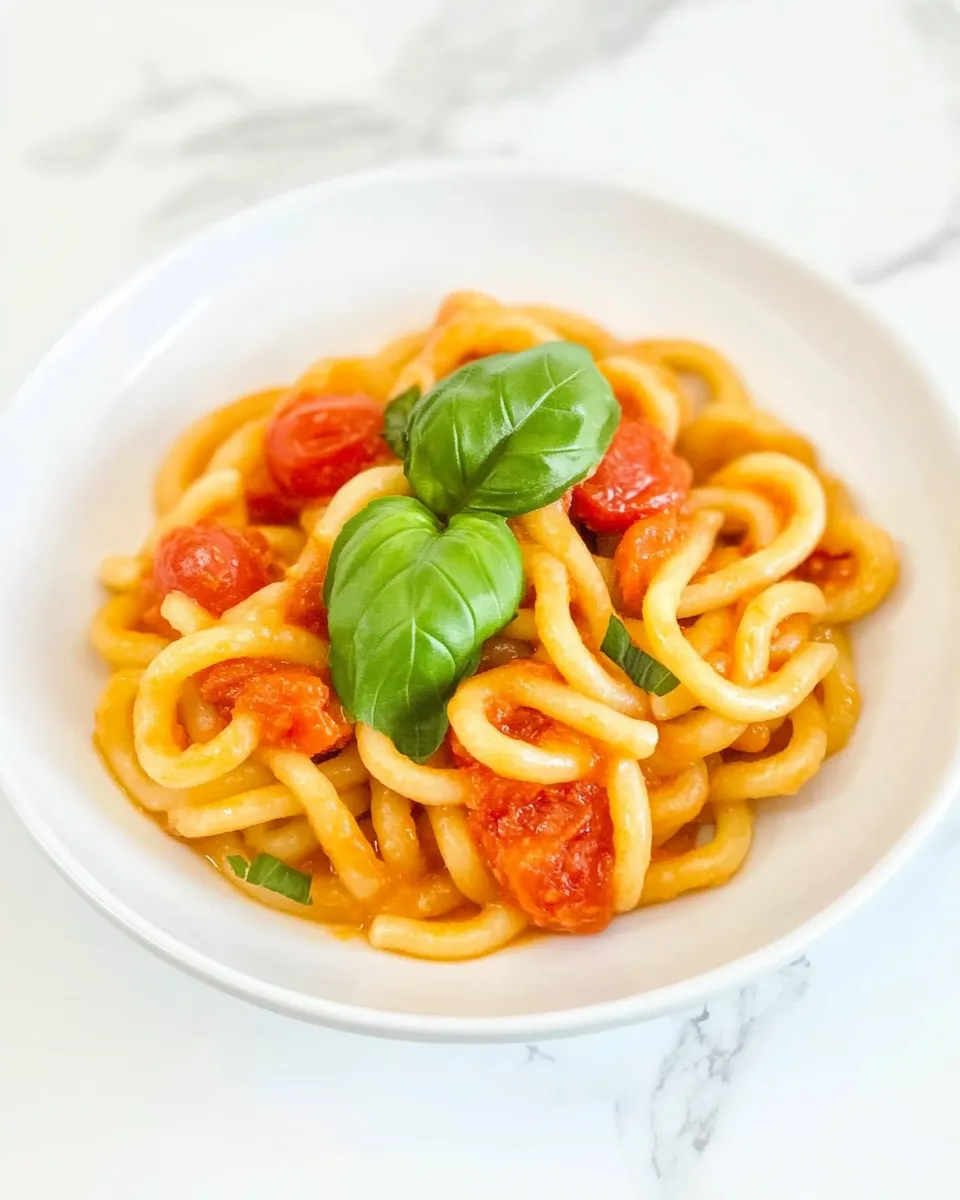
Bucatini Pomodoro
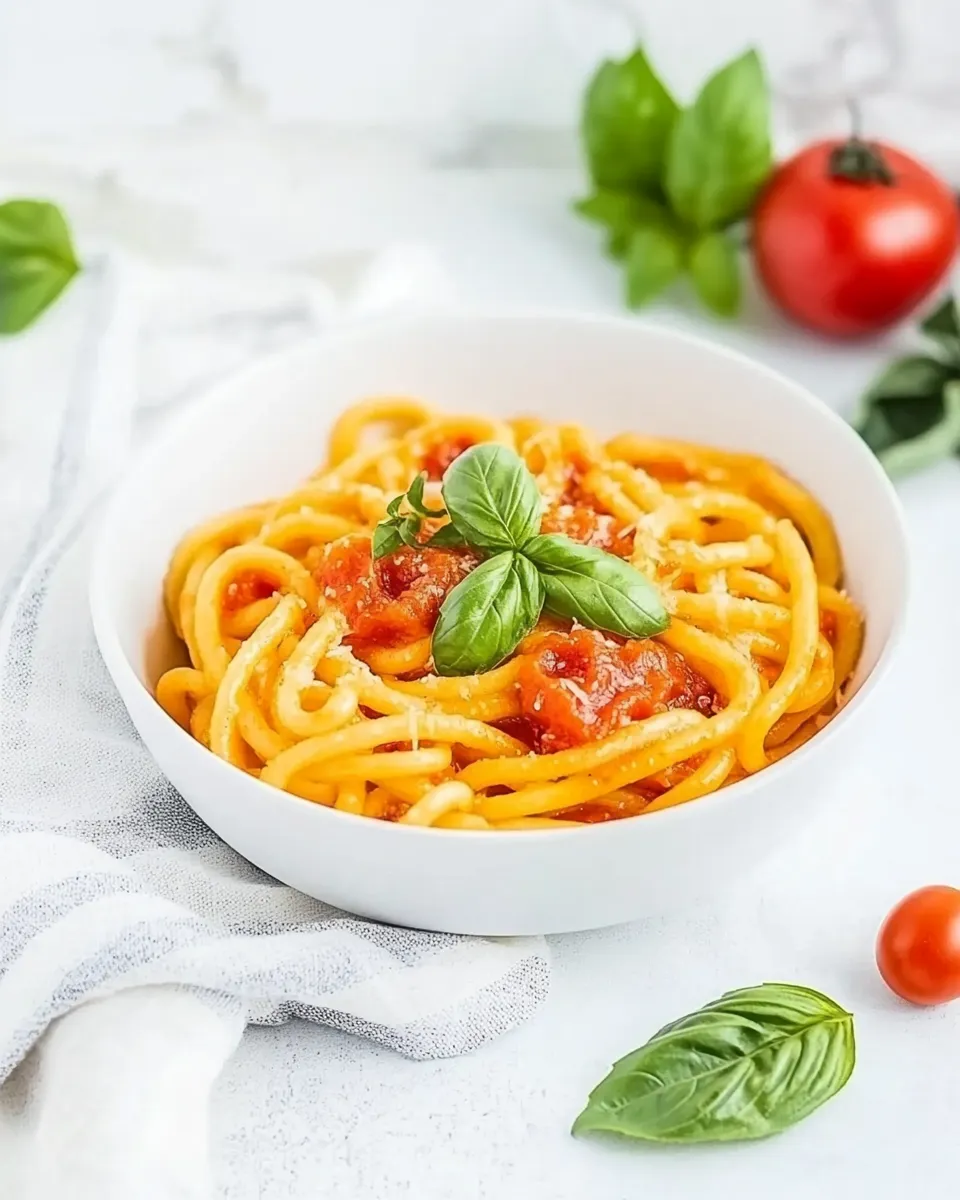
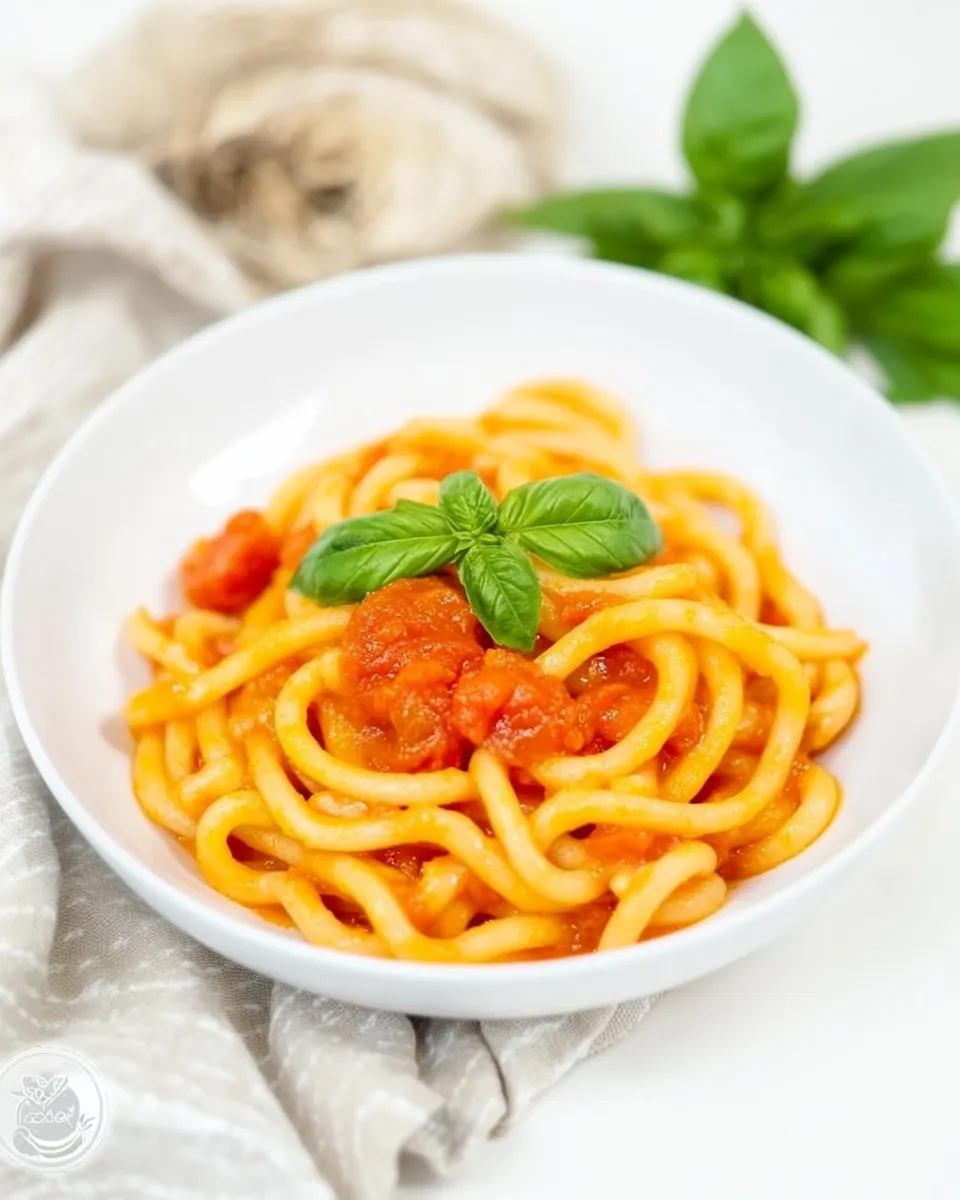
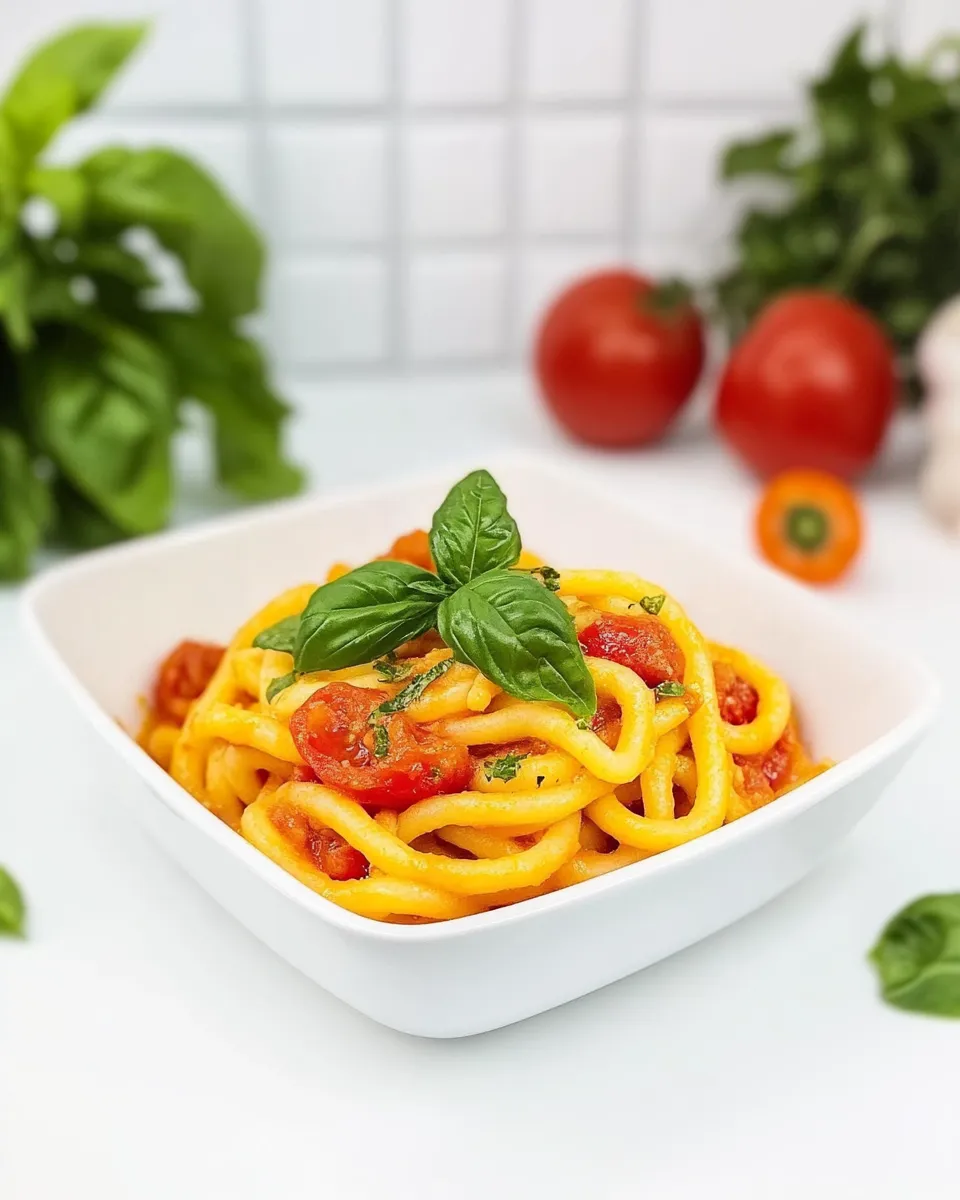
Bright, simple, and unfussy—this Bucatini Pomodoro is the kind of dinner I turn to when I want something that tastes like sunshine but doesn’t take the evening. The sauce is mostly tomatoes, olive oil, and basil, so each ingredient matters. When you treat them well, the result is a silky, slightly chunky pomodoro that clings to the hollow bucatini for perfect bites.
This recipe leans on good technique more than bells and whistles: gentle sweating of onions, slow coaxing of canned tomatoes, and finishing pasta right in the pan. The method is forgiving, but I’ll point out the little adjustments that make it reliably great every time—especially if you’re cooking for a crowd or a quiet weeknight for two.
The Ingredient Lineup
- 1 medium-large onion, finely minced — provides a sweet aromatic base; mince evenly so it cooks uniformly.
- 2 cans organic whole plum tomatoes (15oz/400gr each), or canned cherry tomatoes — the sauce’s backbone; crush them for texture and a balanced sweetness.
- 2 tablespoon extra-virgin olive oil — for cooking the onion and finishing; use a good one since its flavor carries through.
- 8 fresh basil leaves — split into two batches (some for cooking, some for finishing) to keep bright herb flavor.
- sea salt and black pepper to taste — essential for seasoning; add gradually and taste as you go.
- 17.06 oz bucatini pasta — the hollow shape grabs the sauce; cook to al dente so it holds up when tossed.
Directions: Bucatini Pomodoro
- Heat a large skillet over medium-low heat. Add 2 tablespoons extra-virgin olive oil and let it warm for 20–30 seconds—don’t let it smoke.
- Add the finely minced onion and cook gently, stirring occasionally, until translucent and soft, about 4–5 minutes. Lower heat if the onion starts to brown; you want sweetness without color.
- Open the 2 cans of whole plum tomatoes (or canned cherry tomatoes). Add the tomatoes and their juices to the skillet. Use a wooden spoon to crush the tomatoes against the pan so the sauce stays slightly chunky—breakmost but not completely smooth.
- Tear or chiffonade 6 of the fresh basil leaves and add them to the pan. Stir to combine.
- Cover the skillet with a lid and reduce heat to low. Let the sauce simmer gently for 15 minutes, stirring every few minutes to prevent sticking. Cook until the sauce is creamy yet still has small chunks of tomato and the flavor tastes balanced between natural sweetness and savory.
- While the sauce simmers, bring a large pot of lightly salted water to a rolling boil. Add the 17.06 oz bucatini and cook according to the package directions. For al dente texture, drain the pasta 2–3 minutes before the package’s suggested time—reserve about 1 cup of the pasta cooking water before draining.
- Remove the pomodoro sauce from the heat. Add the remaining 2 fresh basil leaves (torn or sliced) for a fresher hit and season with sea salt and black pepper to taste. Stir and taste—adjust seasoning as needed.
- Add the drained bucatini directly into the skillet with the sauce. Toss gently to coat, adding a splash of reserved pasta water if needed to loosen and marry the sauce to the pasta. The goal is a glossy, clingy sauce that fills the bucatini.
- Finish with a light drizzle of extra-virgin olive oil, toss once more, and serve immediately. Offer extra basil or freshly cracked black pepper at the table.
Why It’s Crowd-Pleasing
This dish balances two comforting ideas: bright tomato flavor and pasta that holds sauce in every bite. Bucatini’s hollow center captures the pomodoro so each forkful is saucy and satisfying. The ingredient list is short, which makes the flavors pure and recognizable—people love that.
It’s also versatile: it reads as homey comfort food but can be plated simply and elegantly for guests. And because it’s quick to come together, you can make a large pot without fuss, making it an ideal choice for dinners where you want to feed many without stress.
Low-Carb/Keto Alternatives
- Zucchini noodles (zoodles) — lightly sautéed until just tender, then toss with the pomodoro for a lower-carb option. Watch water release from zucchini; drain or pat dry first.
- Spiralized konnyaku or shirataki noodles — rinse and dry well, then warm in a skillet before combining with sauce to avoid excess moisture.
- Roasted spaghetti squash — roast, scrape into strands, and fold into the sauce briefly to heat through; it provides a similar mouthfeel to pasta without the carbs.
Equipment & Tools
- Large skillet with lid — for gently simmering the sauce and finishing the pasta.
- Large pot — for boiling bucatini with enough room for even cooking.
- Wooden spoon — ideal for crushing tomatoes and stirring without damaging the pan.
- Colander — to drain pasta; keep a cup for reserved cooking water.
- Chef’s knife — for finely mincing the onion and slicing basil.
Avoid These Traps
- Overcrowding the pan — adding too many tomatoes at once can prevent even simmering. Use a wide skillet.
- Cooking onions too hot — browning will change the flavor profile; keep heat low to medium-low for a sweet base.
- Overcooking the bucatini — follow the package but drain 2–3 minutes early for perfectly al dente pasta that won’t become mush when tossed in sauce.
- Skipping reserved pasta water — it’s a simple way to marry sauce and pasta; without it the sauce can feel thin or separate.
Seasonal Ingredient Swaps
Summer
- Fresh ripe tomatoes — if you have high-quality summer tomatoes, use 3–4 lbs peeled and crushed to replace canned for a brighter finish.
- More basil — add a handful at the end for extra fragrance when basil is at peak.
Winter
- San Marzano canned tomatoes — their sweetness and lower acidity work well when fresh tomatoes aren’t available.
- A small pinch of sugar — if your canned tomatoes taste too acidic, add a pinch to balance the sauce.
Pro Tips & Notes
- Dice the onion small — finely minced onion melts into the sauce, keeping texture consistent.
- Crush tomatoes by hand or with a spoon — aim for a mix of purée and chunks for that classic pomodoro mouthfeel.
- Layer basil — cooking some with the sauce softens the herb and releases aroma; adding a few fresh leaves at the end preserves brightness.
- Use good olive oil — both for cooking and finishing; it lifts the sauce and adds a fruity note.
- Taste as you go — balance salt and pepper only after the sauce reduces so you don’t over-season early.
Freezer-Friendly Notes
The cooked pomodoro sauce freezes well. Cool completely, transfer to airtight containers or heavy-duty freezer bags, and freeze for up to 3 months. Thaw overnight in the fridge and gently rewarm on low; finish with fresh basil and a splash of olive oil to refresh the flavors. Avoid freezing the cooked bucatini—pasta texture doesn’t recover well after freezing, so cook fresh when ready to serve.
Handy Q&A
- Can I skip the onions? — Yes, but you’ll lose some base sweetness and depth. Consider a small pinch of garlic powder if you skip onions.
- Do I have to use canned tomatoes? — No. In season, ripe fresh tomatoes work beautifully. If using fresh, peel and crush them; the cook time stays about the same.
- Why add basil twice? — One portion simmers into the sauce for depth; the final handful gives a fresh aromatic pop.
- How much salt? — Start conservatively—1/2 teaspoon in the sauce, then season to taste after reduction and again after tossing with pasta.
In Closing
This Bucatini Pomodoro is deliberately straightforward: high-quality basics, a gentle technique, and little hands-on time. The payoff is a fresh, comforting pasta that feels special without being fussy. Once you make it a couple of times, you’ll find the small tweaks that suit your pantry and preferences—then it becomes one of those go-to recipes you can rely on any night of the week.
Cook simply, taste often, and enjoy the kind of meal that everyone asks for seconds of.
Bucatini Pomodoro
Ingredients
- 1 medium-large onion finely minced
- 2 cans (15 oz / 400 g each) organic whole plum tomatoes or canned cherry tomatoes
- 2 tablespoons extra-virgin olive oil
- 8 leaves fresh basil
- sea salt to taste
- black pepper to taste
- 17.06 oz bucatini pasta
Instructions
- Heat the extra-virgin olive oil in a large skillet over medium-low heat.
- Add the finely minced onion and cook, stirring occasionally, until translucent, about 4–5 minutes.
- Add the canned tomatoes with their juice to the skillet and crush them gently with a wooden spoon.
- Season the sauce with most of the basil leaves (reserve a few for finishing), cover, and simmer on low for 15 minutes, stirring occasionally, until creamy but still slightly chunky.
- While the sauce simmers, bring a large pot of lightly salted water to a boil and cook the bucatini according to package directions until al dente; drain 2–3 minutes before the maximum time for firmer pasta if desired, then reserve some pasta water.
- Remove the sauce from the heat, stir in the remaining basil leaves, and season with sea salt and black pepper to taste.
- Toss the drained bucatini into the skillet with the sauce, mixing to coat; add a splash of reserved pasta water if needed to loosen the sauce, drizzle with a little extra-virgin olive oil, and serve.
Equipment
- Large Pot
- Large Skillet
- Wooden Spoon
- Colander
Notes
- If desired, halve canned tomatoes and remove seeds to reduce bitterness.
- Add a bay leaf while cooking to reduce acidity.
- A pinch of sugar can also balance a sour sauce.