Broccoli Crust Pizza
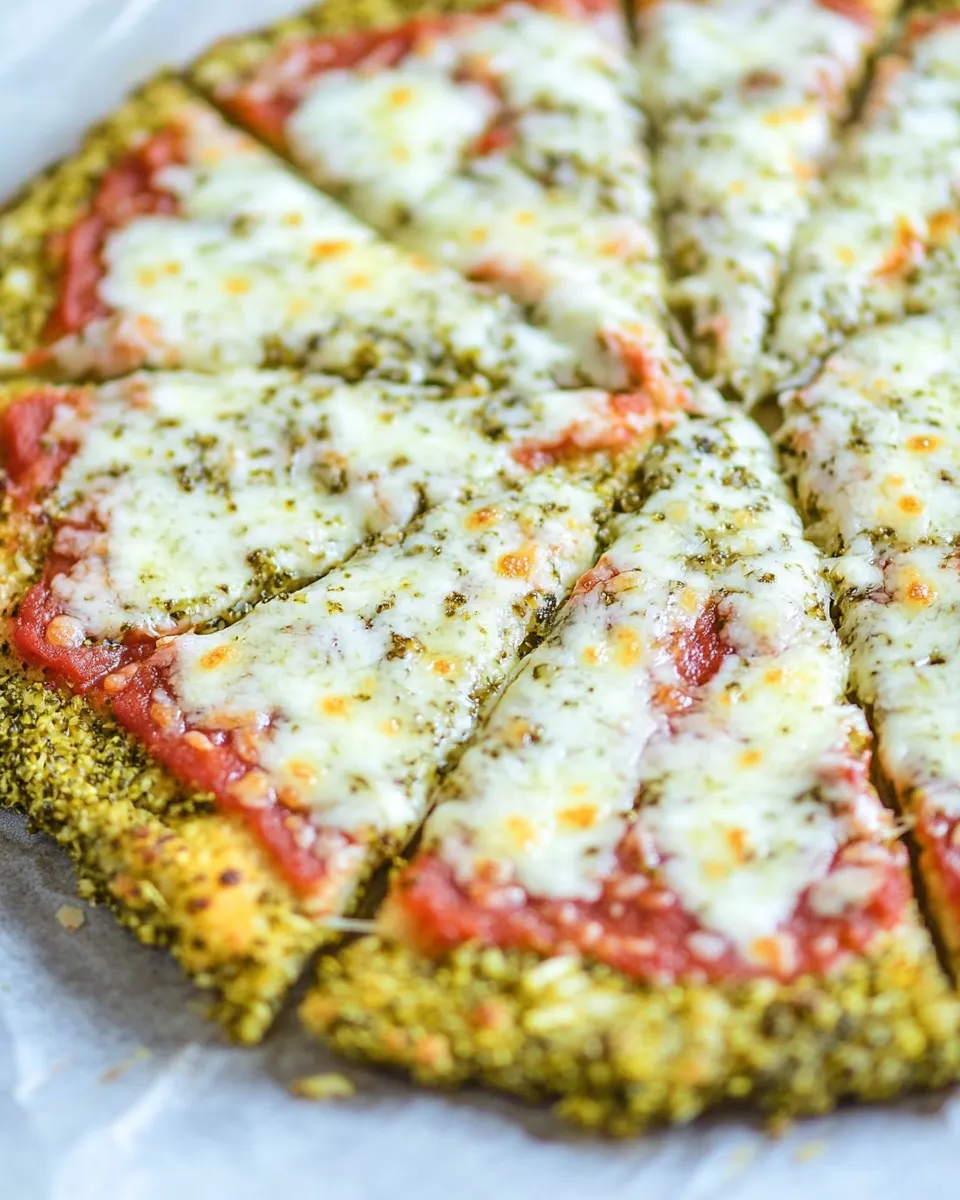
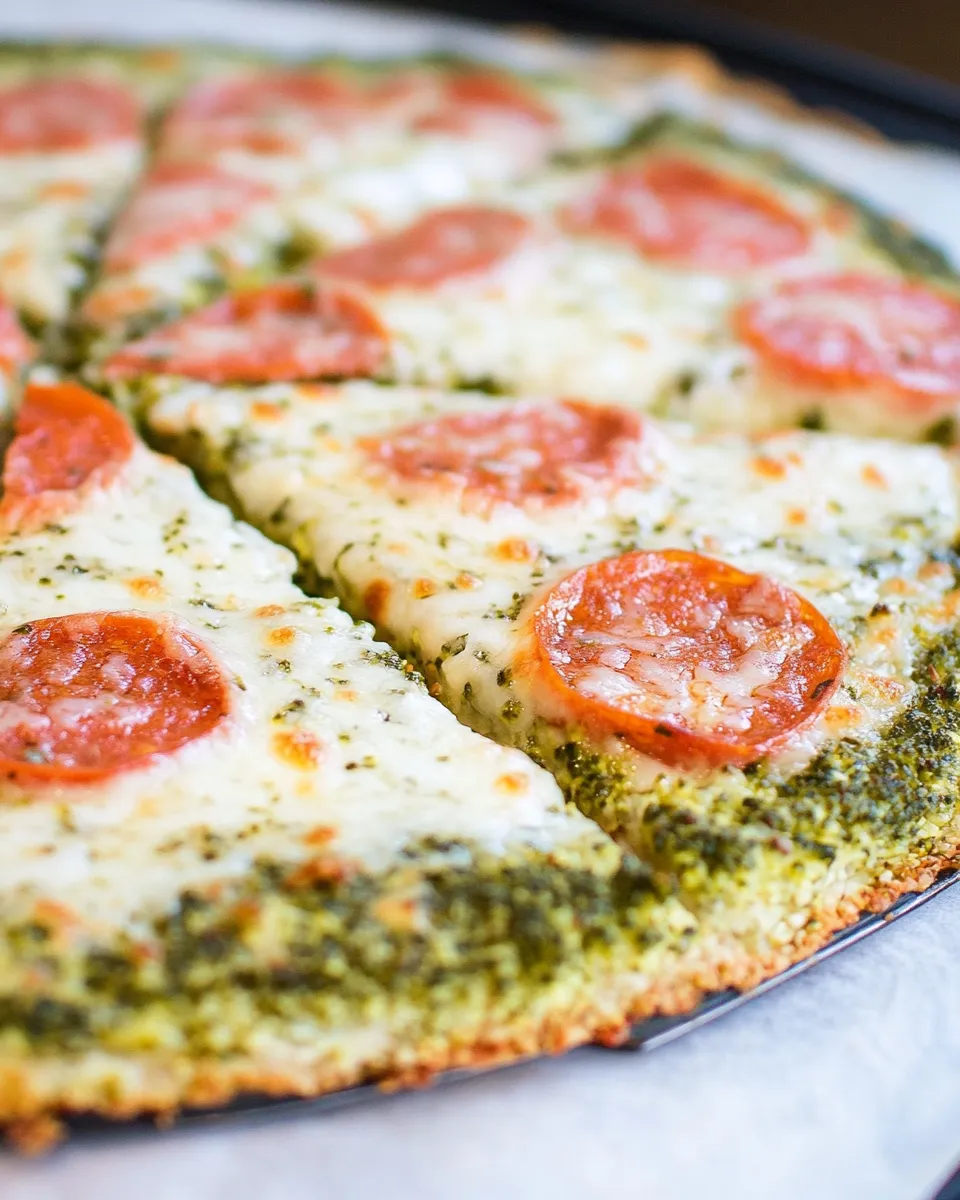
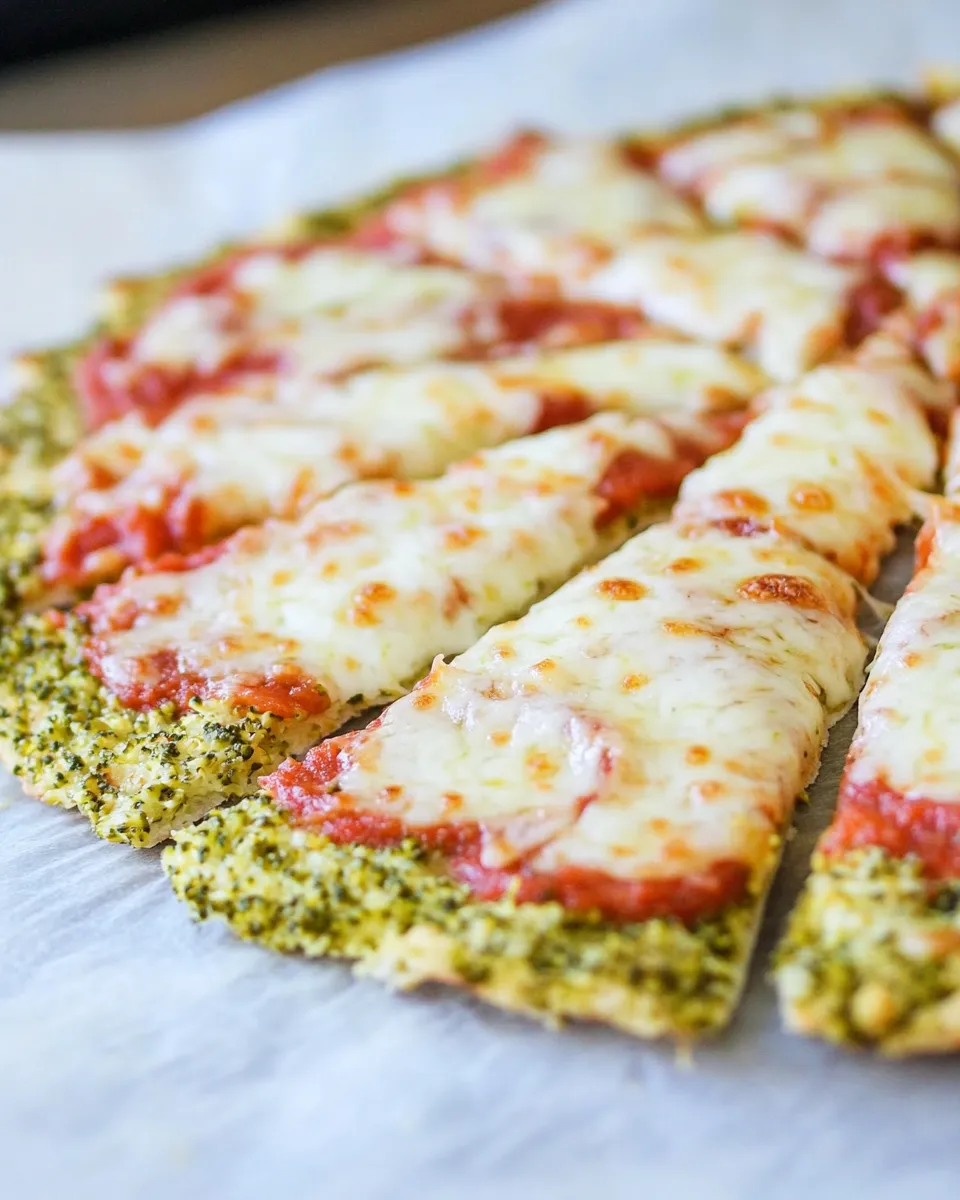
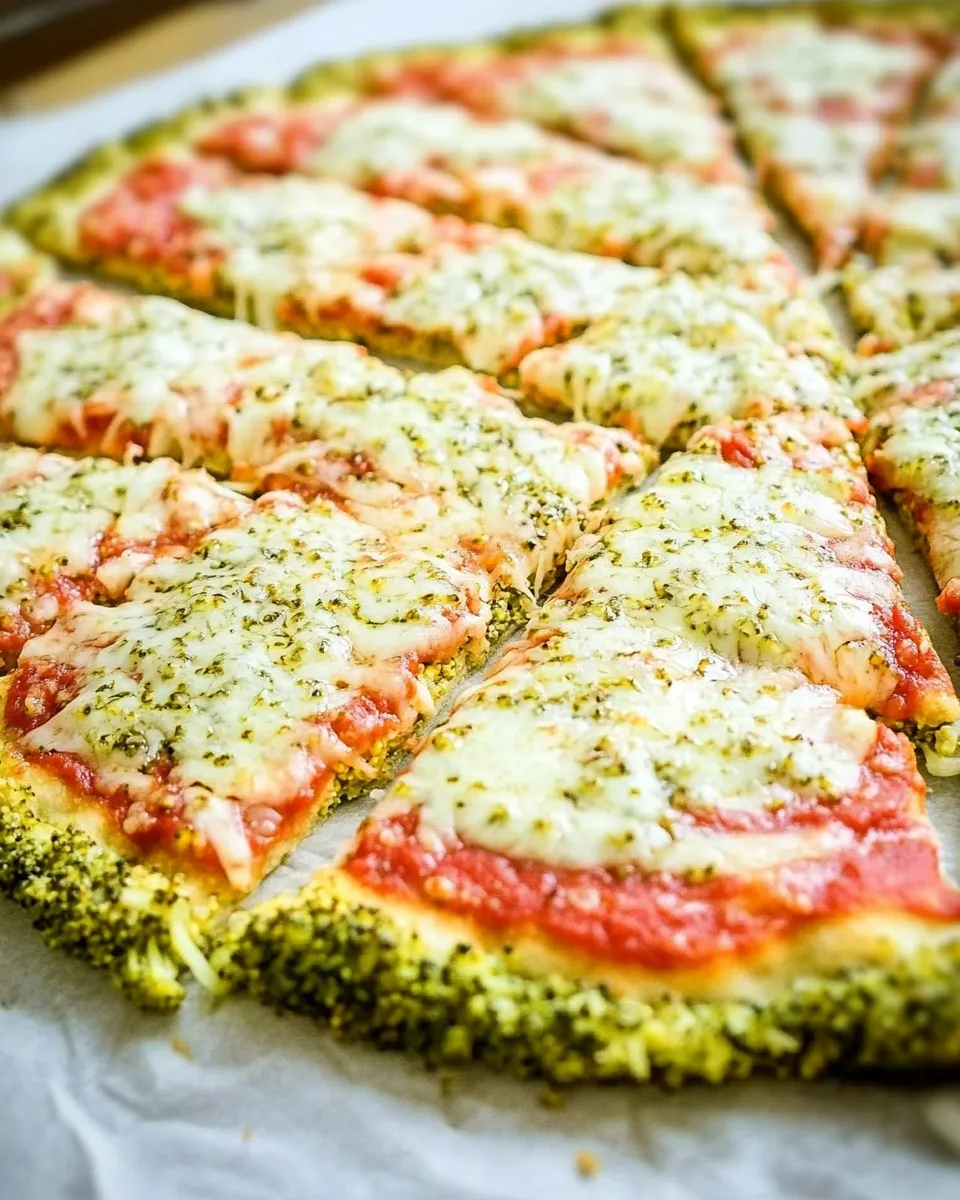
I love a good shortcut that still tastes like real food. This Broccoli Crust Pizza swaps a traditional wheat crust for a tender, cheesy broccoli base that holds up to sauce and toppings. It’s a great way to add vegetables without making the meal feel “diet-y.” The texture is soft with a slight chew, and when baked until golden it has enough structure for easy slicing.
Make this when you want a lighter pizza or when you’re trying to sneak extra greens onto someone’s plate. The process is straightforward: rice the broccoli, squeeze out the water, mix with eggs and cheese, then bake. Finish with your favorite sauce and cheese, then bake again until everything is bubbly.
Below I walk you through the ingredients, step-by-step method, troubleshooting, and sensible swaps so your Broccoli Crust Pizza turns out well the first time. No fancy tools required—just a food processor or box grater, a towel for wringing, and a baking sheet.
Ingredient Breakdown
- 1 small head of broccoli, about 2-3 cups riced — The base of the crust; ricing gives the right texture and removes large stalks that would make the crust wet.
- 2 eggs — Binder. Eggs hold the riced broccoli and cheese together so the crust stays intact.
- 1/4 cup parmesan cheese — Adds savory, salty flavor and helps dry the mixture for a firmer crust.
- 1/4 cup mozzarella cheese — Melts into the broccoli mixture for richness and chew.
- 1/4 teaspoon salt — Seasoning to bring out the vegetables and cheeses.
- 1/4 teaspoon pepper — Simple spice to balance flavors.
- 1/2 teaspoon Italian seasoning, optional — Adds herby notes (oregano, basil, thyme) if you want a classic pizza profile.
- 1/4 cup pizza sauce — Sauce for topping; a little goes a long way on this smaller crust.
- 1 cup cheese — Topping cheese (mozzarella or blend) to melt on top of the sauce.
- Veggies, optional — Any additional toppings you like (sliced peppers, mushrooms, olives, etc.).
Broccoli Crust Pizza: How It’s Done
Follow these steps as written. Amounts match the ingredient list above.
- Preheat your oven to 400°F (200°C). Line a baking sheet with parchment paper or lightly grease it; parchment is highly recommended to prevent sticking.
- Rice the broccoli: Trim the florets from the stem and pulse them in a food processor until the pieces are the size of rice. If you don’t have a processor, use a box grater to grate the florets fine. Measure about 2–3 cups riced broccoli.
- Steam the riced broccoli: Place the riced broccoli in a microwave-safe large bowl and cover with plastic wrap. Microwave on high for 1–2 minutes, until the broccoli is tender and steamed through. Let it cool for at least 1 minute so it’s safe to handle.
- Remove excess moisture: Pour the steamed broccoli onto a clean, well-washed kitchen towel or several layers of cheesecloth. Fold the towel around the broccoli and squeeze firmly to extract as much liquid as possible. Keep squeezing until you have a relatively dry ball of broccoli—this step is crucial for a non-soggy crust.
- Mix the crust: Return the drained broccoli to a large bowl. Add 2 eggs, 1/4 cup parmesan cheese, 1/4 cup mozzarella cheese, 1/4 teaspoon salt, 1/4 teaspoon pepper, and 1/2 teaspoon Italian seasoning (if using). Stir with a spoon until everything is evenly combined into a cohesive mixture.
- Form the crust: Transfer the mixture to the prepared baking sheet. Shape it into a pizza crust about 1/2 inch thick and roughly round (or whatever shape fits your sheet). Pat the surface smooth so it bakes evenly.
- Bake the crust: Place the crust in the preheated oven and bake for 10–12 minutes, or until the edges and top are lightly browned and the crust feels set.
- Add toppings: Remove the crust from the oven. Spread 1/4 cup pizza sauce over the crust, then sprinkle 1 cup cheese evenly on top. Add any optional veggies or other toppings you like.
- Finish baking: Return the topped pizza to the oven and bake an additional 10–12 minutes, until the cheese on top is fully melted and bubbly.
- Rest and serve: Let the pizza cool for at least 5 minutes before slicing—this helps the crust firm up and prevents the toppings from sliding.
Why This Recipe Is Reliable
It’s built on simple science: remove moisture, bind with eggs and cheese, and bake twice. The moisture removal step—squeezing the broccoli dry—is the single most important part. If you skip it, the crust will be soggy. Using both parmesan and mozzarella gives you flavor plus meltability, so the base tastes like pizza and holds together.
The oven temperature and bake times are conservative. 400°F gives enough heat to set the crust without burning the exterior before the interior cooks. The two-stage bake (crust first, then assembled pizza) prevents a wet topping from softening the base too much.
Easy Ingredient Swaps
- Broccoli — Swap with cauliflower (riced) for a neutral flavor and similar texture.
- Parmesan — Try Pecorino Romano for a sharper, saltier note.
- Mozzarella in the crust — Use finely shredded provolone or a mild white cheddar for a different melt and flavor.
- Italian seasoning — Replace with a pinch of dried oregano and basil if that’s what you have.
- Pizza sauce — Use marinara, pesto, or a light olive oil-garlic smear for variation.
- Toppings — Cooked proteins (thinly sliced chicken, crumbled cooked sausage) work, but avoid raw very wet vegetables unless pre-cooked or well-drained.
Prep & Cook Tools
- Food processor or box grater — to rice the broccoli finely.
- Microwave-safe bowl (or steaming setup) — to steam the riced broccoli quickly.
- Clean kitchen towel or cheesecloth — for squeezing out moisture.
- Baking sheet and parchment paper — parchment prevents sticking and makes cleanup easy.
- Mixing bowl and spoon — to combine the crust ingredients.
- Oven thermometer (optional) — useful if your oven runs hot or cool.
Troubles You Can Avoid
Common problems are straightforward to fix:
- Soggy crust: You didn’t squeeze enough water from the broccoli. Remove more liquid—squeeze until the ball is dry to the touch.
- Crust falls apart: Either underbaked or not enough binder. Make sure you use 2 whole eggs and bake the crust until it’s set and slightly golden before topping.
- Burnt edges: Oven too hot or crust too thin at edges. Keep crust thickness even (about 1/2 inch) and watch the first bake—rotate the pan if your oven has hot spots.
- Wet toppings: Use a light layer of sauce (1/4 cup) and avoid raw watery vegetables unless they’re pre-roasted or well-drained.
In-Season Swaps
Make this pizza feel seasonal by switching toppings:
- Spring: Thinly sliced radishes, peas, or tender asparagus tips—lightly sauté first.
- Summer: Fresh cherry tomatoes (halved and drained) and basil—add basil after baking.
- Fall: Roasted squash or caramelized onions—pre-roast to remove moisture.
- Winter: Wilted spinach or roasted Brussels sprouts—cook and drain before topping.
If You’re Curious
Is this gluten-free? Yes, assuming your cheeses and sauce are gluten-free—always check labels. Is it low-carb? Compared to a wheat crust, yes, because the base is mostly vegetable and protein. Can you make this dairy-free? Not as written—both cheeses contribute structure. You could try a dairy-free shredded cheese in the crust, but results will vary.
Cooling, Storing & Rewarming
Cool pizza to room temperature, then store in an airtight container or wrapped in foil in the refrigerator for up to 3 days. For longer storage, freeze slices on a tray, then transfer to a sealed freezer bag for up to 1 month.
To reheat: place slices on a baking sheet and bake at 375°F for 8–12 minutes until warmed through and cheese is melty. Avoid microwaving if possible; it makes the crust rubbery and soggy. For a crisper edge, reheat in a dry skillet over medium-low heat with a lid for a few minutes.
Helpful Q&A
- Can I make the crust ahead? Yes. You can form and par-bake the crust, cool it, and then refrigerate for up to 24 hours before adding toppings and finishing the bake. Longer storage is possible in the freezer, but texture may change.
- How thin should the crust be? About 1/2 inch thick. Thinner will crisp faster but may be fragile; thicker may need more time to set.
- Do I need to peel the broccoli stems? No need to peel, but trim very tough parts. Stems can be riced too if they’re tender—just pulse finely so they don’t leave large pieces.
- Can I double the recipe? Yes, use two baking sheets or bake in batches. Keep the same proportions.
In Closing
This Broccoli Crust Pizza is a straightforward, reliable swap when you want a lighter, veggie-forward pizza. Focus on drying the riced broccoli and giving the crust a head start in the oven. From there, the finishing step is the same as a regular pizza: sauce, cheese, toppings, and a final bake.
Make it your own—vary the cheeses, change the sauce, and pick toppings that fit the season. It’s an approachable recipe that delivers flavor with less guilt, and once you get the moisture out of the broccoli, it’s hard to go wrong.
Broccoli Crust Pizza
Ingredients
- 1 small head broccoli about 2–3 cups when riced
- 2 eggs
- 1/4 cup Parmesan cheese
- 1/4 cup mozzarella cheese
- 1/4 teaspoon salt
- 1/4 teaspoon black pepper
- 1/2 teaspoon Italian seasoning optional
- 1/4 cup pizza sauce
- 1 cup cheese for topping (e.g., shredded mozzarella)
- vegetable toppings optional, as desired
Instructions
- Preheat the oven to 400°F (200°C). Line a baking sheet with parchment paper or lightly grease it and set aside.
- Rice the broccoli in a food processor or finely shred it with a box grater until it resembles rice.
- Place the riced broccoli in a microwave-safe bowl, cover, and microwave 1–2 minutes until steamed; let cool for about 1 minute.
- Transfer the warm broccoli to a clean kitchen towel or cheesecloth and squeeze firmly to remove as much liquid as possible, until you have a fairly dry ball of broccoli.
- In a mixing bowl, combine the drained broccoli, eggs, Parmesan, 1/4 cup mozzarella, salt, pepper, and optional Italian seasoning until evenly mixed.
- Spread the broccoli mixture onto the prepared baking sheet and shape it into a 1/2-inch thick round or rectangle to form the crust.
- Bake the crust for 10–12 minutes, or until lightly browned and set.
- Remove the crust from the oven, spread the pizza sauce over it, and sprinkle evenly with the remaining 1 cup cheese and any desired vegetable toppings.
- Return to the oven and bake another 10–12 minutes, or until the cheese is fully melted and bubbly.
- Let the pizza cool at least 5 minutes before slicing and serving.
Equipment
- food processor or box grater
- Microwave-safe Bowl
- clean kitchen towel or cheesecloth
- Mixing Bowl
- Baking Sheet
- Parchment Paper
- spatula or spoon
- Oven
Notes
- Use a towel or cheesecloth to remove excess moisture for a crisp crust.
- Italian seasoning is optional but adds flavor.
- Choose your preferred shredded cheese for the topping.
- Let the pizza rest a few minutes before cutting to avoid a soggy slice.