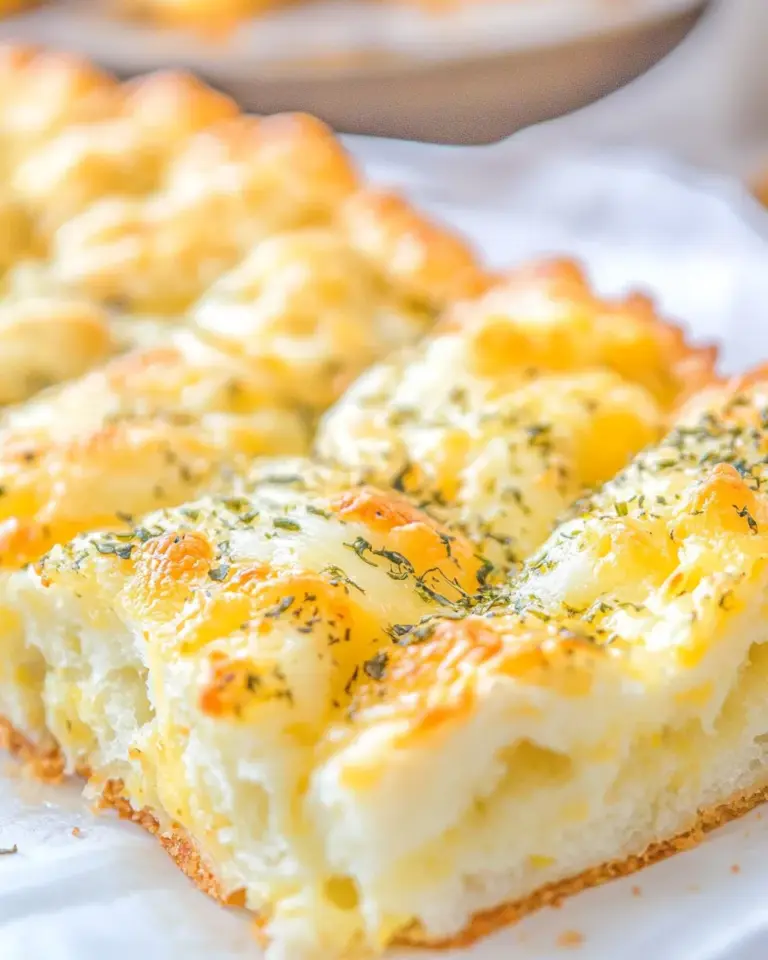
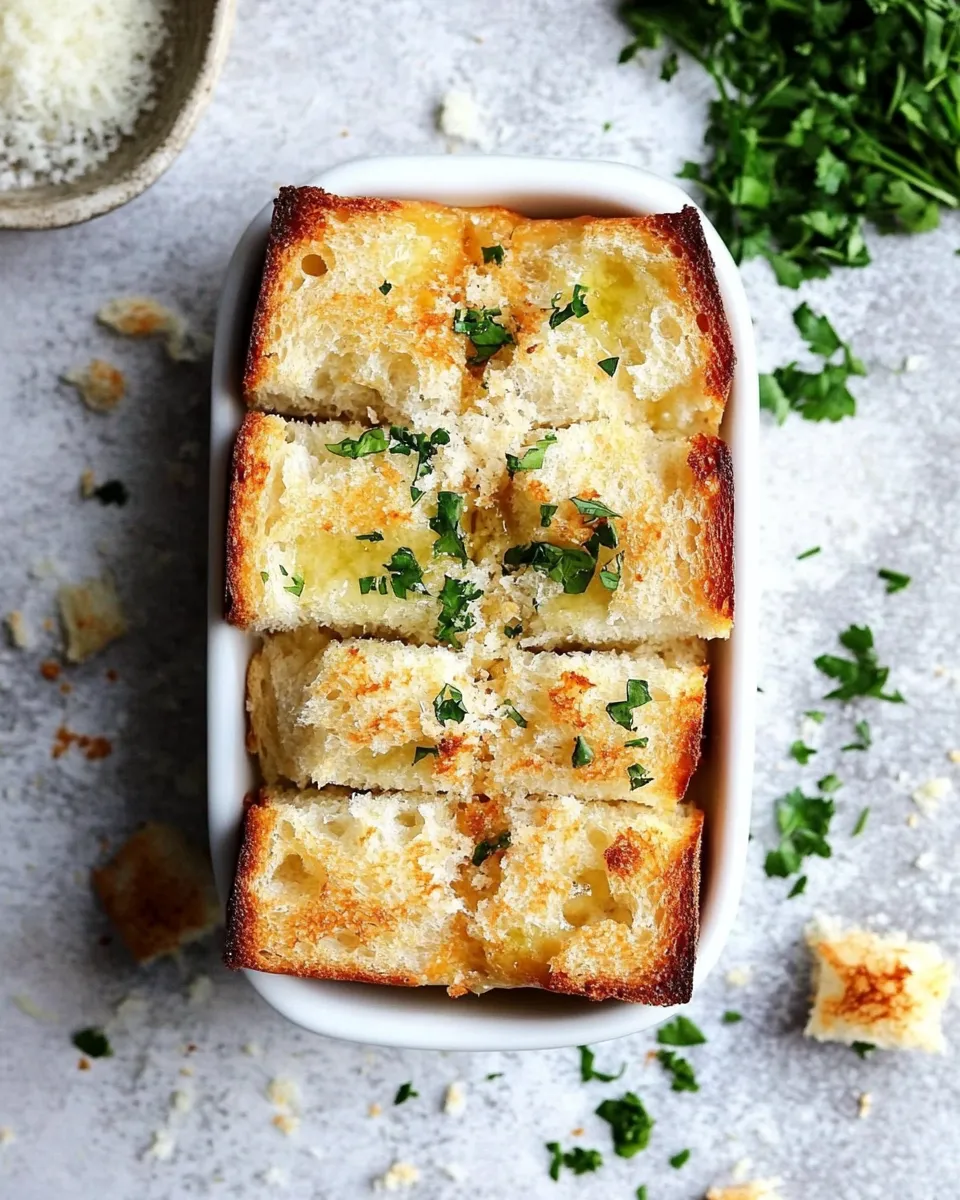
Garlic Bread
I make garlic bread more times than I can count. It’s one of those side dishes that rescues a weeknight pasta, elevates a simple salad, and comforts guests without making a fuss. This version is straightforward, buttery, and intentionally forgiving—perfect for cooks who want great flavor without busywork.
The method below focuses on melting flavor into the loaf so every bite tastes of garlic, butter, and parsley. There are two moments where butter is handled differently: the first half is spread into the bread before baking to infuse it, and the second half is melted and brushed on afterward for shine and extra garlic perfume.
Read the ingredients and steps closely; the recipe sticks to the amounts listed so you get reliable results. I include notes on substitutions, equipment, and common errors I’ve learned from making this again and again.
What You’ll Need
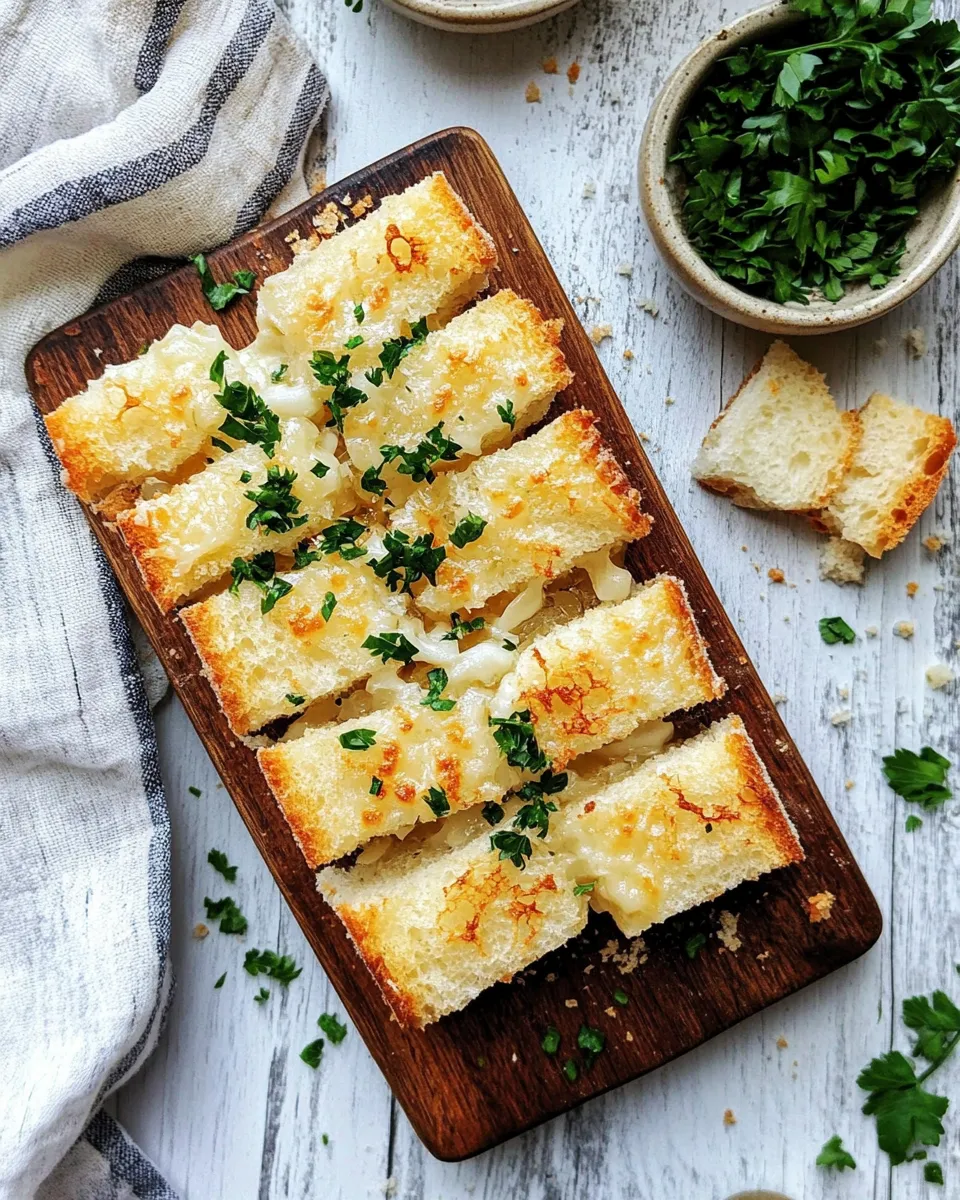
Ingredients
- 16 ounces French bread loaf — the vehicle for the garlic butter; a crusty exterior and soft interior work best.
- 1 cup salted butter (softened) — provides richness and helps the garlic and parsley spread evenly; salted butter supplies seasoning.
- ½ teaspoon sea salt — balances and enhances the buttered bread; adjust to taste if your butter is very salty.
- 2 to 3 tablespoons garlic (freshly minced) — primary flavor; fresh minced garlic gives bright, pungent aroma.
- 1 teaspoon dried parsley (or 1 tablespoon fresh parsley, minced (plus more for garnish)) — adds color and a mild herb note; use fresh if available for more texture and brightness.
Cooking Garlic Bread: The Process
- Preheat the oven to 425°F.
- Slice the 16-ounce French bread loaf in half lengthwise so you have two long halves.
- In a bowl, stir together 1 cup softened salted butter, ½ teaspoon sea salt, 2 to 3 tablespoons freshly minced garlic, and 1 teaspoon dried parsley (or 1 tablespoon minced fresh parsley). Mix until evenly combined.
- Use a spatula to spread half of the butter mixture over the cut surface of one bread half. Spread the remaining half of that mixture over the cut surface of the second bread half, then place the two halves together with the buttered sides facing each other.
- Wrap the loaf tightly in aluminum foil so the butter is sealed inside. Place the wrapped loaf on a baking sheet and bake at 425°F for 30 minutes. This lets the butter melt into the crumb and softens the interior without overbrowning the crust.
- While the wrapped loaf bakes, reserve the remaining butter mixture (if any separate portion remains) or set aside a small bowl of the butter mixture. Melt that reserved butter mixture in a small saucepan over medium-low heat, stirring, until the garlic becomes fragrant, about 2 to 3 minutes. Watch closely so the garlic does not brown.
- After 30 minutes, remove the foil from the loaf to check that the butter is fully melted and the bread is hot throughout. If the interior is warm and the butter is melted, unwrap completely.
- Brush or drizzle the warmed, melted butter mixture over the exposed surfaces of the toasted bread to add extra garlic butter and shine.
- Sprinkle additional minced fresh parsley over the bread if desired, then slice and serve warm.
What Makes This Recipe Special
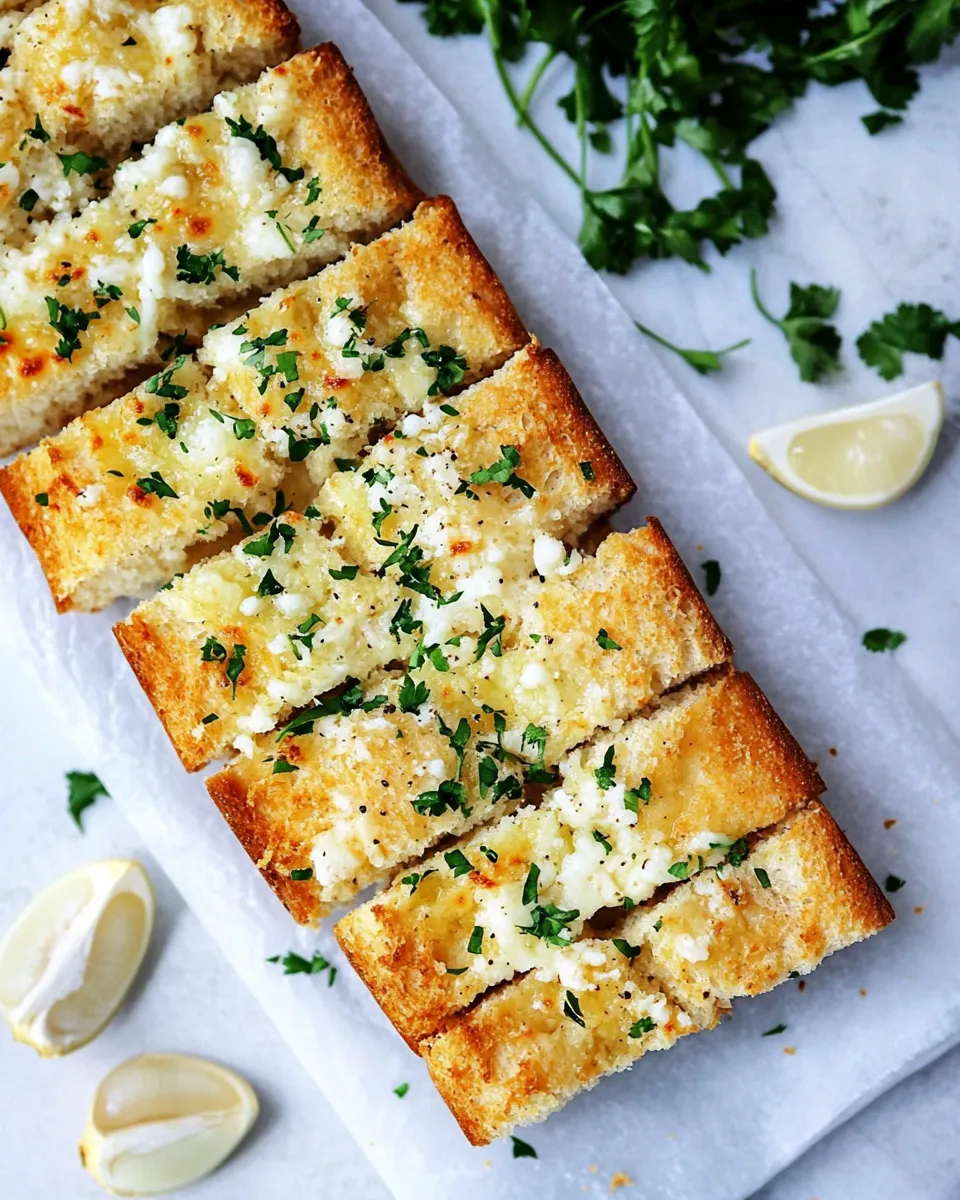
This technique melts flavor into the loaf rather than only coating the surface. Wrapping the loaf traps steam so the crumb soaks up butter and garlic without drying out. The second pass of melted garlic butter adds immediate garlic aroma and gives the crust a glossy finish. Using fresh garlic and fresh parsley when possible keeps the flavors bright; dried parsley works in a pinch but won’t give the same texture or color.
Texture-Safe Substitutions
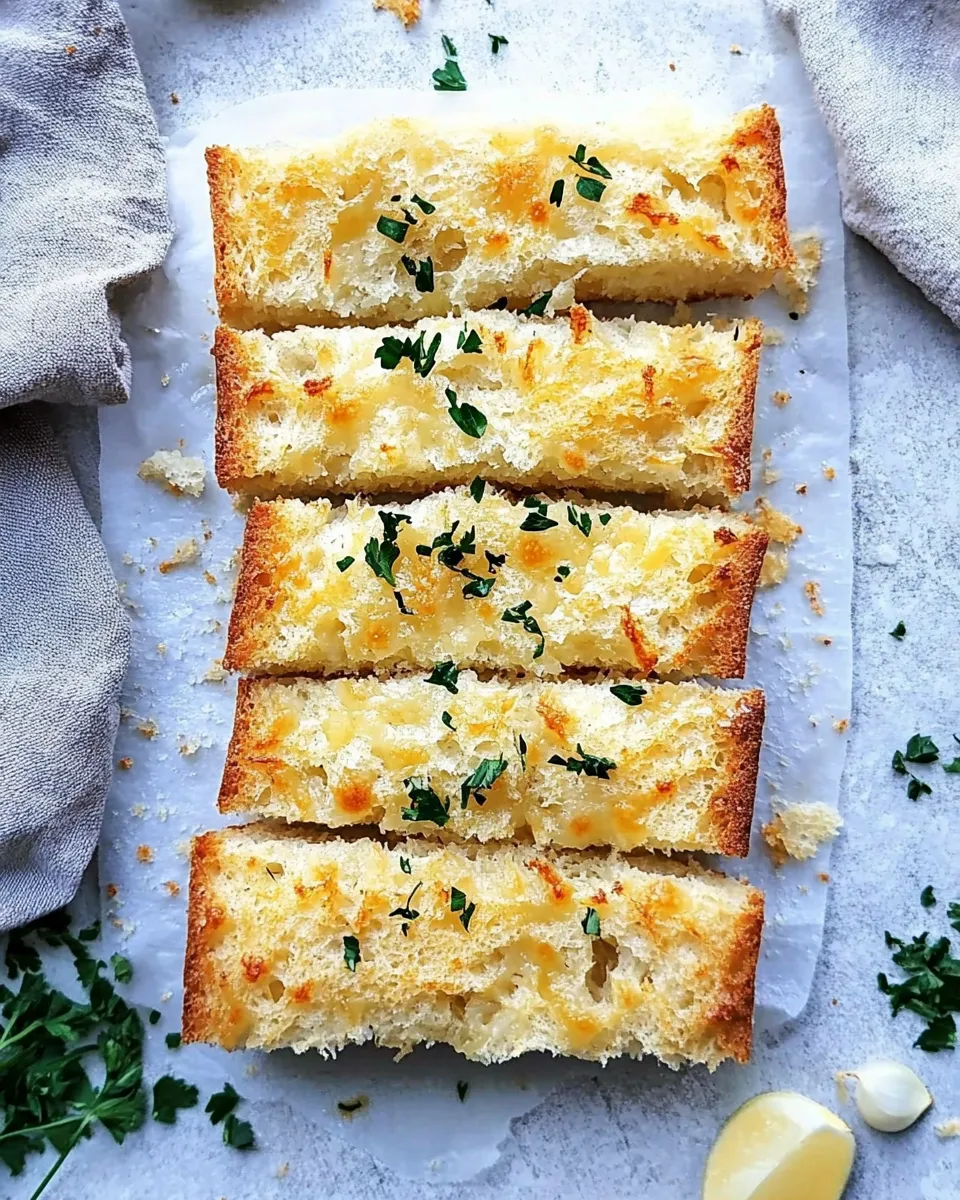
- If you need a softer interior without a chewy crust, use a sandwich-style baguette or Italian bread—they absorb butter more quickly.
- For a lighter mouthfeel, substitute half the butter with unsalted butter and increase salt to taste, but keep total butter volume the same to preserve moisture.
- If you can’t tolerate raw garlic pieces, mince the garlic very finely or press it through a garlic press so it melds more smoothly into the butter.
- For a crustier exterior, unwrap the loaf for the last 3–5 minutes under the oven broiler on low, watching constantly to avoid burning.
Equipment at a Glance
- Sharp serrated knife — for cleanly slicing the loaf lengthwise.
- Mixing bowl and spatula — to combine butter, garlic, salt, and parsley and to spread it.
- Aluminum foil — to wrap the loaf tightly while baking.
- Baking sheet — makes it easy to transfer the wrapped loaf in and out of the oven.
- Small saucepan — to melt and warm the reserved butter mixture and bloom the garlic.
- Basting brush or spoon — to brush or drizzle the melted garlic butter on the bread.
Mistakes Even Pros Make
- Using cold butter — it won’t spread and won’t infuse the bread. Start with softened butter so it mixes smoothly.
- Overcooking the garlic — browning garlic in the saucepan makes it bitter; keep it light and fragrant (2–3 minutes).
- Not wrapping tightly — loose foil lets steam escape and prevents the interior from soaking up butter evenly.
- Skipping the second butter application — the initial bake infuses flavor, but the melted butter brushed on at the end restores aroma and gloss.
- Using pre-minced or powdered garlic exclusively — fresh garlic offers a brighter, cleaner flavor. Use fresh if you can.
Variations for Dietary Needs
- Vegan: Replace the 1 cup salted butter with a plant-based buttery spread (1 cup) and use a vegan French-style loaf.
- Lower-sodium: Use 1 cup unsalted butter and omit the ½ teaspoon sea salt, then taste and add up to ¼ teaspoon if needed.
- Garlic-intolerant: Reduce garlic to 1 tablespoon and roast it first to mellow the flavor, then mix into the butter.
- Gluten-free: Use a 16-ounce gluten-free French-style loaf; bake time should be similar but check doneness by warmth rather than crumb texture alone.
Flavor Logic
Butter is the carrier: it soaks into the bread, distributes garlic, and provides mouthfeel. Sea salt heightens the butter’s sweetness and balances the garlic intensity. Parsley cuts through the richness and adds a fresh herbal note and color contrast. Melting half the butter into the bread while wrapped ensures deep flavor penetration. Melting and applying the reserved portion afterward wakes up the fresh garlic aroma and gives the crust a finishing gloss.
Prep Ahead & Store
- Prep ahead: Mix the garlic butter up to 24 hours in advance and store it covered in the refrigerator. Let it come to room temperature before spreading so it’s pliable.
- Make-ahead assembly: You can assemble and wrap the loaf and keep it in the fridge for a few hours before baking; add 5–10 minutes to the oven time if the loaf is cold.
- Leftovers: Store cooled garlic bread wrapped in foil in the fridge for up to 3 days. Reheat wrapped at 350°F for 10–12 minutes or until warmed through.
- Freezing: Wrap cooled garlic bread tightly in foil and freeze up to 1 month. Reheat from frozen at 350°F for 20–25 minutes, then unwrap and brush with warmed butter if desired.
Reader Questions
Can I use dried garlic?
You can, but the flavor won’t be the same. Use 1 teaspoon garlic powder in place of 2–3 tablespoons fresh minced garlic, and mix into the softened butter so it hydrates. The texture will be smoother but less vibrant.
What if my butter mixture all melts out during baking?
If the butter pools, it usually means the loaf wasn’t wrapped tightly. Drain excess butter off the baking sheet and brush some of it back onto the bread after unwrapping. The loaf will still be delicious.
How do I get a crispier crust?
Unwrap the loaf for the last 3–5 minutes of baking or place it under the broiler for a minute—watch closely to avoid charring. That will dry the surface slightly and create a crisper crust.
See You at the Table
This garlic bread is deliberately simple but built on dependable technique: infuse, finish, and garnish. It pairs with tomato-forward dishes, salads, soups, and anything that benefits from a butter-and-garlic lift. Try the basic version as written once, then tweak garlic level, herbs, or the crust finish to match your preferences. Bring it out warm, slice thick, and enjoy—this one disappears fast at my table.
Garlic Bread
Ingredients
- 16 ounces French bread loaf
- 1 cup salted butter softened
- 1/2 teaspoon sea salt
- 2 to 3 tablespoons garlic freshly minced
- 1 teaspoon dried parsley or 1 tablespoon fresh parsley, minced; plus more for garnish
Instructions
- Preheat the oven to 425°F (220°C).
- Slice the French bread loaf in half lengthwise.
- In a mixing bowl, stir together the softened butter, sea salt, minced garlic, and parsley until evenly combined.
- Spread about half of the garlic butter mixture onto the cut surface of one bread half using a spatula.
- Place the two bread halves together, wrap tightly in aluminum foil, and set on a baking sheet.
- Bake wrapped bread in the preheated oven for 30 minutes, until the butter is melted and the bread is heated through.
- While the bread bakes, place the remaining butter mixture in a small saucepan and heat gently for 2 to 3 minutes until the garlic becomes fragrant, stirring to avoid burning.
- Remove the bread from the oven and unwrap to check it is hot throughout.
- Brush or drizzle the warmed garlic butter over the bread for extra flavor and sprinkle additional minced fresh parsley if desired.
Equipment
- Oven
- Baking Sheet
- Aluminum Foil
- Mixing Bowl
- Spatula
- Small Saucepan
- pastry brush
Notes
- Keeping the bread wrapped while baking mellows the raw garlic flavor.
- Heating the butter mixture briefly on the stovetop helps toast the garlic.
- Watch closely if broiling the top as it can burn quickly.
- You can halve the butter or garlic amounts for a lighter version.
- To crisp the top, place halves face up on a baking sheet and broil 2 to 3 minutes.