How to Make Olive Tapenade
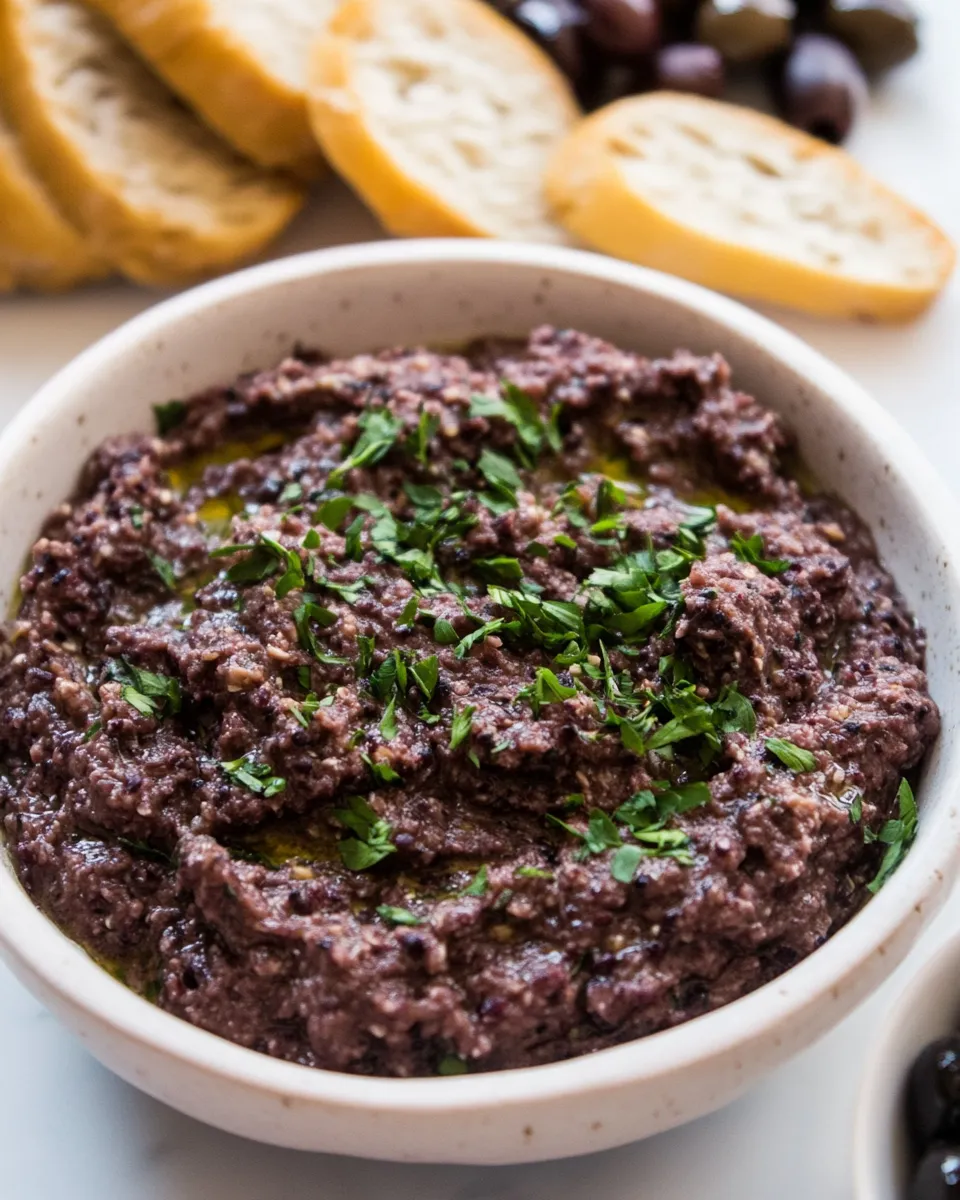
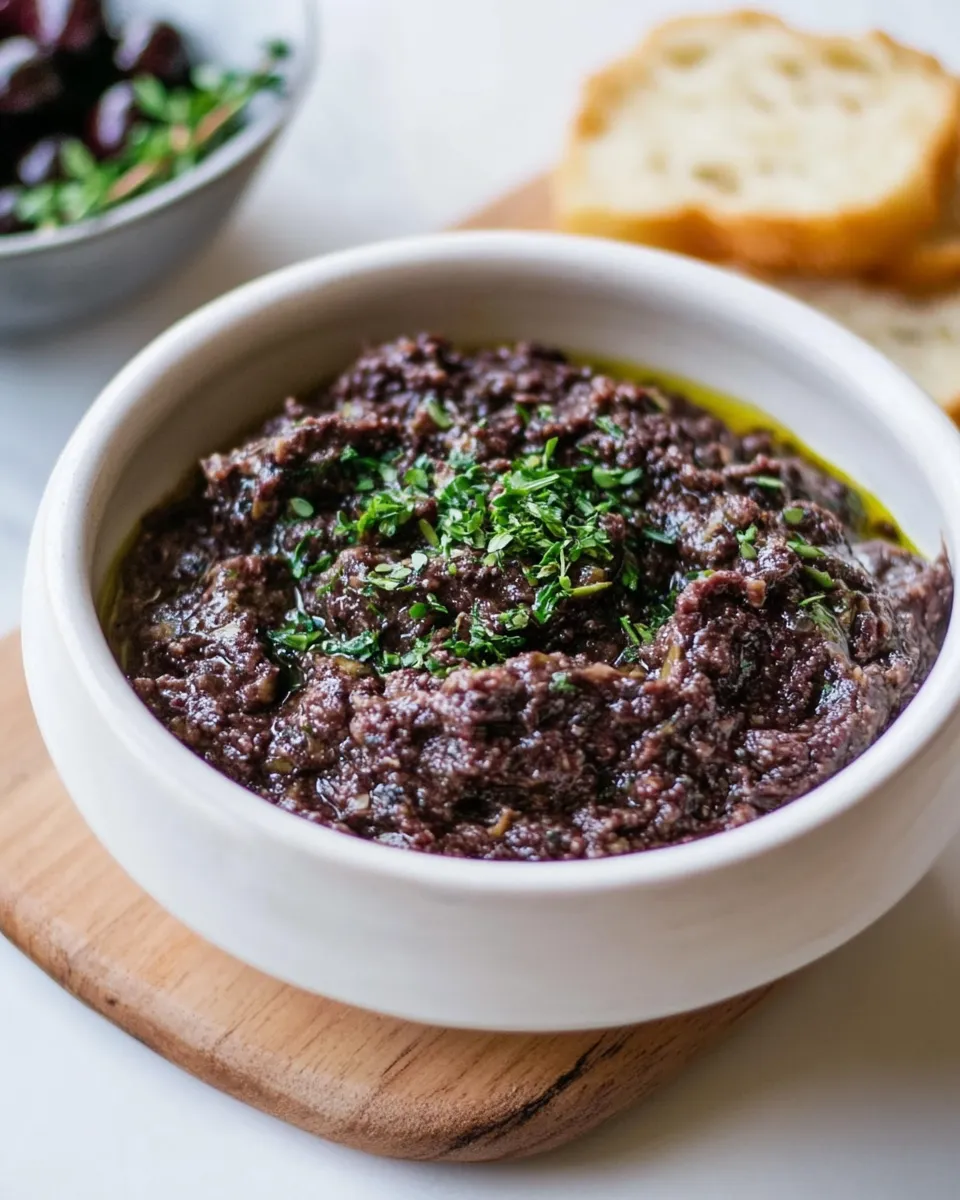
Olive tapenade is one of those condiments that makes simple snacks feel elegant. It’s bold, savory, and comes together in minutes with a food processor and a few pantry staples. Use it on crostini, stirred into pasta, or as a bright counterpoint to roasted vegetables.
Below you’ll find a straight-ahead recipe with exact measurements, clear steps, and practical notes to avoid common mistakes. I keep this version in heavy rotation because it balances briny, acidic, and herbal flavors without fuss.
Ingredient Breakdown
- 1 1/2 cups pitted, brine-cured olives, drained — The backbone: salty, tangy, and textured. Drain well to avoid watering down the tapenade.
- 1 teaspoon anchovy paste or 2 anchovy filets, minced — Adds deep umami. Anchovy paste blends more evenly; filets provide texture.
- 3 tablespoons capers, rinsed — Briny pops that brighten the spread; rinse to reduce excess saltiness.
- 1 1/2 tablespoons parsley, coarsely chopped — Freshness and a herbal lift; coarse chop helps the processor distribute it evenly.
- 3 cloves garlic, roasted if desired — Raw garlic gives sharpness; roast it first for a mellow, sweet note.
- 3 tablespoons lemon juice — Balances richness with acidity; use freshly squeezed for best flavor.
- Salt and freshly ground black pepper — Season to taste; olives, capers, and anchovies are already salty, so go easy.
- 1/4 cup olive oil — Binds the paste and adds silkiness; extra-virgin is fine for flavor, but a milder oil yields a cleaner olive taste.
From Start to Finish: Olive Tapenade
- Prepare ingredients: Drain the olives thoroughly in a fine-mesh sieve or on paper towels to remove excess brine. If using anchovy filets, mince them finely. If you prefer less sharp garlic, roast 3 cloves first: wrap in foil with a drizzle of oil and roast at 400°F (200°C) for 20–25 minutes until soft and lightly caramelized.
- Load the food processor: Add the drained olives, anchovy paste or minced filets, rinsed capers, coarsely chopped parsley, garlic (roasted or raw), lemon juice, and 1/4 teaspoon freshly ground black pepper to the bowl of a food processor.
- Pulse to coarse chop: Pulse 2 to 3 times just until the mixture is coarsely chopped. You’re aiming for a rough, chunky texture—not a smooth paste at this stage—so don’t over-process.
- Add the oil: With the processor running in short bursts, drizzle in the 1/4 cup olive oil. Pulse a few more times until the mixture comes together into a chunky paste. Stop and scrape down the sides of the bowl with a spatula as needed to ensure even mixing.
- Taste and adjust seasoning: Transfer a spoonful to a plate and taste. Because the olives, capers, and anchovies are salty, add salt sparingly. Add more freshly ground black pepper if you like. If the tapenade tastes too sharp or dry, a small splash more olive oil or a few drops of lemon juice will balance it.
- Bring to room temperature and serve: Let the tapenade sit at room temperature for 15–30 minutes before serving so the flavors meld. Serve on crostini, with raw vegetables, or as a component in sandwiches and pasta.
Why This Recipe is a Keeper
This tapenade keeps the classic flavor profile intact while simplifying technique. Measurements are precise, processing is minimal, and the texture remains satisfyingly chunky—perfect for spreading or dolloping. It’s versatile: use it as an appetizer, a condiment, or a quick sauce base. The recipe is forgiving, yet it rewards small adjustments (roasted garlic, anchovy choice) for big flavor shifts.
What to Use Instead
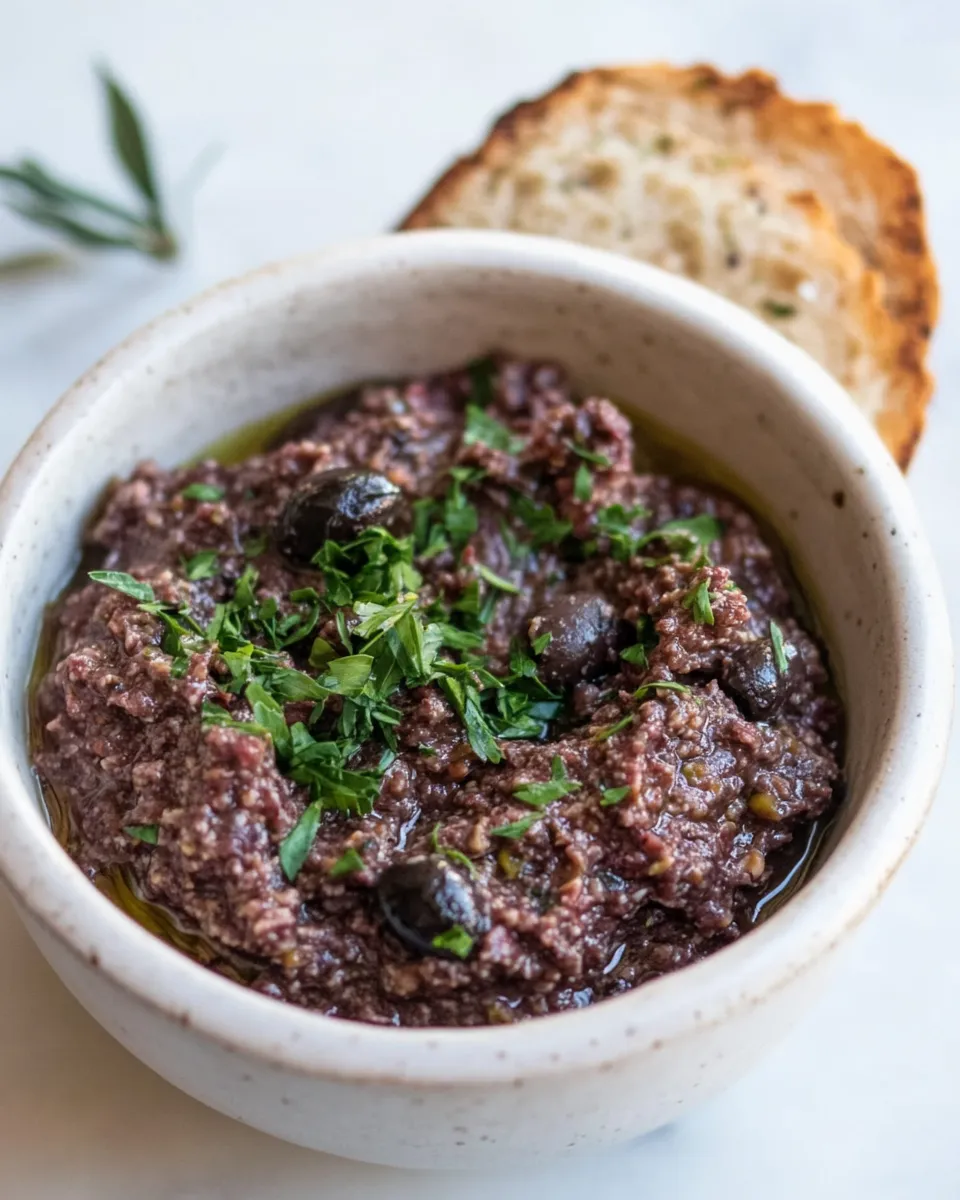
- Olives — If you don’t have brine-cured olives, use kalamata or green olives from a jar, but note intensity will vary; drain well.
- Anchovies — Skip anchovies for a vegetarian version, and add a teaspoon of soy sauce or a pinch of dried seaweed for umami.
- Capers — Substitute chopped cornichons or finely diced pickles for a different briny crunch.
- Parsley — Swap with fresh basil or cilantro for a different herbal character; reduce amount slightly if the herb is very bold.
- Lemon juice — Use white wine vinegar or sherry vinegar in a pinch, but start with less and taste.
Must-Have Equipment
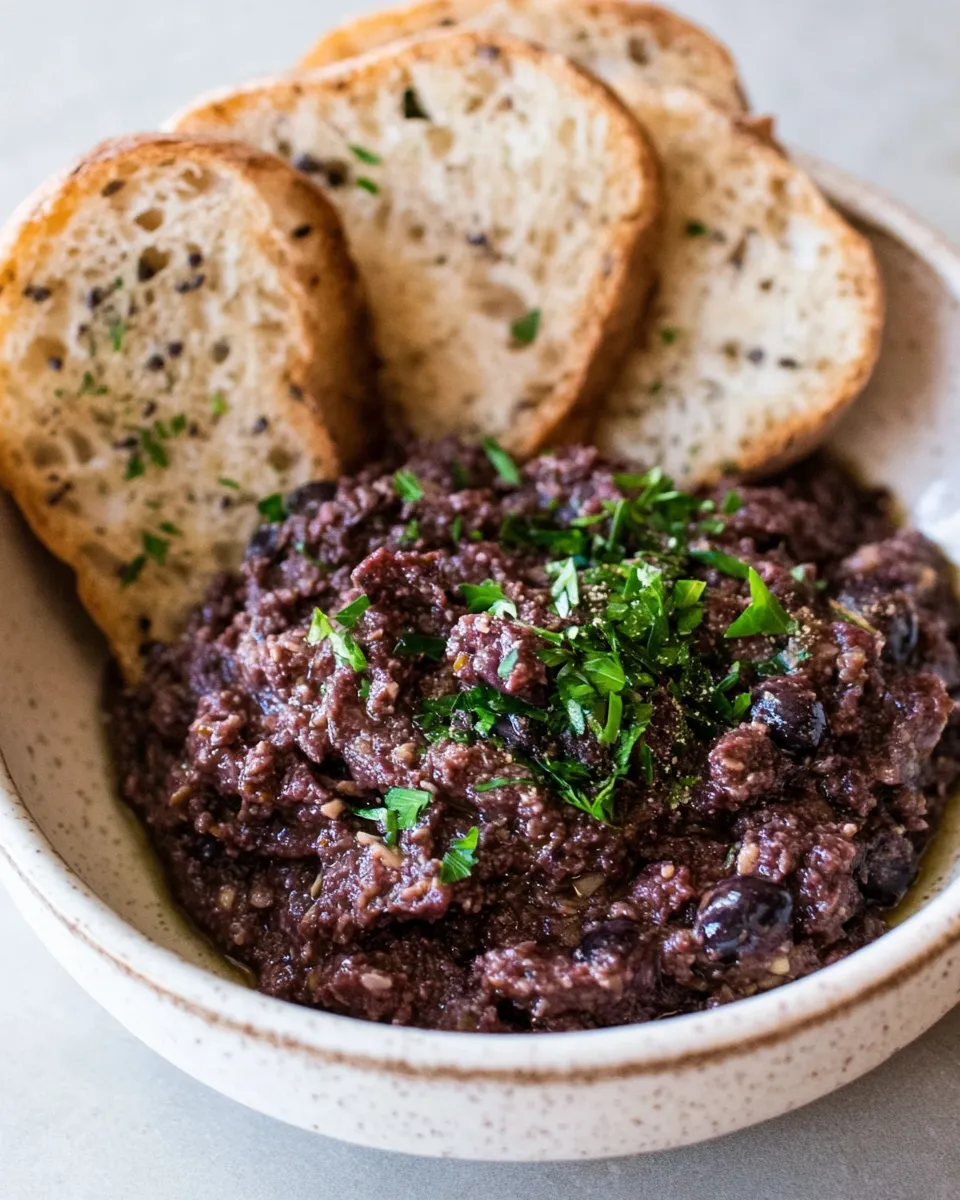
- Food processor — For even chopping and emulsification; a small 3–4 cup processor is ideal for this quantity.
- Fine-mesh sieve or paper towels — To drain the olives and reduce excess brine.
- Measuring spoons and cups — Accurate measurements keep the balance right.
- Spatula — For scraping the bowl so nothing is missed.
Slip-Ups to Skip
- Over-draining or under-draining olives — Too much brine makes the tapenade watery; insufficient draining leaves it overly salty.
- Over-processing — Pureeing smooth loses the traditional chunky texture. Pulse only until coarsely chopped, then just enough to bind with oil.
- Adding too much salt — Taste before salting; the olives, capers, and anchovies already contribute salt.
- Using old lemon juice — Bottled lemon juice can taste flat; use fresh for brightness.
Seasonal Flavor Boosts
- Spring — Add a tablespoon of chopped preserved lemon for a bright, floral lift.
- Summer — Stir in a handful of chopped sun-dried tomatoes for sweetness and color.
- Autumn — Fold in a small amount of roasted red pepper for warmth and slight sweetness.
- Winter — Increase roasted garlic slightly and finish with a drizzle of high-quality olive oil for richness.
Chef’s Notes
If you prefer a smoother tapenade, pulse longer and add another tablespoon of olive oil, a little at a time, until you reach the desired consistency. Make-ahead tip: the flavors deepen after a few hours, so make it earlier in the day or the night before for parties. For a lighter spread, mix half tapenade and half plain Greek yogurt or ricotta just before serving.
How to Store & Reheat
Store tapenade in an airtight container in the refrigerator for up to 7 days. Smooth the top and pour a thin layer of olive oil over the surface to limit air exposure and keep it glossy. Tapenade is served at room temperature, so remove it from the fridge 20–30 minutes before serving. Reheating isn’t necessary; if you want it warmer, gently warm in a small saucepan over very low heat for a couple of minutes, stirring constantly, but avoid high heat which can mute the fresh lemon and herb notes.
Common Qs About Olive Tapenade
- Can I make this without anchovies? — Yes. Omitting anchovies will reduce umami; add a teaspoon of miso or soy sauce if you want a similar depth.
- Can I freeze tapenade? — You can freeze it for up to 3 months, but texture may change slightly. Thaw in the refrigerator and bring to room temperature before serving.
- How long does it keep? — Refrigerated in an airtight container, up to 7 days. Always check for off smells before using.
- Can I use different olives? — Yes. Kalamata gives a fruitier flavor; green cerignola olives are milder. Drain and taste to adjust seasoning.
Final Bite
Olive tapenade is effortless to make and endlessly useful. Follow the straightforward steps above, taste as you go, and don’t be afraid to tweak the herb or garlic level for your palate. Keep a jar in the fridge: it turns ordinary bread and vegetables into something you reach for again and again.
How to Make Olive Tapenade
Ingredients
- 1 1/2 cups pitted brine-cured olives drained
- 1 teaspoon anchovy paste or 2 anchovy filets, minced
- 3 tablespoons capers rinsed
- 1 1/2 tablespoons parsley coarsely chopped
- 3 cloves garlic roasted if desired
- 3 tablespoons lemon juice
- 1/4 cup olive oil
- Salt to taste
- Freshly ground black pepper about 1/4 teaspoon in initial mix, more to taste
Instructions
- Add the drained olives, anchovy paste (or minced anchovy filets), rinsed capers, chopped parsley, garlic cloves, lemon juice, and 1/4 teaspoon freshly ground black pepper to a food processor.
- Pulse 2–3 times until the mixture is coarsely chopped and beginning to come together.
- With the processor running, drizzle in the olive oil and pulse a few more times until a chunky paste forms, stopping to scrape down the sides as needed.
- Taste and season with salt and additional freshly ground black pepper as desired.
- Transfer to a bowl and serve at room temperature.
Equipment
- Food Processor
Notes
- Use mild brine-cured olives such as Kalamata, Lucques, Picholines, or Niçoise.
- Anchovy paste is a convenient substitute for minced anchovy filets.
- Rinse capers before using, especially if brine- or salt-packed.
- Roast garlic optionally by wrapping a bulb with oil in foil and baking at 400°F for 45–60 minutes.
- This recipe yields about 3 cups total.
- Store leftovers covered in the refrigerator for up to 4 days.