Blueberry Scones with Almonds
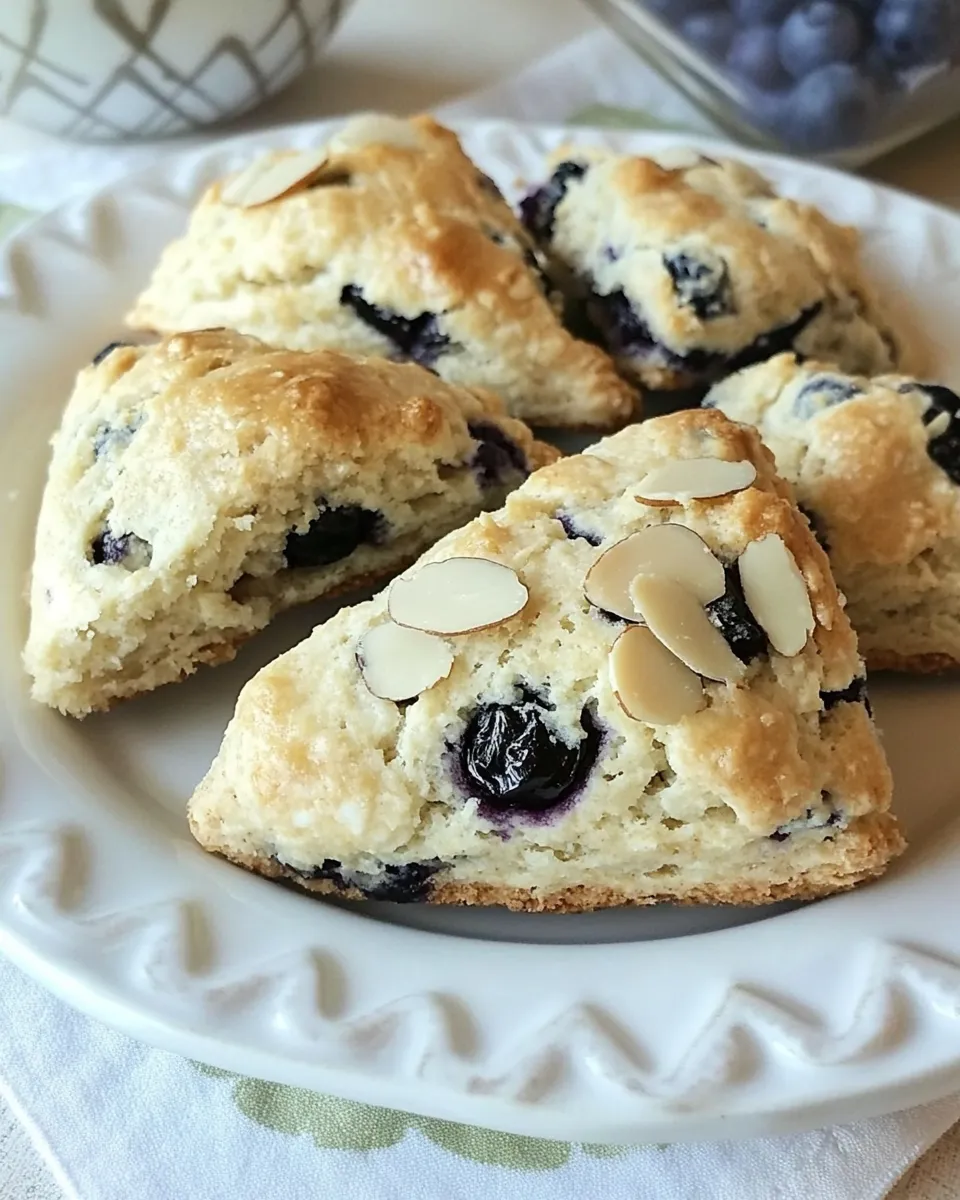
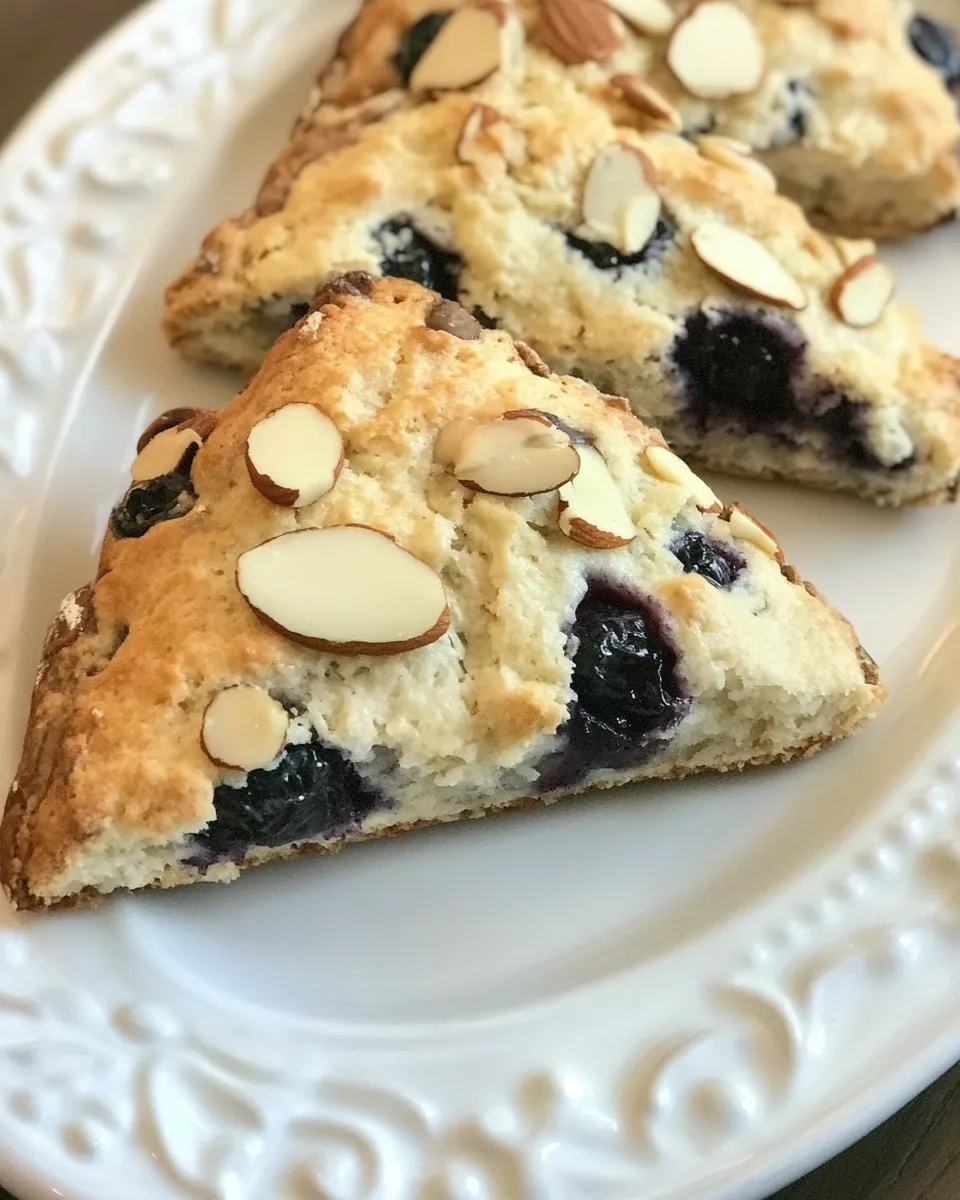
I love mornings that start with a warm scone and a strong cup of coffee. These blueberry scones with almonds are straightforward to make, tender inside with a lightly crisp exterior, studded with fresh berries and toasted almond bites. They come together quickly and hold up well if you want to bake them ahead for a breakfast spread.
The recipe is practical: no unusual ingredients, no special equipment required. I’ll walk you through each step, explain why certain choices matter, and offer fixes if something goes off. Read the notes, then roll up your sleeves—these scones are worth the small effort.
The Essentials
Time & Yield
- Prep time: 15 minutes.
- Bake time: 15–18 minutes.
- Total time: about 35 minutes.
- Yields: 8 scones (one 10-inch circle cut into 8 triangles).
Temperatures & Texture
- Oven: 375°F (190°C).
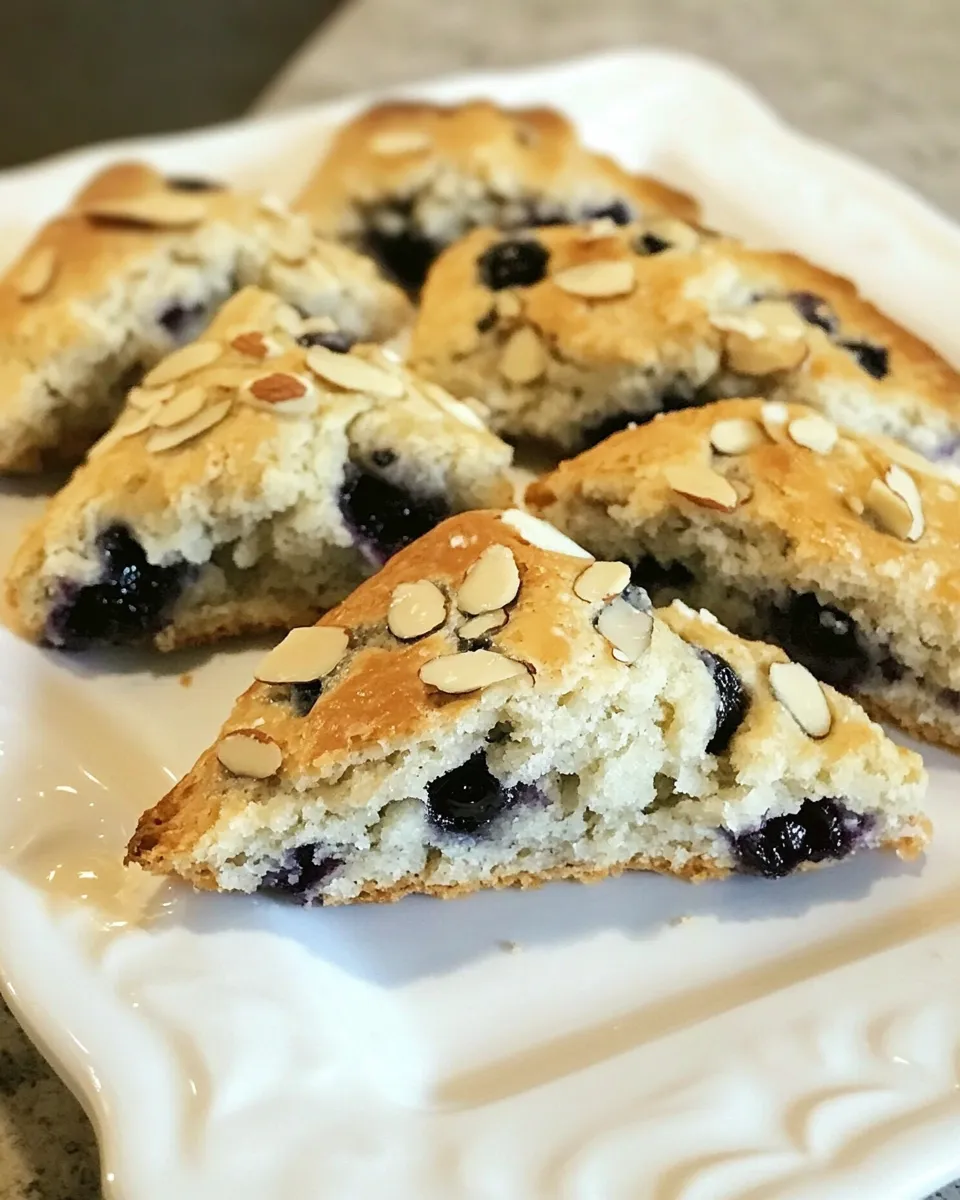
- Texture to expect: slightly crisp, golden tops with a tender, moist crumb that will be a bit wetter in the dough before shaping.
Ingredients
- 2 1/2 cups all purpose flour — structure for the scones; measure by spooning into the cup to avoid dense results.
- 1/2 cup granulated sugar — sweetens the dough and helps with browning.
- 1 tablespoon baking powder — the primary leavening so the scones rise and stay tender.
- 1/2 teaspoon baking soda — supports lift and balances acidity.
- 1/2 teaspoon salt — enhances flavor; don’t skip.
- 1/2 cup cold butter, cut into small chunks — cold butter creates flaky pockets; keep it cold until mixing.
- 1 cup milk — hydrates the dough; use regular cow’s milk for best texture.
- 1 teaspoon vanilla — adds warm flavor; stir into the milk.
- 3/4 cup fresh blueberries — fresh berries give bright pops; gently fold them in to avoid bursting.
- 1/3 cup toasted slivered almonds — for crunch and a toasty almond note; toast briefly if not pre-toasted.
- 1 cup powdered sugar — for the glaze; dissolves smoothly into a shiny drizzle.
- 1/4 teaspoon almond extract — accentuates the almond flavor in the glaze; a little goes a long way.
- 2 teaspoons milk — thins the glaze to a drizzleable consistency.
Blueberry Scones with Almonds: How It’s Done
- Preheat the oven to 375°F (190°C). Line a baking sheet with parchment paper or a silicone baking mat and set it aside while you prepare the dough.
- In a large bowl, whisk together 2 1/2 cups all purpose flour, 1/2 cup granulated sugar, 1 tablespoon baking powder, 1/2 teaspoon baking soda, and 1/2 teaspoon salt until evenly combined.
- Add 1/2 cup cold butter (cut into small chunks) to the dry ingredients. Using a pastry cutter, two knives, or your fingertips, cut the butter into the flour mixture until the pieces are about the size of small peas. Work quickly so the butter stays cold; small pea-sized bits give a tender, flaky scone.
- In a small bowl or measuring cup, stir together 1 cup milk and 1 teaspoon vanilla. Pour the milk mixture into the dry ingredients and gently stir to combine. The batter will be quite wet—this is normal for these scones.
- Fold in 3/4 cup fresh blueberries and 1/3 cup toasted slivered almonds gently, taking care not to crush the berries. Work with a few strokes so the fruit stays intact.
- Generously flour a clean work surface. Spoon the wet scone mixture onto the floured surface and sprinkle a little more flour over the top. Using floured hands, pat and spread the dough into a 10-inch diameter flat circle about 1 inch thick. If the dough sticks, add a light dusting of flour to your hands and the top.
- Using a sharp knife or a bench scraper dusted with flour, cut the circle into 8 equal triangles. Transfer the triangles to the prepared baking sheet, leaving a little space between them for air circulation.
- Bake the scones in the preheated oven for 15–18 minutes, or until the tops are golden brown and a toothpick inserted into the center (avoiding blueberries) comes out clean.
- While the scones bake, make the glaze. In a small bowl, whisk together 1 cup powdered sugar, 1/4 teaspoon almond extract, and 2 teaspoons milk until smooth. Adjust the milk by a few drops if you need a thinner or thicker glaze.
- When the scones come out of the oven, let them cool on the baking sheet for about 5 minutes. Then drizzle the glaze over the warm scones. Serve warm or at room temperature.
Why This Recipe is a Keeper
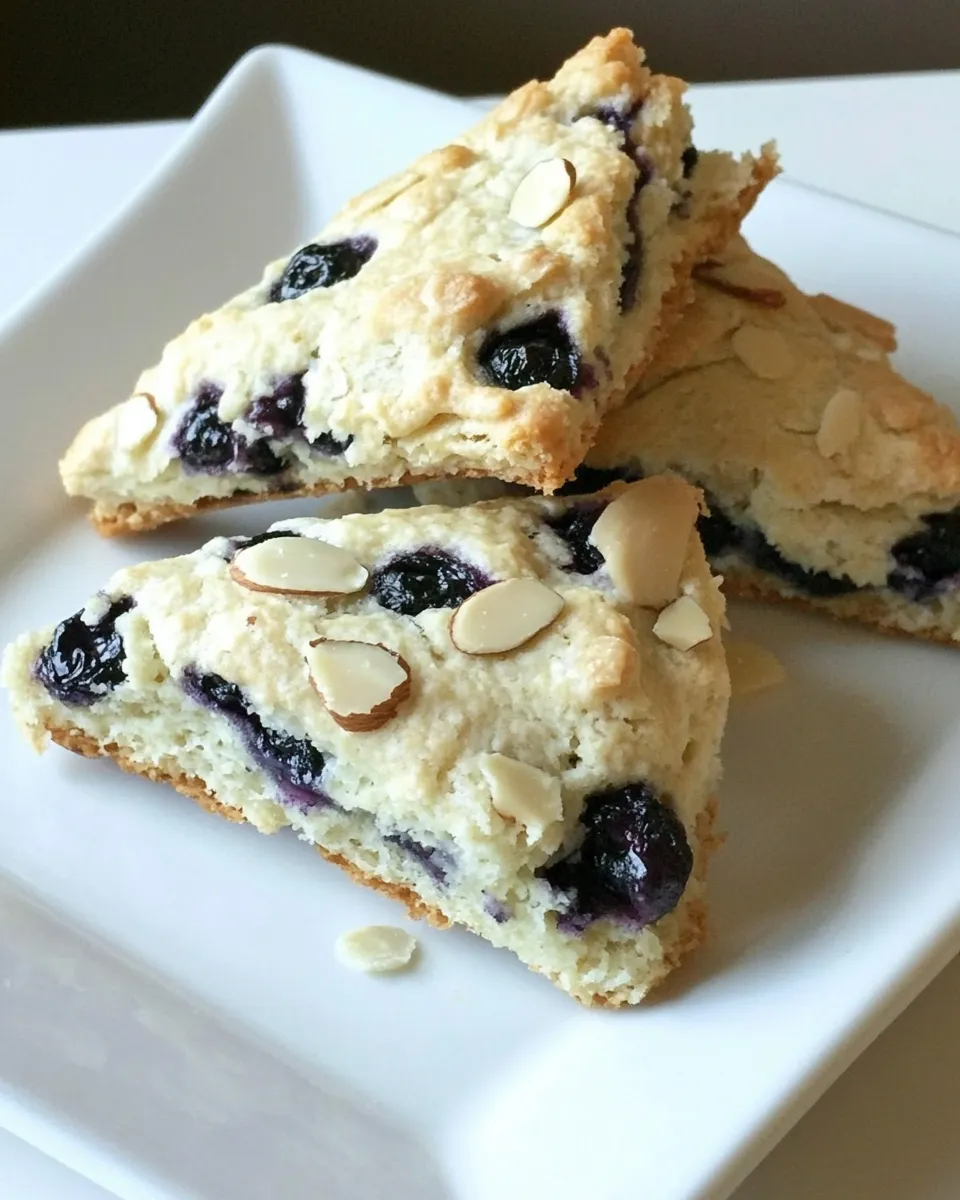
This recipe balances simplicity with texture. The cold butter method yields flaky layers without lamination or special skills. Fresh blueberries keep the scones bright and juicy, while toasted almonds add a contrasting crunch. The almond-scented glaze ties the flavors together without overpowering the fruit. It’s forgiving—if your dough is wetter than expected, it still bakes into tender scones rather than dry biscuits.
Substitutions by Category
Flour & Sweeteners
- All-purpose flour — can sometimes be swapped for a 1:1 gluten-free flour blend, but texture will vary; expect more crumbly results.
- Granulated sugar — replace with coconut sugar for a nuttier note; color will be darker.
Fats & Liquids
- Butter — keep it cold; you can try 1:1 frozen, grated unsalted butter for even distribution.
- Milk — whole milk gives the richest texture; 2% works fine. Buttermilk will add tang and may make the scones slightly more tender (note: buttermilk will slightly change the chemistry with baking soda).
Mix-ins & Flavorings
- Blueberries — frozen berries can be used but do not thaw; toss them in a little flour before folding in to reduce bleeding.
- Almond extract — omit if you prefer a simpler glaze; vanilla-only glaze still pairs well.
- Almonds — swap toasted chopped walnuts or pecans for a different crunch.
Appliances & Accessories
- Oven — consistent heat matters; use an oven thermometer if your oven runs hot or cold.
- Pastry cutter or two knives — for cutting cold butter into flour. A food processor can be used in quick pulses, but watch the texture.
- Silicone baking mat or parchment paper — prevents sticking and promotes even browning.
- Sharp knife or bench scraper — for cleanly cutting the scone circle into triangles.
Watch Outs & How to Fix
Dough too wet or sticky
- Problem: The recipe notes the mixture will be very wet, but if it’s so sticky you can’t shape it, dust your work surface and hands with extra flour and handle gently. Avoid adding large amounts of extra flour—pat the dough rather than kneading.
Scones spread too much in the oven
- Problem: Butter melted too fast or dough handled too much. Fix: Chill the shaped scones for 10–15 minutes before baking to firm the butter, or return the dough briefly to the fridge before cutting and baking.
Blueberries bleed and turn dough purple
- Problem: Overly soft berries or too much stirring. Fix: Fold berries in gently; if using frozen, keep them frozen until mixing and toss with a tablespoon of flour first.
Scones are dry or crumbly
- Problem: Too much flour or overbaking. Fix: Measure flour accurately (fluff and spoon into the cup). Pull scones from the oven as soon as tops are golden and a tester comes out clean.
Holiday-Friendly Variations
- Christmas: Add 1/4 cup chopped dried cranberries and 1/4 cup chopped pistachios, and use orange zest in the glaze instead of almond extract.
- Easter/Brunch: Fold in a tablespoon of lemon zest into the dough and make a lemon glaze (powdered sugar + lemon juice) for a bright finish.
- Autumn twist: Substitute toasted pecans for almonds and add 1/2 teaspoon cinnamon to the dry ingredients.
Notes on Ingredients
- Fresh blueberries are preferred for texture. If using frozen, keep them frozen and add a light dusting of flour to prevent color bleed.
- Toasting slivered almonds amplifies their flavor—toast in a dry skillet over medium heat for 3–4 minutes until fragrant, stirring often. Cool before folding into the dough.
- Cold butter is crucial for flakiness. If the butter softens while you work, chill the bowl briefly before proceeding.
Storing, Freezing & Reheating
- Storing: Keep scones in an airtight container at room temperature for up to 2 days. For best texture, reheat briefly before serving.
- Freezing: Wrap cooled scones individually in plastic wrap and place in a freezer bag for up to 2 months. Thaw at room temperature or reheat from frozen in a 350°F oven for 8–10 minutes.
- Reheating: Warm scones in a 325–350°F oven for 6–8 minutes, or microwave for 20–30 seconds for a quick warm-up (microwave softens the crisp exterior).
Common Questions
Can I use frozen blueberries?
Yes. Do not thaw them. Toss frozen berries in a tablespoon of flour before folding them into the dough to reduce color bleeding and prevent them from sinking.
Can I make these dairy-free?
Substitute a dairy-free milk (like almond milk) and use a dairy-free butter alternative cut cold. The texture may shift slightly but the method stays the same.
Why is my dough so wet?
The recipe’s dough is intentionally wetter than biscuit dough—this helps create a tender scone. Use generous flour on your surface and hands when shaping, and avoid overworking the dough.
Hungry for More?
If you liked these, try swapping the blueberries for chopped strawberries or raspberries with white chocolate chips. For more brunch-friendly bakes, check my posts on lemon poppy seed muffins and almond-crusted coffee cake. Happy baking—tell me how your scones turned out and any tweaks you made.

Blueberry Scones with Almonds
Ingredients
- 2 1/2 cups all-purpose flour
- 1/2 cup granulated sugar
- 1 tablespoon baking powder
- 1/2 teaspoon baking soda
- 1/2 teaspoon salt
- 1/2 cup cold butter cut into small chunks
- 1 cup milk
- 1 teaspoon vanilla extract
- 3/4 cup fresh blueberries
- 1/3 cup toasted slivered almonds
- 1 cup powdered sugar
- 1/4 teaspoon almond extract
- 2 teaspoons milk for the glaze
Instructions
- Preheat the oven to 375°F (190°C) and line a baking sheet with parchment paper or a silicone baking mat.
- In a large bowl, whisk together the flour, granulated sugar, baking powder, baking soda, and salt until evenly combined.
- Add the cold butter chunks to the dry ingredients and use a pastry cutter or fork to cut the butter in until the mixture resembles coarse crumbs with pea-sized bits of butter remaining.
- Whisk 1 cup milk with the vanilla, then pour into the flour mixture and gently stir until a very wet dough forms.
- Fold in the blueberries and toasted slivered almonds gently to avoid crushing the berries.
- Generously flour a clean work surface. Spoon the dough onto the floured surface, sprinkle a little flour over the top, and pat or lightly roll it into a 10-inch (25 cm) flat circle.
- Cut the circle into 8 equal wedges and transfer them to the prepared baking sheet, spacing them slightly apart.
- Bake for 15–18 minutes, or until the scone tops are golden brown.
- While the scones bake, stir together the powdered sugar, 1/4 teaspoon almond extract, and 2 teaspoons milk in a small bowl until smooth to make the glaze.
- Remove the scones from the oven and let them cool on the baking sheet for about 5 minutes, then drizzle the glaze over the warm scones.
Equipment
- Mixing Bowl
- pastry cutter or fork
- Measuring cups and spoons
- Baking Sheet
- parchment paper or silicone baking mat
- rolling or flat surface for shaping
- small bowl for glaze
- spoon or whisk
Notes
- If worried about spreading, refrigerate shaped scones for at least 15 minutes before baking.
- If scones spread during baking, press them gently back into shape with a spatula and return to the oven.
- To freeze baked scones, cool completely, do not glaze, and freeze in an airtight container up to 4 months.
- To freeze unbaked scones, freeze wedges on a sheet for 1 hour, then transfer to an airtight container for up to 4 months.
- To bake frozen unbaked scones, either bake from frozen adding a few minutes, or thaw overnight and bake as directed.
- For overnight prep, shape and cut the dough into wedges, cover, and refrigerate; bake the next day as directed.