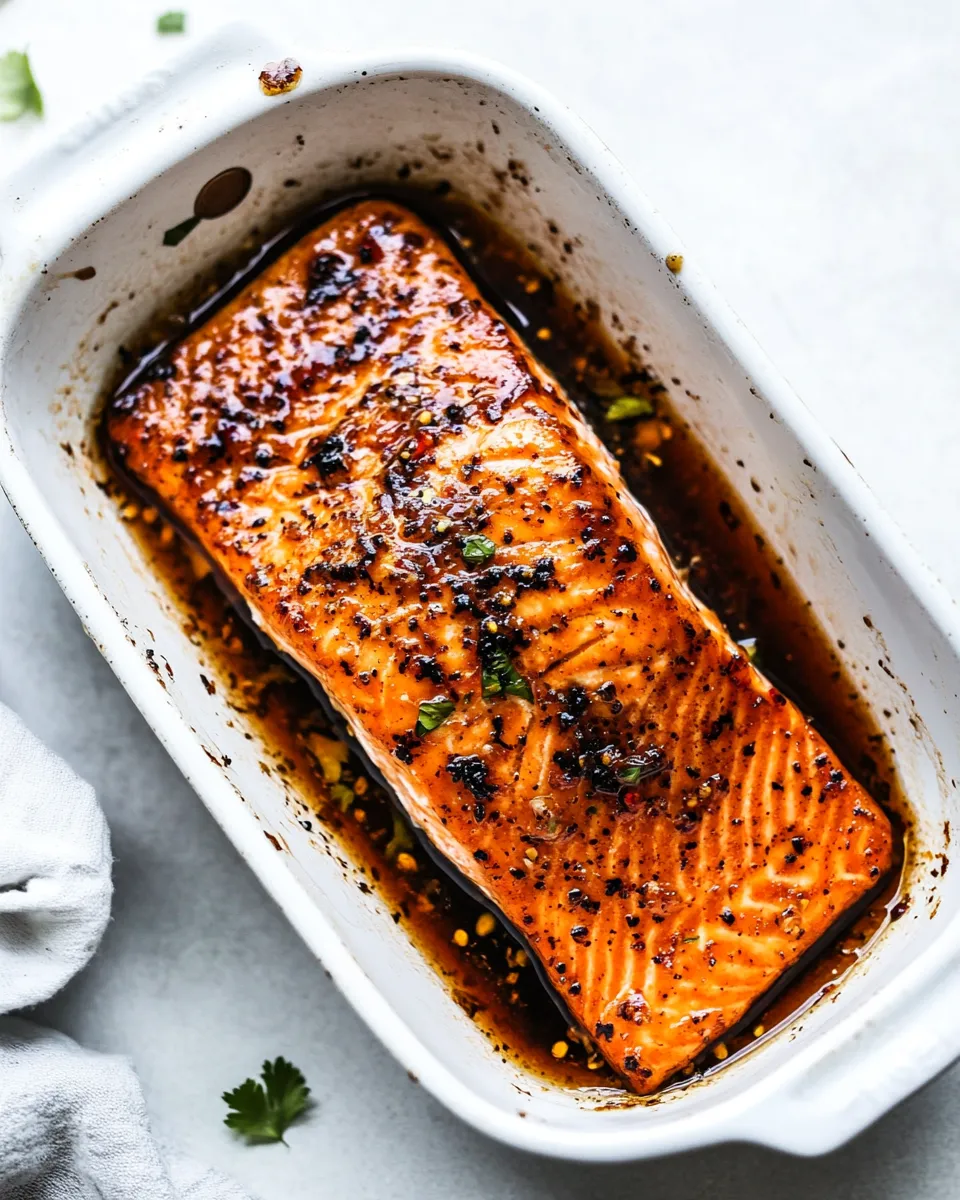
Salmon Marinade
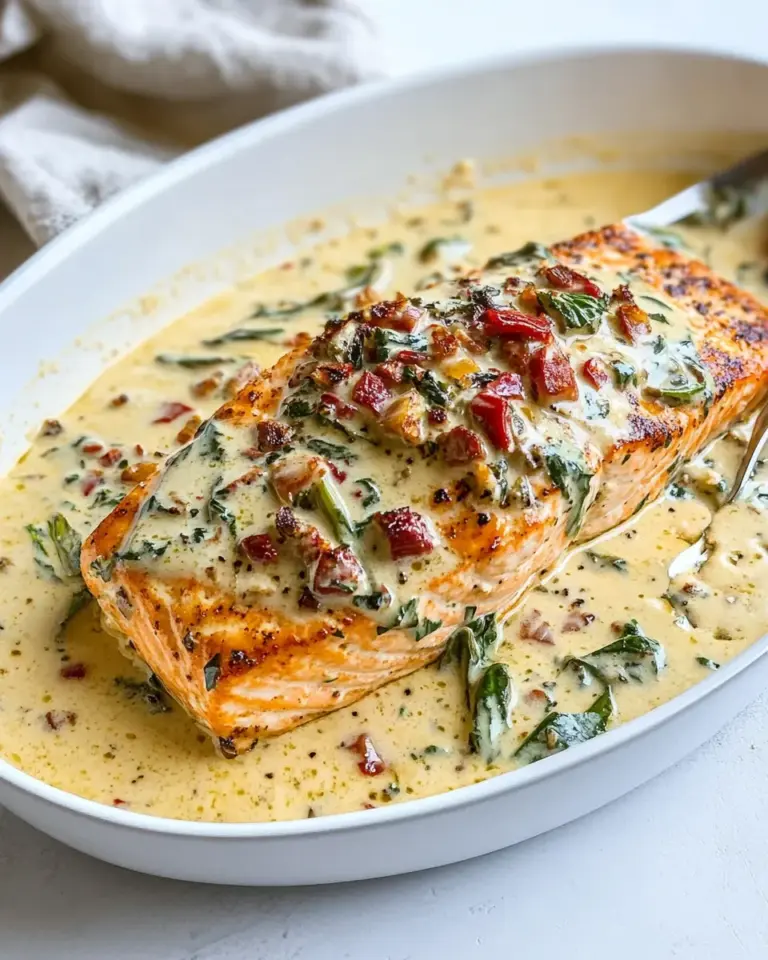
Bright, salty, and just sweet enough—this salmon marinade is one I reach for when I want reliable, flavorful fish with minimal fuss. It takes pantry staples and turns them into a glossy, savory glaze that penetrates the fish in under an hour. The balance of soy, lemon, honey, and garlic is classic for a reason: it amplifies salmon’s natural richness without overwhelming it.
I test variations frequently, but the version below is tuned for predictable results whether you grill, roast, pan-sear, or air-fry. The steps are straightforward, the timing is forgiving, and the ingredients are the sort you’ll find in most kitchens. Read through the notes and swap suggestions if you need to adapt for equipment, allergies, or taste preferences.
Before you start: plan for a short marinating window (30–60 minutes) so the fish keeps a pleasant texture. Also review the cooking options—temperature and finish times differ by method. I include clear, user-friendly instructions for each method so you can pick what works best for your day.
What Goes In
- 1 cup soy sauce — the salty backbone and primary flavor carrier; use low-sodium if you’re watching salt.
- 3 tablespoons lemon juice — adds brightness and a touch of acid to balance the soy and honey.
- 3 tablespoons extra virgin olive oil — helps the marinade cling to the fillets and promotes a glossy finish.
- 2 tablespoons honey — gives gentle sweetness that caramelizes slightly during cooking.
- 3 cloves garlic, minced — aromatic punch; mince finely so it disperses evenly in the marinade.
- 1 tablespoon fresh parsley, minced — fresh herb note and visual color; optional but recommended.
- 2–3 pounds fresh salmon — the protein; can be whole fillets, portions, or a side of salmon. Pat dry before marinating for best adhesion.
Salmon Marinade in Steps
- In a large bowl or a resealable plastic bag, combine 1 cup soy sauce, 3 tablespoons lemon juice, 3 tablespoons extra virgin olive oil, 2 tablespoons honey, 3 cloves garlic (minced), and 1 tablespoon fresh parsley (minced). Whisk or shake until the honey is incorporated and the mixture looks uniform.
- Add 2–3 pounds fresh salmon to the bowl or bag. Turn the fish gently so each piece is well coated in the marinade. If using a bag, press out excess air and seal; if using a bowl, cover tightly with plastic wrap or a lid.
- Marinate in the refrigerator for 30–60 minutes. Do not exceed 1 hour—fish proteins can break down and become mushy if left too long in acidic mixtures.
- Remove the salmon from the marinade and let any excess drip off. Discard the used marinade—do not reuse it as a sauce unless you boil it thoroughly first.
- Cook the salmon using one of the following methods and timings, checking that the internal temperature reaches 145°F (63°C) at the thickest part:
- Air fryer: Lightly spray the air fryer basket with pan spray and place salmon skin-side down. Cook at 400°F for 8–10 minutes, or until the fish reaches 145°F.
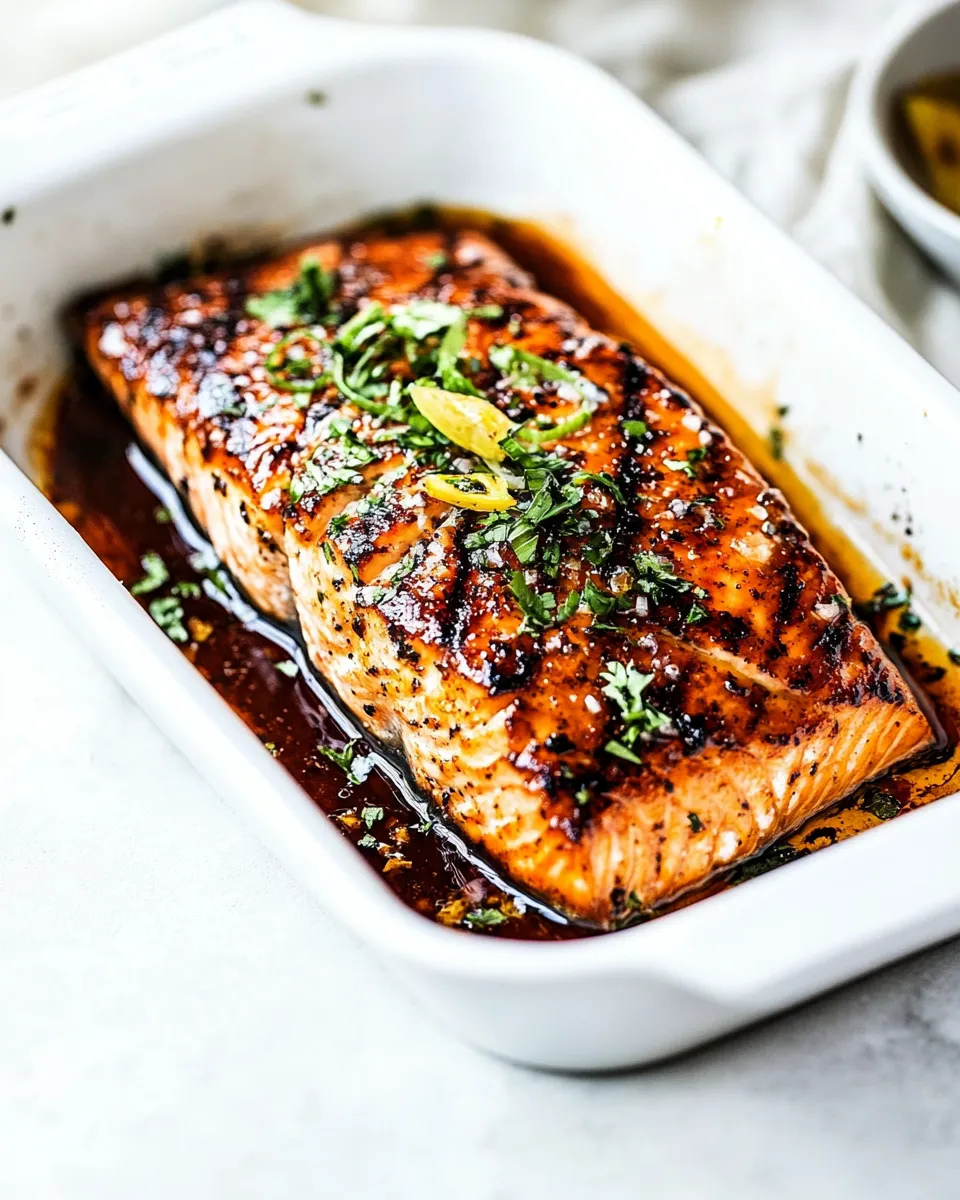
- Oven: Preheat the oven to 400°F. Line a baking sheet with parchment paper or nonstick foil. Place salmon skin-side down and bake for 8–10 minutes, or until it reaches 145°F.
- Skillet: Heat 1 tablespoon of olive oil in a large skillet over medium-high heat. Add the salmon skin-side up and sear for 4–5 minutes, then flip and cook skin-side down for an additional 3 minutes. Ensure the center reaches 145°F.
- Grill: Preheat the grill to 500°F and oil the grates (or brush/spray the fish with oil). Place salmon skin-side down and grill for 6–8 minutes. When the fillet releases easily, flip and cook over indirect heat for 2–4 minutes, until it reaches 145°F.
- Rest the cooked salmon for 2–3 minutes before serving to let the juices redistribute.
What You’ll Love About This Recipe
- Fast: The marinade needs only 30–60 minutes, so it’s great for weeknights.
- Versatile: Works with air fryer, oven, skillet, or grill with predictable outcomes.
- Balanced flavor: Soy and lemon provide savory brightness, honey adds gentle caramelization, and garlic/parsley round it out.
- Scale-friendly: Recipe proportions suit 2–3 pounds of salmon but can be scaled up or down while keeping ratios.
If You’re Out Of…
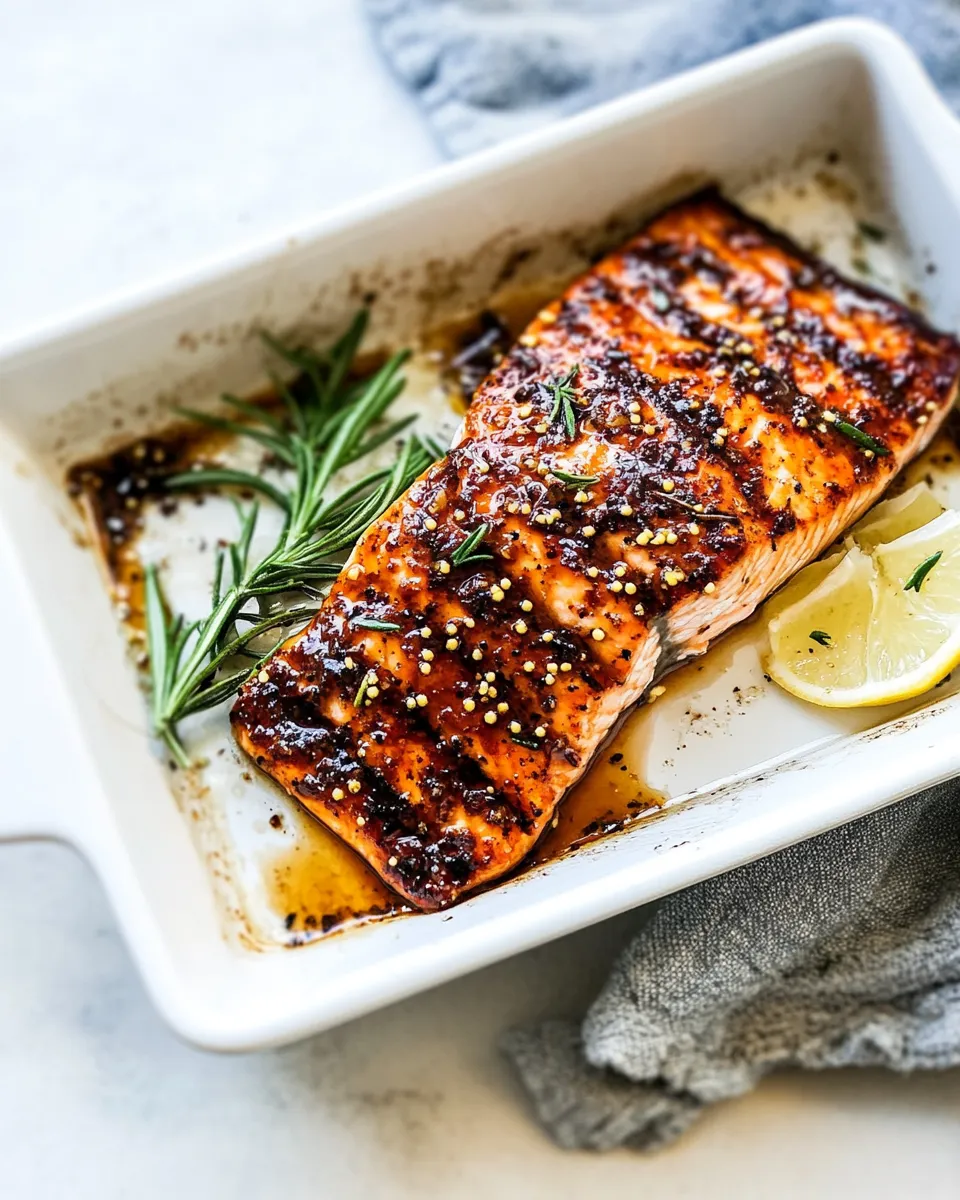
- If you’re out of soy sauce — use tamari for gluten-free, or a blend of 3/4 cup Worcestershire + 1/4 cup water in a pinch (note: flavor will change).
- If you’re out of lemon juice — 1 tablespoon white wine vinegar + 2 tablespoons water can stand in for acidity, but use sparingly.
- If you’re out of honey — swap with 2 tablespoons maple syrup or agave for a similar sweetness and glaze.
- If you’re out of fresh parsley — substitute 1 teaspoon dried parsley or a tablespoon of chopped chives for a fresh hit.
Equipment at a Glance
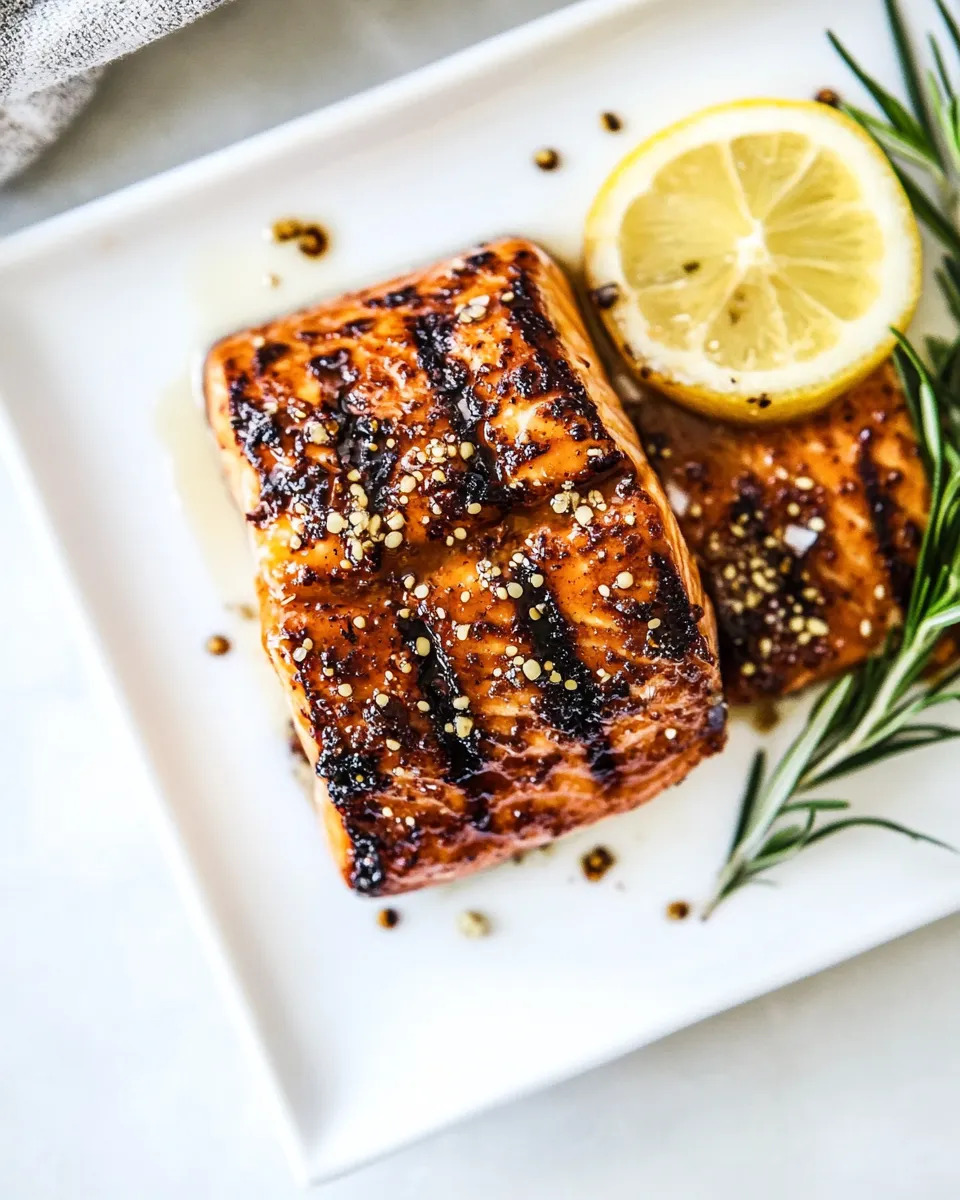
- Large resealable bag or bowl — for marinating evenly.
- Measuring spoons and cup — to keep ratios accurate.
- Air fryer, oven, skillet, or grill — any will work; choose based on time and texture preference.
- Instant-read thermometer — optional but recommended to confirm 145°F for safe, perfectly cooked salmon.
Mistakes That Ruin Salmon Marinade
- Marinating too long — acid breaks down delicate fish; keep it under 1 hour to avoid mushy texture.
- Using too much heat too long — salmon dries out quickly. Stick to the recommended times and check internal temp.
- Not patting fish dry before cooking — excess marinade left on the surface can prevent browning and cause steaming instead of searing.
- Reusing raw marinade as sauce — it contains raw fish juices; always discard or boil it thoroughly before using as a sauce.
Allergy-Friendly Swaps
- Soy allergy — use coconut aminos (similar flavor with lower sodium) in a 1:1 swap.
- Honey allergy — use maple syrup or agave nectar in the same amount (2 tablespoons).
- Olive oil sensitivity — use a neutral oil like avocado or grapeseed oil (same amount).
- Garlic allergy — omit garlic and increase parsley to 2 tablespoons or add 1 teaspoon grated ginger for aromatic flavor.
Author’s Commentary
I keep this marinade in my weeknight rotation because it’s forgiving and versatile. The soy-lemon-honey combo is simple but effective—salmon responds beautifully to those contrasts. I’ve tested it across methods and the timings listed give a consistently moist, nicely caramelized result without guesswork.
If you prefer a more pronounced glaze, transfer a couple of tablespoons of the reserved marinade (before adding raw fish) to a small saucepan and reduce it briefly over medium heat until slightly syrupy. Brush that onto the salmon in the last minute of cooking. Otherwise, the straightforward marinade creates enough flavor on its own.
Storage Pro Tips
- Store leftover cooked salmon in an airtight container in the fridge for up to 3 days. Reheat gently to avoid drying—cover and warm at low heat.
- Do not keep raw salmon marinating longer than 1 hour; if you must prep earlier, hold the un-marinated fish refrigerated and combine closer to cooking time.
- Leftover unused marinade (never one that contacted raw fish) can be refrigerated for up to 3 days for use as a dressing. If marinade touched raw fish, discard or boil for several minutes before using.
Common Qs About Salmon Marinade
- Can I marinate salmon overnight? No. Because of the acidity and delicate texture, keep marinating to 30–60 minutes to prevent the flesh from becoming mushy.
- Can I use this for frozen salmon? Thaw fully in the refrigerator before marinating so the flavors penetrate evenly.
- Is 145°F necessary? 145°F is the USDA recommended safe internal temperature for fish. If you prefer medium-rare texture, cook to a slightly lower temp and be aware of the tradeoff in food safety.
- Can I double the marinade? Yes—scale the liquids and aromatics proportionally if you’re cooking more fish. Keep the marinating time the same.
See You at the Table
Give this marinade a try when you want dependable flavor and quick prep. It’s flexible enough to suit busy nights and simple enough to be elevated for guests. Let me know how you cooked it and what sides you served—salmon plays well with roasted vegetables, a crisp salad, or rice pilaf. Happy cooking, and see you at the table soon.
Salmon Marinade
Ingredients
- 1 cup soy sauce
- 3 tablespoons lemon juice
- 3 tablespoons extra virgin olive oil
- 2 tablespoons honey
- 3 cloves garlic minced
- 1 tablespoon fresh parsley minced
- 2-3 pounds fresh salmon
Instructions
- In a large bowl or large zip-top bag, whisk together 1 cup soy sauce, 3 tablespoons lemon juice, 3 tablespoons extra virgin olive oil, 2 tablespoons honey, 3 minced garlic cloves, and 1 tablespoon minced fresh parsley until combined.
- Add 2–3 pounds fresh salmon to the marinade, ensuring the fish is fully coated and covered.
- Seal the bag or cover the bowl and refrigerate; marinate for 30–60 minutes but no longer than 60 minutes to avoid fish breakdown.
- Choose a cooking method: air fryer, oven, skillet, or grill, and prepare the cooking surface as described below.
- Air fryer: Spray the basket with pan spray and place salmon skin-side down; cook at 400°F for 8–10 minutes or until the internal temperature reaches 145°F.
- Oven: Preheat oven to 400°F and line a baking sheet with parchment or nonstick foil; place salmon skin-side down and bake 8–10 minutes or until it reaches 145°F.
- Skillet: Heat 1 tablespoon olive oil in a large skillet over medium-high heat. Add salmon skin-side up and sear 4–5 minutes, flip, then cook an additional 3 minutes or until cooked through.
- Grill: Preheat grill to 500°F and oil the grates. Place salmon skin-side down and grill 6–8 minutes, then flip and cook over indirect heat 2–4 minutes or until it reaches 145°F.
Equipment
- large zip-top bag or large bowl
- Measuring cups and spoons
- Knife
- Cutting Board
- air fryer, oven, skillet, or grill
Notes
- Do not marinate the salmon longer than 60 minutes to prevent mushy texture.
- Pat salmon dry before cooking for better sear if using skillet or grill.
- Use a food thermometer to confirm salmon reaches 145°F.