Please share this post with your friends 🤗
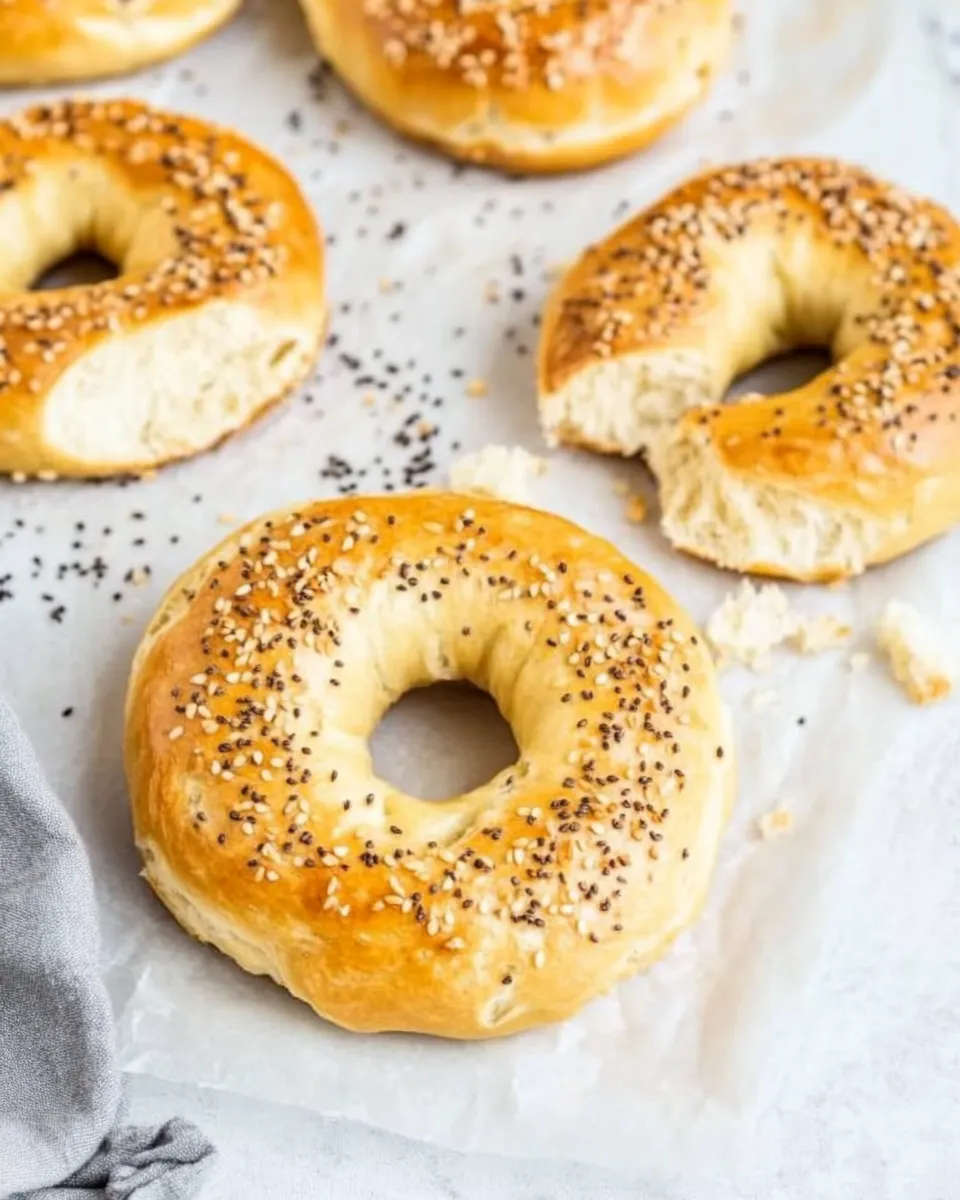
Light, chewy, and surprisingly satisfying—these Low Calorie Bagels are my go-to when I want something comforting without the extra calories. They use just a few pantry staples and come together in under an hour. The texture is close to a classic bagel: a slightly crisp exterior with a tender, chewy interior.
No need for boiling or long rises. This recipe relies on non-fat Greek yogurt and self-rising flour to create structure and lift, so it’s forgiving and perfect for a busy morning or an easy weekend bake. I keep the toppings simple—sesame seeds are my favorite—but you can change them up to suit your mood.
If you’ve tried dense or crumbly yogurt-based breads before, this method helps avoid that by using gentle handling and a quick bake that keeps the crumb moist. Below you’ll find a clear shopping list, precise steps, troubleshooting tips, and ideas for seasonal variations.
Whether you want a lower-calorie breakfast sandwich, a snack with cream cheese, or a base for avocado toast, these bagels will do the job without overcomplicating things.
What to Buy
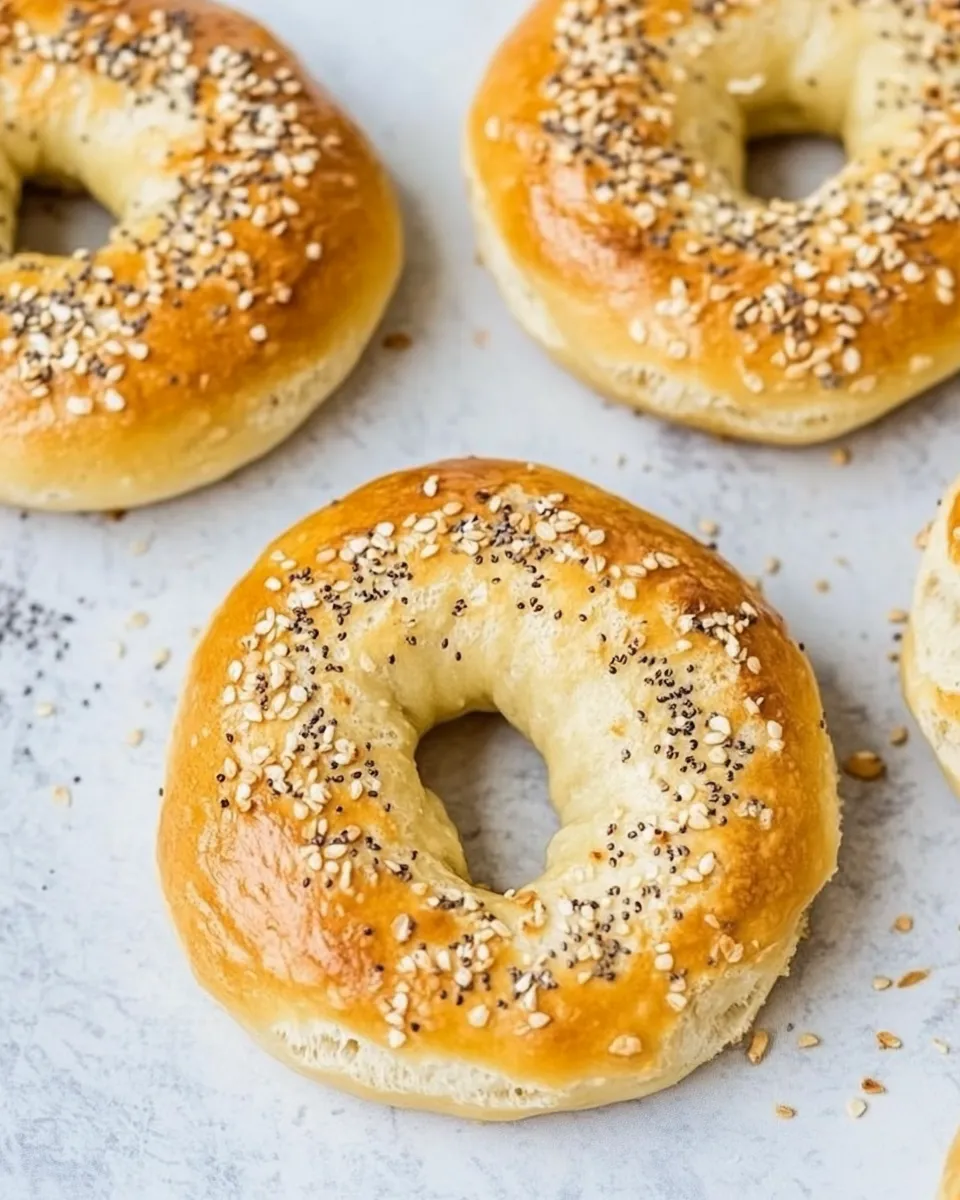
1 cup Non fat Greek Yogurt — provides moisture, tang, and protein while keeping calories low.
1 cup self rising flour — contains the leavening so the dough rises without extra baking powder/soda.
1/4 teaspoon salt — balances flavor; don’t skip.
1 tablespoon light butter (optional) — brushed on top for color and a touch of richness; can be skipped for even lower calories.
2 tablespoons sesame seeds — classic topping for crunch and flavor; substitute with poppy seeds, everything bagel seasoning, or omit.
Make Low Calorie Bagels: A Simple Method
Preheat and prepare — Preheat the oven to 180°C/350°F. Line a large baking sheet with parchment paper and set it aside so it’s ready when the bagels are shaped.
Mix the dough — In a large mixing bowl, combine 1 cup self rising flour, 1 cup non fat Greek yogurt, and 1/4 teaspoon salt. Stir with a spatula until the mixture starts to come together into a thick, slightly sticky dough.
Form a smooth ball — Use your hands to bring the dough together into a smooth ball. If it sticks excessively, dust your hands lightly with a small amount of flour, but avoid adding more flour to the dough itself.
Divide the dough — Lightly flour a clean kitchen surface. Transfer the dough to the surface and divide it into either 8 large portions or 12 small portions, depending on the size you prefer.
Shape each bagel — For each portion, roll it into a short “hot dog” shape with your hands. Then bring the two ends together and pinch to seal, forming a ring. Gently smooth the seam so the bagel looks neat. Repeat for all portions and place them on the prepared baking sheet, spaced comfortably apart.
Top the bagels — If using, melt 1 tablespoon light butter and brush the tops of each bagel lightly. Sprinkle each bagel with the 2 tablespoons sesame seeds or your chosen topping so they adhere to the surface.
Bake — Bake the bagels in the preheated oven for 15–20 minutes, or until the tops are golden brown. Exact time depends on size and your oven; check at 15 minutes for the smaller batch.
Cool fully — Remove the bagels from the oven and allow them to cool completely on a wire rack before slicing in half and serving. Cooling helps set the interior and prevents tearing when you slice.
Why It’s My Go-To
These bagels hit a sweet spot: they’re low in calories, fast to make, and require minimal equipment. The ingredient list is short and pantry-friendly—no yeast, no long proofing, no special flours. For weekday breakfasts or quick sandwiches, they’re reliable and adaptable.
The dough is forgiving, so even first-timers can get good results. And because they use non-fat Greek yogurt, you get extra protein and a pleasant tang that mimics the flavor profile of traditional bagels without the heavy calorie load.
No-Store Runs Needed
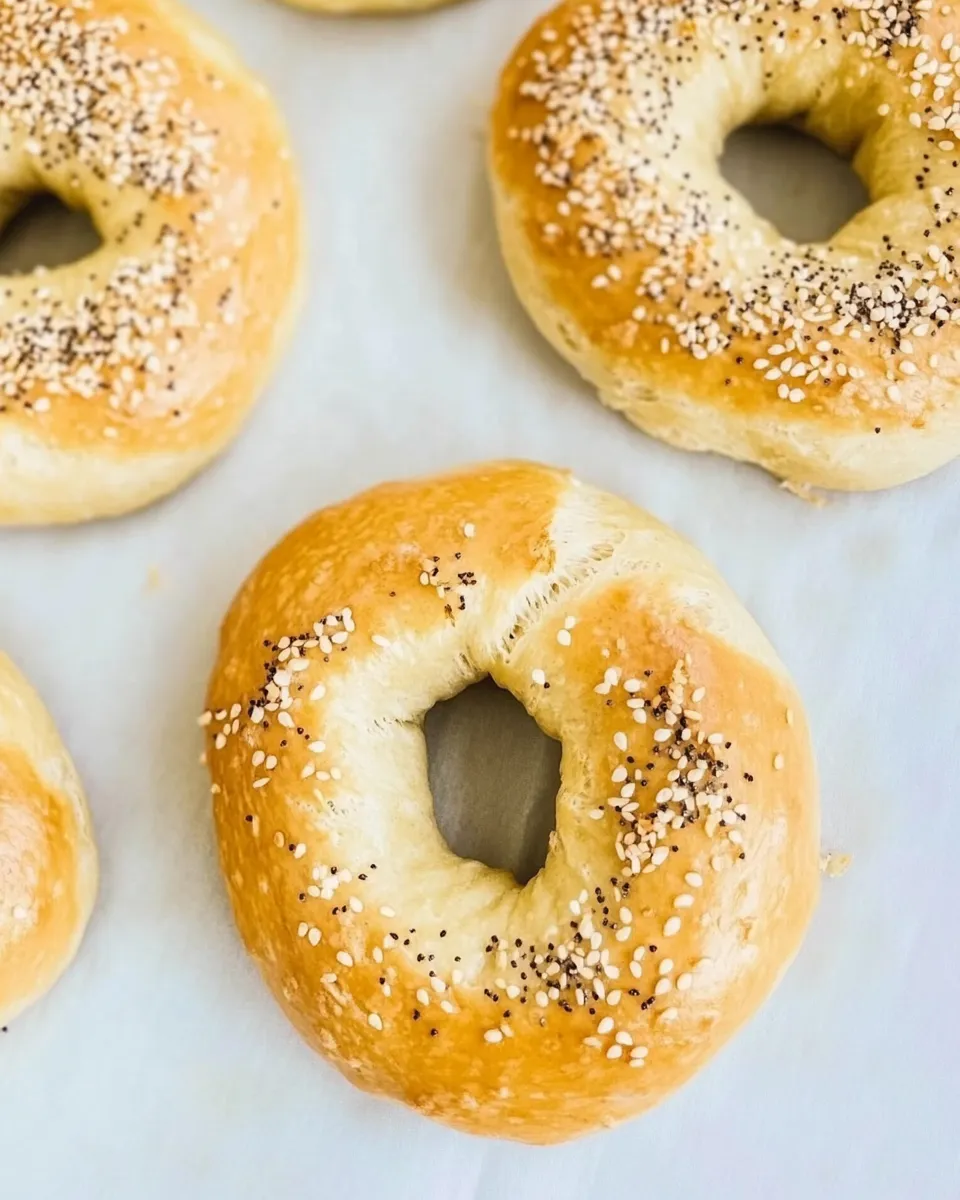
Yeast, specialty flours, or long-rising starters are not necessary here. If you keep self-rising flour and plain non-fat Greek yogurt in your kitchen, you can make these anytime. The optional light butter and sesame seeds are common pantry items, but the bagels are perfectly fine plain too.
If you don’t have self-rising flour, you could make a quick substitute (not included in the ingredients per your instruction), but the easiest path is to keep a bag on hand—one cup is all you need for this batch.
Essential Tools for Success
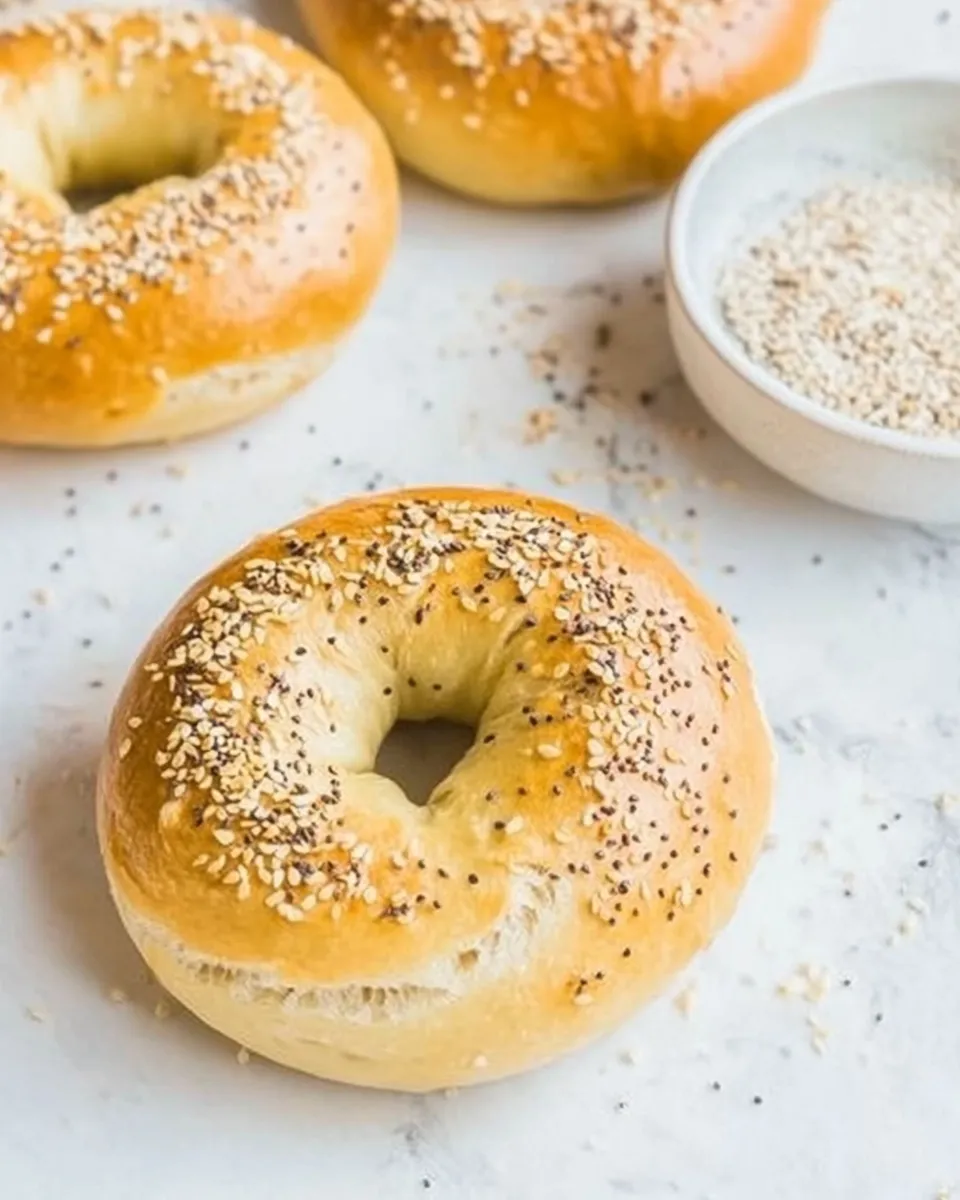
Large mixing bowl — room to mix and shape the dough.
Baking sheet and parchment paper — for an easy nonstick surface and even browning.
Measuring cups and spoons — accurate amounts keep the dough texture right.
Wire rack — critical for cooling so the bagels don’t steam and soften on the bottom.
Small pastry brush — useful for brushing the melted light butter on top (optional).
Watch Outs & How to Fix
Sticky dough
Problem — Dough sticking all over your hands and surface.
Fix — Lightly dust your hands and the work surface with a touch of flour. Work gently and avoid adding more flour directly into the dough, which can make bagels dry.
Bagels too dense
Problem — Texture ends up heavy rather than chewy.
Fix — Don’t overmix once the yogurt and flour are combined. Handle the dough gently when shaping so you don’t compress the structure you’ve built.
Tops not browning
Problem — Pale finished bagels.
Fix — Brush with the optional melted light butter before baking. If you skipped butter, an egg wash would brown them but that adds calories—so consider a light butter brush if you want color with minimal added fat.
Spring–Summer–Fall–Winter Ideas
Spring — Top with sesame seeds and add fresh radish slices and soft sheep’s milk cheese for a crisp seasonal bite.
Summer — Use everything bagel seasoning and fill with chilled cucumber, herby yogurt spread, and smoked salmon or a light tuna salad.
Fall — Sprinkle the bagels with za’atar or rosemary and pair with roasted squash and ricotta for a cozy twist.
Winter — Top with poppy seeds and serve warm with cinnamon-spiced apple compote and a smear of low-fat cream cheese.
What Could Go Wrong
Underbaked centers — If the bagels are pale but soft inside, bake a few minutes longer and check again. Oven temperatures vary; look for golden tops and a slightly firm feel when pressed gently.
Cracked or splitting tops — This can happen if the dough surface dries before baking. Work quickly after shaping and bake as soon as possible. Covering shaped bagels lightly can help if your kitchen is very dry.
Excessively crumbly crumb — Usually from too much flour or overbaking; reduce flour when mixing and watch the bake time closely.
Storage Pro Tips
Short-term (1–2 days) — Store cooled bagels in a paper bag inside a loosely closed plastic bag at room temperature to maintain a balance between crust and chew.
Refrigeration — Avoid refrigerating; it dries out baked goods faster. Instead, freeze for longer storage.
Freezing — Slice bagels and place parchment between slices in a freezer bag. Freeze up to 3 months. Toast or thaw slices directly from frozen for the best texture.
Common Questions
Can I use full-fat yogurt? — The recipe specifies non-fat Greek yogurt to keep calories low. Full-fat yogurt will work but will increase calories and change texture slightly.
Can I make these gluten-free? — This recipe relies on self-rising flour, so a gluten-free swap would require a dedicated self-rising gluten-free blend and might change the outcome. Not covered in this recipe.
Do I need to boil bagels first like traditional recipes? — No. This method skips boiling entirely and still yields a pleasant crust and chew thanks to the dough composition and baking approach.
Can I double the recipe? — Yes. Keep the same ratios and bake in batches on separate sheets or in separate oven racks, rotating halfway through if needed for even browning.
Before You Go
These Low Calorie Bagels are a simple, practical solution when you want something that tastes like a treat without the extra calories or fuss. Keep the method in your back pocket for quick breakfasts, easy sandwiches, or portable snacks. They’re small-batch friendly, adaptable, and forgiving.
Share how you top or fill yours—I love seeing simple swaps that make a recipe even better. Happy baking, and enjoy that first warm slice straight from the oven.
Low Calorie Bagels
Light, simple bagels made with nonfat Greek yogurt and self-rising flour for a quick low-calorie treat.
Prep Time5 minutes mins
Cook Time15 minutes mins
Total Time20 minutes mins
Servings: 8 servings
- 1 cup nonfat Greek yogurt
- 1 cup self-rising flour
- 1/4 teaspoon salt
- 1 tablespoon light butter optional, melted for brushing
- 2 tablespoons sesame seeds optional; see notes
Preheat the oven to 180°C (350°F) and line a large baking sheet with parchment paper.
In a large mixing bowl, combine 1 cup nonfat Greek yogurt, 1 cup self-rising flour, and 1/4 teaspoon salt; stir until a thick dough forms.
Lightly flour a work surface and turn the dough out onto it; shape into a smooth ball with your hands.
Divide the dough into 8 equal portions for large bagels (or 12 for small). Roll each portion into a log, then join the ends to form a ring-shaped bagel.
Place the formed bagels on the prepared baking sheet. Brush the tops with melted light butter, if using, and sprinkle with 2 tablespoons sesame seeds or other desired toppings.
Bake for 15–20 minutes, until the bagels are golden brown on top. Remove from the oven and let cool completely before slicing and serving.
- You can use dairy-free butter, almond milk, egg white, or cooking spray instead of melted butter.
- Store bagels in an airtight container in the refrigerator for up to one week.
- To freeze, place cooled, uncut bagels in a freezer bag for up to six months.
Please share this post with your friends 🤗