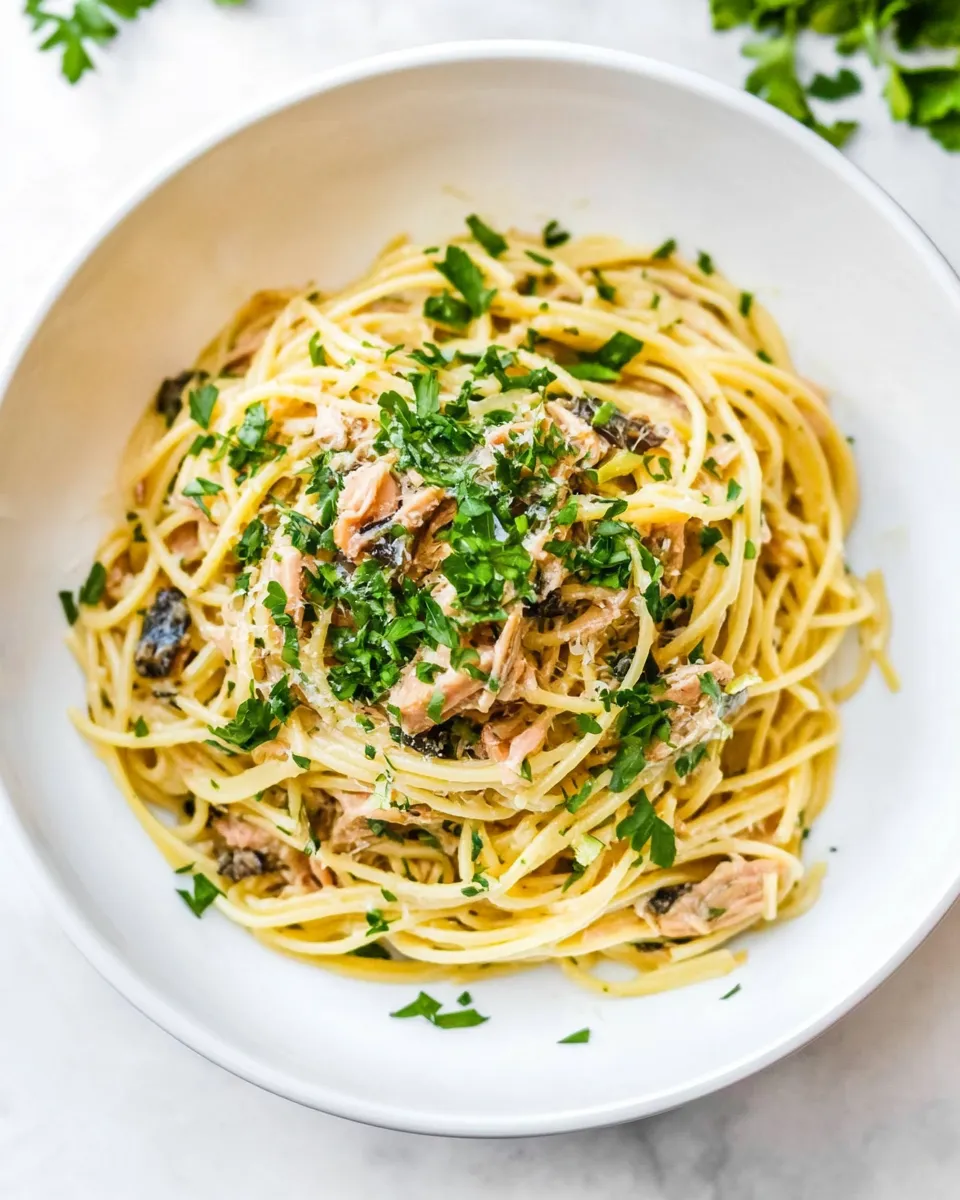
Tuna Pasta
This tuna pasta is the kind of weeknight meal that arrives at the table fast, tastes bright, and feels substantial without fuss. Whole wheat spaghetti gives it a nutty texture, canned tuna brings protein and convenience, and a few pantry staples—garlic, capers, lemon, and olive oil—create a savory sauce that clings to the strands. It’s honest food that comes together in about the time it takes to cook pasta.
I keep this recipe in heavy rotation when I want something reliable, flavorful, and not overcomplicated. The components are forgiving: reserve a little pasta water, taste as you go, and you’ll have a balanced dish every time. It also adapts easily if you want to stretch it for more people or tweak the flavor profile.
Below you’ll find a clear ingredients list with notes, step-by-step instructions, troubleshooting tips, and a few variations for holidays or crowds. Read through once, then cook once—this recipe is built to be practical and repeatable.
What’s in the Bowl
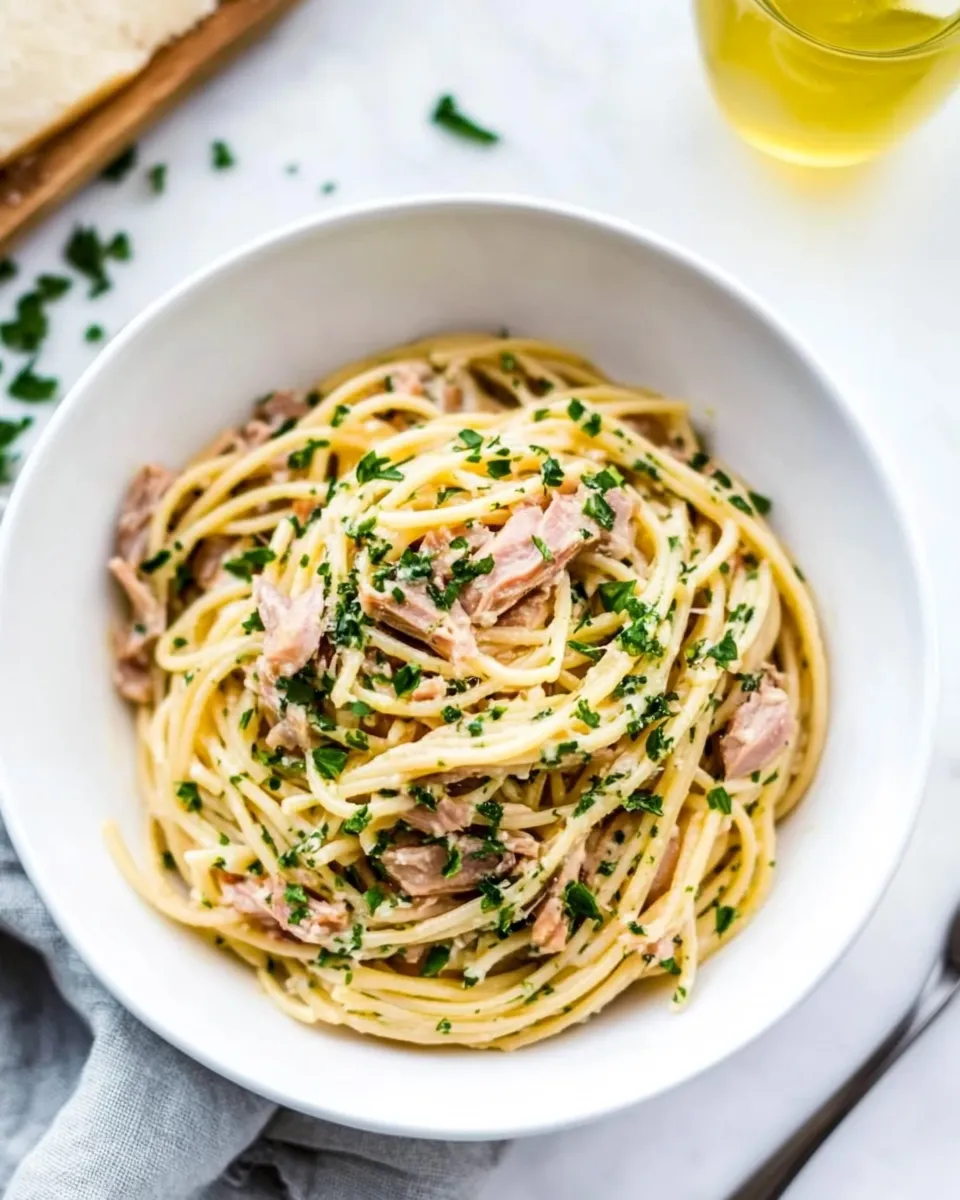
Ingredients
- 8 ounces whole wheat spaghetti — the base: hearty texture and nutty flavor that holds up to the tuna and lemon.
- 2 tablespoons olive oil — for sautéing garlic and giving the sauce a smooth mouthfeel.
- 4 cloves garlic, minced — provides savory aroma and depth; mince finely so it disperses through the pasta.
- 12 ounces canned tuna in water, drained — main protein; drain well to avoid watering down the sauce.
- 2 tablespoons capers, drained — bring briny, salty pops that brighten the dish.
- 1 tablespoon lemon juice — adds necessary acidity to balance oil and tuna.
- 1/2 to 2/3 cup pasta cooking water — starchy liquid to loosen and emulsify the sauce; reserve before draining.
- Salt to taste — adjust after mixing; remember capers add salt, so taste first.
- Black pepper to taste — fresh cracked if possible for better aroma.
- 2 tablespoons fresh parsley, chopped (plus more for garnish) — fresh herb lift and color.
- Shredded or grated Parmesan cheese for garnish — optional finish for richness and umami.
How to Prepare Tuna Pasta
- Fill a large pot with water, salt it generously (it should taste like the sea), and bring it to a rolling boil.
- Add 8 ounces whole wheat spaghetti and cook according to the package instructions until al dente. Before draining, scoop out and reserve 1/2 cup to 2/3 cup of the hot pasta cooking water; this starchy liquid will help bind the sauce.
- Drain the spaghetti and set it aside while you make the tuna mixture.
- Heat 2 tablespoons olive oil in a large skillet over medium heat. When the oil shimmers, add 4 cloves minced garlic and sauté, stirring, until fragrant and just golden—about 1 minute. Do not let the garlic brown too much.
- Add the drained 12 ounces canned tuna and 2 tablespoons drained capers to the skillet. Break the tuna into bite-sized pieces with a spatula and warm it through, stirring gently, for about 2 minutes.
- Pour in 1 tablespoon lemon juice and stir to combine. Cook for another 30 seconds so the flavors bloom.
- Add the cooked spaghetti to the skillet along with 1/2 cup of the reserved pasta water. Toss everything together so the pasta is evenly coated with the tuna mixture. If the sauce feels too tight, add the remaining pasta water (up to 2/3 cup) a little at a time until you reach the desired silkiness.
- Season with salt and black pepper to taste. Keep in mind the capers are salty, so taste before adding much salt.
- Stir in 2 tablespoons chopped fresh parsley to brighten the dish.
- Serve immediately, garnished with additional chopped parsley and shredded or grated Parmesan cheese if you like.
Why You’ll Love This Recipe
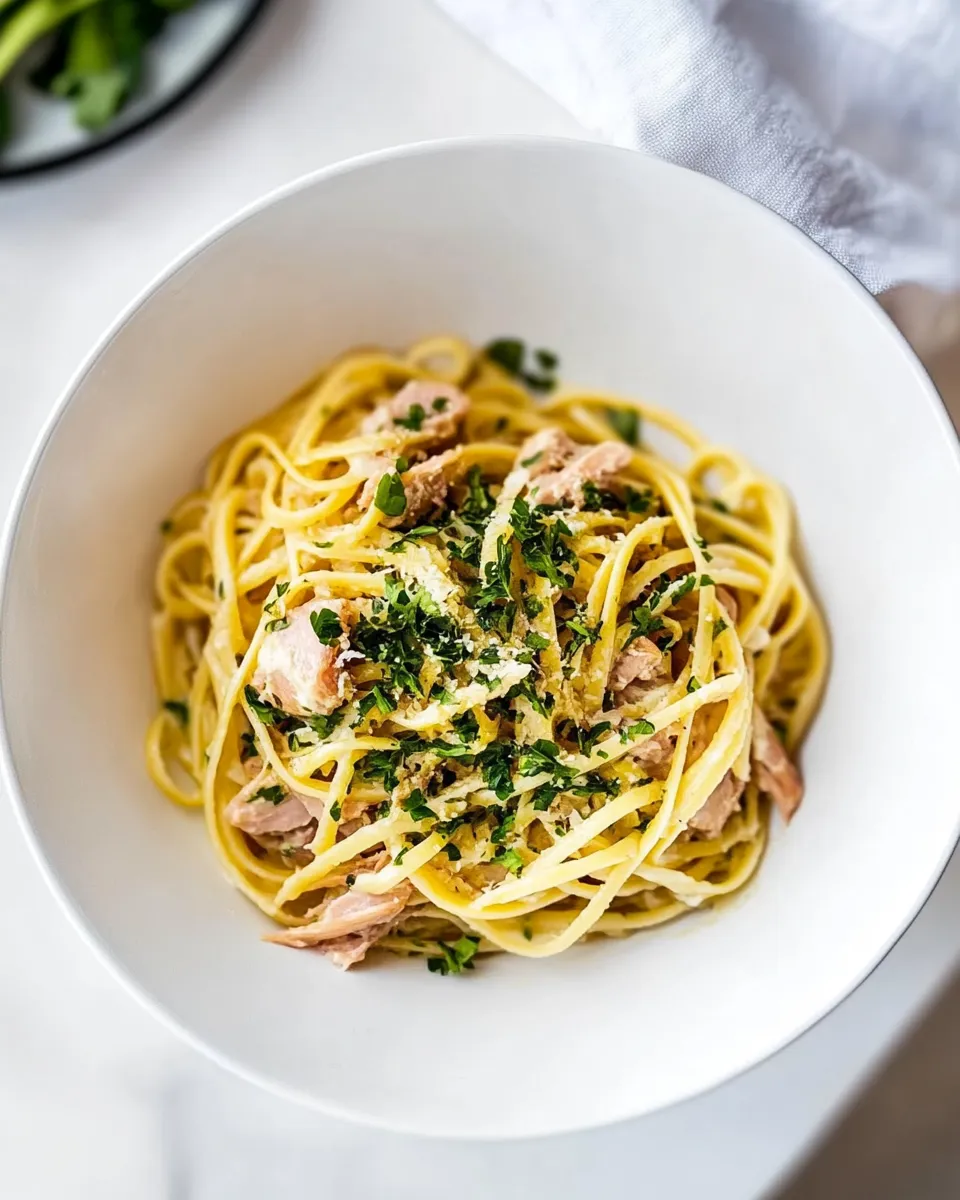
This is a pantry-friendly, fast dinner that doesn’t feel like pantry food. The whole wheat spaghetti gives a satisfying texture; tuna keeps it inexpensive and high in protein. Lemon and capers cut through the richness and keep every bite lively. It’s the kind of recipe that scales up for guests and scales down for quick solo meals.
It’s forgiving: timing is straightforward, and the reserved pasta water gives you control over the sauce. No heavy cream, no long simmer—just tidy technique and bright flavors.
Substitutions by Category
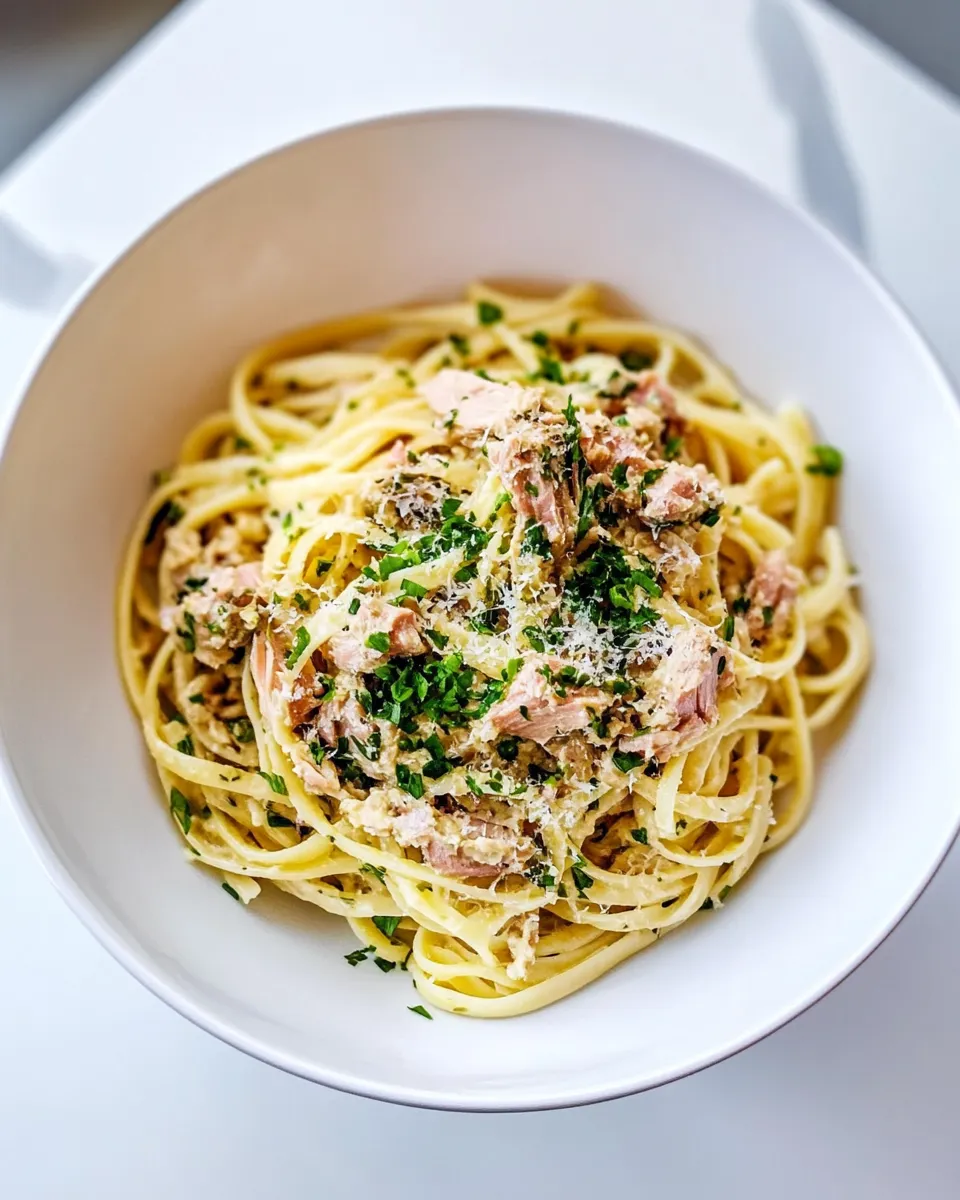
- Pasta: Swap the whole wheat spaghetti for regular spaghetti, linguine, or penne if you prefer a shorter shape.
- Oil & Fat: Use extra-virgin olive oil for more flavor or a tablespoon of butter at the end for extra silkiness.
- Tuna: If you prefer oil-packed tuna, drain and reduce the added oil in the skillet to compensate.
- Acid: Substitute lemon juice with a splash of white wine or a teaspoon of white wine vinegar in a pinch.
- Herbs: Parsley can be swapped for basil, chives, or a small handful of chopped arugula stirred in at the end.
- Saltiness: If you don’t have capers, use a few chopped green olives for a similar briny note.
Hardware & Gadgets
- Large pot — for boiling the pasta with plenty of space so it cooks evenly.
- Colander or spider skimmer — to drain pasta and reserve cooking water easily.
- Large skillet — wide surface area makes tossing pasta with the tuna mixture simple.
- Wooden spoon or heatproof spatula — for breaking up tuna and combining ingredients gently.
- Measuring cups and spoons — to portion pasta water and lemon juice accurately.
Problems & Prevention
- Problem: Pasta turns out gummy. Prevention: Use plenty of water, stir early, and don’t overcook—follow package times and aim for al dente.
- Problem: Sauce too thin or watery. Prevention: Add reserved pasta water gradually and let it reduce slightly in the skillet to concentrate flavors.
- Problem: Garlic burns. Prevention: Sauté garlic over medium heat and remove from direct heat if it starts to brown too quickly.
- Problem: Too salty. Prevention: Taste before salting—capers and Parmesan add salt, so add table salt sparingly.
- Problem: Tuna clumps into a single mass. Prevention: Break tuna into pieces while it warms and toss gently with the spaghetti to disperse it evenly.
Holiday-Friendly Variations
- Casual Family Dinner: Add a handful of frozen peas to the pasta water in the last minute of cooking for color and extra veg.
- Festive Upgrade: Fold in a few tablespoons of crème fraîche or mascarpone at the end and finish with toasted breadcrumbs for texture.
- Seafood Celebration: Add cooked shrimp or scallops alongside the tuna—heat through carefully so everything stays tender.
- Vegetarian Alternative: Replace tuna with a can of white beans (drained) and omit Parmesan for a plant-forward option.
Pro Tips & Notes
- Reserve more pasta water than you think you’ll need—starch equals silky sauce. Start with 1/2 cup and add up to 2/3 cup as needed.
- Drain canned tuna thoroughly. Excess water dilutes flavor and thins the sauce.
- Use fresh lemon juice rather than bottled for brighter acidity.
- Toast and grate your own Parmesan when possible—it melts and integrates more cleanly than pre-grated versions.
- Serve immediately. This dish is best fresh; the sauce can tighten as it cools.
How to Store & Reheat
- Refrigerator: Store leftovers in an airtight container for up to 3 days. Before sealing, cool to room temperature within two hours of cooking.
- Freezer: Not recommended—tuna pasta texture and whole wheat pasta suffer after freezing and thawing.
- Reheat: Gently rewarm on the stovetop in a skillet over low heat with a splash of water or olive oil to loosen the sauce. Microwave on medium power in a covered dish, stirring once or twice and adding a teaspoon or two of water as needed.
Tuna Pasta FAQs
- Can I use oil-packed tuna? Yes. If using oil-packed tuna, drain well and reduce added skillet oil slightly to avoid making the dish too oily.
- How can I make this less lemony? Start with half the lemon juice, taste, and add more if you want brighter acidity.
- Is whole wheat pasta necessary? No—regular pasta works fine. Whole wheat adds texture and a nuttier flavor, which I like here.
- Can I add vegetables? Absolutely. Quick-cooking options like spinach, peas, or halved cherry tomatoes can be added toward the end of cooking.
- How do I prevent the tuna from drying out? Warm the tuna only briefly in the skillet and finish by tossing it with the hot pasta and reserved water so it stays moist.
Wrap-Up
This Tuna Pasta is a practical weeknight hero—fast, flexible, and full of flavor. With simple pantry ingredients and one pot plus a skillet, you can put a satisfying meal on the table in under 30 minutes. Keep the basics in your pantry, follow the steps here, and you’ll have a bright, balanced plate every time.
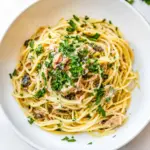
Tuna Pasta
Ingredients
- 8 ounces whole wheat spaghetti
- 2 tablespoons olive oil
- 4 cloves garlic minced
- 12 ounces canned tuna in water drained
- 2 tablespoons capers drained
- 1 tablespoon lemon juice
- 1/2 to 2/3 cup pasta cooking water
- salt to taste
- black pepper to taste
- 2 tablespoons fresh parsley chopped (plus more for garnish)
- Parmesan cheese shredded or grated, for garnish
Instructions
- Bring a large pot of salted water to a boil. Add the whole wheat spaghetti and cook according to package instructions until al dente, reserving 1/2 to 2/3 cup of the pasta cooking water before draining the pasta.
- While the pasta cooks, heat the olive oil in a skillet over medium heat.
- Add the minced garlic to the skillet and sauté until fragrant, about 1 minute—do not let it brown.
- Stir in the drained tuna, drained capers, and lemon juice, breaking up any large tuna pieces; cook until heated through, about 2 minutes.
- Add the cooked spaghetti to the skillet with about 1/2 cup of the reserved pasta water and toss to coat, adding up to 2/3 cup total if needed to loosen the sauce.
- Allow the pasta water to reduce slightly while tossing so the sauce clings to the pasta.
- Season with salt and black pepper to taste, stir in the chopped parsley, and adjust lemon juice if desired.
- Serve immediately, topped with shredded or grated Parmesan and additional parsley if using.
Equipment
- Large Pot
- Skillet
- Colander
- Tongs or pasta fork
Notes
- Reserve pasta water to adjust sauce consistency.
- Do not overcook the garlic to avoid bitterness.
- Use drained tuna to prevent the dish from becoming watery.
- Add lemon juice gradually to taste.