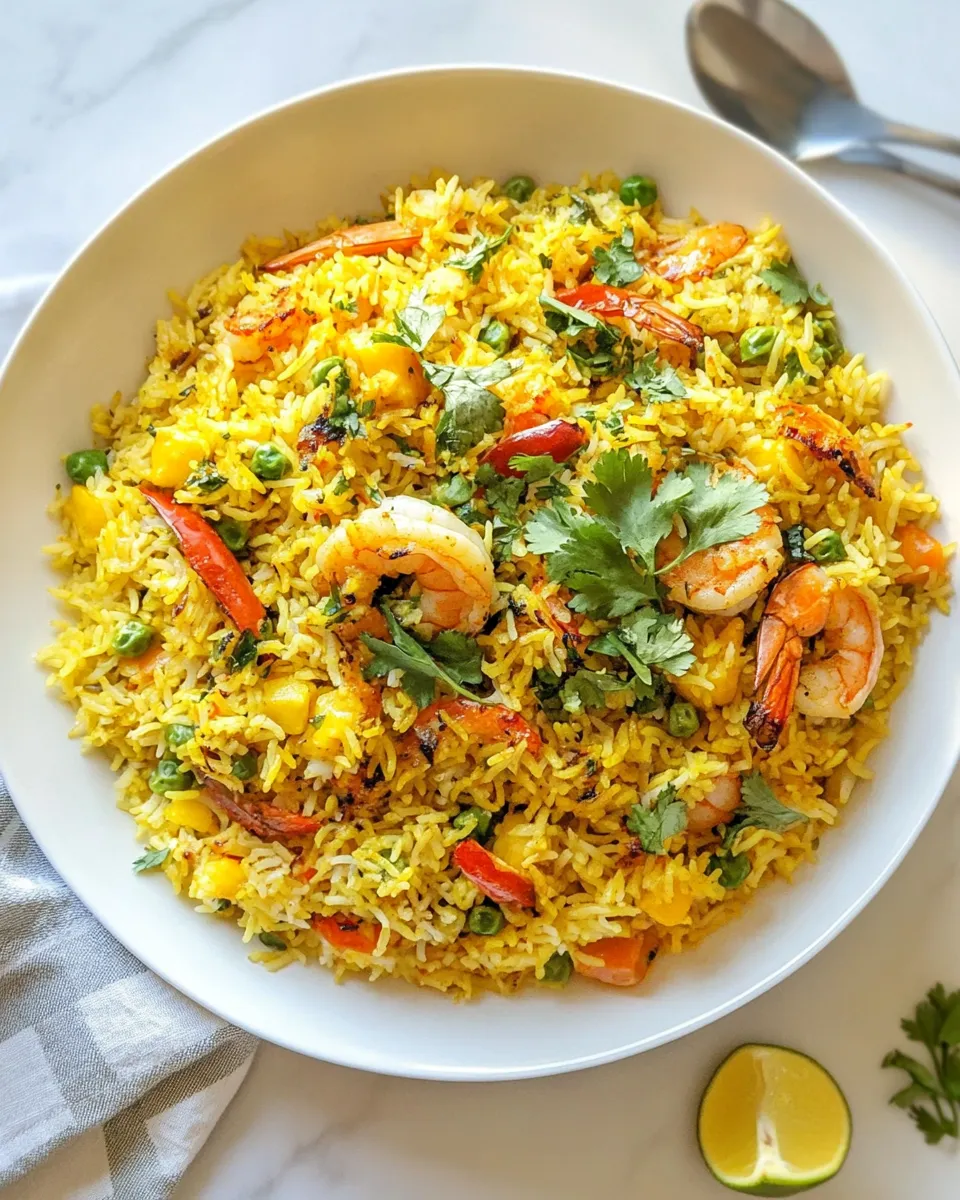
Indian Shrimp Biryani
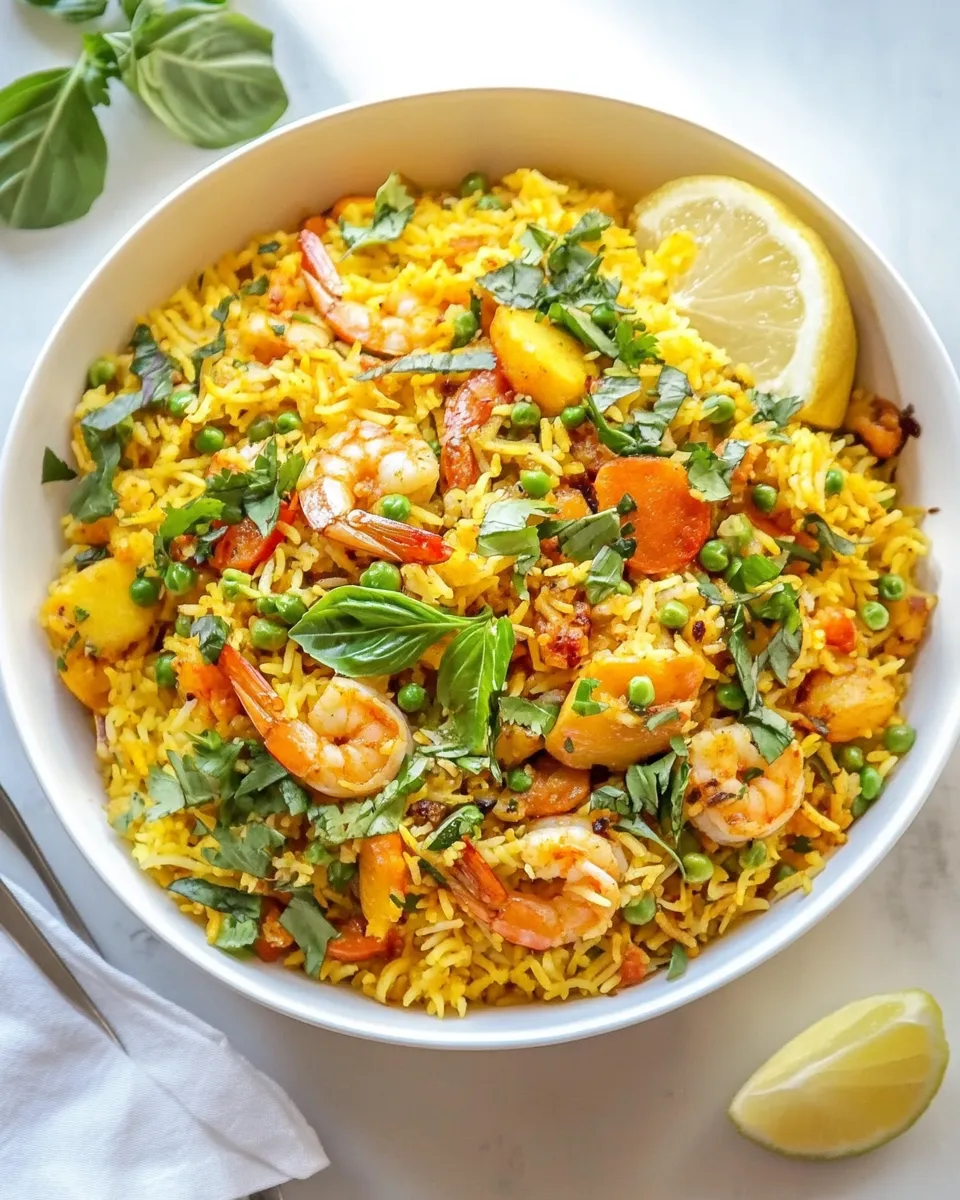
This shrimp biryani is a weeknight-friendly approach to a classic — fragrant basmati rice cooked with warm spices, plump shrimp, golden raisins and a cinnamon stick for depth. It’s built to be reliable: a single pot (or large skillet) method that layers flavors without fussy steps, and it finishes with bright lemon and optional pine nuts for texture.
I test this version often when I need something that feels special but comes together quickly. If you like bold spice aromatics without long marinating or multiple cooking stages, this one will be in your regular dinner rotation. There’s a Low-FODMAP note where onions and garlic are optional, and I include practical tips for preventing mushy rice and overcooked shrimp.
Ingredient Checklist
Stepwise Method: Indian Shrimp Biryani
1. Prep the rice: Rinse the 1 2/3 cups white basmati rice under cold water until the rinse water runs clear. Drain well and set aside to remove excess surface starch — this helps keep the grains separate.
2. Heat the oil and soften the onion: In a large stock pot or wide skillet, warm 2 tablespoons avocado oil over medium heat. Add the 1/2 chopped yellow onion (omit if making the Low-FODMAP version) and sauté, stirring frequently, until the onion is translucent, about 5 minutes.
3. Add the garlic (optional): Stir in the 3 minced garlic cloves and continue sautéing for 2 minutes, until fragrant. If you are preparing the Low-FODMAP version, skip this step and proceed to the next one.
4. Build the spiced broth: To the pot, add the drained basmati rice, 3 1/2 cups chicken broth, 1 teaspoon ground turmeric, 1 teaspoon ground cumin, 1 teaspoon ground ginger, 1 teaspoon dried thyme, the 1 cinnamon stick, 1 teaspoon sea salt, and 1/3 cup golden raisins. Stir everything well so the rice and raisins are evenly distributed and the spices are mixed into the liquid.
5. Bring to a boil and cover: Increase heat to bring the pot to a full boil. Once boiling, give it a final stir, then cover the pot with a tight-fitting lid.
6. Add the raw shrimp: Add the 1 pound raw, peeled and de-veined shrimp to the pot and gently stir to tuck them into the rice mixture so they’re distributed across the surface.
7. Simmer on low, covered: Reduce the heat to low immediately after adding the shrimp so the pot maintains a gentle simmer under the lid. Keep the pot covered and cook for 20 minutes. During this time the rice will absorb the broth and the shrimp will steam through.
8. Check doneness and rest: After 20 minutes, lift the lid and check that the rice has absorbed the liquid and is tender. The shrimp should be opaque and firm (not rubbery). If there’s still excess liquid, return the lid and let it sit off-heat for 5 minutes with the residual steam, or cook an additional 1–2 minutes on very low heat until done.
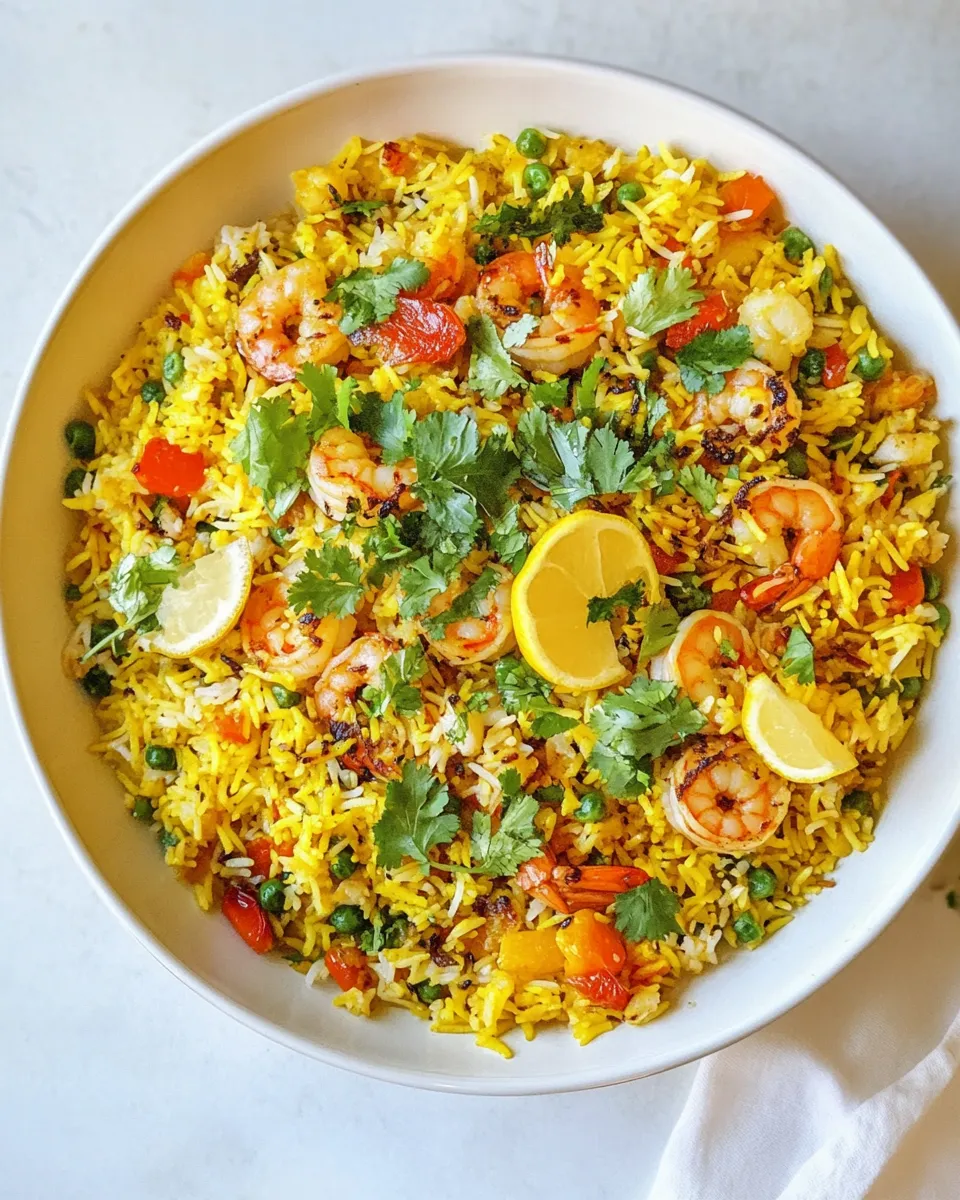
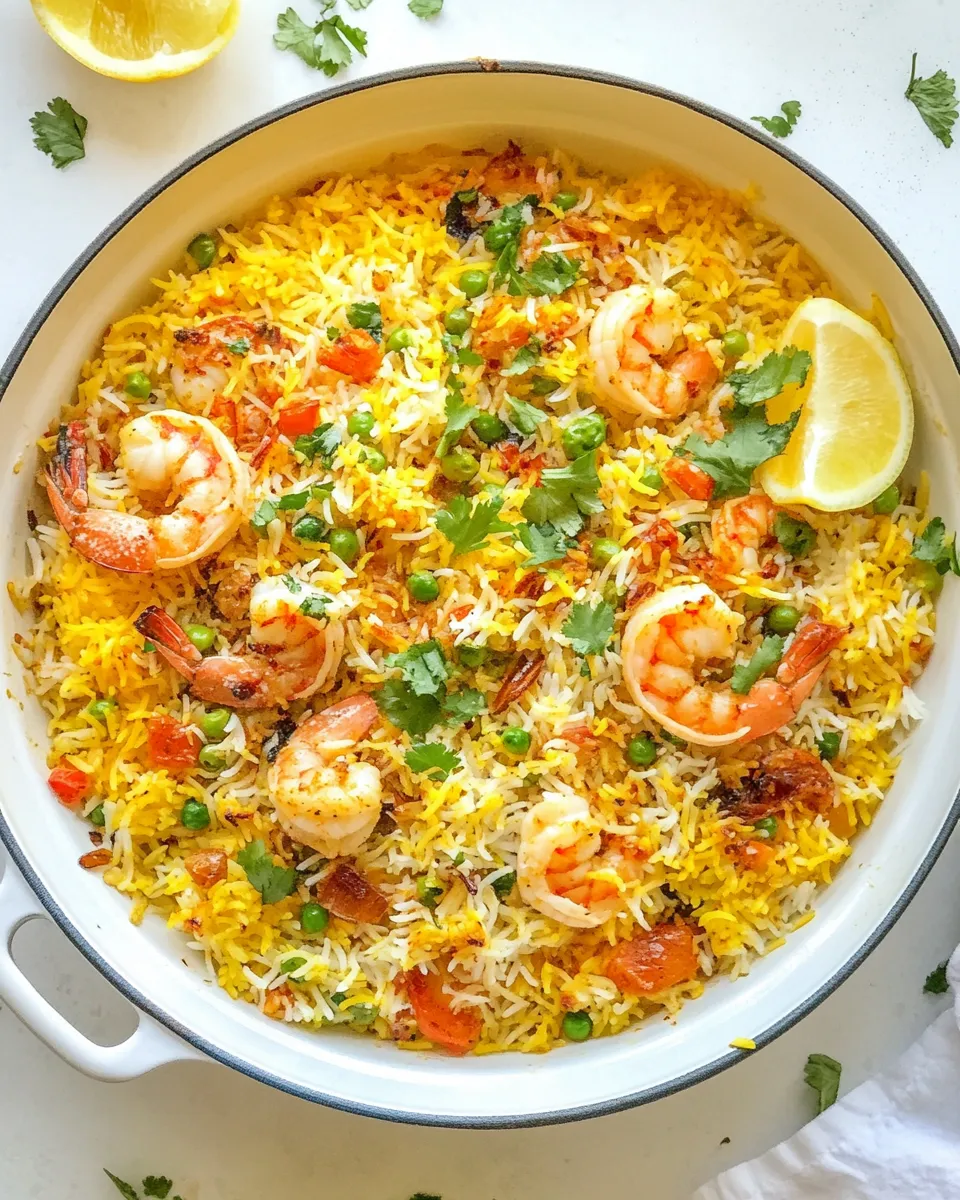
9. Finish and garnish: Remove the cinnamon stick. Serve the biryani hot, topped with fresh basil leaves (or cilantro if you prefer), lemon wedges for squeezing, and the 1/4 cup toasted pine nuts if using.
What Sets This Recipe Apart
– One-pot simplicity: Rice and shrimp cook together, cutting down on pots and timing headaches.
– Shrimp-first finish: Adding raw shrimp to cook in the rice liquid keeps the protein tender and infused with spice.
– Raisins for balance: Golden raisins give small sweet bursts that balance turmeric and cumin without needing chutney.
– Mild herb use: Dried thyme and a cinnamon stick provide subtle complexity suited to seafood, avoiding overpowering garam masala levels so the shrimp remains the star.
No-Store Runs Needed
– Use pantry basics: Turmeric, cumin, ground ginger, dried thyme, and a cinnamon stick are common pantry spices; you likely have substitutes like ground coriander or a bay leaf if needed.
– Swap the broth: If you’re out of chicken broth, use water with a bouillon cube or vegetable broth. Adjust salt after tasting.
– No fresh herbs? A squeeze of lemon alone brightens the dish; dried parsley or fennel fronds work in a pinch.
– No pine nuts? Toasted almonds or sunflower seeds add crunch and are usually on hand.
Tools & Equipment Needed
Common Errors (and Fixes)
– Error: Mushy rice. Fix: Rinse rice thoroughly and measure 1 2/3 cups rice to 3 1/2 cups liquid precisely. Keep the heat low once covered; a vigorous boil breaks grains down.
– Error: Overcooked rubbery shrimp. Fix: Use raw shrimp as written and add them right before the low simmer; cook only 20 minutes total. If shrimp are large, check early — they cook quickly.
– Error: Undersalted or flat flavor. Fix: Taste the broth before adding the shrimp (if you’re comfortable) and adjust salt, or add a squeeze of lemon at the end to lift flavors.
– Error: Stuck rice on the bottom. Fix: Use a heavy-bottomed pot and don’t crank the heat. If some sticking happens, soak the pot after serving to loosen residue.
In-Season Flavor Ideas
Spring
Summer
Fall/Winter
Flavor Logic
The spices here are intentionally restrained to complement shrimp. Turmeric gives color and a slightly bitter warmth, cumin adds earthiness, and ground ginger brings subtle heat without overpowering. Dried thyme pairs with seafood more gently than heavier garam masala blends. The cinnamon stick infuses a rounded sweetness across the rice while the golden raisins accentuate that profile with occasional bright bites. Lemon and fresh herbs at the end cut through the richness and refresh the palate.
Leftovers & Meal Prep
– Refrigerator: Store cooled biryani in an airtight container for up to 3 days. Shrimp is delicate, so consume sooner rather than later.
– Reheating: Reheat gently with a splash of water or broth in a covered skillet over low heat or in the microwave with a damp paper towel to restore steam and prevent drying.
– Freezing: I don’t recommend freezing this version because shrimp can become rubbery after freezing and reheating. If you must, freeze only for up to 1 month and expect texture changes.
– Meal prep tip: Cook rice and shrimp fresh when possible. For make-ahead meals, cook the rice and store separately from quickly sautéed shrimp; combine and rewarm just before serving.
Helpful Q&A
Q: Can I use frozen shrimp?
A: Yes. Thaw completely and pat dry before adding. If still very cold, the cooking time may be slightly longer — check for opaque, firm shrimp.
Q: Can I substitute brown basmati?
A: Brown rice requires more liquid and a longer cooking time — this recipe’s liquid ratio and 20-minute cook time are for white basmati only.
Q: What if my rice is still crunchy after 20 minutes?
A: If there’s little liquid left, cover and let it rest off the heat for 5–10 minutes. If liquid remains, add a few tablespoons, cover, and simmer 1–2 more minutes.
Q: Is this authentic biryani?
A: This is a simplified, single-pot interpretation inspired by biryani flavors and technique — designed for ease and weeknight practicality rather than multi-step layered authenticity.
Q: Any swaps for chicken broth?
A: Vegetable broth or water with a bouillon cube works; adjust salt accordingly.
The Takeaway
This Indian Shrimp Biryani keeps things practical without sacrificing flavor: basmati rice cooks with warm spices, a cinnamon stick, and golden raisins while raw shrimp steam to tender perfection. It’s a forgiving, single-pot dinner that works for busy evenings, with simple tweaks for dietary needs and pantry substitutions. Serve with lemon wedges and toasted pine nuts for a quick, restaurant-style finish that feels special but takes minimal fuss.

Indian Shrimp Biryani
Ingredients
- 2 tbsp avocado oil
- 1/2 cup yellow onion chopped (omit for Low-FODMAP)
- 3 cloves garlic minced (omit for Low-FODMAP)
- 1 2/3 cup white basmati rice
- 3 1/2 cup chicken broth
- 1 tsp ground turmeric
- 1 tsp ground cumin
- 1 tsp ground ginger
- 1 tsp dried thyme
- 1 cinnamon stick
- 1 tsp sea salt to taste
- 1/3 cup golden raisins
- 1 lb raw shrimp peeled and deveined
- 1/4 cup pine nuts toasted, optional
Instructions
- Heat the avocado oil in a large skillet or stock pot over medium heat.
- Add the chopped onion and sauté, stirring frequently, until translucent, about 5 minutes.
- Add the minced garlic and cook 1–2 minutes more, then stir to combine (omit garlic for Low-FODMAP).
- Add the basmati rice, chicken broth, turmeric, cumin, ground ginger, dried thyme, cinnamon stick, sea salt, and golden raisins to the pot; stir to combine and bring to a full boil.
- Add the raw shrimp, stir once to distribute, then cover the pot and reduce heat to low.
- Cook covered for 20 minutes, or until the rice has absorbed the liquid and the shrimp are opaque and cooked through.
- If using, toast pine nuts in a dry skillet over medium heat until golden and sprinkle on top before serving.
- Serve hot, removing the cinnamon stick before plating.
Equipment
- large skillet or stock pot
- Measuring cups and spoons
- spoon or spatula
- small bowl (optional for raisins)
- pan for toasting pine nuts (optional)
Notes
- Omit onion and garlic for a Low-FODMAP version.
- Adjust salt to taste.
- Toast pine nuts separately for best texture.