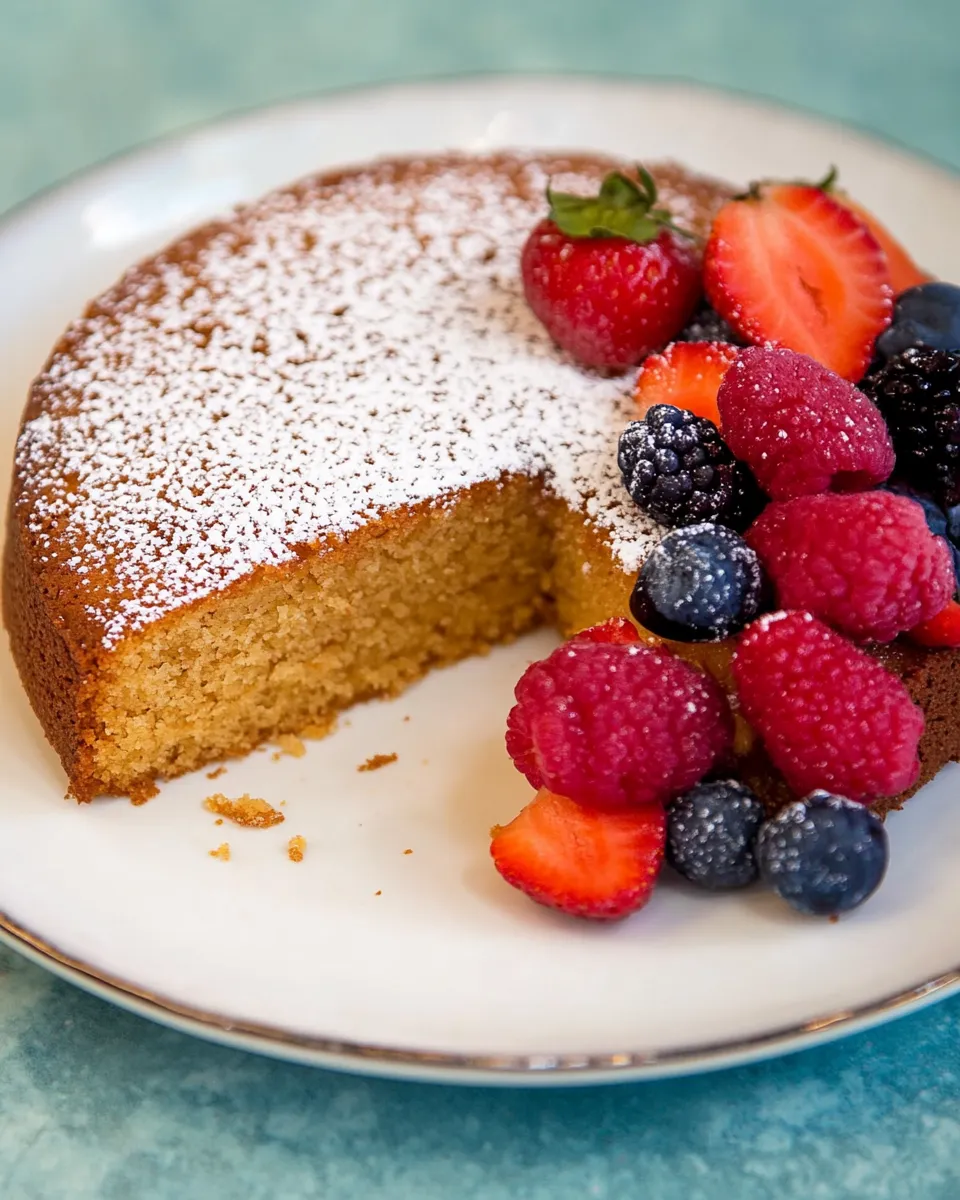
Almond Cake
This almond cake is a straightforward, reliable bake that sings of toasted nuts and butter. It’s the kind of recipe I reach for when I want something unfussy but special—the crumb is tender, the almond flavor comes from two sources (extract and ground almond flour), and the sliced almonds on top give a pleasing crunch. It works equally well next to a cup of coffee or as the base for a simple celebration.
You’ll find the method below is practical: no complicated folding or tempering, just mixing, baking, and cooling. I tested this a few times to get consistent texture and timing, and the directions are tuned to make the process smooth for a home cook. Measure carefully, bring eggs to room temperature, and the cake will reward you.
The ingredient list is compact, and each item has a quick note so you understand its role. Follow the step-by-step instructions as written and you should have a 9-inch round cake that’s lightly golden, almond-scented, and slice-worthy.
Ingredient Checklist
- ¾ cup unsalted butter (170 grams), melted (1½ sticks) — provides richness and moisture; melted for easy mixing and even crumb.
- 1⅓ cups granulated sugar (267 grams) — sweetens the cake and helps with browning.
- 2 tablespoons vegetable oil (25 grams) — keeps the cake tender and helps it stay moist over a few days.
- 1½ teaspoons pure vanilla extract (6 grams) — adds warm background flavor that complements the almond.
- 1 teaspoon almond extract (4 grams) — concentrated almond flavor; a little goes a long way.
- 4 large eggs (200 grams), room temperature — structure and lift; room temperature eggs incorporate more evenly.
- 1½ cups all-purpose flour (180 grams) — the main structure for the cake.
- ¼ cup almond flour (24 grams) — boosts almond flavor and adds tenderness to the crumb.
- 1 teaspoon baking powder (4 grams) — the leavening agent to help the cake rise.
- ½ teaspoon kosher salt — balances sweetness and enhances flavor.
- ⅓ cup sliced almonds (29 grams), plus more for topping — toasted when baked on top; provides texture and visual appeal.
- Powdered sugar (optional) — for a light dusting to finish the cake and add a touch of elegance.
Step-by-Step: Almond Cake
- Preheat the oven to 350°F (175°C). Grease a 9-inch round cake pan and set it aside so it’s ready when the batter is made.
- In a medium bowl, combine the melted unsalted butter, granulated sugar, and vegetable oil. Whisk until the mixture is smooth and the sugar is somewhat dissolved; this helps create an even texture in the final cake.
- Add the pure vanilla extract, almond extract, and the room-temperature eggs to the butter-sugar mixture. Whisk until everything is combined and the batter looks glossy and homogenous.
- In a separate bowl, whisk together the all-purpose flour, almond flour, baking powder, and kosher salt. This dry mix ensures the leavening and salt are evenly distributed before you add them to the wet ingredients.
- Pour the dry ingredients into the wet ingredients. Use a spatula to fold and mix just until combined—stop as soon as there are no visible streaks of flour. Overmixing will make the cake dense.
- Transfer the batter into the prepared 9-inch round cake pan and smooth the top with a spatula so it’s even.
- Scatter the ⅓ cup sliced almonds evenly across the top of the batter. They will toast while the cake bakes and form a pleasant crunchy layer.
- Bake in the preheated oven for 25–30 minutes. The cake is done when the top is golden and a toothpick inserted in the center comes out clean or with a few moist crumbs attached.
- Remove the cake from the oven and let it cool in the pan on a wire rack until it reaches room temperature. Cooling in the pan for a short time helps the cake settle and makes it easier to remove without breaking.
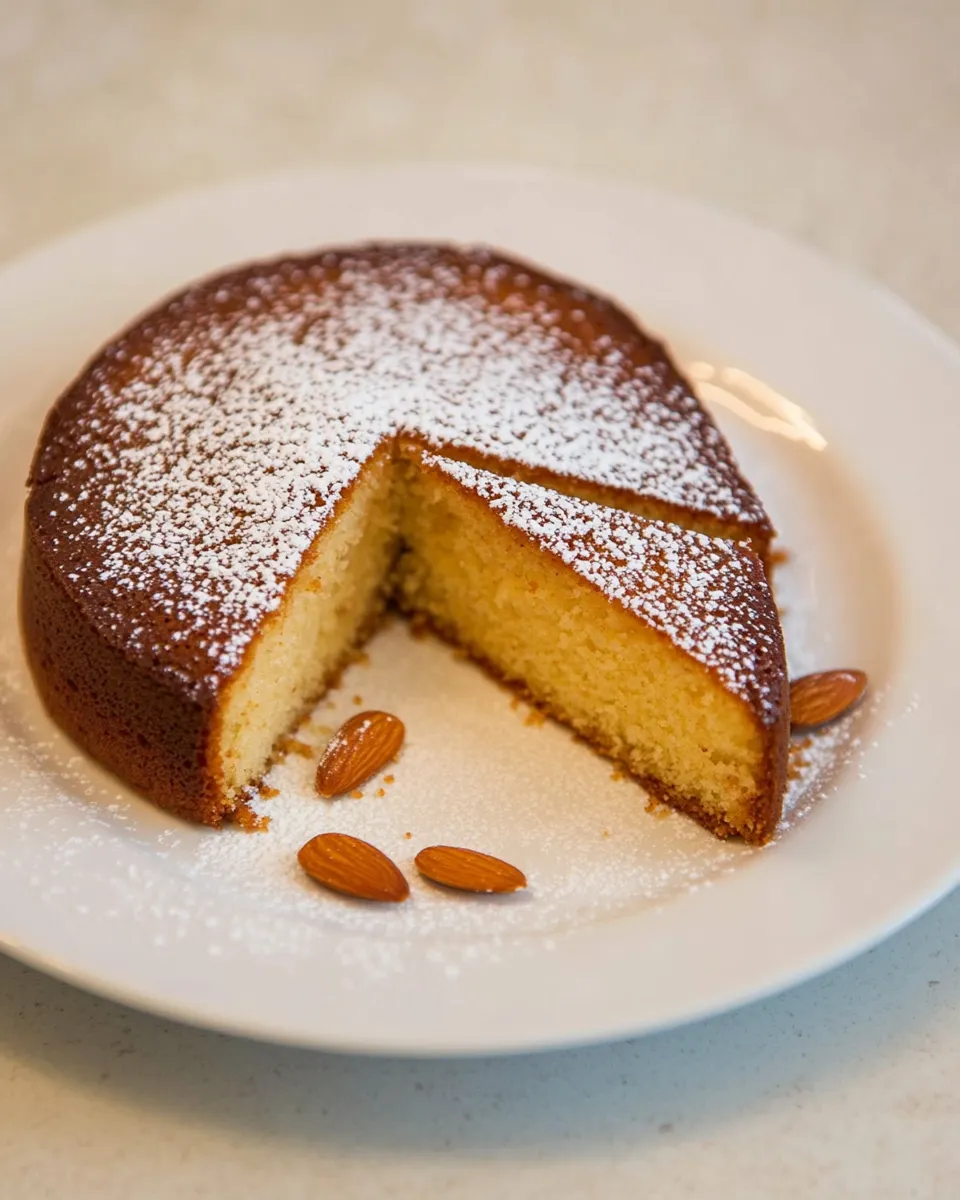
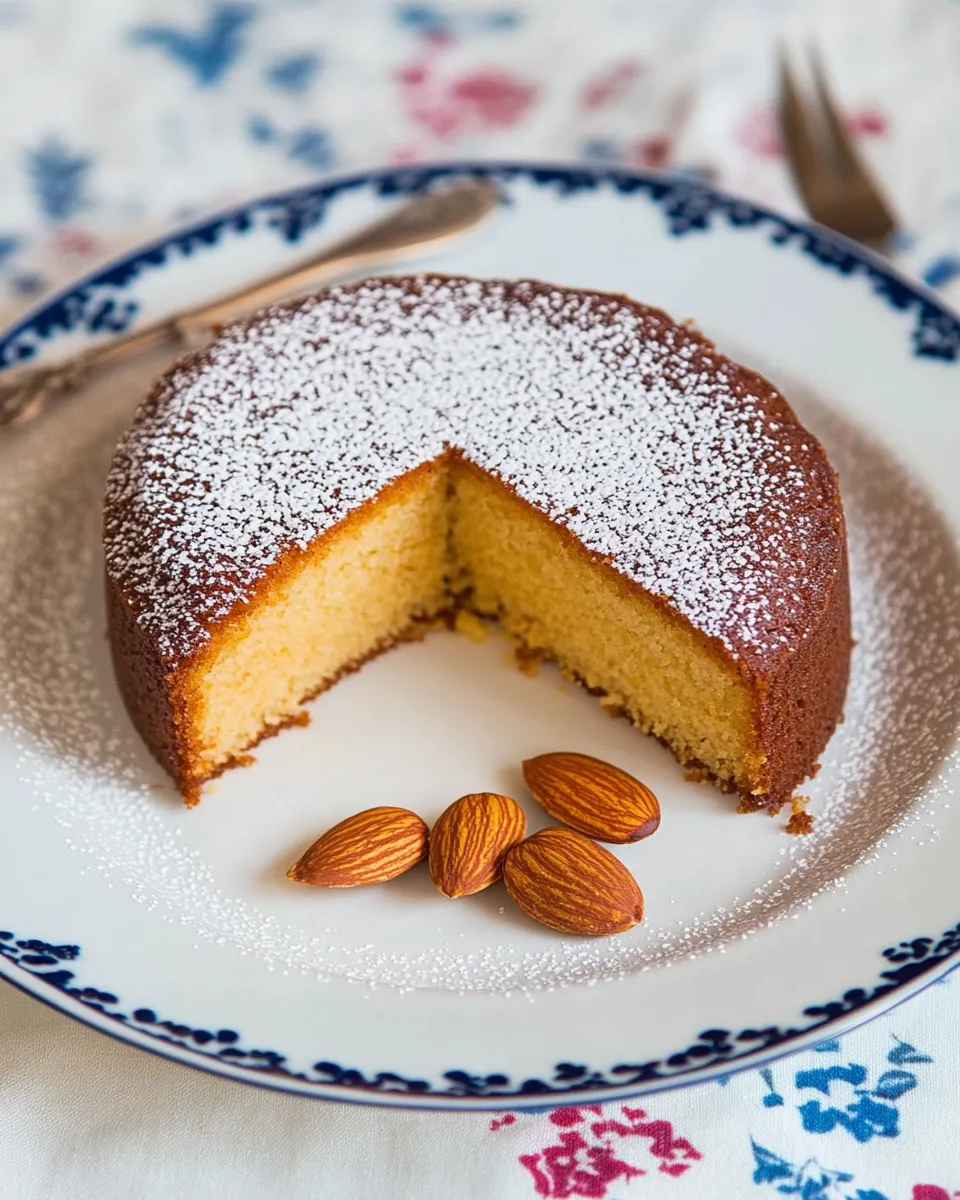
- Once cool, loosen the cake from the pan, transfer it to a serving plate, and top with additional sliced almonds if desired. Dust with powdered sugar for a finished look and a touch of sweetness.
Reasons to Love Almond Cake
- Pure, focused flavor: almond extract and almond flour combine for an unmistakable almond profile without being cloying.
- Simple technique: no need for special equipment—basic bowls, a whisk, and a spatula are enough.
- Versatile: serves as a coffee cake, a light dessert, or a base for whipped cream and berries.
- Good shelf life: keeps well for a few days at room temperature when stored properly.
- Textural contrast: tender crumb with a crunchy almond top adds interest to each bite.
Dairy-Free/Gluten-Free Swaps
- For dairy-free: replace the melted unsalted butter with a neutral dairy-free margarine or additional neutral oil (extra 2–3 tablespoons), but note the flavor will be slightly different.
- For gluten-free: swap the all-purpose flour (1½ cups) for a 1:1 gluten-free flour blend that contains xanthan gum; keep the almond flour as written. Baking time may vary slightly—start checking at 22 minutes.
- Both swaps: the recipe relies on the almond flour for tenderness; keep that ¼ cup to maintain texture and flavor.
Gear Up: What to Grab
- 9-inch round cake pan — the size specified for the correct depth and bake time.
- Mixing bowls — one for wet, one for dry to keep things tidy.
- Whisk and spatula — whisk for wet ingredients; spatula for folding the batter.
- Kitchen scale or measuring cups — I used grams in the ingredient notes for accuracy; use a scale when possible.
- Wire rack — for cooling the cake evenly and preventing sogginess on the bottom.
- Toothpick or cake tester — to check doneness.
Problems & Prevention
- Dense cake: often caused by overmixing. Fold until just combined and stop; visible streaks of flour should be gone but don’t beat the batter.
- Soggy center: underbaking is the usual culprit. Test with a toothpick in the center—no wet batter should cling to it. If the edges brown too quickly, tent loosely with foil and finish baking.
- Almonds burn on top: if the sliced almonds start to brown too fast before the cake is set, cover loosely with foil for the last 5–10 minutes.
- Crumbling when sliced: make sure the cake has cooled sufficiently. Cutting warm cake can cause it to break apart.
Variations by Season
- Spring: fold in 1 cup fresh berries (lightly toss in a tablespoon of flour first) or serve slices with macerated strawberries and a dollop of cream.
- Summer: top the cake with fresh stone fruits—peaches or apricots—sliced thinly and arranged before baking for a rustic tart feel.
- Autumn: stir in ½ teaspoon ground cinnamon and finish with a drizzle of honey; serve with spiced whipped cream.
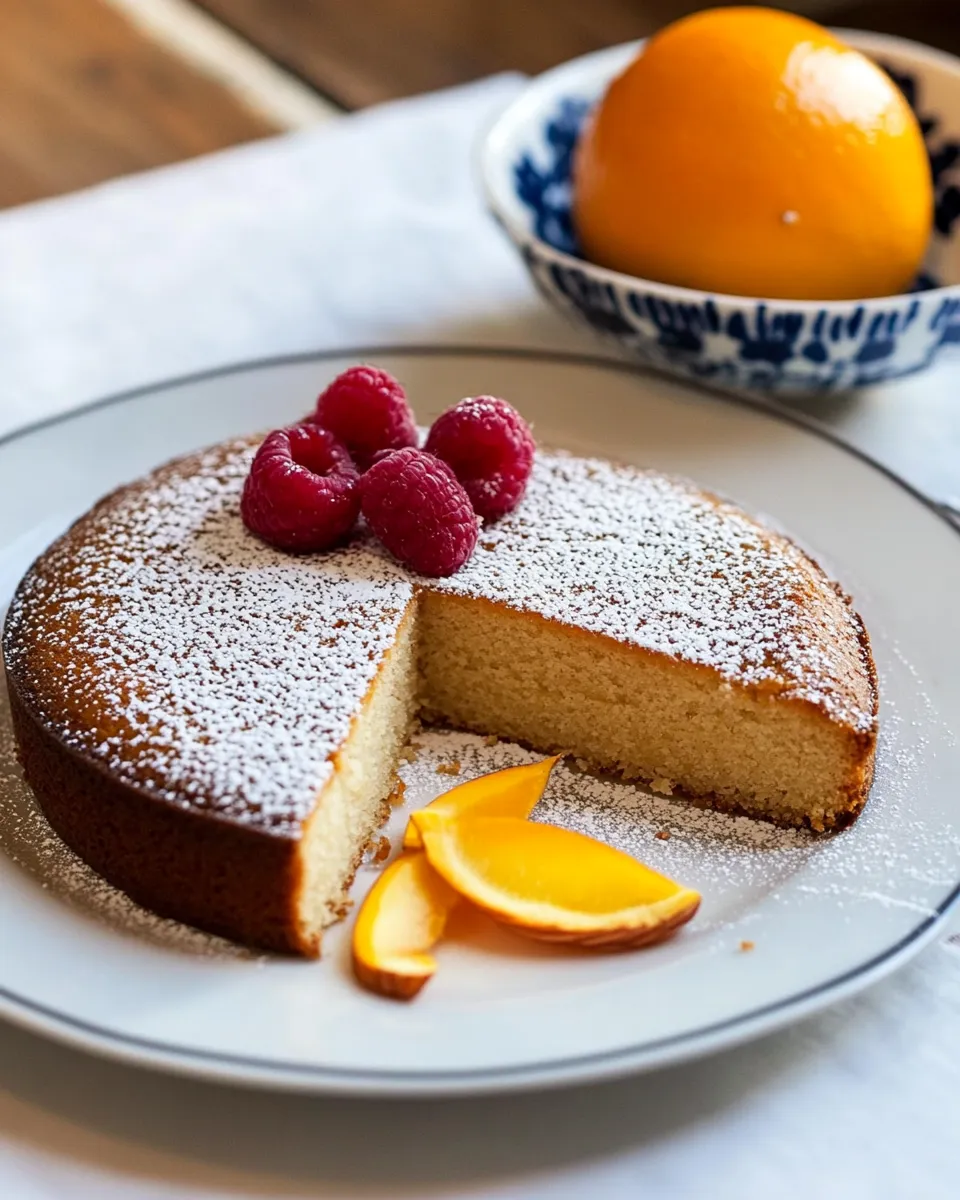
- Winter: add 1 tablespoon orange zest to the batter and dust with powdered sugar; orange and almond are a classic pairing.
What I Learned Testing
- Melted butter makes mixing faster and yields a consistent crumb, but the small addition of vegetable oil keeps the cake moist longer than butter alone.
- Almond flour at ¼ cup is enough to add nutty nuance without changing the structure—any more, and the cake becomes too tender and crumbly.
- Room-temperature eggs integrate better and help the batter emulsify, which translates into even rise and texture.
- Sliced almonds on top toast nicely in the 25–30 minute bake window; they add satisfying texture and visual appeal with no extra effort.
Make-Ahead & Storage
- Room temperature: store in an airtight container at room temperature for up to 2 days. Keep away from strong odors.
- Refrigeration: if you prefer a chilled cake, refrigerate in an airtight container for up to 5 days; allow it to come closer to room temperature before serving for best flavor.
- Freezing: wrap tightly in plastic wrap and then foil; freeze up to 2 months. Thaw overnight in the refrigerator and bring to room temperature before serving.
- Serving tip: dust with powdered sugar just before serving to keep the finish bright.
Questions People Ask
- Can I use all almond flour instead of all-purpose flour? — No. The recipe needs the structure from all-purpose flour. Replacing all-purpose entirely with almond flour will produce a very fragile, dense cake and will alter baking time drastically.
- Do I need to toast the sliced almonds before adding them? — No, the almonds on top toast during baking. If you prefer a deeper toast, you can lightly toast them in a pan first, but watch them closely.
- Why use both almond extract and almond flour? — Almond extract gives a concentrated aroma while almond flour adds texture and a subtle, buttery almond note throughout the crumb.
- Can I make this in a loaf pan? — Yes, but baking time will be longer. Check at 35–45 minutes and use the toothpick test.
Ready, Set, Cook
Gather your ingredients and preheat the oven to 350°F. Grease your 9-inch round pan so it’s ready. Melt the butter, measure carefully, and bring eggs to room temperature while you prepare the dry ingredients—this small bit of planning makes the rest of the process flow.
Follow the step-by-step instructions above and watch for that golden top and clean toothpick. Let it cool properly for clean slices. Serve simply with a dusting of powdered sugar or with berries and cream for a dressier presentation. Enjoy the way a straightforward recipe like this can brighten an ordinary day.
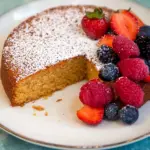
Almond Cake
Ingredients
- ¾ cup unsalted butter 170 grams, melted (1½ sticks)
- 1⅓ cups granulated sugar 267 grams
- 2 tablespoons vegetable oil 25 grams
- 1½ teaspoons pure vanilla extract 6 grams
- 1 teaspoon almond extract 4 grams
- 4 large eggs 200 grams, room temperature
- 1½ cups all-purpose flour 180 grams
- ¼ cup almond flour 24 grams
- 1 teaspoon baking powder 4 grams
- ½ teaspoon kosher salt
- ⅓ cup sliced almonds 29 grams, plus more for topping
- powdered sugar optional, for dusting
Instructions
- Preheat the oven to 350°F (175°C). Grease a 9-inch round cake pan and set it aside.
- In a large bowl, whisk together the melted unsalted butter, granulated sugar, and vegetable oil until smooth.
- Add the vanilla extract, almond extract, and the room-temperature eggs to the butter mixture and whisk until fully combined.
- In a separate bowl, whisk together the all-purpose flour, almond flour, baking powder, and kosher salt until evenly distributed.
- Fold the dry ingredients into the wet ingredients with a rubber spatula, mixing just until no streaks of flour remain.
- Transfer the batter to the prepared cake pan and smooth the top. Sprinkle the ⅓ cup sliced almonds evenly over the batter.
- Bake for 25–30 minutes, or until a toothpick inserted in the center comes out clean. Start checking at 25 minutes.
- Cool the cake in the pan for 10 minutes, then transfer to a cooling rack to cool completely.
- Top the cooled cake with additional sliced almonds and dust with powdered sugar if desired before serving.
Equipment
- Kitchen scale (optional)
- 9-inch Round Cake Pan
- Mixing bowls
- Whisk
- rubber spatula
- cooling rack
Notes
- Use room-temperature eggs for better mixing.
- Measure flour by spooning into the cup and leveling it.
- Check doneness with a toothpick starting at 25 minutes.
- Almond extract is potent; use the stated amount for a balanced flavor.