Please share this post with your friends 🤗
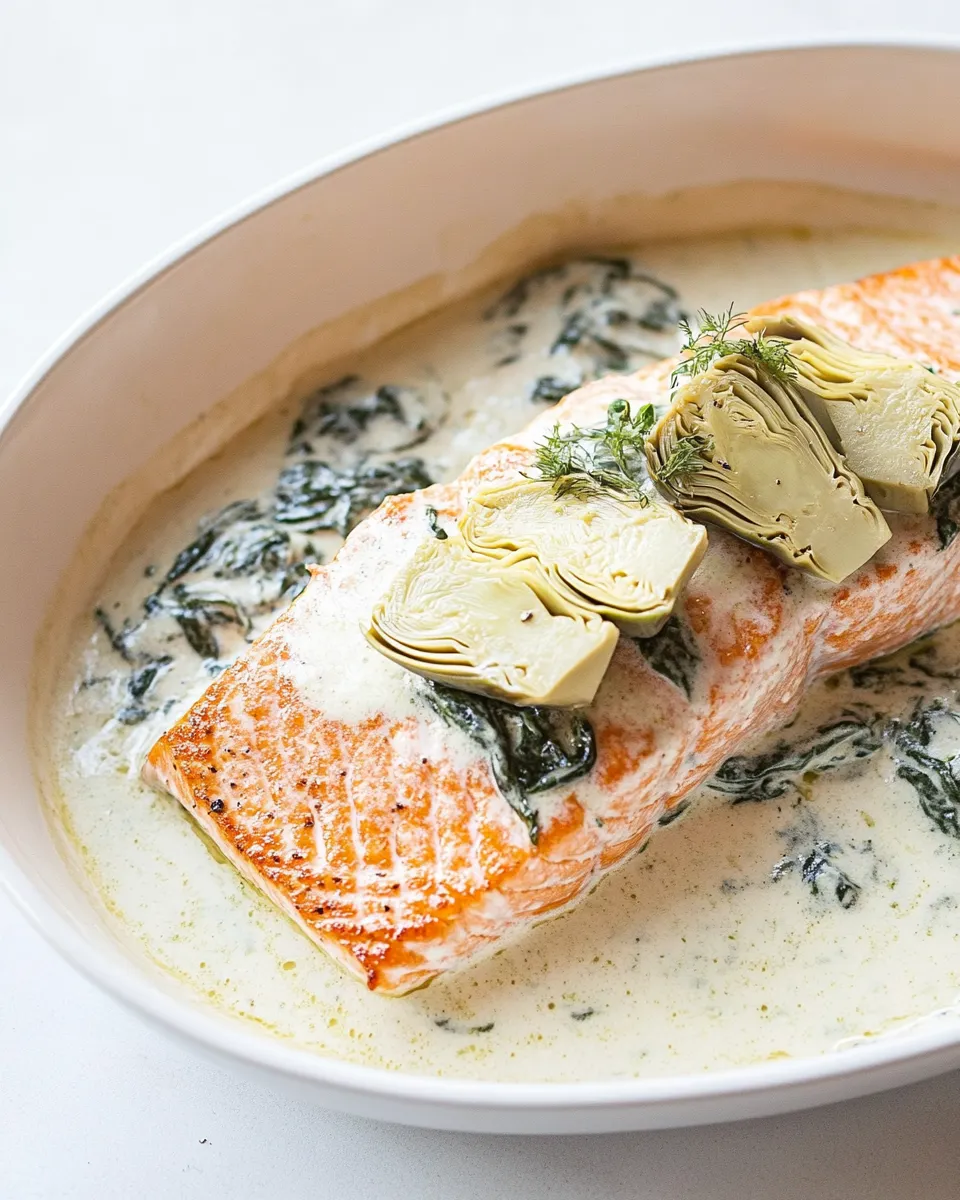
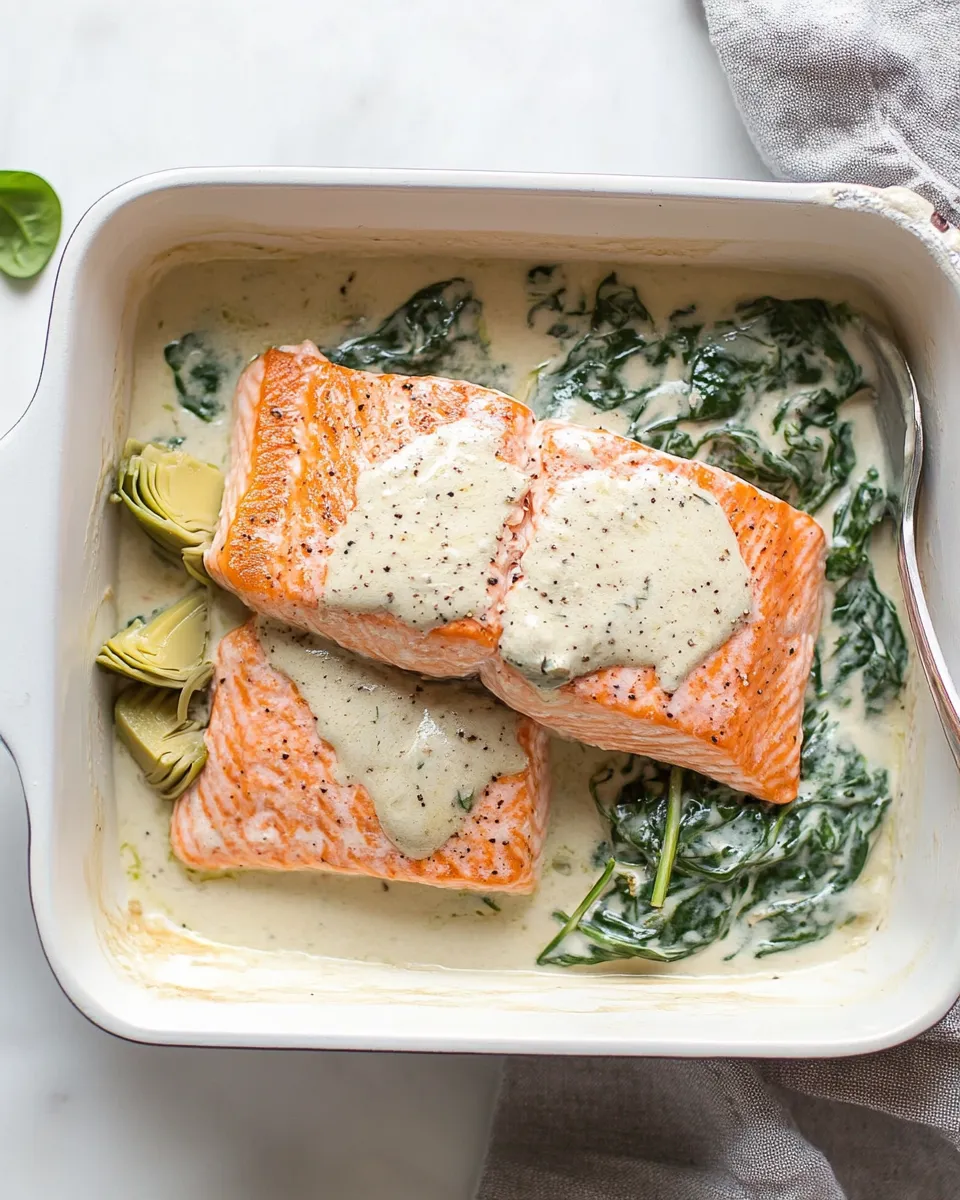
I love meals that feel like a treat but come together without drama. This Spinach Artichoke Salmon is one of those weeknight winners: flaky, pan-seared salmon nestled in a silky, tangy spinach-artichoke sauce. It borrows the comforting flavors of the classic dip and dresses them up with a generous piece of fish—simple, satisfying, and ready in about 30 minutes.
The technique is forgiving. You dredge the salmon in flour, sear it to develop a golden crust, then finish everything together in a creamy skillet sauce. The sauce uses pantry-friendly ingredients—cream cheese, canned artichokes, chicken broth, garlic, and grated Parmesan—so it’s easy to pull off even when the week gets busy.
Below you’ll find a clear ingredient rundown, step-by-step cooking guide, troubleshooting notes, and storage tips. I’ll also share small tweaks that keep this dish flexible for different diets and seasons. Let’s get to it.
Ingredient Rundown
1 pound fresh salmon, cut into 4 pieces — Main protein; choose skin-off fillets or remove skin before cooking for even searing.
Flour, for dredging — Light coating helps the salmon form a crisp, browned exterior and thickens the sauce slightly as it cooks.
1 tablespoon olive oil — For pan-searing; provides flavor and a higher smoke point than butter alone.
1 tablespoon butter — Adds richness and helps the salmon brown beautifully alongside the oil.
3/4 cup chicken broth — Builds the sauce base and loosens it if it gets too thick; use low-sodium if you prefer tighter salt control.
8 ounces cream cheese (one block Philly), softened — The creamy backbone of the sauce; soften to room temperature so it melts smoothly.
2 cloves garlic, minced — Fresh garlic gives bright aromatics; add to the sauce stage so it doesn’t burn during searing.
1 (14 fluid ounce) can artichoke hearts, drained & chopped — Tangy, textural element; canned works well here—drain to avoid watering down the sauce.
2 cups (packed) fresh baby spinach — Wilts down into the sauce and adds color, vitamins, and a fresh contrast to the rich cheese.
1/2 cup freshly grated Parmesan cheese — Adds salty, nutty depth and helps thicken and finish the sauce.
Salt & pepper, to taste — Season the fish and the finished dish; adjust at the end since broth and Parmesan contribute salt.
Spinach Artichoke Salmon Cooking Guide
1. Pat the salmon pieces dry with paper towels and season both sides with salt and pepper. This improves browning and prevents steaming.
2. Spread the flour on a plate and dredge each salmon piece so it’s lightly and evenly coated; shake off excess flour.
3. Heat a large skillet over medium-high heat and add the olive oil and butter. Swirl the pan until the butter melts and the fat is shimmering.
4. When the pan is hot, add the salmon pieces. Sear for about 3 minutes on the first side without moving them; this creates a golden crust. Flip and cook the second side for another 3 minutes. Timing assumes roughly 1-inch-thick fillets; thicker fillets may require more time.
5. Remove the salmon from the skillet and set the pieces aside on a plate. They will finish cooking in the sauce later.
6. Reduce the heat to medium. Add the chicken broth, softened cream cheese, and minced garlic to the same skillet. Stir frequently and break up the cream cheese so it melts into a smooth sauce.
7. Stir in the chopped artichoke hearts and the packed fresh spinach. Cook until the spinach wilts and the artichokes are heated through. If the sauce seems too thick for your liking, add a splash more chicken broth to loosen it—adjust to your preferred consistency.
8. Mix in the freshly grated Parmesan cheese until incorporated and the sauce is glossy.
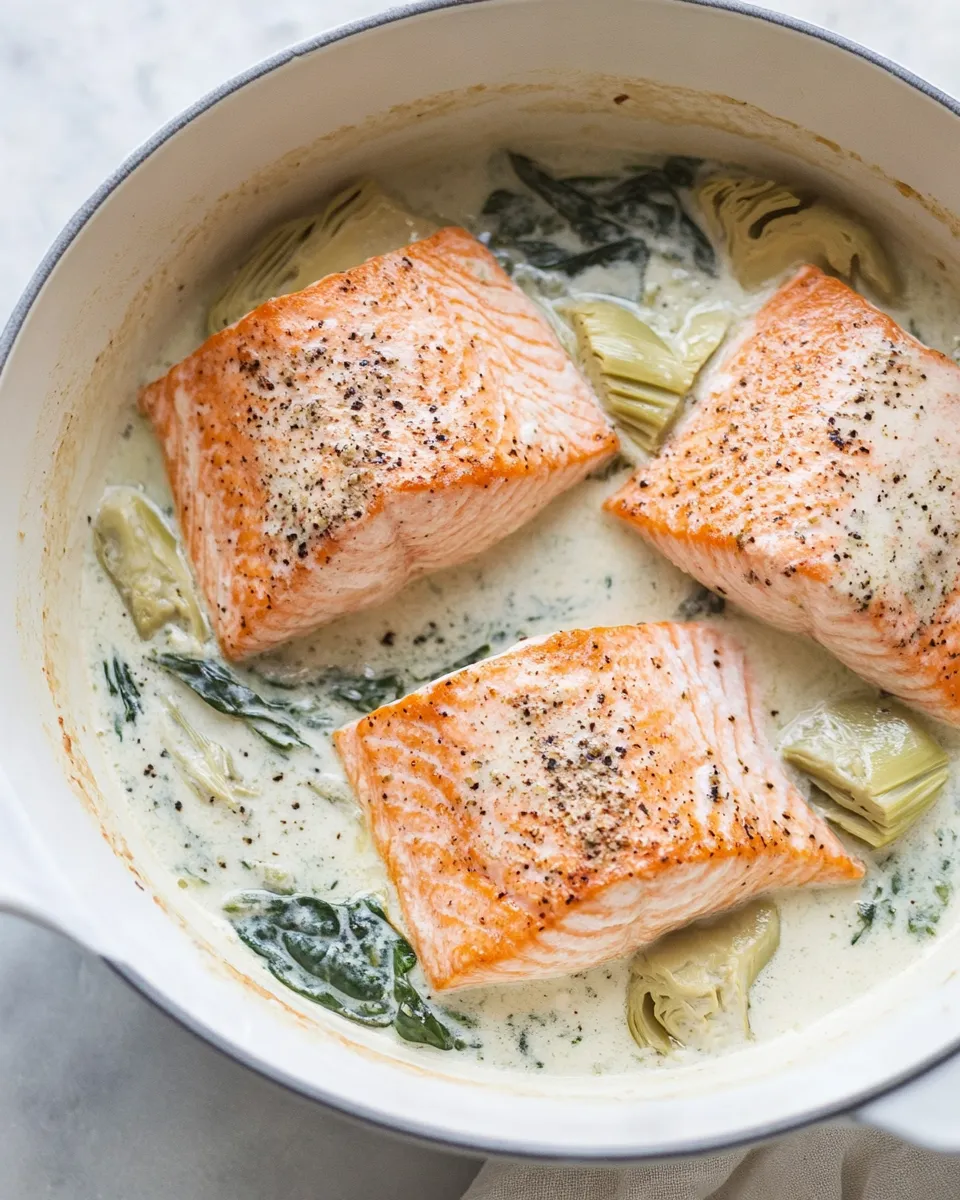
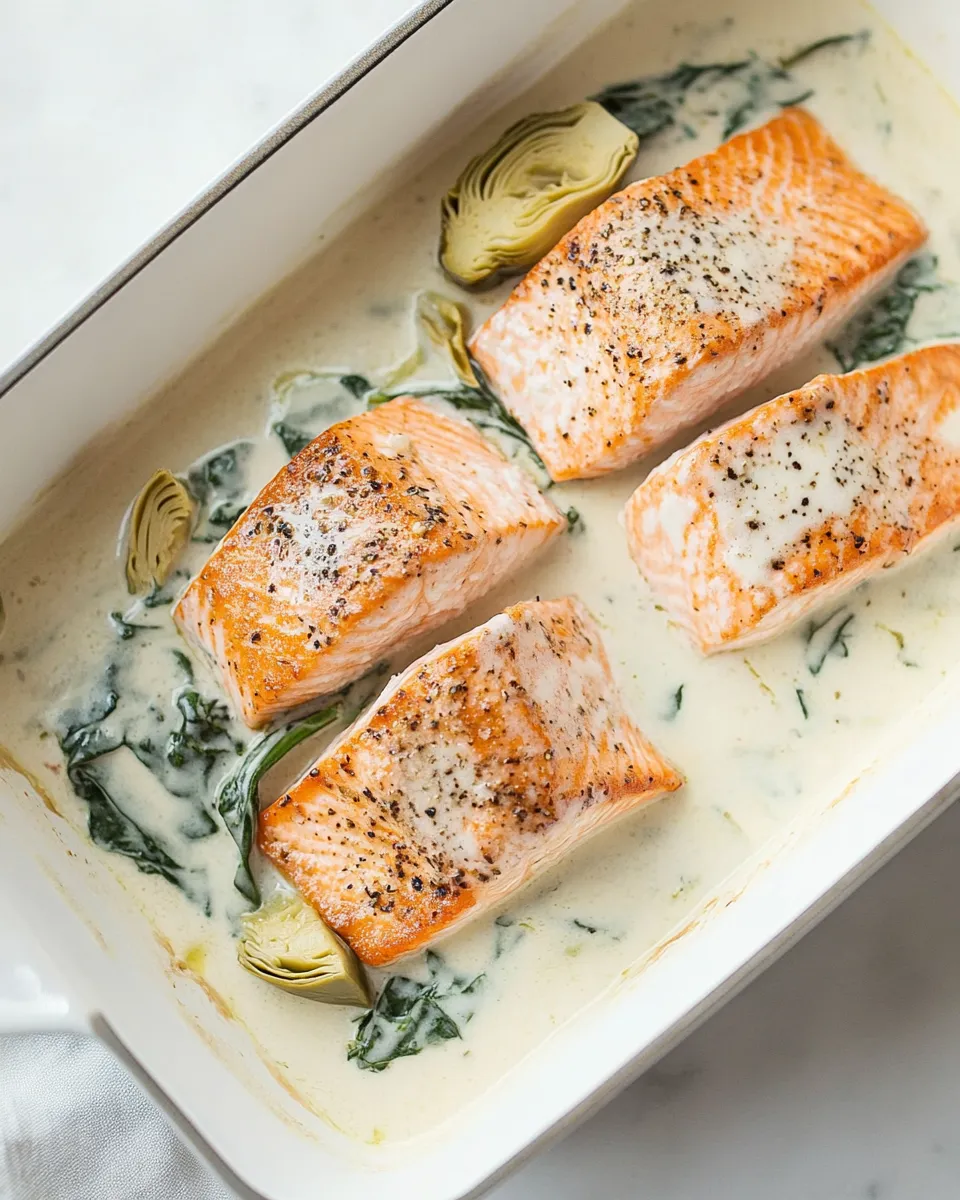
9. Nestle the seared salmon back into the skillet, spooning some sauce over each piece. Let everything cook together for a few minutes until the salmon is cooked through and flakes easily with a fork. Check doneness by inserting a fork into the thickest part—fish should be opaque and flake cleanly.
10. Taste the sauce and season with additional salt and pepper if needed. Serve immediately while hot.
Reasons to Love Spinach Artichoke Salmon
Fast and impressive — Looks like a restaurant plate but comes together quickly.
Comforting flavors — Creamy, garlicky, slightly tangy—the sauce borrows the best parts of spinach-artichoke dip.
Balanced meal — Protein from salmon, greens from spinach, and satisfying fat from cream cheese and butter.
Weeknight friendly — Few steps, pantry-friendly artichokes, and a short cook time.
Flexible — Works with different types of salmon or similar firm white fish if needed.
Substitutions by Category
Protein
Salmon — Swap with halibut or cod for a milder white fish; increase cooking time slightly for thick halibut steaks.
Dairy & Cheese
Cream cheese — Use mascarpone for a silkier texture; Greek yogurt thinned with a bit of butter can reduce fat but will be tangier.
Parmesan — Pecorino Romano will add more sharpness; omit for a very mild finish.
Liquid & Broth
Chicken broth — Use vegetable broth for a pescatarian option, or white wine for added acidity (add during the sauce stage and reduce slightly).
Produce
Spinach — Substitute with baby kale or Swiss chard, but give them a minute or two longer to soften.
Artichokes — Marinated artichoke hearts add extra flavor; drain well to avoid excess oil in the sauce.
Equipment Breakdown
Large skillet (nonstick or stainless steel) — Big enough to sear four salmon pieces and build the sauce; stainless gives better fond for flavor.
Spatula or fish turner — For flipping salmon gently without breaking fillets.
Measuring cups and spoons — For accurate broth and cream cheese amounts.
Plate and paper towels — To pat salmon dry before seasoning and to rest cooked fish briefly.
Grater — Freshly grated Parmesan melts and blends more smoothly than pre-grated.
Avoid These Traps
Overcrowding the pan — Crowding lowers the pan temperature and causes steaming instead of a sear. Cook in batches if needed.
Undermelting the cream cheese — If the cream cheese is too cold, lumps will remain. Soften it to room temperature and stir continuously when melting into the broth.
Burning the garlic — Add garlic to the sauce stage rather than during the initial high-heat sear to prevent a bitter taste.
Overcooking the salmon — Salmon keeps cooking a bit after you remove it. Don’t cook until bone-dry; aim for opaque and flaky, not chalky.
Too-thick sauce — The sauce will thicken as it cools. If it becomes gummy, thin with a little warm chicken broth or milk when reheating.
Fresh Takes Through the Year
Spring — Add blanched asparagus spears to the skillet for a bright, seasonal crunch.
Summer — Finish with a squeeze of lemon and chopped fresh basil for brightness and herbal lift.
Autumn — Stir in roasted mushrooms or swap spinach for baby chard for a deeper, earthier profile.
Winter — Use frozen chopped spinach when baby spinach isn’t at its peak—thaw and squeeze out excess water before adding.
Chef’s Rationale
The goal here is contrast: a crisp, lightly floured salmon exterior against a rich, velvety sauce. Dredging in flour creates Maillard browning while also contributing a touch of thickness to the sauce as it finishes. Using both oil and butter gives a high enough smoke point for searing while preserving flavor. The cream cheese melts into a glossy body that carries garlic, artichoke tang, and Parmesan saltiness without needing heavy cream, keeping the flavor focused and not overly rich.
Storing Tips & Timelines
Refrigerate — Store leftovers in an airtight container for up to 3 days. Place salmon pieces and sauce together; the fish may become slightly firmer after chilling.
Freeze — Not ideal due to cream cheese texture, but you can freeze in a sealed container for up to 1 month. Thaw overnight in the fridge and gently reheat.
Reheating — Reheat gently over low heat on the stove, stirring the sauce and spooning it over the salmon. If too thick, add a splash of chicken broth. Avoid the microwave if possible to prevent overcooking the fish.
Spinach Artichoke Salmon Q&A
Q: Can I use skin-on salmon? — Yes. Sear skin-side first until crisp, then flip and follow the same timings. You may want to remove the skin before serving if preferred.
Q: Is this safe for kids? — Absolutely. Reduce added salt and skip any spicy add-ins. The creamy sauce is usually a hit with kids who like mild flavors.
Q: Can I make the sauce dairy-free? — You could substitute a dairy-free cream cheese and a plant-based Parmesan alternative, but texture and flavor will change. Test smaller quantities first.
Q: How do I know the salmon is done? — Check the thickest part: it should be opaque and flake easily with a fork. Internal temperature should reach 125–140°F depending on desired doneness.
Let’s Eat
Serve Spinach Artichoke Salmon straight from the pan with a spoonful of sauce over each fillet. I love it with steamed rice, buttered pasta, or a crisp green salad to cut through the richness. A wedge of lemon on the side brightens every bite. This dish makes a weeknight feel special and a weekend dinner effortless—enjoy.
Spinach Artichoke Salmon
A creamy spinach and artichoke sauce crowns pan-seared salmon for a quick, elegant weeknight meal.
Prep Time15 minutes mins
Cook Time15 minutes mins
Total Time30 minutes mins
Servings: 4 servings
- 1 pound fresh salmon cut into 4 pieces
- flour for dredging
- 1 tablespoon olive oil
- 1 tablespoon butter
- 3/4 cup chicken broth
- 8 ounces cream cheese one block (softened)
- 2 cloves garlic minced
- 1 14-ounce can artichoke hearts drained and chopped
- 2 cups fresh baby spinach packed
- 1/2 cup freshly grated Parmesan cheese
- salt and pepper to taste
Pat the salmon dry and season both sides with salt and pepper. Dredge each piece lightly in flour, shaking off excess.
Heat the olive oil and butter in a large skillet over medium-high heat until hot and the butter is melted.
Add the salmon to the hot skillet and cook about 3 minutes per side, until golden and nearly cooked through; transfer to a plate and set aside.
Lower the heat to medium and add the chicken broth, softened cream cheese, and minced garlic to the skillet; stir often until the cream cheese melts into a smooth sauce.
Stir in the chopped artichoke hearts and fresh spinach; cook until the spinach wilts. If the sauce becomes too thick, add a splash more chicken broth to reach desired consistency.
Mix in the grated Parmesan, return the salmon to the skillet, and cook a few more minutes until the salmon is cooked through and flakes easily with a fork. Taste and adjust salt and pepper, then serve immediately.
- Soften cream cheese at room temperature for at least 30 minutes before cooking for a smoother sauce.
- Frozen spinach can be used if fully thawed and excess water squeezed out.
- Adjust sauce thickness with extra chicken broth as needed.
- Season salmon to taste after cooking.
- Use freshly grated Parmesan for best flavor.
Please share this post with your friends 🤗