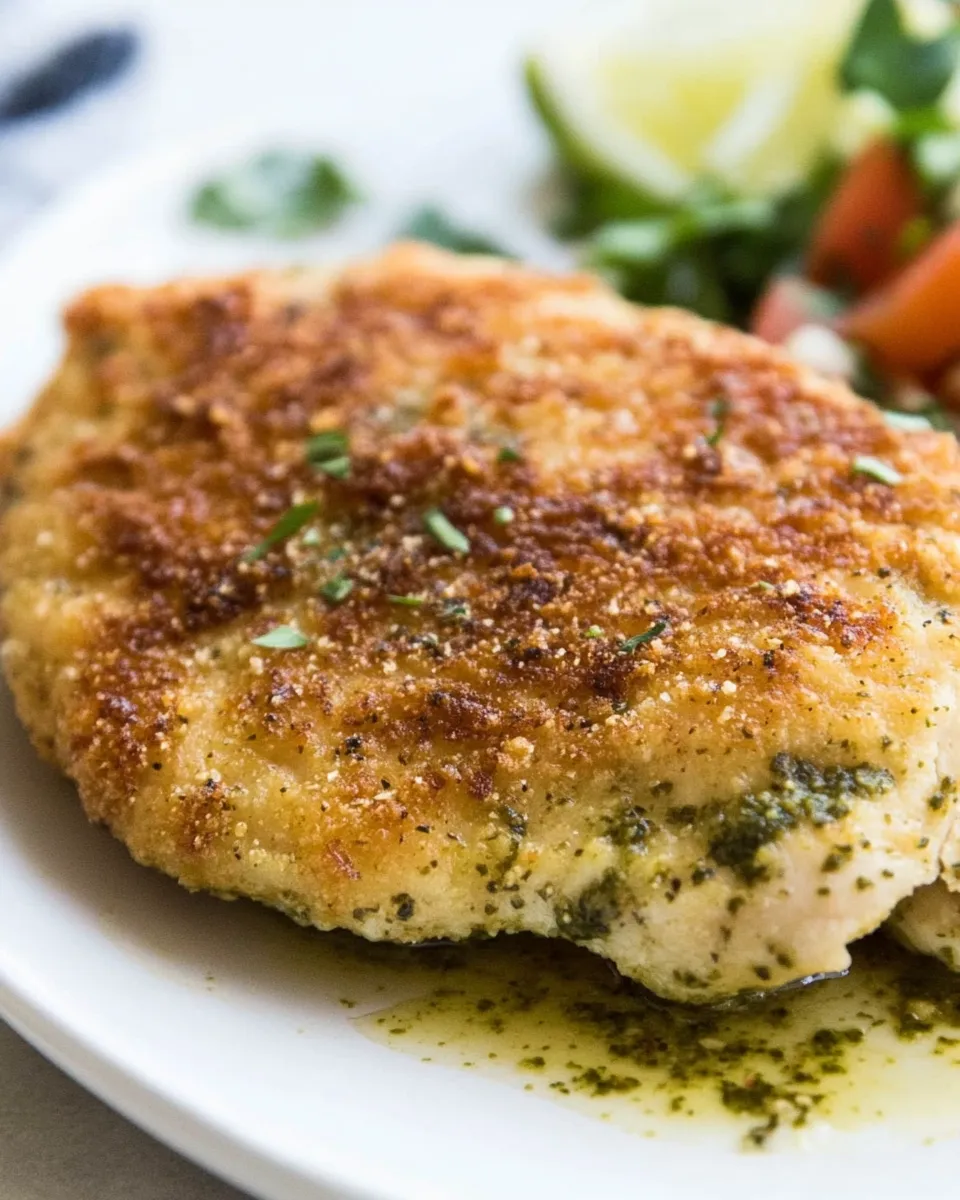
Pesto Pan-Fried Chicken
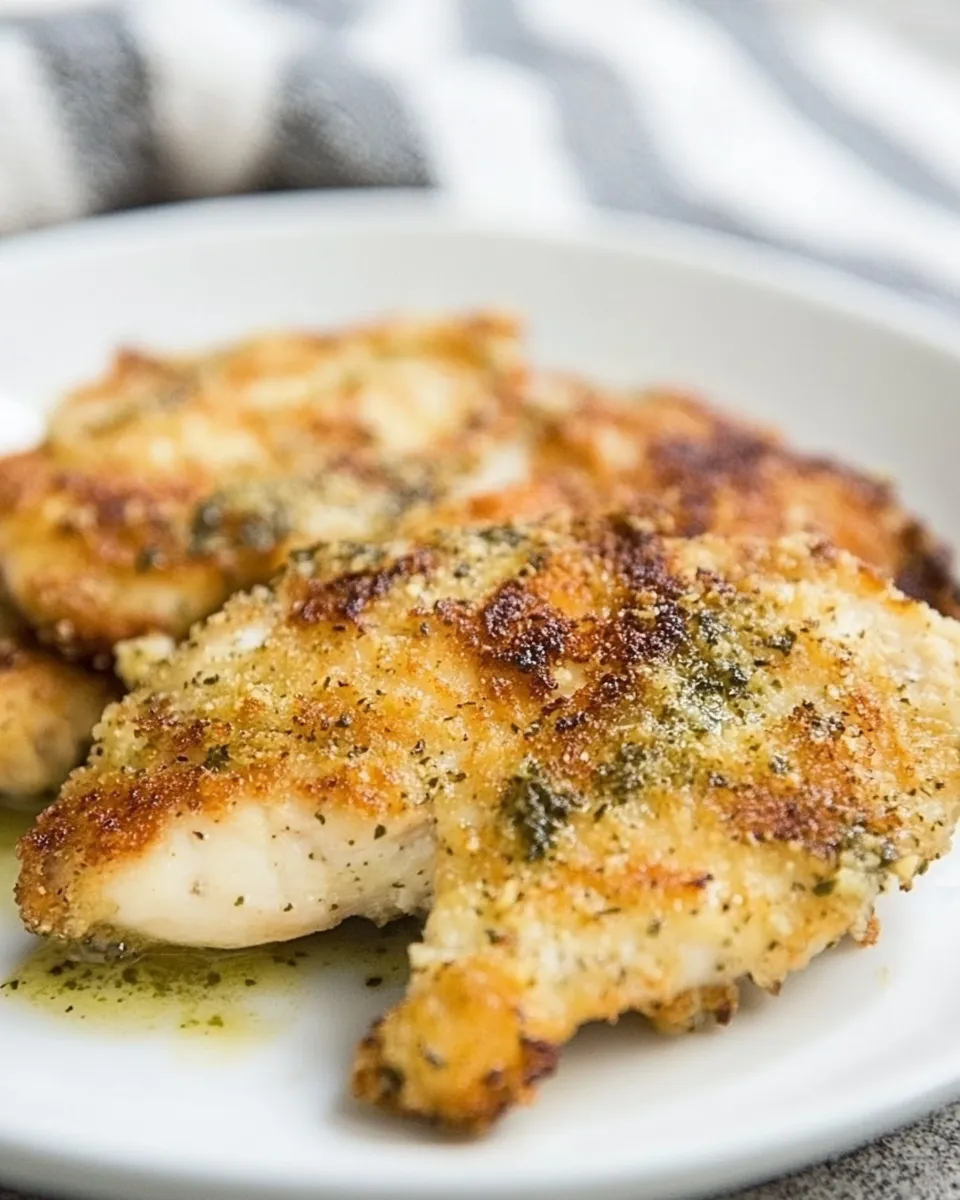
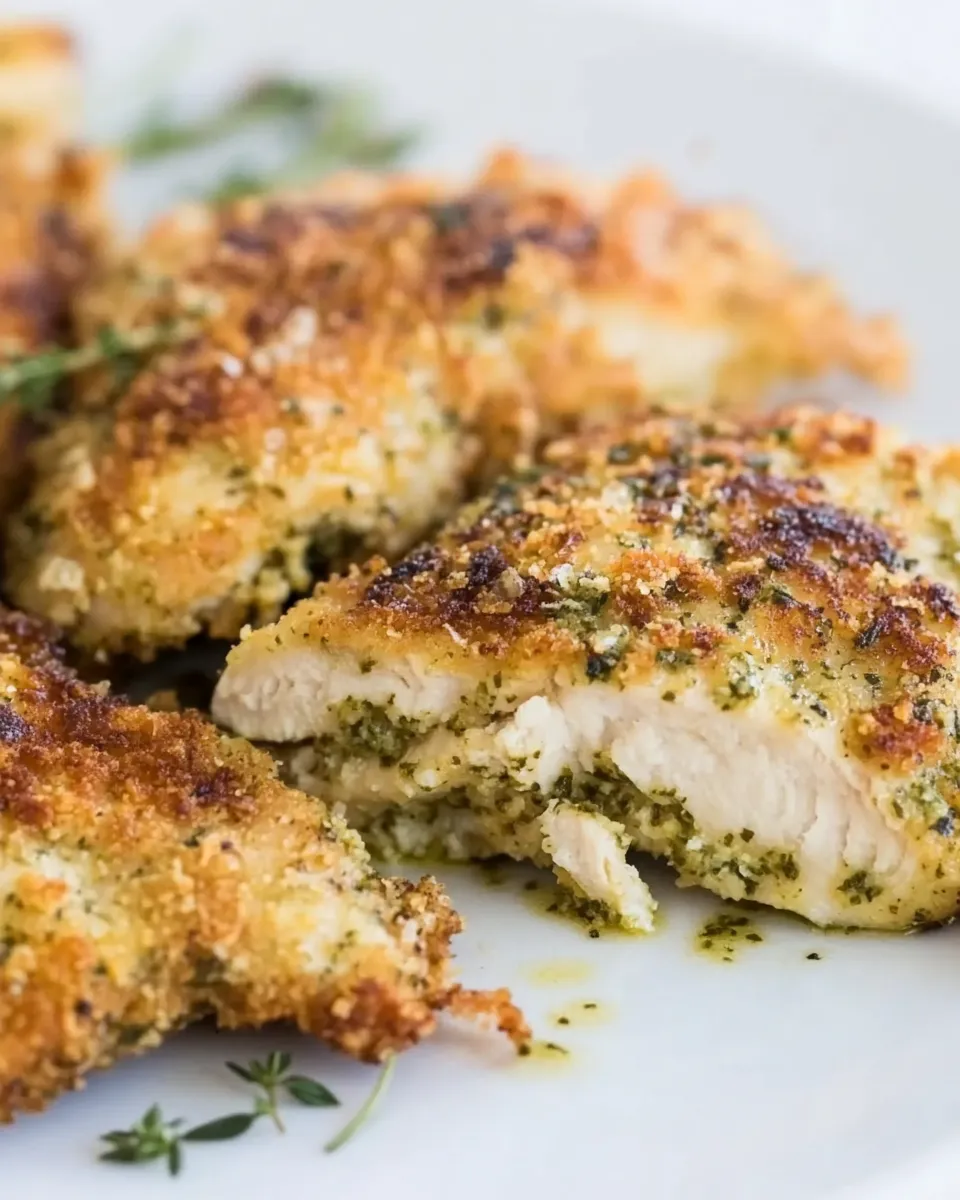
I love recipes that feel like a small, deliberate act of home cooking: a few minutes of prep, a hot skillet, and dinner that smells like summer. This Pesto Pan-Fried Chicken is exactly that—bright basil pesto smeared into the meat, a crisp golden crust from breadcrumbs and Parmesan, and a tender interior that stays juicy because we don’t overcook it. It’s excellent for weeknights, impressive enough for guests, and flexible with pantry ingredients.
The technique is straightforward, but there are a few tiny details that make the difference between a dry chicken breast and a restaurant-worthy result: even seasoning, a light hand with the flour, and a steady medium heat so the crust browns without burning. I’ll walk you through the exact steps I use, list simple swaps, and answer common questions so you can make this confidently tonight.
Ingredients at a Glance
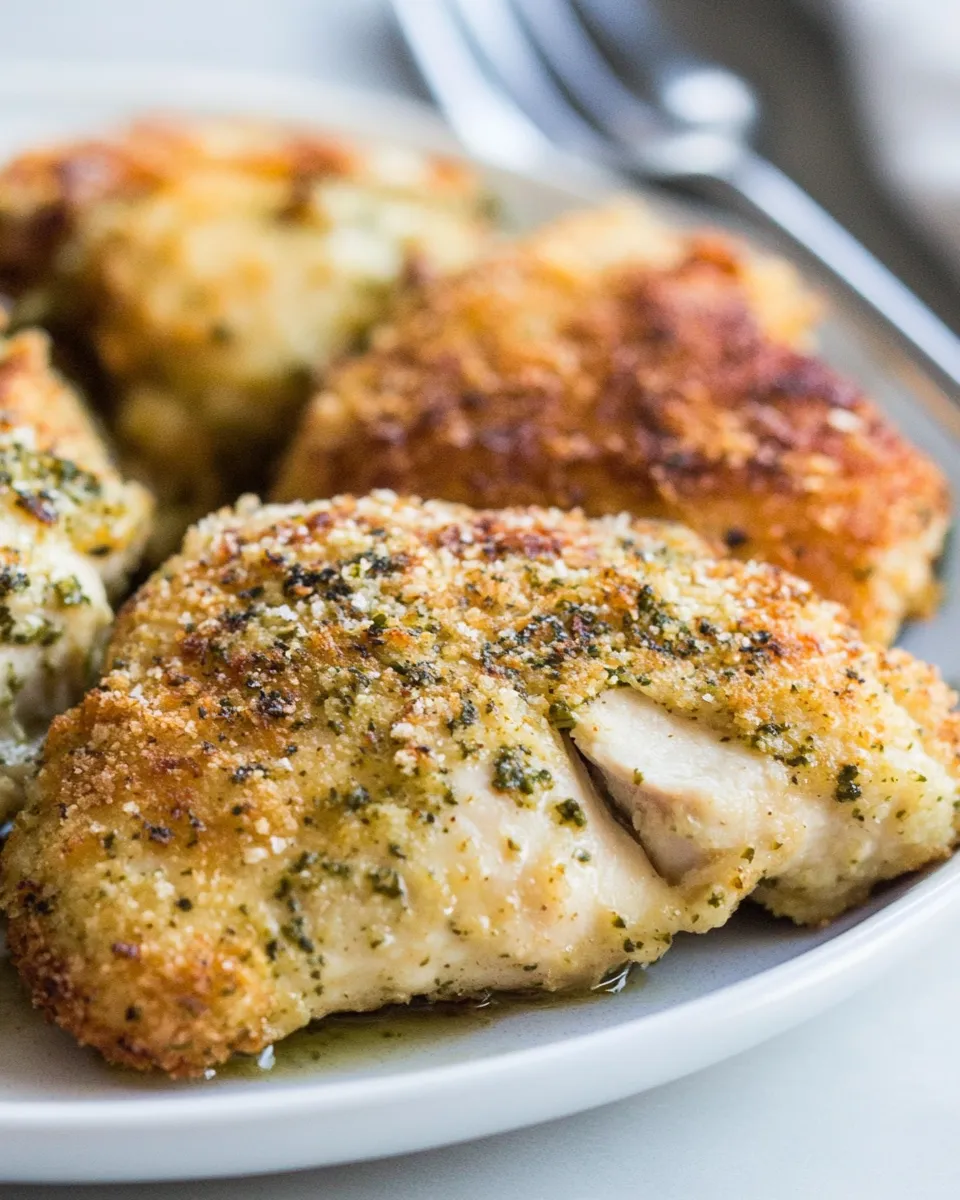
- 4 boneless chicken breasts — the main protein; if large, you can butterfly or pound them slightly for even thickness.
- 1/2 cup pesto sauce — flavors the chicken and helps the coating adhere; use homemade or a good-quality store-bought pesto.
- 1/2 cup all-purpose flour — provides the first dry layer to help the egg stick and create a light base for the crust.
- 1 egg, beaten with 1 tablespoon water — the binder that makes the breadcrumbs adhere evenly.
- 1 cup Italian seasoned bread crumbs — the primary crisping agent; seasoned crumbs add an immediate flavor boost.
- 1/3 cup shredded Parmesan cheese — mixed into the crumbs for savory, nutty flavor and better browning.
- 2 tbsp olive oil — for frying; provides flavor and helps the crust crisp up.
- 1 tbsp butter — added for flavor and color; butter encourages a beautiful golden crust when combined with the oil.
Make Pesto Pan-Fried Chicken: A Simple Method
- 1) Prep the chicken. Pat the 4 boneless chicken breasts dry with paper towels. If any breasts are uneven in thickness, lightly pound them to about 1/2–3/4 inch thickness so they cook evenly. Season both sides lightly with salt and freshly ground black pepper.
- 2) Coat with pesto. Spread about 1/2 cup pesto sauce evenly over all chicken pieces—use your hands or the back of a spoon to press it into the surface. The pesto should form a thin, even layer that will help the coating stick and infuse the meat with flavor.
- 3) Set up your dredging station. Place the 1/2 cup all-purpose flour in a shallow dish. In a second shallow dish, whisk the 1 egg with 1 tablespoon water until combined. In a third shallow dish, combine 1 cup Italian seasoned bread crumbs with 1/3 cup shredded Parmesan cheese and stir to distribute the cheese evenly.
- 4) Dredge the chicken. Working with one piece at a time, press both sides of the pesto-coated chicken into the flour, shaking off any excess. Dip each floured piece into the egg wash, allowing any excess egg to drip back into the dish. Finally, press the chicken into the breadcrumb-Parmesan mixture so both sides are evenly coated. Set the coated breasts on a plate and repeat with the remaining pieces.
- 5) Heat the pan. Place a large skillet (cast iron preferred) over medium heat and add 2 tablespoons olive oil and 1 tablespoon butter. Allow the oil to warm and the butter to melt; the fat should shimmer but not smoke. The combination of oil and butter gives good browning without burning the butter too quickly.
- 6) Pan-fry the chicken. Add the coated chicken breasts to the hot skillet in a single layer, leaving space between them so they don’t steam. Cook for 4 to 5 minutes on the first side without moving them; this helps form a crisp, golden crust. Flip the breasts and cook 4 to 5 minutes on the second side, or until the crust is deep golden and the chicken registers 160–165°F (71–74°C) at the thickest point.
- 7) Rest briefly and serve. Transfer the cooked chicken to a cutting board or warm plate and let it rest for 3–5 minutes; this allows juices to redistribute so slices remain juicy. Serve whole or sliced, with an extra spoonful of pesto or a squeeze of lemon if you like.
Why It Works Every Time
The method uses layers of texture and flavor that reinforce each other. Pesto beneath the coating imparts moisture and herb flavor directly into the meat. The flour creates a dry surface so the egg adheres evenly; the egg binds the breadcrumb-Parmesan mix, which crisps up in the hot fat. Cooking at medium heat keeps the crust from burning while allowing the interior to reach a safe temperature without drying out. A short resting period locks in the juices.
Using both olive oil and butter is deliberate: olive oil raises the smoke point and keeps the pan temperature stable, while butter adds flavor and helps with color. Even thickness across the breasts ensures they all finish at the same time so none are overcooked. That combination of controlled heat, layered coating, and resting is why this technique yields reliable results.
Quick Replacement Ideas
- Italian seasoned bread crumbs — swap for plain panko for extra light crispness; add 1–2 teaspoons Italian seasoning if using plain crumbs.
- Parmesan cheese — substitute Pecorino Romano for sharper saltiness.
- Olive oil and butter — use 3 tablespoons of a neutral oil (canola or sunflower) if you need a dairy-free option.
- Pesto sauce — store-bought basil pesto works great; try sun-dried tomato pesto for a different flavor profile.
- Chicken breasts — split or thin-cut chicken breasts (cutlets) can be used without pounding; reduce cook time accordingly.
Hardware & Gadgets
- Large skillet (cast iron recommended) — delivers even heat and helps form a uniform crust.
- Meat thermometer — quick-cooks like this benefit from an instant-read thermometer to avoid overcooking.
- Shallow dishes — three dishes for flour, egg wash, and breadcrumb-Parmesan mixture keep the dredging organized.
- Paper towels and a cutting board — for patting dry and resting the chicken after cooking.
- Tongs or a thin spatula — for flipping without scraping off the coating.
Troubles You Can Avoid
- Soggy crust — don’t overcrowd the pan. Crowding drops the oil temperature and encourages steaming rather than crisping.
- Burned breadcrumbs — medium heat is key. If you see dark spots on the crust before the center is done, lower the heat slightly and cover briefly to finish through.
- Uneven cooking — take time to butterfly or gently pound thick breasts so all pieces are the same thickness.
- Coating falling off — ensure excess flour and egg drip off before you press breadcrumbs on; too much wetness or too little flour will prevent a stable crust.
- Dry chicken — remove from the pan once the thickest point reaches 160–165°F and rest; residual heat will carry it the rest of the way.
Adaptations for Special Diets
- Gluten-free — use gluten-free flour and gluten-free breadcrumbs or crushed gluten-free crackers; check the pesto label for hidden gluten.
- Dairy-free — omit the Parmesan and replace butter with extra olive oil or a dairy-free butter substitute; use nutritional yeast in the crumbs for a savory boost.
- Lower fat — pan-fry in a single tablespoon of oil and finish in a 400°F oven for a few minutes if the crust forms quickly but you want less surface oil.
- Vegetarian alternative — use thick slices of eggplant or large portobello caps, brush with pesto, and follow the same dredge-and-fry method; cook slightly shorter times depending on thickness.
Cook’s Commentary
This dish is one of my weekday favorites because prep is short and the result feels special. The pesto provides a fast way to introduce fresh herb flavor without chopping or measuring extra herbs. Breadcrumbs mixed with Parmesan give a satisfying crunch and umami note that pairs perfectly with the basil and garlic in pesto.
I like to serve the chicken over a simple salad, creamy polenta, or buttered pasta tossed with a touch of lemon. Leftovers slice nicely for sandwiches and salads the next day. If you’re feeding picky eaters, leave one breast lightly coated without pesto so there’s a familiar plainer option.
Cooling, Storing & Rewarming
- Cooling: Let cooked chicken cool at room temperature for no more than 1 hour before refrigerating. Slice or store whole, depending on how you’ll use leftovers.
- Storing: Place in an airtight container and refrigerate up to 3–4 days. If frozen, wrap tightly and freeze up to 2 months.
- Rewarming: For best texture, reheat in a 375°F oven on a wire rack set over a baking sheet for 8–10 minutes, or until warmed through. A quick pan sear over medium-low heat also crisps the crust without drying—cover briefly if the center needs more time.
Popular Questions
- Will the pesto burn while frying? Not if it’s used as a thin layer beneath the coating. The breadcrumb-Parmesan crust protects the pesto. If you’re concerned, keep the heat at medium rather than medium-high.
- Can I make this ahead? Yes. Complete the dredging and keep the coated breasts on a tray, covered and refrigerated for up to 24 hours before frying. Bring them closer to room temperature for 15–20 minutes before cooking to ensure even cooking.
- How do I know when the chicken is done? Use an instant-read thermometer; pull the breasts at 160–165°F (71–74°C) and let them rest for a few minutes. The residual heat will finish the last degree or two.
- My crust falls off during cooking—what happened? Likely too much moisture (not enough flour) or flipping too early. Shake excess flour, let excess egg drip off, press crumbs firmly, and wait for the golden crust to form before turning.
Make It Tonight
This is a recipe you can pull together quickly with mostly pantry staples plus pesto. Gather the ingredients, set up three shallow dishes for dredging, heat your skillet, and you’ll have a glossy, herb-scented crust on juicy chicken in about 20–25 minutes. It’s straightforward comfort with a fresh, green hit from the pesto—perfect for a busy evening when you want something delicious and dependable.
Pesto Pan-Fried Chicken
Ingredients
- 4 boneless chicken breasts
- 1/2 cup pesto sauce
- 1/2 cup all-purpose flour
- 1 egg beaten with 1 tablespoon water
- 1 cup Italian seasoned bread crumbs
- 1/3 cup shredded Parmesan cheese
- 2 tbsp olive oil
- 1 tbsp butter
Instructions
- Season the chicken breasts lightly with salt and pepper, then spread or coat each piece with the pesto sauce on all sides.
- Place the flour on a plate and dredge both sides of each pesto-coated chicken breast in the flour, shaking off any excess.
- Dip the floured chicken into the beaten egg mixed with 1 tablespoon water, ensuring it is fully coated.
- Combine the Italian seasoned bread crumbs and shredded Parmesan cheese on a plate, then press each egg-coated chicken breast into the crumb mixture to fully coat.
- Heat the olive oil and butter in a large skillet over medium heat until the butter is melted and the pan is hot.
- Add the breaded chicken to the skillet and cook 4 to 5 minutes per side, or until the chicken is golden and cooked through (internal temperature 165°F / 74°C).
- Remove the chicken from the skillet and let rest a few minutes before serving.
Equipment
- Cast-Iron Skillet
Notes
- Use thin or pounded chicken breasts for even cooking.
- Pat chicken dry before applying pesto for better adhesion.
- Adjust cooking time for thicker breasts as needed.
- Use a meat thermometer to ensure doneness.