Coconut Tres Leches Cake
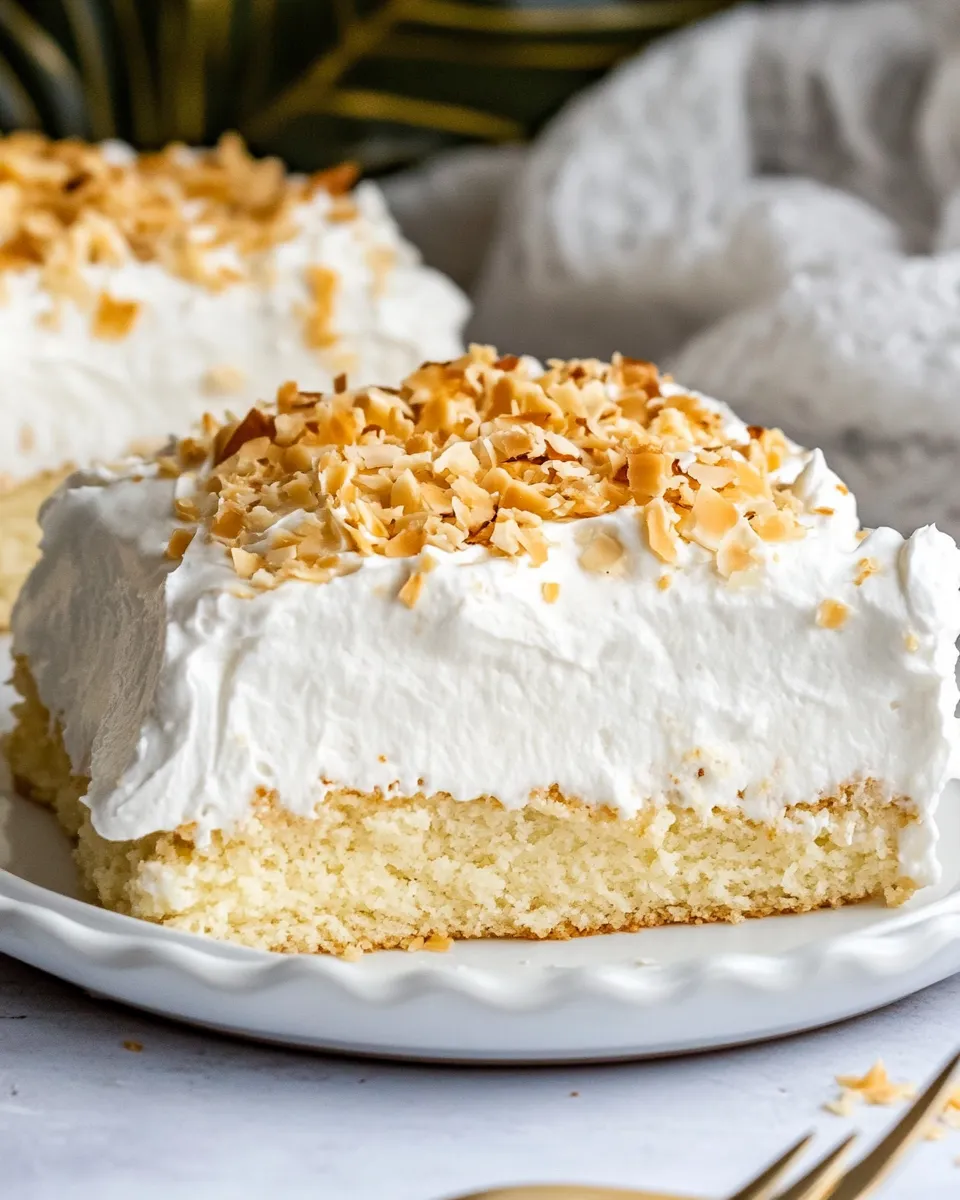
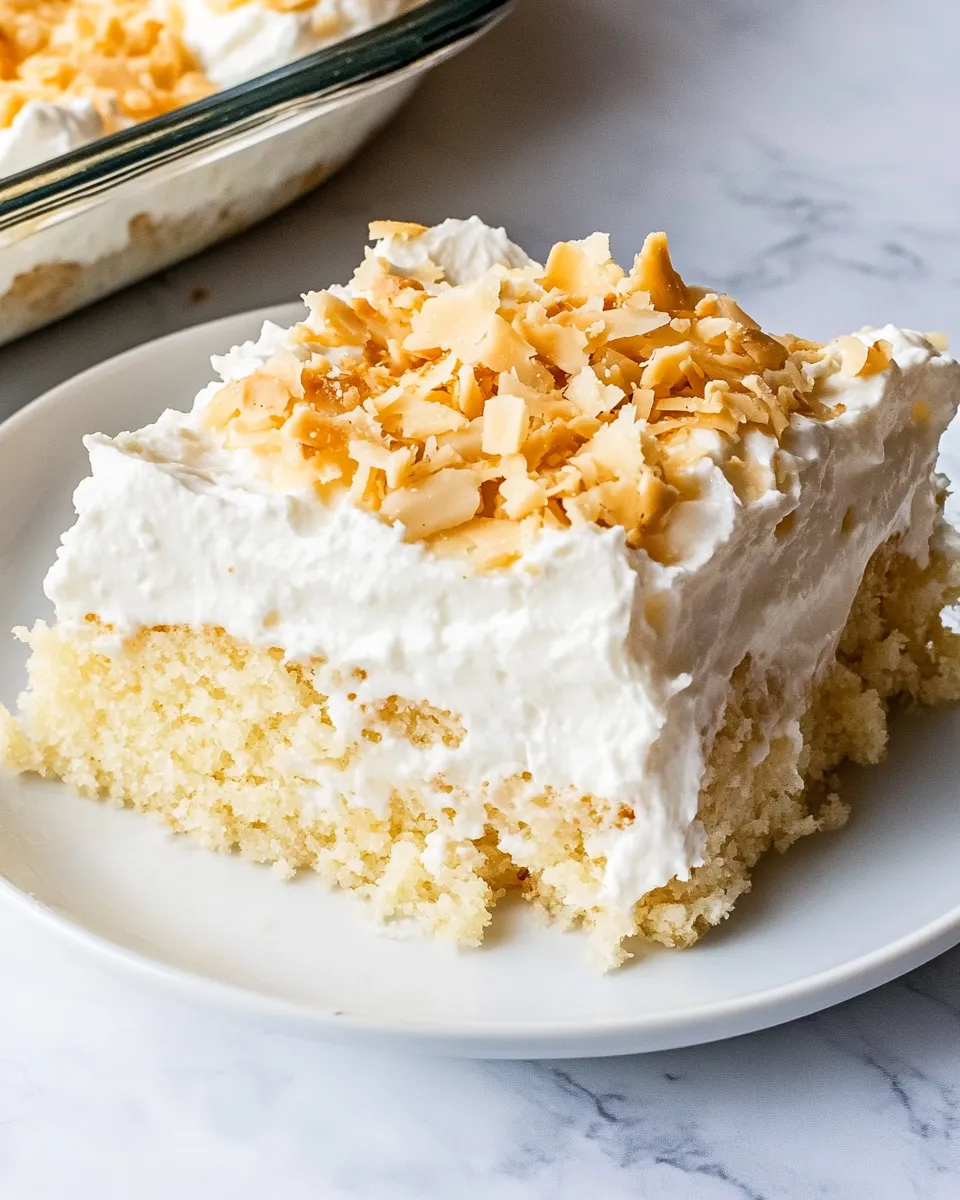
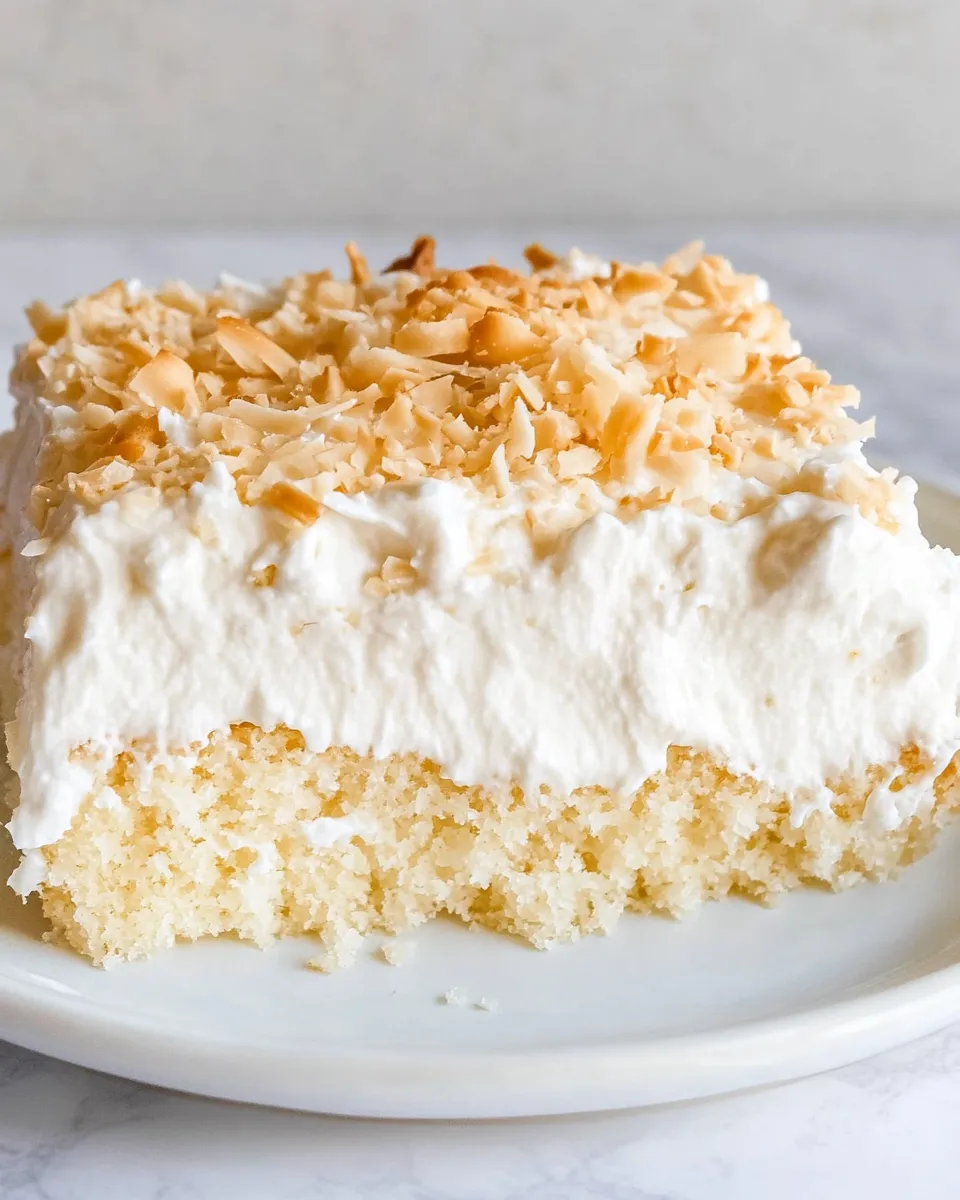
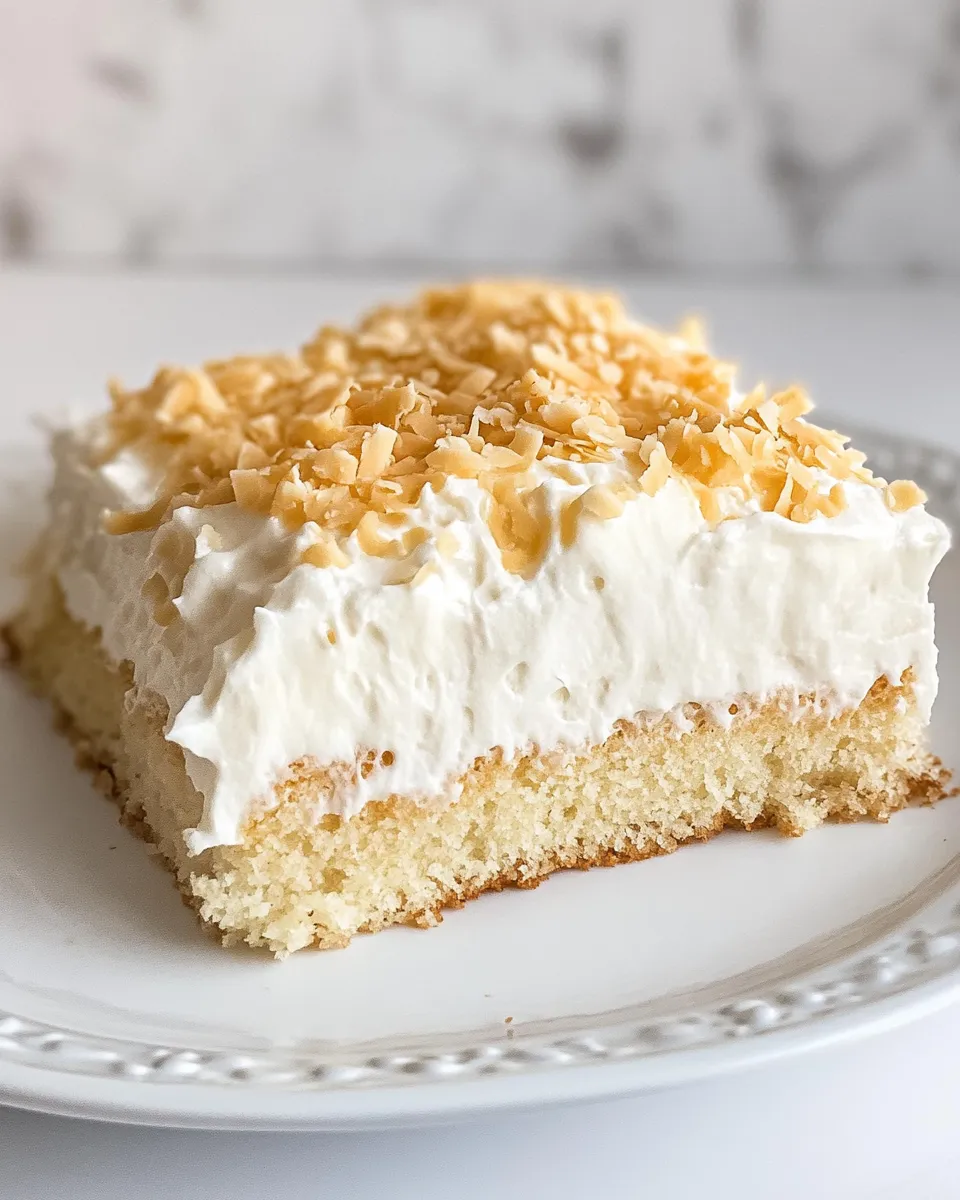
This Coconut Tres Leches Cake is a humble, show-stopping dessert that balances a light sponge with a deeply coconutty soak and pillowy whipped cream. It’s approachable for home bakers: nothing fancy, just careful steps and a good timer. The result is a moist, tender cake that tastes like coconut cream pie in sliceable form.
I test recipes the same way I expect you will — in a regular kitchen with regular tools — so the directions are practical and precise. Follow the timing, don’t skip the cooling step, and let the cake rest so it can drink up the milks. That resting makes all the difference.
What to Buy
- 1 cup all-purpose flour (120 g) — the structure of the cake; measure carefully by spooning into the cup and leveling.
- 1 1/2 teaspoons baking powder (6 g) — gives lift; make sure it’s fresh for best rise.
- 1/4 teaspoon kosher salt (1.5 g) — balances sweetness and strengthens flavor.
- 5 large eggs, separated — yolks enrich the batter; whites are whipped for lightness.
- 1 cup granulated sugar (200 g), divided — split between yolks and whites for even sweetness and stability.
- 1/3 cup whole milk (80 mL) — adds richness to the yolk mixture; room temperature is best.
- 1 teaspoon coconut extract (5 mL) — concentrated coconut flavor in the cake batter.
- 13 oz canned unsweetened coconut milk (384 mL) — the coconut base of the tres leches soak; use well-shaken milk for consistency.
- 14 ounce can sweetened condensed milk (396 g) — gives body and sweetness to the soak.
- 1/4 cup whole milk (60 mL) — dilutes the condensed milk slightly so the soak isn’t too cloying.
- 1/2 teaspoon coconut extract (2.5 mL) — boosts coconut notes in the milk soak.
- 1 pint heavy whipping cream (480 mL) — whipped into a stable topping.
- 3 Tablespoons powdered sugar (21 g) — sweetens the whipped cream without graininess.
- 1/2 teaspoon vanilla extract (2.5 mL) — rounds the whipped cream with classic flavor.
- Toasted flaked coconut (not shredded — the flaked) — toasted for crunch and a nutty accent; add just before serving.
Coconut Tres Leches Cake in Steps
Prep and Dry Mix
- Preheat the oven to 350°F (177°C).
- In a medium bowl, whisk together 1 cup all-purpose flour, 1 1/2 teaspoons baking powder, and 1/4 teaspoon kosher salt until evenly combined. Set aside.
Egg Yolks and Batter
- Separate the 5 large eggs into yolks and whites, placing yolks in one bowl and whites in another. Keep the whites and bowl free of any grease.
- Add 3/4 cup of the granulated sugar to the egg yolks. Using an electric mixer on high speed, beat the yolks and sugar until the mixture becomes pale yellow and slightly thickened.
- Stir 1/3 cup whole milk and 1 teaspoon coconut extract into the yolk mixture until combined.
- Pour the yolk mixture over the flour mixture. Gently fold or stir just until the dry ingredients are incorporated. Do not overmix — small streaks of flour are okay.
Egg Whites and Combining
- Using clean beaters, beat the reserved egg whites on high speed until they form soft peaks. As they begin to hold shape, gradually add the remaining 1/4 cup granulated sugar and continue beating until stiff peaks form (the peaks should stand straight and not droop).
- Gently fold the stiffly beaten egg whites into the batter in three additions. Use a rubber spatula and fold with a light hand to keep as much air in the batter as possible.
Bake and Cool
- Pour the batter into an un-greased baking pan and smooth the top into an even layer.
- Bake for 25 to 35 minutes, or until a toothpick inserted into the center comes out clean. Ovens vary; start checking at 25 minutes.
- Remove the cake from the oven and let it cool completely on a wire rack before moving to the next step.
Make the Three-Milk Soak
- In a small bowl, combine 13 oz canned unsweetened coconut milk, a 14-ounce can of sweetened condensed milk, 1/4 cup whole milk, and 1/2 teaspoon coconut extract. Stir until smooth and uniform.
- Once the cake is completely cool, use a fork to poke holes all over the top of the cake. Space the holes evenly so the soak can penetrate.
- Slowly pour the milk mixture evenly over the top of the cake. Pour gradually so the cake absorbs the liquid rather than letting it pool and run off.
- Cover and refrigerate the cake for a few hours or overnight to allow the milks to soak in fully. Overnight gives the best texture and flavor melding.
Whipped Cream Topping and Finish
- Just before serving, whip 1 pint heavy whipping cream with 3 tablespoons powdered sugar and 1/2 teaspoon vanilla extract until stiff peaks form.
- Smooth the whipped cream over the soaked cake in an even layer.
- Sprinkle toasted flaked coconut over the top. Toast the flakes in a dry skillet over medium heat for a few minutes, tossing frequently, until golden brown and aromatic. Cool slightly before sprinkling.
Why It Works Every Time
The structure comes from the flour and beaten egg whites — the whites add air and lift without heavy gluten development. Separating eggs gives control: yolks add moisture and richness, whites add volume. The split sugar trick stabilizes the meringue while sweetening both batter components evenly.
Venting holes and pouring the milk mixture slowly ensures even absorption. The combination of coconut milk and sweetened condensed milk delivers a silky, dense soak that clings to the crumb rather than turning the cake into mush. Chilling lets the starches relax and the flavors blend, which makes the cake slice neatly and taste harmonized.
Flavor-Forward Alternatives
- Tropical boost: Fold 1 cup finely diced fresh pineapple into the soaked cake just before topping for a piña-colada vibe.
- Chocolate hint: Add 2 tablespoons cocoa powder to the dry ingredients for a light cocoa sponge; pair with toasted coconut.
- Citrus lift: Stir 1 teaspoon lime zest into the milk soak to cut sweetness and brighten flavors.
- Rum glaze: Add 1 tablespoon dark rum to the milk mixture for a mature, bakery-style note.
Must-Have Equipment
- Electric mixer: For whipping whites and cream reliably.
- Medium mixing bowls: Separate bowls for dry ingredients, yolk mix, and whipped whites.
- Wire rack: For cooling the cake evenly.
- Baking pan: A standard 9×13 or similarly sized un-greased pan works well (adjust baking time slightly if using different sizes).
- Fork or skewer: For poking holes to let the tres leches soak in.
- Spatula: For folding and smoothing the batter and topping.
Slip-Ups to Skip
- Skipping the egg whites: Folding in whipped whites is essential — skipping them yields a dense, heavy cake.
- Pouring the soak too quickly: Flooding the cake will create pools instead of even saturation; pour slowly.
- Serving warm: The cake tastes best after chilling; warm cake won’t hold the milk well and will be messy to slice.
- Using shredded coconut: The recipe calls for flaked coconut for toasting; shredded can burn faster and gives a different texture.
Smart Substitutions
- Milk options: If you don’t have whole milk, use 2% in small quantities, but avoid skim — it changes mouthfeel.
- Coconut milk: Use full-fat canned coconut milk for richness. Light coconut milk will thin the soak.
- Extracts: If you’re short on coconut extract, use vanilla extract only, but reduce it to 1/4 teaspoon to keep flavors balanced.
- Sugar in whipped cream: Powdered sugar is recommended for smoothness; you can use superfine granulated sugar if needed, but dissolve it first.
Pro Perspective
Small techniques yield big differences: always fold the whites in gradually and with a lifting motion to retain air. Let the cake cool fully before adding the milk soak otherwise the heat pushes moisture out the sides instead of allowing absorption. For even soaking, pour the milk mixture in three passes — center, then edges, then a final gentle top-up.
Toast the flaked coconut just before serving; it wilts quickly when layered under whipped cream or refrigerated. And if you want cleaner slices, chill the cake until the topping is firm, then run a knife under hot water and wipe it dry between cuts.
Storage & Reheat Guide
Store the assembled cake covered in the refrigerator for up to 4 days. The cake is best within 48 hours, when the texture is most balanced. Leftover slices will keep their flavor but the topping may weep slightly over time.
Reheating is not necessary — this is a cold dessert. If you prefer it slightly warmer, let slices sit at room temperature for 15–20 minutes to take the chill off, but do not microwave — that disrupts the texture.
Questions People Ask
- Can I make this ahead? Yes. Make the cake and the soak the day before, refrigerate overnight, then whip the cream and finish just before serving.
- Why poke holes? Holes let the milk soak reach deep into the crumb for even moisture and flavor distribution.
- Can I use light coconut milk? You can, but full-fat coconut milk gives the classic creamy mouthfeel. Light versions thin the soak.
- Does this need a glaze? No—whipped cream and toasted flaked coconut are the intended finish. A thin caramel drizzle can be added sparingly if you like.
Serve & Enjoy
Slice with a sharp knife warmed under hot water and wiped dry between cuts for the neatest pieces. Serve chilled with an extra sprinkle of toasted flaked coconut and, if desired, a small wedge of fresh pineapple or a lime wedge on the side. This cake pairs beautifully with a strong coffee or a lightly sweetened iced tea.
Keep it simple: this is a dessert that shines through texture and balanced sweetness, not complicated decorations. Trust the soak, chill well, and enjoy every coconut-forward bite.

Coconut Tres Leches Cake
Ingredients
- 1 cup all-purpose flour (120 g)
- 1 1/2 teaspoons baking powder (6 g)
- 1/4 teaspoon kosher salt (1.5 g)
- 5 large eggs, separated
- 1 cup granulated sugar (200 g), divided (¾ cup for yolks, ¼ cup for whites)
- 1/3 cup whole milk (80 mL) for batter
- 1 teaspoon coconut extract (5 mL) for batter
- 13 oz canned unsweetened coconut milk (384 mL)
- 14 ounce can sweetened condensed milk (396 g/mL)
- 1/4 cup whole milk (60 mL) for three-milk mixture
- 1/2 teaspoon coconut extract (2.5 mL) for three-milk mixture
- 1 pint heavy whipping cream (480 mL)
- 3 tablespoons powdered sugar (21 g)
- 1/2 teaspoon vanilla extract (2.5 mL)
- toasted flaked coconut (not shredded)
Instructions
- Preheat the oven to 350°F (175°C).
- Whisk together the flour, baking powder, and salt in a medium bowl until evenly combined.
- In a bowl, beat the 5 egg yolks with 3/4 cup granulated sugar on high speed until pale and thick. Stir in 1/3 cup whole milk and 1 teaspoon coconut extract.
- Pour the egg yolk mixture into the dry ingredients and gently fold until just combined; do not overmix.
- In a clean bowl, beat the 5 egg whites on high speed until soft peaks form, then gradually add the remaining 1/4 cup granulated sugar and continue beating to stiff peaks.
- Gently fold the beaten egg whites into the batter in two additions until uniform and no large streaks remain.
- Pour the batter into an ungreased 9×13 metal baking dish and smooth the top.
- Bake for 25–35 minutes, or until a toothpick inserted in the center comes out clean. Remove from oven and cool completely on a rack.
- Make the three-milk mixture by whisking together 13 oz canned unsweetened coconut milk, the 14-ounce can of sweetened condensed milk, 1/4 cup whole milk, and 1/2 teaspoon coconut extract.
- When the cake is cool, poke holes all over the surface with a fork and slowly pour the milk mixture evenly over the cake, allowing it to absorb.
- Refrigerate the soaked cake for several hours or overnight to allow the milks to soak in.
- Whip the heavy whipping cream with the powdered sugar and vanilla extract until stiff peaks form, then spread the whipped cream evenly over the chilled cake.
- Sprinkle toasted flaked coconut over the top before serving.
Equipment
- 9×13 metal baking dish
- Hand Mixer
- Mixing bowls
- Whisk or spatula
- Measuring cups and spoons
- fork
- Baking rack
Notes
- Store the cake covered in the fridge for 3–5 days.
- The cake can be made 1–2 days ahead for best flavor.
- Freeze the baked and cooled cake for up to 3 months, wrapped well.
- Thaw frozen cake overnight in the fridge before adding the milk mixture.
- Use flaked coconut, not shredded, for garnish.