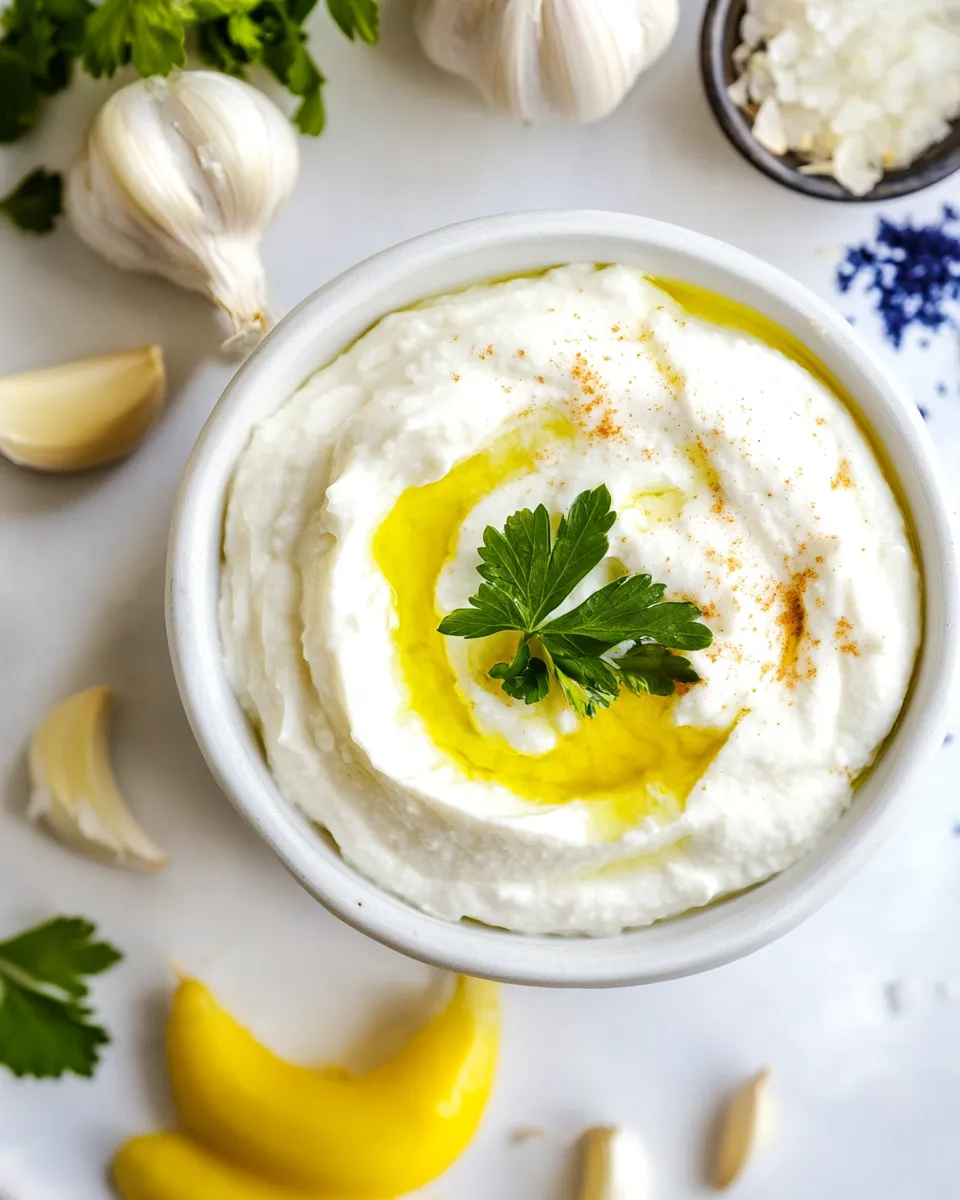
Lebanese Garlic Sauce
Lebanese garlic sauce — often called toum — is one of those condiments that makes everything better. It’s sharp, bright, and impossibly creamy despite being oil-based. I make a big batch on weekends and use it through the week: slathered on chicken, dolloped on roasted vegetables, or simply scooped up with warm pita. It’s straightforward once you understand the rhythm of the technique.
This post walks you through a dependable method, explains why the steps matter, and offers practical tips so your sauce stays emulsified and silky. I’ll also cover quick swaps, equipment that speeds the process, and common mistakes to avoid. By the end you’ll have a fridge-ready jar of garlic bliss that keeps for weeks.
What Goes Into Lebanese Garlic Sauce
Ingredients
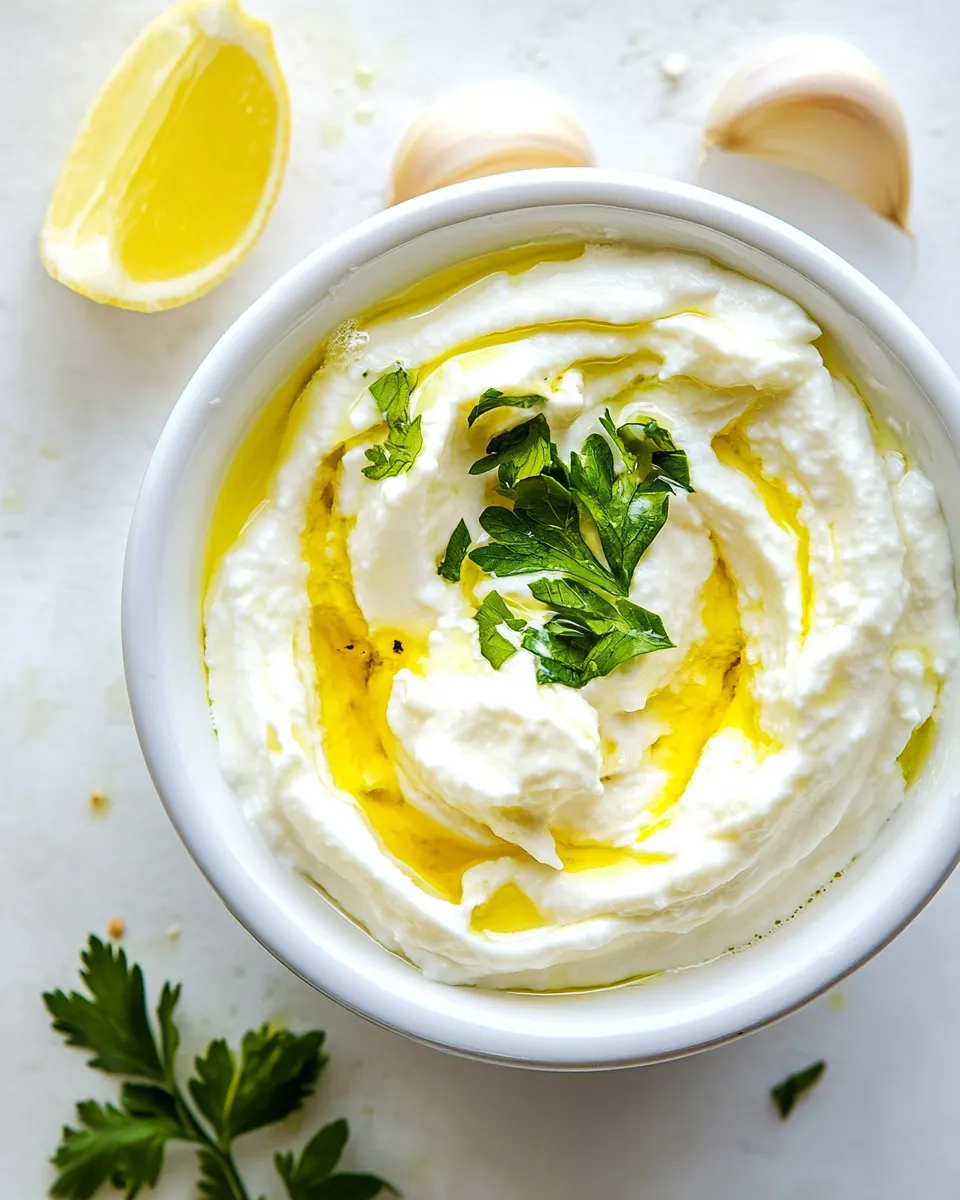
- 3/4 cup peeled garlic cloves — the foundation for toum; fresh, firm cloves give the best pungency and texture.
- 1 teaspoon kosher salt — seasons and helps break down the garlic into a paste while protecting the emulsion.
- 2 cups vegetable oil — the main body of the sauce; neutral oil keeps the garlic bold without an olive oil flavor. Use a neutral oil you trust.
- 4 tablespoons freshly squeezed lemon juice — adds the acid needed for flavor and helps stabilize the emulsion.
- 4 tablespoons ice water — cools the mixture and loosens the texture so the sauce becomes creamy.
- For serving, as desired: extra virgin olive oil, fresh chopped parsley, flatbread, fresh vegetables — optional finishing touches: a drizzle of EVOO or parsley brightens the plate; use pita or veg for serving.
Lebanese Garlic Sauce, Made Easy
These directions preserve the original order and measurements but translate each step into clearer, reliable actions. Keep everything close by — once you start, the process moves steadily and is much easier with a helping hand for scraping the bowl.
- Prepare your ingredients and equipment. Peel 3/4 cup of garlic cloves and measure the salt, oil, lemon juice, and ice water. Use a food processor with a clean, dry bowl and blade. Place a small bowl of ice water nearby.
- Make the garlic paste. Add the garlic cloves and 1 teaspoon kosher salt to the food processor. Pulse or run the processor until the garlic breaks down into a smooth paste, stopping occasionally to scrape the sides with a spatula so everything gets incorporated evenly.
- Begin the oil incorporation—very slowly. With the motor running on low or medium, start adding the vegetable oil in a few drops at a time. At first add only a couple drops at a time until you’ve incorporated the first 1/4 cup of oil. This slow start helps the emulsion form and prevents separation.
- Continue adding oil slowly. After the first quarter cup, increase the drizzle slightly but keep it slow and steady. The goal is to gradually incorporate the oil so the mixture thickens without breaking.
- Add lemon juice once half the oil is in. When about half (1 cup) of the oil has been added and is incorporated, keep the processor running and drizzle in 4 tablespoons freshly squeezed lemon juice slowly. The acid helps stabilize and flavor the sauce.
- Finish adding the oil. With the motor running, continue to add the remaining oil in a slow, steady stream. Stop occasionally to scrape down the sides so no unmixed oil pools on the bowl edges.
- Emulsify fully — this takes time. Plan for about 20 minutes total time of gradually adding oil and lemon juice combined. Go slowly; rushing here is the most common reason the sauce breaks.
- Smooth with ice water. Once all the oil and lemon are incorporated and the texture is thick, drizzle in 4 tablespoons ice water while the motor runs. The cold water loosens and smooths the sauce, giving it a silky, mayo-like texture.
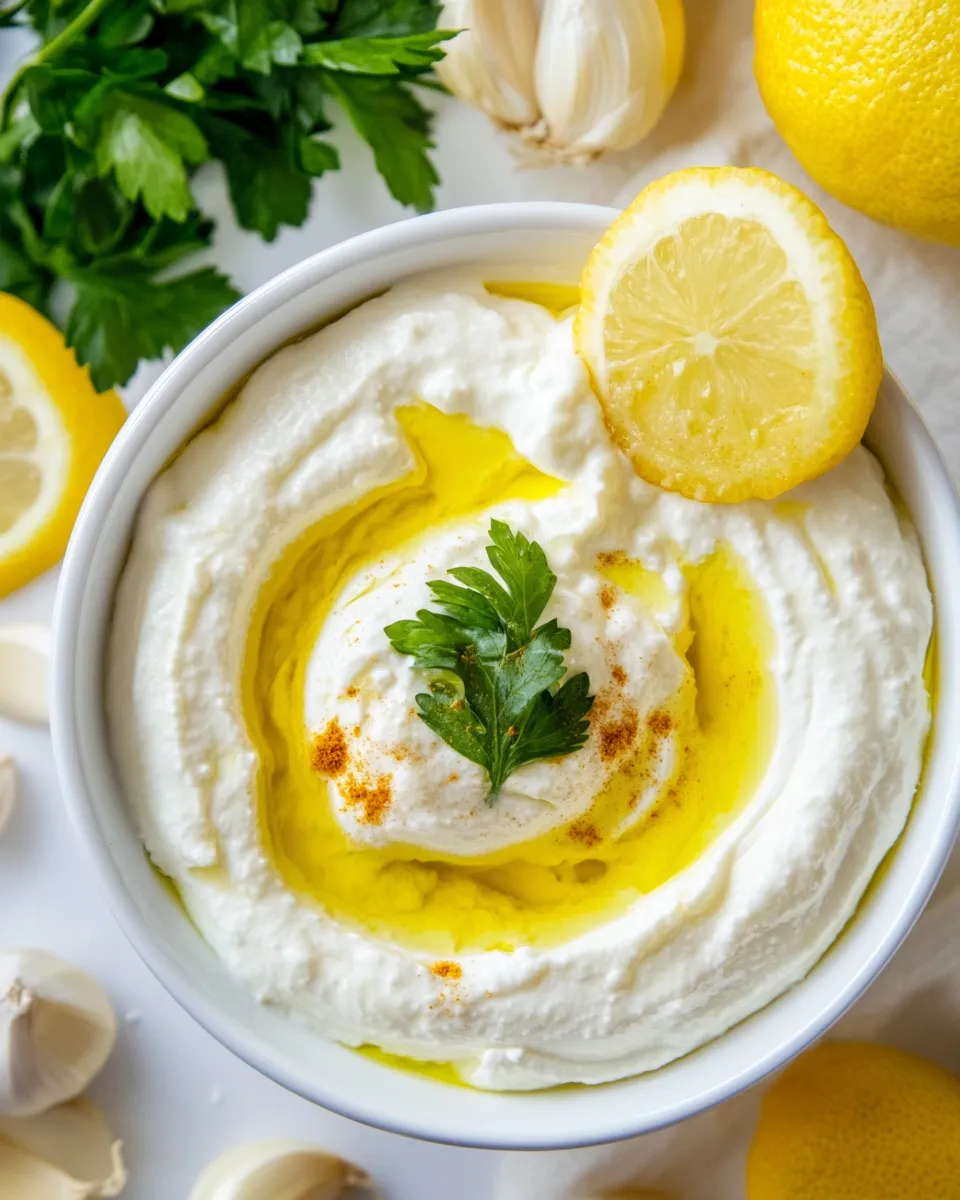
- Finish and serve. Transfer the toum to a bowl. If you like, drizzle a little extra virgin olive oil on top and sprinkle chopped parsley. Serve immediately with warm pita, flatbread, or fresh vegetables.
- Store properly. Pour the sauce into an airtight container and refrigerate. It will keep up to 1 month in the fridge.
Why It’s Crowd-Pleasing
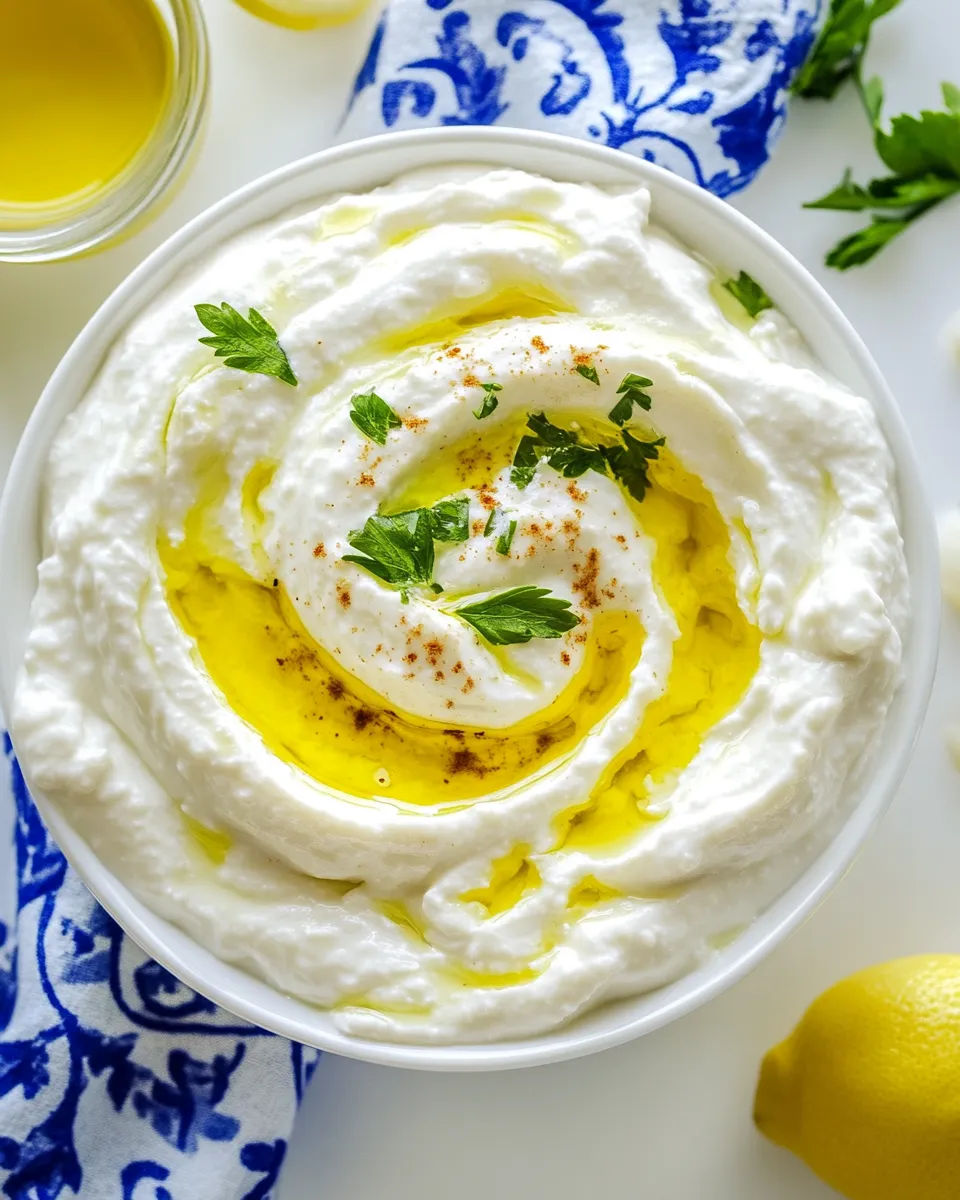
The flavor profile is simple and decisive: potent garlic softened by lemon and mellowed by oil. It hits savory and tangy with an ultra-creamy mouthfeel that makes it addictive. Toum plays well with strong flavors — roasted lamb, grilled chicken, fried cauliflower — because it cuts through richness and adds lift. It’s also a universal dip: kids love it when diluted slightly with yogurt; adults pair it with smoked meats or kebabs.
Texturally it’s a win. The long, slow emulsification turns sharp raw garlic into a silky spread that feels indulgent. Because it’s oil-based and acidic, it keeps remarkably well, so a single batch can elevate multiple meals across a week.
Quick Replacement Ideas
- Vegetable oil — if you prefer a hint of fruitiness, replace up to half with light olive oil, but avoid using all extra virgin olive oil because its flavor can overpower and it may affect emulsification.
- Ice water — cold tap water can work in a pinch, but chilled or icy water gives a slightly better texture.
- Lemon juice — bottled lemon juice will work, though freshly squeezed lemon juice brightens the flavor the most.
- Garlic — use fresh, firm cloves only. Roasted garlic creates a different, milder sauce (not a true toum) but is lovely for a softer spread.
Appliances & Accessories
- Food processor — the best all-around tool for this recipe; it gives good control when adding oil and scraping.
- Immersion blender — an alternative for making toum directly in a tall jar; add ingredients in the same order and stabilize the blender against the jar walls while you drizzle oil.
- Measuring spoons/cups — precise measurements help the emulsion hold; keep these handy.
- Spatula — for scraping the bowl sides frequently so everything emulsifies evenly.
- Small bowl of ice water — keeps your 4 tablespoons water truly cold for the final smoothing step.
Slip-Ups to Skip
- Adding oil too quickly — the biggest cause of a broken toum. Start with a few drops and keep the drizzle slow even after the emulsion begins.
- Skipping the scraping — oil can collect at the bowl edges; stop and scrape several times during the process.
- Using warm oil or warm water — warm temperatures can destabilize the emulsion. Use room-temperature oil and ice-cold water.
- Relying on pre-minced garlic — pre-minced garlic is convenient but often watery or acidic; fresh cloves give a cleaner, punchier flavor and better texture.
- Overworking the motor speed — very high speed can overheat and break the sauce; keep the processor at a moderate running speed for steady incorporation.
Adaptations for Special Diets
- Vegan — this recipe is already vegan: no animal products required.
- Low-sodium — reduce the kosher salt to 1/2 teaspoon or omit; remember reduced salt will change the garlic’s bite slightly.
- Lower-fat — toum relies on oil for texture; to lower fat, mix the finished sauce 1:1 with plain unsweetened yogurt or an aquafaba-based blend. Texture and flavor change, so treat these as different dressings rather than classic toum.
- Oil-free — traditional toum cannot be made without oil and remain authentic in texture. Consider a garlic-yogurt sauce as an oil-free alternative.
Testing Timeline
- 0–10 minutes: Prep and make the garlic paste; begin adding the first 1/4 cup of oil drop by drop. Focus here — the early emulsion sets the stage.
- 10–20 minutes: Continue adding oil slowly, add lemon juice when half the oil is in, then finish incorporating the remaining oil. This is the slow, steady phase where the sauce thickens.
- 20–22 minutes: Add the ice water and run the processor until the texture smooths out into a creamy sauce.
- Chill 30–60 minutes (optional): Resting the sauce for a short time in the fridge helps flavors meld; it’s ready to serve immediately but benefits from a brief chill.
Leftovers & Meal Prep
Toum stores well because of the oil and acid. Keep it in a clean, airtight jar and refrigerate for up to 1 month. A thin layer of oil on top helps protect it from oxidation; just stir it in before serving. If the sauce looks slightly separated after a few days, whisk it vigorously or pulse it briefly in the food processor with a tablespoon of cold water to recombine.
Make-ahead tip: prepare a double batch and freeze portions in ice cube trays. Pop out individual cubes for single meals and thaw in the fridge overnight. Texture can be slightly different after freezing, so use frozen toum for cooked dishes where texture changes matter less.
Reader Questions
What if my sauce splits?
If it breaks (oil separates), stop adding oil. Add a teaspoon of ice water to the processor and pulse to try to bring it back. Alternatively, start a new small garlic paste with a clove and a pinch of salt in a clean bowl, then slowly whisk in the broken sauce a little at a time to rebuild the emulsion.
Can I use a blender?
Yes, but be cautious. A high-speed blender can overheat the garlic and oil, risking a split. Use short pulses and keep the drizzle slow. An immersion blender in a tall container is often easier to control.
Is the sauce safe raw?
Yes, toum uses raw garlic, oil, and lemon. Use clean equipment, fresh garlic, and refrigerate promptly. Because it’s acidic and oily, it keeps well when stored correctly.
Ready, Set, Cook
Make sure everything is measured and your food processor bowl is dry. Work patiently: the steps are simple but require time and care during the oil additions. Keep a spatula handy, use cold water at the end, and taste as you go—adjust next time by using a bit more lemon if you like brighter tang. Once you’ve made a batch you’ll see why toum is a favorite in Lebanese homes and restaurants: it elevates the everyday into something memorable. Enjoy.

Lebanese Garlic Sauce
Ingredients
- 3/4 cup peeled garlic cloves
- 1 teaspoon kosher salt
- 2 cups vegetable oil
- 4 tablespoons freshly squeezed lemon juice
- 4 tablespoons ice water
- extra virgin olive oil (for serving, optional)
- fresh chopped parsley (for serving, optional)
- flatbread (for serving, optional)
- fresh vegetables (for serving, optional)
Instructions
- Add the peeled garlic cloves and kosher salt to a food processor. Process until the garlic forms a smooth paste, stopping to scrape down the sides as needed.
- With the processor running, begin to drizzle the vegetable oil in very slowly: start with just a couple drops at a time until about 1/4 cup is incorporated, then continue a very slow steady drizzle.
- Once about half of the oil has been added, still with the motor running, drizzle in the lemon juice slowly.
- Continue adding the remaining oil in a slow, steady stream while the processor runs, scraping down the sides as necessary; this emulsification process takes about 20 minutes and must be done slowly for a stable sauce.
- With the motor running, drizzle in the ice water. The mixture will become smoother and very creamy; stop and scrape down the bowl if needed, then transfer the sauce to a bowl.
- Optionally drizzle extra virgin olive oil on top and sprinkle with chopped parsley. Serve with flatbread or fresh vegetables.
Equipment
- Food Processor
- Measuring cups and spoons
- spoon or spatula
- small bowl
Notes
- This sauce can replace mayonnaise on sandwiches.
- Add oil very slowly to ensure a proper emulsion.
- Use ice-cold water to help stabilize the texture.
- Serve immediately for best texture.
- Optional garnishes: olive oil and chopped parsley.