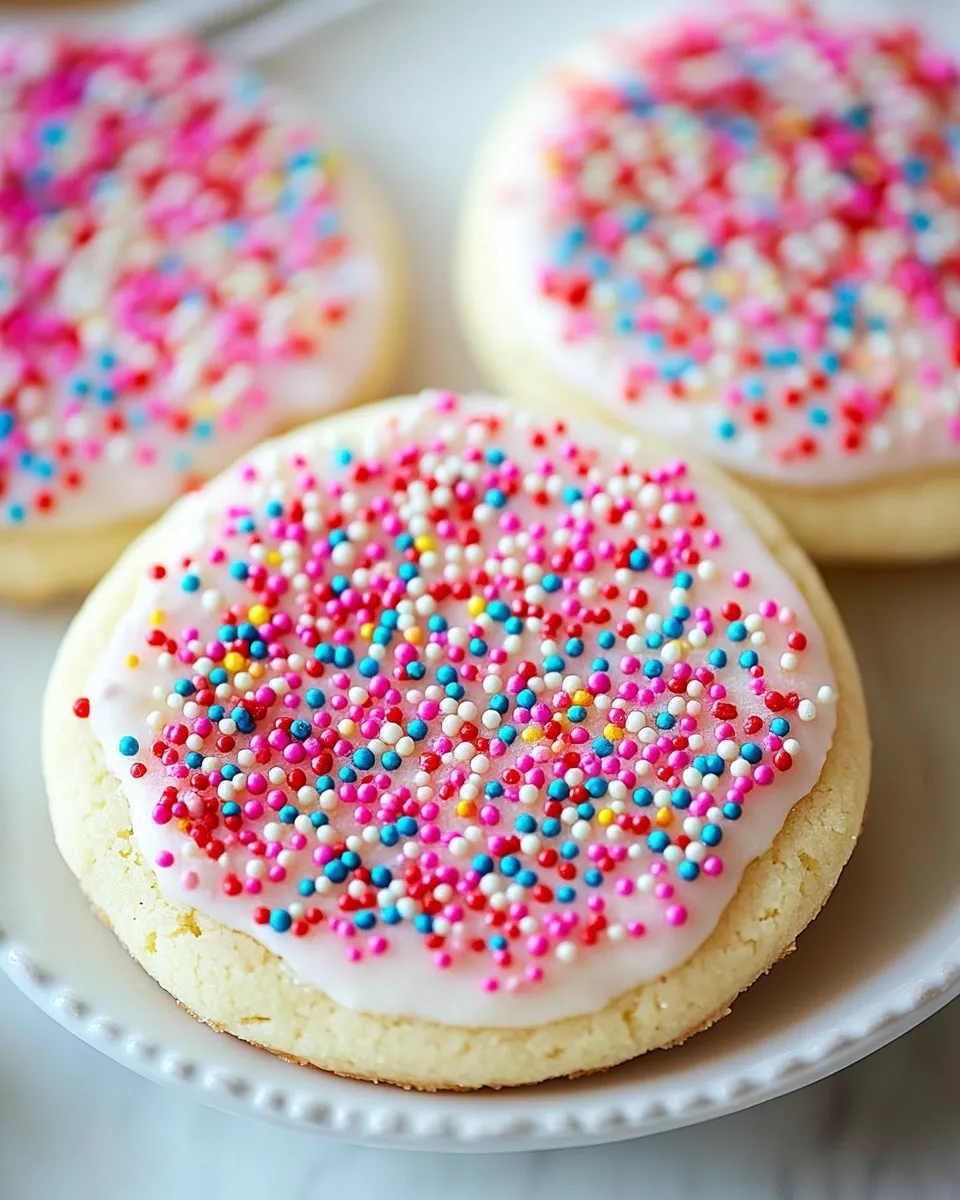
Lofthouse Style Sugar Cookies
These soft, pillowy sugar cookies are the kind you remember from birthday parties and bakery windows: tender crumb, slightly cakey texture, and a smooth layer of sweet vanilla frosting. I developed this version to replicate that iconic Lofthouse experience at home, using cake flour and a touch of cornstarch to keep the cookies soft, and a mix of butter and shortening for structure and tenderness.
The method is straightforward and reliable. Chill the dough briefly, flatten the cookies to a consistent thickness, and bake just until set. Finish with a simple, fluffy vanilla frosting that sets quickly—so work quickly if you plan to add sprinkles.
This post gives a clear ingredient breakdown with quick notes, a step-by-step instruction set you can follow without guessing, troubleshooting tips, and sensible substitutions for common dietary needs. No fluff—just the good stuff, so you can get baking today.
What We’re Using
Ingredients
- 2 1/2 cups cake flour — provides a fine, low-protein base for a tender, cakey cookie crumb.
- 2 tsp cornstarch — softens the texture further and helps keep cookies delicate.
- 1 1/2 tsp baking powder — gives gentle lift so cookies stay soft but don’t spread too thin.
- 1/4 tsp salt — balances sweetness and enhances flavor.
- 1/2 cup salted butter, at room temperature — adds flavor and richness; room temperature ensures even creaming.
- 1/4 cup all vegetable shortening (unflavored), at room temperature — helps create that soft, bakery-style texture and keeps cookies tender.
- 1 cup granulated sugar — sweetens and helps aerate when creamed with fats.
- 1 large egg — adds moisture and structure.
- 1 large egg white — boosts tenderness and helps the dough bind without extra fat.
- 2 tsp vanilla extract — main flavor note in the cookie.
- 1/2 tsp almond extract — a small aromatic boost to replicate the classic flavor profile.
- 1 recipe Vanilla Frosting, recipe follows — the smooth, sweet finishing layer that makes these cookies Lofthouse-style.
- 1/3 cup salted butter, at room temperature — for the frosting; keeps it creamy and spreadable.
- 2 1/2 cups powdered sugar — sweetens and thickens the frosting to a spreadable consistency.
- 1/2 tsp vanilla extract — primary flavor for the frosting.
- 2 1/2 – 3 Tbsp half-and-half — adjusts frosting texture; use more for a thinner spread.
- Food coloring, optional — for tinted frosting if desired; gel colors work best to avoid thinning the frosting.
Lofthouse Style Sugar Cookies: Step-by-Step Guide
Make the dough
- Whisk dry ingredients: Sift together 2 1/2 cups cake flour, 2 tsp cornstarch, 1 1/2 tsp baking powder, and 1/4 tsp salt into a large bowl. Whisk a few times to combine, then set the bowl aside.
- Cream fats and sugar: In the bowl of a stand mixer fitted with the paddle attachment (or use a large bowl and hand mixer), beat 1/2 cup salted butter and 1/4 cup vegetable shortening on medium speed with 1 cup granulated sugar until the mixture is very pale and fluffy, about 4 minutes. Scrape down the bowl as needed.
- Add eggs and extracts: Add 1 large egg and beat until incorporated. Add 1 large egg white, 2 tsp vanilla extract, and 1/2 tsp almond extract, mixing until combined and smooth.
- Incorporate dry ingredients: With the mixer running on low, add the sifted dry ingredients gradually and mix just until combined. Do not overmix—stop when no streaks of flour remain.
- Chill the dough: Transfer the dough to an airtight container and refrigerate for 2 hours. This firms the dough for shaping and helps control spread.
Shape and bake
- Preheat the oven: During the last 10 minutes of refrigeration, preheat your oven to 375°F (190°C).
- Portion the dough: Scoop out a scant 1/4 cup of dough for each cookie and roll it into a ball.
- Flatten to size: Place the dough ball on a lightly floured surface and sprinkle the top lightly with flour. Using something flat and smooth (a plastic lid or a flat-bottomed measuring cup works well), press the dough evenly to 1/2″ thick. You should end up with a cookie about 2 2/3″–2 3/4″ in diameter.
- Arrange on sheet: Transfer flattened cookies to a Silpat-lined or lightly buttered baking sheet, spacing them to allow a little room. You will likely need two cookie sheets to bake the batch.
- Bake: Bake in the preheated oven for 9–11 minutes. Cookies should be set but still pale—avoid browning to keep that soft texture.
- Cool briefly: Let cookies cool on the baking sheet for 5 minutes, then transfer to a wire rack to finish cooling completely before frosting.
Frosting and finishing
- Make the Vanilla Frosting: In a large mixing bowl, beat 1/3 cup salted butter until smooth. Gradually add 2 1/2 cups powdered sugar and 1/2 tsp vanilla extract, beating until combined. Add 2 1/2 to 3 Tbsp half-and-half a tablespoon at a time until the frosting reaches a smooth, fluffy, spreadable consistency. If using food coloring, mix it in now (gel color recommended).
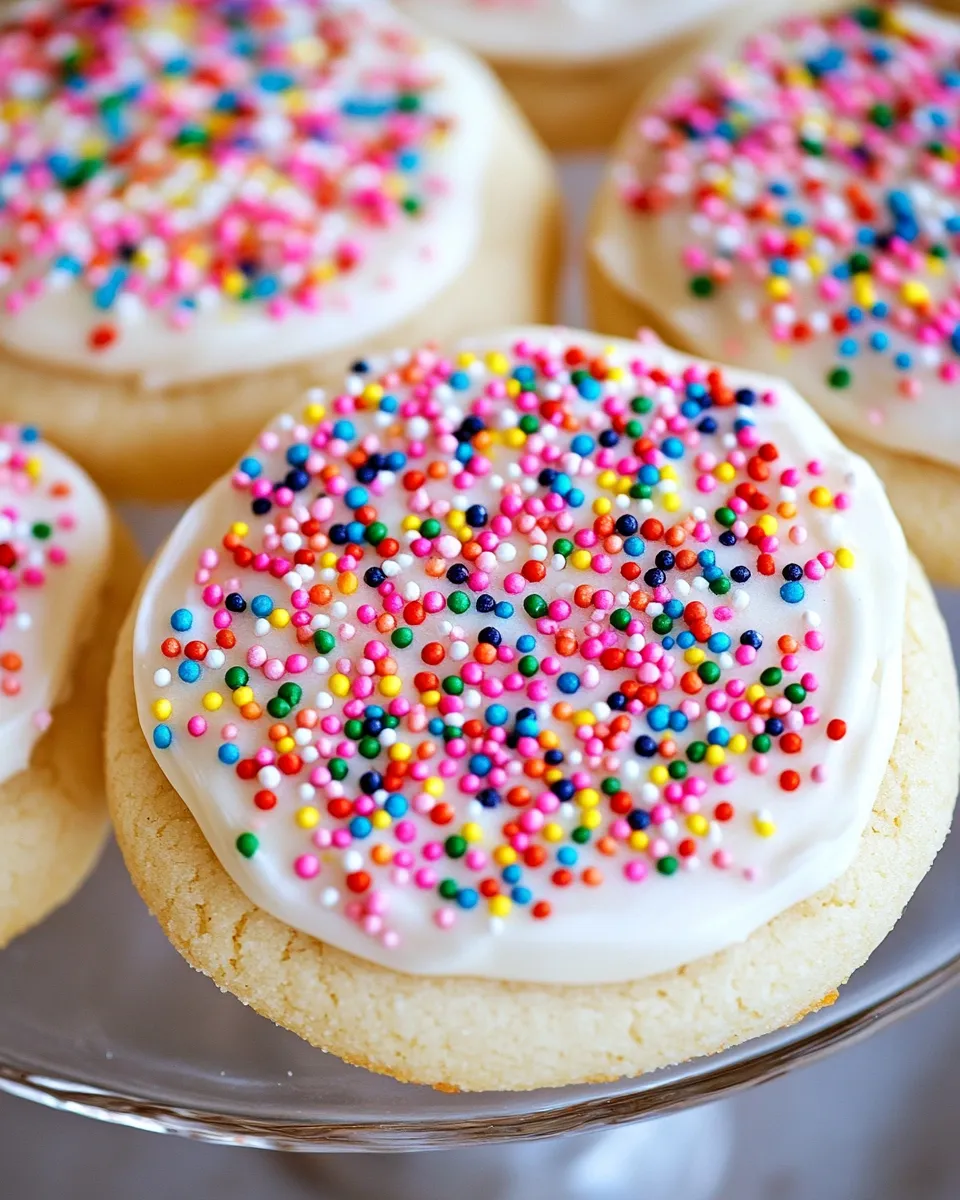
- Frost cookies: Spread frosting onto each cooled cookie. Work one cookie at a time if you plan to add sprinkles—frosting begins to set quickly, so sprinkle immediately after frosting each cookie. Do not frost the entire batch before sprinkling if you want sprinkles to stay.
- Set: Allow frosting to set for at least 15–30 minutes before stacking or packing, so the surface firms up a bit.
Why This Lofthouse Style Sugar Cookies Stands Out
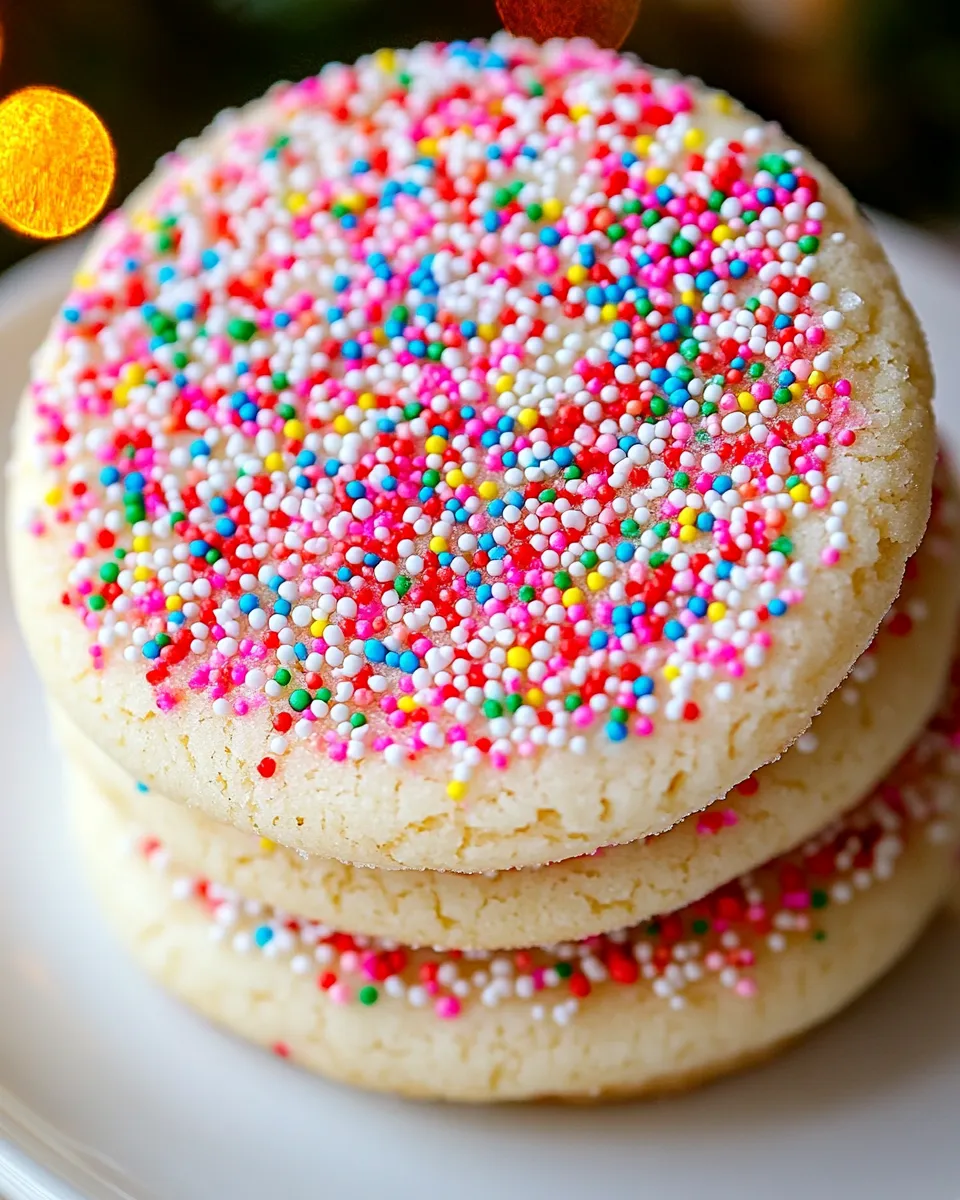
The combination of cake flour and cornstarch gives these cookies a finer, softer crumb than all-purpose flour alone. Using both butter and shortening balances flavor and texture—butter adds taste while shortening helps maintain that pillowy softness. Chilling the dough is a small step that makes shaping predictable and prevents over-spread.
The frosting is intentionally simple: creamy, stable, and quick to whip. Because it sets quickly, you get a neat, matte finish that holds sprinkles and looks bakery-fresh. Overall, the recipe focuses on techniques that reproduce the signature Lofthouse texture without complicated steps or specialty equipment.
What to Use Instead
- Replace cake flour with a homemade substitute (for every cup, remove 2 tablespoons of AP flour and replace with 2 tbsp cornstarch) — works in a pinch but may be slightly less tender.
- Swap vegetable shortening with an additional 1/2 cup butter — will yield richer flavor but a slightly less tender, more buttery cookie.
- Use 100% egg whites in place of the whole egg + egg white combination — will slightly reduce richness and make cookies a touch lighter.
- Use milk instead of half-and-half in frosting — thinner finish, add less to avoid making the frosting runny.
- Use powdered or gel food coloring for vibrant frosting without thinning it — gels are best for minimal liquid addition.
Prep & Cook Tools
- Stand mixer with paddle attachment (or hand mixer)
- Mixing bowls (one large for dry ingredients, one for creaming)
- Sifter or fine-mesh sieve
- Measuring cups and spoons
- Baking sheets (2)
- Silpat or parchment paper (or butter for greasing)
- Flat, smooth tool for pressing cookies (lid, measuring cup, or small rolling pin)
- Wire cooling rack
- Spatula and bench scraper
Problems & Prevention
Cookies spread too much
Make sure the dough is well chilled for the full 2 hours. Use cake flour and shortening as called for—too much butter or warm dough causes excess spread. Press to uniform thickness to control diameter.
Cookies come out dense
Do not overmix after adding the flour. Mix just until the dry ingredients are incorporated to avoid developing gluten and creating density.
Frosting too runny
Add half-and-half sparingly and stop at the thicker range (2 1/2 Tbsp) if your kitchen is warm. If it gets too thin, add more powdered sugar a little at a time.
Sprinkles won’t stick
Sprinkle each cookie immediately after frosting because the frosting sets quickly. Work cookie-by-cookie for best results.
Dietary Customizations
- Lower-fat: Substitute the 1/2 cup butter + 1/4 cup shortening with 3/4 cup light butter alternative — flavor and texture will change and cookies may be less tender.
- Dairy-free: Use dairy-free margarine in place of butter and a dairy-free creamer for the frosting; make sure the shortening is vegetable-based (usually it is).
- Egg-free: Use a commercial egg replacer equivalent to 1 large egg and 1 egg white (or 3 tablespoons aquafaba for each egg) — texture will vary; chilling is even more important.
- Gluten-free: Use a 1:1 gluten-free flour blend formulated for baking in place of cake flour and add a teaspoon of xanthan gum if your blend lacks it; results will be similar but slightly different in crumb.
Behind-the-Scenes Notes
I test these cookies at different thicknesses and found 1/2″ gives the classic look and delicate chew. The small addition of almond extract isn’t essential but it lifts the vanilla and creates that bakery flavor many people associate with Lofthouse cookies. The frosting sets quickly because of the high powdered sugar content—this is intentional to preserve decoration and prevent smudging in transit.
Shelf Life & Storage
Store frosted cookies in an airtight container at room temperature for up to 3 days. If you need to stack them, place parchment between layers to prevent sticking. Unfrosted baked cookies keep 4–5 days in an airtight container. For longer storage, freeze unfrosted baked cookies in a single layer on a sheet until solid, then transfer to a freezer-safe container for up to 2 months; thaw and frost when ready to serve.
Quick Q&A
- Can I roll these out instead of pressing? — The dough is made for scooping and pressing. It’s soft but workable; rolling may require extra flour and will change the texture slightly.
- Why cake flour? — Cake flour keeps the cookies tender and fine-textured; all-purpose will work but produce a firmer cookie.
- Can I make the dough ahead? — Yes: refrigerate up to 24 hours or freeze shaped dough balls for up to 1 month. Thaw in the fridge before flattening and baking.
- How do I get perfectly round cookies? — Use a cookie ring or biscuit cutter to press for perfectly uniform edges, or press with a flat lid and smooth the edges with a dab of flour on a fingertip.
Next Steps
Grab your stand mixer and chill that dough—these cookies come together in manageable stages and reward a little patience with a nostalgic, bakery-style result. If you want a photo-ready finish, tint small batches of frosting different colors and keep a piping bag on hand for neat edges. Enjoy, and if you try a variation, tell me how it turned out—I love hearing what readers bake in their kitchens.

Lofthouse Style Sugar Cookies
Ingredients
- 2 1/2 cups cake flour
- 2 tsp cornstarch
- 1 1/2 tsp baking powder
- 1/4 tsp salt
- 1/2 cup salted butter at room temperature
- 1/4 cup vegetable shortening unflavored, at room temperature
- 1 cup granulated sugar
- 1 large egg
- 1 large egg white
- 2 tsp vanilla extract
- 1/2 tsp almond extract
- Vanilla Frosting (see recipe)
- 1/3 cup salted butter for frosting, at room temperature
- 2 1/2 cups powdered sugar for frosting
- 1/2 tsp vanilla extract for frosting
- 2 1/2 - 3 tbsp half-and-half for frosting
- food coloring optional, for frosting
Instructions
- Sift together the cake flour, cornstarch, baking powder, and salt into a large bowl and whisk a few times to combine; set aside.
- In the bowl of a stand mixer fitted with the paddle (or using a hand mixer), beat the 1/2 cup butter, 1/4 cup shortening, and 1 cup granulated sugar on medium speed until very pale and fluffy, about 3–4 minutes, scraping the bowl as needed.
- Add the whole egg and beat until combined, then add the egg white, 2 tsp vanilla, and 1/2 tsp almond extract and beat until incorporated.
- With the mixer on low, slowly add the dry ingredients and mix just until a soft dough forms; do not overmix.
- Transfer the dough to an airtight container and refrigerate for 2 hours. Preheat the oven to 375°F (190°C) during the last 10 minutes of refrigeration.
- Scoop scant 1/4 cup portions of dough and roll each into a ball. On a lightly floured surface, lightly dust the top of a ball with flour, then press and evenly flatten each ball to about 1/2 inch thick using a flat, smooth object so the cookie is roughly 2 2/3–2 3/4 inches across.
- Place flattened cookies on a Silpat- or parchment-lined baking sheet, spacing them a few inches apart. Repeat with remaining dough, using a second baking sheet as needed.
- Bake in the preheated oven for 9–11 minutes until edges are set but centers remain pale. Allow cookies to cool on the baking sheet for 5 minutes, then transfer to a wire rack to cool completely.
- To make the vanilla frosting: in a large bowl, beat 1/3 cup butter until smooth, then add 2 1/2 cups powdered sugar and 1/2 tsp vanilla and beat until combined. Add 2 1/2–3 tbsp half-and-half as needed to reach a smooth, fluffy spreading consistency. Add food coloring if desired.
- Frost cooled cookies with the vanilla frosting. If adding sprinkles, apply them immediately after frosting each cookie so they stick before the frosting begins to set.
Equipment
- stand mixer or hand mixer
- Mixing bowls
- Measuring cups and spoons
- rolling or pressing tool (flat, smooth surface)
- Baking Sheets
- silpat or parchment paper
- Wire Rack
- Airtight Container
Notes
- Chill the dough for a full 2 hours for easier handling and better cookie shape.
- Use cake flour for the signature tender texture.
- Press dough to uniform thickness for even baking.
- Frost cookies only after they are completely cool.
- Sprinkle immediately after frosting so sprinkles adhere.