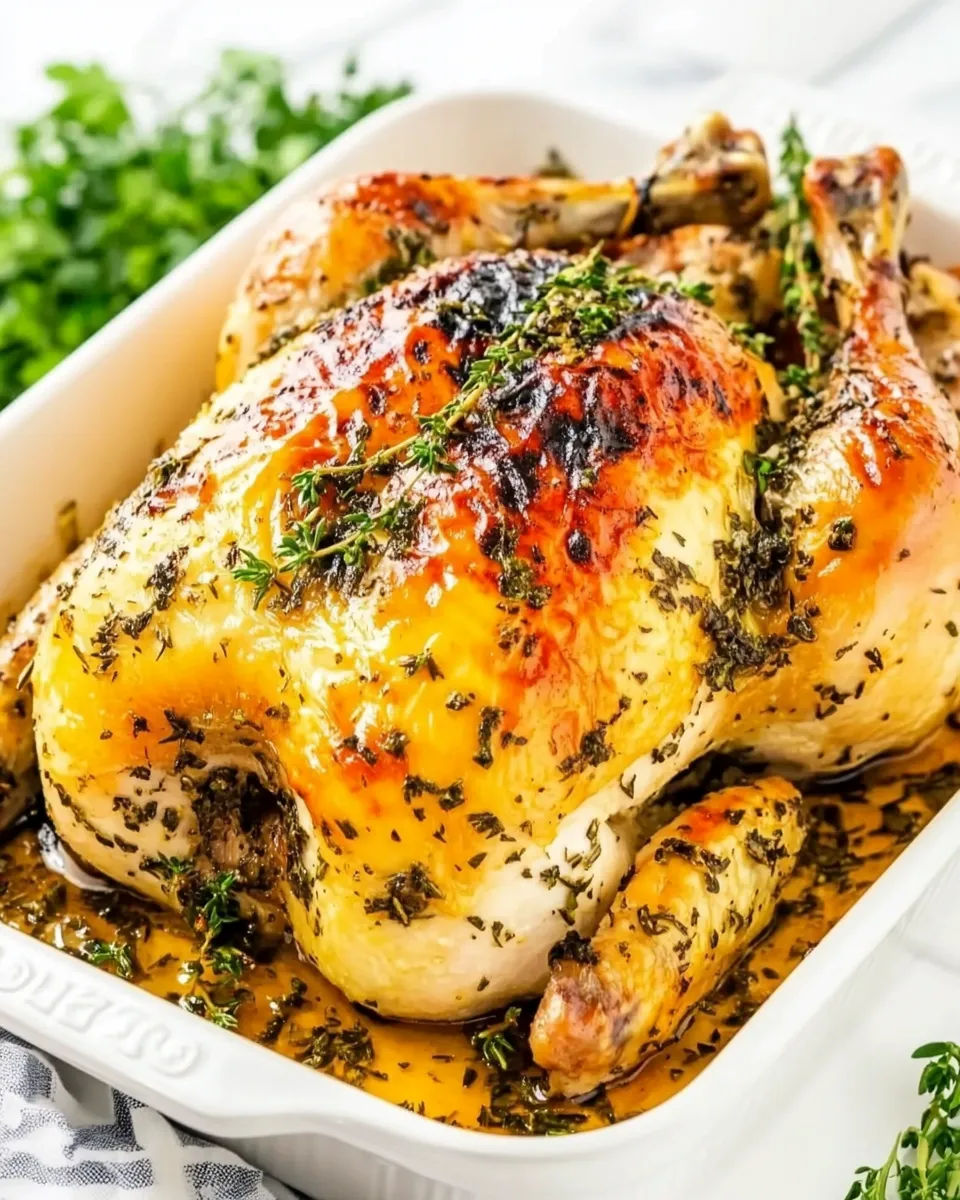
Garlic Herb Roast Chicken
This roast chicken is a weekday-to-weekend workhorse: straightforward to assemble, full-flavored, and reliably tender. Garlic, lemon, and an herb-forward butter get tucked under the skin and inside the cavity so every bite is juicy and aromatic. Timing is predictable, and the technique is forgiving—perfect for cooks who want big results without fuss.
You’ll find clear steps below to prep, roast, rest, and carve the bird. I focus on practical tips—how to loosen the skin safely, when to baste, and how to check doneness—so you leave nothing to chance. The pan juices make a simple finishing sauce; you don’t need a complicated gravy to make this meal shine.
Make sure your chicken is at room temperature before starting and that your oven racks are positioned to allow even air circulation. Read through the full guide once before you begin; once you have the rhythm, this roast becomes effortless and repeatable.
What You’ll Need
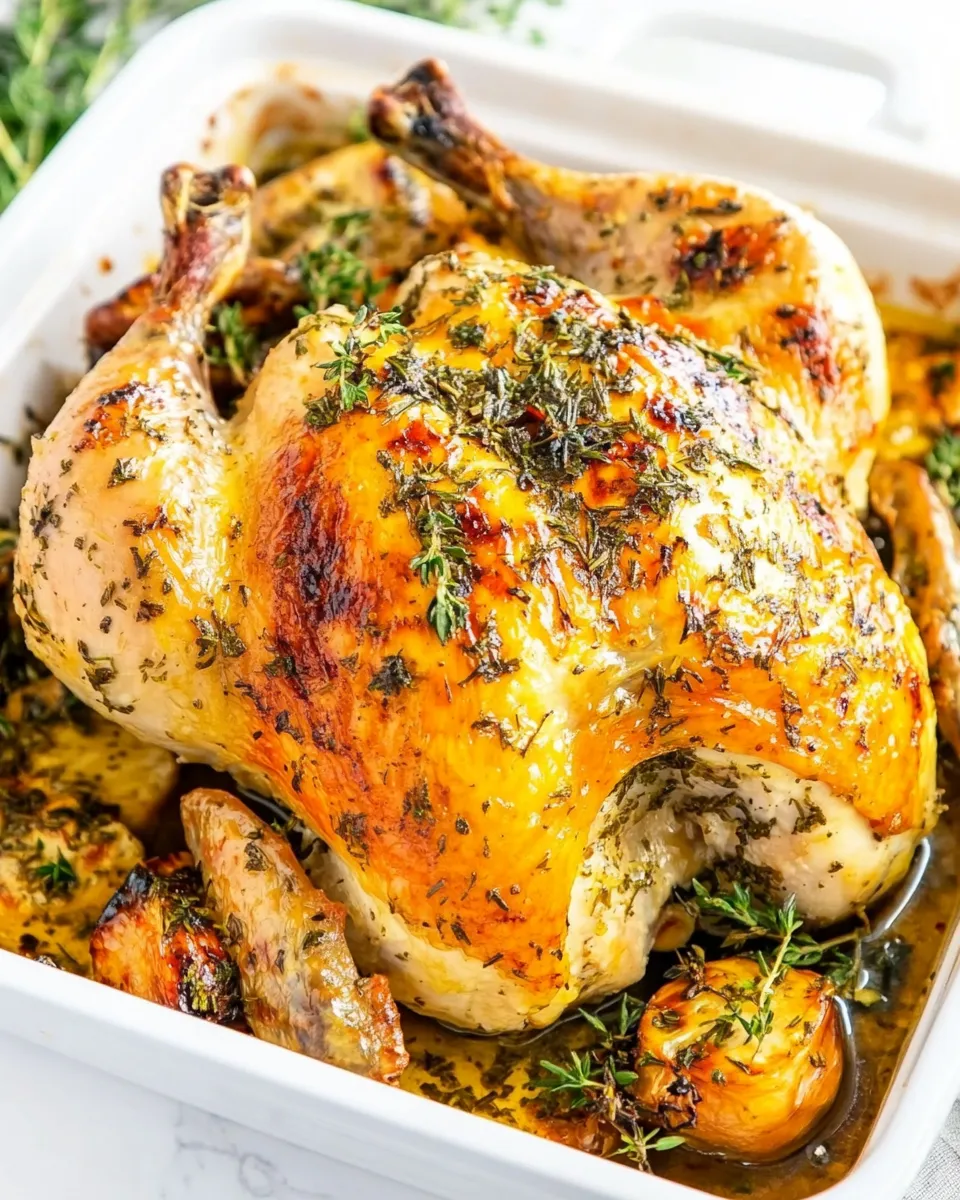
- 4 to 5 pound whole chicken (room temperature) — A 4–5 lb bird roasts evenly and feeds 4–6 people; take it out of the fridge 30–45 minutes before cooking.
- Sea salt and black pepper (to taste) — Season generously: salt is key for flavor and crispy skin.
- 2 lemons (juiced and quartered) — Juice goes into the herb butter; quarters go inside the cavity to steam and perfume the bird.
- 3 tablespoons olive oil — Helps loosen the butter mixture and aids browning.
- 4 garlic cloves (minced) — Mixed into the butter and spread under the skin for focused garlic flavor.
- 3 tablespoons fresh parsley (chopped) — Bright herb note; mix into the butter.
- 1 tablespoon fresh rosemary (chopped) — Concentrated herbal aroma for the butter and cavity.
- 2 tablespoons dried oregano — Earthy, savory backbone in the butter blend.
- 6 tablespoons unsalted butter (softened) — Creates a rich herb butter to baste and slip under the skin for moistness.
- 3 sprigs fresh rosemary (for cavity) — Aromatic steam inside the bird; use whole sprigs.
- 1 head garlic (mostly peeled and sliced horizontally) — Halved garlic head goes inside the cavity to roast and mellow.
- 2 onions (sliced about 1/2 inch thick crosswise) — A bed for the chicken; they keep the bird off the pan and add sweet pan juices.
Garlic Herb Roast Chicken Cooking Guide
- Preheat the oven to 425°F. Position a rack in the center of the oven.
- Prepare your roasting setup: line a baking sheet with parchment and place a baking dish or roasting pan large enough for the chicken on top of the sheet to catch any drips. Spray the baking dish with nonstick cooking spray.
- Remove the neck and giblets from the chicken cavity and discard or reserve for another use. Remove any remaining feathers. Rinse the chicken briefly if you prefer, then pat the entire bird dry with paper towels—dry skin equals better browning.
- Loosen the breast skin: insert clean fingers under the skin at the top of the breast and gently work them down toward the legs, creating space between skin and meat without tearing the skin. This creates pockets for the butter mixture.
- Place the onion slices in a single layer on the bottom of the prepared baking dish so the chicken can sit on them.
- Season the whole chicken liberally with sea salt and black pepper inside and out, including the cavity.
- In a medium bowl, whisk together the lemon juice, olive oil, minced garlic, chopped parsley, chopped rosemary, dried oregano, and the softened butter until smooth and combined.
- Spread about two-thirds of the butter-herb mixture underneath the loosened breast skin, making sure to coat the meat evenly. Use the remaining mixture to rub all over the exterior skin and then place any leftover butter inside the cavity for extra flavor.
- Stuff the cavity with the halved head of garlic (sliced horizontally), the 3 sprigs of fresh rosemary, and the quartered lemons.
- Tie the legs together with kitchen string or twine and tuck the wing tips under the body so the bird cooks evenly. Place the chicken breast-side up on the bed of onions in the baking dish.
- Transfer the baking dish to the preheated oven. Roast for 1 hour and 15 minutes total, basting at 30 minutes and then about every 20 minutes after that. To baste, spoon pan juices over the breast and thighs to encourage even browning and moisture.
- Check for doneness by inserting a knife or skewer between the leg and body; the juices should run clear. Verify internal temperature with an instant-read thermometer inserted into the thickest part of the thigh without touching bone—the target is 165°F. If the chicken is browning too quickly, tent loosely with foil and continue roasting until done.
- Once the chicken reaches 165°F, baste one final time. Optional but recommended: move the oven to broil and broil the chicken for 2–3 minutes until the skin is extra-crispy and golden—watch closely to avoid burning.
- Remove the chicken from the oven, cover loosely with foil, and let rest for about 15 minutes before carving. Resting lets the juices redistribute.
- Carve the chicken and drizzle with the pan juices before serving.
Why This Recipe Works
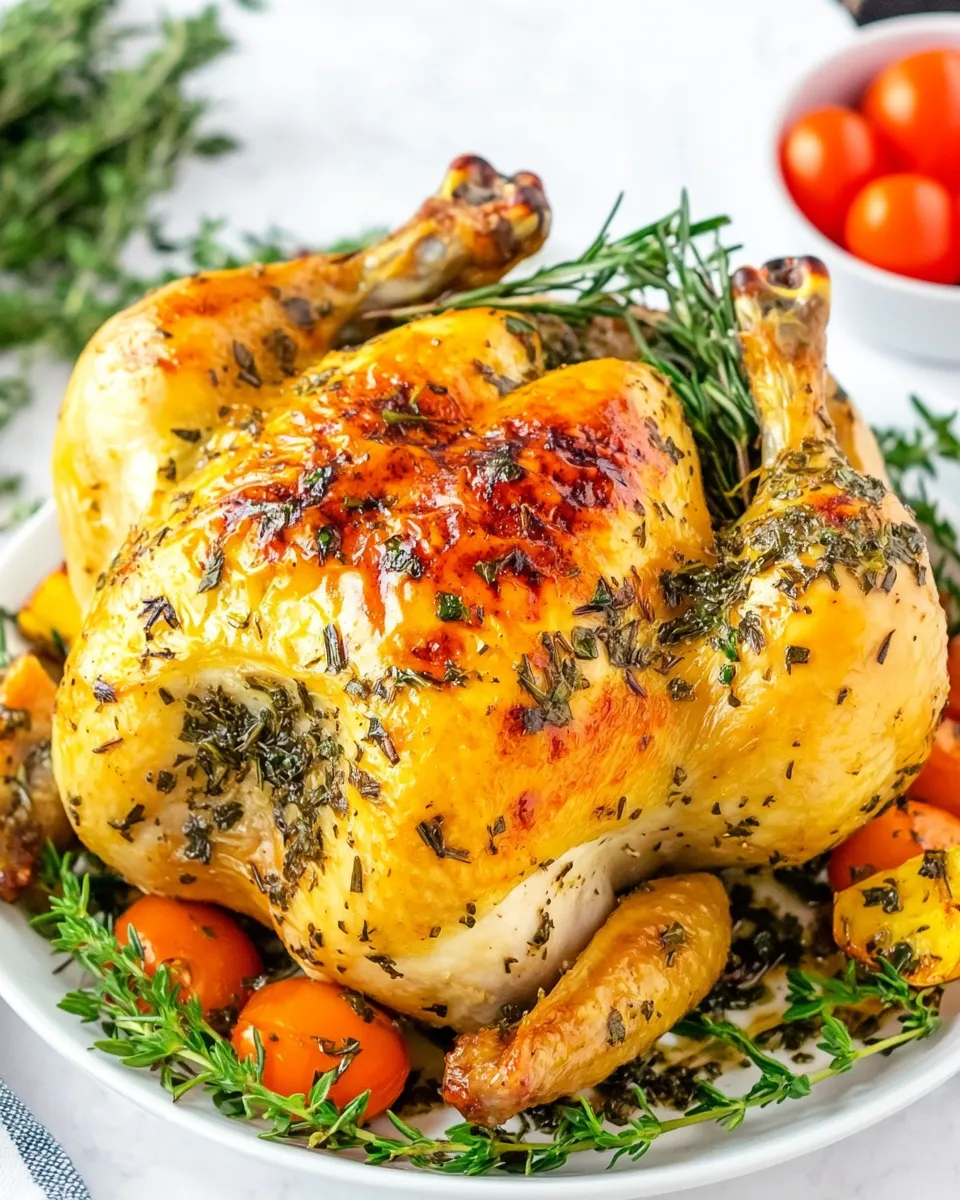
Three things drive this roast: herb butter under the skin, citrus and aromatics in the cavity, and high initial heat. The butter under the skin bastes the meat from the inside as it melts, keeping breast meat moist. Lemon juice and garlic in the butter plus aromatics tucked inside the cavity infuse the meat without overpowering it.
Roasting at 425°F gives a balance between crisp skin and fully cooked meat within a reasonable time. Basting at intervals helps the exterior brown evenly and prevents the breast from drying out. The short broil at the end adds a professional crispness that most home roasts lack.
Easy Ingredient Swaps
- Butter — Use salted butter if you prefer; reduce the added sea salt slightly.
- Fresh rosemary and parsley — Substitute a tablespoon each of dried thyme and dried basil if fresh herbs aren’t available; flavor will shift but remain pleasant.
- Dried oregano — Can be swapped with dried thyme or Italian seasoning.
- Lemons — Use 2 tablespoons white wine or apple cider vinegar plus lemon zest if you’re out of fresh lemons.
- Olive oil — Neutral oil like avocado or vegetable oil works if you want less olive flavor.
Setup & Equipment
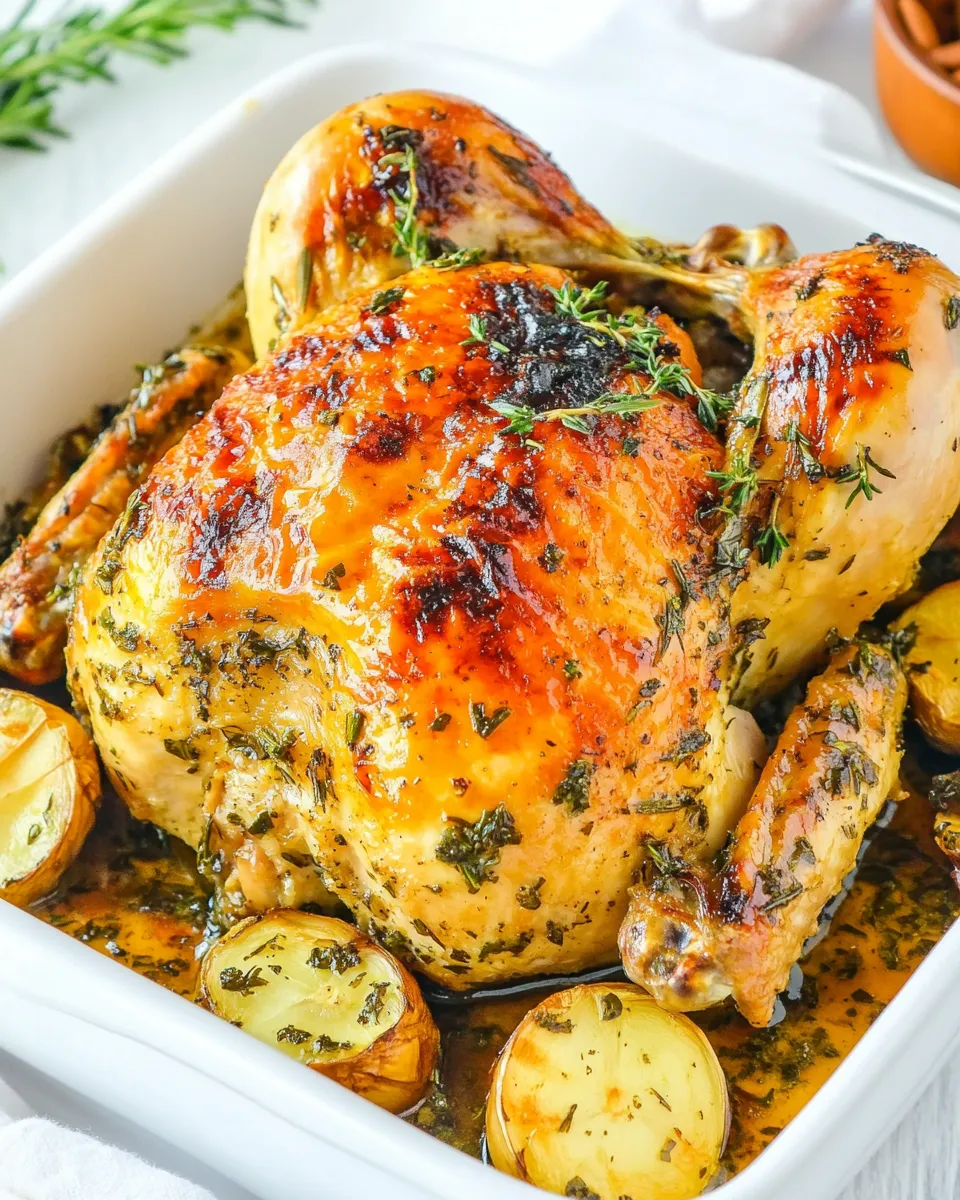
- Roasting pan or baking dish — Large enough for a 4–5 lb chicken; use a rimmed baking sheet underneath to catch drips.
- Instant-read thermometer — Essential for accurate doneness checks (165°F in the thigh).
- Kitchen twine — For trussing the legs; optional but helps the bird cook evenly.
- Paper towels — For patting the chicken dry.
- Mixing bowl and spoon — To combine the herb butter.
- Tongs or carving knife — For resting and carving the chicken.
Missteps & Fixes
- Chicken is dry: Likely overcooked. Next time check internal temp earlier (around 155–160°F) and allow carryover to reach 165°F while resting. Also be sure to get butter under the skin.
- Skin didn’t crisp: The bird may have been too wet or crowded. Pat dry thoroughly and use the broil step briefly at the end to crisp up the skin.
- Chicken is unevenly browned: Baste regularly and tent with foil if edges brown too quickly. Make sure the bird is centered in the oven and not touching the rack walls.
- Flavor seemed flat: Be generous with salt when seasoning and use all the aromatics called for—the cavity aromatics and herb butter are essential.
Year-Round Variations
- Summer: Add thinly sliced summer vegetables (zucchini, bell peppers) around the bird in the last 20–30 minutes of roasting for a one-pan meal.
- Autumn: Roast with root vegetables (carrots, parsnips, potatoes) tossed in olive oil and herbs under the chicken so they absorb pan juices.
- Winter: Stir a teaspoon of smoked paprika into the butter for a smoky warmth that pairs well with roasted winter greens.
- Spring: Swap some parsley for a handful of chopped tarragon to brighten the herb profile.
Pro Perspective
I cook chickens this way when I want consistent results. Key pro moves: loosen the skin gently so you don’t tear it, use room-temperature butter so it spreads easily, and verify doneness with an instant-read thermometer rather than time alone. Trussing is optional but helps the bird hold shape and roast more predictably.
Remove the bird to a warm plate while it rests—don’t skip resting; it’s the difference between dry slices and glossy, juicy meat. Save the pan juices; they’re a ready-made sauce when strained and spooned over the carved chicken.
Refrigerate, Freeze, Reheat
- Refrigerate: Store carved chicken in an airtight container up to 4 days. Keep pan juices separate to spoon over when reheating.
- Freeze: Freeze leftover carved chicken for up to 3 months. Wrap tightly or place in a freezer-safe bag. Thaw overnight in the fridge before reheating.
- Reheat: Reheat slices in a single layer on a baking sheet at 325°F until warmed through, basting with reserved pan juices to avoid drying. For quicker reheating, microwave covered with a damp paper towel for short intervals and finish in a hot skillet for crisp skin.
Reader Q&A
- Q: Can I use a smaller chicken? A: Yes. Reduce roast time and check temperature earlier—smaller birds reach 165°F sooner. Expect roughly 15 minutes per pound as a guide, but always verify with a thermometer.
- Q: Do I have to baste? A: Basting improves browning and helps keep the surface moist but is optional if you’re short on time. The butter under the skin is the most important moisture-retaining step.
- Q: Can I spatchcock the bird? A: You can, but this recipe’s instructions assume a whole upright roast. Spatchcocking shortens cooking time and increases skin crispness; adjust technique and timing accordingly.
- Q: How do I make a pan sauce? A: After removing the chicken, place the roasting pan over medium heat, add a splash of stock or wine to deglaze, scrape up browned bits, reduce slightly, and strain. Finish with a pat of butter to round it out.
Serve & Enjoy
Carve the chicken into breasts, thighs, drumsticks, and wings. Arrange on a warm platter and drizzle with the strained pan juices. Serve with roasted or mashed potatoes and a simple salad or braised greens. Leftovers make sandwiches, salads, or quick soups the next day.
This Garlic Herb Roast Chicken is flattering to serve and simple enough for a weeknight—once you’ve made it a few times you’ll know the rhythm, and it will become one of your go-to roast preparations. Enjoy.
Garlic Herb Roast Chicken
Ingredients
- 4 to 5 pound whole chicken, room temperature
- sea salt to taste
- black pepper to taste
- 2 lemons juice of 2 lemons; quarters reserved for cavity
- 3 tablespoons olive oil
- 4 cloves garlic, minced
- 3 tablespoons fresh parsley, chopped
- 1 tablespoon fresh rosemary, chopped
- 2 tablespoons dried oregano
- 6 tablespoons unsalted butter, softened
- 3 sprigs fresh rosemary for cavity
- 1 head garlic, mostly peeled and sliced horizontally for cavity
- 2 onions, sliced about 1/2 inch thick crosswise
Instructions
- Remove the neck and giblets from the chicken cavity and discard or reserve for another use. Remove any remaining feathers, rinse the chicken if desired, and pat thoroughly dry with paper towels.
- Carefully loosen the skin over the breast by sliding your fingers under the skin and pressing down on the meat to create a pocket for the herb butter.
- Preheat the oven to 425°F (220°C). Line a baking sheet with parchment and place a roasting dish on top; spray the dish lightly with nonstick spray. Arrange the sliced onions in the bottom of the dish to form a bed for the chicken.
- Season the exterior and cavity of the chicken generously with sea salt and black pepper.
- In a bowl, whisk together the lemon juice, olive oil, minced garlic, chopped parsley, chopped rosemary, dried oregano, and softened butter until smooth.
- Rub most of the butter-herb mixture all over the outside of the chicken, pressing some under the loosened breast skin. Rub any remaining mixture inside the cavity.
- Stuff the cavity with the sliced head of garlic, rosemary sprigs, and the quartered lemons. Tie the legs with kitchen twine, tuck the wing tips under the body, and place the chicken breast-side up on the onion bed in the roasting dish.
- Roast the chicken in the preheated oven for about 1 hour 15 minutes, basting at 30 minutes and then roughly every 20 minutes. If the chicken browns too quickly, tent loosely with foil.
- Roast until the juices run clear when a knife is inserted between the leg and body or until a meat thermometer inserted into the thickest part of the thigh reads 165°F (74°C).
- Optional: baste once more, then broil for 2 to 3 minutes to crisp and deepen the color of the skin. Watch carefully to avoid burning.
- Remove the chicken from the oven, tent loosely with foil, and let rest for about 15 minutes before carving. Serve with pan juices drizzled over slices.
Equipment
- roasting pan
- Baking Sheet
- Mixing Bowl
- Knife
- kitchen twine
- Meat Thermometer
- Tongs
Notes
- If chicken is over 4½ pounds, reduce oven to 325°F after the first hour and continue roasting.
- When roasting at the lower temperature, cover loosely with foil and baste every 15 minutes until done.
- Cook until juices run clear or an internal temperature of 165°F is reached.