Passionfruit Cheesecake Bars
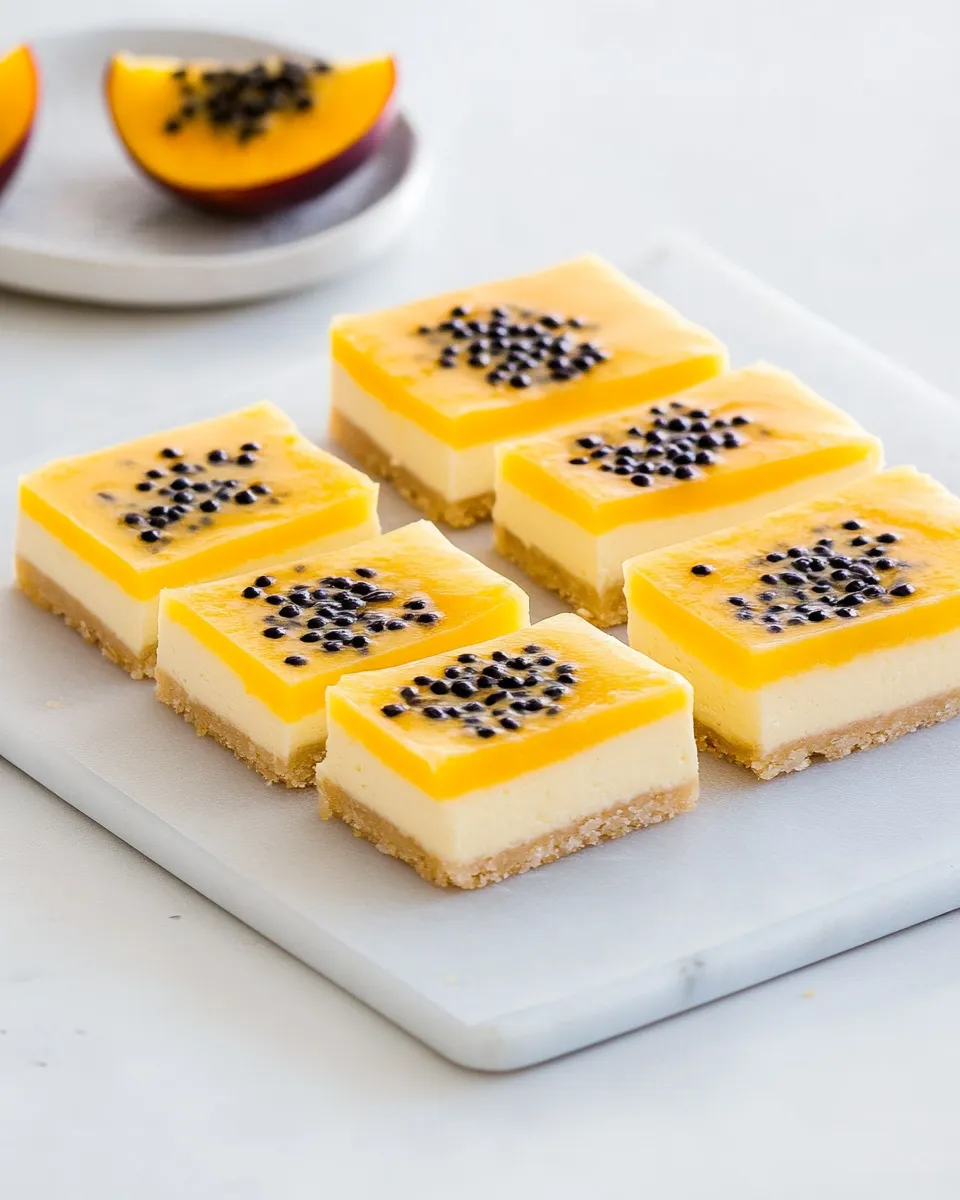
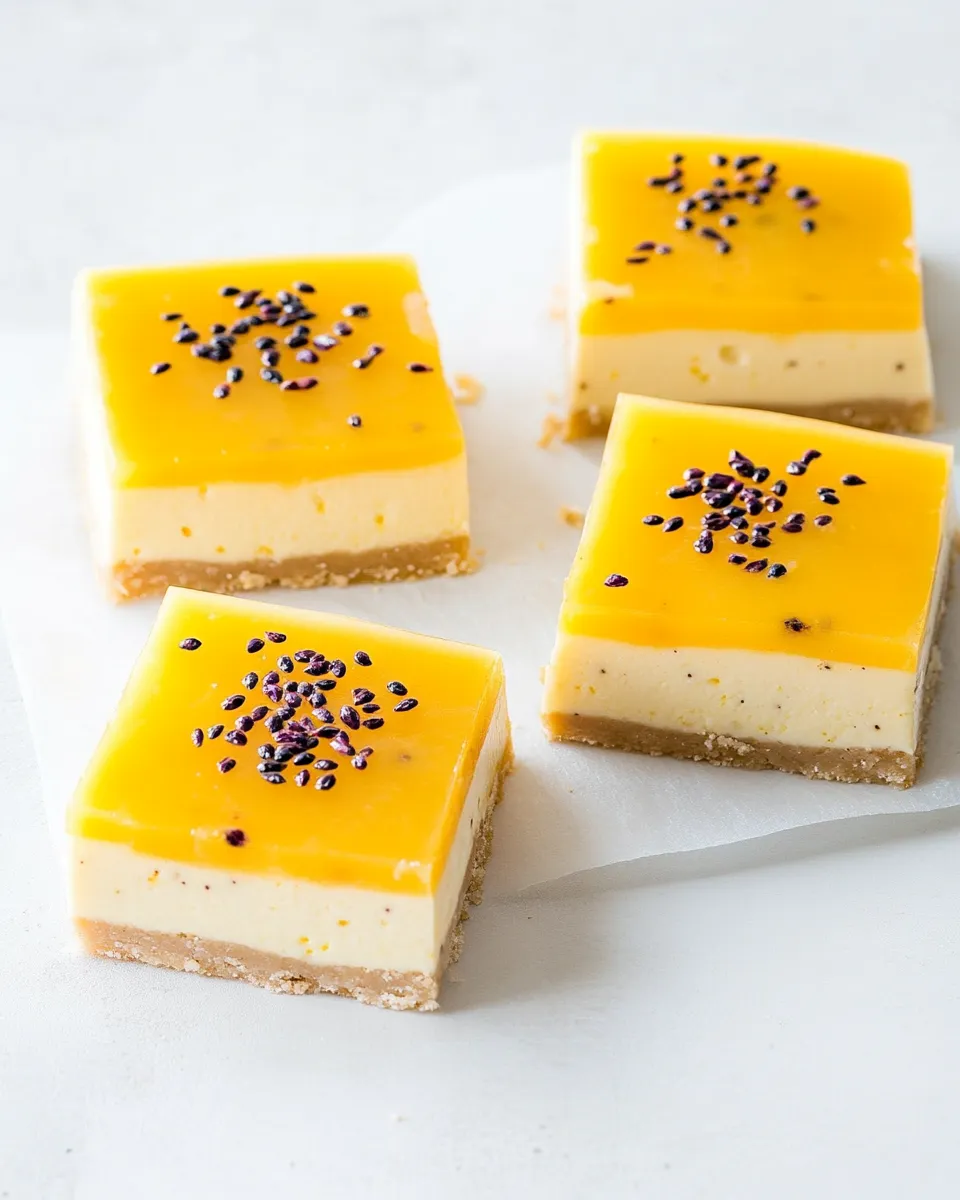
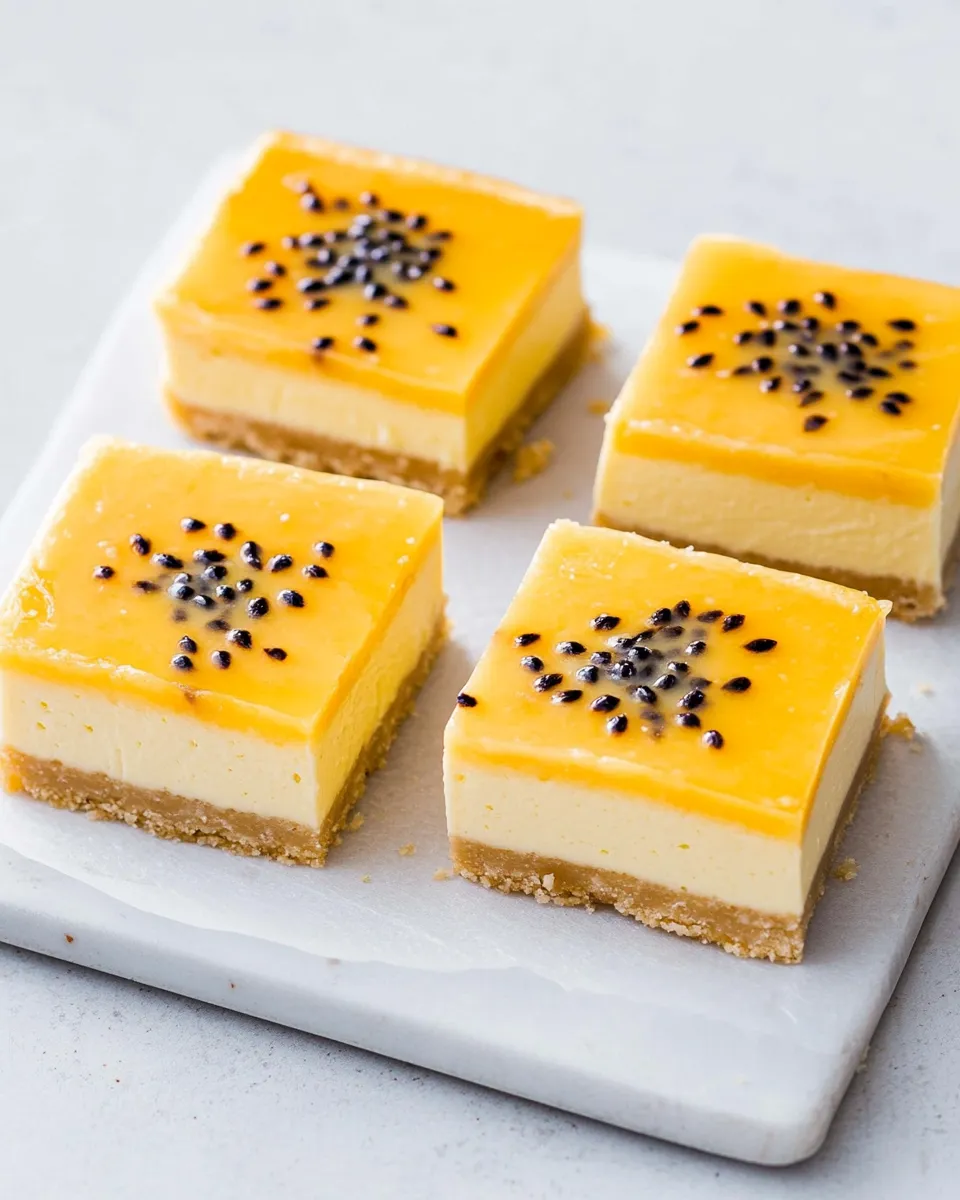
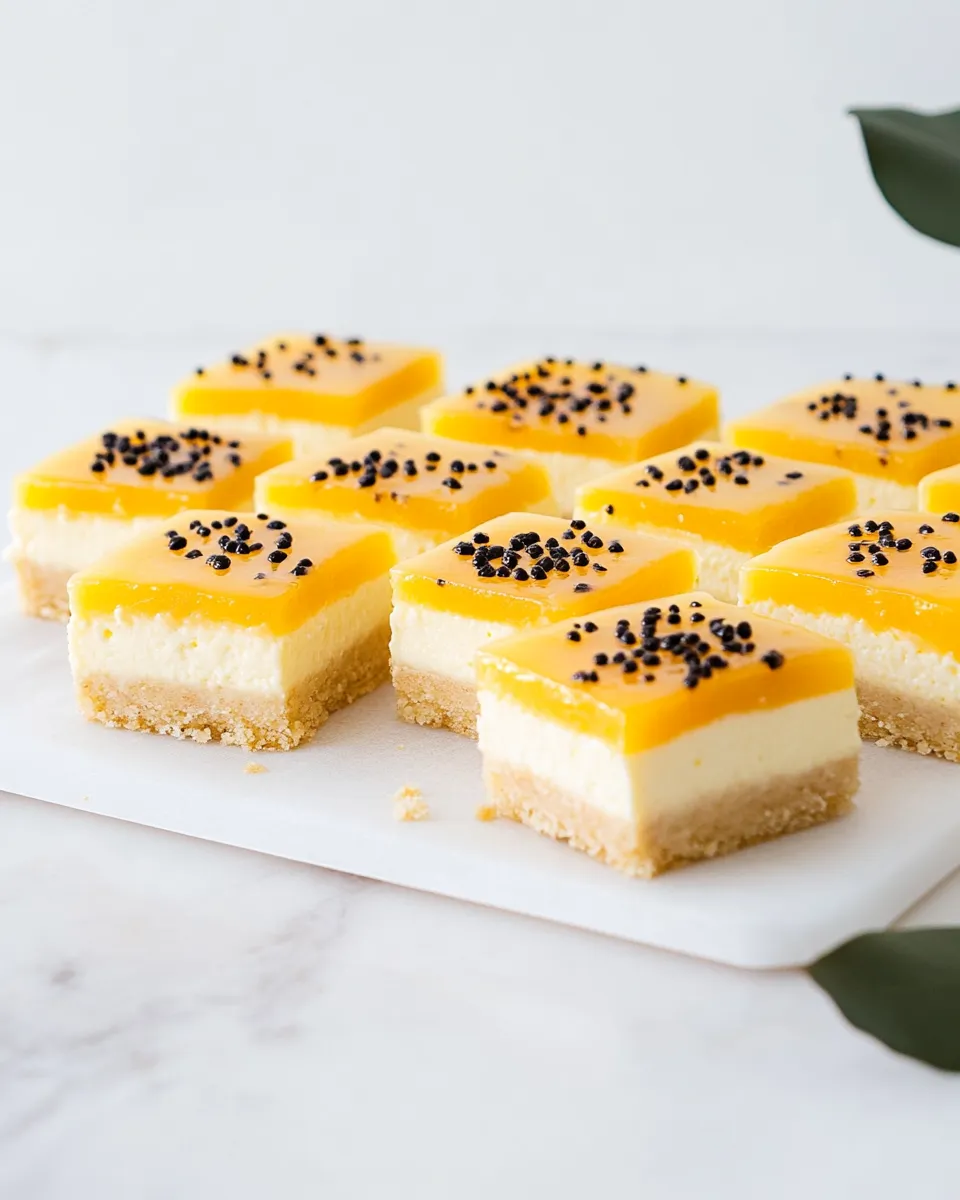
Bright, tangy passionfruit meets a silky cheesecake filling and a crunchy coconut-cookie crust in these bars. They’re great for a warm-weather dessert, a fancy potluck, or when you want something that looks special but hasn’t taken all day to make. The passionfruit topping is glossy and tropical — it sets just enough to slice neatly while keeping that fresh, fruity bite.
This recipe is practical: room-temperature dairy for a smooth batter, a quick bake for the crust, and a chilled gelatin layer that you can monitor by eye. Read the steps through once, gather your ingredients, and plan the chilling time — the active work is straightforward, the waiting is what makes them perfect.
What Goes Into Passionfruit Cheesecake Bars
- 5 oz / 142 g vanilla wafer cookies (1 cup crumbs) — the base of the crust; finely ground for an even texture.
- ¼ cup / 25 g shredded unsweetened coconut — adds toastiness and chew to the crust.
- Pinch sea salt — balances sweetness in the crust and filling.
- 4 tablespoons / 57 g unsalted butter, melted — binds the crumbs and gives the crust structure.
- 12 ounces / 340 g full fat cream cheese, at room temperature — the main component of the cheesecake layer; room temperature prevents lumps.
- ½ cup / 120 g sour cream, at room temperature — adds creaminess and slight tang to the filling.
- ⅓ cup / 66 g granulated sugar — sweetens the cheesecake filling.
- 2 tablespoons / 16 g all-purpose flour — stabilizes the filling and helps prevent cracks.
- 2 large eggs, at room temperature — provide structure and richness; add one at a time.
- 1 tablespoon lemon juice — brightens the cheesecake flavor and balances sweetness.
- 2 teaspoons vanilla bean paste or extract — deepens the flavor of the filling.
- Pinch salt — enhances all flavors in the filling.
- 4 teaspoons / 12 g powdered gelatin — sets the passionfruit topping so it slices cleanly.
- 6 tablespoons cool water — used to bloom the gelatin.
- ⅞ cup / 200 g passionfruit juice or strained passionfruit pulp — the star of the topping; strained pulp keeps the texture smooth.
- ¼ cup / 50 g granulated sugar — sweetens the passionfruit layer to balance its tartness.
- ¼ cup / 60 mL filtered water — combined with the passionfruit juice to make the topping mixture.
Mastering Passionfruit Cheesecake Bars: How-To
- Take the cream cheese, eggs, and sour cream out of the refrigerator at least 1 hour before you start so they come to room temperature. Cold dairy makes a lumpy batter.
- Preheat your oven to 350°F (175°C). Butter a 9-inch square pan and line it with parchment paper, leaving an overhang on two opposite sides for easy removal.
- Make the crust: Combine the vanilla wafer cookies, shredded coconut, and a pinch of sea salt in a food processor and pulse until very finely ground.
- Pour the melted butter over the crumbs and pulse until the mixture is evenly moistened. Press the crumb mixture firmly and evenly into the bottom of the prepared pan.
- Bake the crust for 8 to 10 minutes, until it feels set. Remove from the oven and let the crust cool completely while you lower the oven temperature.
- Reduce the oven temperature to 325°F (163°C).
- Make the cheesecake filling: In a food processor or the bowl of a stand mixer, pulse the room-temperature cream cheese, sour cream, granulated sugar, and all-purpose flour until smooth and lump-free.
- Add the eggs one at a time, mixing well after each addition and scraping down the sides of the bowl as needed to ensure even incorporation.
- Stir in the lemon juice, vanilla bean paste (or extract), and a pinch of salt. Pulse once or twice more to combine; the batter should be smooth and pourable.
- Pour the cheesecake batter into the cooled crust and spread it into an even layer.
- Bake at 325°F for 18 to 20 minutes, until the center is set but still barely jiggly. Avoid overbaking, which can cause cracking or shrinking.
- Remove the pan from the oven and let it cool on a wire rack to room temperature. Once cooled, refrigerate for at least 1 hour to firm up before adding the passionfruit layer.
- Prepare the gelatin: Pour 6 tablespoons of cool water into a small bowl and sprinkle the 4 teaspoons of powdered gelatin evenly over the surface. Let it bloom for 5 minutes; there should be no visible dry powder.
- Meanwhile, combine the strained passionfruit juice, ¼ cup granulated sugar, and ¼ cup filtered water in a small saucepan. Heat over medium heat, stirring, until the sugar is completely dissolved. Do not boil.
- Melt the bloomed gelatin in the microwave in short bursts (about 5 seconds at a time) until fully liquefied, 5 to 15 seconds total depending on your microwave. Stir to eliminate any remaining granules.
- Pour the melted gelatin into the warm passionfruit mixture and stir until fully incorporated. If you see any white chunks of undissolved gelatin, strain the mixture through a fine mesh sieve into a heatproof container.
- Chill the passionfruit mixture in the refrigerator, stirring every 20 to 30 minutes, until it thickens but remains pourable. You want a thick, spoonable liquid—test by stirring in a few passionfruit seeds; they should stay suspended rather than sinking.
- Once the passionfruit mixture is partially set to the right thickness, gently pour it over the chilled cheesecake. To avoid disturbing the cheesecake surface, pour over the back of a spoon or spatula and spread to the edges. Tap the pan lightly to remove air bubbles.
- If you like, scatter some cleaned passionfruit seeds on top; if the gelatin has thickened properly, the seeds will stay suspended instead of sinking.
- Return the pan to the refrigerator and chill at least 2 hours, or ideally overnight, until the passionfruit layer is fully set.
- To serve: lift the slab from the pan using the parchment overhang. Place on a cutting board and slice into squares using a large chef’s knife warmed under hot water and wiped dry between cuts for clean edges.
- Store the bars in an airtight container in the refrigerator for up to 5 days.
The Upside of Passionfruit Cheesecake Bars
These bars deliver a balance of textures and flavors: a buttery, slightly tropical crust; smooth, creamy cheesecake; and a vibrant, tangy passionfruit top. They’re visually striking and travel well, making them ideal for celebrations or a picnic. The assembly is mostly hands-off once the layers are set, so you can prep ahead and finish the day of serving.
Dairy-Free/Gluten-Free Swaps
- Dairy-free option — Use plant-based cream cheese and sour cream substitutes that are full fat and at room temperature for the smoothest texture; be aware the flavor will change slightly.
- Gluten-free crust — Substitute gluten-free vanilla wafer cookies in equal weight (142 g) to keep the crust texture similar.
- Vegan gelatin alternative — Use agar-agar, but follow package instructions carefully because setting behavior and quantities differ; this counts as a swap note, not a tested conversion here.
Toolbox for This Recipe
- 9-inch square baking pan lined with parchment (with overhang)
- Food processor (for crumbs and smooth filling) or stand mixer
- Small saucepan for the passionfruit syrup
- Heatproof measuring cup or pitcher for pouring
- Fine mesh sieve (optional, for straining gelatin)
- Wire rack for cooling
- Large chef’s knife warmed under hot water for slicing
Problems & Prevention
Curdled or lumpy filling
Always bring cream cheese, sour cream, and eggs to room temperature before mixing. Start by smoothing the cream cheese and add eggs one at a time, scraping the bowl between additions to prevent pockets of unmixed cheese.
Crust that’s too loose
Press crumbs firmly into the pan and bake the crust until set. If crumbs are not fine enough, the crust may crumble; pulse until very fine.
Passionfruit layer too thin or too thick
Monitor the gelatin-thickened juice while chilling. It should be thick but pourable so it won’t run off the edges or be too stiff to spread. Rewarm briefly if it sets too much, then re-chill to the right consistency.
Cracking cheesecake
Do not overbake the cheesecake layer — it should be just set with a slight jiggle in the center. Rapid temperature changes can cause cracks, so cool to room temperature before refrigerating.
Seasonal Serving Ideas
- Summer: Serve the bars chilled with fresh berries and a sprig of mint.
- Spring: Pair with a light citrus salad (orange and fennel) to echo the bright notes.
- Autumn: Add a drizzle of salted caramel around the plate for a sweet-salty contrast.
- Winter: Garnish with toasted coconut and a dusting of powdered sugar for a festive look.
Author’s Commentary
I love how these bars manage to feel both elegant and relaxed: the passionfruit topping adds a tropical punch without being overly sweet, and the coconut in the crust gives a subtle, complementary texture. The technique is forgiving — take your time with chilling the gelatin layer and warming your knife between cuts for clean bites. If you want to simplify, you can skip adding seeds on top, but I think they make the bars look professional and add pleasant pops of texture.
Freezer-Friendly Notes
These bars freeze well. Wrap individual bars tightly in plastic wrap, then place in a freezer-safe container for up to 2 months. Thaw in the refrigerator overnight before serving. Do not refreeze after thawing.
Frequently Asked Questions
- Can I use store-bought passionfruit juice? — Yes. Use strained passionfruit juice or pulp for the best texture; adjust sweetness to taste.
- Can I make the bars ahead? — Absolutely. They keep well in the fridge for up to 5 days and actually benefit from an overnight chill to fully set the top layer.
- Why did my passionfruit layer sink? — It probably wasn’t thick enough when you poured it. The mixture needs to be partially set so it doesn’t run off the edges or sink into the cheesecake.
- Can I skip the coconut? — You can, but the coconut adds flavor and texture. If omitted, the crust will be a bit denser.
Bring It to the Table
Serve these Passionfruit Cheesecake Bars chilled on a platter for a dramatic dessert presentation. Warm your knife between cuts for glossy, clean slices. They’re a show-stopping option for a spring brunch, summer barbecue, or birthday — make them a day ahead so you can enjoy the party while they chill. Enjoy each bright, creamy bite.
Passionfruit Cheesecake Bars
Ingredients
- 5 oz vanilla wafer cookies, finely ground about 142 g (1 cup crumbs)
- 1/4 cup shredded unsweetened coconut about 25 g
- pinch sea salt
- 4 tablespoons unsalted butter, melted about 57 g
- 12 ounces full fat cream cheese about 340 g, at room temperature
- 1/2 cup sour cream about 120 g, at room temperature
- 1/3 cup granulated sugar about 66 g
- 2 tablespoons all-purpose flour about 16 g
- 2 large eggs at room temperature
- 1 tablespoon lemon juice
- 2 teaspoons vanilla bean paste or extract
- pinch salt
- 4 teaspoons powdered gelatin about 12 g
- 6 tablespoons cold water for blooming gelatin
- 7/8 cup passionfruit juice or strained passionfruit pulp about 200 g
- 1/4 cup granulated sugar for passionfruit layer (about 50 g)
- 1/4 cup filtered water about 60 mL, for passionfruit layer
Instructions
- Remove cream cheese, eggs, and sour cream from the fridge at least 1 hour before starting so they reach room temperature.
- Preheat oven to 350°F (175°C). Butter a 9-inch square pan and line it with parchment paper, leaving an overhang on two sides.
- Make the crust: in a food processor combine the vanilla wafer crumbs, shredded coconut, and a pinch of sea salt; pulse until very fine. Add the melted butter and pulse until evenly moistened.
- Press the crumb mixture firmly into the bottom of the prepared pan. Bake 8–10 minutes until set, then remove and let cool completely on a wire rack. Reduce oven temperature to 325°F (165°C).
- Make the cheesecake batter: in a food processor or stand mixer beat the room-temperature cream cheese, sour cream, 1/3 cup granulated sugar, and flour until smooth and lump-free.
- Add the eggs one at a time, mixing well after each addition and scraping down the bowl as needed. Stir in the lemon juice, vanilla, and a pinch of salt until just combined.
- Pour the batter over the cooled crust and spread into an even layer. Bake at 325°F (165°C) for 18–20 minutes, until the center is set but still slightly jiggly. Let cool to room temperature on a wire rack, then chill in the refrigerator at least 1 hour.
- Prepare the passionfruit gelatin: sprinkle the powdered gelatin over 6 tablespoons cold water in a small bowl and let bloom for 5 minutes until no dry powder remains.
- Meanwhile, heat the passionfruit juice (or strained pulp) with 1/4 cup sugar and 1/4 cup water in a small saucepan over medium heat, stirring until the sugar dissolves. Remove from heat.
- Melt the bloomed gelatin briefly in the microwave (5-second bursts) until fully liquid, then whisk it into the warm passionfruit mixture. If you see any undissolved bits, strain through a fine mesh sieve.
- Chill the passionfruit mixture in the refrigerator, stirring every 20–30 minutes, until it thickens but remains pourable—thick enough to suspend seeds without sinking.
- Once the passionfruit layer is partially set, gently pour it over the chilled cheesecake using the back of a spoon or spatula to avoid disturbing the surface. Tap the pan to remove air bubbles and, if desired, scatter cleaned passionfruit seeds on top.
- Refrigerate the bars at least 2 hours or ideally overnight until the passionfruit layer is completely set. Use the parchment overhang to lift the slab from the pan, transfer to a cutting board, and slice into squares (warm and wipe the knife between cuts for clean slices).
Equipment
- 9-inch Square Baking Pan
- Parchment Paper
- Food processor or stand mixer
- Mixing bowls
- Small Saucepan
- Measuring cups and spoons
- Wire Rack
- Fine mesh sieve (optional)
Notes
- If using fresh passionfruit, you need about 350 g pulp to yield ~200 g strained juice.
- To clean leftover passionfruit seeds for garnish, rinse pulp away in a fine mesh sieve and pat seeds dry.