Basque Cheesecake
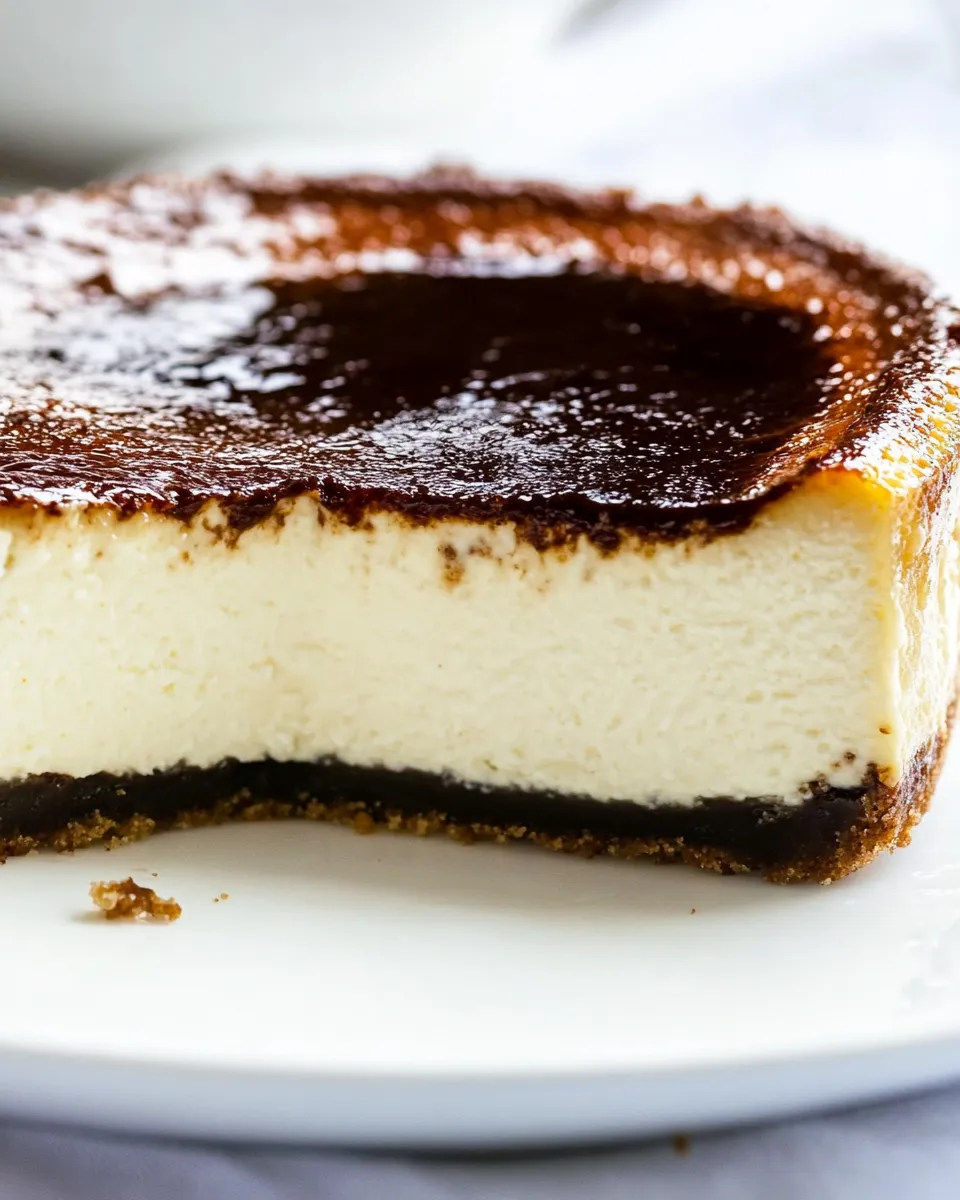
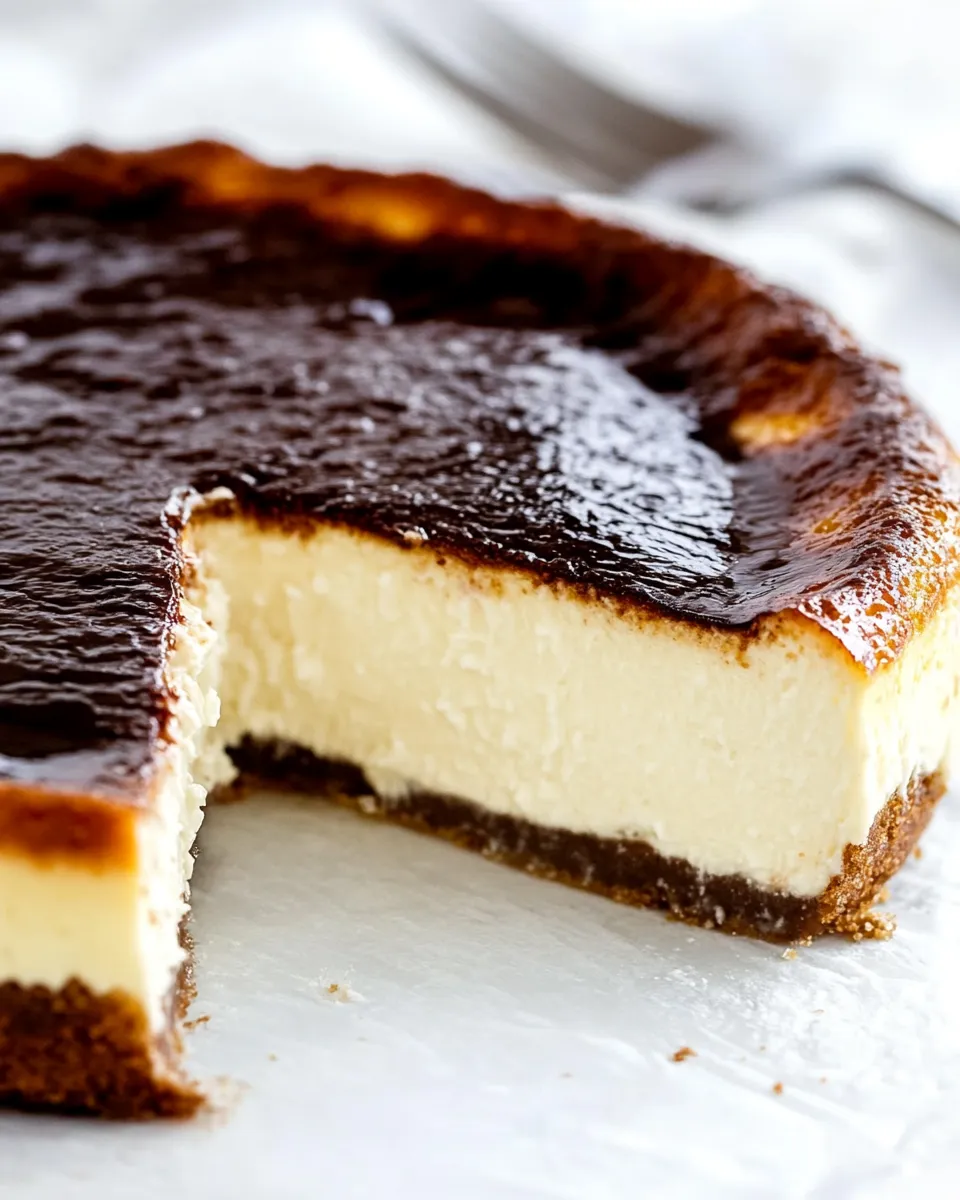
Basque cheesecake is the kind of dessert that looks effortless and tastes like a secret. It’s burnt on the outside, custardy inside, and requires surprisingly little fuss. The high oven temperature gives it that deeply caramelized top while the center stays luxuriously creamy — no water bath, no crust, no drama.
I’ve tested this recipe until it behaved predictably in a home kitchen. The approach relies on room-temperature dairy, a hot oven, and a parchment sling that lets the cake rise and fall into that signature rustic shape. Follow the steps below and you’ll have a show-stopping cheesecake with minimal hands-on time.
Before you start, read the ingredient list and the step-by-step instructions through once. Small details — like fully softened cream cheese and the parchment overhang — matter here. Once it’s in the oven, resist the urge to open the door until the timer tells you otherwise.
The Essentials
- Yield — One 9-inch Basque cheesecake (about 8–10 servings).
- Active time — ~20–30 minutes of hands-on work.
- Total time — About 9 hours (including 8 hours chilling).
- Oven temp — Bake at 425°F (to achieve that dark, caramelized top).
- Pan — 9-inch springform pan lined with parchment that overhangs by ~2 inches.
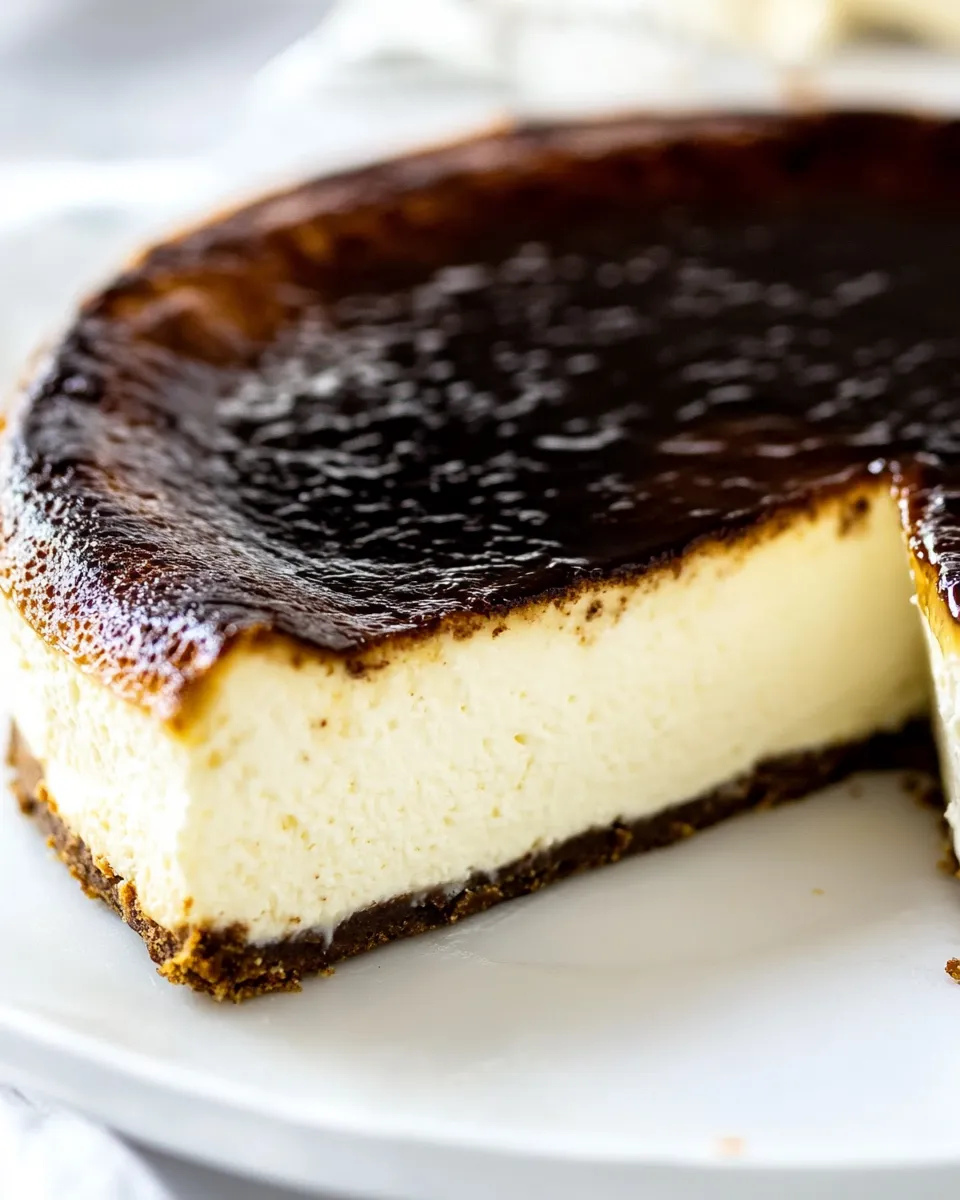
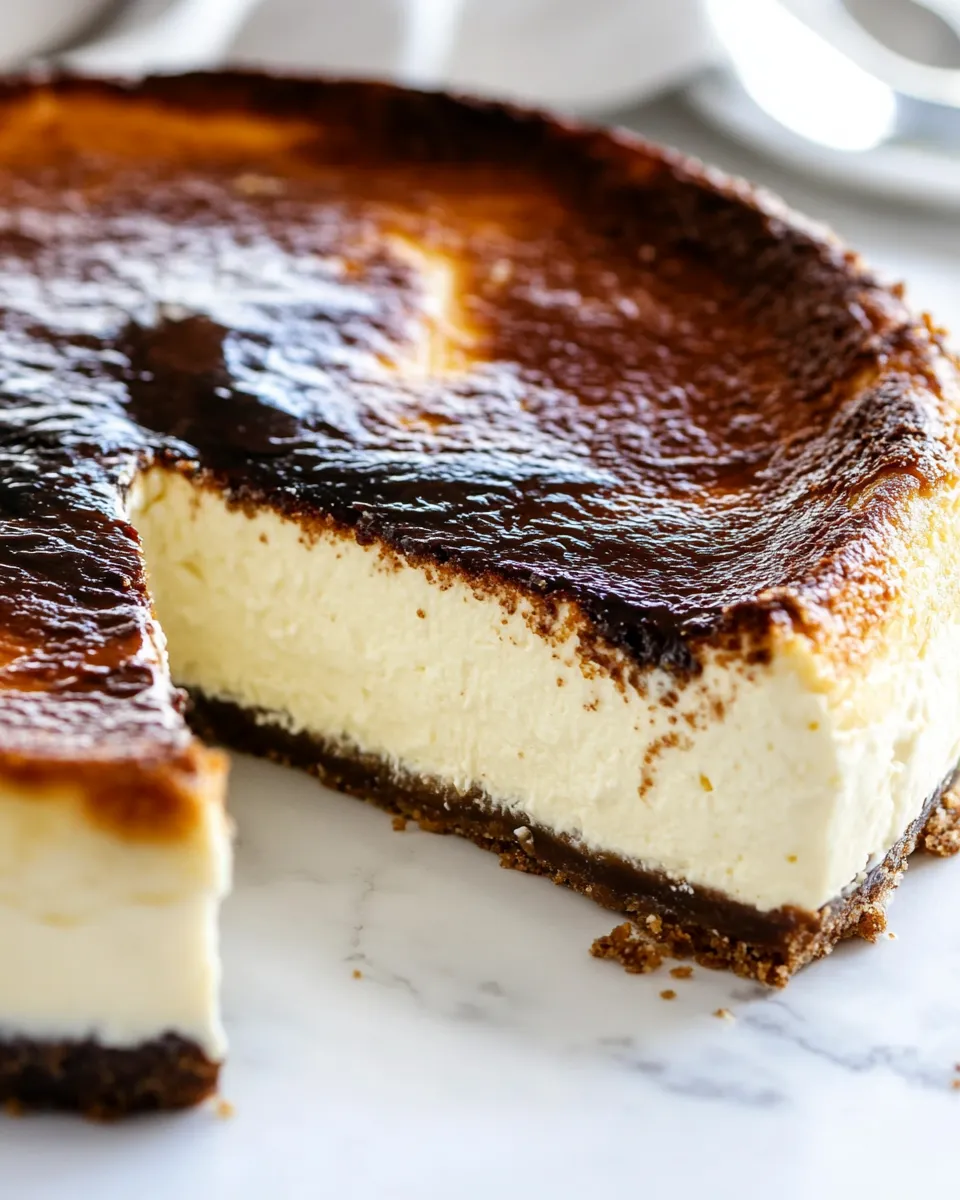
- Texture — Deeply caramelized exterior, creamy custard interior.
- Make-ahead — Excellent; needs at least 8 hours chilling in the fridge.
How to Prepare Basque Cheesecake
Ingredients
- 32 ounces cream cheese — 908 grams, room temperature (4 bricks). Soft cream cheese ensures a smooth batter without lumps.
- 1⅓ cups granulated sugar — 267 grams. Sweetens and helps with texture; beat well into the cheeses.
- 8 ounces mascarpone cheese — 227 grams, room temperature. Adds silkiness and depth of flavor.
- 3 large eggs — 150 grams, room temperature. Whole eggs provide structure and moisture.
- 3 egg yolks — 42 grams, room temperature. Extra yolks enrich the custard, making it creamier.
- 1⅓ cups heavy cream — 303 grams, room temperature. Contributes to the silky, soft-center texture.
- ½ cup sour cream — 114 grams, room temperature. Adds brightness and a slight tang (see note).
- 2 teaspoons pure vanilla extract — 8 grams. Background flavor; use quality vanilla for the best result.
- 1 teaspoon lemon juice — 5 grams. Small acid boost that balances richness.
- 3½ tablespoons cornstarch — 26 grams. Stabilizes the custard and gives a tender lift.
- 2 tablespoons all-purpose flour — 15 grams. Works with cornstarch to set the interior without heaviness.
Step-by-step Instructions
- Preheat the oven to 425°F. Prepare a 9-inch springform pan by lining it with a sheet of parchment paper tall enough to hang about 2 inches over the sides; set the pan aside.
- In the bowl of a stand mixer fitted with the paddle attachment, combine the room-temperature cream cheese (32 ounces), granulated sugar (1⅓ cups), and mascarpone (8 ounces). Beat on high speed for 2 minutes, stopping once or twice to scrape the bowl so the mixture becomes completely smooth.
- Add the whole eggs (3 large) and the egg yolks (3 yolks). Beat on medium-high just long enough to combine, about 30 seconds. Do not overbeat — you want the eggs incorporated without whipping excess air into the batter.
- Pour in the heavy cream (1⅓ cups), sour cream (½ cup), vanilla extract (2 teaspoons), and lemon juice (1 teaspoon). Mix on medium speed until everything is evenly incorporated and the batter looks silky.
- Add the cornstarch (3½ tablespoons) and all-purpose flour (2 tablespoons). Mix on low speed just until combined; stop as soon as there are no visible streaks of dry ingredients. Overmixing at this stage can cause an overly dense texture.
- Pour the batter into the prepared parchment-lined springform pan. Smooth the surface with an offset spatula or the back of a spoon. The batter will be pourable and should come close to the top of the pan but will not fill it completely.
- Place the pan in the hot oven and bake for 45 minutes. The top should darken significantly and the edges will puff; the center will still have a slight wobble.
- After 45 minutes, switch the oven to broil and broil for about 30 seconds, watching carefully. You want the top to become dark brown but not black; pull it the moment it reaches an even deep caramel color.
- Remove the cheesecake from the oven and transfer it to a cooling rack. Let it cool completely at room temperature — this can take an hour or more. As it cools it will settle and the center will firm up.
- Once fully cooled, cover the cheesecake and refrigerate for at least 8 hours or overnight. Chilling completes the custard set and improves flavor. When chilled, release the springform and carefully peel away the parchment to unmold.
Why It’s Crowd-Pleasing
Basque cheesecake hits a lot of high notes. First, the caramelized top gives a bold, slightly bitter contrast to the lusciously creamy interior — that balance makes every bite interesting. Second, its rustic look feels both homey and sophisticated, so it’s appropriate for casual dinners and special occasions alike.
It’s also forgiving: there’s no delicate crust to worry about, and the high-heat bake hides small imperfections in texture under an attractive, deeply browned dome. Finally, it’s super make-ahead friendly — the chilling time actually improves the flavor and texture, so it’s ideal for prepping before guests arrive.
Dairy-Free/Gluten-Free Swaps
Strictly speaking, this recipe relies heavily on dairy. For gluten-free, this is already nearly compliant: the small amount of all-purpose flour could be swapped for a 1:1 gluten-free flour blend in equal measure (2 tablespoons) with no impact on technique.
For dairy-free versions, the texture and flavor will change substantially. You can try vegan cream cheeses and a thick plant-based cream, but mascarpone and sour cream alternatives may yield a less stable batter and a different browning profile. If you must go dairy-free, treat this as an experimental adaptation rather than a like-for-like swap.
Appliances & Accessories
- Stand mixer with paddle attachment — Best for smooth, lump-free cream cheese and mascarpone blending.
- 9-inch springform pan — Allows easy unmolding and supports the parchment overhang.
- Parchment paper — Important for the signature rustic edges and for removing the cake cleanly.
- Offset spatula — Helpful for smoothing the batter in the pan.
- Cooling rack — Cools the cake evenly after baking.
- Oven with reliable broiler — Needed to finish the top quickly without extended high-heat baking.
Learn from These Mistakes
- Cold ingredients — Using cold cream cheese or eggs creates lumps and uneven batter. Always bring dairy and eggs to room temperature.
- Overbeating eggs — Whipping too much air into the batter causes large air pockets and can lead to cracks or an inconsistent texture.
- Skipping the parchment overhang — Without the tall parchment, the cheesecake can stick to the pan edges and be difficult to remove.
- Broiling too long — The top can go from deep brown to burnt in seconds. Watch it closely and broil only until you reach a rich caramel color.
- Not chilling long enough — Serving before the 8-hour chill risks a runny center and poor slicing; patience yields neat slices and better flavor.
Seasonal Ingredient Swaps
Basque cheesecake is a great canvas for seasonal toppings and accompaniments. In summer, serve with a quick maceration of berries and a squeeze of lemon. In fall, drizzle lightly with warm caramel and scatter toasted hazelnuts. Winter pairs well with a compote of roasted stone fruit or a citrus curd to cut the richness.
Chef’s Rationale
The method consciously leans on heat and minimal handling. The high initial temperature creates a dramatic Maillard reaction on the top, giving that signature “burnt” appearance and complex flavor. Keeping the batter relatively loose and using extra yolks helps the interior stay custardy rather than cake-like. Cornstarch and a touch of flour are both included to give structure without turning the cheesecake dense.
Storing Tips & Timelines
- Refrigerator — Store covered for up to 4–5 days. The flavor mellows and becomes more cohesive after a day.
- Freezing — You can freeze slices wrapped tightly in plastic and foil for up to 1 month. Thaw overnight in the refrigerator before serving.
- Serving — Remove from the fridge 10–20 minutes before serving to take the chill off and bring out flavor.
Basque Cheesecake Q&A
- Why is the top so dark? — The 425°F bake followed by a short broil intentionally caramelizes the exterior for flavor and contrast.
- Can I use a regular cake pan instead of a springform? — You can, but a springform pan makes unmolding much easier. If using a regular pan, line well with parchment and be prepared to invert carefully.
- Why so many egg yolks? — The additional yolks create richness and a silkier texture than whole eggs alone.
- Can I skip the mascarpone? — The mascarpone adds silk and tang; omitting it will alter texture and flavor, but the cake will still work using only cream cheese if necessary.
- Why not a water bath? — Basque cheesecake is meant to be baked at high heat without a water bath; the contrast between charred top and creamy center is the point.
Ready, Set, Cook
Gather room-temperature ingredients, preheat your oven to 425°F, and line your 9-inch springform pan with a tall parchment sling. Follow the step-by-step instructions above, watch the broiler closely at the end, and plan for at least 8 hours of chilling. Serve slices slightly chilled or at near-room temperature with a simple fruit garnish if you like.
Make it once and you’ll understand why this deceptively simple cake has taken the food world by storm. Happy baking — and enjoy every caramelized bite.
Basque Cheesecake
Ingredients
- 32 ounces cream cheese 908 grams, room temperature (4 bricks)
- 1 1/3 cups granulated sugar 267 grams
- 8 ounces mascarpone cheese 227 grams, room temperature (see note)
- 3 large eggs 150 grams, room temperature
- 1 1/3 cups heavy cream 303 grams, room temperature
- 1/2 cup sour cream 114 grams, room temperature (see note)
- 2 teaspoons pure vanilla extract 8 grams
- 1 teaspoon lemon juice 5 grams (see note)
- 3 1/2 tablespoons cornstarch 26 grams
- 2 tablespoons all-purpose flour 15 grams
Instructions
- Preheat the oven to 425°F (220°C). Line a 9-inch springform pan with parchment paper, leaving about a 2-inch overhang around the sides; set the pan aside.
- In the bowl of a stand mixer fitted with the paddle attachment, add the room-temperature cream cheese, granulated sugar, and mascarpone. Beat on high speed until smooth and fully combined, about 2 minutes, scraping the bowl down as needed.
- Add the whole eggs and egg yolks to the mixer and beat just until incorporated, about 30 seconds.
- Pour in the heavy cream, sour cream, vanilla extract, and lemon juice. Mix on low to medium speed until the mixture is smooth and homogenous.
- Sprinkle in the cornstarch and all-purpose flour and mix briefly until just combined and no dry streaks remain.
- Pour the batter into the prepared parchment-lined pan and smooth the top with a spatula.
- Bake in the preheated oven for 45 minutes, until the top is deeply browned and the center is still slightly jiggly.
- Turn the broiler on and broil the cheesecake for about 30 seconds, watching closely, until the top is very dark brown but not black. Remove the pan and transfer to a cooling rack to cool to room temperature.
- Cover and chill the cooled cheesecake in the refrigerator for at least 8 hours, then release the springform and unmold before serving.
Equipment
- Kitchen scale (optional)
- 9-inch springform pan
- Parchment Paper
- stand mixer or hand mixer
- rubber spatula
- cooling rack
Notes
- Mascarpone can be swapped for 8 ounces cream cheese with a slight texture change.
- Plain or Greek yogurt may replace sour cream with a minor flavor difference.
- Lime juice can be used instead of lemon juice.
- Use room-temperature ingredients for best results.
- Scrape the bowl several times while mixing to avoid cream cheese lumps.
- Line the pan with parchment overhang to prevent overflow while baking.