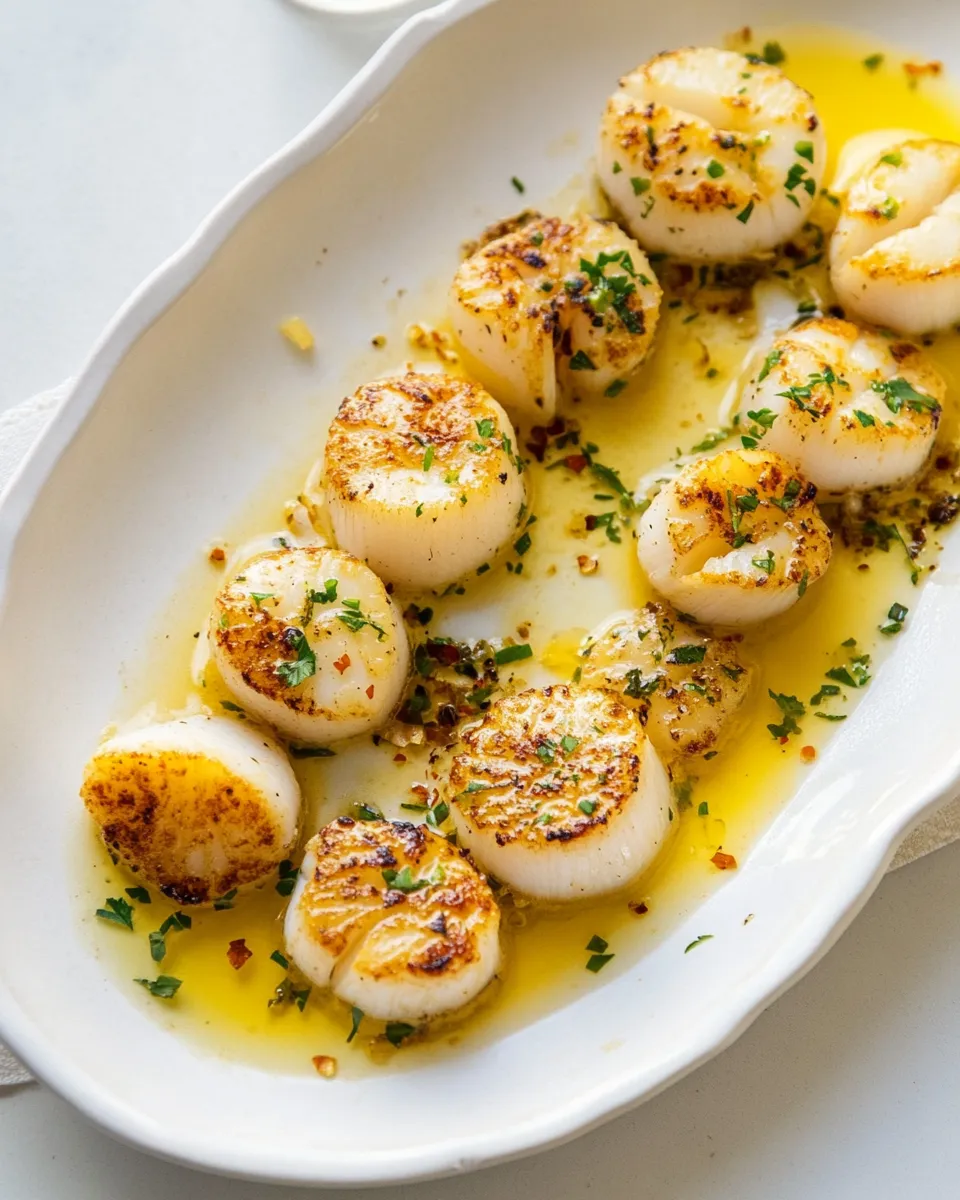
Healthy Baked Scallops
These baked scallops are one of my go-to weeknight seafood recipes: fast, light, and forgiving. They come together in under 20 minutes and let the clean, sweet flavor of the scallops shine. The treatment is simple—ghee or olive oil, a touch of lemon, salt and pepper, and a fresh parsley finish—so you get elegant results without fuss.
Even if you’ve only cooked scallops a couple of times, this method is approachable. The broiler gives a quick caramelized top while preserving a tender interior. I’ll walk you through exactly what to buy, how to cook them step by step, and troubleshoot common mistakes so your scallops are never rubbery or overcooked.
If you prefer a stove-top finish, I include the griddle option mentioned in the source directions—and notes on timing and temperature so you can swap methods without guesswork. Read on for the ingredient details, practical tips, and storage advice.
What to Buy
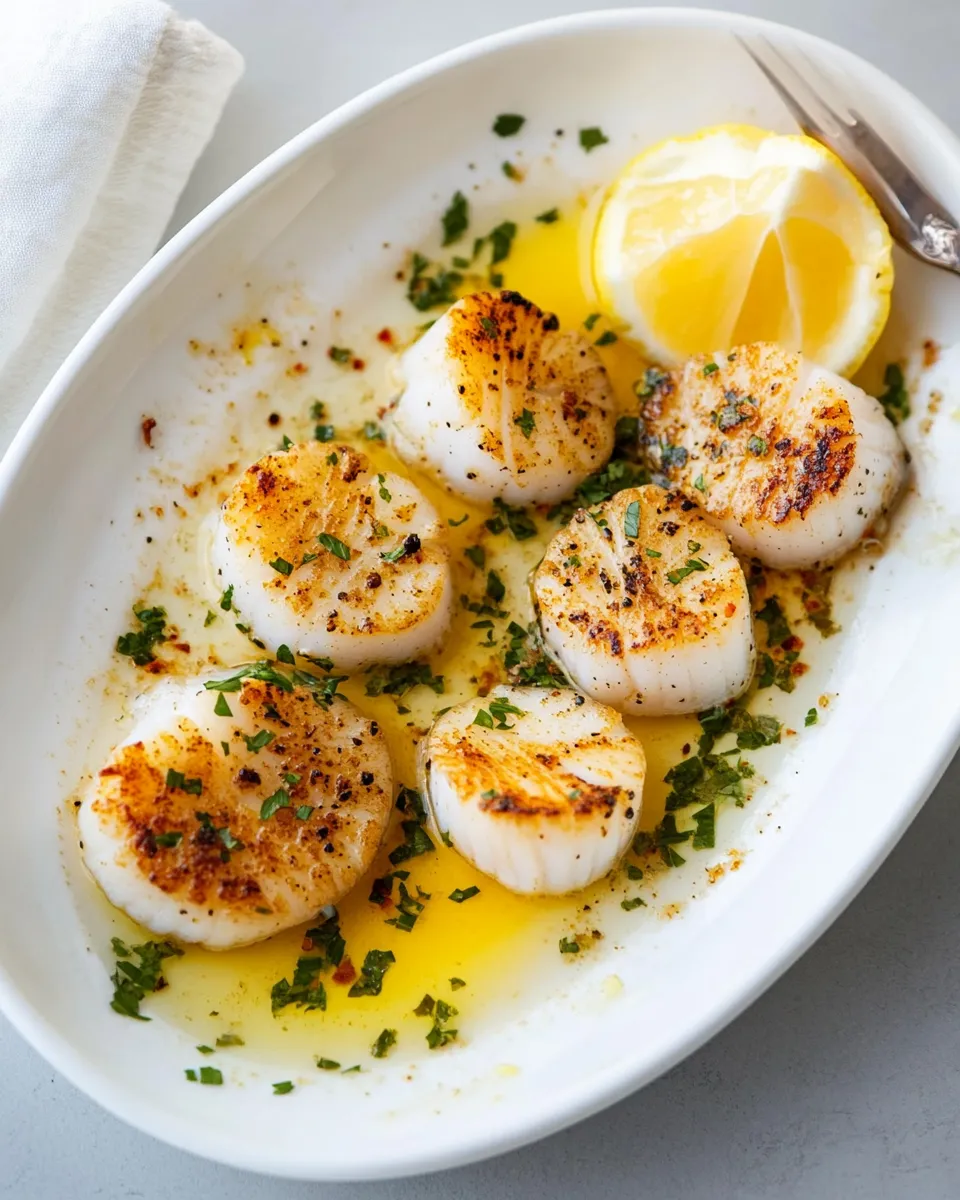
- 12 sea scallops — Look for dry-packed scallops (no phosphates). They should smell clean and slightly briny, not fishy. Pat dry before cooking.
- 2 tablespoons ghee or olive oil — Ghee adds a nutty richness and tolerates high heat; olive oil is lighter and more neutral.
- 1 tablespoon lemon juice — Brightens the scallops; use fresh lemon for best flavor.
- 2 tablespoons parsley, fresh, chopped — Adds freshness and color at the end. Flat-leaf parsley is ideal.
- Lemon wedges — For serving; let guests add extra acidity to taste.
- Salt — Season to taste; start light and adjust after cooking if needed.
- Pepper, freshly ground (to taste) — Freshly ground black pepper gives a brighter, more complex note than pre-ground.
Cooking Healthy Baked Scallops: The Process
Step-by-step under the broiler
- Position an oven rack about 6 inches (15 cm) from the broiler element and preheat your oven’s broiler to high.
- Pat 12 sea scallops dry with a paper towel. Drying is crucial—moist scallops steam instead of browning.
- Season the scallops lightly with salt and freshly ground pepper on both sides.
- Arrange the scallops in a single layer on a baking dish or rimmed sheet tray so they aren’t touching. Crowding prevents even browning.
- Mix 2 tablespoons ghee or olive oil with 1 tablespoon lemon juice. Brush this mixture lightly over each scallop. The oil promotes browning; the lemon adds brightness without over-acidifying the meat.
- Place the baking dish under the preheated broiler. Broil for 5–6 minutes, watching for the tops to develop a golden-browned color.
- Using tongs or a thin spatula, flip each scallop and return the dish to the broiler for another 5–6 minutes, until the other sides are browned and the scallops are opaque throughout.
- Remove from the oven and immediately sprinkle 2 tablespoons fresh chopped parsley over the scallops. Serve with lemon wedges and an extra squeeze of lemon if desired.
- Optional method: If you prefer, cook the scallops on a hot griddle instead of under the broiler. Heat the griddle until very hot, oil lightly, then sear as above, about 2–3 minutes per side depending on scallop size—aim for a golden crust and opaque center.
Why This Healthy Baked Scallops Stands Out
This preparation keeps things light and ingredient-forward: no heavy creams or breadcrumbs to mask the scallop’s delicate flavor. The short broil time locks in moisture while the ghee or olive oil supports Maillard browning for an appealing crust. Lemon brightens without overpowering, and parsley refreshes each bite. Overall, it’s a simple, health-minded way to enjoy a restaurant-quality seafood dish at home.
Vegan & Vegetarian Swaps
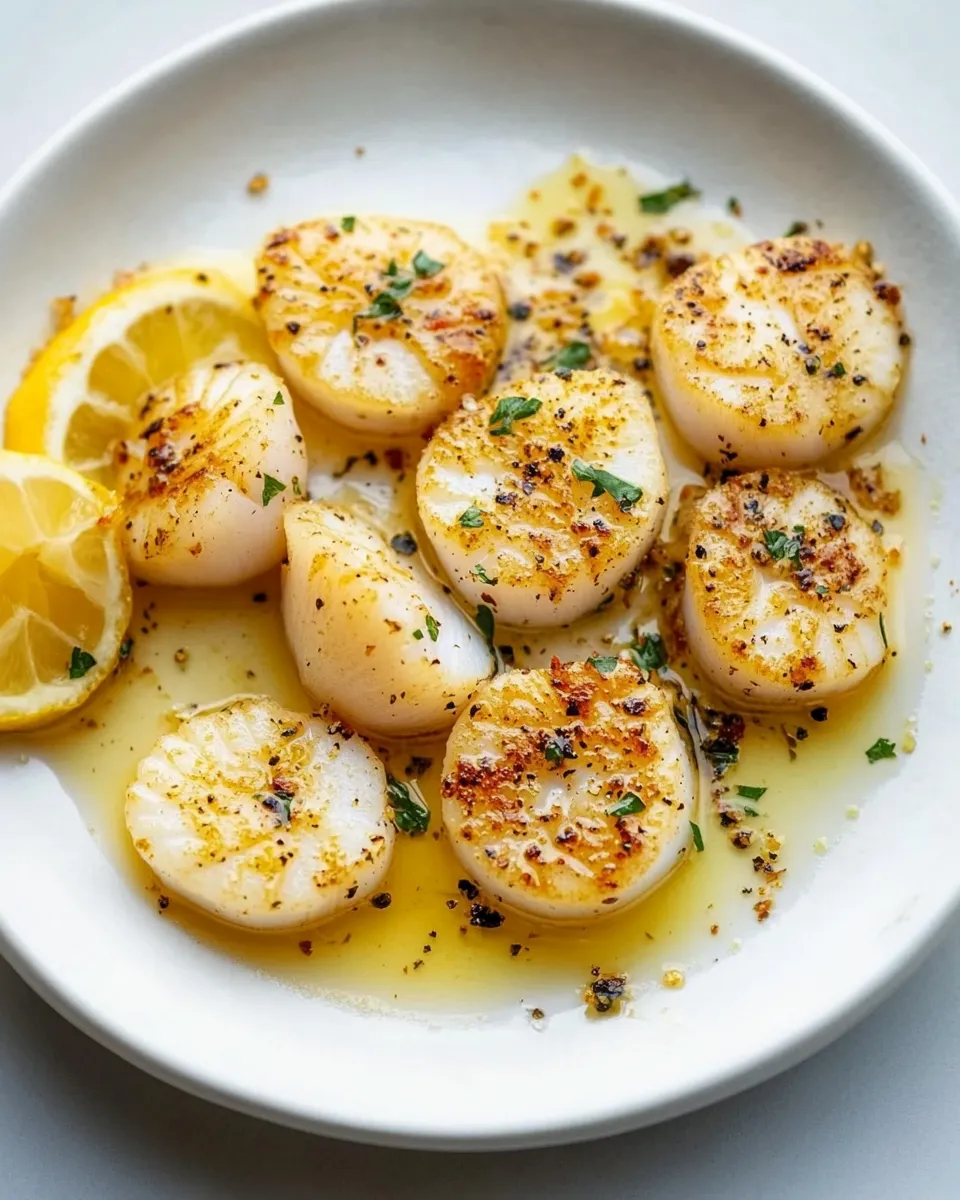
There’s no direct scallop substitute that mimics the exact texture and flavor, but you can recreate the spirit of this dish with plant-based options:
- King oyster mushroom “scallops” — Slice the stems into rounds, pat dry, brush with oil and lemon, and broil or sear until golden. Finish with parsley and lemon.
- Thick-sliced hearts of palm — Drain, pat dry, and treat like scallops for a mild, slightly briny alternative.
Equipment Breakdown
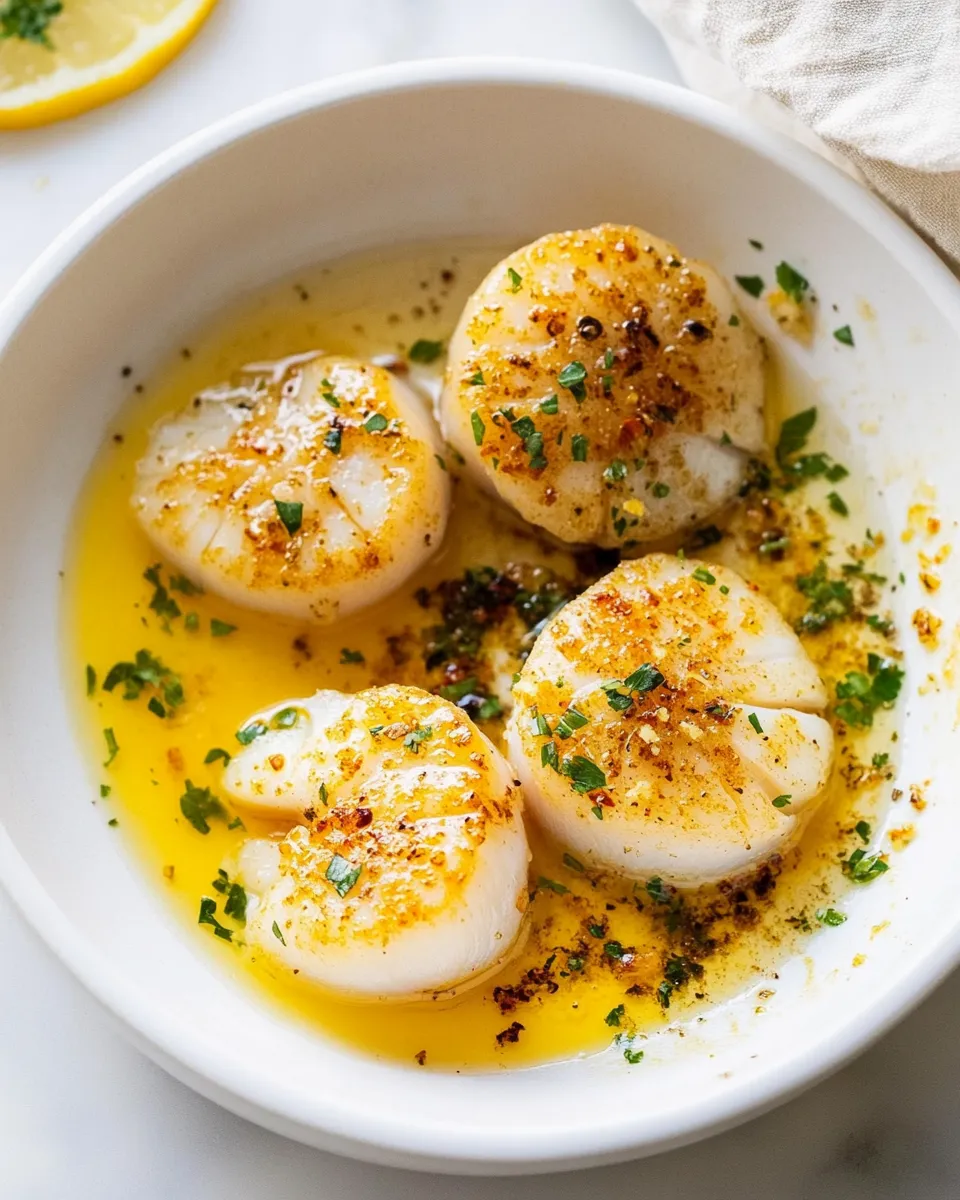
- Baking dish or rimmed sheet tray — Use a shallow dish for broiling so the scallops sit close to the heat element.
- Broiler — Provides the high, direct heat needed for quick browning without overcooking.
- Tongs or thin spatula — For flipping scallops carefully mid-cook.
- Kitchen towel or paper towels — To pat scallops dry—this step is essential.
- Brush — For applying the ghee/olive oil and lemon mixture evenly.
Errors to Dodge
- Skipping the dry step: Not patting scallops dry leads to steaming, a pale exterior, and a rubbery texture.
- Overcrowding the pan: If scallops touch, they won’t brown properly. Give each scallop a little space.
- Overcooking: Scallops go from tender to tough quickly. Stick to the stated broil times and watch them closely during the second side.
- Using too much acid before cooking: Don’t marinate scallops in lemon juice for long periods; acid can alter texture. A light brush of lemon mixed with oil right before cooking is enough.
Allergy-Friendly Swaps
Scallops are shellfish, so for shellfish allergies choose one of the vegan/vegetarian swaps above. If you need dairy-free but still want the flavor of ghee, use olive oil—this recipe already lists that option. For low-sodium needs, reduce added salt and serve lemon wedges so diners can season individually at the table.
Pro Perspective
Restaurant cooks rely on two simple techniques to ensure great scallops: thorough drying and intense, quick heat. Dry scallops brown; wet scallops steam. High heat creates a golden surface that enhances flavor through the Maillard reaction while preserving the interior’s tenderness. If you have access to a cast-iron griddle or a very hot pan, you’ll get faster sears and slightly more caramelization than with a broiler—but both methods work well when timed carefully.
Shelf Life & Storage
Cooked scallops are best eaten the day they’re prepared. If you need to store leftovers, cool them quickly and refrigerate in an airtight container for up to 2 days. Reheat gently in a warm oven (300°F/150°C) for a few minutes to avoid further toughening. Avoid microwaving, which tends to overcook small seafood portions.
Common Qs About Healthy Baked Scallops
- How can I tell when scallops are done? — They will be opaque and firm to the touch but still slightly springy. Avoid a chalky center; that means overcooked.
- Can I use frozen scallops? — Yes. Thaw in the refrigerator overnight, drain, and pat thoroughly dry before seasoning and cooking.
- Why does the recipe list ghee or olive oil? — Ghee tolerates higher heat and gives a richer flavor; olive oil keeps the dish lighter. Either works for browning and flavor.
- Is broiling better than pan-searing? — Both are valid. Broiling is hands-off and consistent for home ovens; pan-searing or griddling gives slightly more immediate crust control. Timing differs slightly, so use visual cues described above.
Bring It to the Table
Serve these scallops with simple accompaniments that don’t compete: a lemony green salad, steamed asparagus, or a small quinoa pilaf. For a cozy weeknight, place scallops on a bed of lightly sautéed spinach; for entertaining, present them atop a smear of herbed yogurt or pea purée. Garnish with the chopped parsley and a lemon wedge for brightness.
Ingredients
- 12 sea scallops — patted dry with a paper towel; dryness ensures proper browning.
- 2 tablespoons ghee or olive oil — helps build a golden crust and prevents sticking.
- 1 tablespoon lemon juice — adds acidity and bright flavor; use fresh lemon.
- 2 tablespoons parsley, fresh, chopped — sprinkled at the end for freshness and color.
- lemon wedges — for serving so guests can add extra brightness.
- salt — to taste; season before cooking lightly and adjust as needed after.
- pepper, freshly ground (to taste) — freshly ground gives the best aroma and flavor.
Healthy Baked Scallops
Ingredients
- 12 sea scallops patted dry with a paper towel
- 2 tablespoons ghee or olive oil
- 1 tablespoon lemon juice
- 2 tablespoons fresh parsley chopped
- lemon wedges for serving
- salt to taste
- black pepper freshly ground, to taste
Instructions
- Preheat your oven’s broiler to high and arrange a rack about 6 inches from the heat source.
- Pat the scallops dry with paper towels, then season both sides with salt and freshly ground black pepper.
- Place the scallops in a single layer on a baking dish or sheet tray.
- Whisk the ghee or olive oil with the lemon juice in a small bowl and brush or spoon a light coating over each scallop.
- Broil the scallops for 5–6 minutes until the tops are browned, then carefully flip each scallop and broil another 5–6 minutes until the other side is browned and scallops are opaque and cooked through.
- Remove from the oven, sprinkle with chopped parsley, and serve with lemon wedges.
- Optional: cook on a hot griddle instead of broiling if desired.
Equipment
- baking dish or sheet tray
- small bowl
- pastry brush or spoon
- tongs or spatula
Notes
- Do not overcrowd the baking dish to ensure even browning.
- Patting scallops dry helps them brown better.
- Use fresh lemon juice for best flavor.