This article contains paid links. As an Amazon Associate, I earn from qualifying purchases.
The best master bedroom ideas make the room feel good to use, not just lovely to look at. A clear route around the bed, a lamp within reach, and bedding you enjoy can make more difference than another piece of furniture. Once those basics work, the decorative details have room to shine.
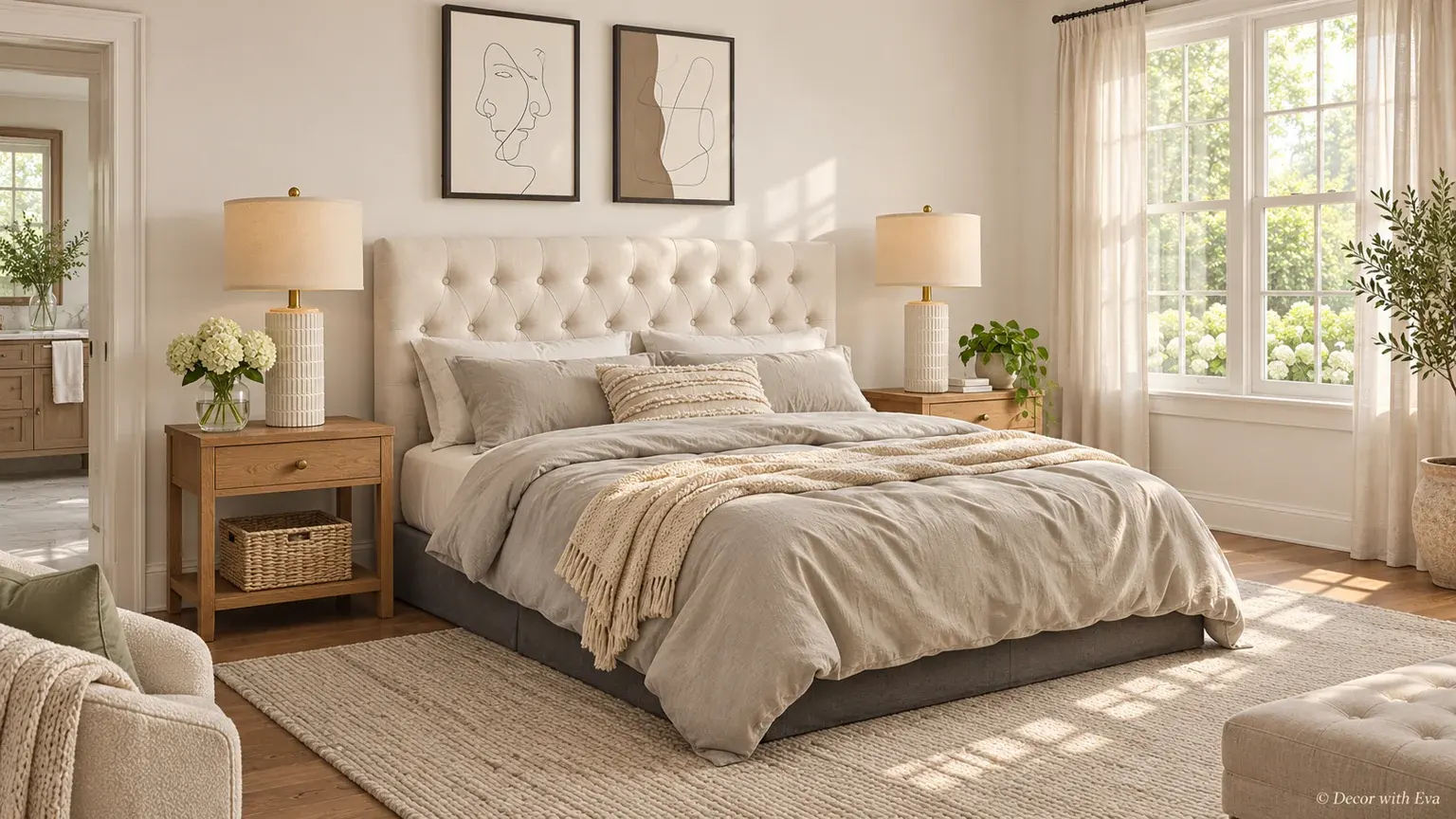
These 29 ideas include complete room looks and smaller changes you can try with what you already own. There are warm neutrals, soft greens, navy accents, cottage florals, and practical ways to organize the things that tend to gather beside the bed. Choose a direction that suits your room, then borrow the details that feel useful.
Before you decorate your master bedroom
Before shopping, measure the bed, the available wall space, and the routes to your closet and bedroom door. Check furniture heights against the mattress and leave enough space to open drawers comfortably. A paper sketch or tape on the floor can help you test a bench, chair, or rug before bringing it home.
Choose colors with the room’s actual light in mind. Benjamin Moore’s paint-sampling guide suggests observing samples in different positions and lighting. Try your bedding and curtain colors beside the sample too, because those large surfaces affect the overall impression.
Follow the manufacturer’s mounting instructions for mirrors and headboards, and use suitable furniture restraints where required. The CPSC’s Anchor It guide explains choosing anchoring hardware for the furniture and wall surface. Route lamp cords away from walking areas and keep curtains clear of heaters and vents.
1. A warm neutral bedroom with layered texture
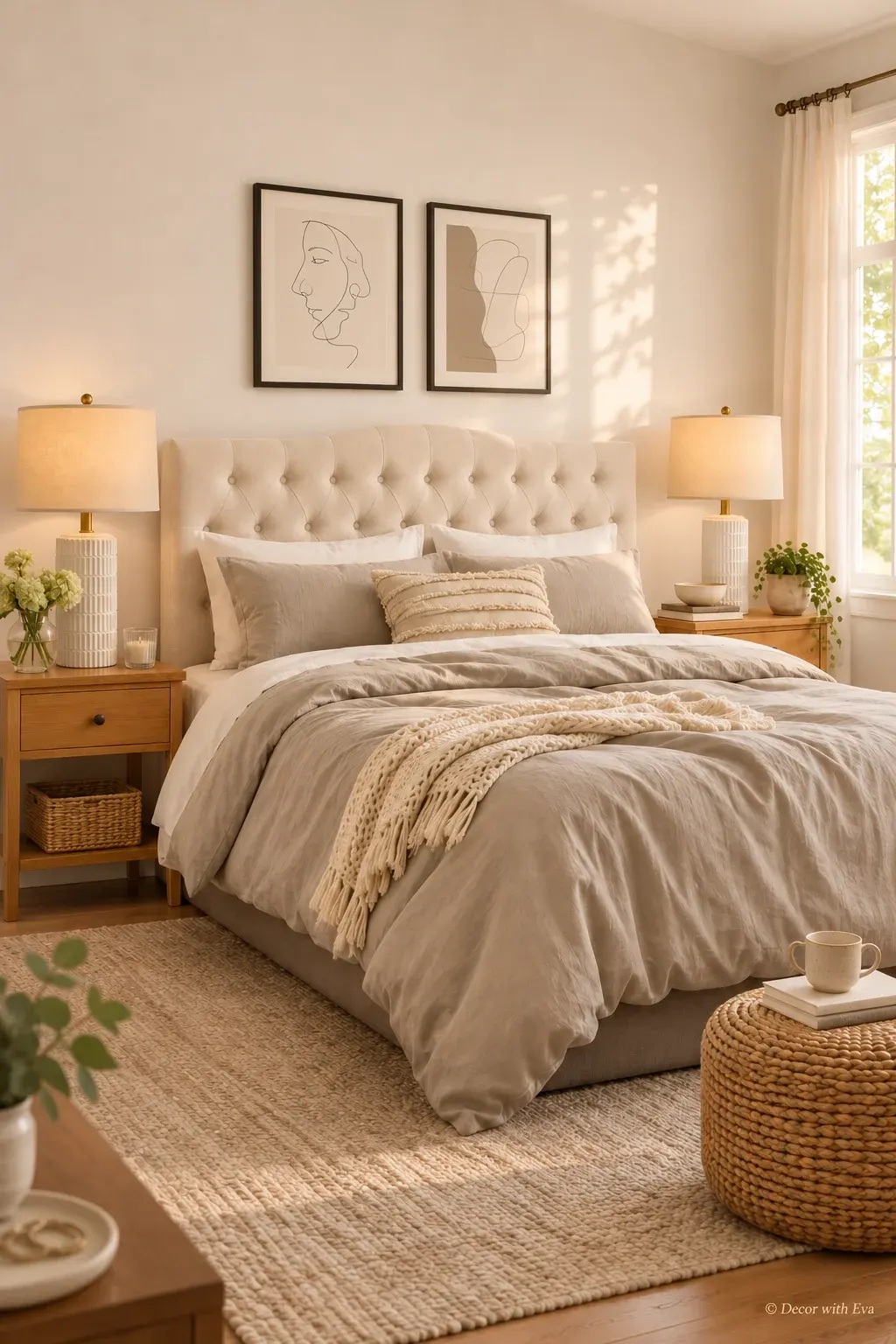
A relaxing bedroom does not have to begin with a perfectly matched furniture set. Here, a greige duvet, a padded beige headboard, and ribbed ceramic lamps make the bed feel inviting through texture. The colors are close enough to sit quietly together, while the different surfaces keep the room from looking flat.
Start with the biggest surface: the bedding. The washed-cotton duvet cover has a softly rumpled appearance, so there is no need to chase a perfectly pressed finish. Add your existing duvet insert, then fold back the top to show a little of the sheet. Keep the bedside arrangement simple and leave room for a glass of water. A single textured cushion or a throw you already own can finish the bed.
2. Crisp white bedding that still feels relaxed
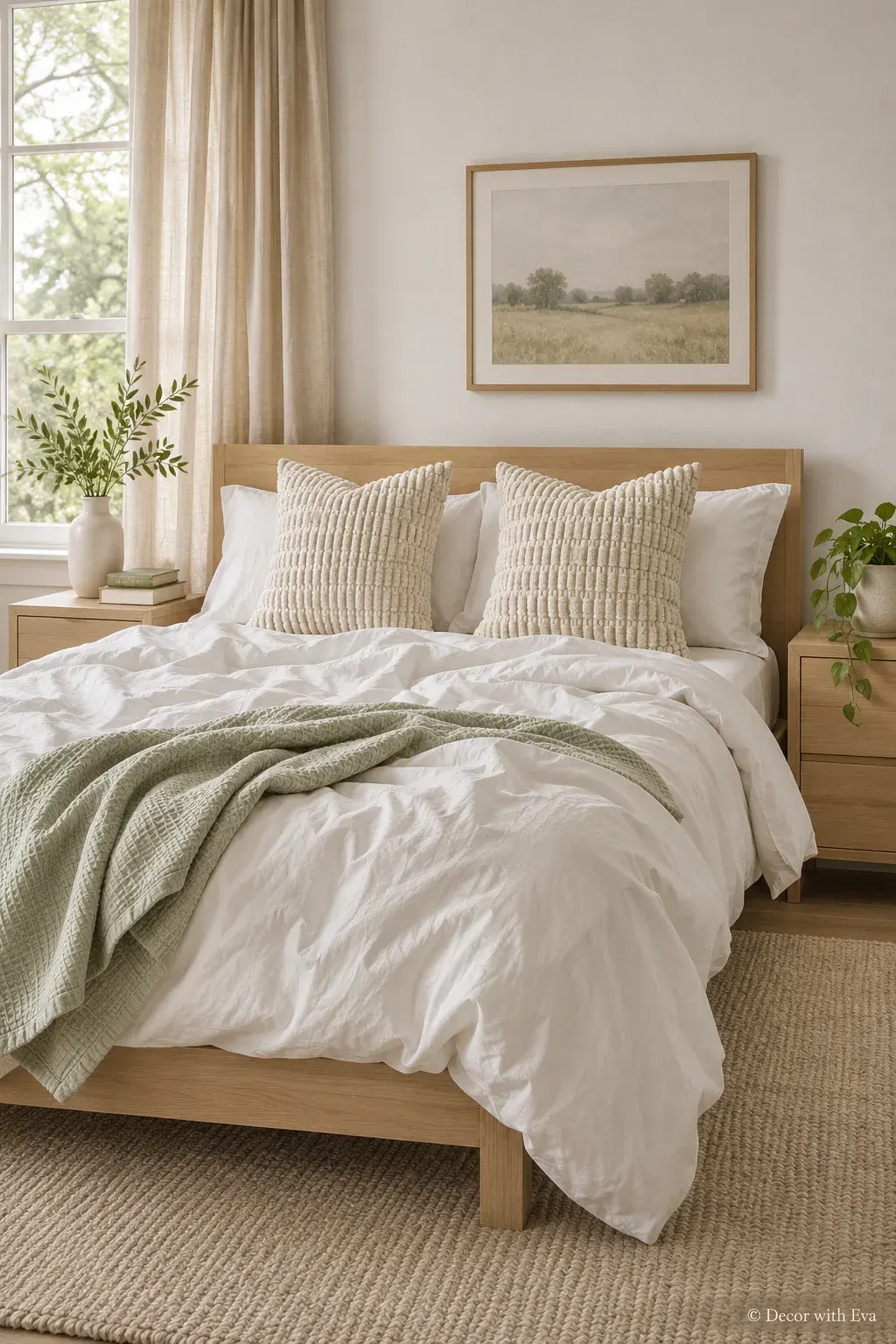
White bedding feels more welcoming when it has a little movement and texture. A washed-cotton cover, softly folded sheets, and cream corduroy cushions create layers without introducing a strong pattern. Pale wood brings enough warmth to keep the overall look gentle.
The selected queen duvet cover measures 90 by 90 inches and comes with two shams; the insert is separate. Check that size against your own bedding, especially if you prefer a generous drop at the sides. The cream cushion covers are 18-inch squares and need inserts. Two decorative cushions are plenty for this look. Let the bedding fall naturally, then straighten only the edges that make the bed look untidy.
3. Soft sage walls with deeper green accents
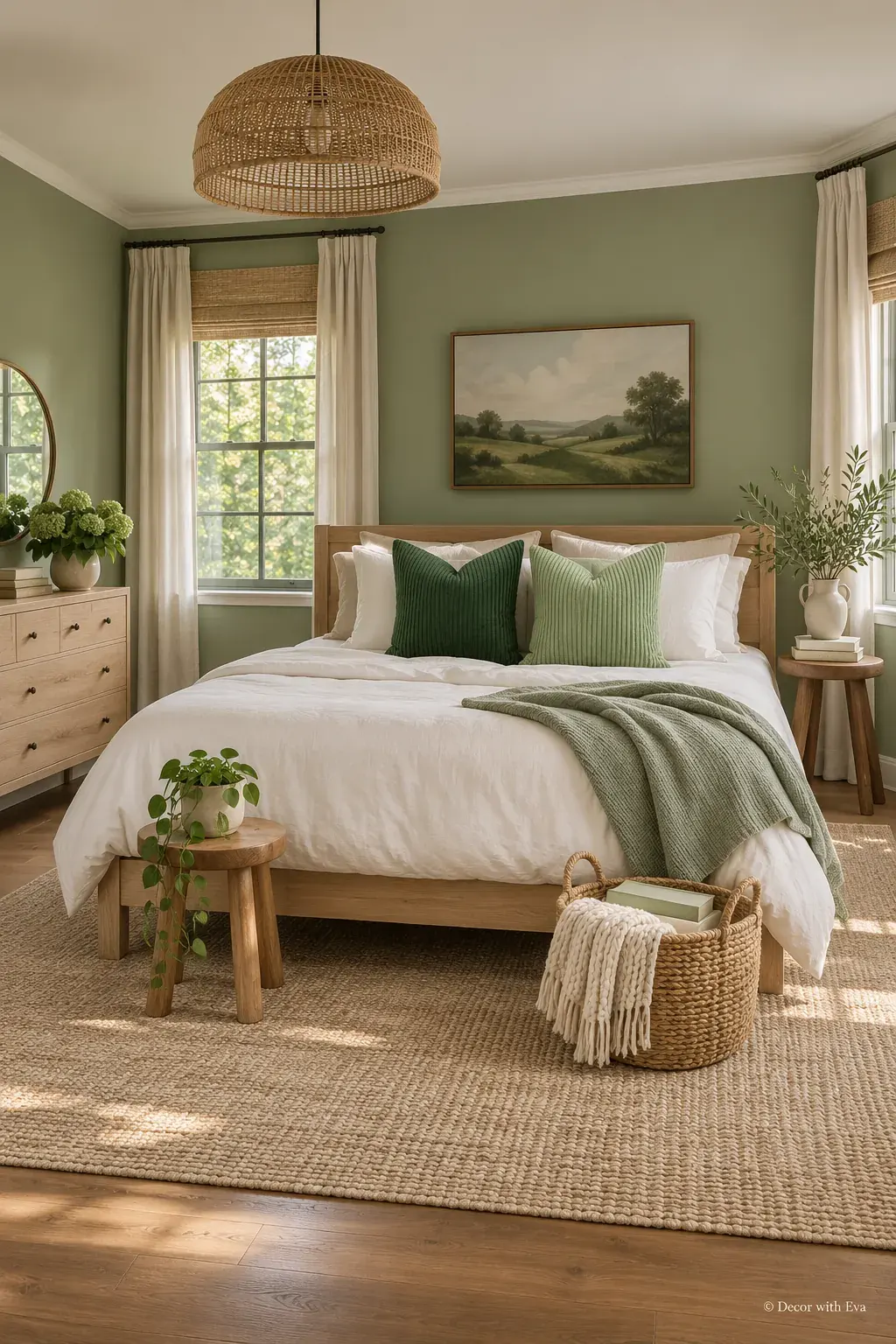
Sage walls give a bedroom a soft background that still has personality. Deeper green cushions connect the wall color to the bed, while white bedding keeps the middle of the room bright. Warm wood is a lovely partner because it adds a little contrast without a sharp change of mood.
Try a paint sample beside the headboard and again near the window before committing to the whole room. Green can look quite different under a bedside lamp. Choose two shades from the green cushion-cover assortment rather than piling every cover onto the bed. Repeat the darker tone once elsewhere, perhaps in a book cover or a small pot. That little repetition is enough; the room does not need matching green furniture.
4. A navy quilt against warm white walls
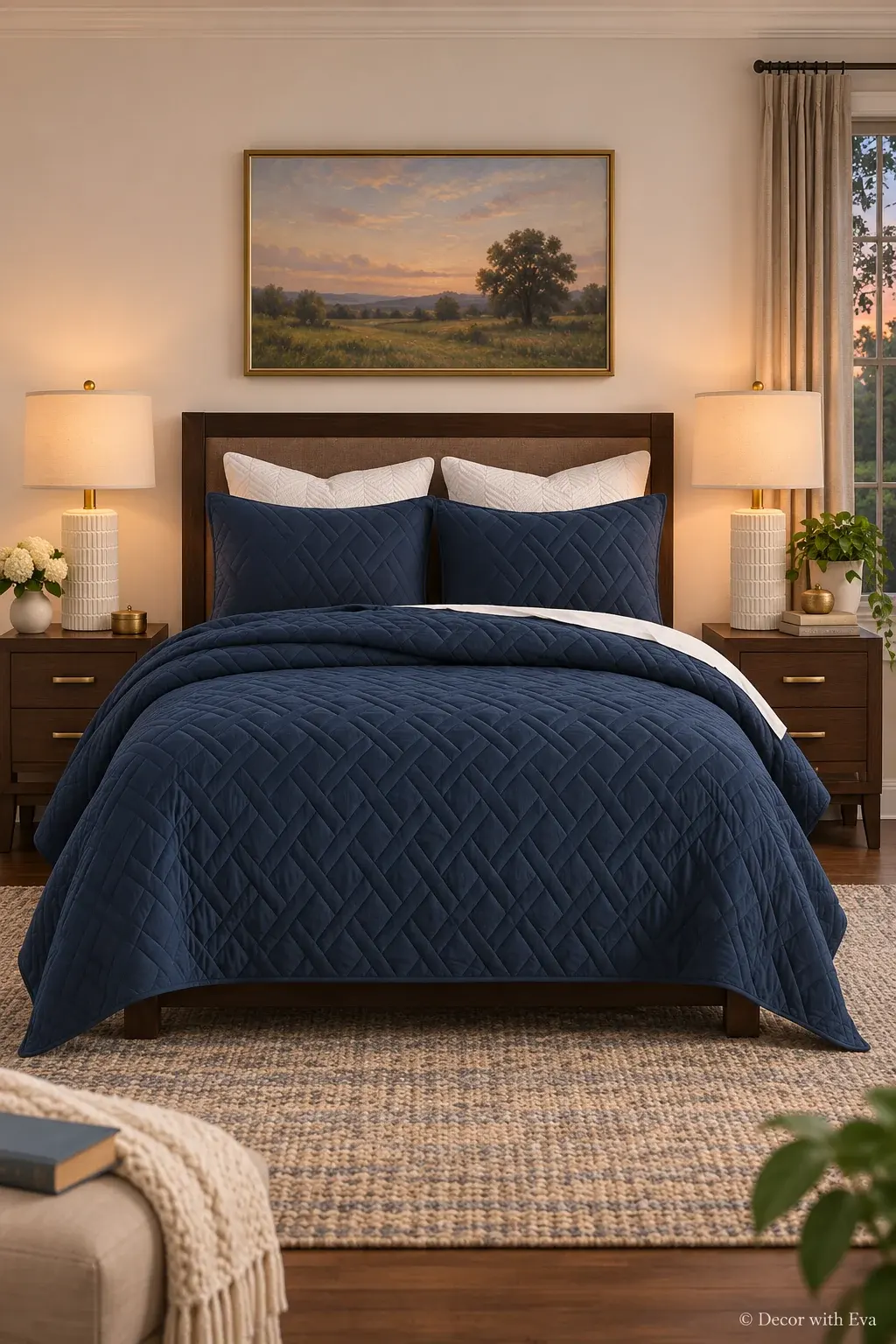
A navy quilt gives a pale bedroom a clear focal point. The dark bed surface makes warm white walls and ceramic lamps stand out, while the diamond stitching adds detail without another print. It is a useful direction if you like contrast but do not want a dark room from floor to ceiling.
The queen quilt is 90 by 96 inches, with two matching shams. Check how the longer side will fall on your mattress before making the bed. Fold a plain white sheet over the top for a clean break between the quilt and pillows. Keep nearby accessories light or wooden, and resist adding several different blue patterns. The quilt already gives the room a strong, settled center.
5. Powder-blue quilting for a softer classic look
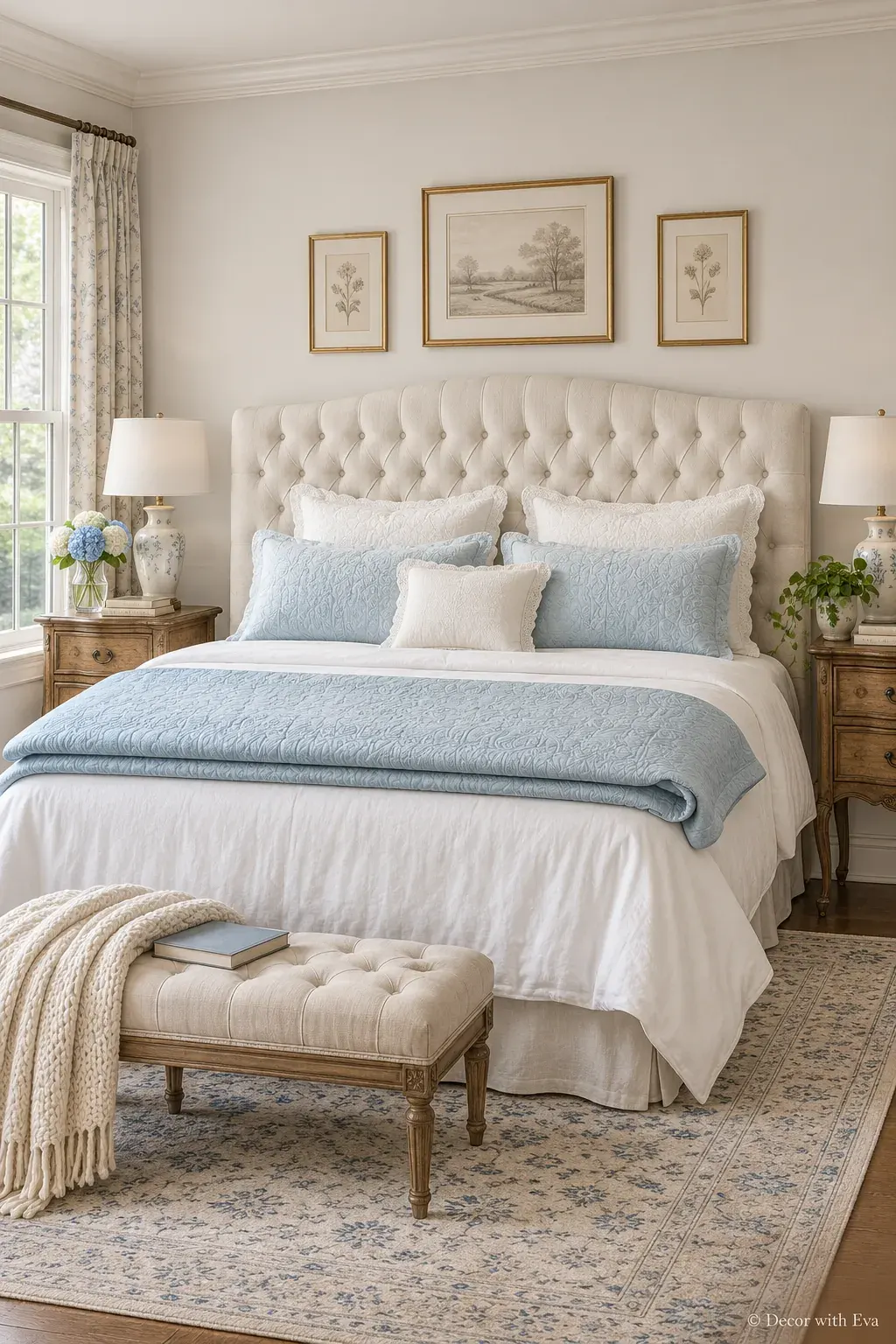
Powder blue and ivory make a classic combination that feels light rather than formal. Scroll stitching gives the blue quilt a little ornament, while the curved upholstered headboard adds a softer outline behind it. A few aged wood or brass details can give the room character without overwhelming the pale colors.
The selected full/queen quilt is 90 inches square. On a king bed, use it folded across the lower part as shown, rather than expecting a full king-size cover. Use your own correctly sized bedding beneath it. Keep the shams grouped neatly, and choose just one additional small cushion if you want another layer. You can create the same gentle palette with an existing blue blanket and cream pillowcases.
6. A green-and-navy patchwork retreat
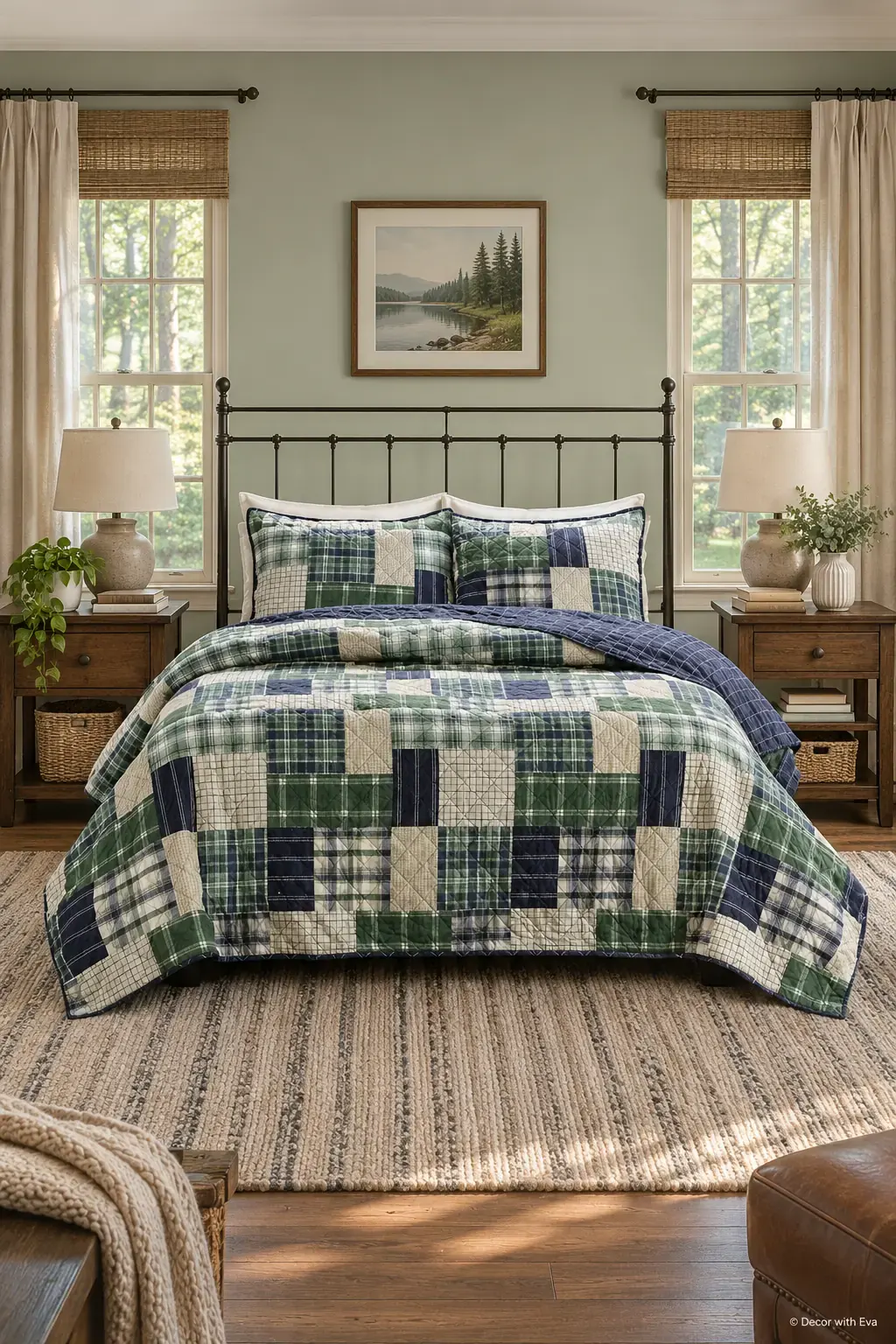
Green, navy, and cream patchwork brings a little country-house character to a master bedroom. A plain iron bed frame gives the pattern room to breathe, while soft green walls pick up one of the quieter colors in the quilt. The result feels collected and comfortable without needing rustic decorations on every surface.
This quilt set includes a 90-inch-square coverlet and two standard shams. Keep the sheets plain and choose an existing wood nightstand rather than adding another patterned piece. If you prefer a less coordinated look, use your own cream pillowcases behind the patchwork shams. The coverlet can also become a folded accent when you change the rest of the bedding for the season.
7. Dusty rose with terracotta and teal
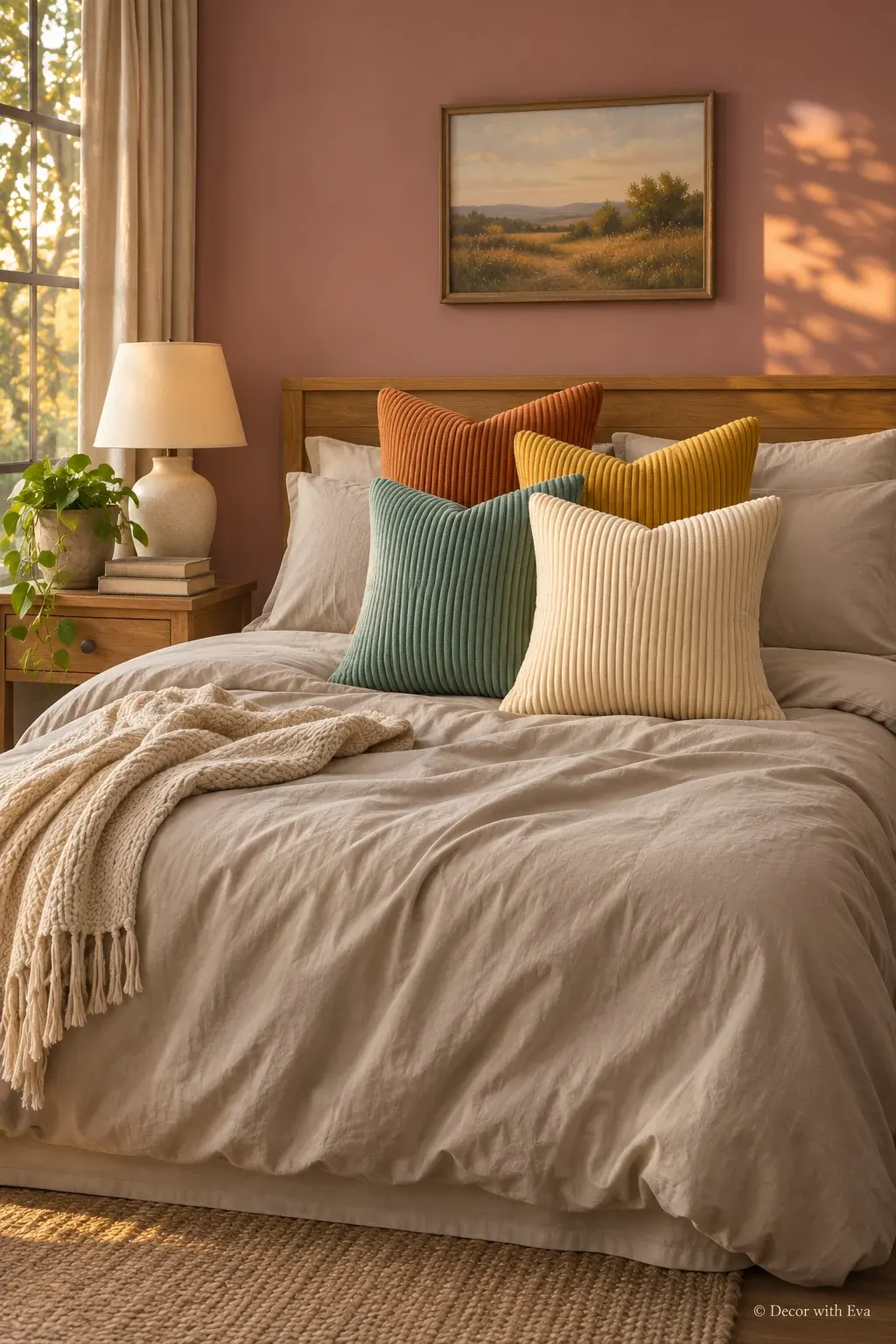
Dusty rose walls look especially good with colors borrowed from clay, wood, and foliage. Rust and muted teal cushions bring depth to a neutral bed, while a mustard accent adds a little warmth. Because the large surfaces stay soft, the room can hold several smaller colors without feeling busy.
Begin with one warm cushion and one cooler cushion from the coordinated set, then add the others only if the bed still needs them. The covers are 18-inch squares and come without filling. Keep a plain duvet behind them so their ribbed texture is easy to see. Before buying anything else, look around your home for a landscape print, a ceramic lamp, or a throw that repeats one of those tones.
8. A dark botanical rug as the focal point
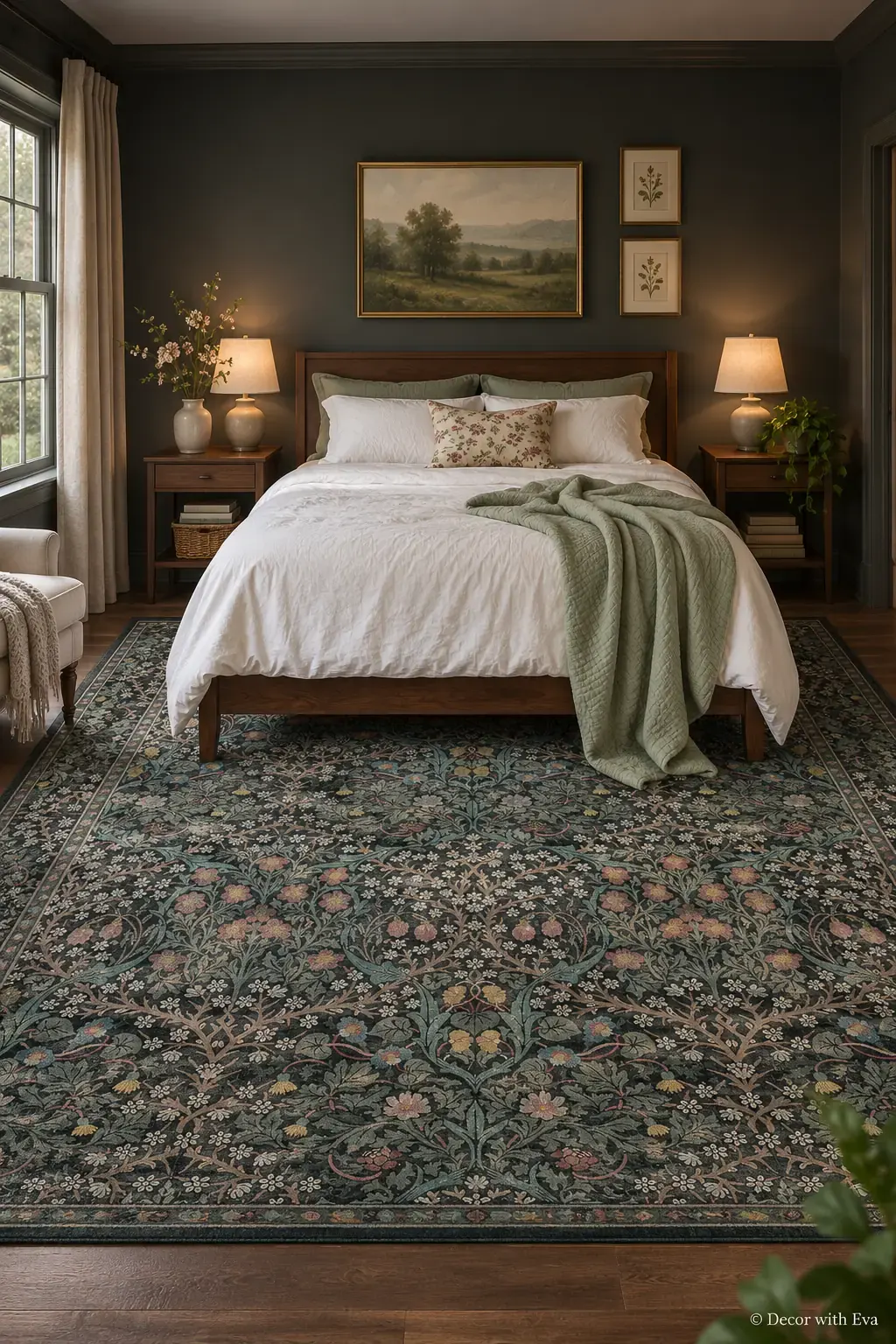
A dark botanical rug can carry almost all the pattern in a bedroom. The charcoal ground and small green, teal, pink, and cream motifs create a rich base beneath plain bedding. Dark walls make this a more enveloping room, while the white bed prevents the center from disappearing into shadow.
Tape out an eight-by-ten-foot rectangle before choosing this size. Make sure the bed and the walking areas sit comfortably within your actual room, and check door swings and rug edges. A low-pile rug still needs care around its corners and may need a suitable pad for your floor. Keep curtains and cushions simple so the botanical pattern remains the main decorative detail. In a smaller room, try the palette through bedding instead of forcing in an oversized rug.
9. Full curtains that frame the bed beautifully
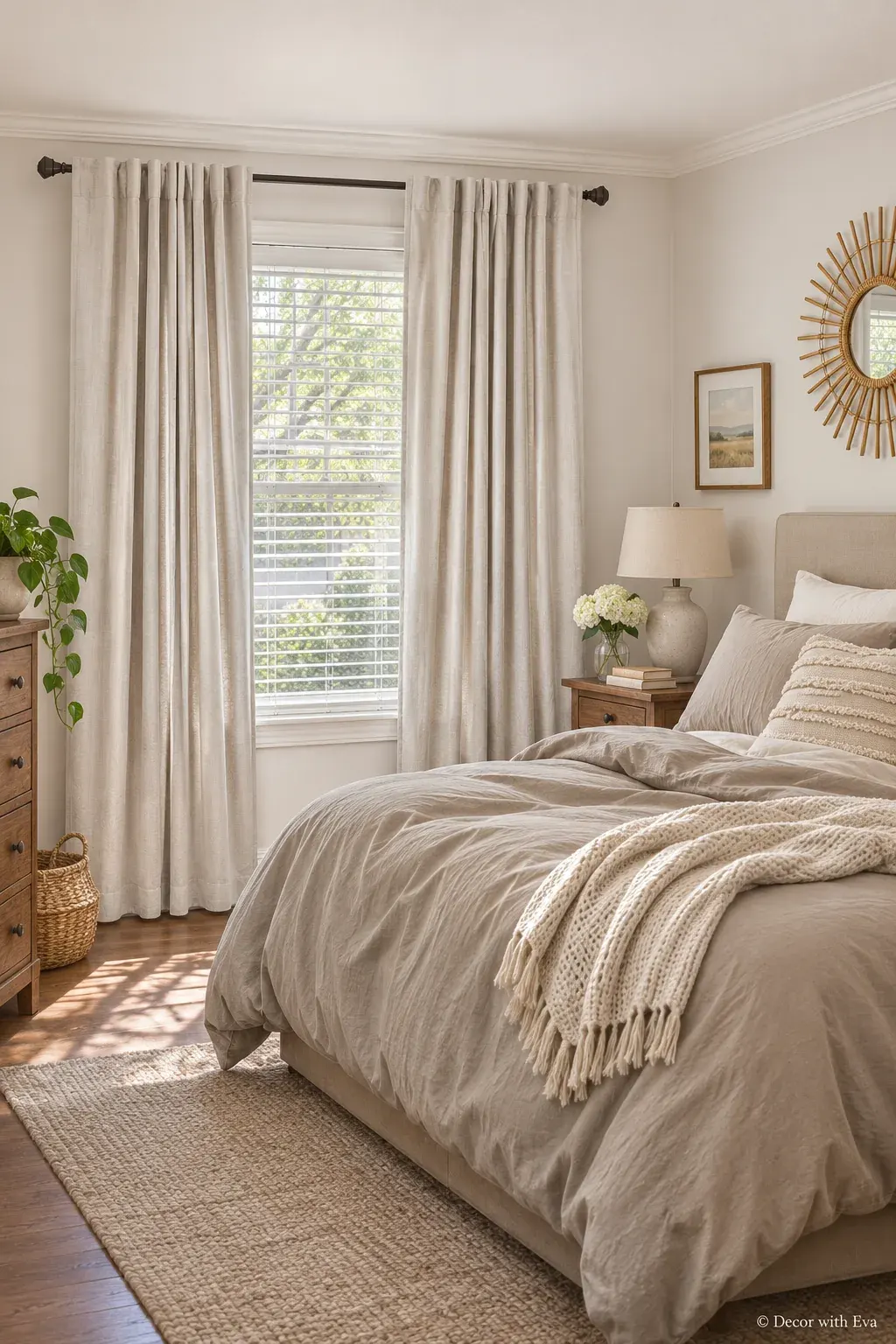
Curtains can make an ordinary window feel more finished. Cream panels soften the hard lines of the frame and echo the bedding, while a dark rod gives the top a tidy outline. A little fullness matters more than an elaborate heading or a dramatic puddle of fabric.
The selected set has two panels, each 50 inches wide and 84 inches long. Measure from the intended hanging point to the finished hem position; an 84-inch panel will not reach the floor from every ceiling-height rod. Allow enough space for the fabric to stack back from the glass, and keep hems clear of heaters and vents. Hooks and rings are separate if you choose those hanging methods. Use existing blinds behind the panels if your room needs another layer of light control.
10. A breezy window corner with filtered light
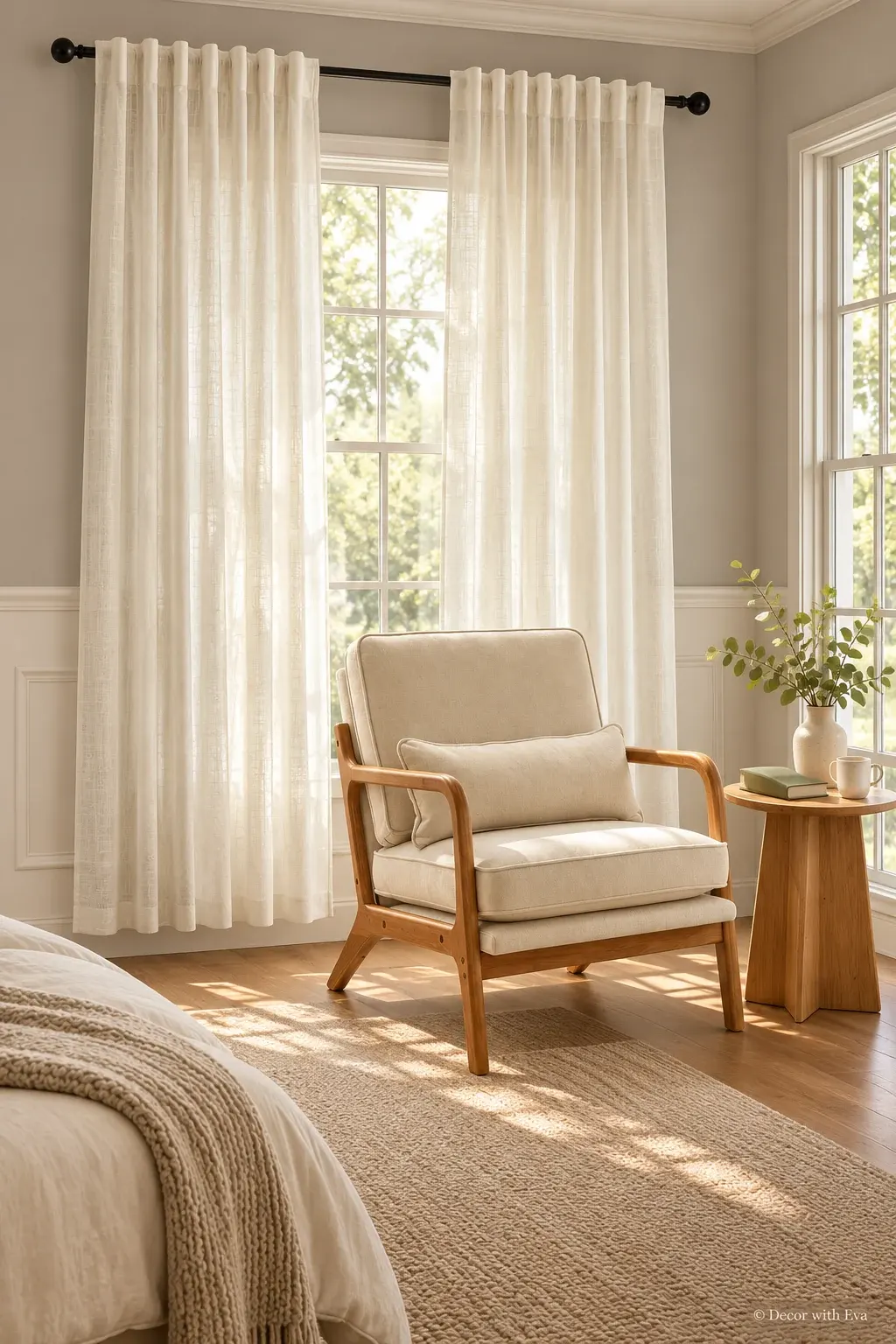
A quiet window corner can become one of the nicest parts of the bedroom. Light-filtering curtains let the view stay soft, and a wood-frame chair adds a place to pause without introducing another large upholstered shape. A small table and a book are enough to make it feel useful.
These ivory curtains are a linen-and-polyester blend, with two 52-by-84-inch panels. They are semi-sheer rather than blackout curtains, so consider what you need for privacy after dark. Place the chair far enough forward that the fabric can move freely. Use a table you already own and leave the floor around the seat clear. If this corner is your regular reading spot, add a suitable reading light instead of relying on daylight alone.
11. Matching bedside lamps for a balanced room
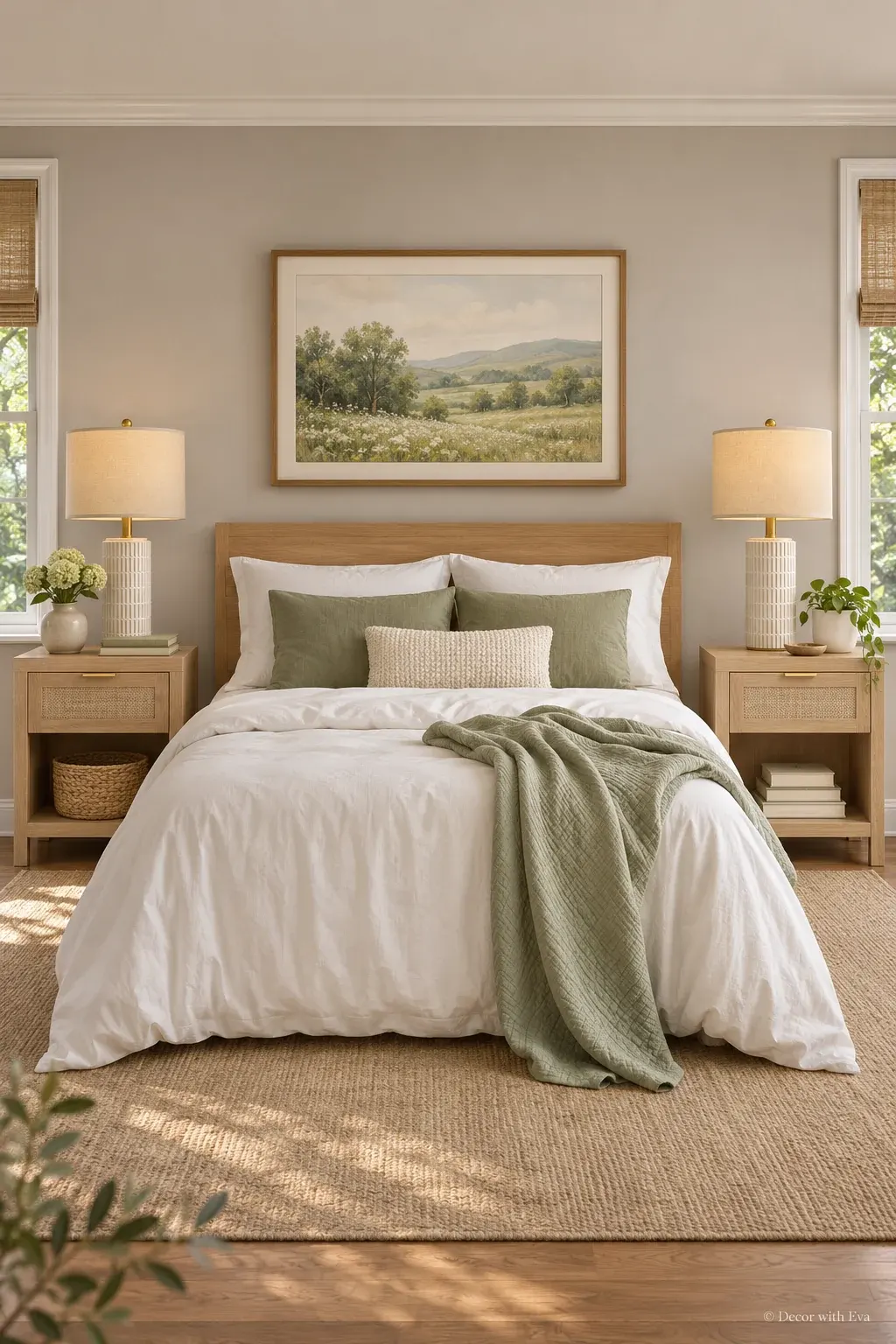
A pair of matching lamps gives the bed a balanced outline, even when the rest of the room is fairly simple. Ribbed white ceramic bases, beige shades, and small gold details work comfortably with pale wood and natural bedding. The repetition makes the room feel deliberate without demanding identical accessories on both sides.
The lamps are about 20.75 inches tall, so check the shade height from your usual position in bed. Their shades need assembly, and bulbs are separate. Give each lamp a stable place on the tabletop with room around its base. The selected nightstands are 20 inches wide and have engineered-wood frames with a plastic rattan-look drawer front. Use the drawer for everyday clutter and keep the open shelf lightly filled.
12. An amber-glass lamp for a vintage bedside
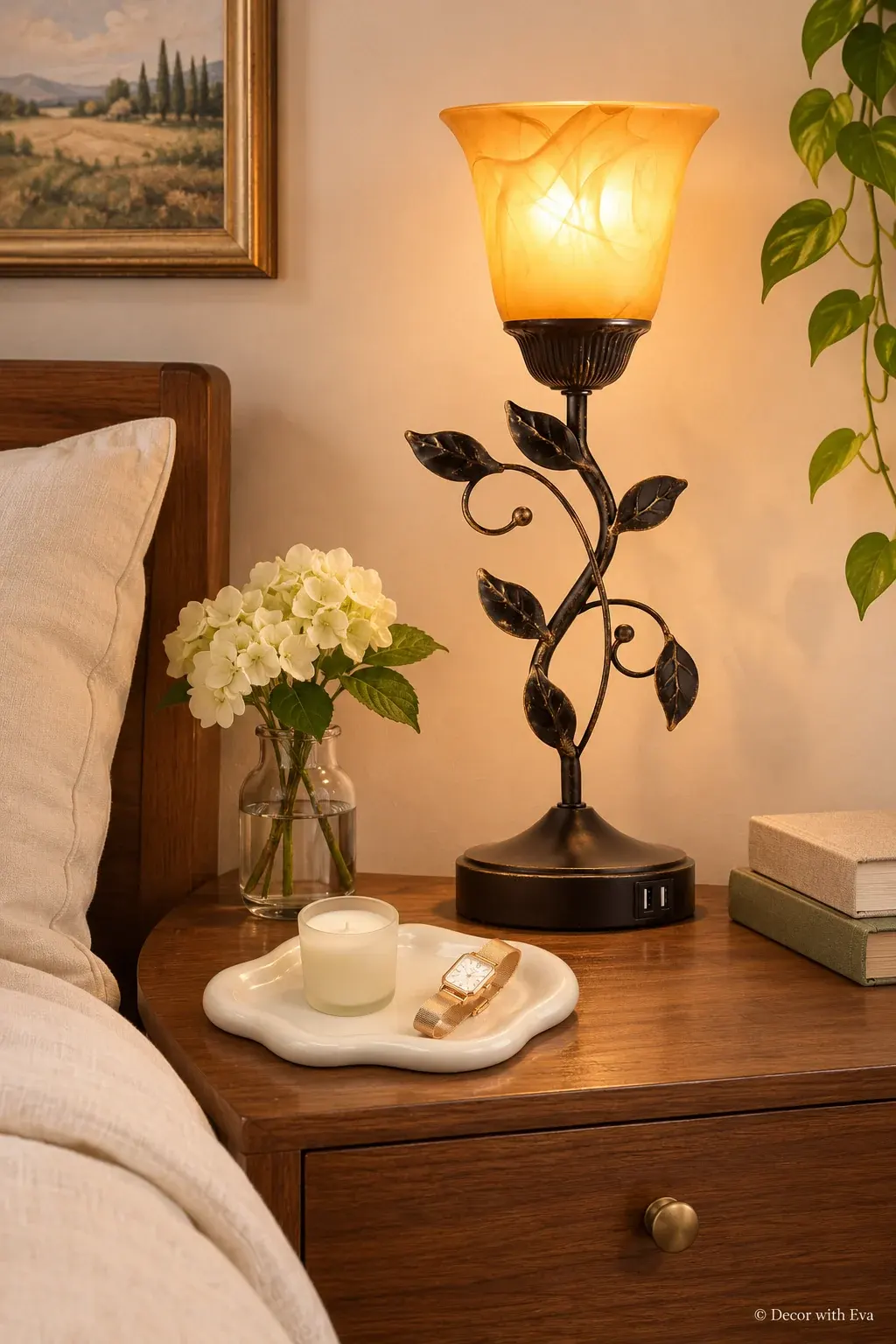
An amber-glass lamp can turn a plain bedside into a small vintage-inspired moment. The bronze-colored vine and leaf details are decorative enough on their own, so the surrounding pieces can stay quiet. A shallow white dish creates a useful place for a watch or rings beside the warm wood.
Leave enough tabletop around the lamp to reach its controls comfortably. Keep books and loose fabric away from the shade, and route the cord behind the furniture. The selected lamp has touch controls and USB ports, but its main role in this arrangement is that distinctive glass-and-leaf shape. If you already own an ornate lamp, try it here before buying another accessory. A plain wall behind it lets the silhouette show.
13. Woven-front nightstands with useful open storage
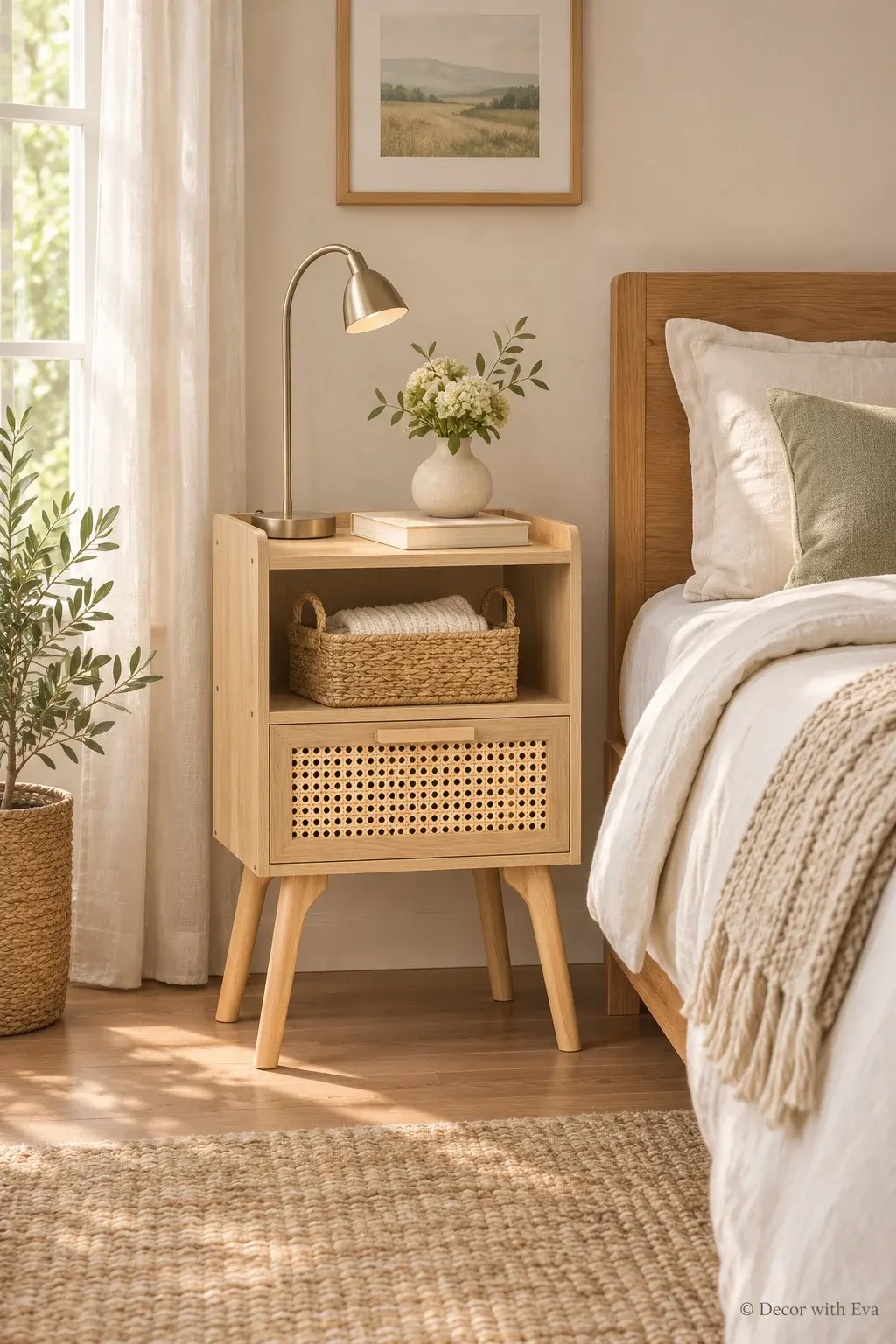
Woven-front furniture adds texture without putting another pattern on the bedding. This little nightstand has a cane-style drawer, an open compartment, and angled legs that keep its outline light. It is a useful choice when a full bedside chest would make the bed feel squeezed in.
The selected table is roughly 16 inches wide, 12 inches deep, and 23 inches high. Those proportions call for a compact lamp, not an oversized shade hanging into the bed. Check the height against the top of your mattress before choosing it. A small jute basket can gather items in the open compartment, while the drawer keeps less attractive necessities out of sight. Measure the basket and shelf opening first; a storage container should slide out without scraping.
14. An upholstered headboard with a graceful outline
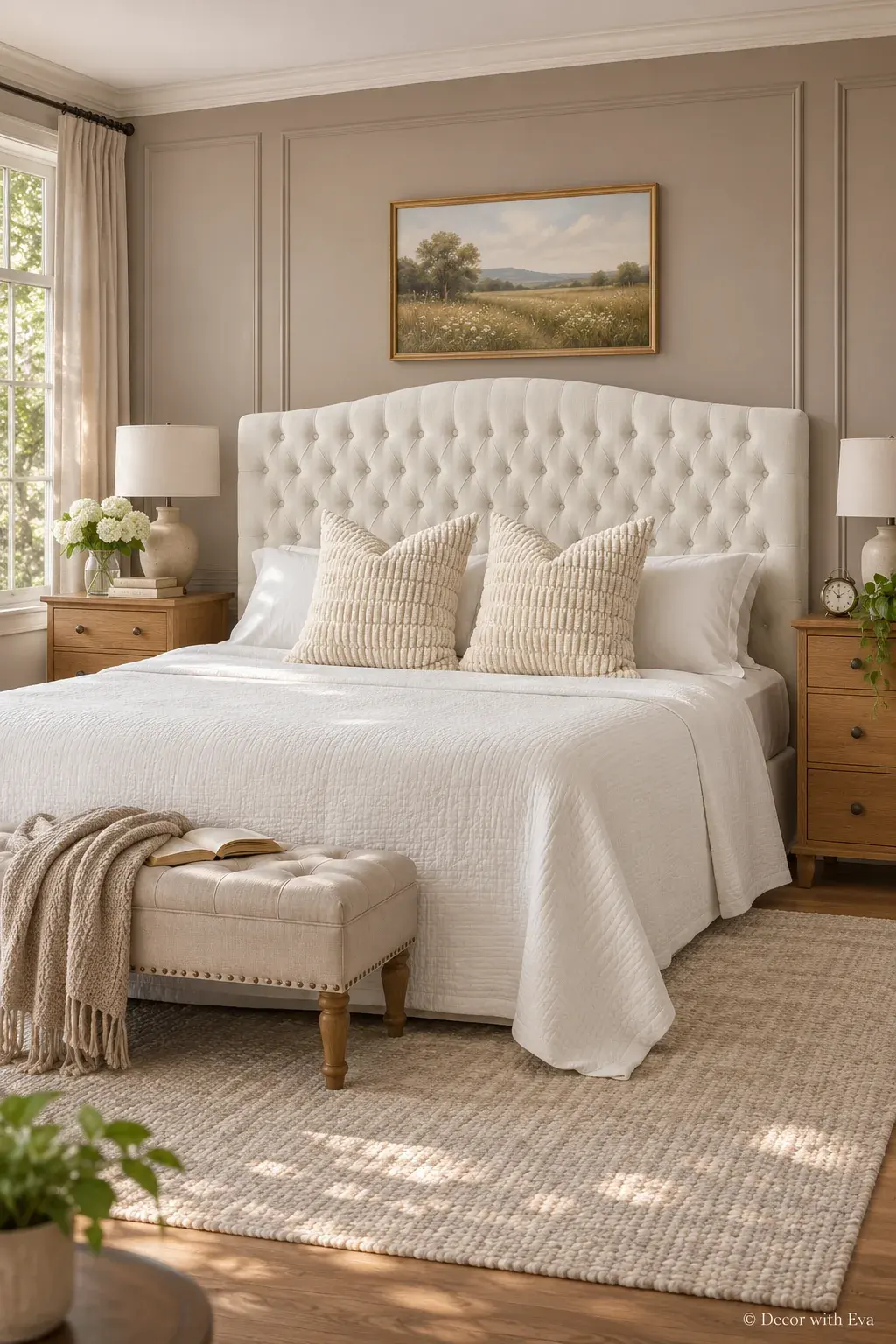
A softly shaped headboard can make an existing bed feel much more finished. Ivory upholstery and button tufting bring texture to the large wall behind the pillows, while the gently curved top breaks up the room’s straight lines. It works especially well with plain bedding and a restrained cushion arrangement.
Check the exact headboard size, mounting points, and mattress height before ordering. This selection is the king-size headboard only, with options for bed-frame or wall mounting according to its instructions. Use fixings suitable for your wall or compatible frame; do not assume every bed will line up. Keep the bedding below enough of the tufted area that the shape remains visible. A decorative headboard loses its effect when it is hidden behind a wall of pillows.
15. A woven bench at the foot of the bed
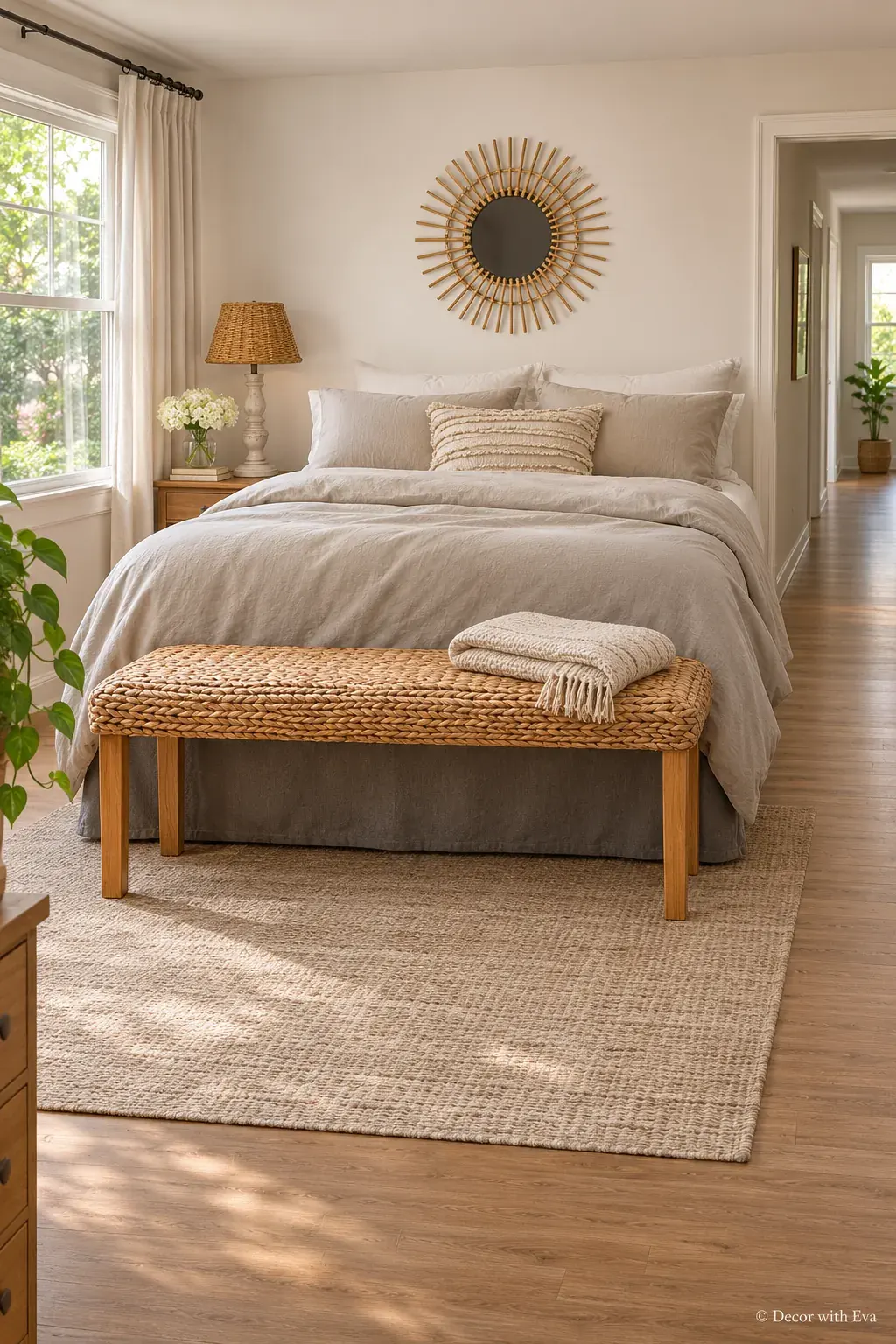
A woven bench adds a warm, natural surface at the foot of the bed. The fishbone-style seat has enough detail to feel decorative, while the plain acacia frame keeps it easy to mix with other wood furniture. It also gives you a place to set a folded throw while making the bed.
This bench is about 47 inches long, 14 inches deep, and 19 inches high. Mark out its footprint before adding it to the room, then test the route past the foot of the bed. Keep drawers and closet doors in mind too. A bedroom that already feels crowded will be more restful without an extra bench. If you have room, leave most of the seat clear so it remains useful instead of becoming another display shelf.
16. A slim storage bench for spare bedding
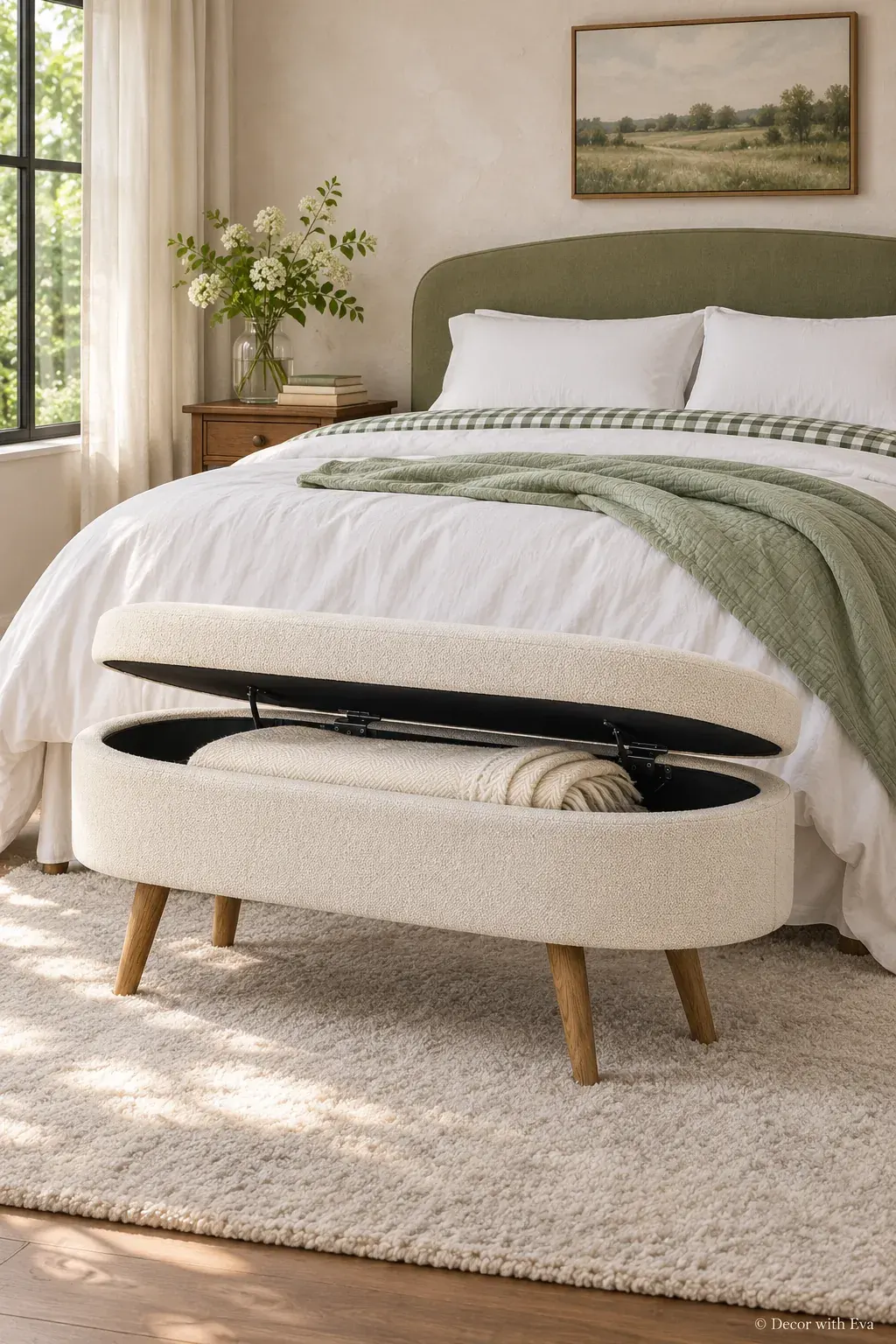
A slim upholstered bench gives spare bedding a home close to the bed. The rounded cream shape is softer than another wooden chest, and the shallow storage space can hold a folded throw or a small stack of pillowcases. It is a practical addition when the closet is short on space.
The selected bench measures 43.5 by 16 by 16 inches, with an interior about 39.75 by 12.75 by 5.25 inches. Check those inside measurements against what you want to store. Allow space to open the lid fully, and follow the supplied instructions for assembly and hinge use. Avoid filling it so tightly that fabric catches at the edges. Keep the area in front clear so the bench does not turn the route around the bed into a sideways shuffle.
17. A reading chair that earns its corner
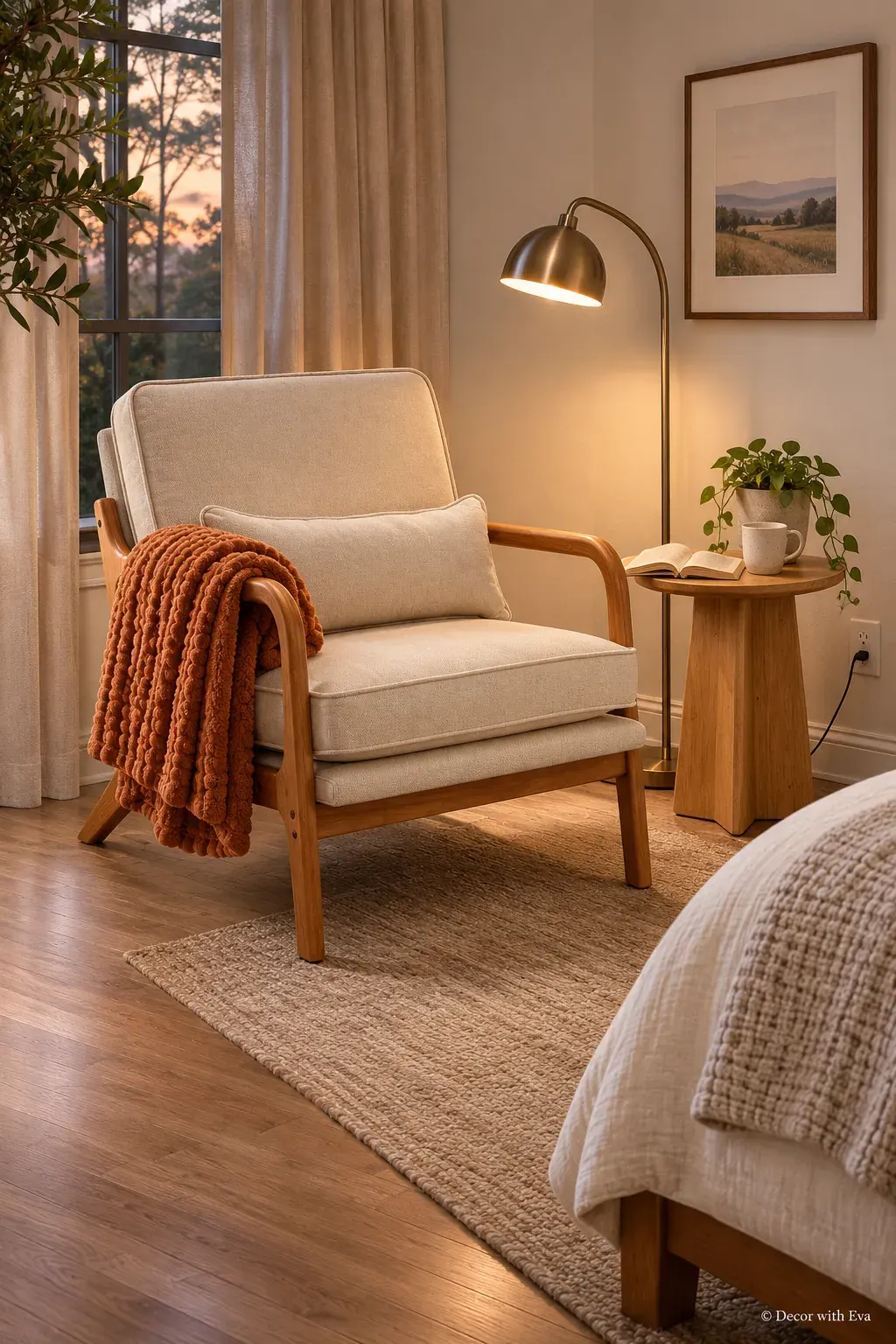
A bedroom reading chair works best when the corner has a purpose beyond looking pretty. A small table, a reachable light, and a throw make the seat feel ready to use. The exposed wood frame here keeps the visual weight lighter than a large lounge chair with deep upholstered arms.
The chair’s listed overall footprint is about 25.6 by 32.3 inches; check its height and seat dimensions too, especially if you prefer a higher seat. Allow room for your feet and for getting in and out. Drape the 50-by-60-inch rust throw over one arm so it adds color without hiding the frame. Keep the nearby surface mostly clear. If the corner cannot hold a chair comfortably, use that floor space for an open route instead.
18. A gold arched mirror in the dressing area
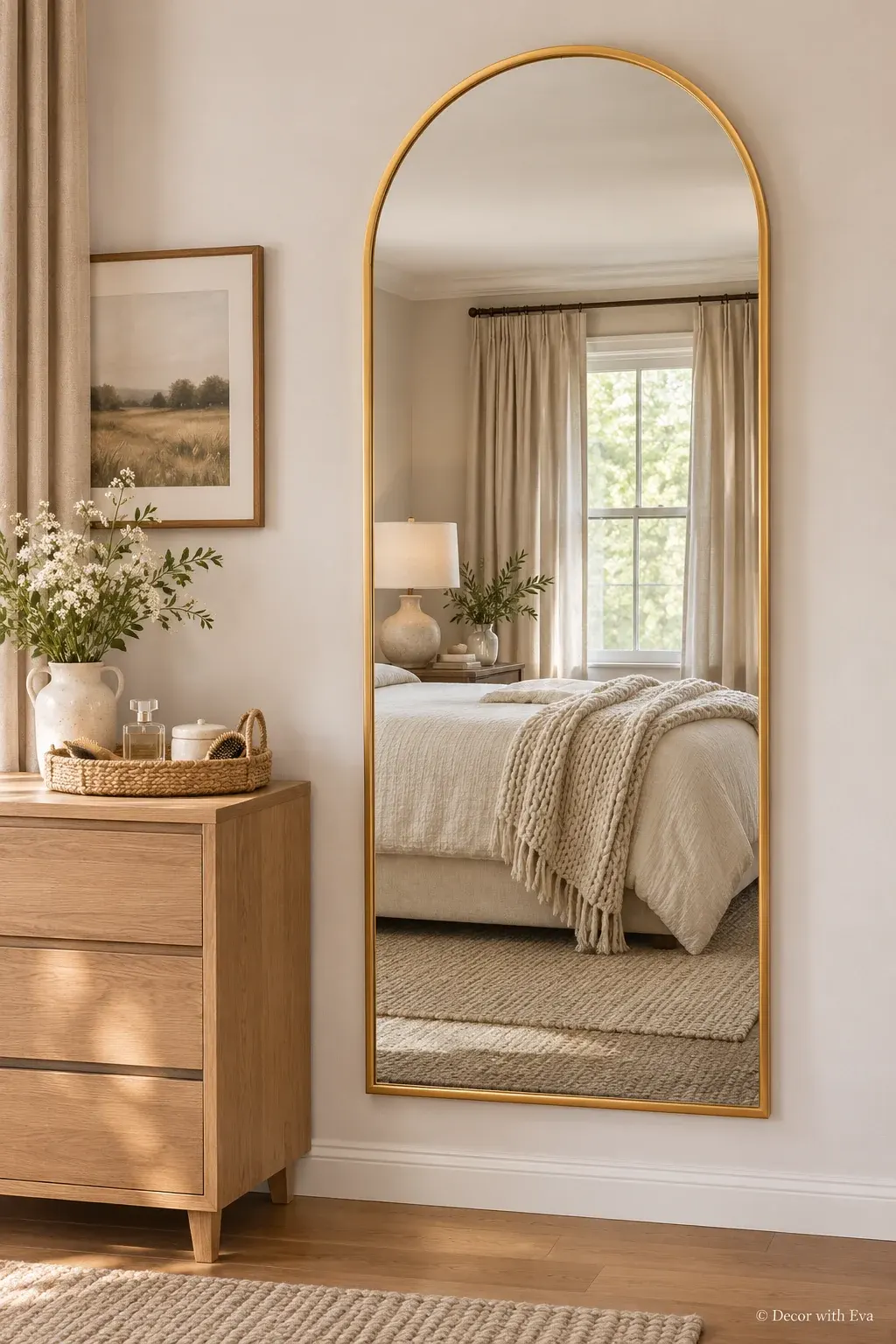
A narrow arched mirror gives a dressing area a little height and a softer line. The thin gold frame adds a warm accent beside pale walls and wood furniture. Position it where it reflects part of the room you enjoy seeing, rather than the open closet or a busy pile of laundry.
The selected mirror is 58 inches high and 20 inches wide. Measure both the wall and the viewing position so the size works for your routine. Mount it using the manufacturer’s method and fixings suited to the surface; the arrangement shown uses a wall-mounted mirror. Keep it clear of door swings and routes where it could be knocked. A small basket nearby can hold accessories without spreading them across the dresser.
19. One landscape above a quiet dresser
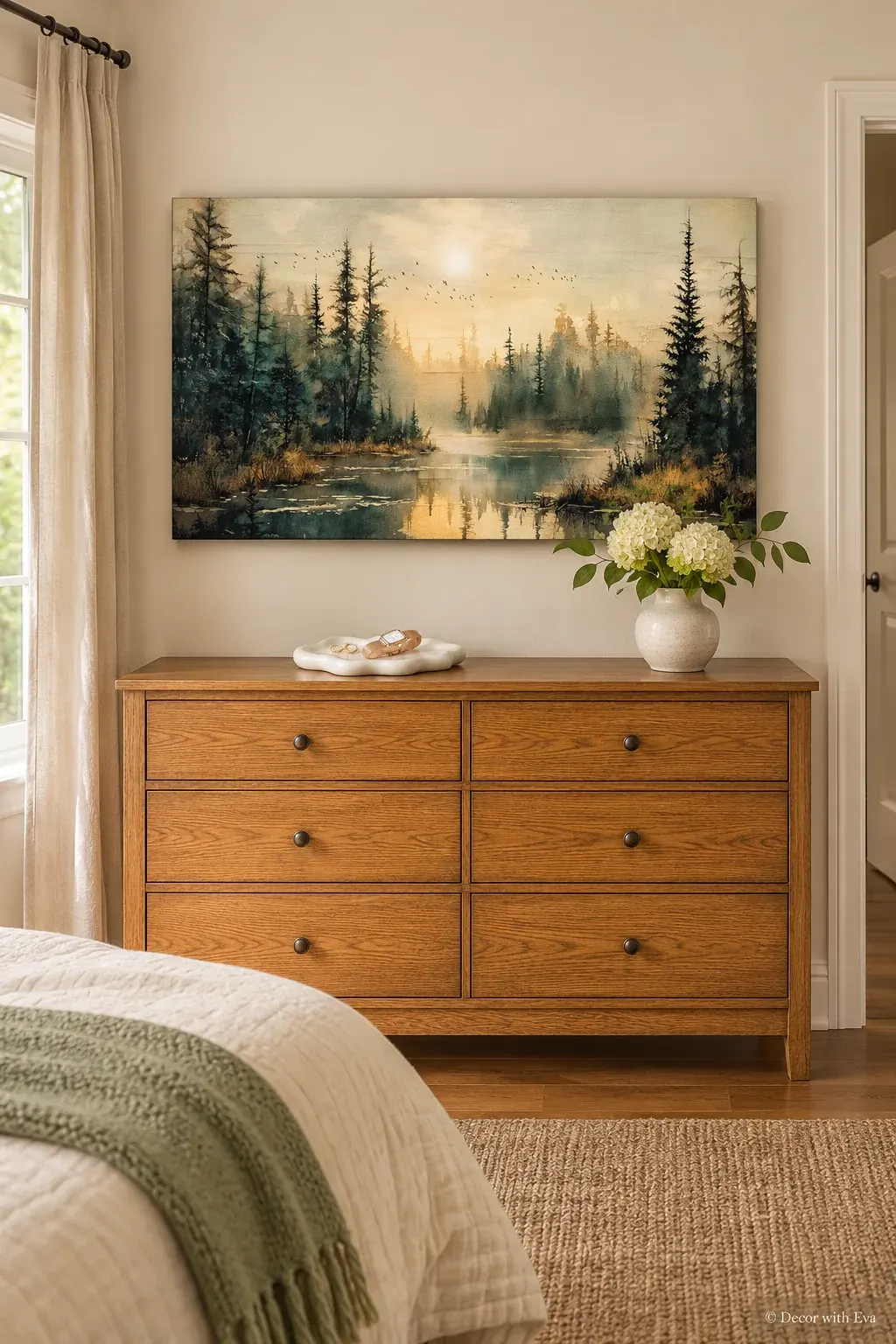
One horizontal landscape can give a dresser wall a peaceful focus. Muted forest greens and warm golden tones sit comfortably with wood, white ceramics, and plain bedding. A single larger piece also keeps this part of the room simpler than a tightly packed gallery wall.
Measure the dresser and wall before deciding on the artwork’s width, then use appropriate hanging hardware. The linked 20-by-40-inch forest-river canvas is a similar palette option for this look. Keep the dresser arrangement low so it does not cover the bottom of the art. One shallow dish and a vase you already own may be all it needs. If you have a favorite print elsewhere in the house, try moving it here for a week before choosing something new.
20. A botanical wallpaper panel behind the bed
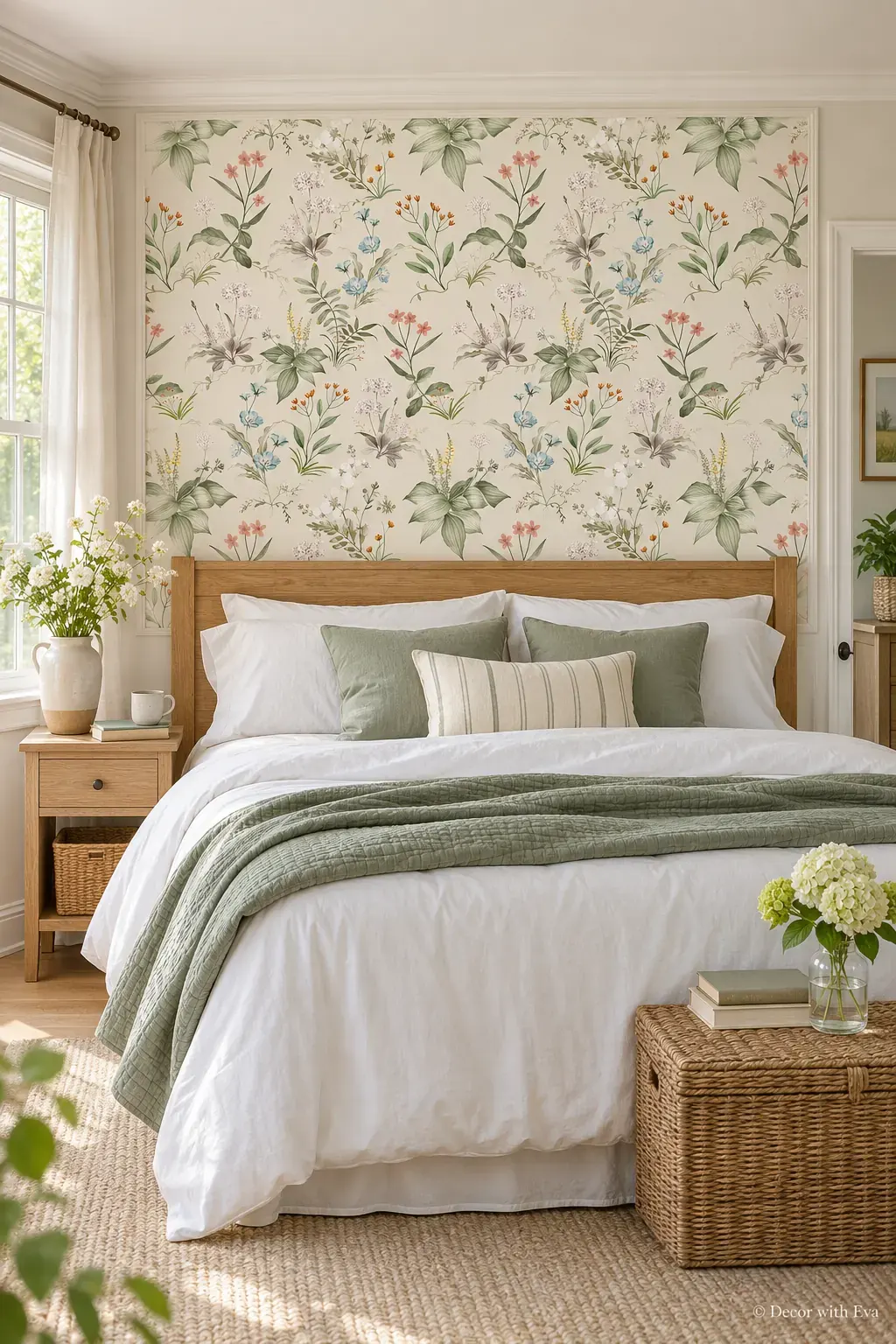
A botanical panel can give the bed a focal point without covering every wall. Small wildflowers on a cream background bring gentle color, while a plain headboard and white bedding let the pattern remain readable. A neat boundary around the panel makes the treatment look intentional.
Try a sample on a discreet part of the actual wall before committing. Peel-and-stick wallpaper needs a suitable clean, smooth surface, and removal results depend on the existing finish. Measure the panel area and allow for the pattern repeat and trimming when working out the roll count. Do not calculate coverage from the roll area alone. A similar effect can come from a large framed piece of patterned fabric if you prefer a removable decorative object.
21. Tonal florals for a warm cottage bedroom
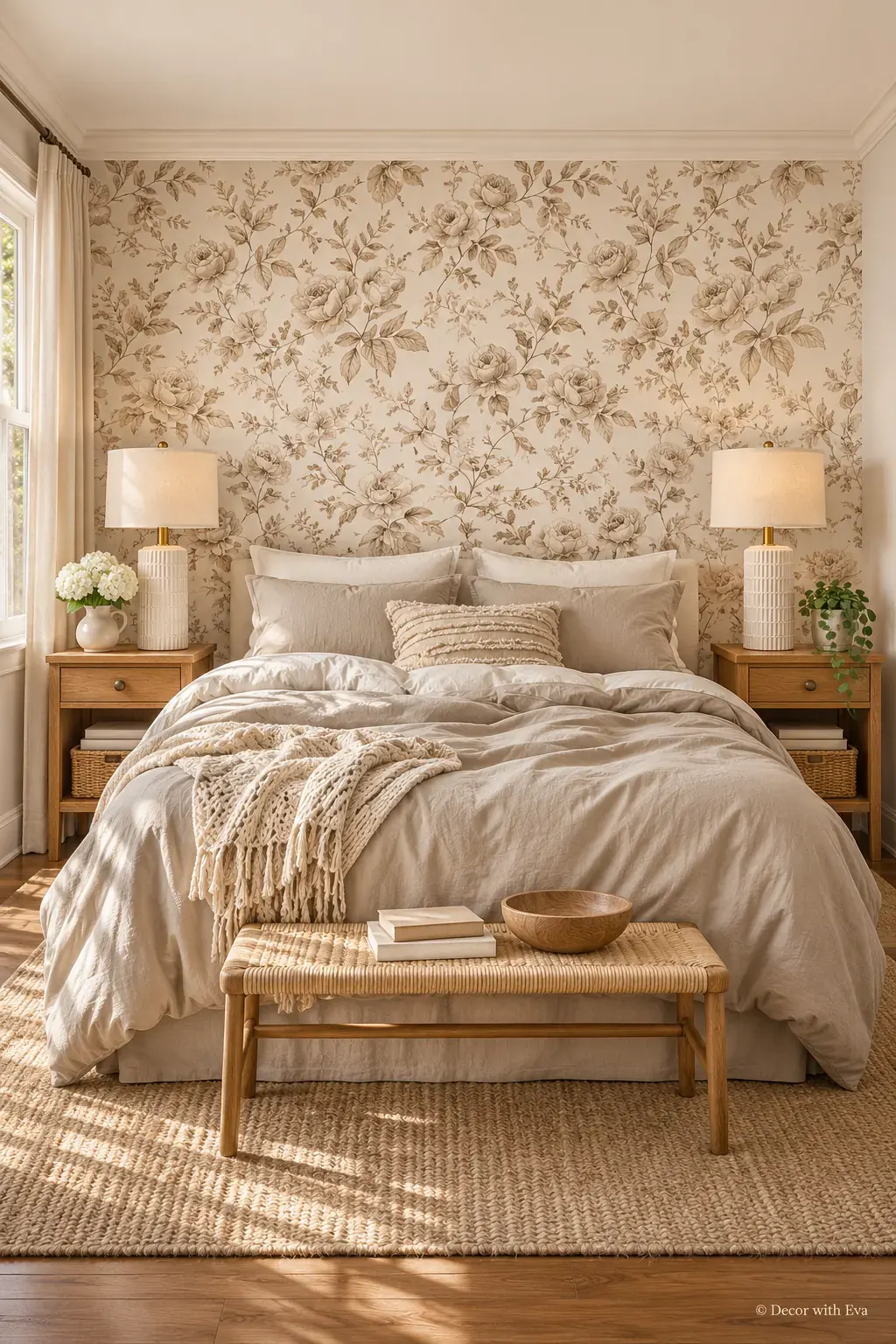
Tonal floral wallpaper gives a cottage-style room detail while keeping the palette gentle. Beige and brown leaves feel warm beside greige bedding, wood furniture, and ivory lamp shades. Because the pattern is fairly continuous, the bed itself can remain plain.
The selected roll is 16.9 inches wide and 118 inches long, with a listed repeat of about 15.94 inches. Plan the drops and matching before ordering enough for a whole wall. Test adhesion and removal on your wall, and follow the surface-preparation guidance rather than assuming it will suit textured paint. Keep the adjoining walls calm. If your bedroom already has a patterned rug, choose either the rug or the wallpaper to lead, with the other kept much quieter.
22. A bedside clock and a little breathing space
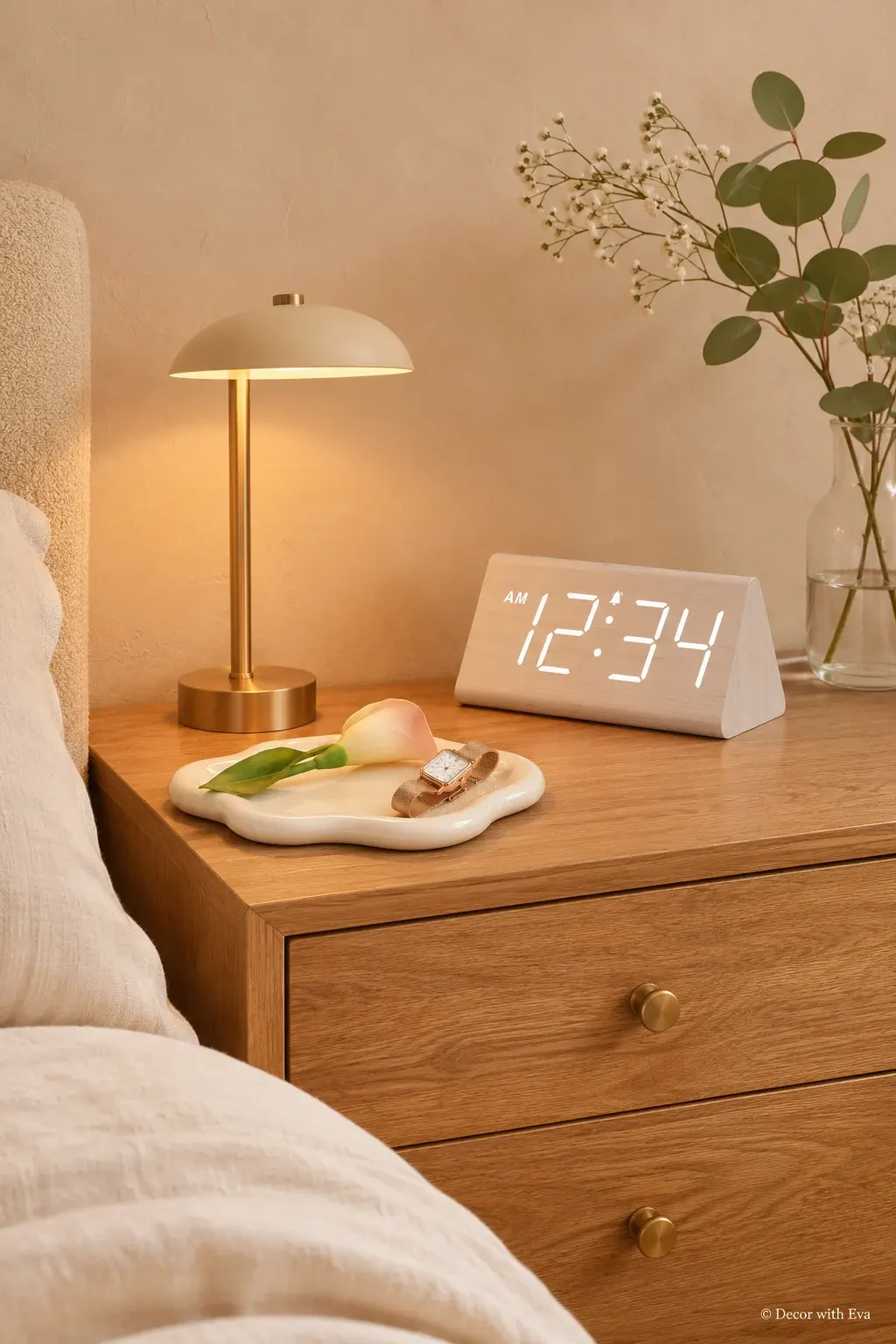
A bedside can feel calmer when it holds only the things you use at night. A little wood-grain clock, a lamp, and a shallow dish give this arrangement a clear purpose. The uncluttered surface also lets the warm wood and soft bedding do more of the decorating.
The selected clock has a dimmable display with an off option, so you can choose how visible it stays after dark. It needs electrical power for the display; the backup batteries are for the alarm during a power interruption. Route the cable behind the table and keep it clear of the walking area. If your current clock works well, keep it and try removing the extra accessories first. Sometimes the most useful bedroom update is simply making a surface easier to use.
23. A small dish that keeps the nightstand tidy
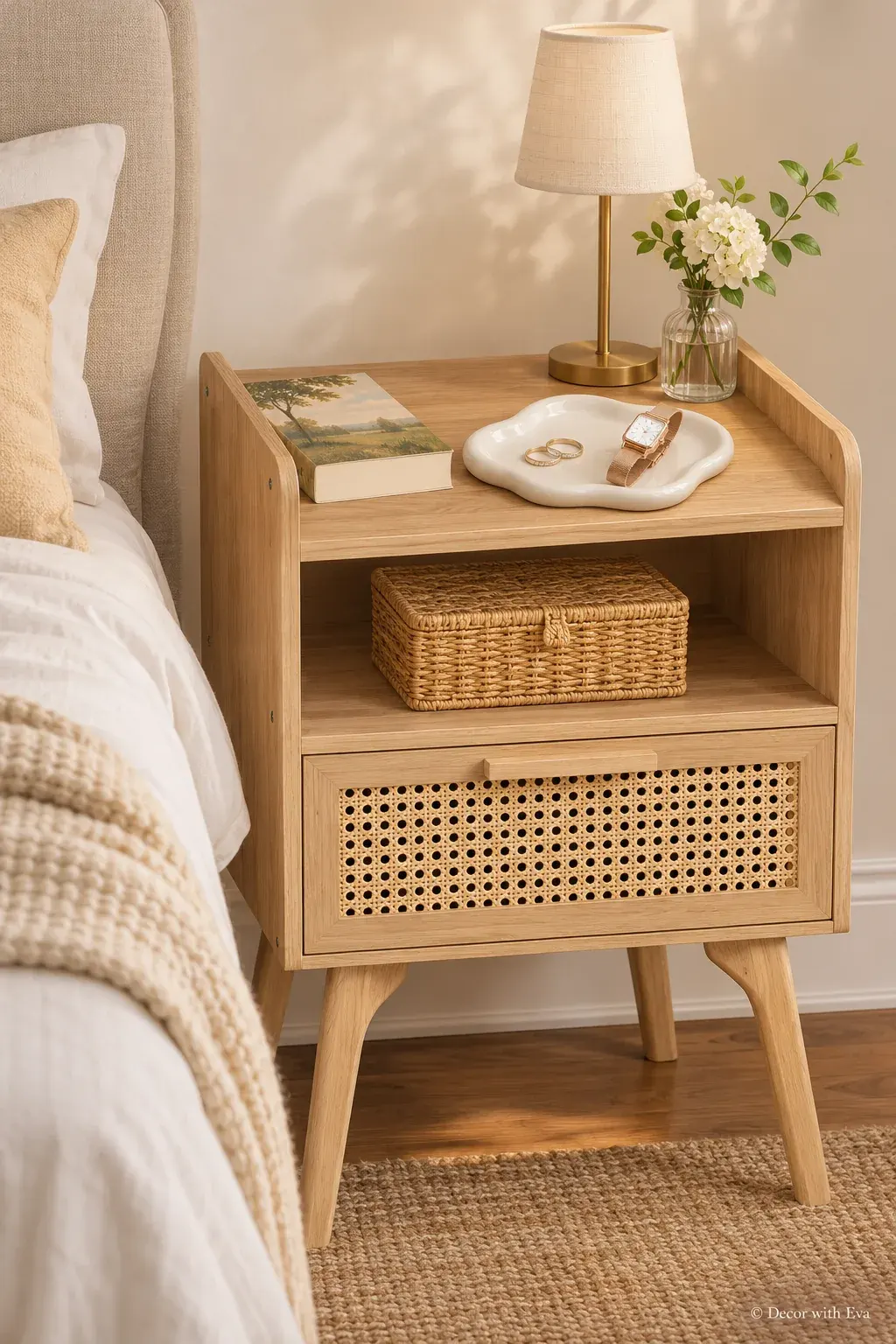
A small catchall dish can make a nightstand feel tidier without a complete furniture change. The wavy white ceramic shape adds a little softness beside a straight-edged table and gives rings or a watch a defined place. Leave the rest of the surface open enough to feel useful.
This dish is about 7.7 inches long and 5.3 inches wide, so measure the available patch beside your lamp. Keep jewelry separate from a drinking glass, and avoid stacking loose objects around the lamp base. A small saucer or dish you already own can work just as well. The point is to give a few everyday items a home, not to create another collection that needs rearranging each night.
24. A dresser-top tray for the everyday pieces
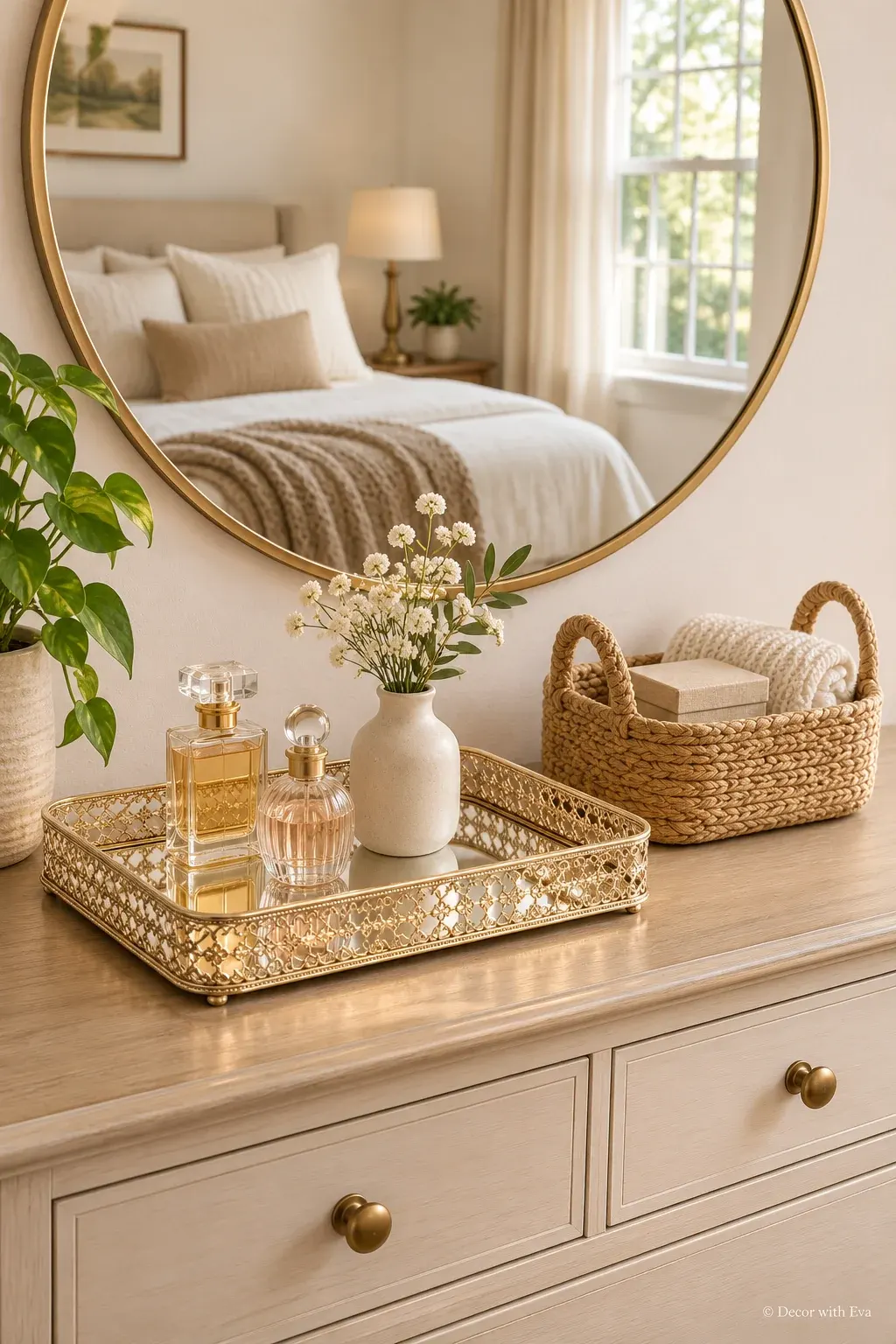
A dresser tray gathers everyday bottles into one small arrangement. The gold frame and mirrored base give them a little sparkle, while a woven basket nearby brings the shine back down to earth. Plain walls and a simple mirror keep the overall effect quiet.
The selected tray measures about 11.8 by 7.9 inches. Choose only the bottles you reach for often, then leave enough room to lift them out comfortably. Use a separate basket for smaller accessories that look messy in the open. Wipe the tray according to its care guidance, and protect the dresser finish from spills. You can try this arrangement first with an existing tray; the contained group matters more than the exact material.
25. A blanket basket beside the bed
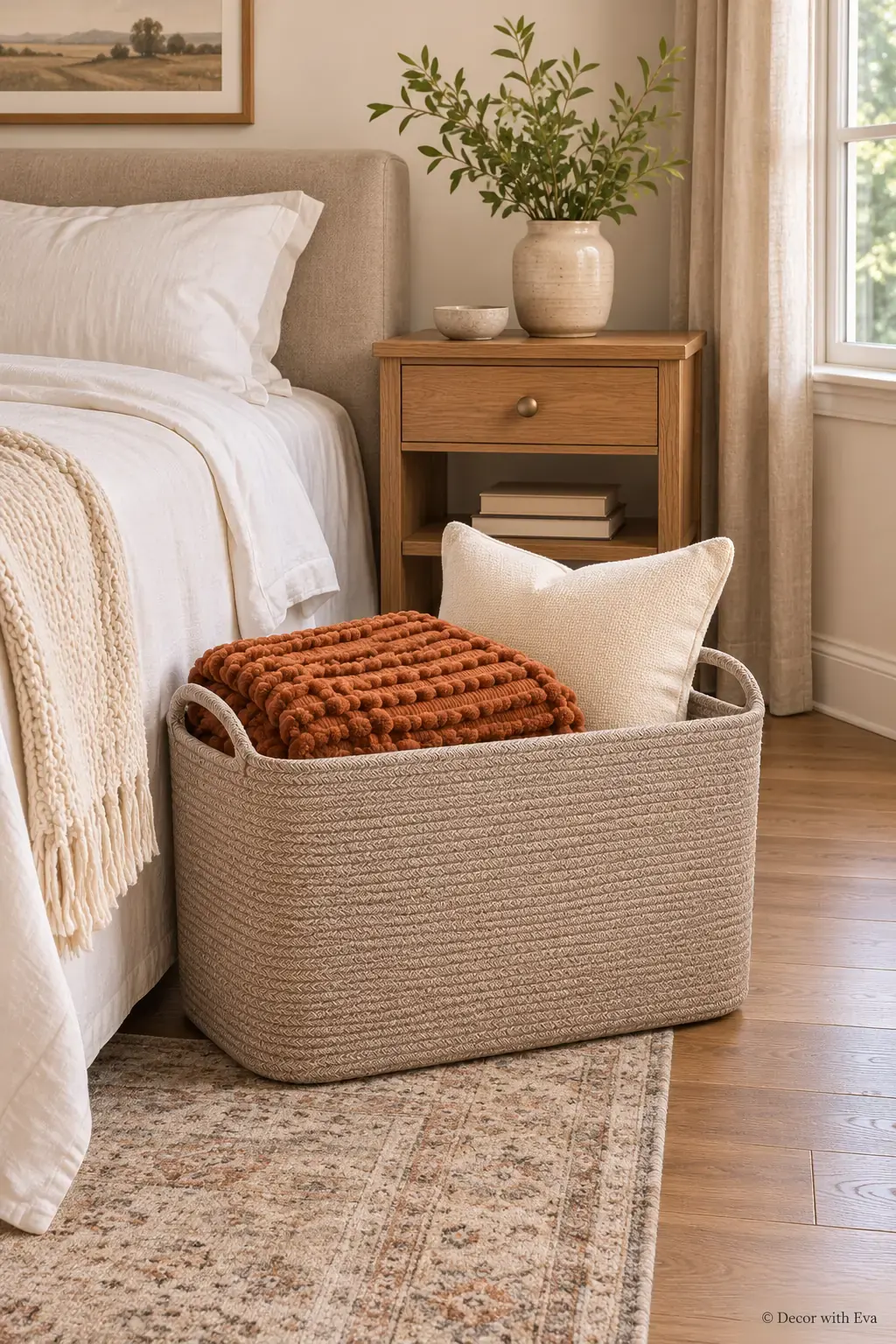
A blanket basket can help a bedroom stay inviting at the end of a busy day. It gives the throw and spare cushion somewhere to go when they come off the bed. Warm brown rope adds texture beside pale bedding without another large furniture piece.
The selected rectangular basket measures about 22 by 17 by 12 inches. Find a spot where it will not narrow the route around the bed, and check that its handles do not catch on a drawer. Keep just the bedding you actually use nearby. A basket packed beyond its sides soon looks like an overflowing hamper. Fold a throw loosely over the rim if you like seeing the color, and keep the rest tucked inside.
26. Small woven baskets inside a tidy closet
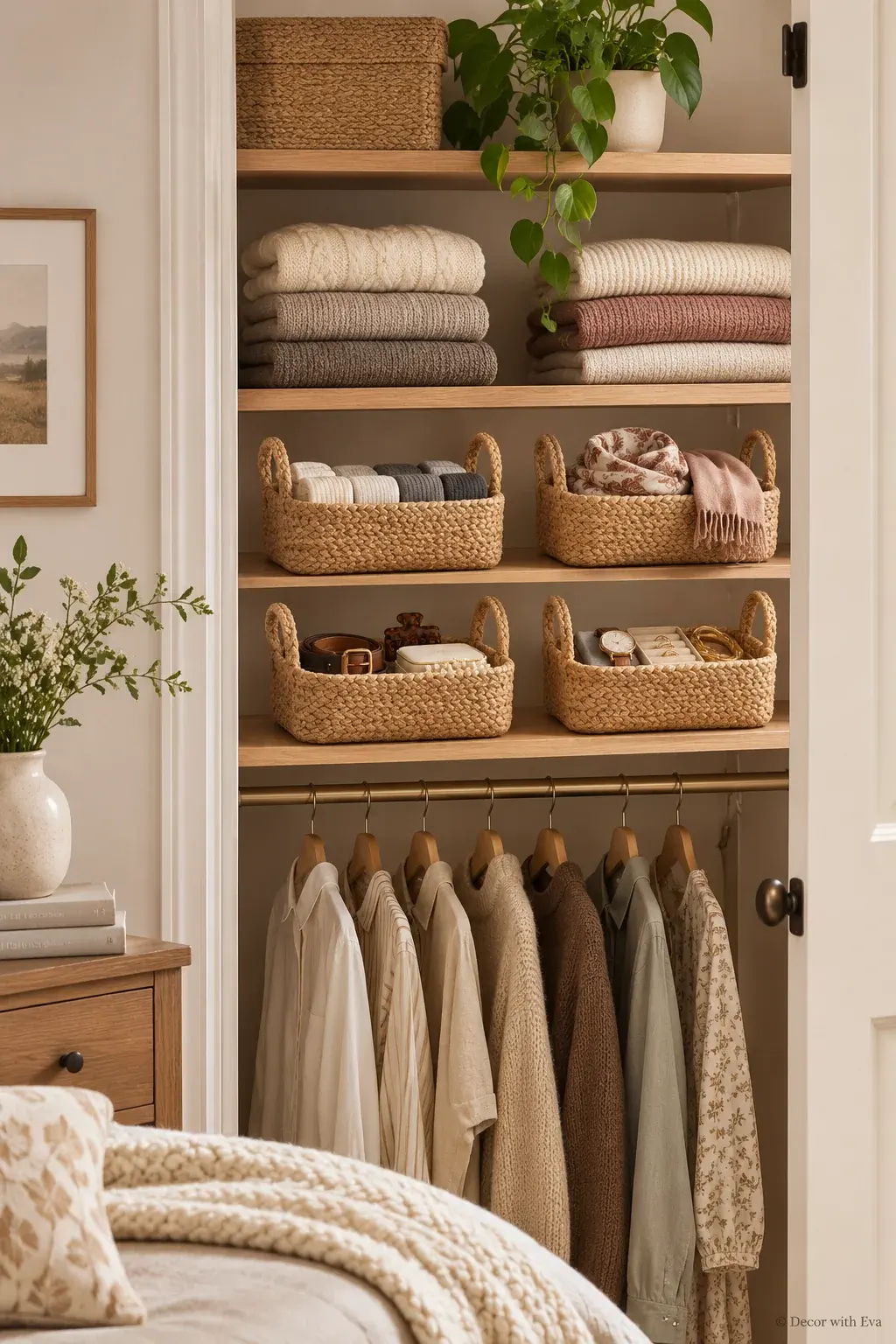
Small baskets make an open closet shelf easier on the eye. Socks, scarves, and accessories can sit in separate containers, while folded knitwear gives the shelf a little rhythm. Repeating one material helps the storage feel connected to the bedroom instead of looking like a row of unrelated boxes.
The four jute baskets are different sizes, with the largest about 11 by 7.9 by 4.5 inches. Measure the shelf depth and the clearance above it before choosing where they go. Keep the items you use most at a reachable height. Fold existing scarves or fabric pieces into simple dividers if you need smaller sections. There is no need to replace every storage container; start with the shelf you see most often.
27. A softly painted ceiling above pale bedding
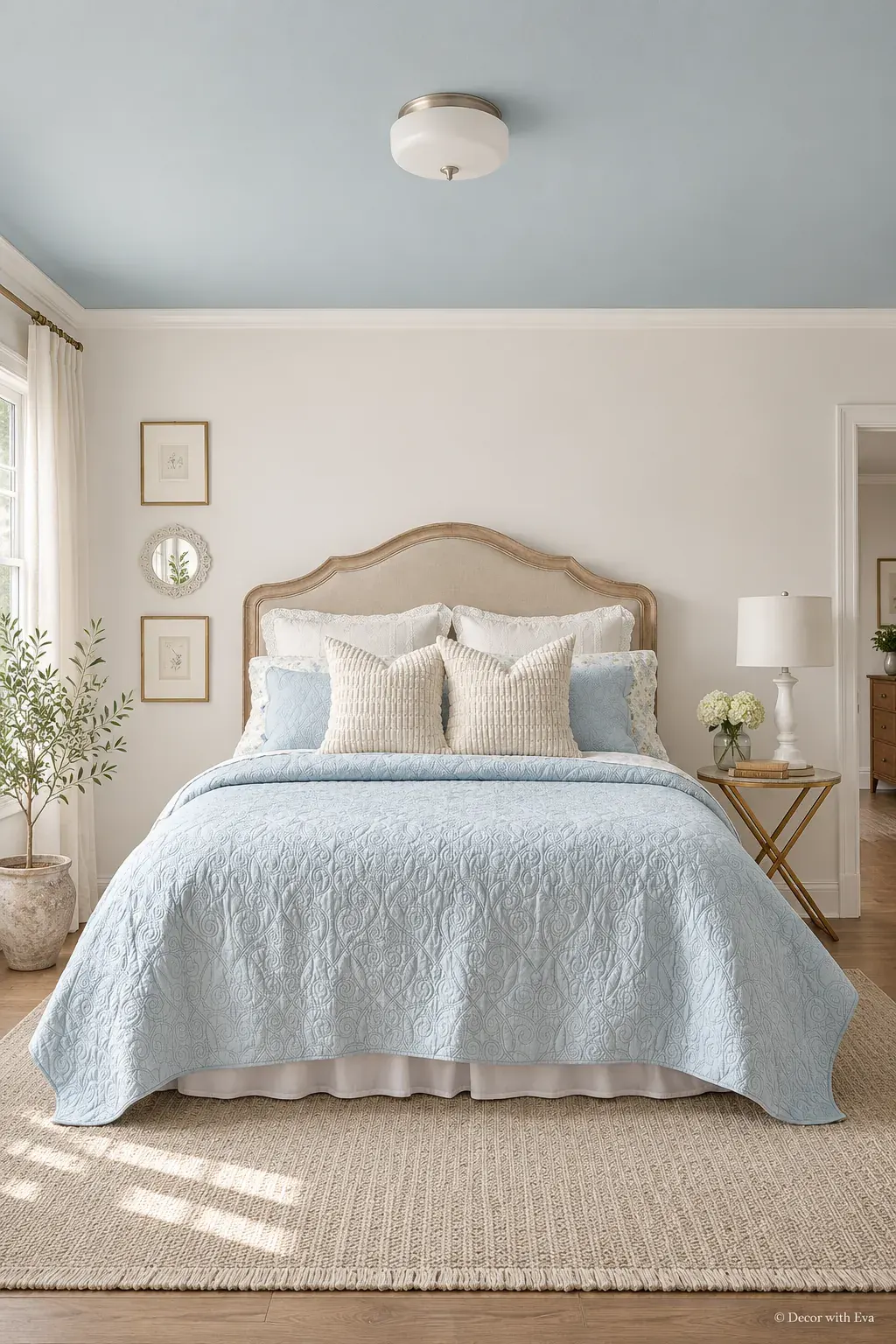
A softly colored ceiling gives a plain bedroom an unexpected detail. Powder blue above warm white walls creates a gentle frame around pale bedding, especially when the window light moves across the room. Keeping the walls simple stops the ceiling from competing with several other features.
Test the color overhead rather than judging it only from a vertical sample. Look at it in daylight and with the lamps on, and compare it with your existing trim. A light blue quilt can repeat the idea at bed level without requiring an exact paint match. If painting the whole ceiling feels like too much work, keep this as a future project and begin with the bedding. The room can still feel finished in stages.
28. One rust throw for a seasonal change
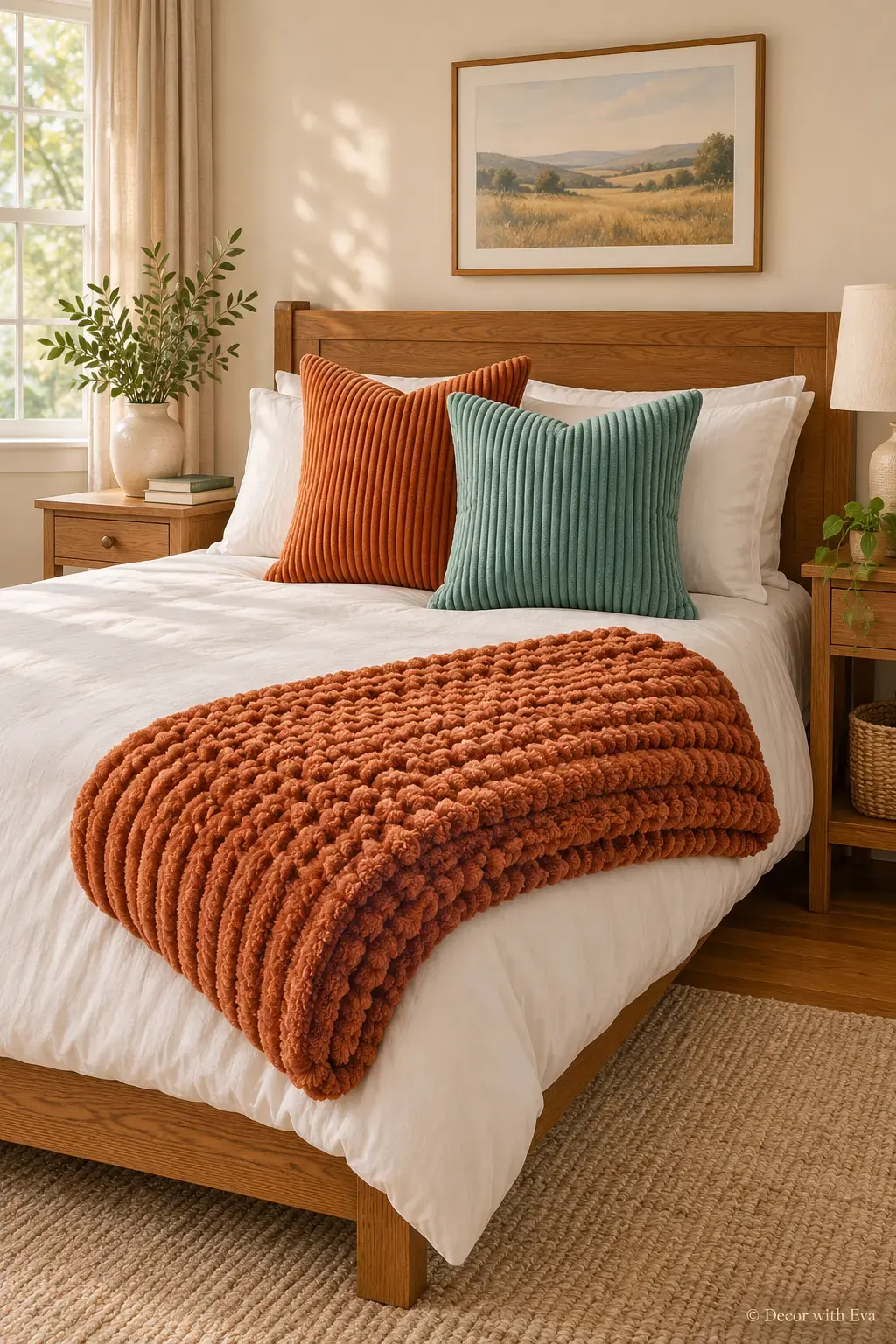
One warm throw can change the feel of a familiar bed. Rust brings an earthy accent to white bedding, and a muted teal cushion gives it a cooler companion. Keeping the color in a small, clear area makes the update easy to live with and easy to change.
The selected throw is 50 by 60 inches, so use it as an accent rather than expecting it to cover the full width of a large bed. Fold it along one lower corner or lay it over the side where you can reach it. Choose one or two cushion covers from the coordinated assortment and put the extras away. You can rotate a favorite blanket you already own in exactly the same way.
29. A calmer layout with room to move
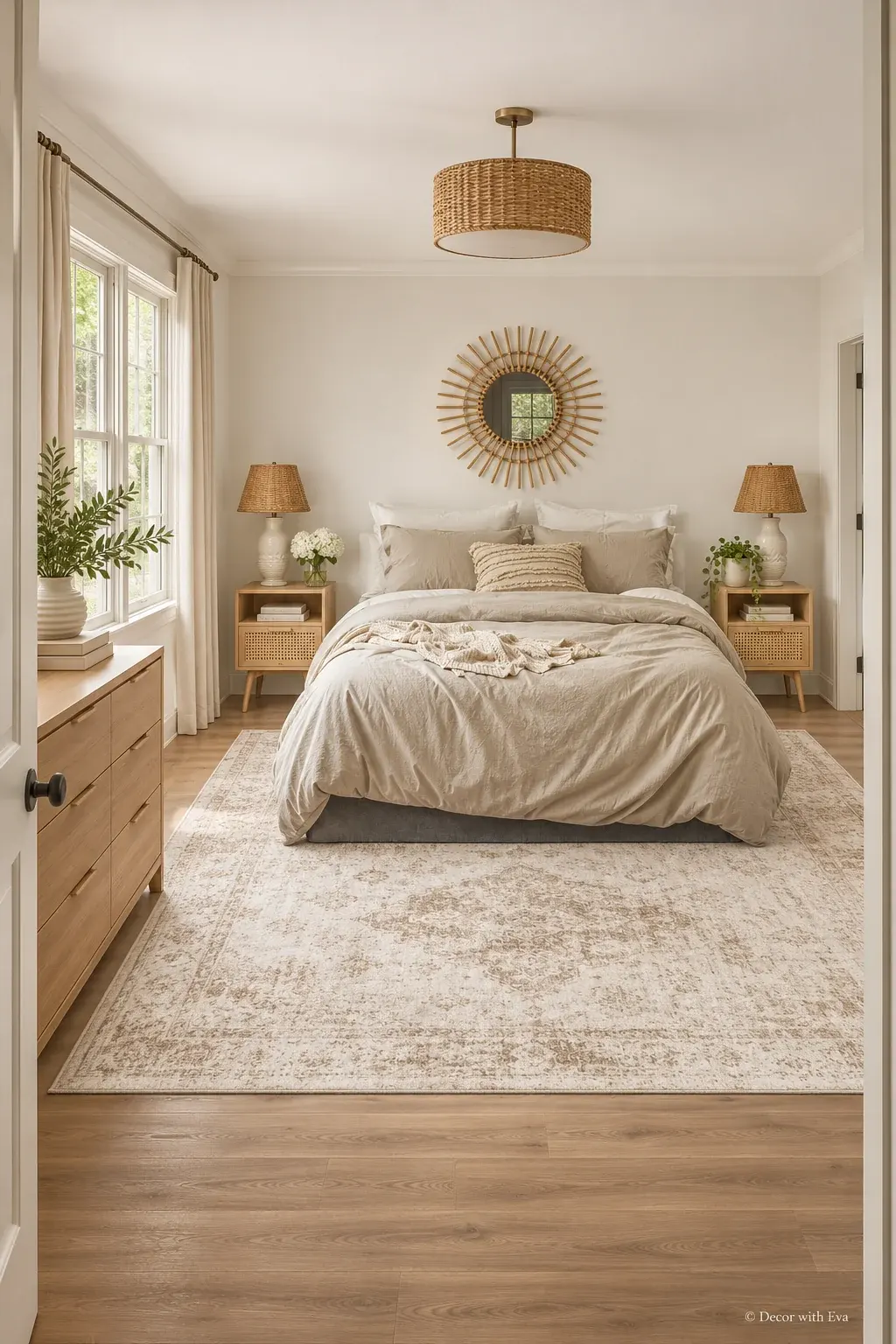
The most relaxing bedroom layout may be the one with a little less in it. A centered bed, compact nightstands, and one rug can feel complete when the furniture fits the room. An open patch of floor is useful space, especially where you get dressed or walk to the closet.
Start by testing the layout with your existing furniture. Open every drawer and door, then walk the room as you do in the morning. Remove the occasional chair or bench if it interrupts that route. Tape out the selected eight-by-ten-foot rug before ordering, and choose a different size if it does not fit. Repeat a few colors in the bedding and side tables so the room feels connected without needing to fill every empty corner.
Master bedroom decorating questions
Where should I start when decorating a master bedroom?
Start with the layout and the bed. Clear the routes you use every day, check the bedside lighting, and decide whether the bedding works with the wall color. Then add one improvement at a time. A room can feel much more settled before you replace any furniture.
What colors make a master bedroom feel relaxing?
Warm whites, muted greens, soft blues, and gentle earth tones can all create a restful-looking room. Darker colors can work too when you balance them with lighter bedding and useful lighting. Test your choices in the room and choose a palette you enjoy seeing in both daylight and lamplight.
How can I make a bedroom look more finished on a budget?
Straighten the curtains, simplify the nightstands, and repeat a few colors through the bedding. Move a lamp or picture from another room, try a blanket you already own, and give spare cushions a proper storage spot. Small changes look more considered when they solve something you notice every day.
Should the nightstands and lamps match?
They can, but they do not have to. Matching lamps are a simple way to bring balance, while different nightstands can work if their heights and visual weight feel comfortable beside the bed. Make sure both sides provide the storage and light their users need.
How do I keep a master bedroom from looking cluttered?
Give everyday items a place in a drawer, dish, or basket, and keep a few surfaces partly empty. Be selective with decorative cushions and furniture at the foot of the bed. If an object repeatedly ends up in the walking route, change its storage or leave it out of the room.
Make your bedroom feel like your retreat
A beautiful retreat grows from the way you use the room. Start with the bed, the light, and the space around you, then add a color or texture that makes you happy to walk in. You do not need every idea here. A few well-chosen changes can give your bedroom a comfortable, personal rhythm.
For more ways to work with a compact layout, explore these small bedroom ideas. If you want a richer color pairing, see these burgundy and green bedroom ideas.
Save it for later
Found a few ideas you love? Save this collection to your Pinterest board so it’s easy to find when you’re ready.
Save to Pinterest
Let’s talk ideas
Which idea would you try? Share a question, a small-space solution, or a detail that made it work in your home.