This article contains paid links. As an Amazon Associate, I earn from qualifying purchases.
A dark feminine bedroom can be rich with color and still feel easy to live in. Think plum walls, a velvet headboard, a lamp that lights your book and one beautiful mirror you enjoy every morning. The drama comes from the arrangement as much as the objects.
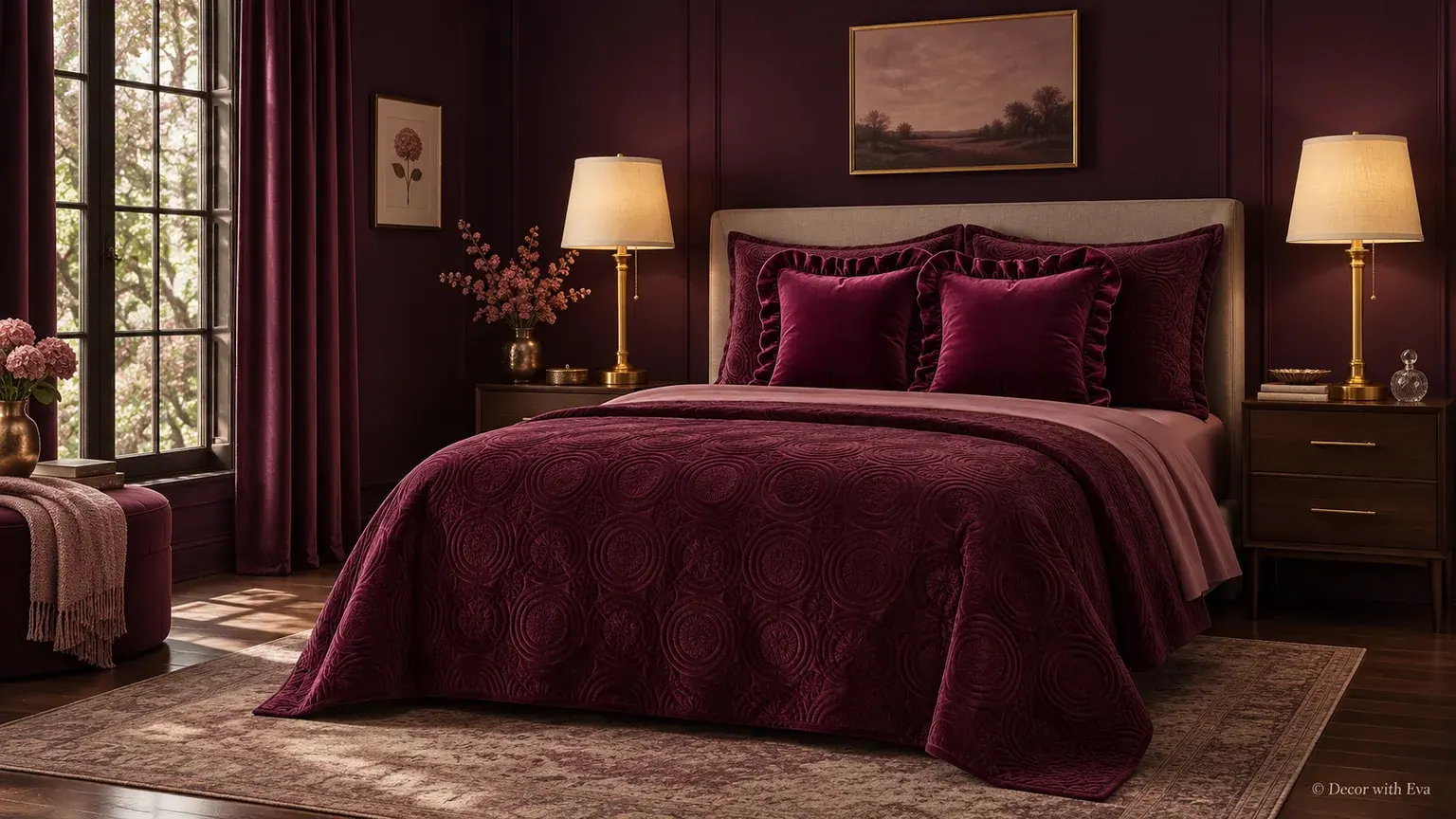
You can take this look in several directions: wine-red and charcoal, dusty rose against black, or chocolate brown with a little antique gold. Choose the combination that suits your existing furniture, then give the room one strong focal point. Curves, fabric and personal artwork can supply the softer details.
These 21 dark feminine bedroom ideas range from a new bedding arrangement to painted furniture and small DIY projects. Pick a few that work together. There is no need to turn every surface into a feature or replace useful pieces simply to follow a style.
Build the Palette around What You Own
Start with a dark color you enjoy on a broad surface: the walls, curtains or bedding. Add one softer related color, then use wood, glass or a little metal for variation. Leave some surfaces quiet so the room feels restful as well as dramatic.
Move generous paint samples around the room and compare them in daylight and under your evening lamps. Benjamin Moore’s sampling guidance explains how to try color before committing to a whole room. Judge the samples beside the fabrics and furniture you intend to keep.
1. Wrap the Bed in Deep Plum
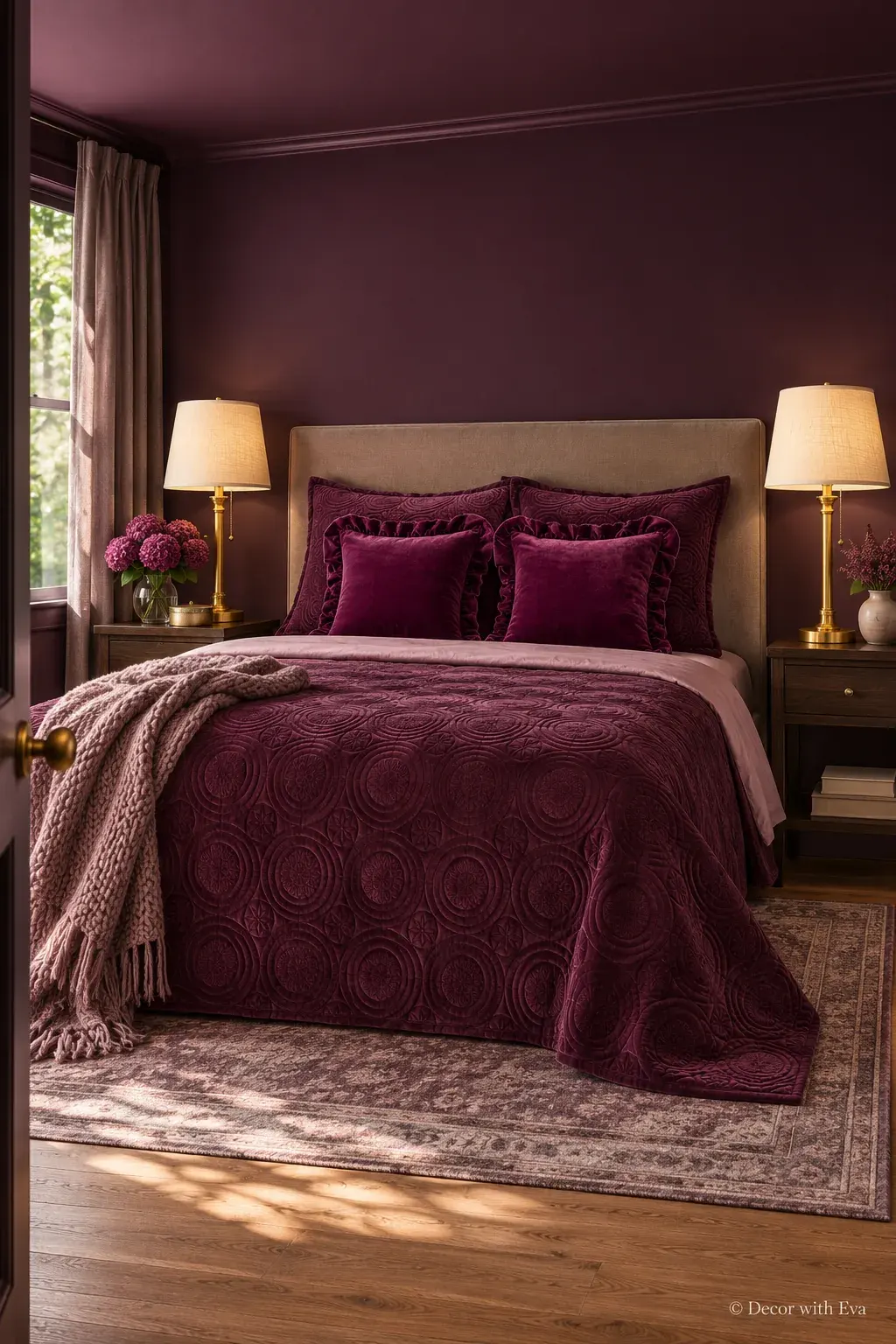
Deep plum walls make a generous backdrop for a softly upholstered bed. Choose bedding in a related wine or aubergine shade, then show a little muted rose at the sheet fold. The small change in color gives the bed definition without a bright white stripe breaking up the room.
Place large samples beside the headboard fabric and your existing floor before choosing paint. Leave the ceiling lighter if that is the balance you prefer, or test the wall color overhead for a more enveloping effect. A pair of simple nightstands is enough here; the broad areas of color already carry the room.
Try this: Lay your darkest bedding beside a plum sample before buying another layer.
2. Set Burgundy Bedding against Charcoal Walls
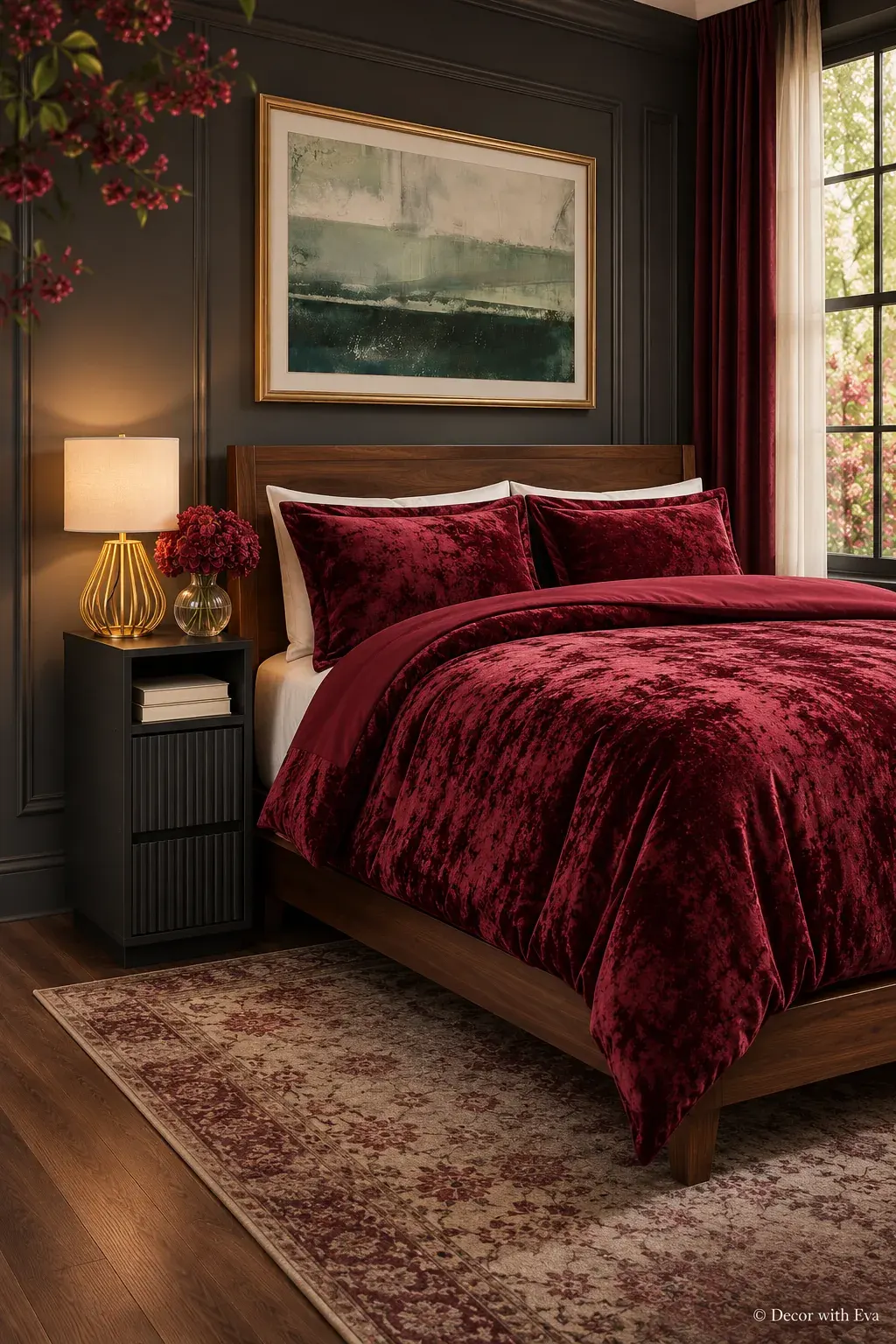
Charcoal gives burgundy bedding a clear outline while letting the red remain the center of attention. Use a plain comforter or quilt across most of the mattress, with a textured throw folded loosely over the lower third. A warm wood bed brings another material into the scheme without another strong color.
Compare charcoal samples for their actual undertones rather than choosing from the name alone. Keep the burgundy visible instead of covering it with a row of cushions. If you like a little shine, bring it in through one lamp base or picture frame. Let the quilt and wall remain the two largest surfaces.
Try this: Try your current burgundy cover with the room’s darkest cushion or blanket as a color test.
3. Make Black Floral Wallpaper the Headboard Backdrop
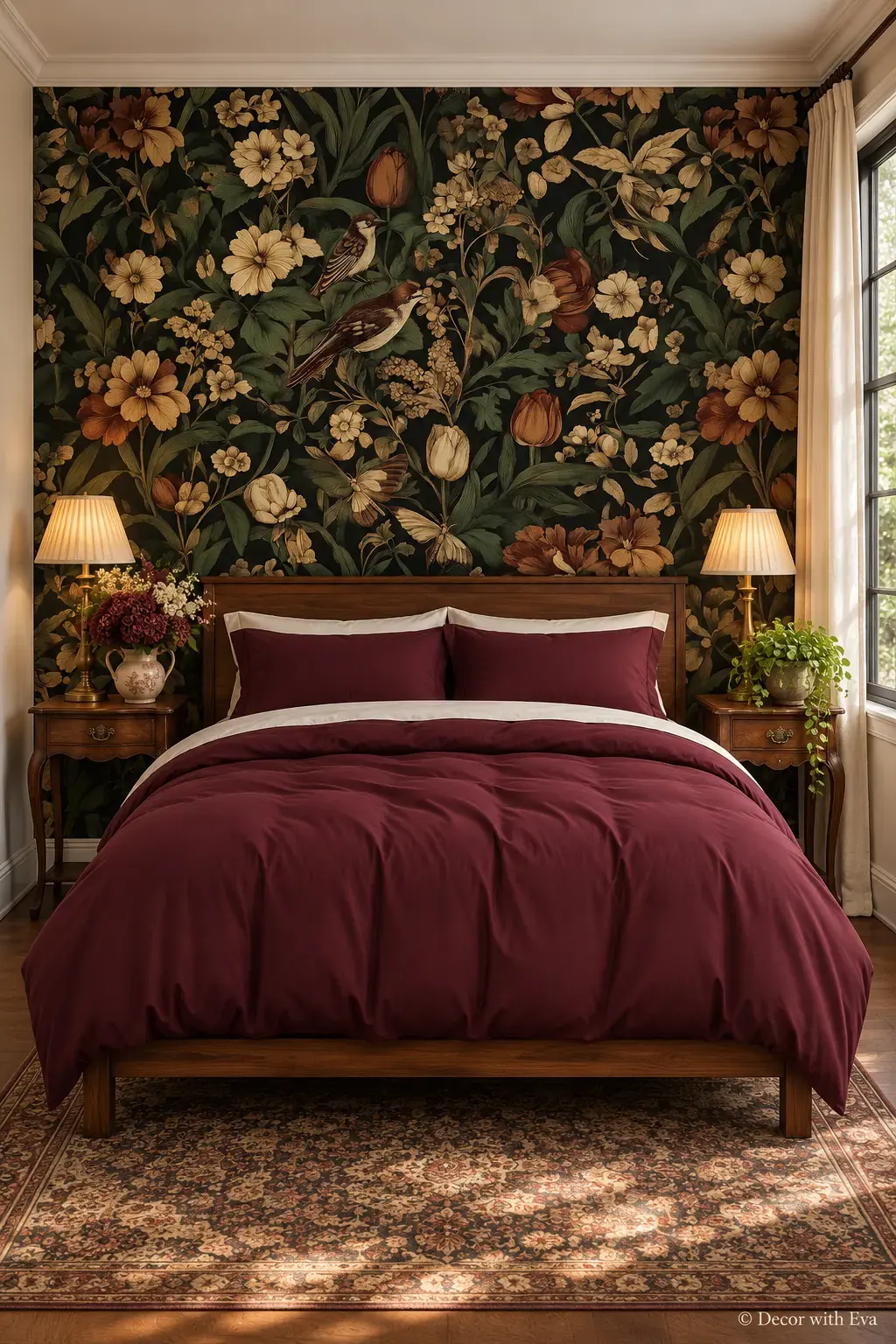
A floral pattern on a dark ground can give a plain bed a romantic setting. Look for flowers with enough space around them that you can appreciate the shapes from the doorway. Pull one of the deeper petal colors into the bedding, then let the other walls stay relatively quiet.
Order a sample and work out the repeat before calculating the number of rolls. Center the composition on the bed rather than assuming the wall’s middle will look right. Removable paper still needs a suitable surface and a test in an inconspicuous place. Follow its instructions and any rental restrictions; removability is not a guarantee against damage.
Try this: Photograph a wallpaper sample behind the bed and check the pattern at room-view distance.
4. Choose a Curved Velvet Headboard
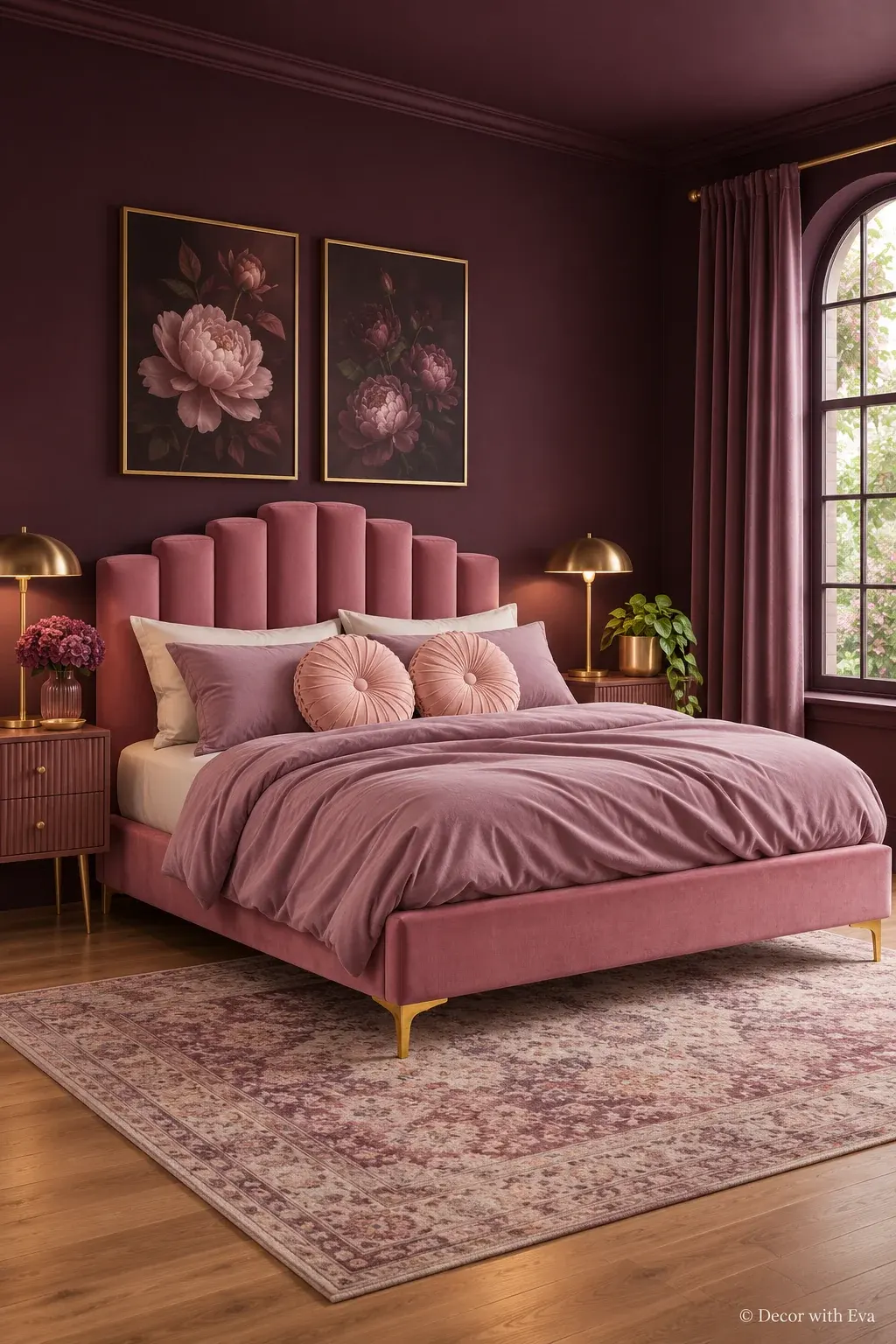
A stepped, scalloped velvet headboard brings a softer outline to an inky room. Dusty-rose upholstery, vertical channels and slim gold-colored legs give this bed its character. Pale-mauve bedding and two small round blush cushions leave the top of the headboard visible without adding another pattern.
The selected option is a complete upholstered platform bed, rather than a separate headboard. Mark out its full 94.5-by 66-inch footprint and check its 47-inch headboard height against windows and switches. Its decorative shape should still leave the room easy to move through. If your current bed already fits well, a rose cushion or bedding change can introduce a similar color balance.
Try this: Tape a paper outline above your current bed to compare two possible heights.
5. Give a Black Iron Bed a Soft Burgundy Layer
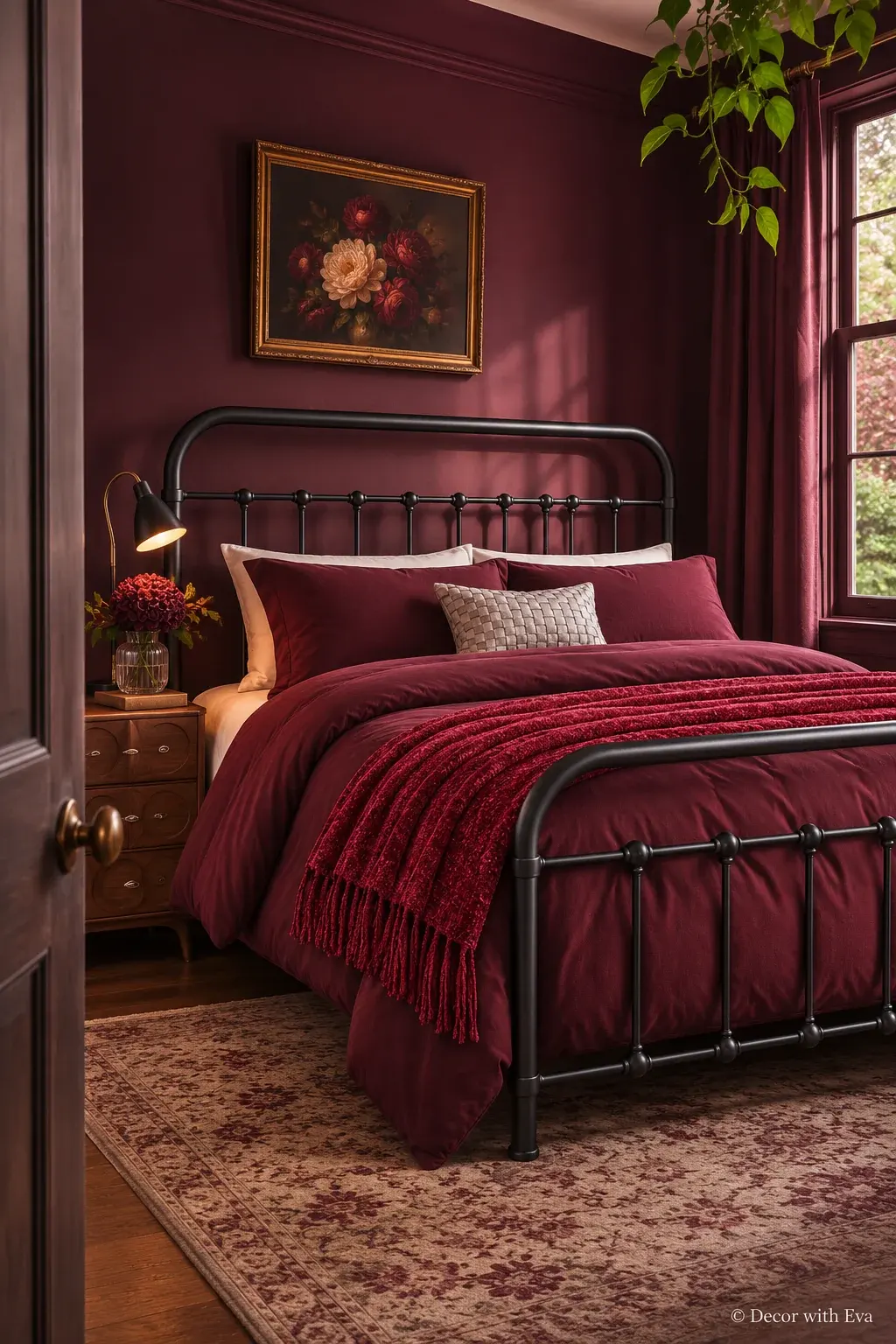
A slim iron bed leaves more of a colored wall visible than a solid upholstered frame. Its curves can feel romantic with burgundy bedding, a dusty pink sheet fold and a small, fringed throw. Keep the pattern elsewhere restrained so you can see the shape of the rails.
Look at the full frame measurements, including the footboard and projecting corners. Check the slat arrangement against your mattress requirements, and leave room to walk past the foot of the bed. If you already have a black metal frame, this is an easy place to start: a different bedding arrangement may do more than another piece of furniture.
Try this: Style your current metal bed with fewer pillows so its outline becomes part of the room.
6. Frame the Window with Mulberry Velvet
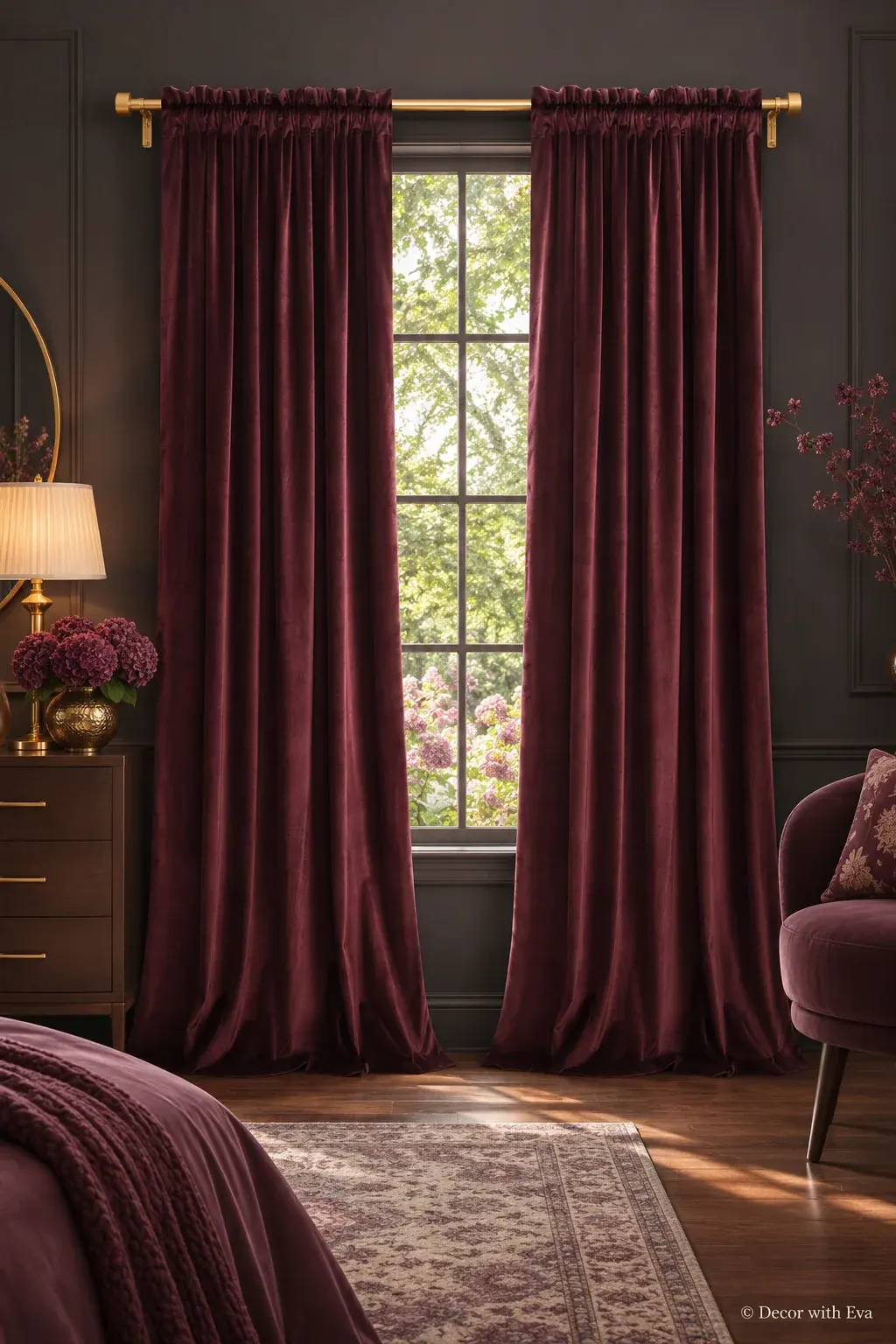
Full-length mulberry curtains bring a substantial area of color to the room, especially beside a charcoal or chocolate wall. Keep the fabric in broad, simple folds rather than adding several decorative layers. A little daylight between the panels makes the texture easier to appreciate.
Measure from the actual hanging point and check whether a listing supplies one panel or a pair. Allow room for the fabric to stack away from the glass and choose hardware suited to its weight and your wall. Keep curtains clear of heaters and follow the manufacturer’s guidance. A velvet appearance alone does not establish blackout performance.
Try this: Hang an existing deep-colored blanket temporarily as a color reference, without covering a heat source.
7. Let Daylight through Black Floral Lace
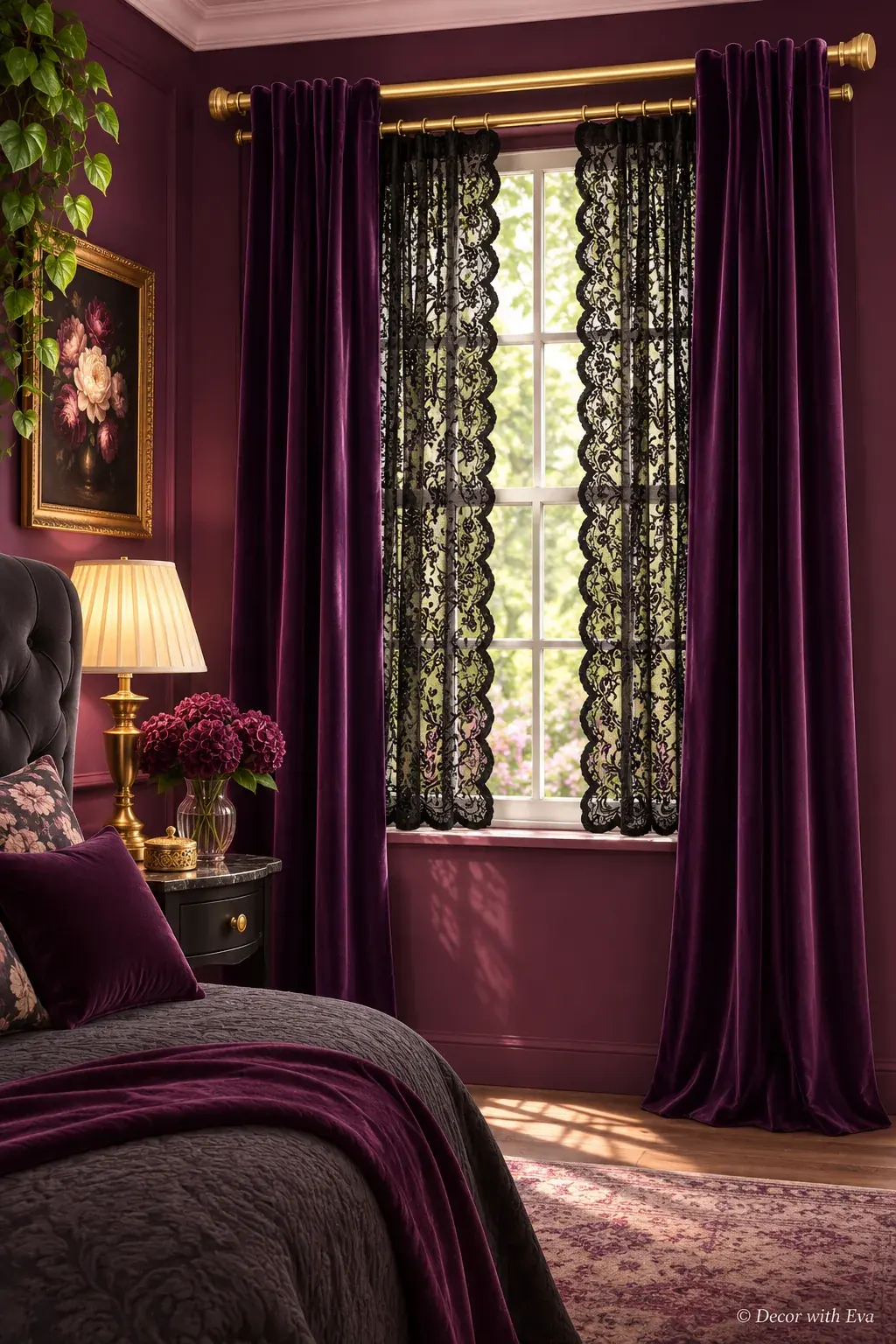
Black floral lace gives a dark bedroom a different daytime mood: the pattern remains visible while light comes through the gaps. Put the lace on the inner rod, then frame it with deep-purple velvet outer panels. The shorter lace can end near the sill while the velvet reaches the floor; the two layers do not have to share a hemline.
Plan the two rods together so both fabrics can move without catching. Check bracket projection, handle access and each panel’s actual hanging length. Lace is a decorative daylight layer, not dependable privacy after dark. Use an appropriate outer treatment when privacy is needed and check the window from outside under your normal evening lighting.
Try this: Compare the lace and velvet lengths from their actual hanging points before ordering.
8. Put Warm Bedside Light within Reach
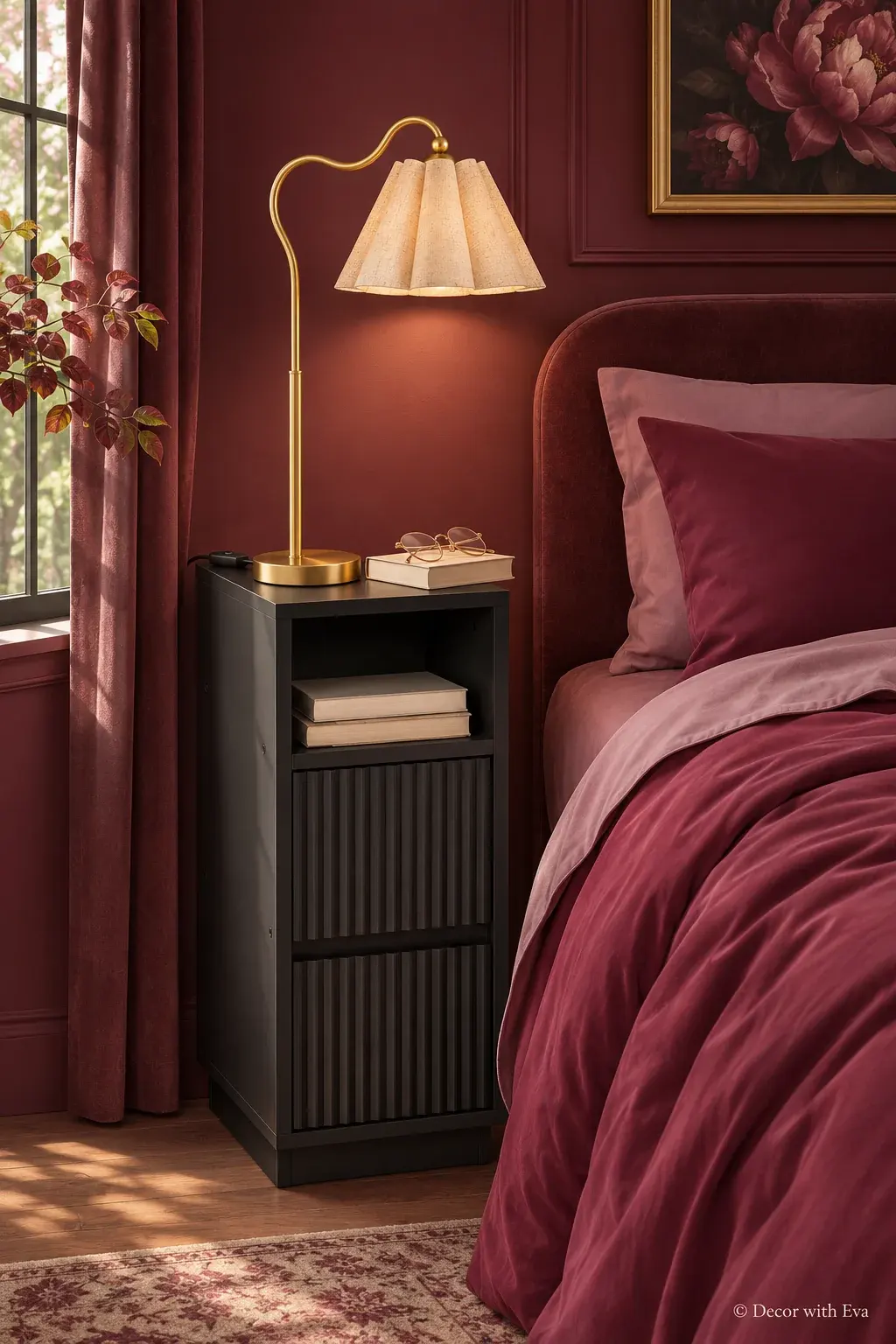
A dark feminine bedroom needs useful light as well as atmosphere. A pleated fabric shade or a small shaded brass-colored lamp can light the bedside area while adding a little texture. Keep the light close enough to the book that you do not need to illuminate the whole room just to read.
Try the lamp from your actual seated position before deciding on its height. Check glare, switch access and the shade’s clearance from bedding. Choose a bulb compatible with the fixture and any dimmer; keep a suitable general room light too. Two lamps can relate in finish or shape without being an identical set.
Try this: Move an existing shaded lamp beside the bed and test it with the overhead light off.
9. Use an Ornate Mirror as the Main Wall Detail
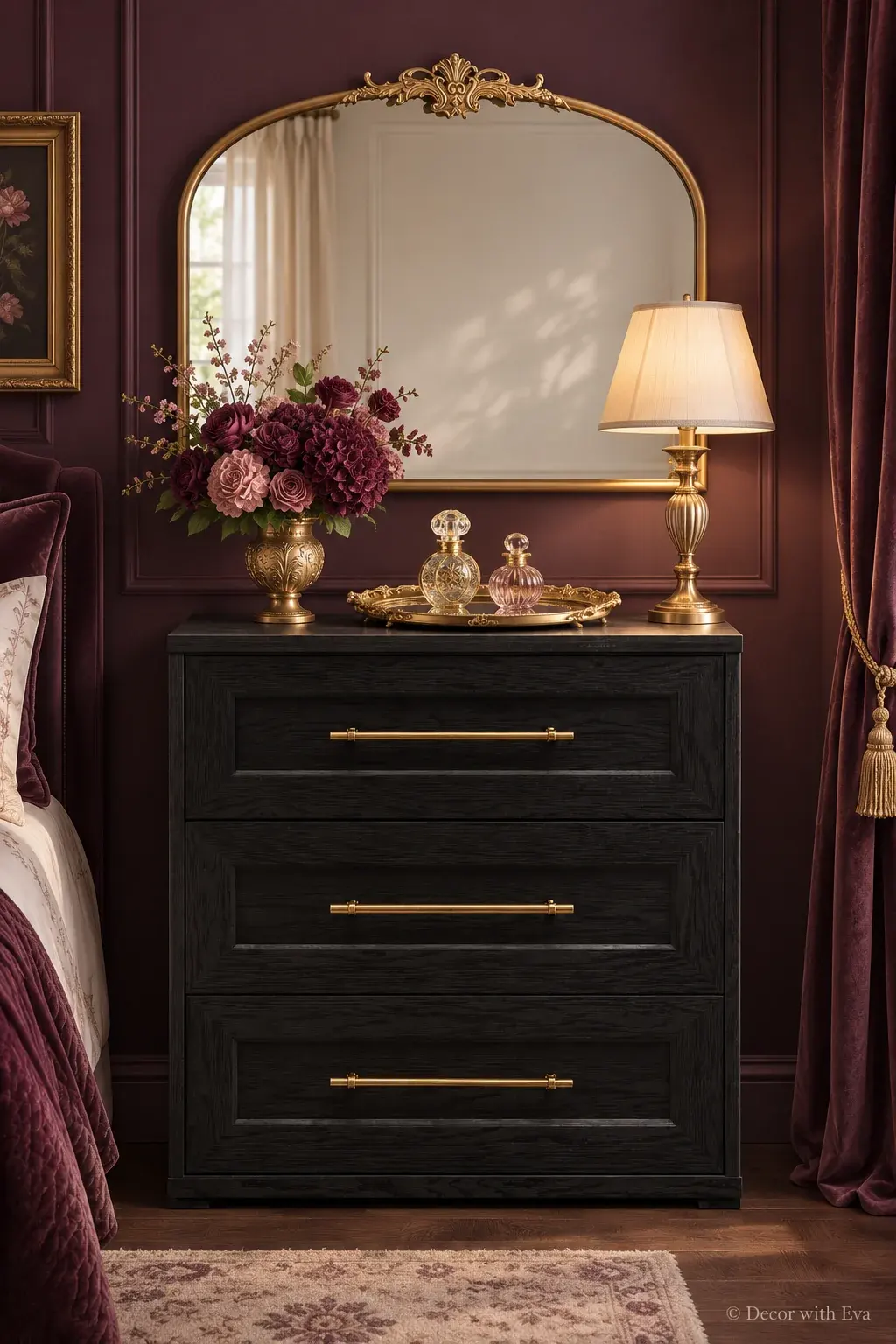
An antique-gold-style mirror stands out against plum or charcoal paint. Give it one clear role above a dresser or at a dressing station, with a quiet space around the frame. A small tray below it can connect the gold finish to the furniture without filling the entire top with ornaments.
Check the mirror’s overall dimensions and weight, including its decorative crest. Use the specified mounting method and fixings appropriate to the wall; a heavy mirror needs more than a styling decision. Position it to reflect a view you enjoy, then check whether a bedside bulb or window creates distracting glare from the bed.
Try this: Move a mirror you own to reflect artwork or curtains instead of an untidy corner.
10. Bring Dusty Rose into an Almost-Black Room
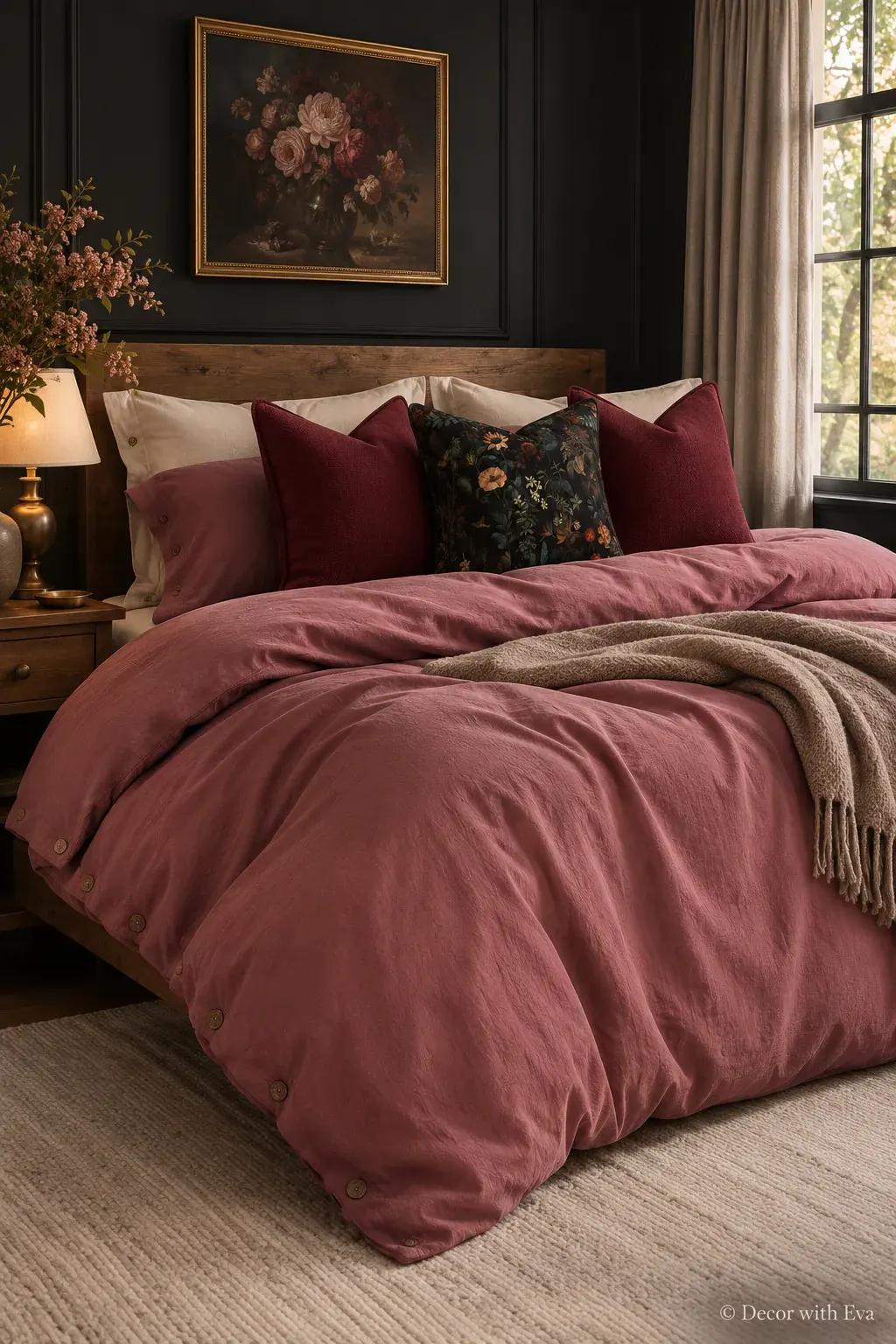
Dusty rose bedding can make a nearly black room feel layered and personal. Give pink one substantial place, such as a duvet cover or an upholstered chair, rather than scattering tiny pink accessories around. A burgundy cushion can connect the soft pink to the darker surfaces.
Choose the pink beside the black sample so you can judge the contrast in your room. Keep at least one other material visible, such as warm wood or woven linen. You do not need black walls, black furniture and black bedding all at once. Reusing a wood bed can give the pink a more relaxed setting.
Try this: Pull your existing pink sheets farther over a dark quilt before deciding whether you need a new cover.
11. Try Chocolate Brown with Mauve and Aged Gold

Chocolate brown offers another route to a dark bedroom, especially if you already own walnut or mahogany furniture. Mauve bedding adds a quieter contrast than bright pink, while a small aged-gold-style lamp or frame introduces a different surface. Let the brown appear across a wall or broad bedspread so it reads as part of the palette.
Compare the paint with your wood furniture in daylight and after dark. Similar browns can look quite different beside each other. A plain warm-neutral rug may be enough underfoot; avoid adding another large pattern just because the room is dark. Keep the bed, dresser and window treatment visually connected through a limited group of colors.
Try this: Arrange mauve fabric beside the darkest wood piece you already own.
12. Connect the Colors with a Plum Botanical Rug
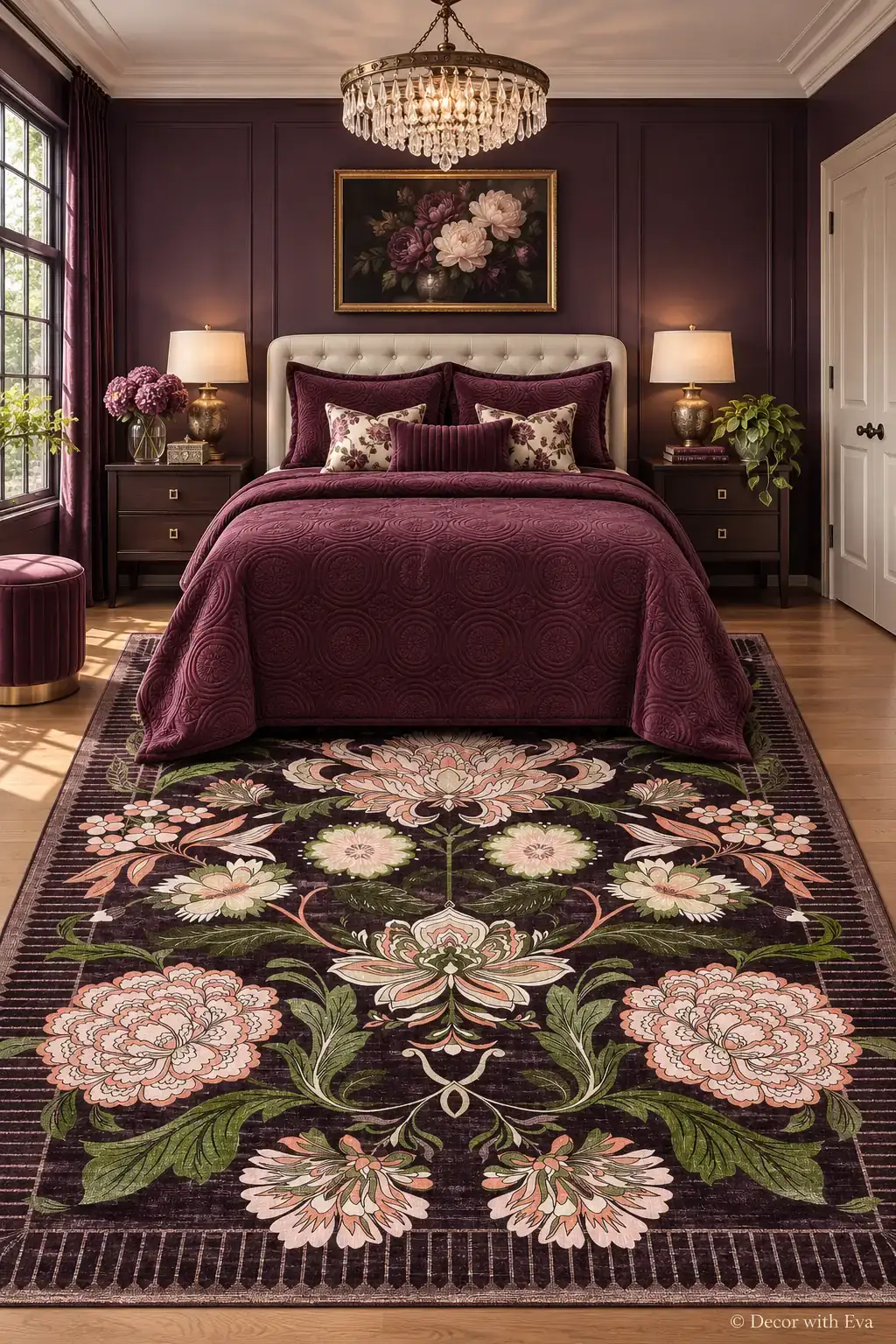
A plum botanical rug gathers several bedroom colors in one generous pattern. This arrangement uses pink and cream flowers, green leaves and hummingbirds on a dark ground, with a plum quilt above it. Let the rug’s border and some of its large motifs remain visible around the bed instead of hiding everything under the mattress.
Tape out the actual 8-by 10-foot outline before ordering, then check doors, drawers and walking routes. The selected rug already has a rubber backing. Add a separate pad only when its combination with the rug and your flooring is approved by the relevant manufacturers; a second layer is not automatically better. Check whether a rug of this size will fit your washing equipment.
Try this: Tape the rug edges on the floor and open every nearby door and drawer.
13. Update an Existing Nightstand with Two-Tone Knobs
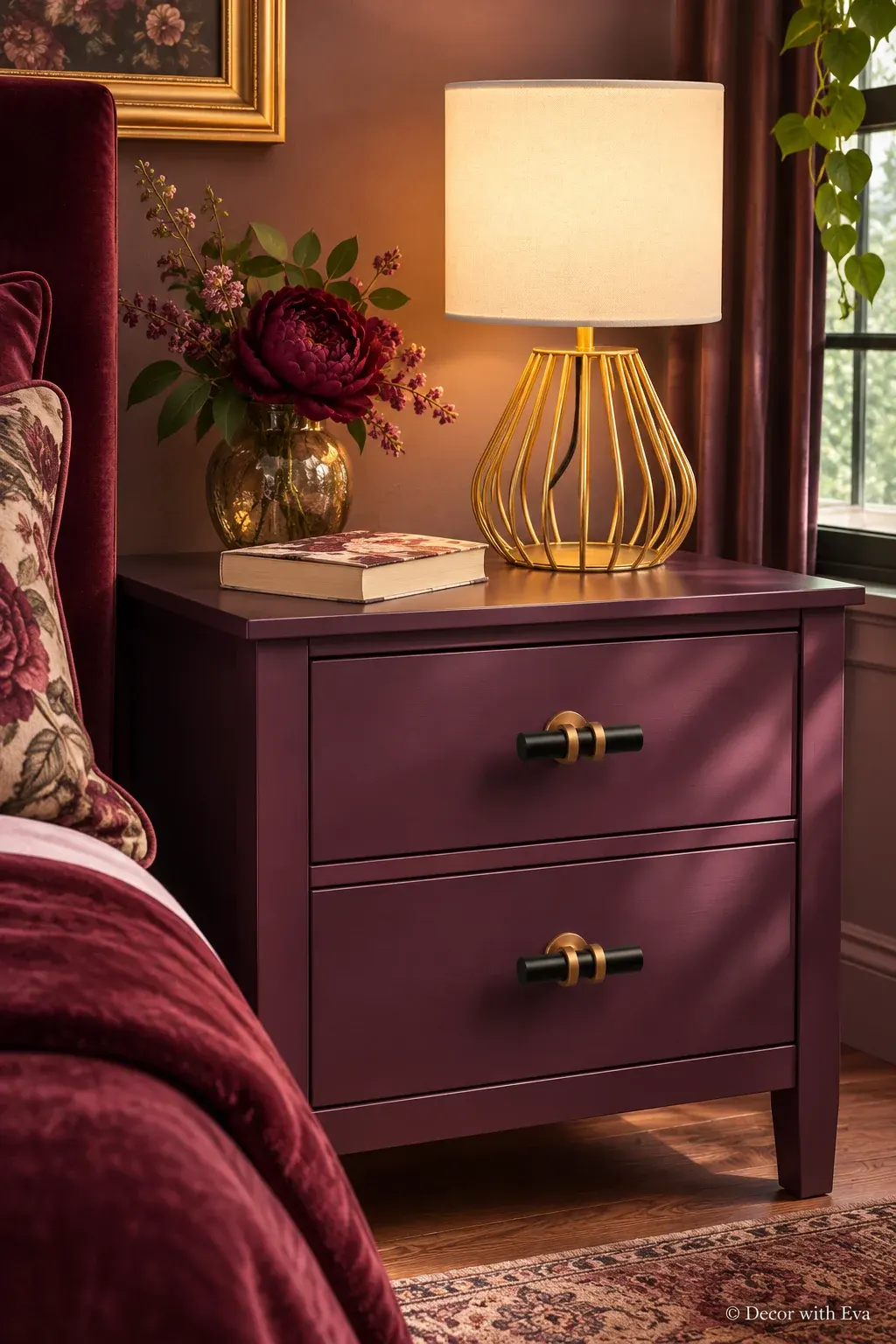
A pair of two-tone knobs can give a plain existing nightstand a more deliberate finish. Black ends and champagne-bronze details work especially well against aubergine paint. Keep the rest of the top simple: one small shaded lamp, your current book and space for glasses are plenty.
These T-shaped knobs each use one fixing hole; they are not two-hole drawer pulls. Measure the existing holes, projection and screw length before buying. If repainting, prepare the actual furniture surface and follow the coating’s curing instructions. This is an update to a piece you own, separate from the black concealed-handle chest used in other ideas.
Try this: Replace just one knob first to judge its scale against your drawer.
14. Make One Reading Corner Feel Like a Small Retreat
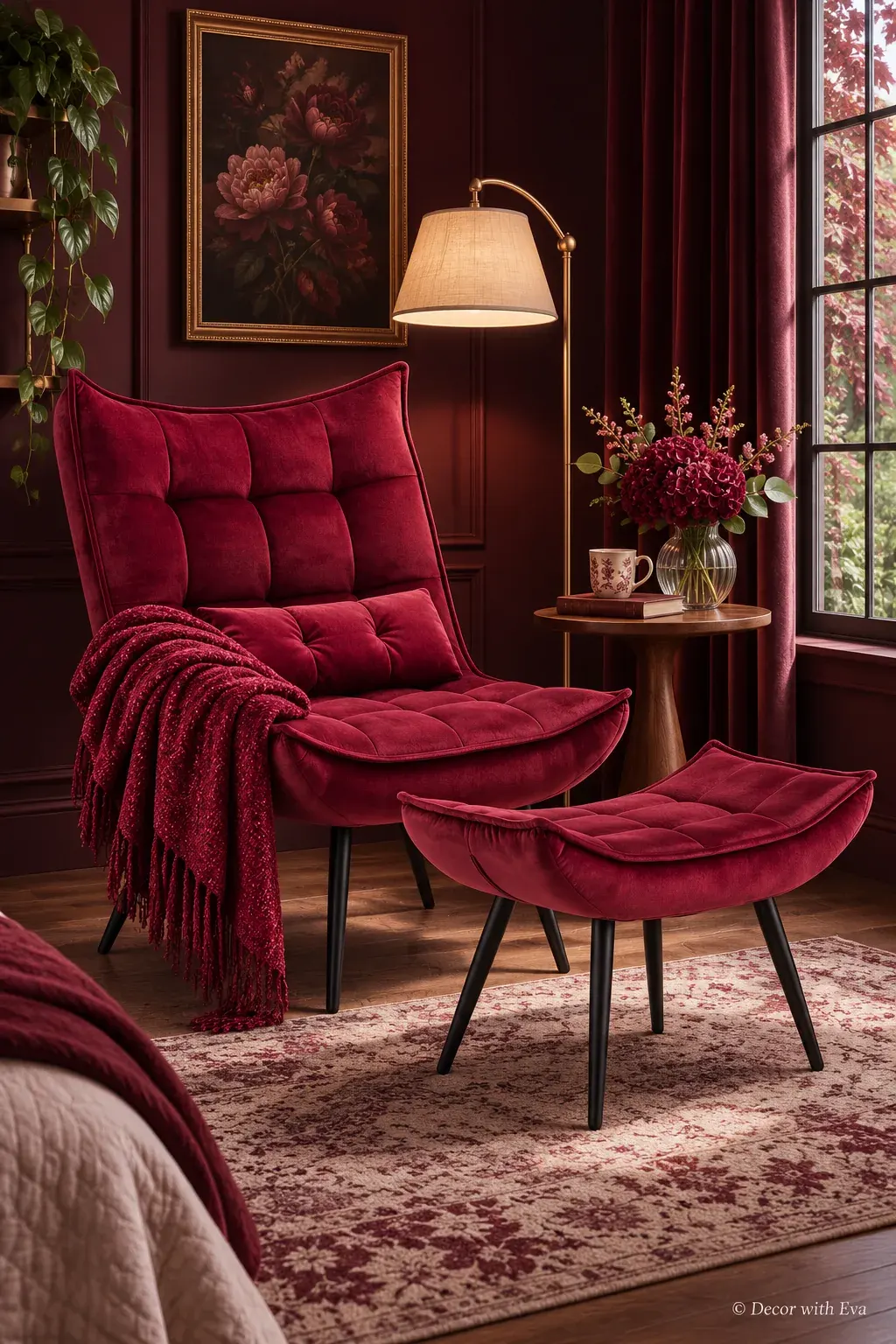
A burgundy velvet wingback chair and matching ottoman can make a bedroom corner feel like a retreat. The chair’s raised sides and tufted upholstery supply the detail; a fringed wine throw adds another texture. Pair them with an existing small table and useful shaded light, leaving enough floor to approach the seat comfortably.
Mark the chair’s widest footprint and the space needed to sit down and stand up. Check its seat height and depth against your needs rather than choosing by appearance alone. Keep the chair out of the route to the closet or window. In a compact room, an existing small chair may serve you better than a large lounge seat.
Try this: Try a chair from another room in the proposed corner for a few evenings.
15. Turn a Dresser Top into a Dressing Station
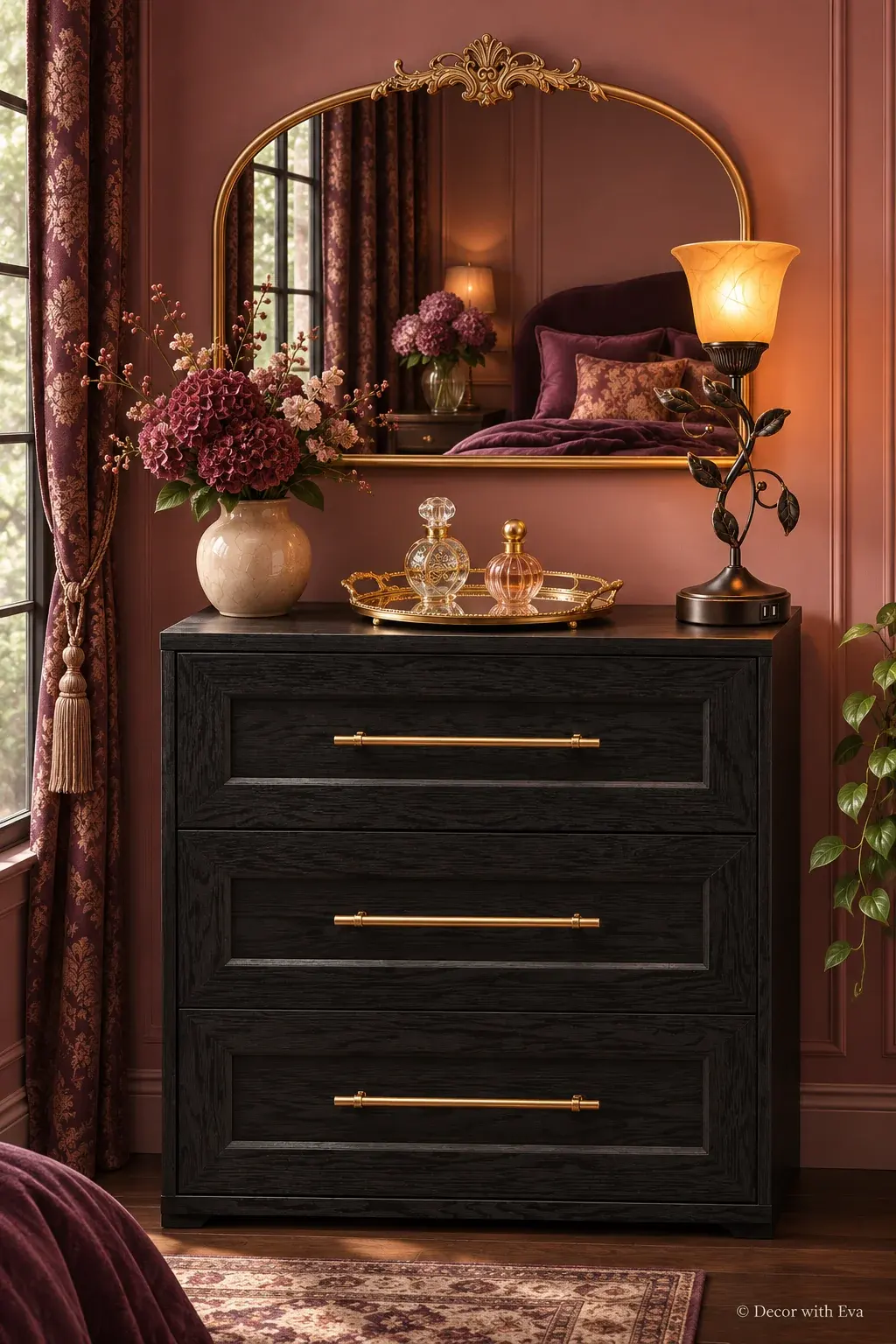
A dresser can take on the decorative role of a vanity without adding another large piece. Use a well-mounted mirror, a small tray for the things you reach for daily and a lamp that helps you see clearly. A dark wood or painted finish looks particularly good with a muted rose wall behind it.
Keep enough working surface to set things down, and make sure every drawer can open. A dresser does not automatically provide the knee space of a seated vanity, so treat it as a standing station unless its design genuinely allows otherwise. Follow the furniture’s anchoring instructions; the CPSC’s Anchor It! guidance is a useful starting point.
Try this: Move occasional-use bottles into a drawer so the top becomes easier to use.
16. Make a DIY Upholstered Headboard Panel
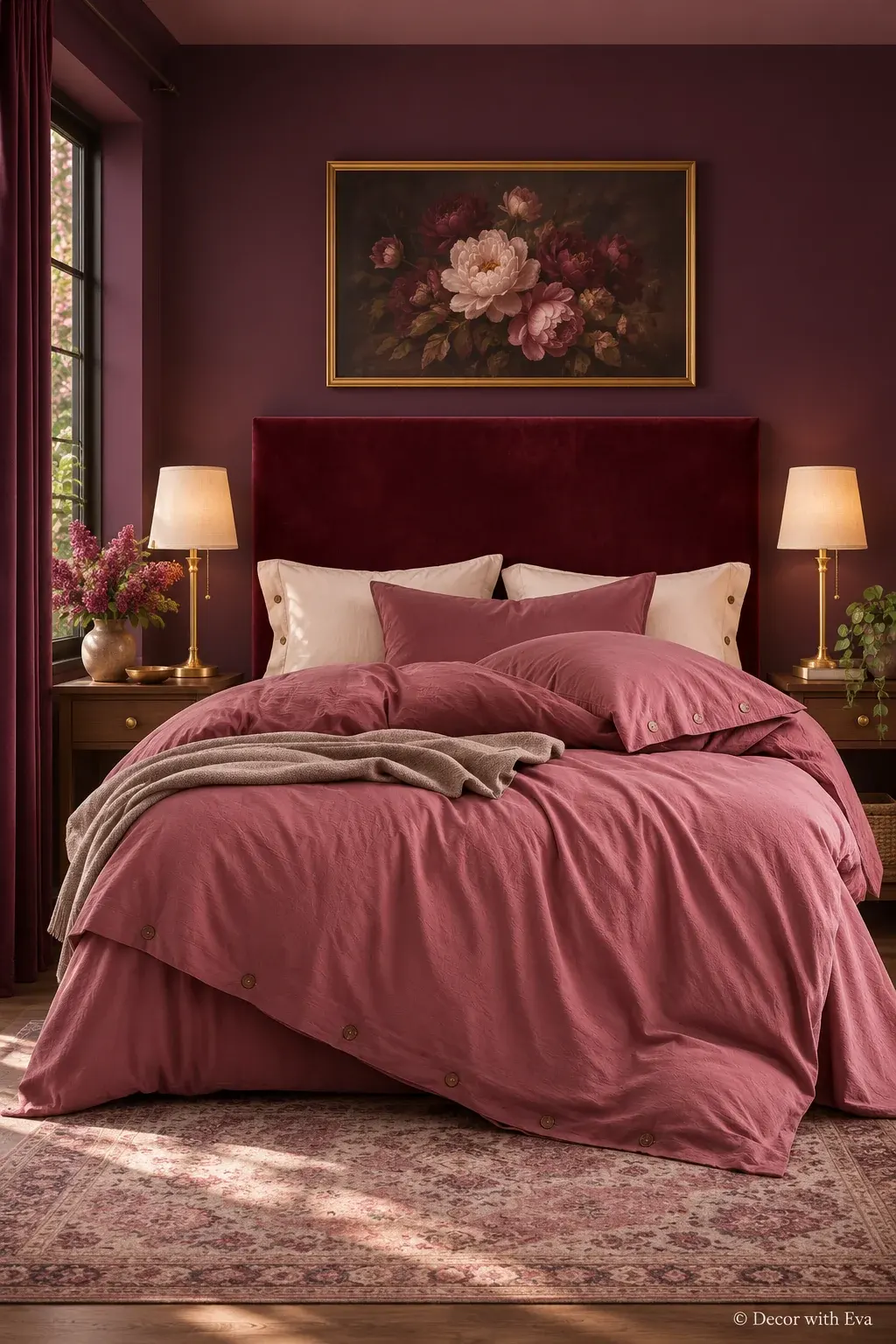
A simple fabric-covered panel can give a plain bed a softer focal point. Dark wine, smoky plum or black upholstery velvet brings texture without needing a patterned wall. Keep the outline straightforward and let the fabric be the decorative element.
Choose a fabric actually suitable for the project, then plan the substrate, padding, batting and mounting as a complete assembly. Check that the finished panel works with the bed and any nearby outlets. Secure it using a method appropriate to its weight and the wall or frame; an illustration is not a construction plan. If the mounting is uncertain, use a properly designed ready-made headboard instead.
Try this: Wrap a small sample board first to judge the fabric’s color, pile direction and padded appearance.
17. Display Your Own Art in an Ornate Frame
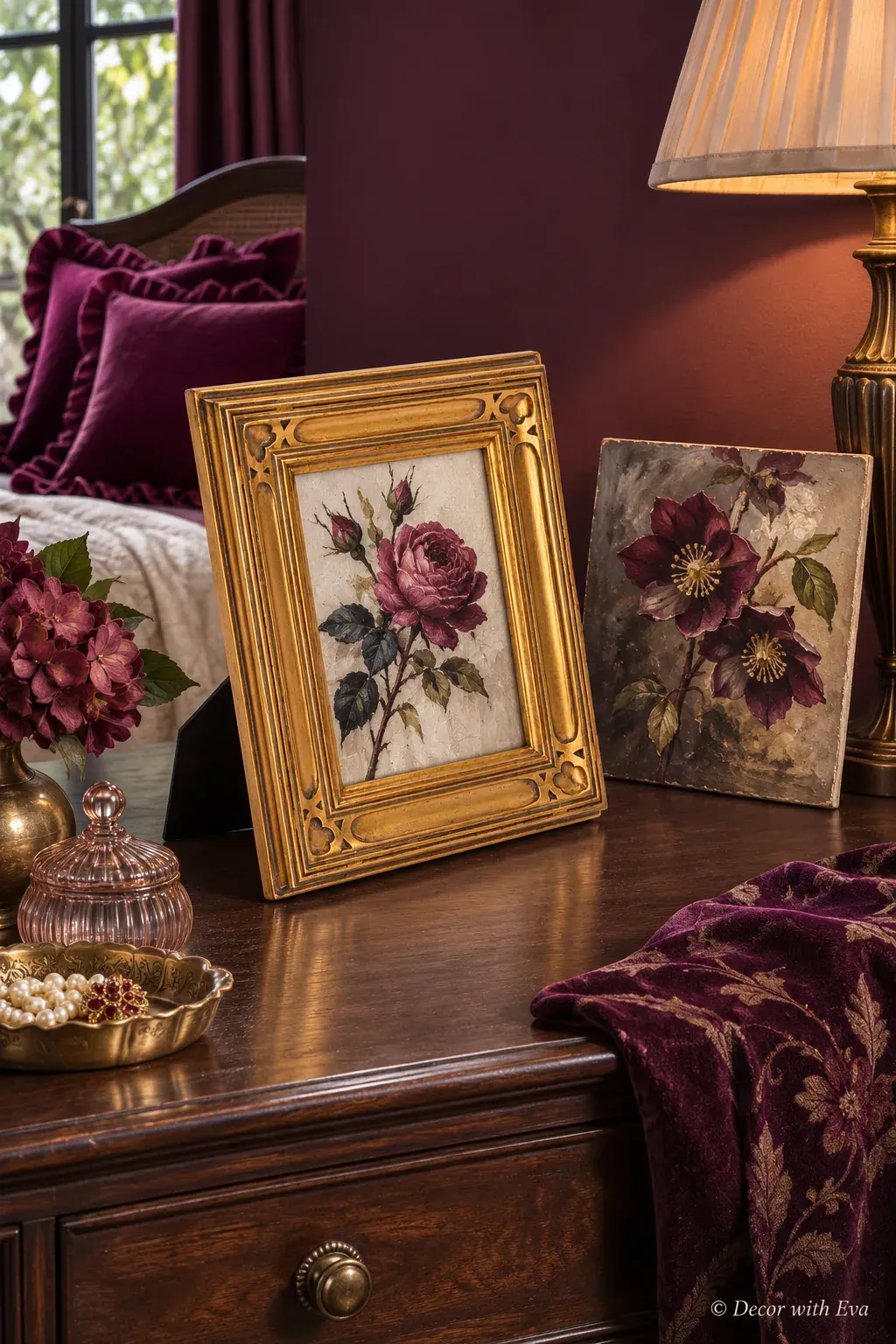
A small original painting can give a bedroom more personality than a matching set of purchased prints. Paint a loose rose, a dark botanical shape or an abstract study using plum, pink and black. An ornate gold frame gives the little work a sense of occasion without requiring a full gallery wall.
Use a frame sized for the actual artwork. The selected 5-by 7-inch frame has a wider decorative surround and an easel back, so it works as a modest dresser display. Leave room around it and keep the supporting surface stable. If you prefer wall mounting, confirm its hanging provisions and choose suitable fixings; keep heavy glass away from sleeping positions.
Try this: Make one small painting with colors you already have.
18. Define the Headboard Wall with Painted Molding
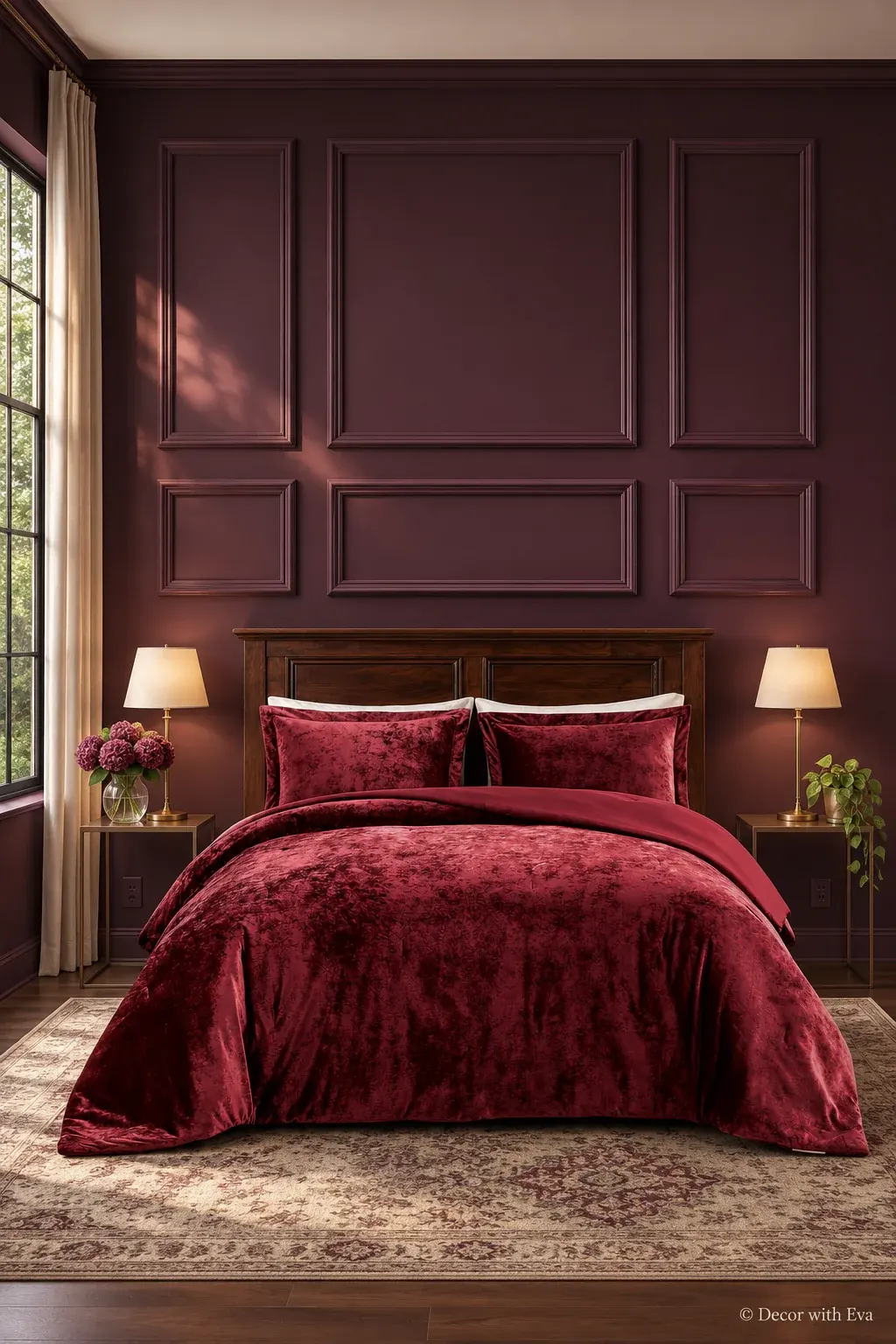
Simple rectangular molding can give a plain headboard wall a more formal outline. Paint the trim and wall in the same dark shade so the detail comes from light and shadow. Burgundy bedding or a rose upholstered bed then supplies the softer contrast.
Draw the proposed panels to scale, checking how the headboard, outlets and bedside furniture interrupt the pattern. The room’s architecture should guide the spacing; do not squeeze in a narrow leftover panel just to match an inspiration image. Choose materials, fixing and paint preparation suited to the actual wall. Check rental permission before attaching trim or making a permanent change.
Try this: Use paper strips to compare panel spacing on the wall before buying lengths of molding.
19. Style a Window Seat with Wine-Colored Fabric
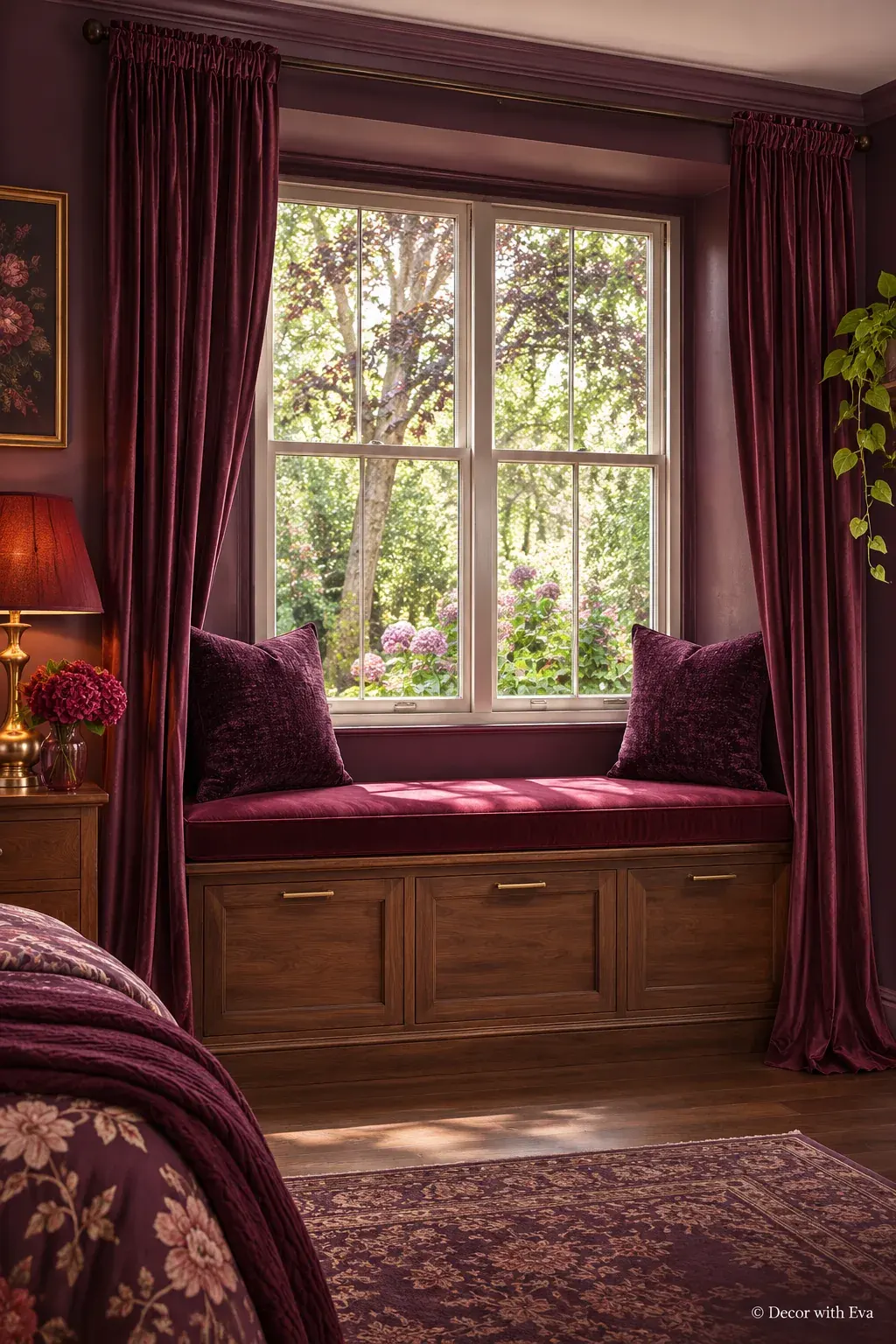
An existing bedroom window seat can become a place for reading or getting dressed with one wine-colored cushion and a long pillow. Dark curtains at the sides frame the nook, while a rose or plum wall connects it to the bed. Keep the middle of the cushion free so it remains usable.
Start with a seat that is already designed to support sitting; a shallow shelf or radiator cover is not an automatic substitute. Measure the cushion’s finished size and choose fabric suited to its use. Preserve ventilation, window operation and access to any storage lid. If there is no suitable built-in seat, leave this idea out rather than forcing one into the room.
Try this: Try a folded blanket on your existing seat to test the color and extra cushion depth.
20. Hide Everyday Extras behind a Deep-Colored Closet Curtain
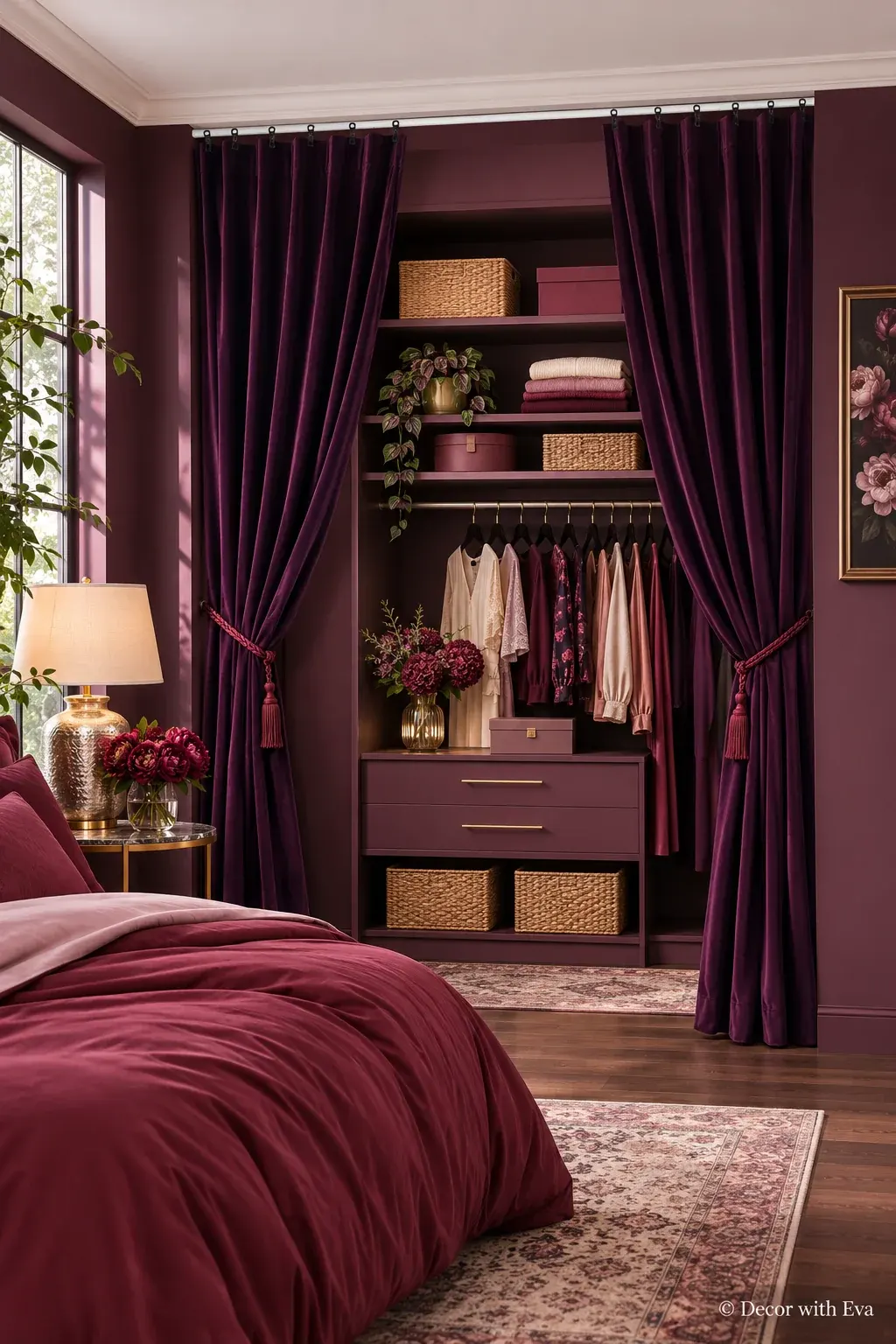
A plum or wine-colored closet curtain can make a bedroom storage recess feel connected to the rest of the room. Plain fabric keeps the emphasis on its generous folds and color. Pull it fully aside when you need access, rather than decorating the opening so heavily that the closet becomes inconvenient.
Check that the curtain will clear handles, drawers and anything stored near the opening. Choose an appropriate track or rod, wall fixings and fabric weight, keeping ventilation requirements and heat sources in mind. Permission may be needed before removing doors or installing hardware. Curtains can conceal visual clutter, but the shelves and hangers behind them still need a useful arrangement.
Try this: Organize one shelf first, then decide whether changing the closure would actually help.
21. Give the Foot of the Bed One Soft Storage Piece
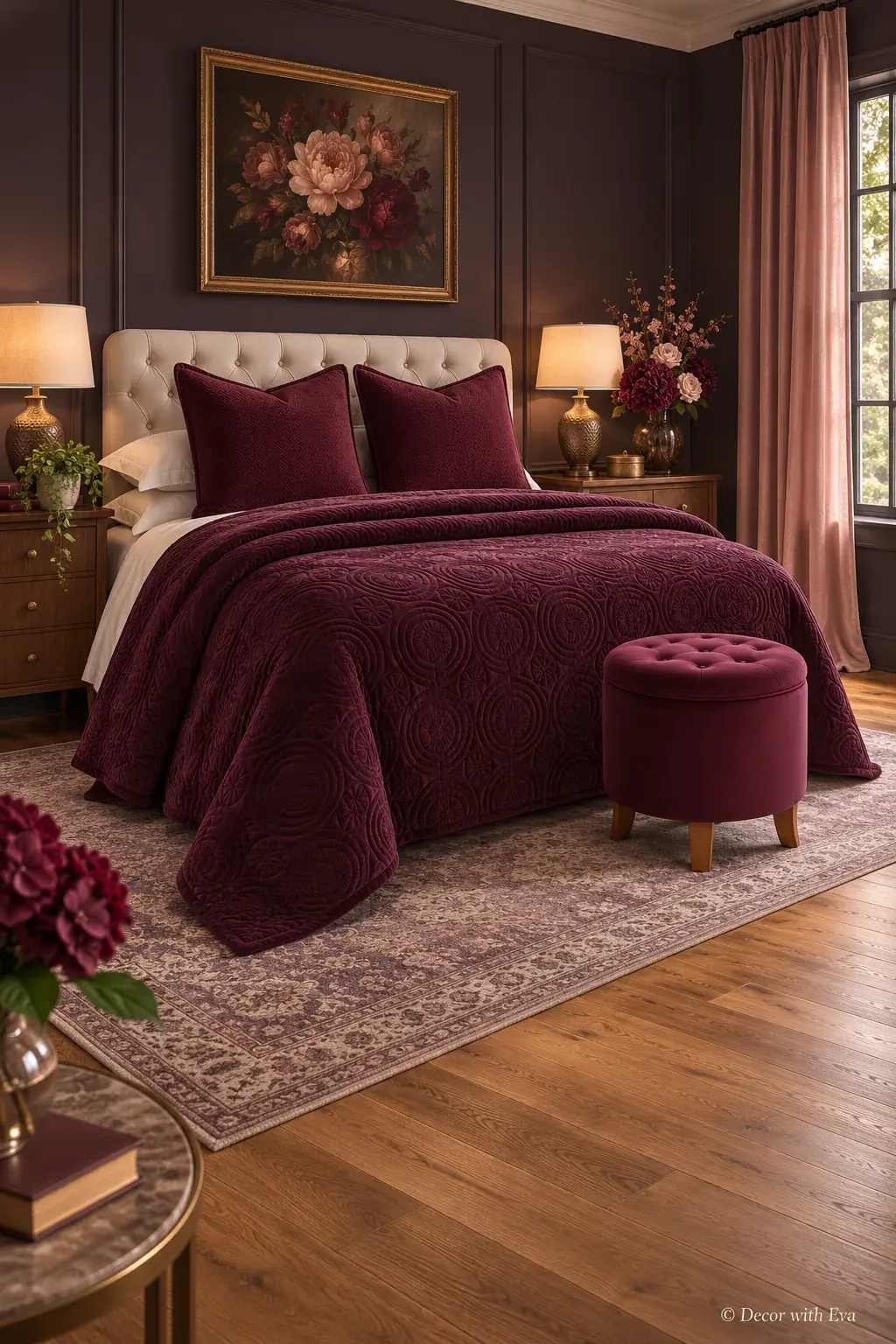
A small round burgundy storage ottoman adds a soft surface near the foot of a plum-dressed bed. Place it slightly to one side so the main walking route stays clear. Its button-tufted lid is decorative enough on its own; keep the top empty so you can reach spare pillow covers and a light throw inside.
Check the outside footprint, lid movement, stated intended use and the route around the bed. A storage box should not be assumed suitable for sitting unless the manufacturer says it is. Leave the piece out if it crowds the room; the dark feminine look can come entirely from the walls and textiles. For more layout options, explore our small bedroom ideas.
Try this: Clear the foot of the bed first, then tape out the ottoman’s footprint before choosing one.
Dark Feminine Bedroom Questions
What Makes a Bedroom Feel Dark and Feminine?
For this article, the look combines rich colors with softer shapes, tactile fabrics and personal decorative details. You might use plum walls with velvet upholstery, or black furniture with dusty rose bedding. The label is a styling shorthand; choose the colors and details you enjoy.
Does a Dark Feminine Bedroom Have to Be Black?
No. Deep plum, burgundy, chocolate and charcoal can all provide a dark foundation. You can also keep lighter walls and put the richer colors on the bed and curtains. A room does not need every surface painted dark to feel dramatic.
How Can You Try This Look without Painting?
Start with the largest textile you want to change: a duvet cover, quilt or curtains. Add a lamp and a piece of artwork you already own, then reassess the room. A freestanding furniture arrangement and removable cushion covers can be useful starting points when permanent changes are unsuitable.
Can This Work in a Small Bedroom?
Yes. Use color and texture on things the room already needs, especially the bed and window treatment. Measure any extra chair, vanity or storage piece before buying it. Keep the room easy to use, with reachable lighting and doors and drawers that open properly.
How Do You Keep the Room from Feeling Overfilled?
Choose one or two decorative focal points, such as a curved bed and an ornate mirror, and give them some quiet space. Store everyday extras where you can find them. Soft bedding, useful light and a few things that mean something to you can do more than a large collection of matching accessories.