This article contains paid links. As an Amazon Associate, I earn from qualifying purchases.
A spotted bedspread, a full patterned curtain or a striking bench can give a bedroom a completely different mood. Brown and black animal prints sit comfortably with wood, cream, sage and rose, but the size of the pattern and the surface carrying it change the result. A shaggy bed feels different from a crisp papered wall.
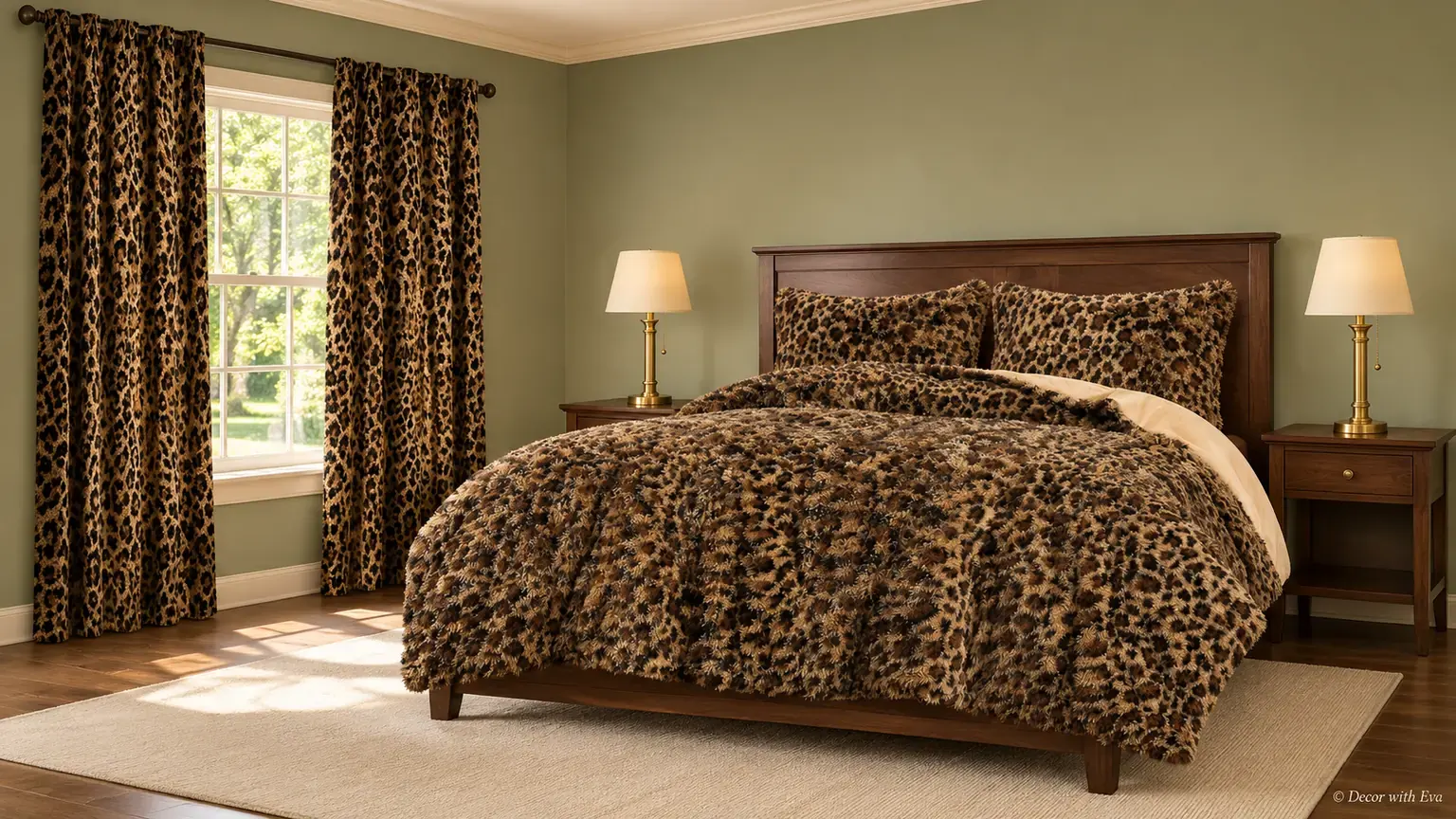
These 29 cheetah print bedroom ideas give the pattern a proper place, from full bedding and window treatments to useful storage and a painted headboard. Choose one large focal area first, then build a room you can move around and use comfortably.
Choose the Print and Its Main Surface
A quick pattern note: cheetahs have solid spots; leopards have open rosettes, as the Cheetah Conservation Fund explains. Retailers often use both names for home decor. Many options here have leopard-style rosettes and are described accordingly; compare the actual fabric or paper before choosing. The painted headboard idea uses solid cheetah-style spots.
Pick the largest patterned surface before the small accessories. Bedding, a window treatment, a wall or a substantial piece of furniture gives the room a clear direction. Keep doors, drawers and everyday routes usable, and mount heavy items for your wall structure. For furniture with drawers, doors and shelves, follow the CPSC’s Anchor It! guidance.
1. Start with a Spotted Faux-Fur Bedspread
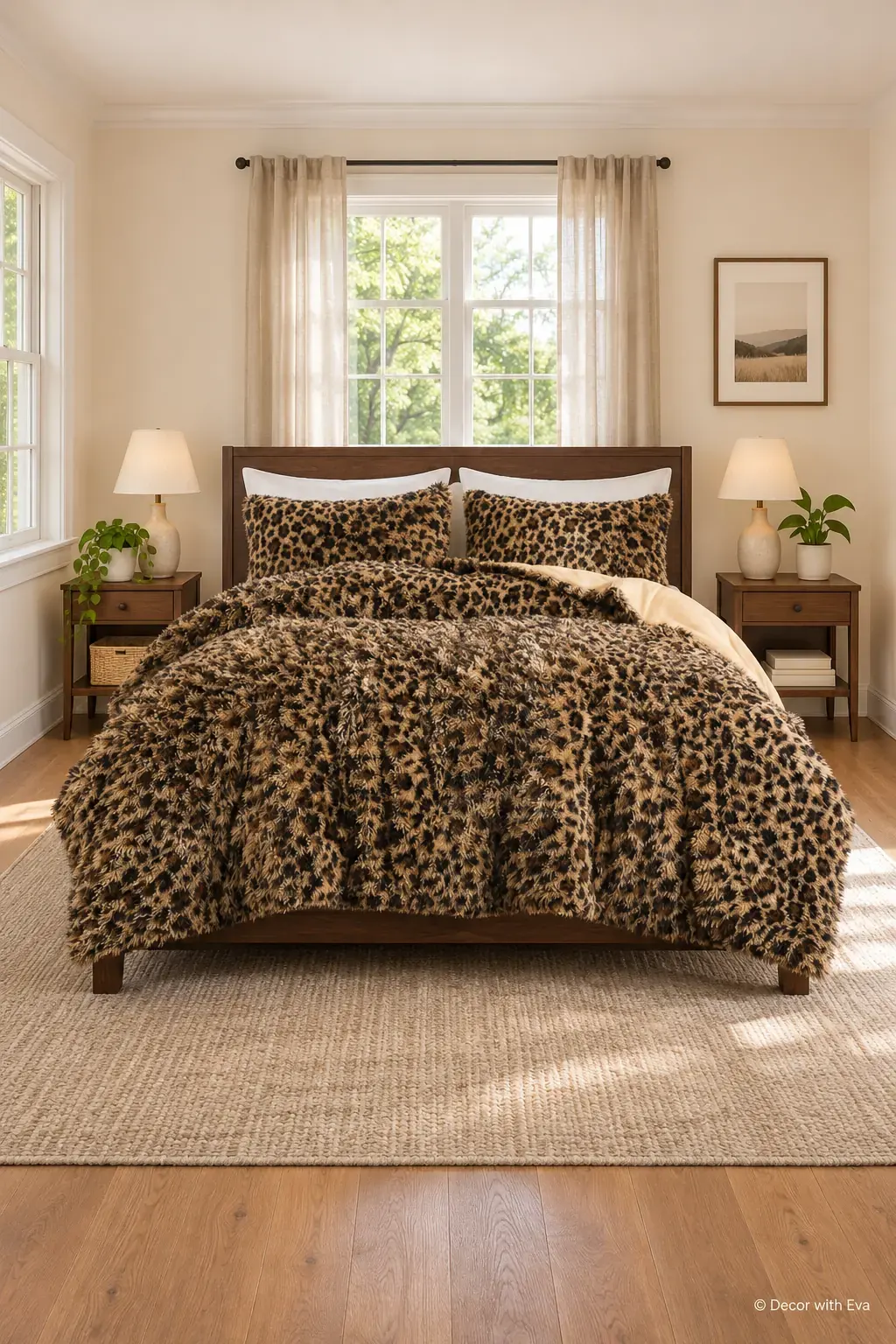
A shaggy animal-print comforter makes the bed the obvious focus. Its raised pile adds another layer to the brown-and-black pattern, so cream walls and a simple wood headboard give it room to stand out. Keep the bed fully dressed in the print rather than hiding most of it beneath another blanket.
Choose the comforter by its actual measurements and the drop you want at each side. A Queen label alone does not tell you how far it will hang over a deep mattress. The selected set includes matching shams; a mattress, sheets and decorative cushion inserts are separate.
Try this: Use your existing wood furniture and remove extra patterned cushions before adding anything new.
2. Pair Brown Satin Sheets with a Black Backdrop
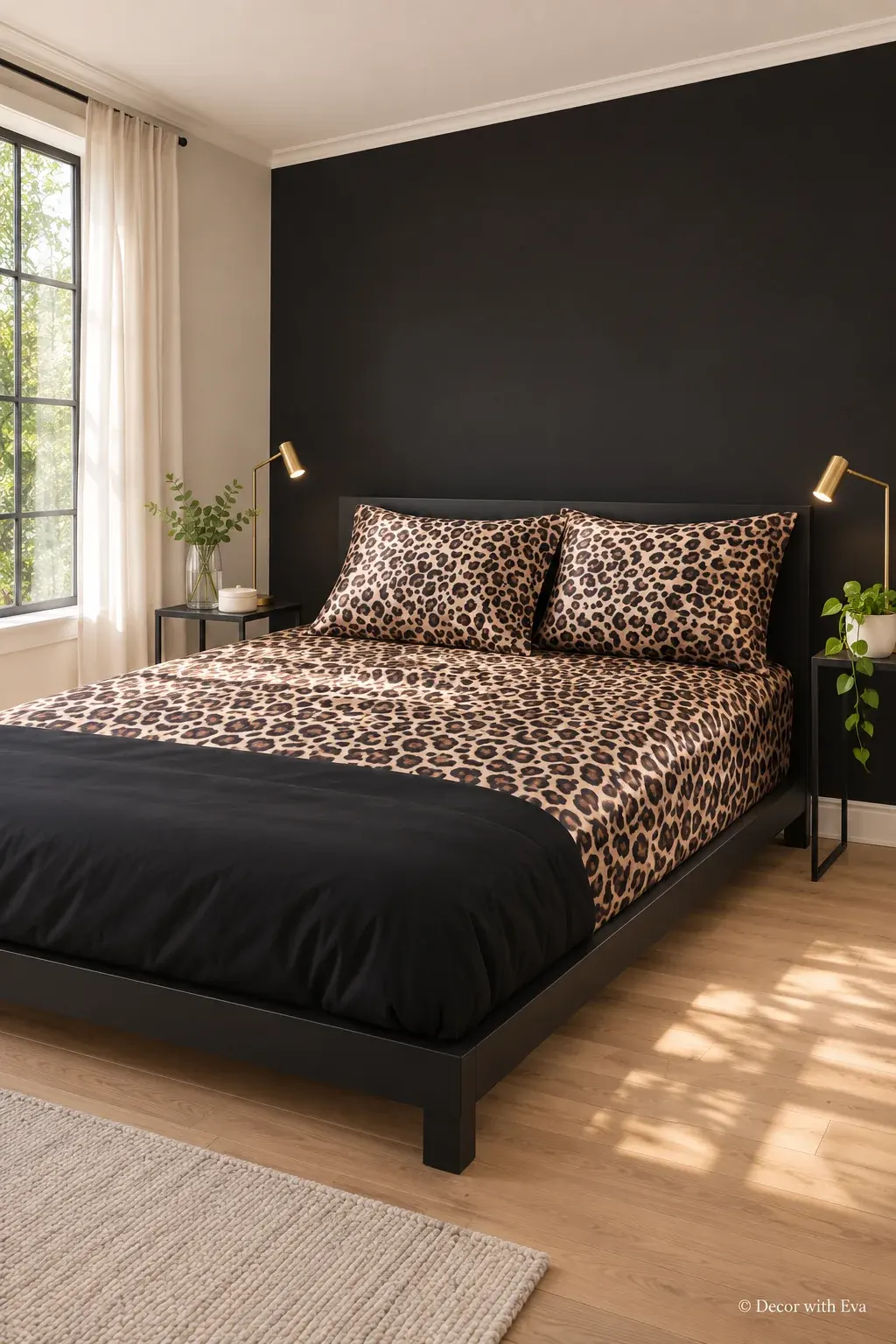
A matte black wall makes warm brown spots look richer, while a smooth satin sheet introduces a different finish from shaggy bedding. Turn the sheet down generously and leave the matching pillowcases visible. A plain black duvet folded low on the bed keeps the pattern easy to see.
The selected sheets are polyester satin, rather than silk. Compare the fitted-sheet pocket with the depth of your mattress, including any topper. If you prefer a matte sleeping surface, keep your current plain sheets and introduce the same color combination with a printed throw instead.
Try this: Hold a black paint sample beside the actual fabric in daylight and lamplight before painting the whole wall.
3. Soften the Print with Dusty Rose Walls
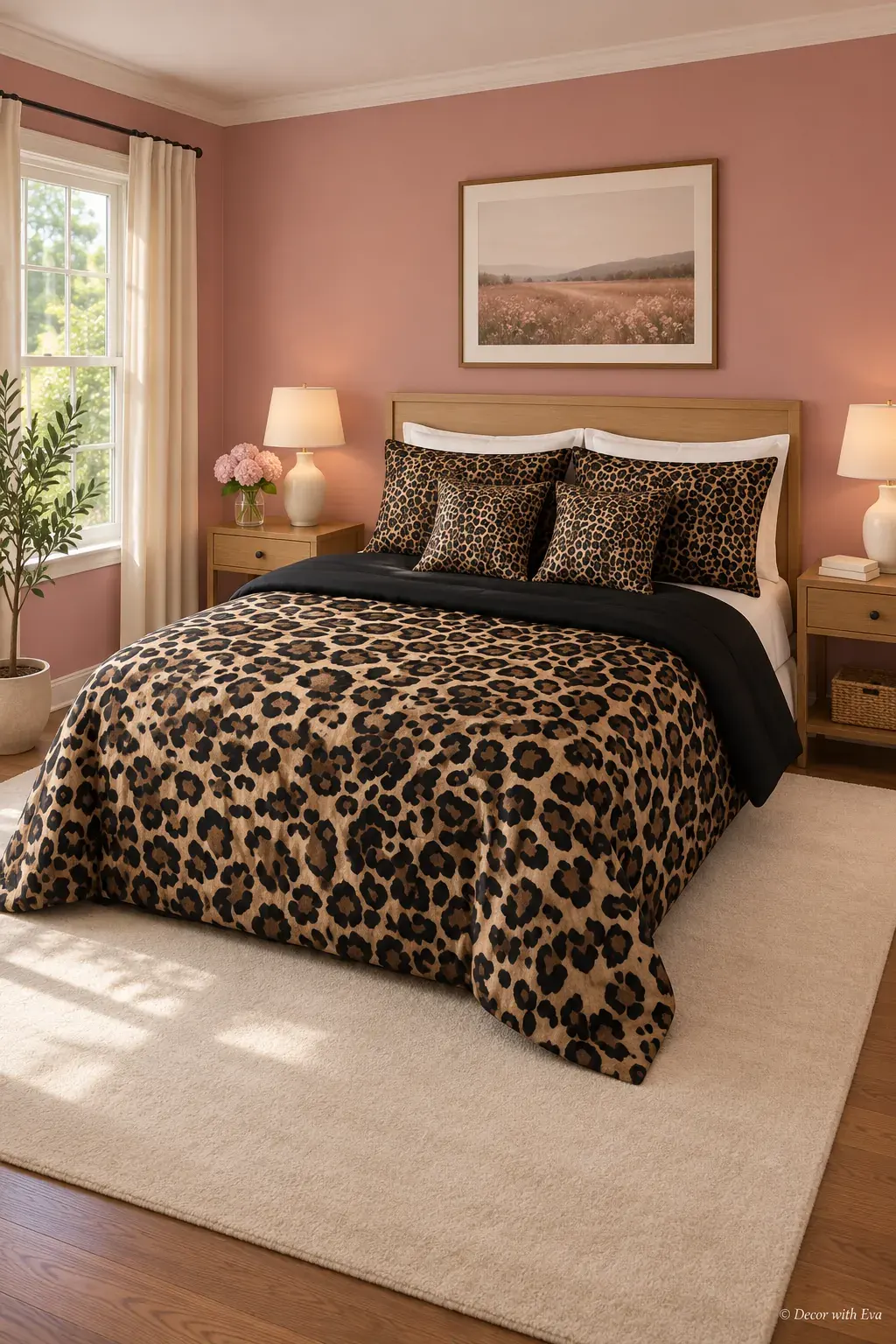
Dusty rose gives brown animal print a softer setting without making the bedroom look pale or timid. A smooth printed comforter reads clearly against the wall; a small fold of its black reverse adds definition at the foot. Warm wood and a little brass-colored metal finish the palette.
A coordinated bedding set can simplify the first purchase, but check every included piece. The illustrated Queen set has a 90-by-90-inch comforter and separate square cushion covers, which need inserts. You can also recreate the color balance with a printed duvet you already own and rose-colored paint.
Try this: Choose a muted rose with enough depth to frame the bed, then leave the other large fabrics plain.
4. Frame a Sage Bedroom with Printed Curtains
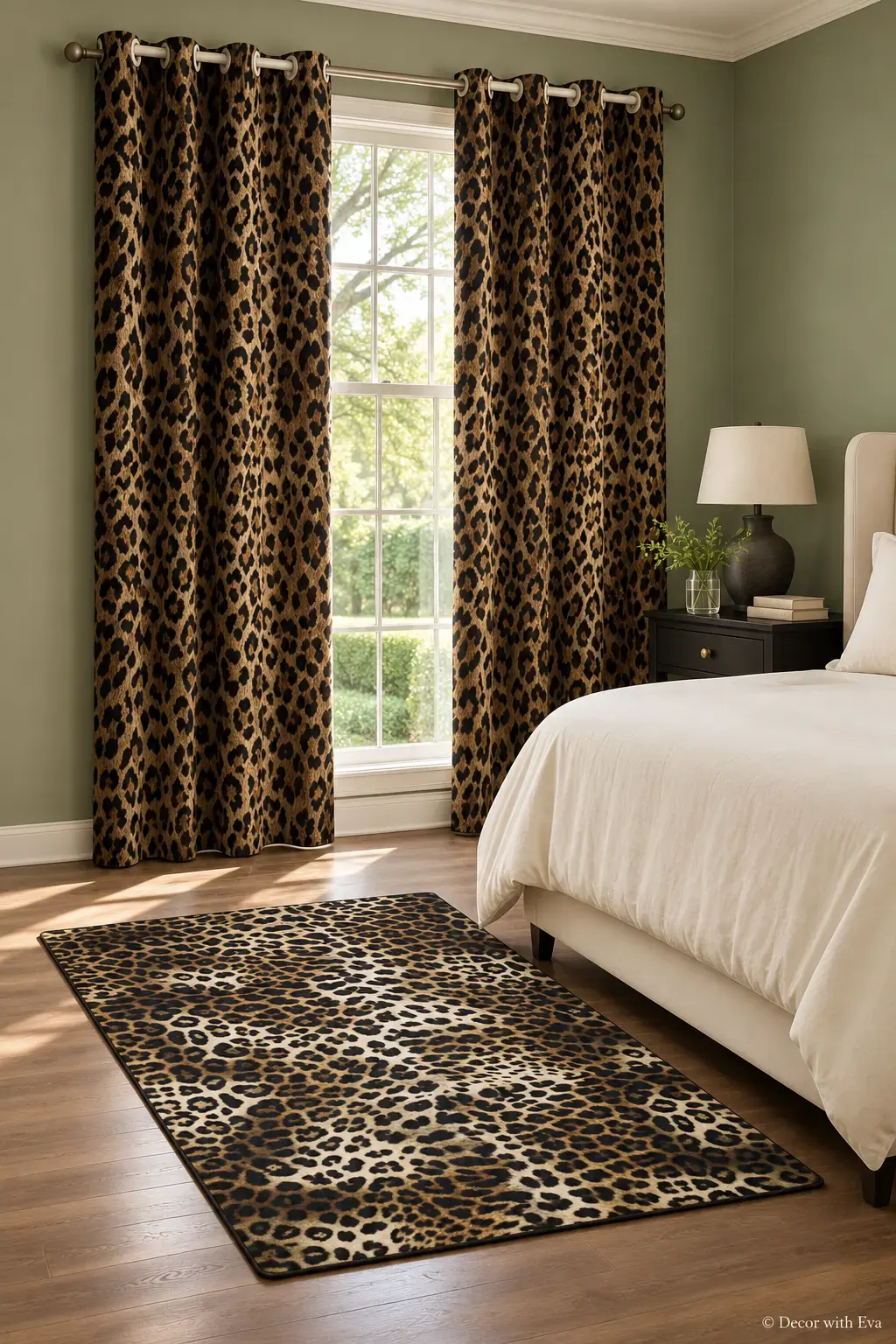
Full-length animal-print curtains turn the window into a strong vertical feature. Sage walls connect with the earthy brown fabric, while white bedding creates a clear pause between window and bed. A small printed rug beside the bed can repeat the idea without covering the entire floor.
Measure the curtain rod and the finished drop before choosing panels. Two 42-inch-wide panels provide 84 inches of flat fabric, with less coverage once gathered. These decorative panels are not a verified blackout solution; use a suitable separate blind if the room needs more light control.
Try this: Try the curtain fabric against a sage sample first, and check that the hem clears the floor and any heater.
5. Give One Wall the Full Pattern
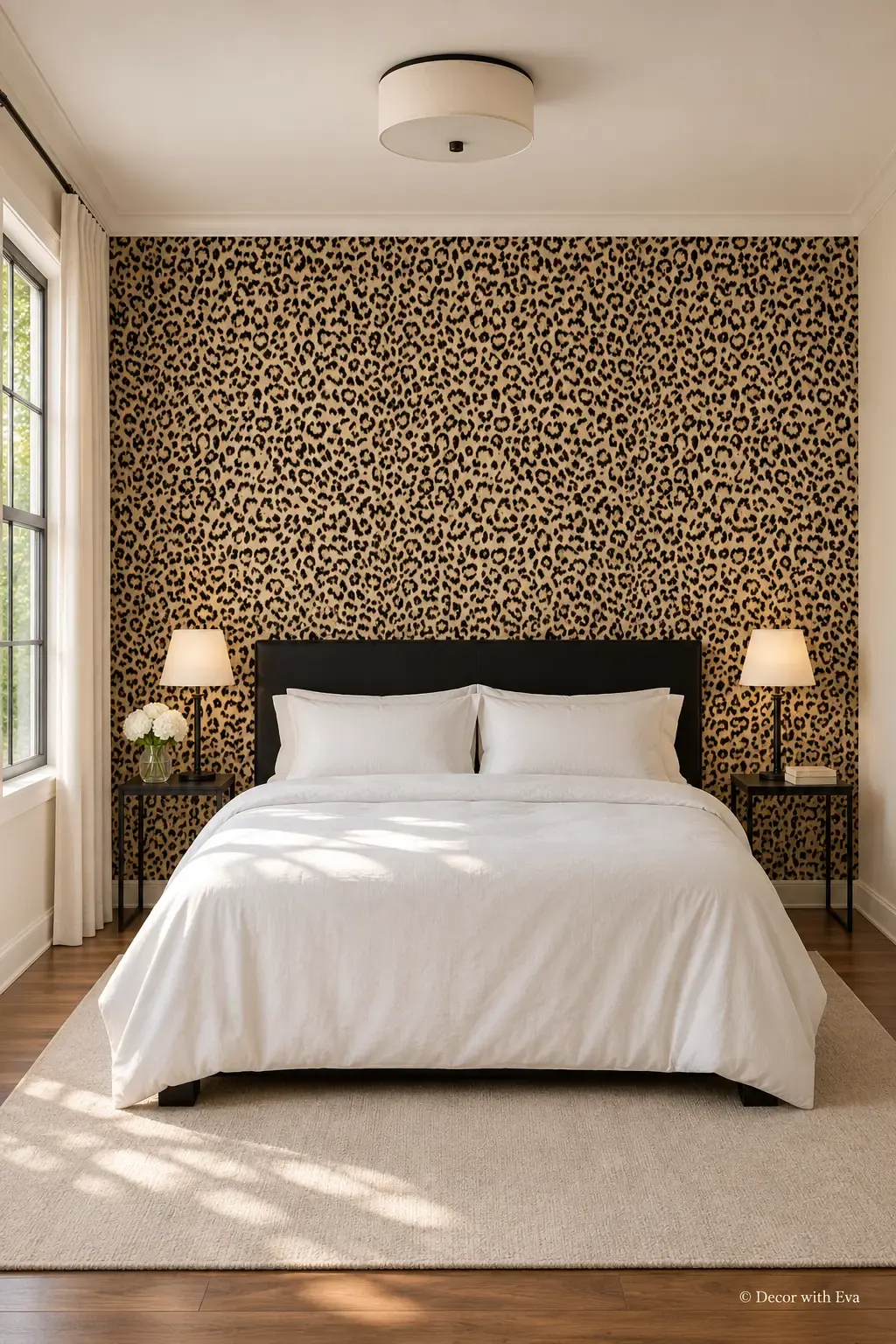
One full patterned wall has enough presence to carry a bedroom with simple white bedding. Keep the headboard low enough that a generous area remains visible above it. Small black details echo the dark marks without introducing another large pattern.
Plan wallpaper strips from the selected roll dimensions and the pattern repeat, allowing for trimming and matching. The illustrated peel-and-stick paper is intended for suitable smooth, flat surfaces. Test the actual wall; removable wording does not establish that it will lift away without affecting the finish.
Try this: Paper just the bed wall and live with that balance before considering another patterned surface.
6. Put a Printed Bench at the Foot of the Bed
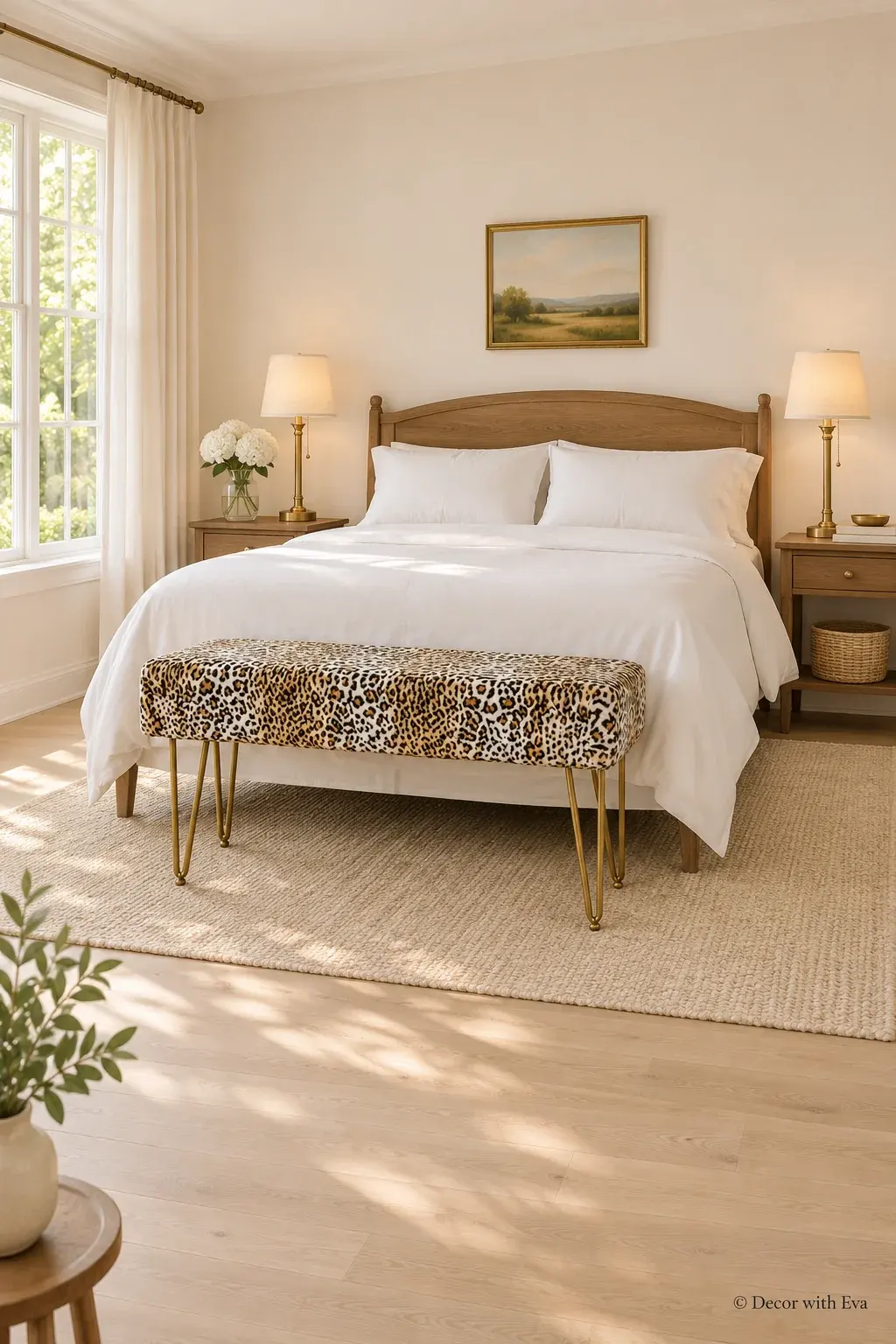
A spotted bench gives a plain bed an immediate focal point and a practical place to set a folded blanket while dressing. Slender gold-colored legs keep the shape visually open. Repeating that finish in a pair of small bedside lamps connects the room without adding more print.
Mark the bench footprint on the floor before ordering. This selected version is 46 inches wide and 22 inches high, so its height deserves as much attention as its width. Leave a comfortable route beyond it and keep drawer fronts usable; a narrow room may work better with a smaller stool.
Try this: Compare the bench height with the top of your made bed, using a box or chair as a temporary reference.
7. Make Hidden Storage Part of the Pattern
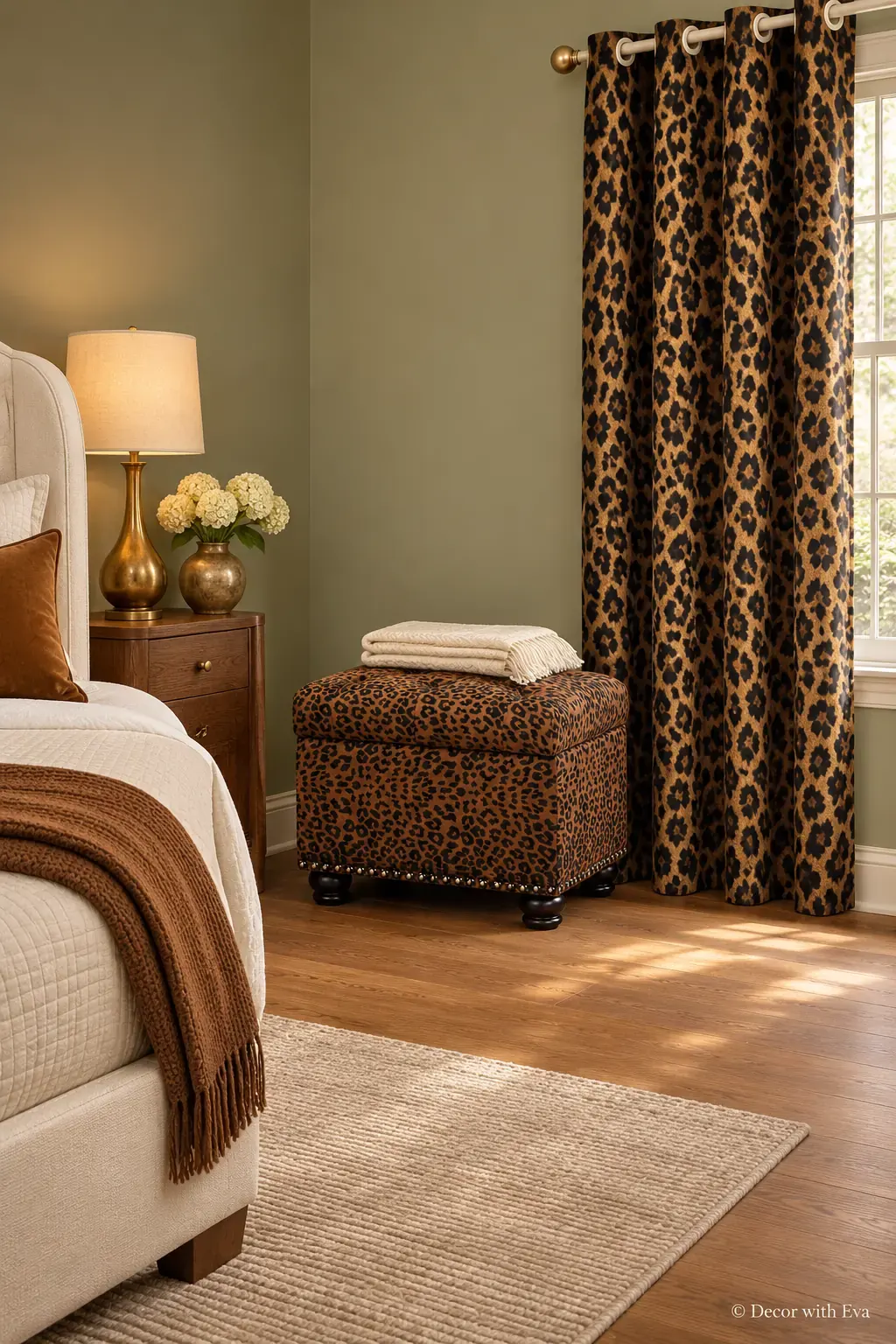
A printed storage ottoman gives blankets a home and adds a substantial patch of pattern beside the bed. Its warm rust-brown fabric suits sage walls and wood flooring. Nearby patterned curtains make the corner feel intentional even when the ottoman is holding everyday items.
Check both the closed footprint and the room needed to lift the lid. The selected ottoman is 24 inches wide, rather than a long bed bench. Store only items that fit easily, follow its use instructions and keep the opening clear instead of stacking a permanent display on top.
Try this: Move the extra bed blanket into a storage piece you already own, then decide whether a printed version would help the room.
8. Make a Dressing Corner Feel Deliberate
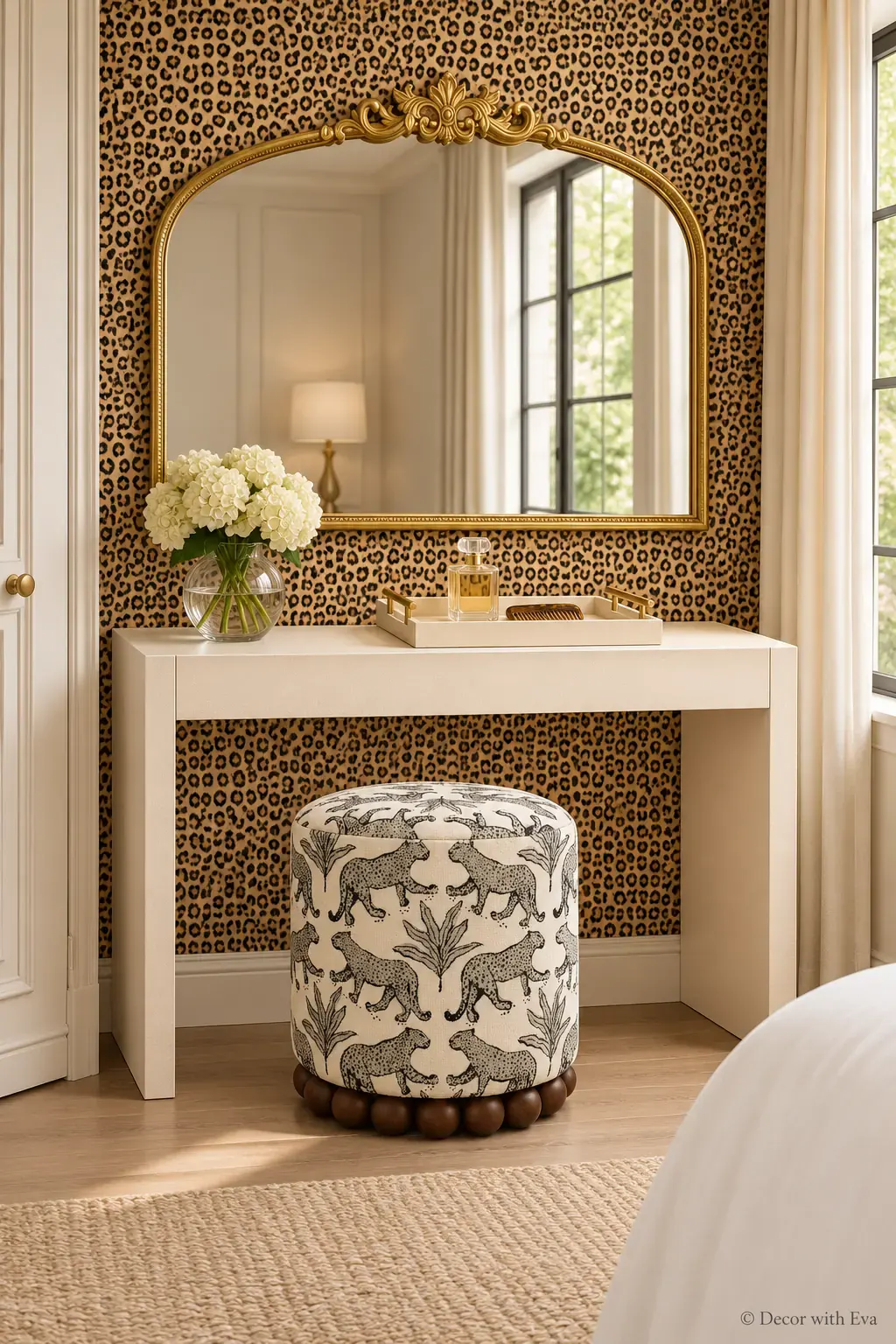
A large patterned panel behind a vanity gives the dressing area its own identity. An ornate gold-colored mirror and a round animal-motif stool add character, while the tabletop stays mostly clear. The stool carries whole leopard figures rather than spots, so it works as a related motif within the scheme.
Mount the mirror for its weight and your wall structure. Check the stool height against your vanity and allow knee room; the selected round footstool is about 18 inches high and is not an adjustable task chair. Use your existing dressing table rather than rebuilding the corner around the accessories.
Try this: Tape out the mirror size on the wall and sit at the vanity before deciding where its lower edge should land.
9. Create an Emerald Reading Corner
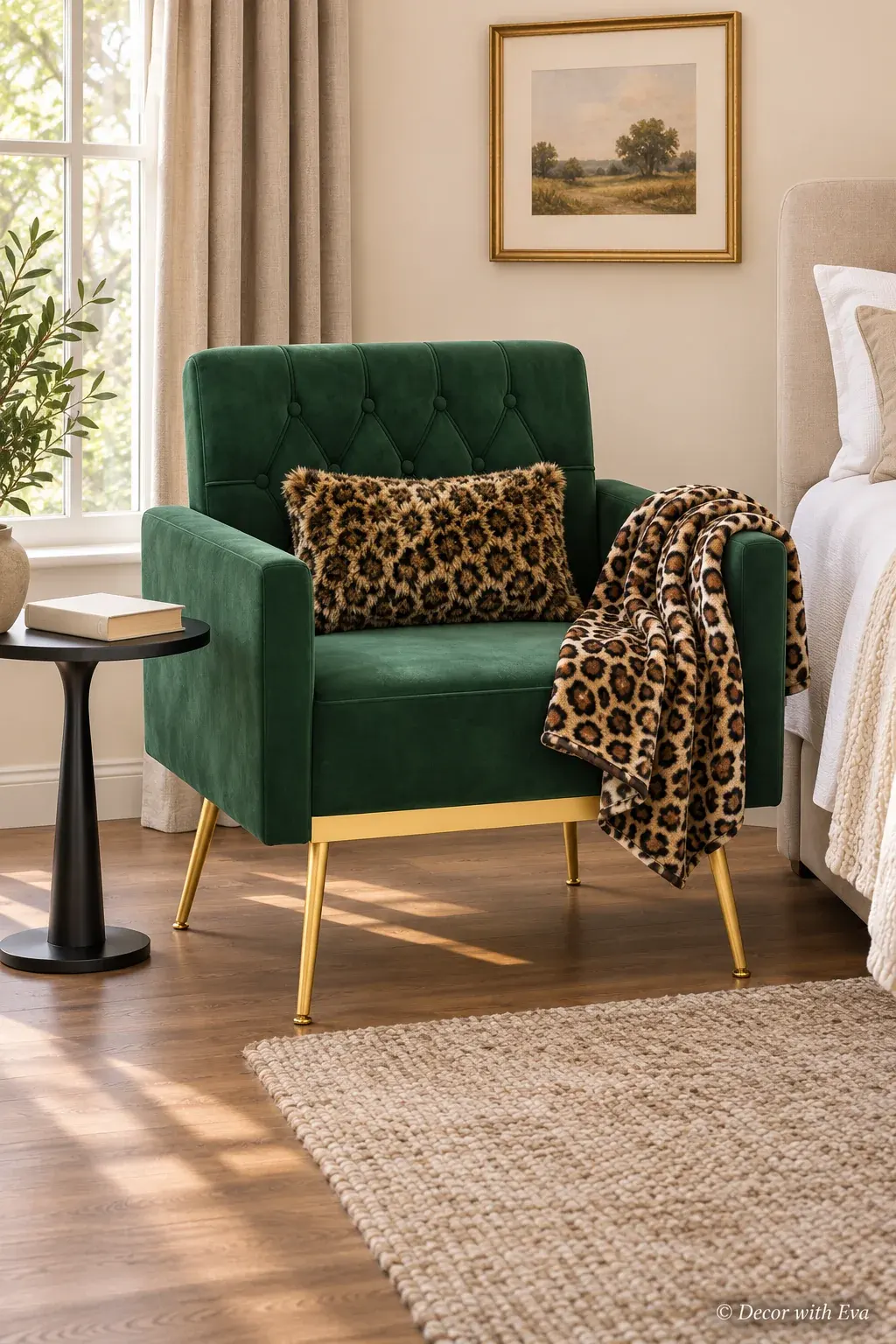
Emerald velvet makes brown animal print feel particularly rich. A rectangular spotted cushion across the chair back and a small throw over one arm give the corner enough pattern to read as part of the bedroom. Keep a simple side table within reach for a book or a drink.
Measure the space with someone sitting in the chair, including room for their feet and the route past the bed. The selected chair is about 30 inches wide; the lumbar products are covers and require inserts. Choose seating for your own comfort rather than assuming a photo can establish how it feels.
Try this: Move an existing chair into the corner for a few days to check whether you will actually use the spot.
10. Let a Bordered Rug Carry the Whole Room
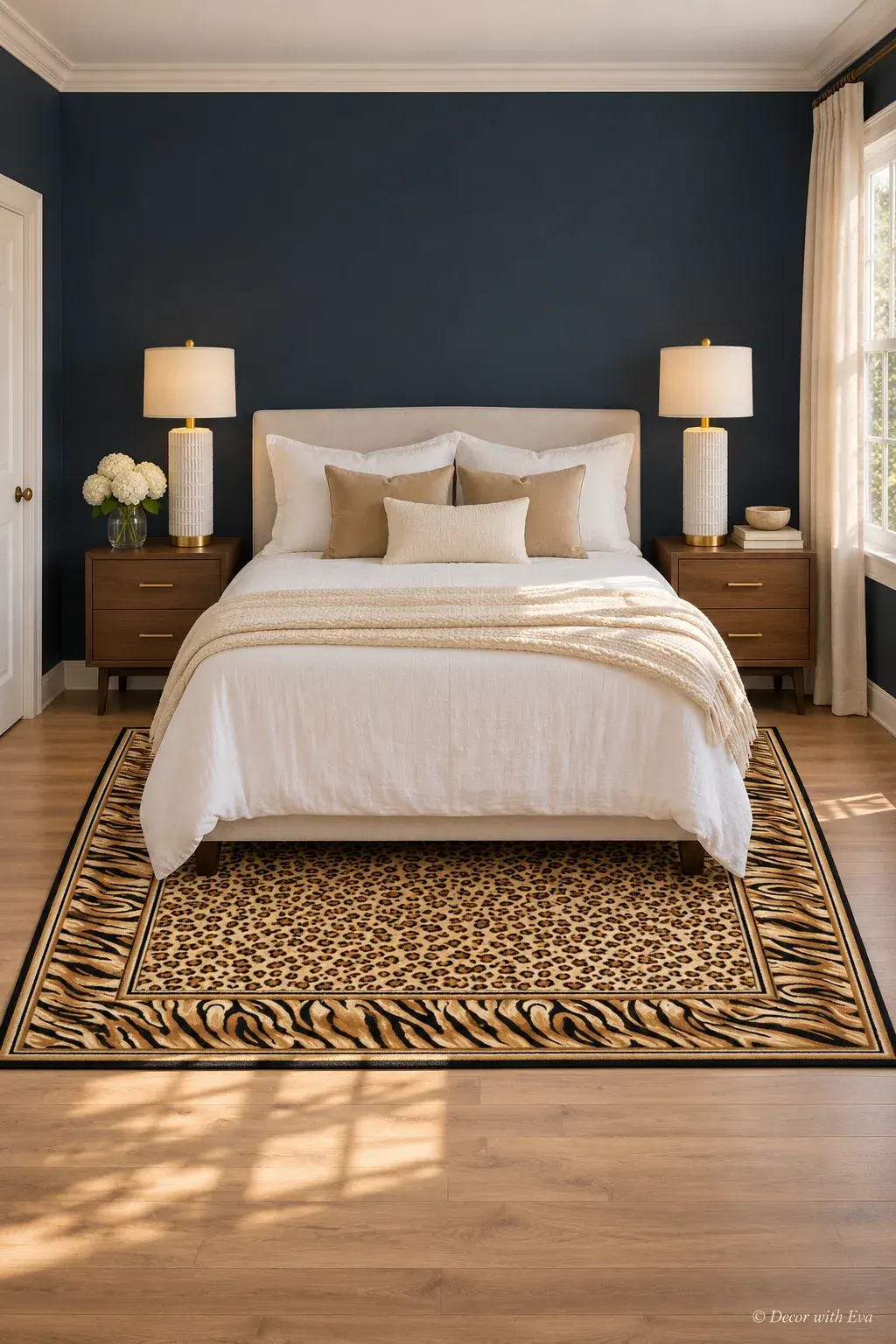
A bordered animal-pattern rug gives plain bedding a decorative foundation. The spotted center and striped outer band create a more traditional look than an allover print. Navy walls and cream lamps hold the rest of the room together without competing with the floor.
Measure the rug under the actual bed outline. This selected 7-foot-1-inch-wide rug extends only about 12½ inches beyond each side of a 60-inch-wide Queen mattress when centered, before accounting for the frame. Its mixed animal pattern includes a striped border, and it needs an appropriate separate pad.
Try this: Lay tape around the proposed rug position and check where your feet land when getting out of bed.
11. Keep a Small Bedroom Open around Bold Bedding
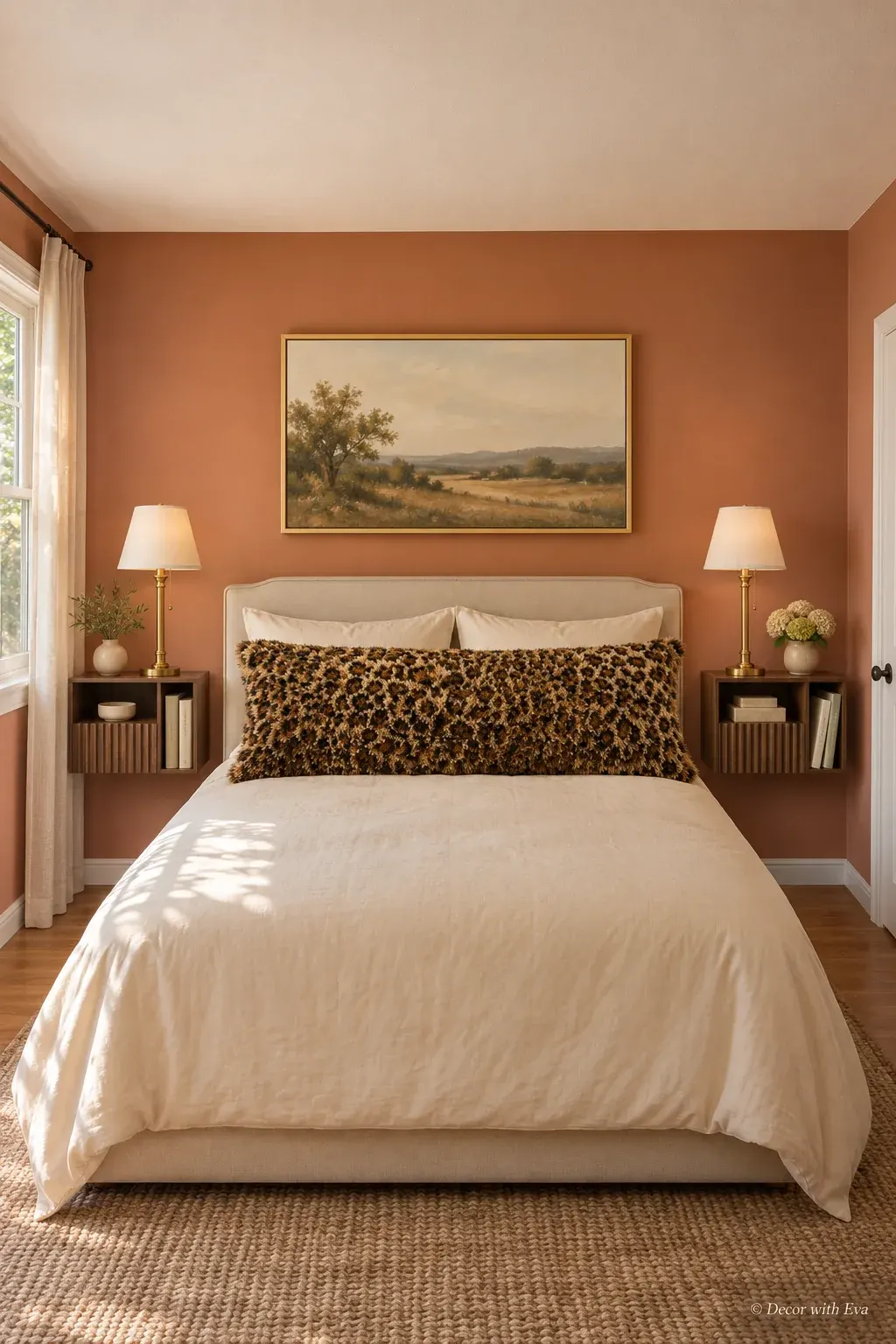
One long spotted pillow can give a small bed wall a clear focal point without adding furniture. Warm terracotta paint makes the brown pattern feel connected to the room. Wall-mounted nightstands keep the floor visible, with compact lamps that fit the shallow tops.
A 54-inch body pillow fills most of a Queen headboard but may overwhelm a narrow Twin. Its cover needs a separate insert. Mount floating furniture according to the wall structure and check the lamp-base footprint, shade projection and access to the switches before settling the height.
Try this: Start with the long pillow and plain bedding; add floating storage only if your existing bedside tables obstruct the route.
For more help planning furniture footprints and bedside access, explore our small bedroom ideas.
12. Give Twin Beds a Shared Spotted Thread
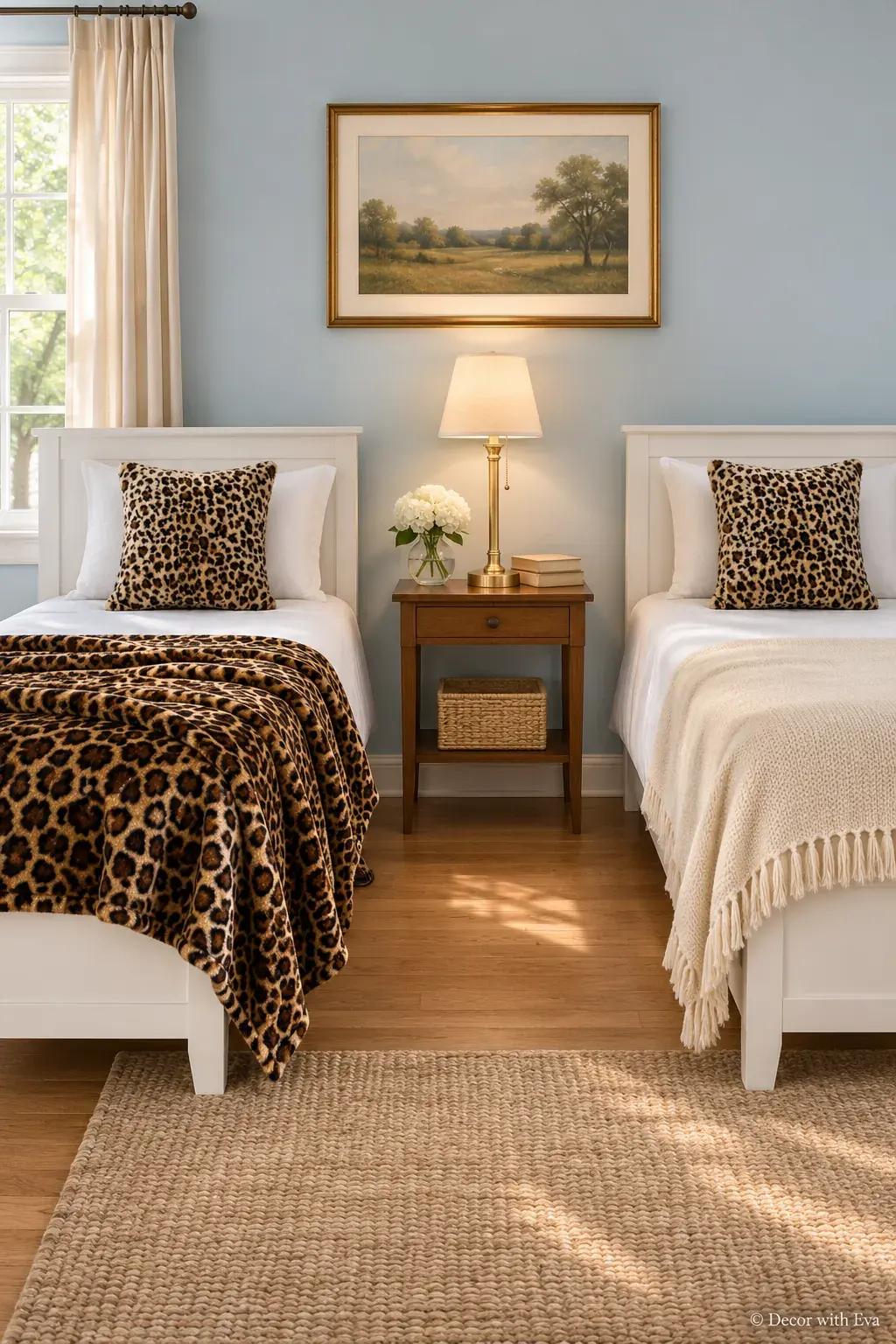
Matching spotted cushions connect two Twin beds without making every textile identical. One bed can have a printed throw while the other uses a plain one in the same warm palette. Pale blue walls make the brown pattern stand out and keep the shared room feeling light.
Keep each cushion proportional to the narrow bed and preserve an easy route between them. The selected square covers come as a pair, with inserts separate. A 50-by-60-inch throw is an accent layer on a Twin, not a replacement for properly sized sleeping bedding.
Try this: Repeat the cushion pattern on both beds and let each person choose a different plain throw.
13. Turn a Daybed into a Spotted Lounge
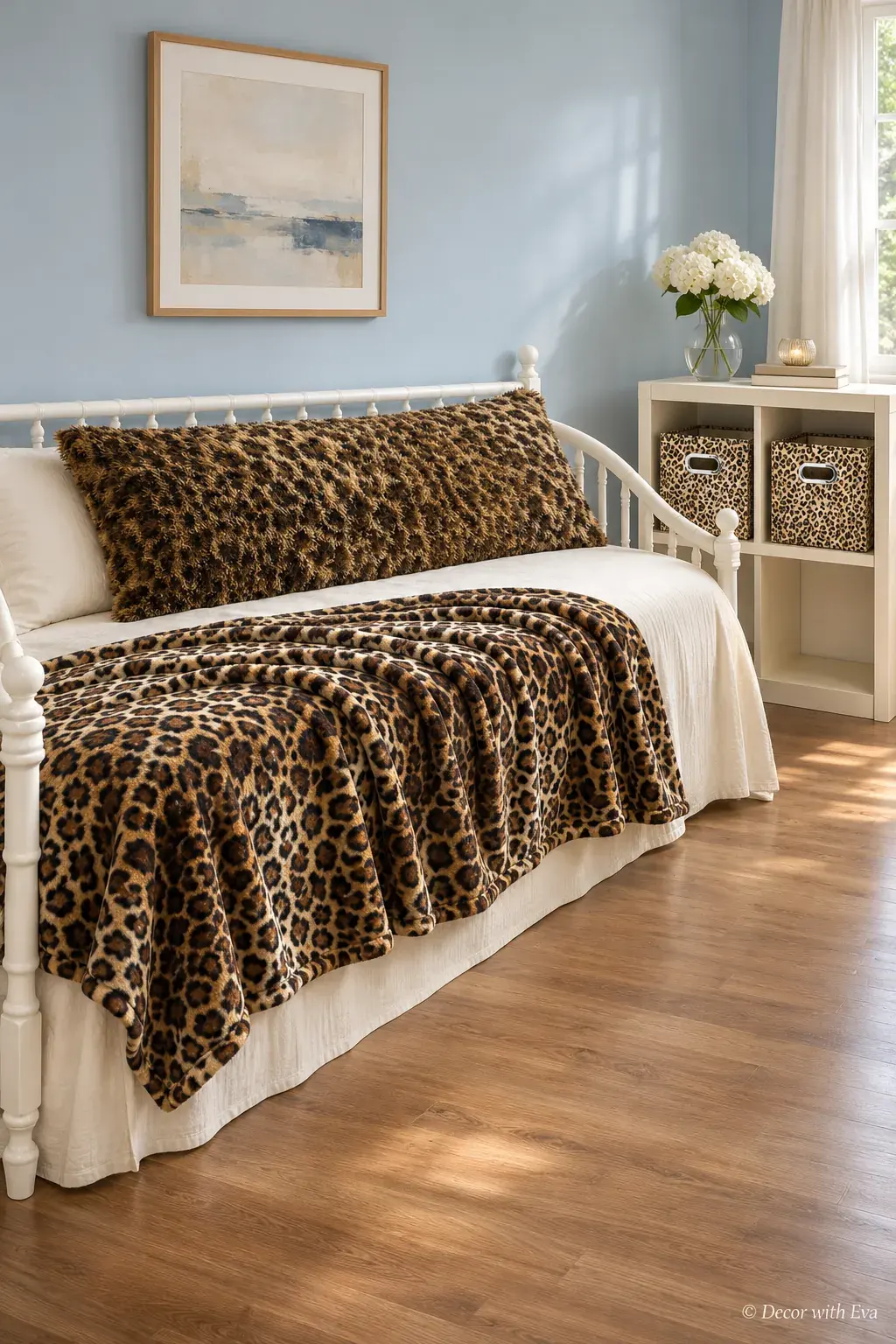
A long spotted pillow along the back turns a daybed into a daytime seat. Add a printed throw at one end and keep the main bedding plain so the shape stays readable. Matching storage cubes nearby give the guest room a place for extra bedding or small personal items.
Check that the pillow length fits between the daybed arms and still leaves a usable seat. At night, move decorative pillows to a shelf or basket rather than the floor. Measure cube openings before buying bins; the selected 11-inch cubes need room to slide in and out.
Try this: Use the daybed with one long pillow first, then add a throw only where it is useful.
14. Build a Movable Look for a Rental
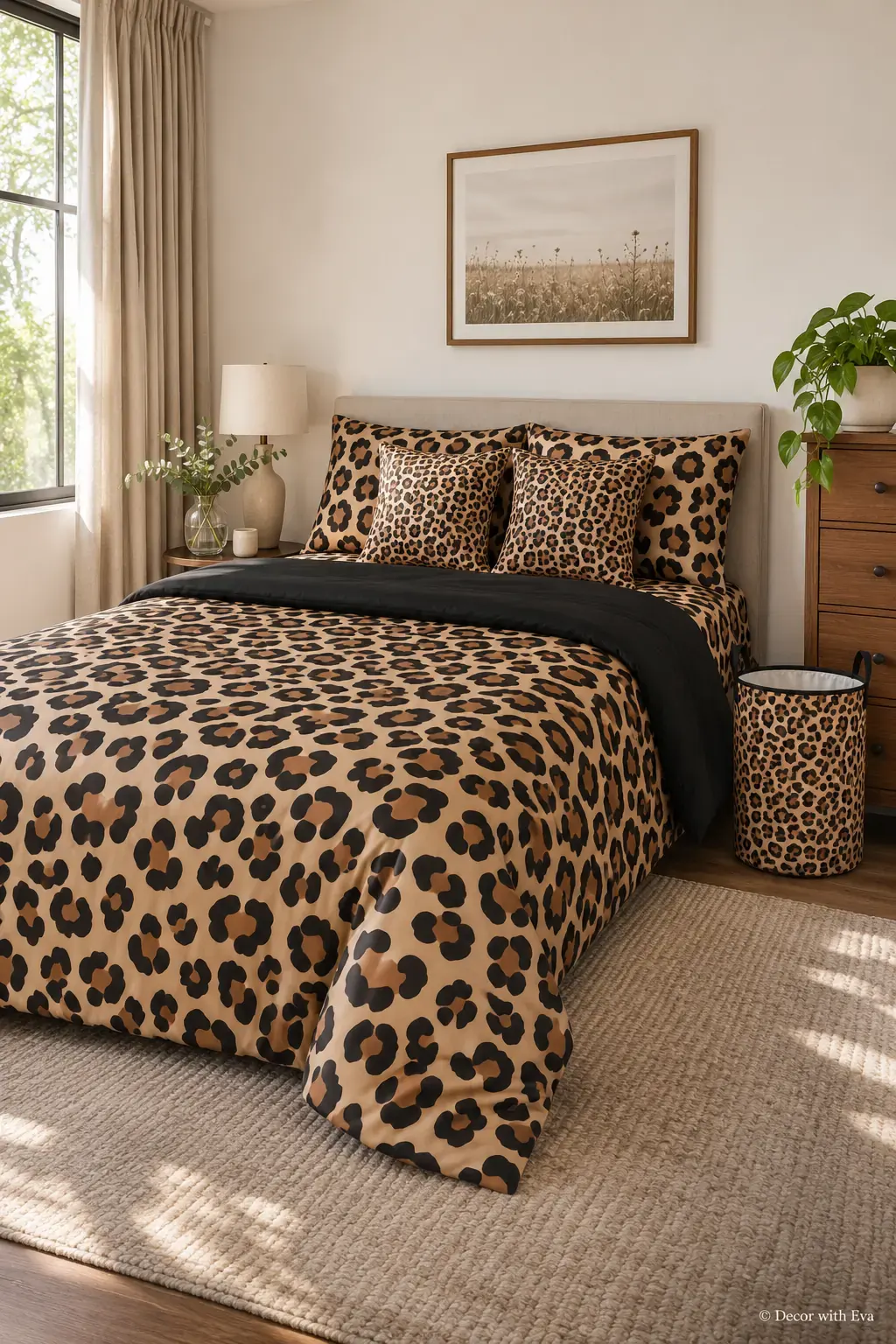
Printed bedding makes a rental bedroom feel personal even with plain walls and existing furniture. Give the bed a full spread of pattern and use a small printed hamper nearby to connect the dressing routine with the decor. The main changes can move with you.
Choose the actual bedding size for your mattress and keep the hamper scale realistic. The selected 38-liter version is only about 16½ inches high, so it suits a small laundry collection rather than a large household load. A neutral curtain and your current dresser are enough to finish the room.
Try this: Change the bedding before buying wall treatments, then see whether the room needs anything else.
15. Paint True Cheetah Spots on a Headboard
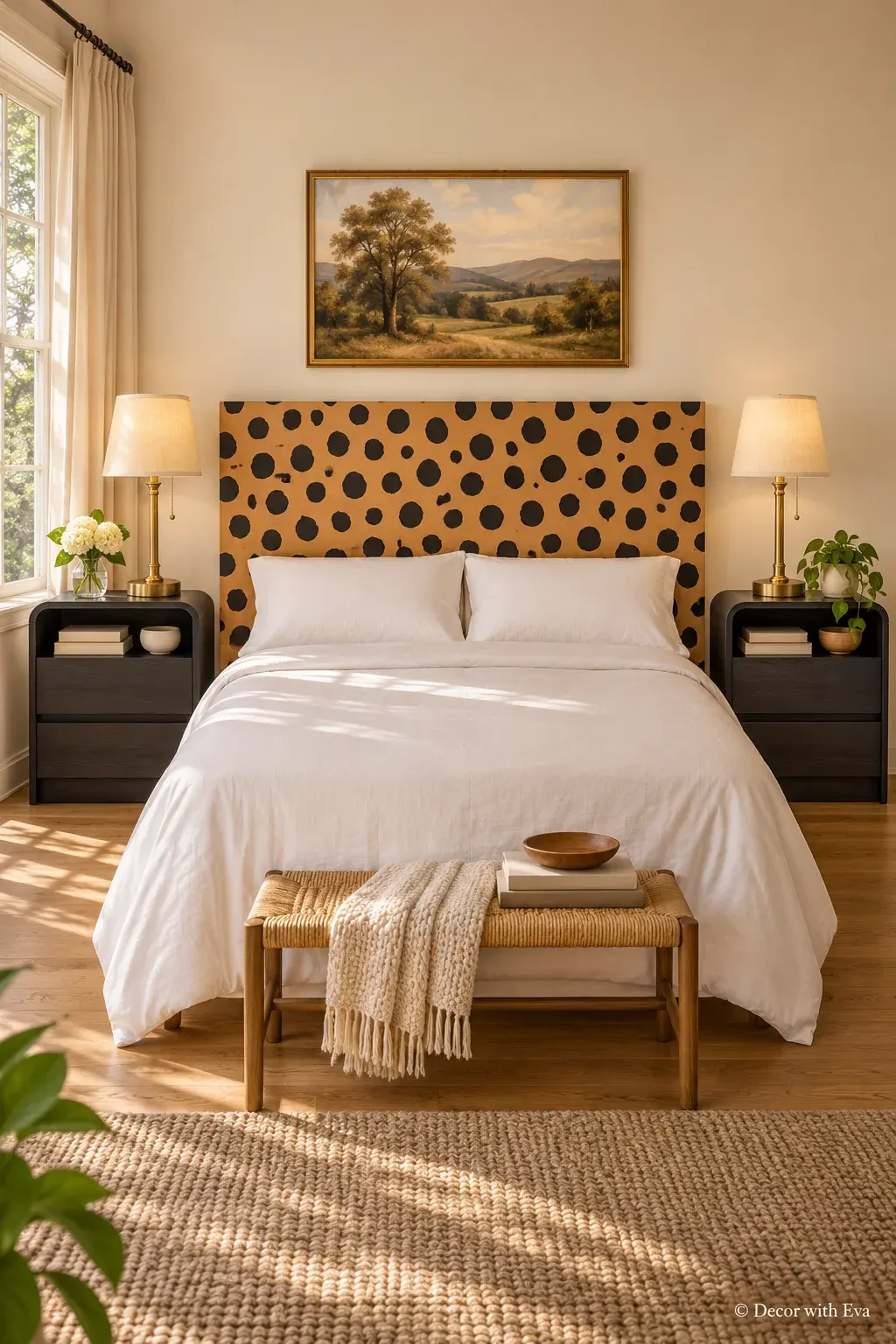
A painted headboard is a good place to use true cheetah-style solid spots. Scatter irregular black marks over a warm tan base, varying their angle and spacing so the result does not look like a rigid dot grid. Plain bedding makes this original pattern easy to appreciate.
Use an existing headboard with a surface suitable for your chosen coating. Clean and prepare it according to the paint directions, test the pattern on scrap material, and let each coat cure as directed before returning bedding to it. The illustrated headboard is a DIY concept, not a purchased printed piece.
Try this: Paint a small sample board first and view it from the bedroom doorway before committing to the headboard.
16. Frame Patterned Panels behind the Bed
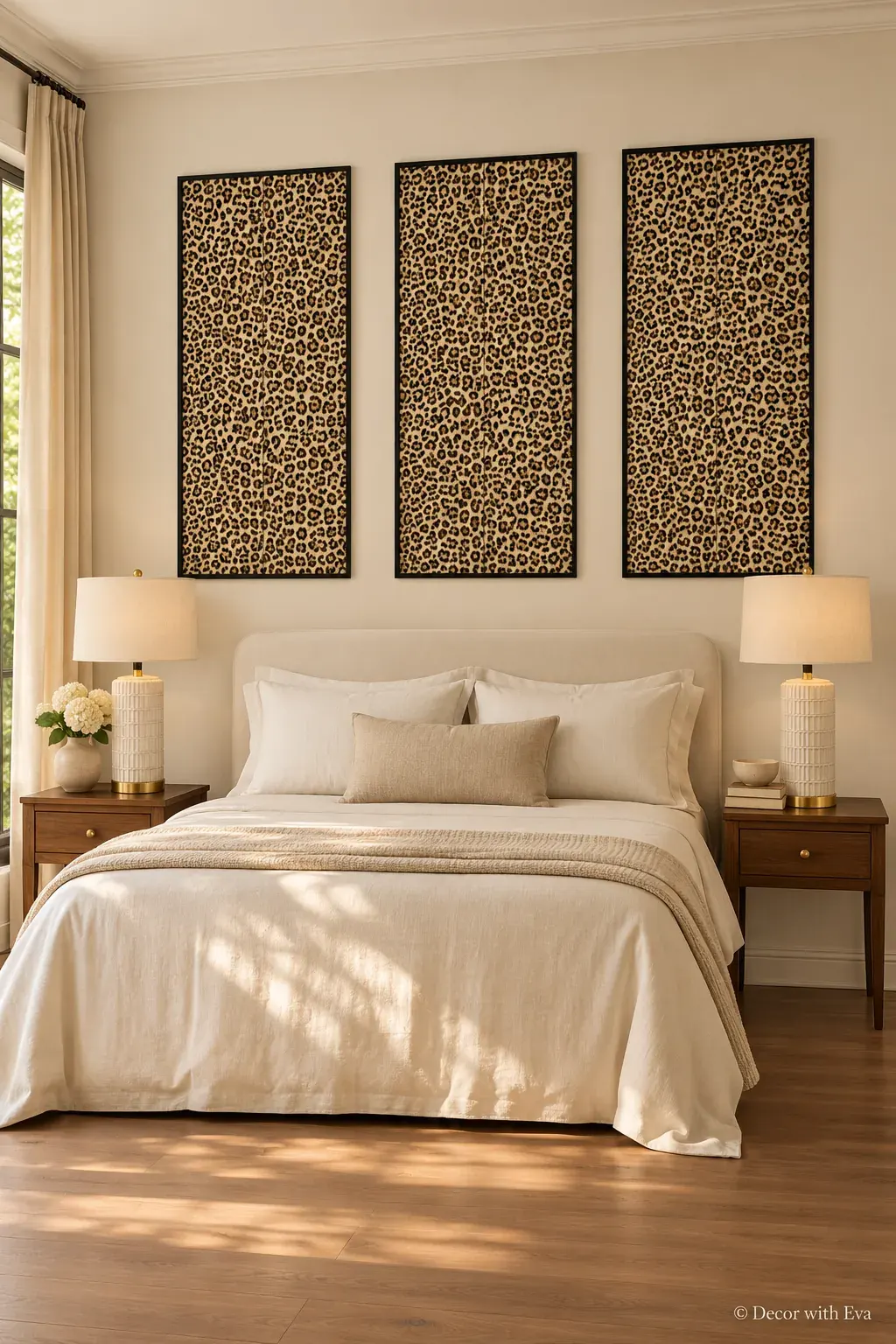
Framed wallpaper panels give the bed wall a strong rhythm without covering it from corner to corner. Three tall rectangles work especially well above a simple upholstered headboard. Leave cream wall space between them so each panel has a clear outline.
Use existing frames or lightweight panels that can be mounted properly. Work from the paper width when planning the inserts; a wider panel may need a matched seam. This approach also lets you try the pattern on a separate board before putting adhesive directly on the wall.
Try this: Arrange paper rectangles on the floor at full size to settle the spacing before hanging anything.
17. Give Wardrobe Insets a Patterned Finish
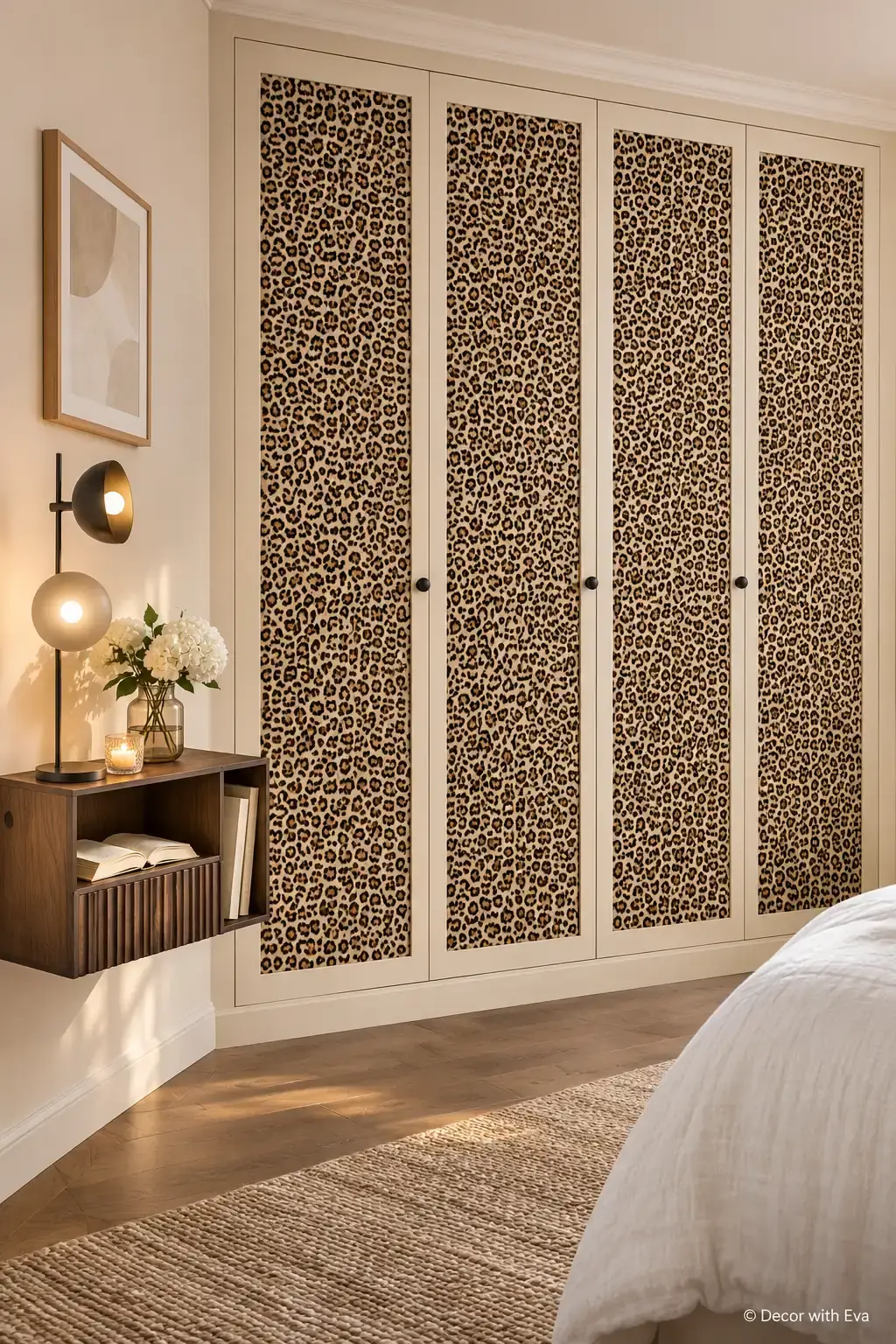
Flat wardrobe insets can carry animal print while the surrounding rails remain cream. Repeating the same panel shape across the doors makes a busy pattern feel orderly. Keep the nearby bed plain so the wardrobe becomes the room’s main decorative surface.
This is a finish change for existing furniture, not a recommendation to cover any door indiscriminately. Check surface compatibility, clearances at the edges and the way the doors open. Test an inconspicuous section first, and do not paper over hinges, ventilation openings or moving hardware.
Try this: Start with one removable sample panel and open the door fully before preparing the remaining pieces.
18. Refresh a Dresser with Pattern and Brass Details
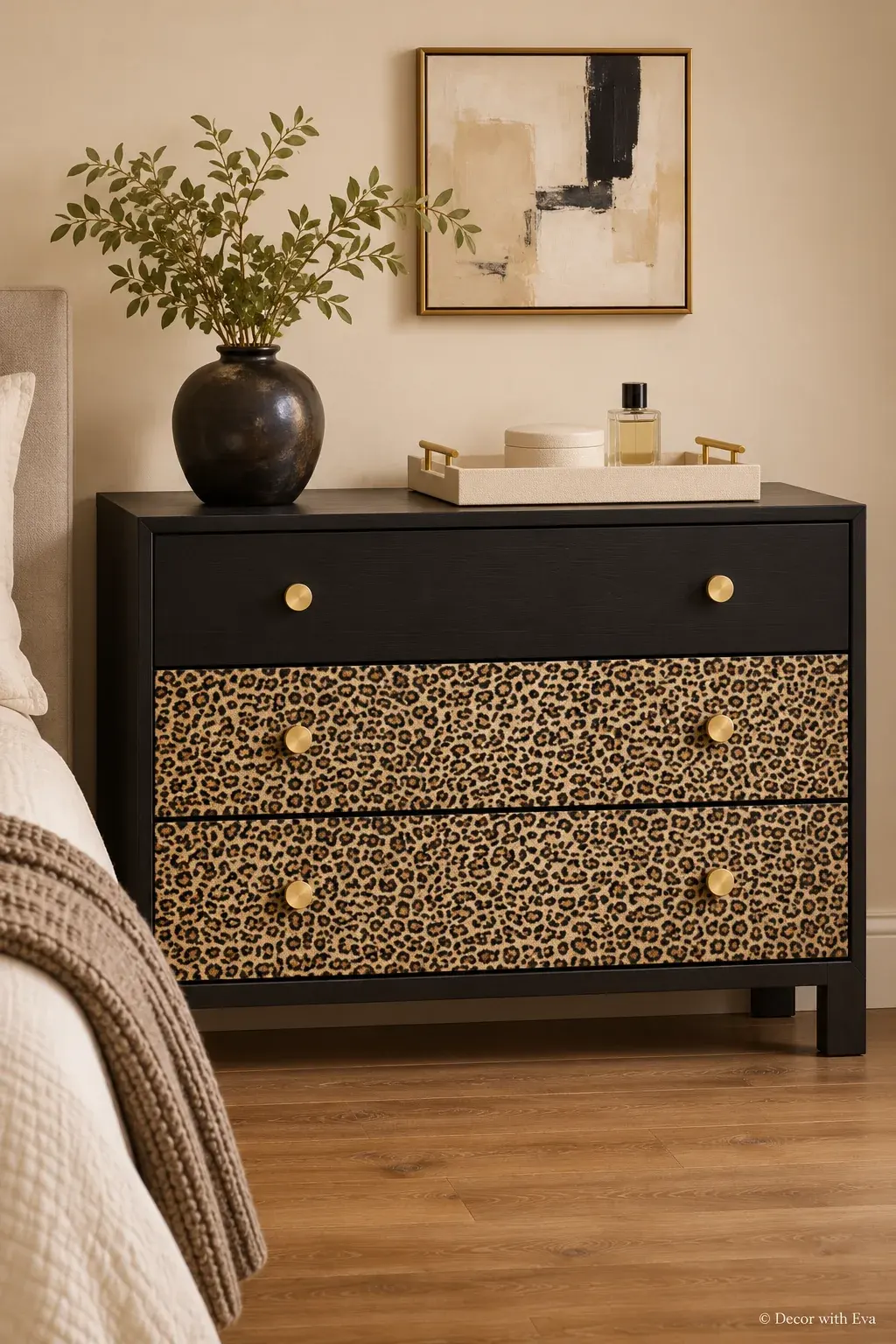
A few patterned drawer fronts can transform an existing dresser into the room’s statement piece. Leave the top and outer frame plain black to outline the print. Small brushed-brass-colored knobs give the fronts a consistent finish without adding another motif.
Remove the hardware and work on clean, suitable flat surfaces, trimming the paper away from moving edges. Check the replacement knob screw length against the drawer thickness before fitting it. Keep the dresser properly secured to the wall and follow the hardware and finish instructions.
Try this: Try the print on the middle drawer first; you may prefer one patterned band to covering every front.
19. Use Printed Curtains as Closet Doors
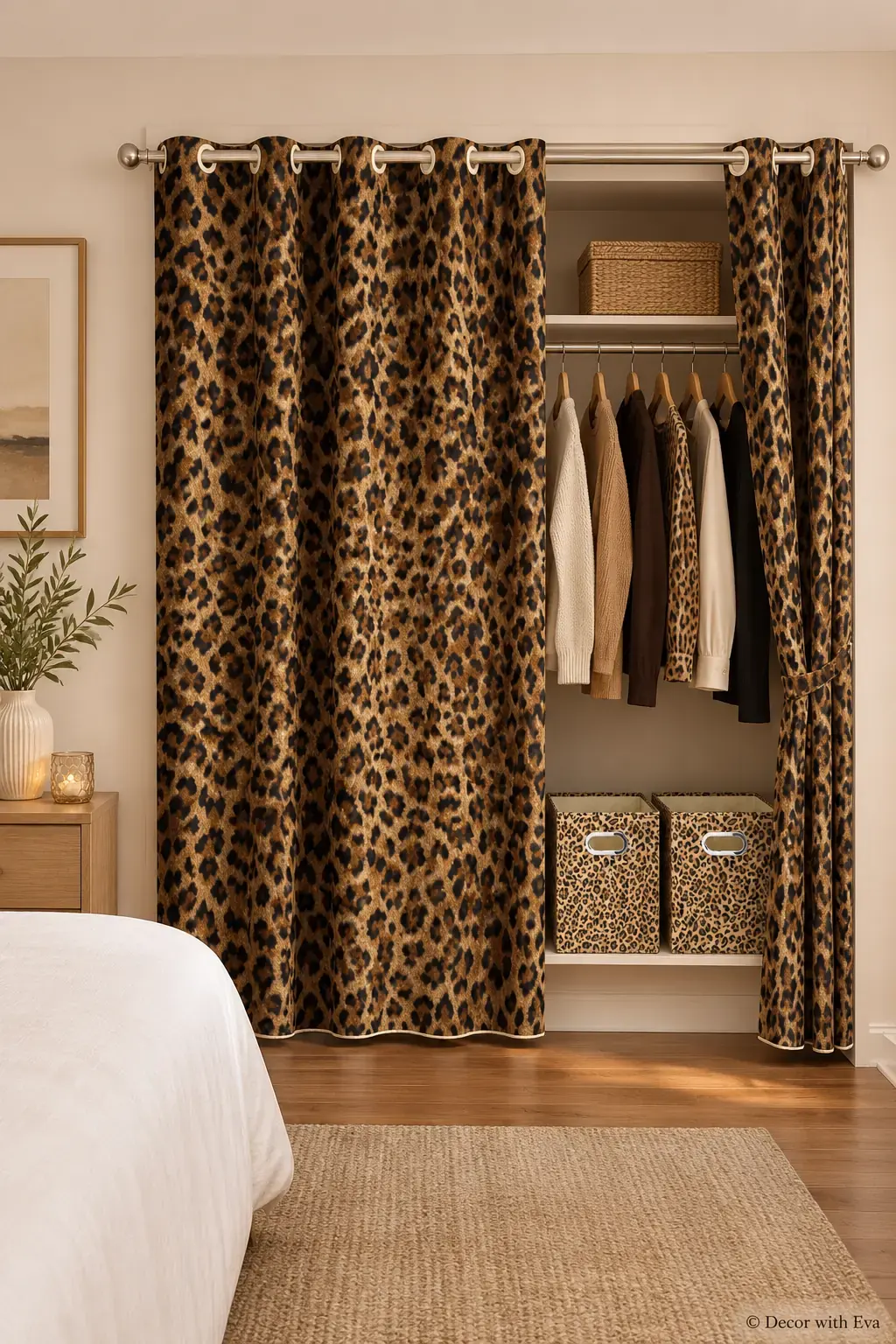
Curtains can bring a large area of print to a bedroom while covering an open closet. Their soft folds contrast with shelving and hanging rails. Leave a clear strip of floor in front so opening them and reaching clothes remains easy.
Allow enough flat panel width for modest fullness and measure the finished drop from the actual rod. Keep fabric clear of closet lights and other heat sources. A properly mounted rod, the right fasteners and accessible storage matter more than making the curtain treatment look extra elaborate.
Try this: Hold up an existing sheet at the opening to test the idea before ordering patterned panels.
20. Make Storage Cubes Part of the Design
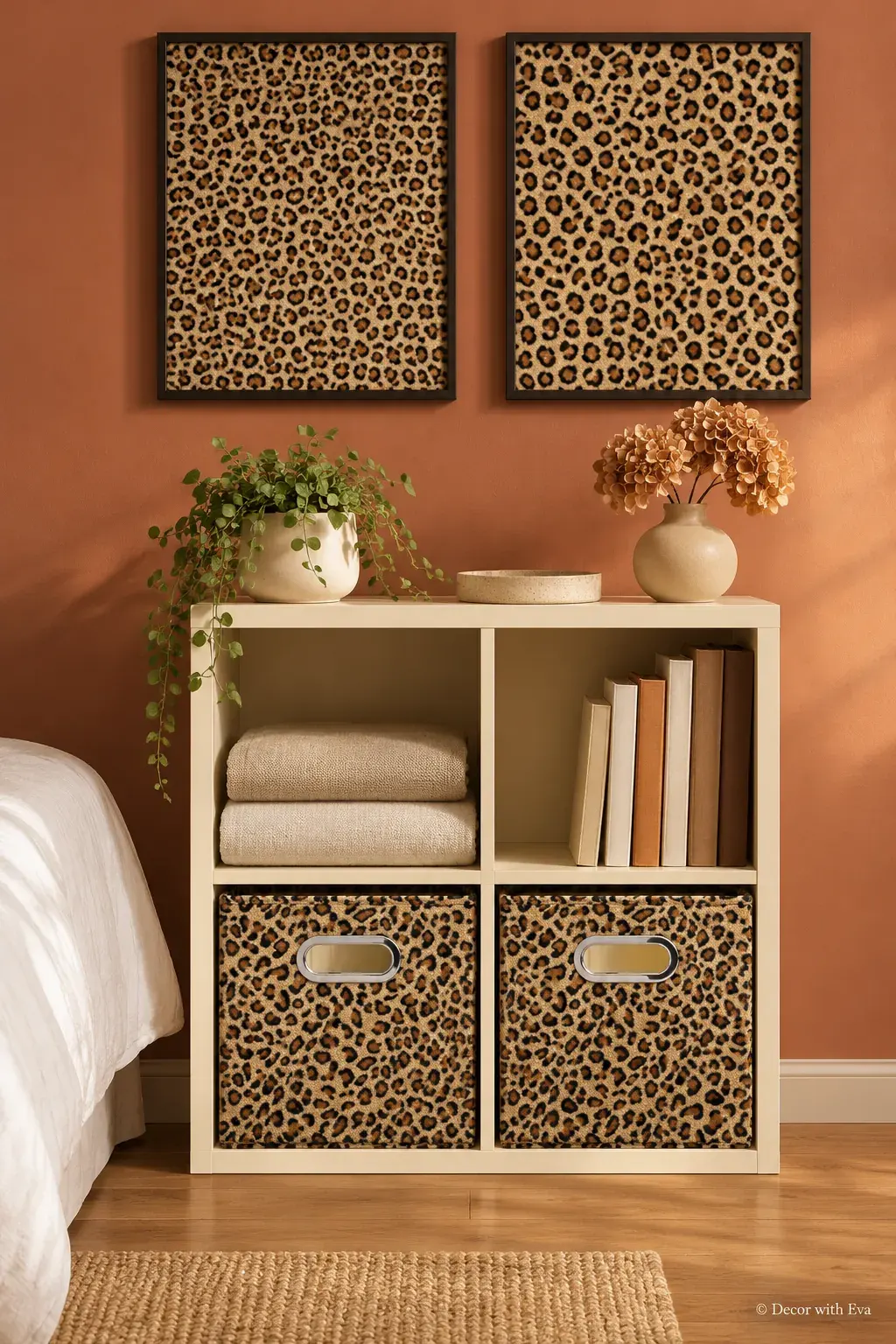
Spotted bins can turn a small storage unit into a purposeful part of the bedroom. Two matching lower cubes balance open shelves for folded linen and books. Large framed print samples above the unit make the patterned area feel substantial rather than like an isolated accessory.
Measure every opening, including any lip at the front. A nominal cube size does not guarantee a fit in all shelving. Keep heavier contents low, use bins within their intended limits and secure the furniture appropriately; handles do not establish a carrying-load rating.
Try this: Use two patterned bins and keep the remaining compartments open before filling the whole unit.
21. Bring the Pattern to a Student Desk
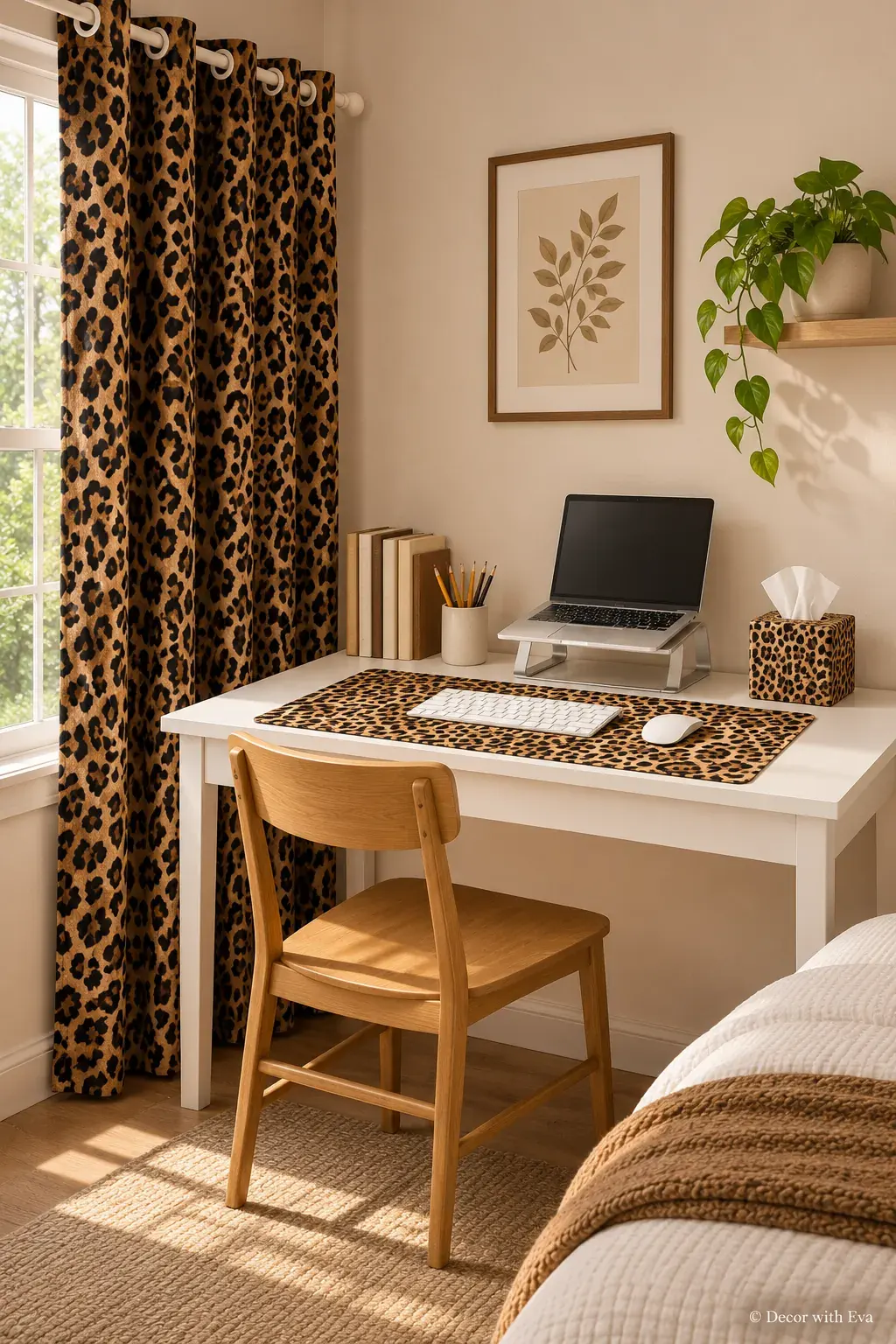
A large animal-print desk mat makes a study corner part of the bedroom’s palette. Keep the desktop furniture simple and repeat the print in a curtain behind or beside it. A small tissue holder or practical organizer can finish the area without filling the working surface.
Check the mat dimensions against your keyboard, mouse and available desk depth. Place the monitor or laptop for your own working setup and keep cords away from the route to the bed. Decorative products do not establish ergonomic support, so choose the chair and working height separately.
Try this: Clear everything off the desk, replace only the items you use, then see how much patterned mat remains visible.
22. Create a Dresser-Top Dressing Station
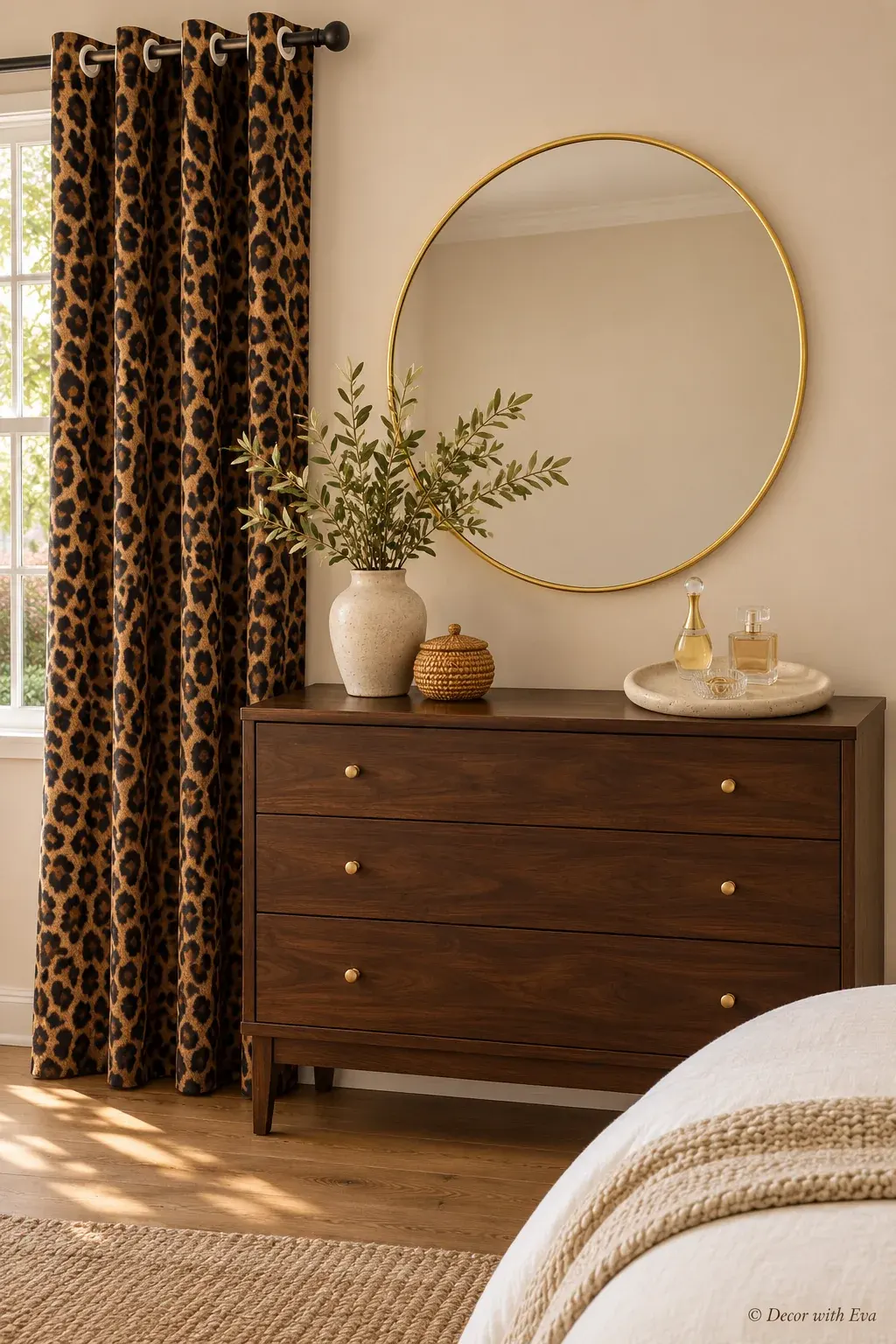
A tray gathers perfume, jewelry and daily essentials into one defined area. Against a strong printed curtain, a pale travertine tray and a simple round mirror give the dresser top a quieter finish. Keep the rest of the surface open enough to use while getting ready.
Compare the tray footprint with the remaining top space and protect the furniture finish as needed. The selected travertine tray is small, so a few essentials suit it better than a tall crowded arrangement. A mirror should be secured for its weight rather than balanced loose behind the display.
Try this: Use a dish you already own to decide which daily items deserve a permanent place on the dresser.
23. Layer Olive Velvet against Long Spotted Pillows
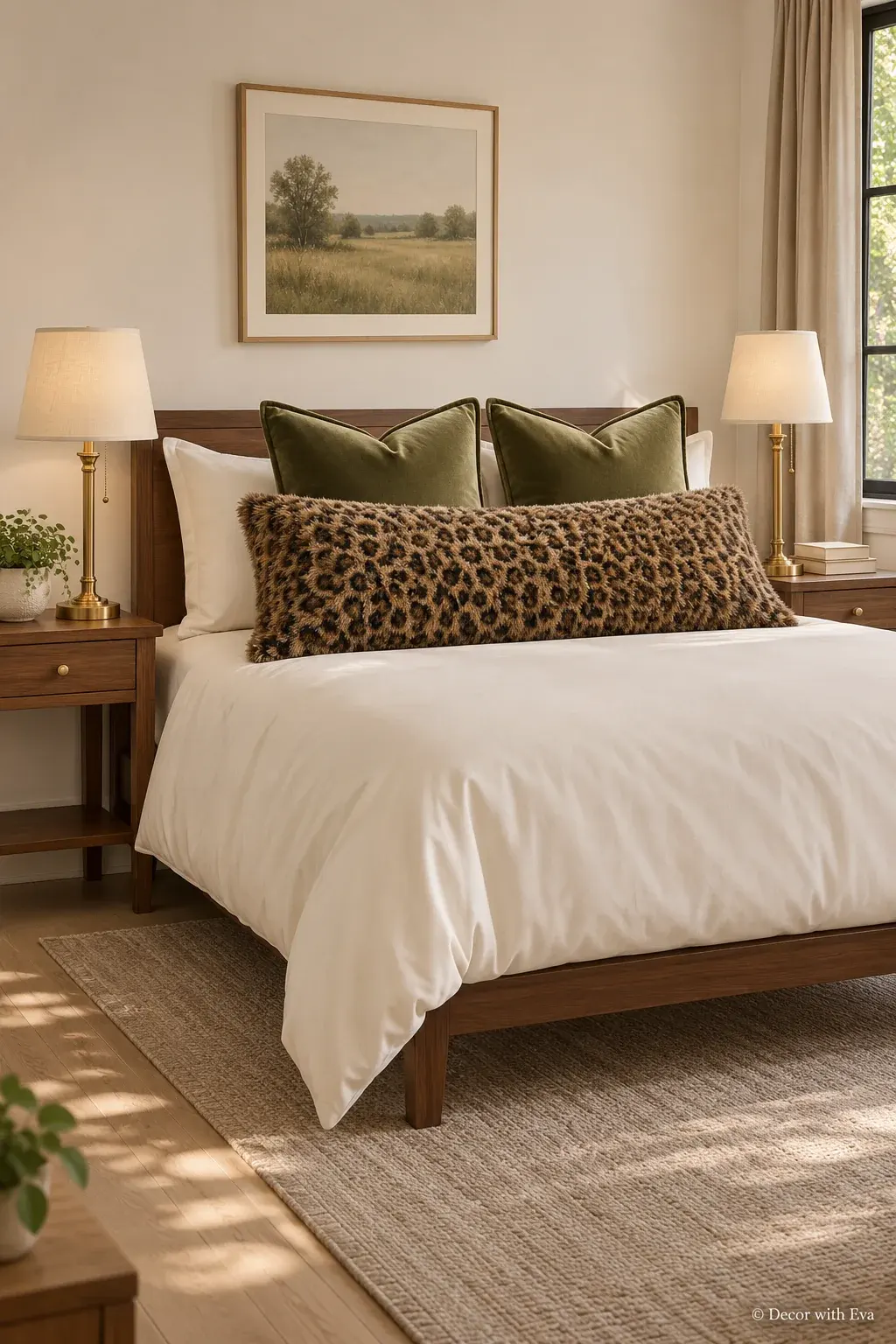
Olive velvet adds depth to brown animal print while staying within an earthy palette. Put plain square cushions behind one long printed pillow so the two textures remain distinct. A simple cream duvet lets the arrangement stretch across the headboard without looking crowded.
Choose cushion sizes by the bed width and the number you are willing to move each night. The selected olive and spotted products are covers with separate inserts. Keep sleeping pillows accessible; decorative layering works best when it does not make the bed inconvenient to use.
Try this: Try two plain cushions behind one patterned pillow, then stop before adding a third pattern.
24. Put a Printed Seat below the Window
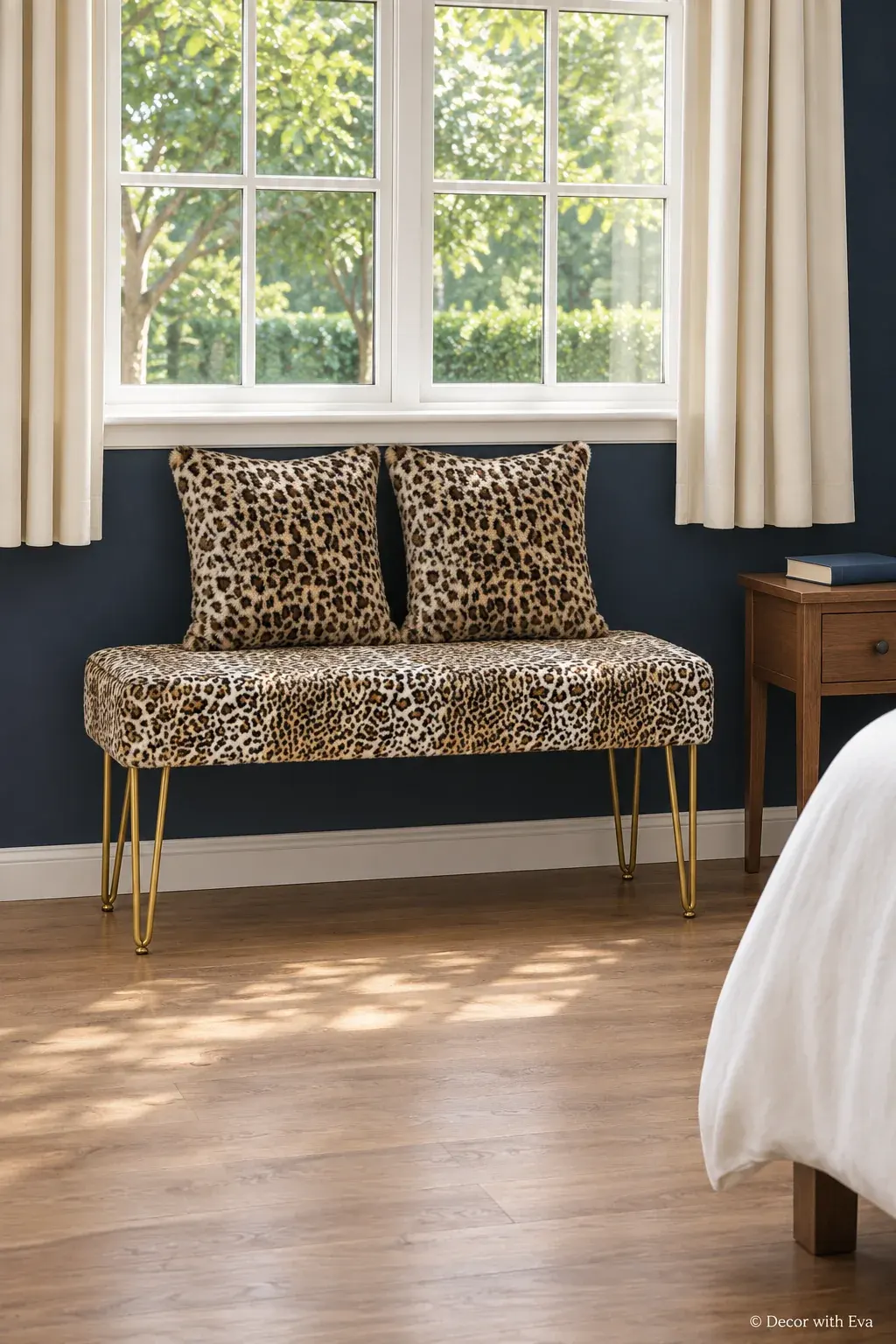
A printed bench below a window gives the bedroom a small dressing seat with a view. Keep the surrounding curtains plain and repeat the print in two cushions, leaving the bench upholstery visible. A navy wall gives the warm brown fabric a different setting from the foot-of-bed arrangement.
Measure the bench against the window width and sill height, and leave the front clear for sitting down. The selected 46-inch bench is taller than many low window seats at 22 inches high. Keep window controls reachable and use a location without a radiator or heater beneath it.
Try this: Move an existing bench under the window first and check whether the position works for dressing and opening the curtains.
25. Contrast a Black Metal Bed with Soft Print
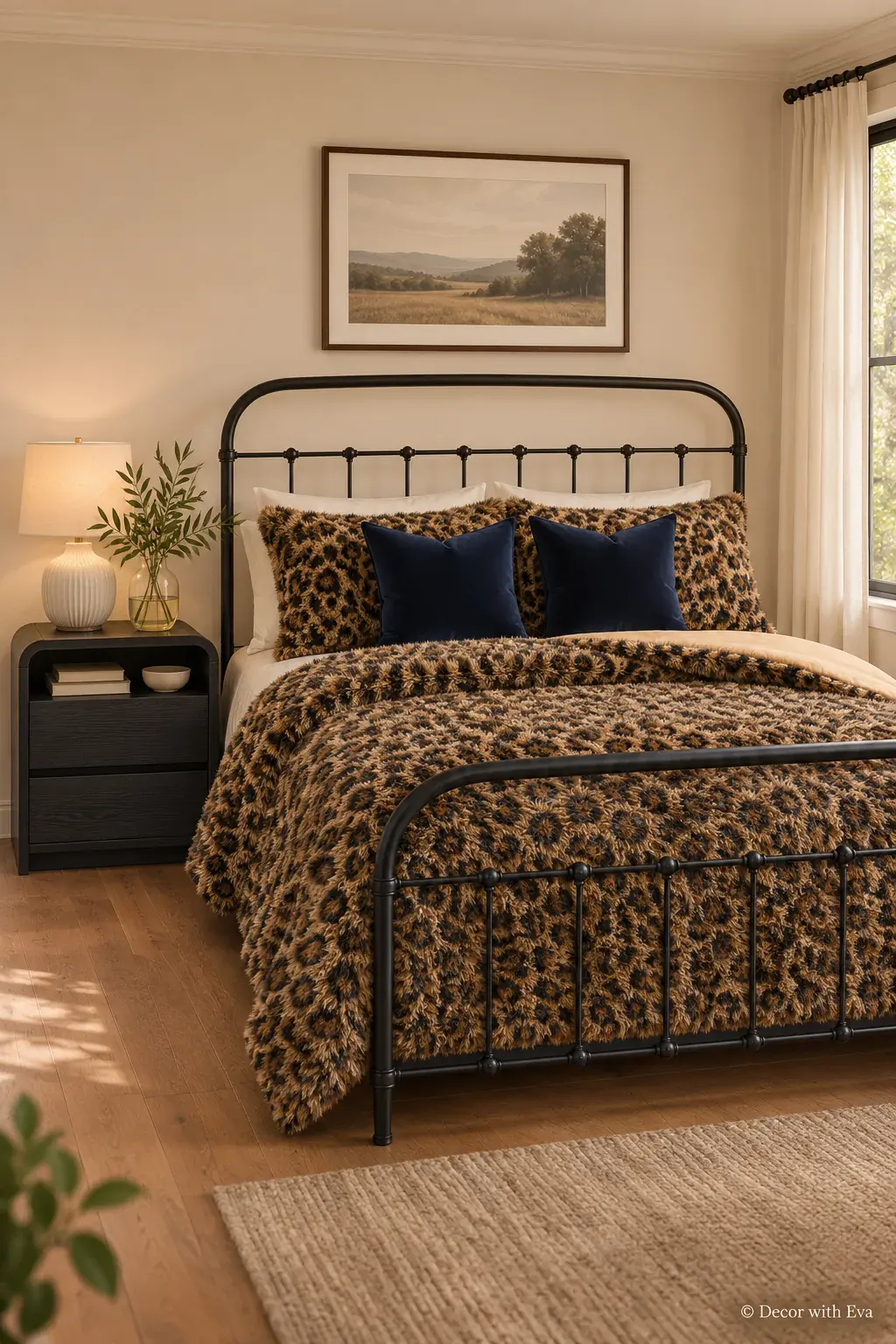
A simple black metal bed frame gives shaggy animal-print bedding a crisp outline. The contrast between slim dark bars and a full patterned comforter makes the bed feel intentional. Keep the surrounding furniture compact and the wall color plain so the two main materials lead.
Match the frame to the mattress size and check its assembly, support and clearance requirements. Underbed space is useful only if your storage fits through the actual openings. The illustration shows a mattress and bedding separately; a bed-frame purchase should not be assumed to include them.
Try this: Use black bedside details with your current bed first to test whether you like the stronger outline.
26. Balance Patterned Curtains with a Tall Mirror
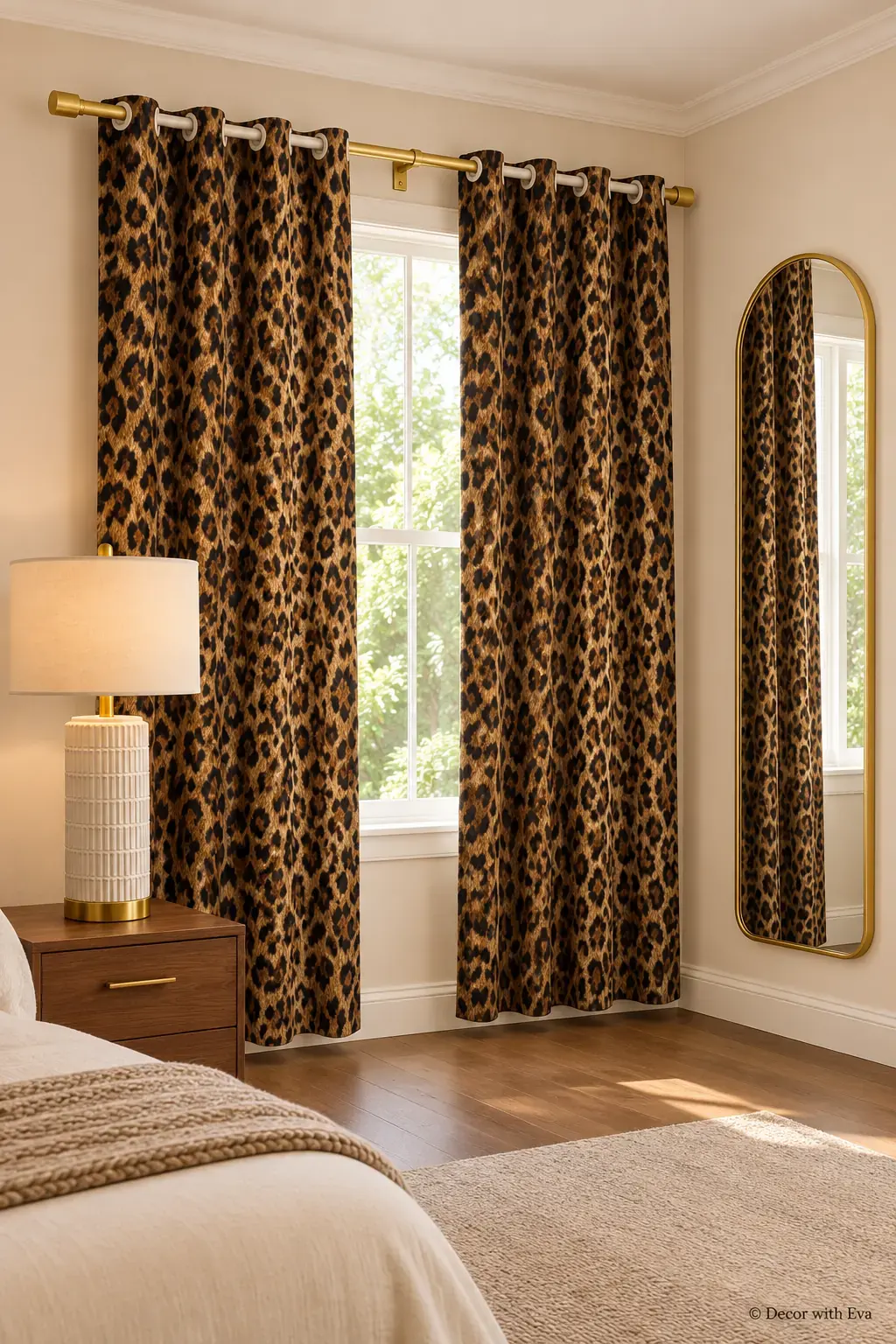
A tall arched mirror beside the window lets a curtain-led bedroom feel finished without adding another fabric. Keep the print on the real curtain as the main feature; a partial reflection naturally repeats it. Cream bedding and a small bedside lamp leave the window wall easy to read.
Place the mirror where you can use it without blocking the window, door swing or access to furniture. Follow the supplied mounting or securing instructions for the exact model. A mirror is not a substitute for proper lighting, and its reflection should not duplicate the whole room unnaturally.
Try this: Move a mirror you already own beside the window and check the reflection from the bed and doorway.
27. Pair Ruffled Bedding with Spotted Accents
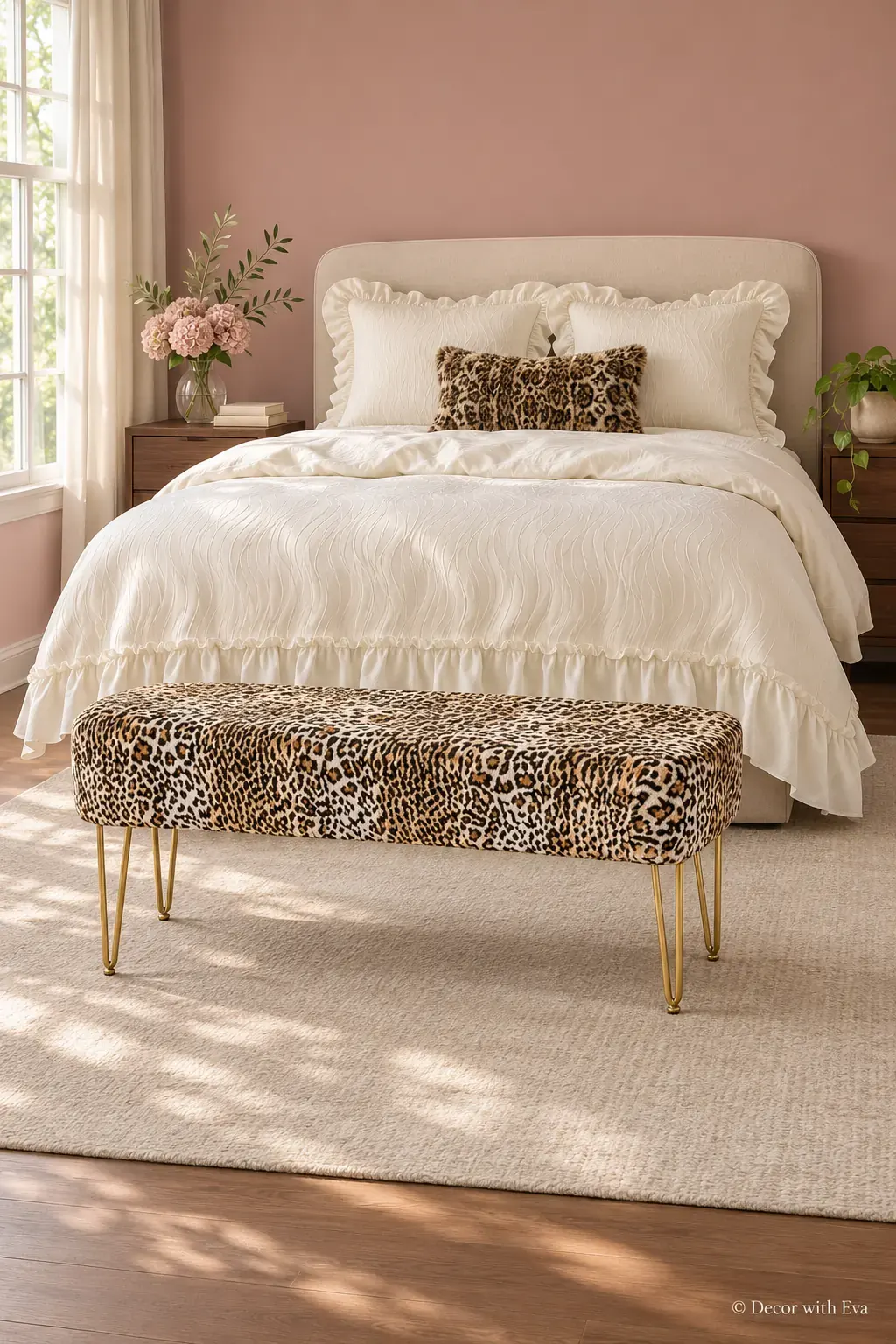
Soft ruffles and warm brown spots create a bedroom with a romantic edge. Let cream ruffled bedding cover the mattress, then place a printed bench in front and a short spotted cushion near the headboard. The large plain bed surface keeps the combination from feeling overly busy.
Check whether the bedding listing supplies a filled comforter or just a duvet cover. This selected ruffled set is a cover set and needs a suitable insert. Keep the bench clear of the main route and use only as many decorative cushions as you can store conveniently overnight.
Try this: Try a plain cream bedspread with your existing print first, then decide whether ruffles add something you want.
28. Layer a Small Spotted Rug over Jute
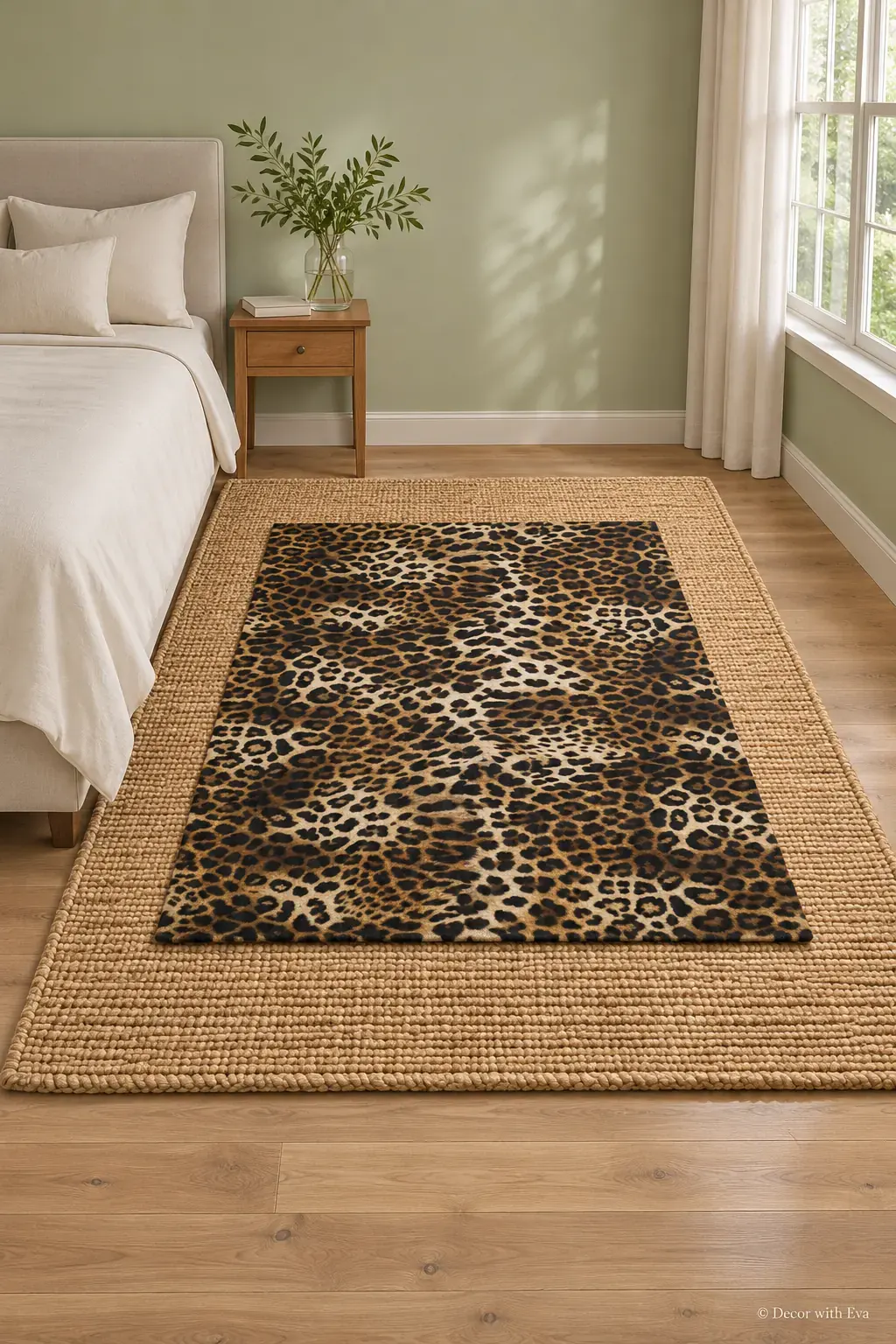
A small printed rug over a larger natural-texture rug creates a distinct floor treatment. The jute gives the arrangement a broad quiet border, while the animal print sits beside the bed where it stays visible. Plain bedding keeps the two floor textures from competing with another large print.
Check that the layered rugs sit flat, do not catch on doors and suit the flooring underneath. Use a compatible pad where directed and avoid raised edges in a narrow walking route. The selected 4-by-6-foot print should remain clearly smaller than the foundation rug.
Try this: Test the layout with your existing rugs before purchasing both layers; one well-placed rug may be enough.
29. Keep a Lighter Bed with a Printed Throw
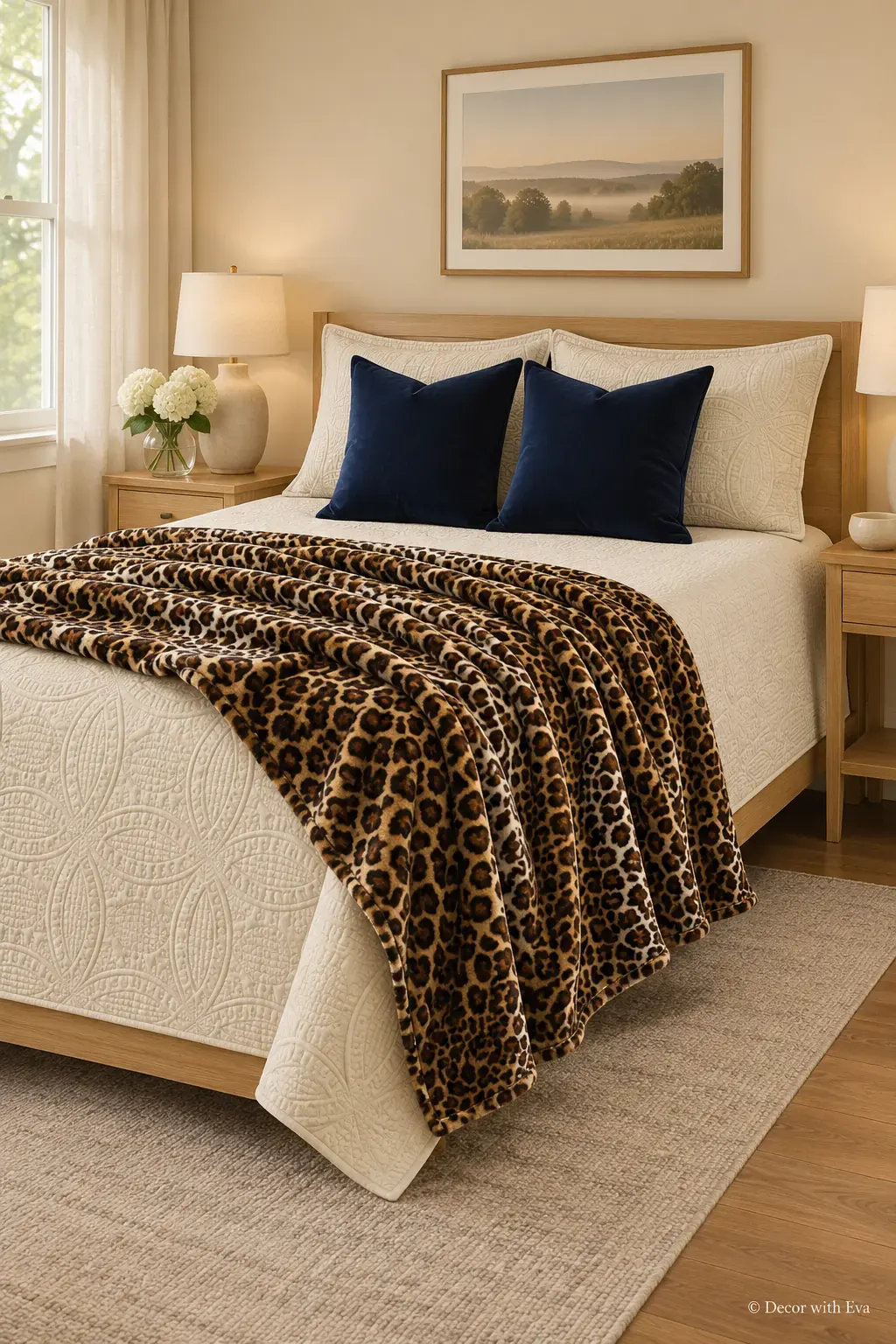
A printed fleece throw can give the bed a bold finish when you prefer simpler sleeping bedding. Fold it loosely across the lower portion of a pale beige quilt and repeat one dark tone in plain cushions. The print remains noticeable without making every layer match.
Use the selected 50-by-60-inch size as a throw, with its shorter side running across the mattress when you want a narrower band. Choose the sheets and other layers for your own room and sleeping preferences; the styling image does not establish temperature performance.
Try this: Store the heavier patterned layer and keep one printed throw out for an easy seasonal change.
What Colors Go with Cheetah Print in a Bedroom?
Cream, black and wood repeat tones already present in many brown animal prints. Sage and olive make an earthy pairing; dusty rose adds softness; navy and emerald create a stronger contrast. Pick one partner for the main print and compare the actual materials in your light.
How Much Animal Print Should You Use?
Start with one substantial feature: the bed, curtains, a wall or a chair. Repeat the pattern once at a smaller scale if the room needs a connection. Leave some large surfaces plain so you can still see the shape of the furniture and the print itself.
Can You Use Cheetah Print in a Small Bedroom?
Yes. A long printed pillow, full bedspread or curtain can bring a strong pattern into the room without adding furniture. Measure the bed and access routes first. A bench or chair is useful only when you have space to use it comfortably.
How Can You Try the Look without Buying a Full Set?
Use one printed piece with your current plain bedding, or frame a wallpaper sample on a separate panel. Move existing furniture into the proposed layout before shopping. You can build the room gradually, keeping the print that suits you and skipping pieces that do not improve how the space works.