This article contains paid links. As an Amazon Associate, I earn from qualifying purchases.
A neutral kitchen can be full of things to notice: the grain of a wood stool, the curve of a pendant, a favorite bowl on the shelf. Cream, mushroom, oatmeal and brown give those details a quiet background. The interest comes from how the materials work together.
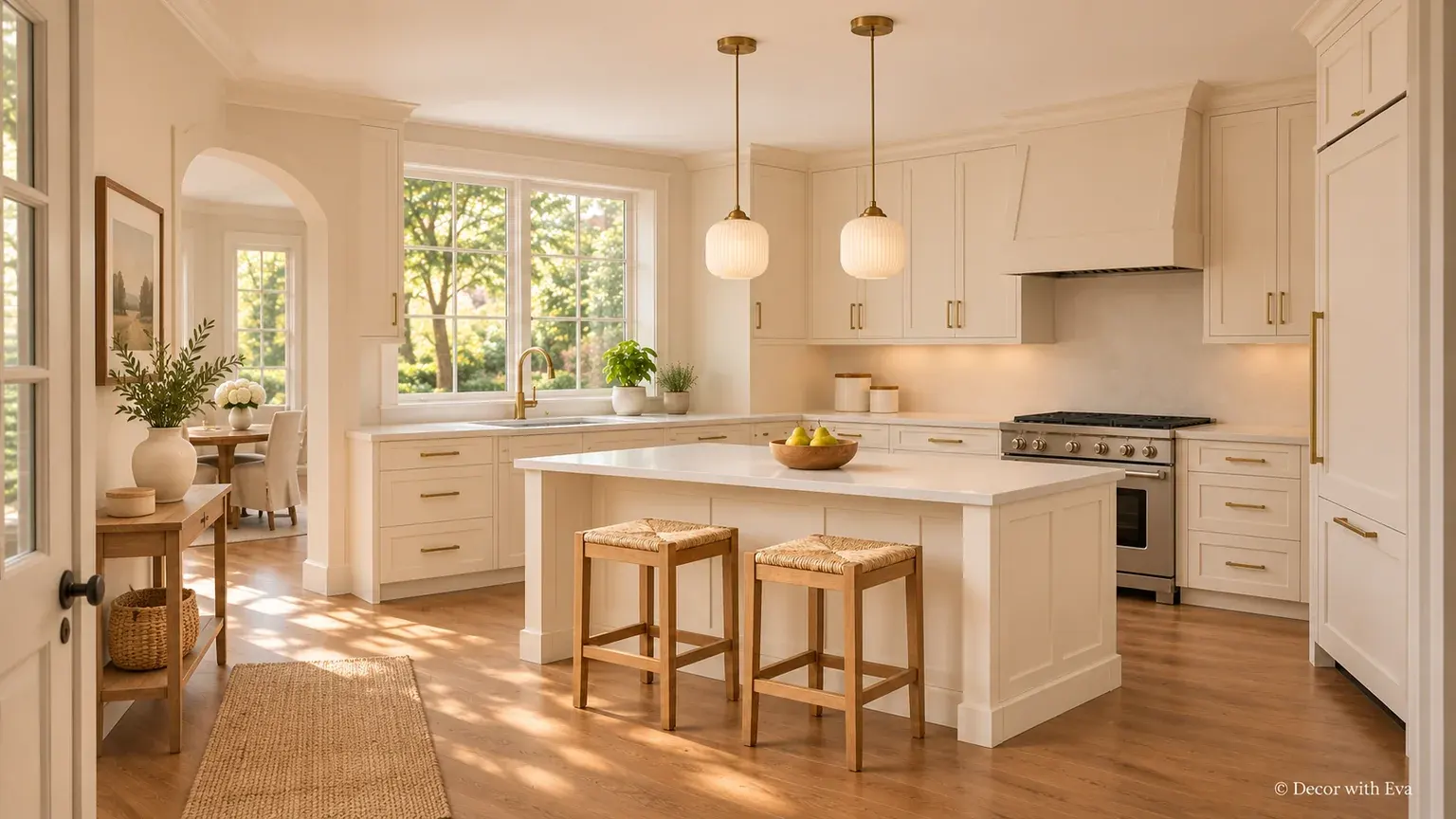
These 24 neutral kitchen ideas range from whole-room color directions to smaller changes around the sink, pantry and breakfast table. Start with what works in your kitchen, then choose the updates that make it more comfortable to use.
Choose the Undertones before the Accessories
Put samples beside the surfaces that will stay: flooring, counters, appliances and cabinets. Look at them in daylight and under the lights you use in the evening. For a helpful starting point, IKEA’s cream and beige kitchen guide discusses light cabinet colors alongside wood, metal hardware and contrasting details.
Keep the kitchen’s working areas useful as you decorate. The U.S. Fire Administration’s cooking guidance recommends keeping things that can burn away from the stovetop. Give curtains, towels, paper, wood accessories and decorative stems a place outside that area, and follow appliance and installation instructions.
1. Start with Warm White and Woven Texture
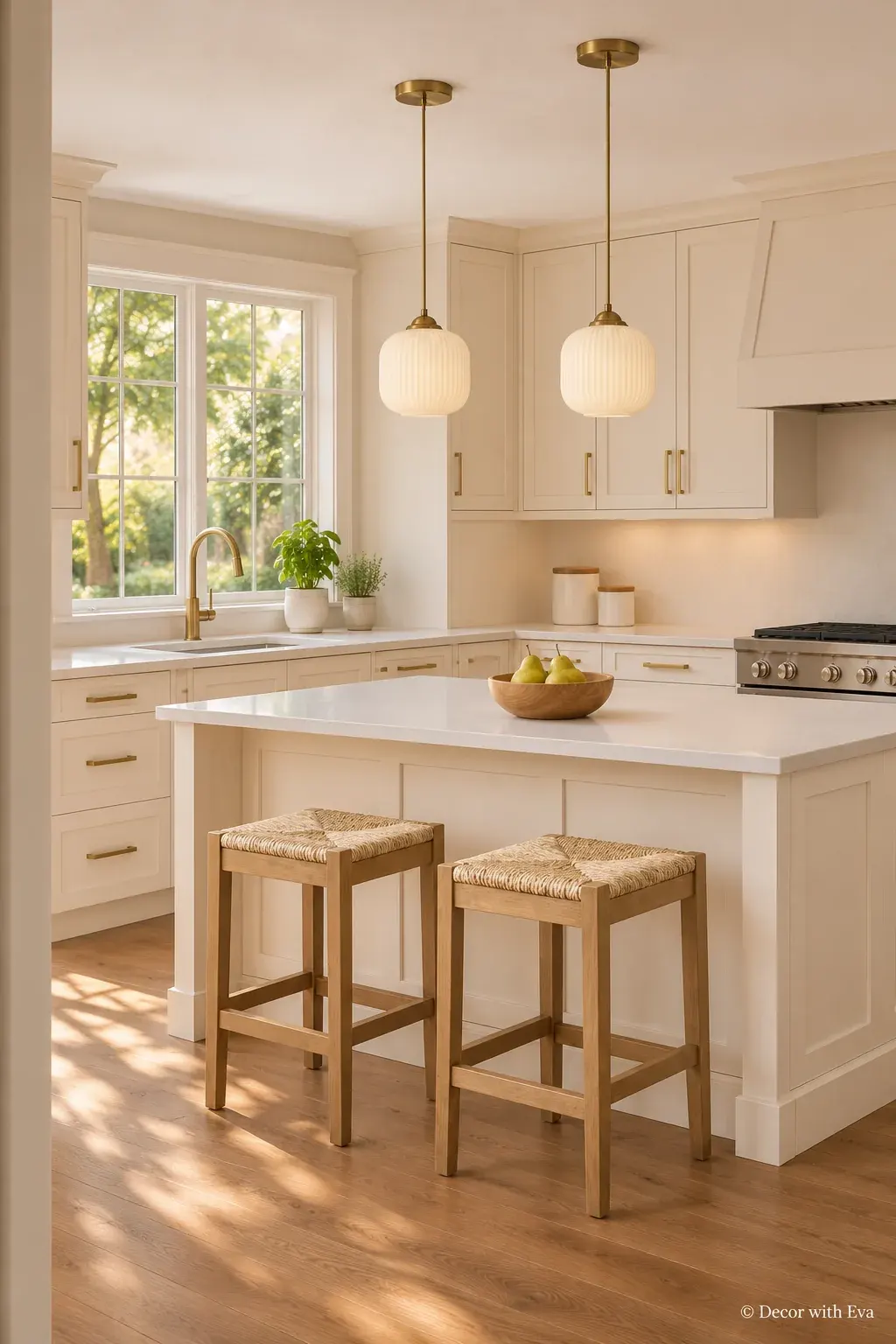
Warm white gives a kitchen a light backdrop without making every surface feel stark. Pair creamy cabinet fronts with a pale counter, a little brushed brass and the texture of woven seats. The contrast comes from the materials rather than several competing colors.
Look at paint and finish samples beside your actual flooring before choosing a white. For an existing white kitchen, start with the seats or lighting instead of replacing good cabinets. Leave enough room behind occupied stools so the island remains easy to walk around.
Try this: Set a wood sample and a cream towel beside your cabinets to test the direction.
2. Give Mushroom Cabinets a Warm Brown Partner
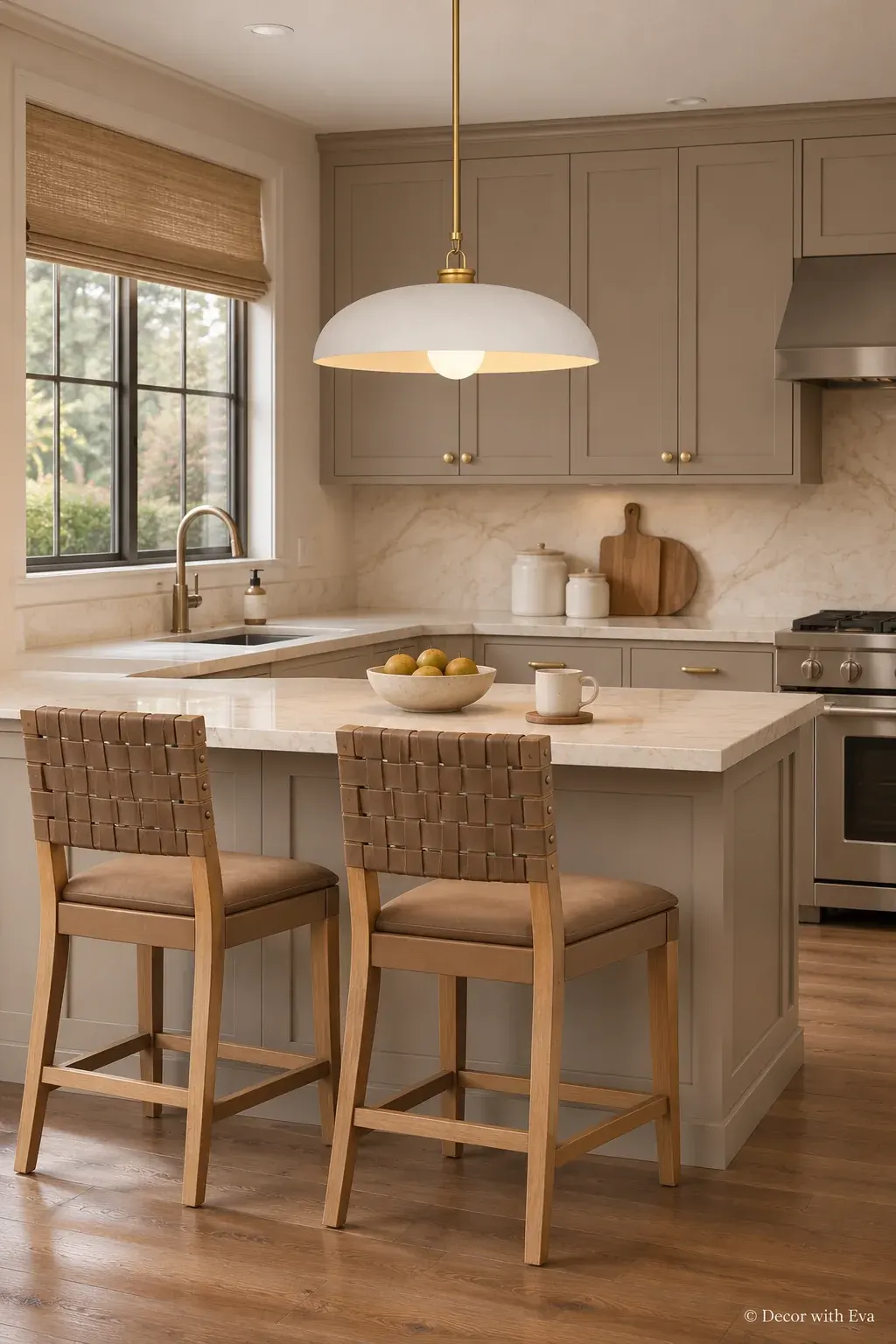
Mushroom sits comfortably between beige and gray. A brown woven-back stool and a soft white pendant keep it from feeling flat, while a pale counter gives the deeper cabinet color some breathing room. The result has a little more depth than an all-white kitchen.
Check the color at different times of day; a sample that looks taupe in the store can look gray at home. Repeat the brown in one other place, such as a frame or an existing board, instead of adding a second full set of matching accessories.
Try this: Try a mushroom sample beside the wood tones you already own.
3. Let Natural Wood Be the Main Color
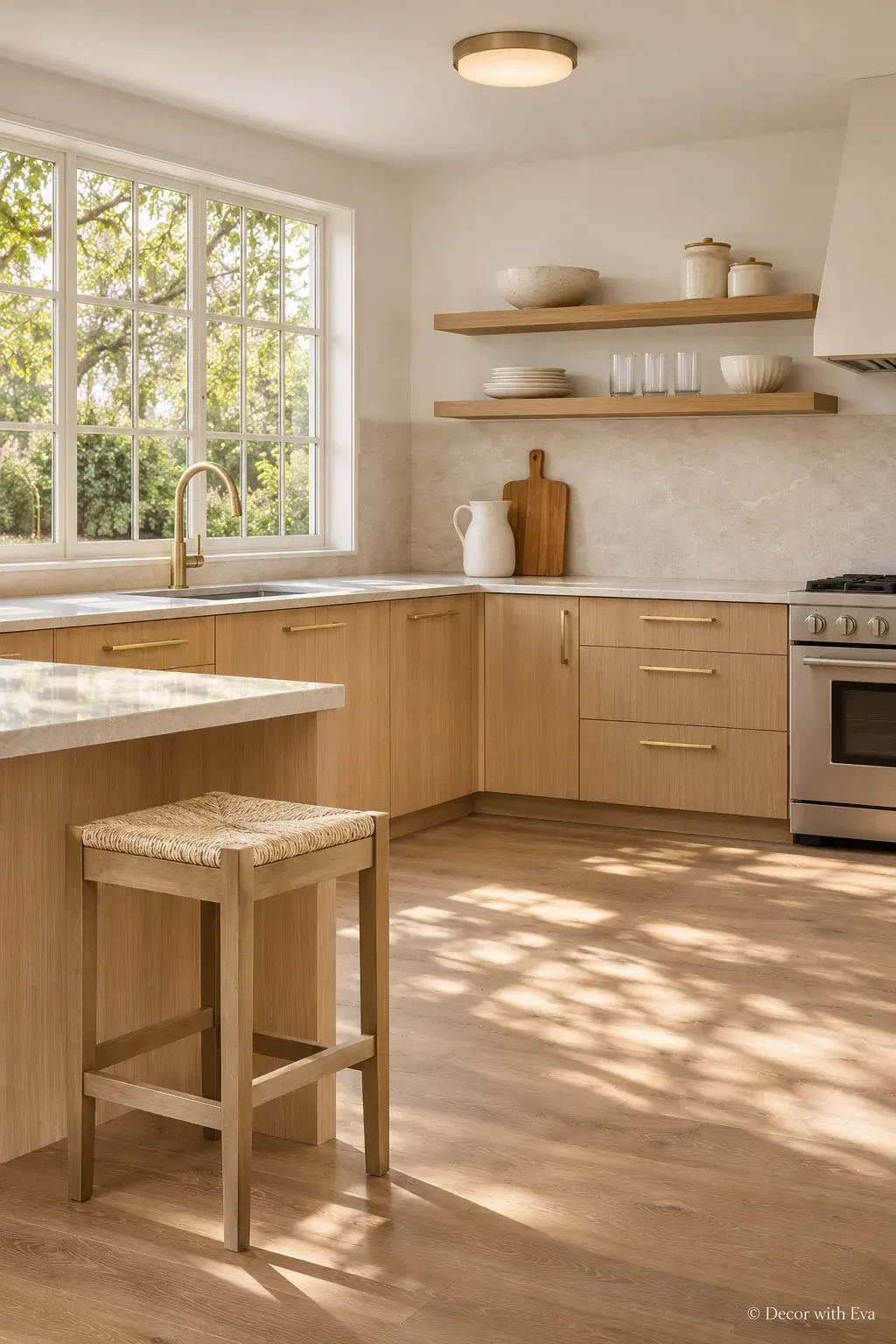
A wood kitchen already has a palette. Grain, knots and changes in tone provide the interest, so the surrounding finishes can stay quiet. Pale counters, simple walls and restrained hardware let the wood look intentional rather than lost among several busy patterns.
Work with the undertone of your existing cabinets instead of assuming all wood must match. A woven stool can add another texture without copying the cabinet finish exactly. Keep the counter arrangement small enough that you can still enjoy the uninterrupted grain.
Try this: Clear one stretch of counter before deciding whether the wood needs more decoration.
4. Give Cream a Dark Counterpoint
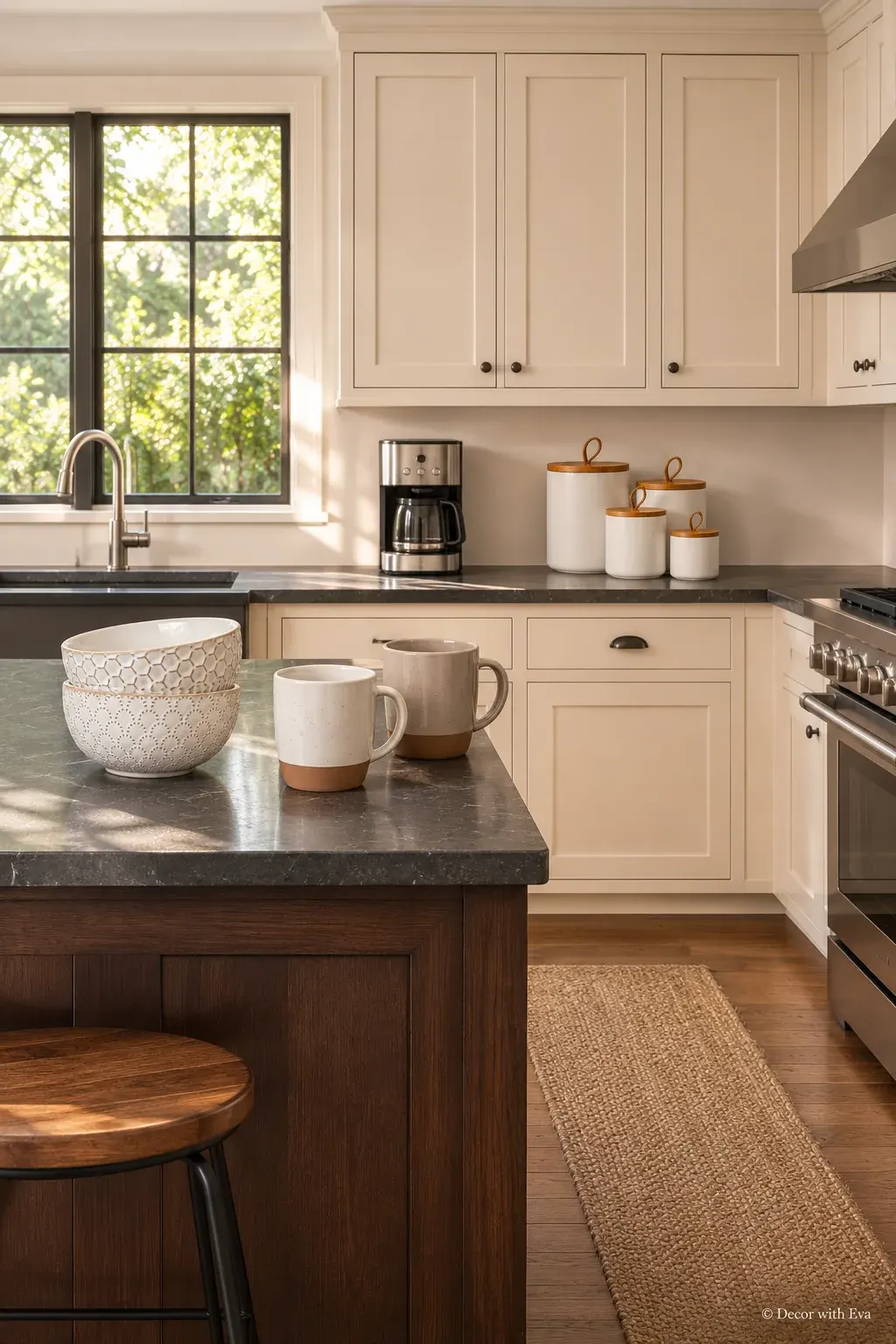
Cream can look especially inviting beside a darker element. A brown island, a charcoal counter or the outline of an existing appliance gives the softer surfaces definition. White textured bowls and muted mugs keep that contrast connected to everyday kitchen use.
Choose one main dark feature and let it do the work. If the kitchen already has dark counters, you may only need lighter ceramics and a warmer towel color. Group the small storage pieces together so they read as one useful arrangement rather than a line of objects around the room.
Try this: Use a dark tray or board you own to see how much contrast the room needs.
5. Add Quiet Texture with a Stone-Look Backsplash
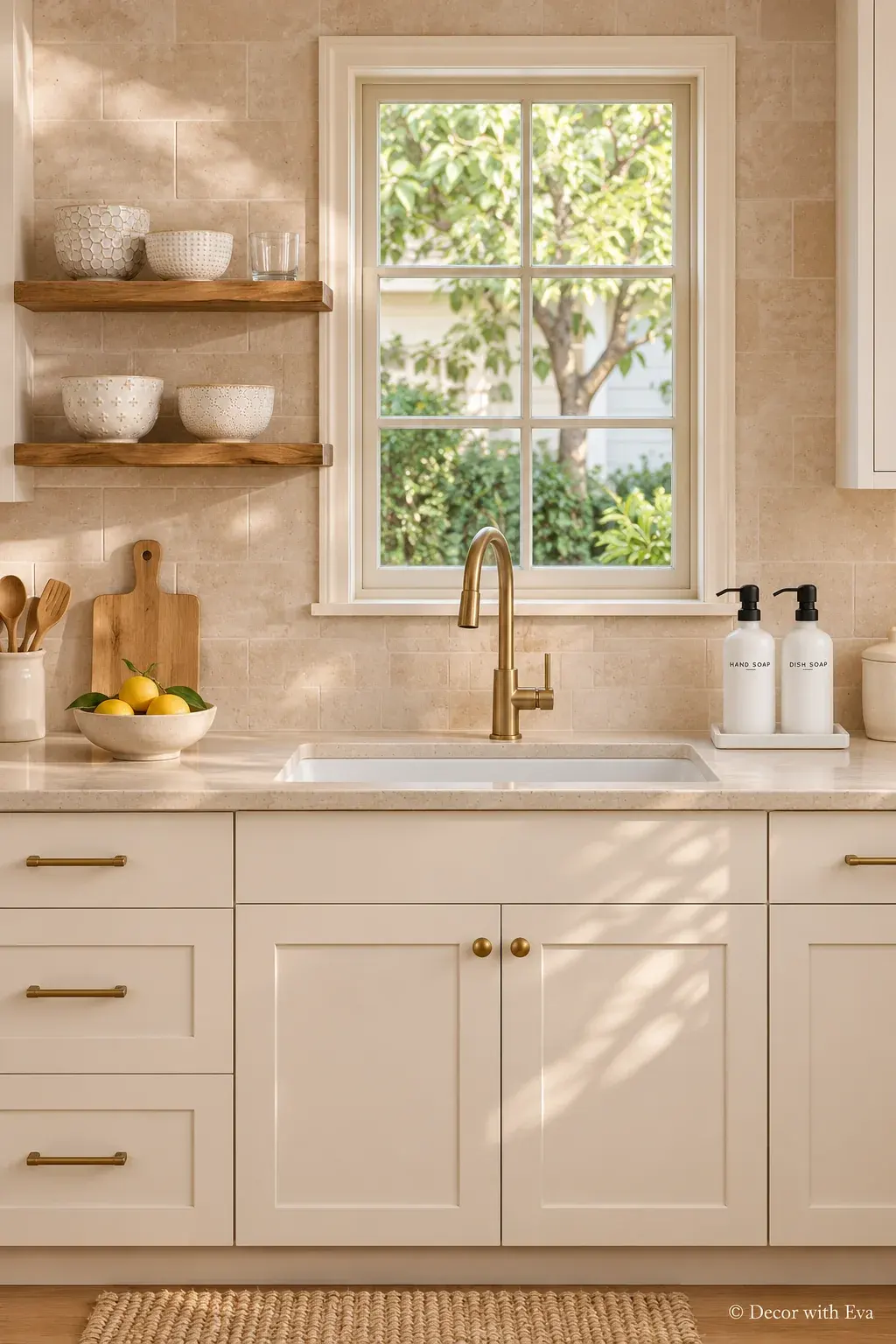
A backsplash can bring interest to a neutral kitchen without introducing a bold print. Soft sandy variation, subtle joints and a matte-looking surface give the eye something to notice. Warm wood shelves and white bowls carry that texture into the objects you use.
For a larger project, compare real samples with the counter and cabinet fronts together. Ask the installer about the finish, substrate, grout, maintenance and suitability behind the cooking area. If the existing backsplash works well, borrow the same idea through textured pottery and a simple shelf arrangement.
Try this: Lay samples flat beside the counter, then stand them up in the room’s light.
6. Make One Generous Pendant the Focal Point
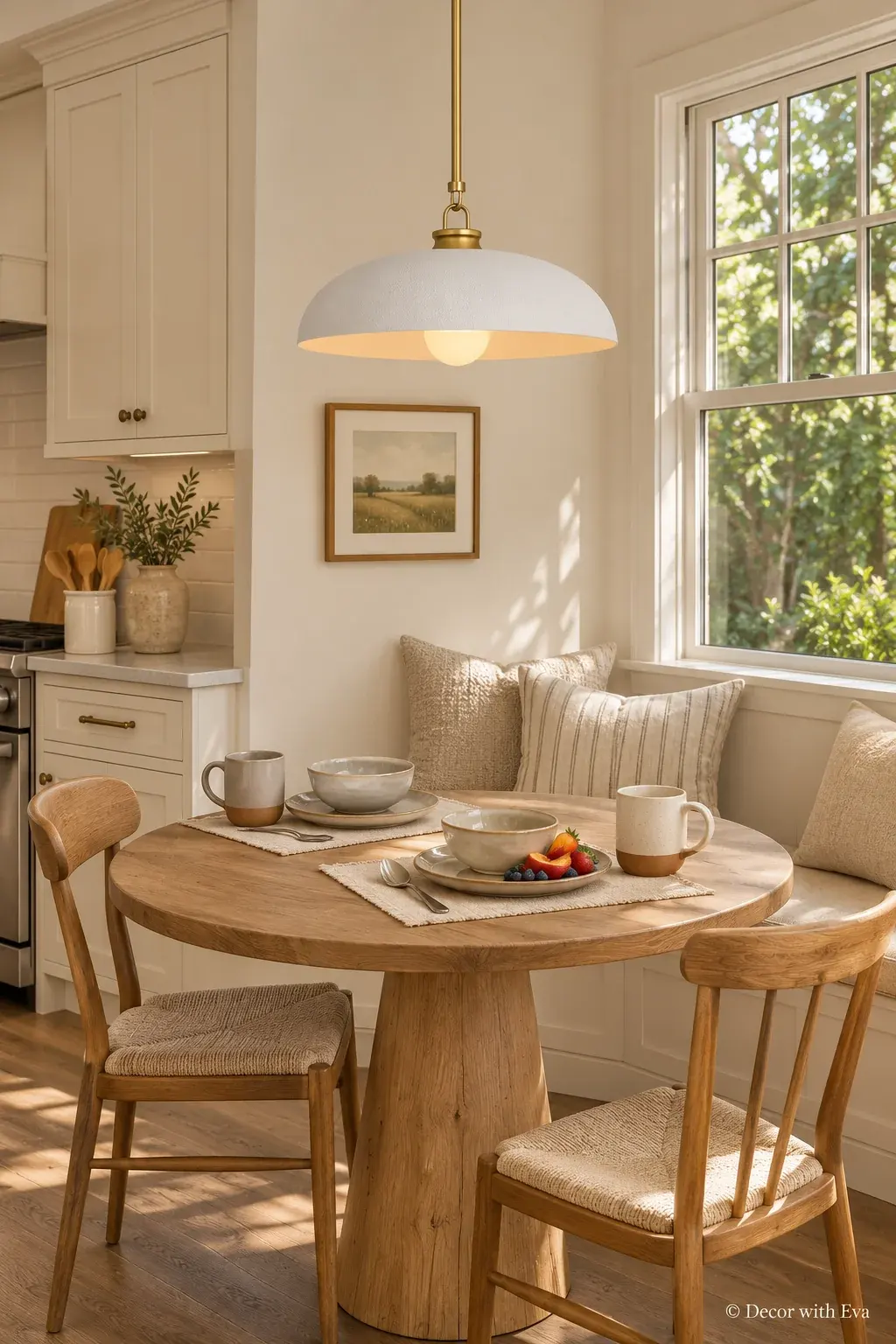
One well-proportioned pendant can give a breakfast corner more character than a collection of small decorations. A broad white shade feels calm against cream walls, while a brass-colored rod adds a little definition. Keep the table setting simple so the shape remains easy to see.
Measure the table, ceiling and proposed fixture drop before ordering. Have an electrician check the fixture and installation, including a comfortable sightline across the table. Everyday dishes and two favorite mugs are enough to make the nook feel ready for breakfast.
Try this: Use a paper circle to compare the shade width with the table below it.
7. Mix Round Knobs with Slim Pulls
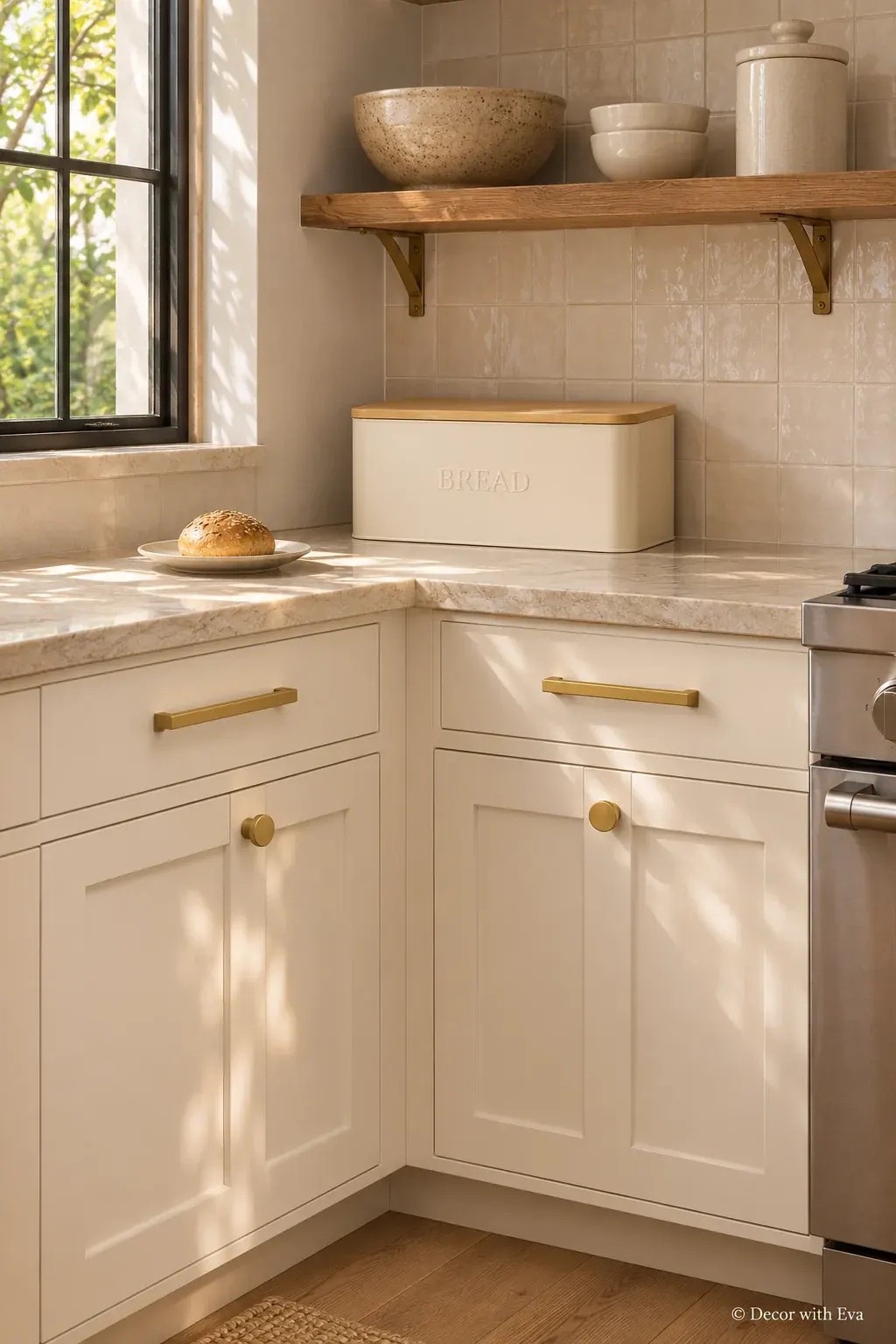
Changing hardware can give plain cabinets a more considered finish. Round knobs soften the doors, while slim pulls give drawers a clear horizontal line. A warm brushed-metal color works well with cream, mushroom and natural wood, especially when it is repeated sparingly elsewhere.
Start with a sample of each piece. Compare their finishes in the kitchen and measure the existing screw-hole spacing, projection and door thickness. A pull’s overall length and its screw-hole spacing are different measurements; matching the latter matters when reusing the holes.
Try this: Try the new combination on one door and one drawer before ordering the whole kitchen.
8. Bring Woven Seats to the Island
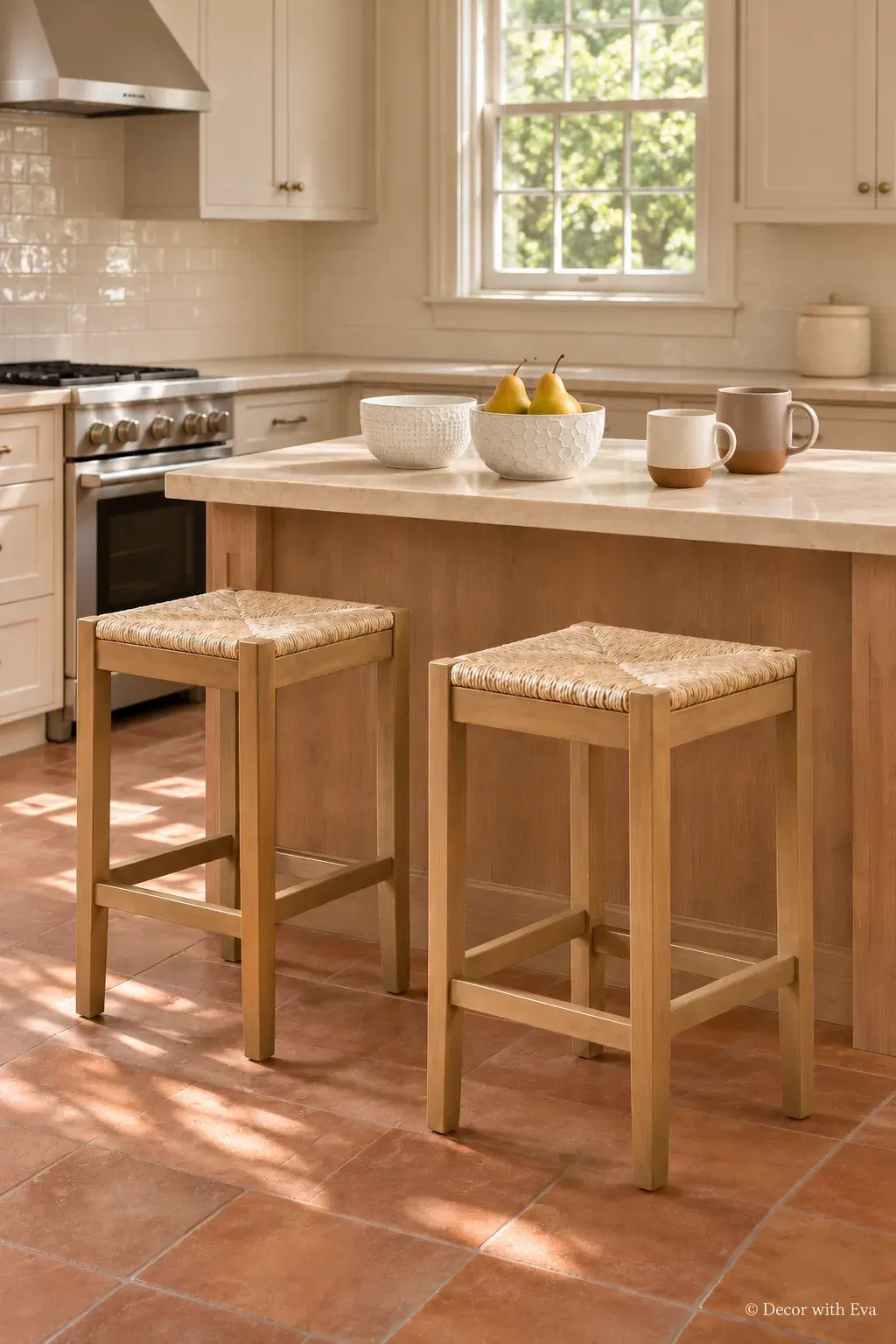
Woven seats make a neutral kitchen feel less smooth and uniform. Their texture sits naturally beside wood, stone and simple cabinet fronts. Backless stools can also leave the view across an island more open, provided they are comfortable for the people who use them.
Choose seat height for your actual counter and allow room for knees, footrests and people passing behind. Check the complete stool footprint rather than its height alone. A few pale bowls or mugs on the counter can connect the seating to the kitchen without covering the work surface.
Try this: Mark the stool footprints with removable tape and test the route with someone seated.
9. Run a Soft Neutral Rug through the Working Aisle
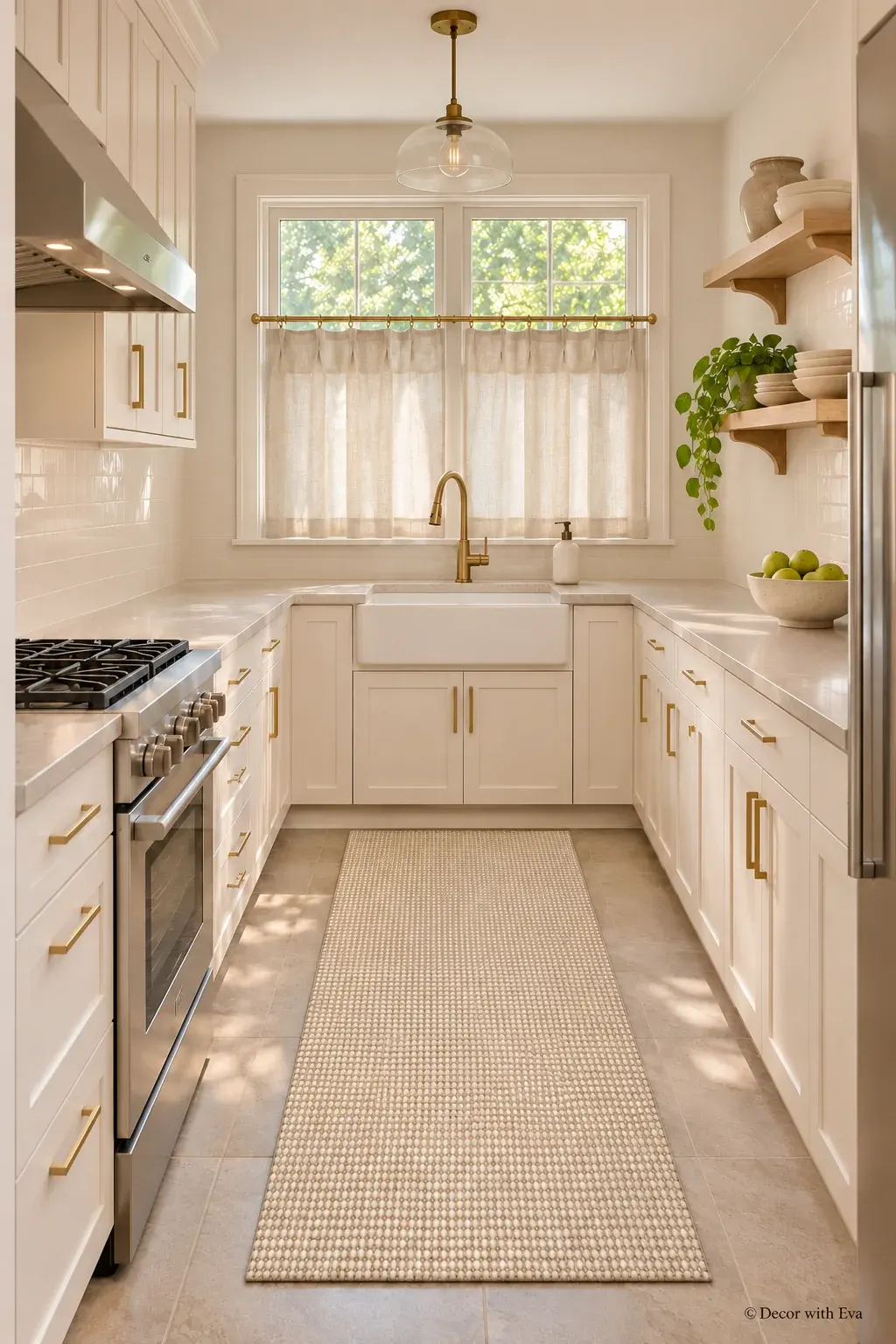
A quiet runner can break up a long stretch of flooring and make a galley kitchen feel more finished. Oatmeal, ivory and camel tones add texture while letting the cabinets stay in charge. Leave a visible strip of flooring along both sides so the runner belongs to the aisle.
Measure around door swings, the dishwasher and the route you use while carrying food. Follow the rug’s care and grip instructions, and keep edges flat. A washable rug still needs drying space and regular cleaning; it should make the kitchen easier to use, not add another obstacle.
Try this: Lay out the proposed length with towels before committing to a runner.
10. Soften the Window with Café Curtains
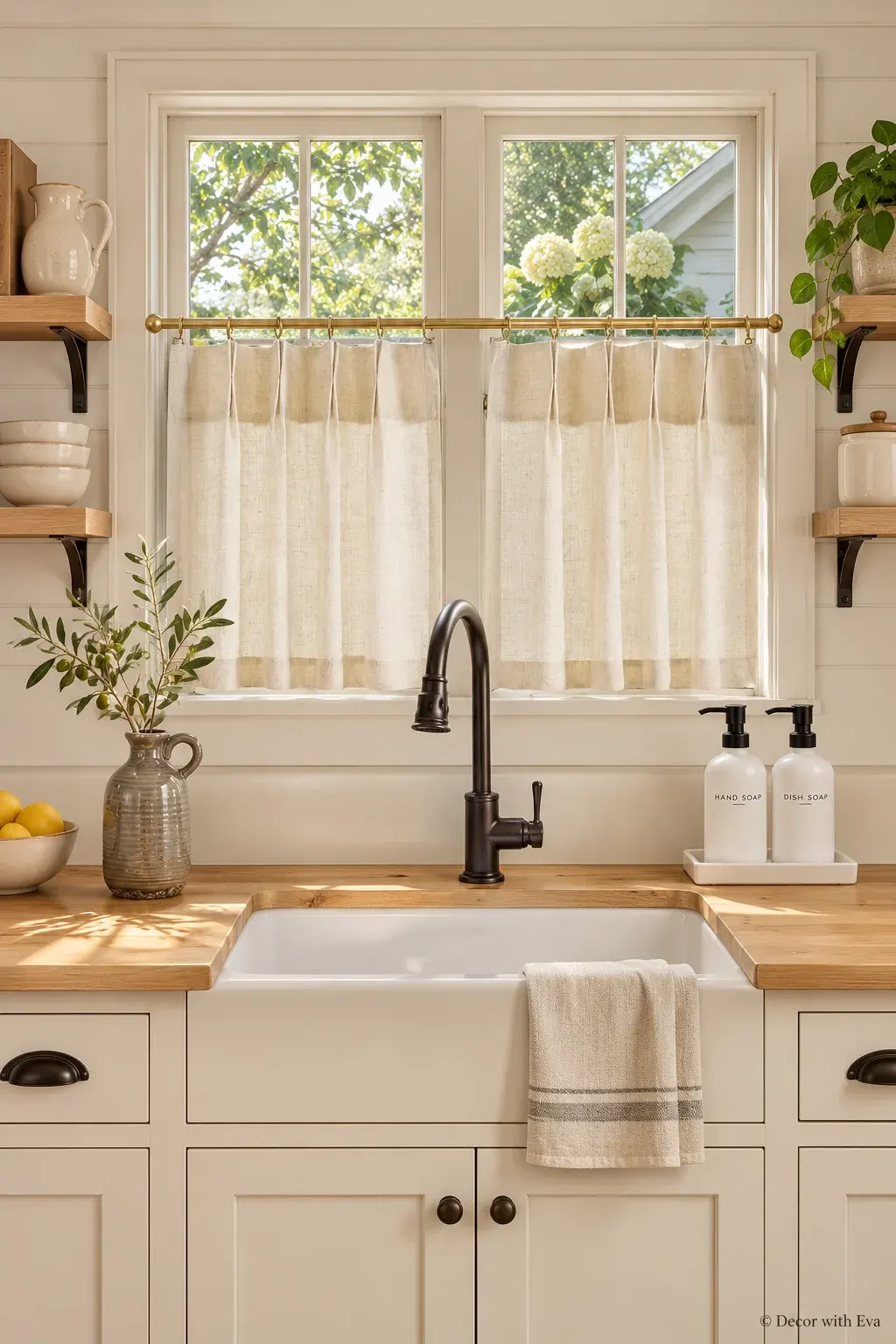
Café curtains add a small amount of fabric where a kitchen can otherwise feel hard-edged. A pale flax-like texture lets the window remain part of the room, while the shorter panels leave the upper glass open to daylight. The effect suits a relaxed neutral kitchen particularly well.
Measure both the window and the fullness you want before choosing panels. Light filtering does not mean blackout, and privacy changes with the light outside. Keep fabric away from the stovetop and clear of splashes, handles and normal window operation. A single pottery piece nearby is enough.
Try this: Hold a plain fabric sample across the lower window to test the look first.
11. Put Everyday Ceramics on Warm Wood Shelves
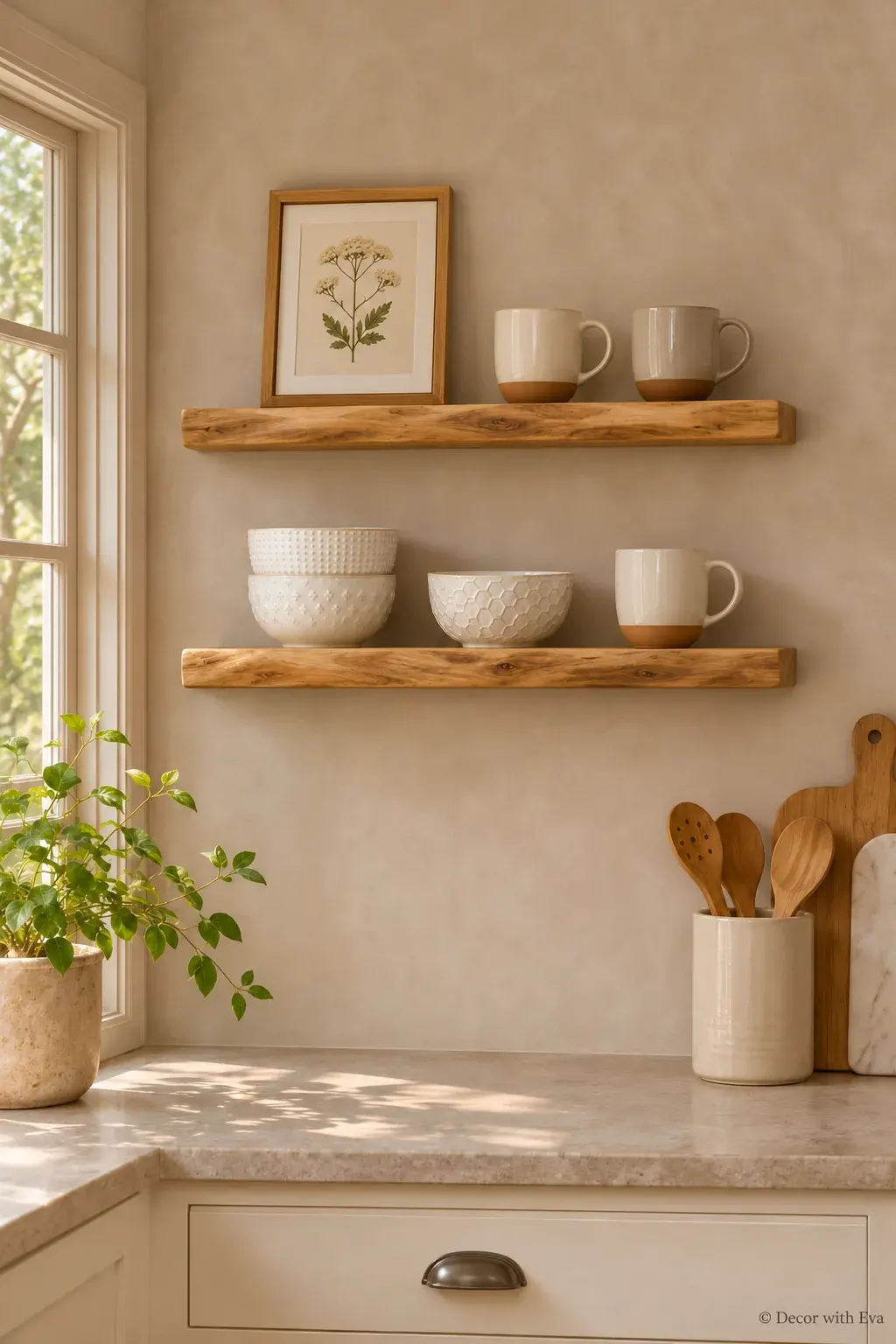
An open shelf looks more personal when it holds things you actually reach for. A few embossed bowls and mugs in related shades can provide plenty of detail against a warm wood surface. Leave gaps between groups so the shelf does not become another crowded cupboard.
Choose shelf depth for the objects, and leave room to lift them safely. Six-inch bowls are a more manageable fit on an eight-inch-deep shelf than large dinner plates. Match the mounting and load to the actual wall structure, and keep wood shelving and its contents away from cooking heat.
Try this: Arrange the proposed shelf contents on the counter before mounting anything.
12. Give the Sink a Coordinated Set of Essentials
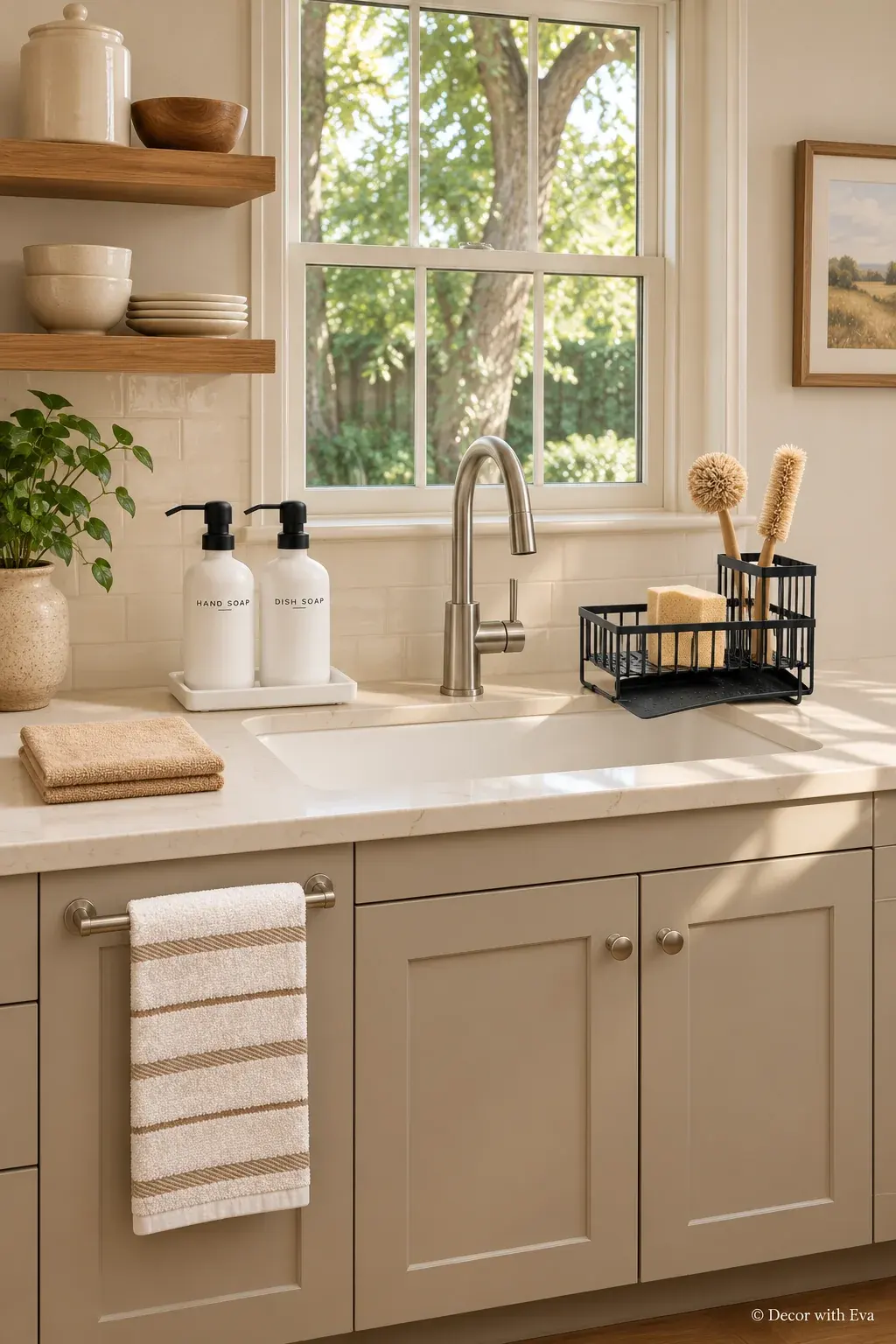
The sink area can contribute to the palette while keeping its practical job. White soap bottles, black pumps and one simple caddy make the tools look deliberate. A tan-and-white towel adds warmth without asking for another decorative object on a wet counter.
Keep the bottles easy to refill and the caddy positioned so its tray drains into the basin. Check the available ledge before buying, including room for the faucet and your hands. Use the caddy for a small working selection of brushes and sponges, then keep the surface underneath clean and dry.
Try this: Remove duplicate bottles and worn-out brushes before choosing an organizer.
13. Let Prep Tools Contribute to the Palette
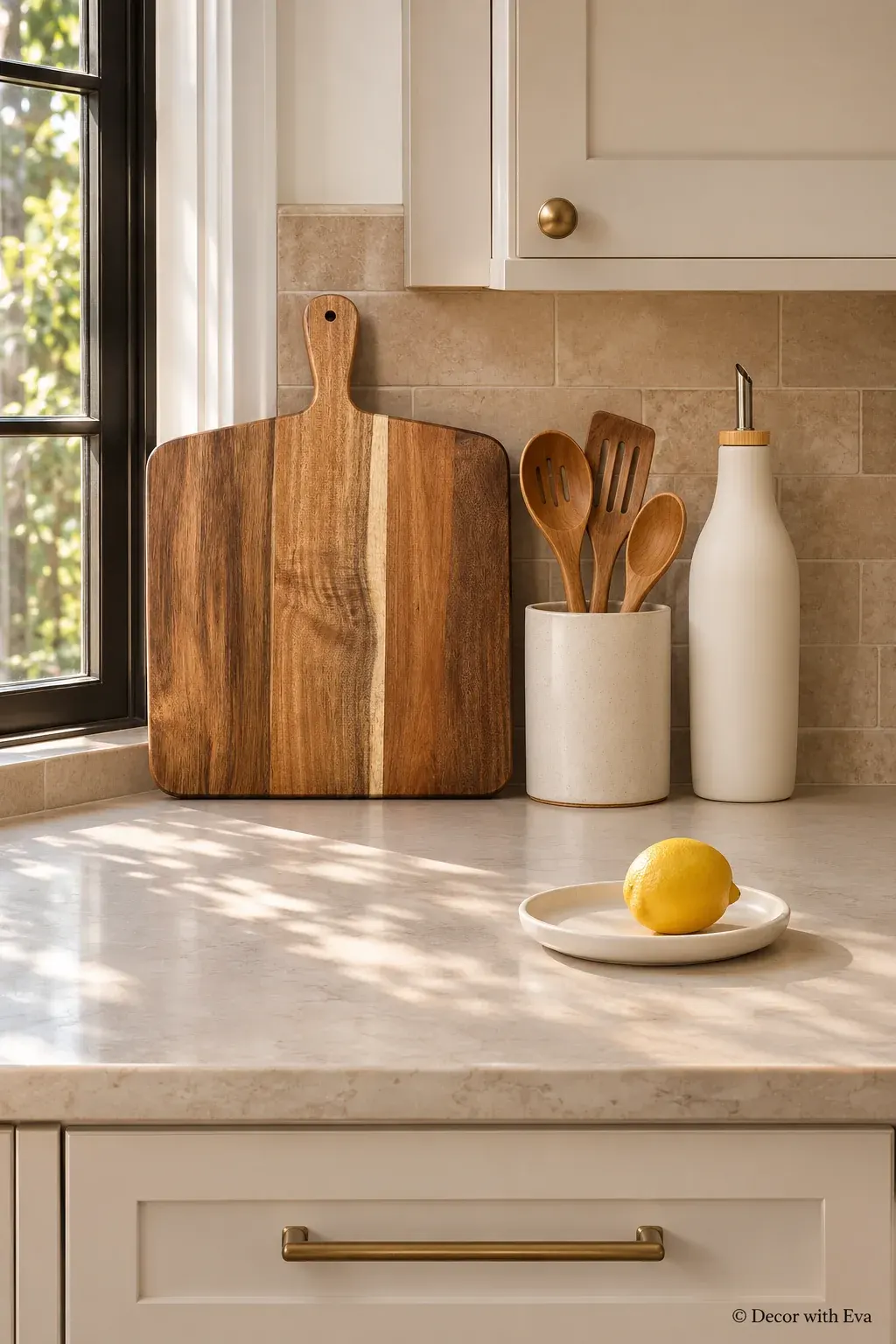
A wooden board, a sand-colored crock and a simple oil bottle can make a useful prep area look pulled together. The board provides height, the crock gathers the utensils and the bottle gives a smaller vertical shape. Three related materials are enough.
Place the group at the back of a cold prep counter and preserve clear space in front for working. Keep wood utensils and stored oil away from cooking heat. Let boards dry properly before putting them back, and choose a crock size that suits the tools you use rather than filling it to the rim.
Try this: Start with your best-looking serviceable board and a smaller selection of utensils.
For more practical arrangements, see our kitchen counter decor ideas.
14. Give Bread and Paper Towels a Neat Place
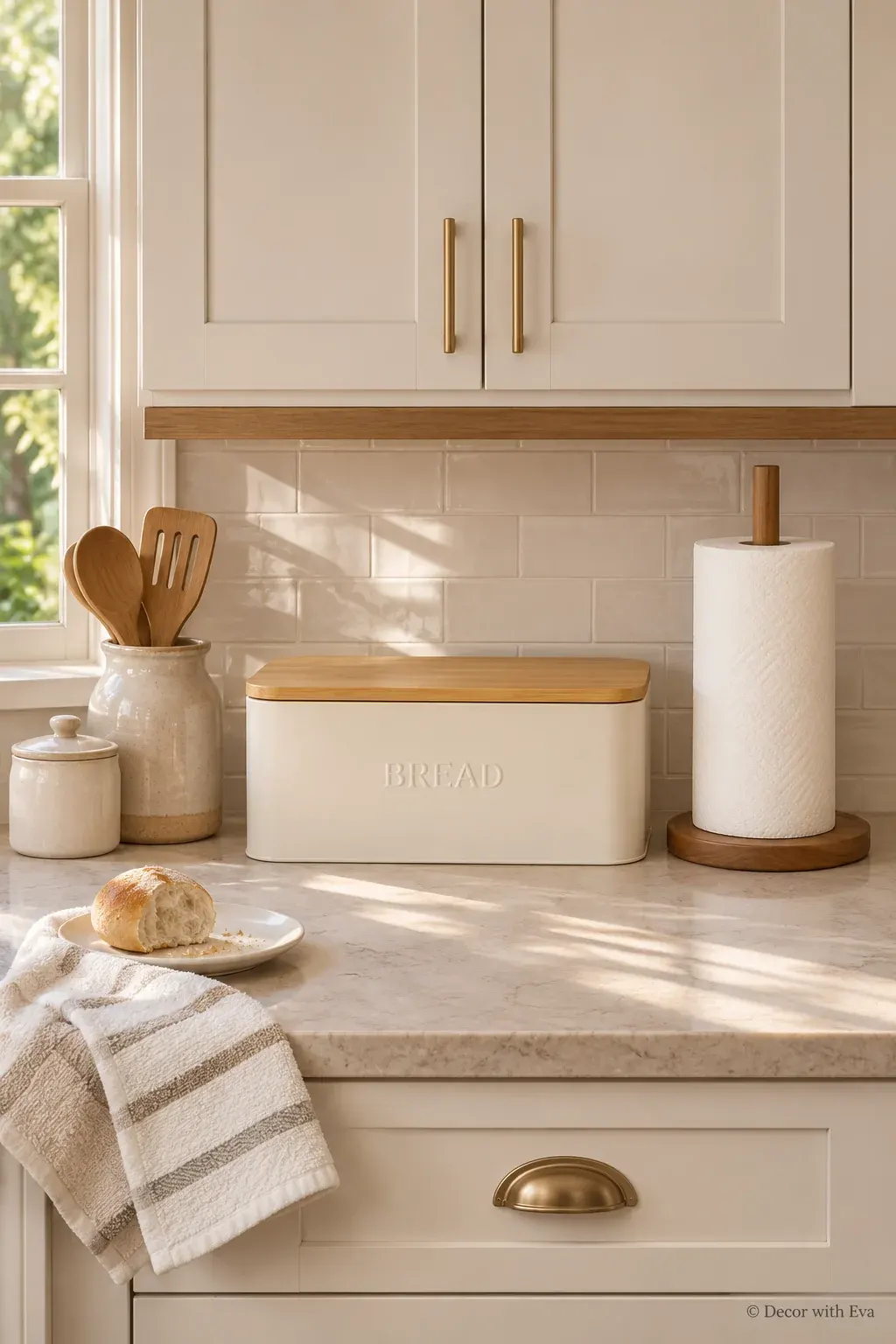
Neutral styling can include the ordinary things that live on the counter. A cream bread box and a simple wood paper towel stand look calmer than loose packaging and a roll that keeps moving around. A striped towel gives the group a little pattern.
Check the box against the bread you normally buy or bake, and allow space to lift its lid. Keep the paper roll outside the cooking area and clear of upper cabinets. The arrangement should be easy to wipe around, with enough empty counter left for the next task.
Try this: Choose one bread spot and one cleanup spot before buying new containers.
15. Build a Small Baking Station in White and Wood
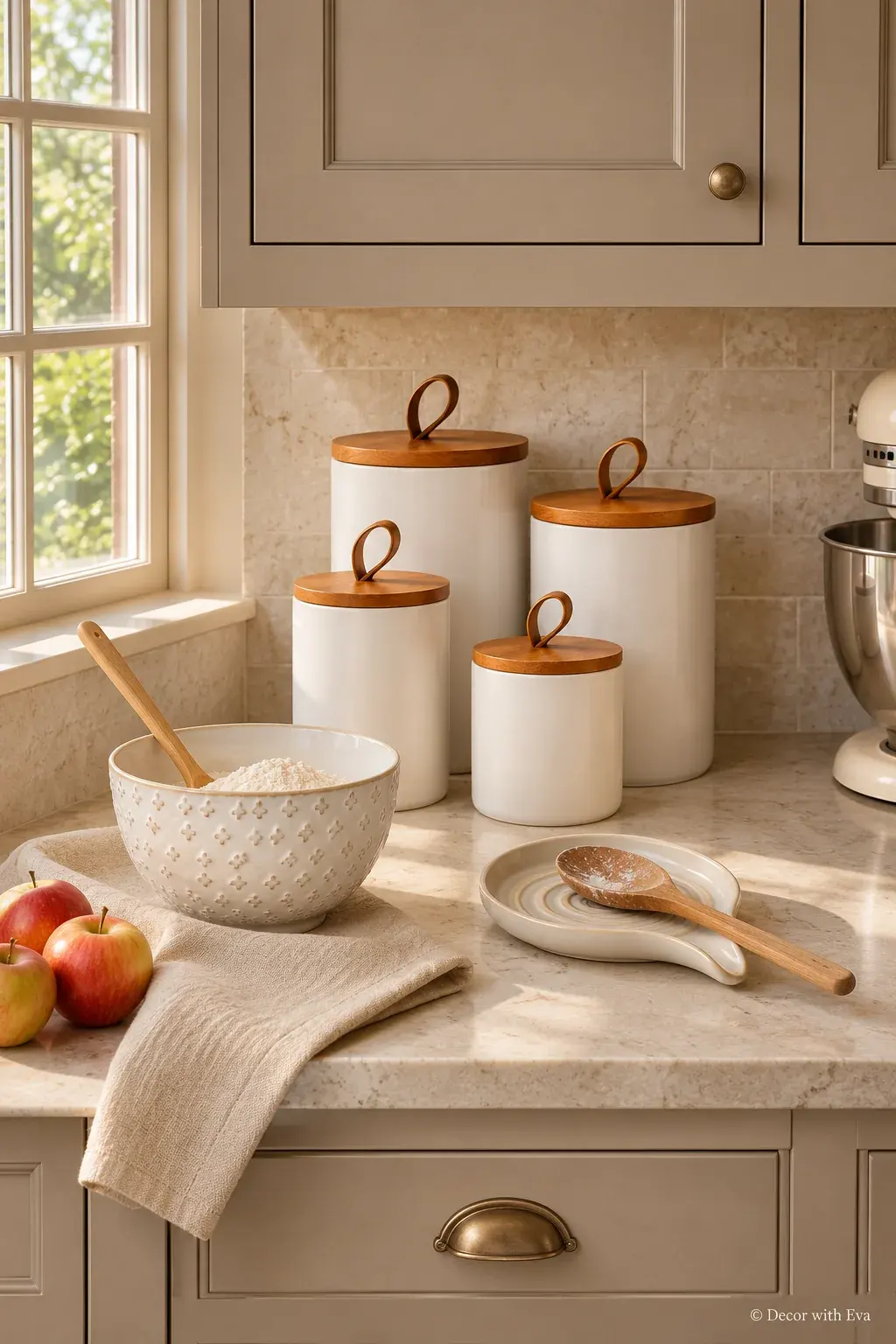
A few graduated canisters can make a baking corner feel settled. White bodies keep the arrangement quiet; wood lids provide the warmer detail. Add a bowl and a spoon rest for the task at hand, then put them away when you need the full counter.
Match container capacity to the amount you actually keep there. Smaller jars are useful for tea, coffee or modest ingredient portions, but they will not replace every bulk bag. Label contents and keep any useful package information. Leave room to open lids without moving the entire group.
Try this: Sort the ingredients first and measure their quantities before choosing jar sizes.
16. Group the Coffee Corner on a Wood Turntable
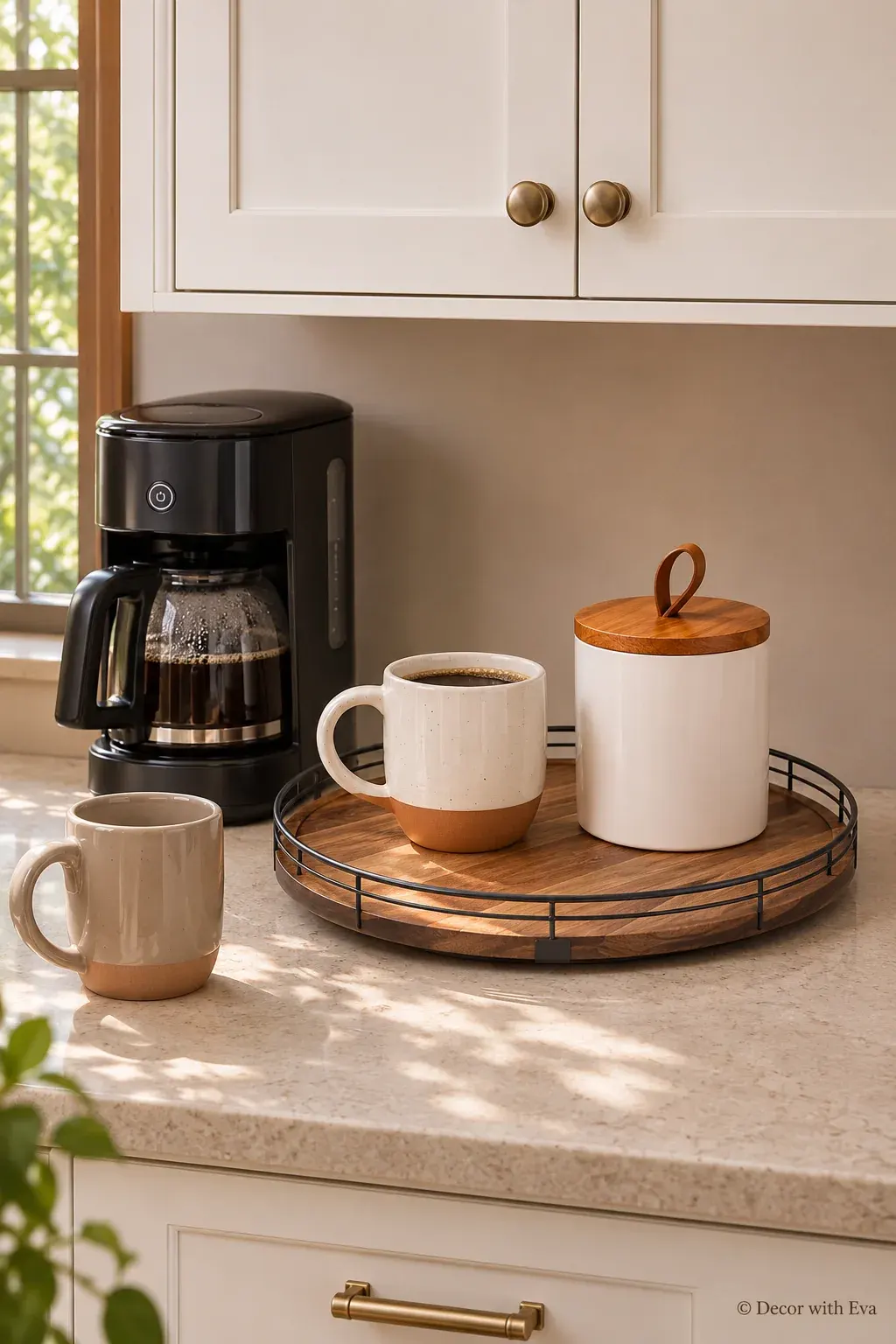
A wood turntable can give a coffee corner a defined boundary. The black rail adds a small outline that connects to an appliance or other dark details in the kitchen. Keep the group compact: one small jar and a mug may be all that needs to sit on it.
Allow for mug handles and the space needed to rotate the tray without hitting the machine or wall. Keep refill access clear and follow the appliance’s ventilation instructions. A turntable is useful when it improves access; an existing tray works well if you only need a visual boundary.
Try this: Try the arrangement on a plate or tray of similar size before ordering.
17. Make a Useful Fruit Bowl the Centerpiece
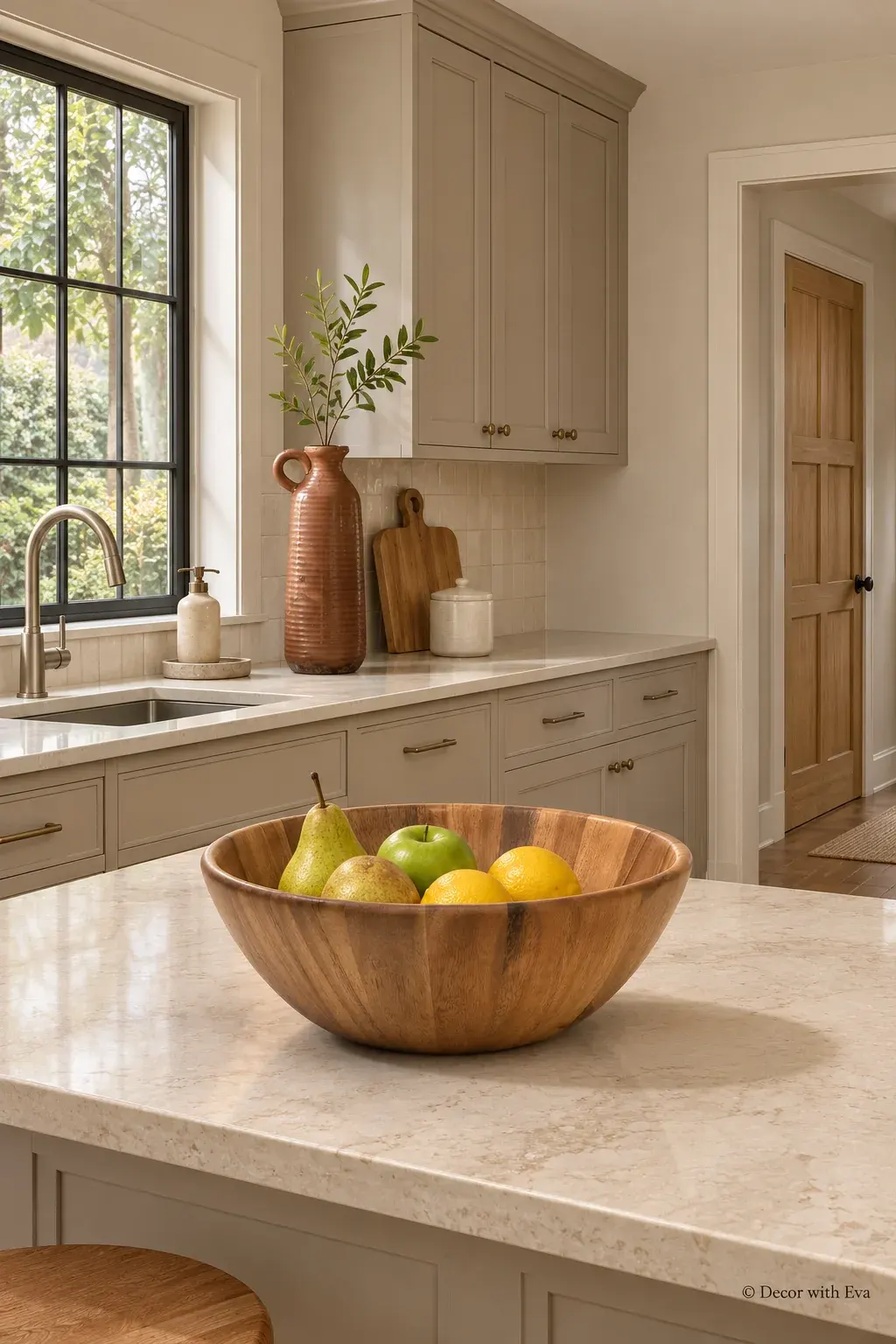
A generous wood bowl brings color and shape to a neutral counter without needing a purely decorative centerpiece. Let the fruit provide a small seasonal change. The bowl’s grain can connect to stools, shelves or a board elsewhere in the kitchen.
Check the diameter against the counter space you use every day. Keep the rest of the island open enough for serving and preparation. Follow the bowl’s wood-care instructions and remove spoiled fruit promptly; a centerpiece still needs to work as an everyday object.
Try this: Use your current serving bowl for a week to test the location.
18. Carry the Palette into the Pantry
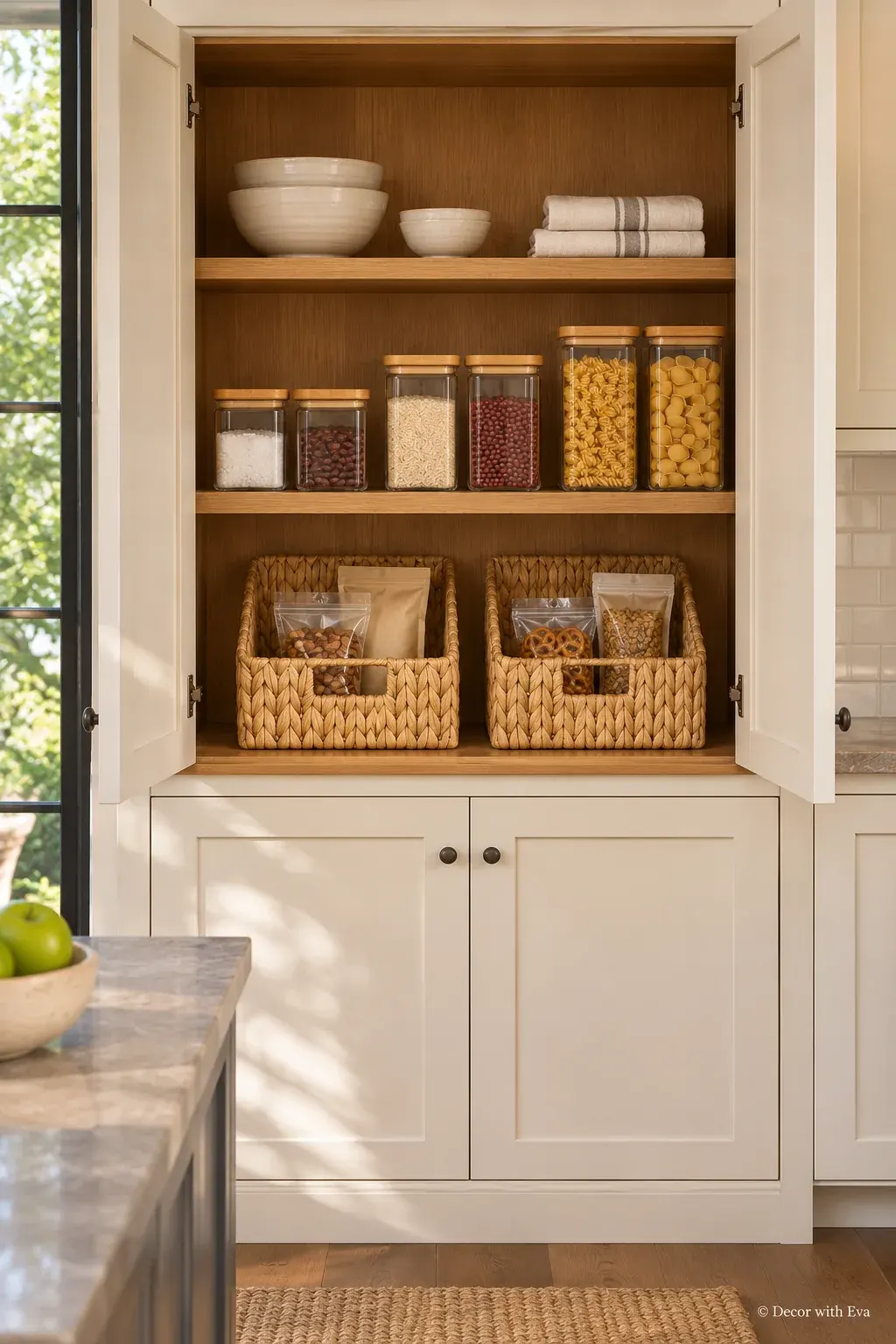
Clear jars and woven baskets can make an open pantry feel connected to the kitchen. The jars give small dry ingredients a consistent outline, while baskets gather the packets that will never look identical. Warm wood lids and natural fibers bring the quieter colors together.
Measure the shelf opening, depth and height before choosing a set. Leave room to lift jars and pull baskets forward, and keep glass in stable, accessible positions. Preserve ingredient names, dates and any important package information. There is no need to decant everything simply for a photograph.
Try this: Organize one shelf with containers you already have before expanding the system.
19. Use Everyday Dishes as the Display
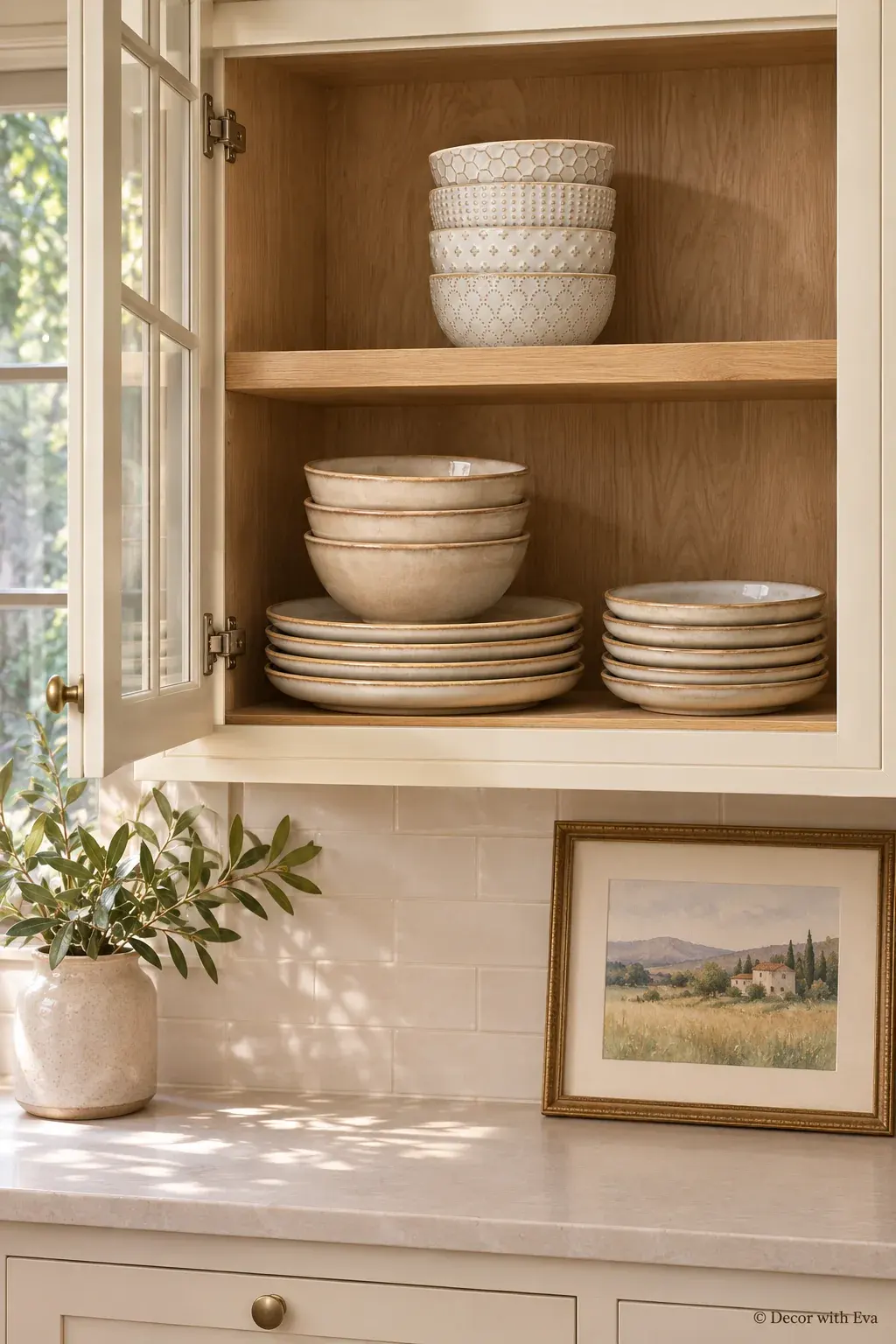
A glass-front cupboard can give a neutral kitchen character through ordinary dishes. Warm reactive-glaze plates and textured white bowls create variation within a small palette. Short, useful stacks look more inviting than a display that is too delicate to touch.
Use shelves deep enough for the largest plates, with room around each stack for your hands. Keep the pieces you reach for most at a comfortable height. Mixing a few existing favorites with a coordinated set can look more personal than replacing every dish at once.
Try this: Edit one cupboard and group the dishes by use before choosing anything new.
20. Add a Bamboo Cart Where It Can Earn Its Space
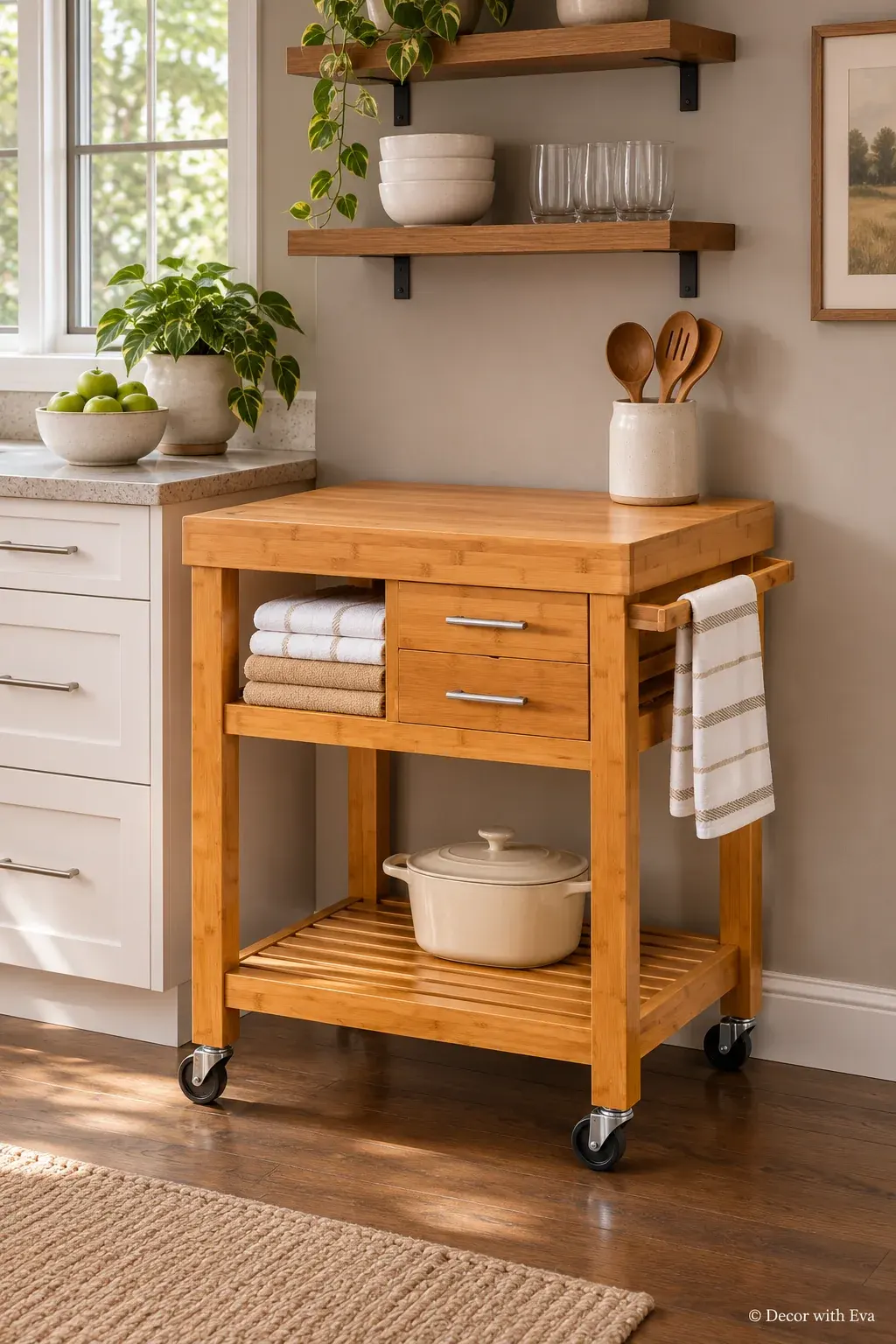
A small bamboo cart can introduce warmth while providing a useful extra surface. Open shelves keep towels or a few everyday pieces accessible, and drawers give smaller tools a place to disappear. The wood tone can help a mostly white kitchen feel less uniform.
Mark the complete footprint, including the side bar, before deciding where it belongs. Keep the route past appliances and doors clear, and use the locking casters as directed. A cart is helpful only when it earns the floor space; a reorganized counter may solve the same problem.
Try this: Make a cardboard footprint and live with it in the proposed spot for a day.
21. Give a Favorite Cookbook a Real Place
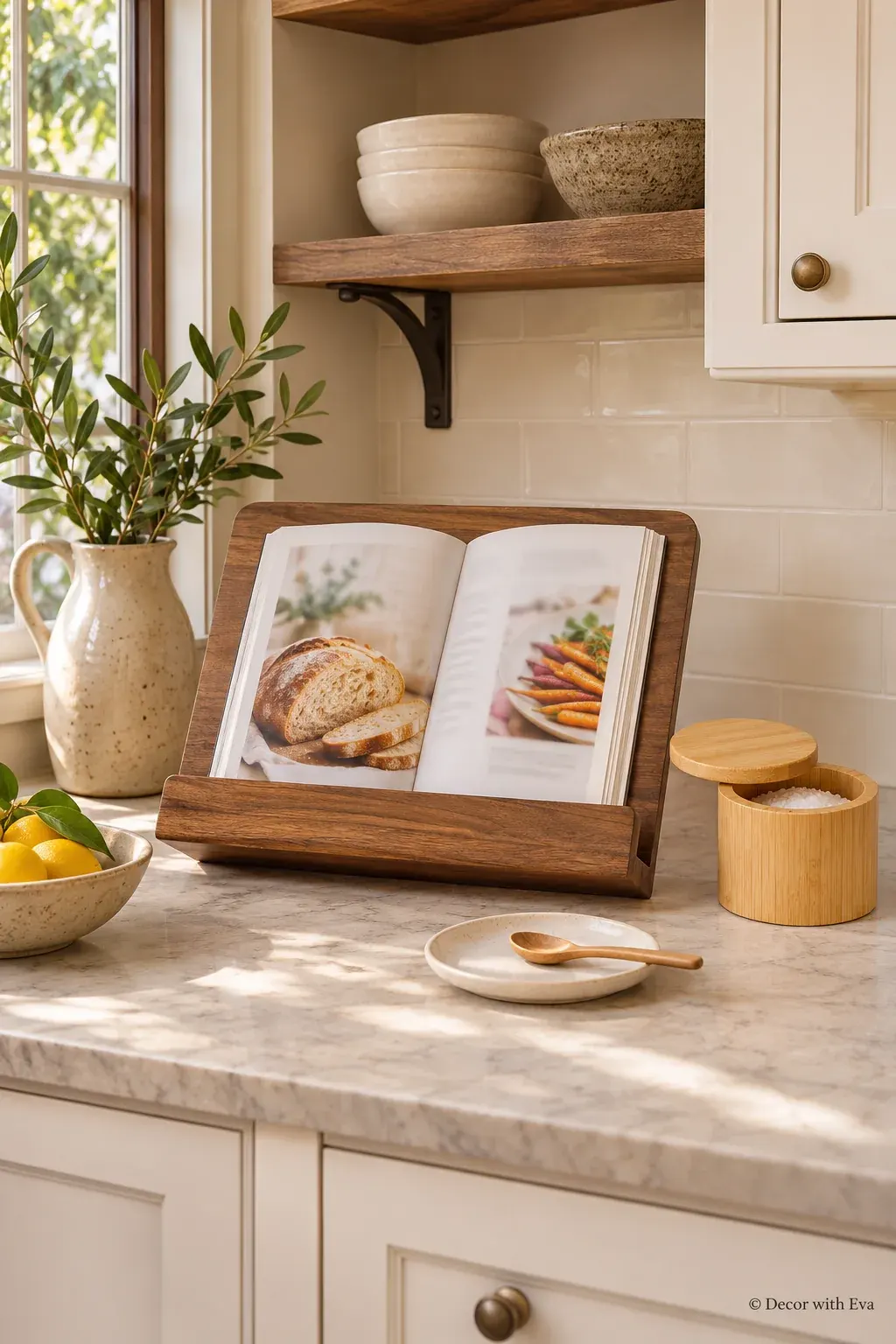
A cookbook adds a personal detail that a row of matching accessories cannot. A simple walnut-finish stand gives the cover or open pages a clear place, with a small bamboo salt box nearby for a practical contrast in scale. Keep the rest of the corner quiet.
Check the stand against the book’s size and weight, including space for its support when opened. Put the book in a dry prep area away from splashes and cooking heat. If you already have a sound bookstand or wall shelf, use it and let the book provide the character.
Try this: Choose a cookbook you actually cook from rather than buying one only for its spine.
22. Treat Towels and Mitts as Part of the Color Scheme
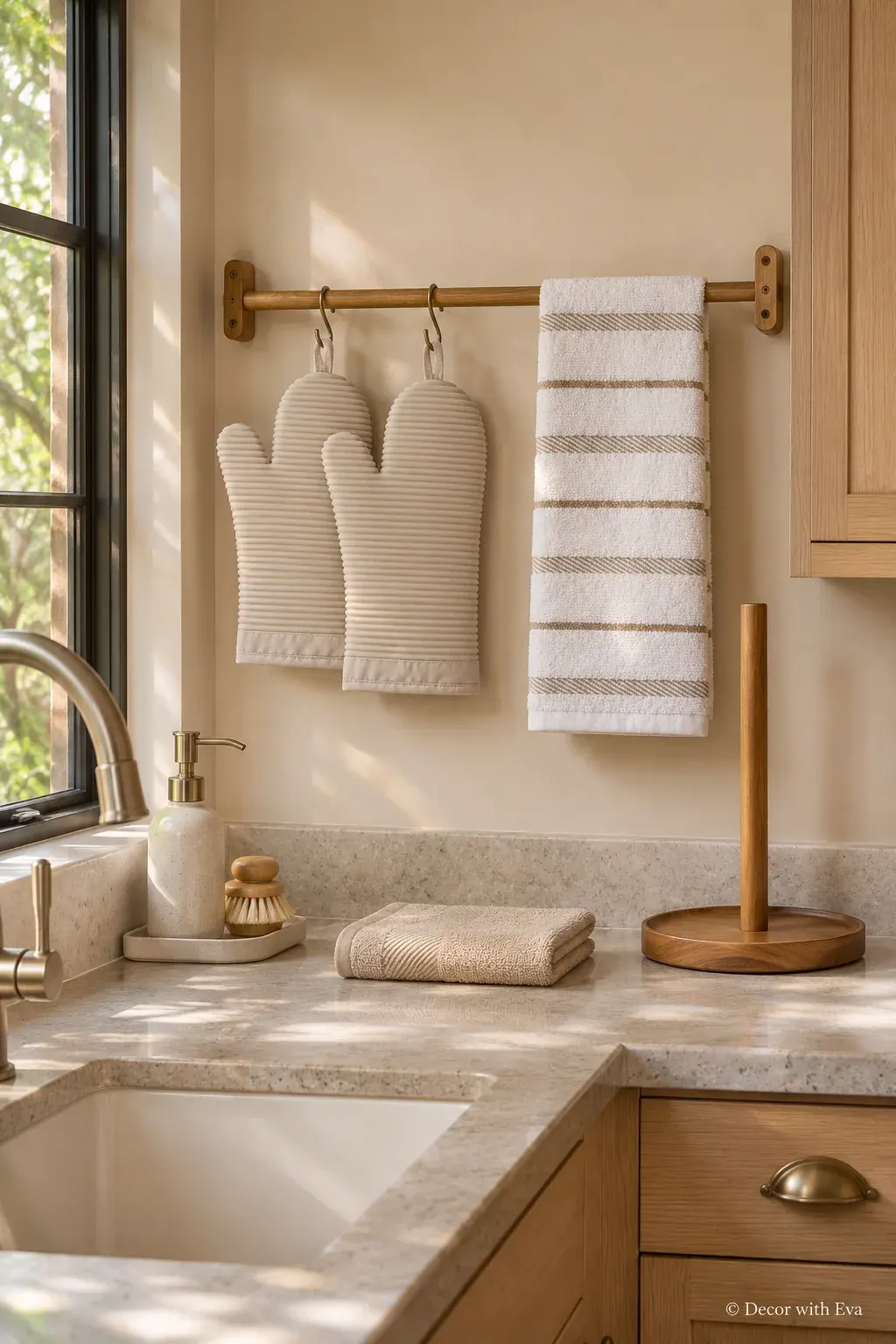
The kitchen’s working textiles can help connect its colors. Tan-and-white stripes bring a small pattern, while a solid mitt keeps the group simple. Choose a few pieces that suit the room and rotate them as they need washing or cleaning.
Give them a dedicated place away from the stovetop, with room for damp towels to dry. Follow separate care instructions for towels and silicone mitts; they are not all cleaned the same way. A practical paper towel stand can finish the cleanup area without adding another color.
Try this: Keep your serviceable textiles and replace only the pieces that need it.
23. Add Character with One Earthy Pottery Piece
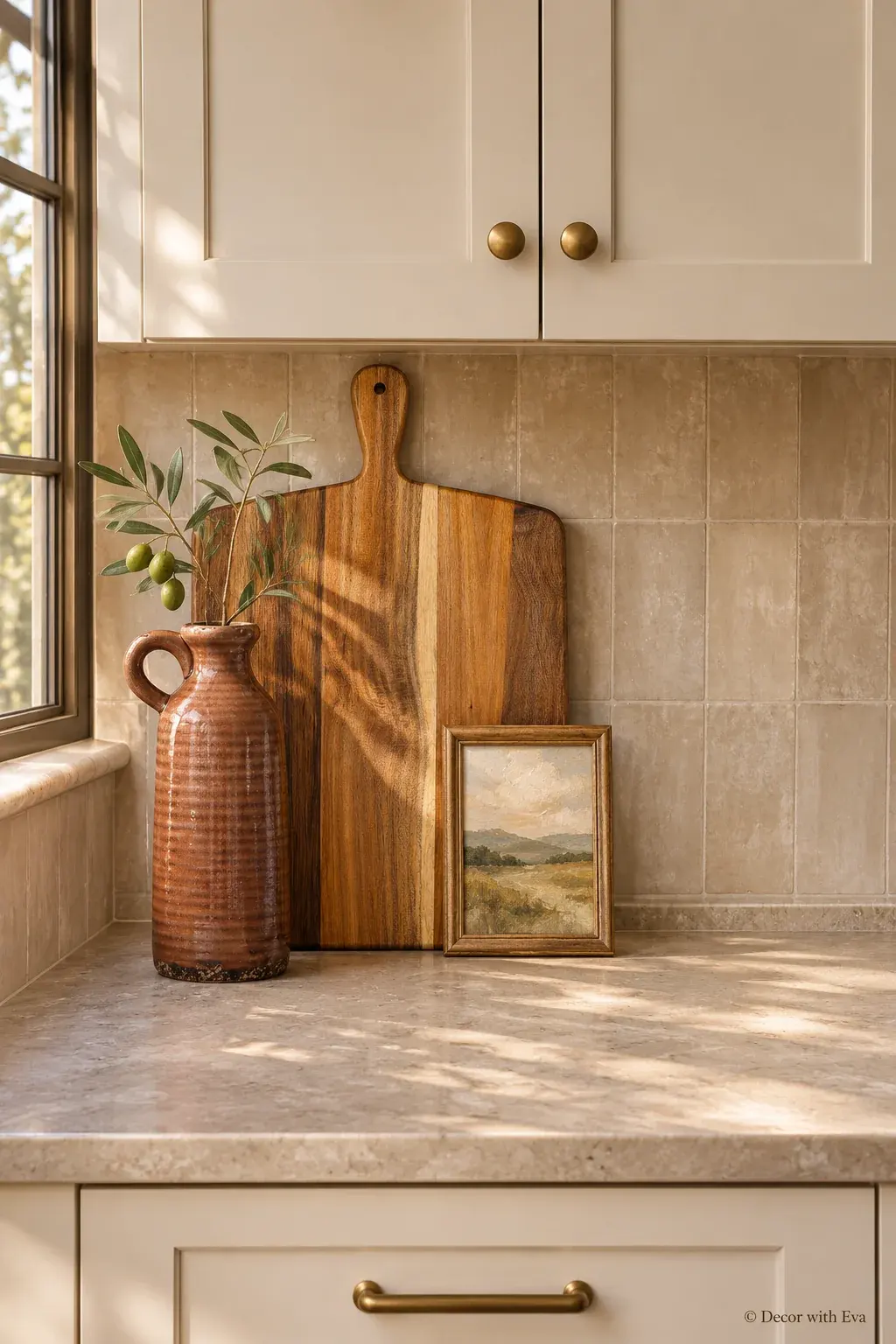
One handled vase can give a neutral kitchen a little age and shape. A brown or greige piece works well beside wood and pale stone, whether it holds a simple stem or stands empty. Its outline matters more than filling it with a large arrangement.
Choose the size for the spot rather than displaying every piece in a set together. Keep decorative pottery out of the working area and away from cooking heat. A useful board nearby can repeat the warmer color, while a small framed picture you own adds a personal note.
Try this: Move a favorite vase from another room and see whether the corner still works.
24. Repeat a Few Materials and Leave Room to Breathe
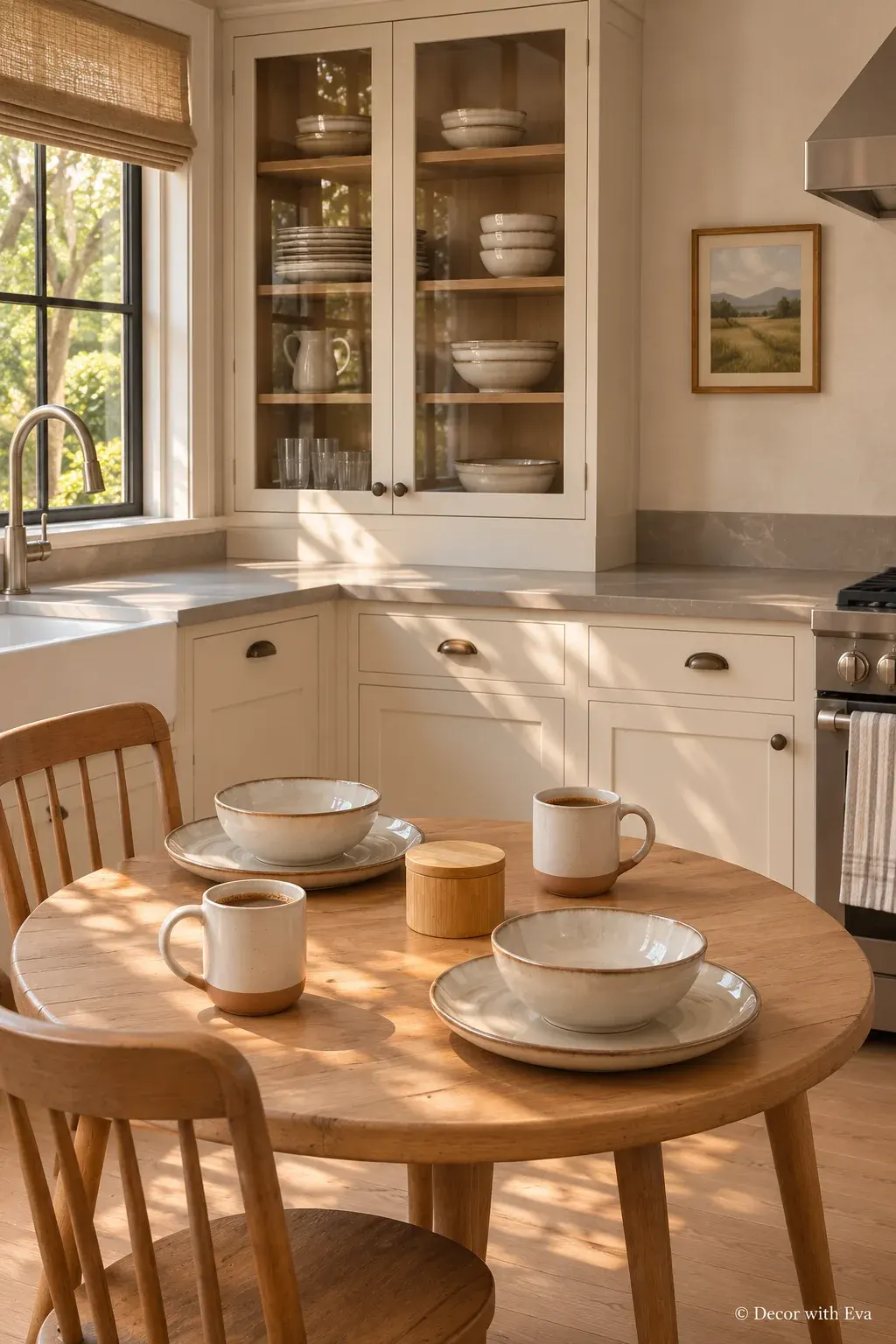
A neutral kitchen feels finished when a few materials return in different places. Cream ceramics, warm wood and a little brushed metal can connect the cupboards, breakfast table and prep area. They do not need to match exactly to feel related.
Look across the room before adding one more object. Keep the pieces you use and the details you enjoy, then leave a useful stretch of counter empty. The goal is a kitchen that feels welcoming during an ordinary day, with room for the next meal and the people making it.
Try this: Take one item out of each counter group and decide whether you miss it.
How Do You Keep a Neutral Kitchen from Looking Flat?
Vary the surfaces rather than adding lots of colors. Wood grain, a woven seat, a textured bowl and a smooth counter can sit in the same palette while giving the eye different things to notice. A darker outline or one personal picture can provide enough contrast.
Which Neutral Colors Work with Existing Wood Cabinets?
Start with the wood’s actual undertone and the other fixed surfaces. Cream, oatmeal, mushroom and warm gray are useful samples to compare, but no single shade works in every room. Test a larger sample in the kitchen before painting.
Where Should You Start without a Renovation?
Clear a working stretch of counter, edit one cupboard and choose one area to refresh. A better-fitting runner, coordinated towels or a useful sink arrangement may do more for an everyday kitchen than a large collection of new ornaments.