Garlic Herb Butter Roasted Chicken
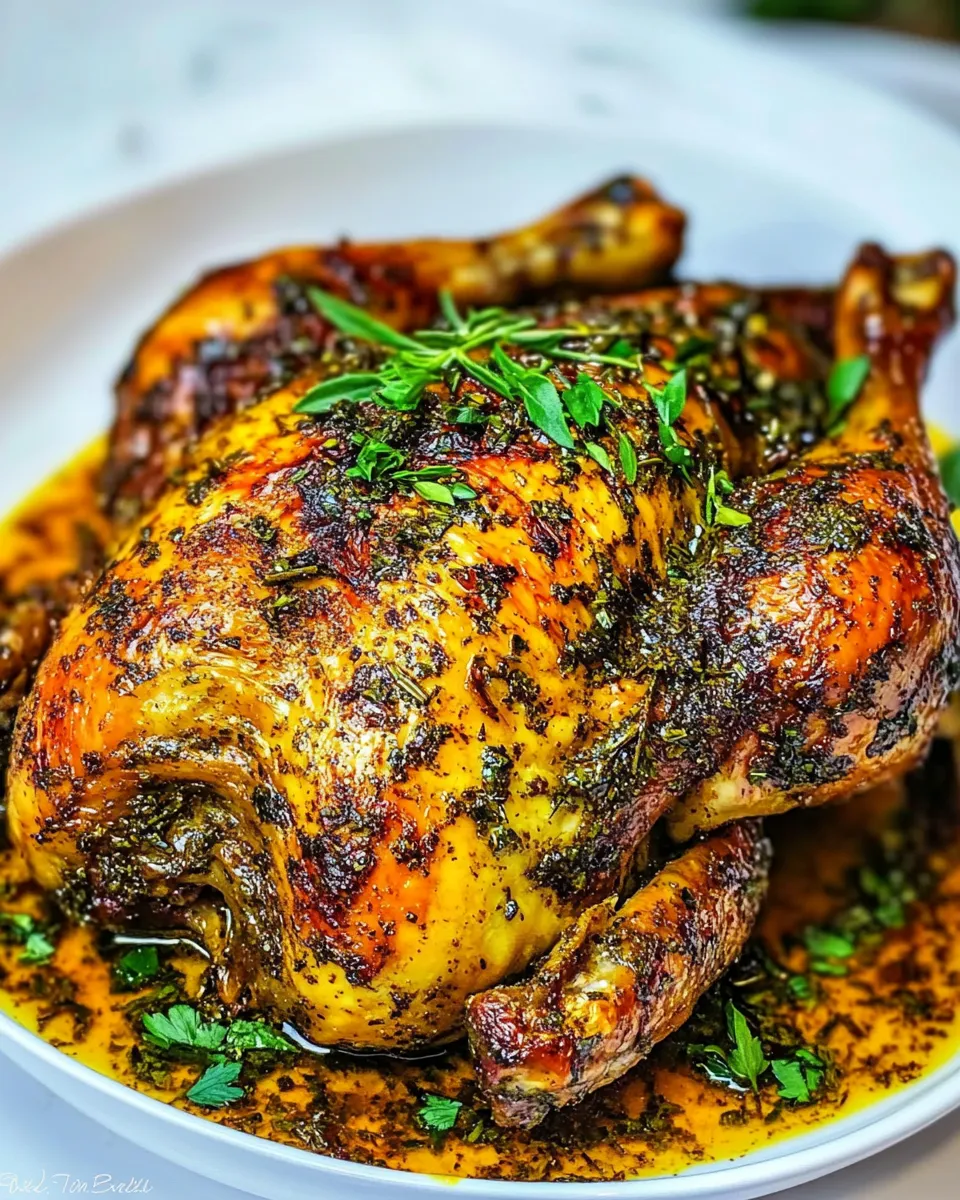
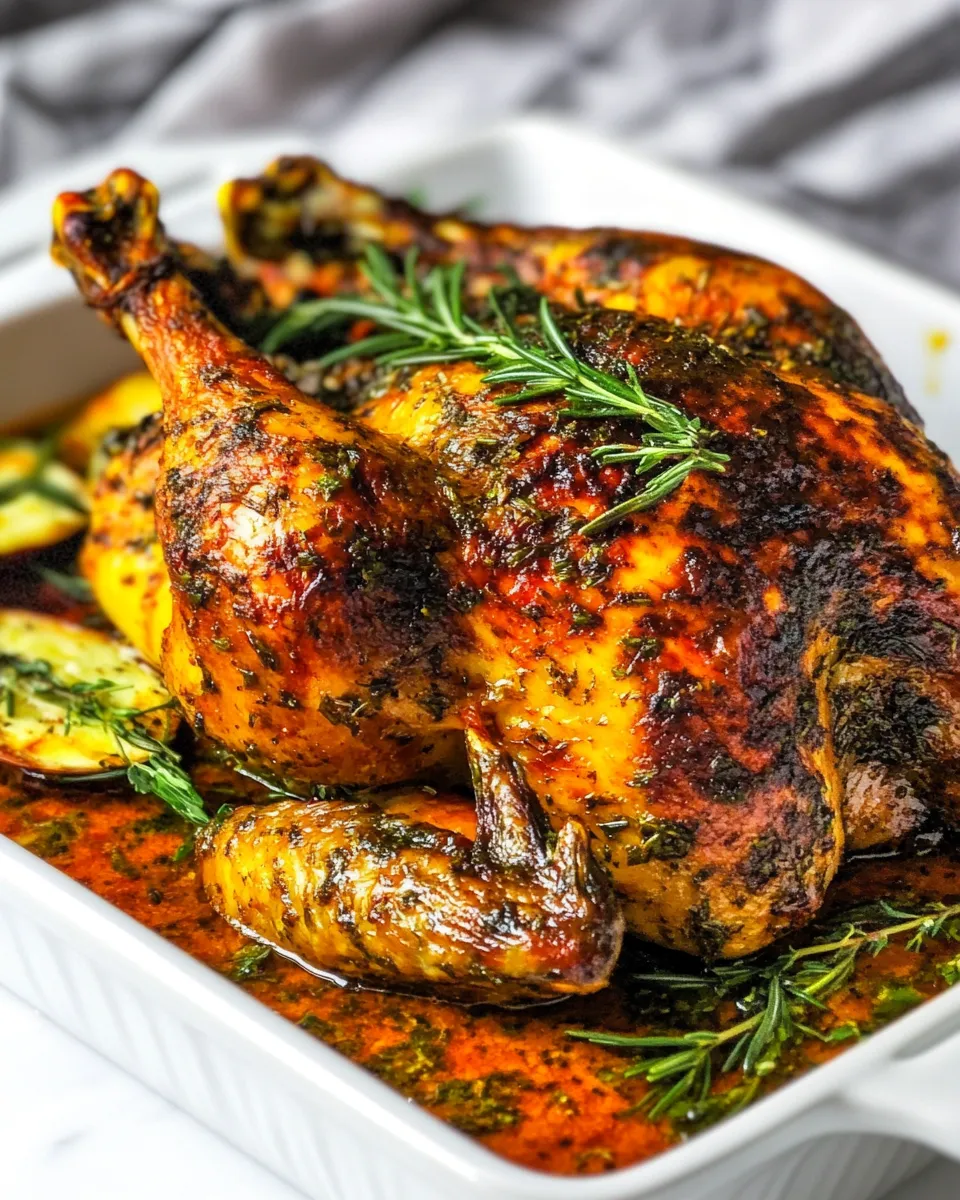
This roast chicken is one of those reliable weeknight-to-weekend recipes that feels special without being fussy. It’s a straightforward roast flavored with garlic, fresh herbs, lemon, and two kinds of fat—olive oil and butter—so the skin crisps and the meat stays juicy. The aromatics inside the cavity and the herb butter under the skin give every bite a concentrated, savory lift.
I keep this recipe in regular rotation because the technique is forgiving and the payoff is consistent: crisp, golden skin and a pan full of delicious juices that become an easy sauce. You can follow it exactly as written or make small swaps based on what’s in your kitchen. Read through the ingredient notes and step-by-step instructions before you start—the prep moves quickly once the oven is on.
Ingredient Rundown
- 4–5 pound whole chicken — room temperature; giblets and neck removed from the cavity. Brings the main protein and size suitable for 4–6 people.
- 1/4 cup unsalted butter, melted — helps brown the skin and adds rich flavor; melted so it can be mixed and poured easily.
- 4 tablespoons olive oil — mixed with the melted butter for a higher smoke point and bright olive flavor; used for initial coating and basting.
- 1 lemon, zested first and juiced — lemon zest goes into the herb butter for bright citrus notes; juice is added to the initial butter-oil mix for tang and to help balance fat.
- Salt and freshly ground pepper — to taste; essential for seasoning inside and out so the meat is flavorful through and through.
- 4 tablespoons butter, room temperature — softened butter is mixed with herbs and garlic and rubbed under and over the skin to infuse flavor and encourage browning.
- 2 tablespoons fresh parsley, chopped — sprinkled over the chicken early for an herbal brightness and finished aroma.
- 1 tablespoon fresh rosemary, chopped — chopped rosemary folded into the butter for a pine-like savory note.
- 1 teaspoon fresh thyme, chopped — delicate herb that pairs with rosemary and garlic in the butter.
- 1 tablespoon paprika (optional) — adds color and a mild smoky sweetness if you want a darker golden skin.
- 6 cloves garlic, minced — folded into the herb butter to infuse the meat and skin with assertive garlic flavor.
- 1 head garlic, roughly peeled and cut in half horizontally — stuffed in the cavity to roast and mellow, contributing aromatics to the pan juices.
- 6 sprigs fresh rosemary, tied together — placed in the cavity for aromatics and to subtly flavor the meat from inside.
- 3 sprigs fresh thyme — paired with rosemary inside the cavity for additional herb aromatics.
- 1 lemon, quartered — stuffed in the cavity along with herbs and garlic to steam and flavor the chicken internally.
Garlic Herb Butter Roasted Chicken: From Prep to Plate
Follow these steps in order. The ingredient amounts and sequence match the recipe source; I’ve clarified technique and timing so a home cook can get consistent results.
- Preheat the oven to 425°F (220°C). Lightly grease a roasting pan with olive oil and set it aside so it’s ready when the chicken is seasoned.
- Prepare the chicken: make sure the chicken is at room temperature, with giblets and the neck removed from the cavity. Rinse briefly under cold running water if you choose, then pat the chicken very dry with paper towels. Trim any excess fat or stray feathers.
- Make the initial butter-oil-lemon mixture: in a small bowl, whisk together 1/4 cup melted unsalted butter, 4 tablespoons olive oil, and the juice of the zested lemon until combined.
- Place the chicken breast-side up on a cutting board or directly in the prepared roasting pan. Pour the butter-oil-lemon mixture over the chicken, using your hands to rub some of it under the skin (especially over the breasts) and into the cavity. This step helps flavor the meat directly and promotes browning.
- Season the chicken liberally with salt and freshly ground pepper on both the outside and inside of the cavity. Sprinkle the 2 tablespoons chopped fresh parsley over the top of the chicken.
- Make the garlic herb butter: in a medium bowl, combine 4 tablespoons room-temperature butter, 1 tablespoon chopped fresh rosemary, 1 teaspoon chopped fresh thyme, the lemon zest, and 6 cloves minced garlic. Add 1 tablespoon paprika if you’re using it for color. Stir thoroughly until blended.
- Rub the herb butter mixture all over the chicken, spreading it across the skin and pushing some of it under the skin where possible (especially over the breast and thighs). The under-skin application keeps meat moist and delivers concentrated flavor.
- Stuff the chicken cavity with the halved head of garlic, the tied bundle of 6 rosemary sprigs, 3 thyme sprigs, and the quartered lemon. Tie the legs together with kitchen string to encourage even cooking.
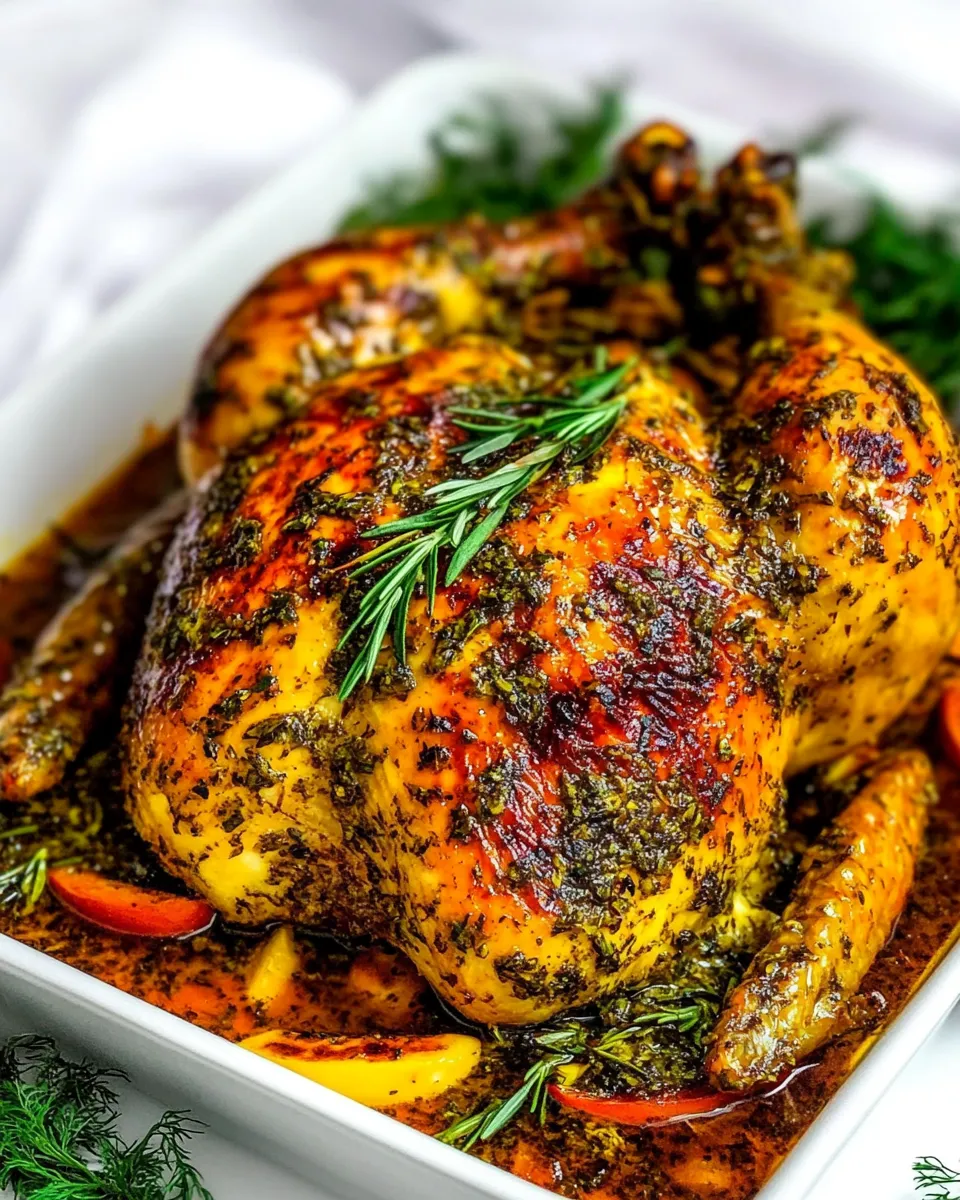
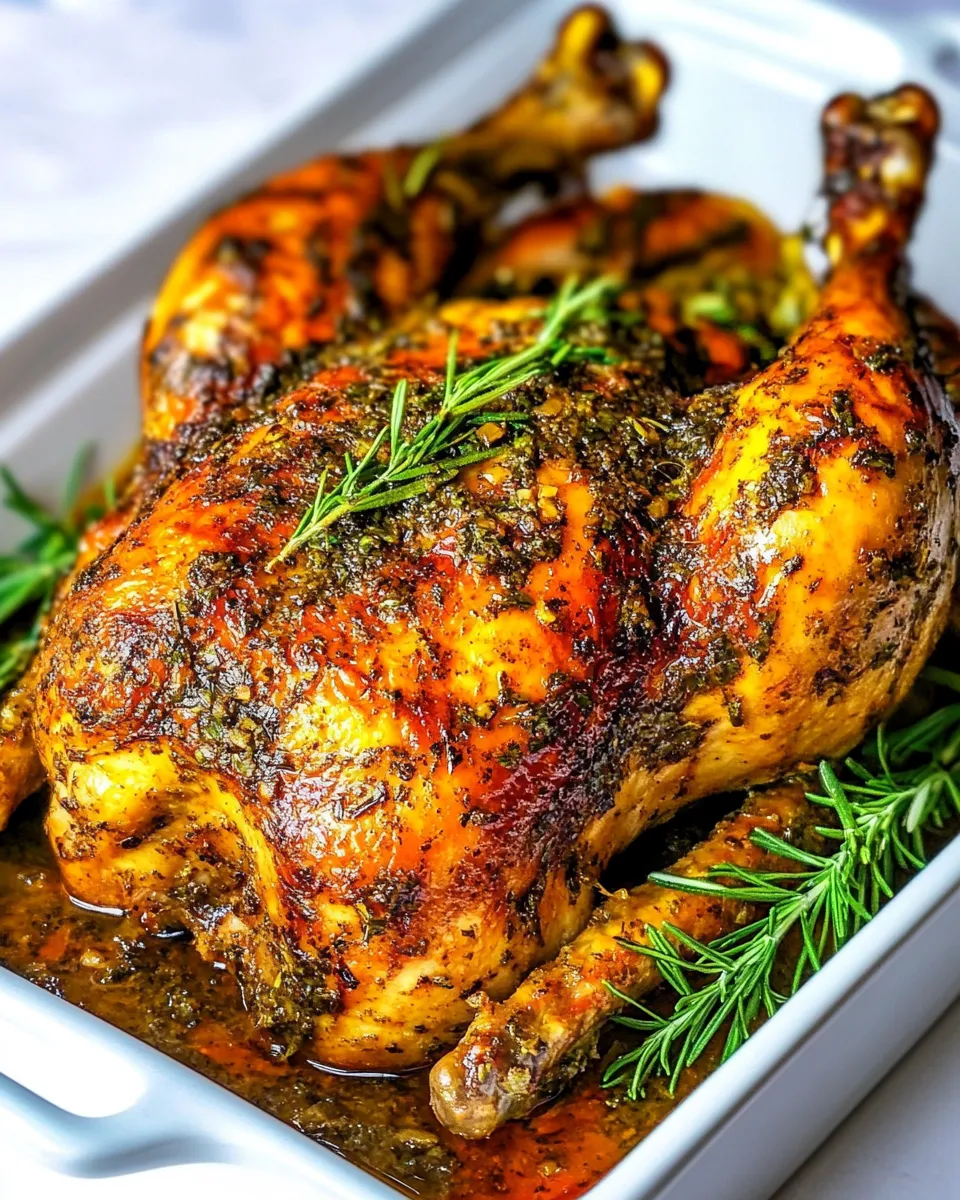
- Place the chicken breast-side up in the prepared roasting pan. Roast at 425°F for 1 hour and 15–25 minutes. Baste the chicken halfway through cooking with the pan juices or remaining butter-oil mixture. Roast until the chicken’s juices run clear when pierced with a skewer in the thickest part of the thigh, and an instant-read thermometer inserted into the thickest part of the thigh (avoiding bone) reads 165°F.
- When the roasting time is complete, baste the chicken again with pan juices. Turn on the broiler and broil the chicken for 2–3 minutes, watching closely, until the skin is a deeper golden brown—do not walk away during this step.
- Remove the chicken from the oven and allow it to rest for 10–15 minutes before carving. Resting lets the juices redistribute so the meat stays moist.
- Use the pan juices to drizzle over the carved chicken. Serve with fresh lemon wedges on the side for squeezing at the table.
What Sets This Recipe Apart
This roast uses both melted butter and room-temperature butter: the melted butter combines with olive oil and lemon juice to coat and jump-start browning, while the softened herb butter is tucked under the skin to deliver concentrated, fragrant flavor directly to the meat. The cavity aromatics—whole halved garlic, fresh sprigs of rosemary and thyme, and lemon quarters—steam from inside the bird and subtly flavor the pan juices. The result is balanced richness with bright citrus and fresh herb notes.
Flavor-Forward Alternatives
- Smokier profile — swap paprika for smoked paprika for a deeper smoky note.
- Spicy kick — add 1/2 teaspoon crushed red pepper or a pinch of cayenne to the herb butter.
- Herb change-up — use tarragon or sage instead of thyme for a slightly different herbal tone.
- Citrus swap — replace lemon with orange for a sweeter, fruitier aroma.
Recommended Tools
- Roasting pan — with a rack if possible; if not, the pan still works—just rotate the bird for even browning.
- Instant-read thermometer — the most reliable way to confirm doneness (165°F in the thigh).
- Kitchen twine — for trussing the legs so the chicken cooks evenly.
- Small bowls and a spoon — to mix melted butter and softened butter herb paste separately.
- Basting spoon or ladle — to baste safely without losing oven heat for too long.
Watch Outs & How to Fix
- Undercooked thighs — if the thigh isn’t 165°F after the listed time, return the chicken to the oven and roast at 425°F in 5–10 minute increments until it reaches temperature.
- Burning during broil — broil only 2–3 minutes and watch closely. If it’s browning too fast, move the pan down a rack or reduce broil time.
- Skin not crisp — pat the skin as dry as possible before applying fats; finish under the broiler for those final minutes.
- Flavor not pronounced — be sure to get herb butter under the skin and into the cavity as instructed; surface-only application will taste less integrated.
Better Choices & Swaps
- Butter — use unsalted butter as written so you can control salt level; if using salted, reduce added salt slightly.
- Olive oil — a good-quality extra-virgin olive oil works, but use regular olive oil if you plan to broil at high heat to reduce smoke.
- Fresh herbs — the recipe calls for fresh herbs; dried can be used in a pinch, but use about one-third the amount and mix into the butter for even distribution.
- Chicken size — stick with a 4–5 pound whole chicken for timing; larger birds will need more time and should be checked with a thermometer.
What Could Go Wrong
Overcooking will dry the meat; undercooking is a safety concern. The most common mistakes are not drying the skin, skimping on under-skin butter, and skipping the resting period. Not using an instant-read thermometer makes it easy to misjudge doneness by feel alone. Aggressive broiling without watching can burn the skin; it only needs a couple of minutes for color.
Meal Prep & Storage Notes
- Make-ahead — you can prepare the herb butter and mix it a day ahead and keep it chilled. Apply to the chicken just before roasting.
- Leftovers — refrigerate cooled leftover chicken in an airtight container for up to 3–4 days.
- Reheating — reheat gently in a 325°F oven covered with foil until warmed through, or slice and warm in a skillet with a splash of chicken stock to keep it moist.
- Freezing — carved meat freezes well for up to 3 months; thaw overnight in the fridge before reheating.
Troubleshooting Q&A
Q: My chicken looks done but the juices are a little pink—safe?
A: Pink juices can be misleading. Always use an instant-read thermometer in the thickest part of the thigh—165°F is the safe internal temperature. If you have reached that temp, the chicken is safe to eat even if the juices show slight color.
Q: The skin is soggy instead of crispy. Why?
A: Soggy skin usually comes from excess moisture. Pat the chicken completely dry before applying fats, don’t overcrowd the pan, and finish under the broiler briefly to crisp the skin.
Q: My herb flavor is weak. How can I intensify it?
A: Make sure you push herb butter under the skin and fill the cavity with garlic and herbs. Also consider increasing the fresh herbs slightly next time or letting the herb butter sit at room temperature for 30 minutes so the flavors meld before rubbing on the bird.
Ready, Set, Cook
Preheat your oven, gather your ingredients, and take a few extra minutes to get the chicken dry and the herb butter into the right places. The hands-on time is short and the results are worth it: a golden, fragrant roast chicken with pan juices that make an effortless sauce. Carve after resting and serve with simple sides like roasted potatoes, a green salad, or buttery rice. Enjoy the smell, the color, and the satisfaction of a well-roasted bird.
Garlic Herb Butter Roasted Chicken
Ingredients
- 4-5 pound whole chicken room temperature, giblets and neck removed from cavity
- 1/4 cup unsalted butter melted
- 4 tablespoons olive oil
- 1 lemon zested first and juiced
- salt to taste
- freshly ground pepper to taste
- 4 tablespoons butter room temperature
- 2 tablespoons fresh parsley chopped
- 1 tablespoon fresh rosemary chopped
- 1 teaspoon fresh thyme chopped
- 1 tablespoon paprika optional — for a darker color when roasting
- 6 cloves garlic minced
- 1 head garlic roughly peeled and cut in half horizontally
- 6 sprigs fresh rosemary tied together
- 3 sprigs fresh thyme
- 1 lemon quartered
Instructions
- Preheat the oven to 425°F (218°C). Lightly grease a roasting pan with olive oil and set aside.
- Clean the chicken by rinsing under cold water if desired and pat thoroughly dry with paper towels; trim excess fat.
- In a small bowl, whisk together the melted butter, 4 tablespoons olive oil, and the juice from the zested lemon.
- Place the chicken in the prepared pan and pour the butter–oil mixture over it, using your hands or a spoon to work some under the skin and inside the cavity.
- Season the inside and outside of the chicken generously with salt and freshly ground pepper, then sprinkle the chopped parsley over the exterior.
- In a medium bowl, combine 4 tablespoons room-temperature butter, chopped rosemary, chopped thyme, lemon zest, minced garlic, and paprika (if using); stir until smooth.
- Rub the garlic-herb butter all over the chicken, including under the skin where possible for maximum flavor.
- Stuff the cavity with the halved garlic head, tied rosemary sprigs, thyme sprigs, and quartered lemon, then tie the legs together with kitchen string.
- Place the chicken breast-side up in the roasting pan and roast in the preheated oven for about 1 hour 15–25 minutes (total cook time about 80 minutes), basting once halfway through.
- Roast until the juices run clear when pierced between thigh and body and an instant-read thermometer inserted into the thickest part of the thigh reaches 165°F (74°C).
- When the chicken is done, baste with pan juices, then broil on high for 2–3 minutes just until the skin is deeply golden—watch carefully to avoid burning.
- Remove the chicken from the oven and let it rest 10–15 minutes before carving; drizzle with pan juices and serve with lemon wedges.
Equipment
- roasting pan
- Cutting Board
- kitchen string
- small bowl
- medium bowl
- Knife
- tongs or hands
Notes
- Bring the chicken to room temperature before roasting for even cooking.
- Use kitchen string to truss the legs for even roasting.
- Baste once halfway through and again at the end for moist, browned skin.
- Use an instant-read thermometer to confirm doneness.
- Let the chicken rest 10–15 minutes before carving.