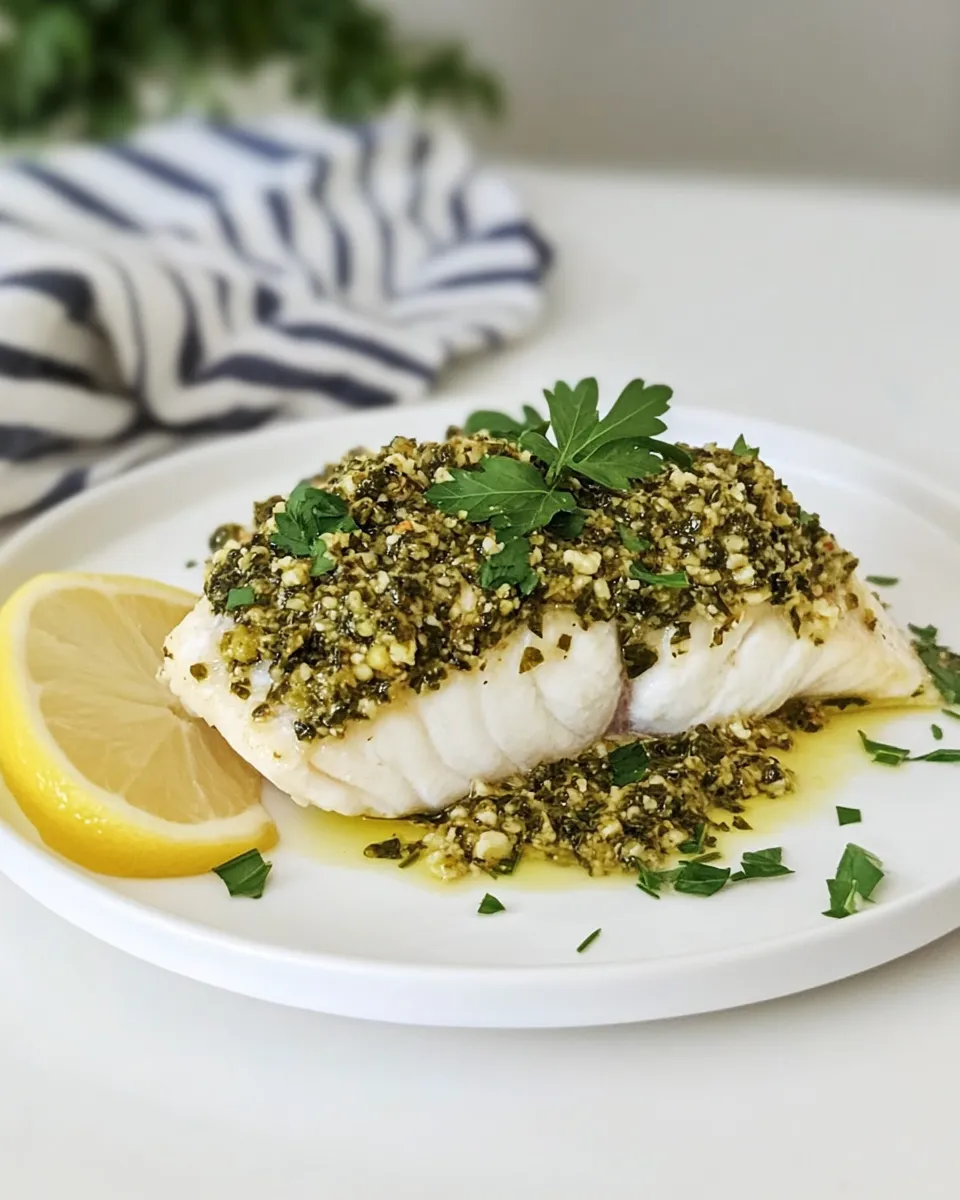
Basil Tapenade Baked Whitefish
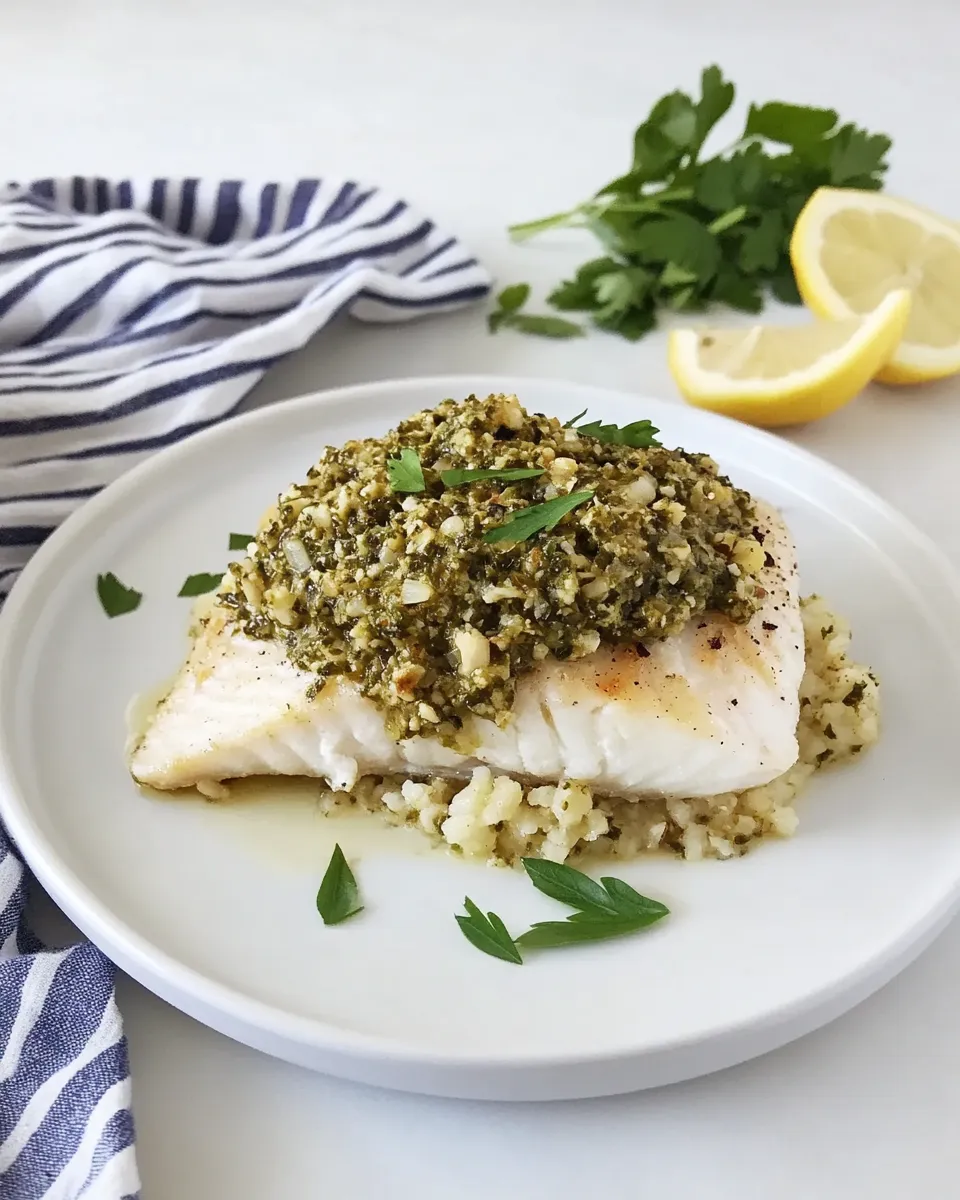
This is a bright, simple baked whitefish topped with a basil-forward tapenade. It comes together quickly in the food processor and finishes in a hot oven—perfect for weeknights when you want something that feels special without a lot of fuss. The tapenade adds a savory, herbaceous crust that keeps the fillets moist and gives each bite an instant lift.
No complicated technique here: pulse the olives, basil, olive oil, capers, garlic, and lemon zest into a rough paste, spread it over wild-caught whitefish fillets, and bake until just cooked through. Watch the fish closely near the end of baking so it stays tender. Serve with lemon wedges and a drizzle of olive oil if you like a little extra richness.
What Goes In
Ingredients
- 4 ounces pitted Castelvetrano olives (about 1 cup) — buttery, mild olives form the tapenade’s base and add salty richness.
- 15 large basil leaves — fresh basil brings bright herb flavor and color to the tapenade.
- 2 tablespoons extra virgin olive oil — binds the tapenade and adds silky mouthfeel; add more if needed to reach desired consistency.
- 1 ½ teaspoons capers, rinsed and drained — bring briny tang and texture; rinsing removes excess salt.
- 1/2 teaspoon minced garlic (1 small clove) — gives a savory, aromatic lift; mince finely for even distribution.
- ¼ teaspoon lemon zest — brightens the tapenade and balances the olives’ richness.
- 4 boneless skinless wild caught white fish fillets (such as cod or haddock) (4 ounces each) — the main protein; wild-caught fillets hold their shape and have clean flavor.
- Freshly ground black pepper — used to season the fish before and after baking for a subtle heat and aroma.
- Fresh lemon wedges for serving — squeezed over the finished fish to add bright acidity.
How to Prepare Basil Tapenade Baked Whitefish
Follow these steps in order. The amounts and sequence match the recipe ingredients exactly.
- Preheat your oven to 450°F. Line a baking sheet with baking parchment and set it aside. A hot oven gives the fish a quick roast without drying it out.
- Prepare the tapenade: in the bowl of a food processor place the pitted Castelvetrano olives (about 1 cup), 15 large basil leaves, 2 tablespoons extra virgin olive oil, 1 ½ teaspoons rinsed and drained capers, 1/2 teaspoon minced garlic (one small clove), and 1/4 teaspoon lemon zest.
- Pulse the food processor in short bursts until the mixture forms a rough paste. You want the tapenade textured, not a smooth purée—stop when the ingredients hold together but still show small pieces.
- Place the 4 boneless skinless wild caught white fish fillets (4 ounces each) on the prepared baking sheet in a single layer. Season the tops lightly with freshly ground black pepper.
- Evenly divide the tapenade among the four fillets and spread it over the top of each fillet so they are well coated.
- Bake the fillets in the preheated 450°F oven for roughly 15 minutes. Check for doneness starting a few minutes before 15, especially if your fillets are thinner or thicker than average. The fish is done when it flakes easily with a fork and is opaque throughout.
- Careful—fish can go from perfectly cooked to overdone quickly. Watch the fillets toward the end of the cook time and remove them as soon as they flake easily to avoid dryness.
- When the fillets are done, remove them from the oven and let them rest for 3 minutes on the baking sheet. This short rest lets the juices redistribute.
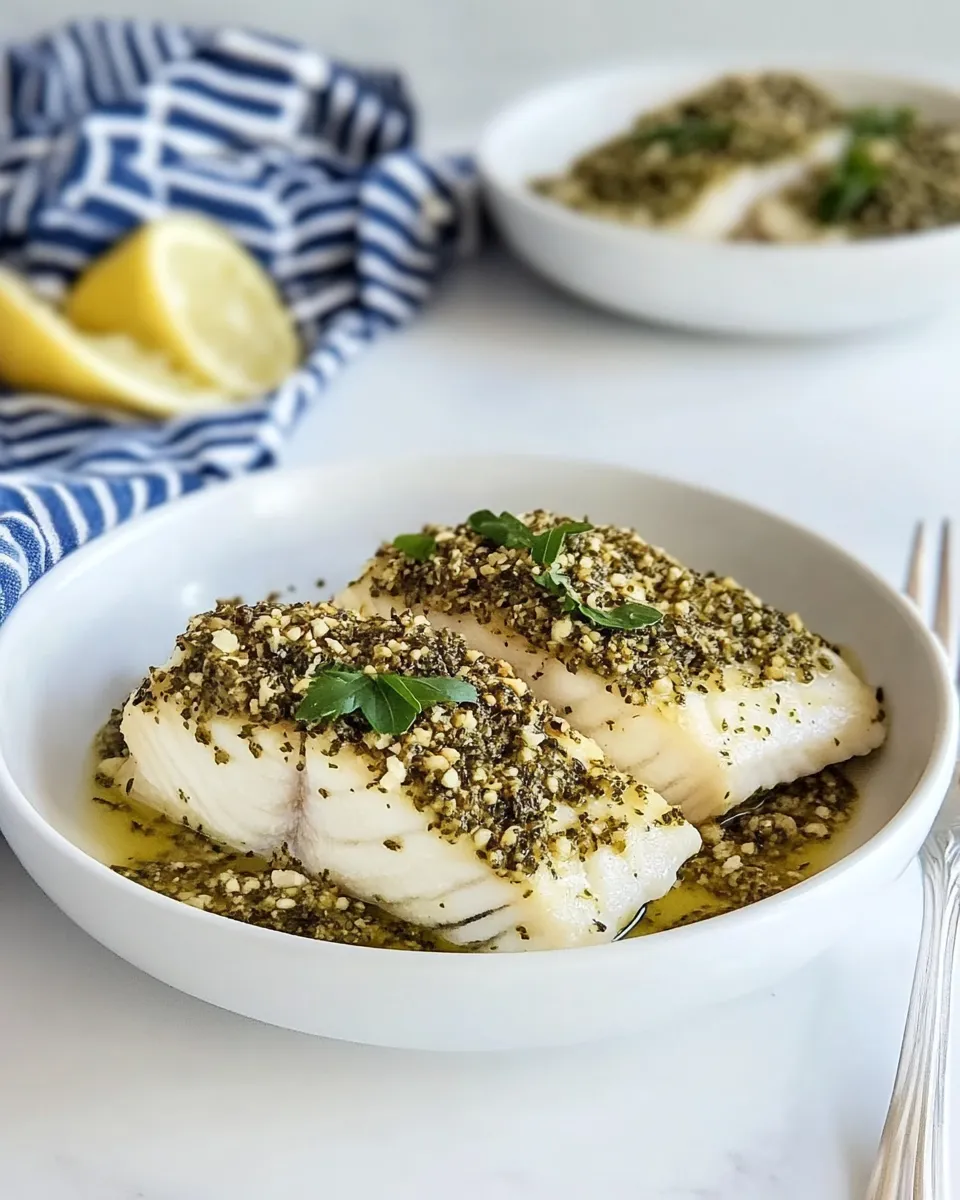
- Season with a final grind of freshly ground black pepper. Serve the fillets hot with fresh lemon wedges; squeeze on lemon juice for a bright finish. If you want extra richness and moisture, drizzle a little additional extra virgin olive oil over the top before serving.
What You’ll Love About This Recipe
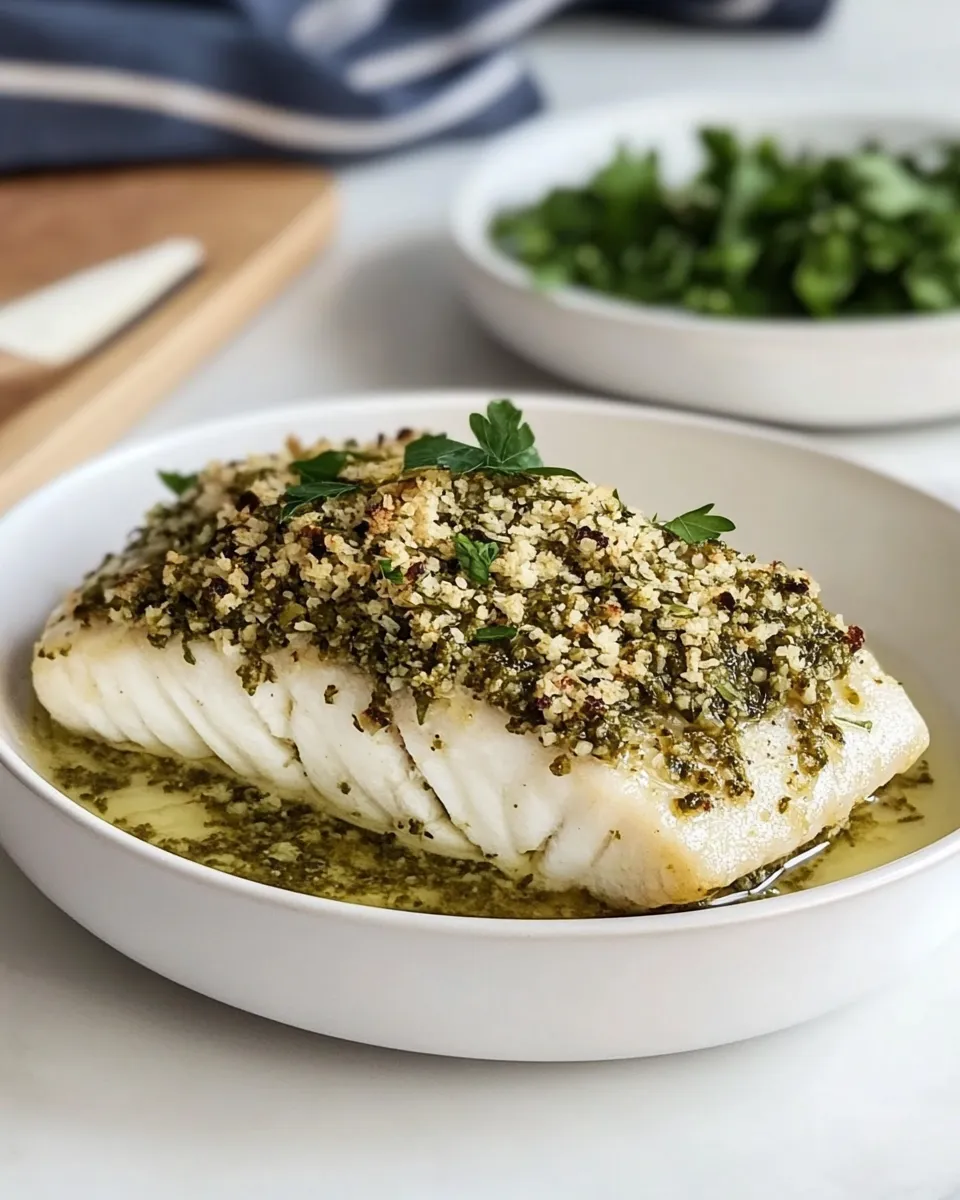
The tapenade brings bold flavor with minimal effort—no long simmering or complicated sauce needed. It’s herbaceous, salty, and bright from the lemon zest, and it keeps the fish moist under a protective, flavorful layer. The whole dish takes very little hands-on time and requires only a food processor and a baking sheet.
This recipe adapts well to different white fish—cod, haddock, or similar fillets all work. It’s also easy to scale up for guests and pairs with everything from a simple green salad to roasted vegetables or steamed rice.
If You’re Out Of…
- Castelvetrano olives — substitute with any mild green olive or a mix of green and black olives if that’s what you have; the flavor will shift but still be delicious.
- Fresh basil — use a handful of fresh parsley and a little extra lemon zest in a pinch; it won’t be the same but will keep the tapenade bright.
- Capers — omit if needed and add a small pinch of sea salt to replace their briny note.
- Fresh lemon — a splash of bottled lemon juice can work for finishing, but use fresh zest in the tapenade if possible for better aroma.
Equipment Breakdown
- Food processor — the fastest way to make the tapenade with the right texture. A small chopper or immersion blender can work but pulse carefully to avoid overprocessing.
- Baking sheet lined with parchment — ensures easy cleanup and prevents sticking.
- Oven — preheat to 450°F for a quick, even bake.
- Spatula or spoon — to spread the tapenade evenly over the fillets.
Problems & Prevention
Dry or rubbery fish
Problem: Overcooking. Prevention: Start checking for doneness a few minutes before the suggested time. Use a fork to test for flakiness; remove from oven as soon as the fish flakes and is opaque.
Tapenade too runny or too stiff
Problem: Texture imbalance. Prevention: If the tapenade is too thick, add a teaspoon or two more olive oil and pulse. If it’s too loose, pulse less and drain any excess oil from the olives before processing.
Too salty
Problem: Olives and capers can add salt. Prevention: Taste the tapenade before spreading—since it’s not cooked further, you can adjust by rinsing capers more thoroughly or choosing milder olives.
Dietary Customizations
- Lower sodium — use fewer capers and rinsed low-salt olives, or drain and pat olives to remove excess brine.
- Whole30/Paleo — this recipe is already compliant if you use olives and olive oil without additives; check labels for capers and olives without preservatives.
- Nut-free — recipe contains no nuts; safe as written for nut-free diets.
- Gluten-free — naturally gluten-free if your parchment and ingredients are uncontaminated.
Behind the Recipe
Tapenade is a Mediterranean condiment traditionally made from olives, capers, and anchovies. This version skips anchovies and leans into bright basil to complement delicate whitefish. Castelvetrano olives are the choice here because they are buttery and less briny than many cured varieties; they make a mellow base that lets the basil and lemon shine.
Baking at a high temperature for a short time cooks the fish quickly while preserving moisture. The tapenade acts as a flavorful crust that prevents the surface from drying out and adds texture without heavy breading or frying.
Store, Freeze & Reheat
- Storing cooked fish — refrigerate in an airtight container for up to 2 days. The topping will remain flavorful but the texture changes once chilled.
- Freezing — cooked fish with tapenade is not ideal for freezing; the texture degrades. If you must, freeze raw fillets separately without tapenade, up to 2 months. Thaw in the fridge before using.
- Reheating — reheat gently in a 300°F oven for 8–10 minutes until warmed through to avoid overcooking. A quick splash of olive oil before reheating helps retain moisture. Avoid microwaving when possible, as it can make the fish rubbery.
Ask & Learn
Questions to consider when making this: how thick are your fillets? Thicker pieces need more time; thinner ones need less. Do you prefer a smoother tapenade or chunkier texture? Adjust pulses in the food processor accordingly. If you want more acidity, add a bit more lemon zest or a squeeze of lemon at the end.
If something went wrong—tell me what happened (texture, salt level, doneness), and I’ll suggest targeted fixes for the next batch.
Save & Share
Bookmark or print this recipe so you can pull it together quickly on busy nights. It’s a great template to customize with seasonal herbs, different olives, or your favorite white fish. If you try it, share a photo and note what you changed—I love seeing your variations and helping troubleshoot or tweak the flavors.
Basil Tapenade Baked Whitefish
Ingredients
- 4 oz pitted Castelvetrano olives about 1 cup
- 15 large basil leaves
- 2 tablespoons extra virgin olive oil or more as needed
- 1.5 teaspoons capers rinsed and drained
- 1/2 teaspoon minced garlic about 1 small clove
- 1/4 teaspoon lemon zest
- 4 boneless skinless wild-caught white fish fillets such as cod or haddock, about 4 ounces each
- freshly ground black pepper to taste
- fresh lemon wedges for serving
Instructions
- Preheat the oven to 450°F and line a baking sheet with parchment paper.
- Combine the olives, basil leaves, olive oil, rinsed capers, minced garlic, and lemon zest in the bowl of a food processor.
- Pulse the mixture until it forms a coarse paste, scraping down the sides as needed; add a little more olive oil if the mixture is too dry.
- Place the fish fillets on the prepared baking sheet and season them lightly with freshly ground black pepper.
- Evenly spread the tapenade over the top of each fillet, dividing it among the four pieces.
- Bake the fillets in the preheated oven for about 15–17 minutes, or until the fish is cooked through and flakes easily with a fork; cook time will vary with thickness.
- Let the fish rest for 3 minutes, then finish with additional freshly ground black pepper if desired.
- Serve hot with fresh lemon wedges and an optional drizzle of extra olive oil.
Equipment
- Baking Sheet
- Parchment Paper
- Food Processor
- Measuring spoons
- Knife
- Cutting Board
Notes
- Use less olives to reduce sodium, then add more basil and olive oil to reach a spreadable consistency.
- Tapenade can be pulsed to preferred texture — chunkier or smoother.
- Watch fish closely near the end of baking to avoid overcooking.
- Wild-caught fillet thickness affects cook time.