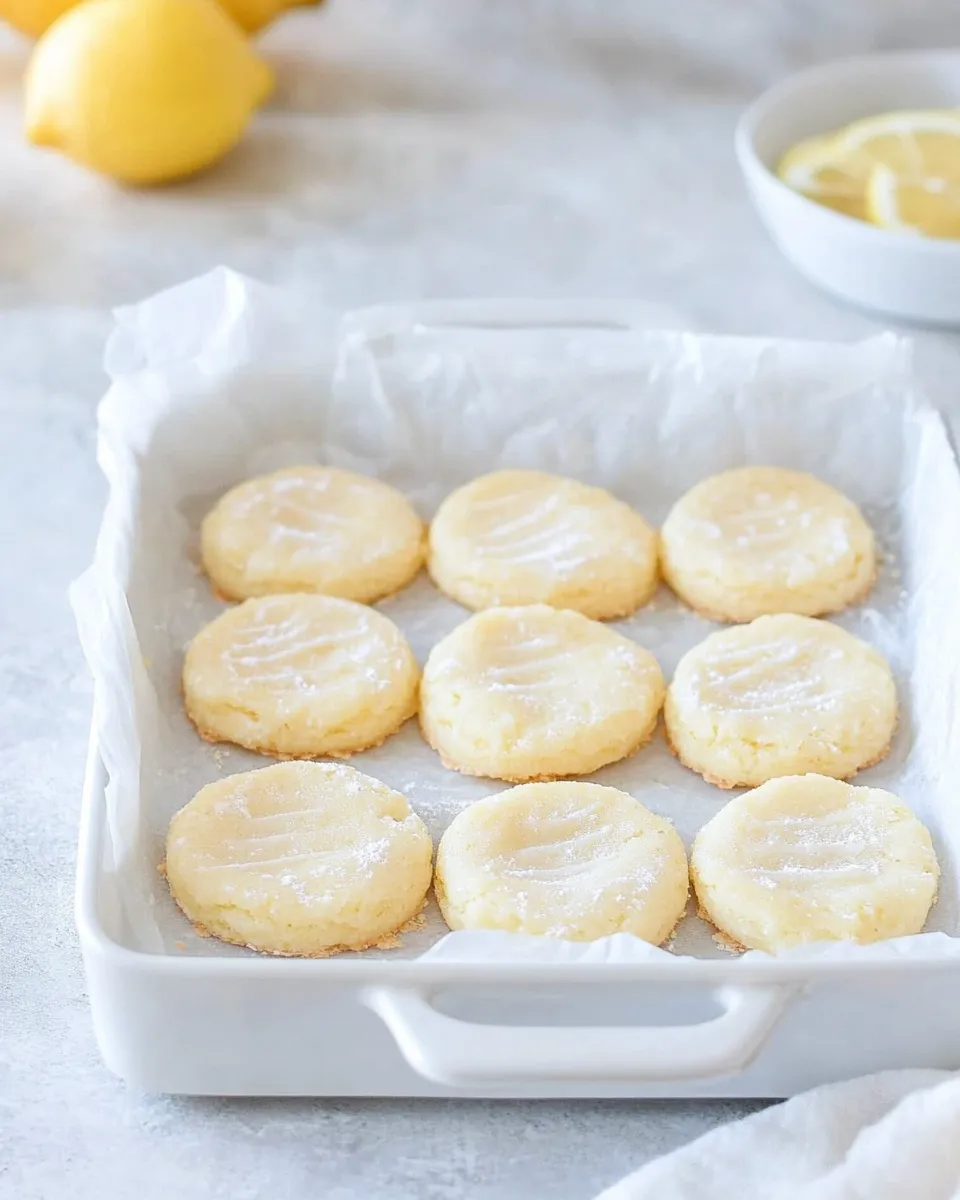
Lemon Shortbread Cookies Recipe
Shortbread and lemon are a simple, dependable pairing. These cookies marry the classic, crumbly texture of shortbread with a bright lemon glaze that lifts each bite without fuss. They take a little chilling time, but the hands-on work is minimal and well worth the result.
I test recipes until the mechanics are dependable and the flavors feel balanced—this one stood out for being both achievable and elegant. The dough is straightforward: butter, cornstarch, confectioners’ sugar, and flour, brightened with fresh lemon zest and juice. A thin lemon glaze finishes the cookies and gives them a glossy, tart note.
If you have a small baking sheet and a sharp knife, you’re set. I’ll walk you through the ingredient roles, step-by-step method, troubleshooting tips, and storage so these cookies are consistently crisp-edged, tender-centered, and perfectly lemony.
Ingredient Breakdown

- 3/4 cup (170g) salted butter, at room temperature — provides richness, structure, and flavor; room temperature ensures it creams smoothly with the sugars and cornstarch.
- 1/2 cup (56g) cornstarch — tenderizes the dough and lightens the texture for that melt-in-your-mouth shortbread feel.
- 1/2 cup (57g) confectioner’s sugar — sweetens and contributes to a fine, delicate crumb; works better than granulated sugar for shortbread.
- 1 1/4 cups (150g) all-purpose flour — forms the cookie’s structure; measured as the recipe specifies for correct texture.
- 1 tablespoon (6g) lemon zest — concentrated lemon flavor in the dough; use only the yellow part to avoid bitterness.
- 1 1/2 tablespoons (21g) lemon juice — adds brightness and a touch of acidity to the dough, enhancing the lemon notes.
- 1/2 cup (57g) confectioner’s sugar (for glaze) — base of the lemon glaze; dissolves smoothly for a thin, spreadable finish.
- 1 tablespoon (6g) lemon zest (for glaze) — gives the glaze flecks of fresh lemon and extra aroma.
- 2 tablespoons (28g) lemon juice (for glaze) — thins the glaze and delivers the tartness that contrasts the buttery cookie.
The Method for Lemon Shortbread Cookies Recipe
- Prepare tools and ingredients: Have room-temperature butter, measured dry ingredients, and fresh lemon zest and juice ready. Line a rimmed baking sheet with parchment paper. Preheat oven to 350°F (do this later just before baking to keep dough cold).
- Cream butter, cornstarch, and confectioner’s sugar: In a large mixing bowl, use an electric mixer to beat 3/4 cup (170g) salted butter, 1/2 cup (56g) cornstarch, and 1/2 cup (57g) confectioner’s sugar together for about 3 minutes. Beat until the mixture is smooth and well combined—scrape the bowl once or twice so everything blends evenly.
- Add the flour: Add 1 1/4 cups (150g) all-purpose flour to the butter mixture. Mix on low speed or fold with a spatula just until the flour is incorporated and the dough comes together. Do not overmix; you want a soft, cohesive dough.
- Add lemon: Add 1 tablespoon (6g) lemon zest and 1 1/2 tablespoons (21g) lemon juice to the dough. Beat briefly until the lemon is thoroughly distributed and a soft dough forms. The dough should hold together but still be pliable.
- Divide and shape the dough: Split the dough in half and turn each portion out onto a sheet of parchment or waxed paper. Shape each half into a cylinder approximately 1 inch in diameter. Twist the ends of the paper to tighten and seal each roll, or wrap tightly in plastic wrap if you prefer.
- Chill until firm: Refrigerate the wrapped rolls until firm, about 1 hour. Chilling makes the dough easier to slice and helps the cookies keep their shape while baking.
- Slice for baking: When ready to bake, preheat the oven to 350°F. Unwrap the chilled rolls and use a sharp knife to slice them into 1/4-inch-thick rounds. Arrange the slices on the prepared rimmed baking sheet, leaving a little space between each cookie.
- Bake: Bake the cookies in the 350°F oven until set, about 10 minutes. They won’t brown; look for the edges to be set and the centers firm. Remove the sheet from the oven and allow the cookies to cool completely on the baking sheet or a wire rack.
- Make the glaze: While the cookies cool, combine 1/2 cup (57g) confectioner’s sugar, 1 tablespoon (6g) lemon zest, and 2 tablespoons (28g) lemon juice in a medium bowl. Stir until the glaze is smooth and pourable. If it’s too thick, add a few drops more lemon juice; if too thin, add a touch more confectioner’s sugar.
- Glaze the cookies: Once cookies are completely cool, spoon about 1/2 teaspoon of glaze onto the center of each cookie and spread it gently toward the edges, leaving a little border if you prefer. Allow the glaze to set before serving—this takes only a few minutes at room temperature.
Reasons to Love Lemon Shortbread Cookies Recipe
- Bright, clean lemon flavor that cuts through rich butteriness.
- Short ingredient list and straightforward technique—great for weekday baking.
- Corntarch makes them tender and delicate, not dense.
- Glaze adds visual appeal and a tart finish without overpowering the cookie.
Ingredient Flex Options
- Butter: You can use unsalted butter if you prefer precise control over salt—omit added salt elsewhere or taste dough carefully. This recipe assumes salted butter.
- Flour: Stick with all-purpose for structure. Substituting pastry flour can make them even more tender but will change texture slightly.
- Lemon: If lemons aren’t available, swap with an equal weight of lime zest and juice for a different bright twist.
- Sugar: Do not replace confectioner’s sugar in the dough with granulated sugar; the texture relies on the fine sugar and cornstarch blend.
Setup & Equipment
- Electric mixer (hand or stand) for creaming butter and sugar smoothly.
- Mixing bowls—one large for the dough, one medium for the glaze.
- Measuring cups and a scale if you prefer precise grams noted in the ingredient list.
- Sharp knife or cookie slicer for even 1/4-inch slices.
- Parchment paper and a rimmed baking sheet to ensure even baking and easy cleanup.
- Plastic wrap or extra parchment for wrapping the dough logs for chilling.
Missteps & Fixes
- Dough too soft to slice: Chill longer. The recipe’s 1 hour is typical, but some kitchens are warm—extra chilling will firm the roll for clean slices.
- Cookies spread or lose shape: Make sure rolls are well chilled. Also avoid overworking the dough when adding flour; overmixing can activate gluten and create spread.
- Dry, crumbly bites: Measure flour by spooning into the cup or weighing—too much flour makes shortbread dry. Also ensure you use cornstarch as specified; it contributes to tenderness.
- Glaze too runny or too thick: Adjust with small increments of lemon juice (thin) or powdered sugar (thicken) until you reach a spreadable consistency. Always add in teaspoons not tablespoons when tweaking.
Fresh Seasonal Changes
- Spring/Summer: Add a teaspoon of finely chopped candied ginger into the glaze for a floral-spicy lift that pairs well with lemon.
- Autumn: Stir 1/4 teaspoon ground cardamom into the dough for a warm, aromatic twist that complements lemon.
- Holiday: Top glazed cookies with a few tiny sprinkles or a thin strip of candied lemon peel for color and texture.
Notes from the Test Kitchen
- Chilling is the key step. I tested slices cut from partially chilled logs and from thoroughly chilled logs—thoroughly chilled held their edges and produced a prettier cross-section.
- Using salted butter yielded a slightly more rounded flavor in tests; if using unsalted, consider adding a pinch of fine salt if you prefer that contrast.
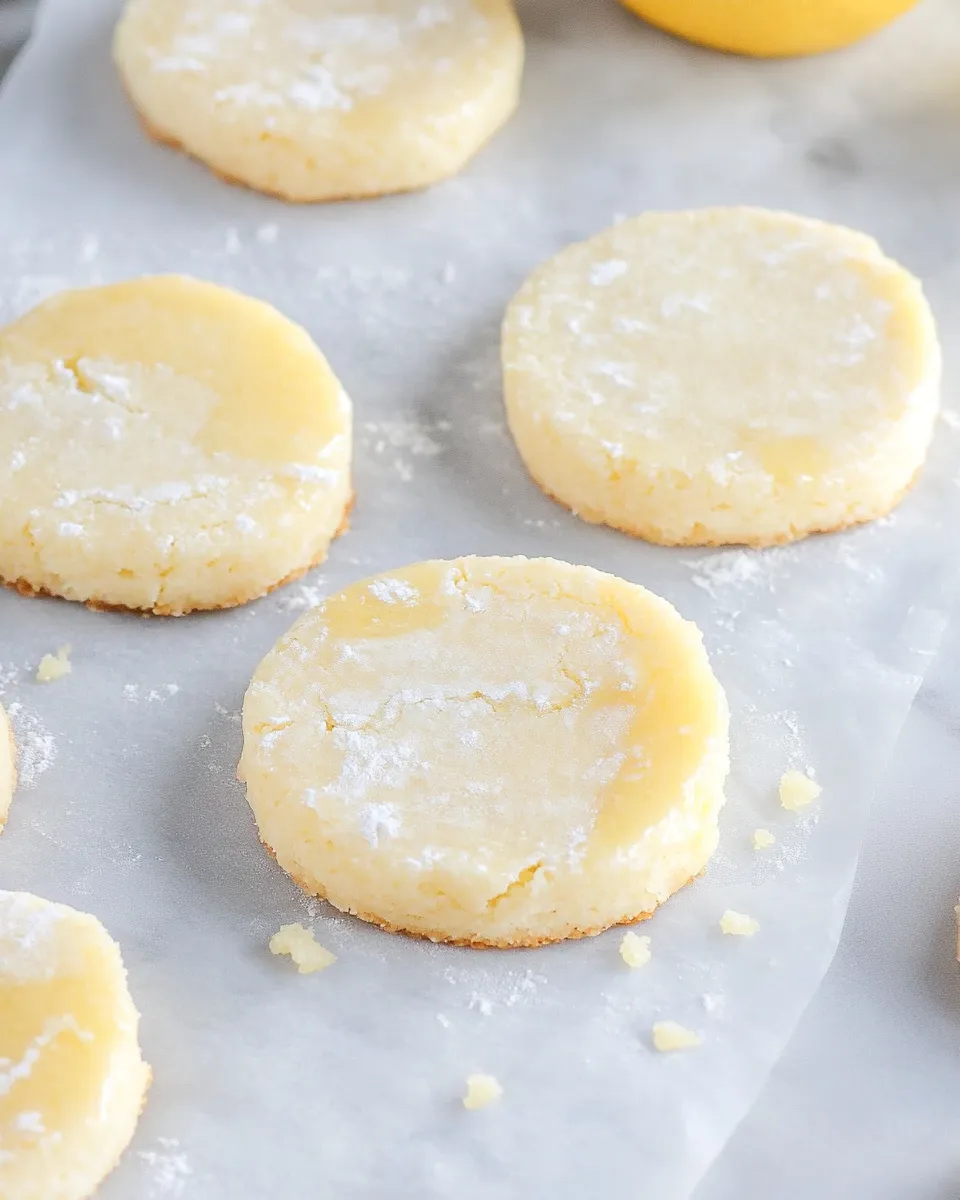
- Because these cookies don’t brown, don’t judge doneness by color. Gently press the center—if it feels set and springy, they’re done.
Store, Freeze & Reheat
- Store: Keep glazed cookies in an airtight container at room temperature for up to 3 days. If stacking, separate layers with wax or parchment paper to protect the glaze.
- Freeze: Freeze unbaked dough logs wrapped tightly for up to 1 month. Thaw in the refrigerator before slicing and baking. You can also freeze baked cookies (unglazed) for up to 2 months; thaw at room temperature and then glaze.
- Reheat: These are best at room temperature. If you like a slightly softer bite, warm a cookie for 6–8 seconds in the microwave, but be careful—the glaze can get tacky.
Lemon Shortbread Cookies Recipe FAQs
- Can I make the dough ahead? Yes—dough logs can be refrigerated for 24 hours or frozen up to 1 month. Thaw in the fridge before slicing.
- Why use cornstarch? Cornstarch gives shortbread that tender, crumbly texture; it keeps the cookies delicate without adding a starchy taste.
- My glaze is gritty—what happened? That means the confectioner’s sugar wasn’t fully sifted or dissolved. Stir longer or strain the glaze for a perfectly smooth finish.
- Why didn’t the cookies brown? Shortbread has a high butter-to-flour ratio and a low baking temperature here; they set without browning. Rely on texture, not color, to judge doneness.
Time to Try It
These Lemon Shortbread Cookies are straightforward, forgiving, and bright. Gather the ingredients, plan for an hour of chilling, and you’ll end up with a stack of elegant, tender cookies perfect for tea, a bake sale, or a simple afternoon treat. If you try a variation, note what you changed so you can reproduce the result—baking is part art, part reliable repeatability. Happy baking.

Lemon Shortbread Cookies Recipe
Ingredients
- 3/4 cup salted butter 170 g, at room temperature
- 1/2 cup cornstarch 56 g
- 1/2 cup confectioners' sugar 57 g (for dough)
- 1 1/4 cups all-purpose flour 150 g
- 1 tablespoon lemon zest 6 g (for dough)
- 1 1/2 tablespoons lemon juice 21 g (for dough)
- 1/2 cup confectioners' sugar 57 g (for glaze)
- 1 tablespoon lemon zest 6 g (for glaze)
- 2 tablespoons lemon juice 28 g (for glaze)
Instructions
- In a mixing bowl, cream the room-temperature salted butter, cornstarch, and 1/2 cup (57 g) confectioners' sugar with an electric mixer until smooth and well combined, about 3 minutes.
- Add the all-purpose flour and mix just until incorporated and a soft dough forms.
- Stir in 1 tablespoon lemon zest and 1 1/2 tablespoons lemon juice until evenly distributed.
- Divide the dough in half and shape each half into a 1-inch diameter log on a sheet of parchment, wrapping and twisting the ends to seal.
- Refrigerate the wrapped logs until firm, about 1 hour.
- When ready to bake, preheat the oven to 350°F (175°C) and line a rimmed baking sheet with parchment paper.
- Unwrap the chilled logs and slice into 1/4-inch thick rounds. Place slices on the prepared baking sheet about 1 inch apart.
- Bake until set but not browned, about 10 minutes. Remove from the oven and let cookies cool completely on the baking sheet.
- For the glaze, whisk together 1/2 cup (57 g) confectioners' sugar, 1 tablespoon lemon zest, and 2 tablespoons lemon juice until smooth.
- Spoon about 1/2 teaspoon of glaze onto the center of each cooled cookie and spread lightly; allow the glaze to set before serving.
Equipment
- Electric Mixer
- Mixing bowls
- Measuring cups and spoons
- Parchment Paper
- rimmed baking sheet
- spoon or small offset spatula
- Refrigerator
Notes
- Use room-temperature butter for easier creaming.
- Slice the logs while cold for clean edges.
- Cookies will not brown when done.
- Let cookies cool completely before glazing.