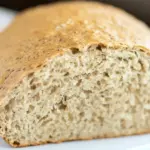
Jewish Rye Bread
A tender, classic Jewish-style rye made with first clear flour, rye flour, and a rye sour starter for deep flavor.
Servings: 16 servings
Ingredients
- 1.5 tablespoons active dry yeast
- 1.5 cups warm water about 110°F
- 2 cups first clear flour about 250 g
- 1.5 cups rye flour about 153 g
- 1.5 cups rye sour starter about 354 g
- 1.5 tablespoons salt
- 2.5 tablespoons caraway seeds optional
Instructions
- Dissolve the yeast in the warm water in a large bowl and let rest 5 minutes, until foamy.
- Add the first clear flour, rye flour, rye sour starter, salt, and caraway seeds to the bowl; stir with a wooden spoon until combined.
- Turn the dough onto a well-floured surface. With a wet hand and a bowl scraper or dough cutter, knead by scraping, folding, pulling and stretching for about 5 minutes until the dough is elastic and resists stretching.
- If the dough feels insufficiently elastic, add first clear flour 1/4 cup at a time and continue kneading, up to 3 more minutes, keeping the dough fairly soft.
- Transfer the dough to a clean, wet bowl; keep your hands wet and pat the dough, then cover lightly with a film of water and plastic wrap. Place in a warm spot and let rise until doubled, about 45 to 60 minutes.
- Prepare a baking sheet by sprinkling with a mixture of cornmeal and rye flour.
- Wet a clean work surface and your hands. Divide the dough in half and gently shape each portion into a round, handling gently so it does not tear. Let rest up to 10 minutes; no further proofing is required.
- Place an empty broiler pan on the oven floor and preheat the oven to 375°F for 5 minutes.
- Brush the loaves with water and place them on the prepared baking sheet on the middle rack (or on a preheated stone). Carefully add 6–8 ice cubes or 1 cup hot water to the broiler pan on the oven floor and quickly close the door to create steam.
- Bake 5 minutes with steam, then remove the broiler pan. Use a skewer to make 10–12 holes around each loaf's crust, return to the oven, reduce heat to 350°F, and bake 10 minutes.
- Make holes again and brush the loaves with water. Continue baking until the crust is hard and the loaves sound hollow when tapped on the bottom, about up to 1 hour total (about 50 minutes in the original test).
- If desired, transfer loaves to a preheated stone and bake an additional 10–15 minutes for a crisper crust.
- Remove the bread from the oven, brush the tops with more water, and cool on a wire rack before slicing.
Equipment
- Large Bowl
- Wooden Spoon
- bowl scraper or dough cutter
- Plastic Wrap
- Baking Sheet
- Wire Rack
- oven-safe broiler pan
Notes
- First clear flour is a high-protein flour used for Jewish-style rye.
- You can substitute 1½ cups all-purpose + ⅓ cup cake flour if needed.
- The author recommends white rye flour for best results.