This article contains paid links. As an Amazon Associate, I earn from qualifying purchases.
An outdoor fireplace gives the backyard a place to gather around. Stone can make it feel settled into the garden; brick brings familiar character; a simple linear opening can suit a modern patio. The most welcoming design also leaves room for comfortable seats, conversation and the route back to the house.
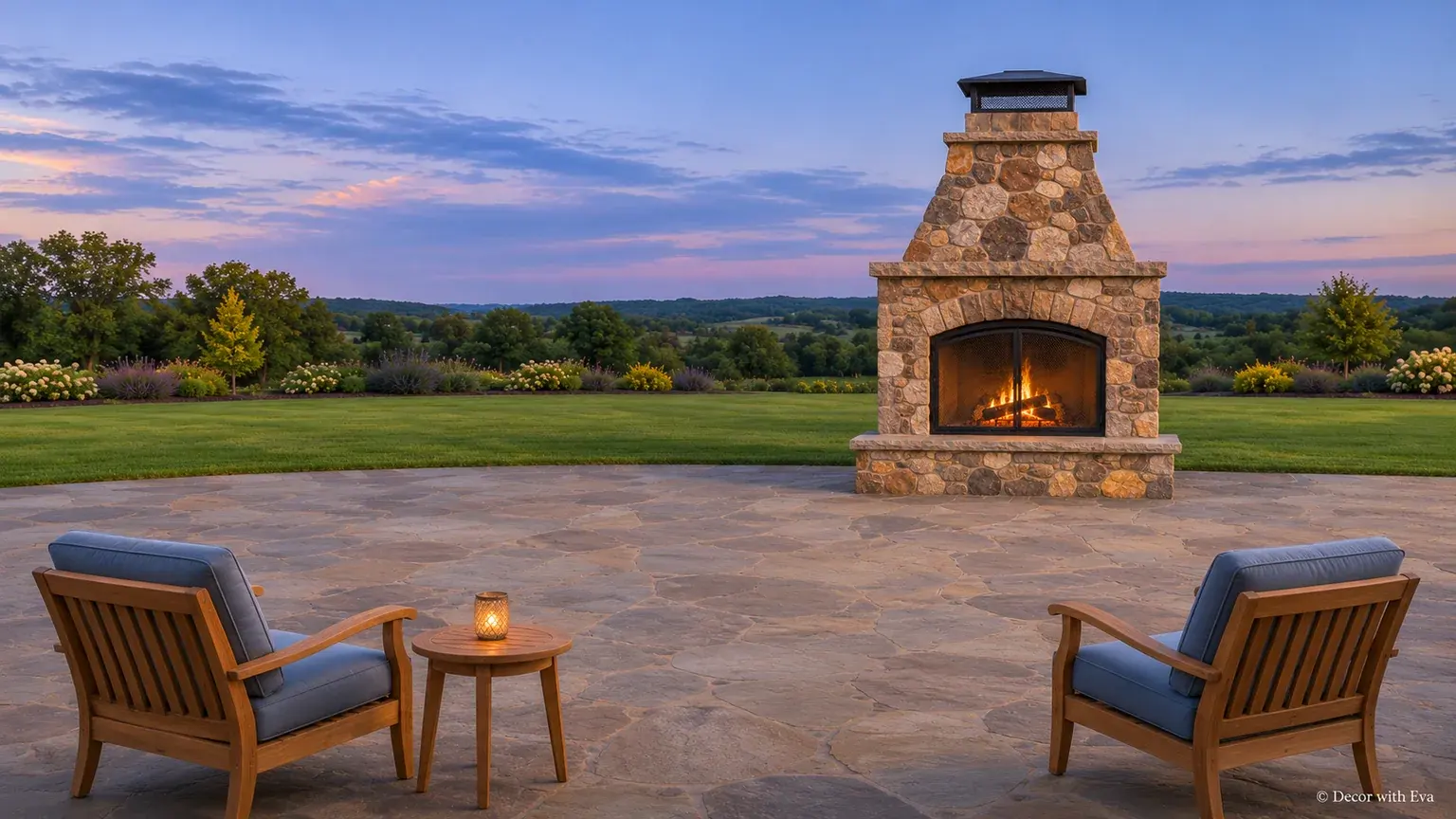
These 26 outdoor fireplace ideas mix larger design projects with useful changes to seating, lighting and storage. Many masonry and built-in examples need a qualified designer, mason or fireplace installer. Choose the ideas that suit your space and how you actually spend time outdoors.
Images are AI-created design illustrations, not construction plans or verified installations. Selected product photos informed linked items; masonry surrounds, furniture and other accessories are separate. Product suggestions are based on listing and technical-document research, not hands-on testing.
Plan the Fireplace before Styling the Patio
Choose the fuel, fireplace type and location together. Ask a qualified professional about the foundation or supporting surface, installation, flue or ventilation, utilities, weather exposure and local requirements. Use the current instructions for the exact fireplace to plan clearances and any overhead cover.
The U.S. Fire Administration’s outdoor fire guidance recommends keeping outdoor fireplaces at least 10 feet from the home and things that can burn. A particular appliance or local requirement may call for more. Keep the required area clear, use wood-fire screens as directed and attend the fire until it is fully extinguished. Check local burn restrictions before use.
For built-in gas projects, Napoleon’s outdoor fireplace planning guide explains the importance of location, utilities and weather exposure. Plan for localized warmth and atmosphere rather than expecting a fireplace to heat the whole backyard.
1. Make Fieldstone the Backyard’s Focal Point
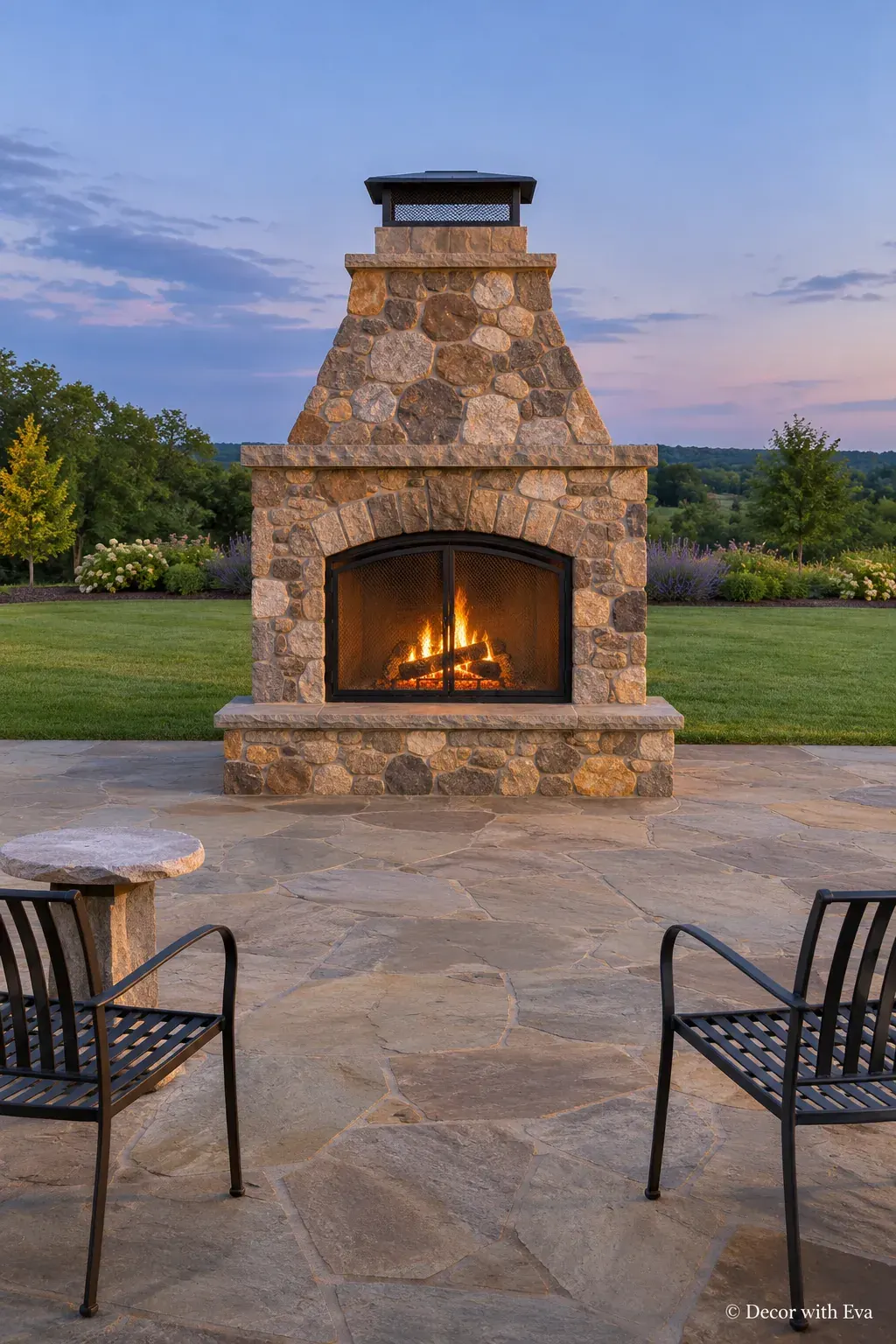
An outdoor fireplace built around irregular fieldstone has presence even before the fire is lit. Let the stones bring the variation: warm gray, cream and a little brown look comfortable beside gravel, paving and simple garden furniture. A tapered chimney gives the whole arrangement a clear center.
Choose the stone and mortar together, and view a sample in outdoor light. The firebox, structure, foundation and flue need a proper design beneath that finished surface. Leave enough open hardscape around the fireplace for its required clearances and a route that works when the seats are occupied.
Try this: Use a few stone samples beside your existing paving before deciding on the finish.
2. Choose Red Brick for a Familiar, Welcoming Look
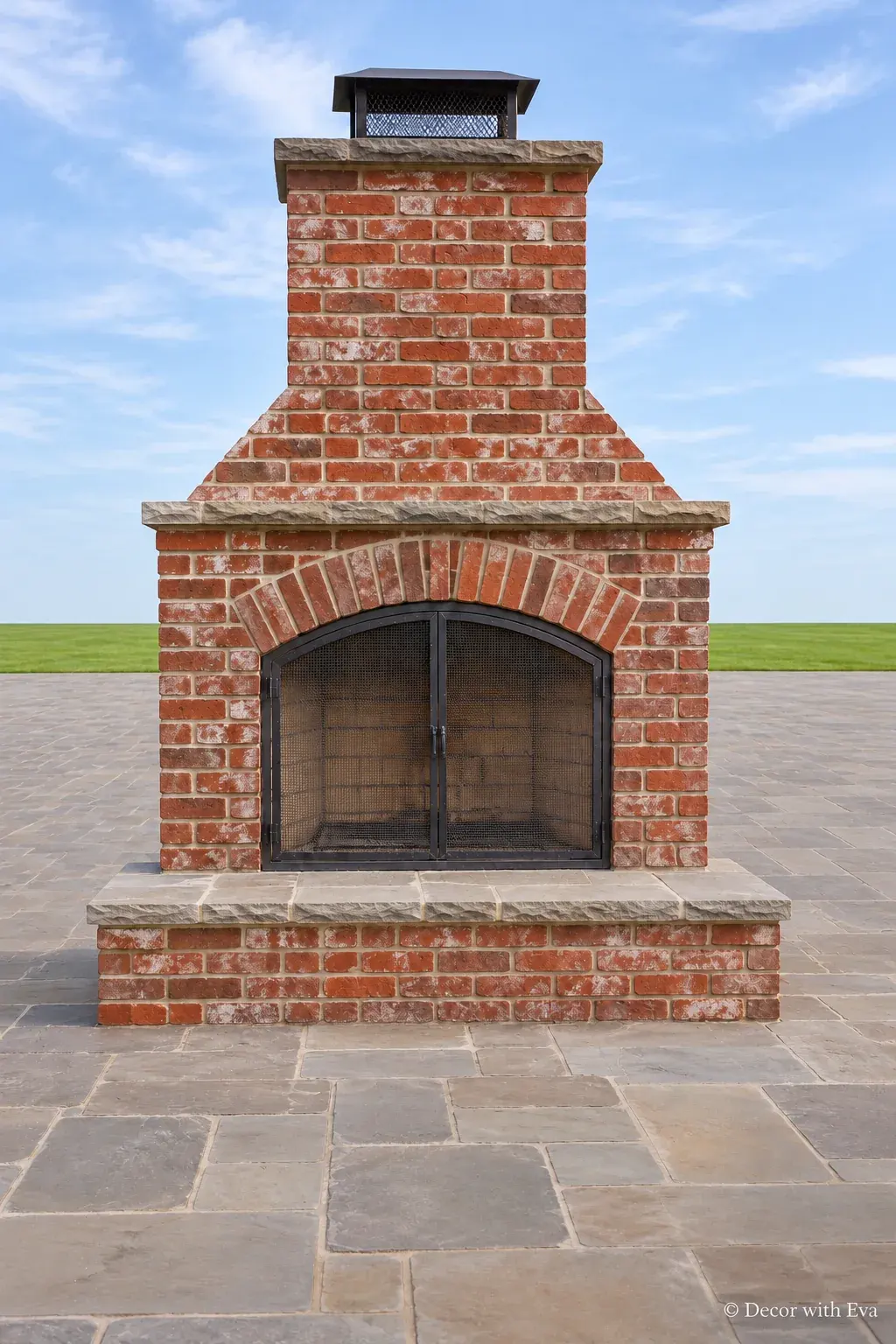
Red brick gives an outdoor fireplace the easy character of an old garden wall. A simple arch over the opening adds softness, while a plain chimney keeps the shape from becoming fussy. The result works with traditional furniture and an everyday backyard as well as a formal terrace.
Ask for a sample panel with the actual mortar joint. A cream joint can make the brick feel quite different from a dark one. Have the firebox and arch built with suitable materials and support; decorative face brick and the lining of a working fireplace have different jobs.
Try this: Look at the brick already used on your home or paths for a starting color.
3. Soften the Patio with Warm Ivory Stucco
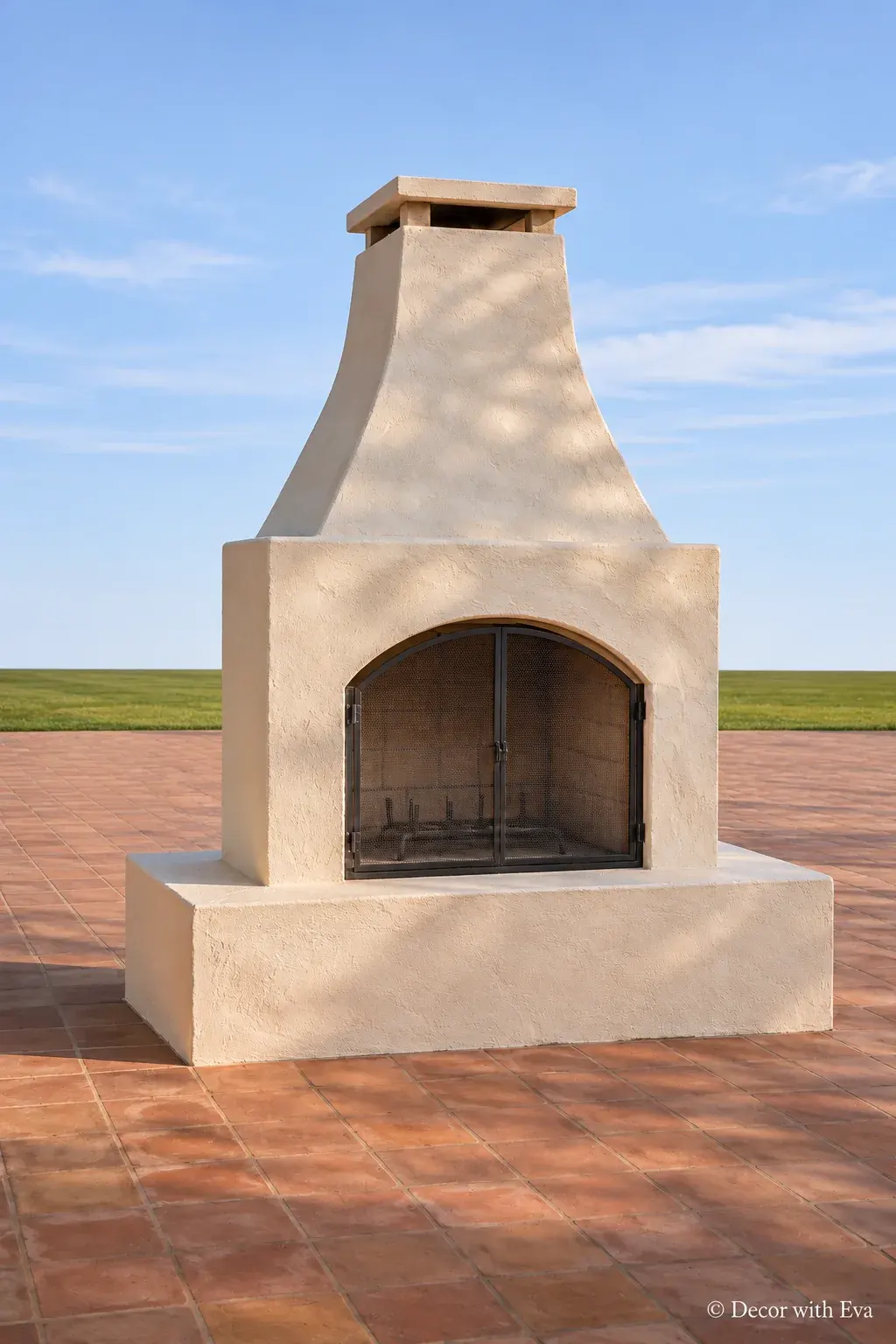
A warm ivory surround can make a fireplace feel sculptural without dominating the garden. Keep the outline simple and let light move across the surface. Terracotta-colored paving and a few blue accents in the distant seating area can give the space a relaxed Mediterranean direction.
Choose an exterior finish system suited to the climate and the fireplace assembly. A creamy sample may look almost white in bright sun, so test it outdoors. Plan caps, drainage and transitions with the installer; a clean-looking surface still needs the right construction behind it.
Try this: Compare finish samples with your patio at midday and near sunset.
4. Give a Modern Patio a Linear Gas Fireplace
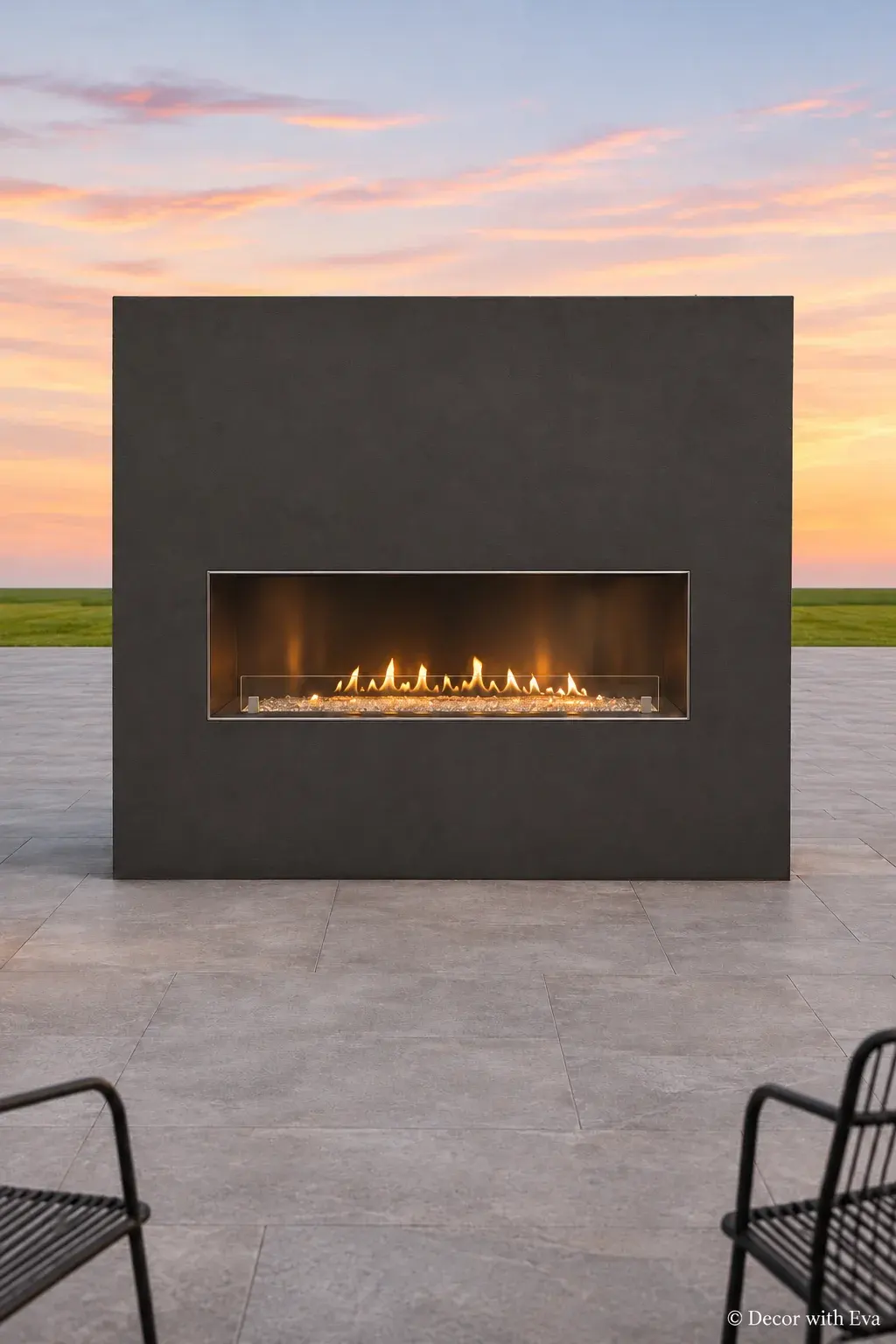
A long horizontal opening suits a patio with clean furniture and broad paving slabs. Keep the surround quiet so the fireplace’s proportions stand out. A restrained gas flame can be the evening detail, with the rest of the wall doing very little.
Start with an outdoor-listed appliance and its installation requirements, then design the wall around it. Confirm the fuel supply, service access, drainage and required clearances before choosing finishes. The opening width is only one part of the space needed for a complete installation.
Try this: Sketch the opening and the complete wall at the same scale before discussing the project with an installer.
The selected OLL48FP12SN is a built-in natural-gas unit with a 48-inch opening. The listing gives outside dimensions of 51.75 inches wide, 19.06 inches deep and 24.31 inches high; these are not framing dimensions. Fire glass is sold separately. Have the dealer confirm the current manual, compatible media, complete enclosure, drainage and utility requirements before ordering. Installation and service require a qualified professional.
5. Try Charcoal Stone for a Strong Outline
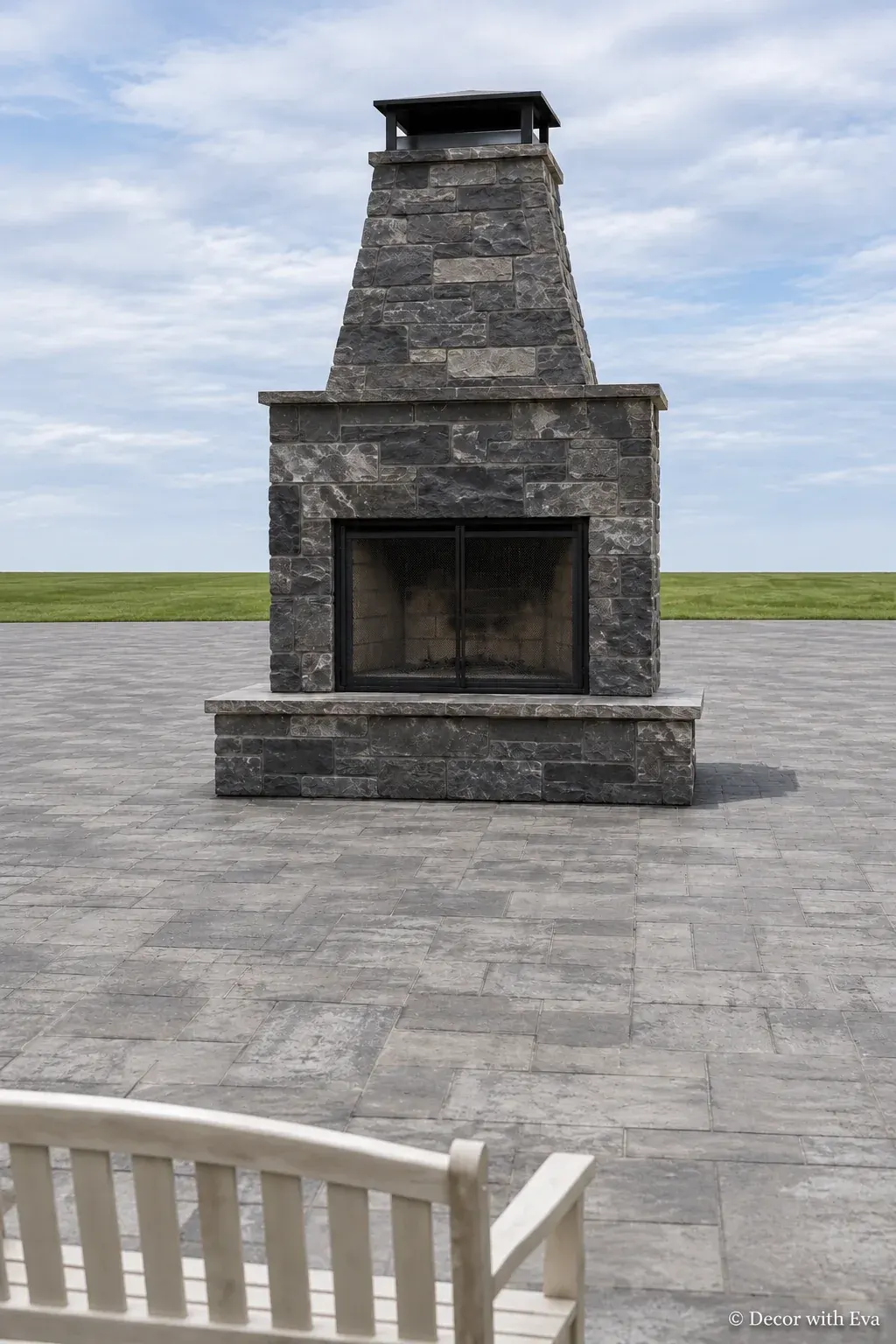
Dark stone can make a fireplace feel grounded against a pale patio. Choose a surface with some natural variation so the wall has depth in daylight. Cream, muted tan or warm wood in the seating area can keep the darker finish from feeling severe.
Look at large samples instead of choosing from a tiny swatch. Repeated veneer patterns can become obvious on a tall chimney. Have the finish, substrate and fixing method specified for the outdoor fireplace assembly, including movement and moisture details.
Try this: Hold a dark sample against the paving and view it from the back door.
6. Use Rounded Forms for a Sculptural Fireplace
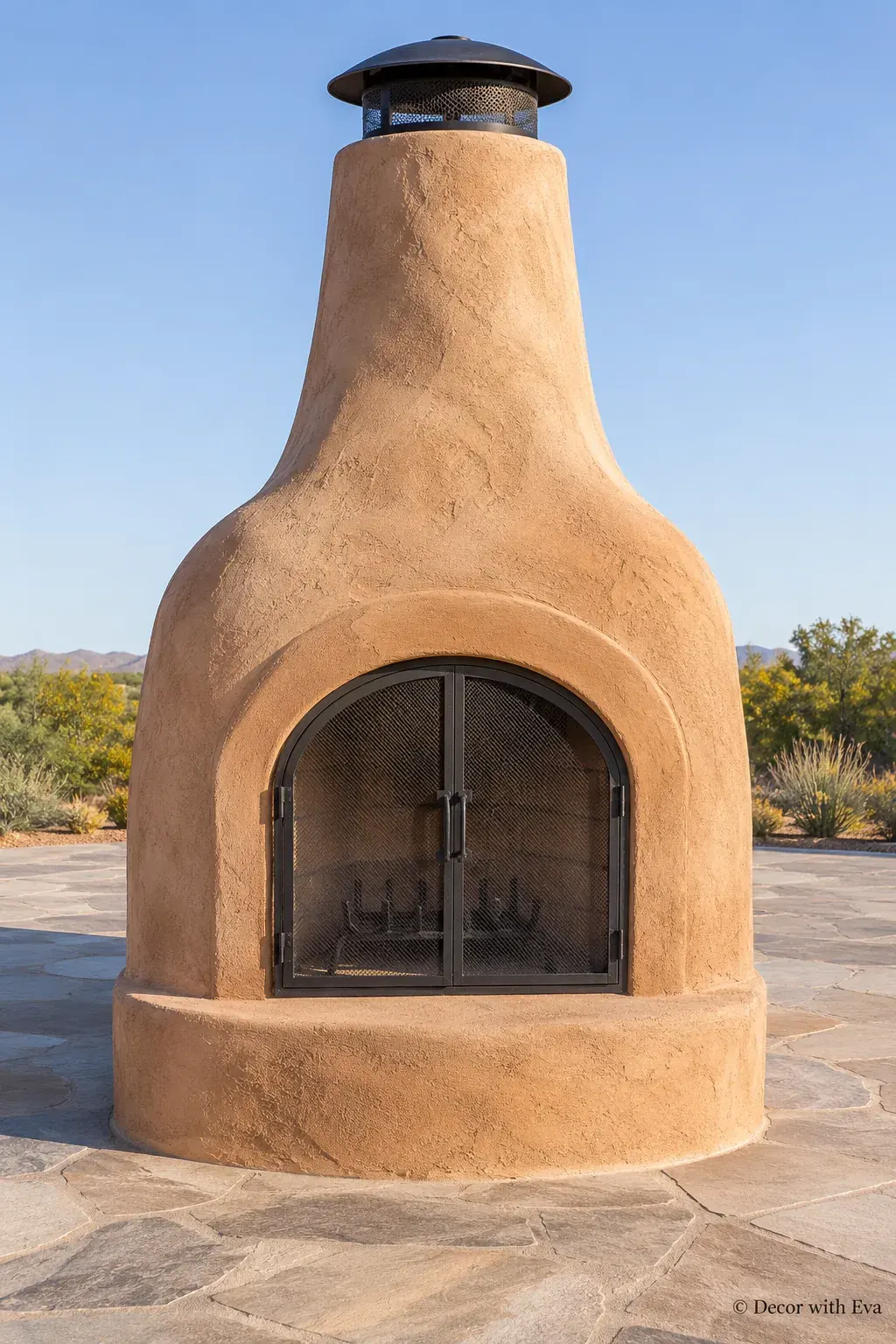
A softly rounded surround changes the mood of a patio. Curved shoulders, a smooth chimney and an arched opening can feel relaxed beside simple paving. Keep the neighboring details spare so the fireplace’s shape gets the attention.
Bring reference pictures to a qualified designer or mason and discuss the complete working assembly. The attractive outer shape still has to accommodate a suitable firebox, flue and weather details. Avoid treating a sculptural finish as a shortcut around those practical parts.
Try this: Try a simple paper silhouette against a photo of your yard to judge the scale.
7. Add Interest with a Herringbone Firebox
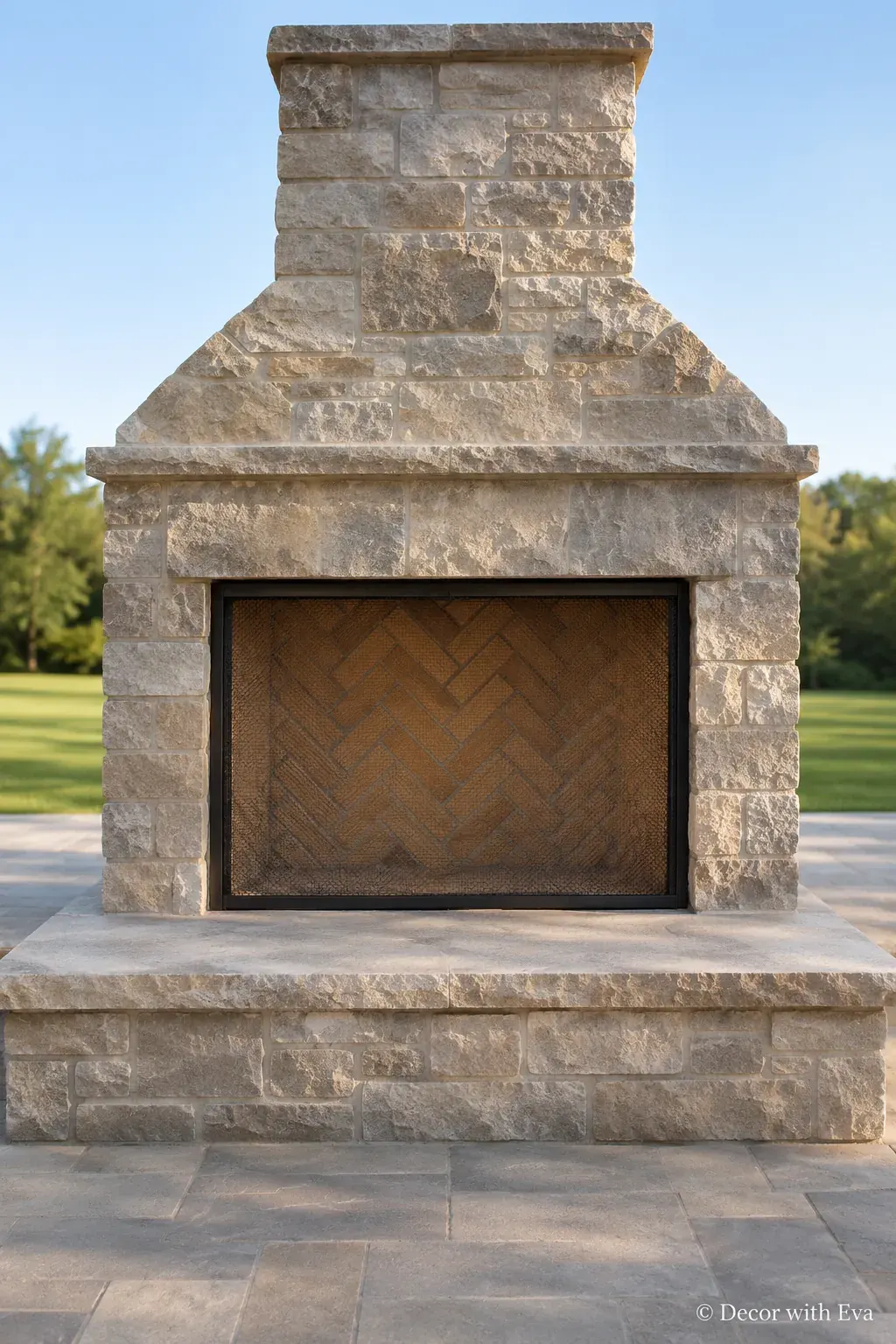
A herringbone lining gives a simple fireplace a point of interest at close range. It is especially effective when the outer surround is plain. Let the angled pattern provide the detail rather than adding a busy mantel and several competing finishes.
Have the firebox lining specified and installed for the working fireplace. Ordinary decorative tile, thin veneers and general-purpose adhesives cannot be assumed suitable inside it. A modest opening with the right proportions can show the pattern clearly without making the whole structure enormous.
Try this: Ask to see lining options alongside the proposed outer finish.
8. Put Pattern on the Outer Surround
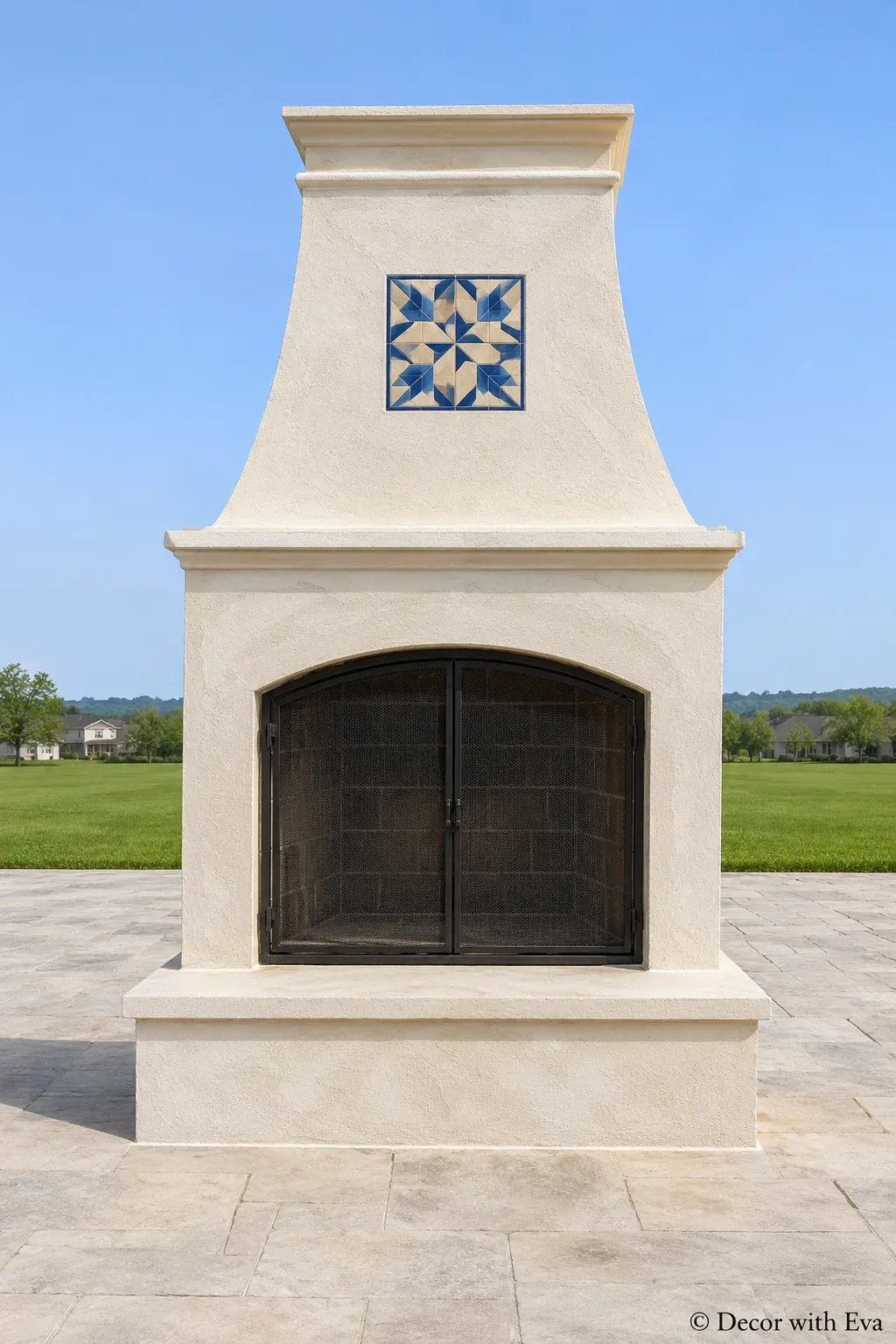
A band of patterned tile can give a fireplace a cheerful focal point. Blue and cream, muted green or an earthy geometric design can connect the fireplace to the patio’s colors. Keep the pattern in a defined area so the overall shape stays easy to read.
Use tile only where the fireplace manufacturer and installer allow it, with a suitable exterior assembly. Plan the edge, grout and transitions before buying a full quantity. Let the firebox remain a properly specified part of the fireplace rather than carrying decorative tile into it casually.
Try this: Lay out several tiles together to see the repeat at its real size.
9. Keep the Shape Simple with a Concrete Finish
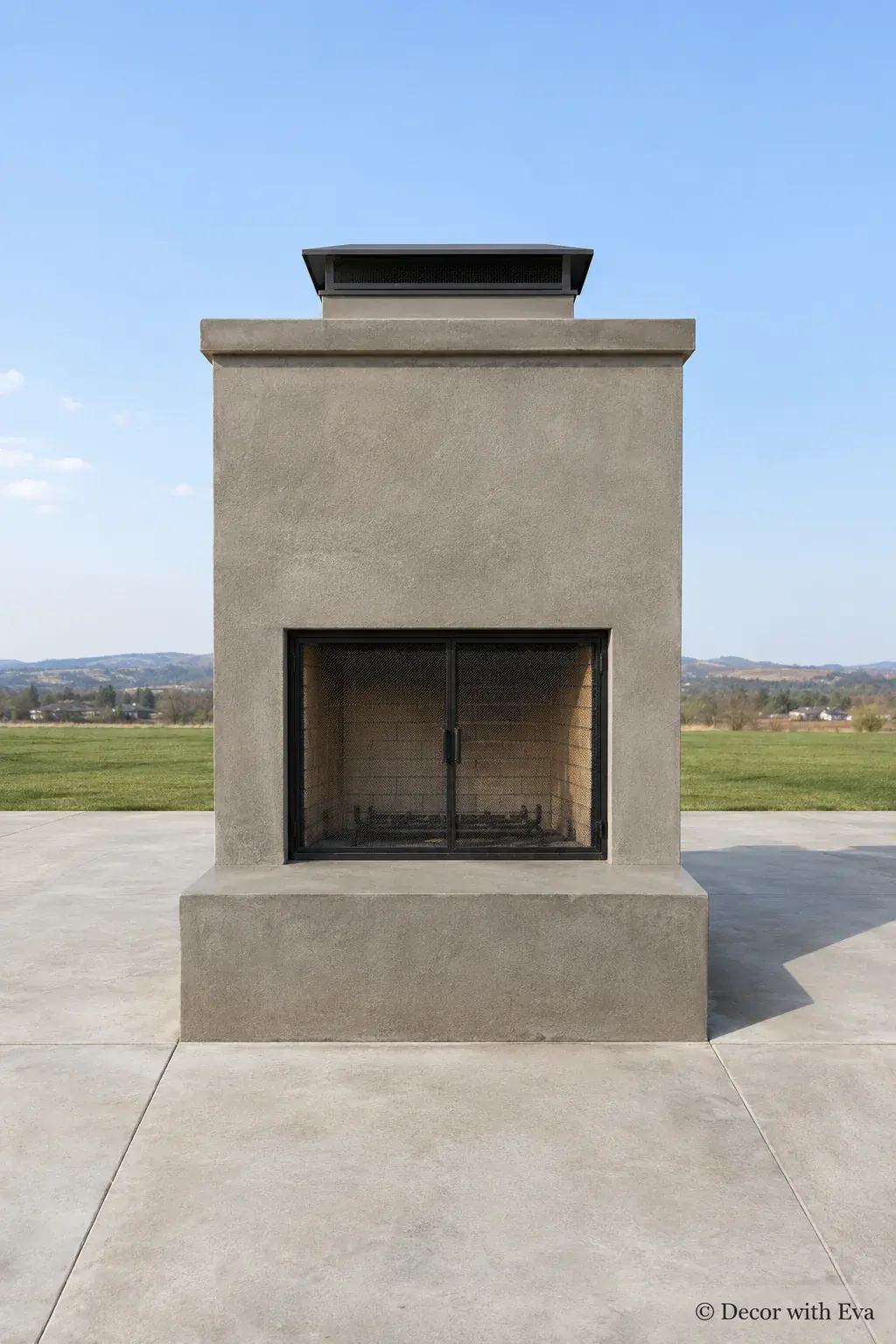
A smooth concrete look can suit a modern backyard without needing a huge feature wall. A strong rectangle, one well-sized opening and a quiet cap give the fireplace enough presence. The texture of the paving and the garden can provide the softer details.
Discuss the complete system with the installer, including which surfaces and materials can be used around the firebox. Finish samples can vary in color and texture. Keep service and drainage requirements in the design instead of hiding them behind a perfectly blank sketch.
Try this: Compare a smooth sample with a lightly textured one in the same light.
10. Balance a Tall Chimney with Low Masonry Wings
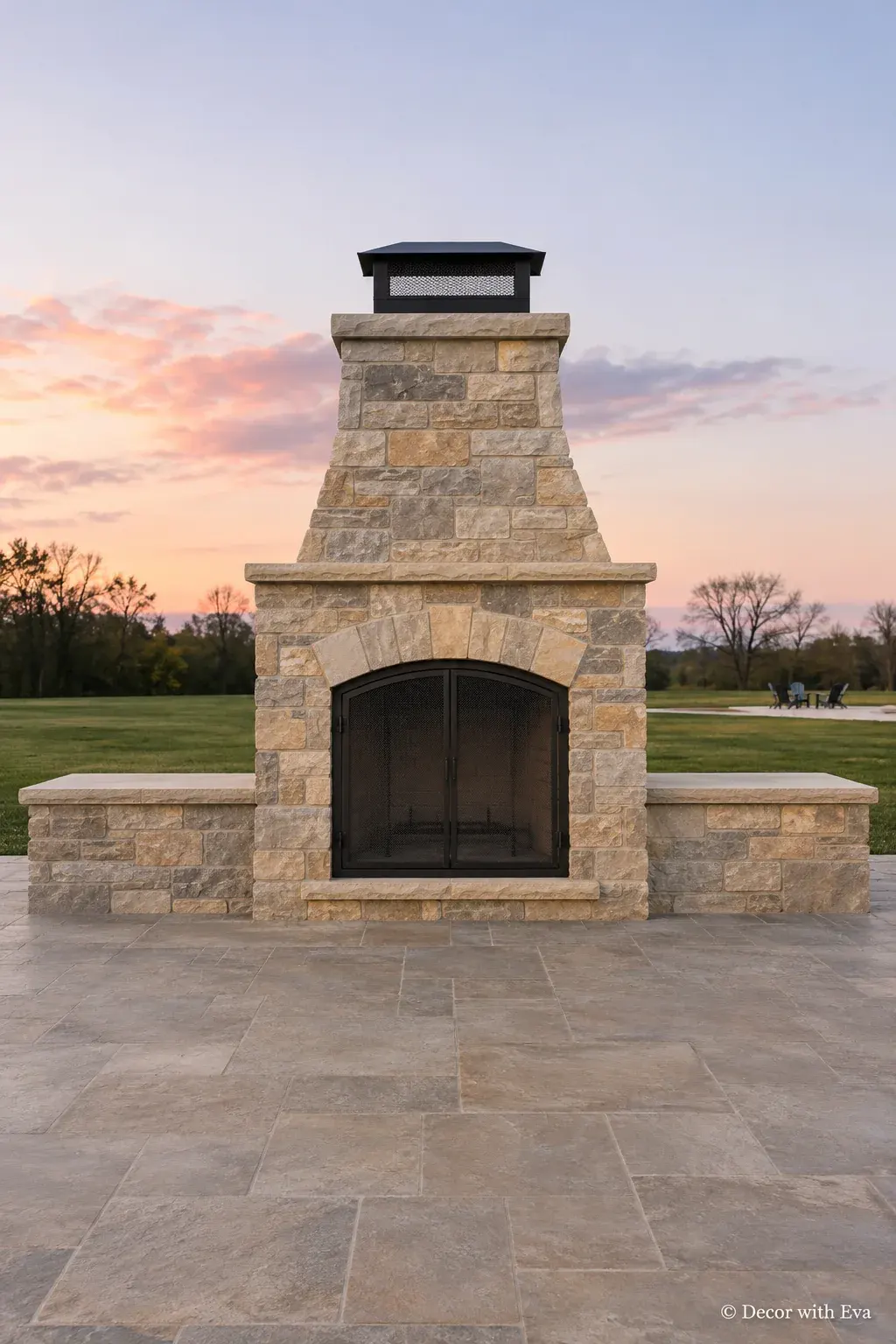
Low side walls can make a tall fireplace feel connected to the patio. They give the composition a broad base and help define the gathering area. Keep their design simple so the chimney remains the main vertical feature.
Decide whether the wings are purely architectural or intended for a specific use. Seating, storage and finishing close to a firebox need their own clearances and design. Leave the area immediately around the opening open, and place the everyday chairs where the complete fireplace plan allows them.
Try this: Draw the wings on a patio photo before committing to their length.
11. Turn an Open Patio Corner into the Focal Point
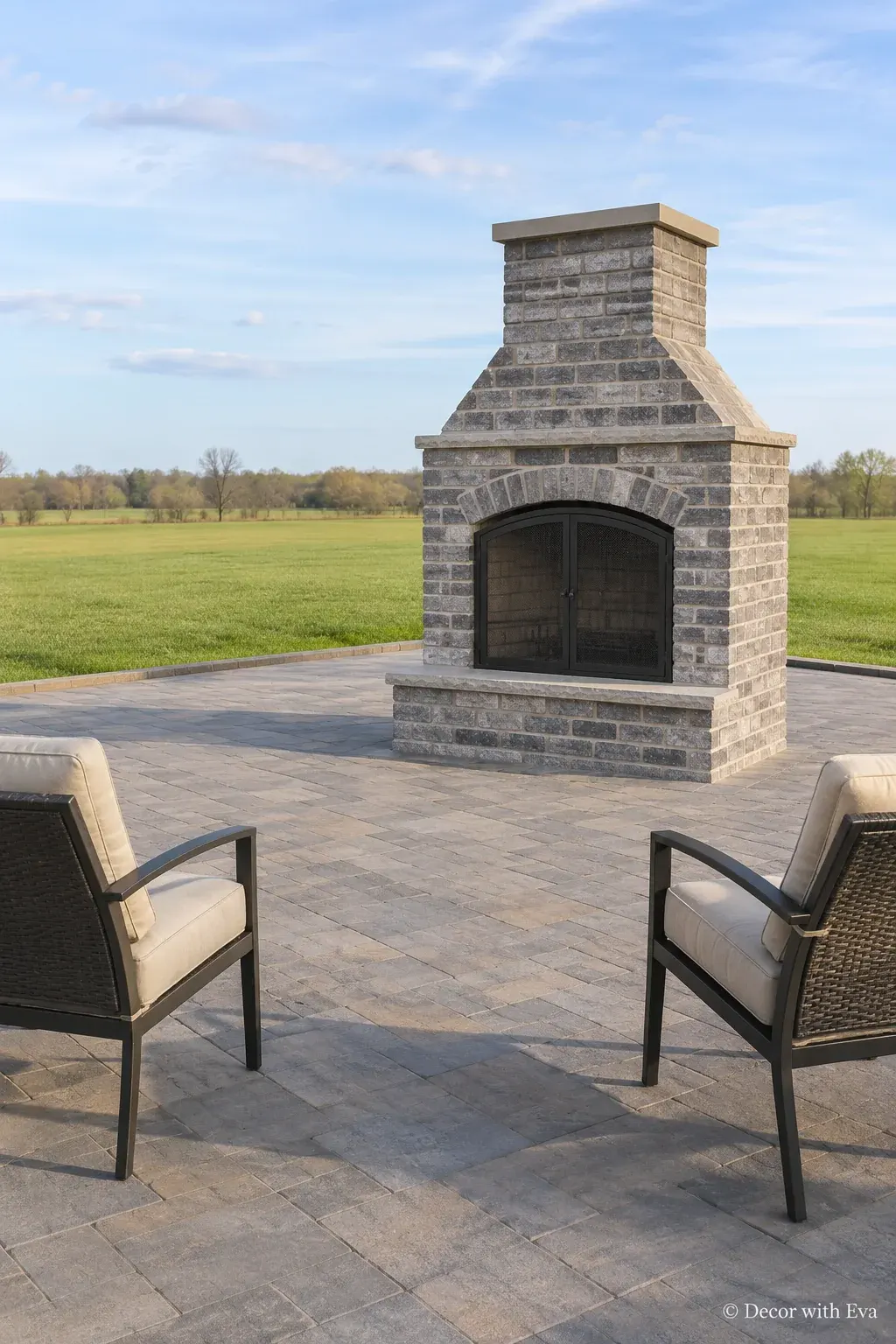
A fireplace set on the diagonal can give an otherwise awkward patio corner a purpose. It lets the seating face into the space rather than line up along one edge. This works best when the fireplace has enough room around it to stand as a complete feature.
Check the full fireplace footprint and clearances before treating the corner as available space. A timber fence, hedge or roof overhang can change the answer quickly. Keep a usable route past the seating and avoid making the fireplace the obstacle at the end of a narrow passage.
Try this: Mark a diagonal footprint on the paving and walk the route around it.
12. Create a Fireplace Destination at the End of a Path
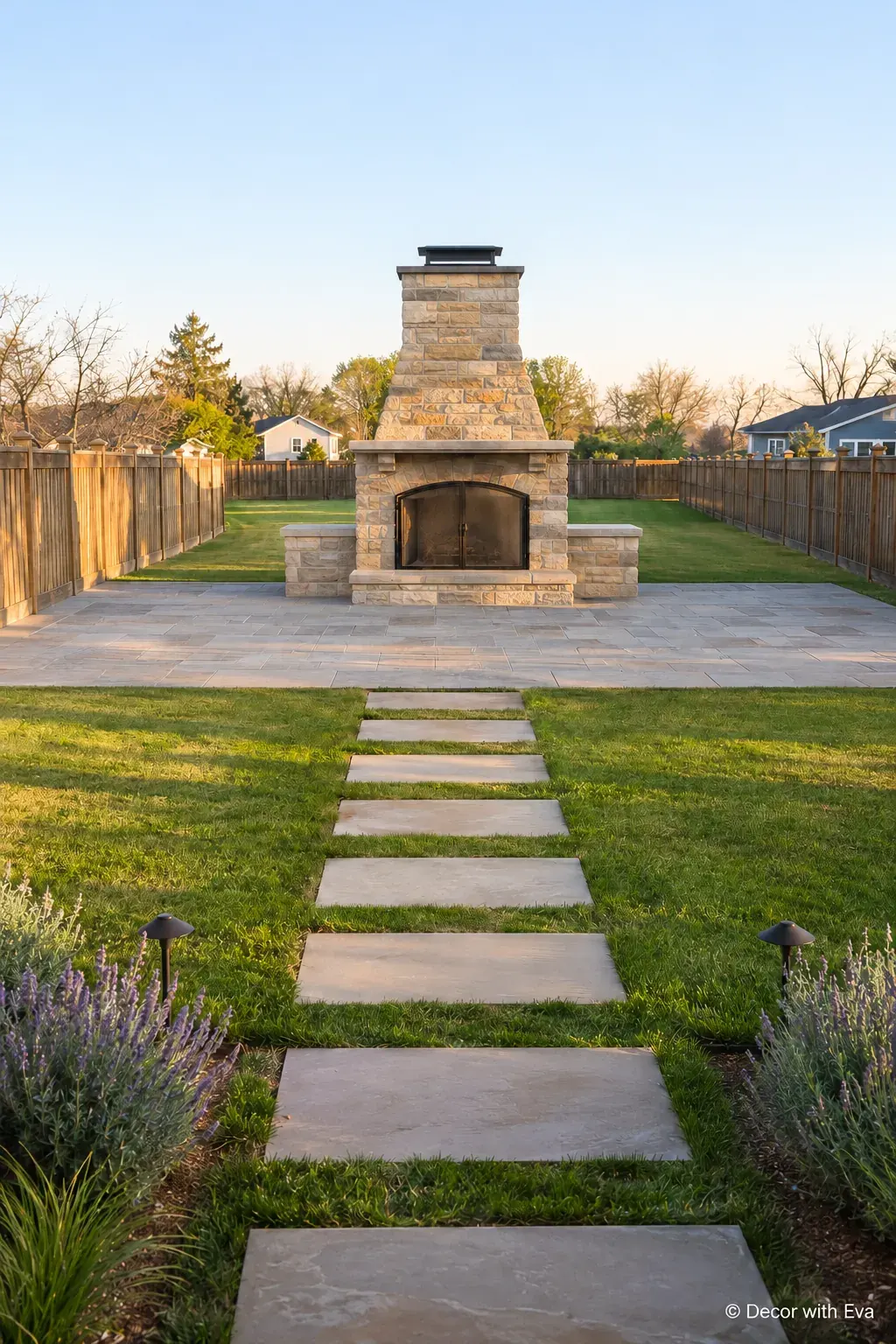
A separate gathering spot can make the far end of the yard feel useful. A path leading to the fireplace gives the garden a clear destination and lets the main patio keep its own job. Repeat one paving or stone color to connect the two areas.
Plan the route, drainage and suitable support for the fireplace together. A heavy masonry structure needs more than a decorative patch of loose gravel underneath it. Keep the path easy to follow, with enough space to enter the seating area without stepping through the fireplace’s working zone.
Try this: Lay out the path with a garden hose before changing the landscape.
13. Let a Round Patio Soften the Arrangement
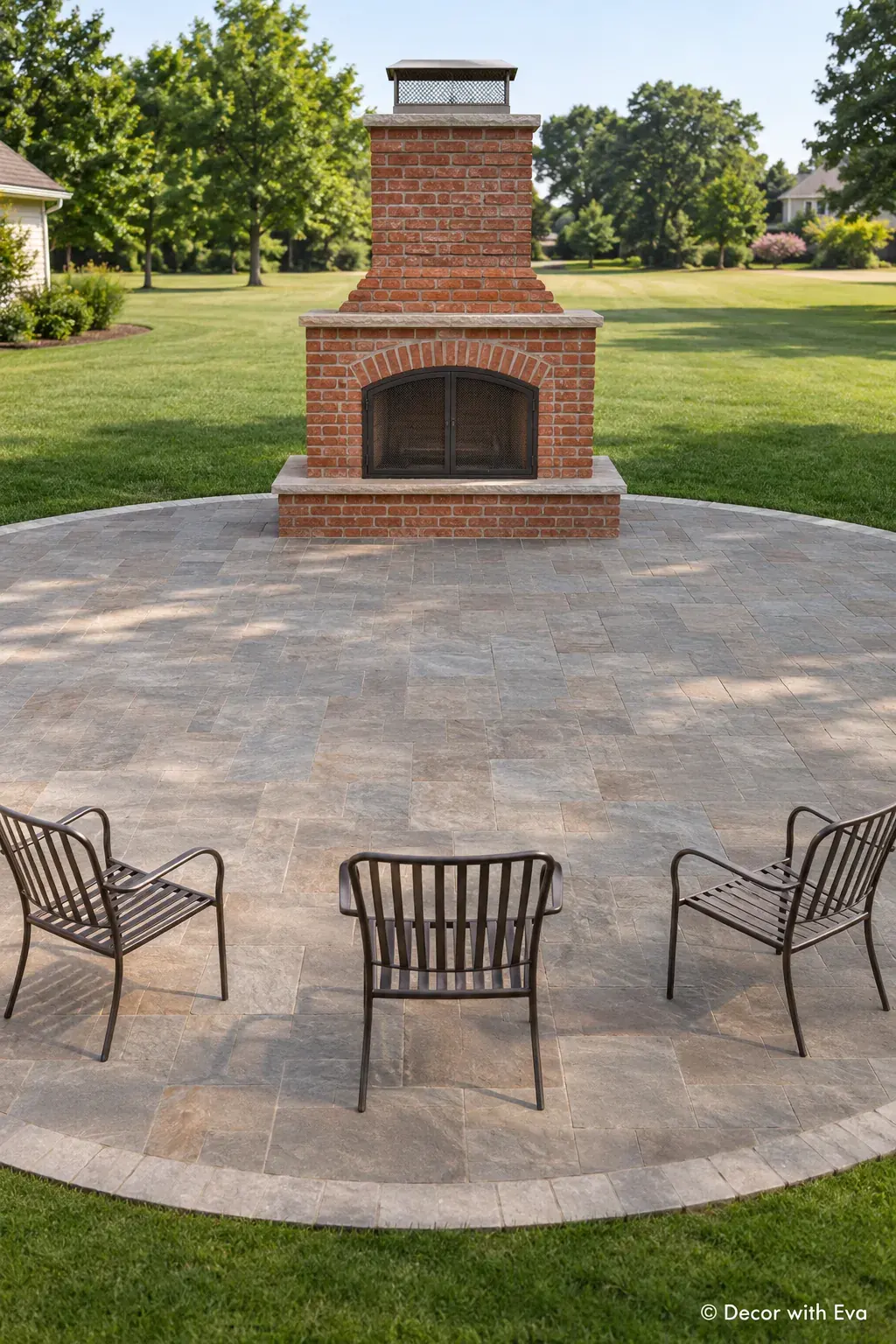
A round patio gives a fireplace setting an easy gathering shape. Place the fireplace at the perimeter and let the curved paving edge do the organizing. A few movable chairs can follow the arc while keeping the center useful.
Size the circle around the fireplace’s clearances and the furniture you plan to use. A small decorative circle may look lovely on paper but leave little space once chairs are pulled out. Keep the approach open so people can join the group without crossing close to the opening.
Try this: Measure with the chairs you own, including room behind them.
14. Give a Split-Level Yard a Separate Fireplace Terrace
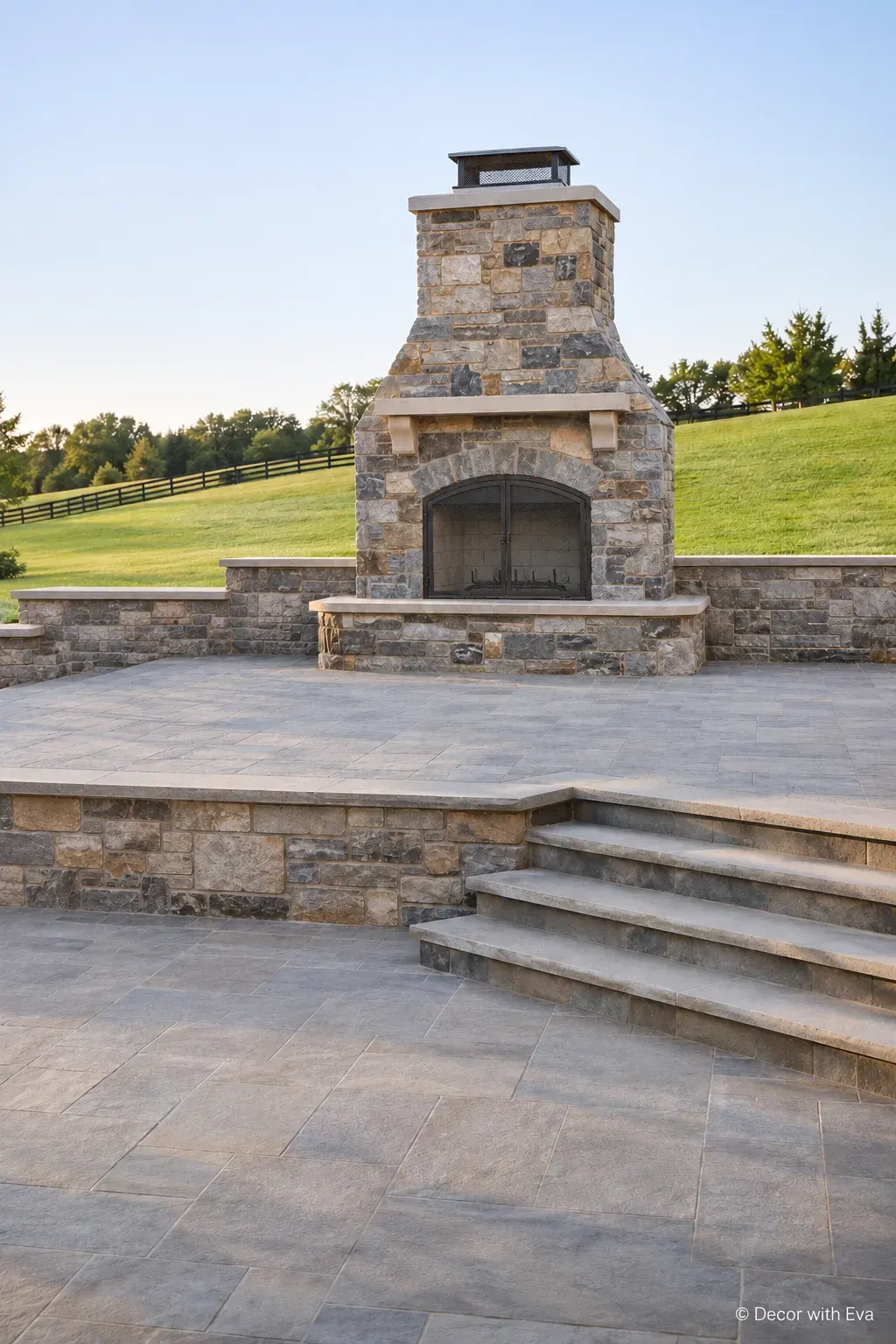
A change in level can help a fireplace area feel like its own outdoor room. Keep the fireplace and the main seating together on one usable terrace, with the steps providing a clear transition. Repeating the same stone can tie the levels together.
Work through the retaining structure, drainage, step design and fireplace support with qualified professionals. Keep the arrival point away from the opening and leave enough landing space. For a household that needs step-free access, make that route part of the plan from the beginning.
Try this: Photograph the levels and note the routes your household uses most.
15. Keep Dining and Fireside Seating in Separate Zones
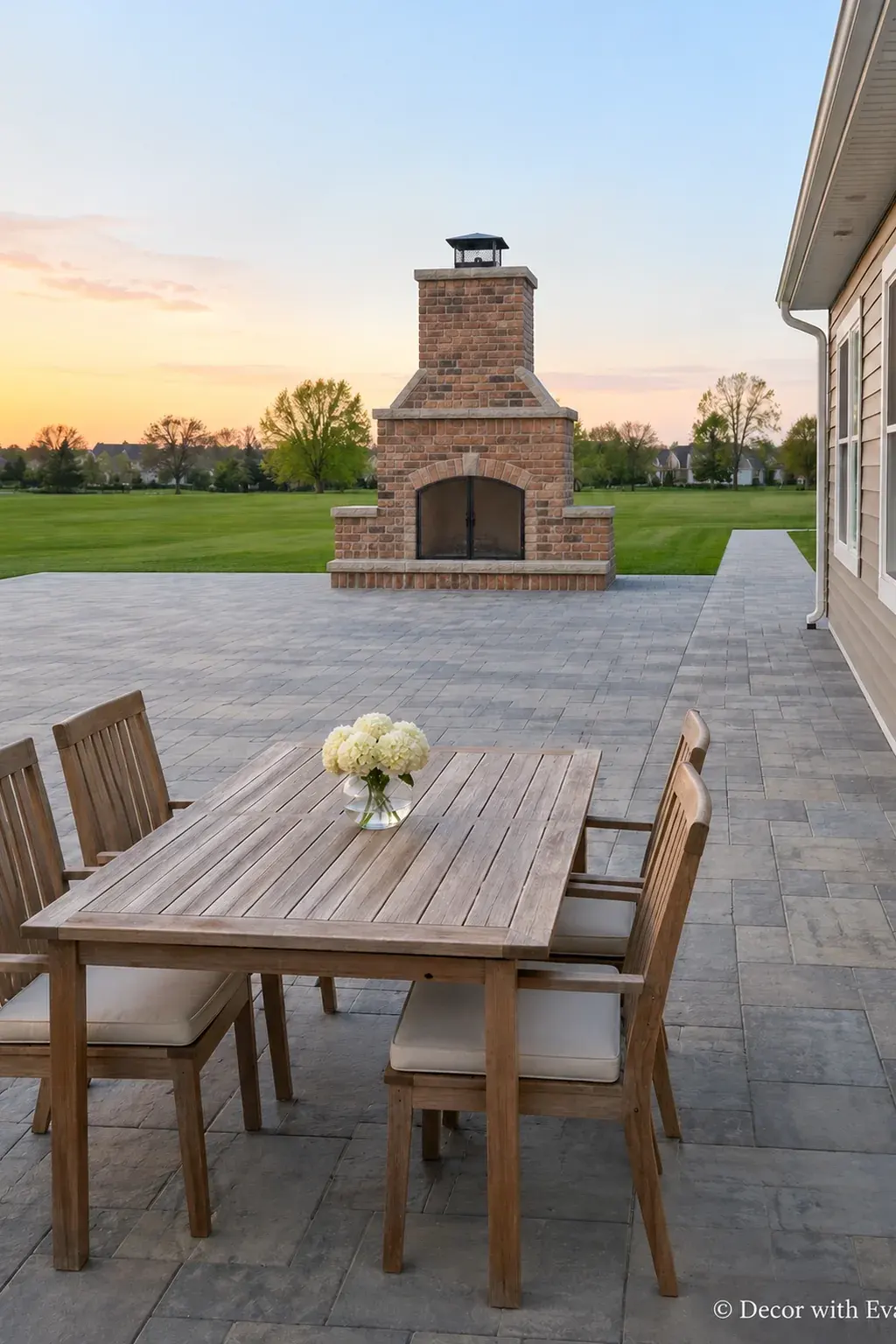
A fireplace can be part of an entertaining patio without sitting directly beside the dining chairs. Give the table its own space and let the hearth anchor a separate conversation area. The two zones can share a paving color or furniture finish.
Leave a clear route between the house, table and fireplace area. Check the furniture positions with chairs pulled out and keep every item outside the fireplace’s required clearances. A generous walking route is more useful than squeezing in an extra side table.
Try this: Move the dining set before deciding where the second seating group belongs.
16. Set the Fireplace beyond the Pergola
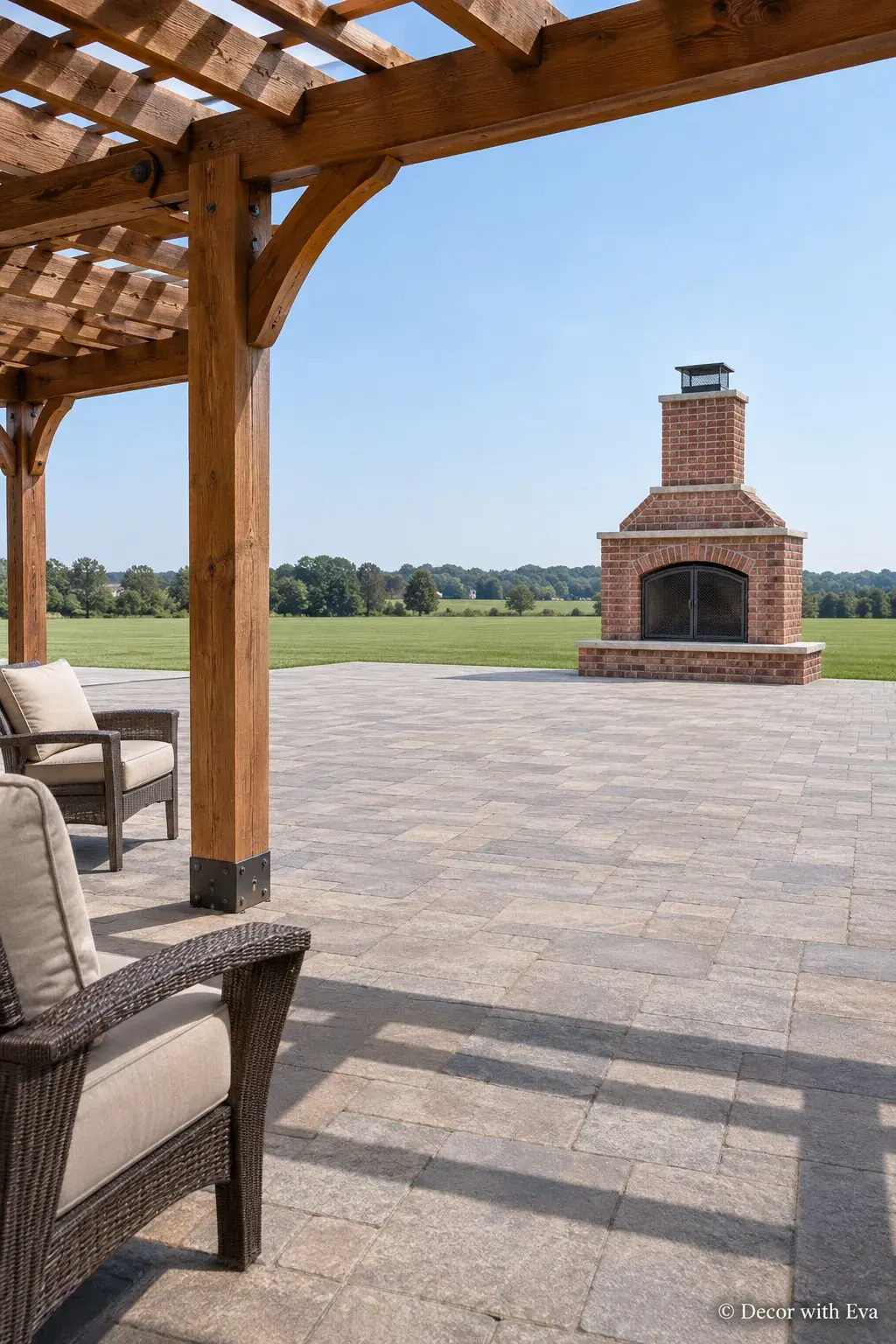
A pergola can give the seating area a sense of shelter while the fireplace remains in a separate open-air zone. The contrast between a light overhead structure and a solid chimney can be attractive. Keep their relationship clear instead of treating the fireplace as another object to tuck under the roof.
Have the installer check the actual distances to beams, posts, fabric and overhanging growth. A freestanding outdoor fireplace’s instructions may prohibit overhead cover. Plan the complete arrangement around the selected unit and local requirements, with a clear route between the two areas.
Try this: Mark the pergola’s full overhead outline on your layout, not only its posts.
17. Use a Clay Chiminea as a Smaller Focal Point
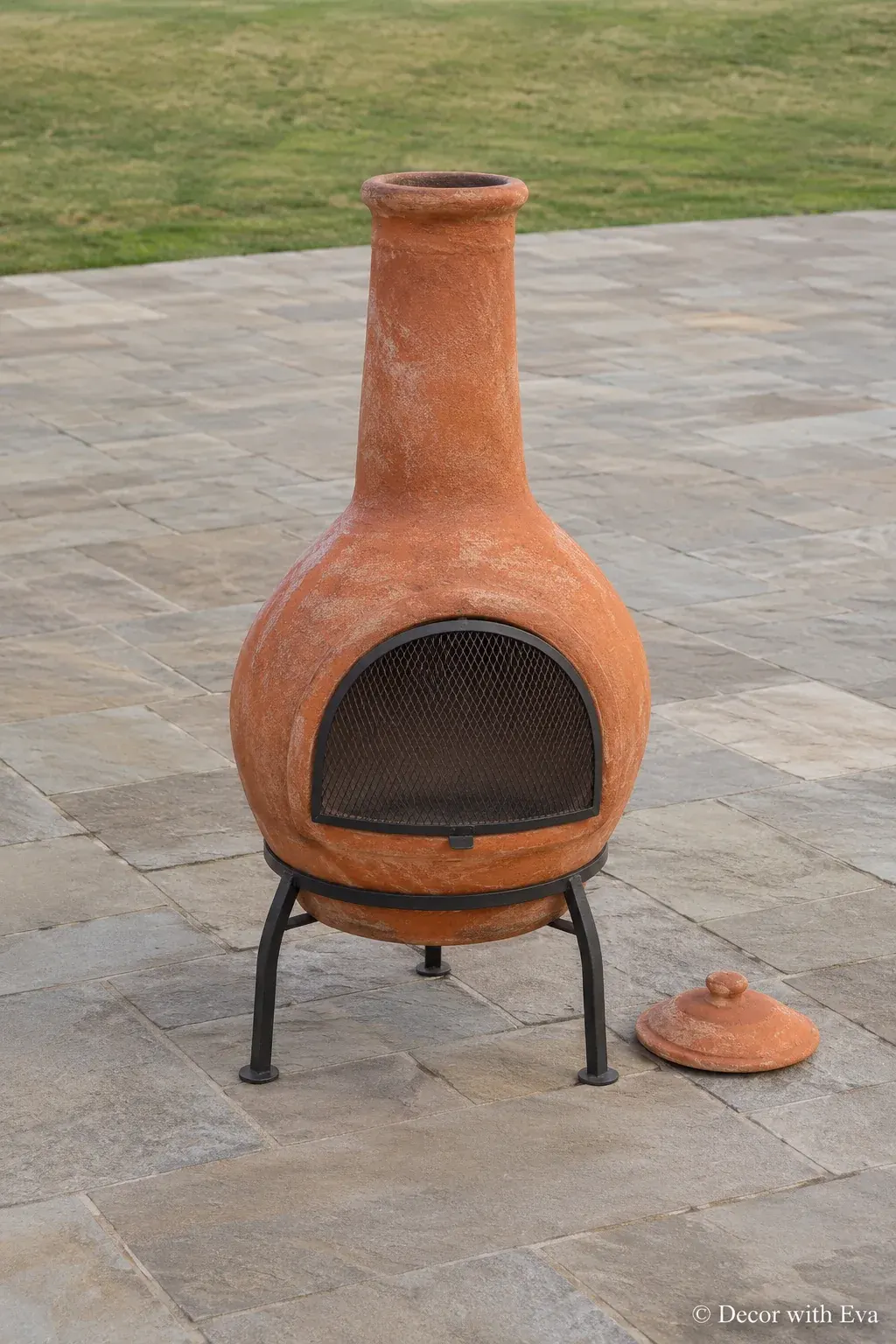
A clay chiminea offers a different silhouette from a masonry fireplace: a rounded body, a narrow chimney and a warm earthy surface. It can be an appealing focal point where a tall permanent wall would feel too dominant. Give its shape room to stand out.
Choose a genuine outdoor wood-burning model from a supplier who provides its operating and care instructions. Check the base, clearances, fuel limits and weather guidance for that exact chiminea. Decorative pottery and a working fire appliance should not be confused, even when their shapes look similar.
Try this: Use a full-size cardboard outline to judge the body and chimney height.
18. Choose a Steel Fireplace with a Clear Silhouette
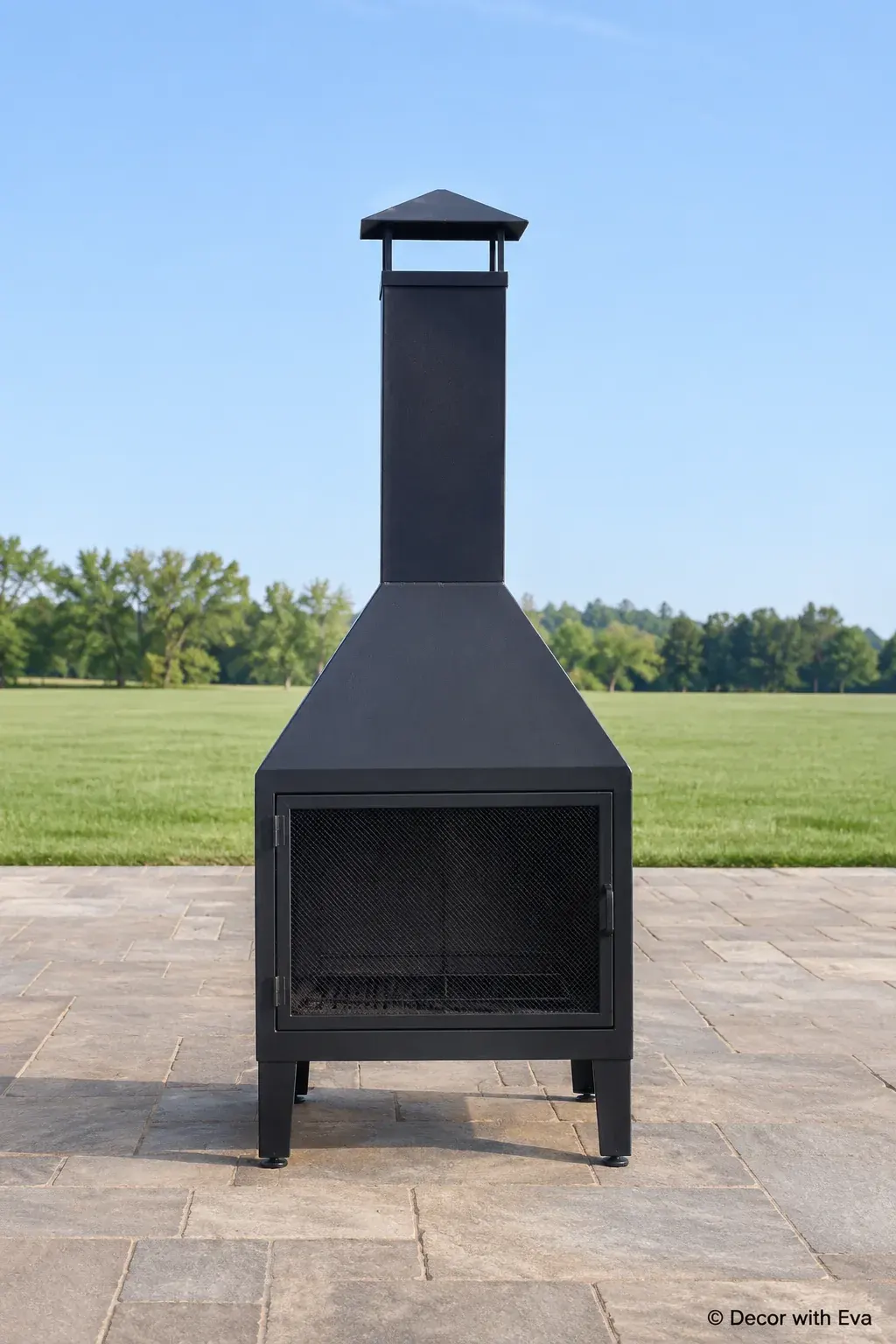
A slender steel fireplace can give the patio a more contemporary outline. Let the chimney and firebox be the main feature, with simple paving around them. The lighter visual footprint can suit a garden where a broad masonry surround would feel heavy.
Compare complete outdoor-rated models and check their instructions, support and weather care. A slim outline does not mean the required operating area is slim. Avoid adding homemade surrounds, chimney extensions or finishes unless the manufacturer specifically permits them.
Try this: Compare the full footprint and working clearances before choosing by height alone.
19. Start the Seating Plan with Two Comfortable Chairs
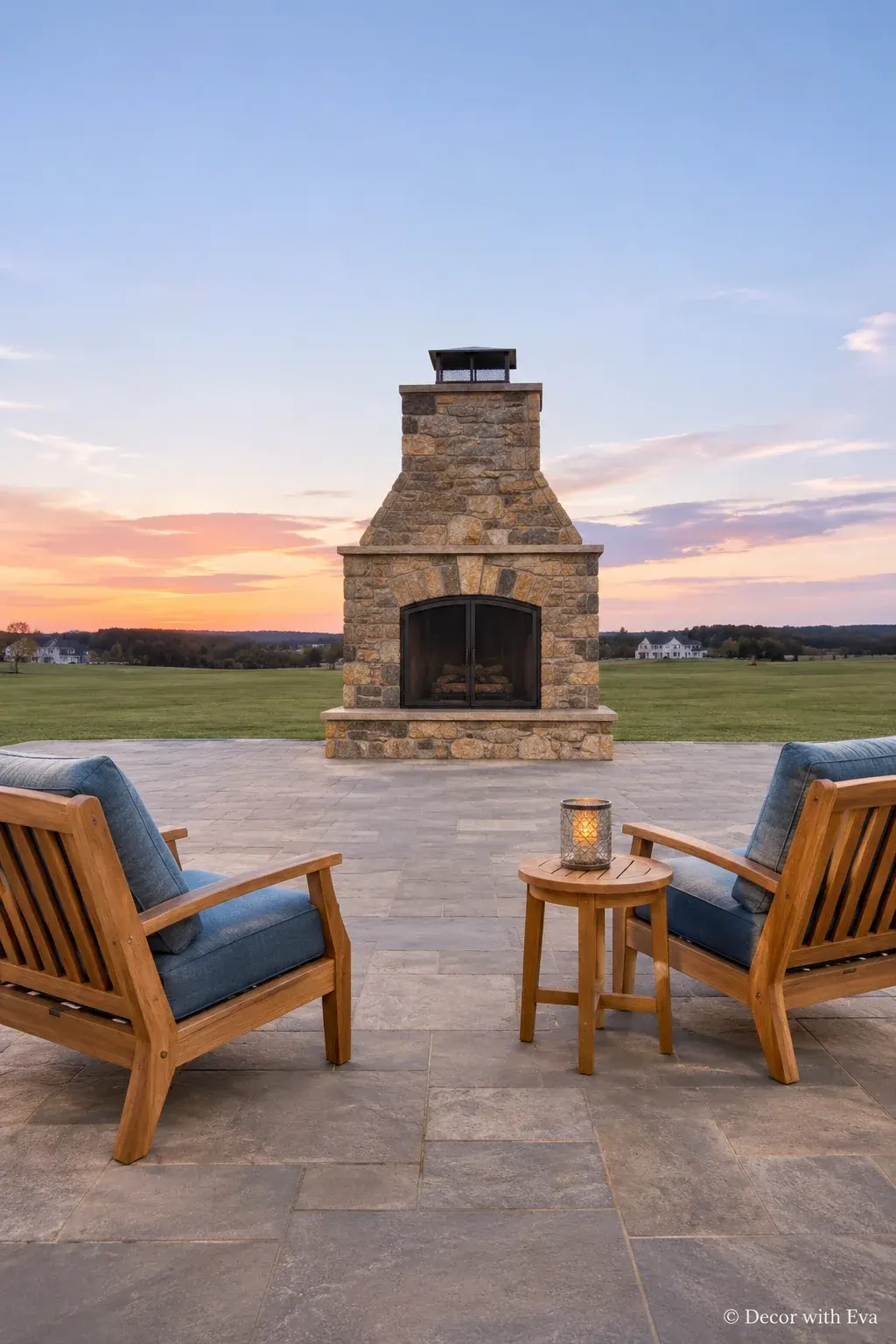
Two good chairs can be enough to make the fireplace area feel welcoming. Angle them slightly toward each other and leave a place to set a drink. A small arrangement often looks more considered than a large set squeezed around the hearth.
Place the chairs outside the required heat and spark clearances, then check the view and the route behind them. Keep cushions and throws in the seating zone. Test the spacing with people seated before deciding the patio needs more furniture.
Try this: Try two chairs from your current patio set before buying a sofa.
For a separate compact outdoor seating area, our small apartment balcony ideas offer more ways to work with modest furniture footprints.
20. Use an L-Shaped Sofa to Define the Lounge
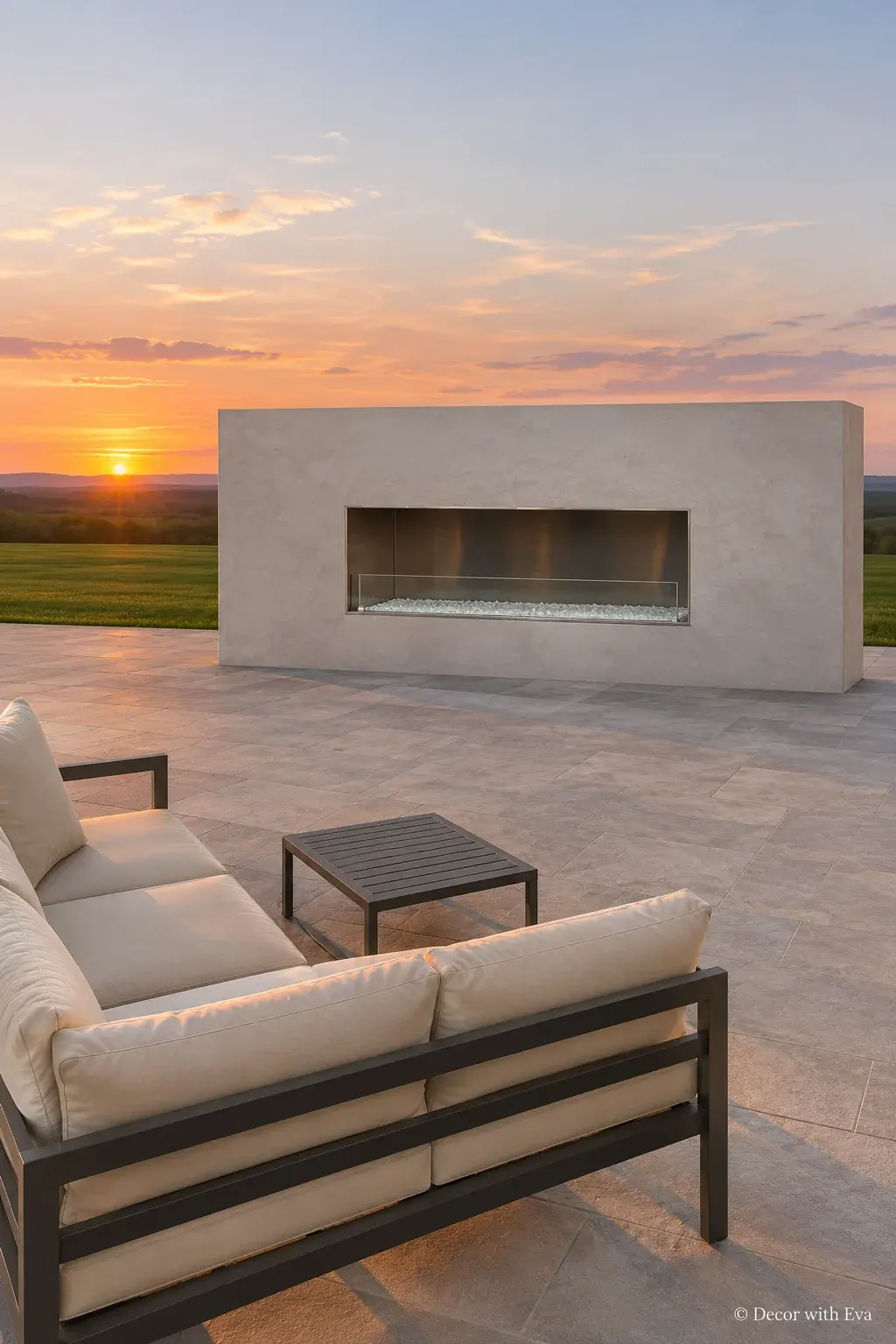
An L-shaped outdoor sofa can give a larger patio a clear lounging area. Let the long side face the fireplace and the shorter side mark the edge of the group. Keep one side open so people can enter easily.
Measure the complete sofa, including the chaise or return, and test the route around it. Keep every cushion and table outside the appliance’s required clearances. For a smaller patio, separate chairs may offer a more flexible arrangement than forcing a large sectional into the plan.
Try this: Mark both sofa legs on the patio before ordering the set.
The selected OLL48FP12SN is a built-in natural-gas unit with a 48-inch opening. The listing gives outside dimensions of 51.75 inches wide, 19.06 inches deep and 24.31 inches high; these are not framing dimensions. Fire glass is sold separately. Have the dealer confirm the current manual, compatible media, complete enclosure, drainage and utility requirements before ordering. Installation and service require a qualified professional.
21. Connect the Seating with Blue and Cream
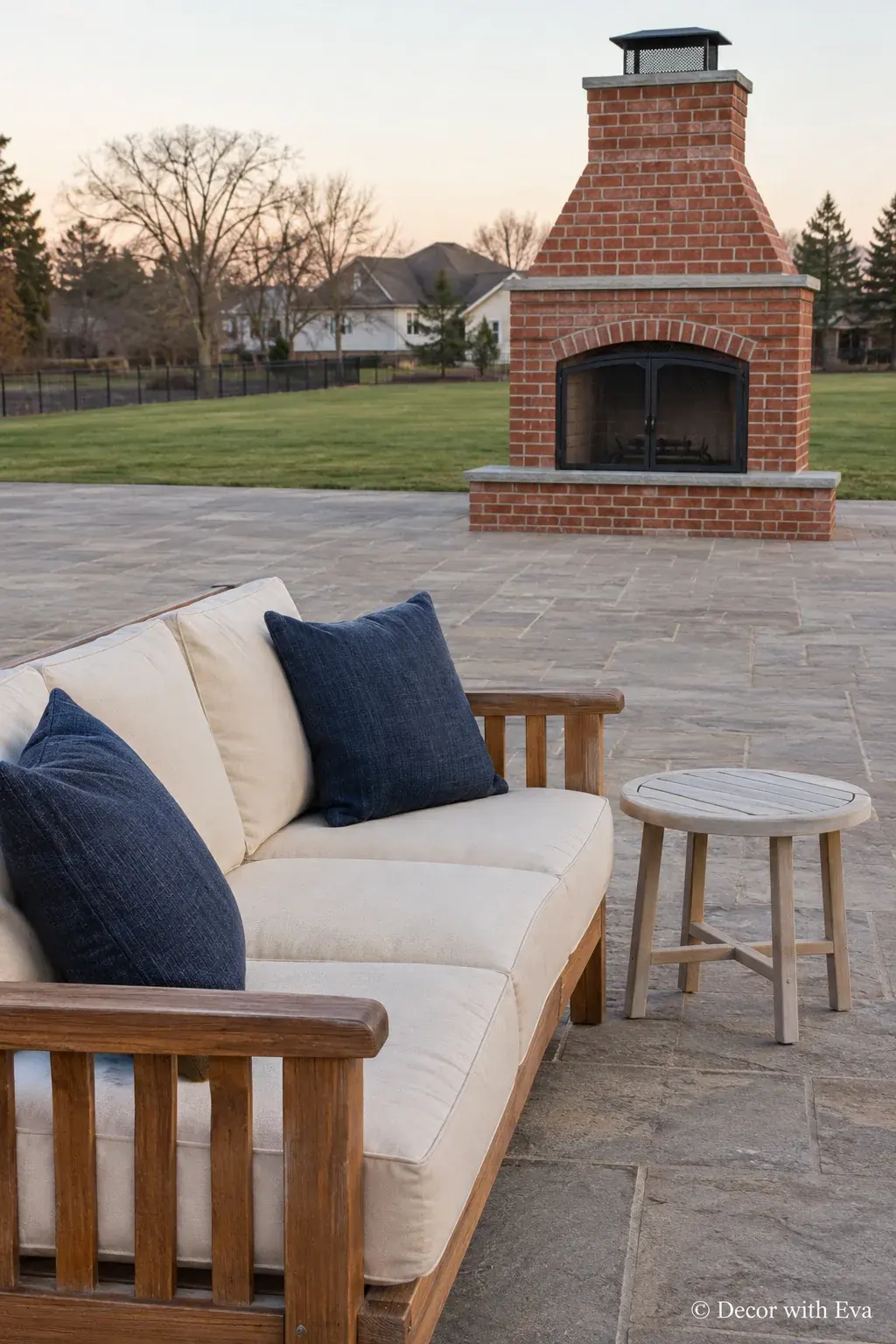
A small color palette can make the fireplace area feel pulled together. Blue cushions, cream upholstery and warm wood work with brick, stone and pale stucco. Repeating the colors in just a few places gives the space character without crowding the hearth.
Choose textiles for outdoor use and a storage routine that suits your weather. Keep them in the seating area, away from heat, sparks and the fireplace’s working zone. You can change the palette later without changing the permanent finish of the fireplace.
Try this: Bring out two cushion covers you already own and see how they look with the masonry.
22. Give Firewood Its Own Covered Storage Spot
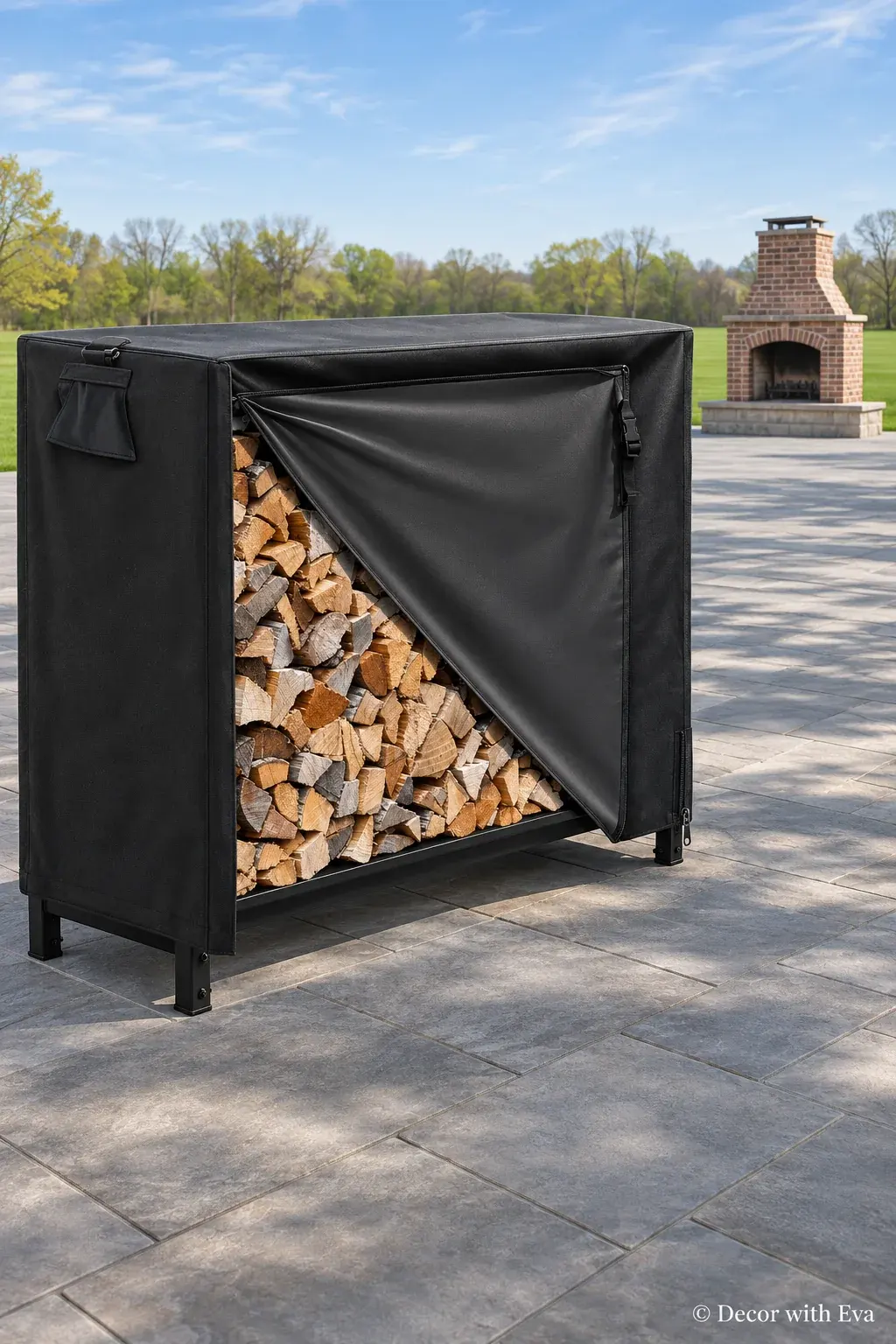
A dedicated rack makes a wood-burning setup easier to keep tidy. Store the logs off the ground and give the pile a defined limit rather than letting it spread across the patio. A simple dark rack can sit quietly in a separate utility spot.
Place stored wood and its cover outside all required heat and spark clearances, on a stable base with access for restocking. Keep airflow and weather exposure in mind. Check the fireplace’s instructions before using any shelf beneath its firebox; some models allow that storage only when the unit is completely cold.
Try this: Choose the storage location and sort the existing logs before buying a larger rack.
The selected Black / 4ft combo includes a steel rack and zip-front cover. The rack is listed at four feet wide by four feet high and 13.8 inches deep; the cover is wider front-to-back. Check the covered footprint, use a stable level base and follow stacking and care instructions. Keep the stored wood and fabric cover outside all required heat and spark clearances.
23. Keep the Fireplace Tools in One Place
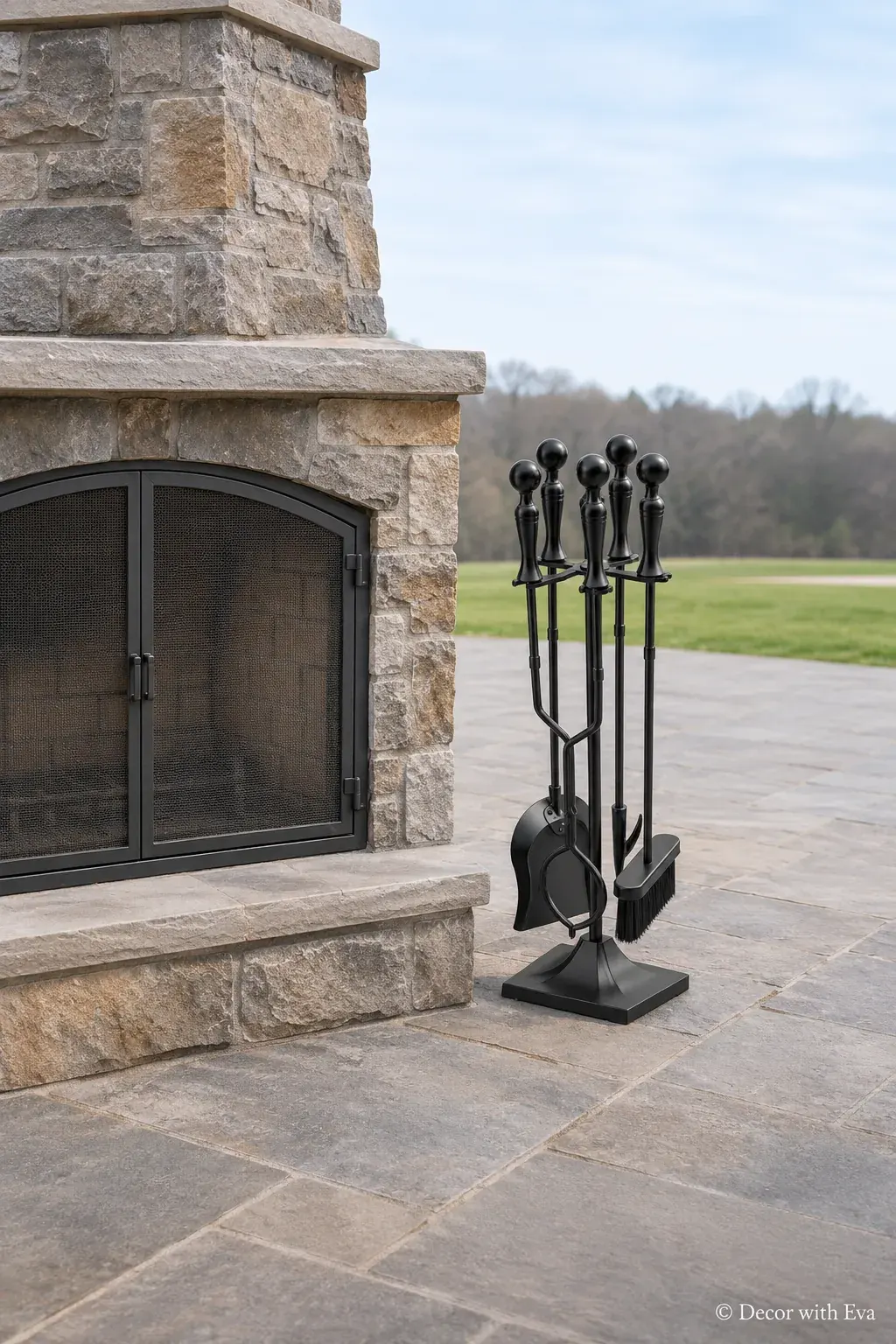
A simple tool stand can look better than a poker and brush left against the wall. Choose a finish that suits the screen or fireplace frame, then give the set a stable place outside the walking route. Useful objects can be part of the finished look.
Check that the tools suit the firebox and your reach. Keep handles and fittings in good condition, store the set dry and follow the fireplace’s instructions for tending and cleaning. Let the stand hold the tools only; hot ash needs its own appropriate handling and disposal method.
Try this: Keep a serviceable poker or existing tool set instead of buying duplicates.
The selected Black 5 Pieces version is listed at about 31 inches high. It includes a stand, poker, tongs, shovel and brush. Check the tool length against your firebox, inspect and tighten fittings as directed, and store the set dry when not in use. Follow your fireplace’s instructions for tending and cleaning; a tool stand is not an ash-storage container.
24. Light the Route as Well as the Fireplace
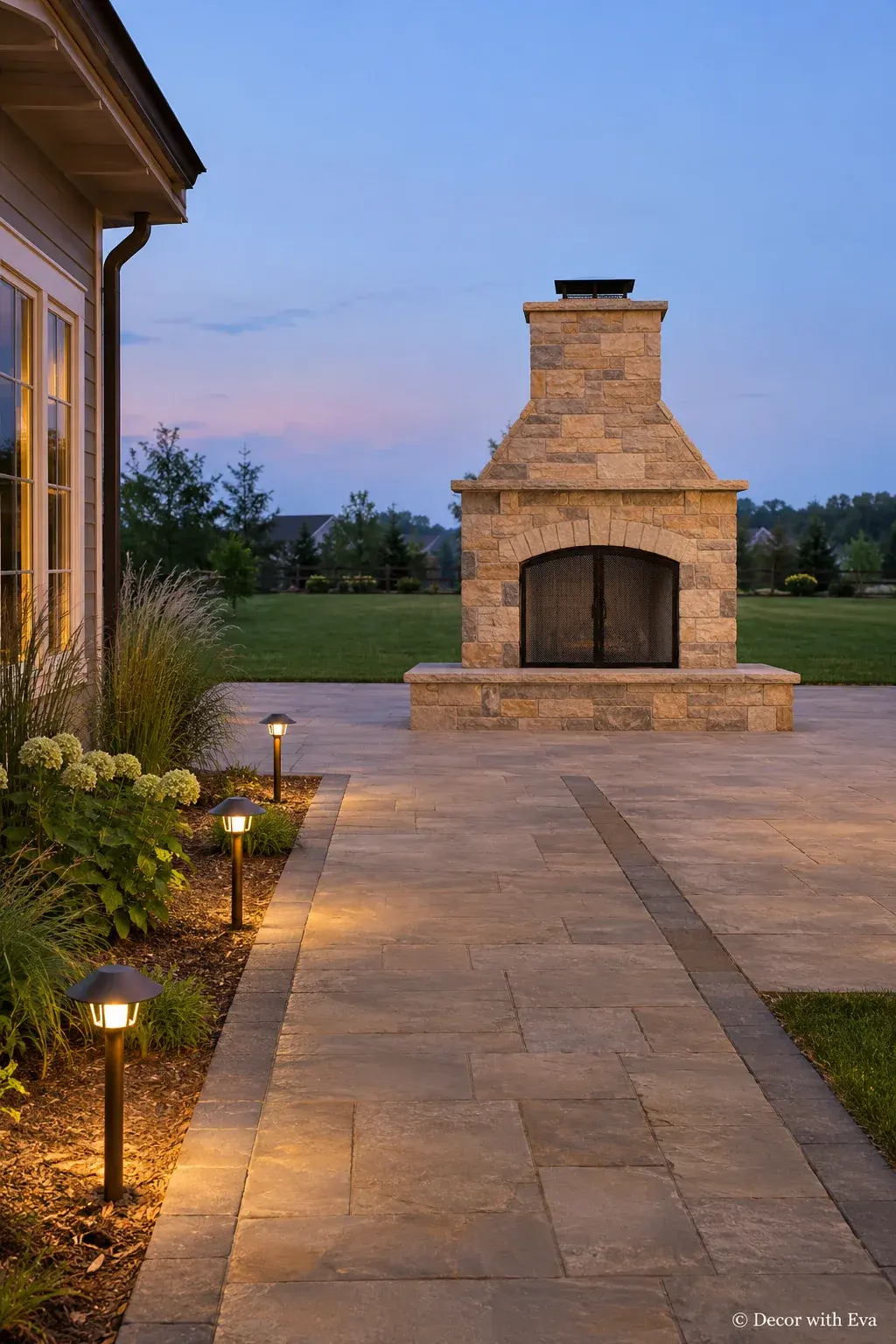
The fireplace can be the evening focal point while the route to it has its own gentle lighting. A few low path lights can make the area feel welcoming before a fire is lit. Keep the effect restrained so the garden still has shadows and depth.
Use lighting and power arrangements rated for the location, with installation suited to outdoor conditions. Keep cables and fixtures clear of heat, water hazards and walking routes. Avoid draping strings or fabric over a chimney simply to make the fireplace photograph look more festive.
Try this: Reposition suitable existing garden lights before adding another string.
25. Frame the Space with Planting at a Distance
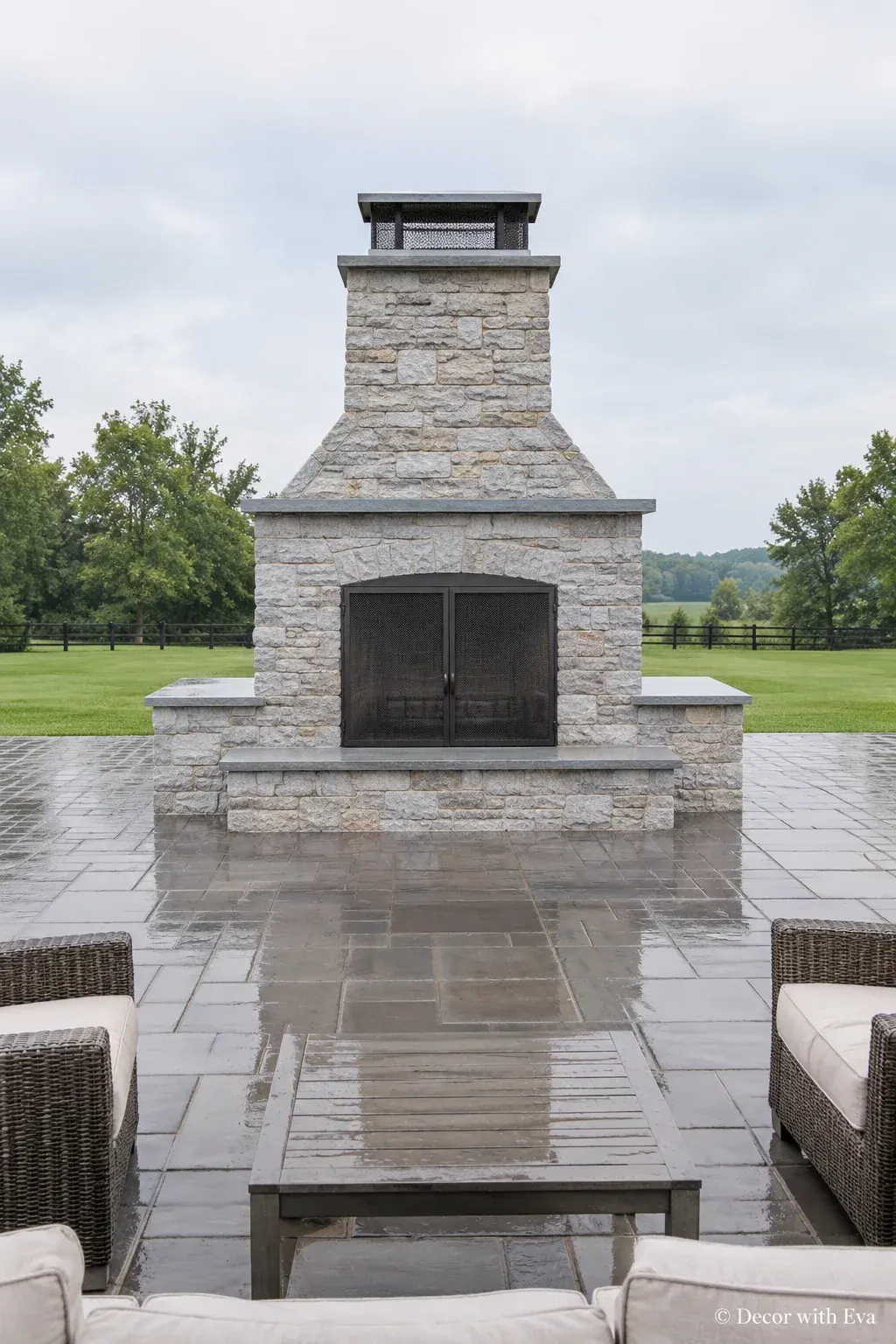
Planting can help the fireplace area feel connected to the garden. Use the borders beyond the terrace to frame the view, leaving the hearth and its immediate surroundings clear. A little repeated foliage can soften the edges without covering the architecture.
Choose plants for your local conditions and their mature size. Account for growth, dry leaves and overhanging branches when planning the fireplace’s clearances. Keep vegetation, planters and combustible mulch out of the required working area, and leave room for cleaning and maintenance.
Try this: Assess the plants already around the patio before adding new containers.
26. Make the Fireplace a View You Enjoy from Indoors
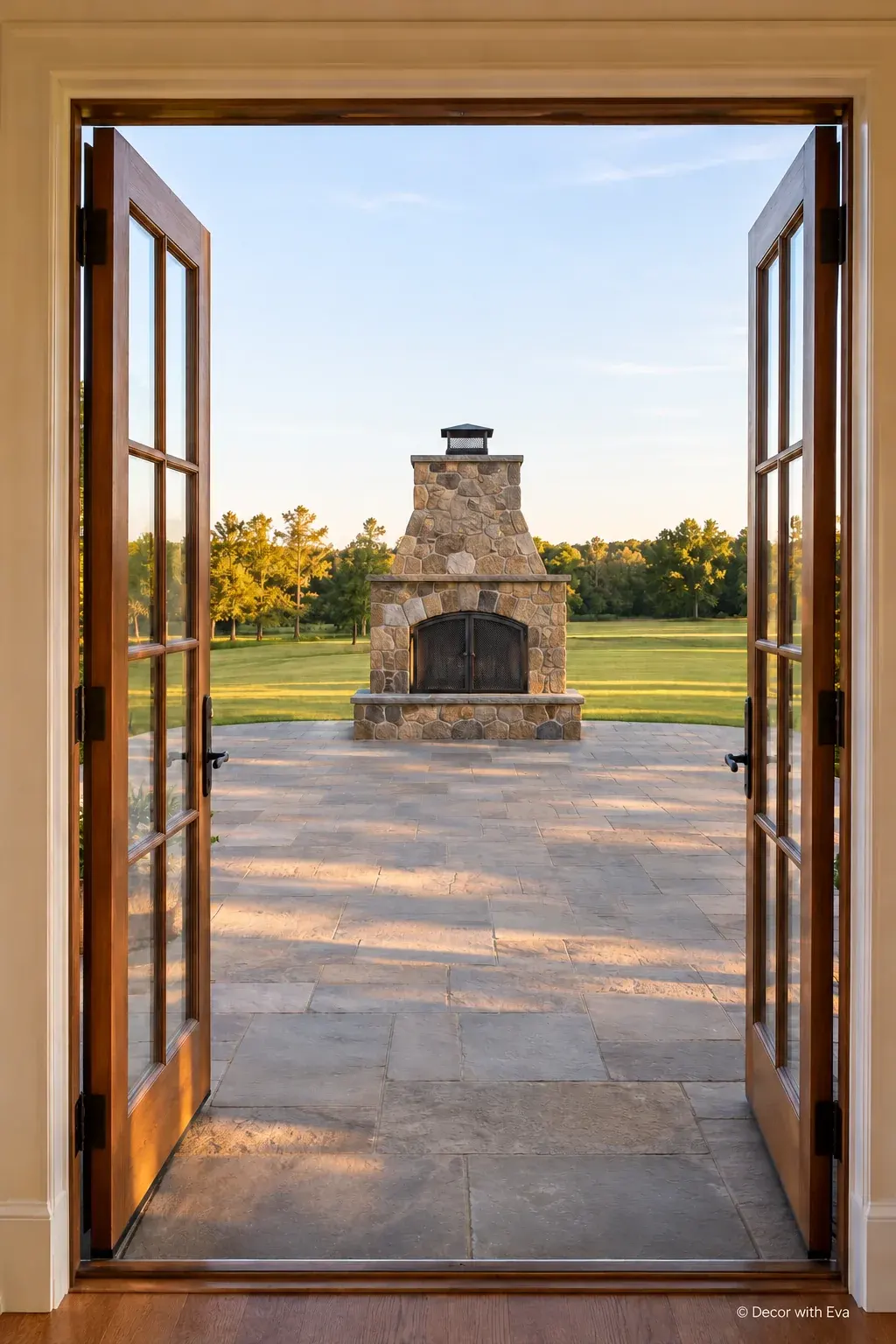
An outdoor fireplace can have a place in the garden even on evenings when you stay inside. Consider how its shape looks through the back door or a favorite window. A clear sightline can connect the indoor room to the patio without adding more objects to either.
Choose the location for the fireplace’s actual installation needs first, then check the view from inside. Keep it at the required distance from the house and other combustible materials. Let the path and furniture support that sightline while preserving normal access to the yard.
Try this: Take a photo from the room where you spend the most time before fixing the outdoor layout.
What Is the Difference between an Outdoor Fireplace and a Fire Pit?
A fireplace usually has a defined front opening and an enclosure or chimney that gives it a direction. A fire pit is typically a more open feature that people sit around. Designs vary, so compare the actual appliance, operating instructions and space needed rather than relying on the name in a product listing.
Can an Outdoor Fireplace Go under a Pergola?
Only when the exact appliance, installation design and local requirements permit the proposed arrangement. Check overhead and side clearances, ventilation and every nearby combustible material with the installer. Placing the fireplace in a separate open-air zone can be a better layout when a freestanding model requires it.
How Can You Refresh an Existing Fireplace Area?
Start with its condition and the space around it. Arrange any required inspection, repair or service first, then remove clutter and test the seating positions. A clearer route, a coordinated cushion color or better path lighting can change the atmosphere without changing the fireplace itself.