This article contains paid links. As an Amazon Associate, I earn from qualifying purchases.
Once the tree comes down, the living room can look unexpectedly empty. That does not mean every cleared surface needs something new. A few useful layers, softer light and natural shapes can make the house feel welcoming through January and February.

These winter decorating ideas work as a menu: choose the ones that suit your rooms and routine. Keep the everyday pieces you love, put the unmistakable Christmas details away and leave space to use the home comfortably. Many of the arrangements begin with things already in your cupboards.
Images are AI-created styling illustrations. Selected product photos informed linked pieces; surrounding furniture, plants and accessories are separate props. Product suggestions are based on listing and review research, not hands-on testing.
Start with What Can Stay
Plain greenery, lamps, blankets, baskets and everyday ceramics can often stay in use. Pack away the pieces that mark the holiday itself, then look at the room before adding anything. A clear patch of mantel or an open corner may be just what the space needs.
Choose a small palette from the room you already have. Cream and wood work with deep blue, forest green, burgundy or muted rust; winter decorating does not have to mean an entirely white house.
1. Turn the Tree Corner into a Reading Nook
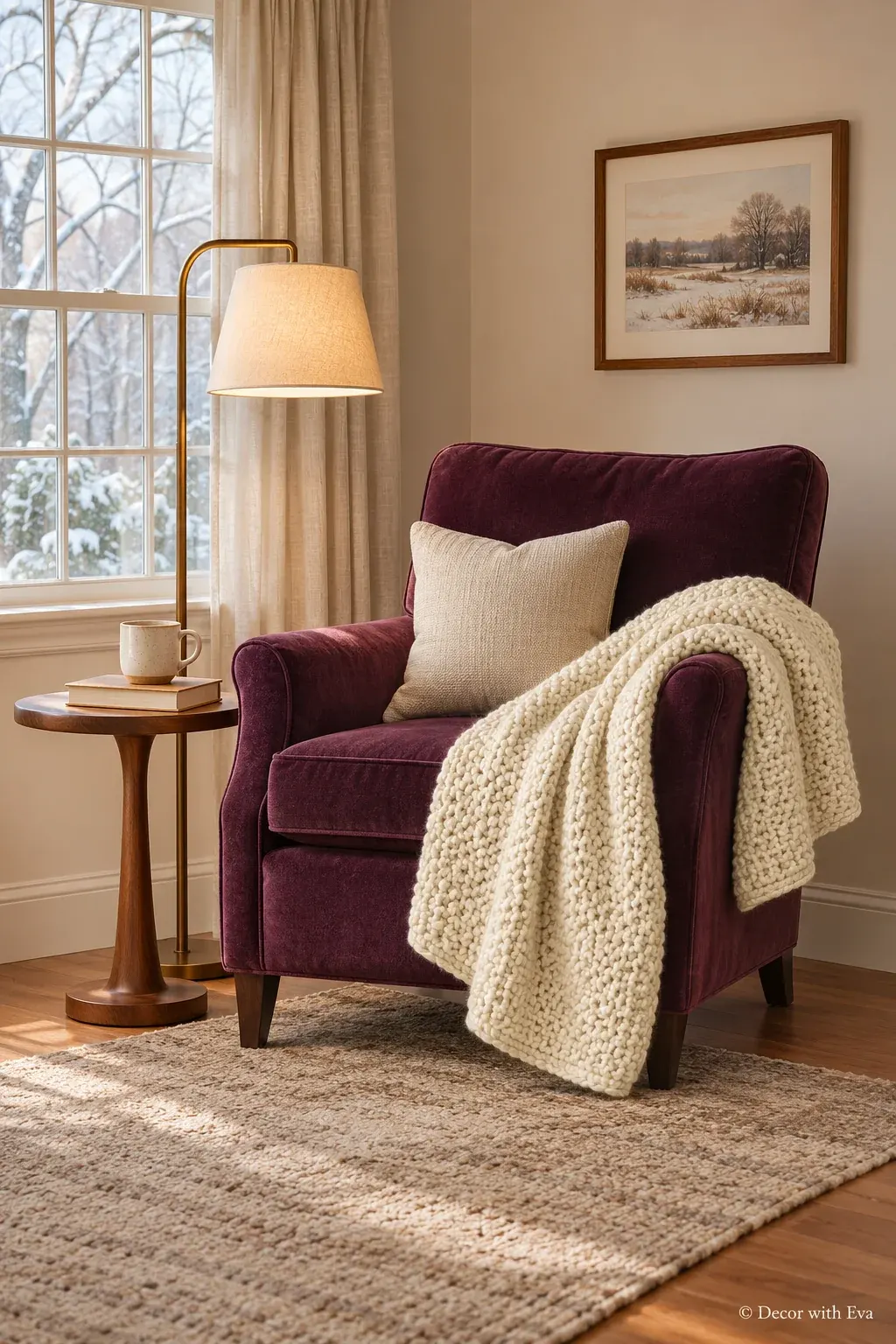
The corner where the tree stood does not need another large decoration. Pull an existing chair toward the window, add a throw and give your cup a proper place to land. The room keeps a welcoming focal point while gaining a seat you can actually use.
Leave the chair’s approach open and check that a side table will not catch a curtain or block a vent. Drape the blanket over one arm so it is easy to take down. A small corner can work with a chair and wall light instead of a floor lamp.
Try this: Move a chair you already own before shopping for a new one.
The selected throw is 51 × 63 inches and listed as cotton. Its open knit adds texture; check the care label before washing and avoid stretching it to fit a larger bed.
2. Give the Mantel a Simple Green Outline
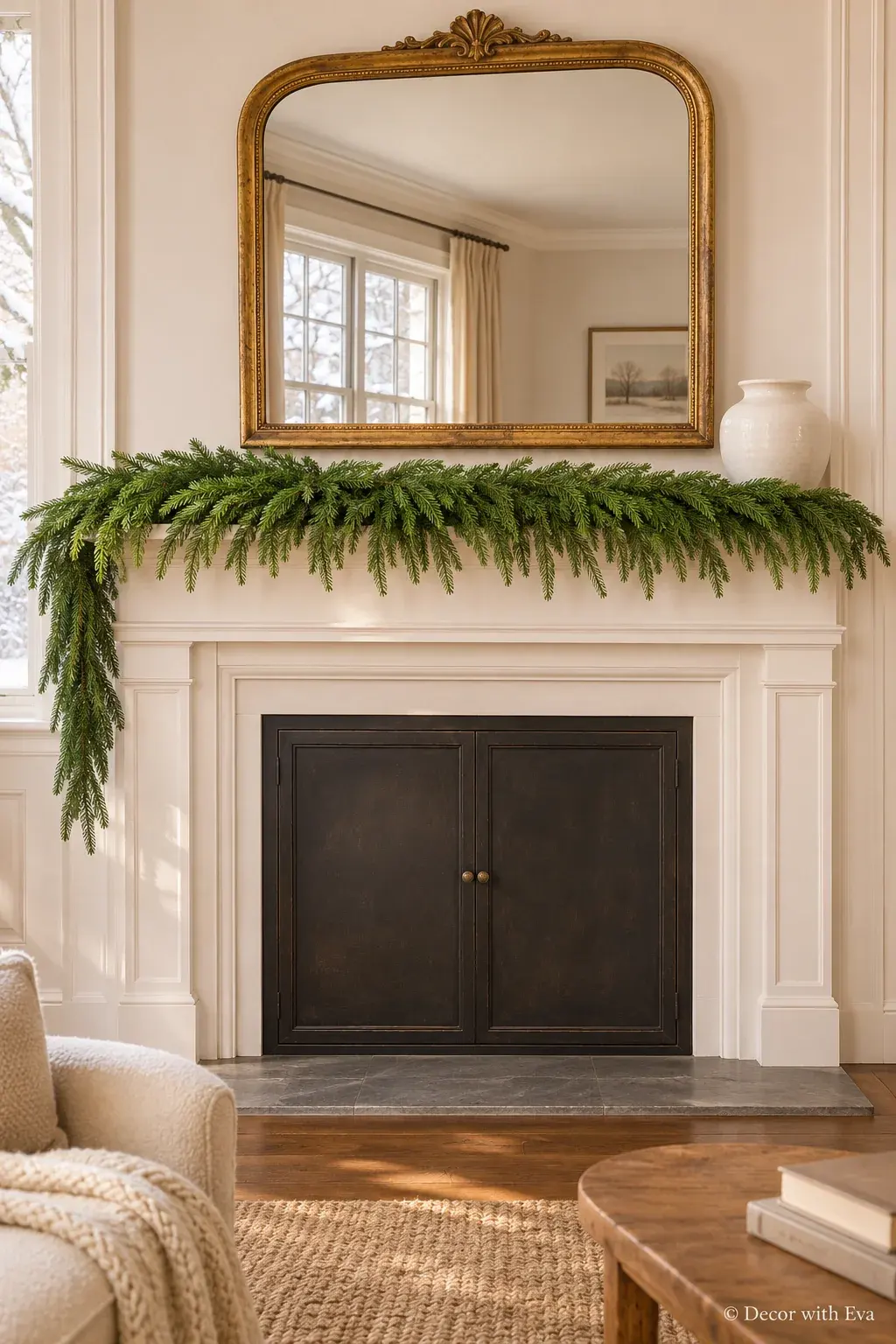
Plain greenery can stay when stockings and ornaments go into storage. Let one loose strand follow the mantel, with a mirror or an existing picture providing the height above it. A little visible shelf between objects keeps the arrangement from feeling like December all over again.
Measure the mantel before buying a garland and secure it with fixings suited to its weight and surface. Keep it well away from fire and heat, following the fireplace instructions. The illustrated fireplace is unused; an active fireplace may need an entirely different arrangement.
Try this: Reuse sound plain faux greenery, removing the holiday accessories.
The selected set has two 6-foot PE garlands with flexible internal wire. Shape the compressed branches after unpacking. Use one strand for a loose outline; a fuller arrangement may need more greenery than the single strand illustrated.
3. Trade Holiday Cushions for Deep Blue Velvet
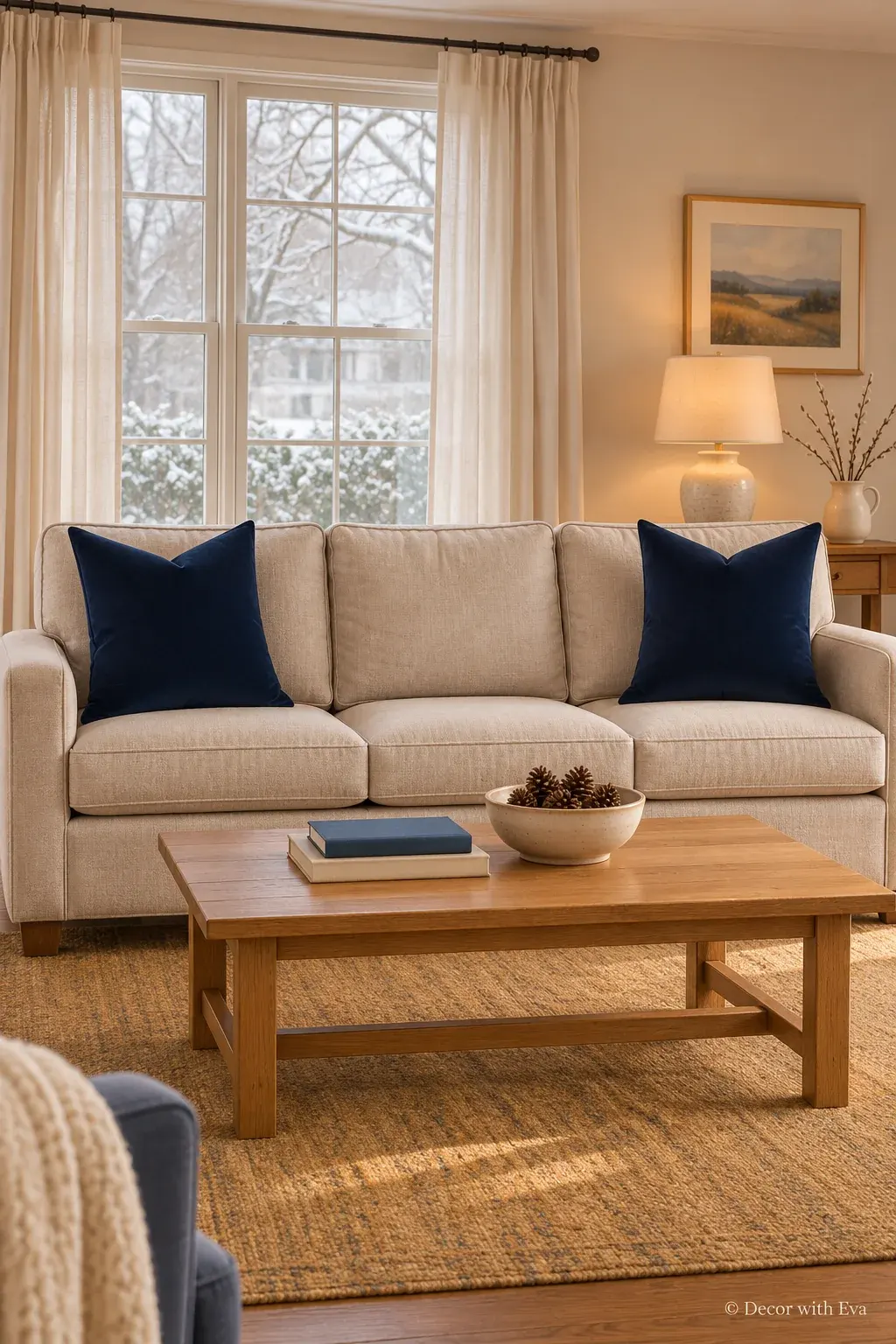
Deep blue gives a pale sofa some depth after the bright holiday fabrics are put away. Two plain covers are enough to change the mood, especially when the rest of the room already has wood, woven texture or a favorite rug. Let the fabric do the decorating.
Choose covers for the inserts you own. Keep the seating comfortable rather than lining every inch with cushions, and turn the velvet in the room’s light before judging its color. Its appearance changes with the direction of the nap.
Try this: Bring out solid covers from another room and store the Christmas ones together.
The selected pack contains two 18 × 18-inch polyester velvet covers, with no inserts. Check your existing cushions before ordering and ease inserts through the zipper rather than forcing them.
4. Make a Small Woodland Coffee-Table Group
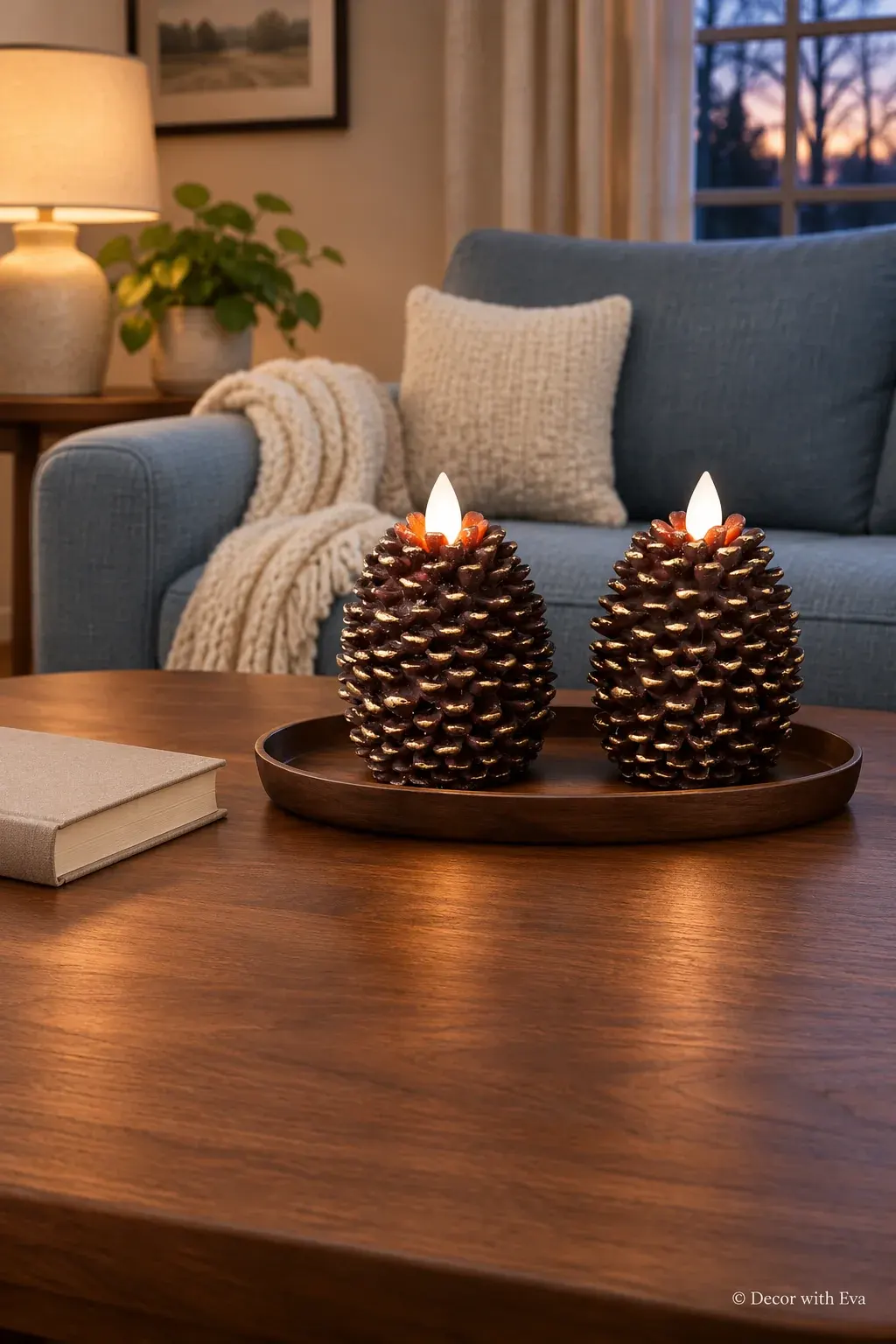
A pair of pinecone-shaped lights brings a little winter character to an ordinary coffee table. Set them on a shallow tray beside a closed book, then leave the rest of the tabletop available. The brown and gold detail works with everyday wood tones.
Use the battery lights as directed and keep the wax shells away from radiators, fireplaces and direct heat. Check the height from a seated position so the display does not become an obstacle between people talking. There is no need to add loose glitter or artificial snow.
Try this: A bowl of clean decorative pinecones makes an unlit version.
The set includes two wax-shell LED pinecones, each about 3.5 inches across and 4.7 inches tall. Each takes two AA batteries, sold separately, and the listing describes a repeating six-hour timer. Keep wax shells away from heat; these are indoor decorative lights, not outdoor lanterns.
For a glow around decorative foliage, the U.S. Fire Administration suggests considering battery-operated flameless candles. Keep real flames away from anything that can burn and follow the instructions for every light you use.
5. Use Bare Branches to Give the Entryway Height
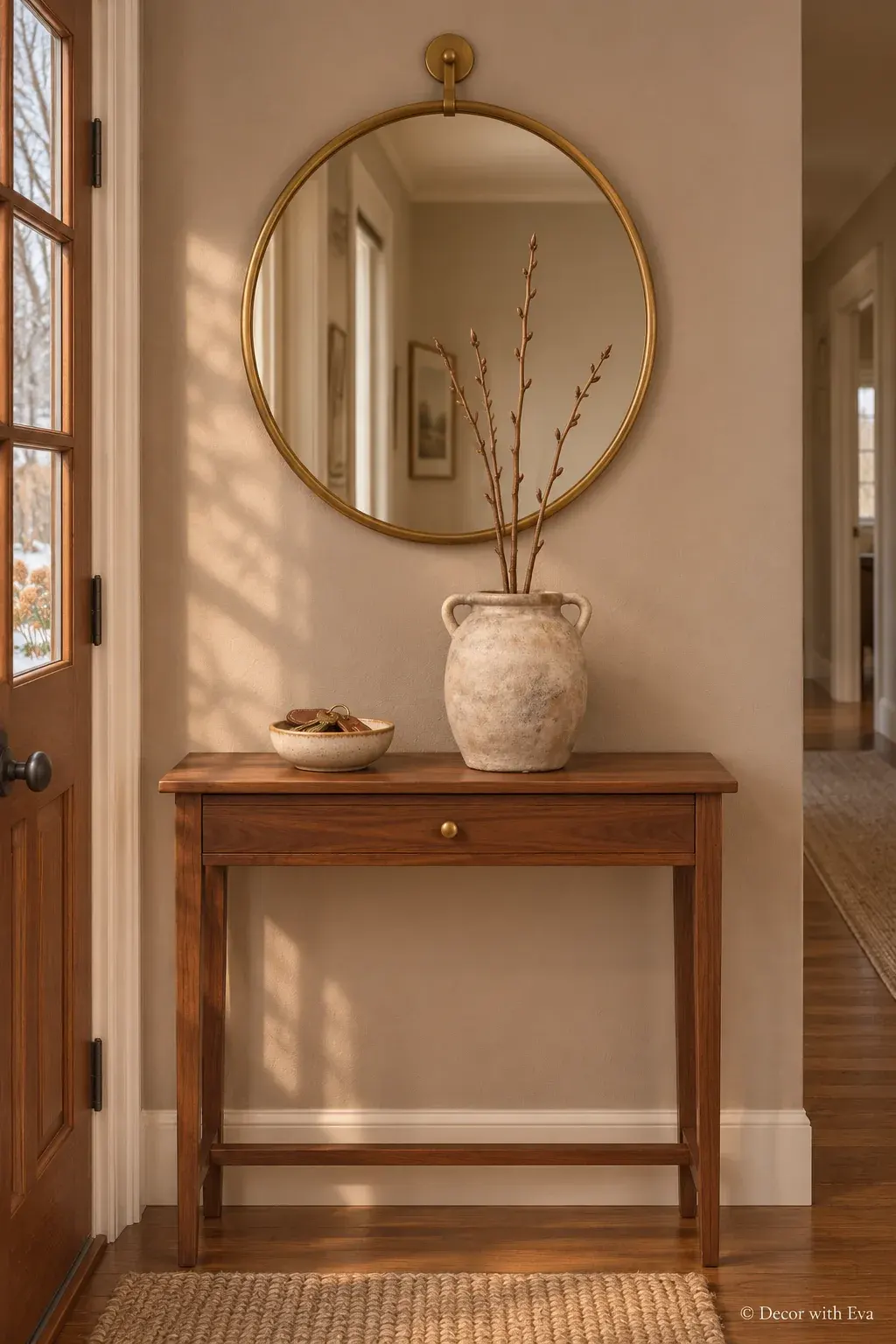
Bare branches look right in January and give a console some presence without a tall bouquet. Start with two or three slender stems in a rounded vase. Their open shape leaves the wall, mirror or artwork behind them visible.
Trim or choose the branches for the actual space. They should clear the mirror, nearby doors and anyone passing the table. A wide branch canopy in a narrow hallway will be annoying quickly, even if it looks lovely in a photograph.
Try this: Use an existing stable pitcher, keeping the arrangement narrow.
This Whitewashed vase is listed at 7.6 inches high and 6.7 inches across. Check that footprint against your console. Branches and flowers are separate styling props; use a stable arrangement and follow the vessel’s care instructions.
6. Keep a Wreath with a Winter Palette

A wreath with muted leaves, pinecones and cool berries can carry the front door through the weeks after Christmas. The contrast of silver-green foliage and dark berries gives it detail without needing a big red bow. Keep the surrounding doorway simple.
Check the expanded diameter against the door, especially if there is a storm door in front. Choose a hanger that suits the door and wreath weight. The selected wreath needs shaping after unpacking; use a sheltered position and confirm its care guidance for your exposure.
Try this: Remove ornaments from a plain wreath you already have, if they detach cleanly.
The wreath is described as about 22–24 inches across after shaping. Its grapevine base carries mixed artificial leaves, foam berries and natural pinecones. Use a sheltered location and confirm the current exposure-care instructions.
7. Dress the Dining Table with Linen and Pears
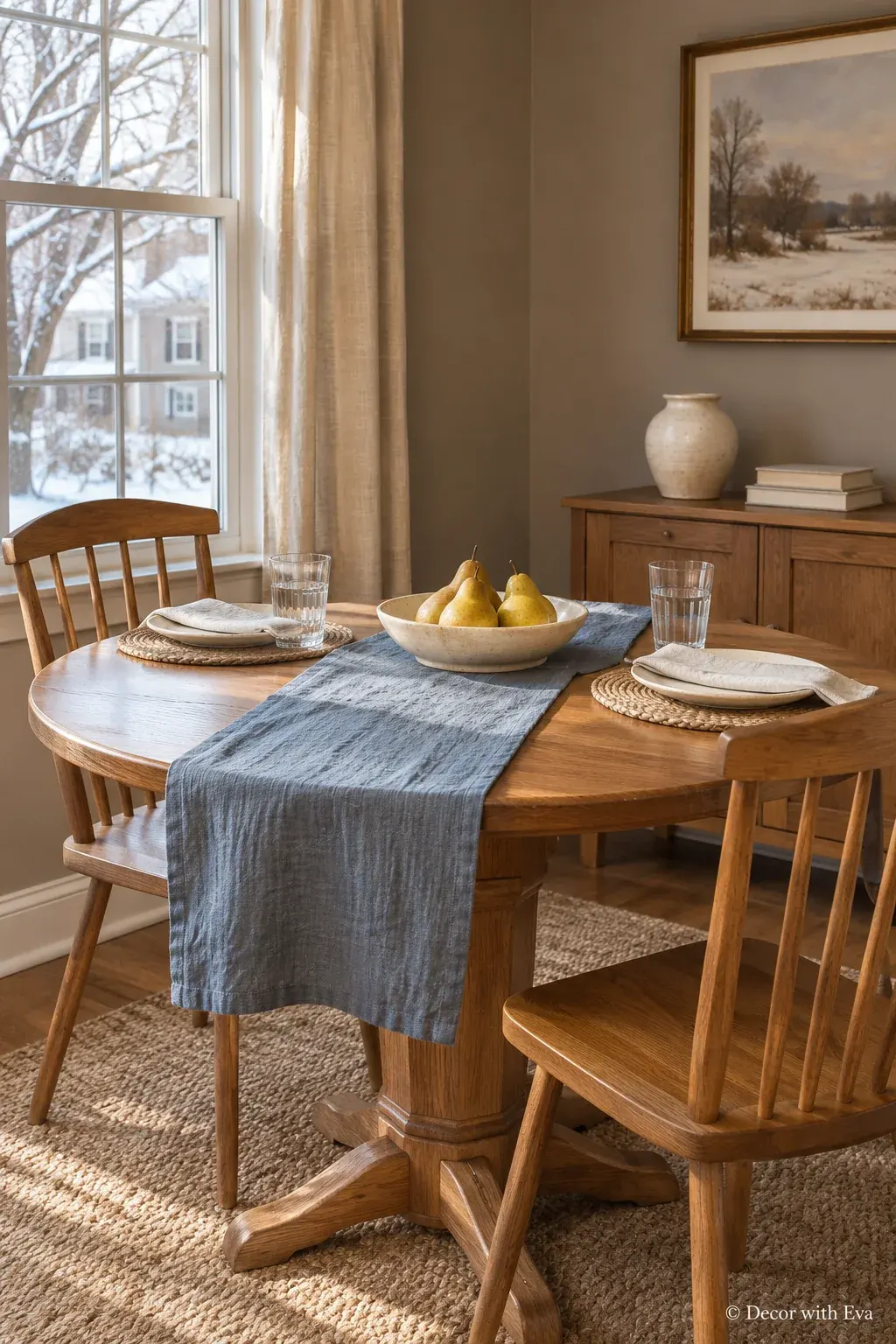
A soft runner and a low bowl of pears can make the dining table feel finished again. Try smoky blue, oatmeal or a color already in the room. The contrast between fabric, fruit and a simple ceramic bowl gives the arrangement enough interest.
Keep the center low enough for conversation and narrow enough to leave space for plates. Choose fruit you plan to eat and store it according to its needs. The table should be easy to clear for homework, dinner or the next project.
Try this: Fold a plain tablecloth into a runner or use a favorite serving bowl.
8. Give One Frame a Winter Landscape
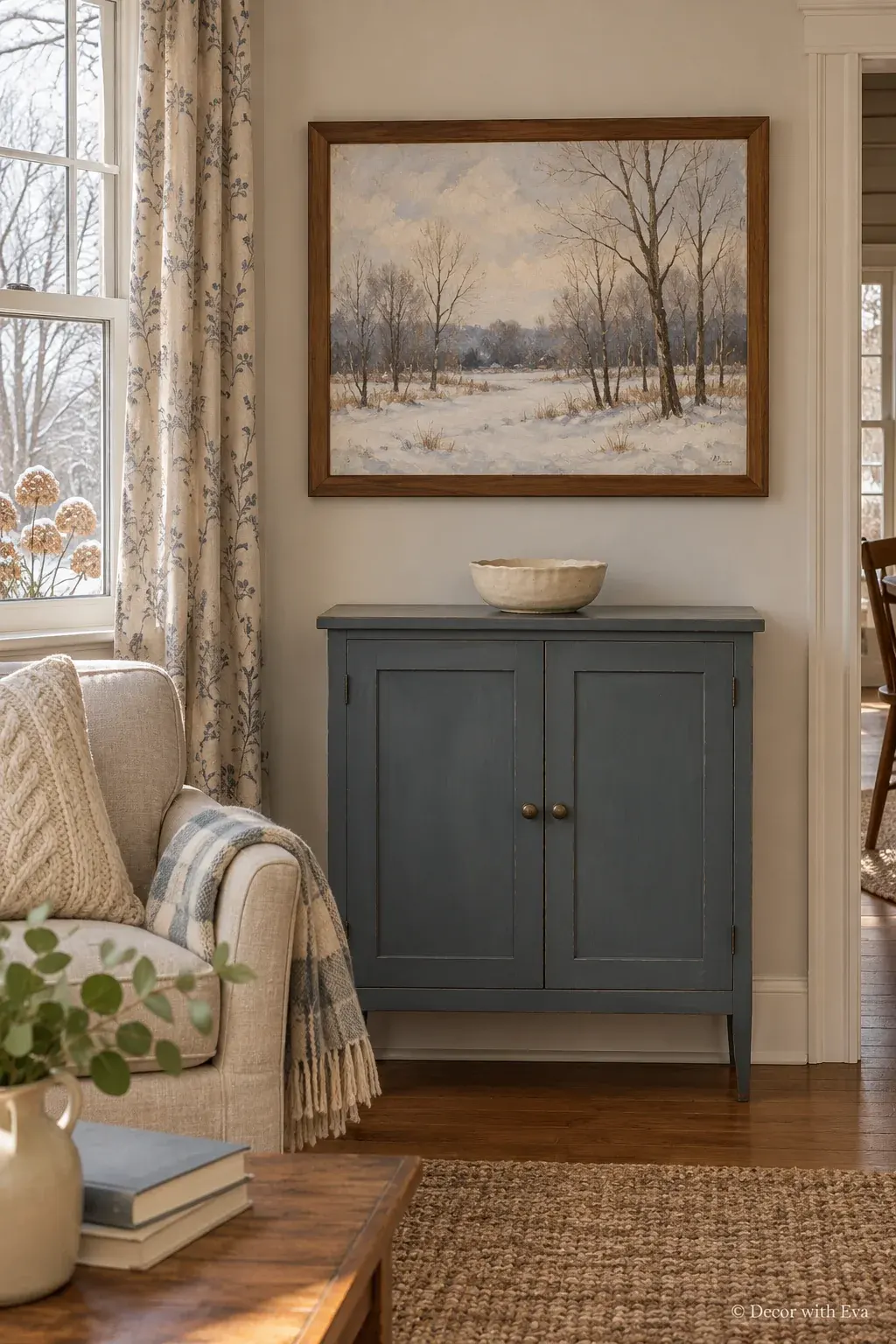
A quiet landscape can change the room more than a shelf full of seasonal ornaments. Choose a snowy field, a bare woodland or a winter coast in colors that work with the furniture. One well-placed picture gives the eye somewhere calm to settle.
Use artwork you own or a print you have permission to reproduce. Size it for the wall or shelf rather than buying the largest option by default. If it is leaning, make sure it is stable and cannot slide into the objects below.
Try this: Rotate a picture from another room or frame an original winter photograph.
9. Let Plain Window Lights Have Their Own Moment
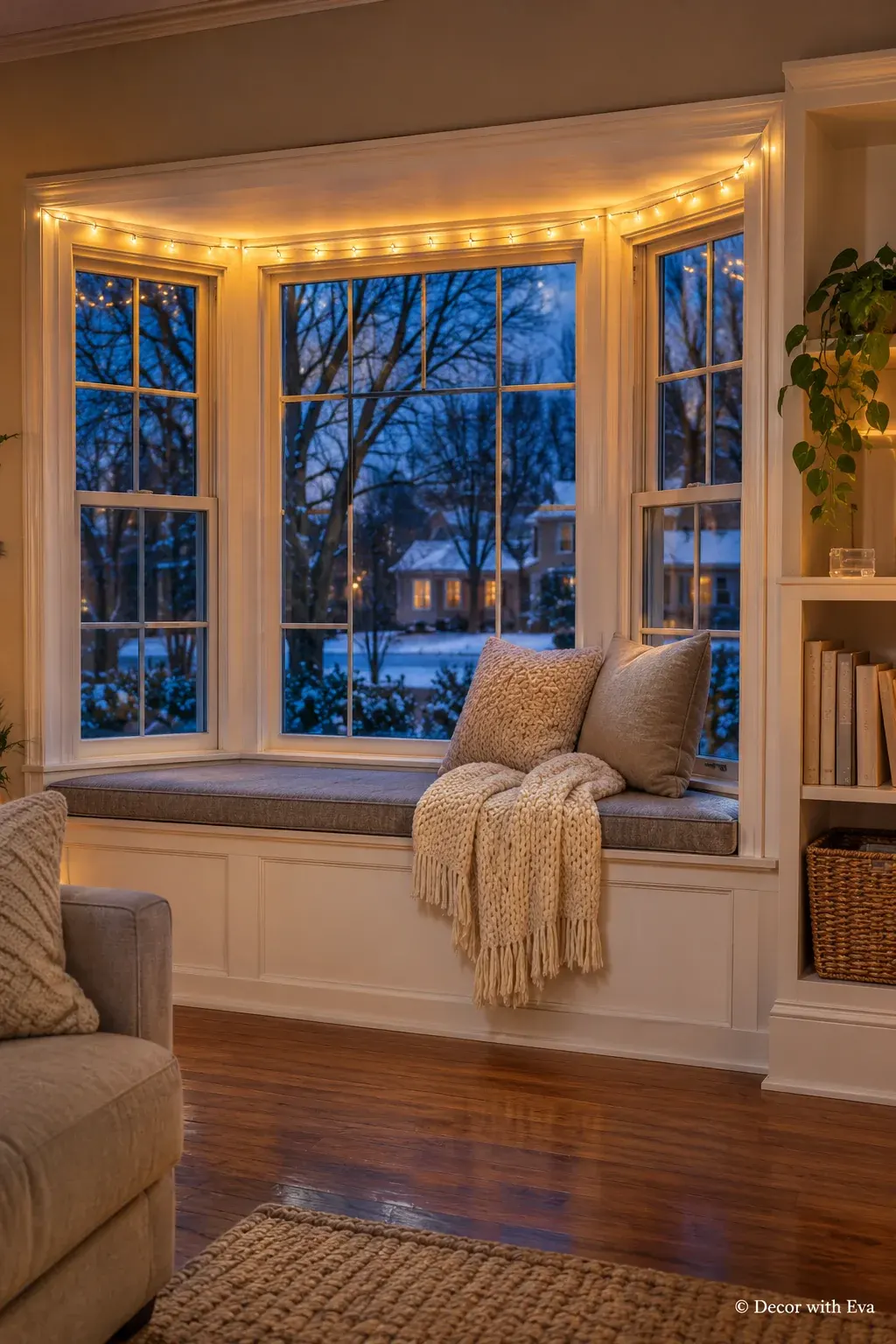
Warm white lights can look lovely around a window after the tree comes down. Keep the outline simple so it feels like gentle evening light rather than a second holiday display. A window seat or nearby chair makes the glow part of a place to relax.
Use lights rated for the location and follow their fixing and power instructions. Route cords clear of opening windows, blinds and walkways. Keep the battery pack or plug accessible; do not pinch the cable beneath a sash or shut it in a door.
Try this: Reuse a working plain light string instead of adding another seasonal set.
10. Keep the Throws in a Basket You Can Reach
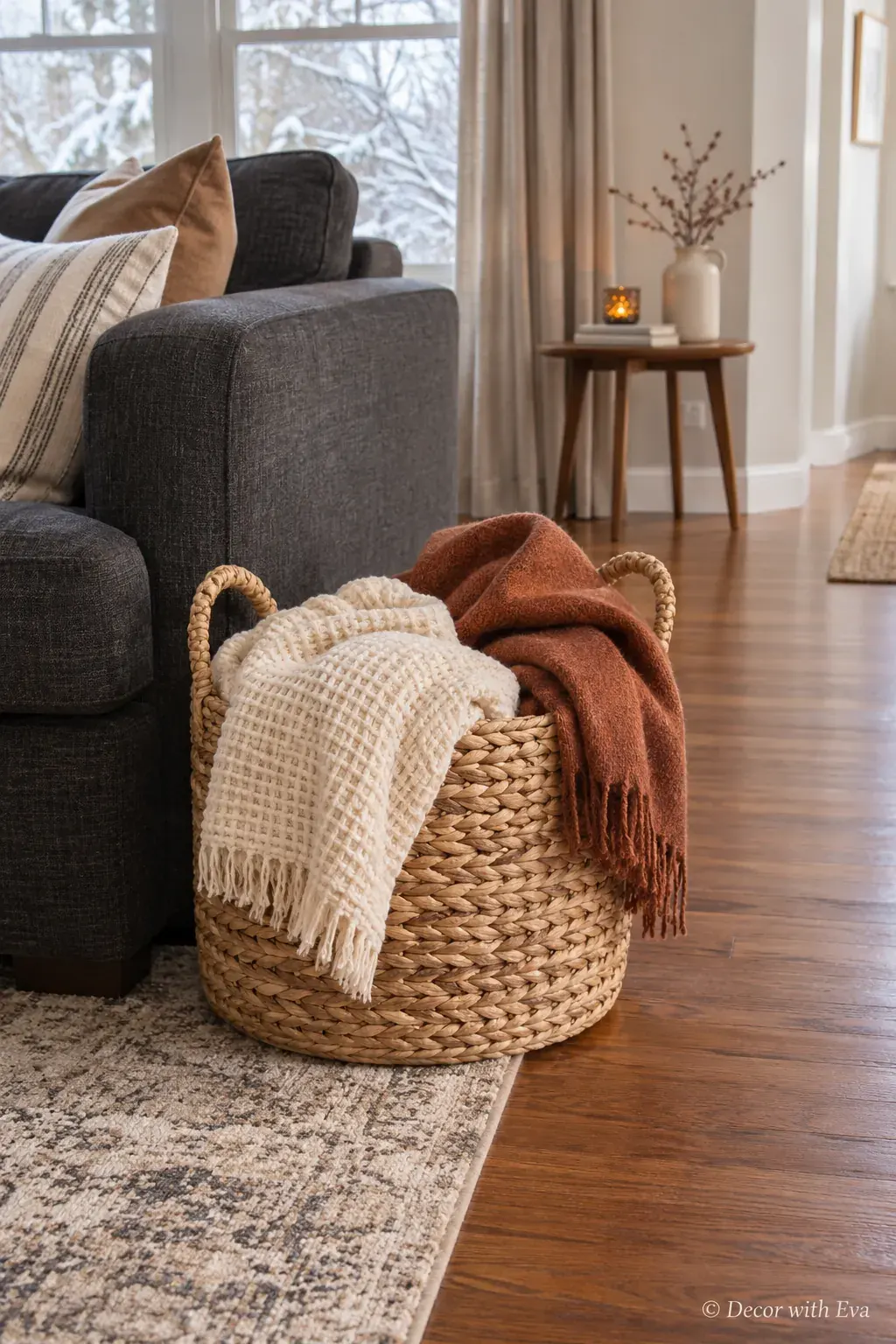
A basket of useful blankets gives the living room texture and makes the extra layers easy to find. Keep a little of the folded fabric visible instead of hiding every edge. It looks relaxed because the basket has a clear job.
Choose a clean, smooth interior that will not catch the weave. Put the basket beside the sofa rather than in the route through the room, and leave enough room to lift it for cleaning. One or two everyday throws are usually easier to manage than a basket packed tightly.
Try this: Reuse a sound basket already in the house.
11. Make a Small Hot-Chocolate Corner
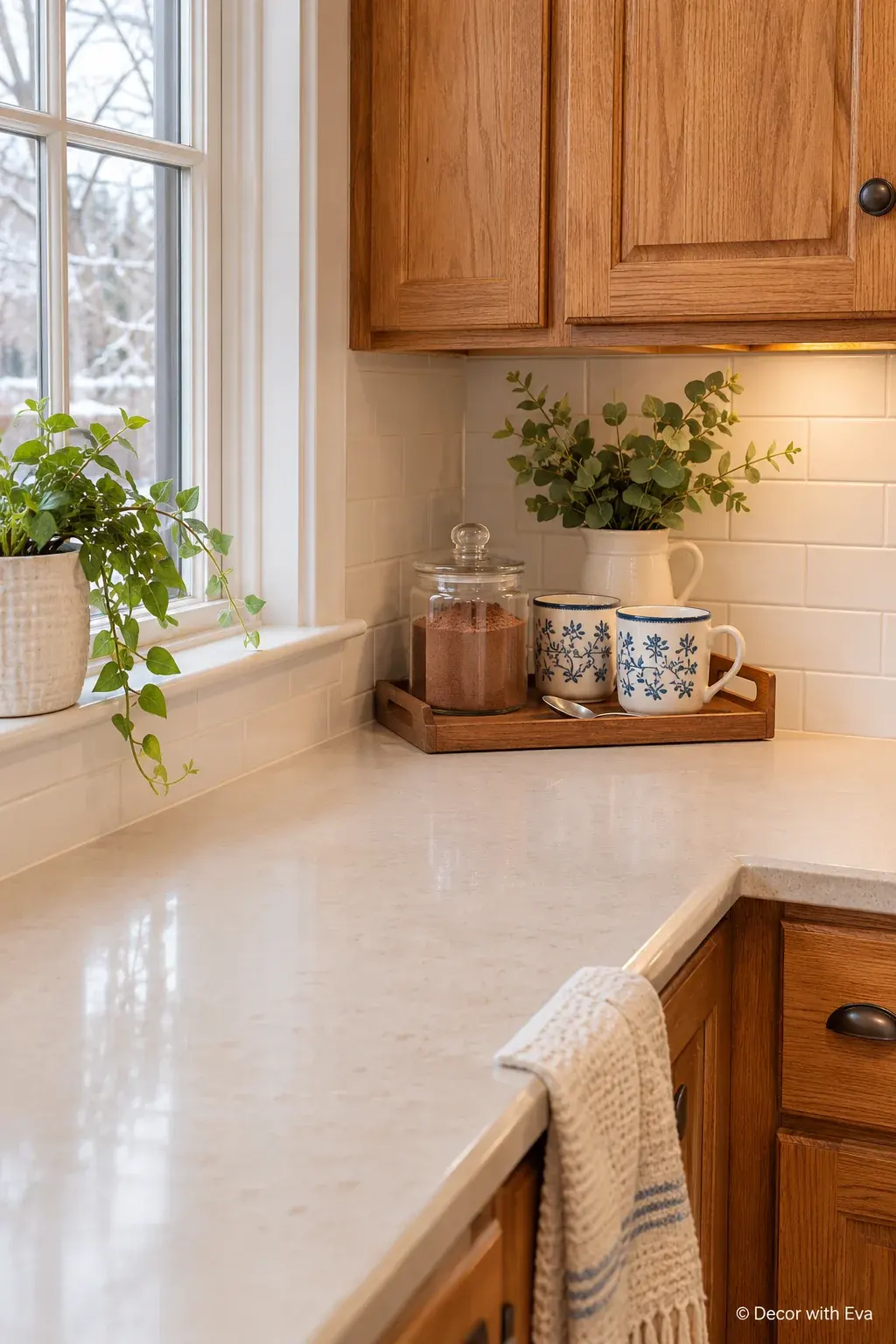
Give the kitchen a winter detail that gets used: a couple of mugs, cocoa and a spoon in one compact spot. Keep the palette tied to the cupboards so the station feels like part of the kitchen. Blue-and-white mugs look especially cheerful against warm wood.
Keep ingredients in suitable closed containers with the labels and dates you need. Place the group on a dry counter away from the stovetop, leaving the main prep area clear. Reserve mugs and supplies can stay in a cupboard until they are needed.
Try this: Use your everyday mugs and a small serving tray.
12. Add a Textured Throw at the Foot of the Bed
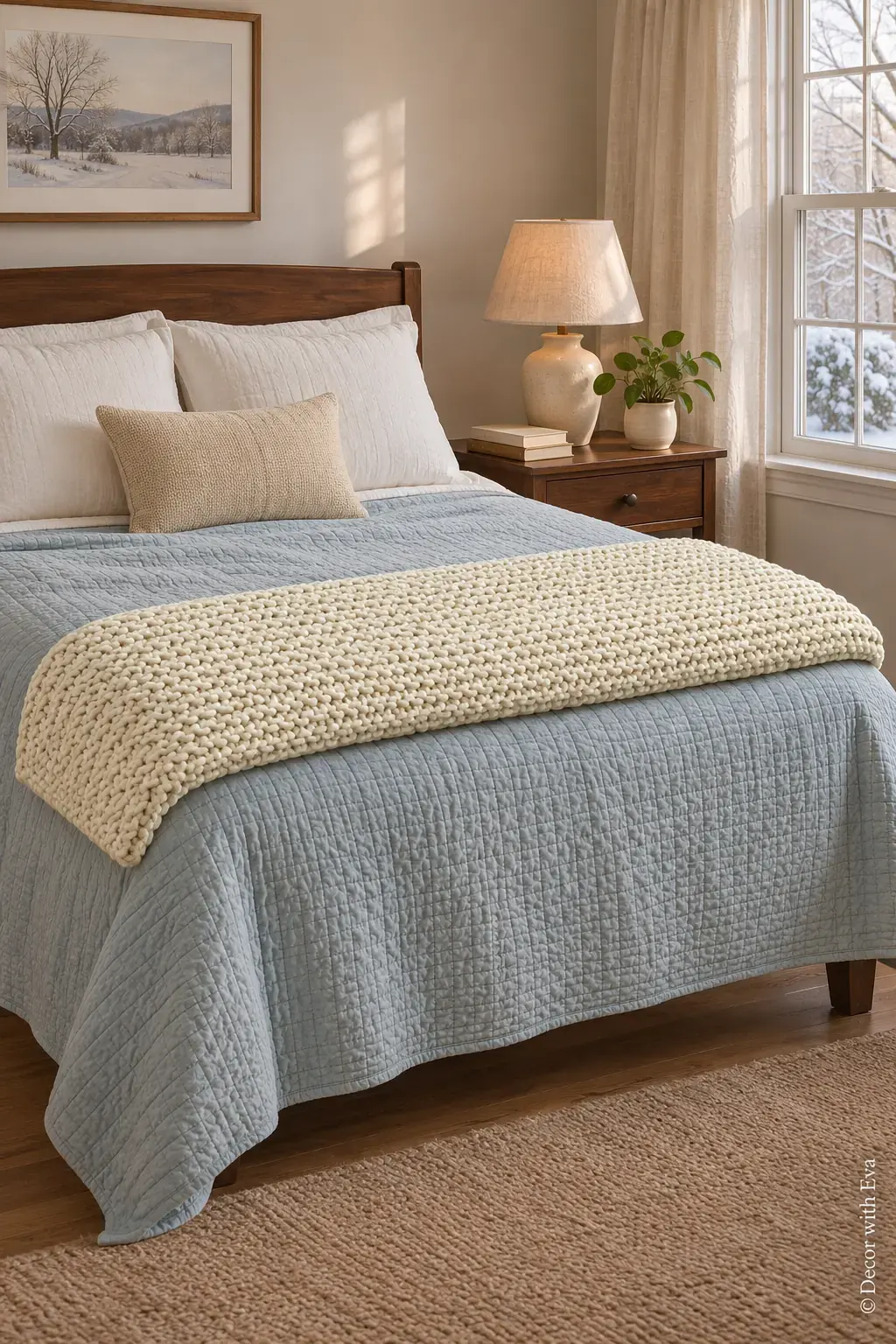
A folded knit gives plain bedding another layer of texture without replacing the whole bed. Keep the quilt or duvet you like, then add the throw as a short band or a relaxed fold at the foot. A warm neutral works with blue, green and patterned bedding.
Check the actual throw size against the mattress. A 51-by-63-inch piece is an accent on a larger bed, not a full bedspread. Fold it to suit the width and keep it off the floor rather than stretching the knit to reach both sides.
Try this: Try a blanket from the living room before buying a matching bedding set.
The selected throw is 51 × 63 inches and listed as cotton. Its open knit adds texture; check the care label before washing and avoid stretching it to fit a larger bed.
13. Soften the Bedroom with a Proper Bedside Lamp
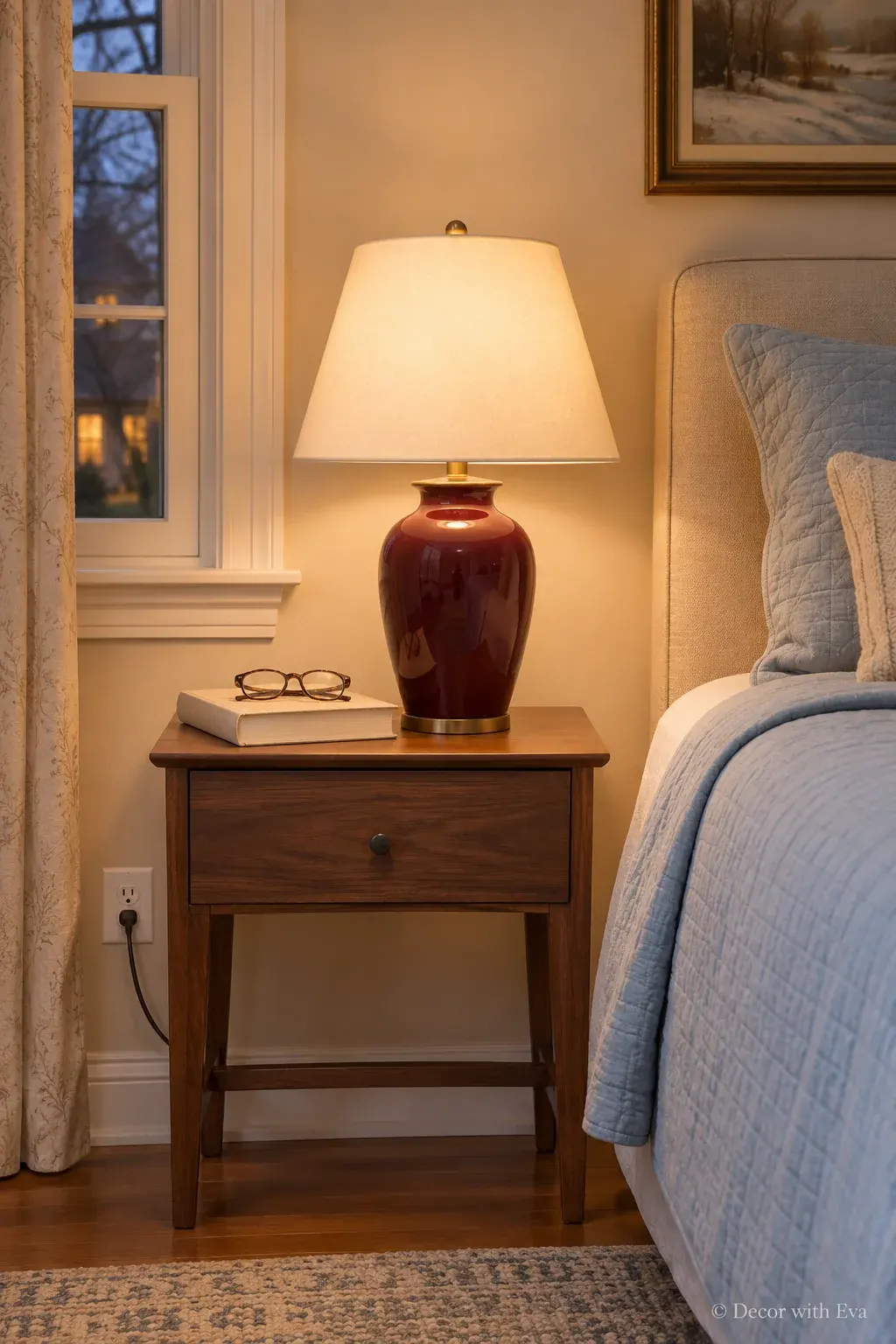
A pool of warm light makes the bedroom feel welcoming when it gets dark early. Use a lamp with enough light for what you do there, whether that is reading or finding your glasses. The shade and base can bring texture without adding another seasonal object.
Check the bulb and shade instructions and keep the lamp stable, with its cord out of the bedside route. Leave space for the things you actually use at night. Decorative glow is pleasant, but it should not be the only light available when you need to see clearly.
Try this: Move a suitable lamp from another room and try it for an evening.
14. Refresh the Bathroom with One Rich Towel Color
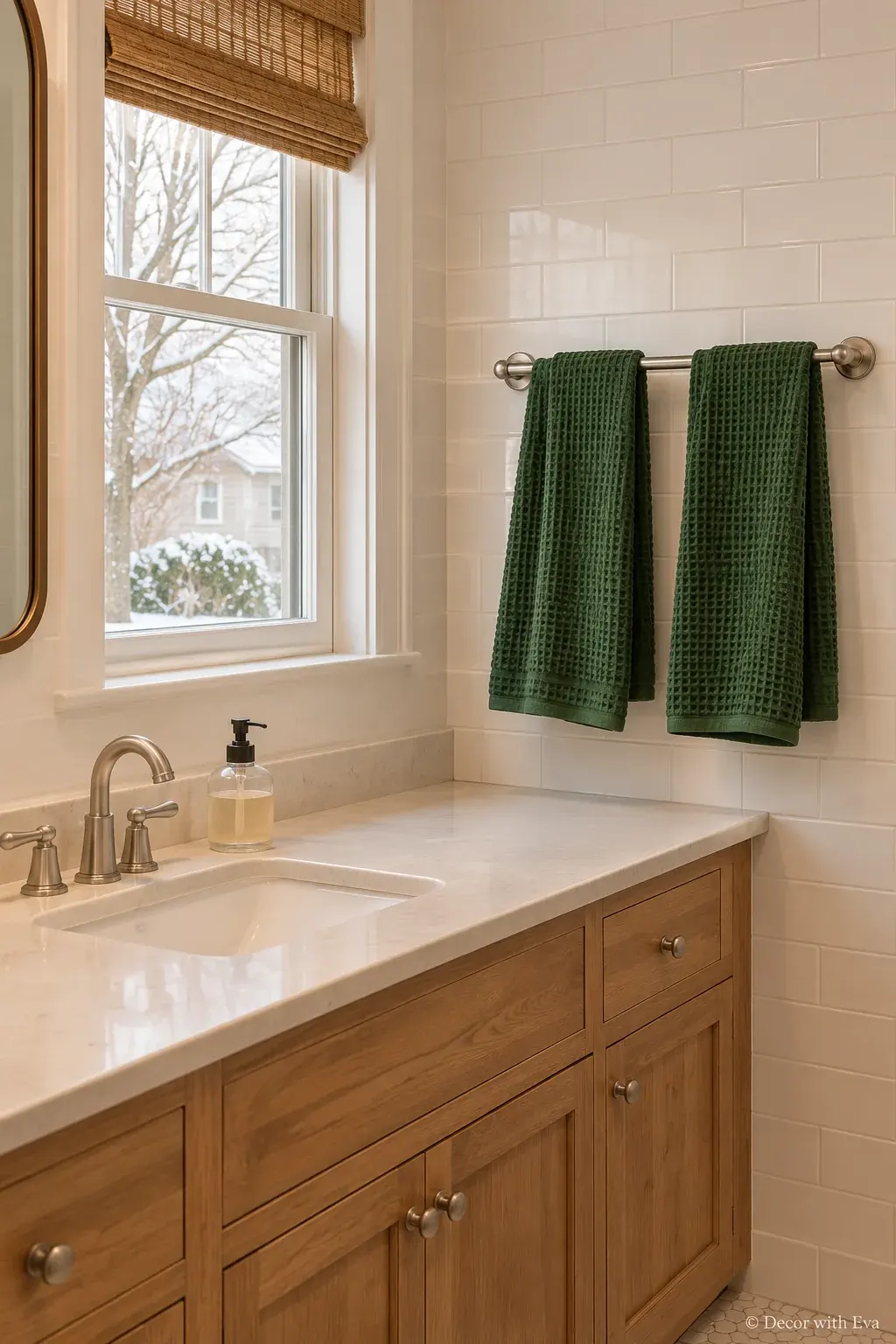
Swapping a festive hand towel for forest green, deep blue or warm cream can be enough of a winter update. Keep the rest of the bathroom simple so the fabric color stands out. An ordinary room can feel considered without a display on every surface.
Use towels that dry well in your bathroom and hang them with enough space for air to circulate. Keep the basin edge and daily toiletries easy to use. A seasonal refresh should make the room nicer to live with, not harder to clean.
Try this: Bring out a plain towel from the linen cupboard.
15. Simplify the Porch Planters
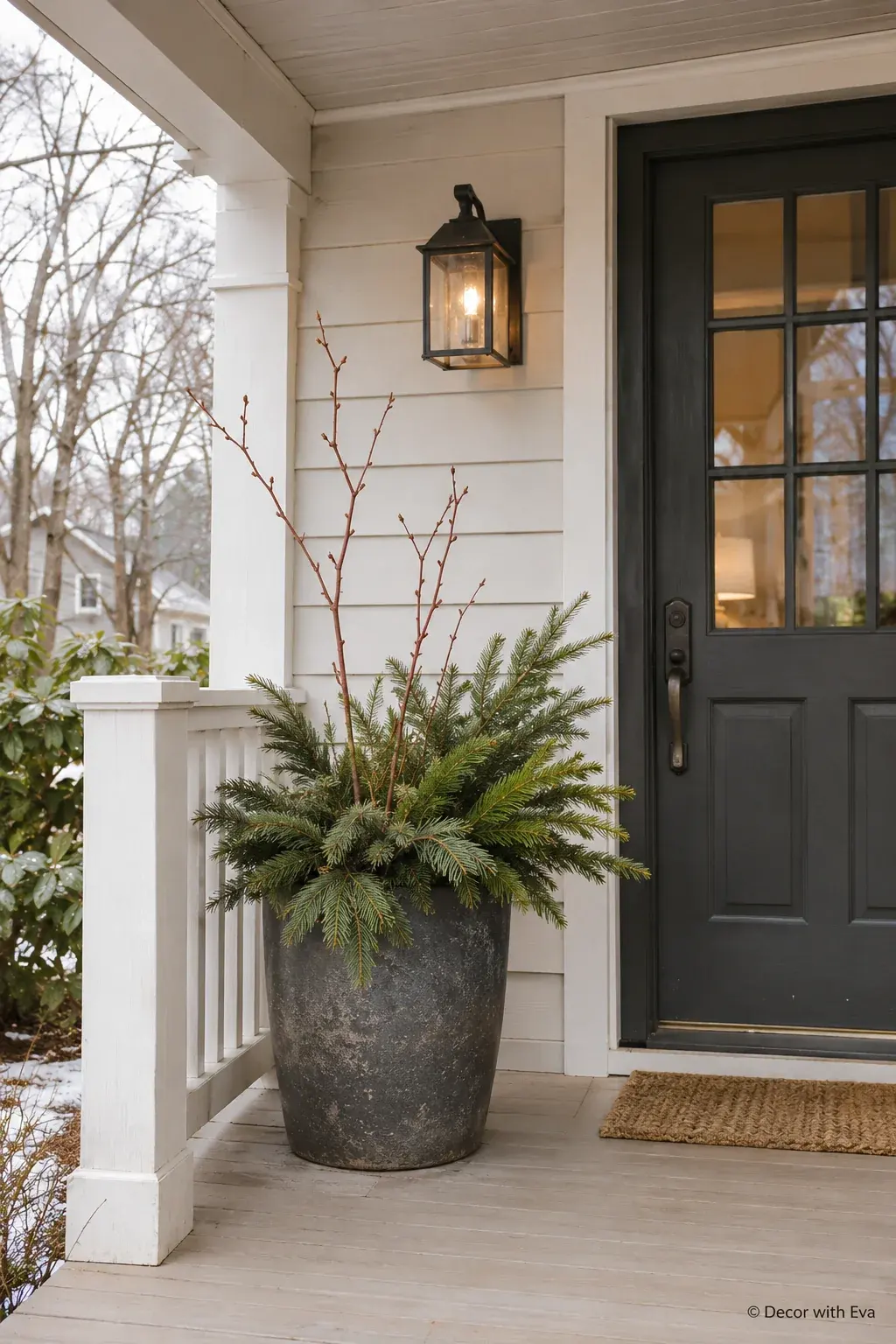
After the bright holiday additions come out, a planter of plain branches can still give the entrance some shape. Keep the outline loose, with a few upright stems and softer greenery around the edge. Let the container and the doorway remain visible.
Use a stable container, secure the stems and keep the opening path clear. Fresh cut greenery will dry, so inspect it and replace it as needed. Choose materials and containers suited to your local winter conditions; a sheltered porch in a mild climate will look different from an exposed snowy step.
Try this: Reuse the planter and remove only the holiday ornaments.
16. Group White Pottery on a Sideboard
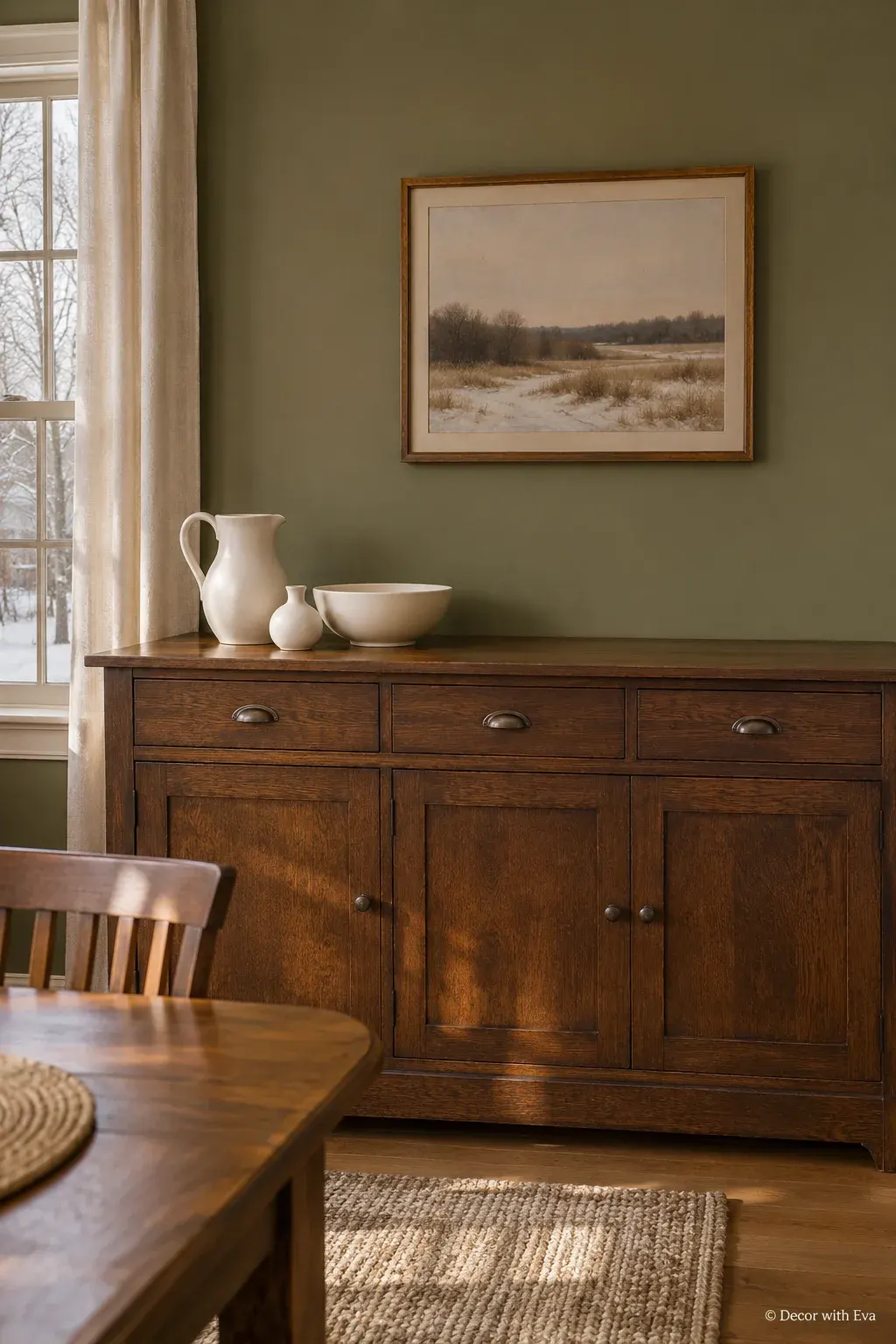
A small group of everyday white ceramics gives a dining room a quieter focal point. Vary the heights and leave some sideboard visible around them. The soft shapes work well with winter wood tones and the darker colors already in the room.
Choose pieces with a shared finish instead of trying to match every shape. Keep the group toward one end so there is still room to set down a serving dish. If the display needs a dozen extra objects to feel complete, take a few away and look again.
Try this: Use a pitcher, serving bowl and small vase from your own cupboards.
17. Keep Staircase Greenery Clear of the Handrail
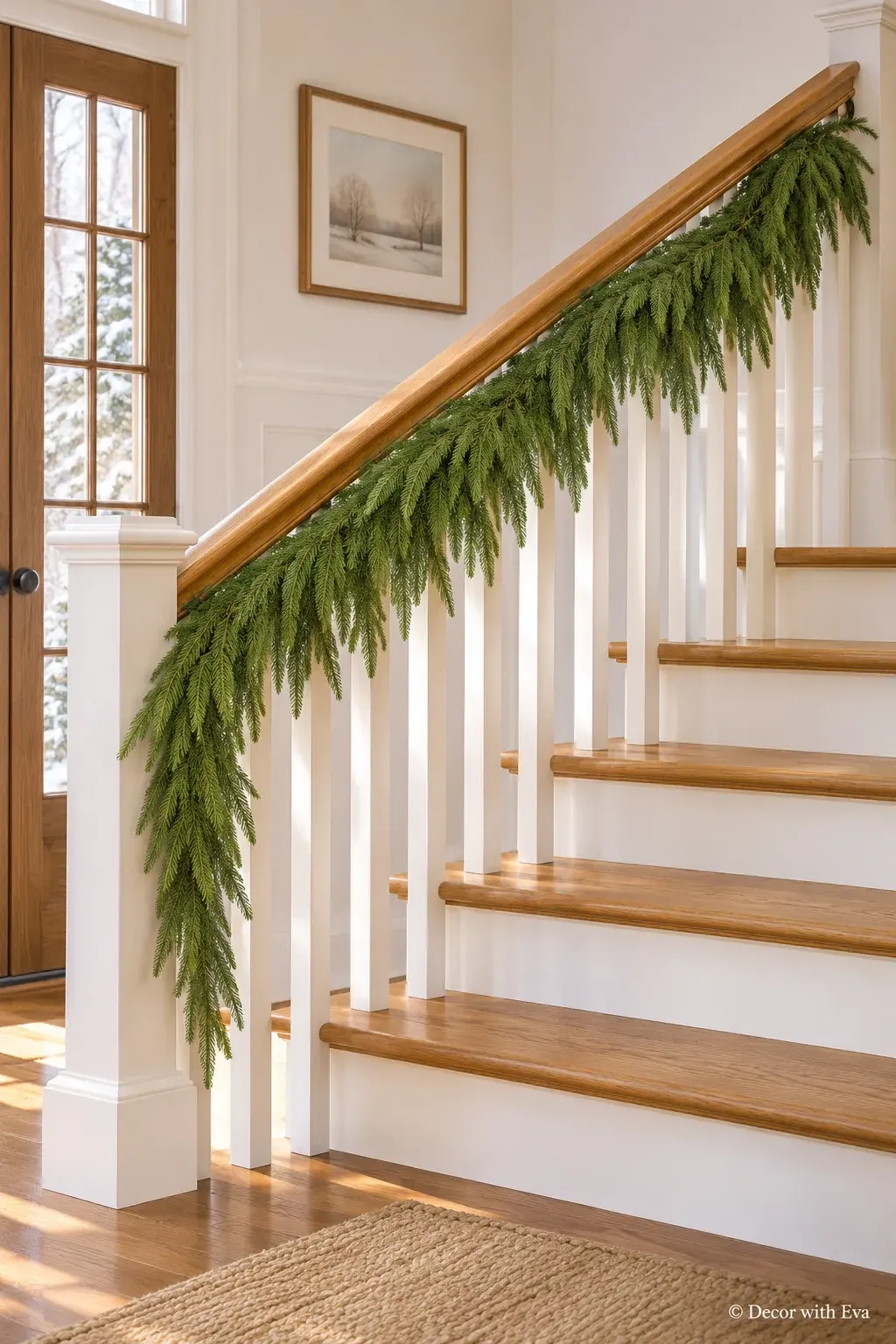
One plain strand can carry winter greenery through the entryway without rebuilding the holiday staircase display. Keep it on the outside of the balusters so the rail remains useful. The simpler outline suits January and lets the staircase’s shape show.
Measure the section first and use suitable secure fixings. Keep stems, loops and trailing ends out of the treads and away from the hand grip. If the stair is narrow or the arrangement interferes with normal use, leave the greenery off and decorate a nearby table instead.
Try this: Reuse one strand from the holiday display, with its ornaments removed.
The selected set has two 6-foot PE garlands with flexible internal wire. Shape the compressed branches after unpacking. Use one strand for a loose outline; a fuller arrangement may need more greenery than the single strand illustrated.
18. Bring a Healthy Plant into Better Winter Light
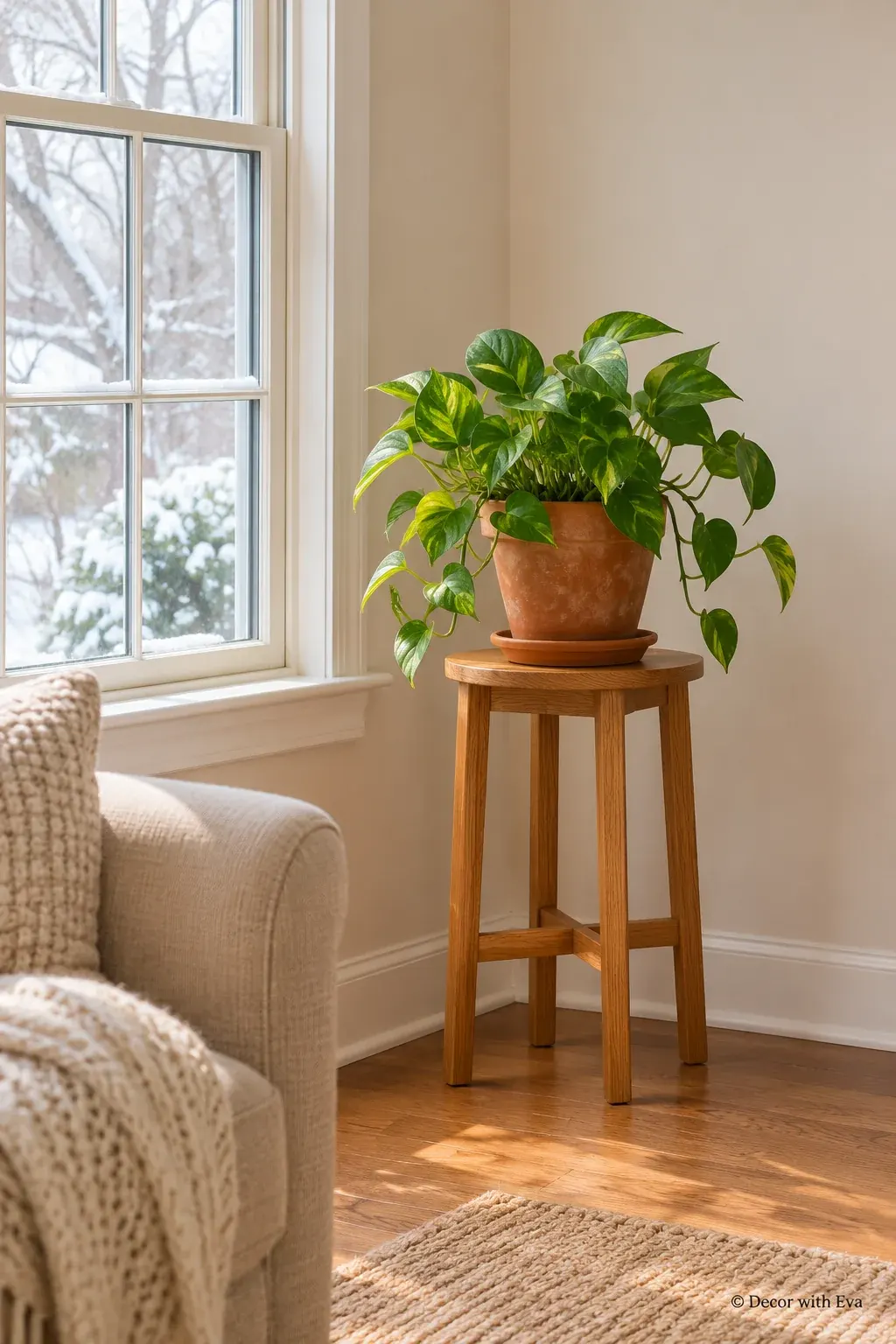
A living plant can fill a room with color long after the holiday greenery is packed away. Let its shape be the feature and keep the pot simple. A brighter position may be more useful in winter than the corner where it looked good in summer.
Choose the spot for the plant’s own light needs and keep it away from cold drafts and drying heat. Protect the furniture with an appropriate saucer. Check moisture before watering rather than following a summer schedule automatically.
Try this: Move a plant you already own and clear one nearby surface.
University of Minnesota Extension’s winter houseplant tips are a useful starting point for adjusting light and care to the season.
19. Give the Bookshelf a Winter Edit
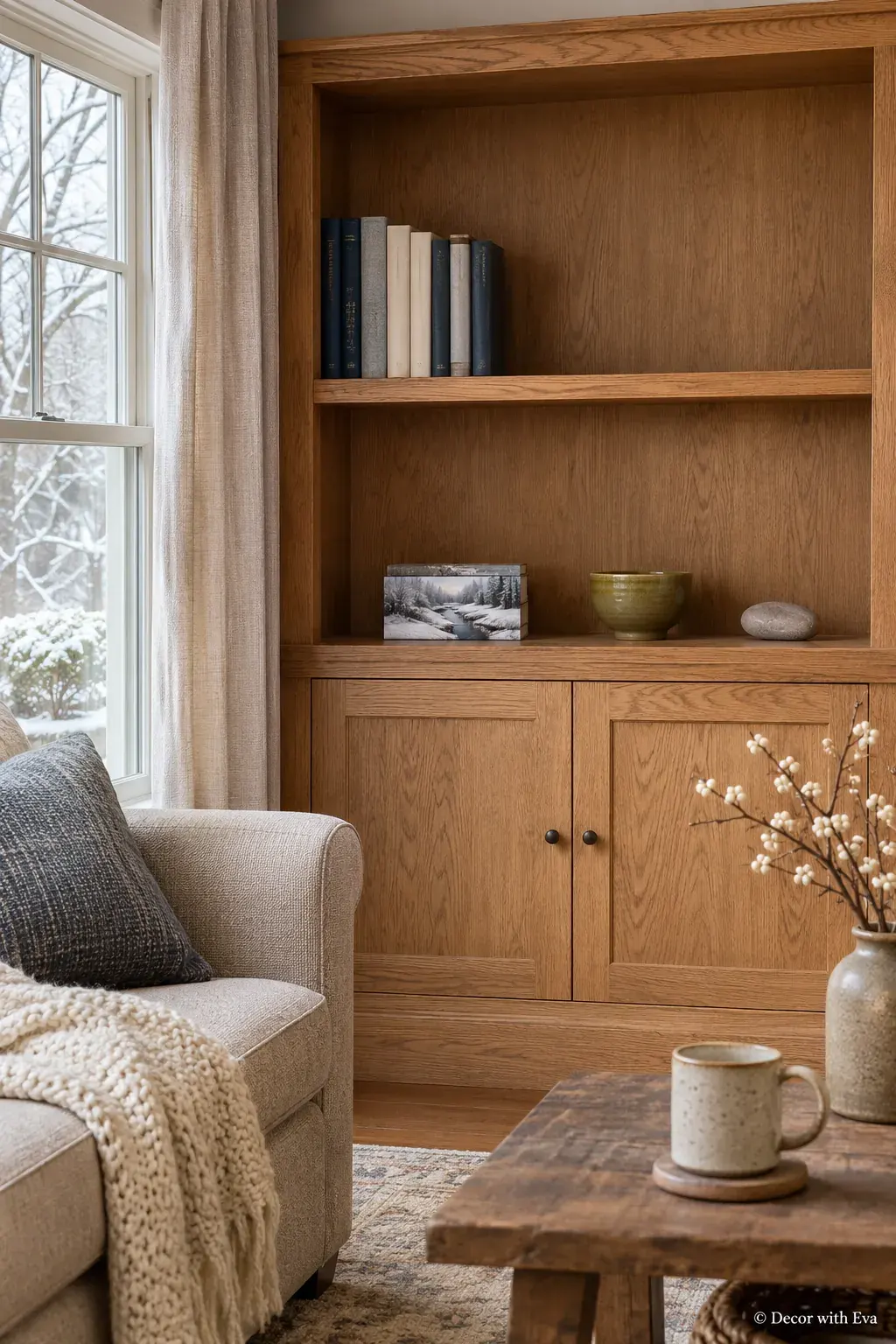
Books about gardens, landscapes or places you want to visit can make a winter shelf feel personal. Arrange a short upright row, a small horizontal stack and one useful bowl or keepsake. The variety gives the eye something to follow without filling every gap.
Keep heavy books low and the shelf within its load guidance. Leave space to take a book out easily. Use colors already in the room rather than hiding titles or buying a set of books just for their covers.
Try this: Rotate a few favorite books from another shelf.
20. Make a Few Paper Snowflakes for a Window
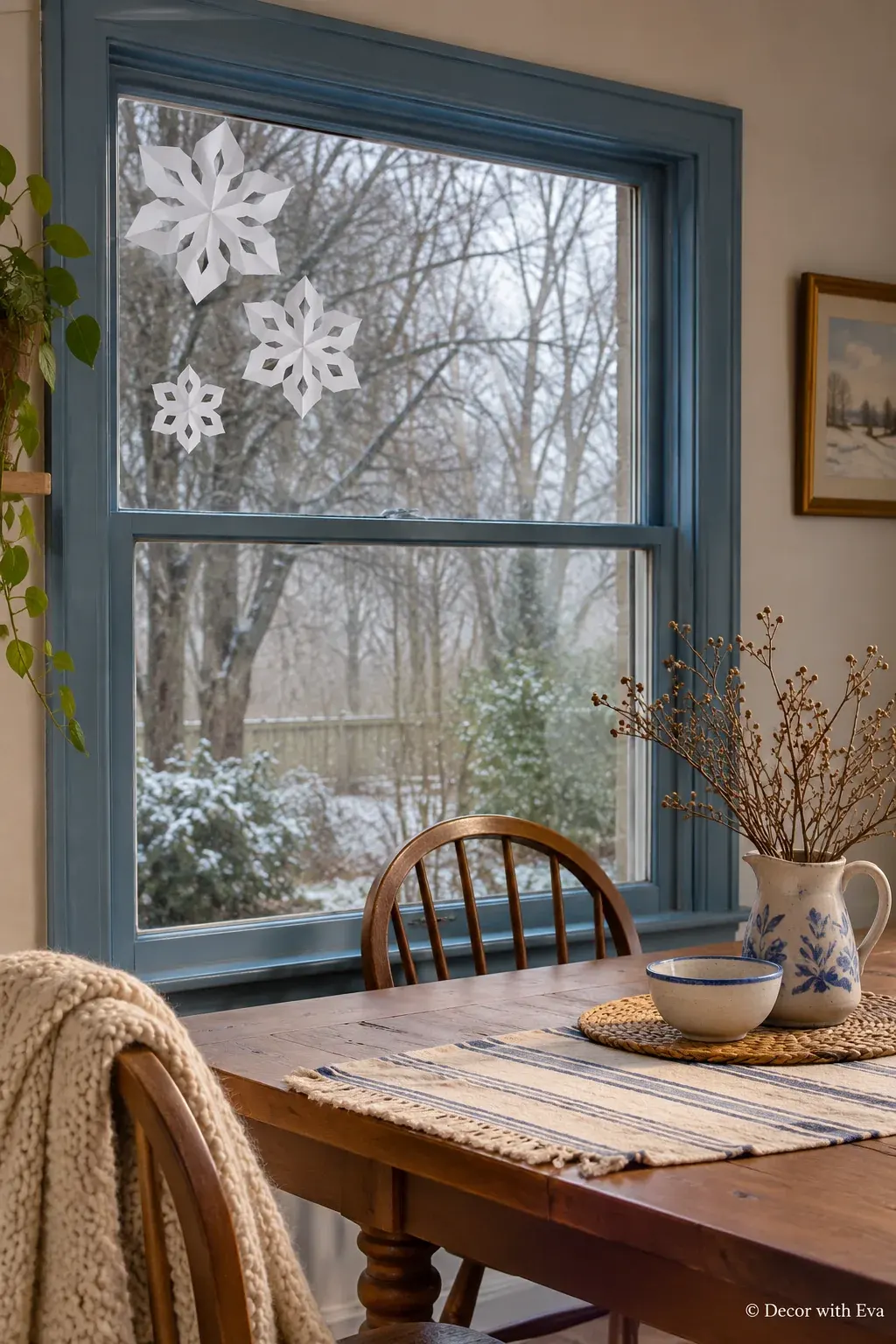
A small cluster of paper snowflakes can be a cheerful January project. Use plain white paper and vary the sizes so the window still has plenty of clear glass. Keeping the group to one corner makes it feel light rather than turning the whole room into a display.
Fold and cut the shapes, unfold them gently and test a glass-safe removable fixing before hanging. Keep them clear of opening hardware, blind cords and heat. If the paper starts to curl or look tired, take it down rather than trying to keep it all season.
Try this: Use leftover plain paper and make just three shapes.
21. Let a Bowl of Winter Blooms Be the Centerpiece
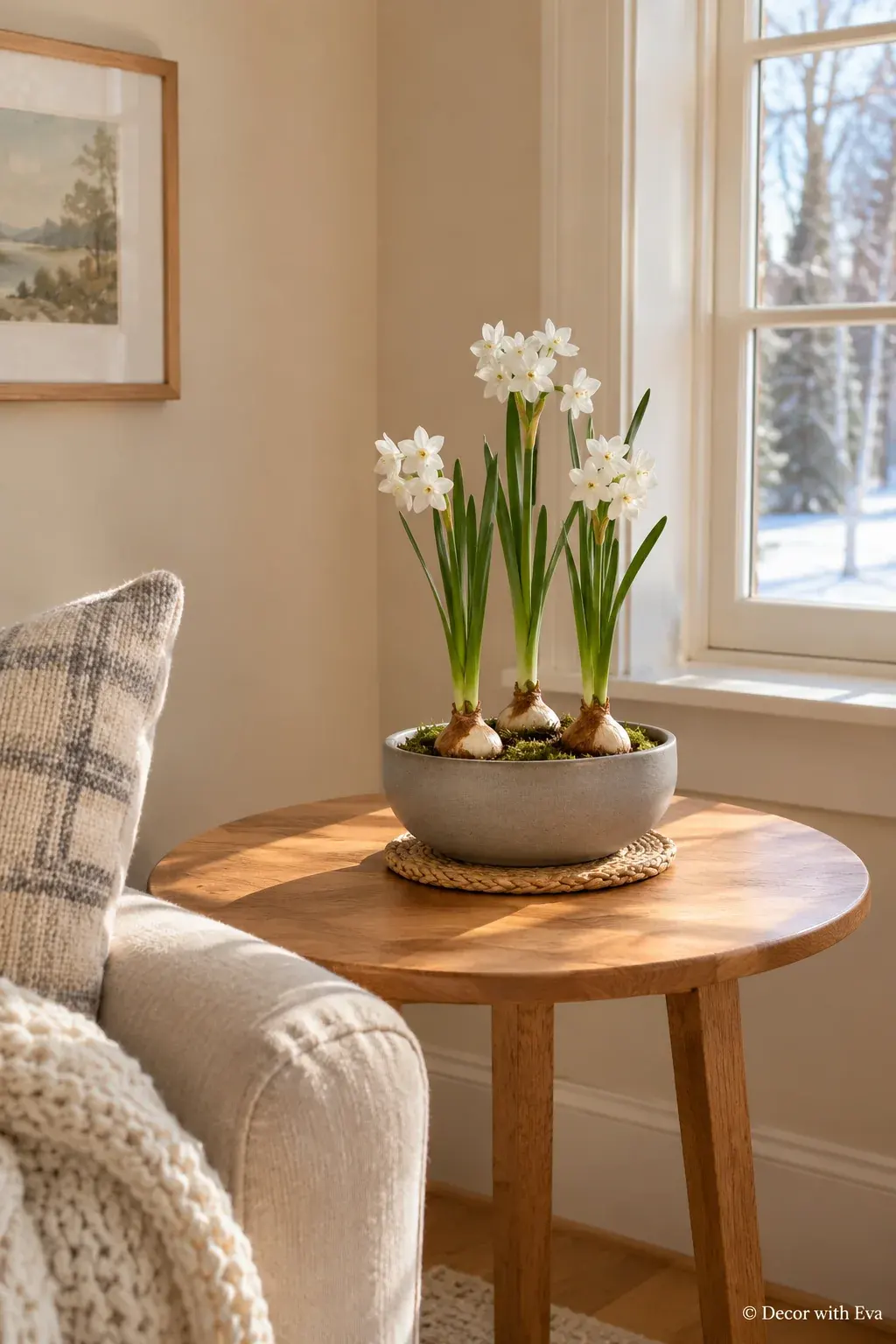
A low bowl of flowering bulbs offers a different sort of winter display: something living that changes from week to week. White paperwhites work with simple ceramics and natural wood, while their narrow leaves keep the arrangement airy.
Buy bulbs or an established display from a reliable local grower and follow its growing instructions. Keep the bowl on a protected surface with the light it needs, and account for the plants getting taller. Check plant suitability for your household before bringing them home.
Try this: Use an existing watertight bowl as an outer container for a suitable planted pot.
22. Warm a Bare Hallway with a Patterned Runner
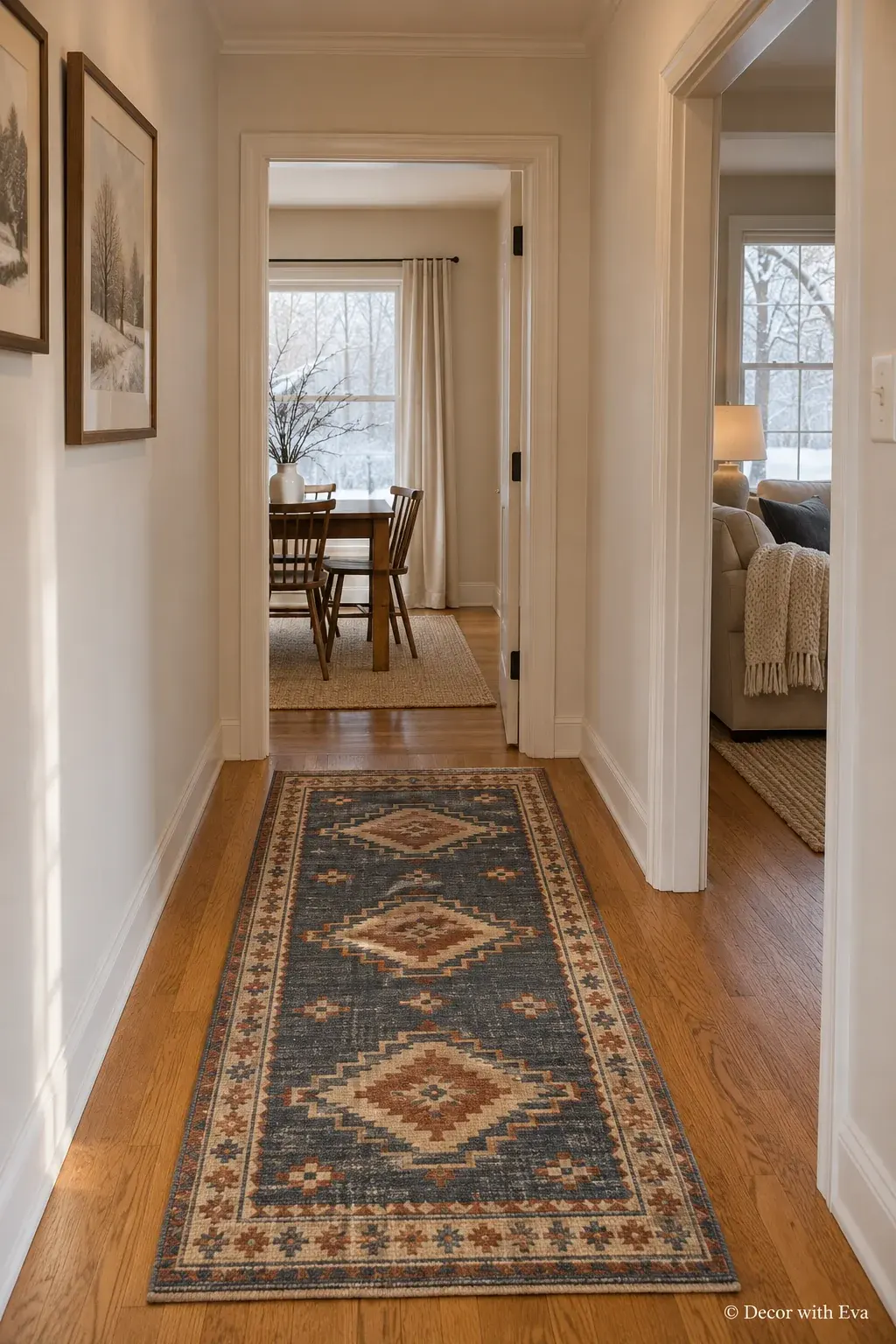
A runner can bring color and texture to the route between rooms once the decorations come down. Choose a pattern that works with the surrounding wood and wall colors. Deep blue, muted rust and cream can connect several rooms without needing matching accessories.
Measure the clear passage and door swings, then choose a rug and grip solution suited to the floor. Keep the edges flat and the width comfortable to walk along. In a busy winter entrance, follow the rug’s care instructions and keep wet footwear off a delicate textile.
Try this: Try a runner from another part of the home before replacing it.
What Christmas Decorations Can Stay Up for Winter?
Keep pieces that suit everyday winter life: plain greenery in good condition, useful textiles, simple light strings rated for their setting and natural-looking accents. There is no universal date or rule for your home. Remove dried-out greenery and anything damaged, then decide what still feels welcome.
How Can You Decorate for January on a Small Budget?
Begin with one room and move things you already own. A chair can fill the tree corner; a serving bowl can become the table centerpiece; a different cushion cover can change the sofa. Choose one project before making a shopping list.
Leave the Home Ready for Everyday Life
Keep the parts of winter decorating you enjoy and let the rest be simple. Clear walkways, usable tables and a comfortable seat matter more than filling the space left by the holidays. A few well-chosen details can be enough.
If you are reworking a living-room arrangement you enjoyed in December, our Christmas living-room ideas can help you identify the lighting and useful layers to carry into winter while packing away the holiday details.