This article contains paid links. As an Amazon Associate, I earn from qualifying purchases. Product selections are based on listing and customer-review research, not hands-on testing.
Blankets make a room feel comfortable until the spare pile takes over the sofa. A good storage spot keeps the one you use close by and gives the extras somewhere sensible to go. That might be a basket beside a chair, a hollow ottoman or a shelf you already have.
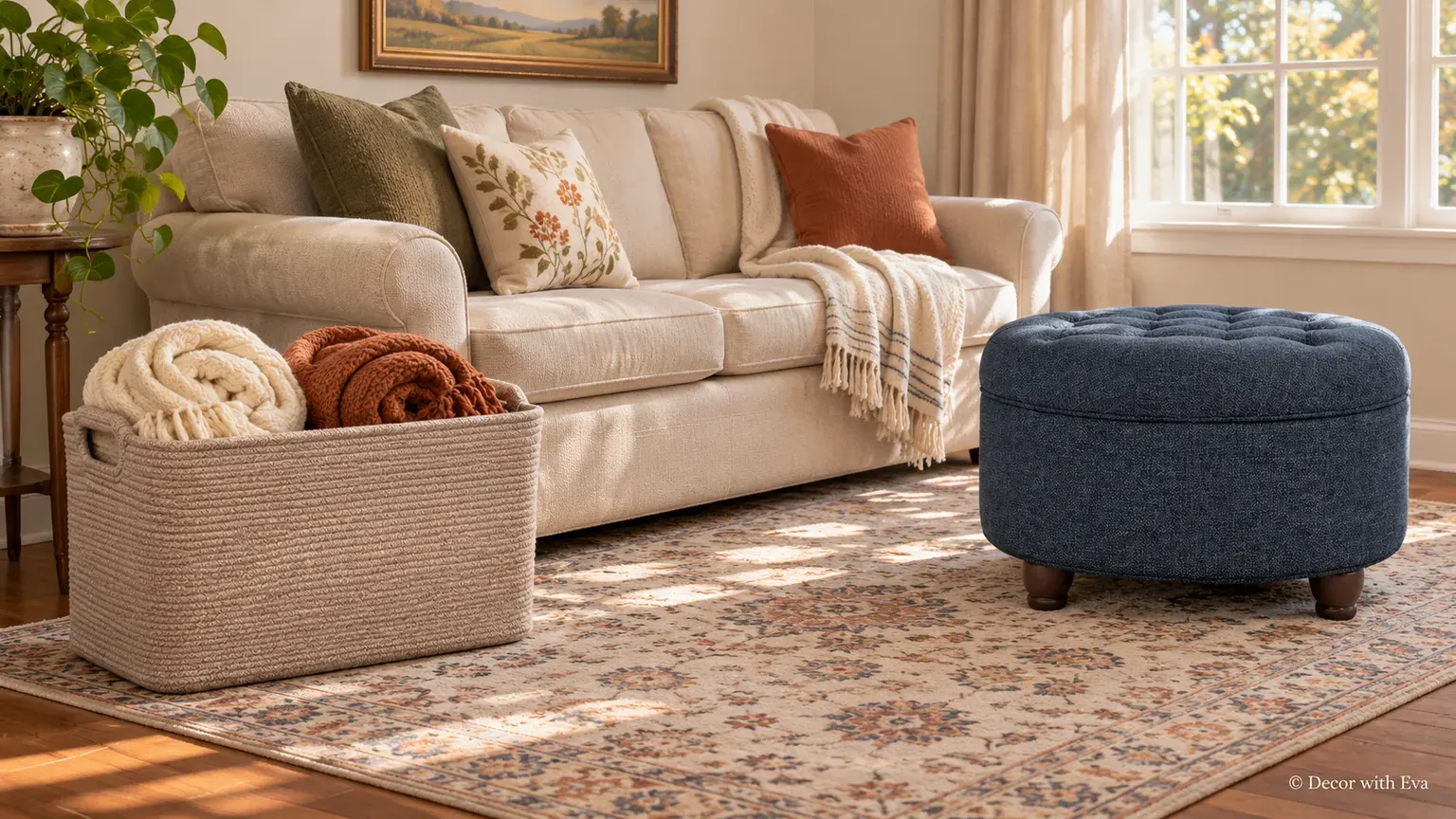
These blanket storage solutions cover everyday throws, bulky bedding and the special pieces you want to protect. Choose according to how often you reach for the blanket and how much space its folded bundle actually takes. One useful change is usually better than adding storage to every corner.
Images are AI-created styling illustrations. Selected product photos informed the linked storage pieces; the blankets, furniture and accessories around them are separate styling props, not complete sets. The scenes illustrate possible arrangements rather than tested capacity or actual customer rooms.
Match the Storage to the Blanket
Separate everyday throws, guest bedding and seasonal extras before buying anything. Measure a loosely folded bundle as well as the place where you plan to store it. Exterior basket or furniture dimensions are not the same as usable interior space, and a litre figure cannot tell you exactly how many of your blankets will fit.
Store blankets clean and completely dry, following their care labels. Wool, lofty filled bedding and fragile quilts may need different methods. Woolmark’s storage guide explains the tradeoffs between cloth bags and compression, including the limits of vacuum packing for delicate textiles. Check the instructions for the blanket you own before choosing a long-term method.
1. Keep Everyday Throws in an Open Basket
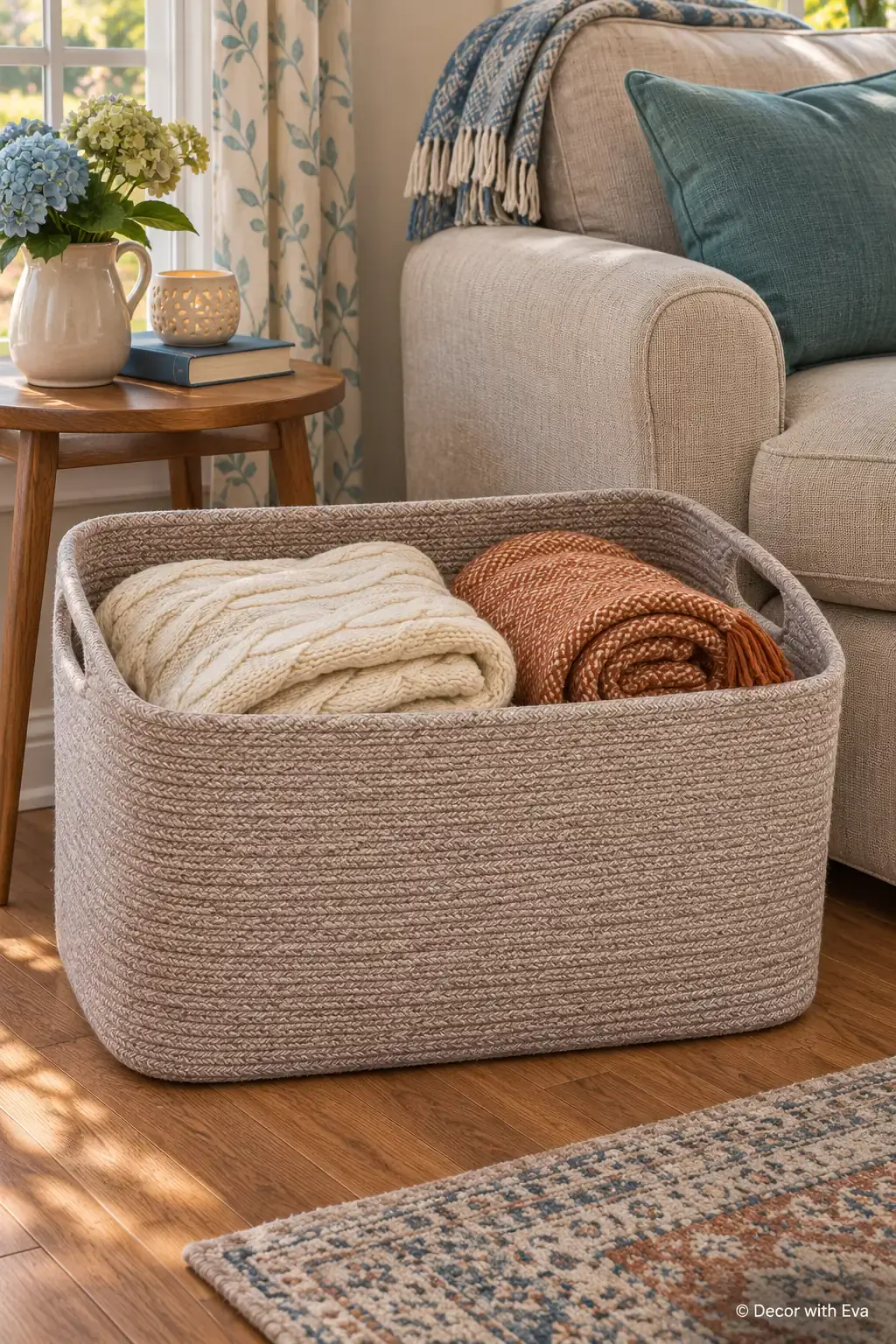
An open basket beside the sofa is easy to live with: take out a blanket, use it, then drop it back into its own place. A soft rope weave adds texture without introducing another hard-edged piece of furniture. Choose two or three everyday throws rather than filling it with every spare blanket in the house.
Fold or loosely roll the throws so the one you reach for is visible. Leave the basket outside the walking route and check that a recliner or cabinet can still open. A soft-sided basket will change shape as you fill it; do not choose it expecting the crisp outline of a rigid chest.
Make it your own: Try a clean basket you already own before buying a larger one.
Selected soft-sided basket is listed at 22 × 17 × 12 inches, with cotton-rope construction and integrated handles. It arrives folded, and review feedback includes sides leaning inward. Do not expect the rigid shape of a framed bin or assume the advertised capacity equals a guaranteed blanket count.
2. Hide Extra Throws in a Lidded Woven Basket
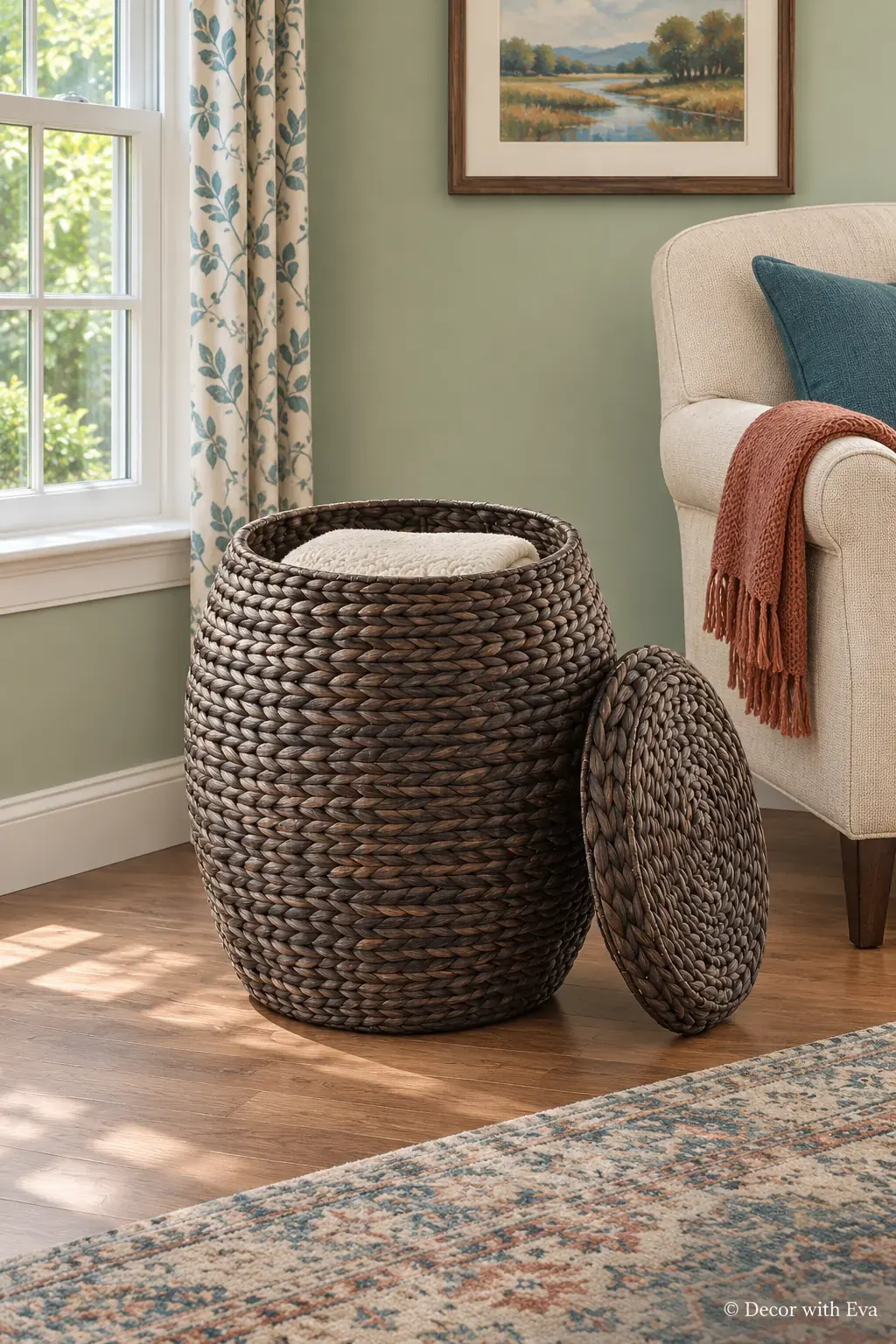
A lidded basket is useful when you want the texture of open storage but prefer a calmer view. Put the everyday throw somewhere easy to grab and keep the extras inside. Dark woven fibers can give a pale room a little contrast without adding a large cabinet.
Choose a lid you can lift comfortably and leave a little room around it. Keep only clean, completely dry blankets inside, with enough space for the lid to sit normally. A woven lid keeps the contents out of sight, but it is not an airtight seal or a guarantee against dust and pests.
Make it your own: Reuse a clean lidded hamper if its interior is smooth and it suits the blankets.
Selected barrel-shaped water-hyacinth basket has a metal frame and removable lid, approximately 17.5 inches in diameter and 19 inches tall. Handmade measurements may vary. Use it here as blanket storage; no seating or load-bearing claim is made.
3. Let a Storage Ottoman Do Two Jobs
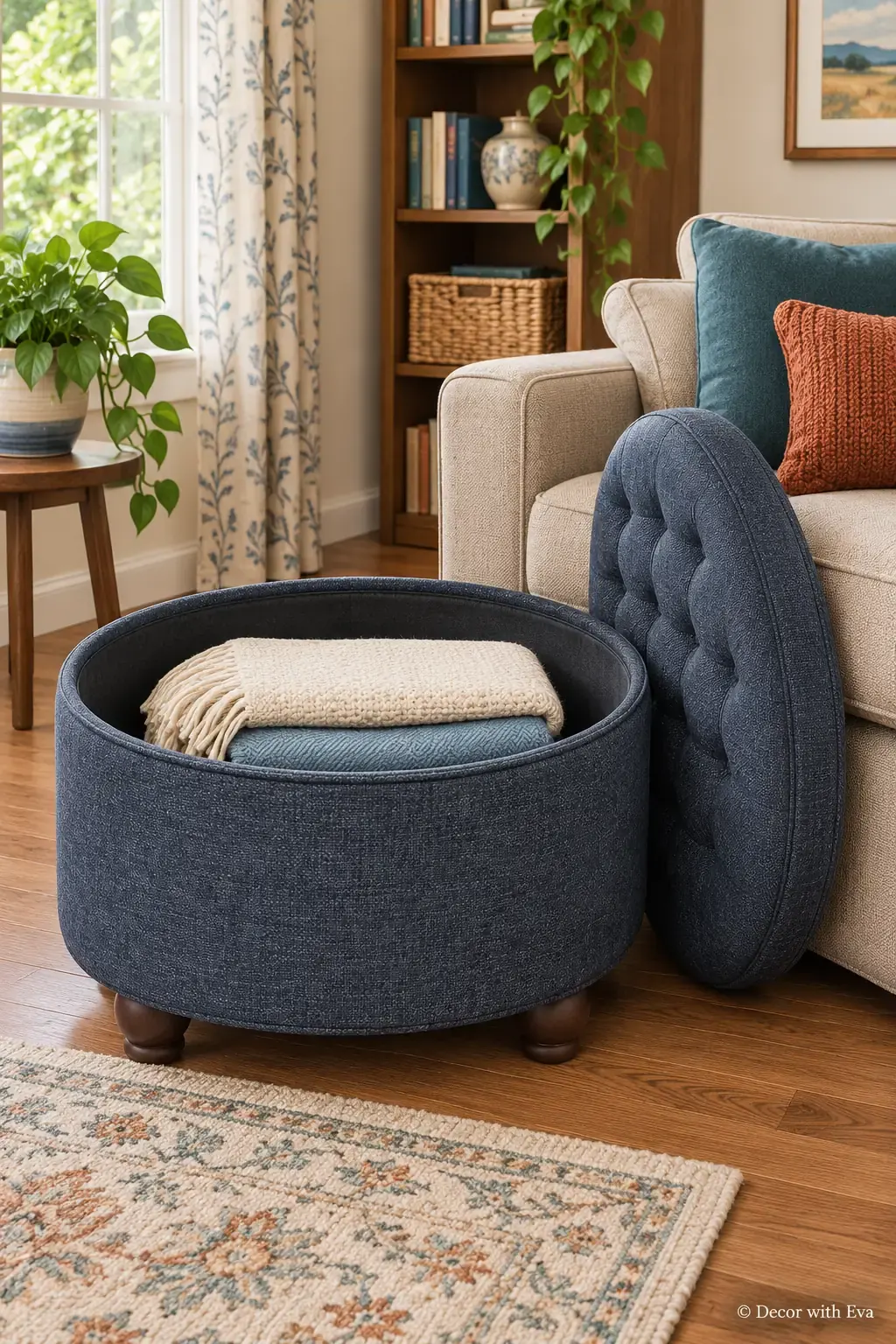
A storage ottoman keeps a throw near your feet while giving it a place to disappear between movie nights. A rounded shape can soften a room full of square tables and shelving. Navy woven fabric adds color without requiring a new sofa or a complete room makeover.
Check the interior opening, not just the outside diameter. A small round ottoman may suit a couple of lightweight throws but not a bulky bedding collection. Keep the lid easy to remove; covering it with a large decorative tray makes the storage less convenient.
Make it your own: If you already have a hollow ottoman, clear out the miscellaneous items and give one blanket that space.
Selected Navy Woven version is 25 inches across and 15 inches high, with a button-tufted lift-off lid and short dark wood legs. Verify usable interior dimensions for your blankets. Follow spot-cleaning instructions; review feedback includes pilling with frequent use and a loosely seated lid.
4. Use a Storage Bench at the Foot of the Bed
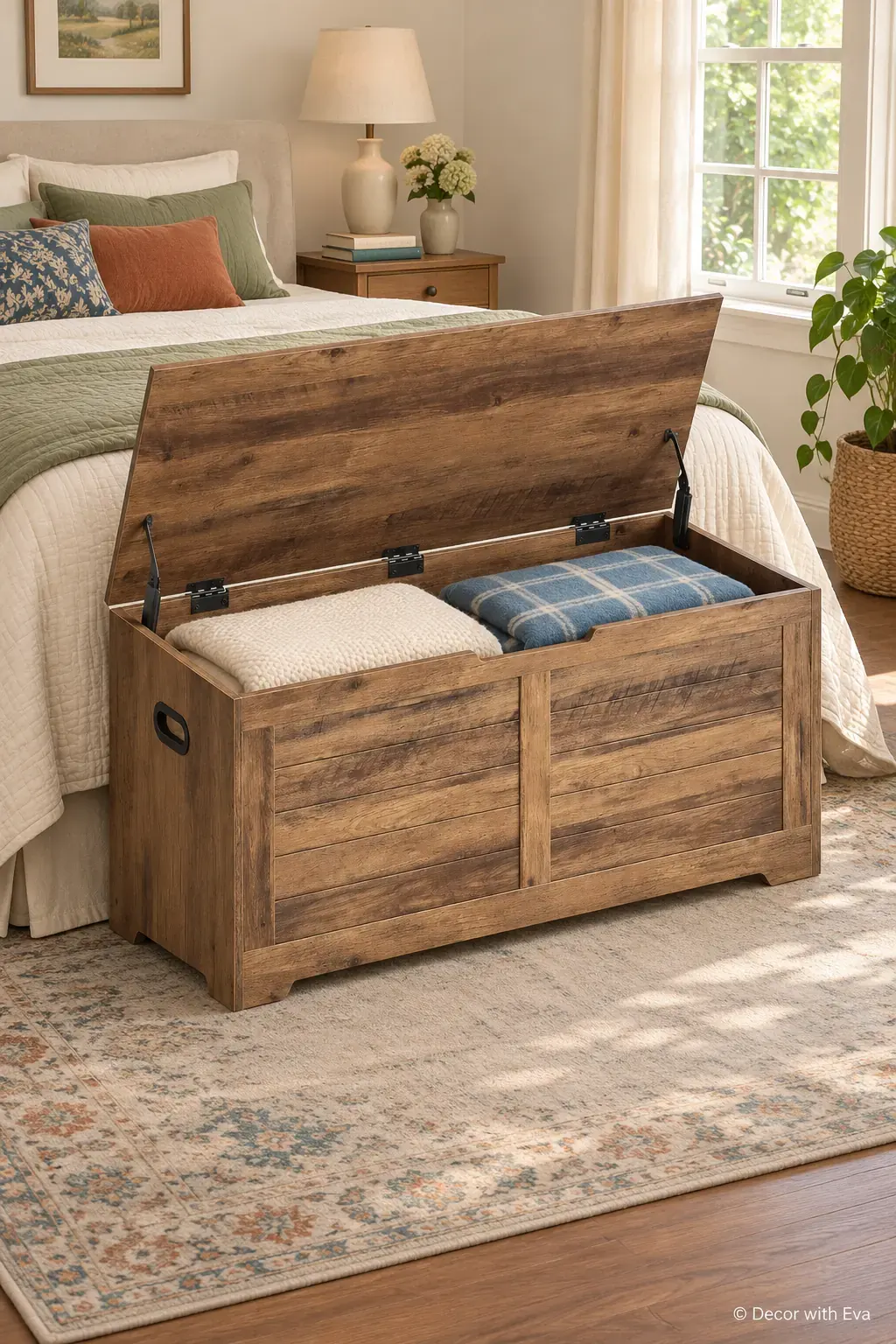
A bench at the foot of the bed can make spare blankets feel like part of the bedroom furniture. The long shape works well for a folded bed blanket or a couple of smaller extras. A simple wood-look finish pairs easily with plain bedding and a soft rug.
Measure the space needed for both walking past and opening the lid. Keep the top clear enough that you will actually use the storage, and follow the hinge and assembly instructions for the piece you choose. Exterior dimensions describe the furniture footprint, not the full usable compartment.
Make it your own: Use an existing storage bench before adding a separate blanket chest.
Selected chest measures 39.4 inches wide × 15.7 deep × 18.3 high and is made from particleboard, not solid timber. It has a hinged lid and side cutout handles. Follow assembly and hinge instructions; do not treat the seller’s hinge or load claims as independently tested guarantees.
5. Display Two Favorite Throws on a Blanket Ladder
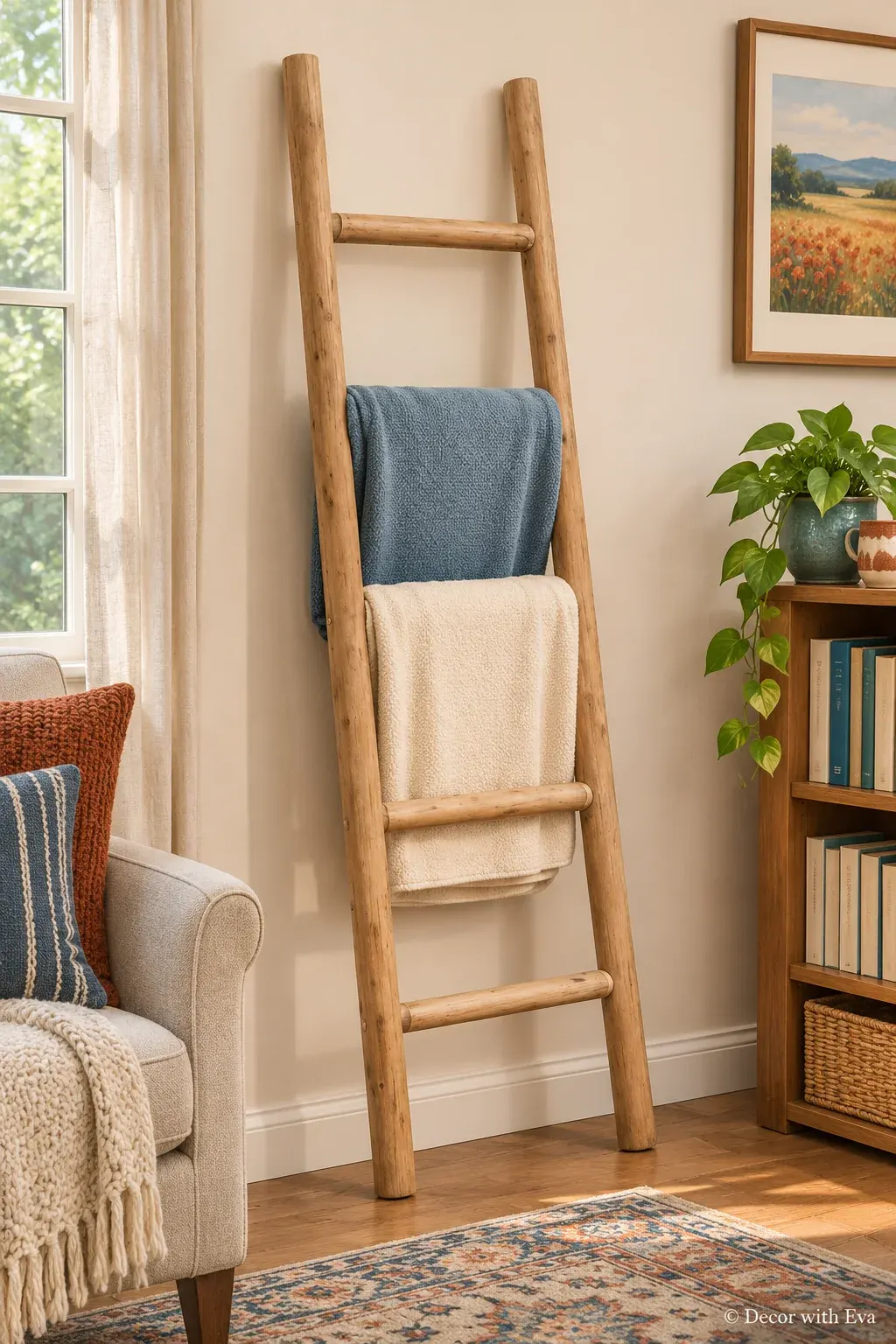
A blanket ladder turns a useful item into a small display. Two throws with different textures are enough: perhaps a smooth woven blanket and a light knit. Leave a rung or two empty so the wood and the textiles can both be seen.
Fold each throw narrow enough for the actual rung width. A decorative ladder is not a place for a heavy stack, and its footprint includes the angle away from the wall. Follow the product’s placement and restraint guidance and keep it out of a busy route. Save fragile or valuable quilts for more supportive storage.
Make it your own: Use a sound decorative rack already in the house, with smooth surfaces that will not catch the fabric.
Selected Brown medium knock-down ladder measures about 57 inches upright and 17 inches wide. Its solid-wood finish reads light and rustic in the inspected photo. Leaning height is lower than upright height. It is a decorative textile rack, not a climbing ladder; check the mounting or restraint instructions.
6. Choose a Freestanding Rack When Wall Space Is Limited
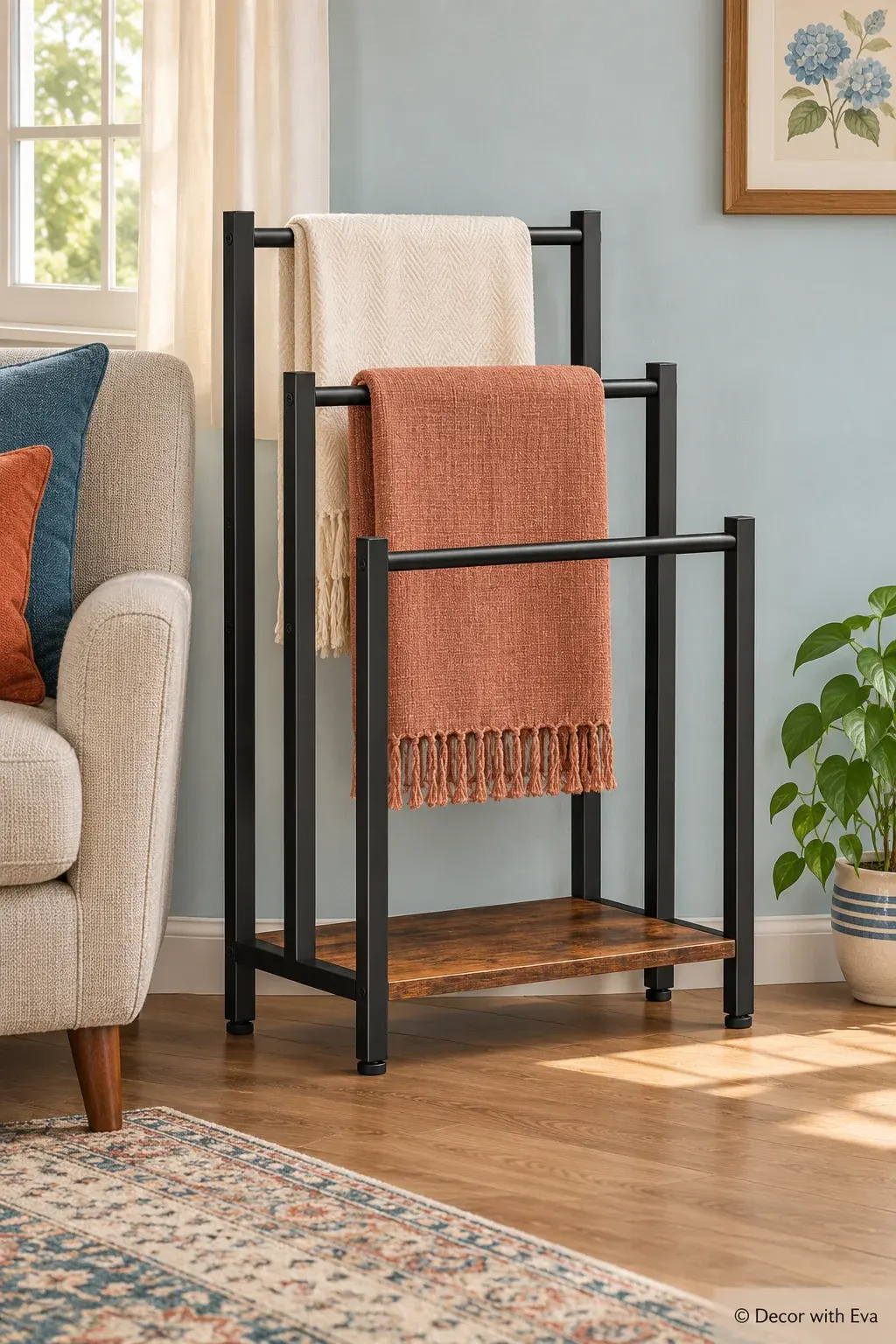
A small freestanding rack gives each throw its own bar without adding wall fixings. It can sit beside a chair or at the end of a sofa, where you can pick up one blanket without disturbing a stack. Dark metal makes a quiet outline beside softer textiles.
Choose blankets that suit the rack’s width and height. This compact version is closer to a small towel stand than a full-size quilt display. Fold light throws into narrow strips and check that their ends stay above the floor. Leave the lower shelf mostly clear so the arrangement is easy to clean around.
Make it your own: Test a freestanding textile stand you already own, provided it is stable and has smooth bars.
Selected Rustic Brown + Black rack measures 16.9 inches wide ×11 deep ×31.9 high, with three staggered black metal bars and a lower wood-look shelf. This is a small rack for folded light throws. Check assembly alignment; a buyer reported a slightly uneven welded bar.
7. Slide Bulky Extras into Under-Bed Cases
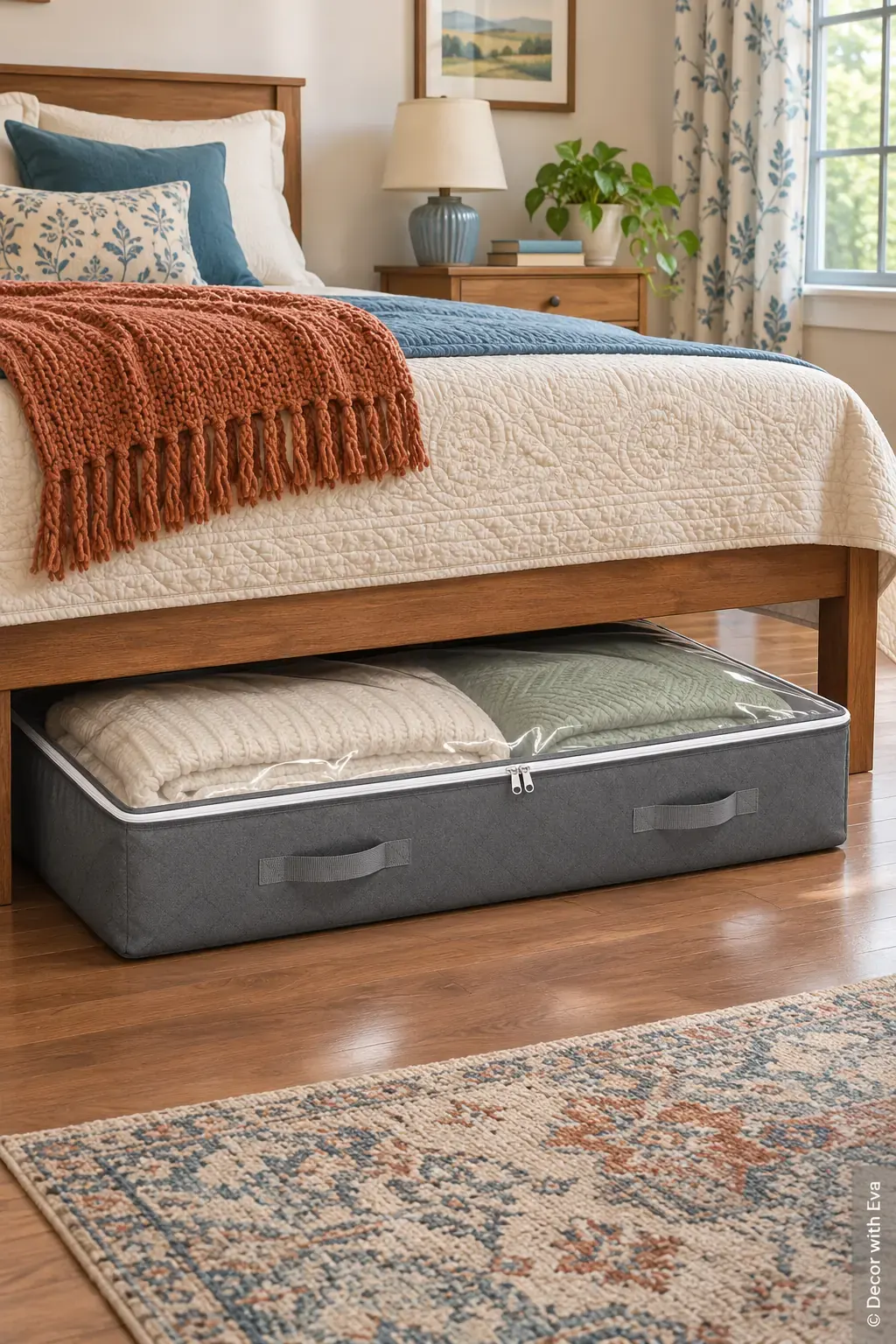
Under-bed storage is useful for blankets that do not need to be on display. A low zippered case keeps the bundle together and makes it easier to pull out the right set. A clear top saves you from opening several bags to find the winter blanket.
Measure the lowest obstruction under the bed, including support rails, and leave space to slide the filled case out. Soft bags do not have the rigid sides of plastic bins; support the contents when moving them. Store only dry bedding and keep the floor beneath clean. Do not force a tall bundle into a seven-inch gap.
Make it your own: Use a low storage bag you already have if it fits without straining the zipper.
Selected gray four-pack has soft non-woven sides, clear PVC tops and no rigid internal frame. Each is listed at 39 × 20 × 7 inches. Capacity wording conflicts between 90L and 95L, so use the measurements and your actual bedding as the fit test. They are not sealed waterproof boxes.
8. Give Each Cube a Small Blanket Collection
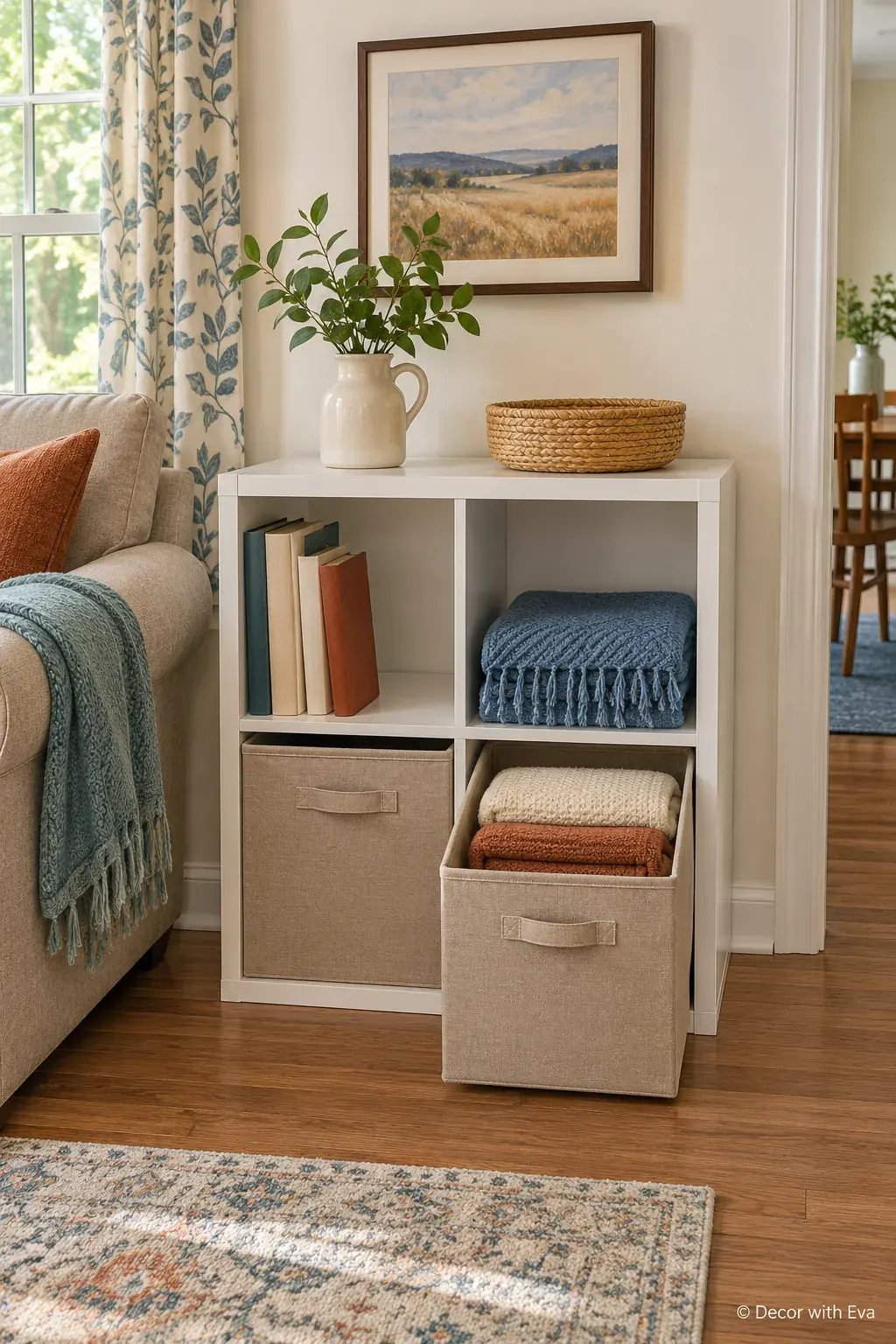
Cube shelving works best when each opening has a clear job. Put lightweight throws in one or two soft baskets and leave other cubes for books or everyday items. A small collection is easier to return neatly than one oversized bin that mixes blankets, pillows and toys.
Measure the inside opening before choosing an insert; a basket’s handles or rim can stop it fitting. Avoid squeezing thick bedding into a small cube. Keep heavier contents low and follow the shelving unit’s assembly and anchoring instructions.
Make it your own: Reassign a cube in the shelving you already own instead of buying a dedicated blanket unit.
9. Keep Closet Stacks Short and Easy to Lift
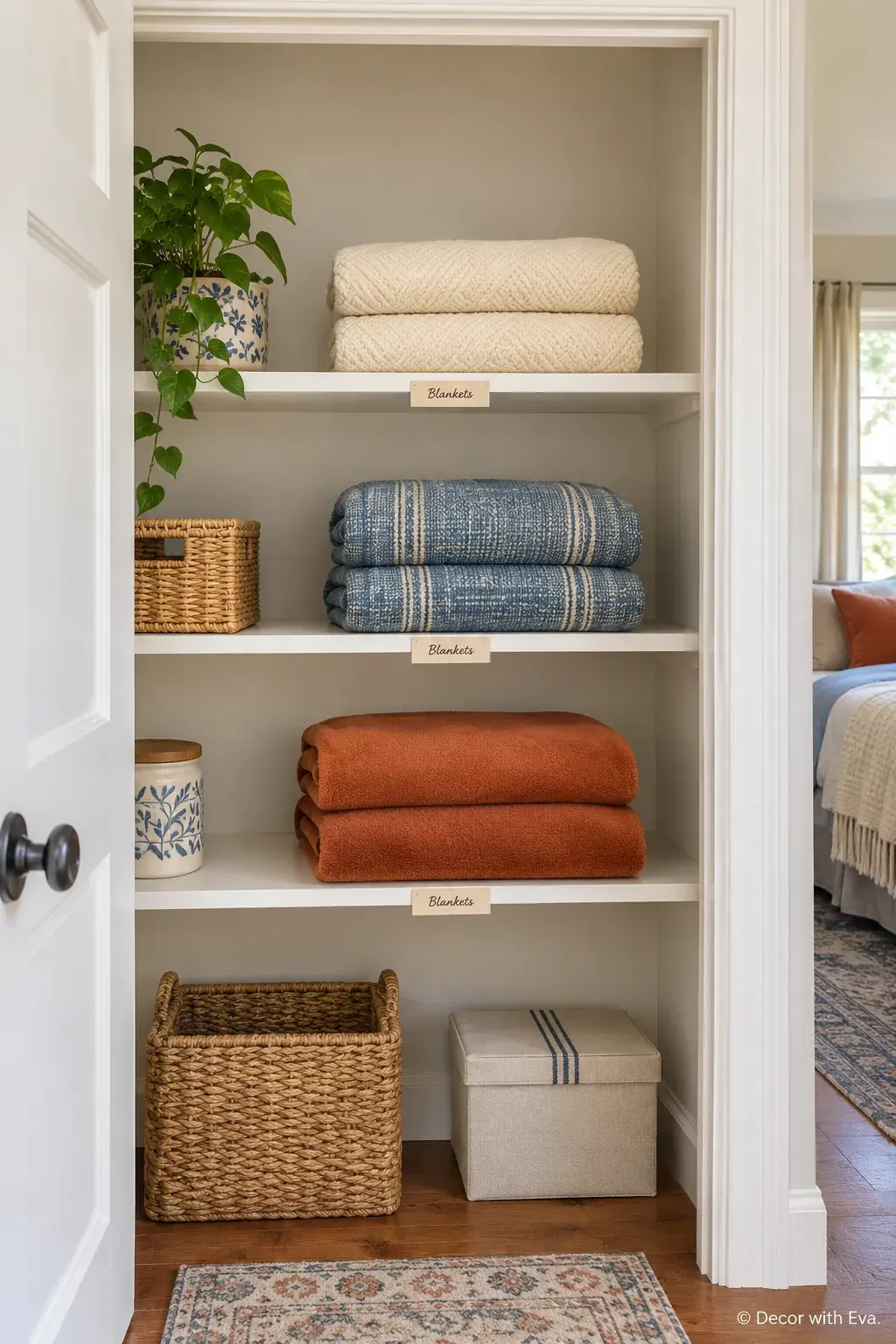
A linen closet does not need to look like a shop display to work well. Fold blankets to a similar width and make short stacks you can lift without pulling out the bottom layer. Put the blanket you use most often at a comfortable reaching height.
Measure shelf depth and leave a little space above each stack. Large, fluffy blankets may need their own shelf rather than another layer on top. Separate everyday throws from guest bedding so the labels describe a real routine, not an elaborate system nobody will maintain.
Make it your own: Start by clearing one shelf and folding only the blankets you actually keep.
10. File Lightweight Throws in a Spare Drawer
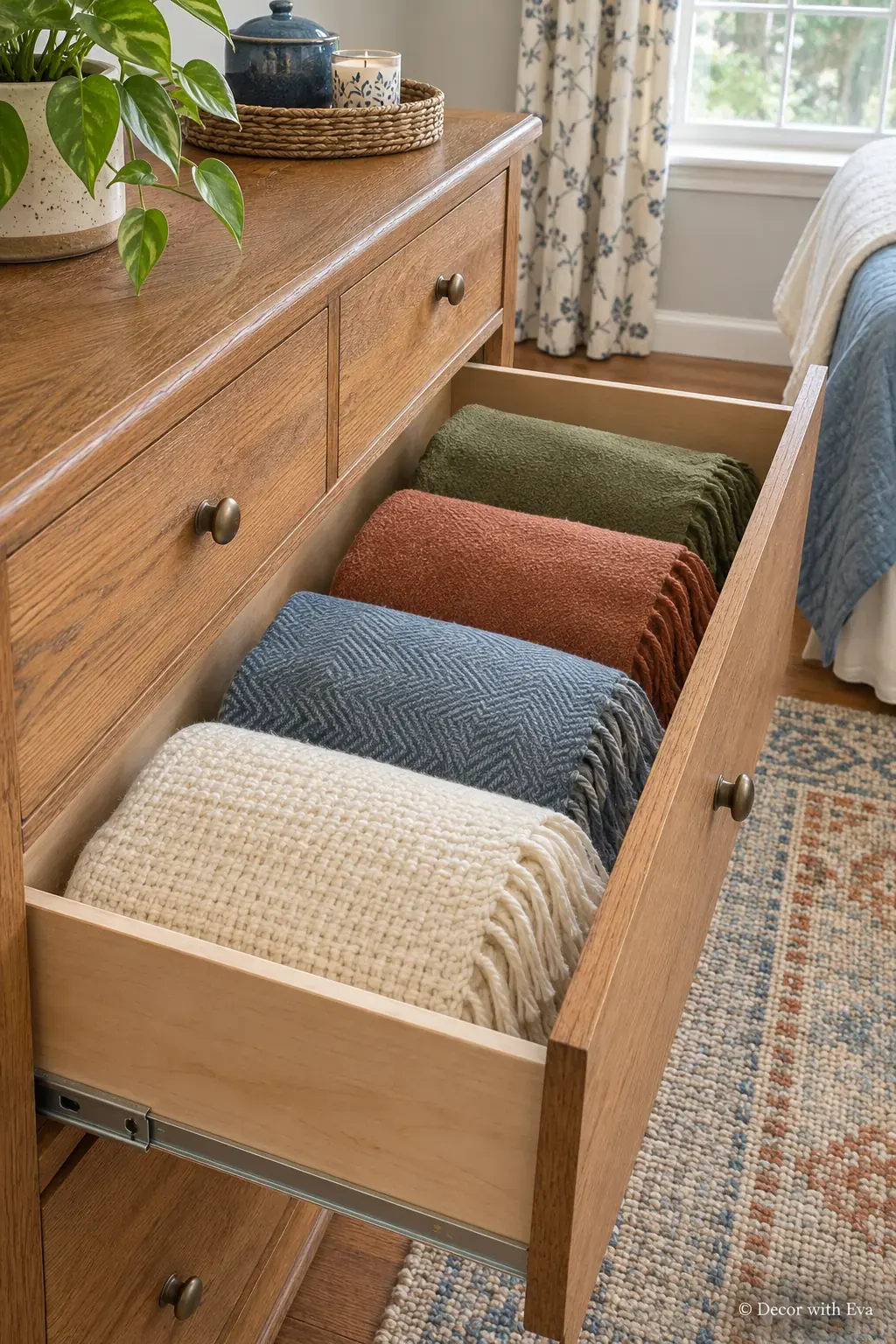
A deep drawer can hold everyday throws folded upright, with each one visible from above. This works especially well for thin fleece or cotton blankets that hold a loose fold. You can take one out without dismantling a tall pile.
Test the folded height before filling the drawer, and leave enough room for it to close without catching fabric. Keep the folds relaxed rather than compressing thick or delicate textiles into hard little bricks. Heavy quilts and heirloom pieces need a different approach.
Make it your own: Use a spare dresser drawer and a simple removable divider only if the throws need support.
11. Use the Lower Shelf of a Coffee Table
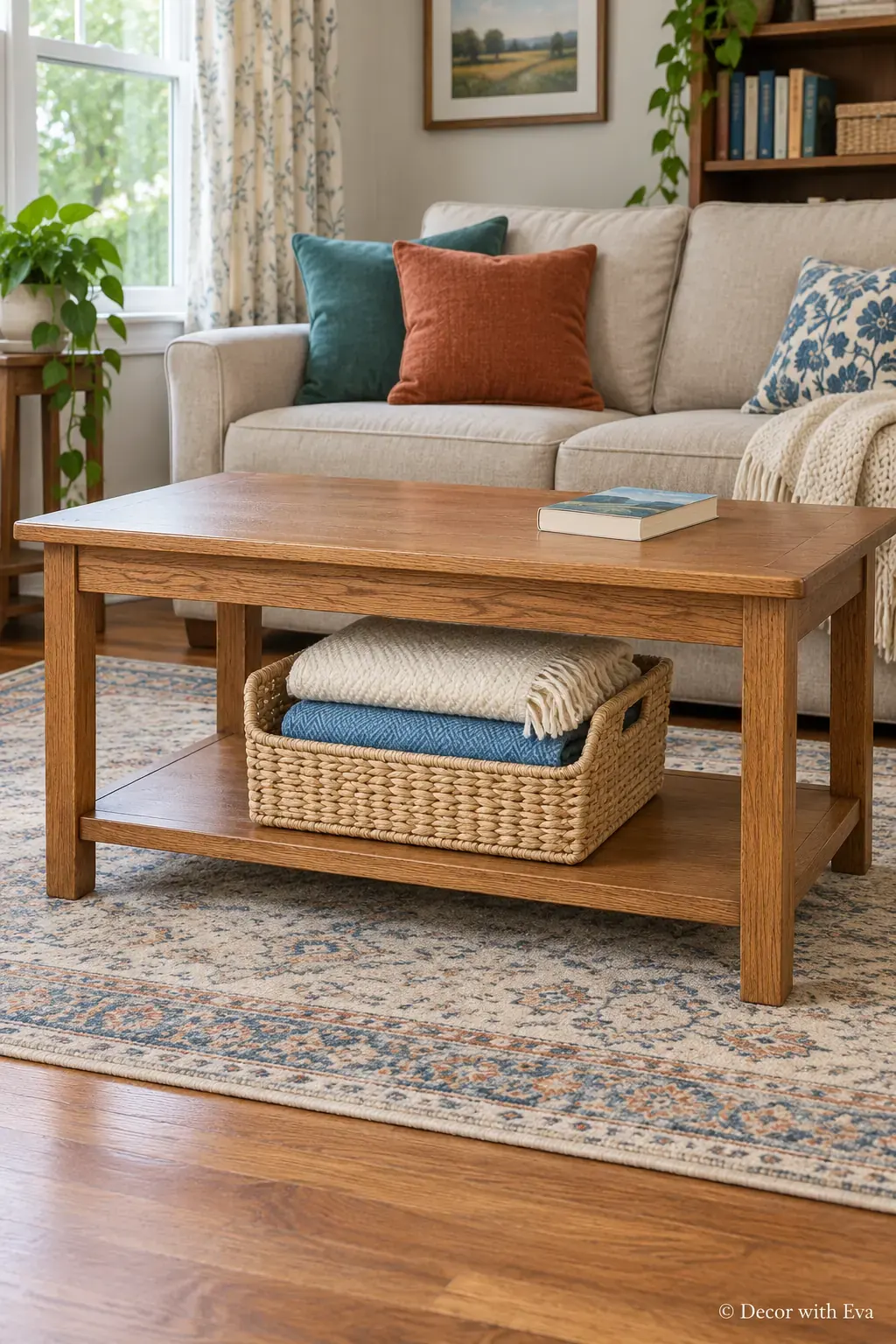
If your coffee table already has a lower shelf, it may be the easiest place for the living-room blankets. A shallow basket creates a boundary and lets the whole group slide out together. Keep the tabletop free for the things you use while sitting down.
Check the basket’s filled height against the shelf opening and make sure it can come out without snagging. A low table with very little clearance is better suited to one thin throw than a bulky pile. Keep blankets away from drinks and anything hot on the tabletop.
Make it your own: Try one folded throw on the shelf before buying a basket to fit it.
12. Mount a Rail for a Couple of Light Throws
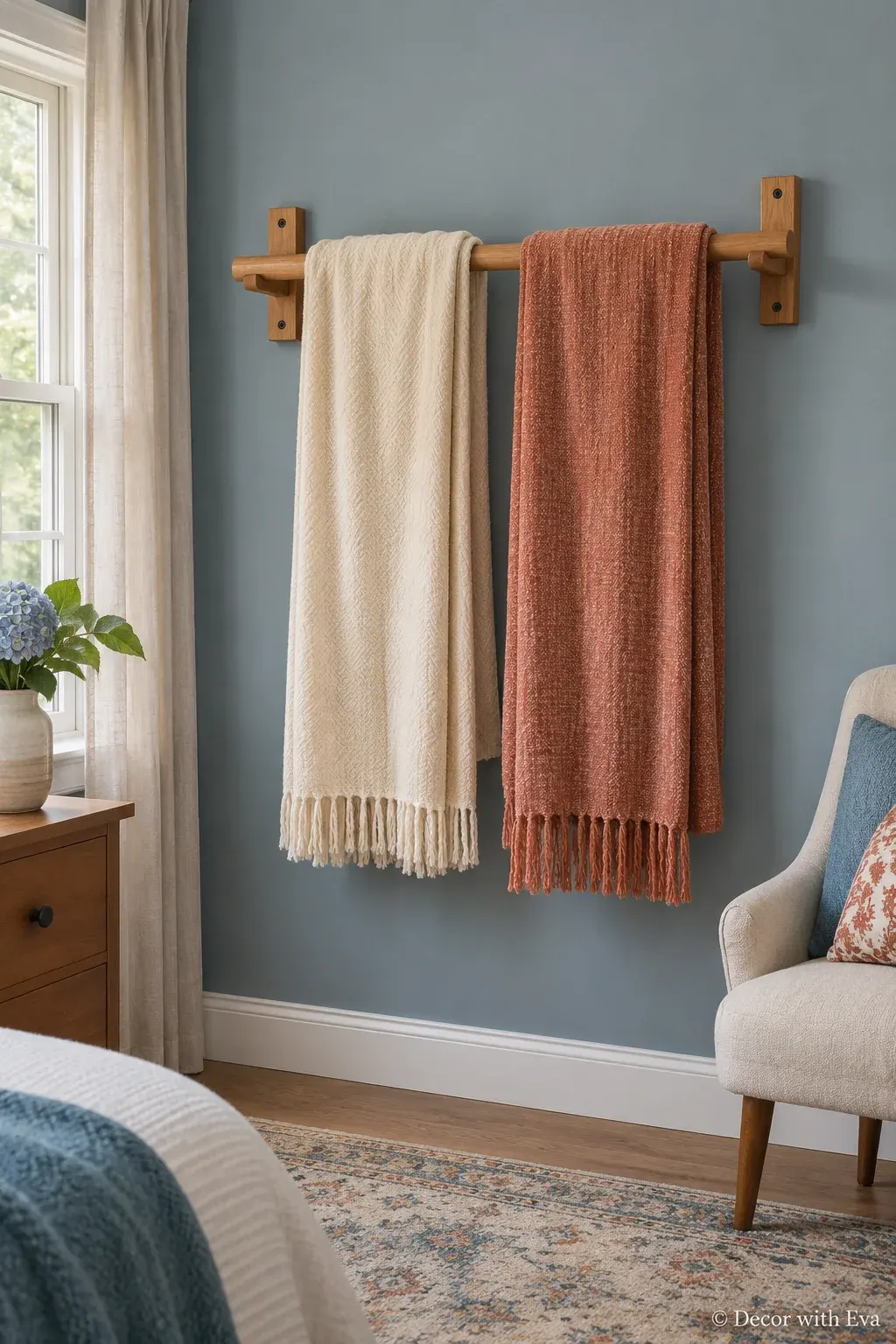
A wall rail can help when the floor is already doing enough. Choose a spot where a folded throw will hang clear of furniture and the wall can take the fixing system. A simple wood or metal bar can look intentional beside an armchair or in a guest room.
Use a rail intended for the load and mount it with hardware suited to your wall. Check the distance from the wall: a narrow gap makes thick blankets awkward to feed through. Keep this to everyday lightweight textiles rather than suspending a heavy quilt by one edge.
Make it your own: Use an existing properly installed textile rail if its size, finish and load limit suit the job.
13. Turn a Cupboard into Hidden Blanket Storage
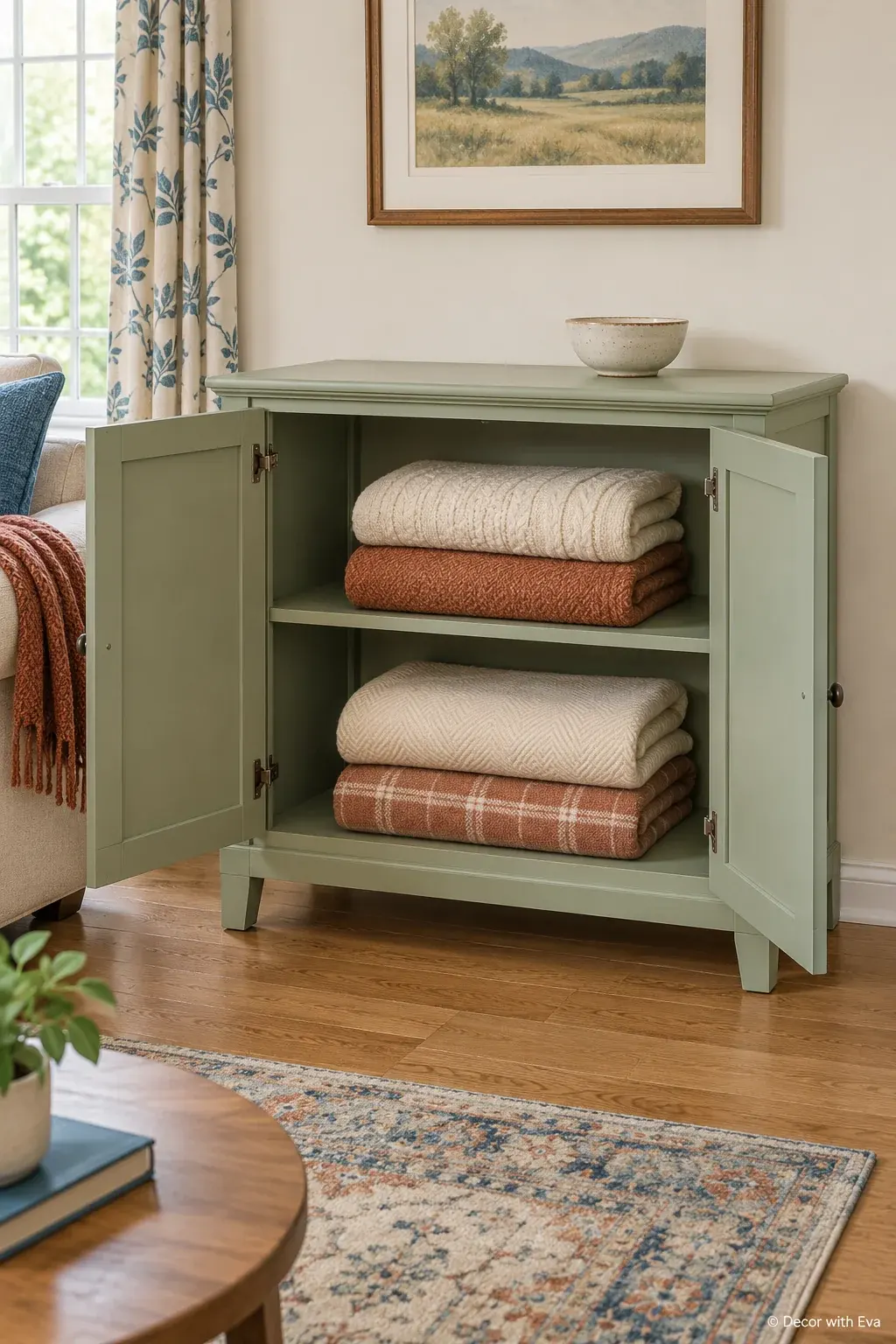
A cupboard lets you keep several blankets in the room without making them part of the display. A low cabinet works well when you want easy access, while a spare shelf in an existing sideboard can be enough for a small collection. Plain baskets inside can separate the loose extras.
Open the doors and measure the usable shelves before deciding what goes where. Leave room to lift the folded bundle, and avoid storing damp blankets against wood or paperboard. Keep the case stable and follow its anchoring instructions. The top can stay simple because the real work happens inside.
Make it your own: Clear a shelf in furniture you already own before searching for a new cabinet.
14. Pack Seasonal Bedding in Labeled Canvas Bags
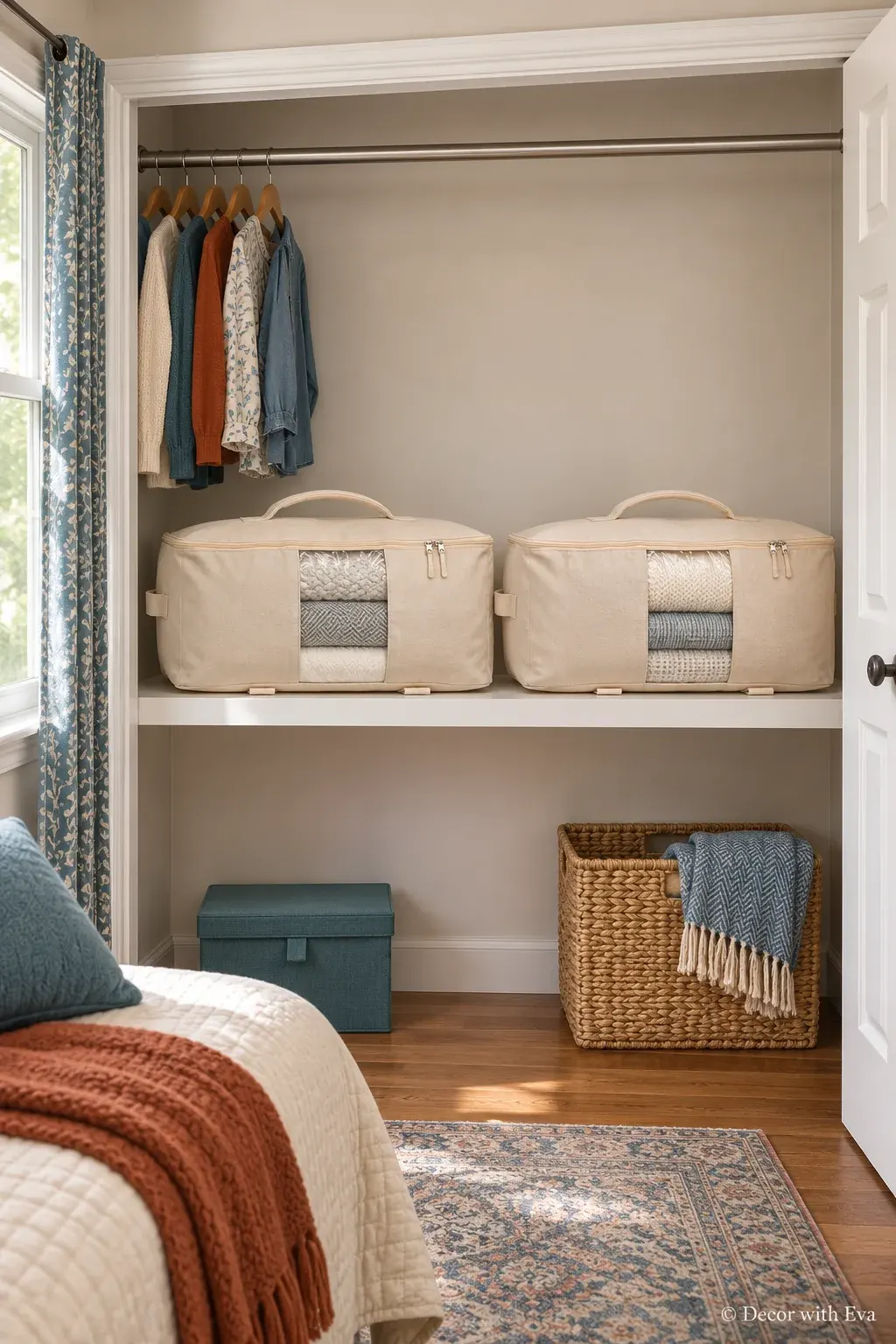
Seasonal blankets can move out of the everyday storage once the weather changes. A fabric case keeps each set together, and a window or simple label makes the next changeover easier. Use one case for winter extras and another for guest bedding instead of mixing everything into a giant bag.
Choose the bag around the actual folded bundle and leave the zipper relaxed. Clean and dry the blankets according to their care labels before storing, then check them periodically. Cloth storage and vacuum compression serve different purposes; a delicate or lofty textile should not be compressed simply because a bag makes it possible.
Make it your own: Use clean fabric storage you already own if it provides enough room and suits the textile.
Selected beige two-pack is listed as unbleached cotton canvas with clear front windows, zippers and four handles per bag. Each measures 25 × 19 × 9 inches. The canvas body and plastic viewing window are different materials. Check your filled bedding bundle and current care instructions rather than assuming every king comforter will fit.
15. Roll a Small Blanket Station Between Rooms
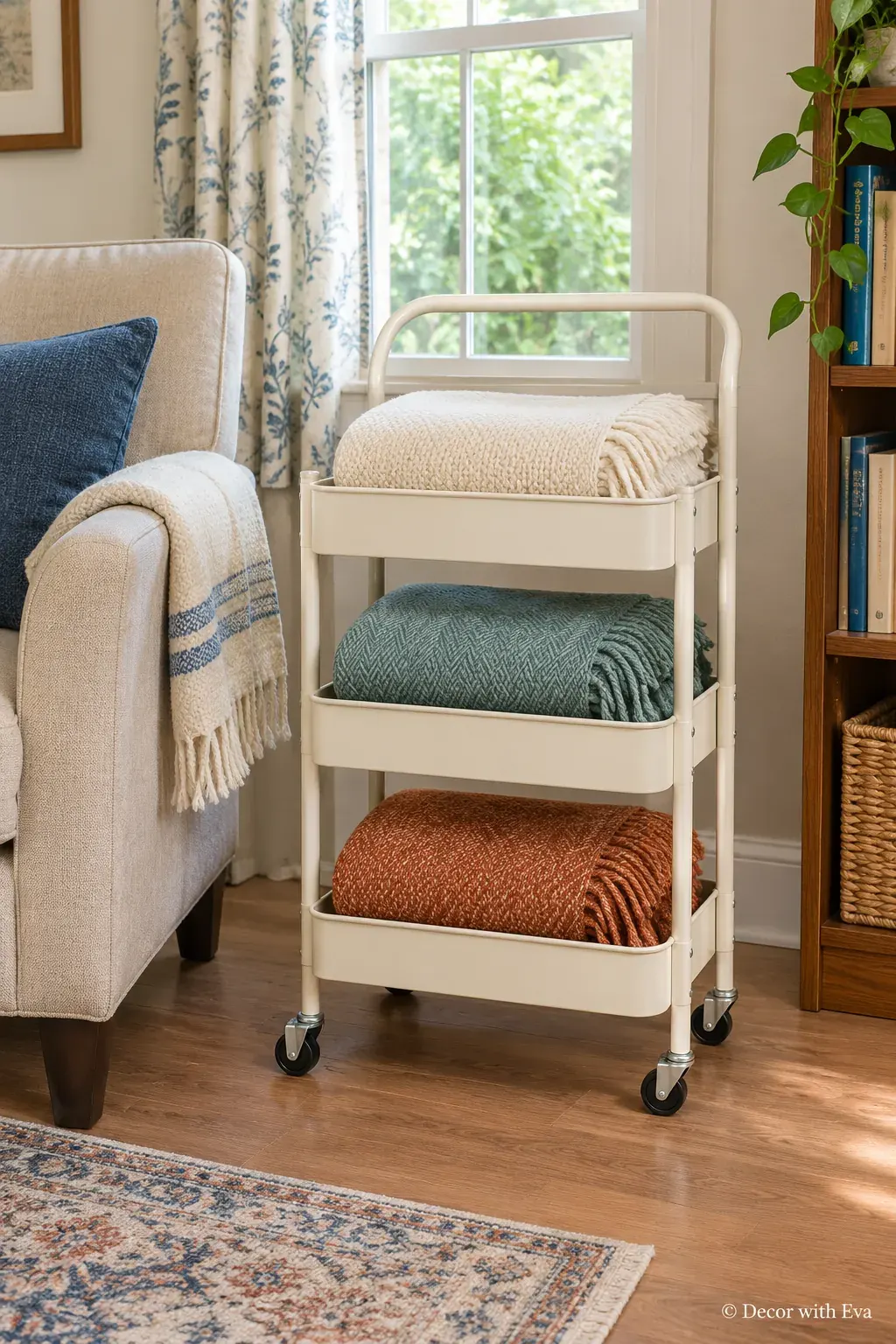
A narrow rolling cart can work when blankets move between a bedroom, reading corner and living room. Keep one small throw on each tray so the contents stay visible. The open design makes this a practical daily station rather than long-term storage for the whole bedding collection.
Check tray size and clearances before using a cart you already own. Keep fabric inside the edges, away from the wheels, and leave the handle easy to reach. A clean, dry room and regular dusting matter more than matching every blanket to the cart.
Make it your own: Repurpose a small utility cart temporarily and see whether the mobility is actually useful.
16. Use the Space Inside a Window Seat
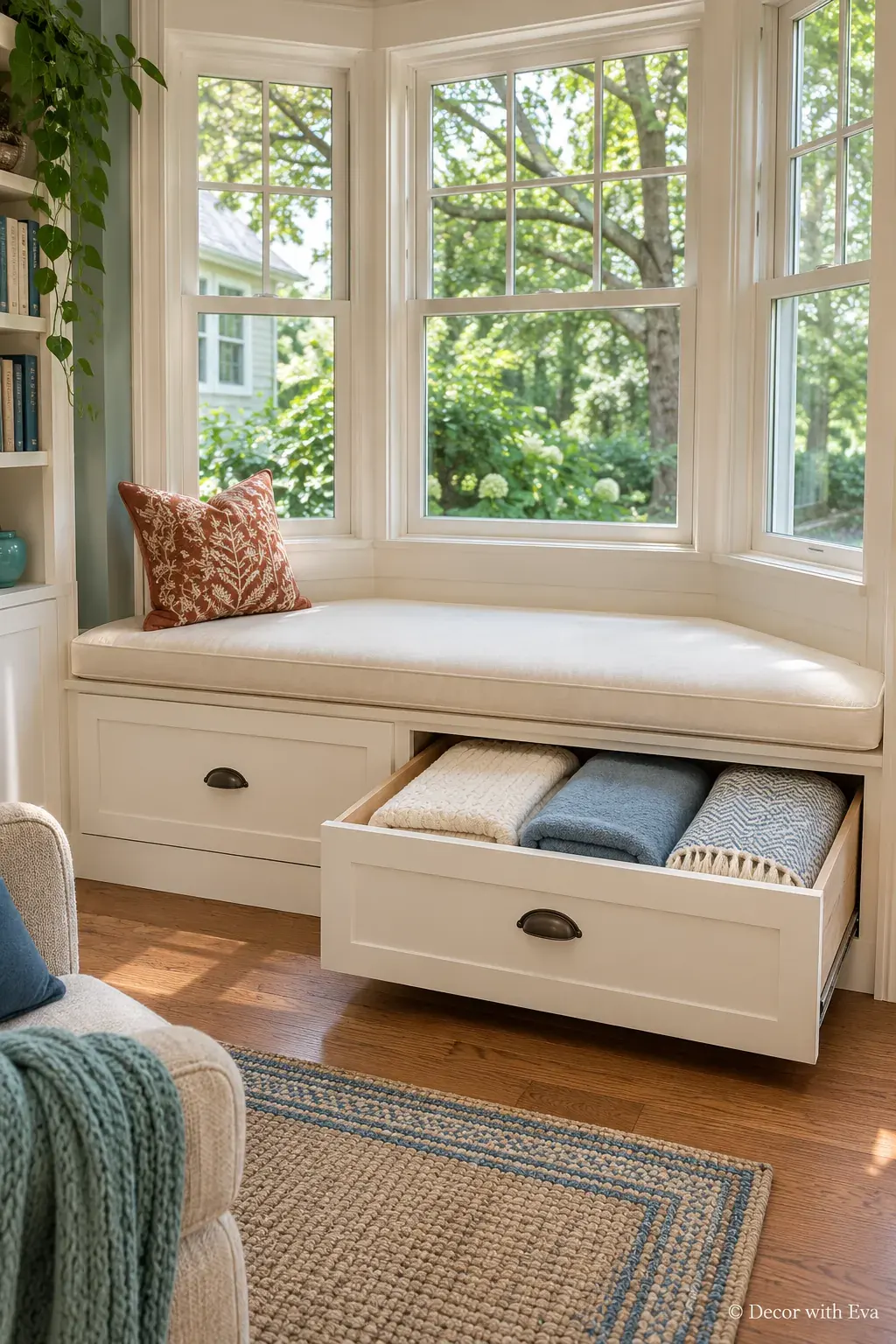
A window seat with storage is an opportunity to keep comfort close to where you use it. Fold the room’s spare blankets into the existing compartment, with the frequently used one nearest the opening. The seat can still feel simple and inviting once everything is put away.
This idea suits a window seat already designed for storage; it is not a reason to cut into an unknown built-in. Keep the opening accessible and follow the lid or drawer instructions. Check for moisture, heat sources or drafts inside the cavity before using it for textiles.
Make it your own: If your seat has open cubbies instead, give one cubby to a small blanket basket.
17. Give a Special Quilt Its Own Supportive Box
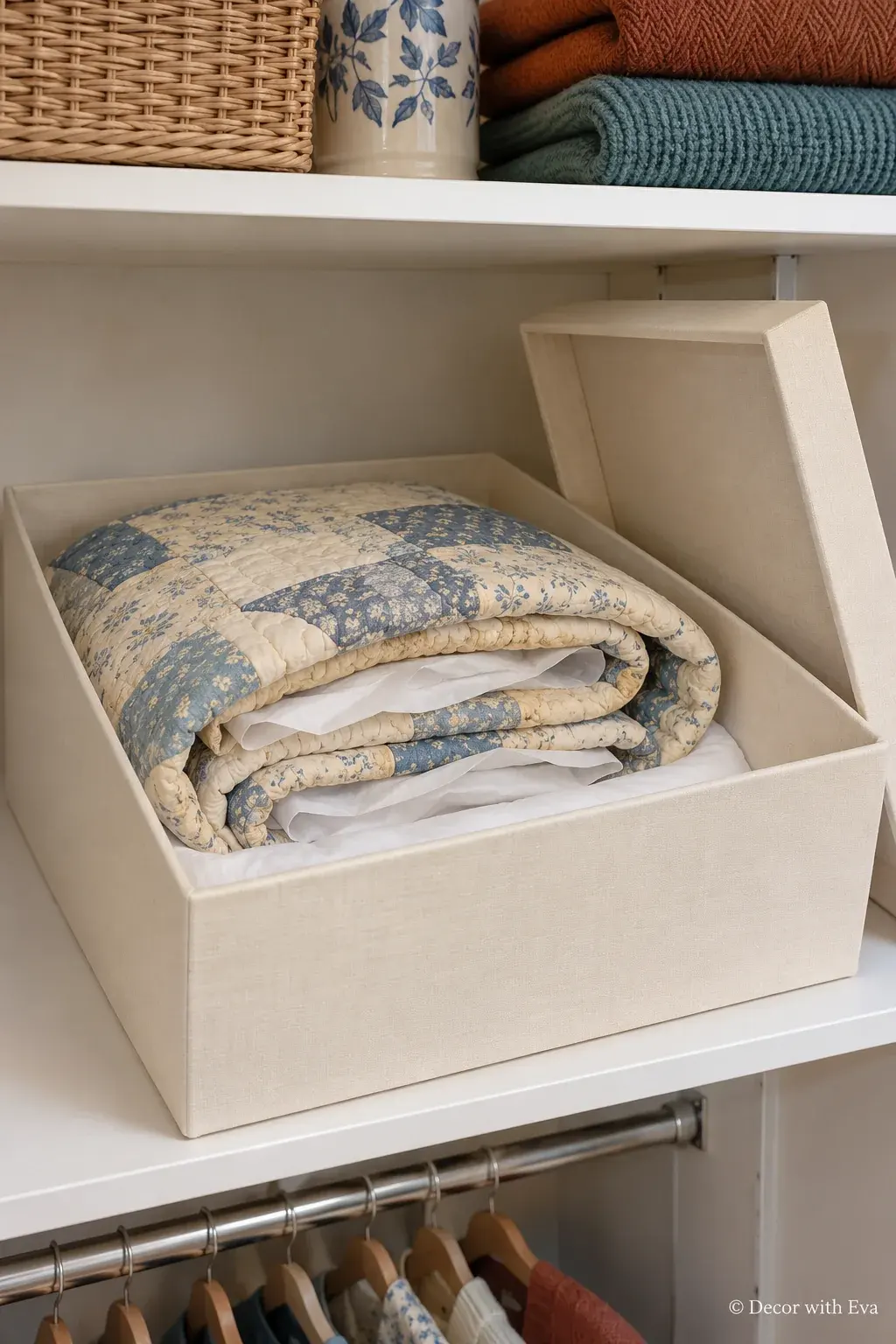
A quilt with sentimental value deserves a different home from the throw you use every evening. A roomy supportive box can keep it separate from rough basket fibers and everyday rummaging. The aim is gentle support, with as few stressed folds as practical.
Use appropriate archival materials and get specialist advice for a fragile or valuable textile. If folding is necessary, support the folds instead of pressing them flat under a stack. Choose a stable, dry indoor location away from strong light. This is preservation storage, not a way to squeeze the quilt into the smallest possible space.
Make it your own: Protect the special piece separately and let the everyday blankets take the more casual storage spots.
What Is the Best Way to Store Bulky Blankets?
Start with the size of the folded bundle rather than a promised blanket count on a product page. A bench, deep shelf or properly fitting under-bed case may work better than a small decorative basket. Avoid forcing zippers or pressing a lofty blanket beneath a heavy stack. Follow the textile manufacturer’s advice before using compression.
How Should You Store an Heirloom Quilt?
Keep preservation needs separate from everyday convenience. The George Washington University Museum and The Textile Museum recommends considering the textile’s condition, using appropriate barriers on wood shelving and supporting folds when folded storage is necessary. A conservator can advise on fragile or valuable pieces; a decorative ladder or ordinary storage bag is not automatically suitable.
Keep the System Easy to Use
Put the everyday blanket where you naturally reach for it, then move the extras into the storage that fits them best. Leave enough space to take things out and put them back without a struggle. A tidy room is easier to maintain when the storage follows the way you already live.
For seasonal living-room styling around your everyday throws, explore our cozy Christmas living room ideas. The storage can stay in place while the colors and accents change.