This article contains paid links. As an Amazon Associate, I earn from qualifying purchases. Linked selections are based on listing and customer-review research, not hands-on testing.
An entryway needs somewhere for the things you carry through the door, but the furniture can do more than catch the mail. A curved table, a little telephone bench or a dresser with worn-in wood can give the entrance a point of view before you add a single decorative object.
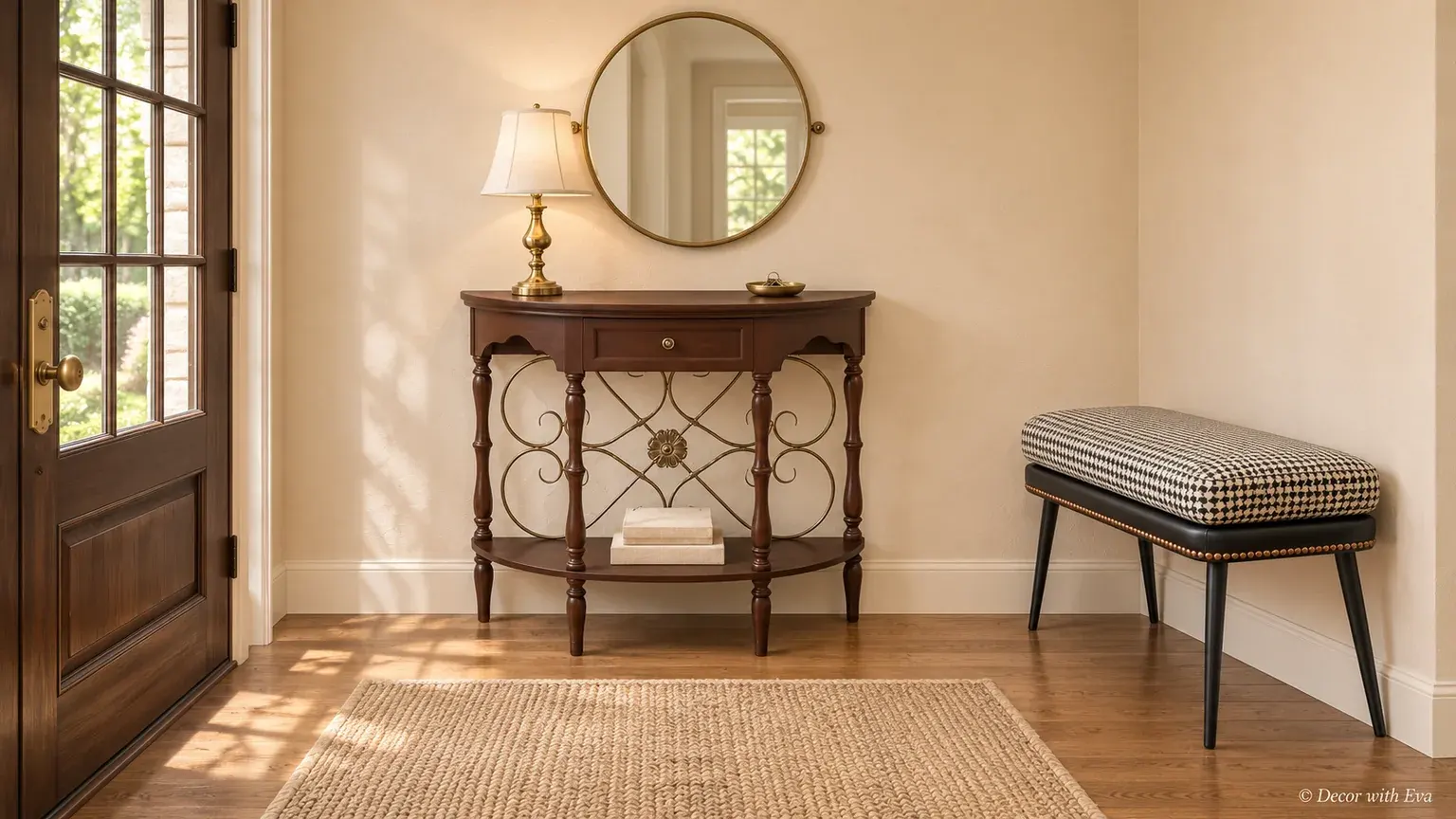
These vintage entryway furniture ideas mix secondhand pieces to look for with new furniture that borrows older shapes and details. The linked options are identified as new vintage-style pieces; a finish described as antique does not establish age or provenance. Choose the furniture for the job you need it to do, then let its shape and materials carry the room.
Images are AI-created styling illustrations, not photographs of authenticated antiques or tested installations. Product photos informed the linked furniture where indicated. Mirrors, lamps, art, baskets and other accessories are separate styling props, not included sets. Secondhand examples illustrate shapes to look for rather than specific pieces currently for sale.
Choose the Piece Around the Entrance
Decide whether the entrance needs a place to sit, concealed storage or just a small landing surface. Measure the complete furniture footprint, the door swing and the space needed to open drawers or cabinet doors. Leave a comfortable clear route through the room; a rounded corner does not make an oversized piece fit.
For secondhand furniture, check the joints, legs, drawers, hinges, interior and condition of the finish before bringing it home. Look for sound structure rather than assuming age means quality. Follow appropriate anchoring instructions for cabinets, dressers and hall trees; the CPSC’s Anchor It guidance explains securing top-heavy furniture and following the manufacturer’s installation instructions.
1. Give a Half-Moon Console the Spotlight
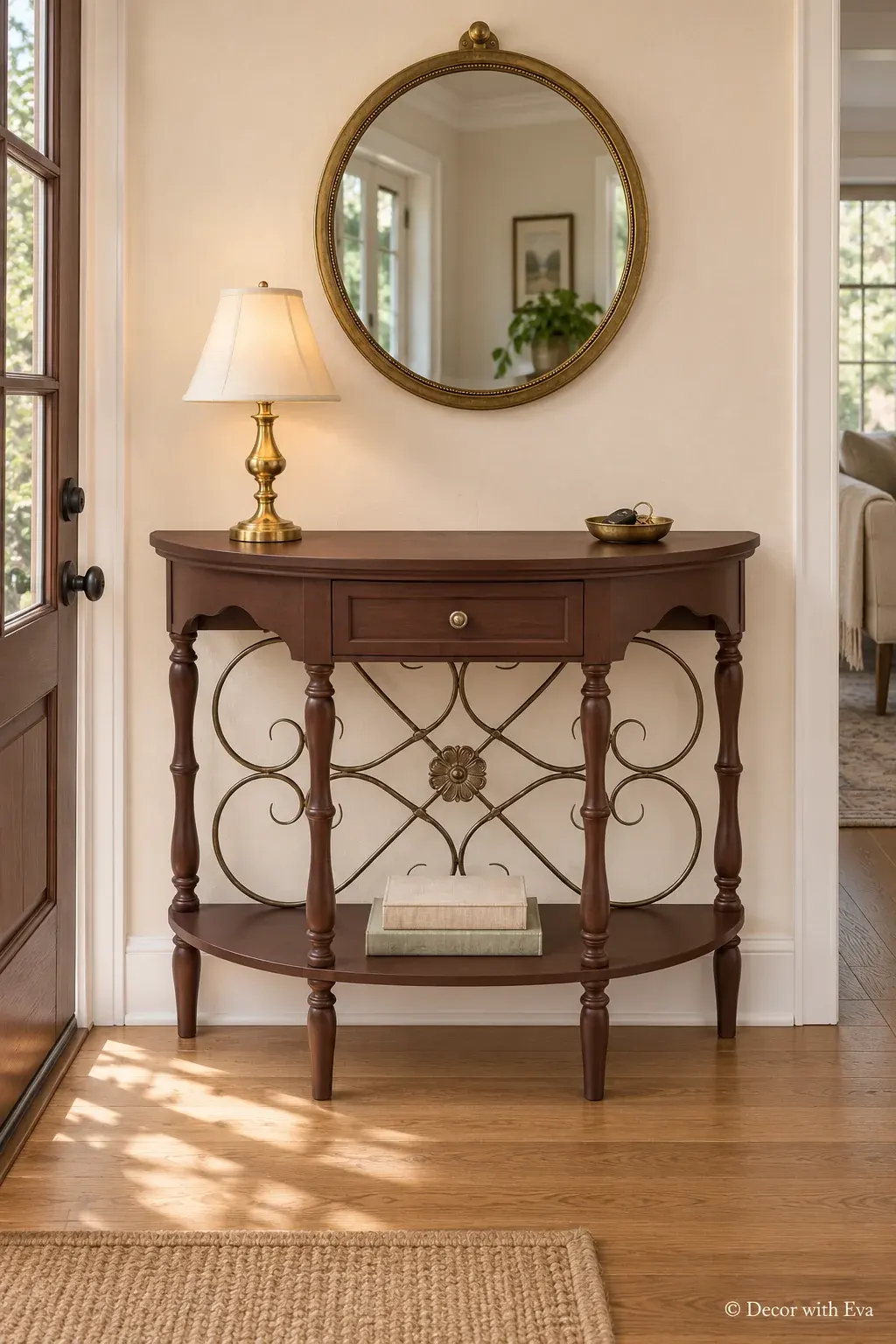
A curved console feels particularly at home beside a front door. Its rounded front softens a square hallway, while turned legs and a little decorative metalwork give it presence. Keep the top simple: a small lamp, a shallow dish for keys and a mirror mounted properly above it.
Check the depth at the curve’s widest point, not just at the ends. The pictured new console is nearly sixteen inches deep, so it needs more space than a slim ledge. Its veneer and MDF construction also make it a different purchase from an old solid-wood demilune. Choose for the shape and finish rather than the word antique in a listing.
Make it your own: Use a curved table you already own and remove extra accessories so the silhouette can show.
New vintage-style console, approximately 39.95 W × 15.54 D × 32.9 H inches, with a wood-veneer finish over an MDF frame, solid-wood legs, one drawer and a lower shelf. The decorative metalwork can read silver with a brushed bronze-brown finish rather than brass. Reviews include finish chipping; treat it as a decorative new piece, not a solid-wood antique.
2. Fit a Small Oak Stand into a Narrow Entry
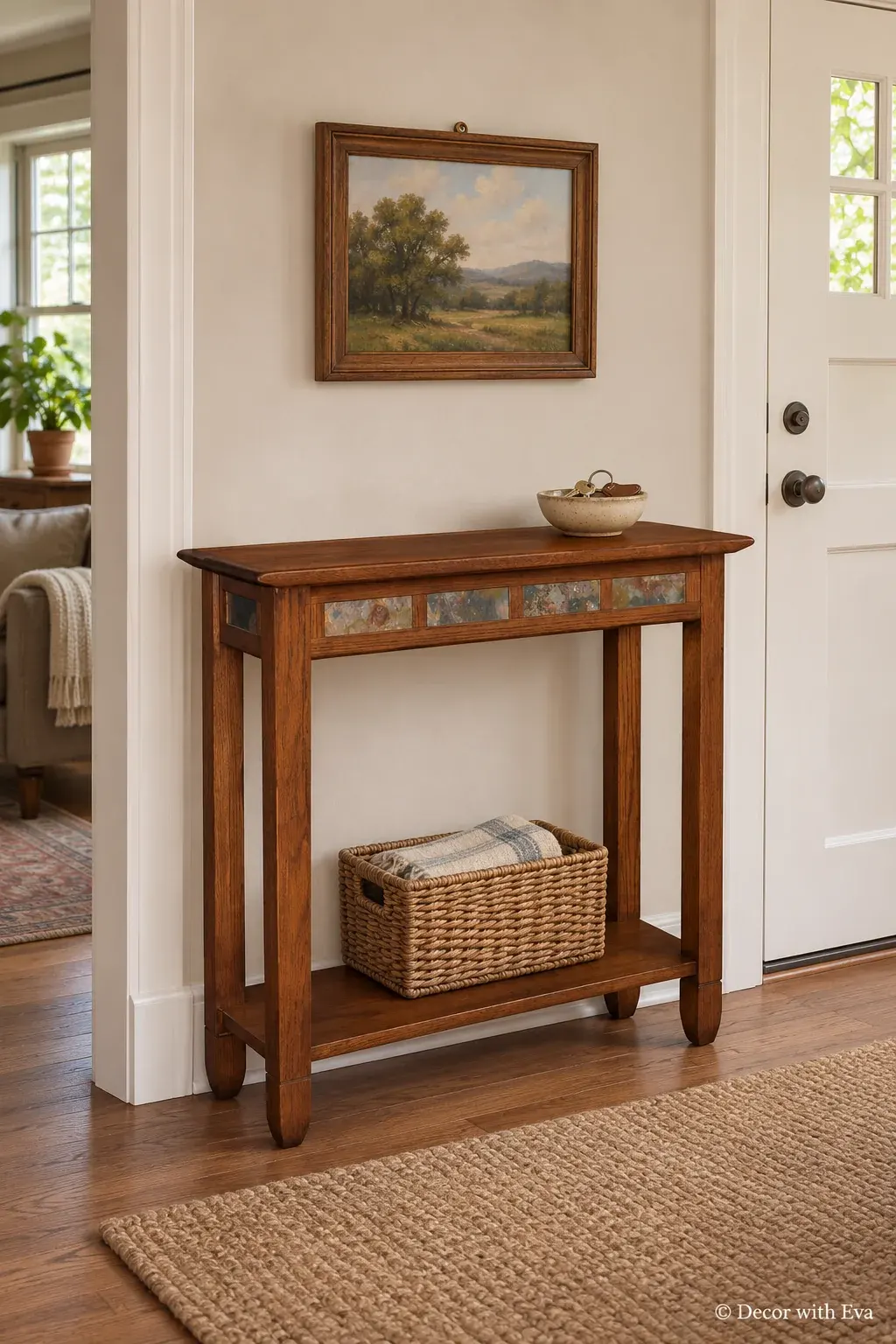
A compact oak stand can give a small entrance a proper landing place without swallowing the wall. Slate accents and straight wood legs bring an Arts and Crafts feeling, especially beside warm paint and a simple framed print. The furniture supplies the texture; the accessories can stay quiet.
The selected stand is only twenty-eight inches wide and about ten and a half inches deep. That makes it easier to test in a tight spot, but still measure the door swing and walking route. Its lower shelf can hold a small basket; it has no drawer, so do not expect hidden key storage.
Make it your own: Try a small side table from another room before buying a hall-specific piece.
New compact hardwood hall stand, listed at 28 W × 10.5 D × 28 H inches, with natural-slate accents and a lower shelf. Selected No Drawer version. Slate color varies and can look darker than the listing photo; this is a new Arts and Crafts-inspired option, not a verified vintage piece.
3. Add a Houndstooth Bench for a Tailored Look
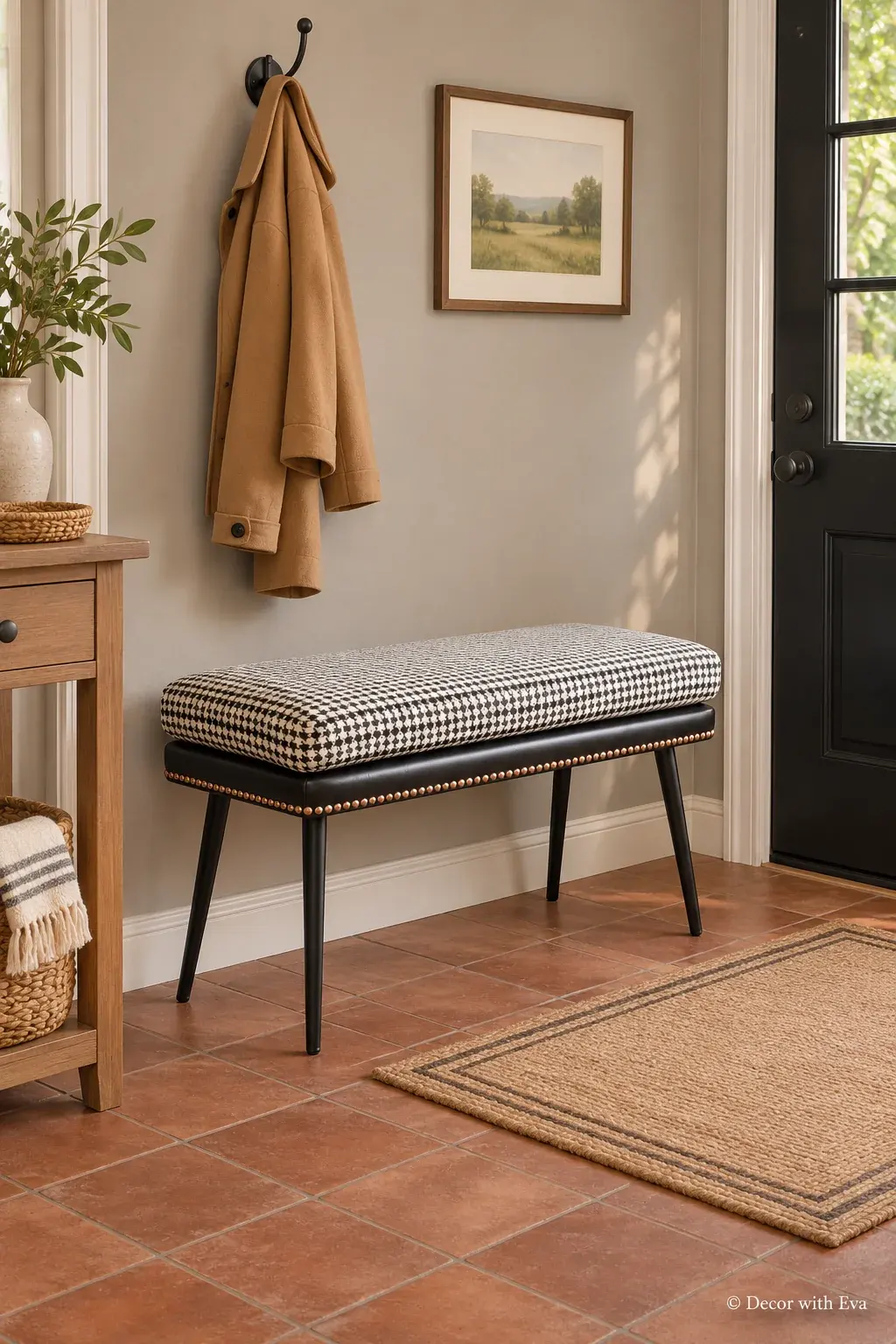
A small patterned bench brings some of the character of old upholstered furniture into an everyday entry. Black-and-cream houndstooth looks lively beside plain walls and dark trim. Let the seat stay mostly clear so there is actually somewhere to sit while putting on shoes.
The pictured bench is a new piece with black metal legs, faux leather and a patterned cushion, rather than a period bench. Its short width suits a single-person perch. Check the seat height against what feels comfortable for you, and keep the legs on a level surface instead of half on a thick rug.
Make it your own: An existing sound bench with a fitted patterned cushion can provide the same contrast.
Selected new Pattern Cushion version measures 32.28 W × 13.77 D × 17.71 H inches. Patterned fabric cushion, black faux-leather base, copper-colored studs and black metal legs. Check the current care label and assembly instructions. Reviews span cushion variants and describe a firm seat; it is not an antique upholstered bench.
4. Let a Paneled Hall Tree Handle the Busy Stuff
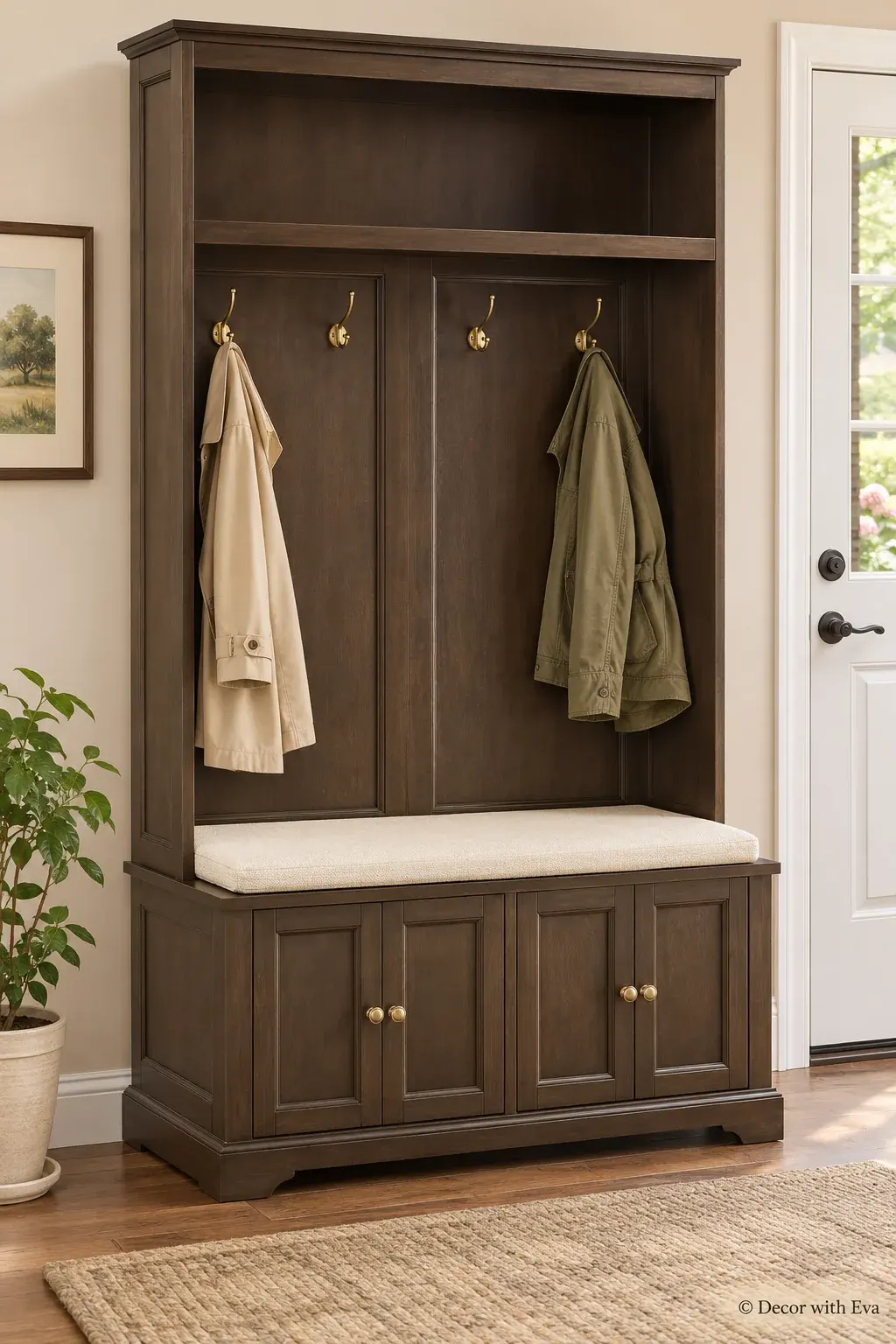
A hall tree can make a busy entrance look like one complete arrangement. Hooks take care of coats, the bench gives you a seat and closed lower storage keeps the shoe collection from becoming the main view. A dark coffee finish and paneled back add an old-house feeling.
Give this larger piece a wall where its full depth fits outside the door swing. Check cabinet openings against your shoes and leave the cushion free of bags. The linked unit is new engineered wood, not an antique hall stand. Follow the anchoring and individual hook and shelf limits in its instructions.
Make it your own: If you already have a bench and approved wall hooks, keep the separate pieces and connect them with one wood tone.
Selected new coffee-finish engineered-wood unit is listed at 38 W × 18 D × 70 H inches, with four double hooks, an oatmeal cushion, upper shelf and closed shoe storage. Assemble and anchor as instructed. Review samples cover other colors too; allow time and help for assembly rather than relying on a promised build time.
5. Move a Bow-Front Dresser Out of the Bedroom
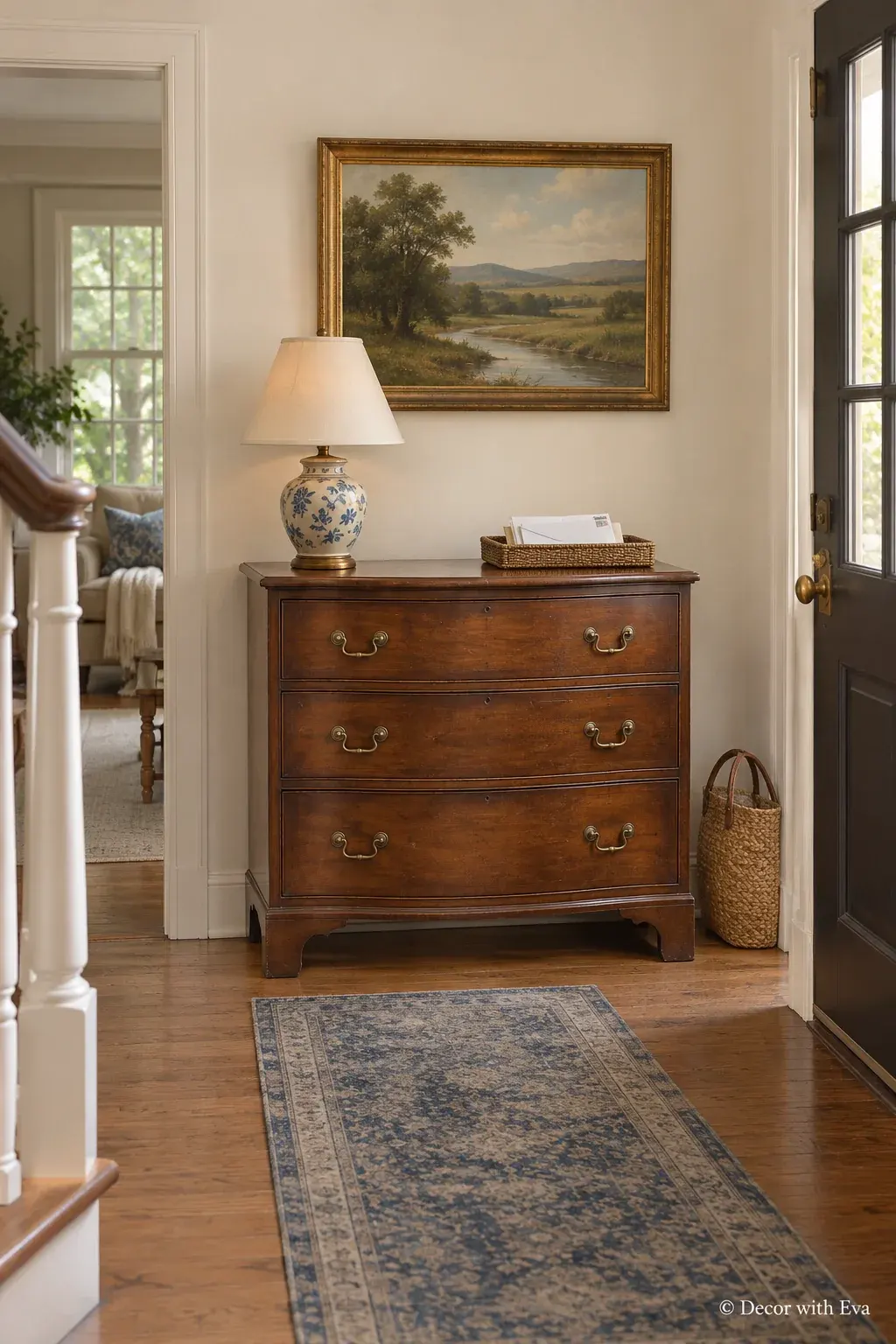
A small dresser can be wonderful by the front door when you need drawers more than display space. A gently bowed front, aged wood and simple metal pulls give it plenty of personality. Use one drawer for outgoing mail and another for the small things you would otherwise leave on the top.
Look for a piece shallow enough for the entrance and open every drawer before buying secondhand. The case should sit level, with sound joints and drawers that move cleanly. Anchor it appropriately and do not load the upper drawers with heavy items. A pretty finish should not distract you from a poor fit.
Make it your own: Relocate a dresser you already own for a week before deciding whether the extra storage earns its floor space.
6. Lighten the Look with a Cane-Front Cupboard
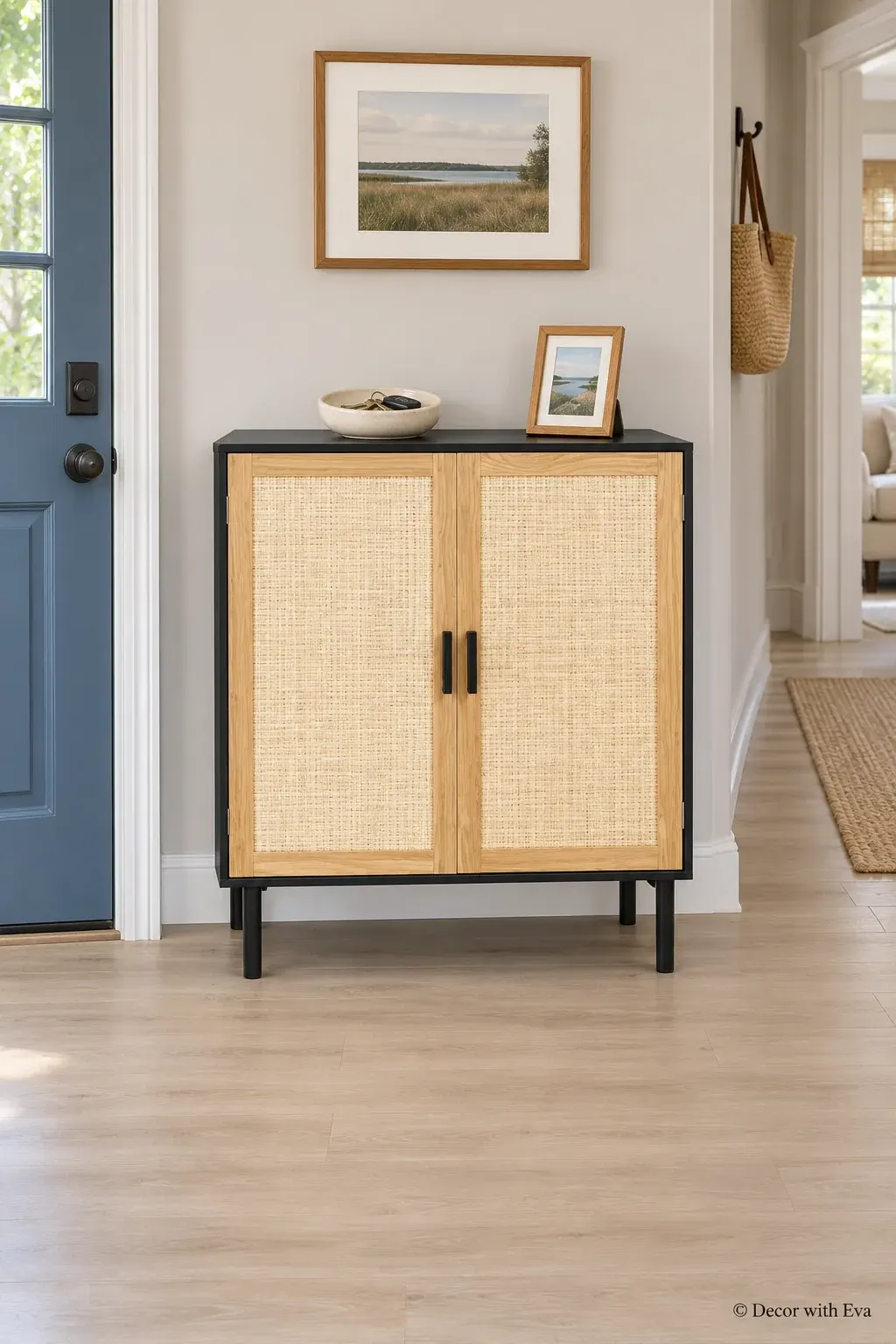
Cane panels bring texture without the visual weight of a solid dark door. A compact cupboard can hide the less photogenic entrance essentials while still feeling light beside white walls. Black framing gives the woven fronts a crisp outline and connects easily with existing door hardware.
Check what you want to store before choosing it. Shelves intended for dishes or general household storage may not fit tall boots, and woven doors do not turn a cabinet into weatherproof storage. Keep wet shoes on a suitable tray elsewhere and leave clearance for both doors to open.
Make it your own: Use an existing small cupboard and add woven baskets inside instead of replacing its doors.
Selected new Black two-door cabinet, about 31.5 W × 15.8 D × 34.6 H inches, uses an MDF body, solid-wood legs and natural-rattan door panels. Not a solid-wood vintage cabinet or a proven waterproof shoe cabinet. Check shelf dimensions and provide space to open both doors.
7. Choose a Green Cabinet with Decorative Doors
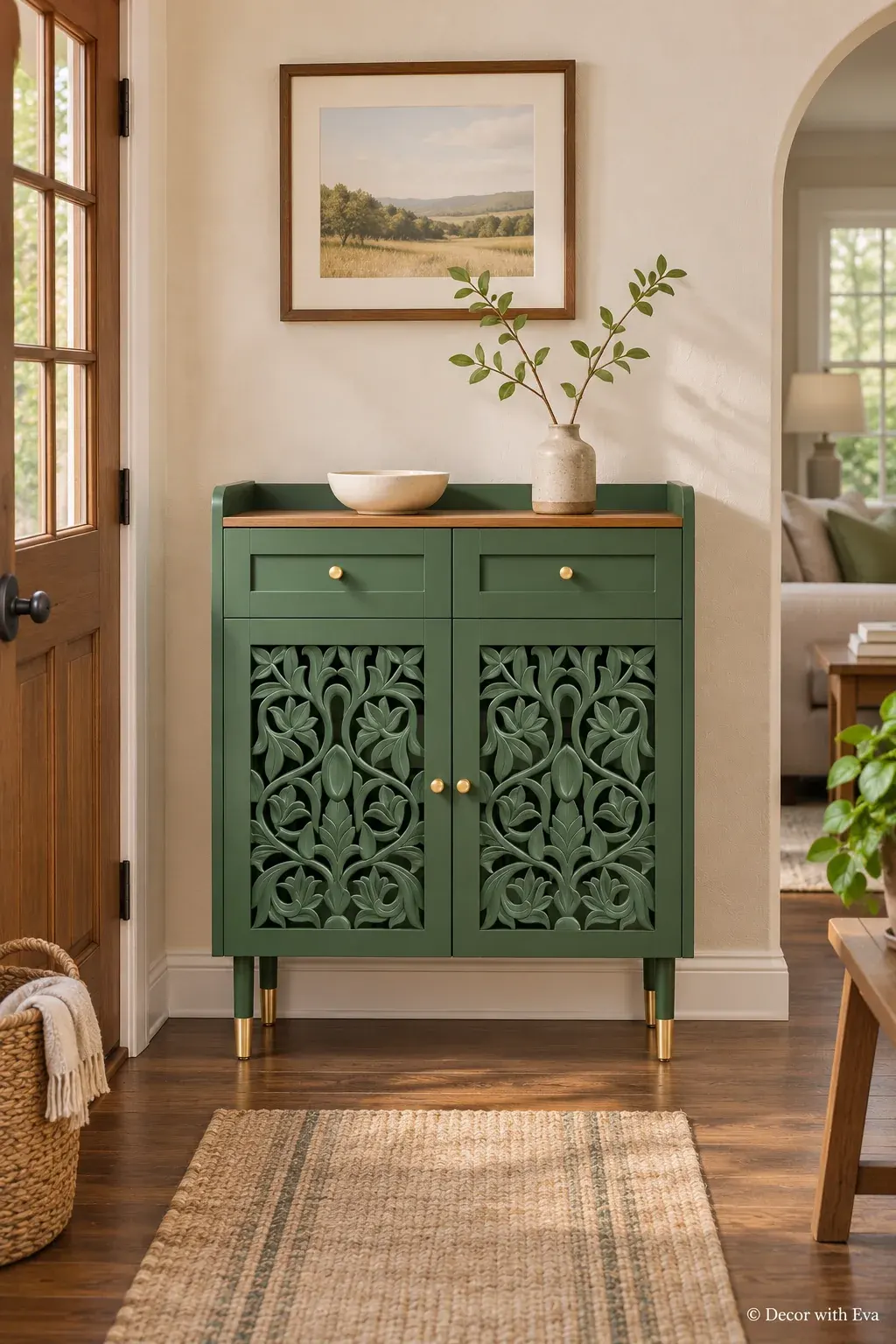
A painted cabinet can be the one colorful piece that makes an entry memorable. Forest green and a warm wood-colored top suit cream walls, old brass and darker flooring. Ornamental door panels add interest even when you keep the rest of the room very simple.
Leave the door pattern visible rather than covering the front with baskets or hanging bags. Cutout doors offer a filtered view of what is inside, so store small loose items in plain boxes. The linked piece is a new decorative cabinet; the carved look does not establish solid-wood construction or vintage age.
Make it your own: Keep the finish on an older painted cupboard if it is sound. Have uncertain or delicate finishes assessed before altering them.
Selected new Forest Green cabinet is listed at 31.5 W × 13.8 D × 37.4 H inches, with ornamental cutout doors, an adjustable interior shelf and one wide drawer behind a split-looking front. Do not assume solid wood from the carved appearance. Visible reviews include leveling and a missing drawer-bottom panel; check parts before assembly.
8. Bring Back the Telephone Bench
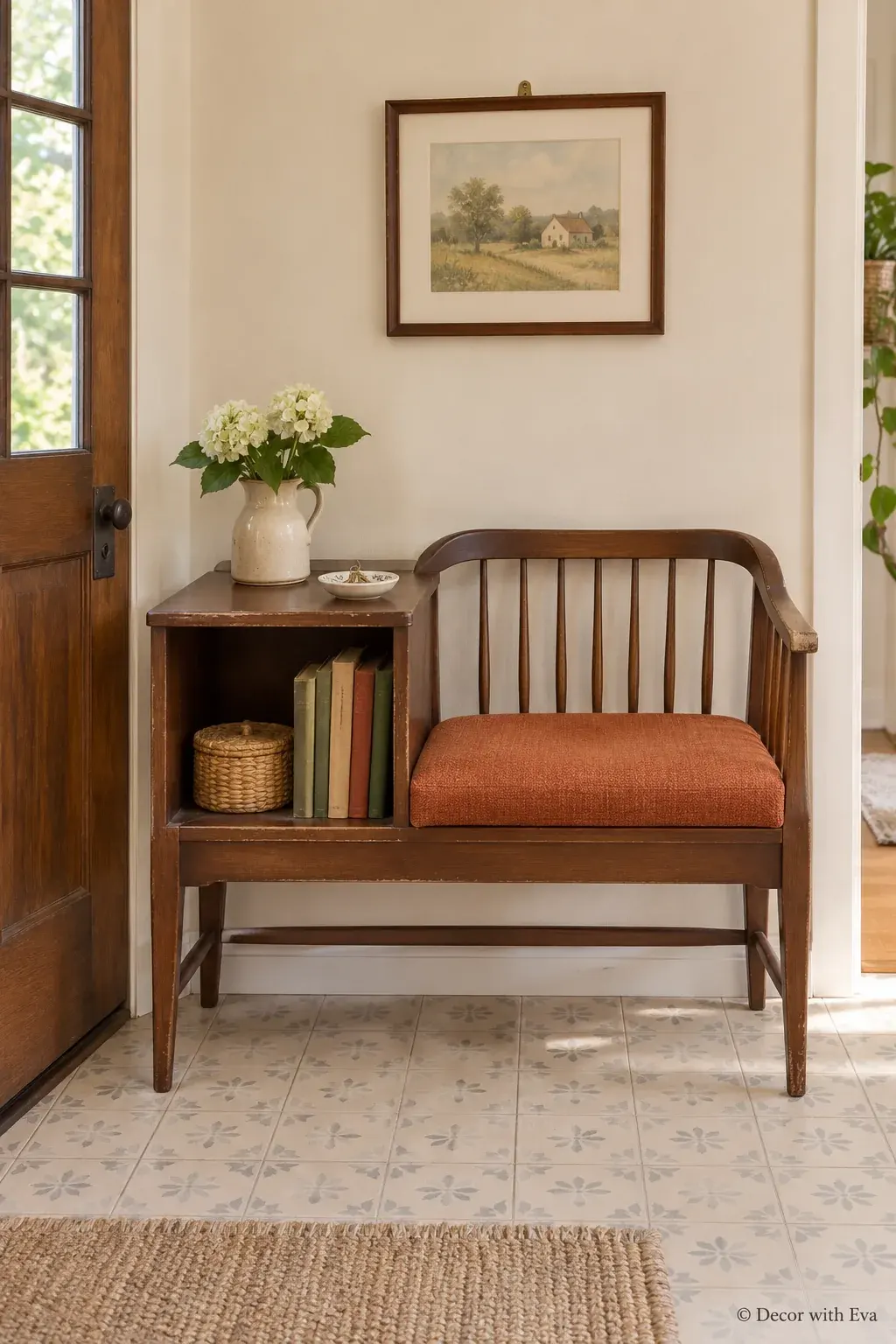
A telephone bench combines a seat and a little side table in one charming shape. It is especially appealing when your entrance needs somewhere to perch but a separate bench and console would feel crowded. The small tabletop now makes a sensible home for a key dish or an outgoing letter.
Look for a structurally sound secondhand example and try the seat before committing. Make sure the attached table leaves enough shoulder and elbow room. Keep the telephone nostalgia in the furniture shape; you do not need a pile of props to explain the idea.
Make it your own: Search local listings for telephone bench, gossip bench or hall seat with table, and measure the whole piece.
9. Use a Long Turned-Leg Console Along an Empty Wall
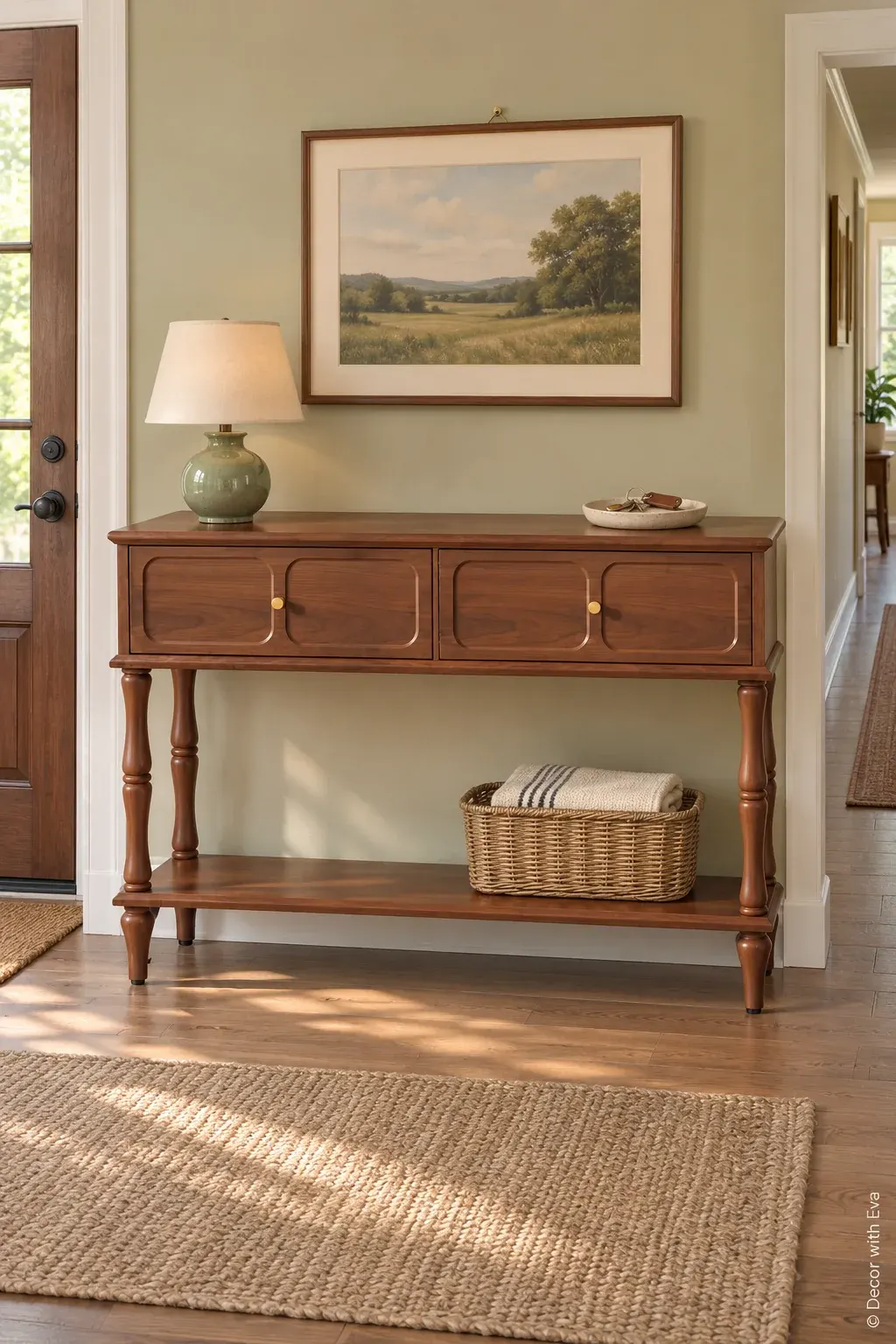
A longer console gives an otherwise empty stretch of hallway a clear purpose. Turned legs and rounded drawer details provide character without the bulk of a deep sideboard. The lower shelf can take one useful basket while the top stays available for the things you carry through the door.
The selected new console is about four feet long but less than a foot deep. Tape out that complete footprint, including the overhang, before ordering. Do not pack the lower shelf just because it is there; a little open space makes the legs easier to appreciate and the floor easier to clean.
Make it your own: Use the long table behind your sofa if it fits the hall better than a new purchase.
Selected new brown console is approximately 47.2 W × 11.8 D × 33.8 H inches, with an MDF frame, solid-wood turned legs, two drawers and an open shelf. Some measurement fields conflict; confirm the assembled footprint. Follow the included anti-tip instructions. This is a new traditional-style option.
10. Give a Bentwood Coat Stand Room to Breathe
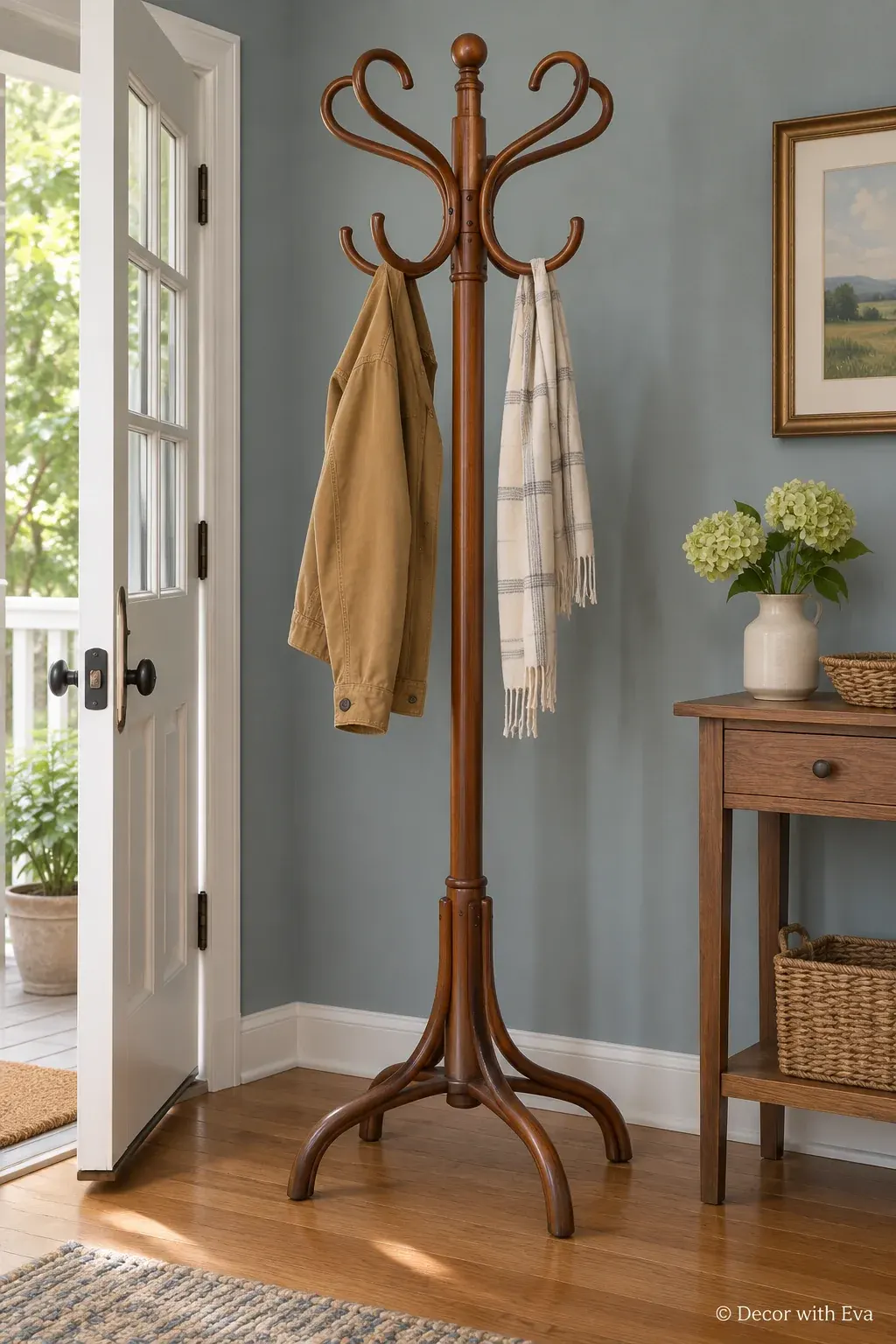
A bentwood-style coat stand can make a plain corner feel considered. Its looping hooks create a sculptural outline, so a few everyday coats are enough decoration. Warm brown wood works particularly well against pale walls or a dark painted door.
Measure the base and the loaded coat spread, not just the central pole. A narrow-looking stand can take up much more room once jackets and bags hang from it. Choose a stable, sound piece, load it evenly and keep it outside the door and walking route.
Make it your own: Edit the coats on an existing stand to the ones in daily use and move the rest into a closet.
11. Fold a Drop-Leaf Table Against the Wall
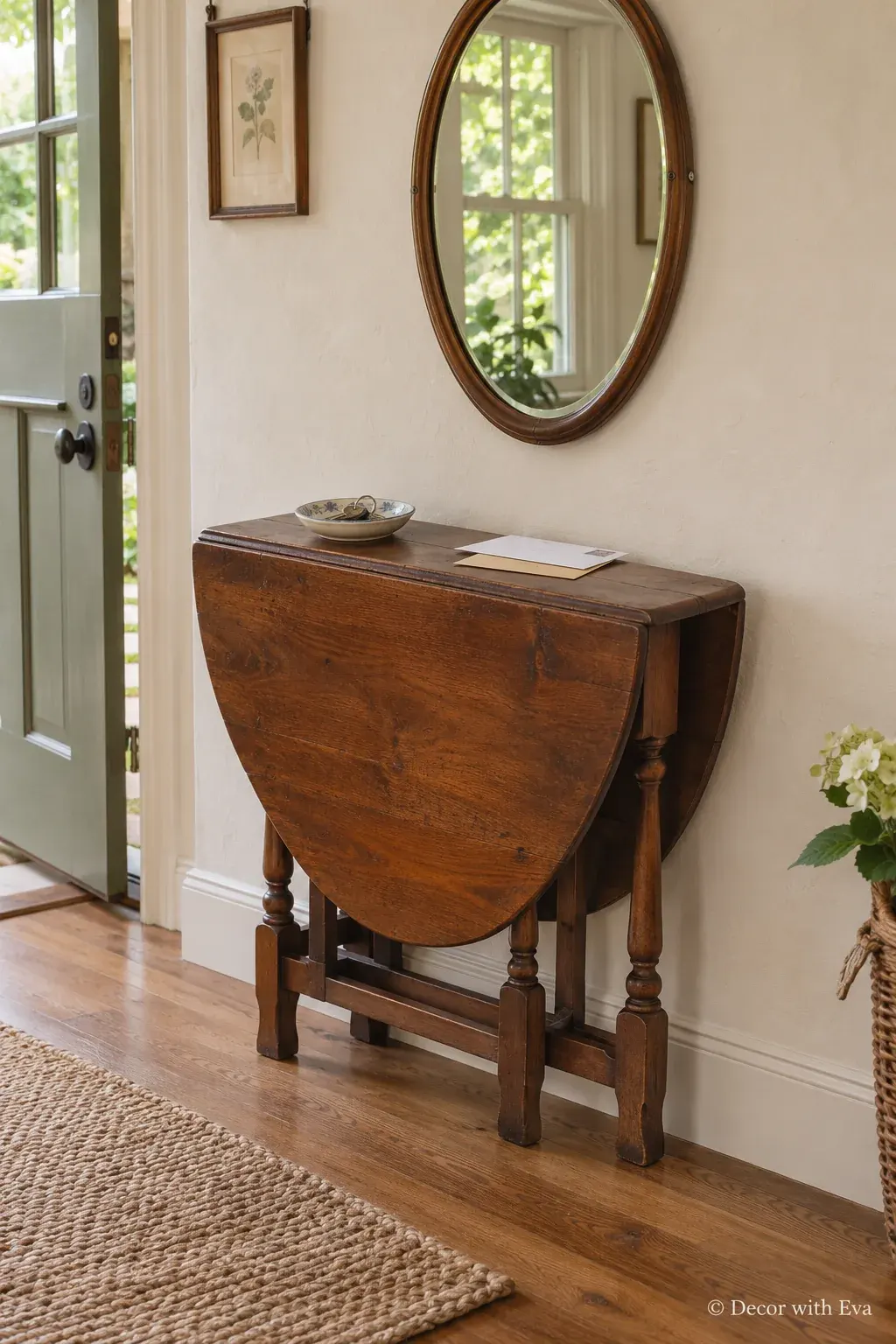
A small drop-leaf table can make good use of furniture that no longer fits in the dining room. With both leaves down, a slender center section becomes an unusual hall table. The rounded leaves and gate-leg frame add interest without needing a complicated arrangement above them.
Measure the folded depth and check that the closed leaves do not interfere with your knees or a nearby door. The table still needs its proper supports when opened; do not use a folded leaf as a shelf for bags. Let it function as a small landing surface rather than making the entrance do double duty as a dining area.
Make it your own: Try a folding table already in the family before searching for another piece.
12. Reuse a Marble-Top Washstand
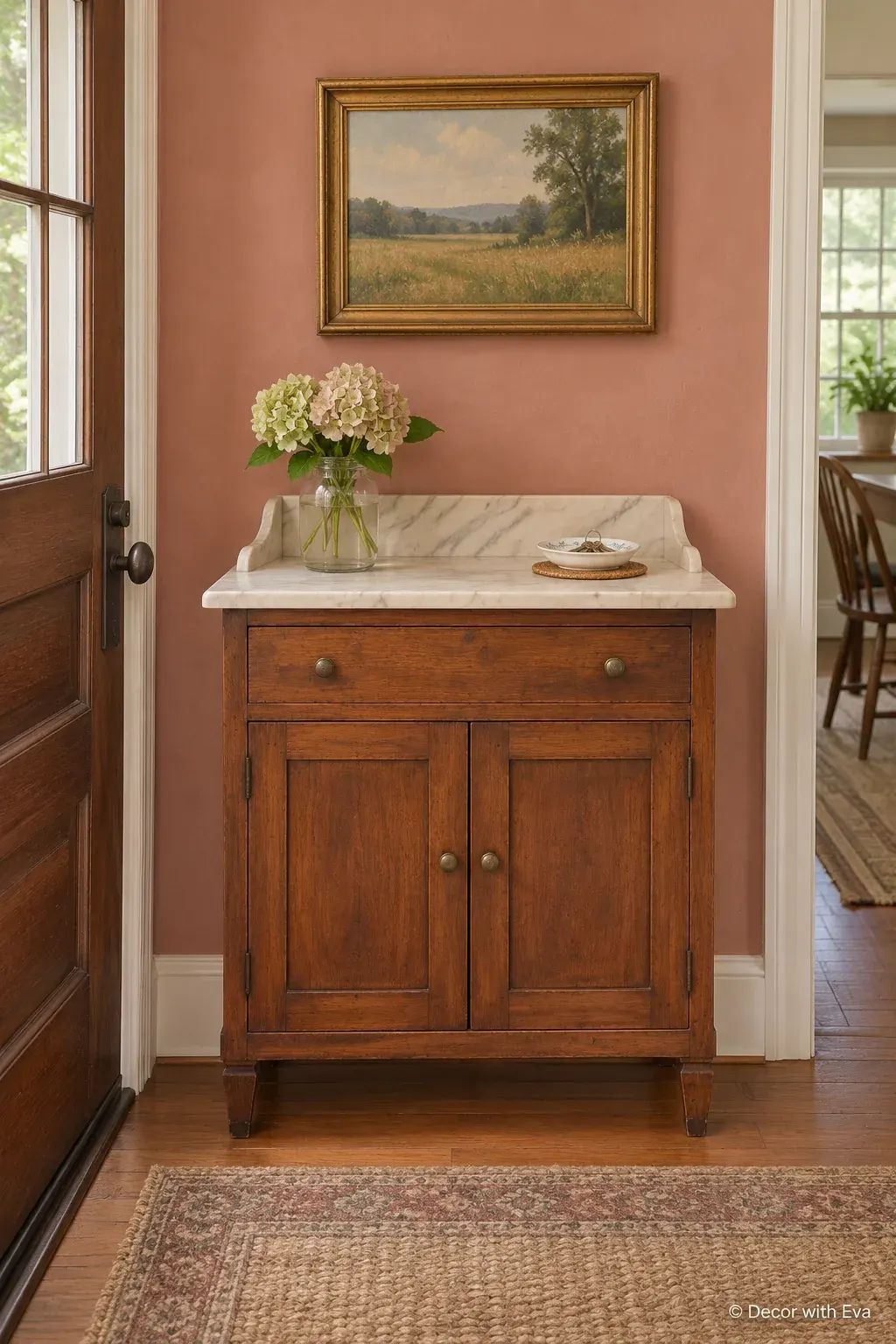
An old washstand brings a different mix of materials to an entrance: cool stone, warm wood and perhaps a little back rail or towel bar. The top makes a lovely setting for a shallow dish, while a cupboard or drawer can hide everyday essentials. Keep the styling spare enough to see the furniture’s outline.
Inspect the stone, joints and any repaired areas before moving it. Marble is not immune to staining or marks, and the weight needs careful handling. Protect the surface under objects, keep liquids contained and ask a furniture specialist how to care for an unfamiliar old finish.
Make it your own: A sound small bathroom cabinet can also become general storage if it suits the room and does not require plumbing alterations.
13. Put a Single Spindle Chair by the Door
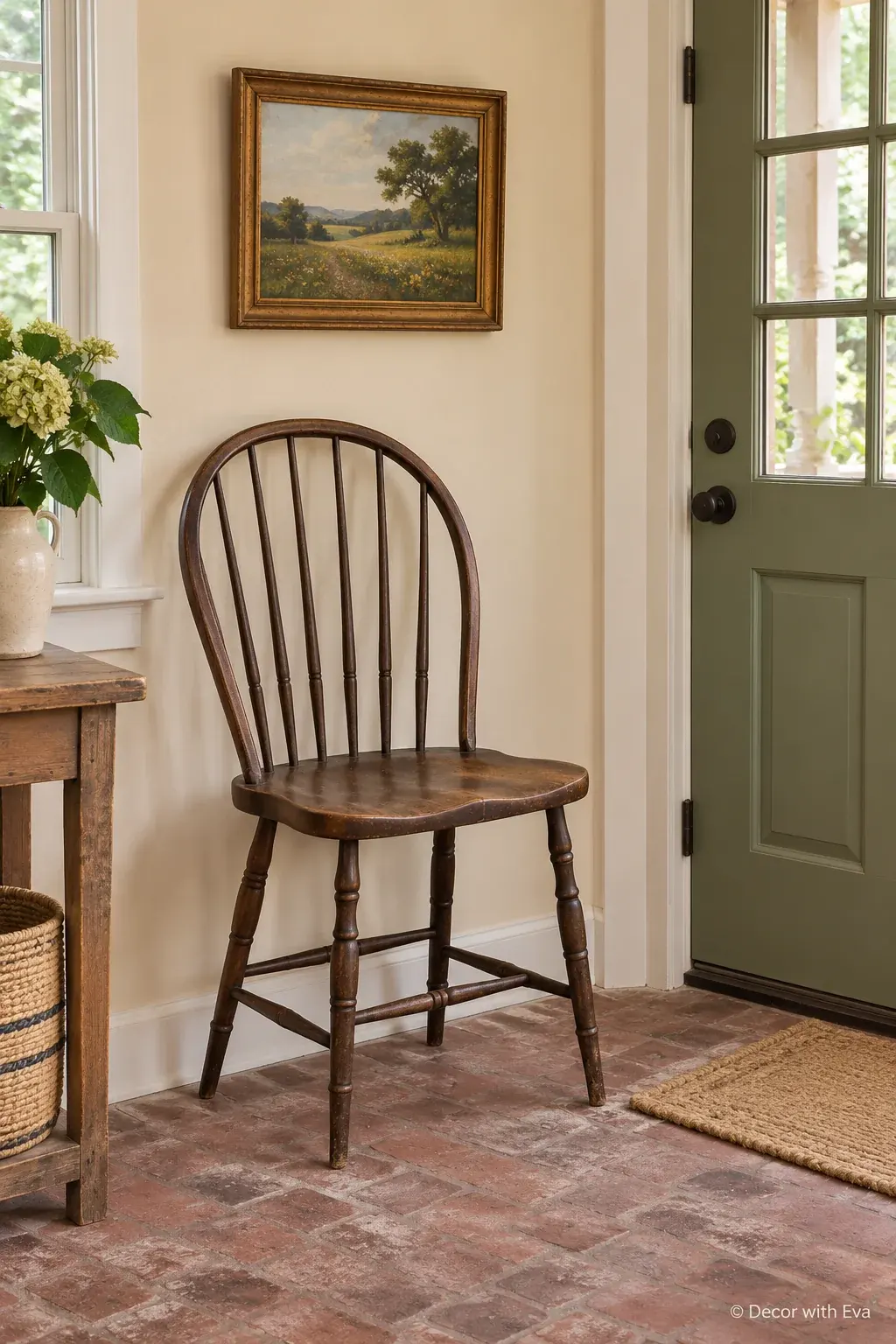
A chair can be all the entryway furniture a small home needs. A curved wood back and slender spindles bring character without the length of a bench. Put it where you naturally stop to remove shoes and keep the seat available.
Check a secondhand chair for loose joints and a stable seat before using it. Leave space to sit and stand without blocking the passage. A tiny side dish on an existing window ledge can handle keys; there is no need to squeeze in a console as well.
Make it your own: Take one sturdy chair from a spare set and see whether the entrance becomes easier to use.
14. Turn a Low Bookcase into an Open Hall Cabinet
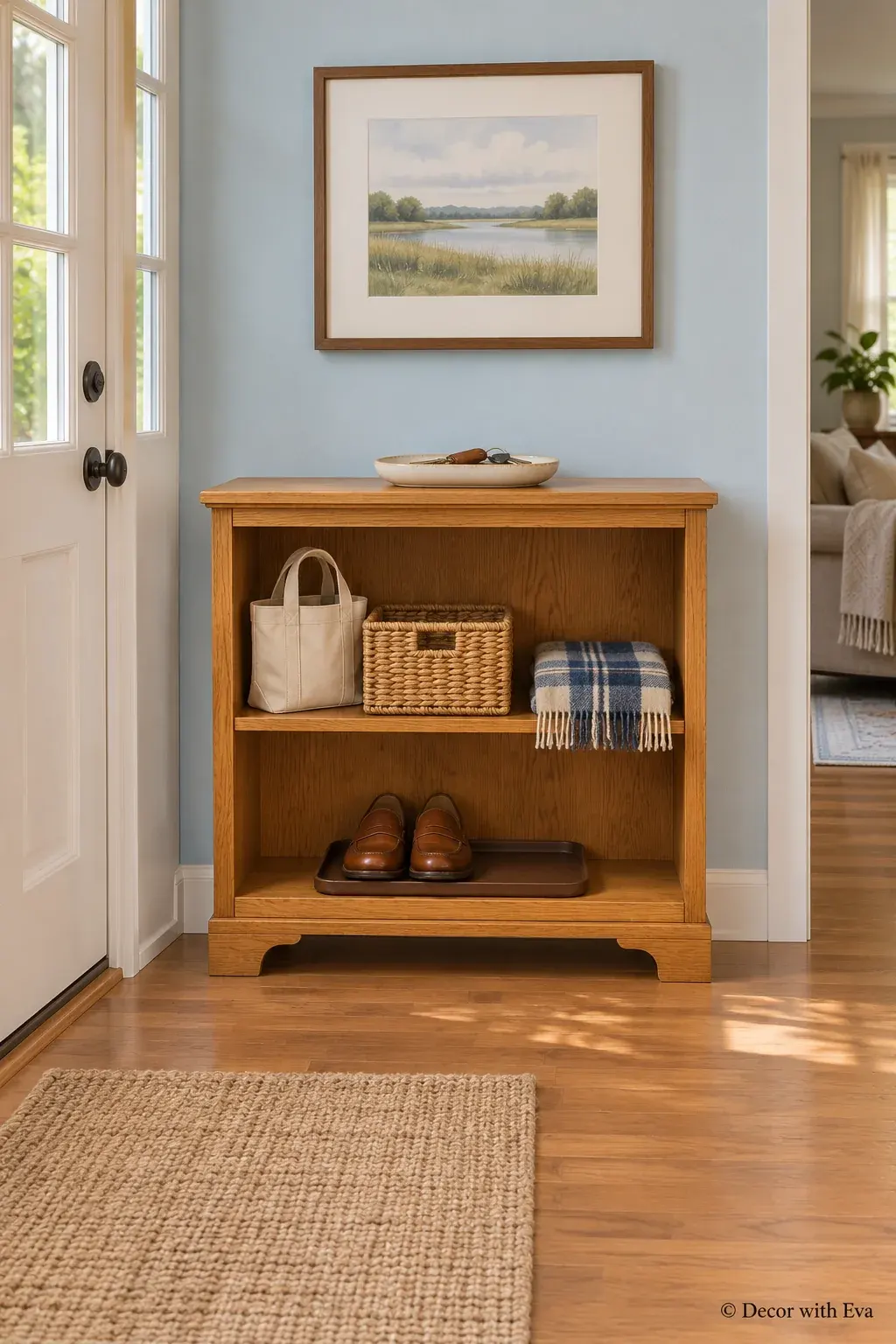
A small wood bookcase gives baskets, bags and everyday shoes an orderly place to land. The open shelves feel less formal than a sideboard, especially when the wood already has some age. Use a few matching containers to quiet the small loose things.
Stay within the shelf limits and keep heavier items low. Protect the shelves from wet shoes and choose baskets that slide out without scraping the frame. Anchor the unit appropriately. This works best when you can keep the contents edited; open storage shows the everyday routine.
Make it your own: Reuse a low bookcase from the living room and test it with the bags and shoes you actually need nearby.
15. Use a Trunk for Storage with a Storybook Shape
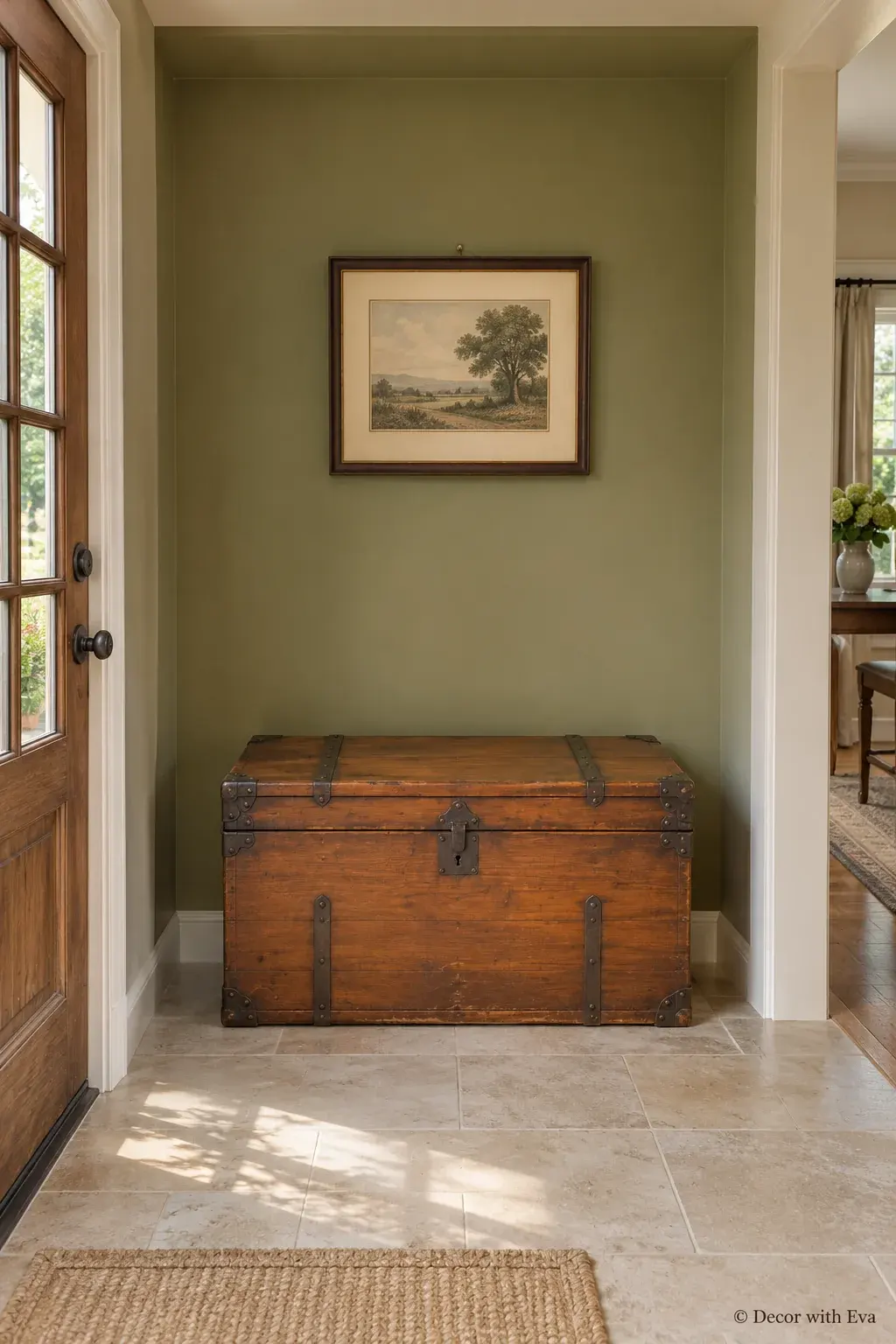
A wood trunk can hold the things that do not need to be within arm’s reach: spare reusable bags, seasonal scarves or a folded blanket. Metal corners and a simple wood grain make it an interesting low piece beside the door. Its closed top gives the entrance a calmer outline.
Treat a trunk as storage unless it is specifically designed and rated as seating. Check the lid, hinges, catches and interior condition, and leave room to open it without hitting the wall. Keep it out of the main walking line rather than creating a low obstacle in a narrow hall.
Make it your own: Use a family trunk or sound storage chest you already own; you do not need artificial distressing.
16. Choose a Small Secretary for Concealed Organization
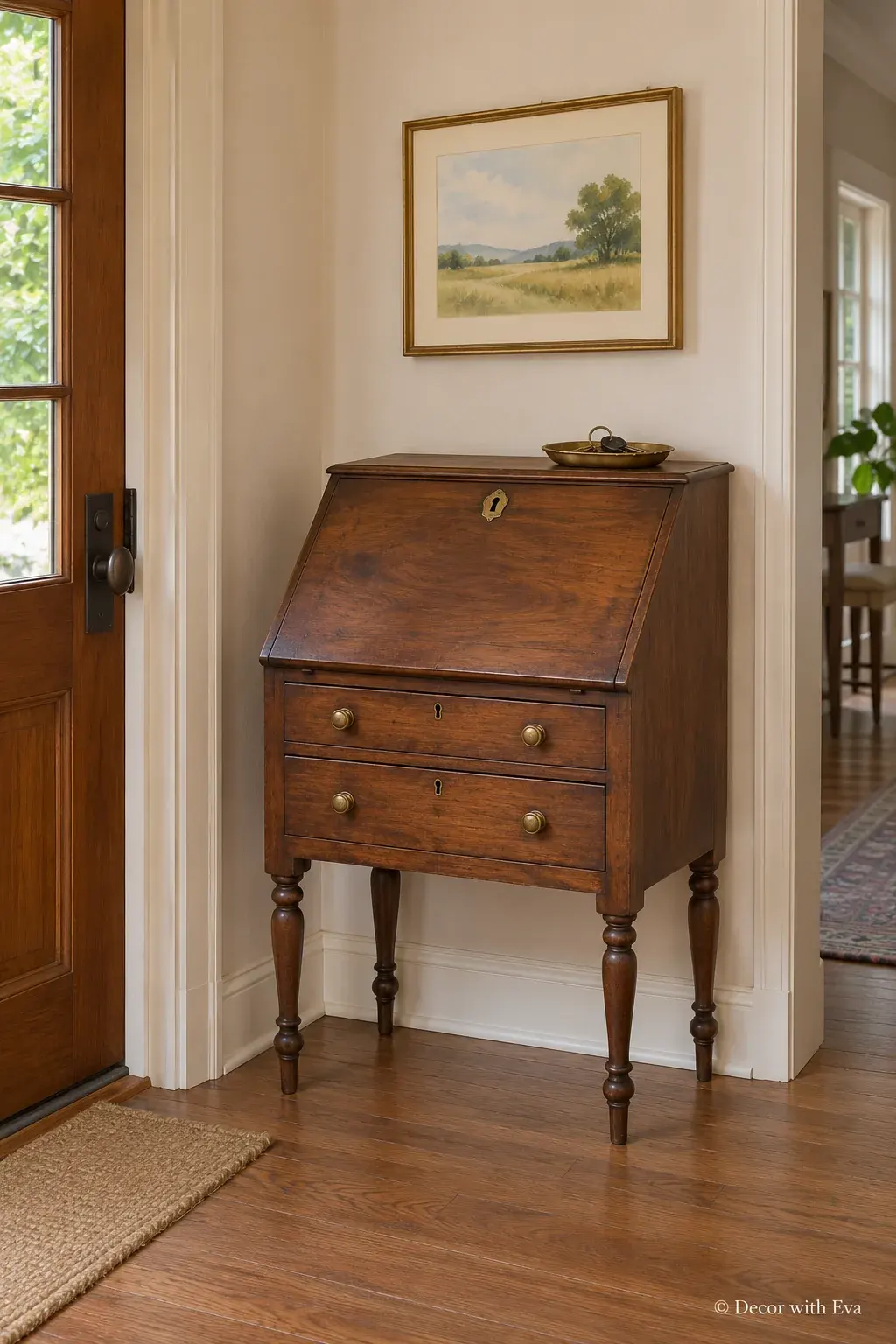
A compact secretary can hide paperwork more neatly than a tray on an open console. With the writing flap closed, its wood panels and little drawers look like a decorative cabinet. Open it only when you need to sort the mail or check a note.
Test the full opening depth before placing it in a hallway. The flap needs its proper supports and should not be used as a perch or a place for heavy bags. Choose a piece with sound hinges, working drawers and an arrangement you can keep closed when the entrance is busy.
Make it your own: Repurpose an existing small writing cabinet before adding another furniture piece to the house.
17. Try a Metal Locker for an Industrial Vintage Note
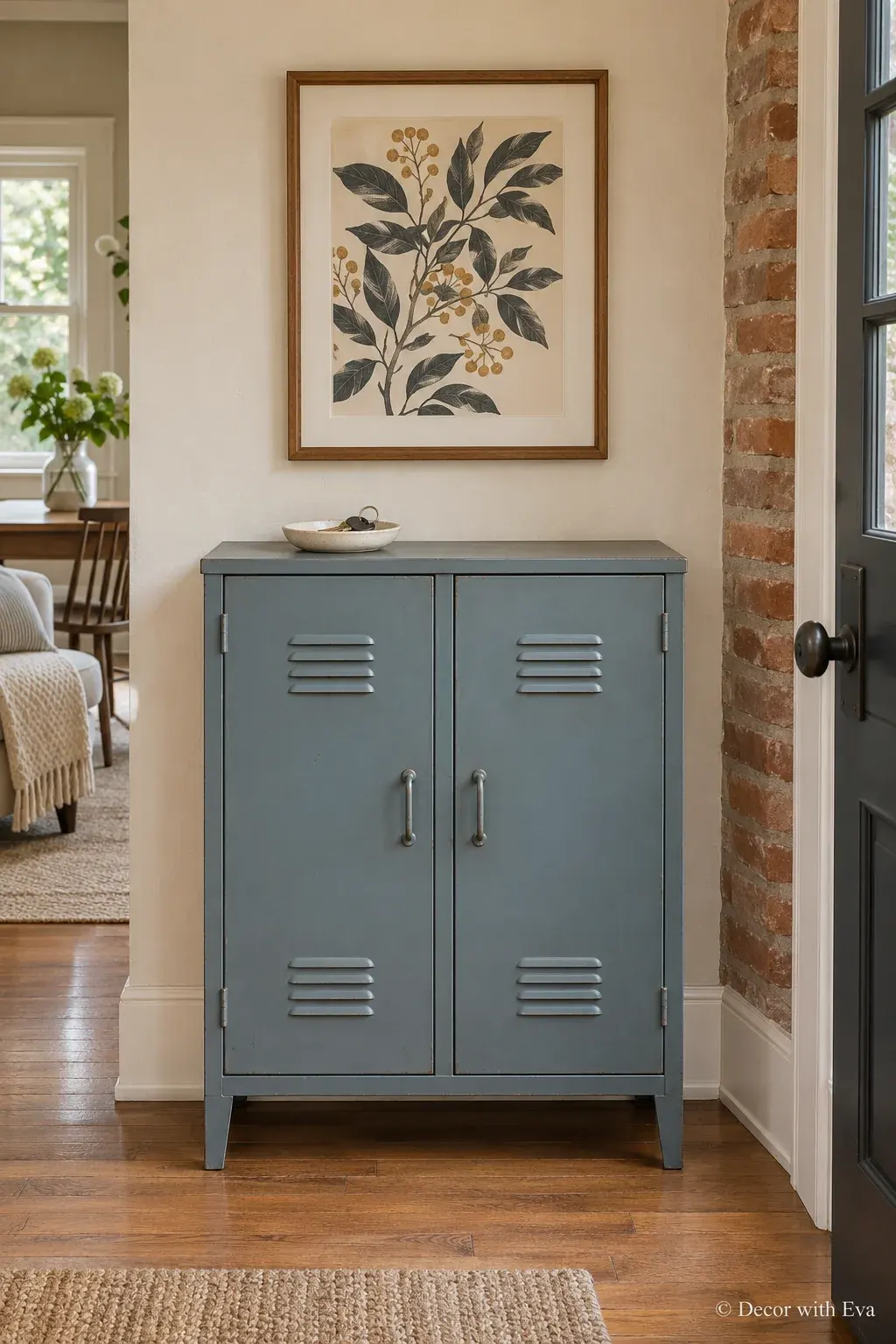
A metal locker brings a different kind of history-inspired character to an entrance. Faded paint, small vents and simple handles look good beside brick, timber or plain plaster. One short cabinet can hold daily bags without turning the hall into a whole locker room.
Look for sound metal, smooth edges and doors that close properly. Have flaking or uncertain finishes assessed before refinishing, and confirm the shelves can take what you want to store. Anchor the cabinet as appropriate and avoid anything with sharp rusted edges or unreliable catches.
Make it your own: A sound metal office cabinet can provide the same practical contrast without hunting for a rare school locker.
18. Make an Awkward Corner Useful with a Cupboard
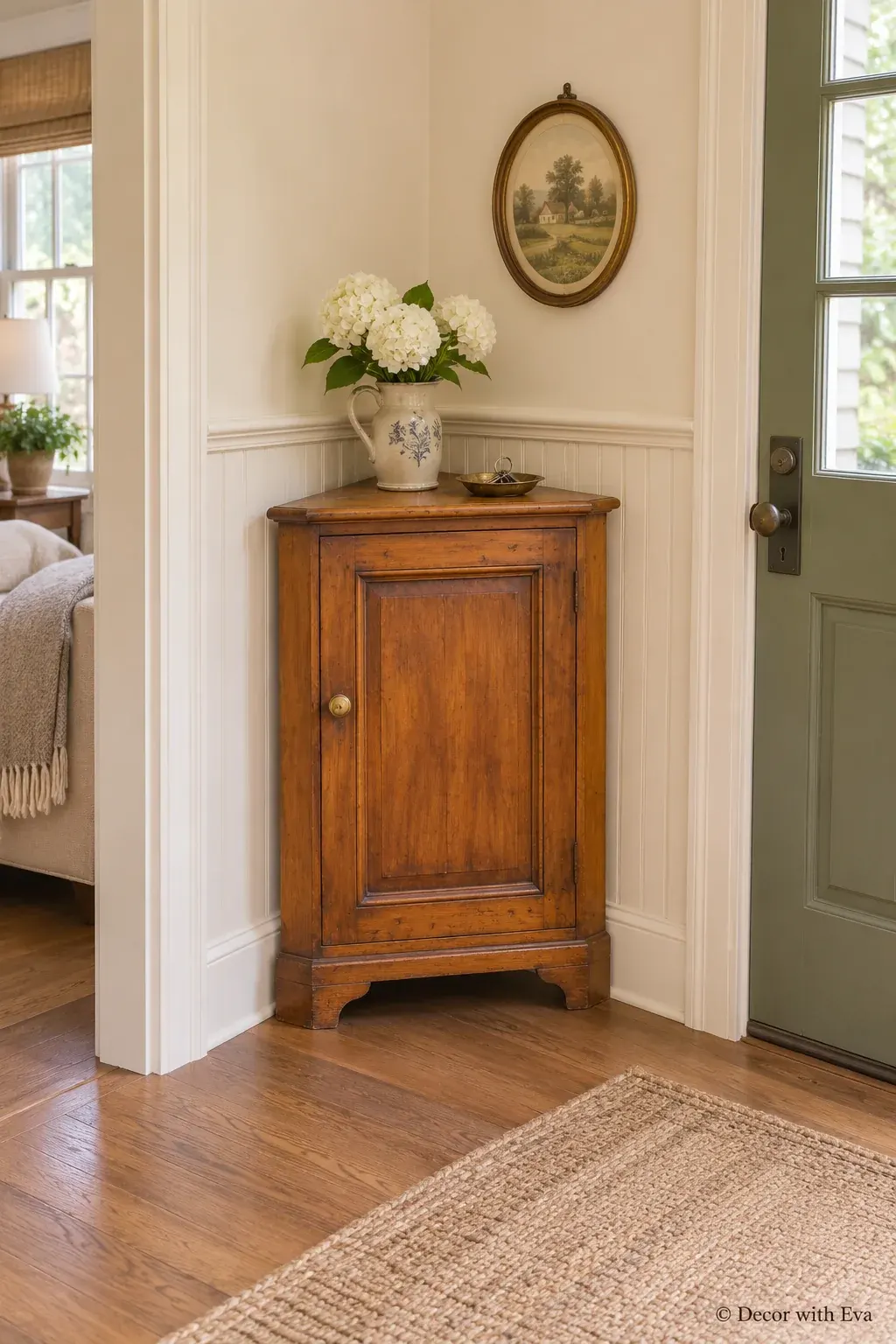
A corner cupboard can turn an unused angle into proper storage without adding a long piece along the wall. A small raised-panel door and warm wood finish give it an old-house feeling. Keep the proportions modest so the entrance still feels like a passage.
Corner furniture has two wall measurements as well as a diagonal front; measure all three. Check the door opening and whether the skirting board prevents the cabinet sitting correctly. A suitable anchored piece can hold small bags or household supplies, but do not assume a decorative cupboard is built for heavy storage.
Make it your own: Use the corner only if it is genuinely spare. Leaving it empty may work better than forcing furniture into a tight entrance.
19. Give a Low Mid-Century Credenza a New Job
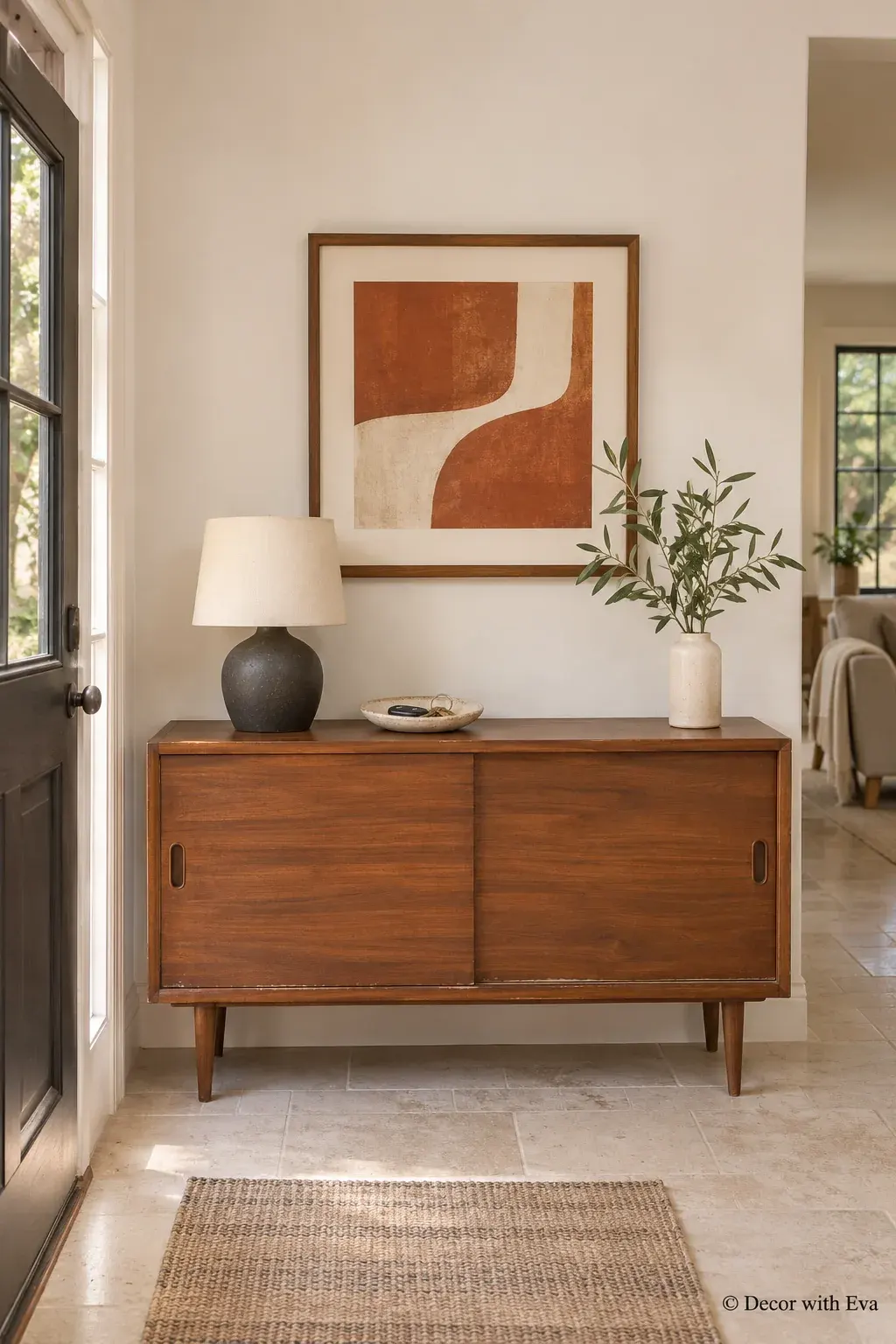
A low credenza can suit a wider entrance when you need generous hidden storage and prefer clean lines. Warm wood, tapered legs and quiet handles bring character without carving or a distressed finish. Keep the top mostly open and let the grain be the main decoration.
Check the depth carefully: dining and living-room storage is often deeper than a hall console. Leave room for doors or drawers to open and for someone to pass. A secondhand piece should have sound legs, working hardware and a stable case; match the storage to light everyday entry items rather than treating it as an unlimited drop spot.
Make it your own: Move an existing sideboard into the entry only if its footprint improves how the room works.
How Do You Mix Old Furniture with a Newer Home?
Start with one characterful piece and give it a quiet backdrop. Repeat a wood tone or metal finish once, then let the remaining furniture be simple. An older table does not need an entire period room around it. Practical lighting, a useful key dish and enough empty space can make the mix feel natural.
Should You Refinish a Secondhand Find?
Get to know the material and existing finish before deciding. A surface with ordinary wear may need careful care rather than stripping. Valuable, fragile or unfamiliar pieces deserve specialist advice. North Carolina Historic Sites’ furniture-care guidance recommends gentle dry dusting, protection beneath displayed objects and avoiding wet cleaning without conservation advice. New furniture should follow its own care instructions.
Let One Good Piece Set the Tone
Choose the piece that makes arriving home easier: a seat you actually use, drawers that hide the daily clutter or a small table that leaves the entrance open. The character can come from a curved front, a woven door or wood you already love. You do not need to fill every wall to make a memorable first impression.
When the holidays arrive, keep your furniture arrangement and change just the accents. Our Christmas entryway table decor ideas offer seasonal ways to style that same landing place.